Do you want to believe in yourself?
People don't work like electronic gadgets. It is not right to plug in the power cord or charge and wait for them to work. When you go to bed at night, you want to wake up fresh the next day and continue your work from where you left off. This is about personal power in continuity.
There is a personal power in all of us. It is a power that cannot be seen but can be felt by everyone around it. Personal power is our supporter in being successful and happy. It also helps us to be confident.
You may have difficulty identifying your own personal strength. But you may have noticed the qualities inherent in other people, such as being organized, talented, successful, reliable, and happy.
People with personal power need not raise their voices about what they want. They are effective at being comfortable in their own bodies, firmly committed to what they believe, communicating their ideas with respect to others, and honoring people.
This helps them move towards their goals more easily. At the same time, personal power makes them a great leader, great colleague, stable friend and loved one. Therefore, as Mandie Holgate said, personal power is of great importance.
Activate others without acknowledgment or acknowledgment.
Happiness in learning, failing, and having mistakes.
Rejoice at hearing other opinions and not see them as a threat to their own beliefs.
Ability to lead others without being in the forefront.
Not power-oriented, but able to communicate powerfully and effectively.
Don't be a great listener.
Ability to do more than most people.
Reaching your goals.
The ability to do what they promise, even if it is detrimental to them.
These are the characteristics of people with personal power. Personal power is not the power found in people of fame. Personal power is a silent power within a person that acts without hindering the free flow of other people's power. Detecting it is much more difficult than one might think.
There is a distinct difference in ambition between men and women. Women often have a negative view of ambition. They want to be successful but have a hard time accepting it. This is why they often see their careers as dependent on others.
You should never regret being ambitious. Where you work, you should inform your superiors about your career goals. Try to find mentors or resources that can help with their goals. If you hesitate to express your ambition, you will be humiliating yourself.
Don't forget to ask for help when you need it. You feel powerless when you think you don't have all the answers. But that is what is true. It is not always possible for you to have all the answers available. So you should ask for help when needed.
People who use their personal power know when to ask others for help. When you identify the resources you need to be successful, you increase your chances of success. Knowing what you need and asking for help is a personal power move.
Unfortunately, we are part of a culture that rewards busyness to the fullest. That's why it's a little difficult to step back from time to time and just listen to yourself. However, you should not forget that creativity will come to the fore during this time.
By taking some time for yourself every day, you can find solutions to long-standing problems. You may be able to look at your career goals in a more strategic way. You move forward without being distracted. You may be closer to the passion and purpose that accompanies personal strength.
People look to transparency and authenticity as an opportunity to connect. But you can't be a real person unless you know who you are first. As long as you are honest with yourself, you can bring out the personal power within you.
People often try to connect with like-minded individuals. Their goal is to learn from them. So the best way to impress them is to be original. As long as you achieve this, you will have used your personal power in the best way.
It should not be forgotten that each of us is born with various gifts. What matters is how well we use these gifts in life. When we do this, we have a chance to achieve success by touching the lives of others.
That's why you should write down the pros (strengths) and cons (weaknesses). You have to identify the things you love most about yourself. When you love yourself, you have a much better chance of loving others. You can achieve this when you reveal your strengths.
What Are Emotions and Why Do They Matter?
Emotions have a powerful effect on our lives. To fully understand emotions, you need to learn about their basic characteristics.
Emotions are one of the most important factors that govern our daily lives. We make decisions based on whether we are happy, angry, sad, bored, or frustrated. In other words, we choose activities and hobbies based on the emotions encouraged in our daily life.
According to the definition of Don Hockenbury and Sandra E. Hockenbury, an emotion is a complex psychological state that includes three different components. Subjective experience, physiological response, and behavioral or semantic response make up these three components and are used to describe emotion.
While trying to define what emotions are, researchers have also tried to define and classify different types of emotions. Explanations and opinions have evolved and changed over time.
In 1972, psychologist Paul Ekman talked about six basic emotions and stated that they are valid in all human cultures around the world. Fear, disgust, anger, surprise, happiness and sadness are these six basic emotions.
In 1999, Ekman expanded the list, adding a few key sentiments. Shame, excitement, contempt, pride, shame, satisfaction and joy were added to the basic emotions. However, efforts to identify emotions were not limited to him.
To understand emotions in the best way, it is necessary to focus on its three basic components. Once you've thoroughly explored these three components, known as subjective experience, physiological response, and behavioral or semantic response, you can learn exactly what emotions mean.
You may have felt an upset stomach or a feeling of fear in your heart due to worry. In this case, you are aware that emotions cause strong physiological reactions. It is possible to explain this situation with a few different examples.
Conditions such as sweaty palms or an excessively fast heartbeat are some of the physiological responses you may experience frequently. They are regulated by the sympathetic nervous system, which is located in the autonomic nervous system.
The autonomic nervous system controls involuntary bodily responses such as blood flow and digestion. The sympathetic nervous system is in charge of controlling the body's fight-or-flight reactions. The decision you make when faced with a threat will be an output of this system.
In everyday life, people use the words emotion and mood interchangeably. But psychologists are careful to make a distinction between the two. An emotion is normally quite short-lived but intense. Emotions can also have a definite and identifiable cause.
For example, you may briefly feel angry when you disagree with a friend about politics. On the other hand, a mood is usually lighter but longer lasting than an emotion. In addition, it can be difficult to determine the true cause of mood swings.
How to Improve Your Work-Life Balance
The increased stress from the never-ending workday is damaging. This type of stress can harm a person's health and overall well-being. Work life balance means something different to each individual job. Are you ready to strike that balance?
Finding a work-life balance seems nearly impossible. It is getting harder and harder to strike that balance every day. Man is a being that must be productive. However, productivity should not be confused with spending all the time doing work.
Topics such as productivity, time management, procrastination and stress are very important. However, they cannot be the solution for work-life balance. By using them, you simply adapt to the modern world much better.
There is a simple illusion that the modern world has brought before us. We think that “the more time we devote, the more things will be completed”. But nothing is complete. Because as we progress, we realize that new things are emerging.
The people who are happy are the people who are busy when you consider the people in the world. The most important feature of these people is that they do not rush their work. Because when things get rushed, anxiety arises that turns all plans upside down.
Worry can be easily disposed of with a sense of control. It is possible to use a similar feeling in work-life balance. You have to make a plan for yourself. In other words, you have to determine what is important to you and what is not.
Every person has certain values in life. Knowing these values allows people to act much easier. You need to actively use these values when trying to draw a plan.
As Eric Barker puts it, you have to be wary of the "best set of lines" situation. You should try to create a work-life balance in line with your values. If you want to do this, you can consider the following suggestion that I have presented.
Even if the modern world doesn't allow it, you should consider working in the "Monday - Friday" range. You should dedicate your “Saturday” day completely to your family. On the other hand, if you have faith, you can dedicate the "Sunday" day to worship. You should never work on weekends. You shouldn't allow any exceptions whatsoever.
This is a plan. A classic plan only works because it's completely aligned with people's values. After working from Monday to Friday, you should dedicate a day to what matters most to you. Your last day should be spent with gratitude. This is the golden rule of work-life balance.
Now you have to imagine yourself working. Did you notice anything? You often try to move forward by doing what's in front of you. But you ignore the fact that proximity and priority are not the same thing. Is it possible to fix this? Sure, it's pretty easy with a simple principle.
There is a situation called the Pareto rule or the Pareto principle. What this rule says is pretty clear. “80% of our results come from 20% of what we do.” is a rule. In this case, you need to focus on the 20%, not the 80%.
When you comply with this rule, you start to get disproportionate results. Disproportionate results will lead you to success and also create work-life balance. You should always do what you can get disproportionate results.
*****Focus on what you do best*****
With some people, our abilities may overlap. We need to use these overlaps to advantage. For example, you should not volunteer to do the dishes if there is someone at home who can do the dishes better and faster.
It might be a little hard to explain, but that's the truth of life. You can do some things easily, but I cannot do the same things as easily as you. If you are working in the same job, it is much more correct to do what is easy for you.
You should always try to seize such opportunities. You should focus on doing what you do best. For the remaining work, you should seek outside support, try to negotiate and, if possible, consider passing them on to others.
How To Stop Living For Others
When you spend most of your time trying to live for others, you wear all kinds of masks and costumes depending on the role you are expected to play. It means losing yourself. If you do not want to live according to others, you must take action to end it now.
Do you sometimes dislike your life? Do you think something is missing? If you have such a thought, you can be sure that you are living someone else's life, not your own. You're in this situation because you let people influence your choices.
I will try to explain how this situation arose before moving on to various suggestions to stop living according to others. Social pressure is largely responsible for living for others. But social pressure is deceptive. It is a powerful predator that preys on people without noticing. You start getting jealous of other people's lives before you start to lose control of your life.
You complain that your own life is never good enough. To get the life you want, you try to follow the path of others. As a result, you lose all control of your life. If you want to regain your passion for the life you want, it is essential that you regain your right to choose. If you can't do that, you can't stop living for others.
You are not alone in this. Meeting expectations is not easy. Pleasing others is like chasing a moving target. People will have expectations from you (especially family members) and these expectations will constantly change due to social pressure. You will try to please everyone and you will be exhausted in a short time.
People's expectations should not mislead you. These expectations are obstacles to living the life you want. You may feel frustrated and disappointed at the same time. When you get carried away by expectations, you forget the truth. Even if you get what you want, you can't be happy. The reason for this is to fall in love with expectations, as Gustavo Razzetti said.
If you constantly try to respond to what others want, you will put your dreams and desires in the background. You begin to live the life that someone else has set for you. Making changes and upsetting people can be difficult. However, this is your life and you should know that you are free to spend it however you want. You have to remind yourself of this every time.
You shouldn't give in to pressure from others. If you don't feel like doing something, you shouldn't do it. However, if you are constantly accepting requests from other people, I must admit that it will be very difficult in this regard. At least for a while you will have problems with responsibility. No matter what happens, you must not give up and regain control of your life that you have lost.
If you're afraid to even think about the things you've done in your life, then you may not be living your own life. You need to make a change instead of putting your thoughts under the influence of other things. In particular, you may want to resort to habits such as alcohol, television, and social media. These are not things that will contribute to your life. On the contrary, they are things that will succeed in tearing a piece of your life away.
If you don't take the time to really think about what you want out of life, you won't be able to free your life from other people's expectations. When other people force you to take certain actions, you are living an unsuitable life. But what you should do is follow your own dreams, not the dreams of others.
If something is starting to go wrong, you can interpret it as a message from the universe. Maybe the small mistakes in your life may be a warning to you before the big mistakes. When you start living more heartily and more sincerely, you may find that your life begins to run more smoothly. At least you can get the derailed train back on track.
When you start living from the heart and soul, the only change that happens will not be that things start to run more smoothly. Your life will start to change completely. Of course, you will encounter various obstacles and experience various accidents. However, you can be sure that you will try to move on with energy and enthusiasm instead of feeling hopeless compared to the past.
If you feel sick and tired all the time, there may be certain reasons. This could be an indication of your going in the right direction in life. Your life should enlighten you. It should offer you a variety of thrills. You need to add color to your life by using these excitements. At least a partial excitement will be strong enough to remove all monotony.
Nobody's life is more than a rose garden. We all get tired or feel sick from time to time. If you go back and realize that you feel this way all the time when you look at the last month, it means it's time for a change. You still have an opportunity to get back on the right track. Instead of acting according to others, you should go back to your own essence.
If you're tired of acting and living according to others, you need to regain control of your own life. First of all, you should try to get rid of expectations. In order to notice other people, you must first try to love yourself. You have to make an effort to accept yourself. If you succeed in this, there will be no room in your life for the expectations of others.
The Success & Happiness Relationship
Do you want to be more successful? You can achieve this goal by learning the relationship between success and happiness.
Surely we all want to be successful. Almost everything we read about it forces us to try and work much harder. However, success is not all about working hard. You won't get any closer to success if you don't manage to sprinkle some dust of happiness in it.
If you see someone who says success equals happiness, you can pull them aside and ask the question again. There are many people who think that success brings happiness. However, what is actually experienced in this equation is the opposite. Because success does not bring happiness, happiness brings success.
The biggest reason for this is that a success is not the end. "I graduated from university. I finally made it!” when you say you can enjoy the success and the happiness it brings. This happiness is short-lived. It disappears when the next target appears.
For this reason, it is necessary to change the formula and ensure that happiness brings success. When you go to the path of increasing happiness, you increase the value of the success you have achieved. Thus, you can keep your happiness level at the same level by increasing the success rate for the rest of your life.
This is the main reason why optimistic people are more successful than pessimistic people. Because, while technical knowledge and intelligence are effective in only one slice of success, the factors are very different in the remaining slice of the cake. It is possible to improve the skill of the optimistic person, but the same is not true for pessimistic people.
How should problems be handled?
It is an important factor that will determine the future state of the approach to an emerging problem. If you see the problem as a danger, I can welcome you to the losers club. People who see problems as challenges and opportunities are much closer to success.
To ensure this, you can quickly review the political situations in countries. If you see the current political situation as a danger to your job or career, you are making a mistake. You should see the political atmosphere, that is, the situation that you have identified as a problem, as a struggle.
The biggest reason for this is the difference in danger between struggle and difficulty and danger. The person who sees something as a danger is much more stressed. The level of happiness of such people naturally begins to decline rapidly. At the same time, there is a decrease in the interaction of these people.
“Does success bring happiness, does happiness bring success?” If you're starting to think that the answer to your question is the latter, congratulations. You can be sure that you are halfway to success. Now you can try to find solutions to be happier.
Happiness is not something that can be obtained from great achievements or great strides. You can manage to be happy even in extremely small situations. Instead of getting used to great happiness such as going on vacation, you should try to get used to much smaller but continuous sources of happiness.
The easiest way to be happy is to thank someone. You can be happy if you thank someone on a certain subject every 24 hours. Other alternatives to being happy are creating a satisfaction list and exercising.
You may believe that what I have written here is good. But it is not possible to gain gains unless it is practiced. In short, “I understand what you are saying, but I cannot apply them. What should I do?" You may be faced with the question.
If you are faced with this kind of question, you should definitely put the 20-second rule into practice. The 20-second rule is recommended by many people who have studied success, happiness, and motivation. Albert Einstein “Beginning is half the battle.” You can think of the word.
If you intend to do a job within 20 seconds and take action, you can get rid of bad habits that will keep you in the background. You may have decided to go to the gym and exercise. If you are in this situation, you have a maximum of 20 seconds to prepare to leave the house.
The 20-second rule is something recommended by many, from Eric Barker to successful writers like Shawn Achor. These people bring this rule forward to form a habit. If you are after happiness and want to take action, you must know and accept that you only have 20 seconds to take the first step.
Make yourself Mentally Strong
A strong mind gives us the opportunity to be resilient in the face of obstacles. Strong mind consists of several qualities. You can have it with the right steps.
A strong mind has the ability to face all kinds of obstacles. A strong mind is one that does not bend over the difficulties it faces, and that knows how to always stand upright. You have to do what is different from everyone else and strive for this mind.
Every person encounters various obstacles throughout his life. Whether or not we can overcome an obstacle depends entirely on the strength of our mind in the face of that obstacle. That's why we wait for a hero to come and solve everything while trying to overcome a problem. So now you have to be that hero yourself.
“I want to have a strong mind.” If you say so, you should try to evaluate the following items. Each of these items is a summary. If you want to know more, you should keep reading the article:
You need self-confidence.
You must be brave.
You must show dedication.
You must be in control.
You have to act with a purpose.
***-Confidence***
When faced with a problem, the natural behavior manifests itself with confidence. If you don't have confidence in yourself, you will simply fail. If you are confident in yourself, you can overcome the obstacle and continue on your way.
If you want to overcome your problem with self-confidence, you have to start by taking small steps. You can help yourself with small steps that will seem insignificant to everyone but will be important to you. With small steps, you naturally attract success.
In return, you get the opportunity to slowly change yourself. Small steps are always concrete steps. You can't take big steps when you're headed towards a goal. If you can deal with small problems, you can take the big problem apart and neutralize it.
***-Show Devotion***
Devotion is a simple secret necessary for success. Your values and beliefs are the basis of your self-determined attitude towards life. You go with these. In other words, you decide by combining your feelings with your values.
Every person who manages to manage himself successfully has a strong mind. Because in this way, people can manage to touch the values that come from within. What makes people fail is a lack of commitment to their deepest values.
Competence is not an inherited trait like brown hair. Competence is something that comes with hard work. It is generally the product of enormous concentration. No one has a chance to be successful overnight. But everyone can come up with a solution for their own devotion.
***-Be brave***
Everyone's nightmare is different. Every person's worst-case scenario is different in a given situation. The simplest thing you can do to prevent the worst-case scenario from happening is to be brave. In other words, you need to be brave and develop a strong mind.
You should not panic in the face of an obstacle. When faced with the situation, you have to believe that you can overcome it. You should correct your mistakes as soon as possible. When you think it's the right time, you should act immediately and become the best person in your own eyes.
A strong mind is like a solid rock. Courage is seeing obstacles as more than something to be avoided. Courage allows you to see them as challenges that must be overcome in order for life to continue. This is one of the greatest favors you can do for yourself.
***-Be in control***
Being in control means having a strong mental characteristic that not everyone can have. It is the most important way to empower yourself and influence your life. A strong mind erases fear and inadequate feelings and focuses only on achieving the goal.
As Michael Hyatt quotes Larae Quy, “Control is making sure you can shape things rather than accepting them as they are.” definition is the most accurate definition that can be made for control.
When you can be in control, you have the opportunity to change your own thoughts and beliefs that you see as faulty. People achieve self-development when they reach goals that they have difficulty in achieving.
***-Have purpose***
You must have a purpose in life. Whatever you do for yourself, whatever the challenge, you must act with a purpose. If you can truly stick to the values and principles that come from within, you will have a purpose in life.
The problem of man is not not being able to reach a goal. The problem with man is not actually having a goal. If you want to have a strong mind, you must have a purpose to live. This purpose must be in great harmony with all your beliefs and values.
Ways to stand up after failure
There is a truth that we all know. Each of us is aware of how devastating failure can be. Being fired from your job is one of the most important examples of this. Experiencing a major failure brings a lot of pain. Failure crushes you, destroys your self-confidence, and demoralizes you. You think you're not worth anything.
Worse still, moving forward after a major failure is never easy. However, if you want to move on and live a fulfilling life, you shouldn't let failure hold you back. The important thing is to recover from failure and learn how to stand up again.
In most cases, failure doesn't just happen out of nowhere. Failure is the direct result of something you did or failed to do. You may not be prepared enough. You may have overlooked some important factors. You must have taken a huge risk or trusted someone you wouldn't normally trust.
Whatever the case, there is a valid reason behind the failure. Understanding why you failed is the first step in dealing with failure and getting back on your feet. You have to go back to the circumstances that led to the failure and try to understand exactly what went wrong.
When we fail, most of us blame or judge ourselves. This is a natural reaction. We scold ourselves and convince ourselves that we are destined to fail. However, when you examine the situation to understand what went wrong, you eliminate the specific action or inaction that led to failure.
For example, let's say you're trying to build a highly lucrative e-commerce store. However, you may have had to close it due to low sales. In the face of this failure, you may think that you will never be an entrepreneur and you may feel incompetent.
In fact, the first thing you should do after failing is accept it and come to terms with it. You must not ignore it, you must not deny it, and you must not hide it. You've failed and now there's nothing you can do to reverse it.
You have to accept it and know it's okay. Failure happens all the time. It doesn't matter if you accept it and decide to do something about it. This is how you begin to learn how to overcome failure. You have to take full responsibility.
You have to own up to your failure. There is nothing to be ashamed of in that. Sometimes everyone fails. Things don't always go the way you want them to. But the sole responsibility should always be yours. You must be responsible for your actions, choices and decisions. You should not blame others and hold them accountable.
You may dream that a very close friend made a mistake that cost you a big business deal or lost money. Even if you will be absolutely angry with them, you will realize that no one is perfect and everyone makes mistakes sometimes. In the end, you may have to forgive him for his mistake.
Forgiving others is the easy part, but the most important thing is to forgive yourself and move on. Instead of forgiving ourselves when we make a mistake, we define ourselves through our own mistake. It's nearly impossible to move on after failure without forgiving yourself.
**You have to learn from failure**
Some of the strategies you can use to turn failure into a learning opportunity include re-evaluating your planning, re-evaluating your preparation, re-evaluating your practice, and focusing on the variables under your control.
If you don't want to repeat the same mistakes, you should see failure as a learning opportunity. You stop seeing failure as something negative. You embrace the lessons he taught you. This will make it much easier to go back and move forward.
**You have to believe in yourself**
Even if you have experienced a major failure, you should not lose faith in yourself. You had many other victories and successes before this failure. You were the one who got all the previous wins. You still have the talent, knowledge and skills. This will help you reach them.
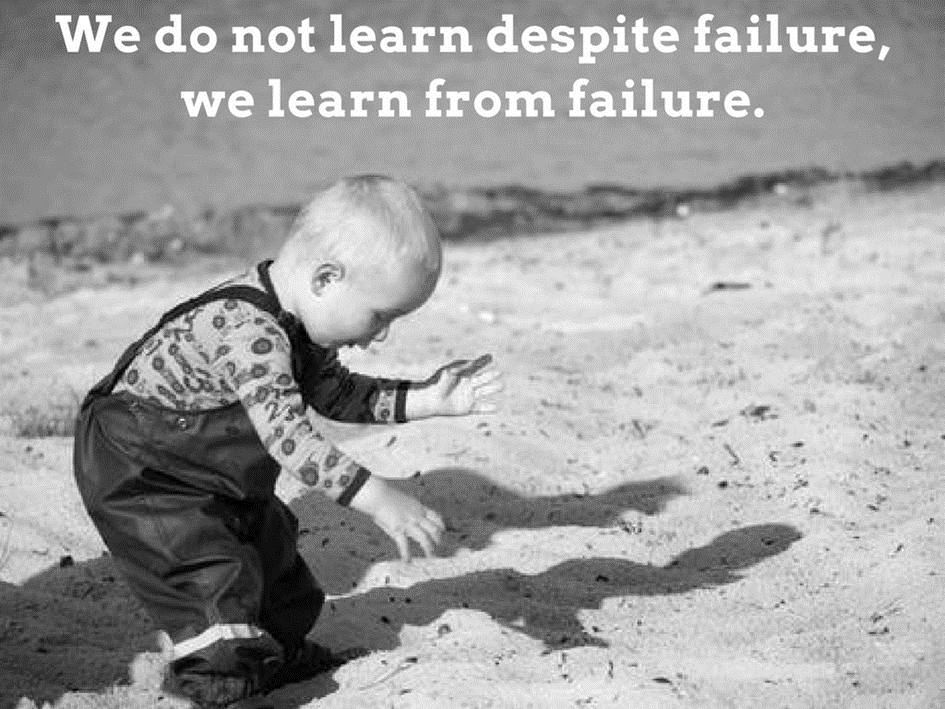
Therefore, you should not lose faith in yourself just because something is not right. A child falls several times while learning to walk. But you don't hear a kid say walking is not for me. He believes in himself; try again and again. He keeps trying until he can master walking.
Similarly, you must believe you still have what it takes to be successful and then go after it. In fact, persistence and unstoppable winning is one of the key traits of successful entrepreneurs. Even if you're disappointed, you shouldn't let failure cloud your dreams.
Making the Right Decision
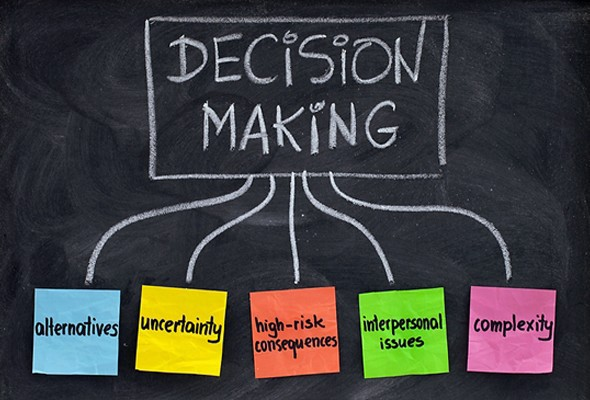
During the day, individuals are constantly making decisions. Every action we take and every word we speak throughout the day is the result of decisions made. It doesn't matter if the decisions are big or small. The important thing is to make sure that the decisions made are the right ones. Being able to make the right decisions for every choice made brings happiness and success to individuals. However, making the right decisions continuously throughout the day is defined as a behavior contrary to the nature of the individual.
So, what should individuals do in this situation? Although we cannot fully learn to make the right decisions all the time, we can increase the rate of making the right decisions. This is where the right decision-making techniques come into play.
The most important thing to do when making a decision is to stay calm. Making a decision under the influence of your emotions prevents you from making the right decisions. Not making hasty decisions shows its importance here. Not making hasty decisions when your emotions affect you the most will protect you from bad consequences. Not making hasty decisions pushes you to think clearly. Try to gather as much information as possible within the healthy reflection period. As soon as you collect enough information about the subject, you can make the right decisions. You will understand better that you should not make such a hasty decision.
Thanks to the information you collect during the healthy thinking period, you act on the basis of knowledge and logic. Not making hasty decisions will lead you to knowledge-based action. Not making hasty decisions will also make you a happier and more successful person. You will better understand that when making a decision, you should get rid of the effects of those intense emotions you are experiencing at that moment and not make hasty decisions.
Choosing the best option is among the right decision making techniques. Choosing the best option among the selected criteria during making a choice guides you to make the right decisions. For example, you need to book a hotel for summer vacation. Your priority for this holiday is a hotel with a rich and open buffet breakfast. Acting with this in mind, you can make your job easier by choosing the hotel by focusing only on breakfast opportunities. I think you better understand the technique of choosing the best option by visualizing this incident in your mind.
With the technique of choosing the best option, it is ensured that the decisions that are suitable for your needs are taken. At the same time, the technique of choosing the best option makes your decision-making job easier and makes you happy. It not only makes your job easier, but also saves you time. I would like to give another example of the technique of choosing the best option, starting from the hotel example. There is a site that has been constantly appearing in advertisements lately. This site brings you the most suitable hotels for your needs and criteria. In this way, choosing the best option becomes easier thanks to the site.
Good decision-making techniques include not underestimating emotions. It is very important not to underestimate emotions when making a decision. During decision making, it is more important that you make decisions based on which emotions you use instead of relying on your emotions.
That's why the concept of not underestimating emotions is very important. For example, the decision made by an individual in a moment of anger is defined as selfish and hasty decisions. An individual's decision in an angry moment is considered risky. The result of that decision can lead the individual to unhappiness. The important thing here is not to underestimate the emotions.
Because in the given example, the decision was made by relying on the angry state of the individual at the time of the decision. A decision is not made using emotions. Therefore, it is better understood that emotions should not be underestimated. While I was writing this article, I came across an interesting article during my research.
In the article, it was written that according to a study by psychologists, the people who predict life and decisions best are depressed patients. Researchers define this feature as “depressive reality”. From this research, we understand once again that it is necessary to underestimate emotions.
Changing the perspective is among the right decision-making techniques. Changing the perspective will allow you to see many things that were previously overlooked. In this way, changing the perspective will offer you to see different ways. For example, companies that say "90% fat free" instead of 10% fat on a chocolate you buy will not be able to fool you. As you start to look at things from different perspectives instead of looking at things as you want to see them, you start to make more accurate decisions.
Changing the perspective makes decisions more confident. The act of changing the point of view based on the fat ratio on the chocolate creates changes on the idea of buying that chocolate. Changing the perspective allows you to see the texts written on that chocolate from different angles. Therefore, learning to see from different angles also allows you to make the right decisions. It also makes you feel confident in your decision. Changing the point of view is therefore considered very important.
What is Speculation ?
One of the terms most frequently encountered by people who have invested their savings and investments in the stock market is the term speculation. The term speculation is one of the most frequently used words in daily life. Although I have no idea whether it is used consciously or unconsciously, it is one of the terms I hear very often. It is especially common in news programs, discussion programs and economy bulletins on television. As a sociologist, it is a term that is frequently used in philosophy classes, speculation.
While it has the meaning of diversion in the discipline of mathematics, it means fiction in general terms in philosophy. It is used as the meaning of change in the economy. The term speculation is mostly used in the field of economics today. It is a term that economists use very often in their speeches.
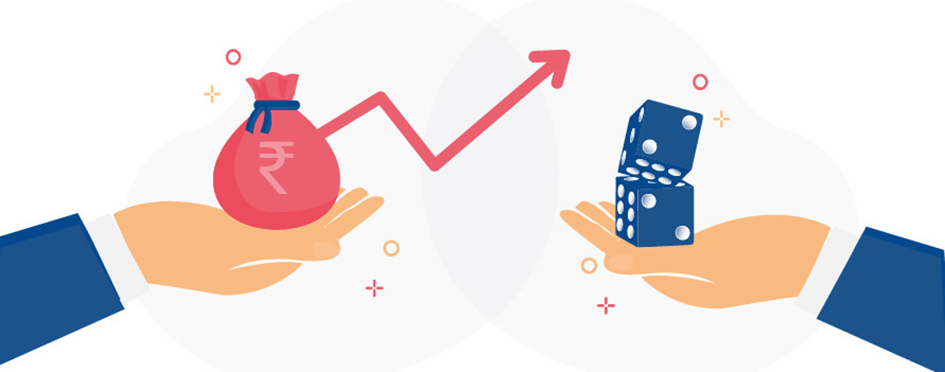
Speculation is a way of earning profits by taking risks and taking into account the expectations formed as a result of the evaluation of today's market conditions. It is the task of determining future price indices, taking into account the current conditions of today. Prices rise or fall as a result of the determinations made. The main purpose here is to ensure that investment instruments traded in the stock market are bought at the lowest price level. At the same time, it is to earn a high profit from the difference by placing a sell order at the highest level.
Speculation is today perceived as a crime. However, this term does not fall within the concept of crime. Contrary to what is thought, the reasons for the existence of markets and stock exchanges encourage individuals to do this work. By encouraging individuals in this direction, it is aimed that each security reach the price it deserves. This term does not always provide a profit rate to its investors. It happens when investors make a loss. People who want to make a profit and achieve success in this field should have at least basic knowledge.
I would like to continue by giving concrete examples of the concept of speculation. For example, let's take 2 automotive tire manufacturer companies traded in the stock market. The sales and profit rates of the stocks of these two manufacturers increase every year on the date of transition to winter tire application. Therefore, it is normal for stocks to rise. This is positive speculation. Investors, on the other hand, will buy the stock at a time suitable for this period, if they think through this situation and deem it appropriate.
Let's continue with the definition of this term. It is the execution of buy-sell transactions with the help of an investment channel with the expectation of a certain value by assuming a certain risk with the expectation of profit return in the future.
***What is a Speculator?***
A speculator is a person who makes transactions to profit from speculation. In order for a person to be called a speculator, that person must have reached a certain level in the field of stock market. There are also those who define it as a person who takes on certain risks. Speculators are people who determine the risks they will take in their transactions. These are the people who continue their buying and selling transactions by following and interpreting the current markets. The people who correctly determine the trend movements of the price movements, thanks to their knowledge, are called speculators.
The presence of speculators is very important. Because these people increase the transaction volume. At the same time, the liquidity ratio is also increasing. When this is the case, the increase in cash in the market accelerates. As a result, expectations can be met. A speculator is someone who buys securities at an affordable price and then sells them higher than the purchase price over time. It buys securities when it thinks it is the cheapest and sells it when it thinks it is the highest. He is a risk taker relying on his knowledge and ability to evaluate information.
The existence of speculators satisfies the supply and demand of other investors seeking hedging. The absence of speculators reduces the liquidity ratio in the market. At the same time, it does not meet the supply and demand of market investors. Some value attempts by speculators can lead to price imbalances. But they ensure that the difference between forward and spot prices remains within a certain range.
Speculation types are generally divided into two. Speculation types consist of two types based on supply and demand news and price trend forecasting.
Based on Supply and Demand News: I said there are two types of speculation. This topic is divided into two in itself. The first of these is price level traders. News, documents, etc. to help them evaluate the price level. they are dealing with. The other is the news merchant. They are interested in news that signals the changes in supply and demand that investors expect. In both of them, they do not work in stock market halls in order to hide their information from other investors. They continue their business in their personal offices.
Based on Price Trend Forecast: Like other types of speculation, it is divided into two under this heading. The first of these is people who make short-term purchases and sales. Those who perform their transactions in time intervals such as a few minutes are included in this category. Those in this category buy when the price drops, and sell immediately when it rises in a short time. Profit rates are low as their holding period is short. The other is position traders. They are the ones who hold their positions for a long time. If they believe the price of a product will drop, they sell futures contracts. If their expectations go the way they want, they make a profit through reverse trading.
Do you want to beat the monday blues?
Many people have met with Monday Syndrome at least once in their life. The syndrome, which can be defined as the difficulties experienced in returning to work after the weekend break and starting the new week; It manifests itself with symptoms such as stress, fatigue and anxiety.
Although it is possible to overcome these with minor changes in lifestyle, the problem can be much more challenging and repetitive for some of us. But you can turn this unpleasant situation into an opportunity. With some revisions, you can make your business life more efficient and even make radical changes in your career.
Your energy, which started to rise close to the end of work on Friday, is almost at the ceiling! You have a whole weekend of freedom ahead of you. What a beautiful life, long live it!
But this big ball of energy starts to creep on the ground after it goes out on Sunday afternoon. You have to prepare for the next day. But you feel so tired that you can't even get up from the sofa. It's like you're not the person who had fun with his friends yesterday. A palpitation when you think of your workplace, a pain in your temples. As it gets dark, it's almost as if you are getting dark inside;
**Welcome Monday syndrome!**
Many methods are suggested to deal with this situation.
Providing sleep and meal arrangements
Doing relaxing physical activities such as sports/Yoga
Planning the day effectively is a few of them.
However, although these solutions may relieve you temporarily, they may not be enough to completely eliminate the problem. Therefore, when the Monday Syndrome comes knocking on your door, you should ask yourself the following question:
****Why did this come out of nowhere?****
This question is the first step to turn your adversity into an opportunity. Because the answers you will find will give you a chance to go to the source of the problem and fix it. Thus, Monday Syndrome can come out of your life completely.
In addition, as you question the underlying causes, you can find clues about your work life that you may not have noticed before.
Maybe it has become a habit for you to postpone Friday's work until next week. Here's another invitation to Monday Syndrome! Yes, Fridays are king, but starting the new week with a cleared agenda will make you feel great. Be you, do not forget to complete all your work with the high energy of Friday. Thus, you will start the new week happy and productive.
**Or is Confucius Right?**
*“If you do what you love, you never work a day.” said the famous thinker.*
Indeed, studies have shown that people who do their favorite job are more happy, have lower levels of anxiety, and enjoy life more. Of course, Monday Syndrome cannot even come close to them.
Today, we can come across a large number of people who, after taking a long journey in their careers, have changed their course and sailed to a different field.
****Ask yourself****
Do you really love what you do?
How satisfied is your job spiritually?
How well does it fit with your profession, talents, and interests?
Can you focus on that moment while doing your work and forget everything else in your life?
The answers you will give to these and similar questions may be an opportunity to direct your energy buried on the couch on Sunday evenings to a new area in your career.
Start your career journey
1) Make a list of business areas for yourself, taking into account the vocational training you have received or are receiving, and other supporting education and work experiences.
2) For your dream career; what areas need improvement - what areas need mastery? Make a list (it would be more accurate to consider it in terms of professional, personal development, social communication)
3) Divide the next 5 years into years .5. Every year, starting from now, in a way that will reach your goal in the next year.
Create your target one by one.
Sample:
a) At the end of 1 year, I will either switch to a company that supports my career, or I will find a job, or I will come to the following position at my current workplace…
b) Write down the trainings you will receive and the experiences and experiences you intend to acquire, together with their dates. The trainings you will receive may be through courses-seminars, reading books on the subject or following publications.
c) If you are aiming to find a new job, it can be researched which business lines and institutions can be.
Each action should be written individually with the targeted date.
4) Determine each year until the end of 5 years. For the first 2 years, the dates should be clear. But other years can be determined as the subject title and approximate dates.
5) While planning, review your resources such as financial, time, and labor. Check if it is needed and whether it requires additional measures. For example; Will financial support be needed?, how much? Should I spare time and effort?
So far in our career journey article series,
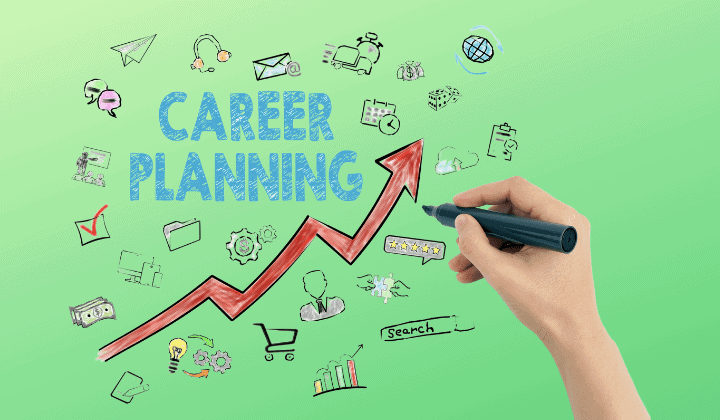
The importance of career planning
***to know ourselves***
**Defining our career and setting goals**
**- Planning our career**
We covered the topics. Our topic in this section is to take action according to our career plan. It is what we pay attention to when taking action.
1) To be determined as the studies and actions to be carried out together with the dates of the first 2 years in the previous section.
I have written. Now it is the crux of the job to review and do the preparations, priority issues, and actions required for each action.
For example, let's say you plan to study a foreign language; You have attended the course for 3 months. If you realize that at the end of 3 months, it will be more important for you to study a foreign language in the vocational field, you may lose both money and time. In order to make the right decision;
· At what level will you start?, Do you need professional or technical English? Or my speaking practice?
· Investigation of foreign language education institutions and fees
· How close should the course be to your home or workplace?
· How will you pay the fee?
Researching and deciding on such issues are important steps that will make the planned action more efficient and effective.
Similar studies should be carried out for each action. It will be better if these studies are included in the plan at the planning stage.
2) One of the issues that we need to be most careful while taking action; Our career plan is based on our mission, vision and values in life. We need to set an image for ourselves that is the harmony of our Mission-Vision and values. In line with the image we have determined, changes may be required in our behavior style, habits, body language, way of speaking, and dressing style.
3) The difficulties encountered during the action phase may bring you to the point of giving up. In this case, we should not give up immediately, envisioning our dream career frequently will increase our motivation.
4) Reviewing the progress and development or the process on a monthly or quarterly basis will both motivate you and give you the opportunity to complete the missing aspects.
5) Revisions can be made in the plans in line with the emergence of new options, opportunities or steps that lose their importance during the actions.
6) Reading success stories or learning about the life stories and struggles of successful people will again increase motivation.
Another important issue in career planning and management is that our private life, social life and business life are a whole and we should know that balance is important in the long run.

Perspective...
Some words that we do not know and examine the meaning of, advance by opening new doors in different fields from their formation to the present. The word perspective is one of them. The definition you will find for Perspective when you search is; It is in the form of “view, point of view. Although its definition is so clear and short, its effects on life have been more complicated and long.
When perspective was discovered during the Renaissance; fields such as art and philosophy opened new doors and found new meanings. And what was known was reshaped. The perspective actually shed light on the beginning of a new era. Not only art, science, architecture, but also people's mentality was transformed and deepened with this new visual technique.
So, what exactly does the word perspective, which is frequently mentioned today, mean and what does it do? Perspective; In the art of painting, it is defined as a projection technique used while drawing. This technique; It reduces the existing three-dimensional state of objects to a two-dimensional one, allowing them to be depicted on a flat surface with a realistic appearance.
A successful perspective application means more realistic pictures. In addition, perspective is a word that you can come across in different fields. However, no matter which field you encounter, the common definition of perspective in theory is perspective, although the purpose of use varies. For example, while it represents the point of view on the drawn object in drawing processes, it is in a position to represent the point of view on events in philosophy.
Perspective is also defined as the illusion of depth in some sources. From this explanation, we can say that perspective gives pictures a more realistic look and adds a third dimension to two-dimensional objects in the picture. The method of depicting the objects or spaces we see on a plane with various drawing techniques in accordance with reality can also be accepted as a definition for perspective.
The perspective effect is a technique that dates back to the past and is still considered an important element of the art of drawing. The information that people who want to draw what they see more realistically used a tool called a perspectograph to facilitate perspective drawing in the Middle Ages is among the information that illuminates the past of perspective.
The main rule in this technique; Objects that are close appear larger and more detailed than those farther away. As the objects move away, their appearance differs from their real appearance in terms of dimensions and colors, they become smaller and fade. This is a situation that has always existed but was discovered by humans much later. Perspective; It is accepted as a drawing art that allows to easily draw the size and color changes as close to reality, depending on the distance and closeness of the objects to the eye, up and down from eye level.
Perspective for drawing is considered roughly as two main topics in many sources. These are line perspective and color perspective. Line perspective is expressed as parallel lines getting smaller and joining at infinity. Color perspective, on the other hand, is about the changes in colors as the light changes and the position of objects moves away from us. Looking at academic articles, the perspective is actually; You will see that it is divided into parallel perspective and conical (central) perspective.
**Parallel perspective**; continues to be divided into sub-headings as axonometric and oblique perspective. Conical perspective, on the other hand, is divided into sub-headings as conical perspective with one vanishing point, two vanishing points and three vanishing points.
The most important thing to know here is the term "escape point", which you will encounter often. In the logic of the escape point; It is assumed that the extensions of all horizontal lines bounding a drawn object reach the selected points on the horizon line. The lines parallel to each other are considered to intersect at the same point on the horizon line. This intersection point is called the escape point.
Why Career Planning Is Important
Career life; It is an important slice of life or stage where we combine the education and knowledge we have received and the experiences we have gained, and which we identify with ourselves. Playing our role in this scene in the best way will be by loving what we do. To love a job or field of activity;
We can define it as being happy as we feel/think the most suitable for our own personality and style and we believe that we can do the job well, and that we can become more masterful with continuous improvement, and as we do it. This type of work will also automatically bring success.
For a career plan that will make ourselves and our environment happy;
The main activities that will raise awareness about knowing ourselves first; answering various tests, questions, constantly observing ourselves impartially (such as our strengths, values, areas open to improvement)
It is important to have sufficient knowledge and research about our fields of work (professional, experience, field of interest). how much we can push our circumstances.
Setting approximate goals for our future, 10 years, 5 years later (to create goals that will include career and private, social life) will prevent distraction in life, being negatively affected by fluctuations, and will motivate on the way and help to overcome obstacles.
Of course, life is not entirely under our control. We can think very differently from today's thoughts after 2 years by showing continuous change and development with life. However, we can also use our opportunities such as revising the targeted path at certain intervals, making changes in decision, using the right to choose. We are also responsible for the choices made by analyzing the advantages and disadvantages of each change and choice. When appropriate, responsibilities should be taken for risks.
Such is the thing in life...
In order to walk happily and successfully in your career, first determine your mission and vision. In Chapter 2, we gave tips on getting to know yourself. Using these tips, decide what your mission could be as an individual in life and with what vision you will achieve your mission.
When defining your career, take care that it plays a role in your mission.
Our Mission - Your vision and career should go hand in hand.
1) What should be the ideal career for you. Imagine the ideal career in your mind in detail and write them all down.
2) Define the career you dream of about yourself. Do not limit yourself to what it will be like, this will not happen, and there are realities of life. Think as broad as possible. Everything starts with a dream.
3) Compare the ideal career definition you defined in Article 1 with your dream career, and record the similarities and differences. Pay attention to whether the similarities are areas that are supported by your strengths, and the differences are areas that are hindered by your areas that are open to improvement.
4) Recheck your ideal career in your dreams. For this, visualize your image, visualize it as if it happened. Pay attention to how you feel. If you feel happy and excited, start thinking about how it could be (Your mind and consciousness will definitely find ways. Give yourself a few weeks for this) .If your dream does not excite you or does not give you a feeling of happiness, it will be necessary to try alternatives.
5) If you have acquaintances who have actually lived the career-like life you envisioned, consider whether there is any advice you can take from them.
6) Do research on the job field of your dream career. Find out what kind of knowledge and experience it requires.
7) Write in detail where and how you will be on your career journey 5 and 10 years from now.
Your goal should be clearly defined. What is your status, in a company, where and what will you be doing? How will you dress, your relationships, your communication. Describe your private and family life, hobbies and social life.
Confidence and Happiness
Anyone can achieve their goals with enough effort. At this point, a self-confident person makes breakthroughs faster and more decisively. An insecure person, on the other hand, makes decisions more slowly and hesitantly. This shyness prolongs the path to success. Thus, he follows life further behind. Many expect an incentive. Progress takes place when the expected support from the people around comes.
Many people, on the other hand, cannot bring their talents out because of the fear of insecurity. He continues his life as a news about all the special skills in him. When a person believes in himself and discovers his talents, success cannot pass him by. It could be a loved one of high status. This success can also give the person self-confidence later on. However, some people see their own efforts as worthless, no matter how successful, and attribute their position to luck. Although he receives a lot of praise for his achievements, he always feels incomplete. He cannot enjoy his success. The reason for this is that the person does not value himself.
A person seeks happiness in every job he does, wherever he goes, in every person he spends time with. That's why he embarks on new ventures and believes that the result will be perfect. He tries to meet new people and thinks that he can relieve his unhappiness with them. When everything hits a dead end, he wants to run away. He has consumed happiness and peace where he is. He goes after different adventures.
In fact, all this effort is not to find happiness, but to escape from one's own inadequacy. He thinks that he will be complete with someone else in another place, in another job. One of the reasons for these thoughts is the lack of self-confidence. These people are incapable of being alone with themselves. He wants to have someone with him on his way to the theater, it is painful to sit alone in a cafe, he always waits for approval from someone else even when making his own decisions. When he is alone, he falls into great despair and unhappiness. Thus, he becomes dependent on another.
However, if he believes that he will realize his wishes on his own, and sees that he can benefit from the beauties of life on his own, he will not need anyone. Maybe he will make peace with his city and his job. We must accept that not all negativities in life are caused by external factors. We must recognize our own faults and shortcomings. If we are struggling in an unchanging order, we must change ourselves. When we realize our inadequacies and change, there will be no need to chase happiness, it will come to us anyway.
When we enter a new environment, the first thing we notice are people who are upright, confident and assertive. In any case, they express their opinions. Everyone feels their self-confidence. In this environment, no one notices a person who is afraid to speak his mind and sits in a corner. Strong, self-confident people are preferred more in choosing friends.
Especially in business life, the back of a self-confident person is always more crowded in line with personal interests. Because it is thought to be strong with the image it gives to the outside. Confident people are also preferred in private life, as many people are looking for someone they can feel safe with. These people are shown more respect.
The shy person may seem weak when viewed from the outside. That's why people may approach him with prejudice. Even if he is a very smart and good person, he is not given much importance and respect due to his weak stance. He is not given the value he deserves in friendships. By looking at these examples, we should choose the side we want to be, and if necessary, change our lives in this direction.
The importance of body language
Although it is wrong, people judge books by their covers.
There is a common language accepted by all humanity, body language. People have tried to communicate with body language for centuries before they started to communicate with each other by speaking.
They tried to express their feelings and thoughts to the other party with certain gestures and facial expressions and shared their needs with other people.
This communication tool, which is the determining factor in effective communication between individuals and takes people under its wing when used correctly, in a way forms the basis of our human relations.
Leaving a good image with your body language in negotiations, recruitment processes, meetings and sales negotiations is to use this language in the most effective way.
People communicate in 3 different ways; verbal, written and nonverbal, that is, with body language. On the surface, verbal communication may seem to come to the fore more, but the results of the research are surprising.
Namely, in communication, words and phrases are 7%, 10%, voice and speech are 30%, 35%, and body language is 55, 60%.
There are some people who listen with pleasure no matter what they say and you don't realize how time flies next to them. Because these people make their discourse interesting by adding gestures and facial expressions to their expressions with body language.
According to research, every move made by people who do not know each other from the moment they first communicate is processed in their subconscious and the brain automatically positions the other side within 30 seconds.
Even if you are the smartest person in the world, if you use the concept of body language incorrectly, you cannot take an active role in your social environment and you will be seen by people in the lower lanes.
Start by correcting your posture. Your back should always be straight and this straightness should not be too obvious and should be at a level where you feel comfortable. Otherwise, you will give the opposite side an air of resentment.
Adjust the direction of your body according to the person in front of you, this will arouse a feeling of sincerity towards you. Keep your legs and hands slightly open, do not give the impression of a closed person.
When talking to the person in front of you, lean forward slightly, this will make him feel that you value him subconsciously. Use imitative body language without exaggeration. Because people feel close to people who are similar to them.
The use of body language in job interviews is very important. Don't mess with your hair or anything all the time. This creates a negative image and makes you feel tense.
Using your hands is the most important phenomenon in interacting with body language. Be careful to use it when the conversation passes to you and not to play it in a way that will distract the other party.
The first handshake should not be lifeless as dead and hard as iron. Have a confident but gentle handshake technique.
Do not miss smiling and eye contact, but keeping eye contact excessively and not looking away in between should not be in a situation to disturb the other party.
Another important factor in the use of body language is to catch the same tone and frequency with the person you are communicating with. When you provide this, he will not feel uncomfortable and will feel more intimacy.
If you are in a job interview, take small notes. This will make the person you communicate with feel that you value their words.
If you want to convey your messages powerfully and gain an advantage in all kinds of interviews, interviews and communication processes, you need to use this concept called body language very effectively.
New Work Habits
As societies evolve, the way we work also changes. In the past, large companies often operated in a highly hierarchical order with hundreds or even thousands of people working simultaneously in the same place. But times have changed and flexibility concepts have become the focus of today, with work patterns that increasingly cater to the needs of employees. In the competitive market, new trends aiming to attract and retain 21st century talent are increasing day by day.
*1. Remote Work*
*The increase in the n*umber of remote and freelance workers is one of the clearest signs that the “9 to 5 am” shifts in offices are a thing of the past. According to a study by Lancaster University; By 2020, 70% of all organizations in the UK will have embraced remote working, driven by opportunities such as "high productivity, improved employee health, attracting and employing talent, reducing accommodation costs". Basecamp, the American collaboration software company, is pioneering this flexibility with a total of 50 employees in 32 cities in the United States.
Service providers around the world are flocking to this new and vibrant community as flexibility becomes a driving force. In France, Sodexo offers more than 600 collaborative spaces in partnership with remote work specialists called Néo-Nomade. With the rise of the 'self-employed economy' and Uber-style business models, it's not surprising that 20-30% of the EU and US workforce is now self-employed and working in temporary jobs.
*2. Developing Employee Skills*
Although we live in an era of technological growth, few employees have the skills necessary to achieve a satisfying career or meet their country's growth needs. While 40% of companies in Germany and the USA have difficulty filling open positions, this rate is around 63-64% in emerging economies such as India and Brazil. Moreover, we will need much more skilled workers in the future.
As a result, big companies like McDonald's, Walmart, Starbucks and Gap are investing more and more in courses where their employees can develop their skills through individual programs, especially considering that new staffing and orientation processes cost them twice as much as their salaries. The skill development approach, which is also popular among employees, increases employee morale and increases continuity. According to a global survey by PWC consultants, 74% of respondents are ready to acquire new skills or be retrained to increase their likelihood of being hired.
*3. Empowering People with Technology*
HR departments at the world's leading companies use technology to drive the change agenda. With the emergence of new tools and platforms, HR teams are launching new services that will increase the experience and productivity of their employees. Internet of Things (IoT) technology with various connected devices is among the technologies that HR professionals use to present these developments.
While virtual assistants can gather and compile information from written and verbal orders, 'smart buildings' can seamlessly manage lighting, heating/cooling, reducing electricity bills by 20% and building security costs by up to 50%.
Wearable technology is another of the valuable IoT assets. Wearable technologies can serve as a guide for companies to design more convenient facilities and services for their employees. They can be used as security monitoring systems in industry and construction areas . Austrian company SmartCap Technologies has developed a headband that monitors brain waves, placed inside hats and hard hats, alerting the wearer about the onset of micro-sleeps that can cause fatigue and danger. According to a US survey, 58% of respondents are open to the idea of wearable technology, saying they would agree to wear a device that will help them do their job better.
*4. Employee Experience and Human Capital Management 3.0*
Employee willingness to adopt technology like the IoT becomes important when two-thirds are not engaged. HR departments are using a technology called Human Capital Management to take a new approach to engagement to address this issue. HCM 3.0 in its final form; The company aims to maximize the values of its employees by developing strategies in line with five main headings, including reward programs, learning, health and wellness, social participation and employee surveys/analysis.
Therefore, digital platforms play a major role in HCM's effort to bring out the best in the company's employees. According to a survey conducted in Latin America, 40% of some companies are using technology to highlight their three main HR priorities: efficiency, engagement and corporate culture. The figures regarding the use of this technology are above 70% for companies with more than 10,000 employees.
Is education an investment?
Financial markets determine the value of companies by their profitability and cash flow expectations. Unfortunately, the measurements used in making these evaluations focus on the past and present performance instead of accurately showing the future potential of the companies.
For example, when the expenses related to the training given to develop the competencies of the company employees are considered as the expense of that period, it has a reducing effect on the profit of that period. However, the development of competencies has a very positive effect on the future value of a company. According to a study conducted on this subject and covering 3000 companies, the share values of companies that invest more in their employees have increased approximately two times compared to average companies in the five years following this investment.
Therefore, when evaluating companies, it is necessary to look not only at financial statements and balance sheets, but also at the competency assessments of human assets. Ensuring that education expenditures are viewed as an investment rather than an expense item helps financial statements better reflect this reality.
Companies often perceive training costs as merely the pay of the trainers. For this reason, they cut down on educational activities in times of crisis! However, the most important cost of a training program is the time cost of those who attend that training. In periods when business slows down, crisis periods are the ideal time to develop competence, as this cost is also minimized due to the decreasing alternative uses.
Another important mistake to be aware of in the evaluation of education investments is measuring only inputs, as is the case with many areas whose outcomes are difficult to measure. In other words, the only criterion followed by the management is training-hours per employee. The decisions to be made as a result of this measurement technique are only to increase or decrease this criterion. However, there is a need to develop measures regarding the benefit obtained from the training received, even if it is difficult. Thus, only “how much training?” not only to the question of "how much benefit" and "from whom, what education?" Data that can answer questions can also be collected.
The benefit of the training is provided by the use of new information after the training. Therefore, the preparation of the business environment provided in the period after the training in accordance with the use of new information and the planning of the timing of the training accordingly are factors that increase the efficiency of training investments. The concept of “just-in-time” increases productivity in education as well as in production. The widespread use of technology in education makes it possible to provide just-in-time education at many points.
Another issue to be considered is that the planning of training activities should not be seen as an activity that is carried out only depending on the job of the human resources department or the demand of the employee. Because education is only part of people management.
When training planning is considered as a part of both performance management and career planning, it can yield more efficient results. Performance management and career planning are among the most important duties of senior management. Therefore, training planning should be considered by senior management as an investment in performance management and career development processes.
In summary, the fact that companies see their training expenditures to develop their employees' competencies as a valuable investment helps to increase company value. In order to make progress in this regard, a change in mentality is as important as changes in legislation.
Information management
The way to create value in the information age is to use information resources effectively rather than physical assets. Therefore, many methods and tools are being developed for knowledge management.
However, it is not possible to ensure the effective use of these methods and tools without understanding that knowledge is a life cycle just like products.
The life cycle of knowledge can be examined in four dimensions: the idea stage, the testing stage, the diffusion stage, and the standardization stage. Management of information at each stage requires different approaches.
Let's first use the development of knowledge on Total Quality Management as an example to explain the life cycle of knowledge.
The idea stage of total quality management concepts took place in the 1920s-30s when Deming and Juran realized that it was not possible to improve quality without the active participation of top management during their statistical control work.
However, this idea, which developed in the USA, did not enter the testing phase until Deming and Juran went to Japan in the 1940-50s.
Japan's achievements in total quality management enabled information to reach the diffusion stage and to be used all over the world in the 1970s-80s.
Since the 1990s, information has become a standard both by being among the compulsory courses in universities and by ISO 9000.
The position of knowledge in the idea stage is full of uncertainties. Much information at this stage does not reach the later stages. Organizations that create value from knowledge at this stage (such as producing a new program, finding a new molecule) must encourage creativity. Therefore, they need a human resources system that can accommodate people who are creative but display extreme behavior. Creating environments where people can comfortably experiment and come together in non-hierarchical environments gives positive results for this stage. Information systems should also prioritize managing people's communication well, not very detailed information banks. Rather than engaging with a large number of stakeholders at this stage, it is more beneficial to collaborate closely with a small number of stakeholders who are inclined to test existing knowledge, challenging and creative ideas. Because ideas are still raw and in need of testing. Moreover, it is not preferable for the information to pass into the hands of competitors at this stage.
The position of knowledge in the testing phase is that its usefulness needs wide-ranging proof. At this stage, information is shared with reliable, knowledgeable people and institutions. However, information that does not have patent protection needs to be carefully protected from competitors at this stage. At this stage, there is a need not only for those who produce new knowledge, but also for practitioners who have application experience and are respected by leading customers. For information sharing environments, it should be ensured that a limited number of knowledgeable people interested in the same subject can communicate with each other wherever they are in the company. At this stage, sharing knowledge at a general level is helpful to mobilize lead adopters.
When information reaches the dissemination stage, it is necessary not to hide it, but to share it as quickly as possible. Because, at this stage, it is not those who know more, but those who are faster and can create a brand. Companies that create value from knowledge at this stage predominantly need practitioners. At this stage, knowledge should be shared not only among experts, but also among all users.
It is already widely used when information comes to the stage of standardization. Therefore, it is possible to switch to contract-based work in human resources. Databases, benchmarking information, access to information accumulated in different sources come to the fore.
It is very difficult for companies to create value across the entire knowledge lifecycle. Because each stage requires different competencies and different systems. Therefore, companies of the information age also have to decide on which phase to focus on.
In the information age, it is necessary to be knowledgeable and focused to create value by managing information.
Win people, be successful in business
Total quality management is a management philosophy based on human happiness. One of the most important concepts that forms the basis of the Excellence Model developed to measure the efficiency of use within an organization of this philosophy is that employees with high motivation and participation also improve their business results.
Another important concept introduced by the Excellence Model is the principle that "unmeasured performance cannot be improved". Measuring employee motivation and engagement is done at two levels: Perception measures and employee-related internal performance indicators.
As the number of institutions implementing total quality management in our country increases, the use of employee satisfaction surveys also increases. The accuracy of the data obtained from these surveys depends on the good design and implementation of the surveys. There are some points to consider in order to use satisfaction surveys well.
Employee satisfaction surveys serve four main purposes: to be a regular communication tool between employees and management, to be a management tool where improvement opportunities will be caught by identifying the effects of managerial behaviors on employees, and a personal development where employees can learn lessons for themselves by evaluating important issues for the organization with a holistic view. to be an intermediary, to be an early detection tool for problems with the institution.
In order for the satisfaction surveys to be useful, there are issues that need to be considered, from the design to the implementation stage, from the evaluation of the results to the determination of the necessary institutional change projects.
First of all, in order to increase the comparability of the answers given to a survey, it is necessary to compose the questions in a way that is based on results-oriented, observable behaviors. For example, to measure leadership effectiveness in an organization, “Are you satisfied with the leadership of the organization?” Instead of asking the question “Leaders' personal participation in the development of the organization's management systems”, the question gives clearer results.
In order to test the consistency of the questionnaires, it should be ensured that questions that can be tested with the data obtained outside the questionnaire are also included. It has been found that limiting the questionnaire so that it can be completed by employees in less than half an hour increases the consistency of the answers. Therefore, particular emphasis should be placed on issues that are thought to have a direct impact on the company's business results.
In the design of the questions, special attention should be paid not to include more than one concept in a question and not to use words that have a distinctive evocative feature in the society.
One of the trends observed in survey studies is that the answers are given in the direction of agreeing with the questions, especially towards the end of the survey. In order to reduce this tendency, it is useful to ask questions in such a way that the expected answer is negative in about one-third of the questions. For example, “Did you pack your suitcase?” The answer to the question "Did you leave your suitcase somewhere after you got it ready?" like asking the question.
In the survey studies, it has been determined that giving the answers on a numerical scale between 1-5 or 1-7 and expressing the scale with words determined at only two ends of the scale gives healthier results. In addition, the choice of "I don't know" among the answers increases the consistency of the answers. Evaluation of all questions with a similar scale also increases the consistency of the answers.
The tendency to choose the first and last options in questions such as "Sort in order of importance" makes it difficult to evaluate correctly.
It is of particular importance to provide assurance that confidentiality will be protected in survey studies. In addition, the limited number of questions about demographic characteristics and the fact that they are included at the end of the survey also increase the reliability of the answers.
One of the most important issues to be considered in employee satisfaction surveys is to analyze the survey results well, to share them with the employees and to initiate improvement works as soon as possible. Otherwise, the survey study may become a dissatisfaction-increasing study. While evaluating the results of the survey studies, it is necessary to look at the means, the variation between the answers and the number of answers together. It is more important to evaluate the answers given to all the questions focused on certain topics together, than the answers to the individual questions. Considering the answers not as accusations but as valuable direction indicators that point to opportunities for improvement increases the usefulness of survey studies.
Conducting employee satisfaction surveys on a regular basis, not just once, and evaluating their results over time helps to develop an internal trust environment. It accelerates continuous improvement studies with early diagnosis.
Improve Education
*“If you tell me I will forget, if you show me I can remember, if you involve me I will understand.”*
*Chinese Proverb*
With the increase in the number of managers trained with different training techniques before and during business life, the difference in the approach of the new generation to the business phenomenon is even more striking. The use of workshops and outdoor trainings as well as classical knowledge transfer methods for the development of hard-to-transmit competencies such as teamwork, leadership, problem solving, and strategic thinking is an indication that participatory training is also adopted by companies. There are two different periods that create the difference in the approaches of game generation managers who are more creative, courageous, enterprising and quick to make decisions: Periodic Education Period and Continuing Education Period.
Periodic Education Period: The extracurricular activities that students participate in during the school years, when general information in different fields are acquired and the outlook on life is shaped, is the kick start of the competencies that can be acquired. Programs for high school and university students under the title of “Club Activities” are the places where students first meet with “business life”. Business life, economy, international relations, etc. Individuals who learn through games can see work itself as a game during their working life and can offer relatively more creative solutions.
JA (Junior Achievement, Young Achievement): It is a program that was started in 1919 by an American businessman to make his son love the business world and the economy. Today, it provides pre-university economics education to an average of 6 million students in 112 countries, and teaches how to establish and manage companies practically. Students who establish a real company, sell stocks for the required capital, market a real product, pay taxes and distribute the profits as dividends, gain experience in how to manage a company in every aspect years before they start their business life. In addition to these activities, it has been observed that students who receive information about different professions behave more consciously about their career choice, according to a study conducted in the USA.
MUN (Model United Nations): A copy of the United Nations, apart from being a “game”, MUN creates an environment for high school and university students where each group represents a country and real political issues are discussed. Students who are trying to convey the values that their "country" defends in an environment where the current issues being discussed are handled with very different perspectives, have to think strategically in order to influence the outcome and shape the report that will be written at the end of the meeting in the way they want.
Team Sports: Sports that enable the development of competencies such as teamwork and leadership ensure that requirements such as time management and goal setting are performed at an early age.
Continuing Education Period: Unlike the periodical education period, it takes on a more participatory structure with the workshops held in the business life, where the education is given according to the constantly changing business needs. Outdoor training programs that encourage different thinking rather than providing information on a certain subject are the presentation of real-life problems to employees in a different atmosphere. Depending on the aim to be achieved with the training to be given, both models have their strengths. Classical training techniques are a method aimed at informing employees about a particular subject and the results of which can be turned into benefits in the short term. Outdoor trainings, on the other hand, encourage employees to think differently in situations that require creative solutions, instead of sticking to written texts, and to overcome problems in dynamic environments where mutual interaction is experienced. For this reason, game-based training is part of a long-term strategy that can lead employees to success in business life, whether in the period of continuous education or in the period of continuous education.
Managers who are trained with different and participatory training techniques during the period of periodic education and continuous education are able to comprehend the whole more easily and offer more creative solutions. The fact that the knowledge or competence desired to be conveyed in participatory training is approached from different perspectives creates a multiplier effect and ensures that the training given is more efficient in the long run. In summary, game-based training is not only more enjoyable, but also offers an opportunity for more effective preparation.
Why is Risk Management important?
*“A gain without risk, experience without danger, being rewarded without working, is just as impossible as living without being born.”*
*A.P. Gouthey*
Developments at the end of last year showed that companies were not prepared for risk management. As every entrepreneur knows, there is no profit without risk. However, it is often forgotten that failing to "manage risk" is tantamount to not doing your job and gambling.
For a good risk management, first of all, potential risks must be identified. Conducting a study on the basis of risk categories in risk determination prevents important risk areas from being forgotten. For example, each company must determine its risks in terms of inputs, production processes, market conditions, financial markets, illegality, changes in laws and supervisory authorities, and taxation.
The second step is to evaluate the probability of realization of the identified risks and the costs they will impose on the institution in case of realization. In the light of this evaluation, the risks are grouped and the measures to be taken are determined. For example, while risks with high potential but low probability of realization are managed through different financing methods such as insurance or leasing, investments may be preferred to reduce risks with low potential impact and high probability of realization.
At the stage of risk assessment, different techniques are used according to the nature of the risk. For example, in an environment of negligible uncertainty, bringing cash flows to their present value and sensitivity analyzes are preferred for project evaluations. In cases where there is a limited number of possibilities, scenario analysis and decision tree methods are preferred. Simulation studies and option theory are used when uncertainties and their consequences can be modeled with certain distributions.
It is necessary to pay attention to certain principles in risk management. It is beneficial to adopt transparency as a management approach in order to reduce risk. The most important factor in risk management is not the techniques used, but the experience of those assessing the risk. Therefore, working with experienced managers and consultants should be preferred. One of the most important principles in risk management is to understand well what you do not know. It is necessary to remember that every technique and model is based on assumptions and to question these assumptions. It is necessary to pay attention to the establishment of the business in a structure that will undertake different risks in a balanced way. For example, Demirbank's problem was that it built its portfolio heavily on treasury bills. It is also important to ensure regular control with a disciplined approach in risk management and control mechanisms. Regular measurement and monitoring of returns along with risks is essential for good management.
In summary, risk management is not about not taking risks. In fact, not taking any risks is the biggest risk because it means not doing business. Risk management is to establish systems that will ensure that the risks to be taken are taken consciously and are followed regularly.
Starting a new Job
In times when business is especially good or bad, many entrepreneurs try to identify new business areas to enter either in addition to their existing businesses or to replace their old ones. Especially in our country, when determining new business areas, the 'neighbour-influenced syndrome' comes to the fore. When you see a job that pays well, you try to do the same job. This approach can negatively affect both the first entrepreneur who cannot differentiate himself sufficiently and the new entrepreneur. However, in order to gain a permanent competitive advantage, operating a strategic thinking process can provide significant benefits.
The important thing is to meet an unmet need, or to produce more effective solutions by adopting a different approach that is difficult to replicate in order to meet a certain need. There are some issues that are worth paying attention to in order to be successful in a new job.
First of all, while entering a market for the first time sometimes brings very important advantages, the burdens of creating a new market are often advantageous not for the first entrants, but for those who step in and buy it at the stage when the financing power of the first company is exhausted. For example, the first hotels opened in a certain region are not for those who build those hotels, but for those who buy them later. Therefore, it should be taken into account that success in financing power planning may be delayed when entering a new market. Similarly, the failure of a business does not mean that it will not be successful in the future, what matters is what kind of original physical and intellectual capital has been created and the potential return of this capital in the upcoming period. For this reason, many companies can be successful with the strategy of acquiring companies that run out of breath, by saving time, reducing competition and making the capital created more effective. For example, big pharmaceutical companies can achieve greater success with purchases than they produce in their own R&D departments.
Another factor to be considered is that the investment made in the first entry is in proportion to the economies of scale. Let's start small first, and the lack of planning for investments to achieve economies of scale may cause others to eat the cake. Even in cases where the market is tested with small investments, resource planning that will ensure rapid growth in the next stage is important for success.
Making sure that you have the important competencies required in the new fields to be entered is also an important element for success in new business. Entering a new job, with new staff, and in a new location is too risky and often leads to failure. Therefore, prioritizing areas that will create synergy with existing competencies increases the chances of success.
In cases where market knowledge and relationships are important in the new area to be entered, existing competitors will be stronger. However, in sectors where technological developments or different approaches are important, the flexibility and probability of success of new entrepreneurs increases. For example, Dell's direct sales model has achieved great success as an approach that cannot be easily imitated by existing competitors with a large dealer network. On the other hand, Ülker's domestic distribution power and network of relations help it to gain an advantage over its competitors in many new fields.
In summary, strategy is essential for success in new businesses. While creating the strategy, while trying to identify the gaps in the market, on the other hand, the questions why our company can make a difference in filling this gap should be answered in detail.
How can we create a routine for ourselves?
Routines are important sources of motivation that make our lives easier and enable us to cope with circumstances. They create a comfort zone for the person. To change a habit or break a routine, you must first be fully aware of it. Then you can interfere with his steps, eliminate it completely or replace it with a new habit.
**Why is it Important to Break the Monotony?**
Besides the negative psychological effects, routines are not good for the development of the brain. Let's roughly imagine that by allowing the brain to generate new responses, we keep it alive. This situation inevitably takes our lives away from monotony, ensures that we do not lose our excitement and interest, and increases our motivation. Our circular life system, which we have created as a result of conscious trials, has logical integrity and meaning for us. In fact, that is why they are difficult to replace or remove. However, neurologists agree that what is difficult for the brain is what develops it.
Most likely, when you do research on routines, you will not be able to see the pessimistic atmosphere in this article. In science lessons, students are given a familiar example of the ability to drive. There are separate units in the brain to manage behavior and habit. They tell the students that if they are not actively driving and have a license after a few tries, it is not a fully acquired skill for the brain, but if they do this over and over again, it will now be managed by a different part of the brain as a learned skill. When we look at it with this logic, routines are important sources of motivation that make our lives easier and enable us to cope with the conditions. They create a comfort zone for the person. We overcome the difficulty of our first day at work by keeping up with a routine and finding our own working rhythm within that order.
The effort you put into changing the coffee mug you use every day and your decision to change countries for different experiences are part of breaking this chain. To change a habit or break a routine, you must first be fully aware of it. Afterwards, you can interfere with its steps, eliminate it completely or replace it with a new habit. These solutions, which are listed as easy, can become challenging and overwhelming during the realization phase. By creating fun alternatives, you can get the points you got from the road trip as a bonus when the result is reached.
As a result..
Yes, not spending extra energy on daily tasks saves us money. Well, with the energy we increase from here, can we become more motivated to the pleasant parts of life? Research often answers no to this question about going out of the box and taking risks. It is here that daily routines dominate the entire lifestyle. New beginnings and great transitions are powerful incentives for the protagonists of personal development articles such as success, motivation, and happiness, but this article is concerned with the process itself, not whether big changes always have positive results or not. You cannot change the working hours at your workplace, but you can change your commute, affect your relationships with your colleagues, or change jobs. If these suggestions seem sharp and over the top, it may be due to the sharpness and intrusiveness of the routines. It is possible for us to take different and new healing moves for our mental and physical health.

You Don’t Have to Be a Genius to Be Creative
Is genius necessary for creativity? Although the answer to this question is "yes" even today, the studies conducted in the 20th century reveal that it is not necessary to be a genius for creativity. A long-term experiment initiated by Lewis Terman in 1921 makes it clear that genius is not a prerequisite for creativity. Subjects participating in the study called 'Genetic Examination of Genius' are determined by passing an IQ test.
These children, all of whom are 'intelligent', are watched for many years and it is seen that some of them have very successful careers and sign creative works, while a notable number of them do not live a remarkable life. William Shockley and Luis Alvarez, who were not included in the experiment by failing the IQ test, destroyed Terman's theory of genius. Shockley and Alvarez were awarded the Nobel Prize in the following years for their successful work in the field of physics.
If genius isn't the key to creativity, what is? A few psychologists argue that the best creations come from an extraordinary moment of inspiration. According to them, thoughts float in the mind, catch up with the subconscious, and magically come out with their 'found' moments. People who believe this do not accept that the act of creating is the result of ordinary thought. However, the father of the theory of relativity, the famous physicist Albert Einstein, reveals in his own words that creativity is not just an inspiration.
It is said that Einstein suddenly found a point that stuck in his mind while he was developing his theory, as a result of a visit to his friend. But Einstein says that the solution is not determined all at once, it reaches him step by step. Many studies, even to prove the opposite, conclude that there is no such thing as creative thinking. Then he follows the same path when thinking about a problem. Only some are content with a certain solution, while others continue to think to take it one step further. Thus, he reaches the point of creativity.
**Success Comes Through Failure**
Creating something is the repeated failure that anyone who wants to succeed must dare. Inspiring success stories don't usually mention successive moments of frustration. However, the fact that these were not transferred does not mean that all the examples of creativity of many exemplary names today were successful.
**Judah Folkman Discovery**
Judah Folkman is a surgeon who has won the most important battle in the human battle against cancer. However, he achieved this success after dozens of failed experiments, many humiliations and even lack of money. Folkman put forward the theory of angiogenesis in the early 1990s. Many years ago, while working as a surgeon in the navy, he did research on the storage of blood and realized that cancer tumors were growing by forming new blood vessels.
Scientists of that period were strongly against it. Because what they see in their work is cauliflower-like white masses. However, during one of his surgeries, Folkman discovers that blood-fed tumors have spread, and the newly formed ones are white because they can't reach the blood. Folkman just can't figure out how to prevent tumors from connecting with blood vessels. Meanwhile, Folkman's salary is cut in half, barred from surgery, and the scientific community calls him insane.
However, in 1985, a fungal infection changed the fate of the experiment. Cork allows blood vessels to retract. After decades of experimentation, Folkman cures five-year-old Jennifer with his invention. After a few weeks of treatment, Jennifer's fever subsides and the tumor on her head shrinks and disappears.
Admit Your Mistakes
Being able to use resources effectively is the secret of success in management. One of the most important steps of effective resource use is to stop allocating resources to projects that will not bring results. The fastest resource recycling is to not waste it. Of course, no manager would make a blatant decision to waste resources unless it was malicious. However, once the resource utilization decisions, which were considered efficient at the beginning, gain momentum, it can be very difficult to give up even when it seems that the project will not produce the desired results. Therefore, resources can be used inefficiently to finalize projects.
When there is doubt about any project that has been started, it is useful for the management team to ask themselves the following questions: If we close the project before it is concluded, will the trust of others in the management team be damaged? Does the decision to stop the project negatively affect the careers of the management team? Would we be embarrassed by the statements we made to the public regarding this project? Would breaking the promises we made to our stakeholders for the progress of the project hurt their trust in us in the future? Do we have the risk of perceiving some positive indicators regarding the development of the project that everything will turn into a positive one? Do we fear that stopping the project will cost more than finalizing it? Would we give our opponents a weapon to criticize us?
It can be said that a management team that responds positively to the majority of these questions has a weakness in its capacity to evaluate the project objectively. For this reason, the existence of independent, impartial and independent board members with different perspectives gains importance, especially in the evaluation of large projects.
Making a plan for how to limit damage for projects that are in serious doubt about not being successful helps make the right decisions. This plan should include estimations of what adverse events may occur for all stakeholders who may be adversely affected by the discontinuation of the project, what steps can be taken to minimize them, and the cost of these.
There is also what organizations can do to learn from mistakes: create a conducive environment for testing ideas and experimenting, and allocating resources. To encourage the prompt detection of errors. Some organizations even award rewards for those who share their mistakes with their colleagues. Encourage detailed analysis of faults, find root causes, and allocate resources. To make system investments that will prevent the recurrence of errors.
In order to develop such an environment, leaders have important duties. Leaders should ensure that mistakes are answered with constructive criticism rather than blame. In addition, in order to develop a sense of trust in the institution, first of all, they should share their own mistakes and the lessons they learned from them, turn this into a common learning process, and create a transparent environment that will allow this. When leaders remove the fear of failure from the organization, it gives great impetus to learning and development.
In summary, being able to recover from mistakes can sometimes be the most productive investment decision. At the same time, every mistake is a golden learning opportunity. The structuring of the corporate culture to take advantage of these opportunities can be achieved by adopting a learning-oriented approach instead of a punishment-oriented approach.
***Mistakes are always forgivable, if one has the courage to admit them. - Bruce Lee***
The importance of colors in the Business world
Colors have a more important place in our lives than we think. Whether we realize it or not, we are affected by the power of colors in our daily lives. The colors we prefer in our clothing and home decoration are the colors we love, enjoy seeing and reflect our personality. The first effect that causes us to turn to a product while shopping is due to the power of colors.
**White-**The effects of colors are also of great importance in the business world and are used to a great extent. The colors preferred in the business world should be chosen carefully in many places, from clothing to office design, workplace signboards and product packaging. The right colors should be used both to motivate the employees and to impress the customers.
The common meaning that the color white evokes for most of us is cleanliness. When white color is used, it creates an image of simplicity, cleanliness and honesty. White color is mostly preferred in high-tech products, white goods, kitchen appliances, cleaning products and health-related areas.
White color is very suitable for using in the backgrounds of websites. It allows the reflection of other colors and to be read more easily. The use of white in harmony with other colors depending on the sector allows businesses to reflect their originality. Excessive use creates a feeling of inefficiency, apathy and coldness.
**Red** ; It represents passion, energy, power, speed, sexuality, courage, warmth and violence. The color red, which also encourages people to buy because it attracts attention, is used on the purchase button of shopping sites and in shops to indicate the way to the cash register.
Most food brands that want to take advantage of the striking and appetizing feature of the color red use this color in their logos and venues. The color red is also associated with fatigue, anxiety and internal distress. Staying in places where this color is intense for a long time can create negative effects on people. Fast-food places that want to use this effect prefer this color a lot in order to ensure that customers do not sit for a long time after eating their meals.
The exciting and adrenaline-increasing effect of the color red is also used in the automotive industry. These effects can also be mentioned as the reason why the color red is mostly used in sports cars.
**Orange**-The color orange symbolizes quality, evoking optimism, adventure, fun and travel. The color orange, which is preferred in many sectors due to the effects it has on people, is not liked by the western world. For this reason, it is not recommended to be used especially in the export field.
Orange color, which has an important place in the food sector, is preferred to increase sales. The color orange, which increases appetite and strengthens communication, causes customers to spend longer time in the place and therefore spend more. For this reason, many cafes and restaurants benefit from the effect of orange color.
The use of the color orange, which evokes travel, adventure and excitement, is also extremely important for tourism agencies. Different shades of orange are also favorite colors in beauty salons, treatment centers and spas. However, it should be noted that the excessive use of orange is a symbol of cheapness.
**Yellow-**Yellow, which is a fun, lively, warm color, is a striking color. Even if there are distractions in the environment, it is possible for people to perceive the color yellow first. For this reason, it is a suitable color to be preferred for sales points.
The food industry is also one of the areas of use of the color yellow. It is preferred that the yellow color, which prevents people from staying in one area for too long, is used in fast-food places together with the red color. This causes people to eat their meals as soon as possible and leave the place.
Since it is a fun color, the use of yellow in holiday products is also common. There are also areas where the yellow color should not be used. The yellow color, which leaves the perception of mobility and transience on people, prevents people from spending a long time in areas where it is used.
**Green-**Green, the color of nature; It symbolizes feelings such as novelty, freshness, health, trust. It is seen that green color is used a lot in the promotion of nature-friendly and organic products. The use of green color is also common in healthcare areas. In order to ensure that patients and their relatives are comfortable and calm, green color can be preferred in the interior decoration of hospitals. In addition, we see that green color is preferred in the uniform colors of doctors, since the color of blood does not differ from normal stains.
The green color has an important place in the financial field as well. We see that it is frequently used in the logos of banks because it represents the color of money in the western world and creates a sense of trust on people.
**Blue** color also causes many effects on people. Therefore, it is seen that it is an important color in terms of the business world. The color blue, which is a symbol of trust, loyalty, honesty, responsibility, peace, tranquility, idealism and authority, has the feature of being a universal color. Like the color green, the color blue also has an important place in the financial field. It has an indispensable importance by banks and insurance companies due to the sense of trust and loyalty it gives to people.
Light tones of blue are preferred in the field of health, and darker tones are preferred more in political and religious fields. Politicians use this color in order to rest more calmly by the people they address.
Different shades of blue are used by the police in order to appear authoritarian and to calm the people in front of them. It is seen that the color blue is widely used to calm children in kindergartens, kindergartens and schools.
**Purple** color enriches the imagination and is effective in the emergence of creative ideas. It is used in various fields with different tones. Associated with success and intellectuality, purple is a color commonly used by academic institutions.
It is widely used by designers, physicists and cosmetics manufacturers. The purple color, which appeals more to the young segment, is a color that can be used in situations where women are targeted in the field of marketing.
**Black-**As most of us know, black is a color that is seen as a symbol of nobility. For this reason, it is more appealing to the elite segment. The color black, which creates a perception of power, authority, nobility, seriousness and mystery, is one of the most preferred colors by brands and car companies producing luxury products. Rather than using black color alone, which can create a frightening effect, combining it with bright colors will give more positive results.
What is Minimalism?
Minimalism does not mean living in one t-shirt, a backpack, a single room, but organizing what we have according to our needs and living with a focus on meaning instead of things.
The concept of minimalism, which has simplification at its core, has now found a place in many areas of our lives, from nutrition to clothing, from the size of our homes to our digital habits.
Consuming constantly, always needing more, has become tiring for us over time. We couldn't keep up with buying, reading, watching and thinking. Unlabeled clothes in our closets, shoes we never wear, storage spaces we fill to the brim, and our minds as full as they are… Our possessions have turned into a giant mess. So let's take a look at what we need to do to get out of this mess.
First of all, we should start the practice part by reviewing our belongings and habits. Next, we need to identify what is truly meaningful to us. Simplifying isn't just about reducing our stuff to a certain number. It is also changing our habits and making room for life. Of course, our needs and priorities will vary. For example, if the skateboard I bought years ago hasn't come out of my locker and hasn't seen the light of day, it's not a necessity for me. However, the same skate is a necessity for someone who uses it every day. As we review our possessions, or more generally possessions, we can ask ourselves these questions:
When was the last time I used this?
How often do I use it?
Is it really necessary for me?
In line with the answers we gave to the questions, we determined the condition of our belongings. Now we can eliminate them. We can use three methods here; If it's unusable let's throw it away, if it's in good condition let's donate it or sell it. Thus, we realize the first step of making space for ourselves in our lives. In this process, our inner voice may whisper to our ears, "Look, maybe we need it".
**What is Minimalism?**
Minimalism does not mean living in one t-shirt, a backpack, a single room, but organizing what we have according to our needs and living with a focus on meaning instead of things.
**How is Minimalism Applied?**
First of all, we should start the practice part by reviewing our belongings and habits. Next, we need to identify what is truly meaningful to us. Simplifying isn't just about reducing our stuff to a certain number. It is also changing our habits and making room for life.
**How to Make Minimalism Permanent?**
From time to time, we have to repeat the elimination process in line with our changing needs and habits. We should also be more conscious when buying new things. We must consider whether we really need it or whether we believe it is needed. Otherwise, we only change the items we store. We saw that the spaces we emptied were filled again.

Leadership Theories
Leadership is one of the important concepts of management that helps in maximizing productivity in a business and achieving organizational goals. The leader, on the other hand, is the person who clearly explains the duties of the employees and carries out studies to reach the determined goals of the employees. Changes in the field of organization and management make the concept of leadership more important today. Leadership is used today for people who are successful in the fields of influencing and directing.
It is a concept that is very successful in influencing the views, actions and tendencies of its employees. Leadership is to get a group of people gathered for a specific purpose to take action on what to do to achieve their goals. It is a concept that has emerged to ensure that people who are together achieve the same goals in a social consciousness. Starting from this point of view, this article includes theories that classify research and studies that are the source of scientists' views on leadership.
These theories are; It is divided into three as trait theory, behavioral theories and contingency theories.
**What are Leadership Theories?**
Leadership theories are theories that try to explain many approaches to explaining leadership. These theories have been put forward to explain how leadership emerges, what it means, what features it has, how leaders behave and how they affect their employees. Studies have been carried out on this concept from the past to the present. However, what is important for us is the official studies in this field and the quality of these studies.
The first formal study on leadership is divided into three groups: trait theory made between 1930 and 1950, behavioral theories made between 1950 and 1960, and contingency theories made between 1960 and 1970.
**What is Trait Theory?**
Trait theory is the oldest among leadership theories. This theory suggested that leadership would be with certain characteristics. The characteristics of a leader affect the leadership process. The reason why a person in a group is accepted as a leader is due to the characteristics of that person. Trait theory suggested that the person who is a leader should have some characteristics for the four groups. These;
Intellectual Features: Intelligence, determination, optimism, foresight, responsibility, knowledge and ability to persuade.
Physical Characteristics: Age, height, gender, beauty, diction, strength, nationality, etc. consists of.
Social Features: Self-acceptance, extroversion, strong communication skills, friendship, etc. consists of.
Emotional Traits: It consists of ambition, loving and being loved, a sense of accomplishment, and self-control.
Trait theory emphasized that a person with the above-mentioned characteristics has a higher potential to be a leader. The elements that make a person a leader are their physical, emotional, intellectual and emotional characteristics. It has been demonstrated by studies that the theory of traits is not sufficient to understand a leader. The theory of properties has also made a name for itself with its shortcomings. It is very unlikely that the above-mentioned features will generally coexist in the same person. In fact, it is a fact that employees have these characteristics more than the leader's. The inability to measure the characteristics easily and the inadequacy of the characteristics to be a leader have led to the emergence of the concept of new leadership theories. After this theory, the concept of behavioral theories emerged.
**What are Behavioral Theories?**
Behavioral theories are theories that do their research by centered on the behavior of leaders. The purpose of this theory is to reveal what kind of behaviors leaders exhibit in common and distinctly. By doing this, he tried to explain leadership with behaviors. Behavioral theories, as the main idea, argue that the element that makes leaders successful is not the characteristics they have, but the behaviors they display while leading. From this point of view, the understanding that leaders can be defined by their behavior has emerged. The factors that determine the effectiveness of leaders are the communication of the leader with the group members, whether he authorizes his employees, the way he sets goals, etc. can be listed as
There have been many practical and theoretical studies on behavioral theories. As a result of these studies, the behaviors of the leaders were tried to be determined. There have been many studies on behavioral theories. Now, let's continue with the article by learning about the work done in this area.
**Ohio State University Study**
According to research conducted with Ohio State University and its collaborators, 1,800 dimensions related to the roles of leadership have been developed. Necessary analyzes have been made regarding these dimensions and leadership behavior has been gathered in two independent dimensions. One of the two independent dimensions was an understanding of human relations, while the other was a task-oriented understanding. Friendship, mutual respect and understanding between the employees and the leader formed the determining elements of the understanding of human relations. The determining elements of the task-oriented understanding are activating the organization, work and task planning, and appropriate task distribution.
**University of Michigan Studies**
The aim of the research conducted by the university is to find the factors that affect the job satisfaction of the employees and the productivity of the employees. In the study conducted by the university, variables such as job satisfaction, productivity, complaints, absenteeism, motivation and cost were included. According to the researches, two different behaviors emerged as personal-oriented behaviors and work-oriented behaviors of people who are leaders. As a result, it has been revealed that the group in which the leader practices person-oriented behaviors provides higher productivity.
**Mc Gregor's Theory of X and Y**
In this theory, the behavior of leaders is based on assumptions on their employees. He gathered the features of the classical management approach on the X theory, and the approach that gives importance to human relations on the Y theory. According to the X theory, people do not like to work, they are born lazy, irresponsible, and avoid work. Forced labor or punishment methods must be used to make people work. Theory Y has the opposite properties. Working is as natural as eating and resting. Laziness is also not seen as an innate trait. It is a theory that cares about the human element.
According to this theory, the leader can consult his subordinates, exchange ideas with them and include them in the plans. According to this approach, it is not necessary to use force to direct people to behavior. It is emphasized that the leaders should act in accordance with the democratic management philosophy. He argued that human beings should be treated humanely. This scientist's theory had such a great impact that not every view that emerged after that was developed without inspiration from theory Y.
Difference Between Intelligence and Intellect
**What are the Differences Between Mind and Intelligence?**
We examined the mind and intelligence in detail, in the differences between the ranks. So what are these differences?
Thanks to the human mind, he can decide, think and manage himself; Intelligent people, on the other hand, manage their environment and time along with themselves.
According to sources, we see that intelligence develops until the 20s and then remains stable. It starts to decrease with age. The mind is not like that, it is always open to development until death. In fact, it is always said that we get smarter with age, this part is open to discussion.
Today, we can measure intelligence with various tests, but it is thought that the mind cannot be measured.
The mind has an ethical dimension, if we start from being able to distinguish right from wrong, it will be easier to understand what we mean. For example, a smart person does not copy from an existing thesis while preparing his thesis, he knows that he will be caught, and what he does is not ethical. Intelligence is more neutral, it has no ethical dimension.
Intelligence can produce some creative solutions, while the mind uses it in the appropriate place.
Intelligence is personal, you cannot borrow from someone else, but you can consult someone else.
**What is Mind?**
Do we know what the mind is, over which we make statements, make judgments, and make excuses in daily life, such as "Don't you have a mind of your own", "I can't make sense of these things", "I'm out of my mind"? Let's start by looking at the sentences we gave examples.
In the part of "his own mind" mentioned in the first sentence, his own thought, his ability to evaluate right and wrong, is questioned. If we take a look at our second sentence, "not being able to make up one's mind", what he means by that is not being able to understand or comprehend. In our third sentence, the mind is used as memory. Mind is of course too broad a concept to be limited to these three examples. Let's lay the foundation first so that we can grasp it more easily as we put it on top of it.
To distinguish between true and false, truth and falsehood. Thanks to our mind, we can do this. For example, sometimes we want something very much, but we know that it is unreasonable to do or get it and we hold ourselves back. Here, it is the mind that can say stop to us and evaluate the event in many ways. And again, the mind enables us to think about the consequences of these behaviors we have decided and take responsibility.
So what else can our minds do? Evaluates opportunities. Thanks to our mind, we can turn the events and chances in our favor and create opportunities from them. It is the source of our ability to express opinions. In this way, we can approach the events from our own perspective, get an idea and express it.
**Mind or Intelligence?**
Of course, this question is not a question of preference, I'm sure everyone prefers both rather than one. The question that haunts us here is which one is more attractive to you? Intelligence is usually more interesting to people. A clever person's speech, his suggestions, practical solutions or ready-made answers. Of course, there is also the creativity dimension, we see intelligence one step ahead here as well.
So what do we think about the bad reflections of intelligence on personality? There is also the fact of abuse of intelligence. What's bad here and who decides that? Mind. Sometimes people resort to ways to get out of this business instead of taking responsibility for their mistakes. Intelligent people do this easily, while others are not so lucky. Intelligence leads some to selfishness and overshadows common sense. The mind, on the other hand, signals, 'I am here'. If we do not suppress it and listen to it, we realize the conscientiousness of the work and we can move in the right direction. For such reasons, some of us think, 'I prefer reason over such selfish intelligence'.
What is thought about the existence of intelligence without intelligence or the existence of intelligence without intelligence? We said that the mind is a skill that everyone has except a health problem. As for the part of how intelligence can be without intelligence, the example is very simple: animals. Animals have certain intelligence levels. For example, the behavior of a chimpanzee sometimes makes the headlines and we are surprised when we watch it.
Going back to the human dimension, I would like to continue with an example that I encountered. I came across a phenomenon that could not use his mental faculties very well, but observed that when I gave him an object of interest, it worked wonders, and I was amazed. Yes, he may not be able to evaluate the accuracy of something in a healthy way, but he can do practical things with his intelligence and creativity and produce a tangible product.

Life is Short, use your time well
Life has many rules. I don't know how to call it, but time is among these rules.
Breaking some rules in our normal life can sometimes be tempting to us; but when the rules about this kind of flow of life are challenged, it is inevitable that some problems will arise.
When a problem arises, none of us accept that the problem is caused by us. We say why it happened, we say why me, but none of us really ask these questions to find out why.
In general, we prefer to evaluate the cause of the situation as something else or we just rebel by saying why.
We never think that some problems are caused by our hasty attitude, that there is a concept of time in life and that there is a time for everything. However, sometimes, no matter how hard you insist, that thing doesn't happen.
Because the time has not come for the exams and worries of our lives. With a very small example, you must have answered the question you know best at the time of the exam, by being hasty and wrong. In fact, life is a very big exam system.
Just as there is no room for both haste and too slow in the exam; just like that in life.
Feelings are very important guides. If you feel that something is wrong, if you feel a little uneasiness, remember that something is really wrong in your life.
Maybe you are bringing uneasiness to your soul by trying to make something happen that doesn't have time. Don't make decisions completely out of your feelings.
After all, whatever the case may be, just wait after you've done your part. Remember, life knows the truth better than you. Achieve your dreams with patience, not stubbornness. Your feelings are so precious.
Listen to them and react to them. Don't ignore it. Most importantly, don't forget to say thank you at the end of the day.
**Is Life Made of Rules?**
Life has many rules. Breaking some rules in our normal life can sometimes be tempting to us; but when the rules about this kind of flow of life are challenged, it is inevitable that some problems will arise.
**Why Is It Important to Use Time Correctly?**
Time is precious and in my opinion, no moment should be wasted. Use the time correctly. No moment should be wasted with regrets, wows, scams, and regrets.
**Why is it Important to Take Action?**
If you want something and have a purpose, you must act now, you must work, but you must do it without consuming it. That is, you must act by preserving your current situation. Not by spoiling the situation, life, happiness you have right now, by beating yourself up and consuming yourself. At that moment, you have to move forward by doing whatever you need to do for that dream.
 @ForWork