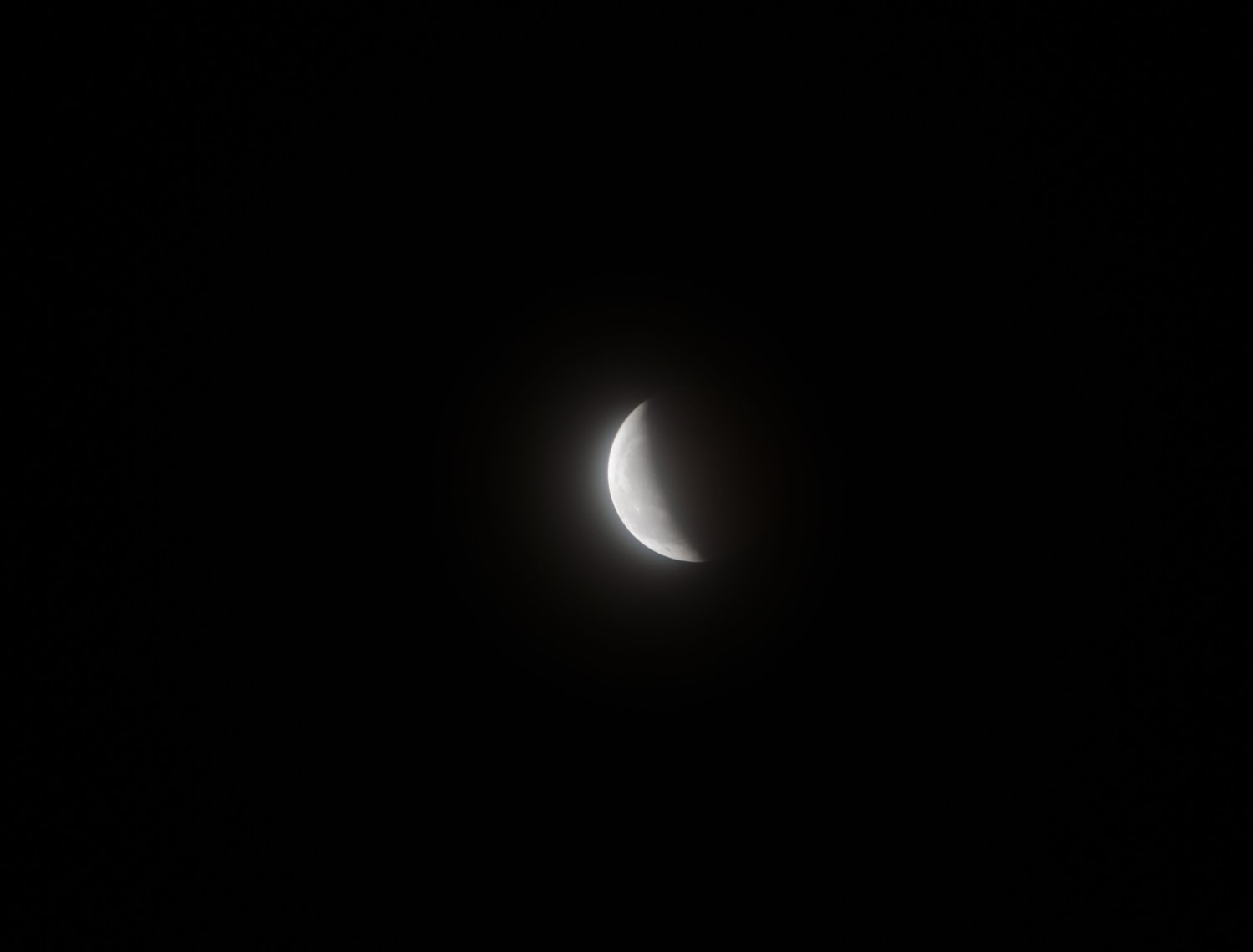
Exploring Heavens at Home
With the advent of television in many parts of the world, the joy of creating, exploring or adventure has diminished. Entertainment occupies a lot of free time than many. The excitement of seeking new knowledge and exploring beyond known limits has led men to risk their wealth and even their lives.
Do you want to explore the craters and mountains of the moon or learn more about the planets in our solar system? How about we take a closer look at the Milky Way, to which our sun belongs, or the massive Andromeda Galaxy, which is 1,500,000 light-years away?
These are just some of the interesting things that have come up for thousands of people and families who have taken the time to explore the sky with binoculars or a small telescope. In this way, they could see tens of thousands of stars more than the 2,000 stars normally seen with the naked eye on a clear day. And much more in detail! What at first glance looks like a single star becomes two or more. Details about the lunar craters, Saturn's rings and countless star clusters become visible.
**Take a telescope**
Basic binoculars say a lot, but if you want to explore further, you need a small telescope. There are two types that are often available from commercial manufacturers: lens refractors with a diameter of 5 to 13 centimeters and mirror reflectors with a diameter of 10 to 30 centimeters. For the same diameter, reflectors weigh less, are shorter, easier to transport and store, and generally cost less than refractors.
The purpose of a telescope is to collect and magnify as much light as possible. A unit of 5 cm enters the eye about 60 times more light than the eye normally receives. A 3-inch device captures about 140 times more light. A larger telescope provides a brighter image with more detail, but costs more. Whether you buy a new or used one, it is wise to test it first, if possible.
On the other hand, you can create your own telescope and stay at home. This can be done cheaply and without wasting much time. If you want to build a telescope, you have to buy suitable lenses, but you can improvise the rest. The telescope is also available as a kit for significant savings. A good astronomy book for hobbyists can help you build and test a telescope.
**Watch the sun**
Can you explore the sun with a telescope? yes! BUT BE CAREFUL! Under no circumstances should you look directly at the sun through a telescope or binoculars. You can go blind permanently! However, it is possible to project the telescopic image on a screen and reduce any other light that hits it. This allows you to explore the surface of the sun. If you do, you will soon make an interesting discovery. The surface of the sun is not bright enough! It also has dark spots.
These are the "sunspots". Some are much larger than the earth. They consist of gases that are cooler than the rest of the sun's surface, although sunspots can reach 4000 degrees Celsius (about 7000 degrees Fahrenheit). They can appear, disappear and change shape and always change position when the sun rotates around its axis once in less than a month. Some people find it interesting to look at the development of sunspots.
**Explore the moon**
You will find it interesting to watch our nearest neighbor, the moon. A good opportunity to do this is in the first room and until the full moon. At that time, the long shadows mark the landscape more clearly. A look through the telescope shows high, steep mountains on the lunar surface. There are also rolling plains (once considered seas), giant craters, bumpy cliffs and all kinds of other places. But not a drop of water!
Man also discovered that the lower part of the moon contains the same elements as the earth, but in different proportions. And contrary to some popular misconceptions, the moon has one of the darkest surfaces of any body in the solar system; it reflects only 7% of the light that falls on it. However, it is enough to give the inhabitants of the earth a soft and pleasant light at night.
**On the planet**
Even though the planets are much more distant, there is still a lot of interest to explore. Often referred to as the morning or evening “star”, Venus is a good place to start. For the most part, you can see it in the late morning or early evening. This will show that Venus goes through phases like our moon.
Jupiter is generally the second brightest. It is the largest planet in our solar system and its diameter is approximately 140,000 kilometers. This planet has 13 known moons, four of which can be found with a small telescope. However, you can play “hide and seek” by changing their position or causing one or two to disappear for a while as these moons move in their orbits around Jupiter. You can also see Jupiter's belt or stripes, as well as its mysterious red spot.
Then there is Saturn, an exciting masterpiece of God's creation with its magnificent ring system. This magnificent set of three rings of different luminosity is believed to be made up of millions of tiny particles, each of which acts like a satellite of the planet. You are a real spectacle!
The bright red planet Mars with its polar caps is also exciting. However, with a small telescope, you can only examine it in detail every two years as you approach Earth. If you haven't seen March 1977, you'll have to wait until 1979.
**There is so much more to see!**
After exploring our solar system, a person can go further into deep space. The stars! How beautiful they are, hung like shining jewels in the darkness of the night! In some cases, you will find that what appears to be a single star is actually two or more side by side.
Examples are Alpha Crucis, the brightest star in Southern Cross, and Beta Cygni of Cygnus Swan. The latter consists of a yellow star with a small blue star. Cloudy patches in the sky show a large number of almost compact stars. And how exciting it is to discover the wonderful colors of these heavenly bodies, from bright red to gold, green and blue.
It is also fascinating to believe that most of the stars we see are thousands of light years away. This means that people do not see them as they are now, but as they were when the light left them long ago.
Take another look at the Andromeda Galaxy. It is the most distant object that can be seen with the naked eye. That's nearly nine million (9,000,000,000,000,000,000,000,000,000,000,000) miles (approximately 14,000,000,000,000,000,000,000,000,000,000 km) from us. Tonight, when we look at the faint glow of Andromeda, the light entering our eyes concludes a journey that began a million and a half years ago. How far can you see on a clear night! It's a fantastic show, almost like thinking about eternity.
The opportunity to explore is limitless. It's always exciting to see a giant fireball light up the sky or a "star" (meteor) light up a trail of fire in the dark. It is estimated that 90 million meteorite traces can be seen around the world in a 24-hour period, although many are just snapshots. They are most often seen in the early morning hours, as this is when the part of the earth you live in turns forward as you travel around the sun and later encounter meteors. Spectacular meteor showers occur at certain times of the year when the earth flows through a flood of meteors, which in turn revolve around the sun.
Exploring the sky at home can be a great joy for young and old.
Is it a Christian practice?
The afternoon was hot with humidity typical of the tropics. When my wife and I turned a corner on the way home, something interrupted our thoughts and conversations. We heard the sound of a party or a party.
As we approached the house where the noise was coming from, we noticed the usual signs of a wild party. Some have become loud and belligerent from drinking. The men were arguing on the sidewalk in front of the house.
But this collection had something else. Everyone present was dressed in black. After crossing the street to avoid the crowds, something in the house surprised us. At one end of the room was a small coffin, apparently a child. Garlands of flowers covered the coffin. Someone put a candle in front of him.
All of this filled us with curiosity. Apparently we noticed our expression of confusion, a man walking on our side of the street came up to us and explained to us, "This is a candle", which means "This is a trail". He added: "You will be there all night."
This left us with many questions. We ask ourselves: what is the purpose of staying awake all night in the presence of the dead? Why decorate the coffin with wreaths and place lighted candles nearby? Was it appropriate for mourners to drink and celebrate someone's death? Is it to make crystal awakenings for the dead all night?
**Find answers**
We returned home that evening determined to find answers to these questions. Our research included interviews with people here in El Salvador as well as referrals for advice. We have found?
The Spanish Illustrated Encyclopedia Cumbre states that the purpose of resuscitation is to be with the family of the deceased and to praise him. The body is not always in a coffin. Sometimes it can be left on your deathbed. Religious objects and lighted candles usually surround the corpse. Sometimes the path contains burnt herbs or incense, as well as flowers around the coffin. As with the waking state we have observed, the house often provides food and drink for those present.
We have found that the alarm functions vary slightly by zone. In some Latin American countries, for example, a dead child is placed on a chair and disguised as an angel. This is based on the belief that the child's “immortal soul” will go straight to Heaven. We also read in the newspaper El Salvador, El Diario de Hoy:
In some communities in El Salvador and Central America, fireworks are lit and happy songs are sung to the beat of guitars and violins when someone dies, especially if it is a child. Tamales are made with sweets and served with alcoholic drinks. . . . The people of these churches believe that children will immediately fly to heaven and become “angels of God”. According to connoisseurs, this custom of singing during a vigil or ceremony is a rare blend of Christianity and unknown Native American traditions. ""
**Non-Christian origin**
That last sentence, "a rare blend of Christianity and unknown indigenous [indigenous] traditions," made an important point. Resuscitation does not have a Christian origin. Confirmation of this is an article in the Encyclopædia Britannica on resuscitation in England:
“The custom, as far as England is concerned, seems to have predated Christianity and was essentially Celtic. It certainly had a superstitious origin, the fear that evil spirits might damage or even remove the body, perhaps with help desire. to ward off mice and other plagues ... With Christianity, prayer offerings were only offered to the awakened, which until then were marked with formal funeral songs and motifs from the history of life of the dead with a plate of salt. in the trunk it was placed under the table, where people drank for the public. These private revivals quickly turned into drinking orgies.
Besides the non-Christian origins of awakening, the accompanying ceremonies in which garlands and candles are lit, and the bizarre custom of dressing dead children in such a way that they look like "angels" against christianity. As? Because these things show many that people have an immortal soul that lives after death.
However, the Bible presents death in a whole new light. Jesus' words about one of his deceased friends are instructive. We read: "Lazaro, our friend, rested, but I will wake him." but he spoke of his death. But they showed up, talking about resting in the dream. At that moment, Jesus openly said to them, "Lazarus is dead."
Jesus compared death to sleep. Just as humans are unconscious while sleeping, the Bible assures us: "As for the dead, they are completely unconscious." - Ecl. 9: 5; Job 3: 11-13; Psalm 146: 3, 4.
Does this mean we will never be able to see our loved ones again? On the contrary, Jesus promised: "Do not be surprised, for the moment will come when all in the tombs will hear your voice and come out." (John 5, 28, 29) During his earthly ministry, Jesus demonstrated his power in this regard. The Bible tells of three resurrections he performed. (Luke 7: 11-17; 8:41, 42, 49-56; John 11: 1-44.) Interestingly, those who died returned to humans after the resurrection. Jesus demonstrated the security of hope in the resurrection rather than the survival of an immortal soul in an invisible world.
Our research was very informative. In short, we learned that the vigil for the dead came from a pre-Christian, unbiblical religion. Moreover, this custom promotes the false belief that an immortal soul after death returns to life in an invisible world. Biblical principles are also violated when waking up due to frequent alcohol consumption and unlimited driving.
Of course, it is good to visit mourners for comfort and help. Whether this occurs during visiting hours at a cemetery or otherwise is a matter of personal choice. However, following prolonged mourning and night watch is not a Christian practice.

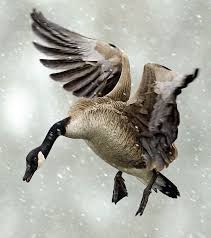
Giant Canada Geese - Monarch Flyway
UH-WHONK! Uh-whonk! This resounding rumor announces: Flyways license fees increase! Long before you can see them from the ground, this distinct sound announces their presence in the sky. Soon the famous and majestic V. formations appear. You wonder: where do they come from? Where are you going? Let Wawa (the Ojibwa word for a giant Canadian goose) tell his story.
**Stay**
What wonderful care mom gave us. He chose a place on his bare chest and used the feather to cover our nest. The warm, bare skin area was in turn pressed against each egg to facilitate the incubation process. Finally, after 28 days, I was looking for the white mussel that surrounded me and was soon joined by eight cute siblings. When the mother left the nest for a short time, she made sure that we tanned blankets were protected and out of sight in the pleasant warmth of the gray-brown blanket that covered our nest. This blanket not only isolated us from the hot and cold but also disguised us from the penetrating eyes of seagulls and other predators.
While the mother sat on the nest, the father patrolled the Arctic island of tundra, on the sea hill, where our nest was built with a long and upright black neck. His pitch-black eyes were constantly searching for warning signs. A strong Uh-Whonk! or a hissing tells the mother to flatten and straighten the neck and head. Then he would keep quiet until the danger passed. Its gray-brown body with its distinctive white crescent just in front of the black tail was a perfect camouflage. Sometimes a fox or a wolf invaded the kingdom my father ruled. When the ducks stopped near the mother, we saw how it anxiously attacked the predator with its two meter wide wings and hit hard. Soon the enemy began to bark and he was forced to dive into the water with his tail between his legs. The predator learned the hard way that a Canadian goose weighing five to ten kilos did not allow nonsense behind the flapping wings.
A few days later we follow the mother with happy "whistles" in the water. My father was our ass. Until we were tough, we returned to the nest every night to warm ourselves under our mother's big wings. So when our parents changed feathers during the annual change, we were all stuck on the ground and could not fly. Therefore, our elders always kept us close when we swam through the reeds and the tall grass in search of juicy candies: aquatic insects, bulbous aquatic plants, tender herbs and wild berries. When our parents got a new plumage, we also had well-developed wings and tail feathers. Now it was time to learn how to use our wings.
**Flight training**
Our Creator gave us beautiful, solid and aerodynamic wings. When fully developed, the leading edge is thick and blind and tapers to a distance of about 0.5 meters to the fineness of a spring at the trailing edge. To facilitate lifting, the wing is slightly concave at the bottom and bends upwards at the top. We can descend to altitudes of 2100 to 2700 meters by simply keeping our wings open to navigate the air currents. But on the highway, our wings drive us at speeds between 40 and 60 miles per hour. Its downward movement is "force stroke". The tips of our "primary", as you call the ten large springs on the tip of each wing, fold against the air resistance and rotate at an angle to our wings. In this way, they "bite" the air, like a propeller in some of their "mechanical birds".
With newly grown feathers, our parents took off and sailed over us with ease, yelling at us and flapping their wings to show us what to do. We fought by flapping our wings and running from side to side. Eventually we discovered the ability to walk on the ground or on water to fly. As we trained to fly every day, our wing muscles got stronger and stronger. Sometimes the landings weren't that real when we jumped into the water with a big bang. But bit by bit, we learned to use our whole body and wings as air brakes and to stretch our big feet (we're notorious for this) to make the first contact with the water or the ground. As we improved our skills, our parents encouraged us with great approval. All of this training prepared us for the day we would follow them through the air for our first migratory flight this fall.
I preferred our pilot training to the experience of some of our cousins who live in the treetops or on rocky heights. When the parents realize that it's time for the babies to leave the nest, they just scream at them from below. The down climbs to the edge of the nest and begins with short wings that flap madly. Soft cover and wing movement create air resistance and break the carcass. Therefore, your first solo flight will usually end well. However, there is a constant risk of getting stuck in a thorn on the way down. In Osoyoos, BC, a meticulous mom overcame this peril a few years ago by gifting them a free, open cockpit-style plane and bringing them back to the ground safely!
After improving our flying skills, we joined other families. The time for migration was drawing near. What constant commotion! Maybe because we are so scary when you see us in shelters, you might think we are talking about the world's problems. But it's not like that. We only have our goose tongue, made up of whistles, growls, wah-kum, kum! sperm! Sperm! Snoring, howling, howling and loud oh-oos. We whistle and honk to warn of dangers. cruel and snoring of satisfaction; Leave a series of smooth wah-kum to attract our friend. sweet cold kids cum! sperm! sperm!; give way to loud yps, calls and oh-oos when attacked and bitten by another bird; and of course many of you are familiar with our uh-whonk anime!
In the meantime, the built-in migration clock has struck all of us. Finally the time has come and with a powerful wing flutter we flew. We got mainly V from two families quickly and on our first trip we drove 483-644 kilometers for winter forage. Our migratory route eventually took us through Manitoba, Minnesota and along the Mississippi to the Gulf Coast of Texas.
Is it the oldest and the wisest of the geese that takes the lead in the migration? No. The next time you follow our royal processions, watch carefully and you will see the main bird change its position from time to time. Often a woman takes the initiative. You see, we believe in breaking free from the difficult task of “breaking” the air for those who follow us. Other birds fly alongside the bird a bit, giving us around thirty-six hyperopic eyes for looking for good places to rest and eat, or for people who want a good big goose for a good meal. . Often times every move you make will be recognized in the blind eyes of your hunter long before we are at your arms. We are fortunate to have good eyesight and precise hearing.
**Mating**
Over the months, a new instinct has developed in us: the desire to make a friend. What a thrill when each of us said our intention with head bowed, neck outstretched and hissed, and ran towards our object! How happy we felt when he responded in the same way! When we gently rub our necks, we agree to become "dear" for the second year of our life and wait until the next year to mate. So first watch our "wedding ceremony", then goose, dip your head in the water then pour the water on your back and tell everyone that you are "married". Our marriage is for life or, as you say, "until death do us part".**Giant Canada Geese - Monarch Flyway**
UH-WHONK! Uh-whonk! This resounding rumor announces: Flyways license fees increase! Long before you can see them from the ground, this distinct sound announces their presence in the sky. Soon the famous and majestic V. formations appear. You wonder: where do they come from? Where are you going? Let Wawa (the Ojibwa word for a giant Canadian goose) tell his story.
**Stay**
What wonderful care mom gave us. He chose a place on his bare chest and used the feather to cover our nest. The warm, bare skin area was in turn pressed against each egg to facilitate the incubation process. Finally, after 28 days, I was looking for the white mussel that surrounded me and was soon joined by eight cute siblings. When the mother left the nest for a short time, she made sure that we tanned blankets were protected and out of sight in the pleasant warmth of the gray-brown blanket that covered our nest. This blanket not only isolated us from the hot and cold but also disguised us from the penetrating eyes of seagulls and other predators.
While the mother sat on the nest, the father patrolled the Arctic island of tundra, on the sea hill, where our nest was built with a long and upright black neck. His pitch-black eyes were constantly searching for warning signs. A strong Uh-Whonk! or a hissing tells the mother to flatten and straighten the neck and head. Then he would keep quiet until the danger passed. Its gray-brown body with its distinctive white crescent just in front of the black tail was a perfect camouflage. Sometimes a fox or a wolf invaded the kingdom my father ruled. When the ducks stopped near the mother, we saw how it anxiously attacked the predator with its two meter wide wings and hit hard. Soon the enemy began to bark and he was forced to dive into the water with his tail between his legs. The predator learned the hard way that a Canadian goose weighing five to ten kilos did not allow nonsense behind the flapping wings.
A few days later we follow the mother with happy "whistles" in the water. My father was our ass. Until we were tough, we returned to the nest every night to warm ourselves under our mother's big wings. So when our parents changed feathers during the annual change, we were all stuck on the ground and could not fly. Therefore, our elders always kept us close when we swam through the reeds and the tall grass in search of juicy candies: aquatic insects, bulbous aquatic plants, tender herbs and wild berries. When our parents got a new plumage, we also had well-developed wings and tail feathers. Now it was time to learn how to use our wings.
**Flight training**
Our Creator gave us beautiful, solid and aerodynamic wings. When fully developed, the leading edge is thick and blind and tapers to a distance of about 0.5 meters to the fineness of a spring at the trailing edge. To facilitate lifting, the wing is slightly concave at the bottom and bends upwards at the top. We can descend to altitudes of 2100 to 2700 meters by simply keeping our wings open to navigate the air currents. But on the highway, our wings drive us at speeds between 40 and 60 miles per hour. Its downward movement is "force stroke". The tips of our "primary", as you call the ten large springs on the tip of each wing, fold against the air resistance and rotate at an angle to our wings. In this way, they "bite" the air, like a propeller in some of their "mechanical birds".
With newly grown feathers, our parents took off and sailed over us with ease, yelling at us and flapping their wings to show us what to do. We fought by flapping our wings and running from side to side. Eventually we discovered the ability to walk on the ground or on water to fly. As we trained to fly every day, our wing muscles got stronger and stronger. Sometimes the landings weren't that real when we jumped into the water with a big bang. But bit by bit, we learned to use our whole body and wings as air brakes and to stretch our big feet (we're notorious for this) to make the first contact with the water or the ground. As we improved our skills, our parents encouraged us with great approval. All of this training prepared us for the day we would follow them through the air for our first migratory flight this fall.
I preferred our pilot training to the experience of some of our cousins who live in the treetops or on rocky heights. When the parents realize that it's time for the babies to leave the nest, they just scream at them from below. The down climbs to the edge of the nest and begins with short wings that flap madly. Soft cover and wing movement create air resistance and break the carcass. Therefore, your first solo flight will usually end well. However, there is a constant risk of getting stuck in a thorn on the way down. In Osoyoos, BC, a meticulous mom overcame this peril a few years ago by gifting them a free, open cockpit-style plane and bringing them back to the ground safely!
After improving our flying skills, we joined other families. The time for migration was drawing near. What constant commotion! Maybe because we are so scary when you see us in shelters, you might think we are talking about the world's problems. But it's not like that. We only have our goose tongue, made up of whistles, growls, wah-kum, kum! sperm! Sperm! Snoring, howling, howling and loud oh-oos. We whistle and honk to warn of dangers. cruel and snoring of satisfaction; Leave a series of smooth wah-kum to attract our friend. sweet cold kids cum! sperm! sperm!; give way to loud yps, calls and oh-oos when attacked and bitten by another bird; and of course many of you are familiar with our uh-whonk anime!
In the meantime, the built-in migration clock has struck all of us. Finally the time has come and with a powerful wing flutter we flew. We got mainly V from two families quickly and on our first trip we drove 483-644 kilometers for winter forage. Our migratory route eventually took us through Manitoba, Minnesota and along the Mississippi to the Gulf Coast of Texas.
Is it the oldest and the wisest of the geese that takes the lead in the migration? No. The next time you follow our royal processions, watch carefully and you will see the main bird change its position from time to time. Often a woman takes the initiative. You see, we believe in breaking free from the difficult task of “breaking” the air for those who follow us. Other birds fly alongside the bird a bit, giving us around thirty-six hyperopic eyes for looking for good places to rest and eat, or for people who want a good big goose for a good meal. . Often times every move you make will be recognized in the blind eyes of your hunter long before we are at your arms. We are fortunate to have good eyesight and precise hearing.
**Mating**
Over the months, a new instinct has developed in us: the desire to make a friend. What a thrill when each of us said our intention with head bowed, neck outstretched and hissed, and ran towards our object! How happy we felt when he responded in the same way! When we gently rub our necks, we agree to become "dear" for the second year of our life and wait until the next year to mate. So first watch our "wedding ceremony", then goose, dip your head in the water then pour the water on your back and tell everyone that you are "married". Our marriage is for life or, as you say, "until death do us part".
Maintain a balanced view of wildlife
A Long Island man stopped his car and got out to help an injured dog on the street. But another car accidentally hit him and killed him. The dog was taken to a shelter. Then the dog survived and the man died.
Your actions illustrate the compassionate care that many people give to animals, including you. He risked his life out of great respect for wildlife. Was the course correct?
Some people would say "no" emphatically. For example, at a meeting in an English town, a member of the Road Safety Committee spoke of the danger when drivers turned to avoid dogs and said:
"If people could walk directly on the dog, a lot of people could injure themselves if necessary ... We have become so sentimental about the animals that a driver instinctively turns around so as not to notice there is a line of animals. 'waiting for the bus ... on the sidewalk ... Five of the 42 accidents in the neighborhood in one month were caused by dogs. My blood was boiling. "
But it wasn't just his blood that was boiling. Many onlookers were outraged by his views on wildlife.
Yes, strong feelings for wildlife are common. What about hunting, for example? Some people vehemently condemn it as brutal, meaningless and inhuman. Others consider it perfectly normal to kill an animal for food or fur. What should a person think? What balanced point of view can you have?
As you can see, every situation has its own unique aspects and circumstances, so it doesn't make sense for anyone to give a "sincere" answer. However, there is a basis for a balanced view of wildlife. What is the basis?
**The animal creator**
A balanced view of wildlife is not based on the personal opinions or feelings of an imperfect person, no matter how sincere. Instead, it is the perception (and principles) of the creator of wildlife whose vision is perfect.
After producing the animals that lived on the land, in the sea and in the earth's atmosphere, “God has seen all that he has created and he sees! it was really good. “So animals are good. They play an important role in our earth cycle. You are a living example of the wisdom of God. But how God thinks people should treat animals?
We can better understand the law that God gave to the Israelites. He asked that they be compassionate and only when it came to animals. Think of a few examples. A bull and a donkey would not ride together as they would carry the less affected ones. Like humans, animals have had a day of rest. It would be cruel to torment him with food that he cannot eat. In addition, God said, "Good people will take care of their animals, but bad people will be cruel to theirs." It is obvious that God cares about animals.
Does this mean humans shouldn't kill animals, like foraging for food or being given hides or skins? And what exactly is the balanced view of animal death?
**The life and death of animals.**
The Creator gave birth to humans and animals. But how long would they live? Researchers report that humans appear to have the potential for infinite life, so researchers are amazed at the death of humans. The Bible is correct. It is said that the Creator gave the first humans the possibility of living forever. Death only came because they rebelled. But what about animals? You cannot consciously rebel against God; However, they live alone for a long time and then die. Therefore, it is evident that the Creator never intended individual animals to live forever. For them, death was natural.
So, it is obvious that a person should not feel their life or death as if they are a different person, even though a person may look a lot like a pet. But apparently some do.
But how do you find it appropriate and balanced in the light of the Word of God? What importance or what cost should he attach to the death of an animal since the Creator never intended that animals live without death? According to the balanced view of the Bible, the Israelites did not have animal cemeteries.
**Hunting: what is balance?**
When it comes to wildlife, one of the most controversial aspects is hunting. One of the main reasons is that there is a lot of surplus. For example, a few years ago, ten hunters in Czechoslovakia killed 9,359 hares, 7,245 patridges and 5,089 pheasants in six days, a total of 21,693. These men may have loved you. But such an obvious massacre distracts many from the hunt.
Hunters armed with a wide range of weapons, from shotguns to nets and traps, kill more than 200 million birds a year. . . The slaughter of birds reached such proportions that it caused profound changes in the environment. With millions of birds being destroyed or not flying over Italy, insects and parasites are multiplying uncontrollably. This means that farmers use large amounts of insecticides to protect their fields and disturb nature's balance. . . . About 7,000 people are believed to be killed or injured each year in Italy, when hunters shoot each other rather than their prey.
Some hunters kill just to get trophies to command and show. Hunting is little more than an "ego trip" for them. Others surrender to the joy of killing. It could be true? God's interest in animals, as evidenced by his law, would clearly avoid taking wildlife for trophies or to amuse animals for sports. On the contrary, the Bible condemns one of the first rebels against God, Nimrod, who apparently played sports and possibly killed animals and humans.
However, an impartial reading of the Bible shows that the Creator is not opposed to the idea of killing an animal for food. After the flood, Jehovah God said to Noah, the ancestors of the entire human family: “All living animals that move can be your food. . . . Only the flesh with your soul, your blood, you can not eat. Was it a turning point in God's perspective on wildlife? No, because, as we noted, he did not predict that animals would live forever.
Consequently, Jehovah God did not forbid the Israelites from hunting or fishing. What he prescribed was that a hunter should shed the blood of a dead animal, which would help the hunter to meditate on life and to realize that the (blood) life of the animals also comes from God. God also encouraged respect for wildlife through the law that forbids taking the life of a mother bird with her eggs or chickens. The mother, who would have been easier to catch because of her attachment to her children, had to flee. This would enable him to have more descendants and avoid the risk of extinction of the species.
There are many biblical references on how to catch birds and fish in the net. Even Jesus Christ, who chose fishermen as apostles, sometimes engaged in limited fishing activities.
However, you should know that many people think that the search for food is only justified when no other food is available. If you can buy food, does hunting show contempt for wildlife?
A biblical account of Isaac and his sons helps to assess the problem. Esau, Isaac's son, provided food for hunting. Isaac once told him to "go to the field and hunt" because Isaac said "I am a fan". Was the deer the only one available? No, because on this occasion Jacob prepared a delicious dish for two sons for his father. In the same way, a person today may prefer to eat venison, even if he can buy more meat in a store. You may be opposed: "What's the difference between eating venison killed by a hunter or meat killed by a butcher?" Or someone who hunts or fishes feels that they can get food when they walk through the forest or near a stream.
But if a person wants to hunt, he must be aware of the dangers. One of these dangers is that you can gradually develop a thirst after the murder. How many hunters who started looking for food enjoy the "joy of killing" and now show a blind contempt for wildlife? Colonel Charles Askins, a great hunter of wildlife, noted: "Hunting is a kind of glorious addiction that acts as a narcotic with all the ubiquitous [poppies]." Could this be the effect on you?
**Furs and skins**
However, some men hunt animals for their fur. They use them not only as trophies for the development of the ego, but also as skin or fur. For this reason, does killing an animal largely ignore wildlife? Mistake?
A valid objection to the perfect slaughter of wild animals to preserve their skins is the impact on the animal population. For example, before the arrival of European settlers, the North American beaver population was between 60 and 100 million. But by the turn of the century, due to excessive harvesting, they were almost extinct to fill the fashion for beaver hats and skins. What about the extinction of leopards, cheetahs and tigers due to the demand for “trendy” fur?
Of course, there is no excuse that a passing fad or fad leads to the extinction of all forms of wildlife. When the Creator gave man power over animals, He could not greedily extinguish the work of God! Should respect for wild animals consider that it is at least wrong to kill an animal for its fur or its fur?
Again, the Bible offers a balanced view. This shows that animals were at the service of man. Early in human history, the Creator himself used animal skins to attract the first pair. I was wrong? Of course, it would be unbalanced to criticize God for this. And later, it was the Creator who gave the instruction to be part of his holy shrine: "You must make a cover for the tent of red fur and a cover of sealskin over it." Likewise, the scriptures show that true worshipers used animal skins for clothing and other things.
Therefore, the Bible does not in any way require that you avoid clothing or other useful items made of leather or fur. Obviously, whether a person prefers to avoid fur or animal fur is a personal matter. For a balanced view of wildlife, I would also advise each individual to consider whether they should purchase clothing or something made from the skin (or other parts of the body) of an extinct animal.
**Protection of life and property?**
Sometimes a person is faced with the decision to kill an animal that is a predator or a parasite. What is a balanced view of it?
Indeed, you must assess each case for yourself based on your own facts. For example, think: would you be any different from wildlife if you killed a cockroach or a mouse entering your kitchen? Most humans would easily destroy such a creature as it is likely to eat or contaminate human food or spread disease. But what about a fox or a wolf that sometimes kills a chicken or a sheep?
However, this can lead to unbalanced extremes. The Bible does not encourage killing all foxes or bears just because some of them caused trouble. The Australian Tasmanian Wolf has been hunted and killed since being born of a sheep until it appears to be extinct. There is a lot of controversy in the United States over a similar issue. Many sheep and ranchers believe that wolves and coyotes can be killed en masse because they endanger domestic animals and livestock. On the other hand, many conservationists and environmentalists believe that the damage to sheep and cattle is minimal and does not justify the removal of wildlife, which is important for "the balance of nature". What happened in parts of Brazil and Argentina illustrates this point. Villagers killed by feral cats and owls were considered predators. The result? The houses were occupied by mice carrying disease.
Yes, the problem is complex. It is simply not possible to provide a complete solution that applies equally to all cases. But it really helps to have the guidelines of balance in the Word of God. This allows a human to see that animals can be killed to protect human life and property. However, it must be reconciled with the Bible's great respect for wildlife. Therefore, a personal decision must be made. Other related issues should be treated in the same way.

About Salt!
Long before the Creator reunited the first human couple, Adam and Eve, he held a new wedding. What was that? As a master chemist, he brought together the compound of sodium (Na) and chlorine (Cl), resulting in a common table salt.Turning the two deadly poisons into a healthy substance,SALT.
And what a common salt product! All seas contain about 3% salt, while seas such as the Dead Sea contain about 25% minerals, mainly salt. In the United States, the food and chemical industries use more than 85 million tons of salt per year. Our body contains three to four ounces. Our tears, blood and sweat are salty. The kidneys retain our saline solution, which is why the urine is salty. The body actually maintains a delicate balance between sodium (in salt) and other elements such as potassium, calcium and magnesium.
The first biblical reference to salt refers to the "salt sea" in the time of Abraham. Lot's wife "became a pillar of salt." According to the law of Moses, certain offerings were to be "seasoned with salt." And in Ezra's time, salt was one of the officially classified objects of grain, wine, and oil.
Salt was so valuable in ancient Rome that it was used as money and soldiers got a portion of their salary in salt. This part was called the salary, hence the word "salary". A man who was "not worth his salt" was not worth his pay.
Due to its antiseptic properties, for example, salt is used as a preservative. B. in salted herring, cucumber and sauerkraut. It can also be used as a mouthwash or as a gargle and to brush your teeth. Salt is so beneficial that two doctors in an official medical publication said: “Proper use of water and electrolyte solutions (mainly saline solutions) is probably responsible for saving more lives. critically ill patients to use another group. Substances Saline solutions are used to increase plasma volume to compensate for blood loss. Experience shows that in severe burns, drinking a solution of one teaspoon of salt and half a teaspoon of soda in a liter of water is as effective as giving blood transfusions. with the added benefit that there are no risks associated with blood transfusions.
Some people today question the need for salt, but the fact that the body loses salt through sweat may indicate that we need salt. The fact that it is important for physical well-being seems to be confirmed by the salty flats used by grazing animals.
But there is definitely a risk of consuming too much salt. Especially those who eat a lot of meat should save a lot of salt. According to a medical authority, the average person consumes about half an ounce of salt a day, but can agree on only one-fifth of that amount. If excess salt is not removed, the result is dripping. A direct link between salt and high blood pressure has also been shown.
So avoid making salt a habit. At least taste the food before adding salt to it. Salt addiction can not only stress your kidneys and cause high blood pressure, but also make you overeat. If you are hosting parties, it may be a good idea not to just serve delicious meals with drinks. Also consider serving unsalted nuts and tasty raw vegetables, such as carrot sticks and celery sticks. This way, your guests will avoid excess salt and have a more balanced meal. And if you use salt in your food, it can help to use plant salt, which can help you reduce your sodium chloride intake.
There is another reason to use salt in moderation. The salt habit robs you of the pleasure of the many subtle individual flavors found in various foods, especially vegetables. Of course, tasteless things like egg whites may require a little salt, although old Job said, "Should tasteless things be eaten without salt?" But remember, when using salt, use it sparingly.

Warm up!
A study at a medical school recommends that people who exercise suddenly avoid participating in strenuous physical activities. Good physical condition does not affect the danger. The ECGs(Electrocardiograms) of forty-four healthy firefighters indicated that thirty-one of them developed abnormalities after suddenly starting an ongoing exercise. This sudden onset can lead to anemia in the coronary arteries and a heart attack. This can happen even if the arteries are not blocked abnormally. Studies recommend that you do a warm-up activity before any strenuous exercise
Learn to Think Clearly part-2
***The Benefit of Right Standards***
By having a standard for measuring the new information presented, you can achieve balanced thinking. Therefore, an individual controls what comes to his mind and is not distracted from achieving his goal, but does not close new valuable information.
Again, a Christian has a source of great help. As? He has the Bible as a sure guide for his thinking. On the one hand, your mind is "open" - that is, receptive to new information from virtually all human realms, including art and science. Properly weight the new information against your biblical standard and adapt your thinking pattern. On the other hand, your brain is "closed" to information that is completely incompatible with your Bible-based goals; it can be rejected because it does not deserve further attention.
Every day, the clear-thinking person must filter or protect what is wrong and what his mind is properly "closed". The constant bombardment of propaganda by the public press, newspapers and magazines, as well as books, television and radio programs, makes this more important now than ever.
Of course, much of what is published today is immediately unworthy of our attention. These include novels, plays, or television programs, such as those glorifying sexual perversion, immorality or violence. By taking care of the basic desire, its purpose is usually to discourage useful thinking, to really numb the mind in favor of an unthinkable passion.
But books and programs from which useful information are obtained also require caution. They often subtly reveal an erroneous thinking trend, perhaps influenced by unproven theories such as evolution. Therefore, some publications on childcare, history, science, archeology, medicine, psychology, elementary school textbooks, and even some of the so-called biblical reference materials, suggest or assume that evolution is a "fact" when they are discussed. its various themes. Here above all, the "open-minded" person must be careful in reading whether to avoid being negatively influenced or, as some defenders of an incorrect doctrine of the last century have described, becoming "mentally ill".

Learn to think clearly
Clear thinking is an important factor for a successful life. It has an enormous value in everyday life and decision making, which saves a person a lot of time and money.
Most important of all is that the clear thinking person helps to avoid the mistakes and dangers that easily deceive the ignorant. Clear vision helps you deal with otherwise different life situations and problems.
***Why most people do not think clearly***
Many people passively prefer to let others think for them. Therefore, for the most part, the basic mindset is largely determined by the society and the world in which they live. They think and act in the same way as the people around them. Even in relatively small matters of life, this is obvious, as advertising and media dictate your point of view. And in the main areas of life, what others think of them can be exemplified by what happens in war.
When your home country publishes propaganda that unites people for war, do most people carefully analyze all the issues involved in the conflict? Or do they just accept what they say to think? Winston Churchill wrote of the First World War and observed: "It only takes one signal to turn these masses of peaceful peasants and workers into powerful armies that will break apart." He also noted that when they said what they would do, most answered without thinking. (World Crisis, Volume VI, page 93) 25 years later, another generation of the same type of thinking allowed them to lead into a much larger conflict, World War II.
What happened to many people because they allowed others to think for them? Millions of people were killed or maimed and often fought wars in foreign lands for reasons they did not understand. And now we see that your way of thinking about the world and the efforts you have made have not created lasting peace. In fact, today's world is armed with weapons that are far more devastating than ever.
But do not some turn to the thoughts behind these wars? Yes, many of the younger generations rebel against the "thinking" of the older ones. But is the vision of the young rebels really clearer or more satisfying than the one they are trying to escape from? Did their rebellion lead you to something really better?
The "thinking" of world leaders on the one hand and the rebellious youth on the other are combined to show that human thinking does not produce lasting results.
The first step in learning to think clearly is to have a purpose or a purpose in life.
Some may ask, however, does a single goal in life have that a person have a "closed" mind rather than an "open" mind? We'll see.
Usually when people talk with an "open" mind, they simply say that they are tolerant of the opinions of others. But simply tolerating the opinions of others does not require thinking, does it? In fact, a completely "open" mind can be compared to a pipe that lets everything flow, even wastewater. No self-respecting person wants a mind polluted with rubbish. So you have to be selective, you have to scroll through what you accept in your mind. In short, you have to think. But you do not want to be so limited or judgmental that you refuse to take into account facts that can improve your thinking.
Therefore, a balance in your reflection is necessary

A visit to an intestinal chemical factory
Stay in your chair and join me on an imaginary tour of one of the most interesting chemical factories in the world. The visit is free and very instructive. It doesn’t take long, just ten to twenty minutes, depending on how fast you can Get the information .
Many types of automatic and semi-automatic chemical plants are designed to process all types of raw materials. But none has yet smoothed out the factory you’re going to visit.The simplicity of its design, but the complexity of multiple reactions that take place simultaneously, as well as its high efficiency, self-sufficiency and almost perfect automation, are things that biochemists never cease to admire.
We find this unusual chemical implant in the abdomen. It consists of a pipe that is almost ten meters long and is called the "pipe of life".
Because of its nature, of course, we can’t enter a chemical plant to look at it, but if you look at the graphs in front of you, we embark on a visual tour.
At the beginning of our journey we remember that the first part of this plant is called the small intestine. It is one to one and a half inches in diameter and is about twenty-three feet long. This seems to apply to all adults, regardless of height or weight. We will examine the second part of this chemical plant later: the large intestine. It is officially named because it has an average diameter twice the size of the small intestine. This larger pipe is between five and six feet long. And think about it: a building that houses an entire chemical plant is less than a third of a cubic meter! It is also interesting to note that the walls of this building are stretchable to achieve a gas pressure that can increase the pipe connection of the plant to twice as large: in diameter, not in length.
*These are the components*
Let’s look now at the “pipes” in this chemical factory. They are not metal elements, but organic, flexible, elastic, made of flesh and blood, which consist of four layers.The outer layer is a thin membrane, actually an extension of the peritoneum or inner wall of the abdomen. Then we come to the second layer; and notice how unusual it is. It consists of two layers of fibers, of which the outer layer extends in the longitudinal direction and the inner circular layer. The fibers that extend longitudinally provide one type of pressure to the contents of the pipe, while the circular fibers exert a different pressure. Two levels are programmed to coordinate your activities. There is no confusion or working at cross-purposes and we are not required to conduct operations. Talk about automation! The creator of this machine, the Creator, really got it first!
The third layer consists of areolar or loosely formed connective tissue that connects the muscle layer to the inner layer. The most important is this fourth inner layer which we will now examine. It is the mucosa that line the inside of the tube. This mucosa is especially important in the small intestine. Why? Because here the inner layer is equipped to inject digestive juices on the one hand into the tube and on the other hand, it is equipped with the ability to absorb digested nutrients into the bloodstream, where they nourish all the cells of the body.
*Its chemical activity*
But before you continue on this visit, a few words about the stomach and its relationship with the small intestine. Many people mistakenly think of the role the stomach plays in digesting food and absorbing digested nutrients. The stomach just begins to digest protein and doesn't get to carbohydrates (starch and sugar) or fat. The uptake in the stomach appears to be limited to small amounts of sugar and alcohol. In fact, some people have fled without most of their stomachs. In these cases, this wondrous chemical factory automatically adapts to the new circumstances: the small intestine expands the forehead to the proportions of the pockets and can thus take its place in the stomach.
What the stomach does is prepare the food it receives so that it is suitable for further processing in the intestines. Chemically and mechanically, it breaks down the leftovers into something like a medium-thick gray Graševina soup, which is known as "chyme".
Periodically and automatically, the stomach expels part of this chyme through its lower flap (it also has an upper flap). Now look at the lower abdomen.It prevents the intestinal bell from entering the stomach. Because the amount of digestive juices added to food at this chemical plant is roughly the same as the nutrients absorbed into the bloodstream, the hymen maintains roughly the same consistency as it moves through the 23 meters of the small intestine.
This chemical plant contains not only digestive juices supplied by the intestinal lining, but digestive juices from two other sources as well. The liver supplies bile to break down fat with a test tube. And the pancreas, which uses two tubes, basically contains three types of enzymes.They are used to digest proteins, carbohydrates and fats. Certain glands in this chemical factory serve to neutralize the acidity of the chyme that comes from the stomach. Yes, the work of the stomach requires an acidic environment, while the work of the small intestine requires an alkaline environment.
It should be taken after digestion. Indeed, digestion and absorption continue simultaneously without interfering with each other. Absorption is done through these small conical protrusions that you see in the bladder of this bubble. They act as suction pumps. With its help, the broken down parts of proteins and carbohydrates get directly into the blood. However, the fused fat particles first enter the lymph and from there enter the bloodstream.
When the hymen is fully digested and all of its nutrients have been absorbed, the mass will have reached the leading edge of this chemical plant, the base of the twenty-three feet. But our journey doesn't end there because that's when a valve opens allowing the pea-like beans to enter the first part of the colon known as the cecum, which you can now observe. As the mass moves through the colon, water and various mineral elements are absorbed. Here is an important bacterial activity. This "flora" as it is called is absolutely necessary for good health.
*Mechanical action*
It takes a little more than gravity for the food to be digested and absorbed and go through this chemical factory from start to finish. This requires mechanical action. This is where the two muscle layers described above come into play, which basically generate two types of action: mixing and driving. As soon as the chyme reaches the small intestine from the stomach, rhythmic contractions begin. The circular ligaments in the muscle fibers begin to contract at regular intervals and divide the chyme into segments. Then these muscles relax and others, halfway between those who simply relax, contract. In this way, half of each anterior segment becomes part of a new segment, so that the new surfaces of the chyme are constantly exposed to chemicals and absorbent surfaces in the intestine. These circular muscles automatically contract and relax seven to ten times per minute for about half an hour under normal conditions.
Then the second muscle group is activated automatically. Slow peristalsis moves the chyme forward and never backward. After the chyme has moved a certain distance forward, the peristalsis stops automatically and "rhythmic segmentation", as some call it, continues. It takes two to four hours for the chyme to pass through the twenty-three feet of the first part of this chemical plant. Again, the obturator that protects the entrance to the colon opens at regular intervals. Then the chyme, which contains almost no more nutrients, is forced into the colon or large intestine by a powerful peristaltic effect, completely naturally.
Now let's look at what's going on in the colon. From there, another peristaltic effect forces the dough through the colon as it is freed from excess moisture. First it rises, then it goes down to the stomach until the signal sounds that it must be expelled from the body. This signal is activated by the hypothalamus in the brain. It's a great system, right?
After taking this tour today, you will now have a better understanding of how to maintain your chemical plant in the gut.
*When something is wrong*
Although ulcers, amoeba viral or parasitic infections and the dreaded cancer can be prevented, things rarely go wrong with this wonderful digestive herb for most of its life. As long as, of course, the person eats well, moves well, gets enough rest and has control over his emotions.
Gas or flatulence is one of the most common problems that many people have. It can be caused by a serious illness or simply by nervousness. But it can also be due to inappropriate eating habits or certain foods that can cause gas, for example,those of cabbage family and certain legumes.
Another problem that many people face, especially those in sedentary occupations, is constipation. Again, the problem may be due to improper eating habits, a balanced diet or lack of enough water for this chemical plant to function properly. Eating unrefined foods and lots of fruit can help, especially plums and figs, and green leafy vegetables. On the other hand, for emergency cases, some may prefer to get medication from pharmacies.
Sometimes things go wrong with the chemical plant and the result is the exact opposite of constipation, which is diarrhea. This can be due to food poisoning, a viral infection or fast eating habits. A simple and proven cure is black tea that has not been added. Another remedy is raw or cooked apple pulp, to which nothing has been added. Some people find that unsweetened grape juice is helpful. And there are other ways.
As the appendix is part of this chemical plant, there is also the risk of appendicitis, perhaps the most common serious disease of the intestinal system. The more moderate and healthy lifestyle, the more regular and normal bowel movements, the less likely the appendix is to cause problems.
*Show your appreciation*
Biologists have spent a long time studying this chemical factory in the gut, especially its front end, and there is still a lot they don't understand. But, with this short tour, we learned some very interesting things.
Show your appreciation for your gut chemical factory. First, don't overeat. It is better to leave the table and feel that you could have eaten more than you were satisfied. When you eat too much, it puts extra strain on your heart, liver, kidneys, and other parts of your body, in addition to this gut chemical. Eating more than what you need can also lead to being overweight, which has its downsides.
There is also the psychosomatic factor which has already been mentioned. Don't rush to eat and stay in a good mood. Why join a family dinner fight or talk about today's trials and disappointments?
Harmful emotions like worry, anger, and fear consume a lot of energy and can wreak havoc on automated processes in the stomach and intestines.
Show gratitude for him and the rest of your body through wise lifestyle habits. If you do this, you will have minimal discomfort and problems, and you will be more likely to stay healthy and live for many years to come. As for us, it was a pleasure to accompany you on this visit of the chemical plant in the intestine.
Are you going to suppress your yawn?
Did you know that when you yawn you help yourself breathe? This is because yawning ventilates the lungs more completely. With regular breathing, obviously not all air cells called alveoli in the lungs are ventilated equally. Some of these cells can sometimes be closed. The blood that passes through them enters the arteries without being fully oxygenated. This dilutes the average oxygen content of the blood.
The way these closed air cells in the lungs can be opened is with a long, deep yawn. And since most of the muscles in the body are involved in this action, yawning can also be used to force stagnant blood out of the vessels where it was collected. When you yawn, your throat also opens wide and is completely relaxed for a while. It's good for your voice when you speak.
What can you do if you hear a yawn approaching? Maybe you can just put your hand lightly over your mouth and reap the benefits of a full yawn.
Solar eclipse
On March 7, 1970, a bright dawn appeared here in Mexico. It started like any normal day at this time of year. However, something in the air indicated that it would be completely different. Urban traffic has dropped considerably. Many people, especially students and teachers, have had a day off. There was extraordinary calm.
As we progressed this Saturday morning, this clear calm subsided. The nervous emotion that results from waiting for something unusual begins to manifest. People rush to find cameras, lenses, special filters, smoked glasses, welding masks, temporary cardboard viewers, updated films, containers with water or anything that can help safely attend the most extraordinary event. Yes, they wanted to look at the sun through these elements to avoid the risk of damaging their vision. Many media have warned people not to look directly at the sun and many have taken these precautions.
Come quickly to Metate Peak! It's ten o'clock. Oh, it seems that the minutes before the big event happen very slowly for some, while others go too fast. Tension, impatience, curiosity and growing expectations are invading people. The long awaited moment finally arrives!
With perfect deadlines, performance begins in paradise. The sky, which was clear blue a few moments ago, turned gray. The green scene takes on a strange orange color, closer to purple. The temperature started to drop. Even animals are aware of the strange phenomenon that occurs in the sky. Growth. The dogs bark and howl, waste the bulls, fly to their nests, the chickens gather their little roosters.
Until a few moments ago, the sun appeared as an ideal circle. look now! There on your east side! A small place. Yes, the moon started to cross in front of it. Slowly, the moon continues to advance and now the sun seems to have bitten or pumped a piece of it. As the moon moves in front of the sun, the "piece of the dilemma" seems to be growing. The result is increased darkness on the floor.
Now the sun looks like half of the moon. Steadfast, the moon continues to advance until only a fragment of bright light is visible. The light continues to fade. It seems really late when the shadows move and cover the field. Strong winds shake trees that look like silhouettes in a dark landscape. Anxiety increases in animals. The sun disappears quickly. Now, only a very thin track is seen when the artists of this cosmic drama approach the climax of this incredible spectacle.
Finally, the performances culminate with grandeur! With the sun just behind the moon, the eclipse has reached its final stage. With astonishment, we witnessed the sunset and the sunset at noon! At the height of the eclipse, we noticed that it was colder. The complete darkness almost covers the Earth, and the moon is surrounded by a circle with only a strong illumination. It is the solar corona.
Suddenly, everything seems to freeze! Viewers hear short extracts from the audience. The field seems unreal, with silhouettes of people like statues. Mixed feelings in the air. The small visible light is similar to the reflection of the moon at night, although it is more intense. The stars can be seen easily now. The massive flame seems to come out of the sun and is completely covered by the black outline of the Earth's satellite, the Moon. In the distance, in all directions that we manage, we see light and a lot of light. It's like when the sun is about to rise in the morning, but the difference is that it happens around us.
Why an expected event
The total eclipse lasted approximately three and a half minutes. However, it was a much anticipated and expected event for many here. The reason is that the last total solar eclipse occurred in Mexico on September 10, 1923. So you understand why no one wanted to miss this drama in the sky.
Scientists, researchers and enthusiasts of astronomy, astrophysics and other related fields have found the best place to observe an eclipse. The specific point which would have been the ideal observation point is the city of Mealatualatán, in the state of Oaxaca, in Mexico, in particular the dead end a few kilometers from the city.
What made it an ideal place? Well, it's over 5,200 feet above sea level and its atmosphere is relatively free of clouds, dust, glare, smoke and heat currents. Therefore, months before the event, groups of scientists began to examine the observation sites. Scientific delegations from different countries participated.
People wishing to study include stray light from stars, modified magnetic fields, effects on cosmic radiation, effects on radio communication, and work on ultraviolet radiation. Weather and turbulence at sea will also be examined. Some aspects of Einstein's theory of relativity and the image of the solar halo and protrusions should also be tested. Mexican scientists, in particular, have studied the measurement of the ionosphere during an eclipse, the propagation of various radio waves, and the recording of static electricity.
People's reaction
It is interesting to note that people from different places and different levels of education responded to the eclipse. Great strides have been made in education through an ongoing campaign to free people from ignorance and superstition. However, some people believe that these natural events signal misfortunes or problems or that they negatively affect humans in one way or another. There are still cities where church bells ring during the eclipse, where people cross paths and kneel, demanding mercy from heaven. Older women in front of churches pray with the rosary. Pregnant women hang scissors and other amulets around their necks for fear that the eclipse will give birth to their babies.
In some societies, the eclipse will be a fight between the sun and the moon. People beat drums, cans, pots and other utensils with the idea of helping the sun win the fight. Others, for fear of the unknown and the mysterious, remain motionless.
Astrologers are always there to take advantage of the gullible. They surround the event of Sufism to deceive the swindler. Witches, witches and others say what the eclipse should predict and what will happen next, depending on the location of the stars. Predictions were made, constellations were interpreted, and other subtle methods of gullible exploration were used. Oh yes, in Matawatlán, we saw "hippies" celebrating rituals and celebrations in honor of the sun.
Wait, the performance is not over yet! A wonderful "strip of round diamonds" known as Pelly Beads catches our eye. It consists of a series of bright lights when sunlight passes through the uneven surface of the moon. A bright glow that completes this view appears on the west side of the solar disk. This glow looks like a jewel attached to a ring and a small part of the solar circuit is again visible.
As the sun is released from the shadow of the moon, the hot rays of the sun shine again on Earth. The very short night ended. It's warmer and everything comes back to life. The phenomenon we have seen is truly exceptional. Its beauty and size are difficult to describe in words.
What is the eclipse?
An eclipse simply hides a celestial body that mediates another object. It can be total or partial. The total is when the hidden object is completely covered, as seen on March 7th. When a part is covered, it is annular (ring-shaped) or partial. The solar eclipse occurs when the moon passes in its orbit between the sun and the earth and its shadow falls on the earth below. The annular eclipse occurs when the moon is completely in front of the sun, but it is not large enough, due to its distance and position, to completely cover the sun. Leave a visible solar ring. There is never an annular eclipse of the moon, because the Earth's shadow cone is always large enough to cover the Moon when it is perfectly aligned with the Sun and the Earth.
Eclipses are natural events that occur regularly. They do not pose a threat and do not include disaster forecasts. It is a test of the immutable laws that govern the universe. They testify to the infinite divine wisdom that created and controlled all celestial bodies in the universe. Yes, they underline our smallness compared to the giant universe that surrounds us.