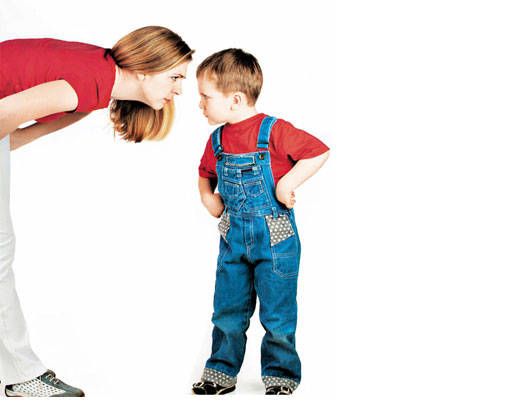
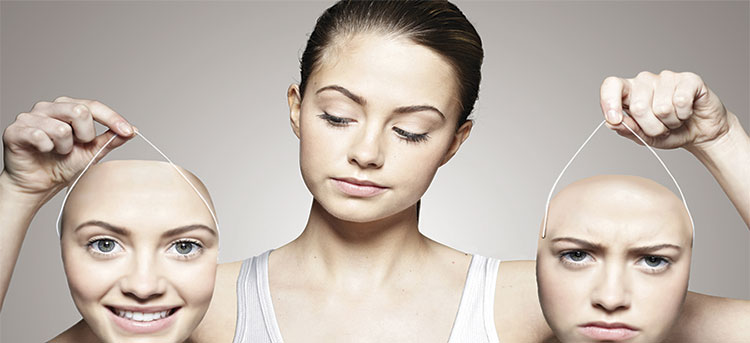
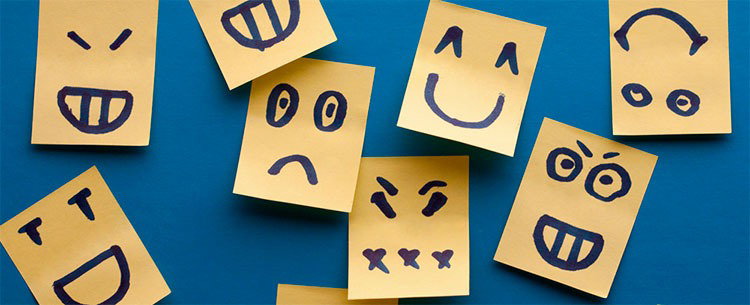
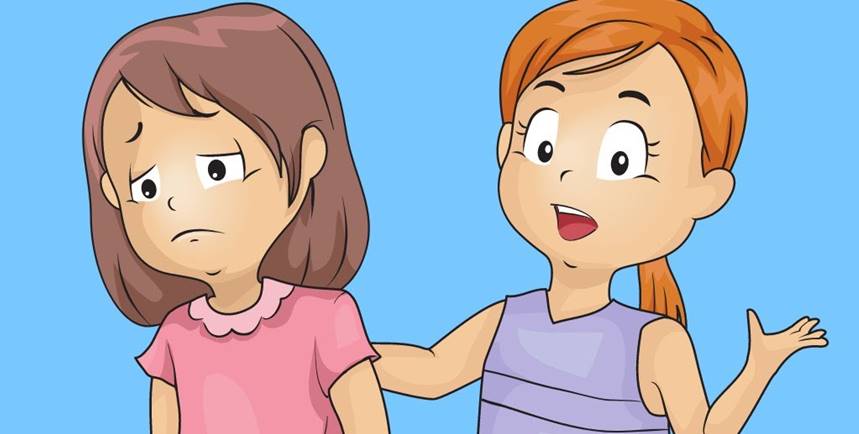
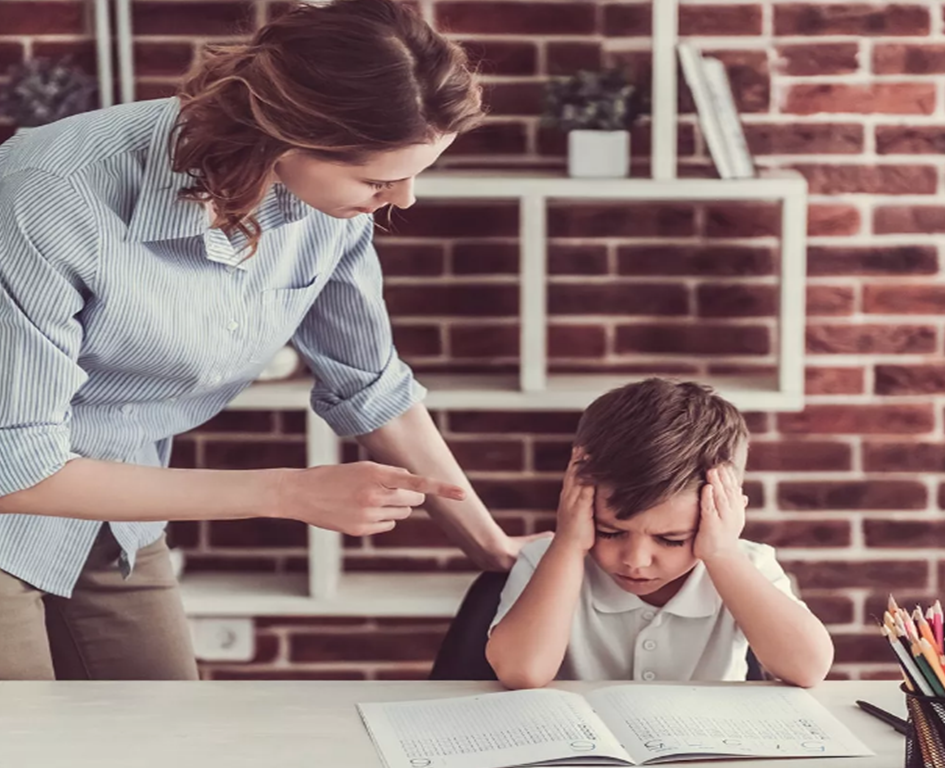
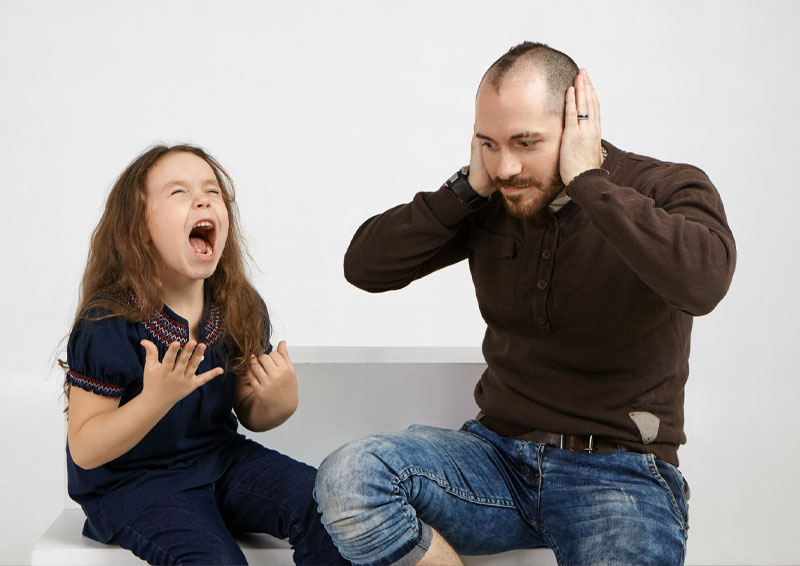
(EN) Reasons not to punish a child with a lot of character.
*Children with a lot of character are usually misunderstood, they are usually very intelligent, curious children and they need to learn experientially.*
That is why their upbringing has some peculiarities that you must understand if you do not want to experience constant arguments and conflicts.
Because you should try to educate your children with a lot of character using strategies other than punishment.
1. Because they are very intelligent. Punishment is very ineffective, but studies indicate that smarter children learn less from punishment than other children and benefit more from positive strategies such as emotional connection, rules, and reinforcement. That is why many parents think that they are so stubborn, when in reality what happens is that they are not using adequate strategies.
2. Because they learn very quickly from your behavior. Children with a lot of character are characterized by learning quickly. When punished they can quickly learn to punish other children. It is also frequent that their parents have the feeling that their children punish them when they do not do what the child wants. It's really just what you were taught to do.
3. Because they have an iron will, but a tender heart. Punishment, yelling and threats can break the will of a child with character, but as with all children, punishment hurts (especially if it comes from their parents) and will damage their confidence and self-esteem.
There is always another way to achieve collaboration and set limits without generating new negative behaviors or damaging the child's self-esteem, although many parents do not apply these strategies because they are not familiar with them.
Let's learn to educate positive. It can be difficult but not impossible.
****Remember that all children have the right to:****
Feel deeply loved and wanted.
Have a good concept of your dad and mom.
Feel cared for and understood
need company to fall asleep
Make mistakes without being blamed
cry caudno need it
appear angry
grow without threats
feel important
Behave like children.
(EN) How to know if you have vegetations.
*If your child breathes with his mouth open, snores when he falls asleep and has a lot of mucus even if he is not constipated, take him to the pediatrician. It is very likely that I have vegetations.*
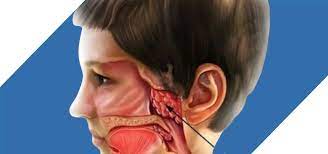
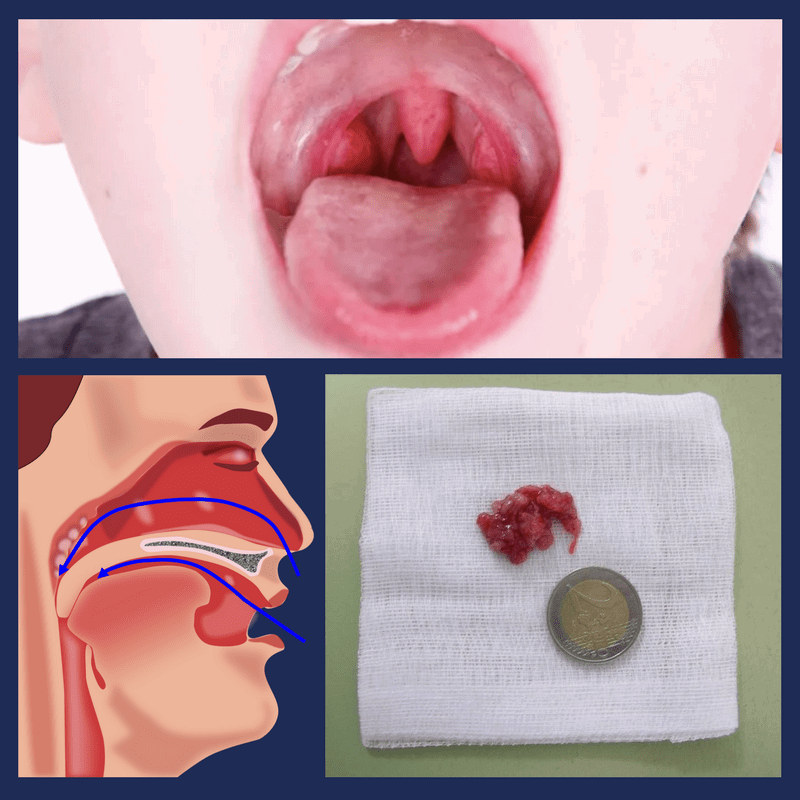
Vegetations are tissues similar to tonsils, located behind the palate, with which we are born. Its mission is to watch over, to be a kind of guardian that protects our nose, the paranasal sinuses (they are the cavities of the bones that surround the nasal passages), the ears and the throat from infections. When they do not fulfill their mission well and an infection arises in one of these areas, the vegetations also become infected (by viruses and harmful bacteria, they grow a lot and, instead of protecting us, they infect us more.
Therefore, when the child does not improve with treatment, it is advisable to operate as soon as possible. The age at which they tend to suffer most frequently is between the first and third years.
*Characteristic symptoms*
When the vegetations become infected, they make it difficult for air to pass through the nose and make the child breathe poorly throughout the day and, especially, at night. To get the oxygen he needs, the child ends up breathing with his mouth open, saliva falling (after a while, it is not surprising that his lower lip and chin are irritated.
In addition, he has a lot of snot, he snores when he falls asleep and the difficulty in taking in the air gives him nightmares that make him wake up very nervous and prevent him from resting well. He also catches a cold, suffers from his ears frequently and swallows badly and with pain, so he refuses food (the worst thing about this symptom is that it can lead to delays in his development).
*Treat or prevent?*
Due to the possible consequences and how uncomfortable they are, it is not advisable to leave the treatment for later for fear of giving medication to such a small child or for fear of the operating room (if necessary). Before, it was thought that you had to wait for the child to see you for at least three years to start treating this alteration, but today it is known that this is a mistake.
If the child does not improve with the medication, the ear specialist should intervene.
Currently, this operation is carried out in the highest safety conditions, it is very short and the child does not take more than a day to recover.
It consists of cutting the vegetation by cutting it at its base, leaving it at the root and it is normal for it to reproduce. Even so, to avoid the discomfort that they cause to the little one and that can alter his growth rate, it is advisable to remove them as soon as possible.
***With vegetations it is easier to get sinusitis.***
Sinusitis is a disease characterized by inflammation of the mucous membranes that line the cavities of the bones of the face. It is produced as follows:
1) These cavities or sinuses, under normal conditions, are filled with air. However, when a child's vegetations fail to do their job of protecting the nasal passages from infection, these bony cavities fill with secretions, leading to an infection called sinusitis. Its most typical manifestations are usually: intense headache, abundant mucus, heaviness of the face, even, sometimes fever can occur.
Recovering from a vegetation operation does not usually fill more life
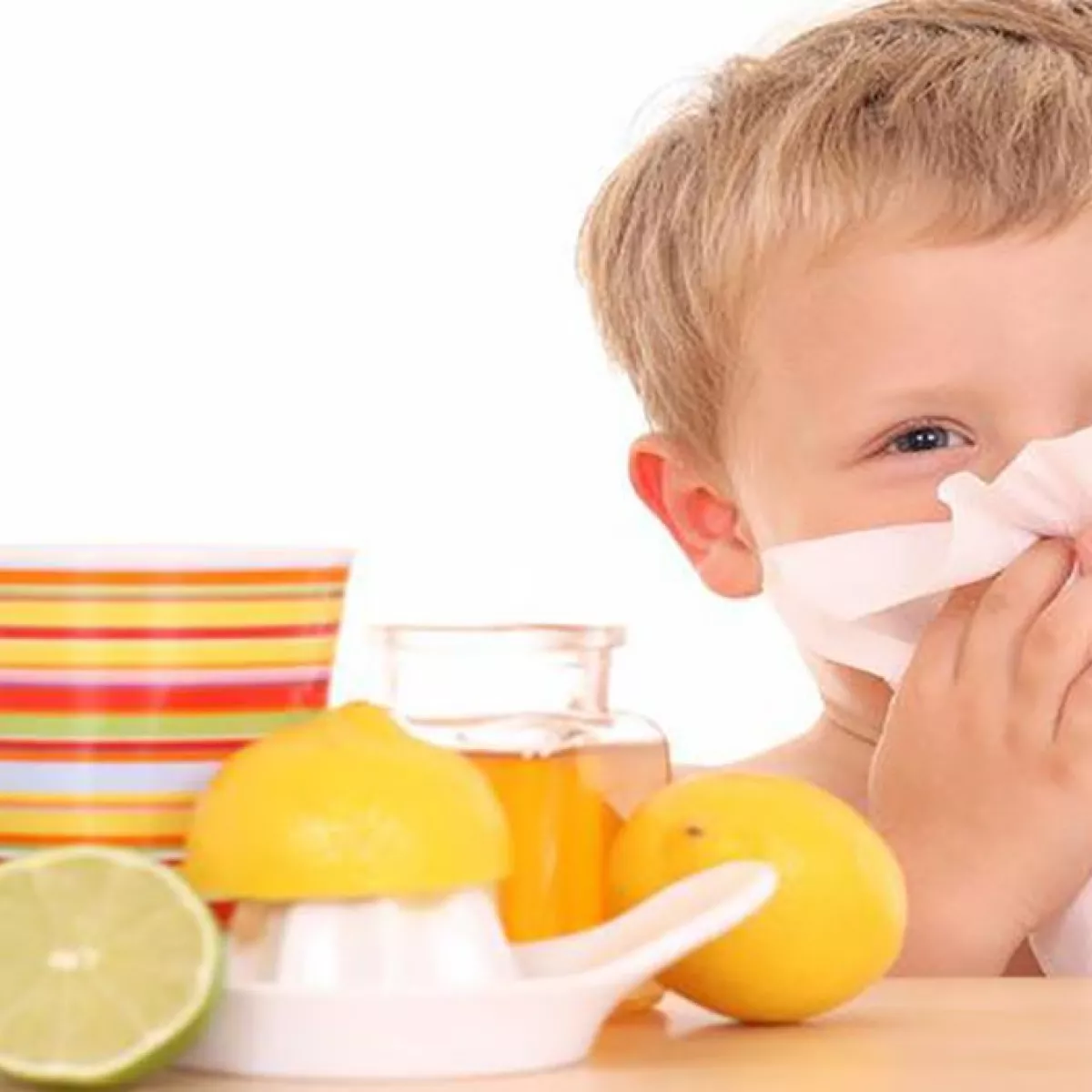
How to prevent flu? (EN)
*There is no reason to always fall victim to colds and flus. Vaccines and a good diet will help you have a good season without problems.*
The microorganisms that produce this type of condition prefer cold,because they develop better with low temperatures common colds. They are caused by viruses that are transmitted through droplets of saliva that they are released when coughing, sneezing or speaking. Young children, especially up to four years old, do not have a well-developed immune system, which is why they are the favorite victims of these viruses. It is not strange that a little one of months catches a cold or that a baby of one or two years has an average of eight to ten flu episodes a year (After four years the incidence of colds decreases).
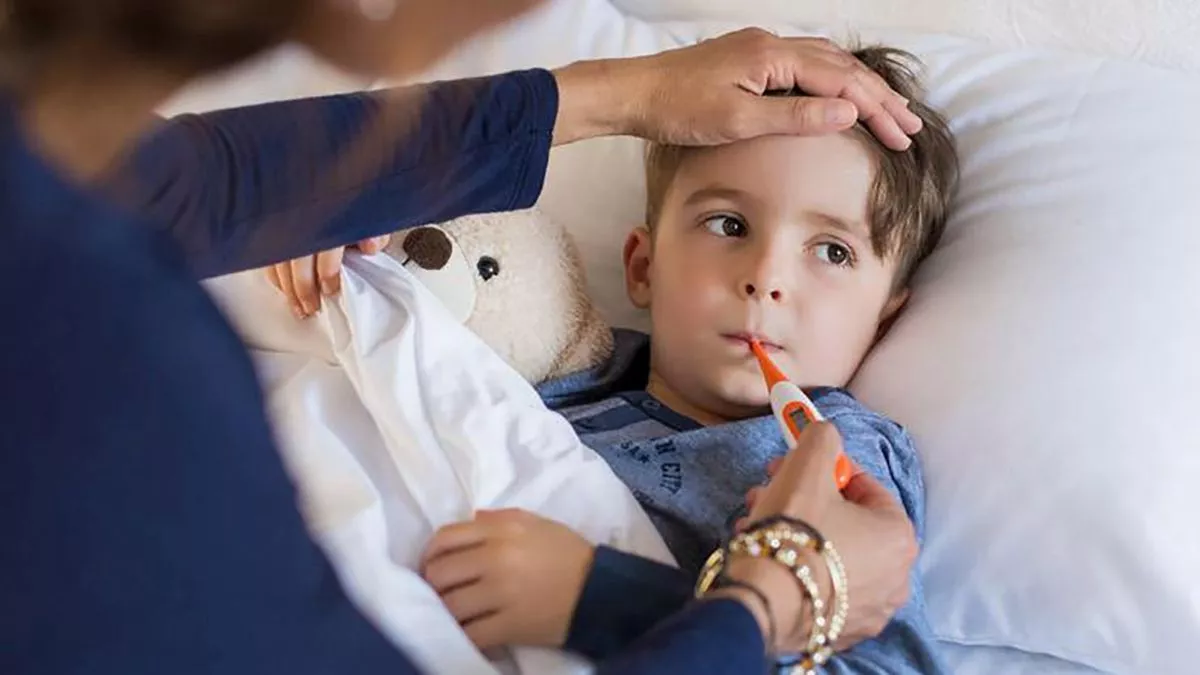
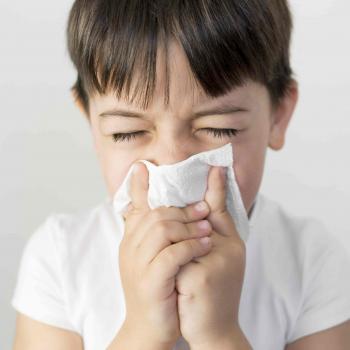
The flu manifests itself with nasal congestion, liquid secretion, tearing, dry cough, sneezing and with a few tenths of a fever. They are not usually complicated and, although there is no medicine to cure them, the symptoms can be relieved with pain relievers (such as paracetamol; aspirin is not suitable for children), rest and plenty of fluids. In a week it will be cured.
When a baby is affected by this condition, the nasal congestion will prevent him from eating.
To avoid this, ten minutes before feedings put physiological saline solution on your nose so that it softens the mucus and you can extract it with a pear.
*Do vitamins help?*
At the moment, there is no effective vaccine that immunizes against all the viruses that cause the cold, but you can do a lot so that your child is not the typical baby with continuous sneezing and runny nose. Make sure that he is well fed and that he does not lack vitamins of any kind (typical vitamin C, by itself, cannot do much, but if the body has received enough vitamins and nutrients, it will be prepared to overcome colds. Vitamin C helps to regenerate the tissues of the airways and lungs, areas damaged by colds, but does not help prevent them). If your little one eats badly, the pediatrician will tell you if he needs vitamins.
Another preventive measure is not to smoke when there is a baby at home, since it causes cold-like symptoms in the sensitive child. Although it is possible for a baby to catch the flu at home, especially if she has older siblings, it is common for them to appear during nursery or school times.
As a precaution, so that he does not infect others, do not take him to the nursery if he is sick. If you have no other choice, let the teacher know so she can keep him a bit isolated. If your little one is one of those who get sick one week and the other, the only way to prevent it is to take him out of daycare and keep him at home for a while.
In it, do not overheat his room or cover him with many clothes, because as soon as he moves he will begin to sweat and if the sweat remains cold it can worsen his ailments.
*Are vaccines effective?*
The flu virus is very different from those that cause colds and responds very well to immunization. In reality, the vaccine prevents contagion, but there is no treatment to cure the disease when it has been declared, although the symptoms can be relieved with analgesics to avoid antipyretic pain to reduce fever and rest.
If you want to be prepared, feed it well from now to have enough defenses. The exercise tones, oxygenates the cells and helps eliminate toxins, so you must include a routine for your child and for you, while suppressing everything that harms the functioning of the respiratory system, such as smoking. The rest is achieved with rest, a lot of liquid and, in the worst case, about ten days of patience.
The flu appears between October and April, so vaccination must be made between the second half of September and the first of October. It is advisable for children and the elderly who have heart and pulmonary diseases, adults with chronic respiratory or renal disorders, with heart or diabetes problems and, in general, for anemic people and with few defenses.
The pregnant woman must refrain from the vaccine, especially during the first quarter, then it will be the gynecologist who indicates the most appropriate. Nor can allergic people be applied to the egg, and must be delayed with a respiratory disease.
***10 questions to the pediatrician***
1. I have a six -month -old baby, can I vaccinate it against the flu?
No. It is preferable not to do it until over six months and only if you have respiratory or cardiac problems.
2. Antibiotics cure the refered?
No. Antibiotics are ineffective against viruses. Flu and cold are viral diseases.
3. My son acquires flu frequently because he is weak?
Until four years all children have few defenses and can have eight to ten flu per year.
4 Vitamin C prevents colds?
By itself, no. As part of the contributions of a correct diet, yes.
5. Is aspirin good to combat the cold?
For a child it is not the most indicated. An adult will help relieve symptoms.
6. Can I have several flu a year?
Yes, even if you are vaccinated against one of the flu viruses, you can be prey to another of them.
7. Is the anti -current vaccine effective?
It is very difficult to get a total immunization against more than 100 types of viruses in a single vaccine.
8. I'm cold, could you vaccinate against the flu?
No. It is preferable that you expect not to suffer any respiratory path disease.
9. My son usually has febrile seizures, should I vaccinate him against the flu?
No. In your case it is better to do without the vaccine.
10. I am pregnant, does the antigripal vaccine suit me?
Never during the first quarter; Then, the gynecologist will value your particular case.
***Take care and take care of our little ones...!***
Alert from the deep female (EN)
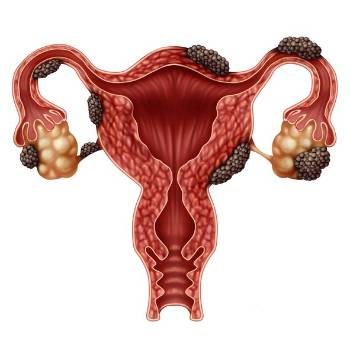
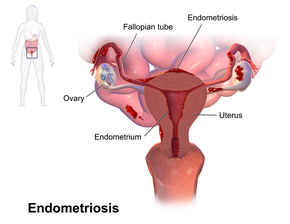
*Endometriosis causes pelvic pain and is a possible cause of infertility.*
*Very painful menses, cramps in the abdomen, absence of the period, fatigue and tiredness can be due to endometriosis. But, as the symptoms of the disease are varied and can change from one patient to another, this pathology is difficult to detect.* In fact, some women have taken years to be diagnosed with endometriosis.
During menstruation, a woman's body sheds the endometrium, the tissue that lines the inside of the uterus. However, in women with endometriosis, some of these fluids remain in the body and implant outside the uterus.
"Although confusion and misinformation continue to surround the disease, the deep and agonizing pain caused by endometriosis can be treated and, in many cases, quite successfully. Unfortunately, due to a lack of awareness in society and in In the medical community, many women are told that they must endure their discomfort for years with powerful painkillers and hormones, which only masks the symptoms of the disease"
Endometriosis is a complex, unknown and very common disease among women of childbearing age, affecting between 5% and 30% of women. It is caused by the presence of endometrium outside the uterus, in the pelvis, which produces adhesions and cysts.
Approximately 176 million women in the world suffer from endometriosis. The main symptoms of the disease are pelvic pain and infertility.
Experts detail that in the lesions generated by endometriosis, nerve fibers are trapped that cause pain with menstruation, urination, defecation and sexual intercourse, among other variables.
***Unknown origin***
In addition to causing pain, endometriosis can harm the ability to conceive. "Infertility is caused by ovarian damage or damage to the fallopian tubes that these adhesions and cysts induce,". The difficulty in having children "makes many of these women resort to assisted reproduction."
Studies indicate that 50% of women with fertility disorders could suffer from endometriosis. This disease is among the 3 main causes of female infertility. "Although it is one of the most treatable, it is the least treated."
Although there is no consensus on the origin of endometriosis, stem cells, genetics, a dysfunctional immune response and environmental triggers may be part of the multifactorial origin of the disease.
***Specialist indicates that since little is known about the causes of endometriosis. "The most accepted theory is that of retrograde menstruation, which holds that part of the menstrual flow drains into the pelvis in most women"***
***Diagnosis and treatment***
Diagnosing endometriosis is not easy because there are no useful markers. "The clinical history of the patient, a detailed examination, imaging techniques such as vaginal ultrasound or even magnetic resonance imaging (MRI) will help us. But the definitive diagnosis is made by biopsy of these lesions and, for this, laparoscopy is needed.
Due to the difficulties involved in its diagnosis, endometriosis can be confused with disorders such as adenomyosis, appendicitis, ovarian cysts, intestinal obstruction, colon cancer, ectopic pregnancy, inflammatory bowel disease or irritable bowel syndrome, among others. Endometriosis is not contagious and cannot be prevented, but it is treatable. In this sense, specialists indicate that it can be symptomatic, with non-steroidal anti-inflammatory drugs, fundamentally ibuprofen; or with hormones (gestagens or oral contraceptives).
Couple life.Handbook to discuss (EN)
*Nothing better for not arguing than not wanting to. But since arguments are sometimes unavoidable, it is better to always have a series of rules at hand to prevent them from turning into battles.*
When a couple makes the typical comment we never fight, we understand each other perfectly, it usually sounds like a locked cat. Is there really a couple that never argues, that at no time has raised their voice, even a little?
Arguing is the most normal thing in the world and, if you know how to do it, it can be beneficial to keep life together at a good level. It is positive for several reasons. Firstly, because it indicates that we are important to our partner, that we are not indifferent and, furthermore, because by arguing we not only learn to solve problems but also to reach agreements in order to live better and get to know our partner better.
**Discuss civilly**
Those who try to avoid arguments for not creating the catastrophe of the century do not realize that accumulated anger can cause much more damage than a simple storm. We must convince ourselves that arguing is good, but we must do it without violence, without aggressiveness and in a civilized way. And, as strange as it may seem, doing it correctly requires a lot of love and care from both parties.
They should always tell each other what they like, but also what they dislike, because the couple does not have to be a fortune teller.
And do it without, in any way, showing ourselves fussy, with total naturalness, without trying to motivate the annoyance in the person with whom you are arguing.
***To learn to argue you must take into account these points:***
Forget the yelling and insults. Grandma's old trick still works: If you think you're going to lose your temper, count to ten before responding, and do so in a non-accusatory tone of voice.
Be opportune. Choosing the right moment to discuss is very important. Don't do it when friends are at home or at dinner with the whole family. If necessary, delay the discussion for a better occasion.
Don't get hurt. Don't put your finger on the partner's sore spot and don't play low blows; in reality what they want is to argue, not to hurt.
Don't talk about the past. Do not remove what happened long ago, and focus on the present if you want to make decisions that allow you to improve the future. Generally, when references to the past are made, it is to emphasize negative aspects or to make hateful comparisons (when we were dating you did listen to me...", or "the other day you told me you would, don't deny it...).
Listen. As difficult as it may be sometimes, bite your tongue while your partner is talking. It is very common for what started as a dialogue to become a contest to see who keeps the floor the longest. Do you want to do me the favor of letting me speak) To be heard you have to know how to listen, and knowing how to listen and not interrupt is the basis of good communication.
No to threats. Repeatedly saying that they want a divorce or that they are going to leave home can, in the long run, become phrases that no one will believe.
Be precise. During the discussion try to say things as clearly as possible. Be specific and avoid vague comments, as the Tabares do get along; you should learn from them..." With this phrase nothing is said, only an odious comparison has been made, which will sit very badly.
Also, discuss one problem at a time, and don't get bogged down in a string of stored reproaches.
Give alternatives. Express not only what the partner is doing wrong, but also how you would like to see it change.
***Want to annoy.***
Discussions are not always motivated by important issues; sometimes they are simply due to wanting to annoy, and during them we can become truly unpleasant people.
If it is important for you that the couple feel comfortable and happy, what is the point of repeatedly mentioning that you love tall, blond men, if he is short and dark? Or why insist that it is a pity that he has a nose? so big?In moments of tension we can do a lot of damage. Perhaps we say things that we feel in those moments, but that outside of that context are not true, and it is very possible that we fall into injustice or exaggeration. If so, rectify and be honest.
***Learn to apologize.***
To solve many issues it is highly recommended, and sometimes necessary, to ask for forgiveness. And for this you do not have to kneel or sink into a valley of tears; just lower your pride a bit and say "I was wrong or Be patient, I know I'm a little stubborn, but I was angry".
Of course, the person who receives the apology does not have to take advantage of the occasion to insist on the problem. Don't give answers like Yes, yes... I know that story; sorry but I'm always the one who puts up... It's better if they answer: Well, I accept your apologies. I actually think we've both gone a little too far.
*Remember that making mistakes is human, but correcting is for real sages.* All couples argue. To make it profitable.
*Important*: Five Skills of Emotional Intelligence.(EN)
*Self-knowledge: It is the ability to look at oneself in order to know one's own internal states, preferences, resources and intuitions. This skill is key since it allows us to become aware of our own emotions in terms of understanding their causes and their effects, thus knowing our personal strengths and weaknesses and being clear about our personal improvement challenges.*
When the person gets to know himself well, he is able to make the best decisions.
****Self-regulation:**** It is the capacity for feelings, reliability in terms of maintaining honesty and integrity and the ability to adapt to highly changing situations. This ability allows you to develop creative and innovative capacity regarding ideas and information, control your own emotions and impulses, and implies not only your own but also openness to the ideas of others. People gifted with this aptitude are able to postpone immediate gratification in pursuit of a larger but longer-term goal.
*****Motivation:***** They are the emotional tendencies that impel to the action, to the search of the objectives. Motivation tends to be described as a small internal motor that guides towards the satisfaction of our motivational needs that distinguish outstanding performance: the desire to win, that is, people with this aptitude set difficult and challenging goals, are results oriented and learn to improve their performance.
The commitment to personal and organizational objectives and the initiative and optimism that move them to be alert to opportunities, proactively facing obstacles that may arise.
*****Empathy:***** Ability to put yourself in another's place, being able to understand the needs, feelings and thoughts of others, focusing attention on the other, postponing personal judgments in order to understand the significance of a given situation for the other's world . "Listening" is an art since it implies being able to detect not only what the other person tells us in the verbal plane of communication but also in the non-verbal plane, thus rescuing the feelings that accompany the speech and then showing them to the other.
Empathetic people do not necessarily have to agree with the other but must be able to see from a different point of view than the personal one, assuming that there are different ways of seeing and evaluating situations, therefore, empathic people value individual differences , contributing with this to the development of the other since they provide help.
There are three skills based on what the other really needs. People endowed with this aptitude give very accurate feedback since they clearly identify the weaknesses of others and in that sense they give good guidelines for personal improvement.
Their advice is timely as it encourages the other to move forward with their development.
*****Social skills:***** It implies having the ability to induce desirable responses in others and involves the development of a series of skills such as influence, which is the ability to persuade others, effective communication skills, which is being able to listen and transmit messages. clear and precise and that make sense to others. Another key skill is the ability to resolve conflicts through positive negotiations for both parties, to efficiently manage change processes through inspiring leadership that generates cooperation and collaboration among the members of a group. Finally, there is the ability to generate teamwork and synergy between people, which is demonstrated with excellent results. Now that we have known the aptitudes of intelligence, we can ask a key question: Is emotional intelligence developed?
*Yes, since it has a genetic component and environmental learning components, although three fundamental conditions must be met in people who want to generate change:*
They must have a strong motivation to change that is fundamentally determined by dissatisfaction at certain levels of social interactions.
Acceptance of feedback from others: the person must be willing to be shown by others the effects of their behavior on others and be willing to correct.
There must be a willingness to change habits: flexibility must be shown in the face of changes in behavior and openness to the practice of new behaviors so that by repetition they are installed as a new habit in our behavioral repertoire.
Certainly there are many things that are not in our control to change but, fortunately, the awareness of the need for personal change, the openness to look at ourselves and allow others to show us how they see us, are the starting point to start any personal improvement work. It requires effort and a lot of perseverance.
*Finally, we should ask ourselves about the validity of the title presented, certainly there is no contradiction between the two areas, but rather a complementarity that, if developed in a balanced way, could be good predictors of personal success. So, get to work and good luck!*
He behaves better without mom. (EN)
*With other people he behaves wonderfully, but with you his attitude leaves much to be desired. This problem of your son is not due to others understanding him better than you, but to another reason. It is necessary to know them.*
Every day you go through a real ordeal so that he eats, so that he goes to bed, so that he doesn't throw tantrums for any nonsense. It is as if you had to maintain a constant fight with him: he does not obey you, he is capricious and often gets on your nerves in case this will not be enough to make you feel bad, you know that he is a good boy with others.
When you're not in front, he endears himself to everyone because of his stupendous behavior. Let's analyze that reality to remedy it: what reasons does your child have to behave better with others than with you.
*Causes of your attitude*
In the first place, his attitude is due to the fact that he is only with the others for a while. Everyone tries to please him, especially if they know that you have frequent upsets due to his bad behavior, since then they will try even more to demonstrate their ability to tame him and it is logical that your little one is in his sauce and behaves well.
Secondly, your son does not allow himself to misbehave with others, because he has less trust with them than with you and he is not sure if they will follow him than laughing after disobeying them. With you, however, he has the full assurance that you will continue to love him, whether he behaves badly or whether he behaves well.
*You can change things?*
Children learn quickly, and yours has realized that if, for example, he doesn't eat or throws himself on the floor crying, you dedicate yourself fully to him, beg him, insist and give him all your attention, which is what that he is looking for. What can you do then, when there is no way to make him see reason?
When he misbehaves, it's best to ignore him. Thus, his bad behavior will not produce any benefit, he will abandon him and you will also get him to externalize the obedient part of him, as he does with others. The counterpart is that whenever he behaves well, you must be very aware of him and treat him with great affection. As he is much more intelligent than his age may seem to us, to obtain this prize that is so rewarding, he will behave less, you will not get on your nerves and you will not scold him so much.
Your situation at home will improve day by day and his behavior with you will match what you have been told he has with others.
*If he misbehaves with you, ignore him, and if he obeys you, reward him. In the end he will adopt the attitude that brings the most benefits.*
***No to bad habits:***
Frequently, the child's bad behavior with his mother (although he behaves perfectly with others) is not due to being capricious or distracting by bothering her, but to inappropriate behavior that she has been adopting in her daily dealings with him. that he doesn't cry, he buys him everything he asks of him and so that he doesn't get scared of the dark, he goes to bed with him, he will calm him down momentarily, but she will be indulging in her whims and inappropriate family habits.
If this is your case, she stops spoiling your son so much.
*For starters, don't buy his every whim or get into his bed with his. If he spends a few unbearable days you will have no choice but to put up with him, until you manage to channel his behavior of him.*
Respect for others and for oneself.
*Environmental issues have long ceased to be matters exclusive to wild nature. In other words, they are no longer limited to considering the preservation of endangered animal and plant species, or the management of protected natural areas.*
Environment is a much broader and more complex concept. It can be defined in many ways, but in all of them the idea of totality must be raised, "The environment does not consist exclusively of the environment that surrounds us and the sum of the species or biological populations contained in it.
The environment also represents a social category made up of behaviors, values and knowledge; The environment as a complex and articulated whole is shaped by the dynamic relationships between natural, social, and modified systems.
It means that it encompasses both the external conditions (physical, chemical and biological)
Like the living organisms and human communities that are an inseparable part of the environment.
***The value of respect***
Respect has to do with values, education and rights. It allows us to live in harmony and experience the feeling of security.
It is on the basis of respect that beneficial coexistence results. Without respect, the future becomes uncertain. We are learning a new concept of harmony worldwide. It goes beyond the limits of social relationships to include ecological relationships. It is a great challenge for humanity, and also a significant advance in the maturity of the species.

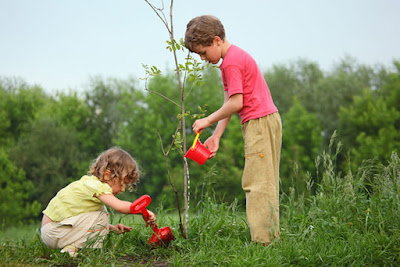
Empathy is a virtue that is learned at home. Synchronizing emotions (EN)
*Babies have the amazing ability to faithfully mimic the behavior of parents and caregivers. This is the premise that we must keep in mind when we act in his presence.*
This is how they learn all our virtues and all our defects, becoming faithful mirrors of our personality, motivating us to cultivate certain qualities that we lack or that we wish to develop.
One of them is empathy, which is nothing more than the ability we have to connect with the emotions that others feel.
**How to sow this quality in the little ones?**
With the example. When are they ready to develop empathy?
**Since they are born:** when we put ourselves in their shoes, when we allow ourselves to be infected by their laughter, when we console them when they cry, when we carry them or bend down to look them in the eye and, especially, when we listen carefully.
Even if they don't understand the concept of empathy, children will soon learn that it's natural and healthy to synchronize emotions with others.
Today there are many older people with the first symptoms of Alzheimer's, and it is often seen how their children, despite their love, reacted nervously to their recurring questions, forgetfulness or insistence. And in other cases, patient children were seen who knew how to respond with understanding and patience to those same questions, oversights and insistence.
It may not have much to do with it, but we know that the parents who are more nervous, those who disrespect their children the most in childhood, are also the ones who receive the most disrespect in adolescence from their children.
These are all part of the same empathy we have with others. Studies indicate that patience, treating others well, and understanding is one of the things that children learn the most from their parents. More than culinary tastes, the way of speaking or hobbies. Be kind to your children.
*Results: in the short term we will receive hugs and kisses when they notice us tense or sad, in the medium term they will listen carefully to everything we say, and in the long term they will accompany us as considerate and fair adults.*
The same demand and intransigence that you have with your children will be the one that your children have with you one day. Be nice.
The power of emotional memory (EN)
***I'm going to try to project some ideas about "emotional memory".***
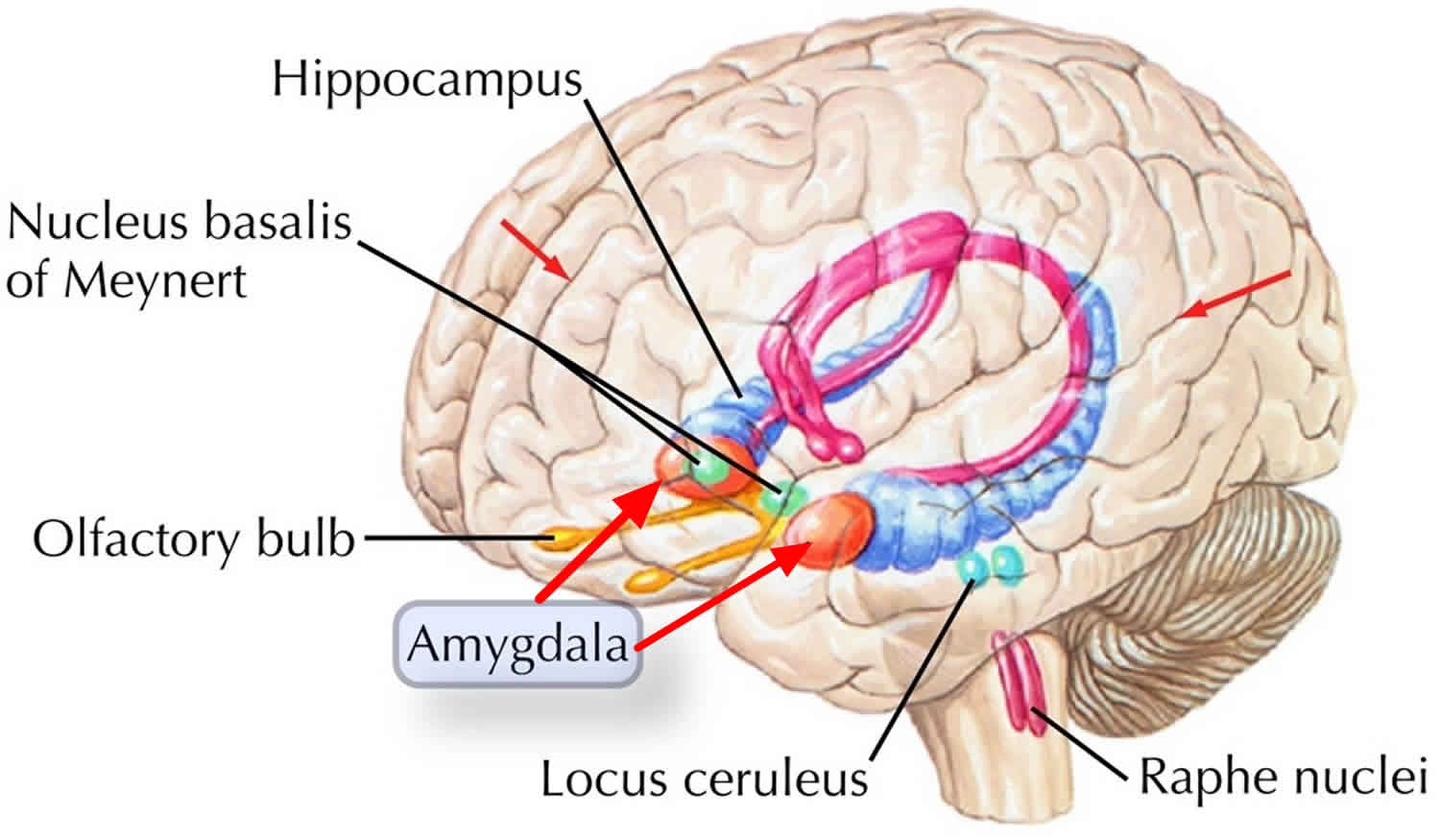
***With its structure deformed by a rigid belief system and overly structured sociocultural mandates, with dogmatic impositions that enter the psyche at a very early age and remain anchored in the amygdala for life, triggering emotions, sensations and primitive feelings over and over again, lacking the most elementary intellectual elaboration, which undermine the existential area, marking perimeter limits, almost always coinciding with fears and insecurities, until they lead to panic disorders and/or deep depression.***
The elaboration zone of the present is based on a predetermined programming and on distorted recordings of its past, to end up projected in a dispersed and inharmonious way in the future. Fleeing from displeasure, pain and death, becomes the goal, and "stress", the means to achieve it.
This causes the residues, the sediments of "old battles" to surface, injecting adrenaline and other dopamines into the blood that alert, alter and twitch, making existence a vicious circle, full of insecurity, darkness and mistrust.
All those unhappy experiences of the past are somatized, perceiving them in the present as latent threats and not as memories. The lack of elaboration and sublimation of such memories makes them harmful due to their influence on the here and now of the subject who suffers from them.
This is how resentment, resentment, rage, compulsive anger is born in the face of remembering acts or events, people or places. The word "resentment" literally means "RE-FEEL" That is, "I WILL FEEL AGAIN" which encloses the individual in a dangerously reduced and lethal circle, who, alienated and convicted of his own experiences, denies himself the possibility of projecting himself into the future, not accepting the past as the set of formative experiences, a severe learning discipline that over time transmutes errors or unfortunate events, turning them into wisdom that expands consciousness and discovers the true paths of the Being.
The way back, liberation, is found in detachment, in realizing that the accumulation of negative feelings exerts an equally harmful influence on the harmony that should exist between spirit, mind and body. It is essential to let go of all those situations, people, places or things that stop us in time, immerse us in chaos and delay us in our personal evolution.
***Staying stuck to all this makes us paralyze, we stop the flow of our energies and accumulate karma in our life, we move away from our purpose and lose the course towards the realization and elevation where we are inexorably heading.***
Energy for life...! (EN)
**Every plant, animal, and living cell is a living machine and, just like a mechanical machine, needs an energy supply. The fuels for most animal life on this planet are various hydrocarbon compounds that react with oxygen to reléase energy. As with the petroleum fuel, the "combustion of food in a cell (part of what is called metabolism) creates carbon dioxide and wáter and releases energy to sustain life.**
The principal difference between the combustion of food in digestion and the combustion of fossil fuels in mechanical engines is the rate at which reactions take place. In digestion the reaction is much slower and energy is released as it is required.
Like the burning of fossil fuels, the reaction is self-sustaining once started, asvcarbon combines with oxygen to form carbon dioxide and hydrogen with oxygen to form water.
The reverse process is more difficult. Only green plants can make carbon dioxide combine with water to produce hydrocarbon compounds such as sugar.This process is photosynthesis and is energized by sunlight. Sugar is the simplest food, and all others carbohydrates, proteins, and fats are also synthe sized compounds of carbon, hydrogen, oxygen, and other elements.
How very fortunate that more energy is locked in the bonds of these hydrocarbons than in their products after combustion!
We see efficiency at work in the food chain. Larger creatures feed on smaller creatures, who in turn eat smaller creatures, and so on down the line to land plants and Ocean plankton that are nourished by the sun. Moving each step up the food chain in volves inefficiency. In the African bush, 10 kilograms of grass may produce 1 kilogram of gazelle. How ever, it will take 10 kilograms of gazelle to sustain 1 kilogram of lion.
We see that each energy transformation along the food chain contributes to overall inefficiency. Interestingly enough, some of the largest creatures on the planet, the elephant and the blue whale, eat far down on the food chain. And more and more humans are considering substances such as krill or yeast as efficient sources of nourishment.
Seven habits to be highly effective
***Habit #1 It's the habit of your personal vision Be Pro-active.***
The effectiveness in the various areas of our lives is conditioned by us and not by "the others". Effective people are proactive, their attitude is the product of their own value-based decisions; instead of being the product of the determinism of feeling victimized by external conditions; "my life is determined by conditions beyond my control" or "'it's someone else's fault'."
In this way, a proactive person does not deny the effects that genetic, family or environmental aspects have on our lives; it accepts them as an influence, but exercises the freedom to choose the response to those stimuli.
***Habit #2 It is your personal leadership habit to begin with the end in mind.***
Imagine how you would like the end of your life to be, how you would like to be seen, how you would like to be remembered, what work you would like to leave behind. This habit motivates you to begin with a clear understanding of your destiny and where you want to go, in order to find the purposes and principles that determine your actions. This habit allows a long-term vision, a deep analysis of problems and also the capture of opportunities.
***Habit #3 Your Personal Management Habit Put First Things First: iiPriorice!!!***
This habit determines how you spend your time. We are always bombarded by various activities that we must do, knowing how to manage time and prioritize activities is essential.
*****Let's classify the activities by level of importance and urgency:*****
There are activities that are important and urgent such as problems, crises and these must be attended to immediately, rather for survival, they act on us, for example, danger of stress, exhaustion, etc. These negative consequences can be prevented by carrying out the following activities:
They are activities that require one to be proactive and that are equally important, but that do not have the sense of ¡Ya! and that are related to its mission, its role and its goals.
*****For example:*****
Continuing education
Deepen what you have learned
Create deep and lasting relationships
To teach
Plan and organize
Personal Development
These activities are crucial to maintain harmony, coordination, speed and logistics of activities that endanger our emotional balance.
You must learn to assertively say no to activities that are not important, since they rather take up time. By saying no to these activities, you will be saying yes to the activities that are important for our development. For example, the phone ringing, that unanswered email... these are activities that are not important and rather distract, because they are pressing and urgent.
And finally there are activities that are neither important nor urgent, and that involve a waste of time such as unnecessary meetings, interruptions and that give the feeling "I was busy all day and did nothing"
***Habit #4 A Philosophy in Human Interaction Think Win/Win***
In a negotiation situation with another, we must follow the "I win your win" paradigm, which means balancing courage and consideration, seeking respect for ourselves (self-esteem) and respect for others. This allows both to win and for stop manipulating and maintaining intransigent and authoritarian positions and thus be able to enter into an acceptable disagreement.
***Habit No. 5 It is the habit of listening with depth Seek to Understand First and be understood after***
Most people want to be understood. The natural tendency in most people is to give recipes based on their own autobiography, to project themselves. Listening empathetically can seem risky, so habits 1, 2, 3 are required. Stop all your techniques and manipulations, understand the other's position and you will achieve trust and cooperation. In this way, people feel affirmed as human beings and feel appreciated.
***Habit N°6 It is the habit of Creative Cooperation Synergy***
Synergy is achieved when two disputing parties use their ability to search for a better solution than the proposals of each one individually. Synergy is nourished directly from habit 4.- Think win / win and habit 5. Seek first to understand and then to be understood. It is necessary to communicate with respect and creativity, you learn the willingness to propose solutions to problems that are better than those originally raised.
***Habit No. 7 Is the Habit of Renewal and Personal Maintenance Exercise your Physical, Mental, Spiritual, Social and Emotional Sel***f.
Get organized to spend time cultivating and taking care of yourself. It is to preserve and improve your most important asset: "yourself". We must strengthen our self-discipline, take time to maintain the other 6 habits.
Moods in Social Contexts...! (EN)
***Moods are contagious. Communities determine the state of mind of the individuals who belong to them, but the set of individuals also determines the state of mind of their communities. The collective mood that prevails at a sporting event, for example, is different from that of a mountain club restaurant on a Sunday morning.***
The leaders, directors, managers, supervisors are, among other things, the designers of the moods in their respective areas of business management. The heads of families do it in their respective homes. Teachers and teachers in their respective classrooms.
Each community of people has its particular moods. The state of mind of those who provide services in a company or public institution is central to the construction of its identity and image. The social moods in a city or country determine the horizon of possible actions of people and, therefore, constitute an important factor in predicting what they can or cannot achieve. Social moods can be mobilized and turned into important historical forces. Ghandi's India and Martin Luther King's United States are two examples that illustrate this statement.
What happens when we do not take responsibility for our moods and those of our immediate environment? and on the contrary, what happens when we do take responsibility for our moods and those of our immediate environment?
Moods as a Design Domain
When we talk about designing contexts, we recognize that our actions have the ability, among many other factors, to intervene and modify the current course of events. As individuals, we have the potential to be an active force that can make a difference. The interpretation of moods increases the power we have as individuals, since it opens up possibilities for action.
Moods and possibilities closely connected and influence each other. By modifying our horizon of possibilities we modify our moods, and vice versa. There is a circularity between moods and possibilities of action. That is, he acted according to my state of mind, in the same way that my state of mind is according to my actions. It's powerful, right?
The Coach stimulates changes in the mood of his client when she invites him to act (use his body) differently.
**...SUCCESS is at the tip of the ARROW that goes directly to the target we have chosen. The BOW that drives us precisely to the desired goal is the emotion we feel when we intensely want to hit that target.**
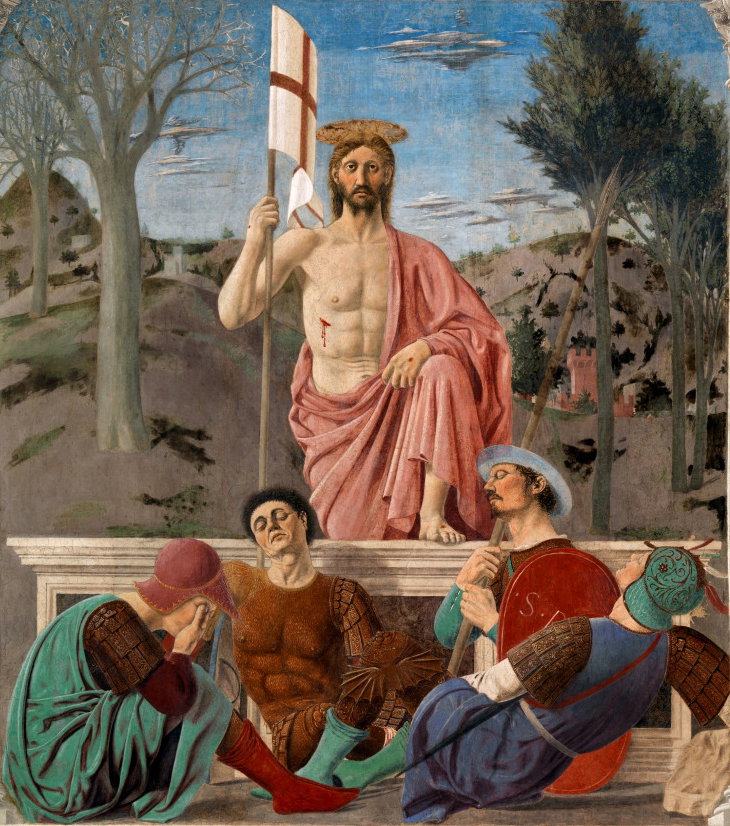
(EN)Holy Week?Easter?What is it for Christians?/(ES)Semana Santa?Pascua? Que es para los cristianos?
***Holy Week is the week before Easter Sunday. It begins with Palm Sunday, another day of joy for Christians. On Palm Sunday the faithful go to church with palms. The palms remind Christians of the triumphal entry of Jesus Christ into erusalem. There, a few days before his death, he was hailed as a king. The joyous crowd that came to meet him clapped palms over the place where he was to pass, and waving palms welcomed him.***
The Monday, Tuesday and Wednesday of Holy Week do not have special names. Thursday is called Holy Thursday. Holy Thursday brings us the memory of the Last Supper, in which Jesus Christ introduced Holy Communion. Jesus Christ and his closest followers were all Jews and therefore celebrated the Jewish Passover. The Last Supper was a Jewish Passover celebration meal that Jesus Christ offered to his disciples.
Good Friday is for Christians the saddest day of the year. On Friday Holy Christians remember the crucifixion and burial of Jesus Christ. The Greeks call "Great Friday" Good Friday, and in English-speaking countries it is given the name "Good Friday to remember the good, "all the good that Jesus Christ did for men.
***Why do Christians celebrate Easter?***
Easter is the happiest and most important day for Christians. On Easter day Christians celebrate their belief in the resurrection of Jesus Christ on the third day of his crucifixion. Resurrection means "rising from the dead." "Crucifixion" is the act of "putting someone on the cross for the Christian to die."
*Religion teaches that the resurrection of Jesus Christ is a great victory over death. It means a new and eternal life for all who believe in Jesus Christ*
***Why does the date of Easter change every year?***
Because Easter was celebrated in another time according to the old Jewish calendar; not according to the Roman calendar, which is the one used today. Easter always falls on a Sunday. And you can come as early as March 22 or as late as April 25.
For a long time, Christians celebrated their Passover on the same date that Jews celebrated Passover. Jewish Passover can fall on Sunday as well as on Tuesday, Thursday or Saturday. Christians wanted Easter to be celebrated on a Sunday because they believed that Jesus Christ rose from the dead on the first day of the week. At that time, Christians were slowly adopting the use of the Roman calendar instead of following the Jewish calendar. Thus, in the year 325 the Christians made a change. They decided to follow a formula to determine the date of Passover. Easter would be and continues to be celebrated on the first Sunday following the first full moon of spring.
***Why is the egg a symbol of Easter?***
In many of the world's cultures, the egg represents new life. Outwardly, the eggs look like stones. But it is from an egg that new life springs. The egg reminds Christians of the resurrection of Jesus Christ.
***When did the custom of decorating eggs at Easter begin?***
knows it for sure. Some believe that the Egyptians colored eggs in spring long before Jesus Christ was born. Before dyes were invented, people made different colored eggs by wrapping them in leaves and flowers and thus dropping them into boiling water. This gave the eggs the color of green leaves and red petals. Later, the Christians painted the eggs and had them blessed. They ate some and gave the rest to friends as Easter gifts.
***How do they decorate Easter eggs in Europe?***
The Germans decorate empty eggshells. They first make a tiny hole in each end of a raw egg. They then extract the contents of the shell by blowing. Once the shell is empty without any breakage, they paint it in different colors. Greek Christians give each other eggs painted bright red. People who live in Ukraine, which is a part of the Soviet Union, decorate Easter eggs with pictures. The most frequent drawings are of fir trees and bell towers.
***Why are figures of bunnies carrying colored eggs popular at Easter?***
In many cultures, the white hare represents, like eggs, a new life. There are many old stories about hares and eggs.
According to a German legend, a poor woman once hid colored ones in a nest. They had to be the Easter present for her children. As soon as the children saw the nest, they jumped out of a hare. Then the people said that the hare had brought the eggs. Today they are called Easter bunnies.
*This is a short summary of what Holy Week means, Easter for Christians. Greetings*
_________________________________________________
***La Semana Santa es la semana anterior al Domingo de Pascua. Comienza con el Domingo de Ramos, otro día de gozo para los cristianos. EI domingo de Ramos los fieles van a la iglesia con palmas. Las palmas recuerdan a los cristianos la entrada triunfal de Jesucristo en Jerusalén. Allí, unos días antes de su muerte, fue aclamado como un rey. La alegre multitud que fue a recibirlo cubrió palmas el lugar por donde debía pasar, y agitando palmas le dio la bienvenida.***
El lunes, el martes y el miércoles de Semana Santa no tienen nombres especiales. El jueves se llama Jueves Santo. El Jueves Santo nos trae el recuerdo de la Ultima Cena, en la que Jesucristo introdujo la Sagrada Comunión. Jesucristo y sus discípulos sus seguidores más cercanos eran todos judíos y celebraban, por lo tanto, la Pascua Judía. La Última Cena fue una comida de celebración de la Pascua Judía que Jesucristo ofreció a sus discípulos.
El Viernes Santo es para los cristianos el día más triste del año. El viernes Santo los cristianos recuerdan la crucifixión y el entierro de Jesucristo. Los griegos llaman Gran Viernes" al Viernes Santo, y en los países de habla inglesa se le da el nombre de "Buen Viernes para recordar el bien, "todo lo bueno que Jesucristo hizo por los hombres.
***¿Por qué celebran la Pascua los cristianos?***
La Pascua es el día más feliz y más importante para los cristianos. El día de Pascua los cristianos celebran su creencia en la resurrección de Jesucristo el tercer día de su crucifixión. Resurrección significa alzarse de entre los muertos. Crucifixión es el acto de “poner a alguien en la cruz para que muera”.
La religión enseña que la resurrección de Jesucristo es una gran victoria sobre la muerte. Significa una nueva y eterna vida para todos los que creen en Jesucristo
***¿Por qué cambia cada año la fecha de la Pascua?***
Porque la Pascua se celebraba en otro tiempo según el antiguo calendario judío; no según el calendario romano, que es el que se usa hoy día. La Pascua cae siempre en domingo. Y puede venir tan temprano como el 22 de marzo o tan tarde como el 25 de abril.
Durante largo tiempo, los cristianos celebraron su Pascua en la misma fecha que los judíos celebraban la Pascua Judía. La Pascua Judía puede caer lo mismo en domingo que en martes, jueves o sábado. Los cristianos querían que la Pascua se celebrara en domingo porque creían que Jesucristo se alzó de entre los muertos el primer día de la semana. Por entonces, los cristianos iban adoptando lentamente el uso del calendario romano en vez de regirse por el calendario judío. Así, el año 325 los cristianos hicieron un cambio. Decidieron seguir una fórmula para determinar la fecha de la Pascua. La Pascua se celebraría y sigue celebrándose el primer domingo que siguiera a la primera luna llena de la primavera.
***¿Por qué es el huevo un símbolo de Pascua?***
En muchas de las culturas del mundo, el huevo representa una nueva vida. Exteriormente, los huevos parecen piedras. Pero es de un huevo de donde brota la nueva vida. El huevo recuerda a los cristianos la resurrección de Jesucristo.
***¿Cuándo empezó la costumbre de decorar huevos en Pascua?***
Nadie lo sabe con certeza. Hay quien cree que los egipcios coloreaban los huevos al llegar la primavera mucho antes de que hubiera nacido Jesucristo. Antes de que se inventaran los tintes, la gente tenía los huevos de distintos colores envolviendo los en hojas y flores y echándolos así en agua hirviendo. Esto daba a los huevos el color de las verdes hojas y de los rojos pétalos. Mas adelante, los cristianos pintaban los huevos y los hacían bendecir. Se comían algunos y regalaban los demás a los amigos como presentes de Pascua.
***¿Cómo decoran en Europa los huevos de Pascua?***
Los alemanes decoran cascaras de huevo vacías. Primero hacen un diminuto agujero en cada extremo de un huevo crudo. Luego extraen el contenido de la cascara soplando. Una vez vacía la cáscara sin rotura alguna, la pintan de diferentes colores. Los cristianos griegos se regalan unos a otros huevos pintados de vivo color rojo. La gente que vive en Ucrania, que es una parte de la Unión Soviética, decoran con dibujos los huevos de Pascua. Los dibujos más frecuentes son de abetos y campanarios.
***¿ Sabias por qué en Pascua son populares las figuras de conejitos que llevan huevos coloreados?***
En muchas culturas, la liebre blanca representa, como los huevos, una nueva vida. Hay muchas historias antiguas sobre las liebres y los huevos.
Según una leyenda alemana, una mujer pobre escondió una vez coloreados en un nido. Tenían que ser el regalo de Pascua para sus hijos. Tan pronto como los niños vieron el nido, salto de una liebre. Luego la gente dijo que la liebre había traído los huevos. Hoy se les llama conejitos de Pascua.
Assertiveness? Do we really establish assertive communications? How important is it?
*Do you find yourself saying "YES" in situations where you really felt you should say "No"? Do you find it difficult to express his displeasure to a friend or colleague, even if he believes he is justified? Does he have a hard time accepting praise? If he answered yes to any of the above questions he may not be as assertive in his communication as he would like to be.*
The word assertive, from assertion, comes from the Latin assertus and means "Affirmation of the certainty of a thing", from there we can see that it is related to firmness and certainty or truthfulness, and we can deduce that an assertive person is one who affirms with certainty.
Now, what is being assertive? It is the relationship with our awareness of ourselves first, of those around us, and of the environment in which we operate.
Assertiveness, a voice related to communications that has been incorporated into the common language of people. When we say assertiveness, we refer to a way to interact effectively in any situation, including those moments in the relationships between human beings that represent a challenge for the one who sends a message, because through it one can confront or make the person uncomfortable. receives.
When we talk about learning to be assertive, I mean promoting the development of skills that will allow us to be direct, honest and expressive people in our communications; in addition to being safe, self-respecting and having the ability to make others feel valuable.
Being Assertive Implies having a very effective intrapersonal communication with oneself: Being aware of our thoughts, motivations, needs and desires without judging them, managing our emotions and assuming the situation responsibly.
Find the value that you have for who you are, the awareness of being as important as any other person on this planet. Not more important, but not less, neither the best nor the worst, all equally important.
Being assertive is managing our emotions and assuming the situation responsibly.
Knowing and feeling good about the talents received and the qualities developed. It is recognizing that our intelligence is sufficient to assess our situations, and make decisions without needing the approval of others.
Having learned to recognize oneself, and this represents having a positive image of oneself, and a positive feeling that have been achieved through continuous learning, ideally being assertive should lead us to consciously work towards a Winning solution
**To earn?** It means making sure that all parties involved meet their needs as much as possible.
It is a fundamental sense of equality in everything. It is also the willingness to tune into the experience of others without jumping to conclusions or judgments about them or us, developing the ability to apply reason derived from experience to make responsible and beneficial decisions.
It is the willingness to achieve what we want while being aware that the results depend on many factors, however it is valid to remain flexible when choosing and if necessary allow ourselves to change our minds.
It is taking calculated risks, but without avoiding reality, accepting that situations exist beyond our control, and staying confident that by staying focused on those we can influence, most of our needs will be met.
Assertiveness is innate and learned. So that the path towards assertiveness can become a learning process, a new process of discovering the potentialities that one has in a relationship with oneself is a learned behavior. If we are lucky enough to have good models of assertive people during our childhood, it will be natural for us to develop that habit, otherwise we may find ourselves in the situation of wanting to cultivate it.
Men and women traditionally have different social orientations. Sometimes it is socially acceptable for men to be aggressive, while women are expected to be passive and submissive, today the reality is different. Some women, trying to break the submissive "mold" or with which society intends to "label" them, frequently believe that the only way to do so is by adopting the diametrically opposite position, that of aggressiveness, while recognizing that aggressive behavior is little feminine.
It is then that they consider being assertive, which, unlike aggressiveness, is compatible with femininity. We can say that the first step towards assertiveness is generated in the relationship of the human being with himself.
Some people avoid being assertive because they are afraid of displeasing others and not being accepted for it. However, while an immediate rift could be avoided by not being assertive, it could hurt the relationship in the long run. This could also happen if you avoid asserting your rights and allow yourself to be taken advantage of over and over again.
On many occasions they find it difficult to be assertive due to negative attitudes learned during childhood, in these cases it helps to focus on the positive in ourselves, others and the situation. Start expressing what you like about your friends and family and soon they will return the compliments.
*Assertive Behavior has several stages:*
1) ****Describe the behavior:**** "When I'm talking to you and you don't pay attention to me."
2) ****Express your feelings:**** "I feel bad, I think you are not interested in what I am telling you." instead of "You are", the focus here is on the "I feel", "I want" part of the exhibition. When expressing anger, it is common to tend to accuse the other person, exaggerate and get involved with emotions. Employing this technique allows us to constructively focus on ourselves and be clear about our
3) ****Create empathy:**** "I understand that you are under a lot of pressure because of the exams.
4) ****Negotiate a change:**** "However, I want you to give me your own feelings.
5) ****Report consequences:**** "Because if you don't, I'd rather you don't come visit me.
Techniques
To help us be assertive, it is important to have a positive vision of life and a sense of our value as unique beings, to be clear about our rights and responsibilities, it is useful to express something positive to each person with whom you deal with during the day, even if they are small details. , remember that these can make big differences
Making a list of the things we like most about our work and home is a good idea to start training ourselves to see the positive in every situation. Once that list is finished, create another one with your best personal attributes, this will allow you to maintain a clear perspective when situations arise that give you the opportunity to act assertively.
***To be assertive it is important to identify your rights as a human being you have the right to:***
Achieve your goals
Decide the direction of your life
Your own opinions
Improve yourself
Privacy
To make mistakes
Using some or all of the following techniques would make our work easier.
Assert your rights. Insist on being treated fairly. Be as clear and specific as you can when expressing what you want, think, and feel. When you disagree with someone, it's not a good idea to pretend to agree just to "stay calm" by smiling, nodding, or paying attention. It would be more beneficial in the long run to change the subject or express our disagreement more actively. If a person asks you to do something that seems unreasonable or unpleasant, ask "why" you should do it.
As adults we deserve an explanation and it is our right to insist on a convincing explanation.
*It is fair and necessary that others know our opinions and feelings about anything that is of interest. It is not about monopolizing the conversations, but about participating when it is appropriate.*
Let's talk a little about empathy. A value that many lack. (EN)
Empathy is the set of capacities that allow us to recognize and understand the emotions of others, their motivations and the reasons that explain their behavior.
Empathy supposes that we enter the other's world and see things from their point of view, feelings and hear what the other hears. The ability to put yourself in another's shoes does not mean that we share their opinions, or that we agree with their way of interpreting reality. Empathy does not imply sympathy either. Sympathy implies a positive assessment of the other, while empathy does not presuppose any assessment of the other.
Empathy should also not be confused with kindness. Good scammers are characterized by having highly developed empathy. Interpersonal intelligence (like all other intelligences) is an ability that can be used for good or for evil.
To be able to understand the other, to be able to enter his world, we have to learn to put ourselves in his place, learn to think like him. Therefore, empathy does presuppose a temporary suspension of my own world, of my own way of seeing things.
One of the basic skills to understand the other is knowing how to listen. Most of us, when we talk to others, pay more attention to our own reactions than to what they say to us, we listen thinking about what we are going to say next or thinking about what kind of experiences we can contribute.
Learning to listen means focusing all our attention on the other, stopping thinking about what we want to say or what we would do.
When we listen attentively we listen with the whole body. Studies carried out on communication clearly show that the impression we produce on the other depends much more on how we say it than on what we say. In other words, non-verbal communication is more important than verbal communication.
People with a great capacity for empathy are able to synchronize their non-verbal language with that of their interlocutor. Not only that, they are also able to read the non-verbal cues they receive from each other with great accuracy. The changes in the tones of voice, the gestures, the movements that we make, provide a great amount of information.
That information is processed by the holistic hemisphere and therefore is more difficult to explain verbally. However, we only have to sit in a cafeteria and start observing the people around us to discover that it is very easy for us to notice who are friends and who are not.
People who are attuned demonstrate that attunement physically. They often adopt the same posture, or move at the same time, or make the same gestures.
The impact of nonverbal elements is not due to chance. Our way of understanding the world, our way of thinking is reflected in our whole body, not only in what we say. When we adapt our body language, our voice, and our words to those of our interlocutors, it is easier for us to enter their world, and when we understand the other's world we can begin to explain ours to them.
****The ability to manage interpersonal relationships****
When we understand the other, their way of thinking, their motivations and their feelings, we can choose the most appropriate way to present our message. The same thing can be said in many ways. Knowing how to choose the right one and the right moment is the mark of a great communicator.
The ability to communicate is what allows us to organize groups, negotiate and establish personal connections.
**Writers say that communication is characterized by three major behavior patterns.**
The first guideline, they know what is the objective they want to achieve
The second guideline is that they are capable of generating many possible answers until they find the most appropriate one.
Third guideline that they have enough sensory acuity to notice the reactions of the other.
The ability to set goals is one of the requirements of intrapersonal intelligence, sensory acuity involves attention to non-verbal aspects of communication.
The flexibility or ability to generate many responses is related to the ability to learn to see things from many points of view.
*If you always do the same thing, you will always have the same results and, what is the same, if you always analyze things from the same point of view, the same ideas will always occur to you.*
Have a nice day, thanks for reading my post.
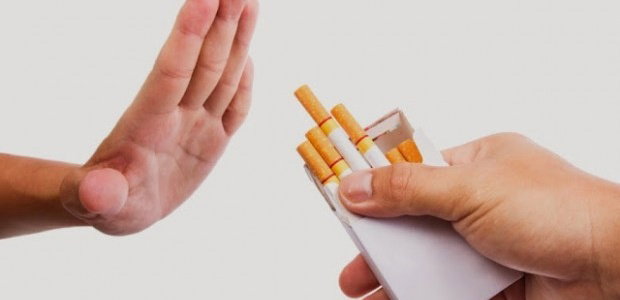
(ES) Deja de fumar. De una vez por todas.
*Cuantas veces te has propuesto a dejar el cigarro? Y en cuantas ocasiones te rendiste de nuevo? Aquí te damos algunas razones para que ahora sí, tu deseo por desterrar el tabaco no se quede solo en propósito.*
Tu ropa y pelo huelen mal, tus besos no saben rico, tus dientes se tornan cada vez más amarillos y por si fuera poco, van en aumento los lugares donde te echan a la calle para que puedas encender un cigarrillo. Sin embargo, solo los fumadores entienden los reconfortantes que puede ser una bocanada de humo. Este pequeño objeto probablemente ha sido tu compañero incondicional para calmar los nervios antes de una presentación importante de trabajo, después de un apasionado encuentro sexual o en las noches de tragos con tus amigas.
*****Viviendo con el enemigo.*****
Compañero incondicional? No exactamente. Aunque muchos pacientes describen al cigarro como una compañía, incluso un amigo, según psicólogos este es un pensamiento distorsionado, pues la realidad es muy distinta. Tu salud no se salva de pagar la factura por fumar y muy caro. La OMS ha sacado un comunicado hace ya un tiempo en donde asegura que se han detectado más de 4000 sustancias toxicas en el humo del cigarrillo y no hay un solo órgano del cuerpo que no se vea afectado por ellas.
Seguro lo has escuchado por todos lados, pero solo para hacer un breve recuento de sus efectos, este enemigo silencioso ataca a los pulmones (y promueve la aparición de cáncer y enfisema pulmonar), al corazón (aumenta las probabilidades) de que sufras de taquicardias, arritmias, hipertensión o incluso, un infarto), abdomen (inflamándolo o produciendo gastritis, cáncer de vejiga o infertilidad) y la boca (daña a tus dientes y puede provocar cáncer de lengua o paladar).
*****Eres adicta?*****
Existen siete criterios para detectar la dependencia de una sustancia, que básicamente consisten en: necesitar cada vez mayor cantidad de esta para sentirte bien, ponerte irritable o comer compulsivamente cuando no puedes fumar, tener un deseo persistente incluso hacer esfuerzos, por dejar el tabaco, y reducir o abandonar aquellas actividades sociales que te impidan consumirlo.
Alguno te suena familiar? La mala noticia es que, aunque respondas no y te consideres solo una fumadora social la mayor parte de los daños a la salud ya mencionados te afectan directamente aun cuando enciendas un cigarrillo solo de vez en cuando.
*****Tu último cigarro*****
Lo más importante para dejar de fumar es estar realmente segura de que deseas hacerlo. Aunque reciba el mejor tratamiento para dejarlo, si la persona no está convencida, ningún método va a funcionar.
Una vez que estés decidida, lo más recomendable es que acudas con algún especialista para que diagnostique cual será el mejor procedimiento para tu caso.
Muchos hospitales o instituciones educativas cuentan con clínicas que se especializan en este problema y pueden servirte de apoyo.
En mi experiencia, el método más efectivo es la terapia cognitivo conductual (Complementada con el uso de parches o medicamentos) que consiste en cambiar tus pensamientos y como resultado, tus conductas. Trabaja mucho con tus emociones y te enseña a manejar sentimientos como la ansiedad o la depresión.
Otro conseja que dan los expertos es llevar una bitácora de tus cigarros: anota en que momentos firmas, si estás sola o acompañada, como te sientes. Esto te ayudara a detectar cuales son las motivaciones ocultas detrás de tu adicción.
Tu misma sabes que el mal olor y el color de tus dientes son el menor de los males. Razones para dejar de firmar, la tienes de sobra, que esperas para hacerlo?
*****No quiero subir de peso.*****
Uno de los temores más comunes por dejar de fumar son los kilos que regularmente se ganan como consecuencia. El secreto está en no sustituir el tabaco por el alimento. Si tienes ansiedad, camina, mójate la cara con agua fría, haz ejercicios de respiración o busca otras formas de lidiar con esta sensación. Lleva una dieta sana y consume productos que ayuden a tu organismo a recuperarse del tabaquismo, como los ricos en ácidos omega-3, vitamina B y betacarotenos (cereales integrales, berros y zanahorias). La actividad es indispensable para tener el control de tu talla, además de que estarás llenando tus pulmones de aire limpio.
*****Métodos para dejar de fumar*****
Si no has podido desterrar este habito mortal con solo decidirlo, existen varios tratamientos que te pueden ayudar a deshacerte de él. Se recomienda que siempre los sigas bajo la supervisión de un especialista, él puede auxiliarte a elegir el mejor para ti dependiendo del grado de adicción física y psicológica que tengas:
***Acupuntura:*** Es una técnica natural que se utiliza a menudo para combatir el tabaquismo y el estrés. Consiste en colocar pequeñas agujas en puntos del cuerpo conectados con la parte del cerebro responsable de la adicción.
***Sustitutos de nicotina:*** Puede encontrarse en forma de parches, chicles o aerosoles. Estos suministran pequeñas dosis de la sustancia a tu cuerpo hasta deshabituar la dependencia al tabaco.
***Medicamentos:*** Actúan directamente en la zona cerebral que controla la adicción a nicotina. Las investigaciones apuntan a este método como uno de los más efectivos para eliminar el cigarro.
***Hipnosis:*** A través de técnicas que trabajan a nivel del inconscientes, este sistema promete “cambiarte el chip” ayudándote a ver de otro modo el tabaco y aliviando la ansiedad que se genere por la abstinencia a la adicción
Stop smoking. Once and for all. (EN)
*How many times have you proposed to quit smoking? And how many times did you give up again? Here we give you some reasons so that now, yes, your desire to banish tobacco is not just a purpose.*
Your clothes and hair smell bad, your kisses don't taste good, your teeth turn more and more yellow and as if that weren't enough, the number of places where they throw you out so you can light a cigarette is increasing. However, only smokers understand how comforting a puff of smoke can be. This small object has probably been your unconditional companion to calm your nerves before an important work presentation, after a passionate sexual encounter or on drinks nights with your friends.
Living with the Enemy.
Unconditional partner? Not quite. Although many patients describe the cigarette as a company, even a friend, according to psychologists this is a distorted thought, because the reality is very different. Your health is not saved from paying the bill for smoking and very expensive. The WHO has released a statement some time ago where it ensures that more than 4000 toxic substances have been detected in cigarette smoke and there is not a single organ of the body that is not affected by them.
Surely you have heard it everywhere, but just to make a brief recount of its effects, this silent enemy attacks the lungs (and promotes the appearance of cancer and pulmonary emphysema), the heart (increases the chances) that you will suffer from tachycardia , arrhythmias, hypertension or even a heart attack), abdomen (inflaming it or causing gastritis, bladder cancer or infertility) and the mouth (damages your teeth and can cause cancer of the tongue or palate).
Are you addicted?
There are seven criteria for detecting dependence on a substance, which basically consist of: needing more and more of it to feel good, becoming irritable or compulsively eating when you can't smoke, having a persistent desire, including making efforts, to quit tobacco, and reduce or abandon those social activities that prevent you from consuming it.
Does any sound familiar to you? The bad news is that, even if you answer no and consider yourself just a social smoker, most of the aforementioned health damage affects you directly even if you light up a cigarette only once in a while.
Your last cigarette
The most important thing to quit smoking is to be really sure that you want to quit. Even if you receive the best treatment to quit, if the person is not convinced, no method will work.
Once you have decided, it is best to go to a specialist to diagnose which will be the best procedure for your case. Many hospitals or educational institutions have clinics that specialize in this problem and can help you.
In my experience, the most effective method is cognitive behavioral therapy (supplemented with the use of patches or medications) which consists of changing your thoughts and, as a result, your behaviors. It works a lot with your emotions and teaches you to handle feelings such as anxiety or depression.
Another piece of advice given by the experts is to keep a log of your cigars: write down when you sign, if you are alone or accompanied, how you feel. This will help you detect what are the hidden motivations behind your addiction.
You yourself know that the bad smell and the color of your teeth are the least of evils. Reasons to stop signing, you have it to spare, what are you waiting for?
I don't want to gain weight.
One of the most common fears about quitting smoking is the kilos that are regularly gained as a consequence. The secret is not to substitute tobacco for food. If you have anxiety, take a walk, splash cold water on your face, do breathing exercises, or find other ways to deal with this feeling.
Eat a healthy diet and consume products that help your body recover from smoking, such as those rich in omega-3 acids, vitamin B, and beta-carotene (whole grains, watercress, and carrots). Activity is essential to have control of your size, plus you will be filling your lungs with clean air.
Smoking cessation methods
*If you have not been able to banish this deadly habit just by deciding, there are several treatments that can help you get rid of it. It is recommended that you always follow them under the supervision of a specialist, who can help you choose the best one for you depending on the degree of physical and psychological addiction you have:*
*****Acupuncture:***** It is a natural technique that is often used to combat smoking and stress. It consists of placing small needles in points of the body connected with the part of the brain responsible for the addiction.
*****Nicotine substitutes:***** It can be found in the form of patches, gum or sprays. These supply small doses of the substance to your body until you break the dependence on tobacco.
*****Medications:***** They act directly on the brain area that controls nicotine addiction. Research points to this method as one of the most effective to eliminate smoking.
*****Hypnosis:***** Through techniques that work at the level of the unconscious, this system promises to "change the chip" helping you to see tobacco in a different way and relieving the anxiety generated by abstinence from addiction.
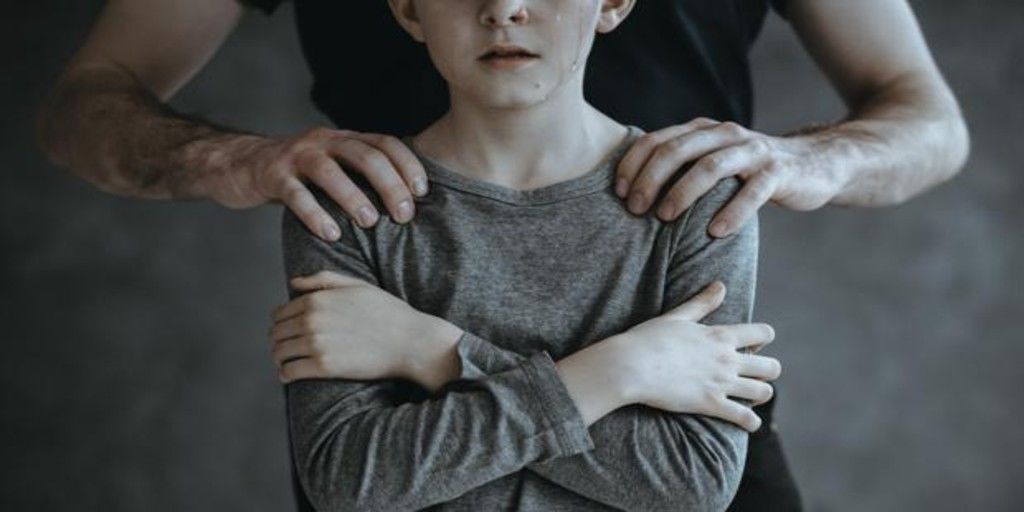
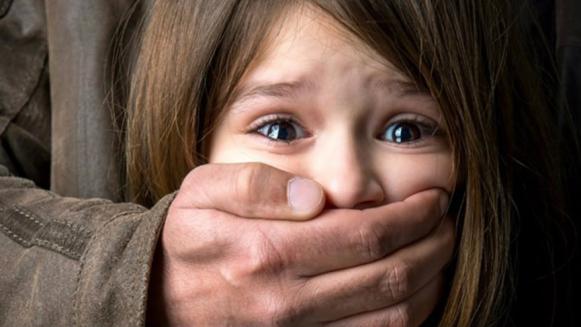
Evite que su hijo sea otra víctima de los abusos infantiles. (ES)
*Hoy en día los niños están más expuestos a los abusos infantiles que en otras épocas, hay muchísimos medios como el internet, las redes sociales, en fin, por eso es necesario que sepamos cómo proteger su inocencia.*
A nivel mundial los casos de abusos cometidos contra menores están aumentando alarmantemente. Raro es el día que en las páginas de un periódico, en las noticias o en las pantallas de nuestros televisores, en las redes sociales ( Twitter, Instagram, Facebook,Google Noticias ) no nos enteramos de uno o más casos de abuso infantil. Algunos de ellos verdaderamente espeluznantes, como el de los reiterados asesinatos recientes de niños pobres y vagabundos en algunas de las mayores ciudades.
El abuso infantil no es algo confinado a un solo país. Constituye una tragedia universal, y tampoco es algo nuevo. Ha existido desde siempre. Precisamente una de las grandes conquistas sociales de las que puede enorgullecerse la humanidad son las leyes laborales que, desde mediados del siglo pasado y comienzos de éste, a través de las cuales se empezaron a adoptar medidas para regular y limitar el trabajo de los menores en la industria, el comercio y la agricultura.
El Fondo de las Naciones Unidas para la Infancia (UNICEF) ya tiene años realizando una labor, cada vez más intensa y más difundida, en defensa de la niñez del mundo entero, y otros muchos organismos internacionales, nacionales y locales están empeñados en la misma misión.
El ideal de velar por el bienestar infantil también cuenta con una larga tradición en todos nuestros pueblos de Hispanoamérica.
Siempre ha existido, pues, en todas las esferas de la sociedad y en todos los países, una profunda preocupación por proteger a los niños contra todo tipo de abusos, pero ahora esa conciencia está haciéndose mucho más palpitante y dinámica, en vista de lo que parece ser una creciente tendencia a maltratar a los niños, a pesar de todas las leyes existentes para su protección.
*Qué es el abuso infantil?*
Todos sabemos que los abusos y maltratos contra niños y adolescentes pueden revestir múltiples formas, desde los simples regaños humillantes, ofensivos y sarcásticos, que hacen que el niño pierda su autoestima y se forme la imagen negativa de que él es un "niño malo", que no sirve para nada, ni hace nada bien, y los castigos corporales desmedidos o crueles, hasta los mismos crímenes contra la vida del menor, incluyendo el secuestro para obtener un rescate, inducir a los menores, con fines de lucro, a que se aficionen al alcohol o a las drogas, o a participar en actividades pornográficas.
El catálogo, desde luego, no se agota allí. También hay abuso infantil por omisión, no sólo por acción. Por ejemplo, cuando a un niño no se le alimenta y se le viste debidamente (existiendo los medios económicos para hacerlo), cuando no se le proporciona la atención médica que necesita (incluso, preventiva), o cuando se le abandona a su suerte o se lee desatiende en cualquier forma, o se le mantiene en condiciones carentes de la más elemental higiene. Un caso muy común, y que también está en aumento, es el de los padres divorciados o separados que evaden el pago de la pensión alimentaria que deben abonar a sus hijos. Posiblemente estos padres no se juzguen así mismos como culpables de abuso infantil, pero ciertamente lo son.
El Departamento de Servicios de Salud y Rehabilitación del Estado de la Florida (USA) ha elaborado una definición del abuso infantil que, aunque tal vez no abarque la totalidad de los casos, resulta bastante completa. Según esta definición, hay abuso en los casos de lesiones físicas no accidentales causadas al menor; agresión sexual; explotación financiera o sexual, o lesiones a la capacidad intelectual y psicológica".
La definición añade que también hay abandono o negligencia cuando los padres, o las personas responsables, no proporcionan al menor alimentación, ropa o albergue adecuado, atención de su salud o la necesaria supervisión para evitarles peligros.
Los hechos demuestran ampliamente que los padres no son las únicas personas que pueden incurrir en abuso infantil. También lo cometen los tutores, padres adoptivos, maestros, personas a cargo de guarderías infantiles, las "nanas, o niñeras, los miembros de la familia o amigos de ésta y, por supuesto, los extraños. Y debe señalarse, lamentable mente, que en los últimos años también se ha registrado un aumento en los casos de abuso sexual contra menores, cometidos por ministros religiosos.
***Abusos físicos***
El abuso físico suele ser el más fácil de detectar. Sin embargo, como todavía en nuestra cultura se aceptan ampliamente los castigos corporales, no siempre es fácil delimitar la línea divisoria entre una medida racional, meramente disciplinaria, y un verdadero caso de abuso.
Si el menor ha resultado lesionado, ello puede ser producto de un episodio aislado, o también consecuencia de malos tratos reiterados o habituales. También las lesiones pueden variar desde las más insignificantes hasta las más graves, incluso, fatales.
Los expertos se inclinan a estimar que cualquier lesión causada a un menor, si requiere atención médica, constituye abuso y va mucho más allá de los límites de un castigo corporal razonable, prudente y moderado. Y también consideran que las lesiones causadas con el puño cerrado o con algún instrumento, las patadas, las quemaduras y el hecho de lanzar físicamente al niño contra el suelo o la pared, siempre constituyen abuso, aun cuando las lesiones resultantes de estas acciones hayan sido mínimas, e incluso, aunque no haya llegado a producirse lesión alguna. (Desde luego, la definición legal de abuso infantil puede variar mucho de un país a otro e, incluso, las leyes penales de varios países definen el abuso infantil en general y el abuso específicamente sexual como dos tipos distintos y separados de delito).
***Abuso sexual***
Si bien cualquier forma de abuso infantiles repugnante, probablemente la quemas repelente resulte entre todas ellas sea el abuso sexual. Es algo que la conciencia pública y la conciencia individual tienden a rechazar enérgicamente. Incluso, se sabe que en la población penal de las cárceles, entre los criminales más empedernidos, hay un manifiesto rechazo hacia los presos cuando sus compañeros de prisión descubren que están allí por haber abusado sexualmente de un menor. No es raro que, en las prisiones, a menudo haya que aislar a los culpables de estos delitos para que no sean víctimas de la furia de otros presos.
El abuso sexual, como los demás tipos de abuso infantil, también tiene numerosas variantes. Puede ser violento o no violento y, en muchos casos, ni siquiera implica forzosamente que haya habido contacto físico entre el adulto ofensor y el menor que es su víctima. (Debemos aclarar que el ofensor no siempre es un adulto. También abundan los casos en que adolescentes y jóvenes, menores de 18 años, abusan sexualmente de niños y jovencitos de menor edad).
Hay abuso sexual, por ejemplo, cuando el ofensor se exhibe en forma indecente o libidinosa ante un menor, o se masturba ante éste, o convence al menor, aun sin ejercer ningún tipo de violencia física, para que se desnude o le exhiba sus partes privadas, o cuando el ofensor toma fotos pornográficas del menor, ya sea para su propio placer pervertido o para comerciar con ellas, vendiéndolas a otros.
Puede haber abuso sexual físico, pero no violento, cuando el ofensor se limita a tocar o acariciar sexualmente, Sin mediar agresividad ni fuerza de ningún tipo. Y puede haber abuso sexual violento en los casos de rapto, violación, sodomía o práctica de sexo oral, aun cuando haya un aparente consentimiento por parte del menor.
Al revés de lo que ocurre con el abuso físico no sexual, el abuso específicamente sexual a menudo es muy difícil de descubrir. El ofensor puede usar regalos, promesas, amenazas o cualquier tipo de mentira y explicación, para hacer que el menor guarde silencio sobre lo sucedido. Y el mismo niño, si se siente culpable de haber hecho "algo malo", si se siente avergonzado, o si teme la posibilidad de un fuerte castigo, muchas veces opta por callar, aun sin que el ofensor lo haya amenazado.
A veces el ofensor se las ingenia para persuadir al niño de que la actividad sexual es una forma de expresarse el afecto que los une. Esto ocurre con frecuencia en los casos de incesto, que son más comunes de lo que la población en general sospecha. Pocos niños revelan que uno de sus padres, u otro familiar cercano ha realizado con ellos actos sexuales, sobre todo, si el pequeño está bajo la impresión de que él mismo ha provocado la situación.
Aunque es imposible compilar estadísticas confiables acerca del incesto, ya que muchos casos jamás llegan al conocimiento de las autoridades, los expertos coinciden en estimar que los casos más generalizados, aunque no son los únicos, son los que involucran a un padre y a su hija (incluyendo los casos de padrastros e hijastras). También se sabe de casos en que un adulto de la familia se ha involucrado sexualmente con dos o más menores en la misma casa, e igualmente existen los casos en que el padre o familiar ofensor, una vez que el menor va creciendo o se muda de la casa, termina por dejarlo en paz, pero sólo para reemplazarlo con la hermanita o hermanito que le sigue en edad a su primera víctima.
De hecho, puede haber incesto en el seno de una familia durante largo tiempo antes de que llegue a descubrirse lo que ocurre. Por regla general, el incesto no va acompañado de violencia física, sino de una insidiosa persuasión ejercida muy hábilmente por el ofensor.
Debemos estar muy alerta, muchas veces el agresor es una persona conocida para el niño, por eso se confían. Hay muchas formas de abuso contra los menores pero el más terrible de todos es el sexual.
**Espero que la información sea de utilidad, continuaremos hablando en el próximo post. Saludos.**
(EN) Don't let your child be another victim.
***Today children are more exposed than in other times, there are many media such as the internet, social networks, in short, that is why we need to know how to protect their innocence.***
Worldwide cases of abuse committed against minors are increasing alarmingly. Rare is the day that in the pages of a newspaper, in the news or on the screens of our televisions, on social networks (Twitter, Instagram, Facebook, Google News) we do not learn of one or more cases of child abuse. Some of them truly horrifying, such as the recent repeated murders of poor children and vagrants in some of the largest cities.
Child abuse is not something confined to a single country. It is a universal tragedy, and it is not something new either. It has been around forever. Precisely one of the great social achievements of which humanity can be proud are the labor laws that, since the middle of the last century and the beginning of this one, through which measures began to be adopted to regulate and limit the work of minors in industry, commerce and agriculture.
The United Nations Children's Fund (UNICEF) has been working for years, increasingly intense and widespread, in defense of children around the world, and many other international, national and local organizations are engaged in the same mission.
The ideal of ensuring child welfare also has a long tradition in all our towns in Latin America.
There has always been, therefore, in all spheres of society and in all countries, a deep concern to protect children against all kinds of abuse, but now that awareness is becoming much more vibrant and dynamic, in view of what There seems to be a growing tendency to mistreat children, despite all the existing laws for their protection.
*****What is Child Abuse?*****
We all know that abuse and mistreatment against children and adolescents can take many forms, from simple humiliating, offensive and sarcastic scoldings, which make the child lose his self-esteem and form the negative image that he is a "bad child", that is useless, does nothing right, and excessive or cruel corporal punishment, even crimes against the life of a minor, including kidnapping for ransom, inducing minors, for profit, to addicted to alcohol or drugs, or to participating in pornographic activities.
The catalog, of course, does not end there. There is also child abuse by omission, not just by action. For example, when a child is not fed and clothed properly (there are financial means to do so), when he is not given the medical care he needs (including preventive care), or when he is abandoned to his fate or it is read, neglected in any way, or kept in conditions that lack the most elementary hygiene.
A very common case, and one that is also on the rise, is that of divorced or separated parents who evade the payment of child support that they must pay to their children. These parents may not judge themselves guilty of child abuse, but they certainly are.
The Department of Health and Rehabilitation Services of the State of Florida (USA) has developed a definition of child abuse that, although it may not cover all cases, is quite complete. According to this definition, there is abuse in cases of non-accidental physical injury caused to the minor; sexual assault; financial or sexual exploitation, or injury to intellectual and psychological capacity". And the definition adds that there is also abandonment or neglect when the parents, or the responsible persons, do not provide the minor with adequate food, clothing or shelter, health care or the necessary supervision to avoid dangers.
The facts amply demonstrate that parents are not the only people who can engage in child abuse. It is also committed by guardians, foster parents, teachers, daycare providers, nannies, family members or friends, and of course strangers. And it must be noted, sadly, that in recent years there has also been an increase in cases of sexual abuse against minors, committed by religious ministers.
*****Physical Abuse*****
Physical abuse is usually the easiest to spot. However, as corporal punishment is still widely accepted in our culture, it is not always easy to draw the line between a rational, merely disciplinary measure and a true case of abuse.
If the minor has been injured, this may be the product of an isolated episode, or also the consequence of repeated or habitual ill-treatment. Injuries can also vary from the most insignificant to the most serious, even fatal.
Experts are inclined to believe that any injury to a minor, if it requires medical attention, constitutes abuse and goes far beyond the bounds of reasonable, prudent and moderate corporal punishment. And they also consider that injuries caused with a clenched fist or with any instrument, kicks, burns and the fact of physically throwing the child against the floor or the wall, always constitute abuse, even when the injuries resulting from these actions have been minimal, and even if no injury has occurred. (Of course, the legal definition of child abuse can vary greatly from country to country, and even the criminal laws of various countries define child abuse in general and sexual abuse specifically as two distinct and separate types of crime.)
*****Sexual Abuse*****
While any form of child abuse is disgusting, probably the most repellent thing among them all is sexual abuse. It is something that the public conscience and the individual conscience tend to strongly reject. It is even known that in the penal population of the prisons, among the most hardened criminals, there is a manifest rejection towards the prisoners when their fellow inmates discover that they are there for having sexually abused a minor. It is not uncommon that, in prisons, those guilty of these crimes often have to be isolated so that they do not fall victim to the fury of other prisoners.
Sexual abuse, like other types of child abuse, also has many variants. It can be violent or non-violent and, in many cases, does not even necessarily imply that there was physical contact between the adult offender and the minor who is his victim. (We must clarify that the offender is not always an adult. There are also many cases in which adolescents and young people, under the age of 18, sexually abuse children and youngsters of minor age).
There is sexual abuse, for example, when the offender exhibits himself in an indecent or libidinous way before a minor, or masturbates before him, or convinces the minor, even without exercising any type of physical violence, to undress or expose his parts. private, or when the offender takes pornographic photos of the minor, either for his own perverted pleasure or to trade them, selling them to others.
There may be physical sexual abuse, but not violent, when the offender is limited to touching or caressing sexually, without aggressiveness or force of any kind. And there can be violent sexual abuse in cases of abduction, rape, sodomy or oral sex, even when there is apparent consent on the part of the minor.
Unlike non-sexual physical abuse, specifically sexual abuse is often very difficult to uncover. The offender can use gifts, promises, threats or any kind of lie and explanation to make the minor keep quiet about what happened. And the same child, if he feels guilty for having done "something wrong", if he feels ashamed, or if he fears the possibility of a strong punishment, many times he chooses to remain silent, even without the offender having threatened him.
Sometimes the offender manages to persuade the child that sexual activity is a way of expressing the affection that unites them. This frequently occurs in cases of incest, which are more common than the general population suspects.
Few children reveal that one of their parents or another close relative has performed sexual acts with them, especially if the child is under the impression that he himself has provoked the situation.
Although it is impossible to compile reliable statistics about incest, since many cases never come to the attention of the authorities, experts agree that the most widespread cases, although they are not the only ones, are those that involve a father and his daughter ( including stepfather and stepdaughter cases). There are also known cases in which an adult in the family has become sexually involved with two or more minors in the same house, and there are also cases in which the offending parent or relative, once the minor grows up or moves from the house, ends up leaving him alone, but only to replace him with the next-in-age little sister or brother of his first victim.
In fact, there can be incest in a family for a long time before it is discovered what is going on. As a rule, incest is not accompanied by physical violence, but rather by insidious persuasion very skilfully exercised by the offender.
We must be very alert, many times the aggressor is a person known to the child, so they trust. There are many forms of abuse against minors but the most terrible of all is sexual.
*I hope the information is useful, we will continue talking in the next post. Greetings*
La vida es maravillosa vivela y se tu propio motor. (ES)
***No es un secreto para nadie que últimamente la falta de motivación que tienen muchas personas no es nada normal. Se podría decir o pensar fácilmente, en unas amigas por ejemplo. Se las pasan los días sin hacer algo para transformar su estilo de vida, para ganar entusiasmo, alegría, vitalidad y ganas de vivir.***
Estoy segura de que algunas ni siquiera se han dado cuenta de esto, se la pasan de queja en quejan de que no les pasa nada, siguen atrapadas en las mismas situaciones, pero, aun así, continúan esperando a que alguien llegue o algo suficientemente fuerte y emocionante impacte sus vidas, para recuperar, entonces, la motivación y el entusiasmo se han perdido para siempre.
Al dejarnos llevar por las viejas programaciones aprendidas, terminamos repitiendo el mismo comportamiento, basado en las creencias y en los prejuicios que aún no hemos cambiado: Qué vas a hacer para que tu vida se convierta en una experiencia más satisfactoria y gratificante? Seguir esperando a que las cosas caigan del cielo? Casualidades? Es tiempo de salir de nuevo a la vida, con la misma pasión, el mismo entusiasmo y la misma confianza con los que lo hiciste hace años quizás cuando éramos más jóvenes..
Deja de esperar o de necesitar que alguien se haga responsable de tu felicidad y asume las riendas de tu vida. Vamos, tú puedes lograrlo!
Necesitamos aprender a motivarnos a nosotros mismos para tener motor propio. Sentirnos motivados implica experimentar el impulso de hacer cuanto sea necesario para conseguir nuestras metas. Muchas veces necesitamos sentir que somos motivados por otras personas, pero cuando ellas dejan de impulsarnos nos detenemos casi instantáneamente.
Debemos recordar siempre que sentirnos motivados significa tener entusiasmo, voluntad y ganas de vivir, levantarnos cada día con optimismo; implica el no necesitar que otro nos recuerde el cumplimiento de los compromisos que hemos hecho con nosotros, con los demás y con la vida.
Cuando te sientes motivado eres más fuerte para perseverar en tu empeño. Además, puedes vencer los obstáculos con más facilidad. Vencer esos obstáculos que nunca dejan de estar en nuestras vidas. La falta de motivación hace que pierdas el sentido y la dirección de tu vida.
Se sincero contigo mismo. Como te gustaría vivir cada día? Muchas veces, a través de tu ejemplo y de tu actitud, eres tu quien motivas a otros a recuperar el entusiasmo y las ganas de vivir.
Comienza por ponerte una meta. Cuando quieres alcanzar algo en la vida, inmediatamente toda tu energía se alinea con tu intención, cada pequeño o gran esfuerzo comienza a estar dirigido hacia la consecución de esa meta. Es importante que la meta sea tuya realmente y no sugerida por otro, para que puedas desarrollar la motivación necesaria para alcanzarla. Haz cada cosa con pasión. Cuando hacemos las cosas con ganas, desarrollamos una fuerza que nos hace permanecer motivados durante todo el proceso. Cambia el monologo negativo que te acompaña mentalmente.
Después de un pensamiento negativo de un desánimo, trata de crear uno positivo. Rodéate siempre de personas entusiastas y optimistas que puedan fortalecer tu confianza y determinación con su ejemplo. Quiérete más, para que puedas tener la motivación necesaria para hacer cosas que van a beneficiarte a ti. Toma la iniciativa y haz algo diferente hoy. Puedes transformar tu estilo de vida.
**Aprende a liberarte de ese pasado que muchas veces te perturba, es hora de comenzar a planificar y preocuparte por un mejor futuro, vive la vida, es maravillosa.**
Life is wonderful live it and be your own engine.
***It is no secret to anyone that lately the lack of motivation that many people have is not normal. It could be said or thought easily, in some friends for example. They spend their days without doing anything to transform their lifestyle, to gain enthusiasm, joy, vitality and will to live.***
I am sure that some of them have not even realized this, they go from complaining to complaining that nothing is wrong with them, they are still trapped in the same situations, but, even so, they continue waiting for someone to arrive or something strong enough and exciting impact their lives, to regain, then, the motivation and enthusiasm are lost forever.
By letting ourselves be carried away by the old learned programming, we end up repeating the same behavior, based on beliefs and prejudices that we have not yet changed: What are you going to do to make your life a more satisfying and rewarding experience? Keep waiting for things to fall from the sky? Coincidences?
It's time to go back to life, with the same passion, the same enthusiasm and the same confidence with which you did years ago perhaps when we were younger..
Stop expecting or needing someone to take responsibility for your happiness and take charge of your life. Come on, you can do it!
We need to learn to motivate ourselves to have our own engine. Feeling motivated implies experiencing the impulse to do whatever it takes to achieve our goals. Many times we need to feel that we are motivated by other people, but when they stop pushing us, we stop almost instantly.
We must always remember that feeling motivated means having enthusiasm, will and desire to live, getting up every day with optimism; It implies not needing another to remind us of the fulfillment of the commitments we have made with ourselves, with others and with life.
When you feel motivated you are stronger to persevere in your endeavor. Also, you can overcome obstacles more easily. Overcome those obstacles that never cease to be in our lives. Lack of motivation makes you lose the meaning and direction of your life.
Be honest with yourself. How would you like to live each day? Many times, through your example and your attitude, it is you who motivates others to regain enthusiasm and the will to live.
Start by setting a goal. When you want to achieve something in life, immediately all your energy aligns with your intention, every little or great effort begins to be directed towards achieving that goal. It is important that the goal is really yours and not suggested by someone else, so that you can develop the necessary motivation to reach it. Do everything with passion. When we do things with enthusiasm, we develop a strength that makes us stay motivated throughout the process. Change the negative monologue that accompanies you mentally.
After a negative thought of discouragement, create a positive one. Surround yourself with enthusiastic and optimistic people who can strengthen your confidence and determination with their comments or their example. Love yourself more, so that you can have the necessary motivation to do things that will benefit you. Take the initiative and do something different today. You can transform your lifestyle.
***Free yourself from that past that often disturbs you, it's time to start planning and worrying about a better future, live life, it's wonderful.***
Logre un enfoque positivo de la vida (ES)
***Todos pasamos por situaciones difíciles, pero hay quienes las llevan con más ánimo. Tienen una perspectiva muy amplia y positiva.***
Existe un viejo ejemplo, para explicar más detalladamente lo que es la perspectiva, veamos, si se enfrentara con un vaso, el cual contiene agua hasta la mitad, como lo describiría? Esta el vaso medio lleno o medio vacío? Se dice que un pesimista diría que está medio vacío, mientras que un optimista optaría por describirlo como medio lleno.
La perspectiva que equivale a lo que llamamos comúnmente “punto de vista" "actitud ante la vida” o "enfoque” es sumamente importante para todos los seres humanos. Las filosofías hacen un gran énfasis en la forma en que la perspectiva afecta nuestras vidas. Por ejemplo imagine que está usted viendo una escena específica a través de una cámara profesional, la cual está equipada con un zoom o amplificador es seguro que observará numerosos detalles con esta cámara profesional que, usando uno de un celular de pocos megapixeles, habrían pasado desapercibidos.
Por el contrario muchísimas personas se preocupan solamente de ver la imagen general, sin prestar gran atención a esos detalles importantes. Por ello es que afirmo que la perspectiva personal contribuye enormemente a mejorar nuestra capacidad para disfrutar de la vida y enfrentarnos a la adversidad, o en cambio, nos limita y atrapa en nuestros propios problemas.
Una situación que se presenta con frecuencia, causando así un sentimiento de frustración, es aquella en que nos vemos obligados a enfrentar un dilema "de no ser esto, será aquello, en otras palabras, cualquiera que sea nuestra decisión, ella conllevará un resultado desfavorable.
Una mujer puede pensar, "Deberé yo quedarme junto a mi esposo y ser infeliz, o deberé irme y sentirme sola (y ser infeliz de todas formas)? Desde su punto de vista o perspectiva limitado, ella ve que sólo existen dos alternativas, dos salidas para este problema tan serio, mas, si le fuese posible ampliar su enfoque, ella se daría cuenta que existen muchísimas más soluciones.
Otro de los aspectos está relacionado con nuestro sentido del tiempo. Resulta muy fácil perder el enfoque cuando no apreciamos lo que poseemos en este preciso momento o, por el contrario, creemos que lo que ya tenemos será para toda la vida Por ejemplo, en ocasiones apenas disfrutamos de unas breves horas en la playa, porque estamos pensando constantemente en las tareas domésticas que nos esperan al llegar a casa. Por otra parte, es posible que gocemos plenamente de una relación pensando que es permanente, solo para averiguar luego que esta era de carácter temporal.
Nuestro sentido del tiempo es en el que menos debemos de confiar: mientras disfrutamos de una situación, las horas pasan rápidamente; más, cuando estamos aburridos, nos parece que unos minutos son una eternidad. Asimismo, al tener demasiadas tensiones y preocupaciones, el tiempo transcurre lentamente, nos invade la sensación de que los problemas son verdaderamente eternos.
***Hay una serie de ejercicios que se pueden aplicar " para desarrollar nuestra perspectiva”***
*He aquí algunos ejercicios específicos con los que podremos desarrollar una perspectiva más amplia y positiva:*
1. El humor es la forma más efectiva de desarrollar una actitud abierta, además contribuye grandemente al mantenimiento de nuestra salud mental. En ocasiones, cuando una persona se ve demasiado envuelta en el melodrama de su propia vida, se acostumbra a decirle: "Recuerda siempre lo que se decía al describir la situación que reinaba en los países balcánicos antes del comienzo de la Primera Guerra Mundial. La situación es desesperada, pero no sería. Puede usted encontrarle el lado cómico o humorístico a su situación? imagínese usted cómo sería la vida si su problema sirviese de inspiración para una telenovela?
2. Si la base de todas esas complicaciones es una actividad en la que usted quisiera verse envuelta, dele rienda suelta a su fantasía e imagine que usted está, en realidad, llevándola a cabo. Esto resultara en una experiencia emocional sumamente parecida al hecho verdadero. Por ejemplo, si deseara aprender a patinar sobre ruedas, hágase la idea de que se está calzando los patines, que se está poniendo de pie y, luego, que patina libremente sus músculos responderán a su fantasía y se prepararán para llevar a cabo los movimientos de coordinación apropiados para esta ocasión.
3. Si sucede que usted le teme a una actividad en particular, entonces imagínese a sí mismo llevándola a cabo, mas, en caso de que siga sintiendo el mismo temor, hágase la idea de que está observando detenidamente a otra persona, quien, a su vez, está viendo a un tercer individuo llevar a cabo lo que usted teme. En otras palabras, sepárese por completo de esa actividad hasta que se sienta a gusto. Una vez que lo haya logrado, entonces le será posible visualizarse a si misma haciendo lo que teme, sin sentir ansiedad alguna.
El próximo no paso será, lógicamente, de llevar a cabo esta actividad tan temida. Tiene usted miedo a las alturas, por ejemplo? La técnica para eliminar este temor será el siguiente: sepárese del problema, imaginando cómo otra persona, digamos, escalaria una montaña: haga de cuentas que está viendo una película. Una vez que se sienta cómoda viendo este film, podrá reemplazar al supuesto actor por sí misma, para así disfrutar de la actividad como si usted estuviese allí.
4. También podrá desarrollar su perspectiva haciéndose la idea de que han pasado 6 meses hasta 10 años, Si ello le conviene. Analícelo desde este punto de vista: usted acaba de recibir unas noticias muy malas y se siente deprimidísimo imagínese entonces que han transcurrido ya 6 meses qué está haciendo ahora? Como se siente? Recuerde que nada es para siempre, tanto las cosas desagradables como aquéllas que disfrutamos.
5. Si usted se encuentra luchando a brazo partido con algún problema, haga una pequeña prueba con lo siguiente ella una de sus almohadas y colóquela como más le plazca, como si ella fuese su problema. Entonces, sin pensarlo dos veces, cambie su relación para con la almohada imagínese que es el mismo problema, sólo que lo está viendo de un ángulo diferente. Ahora lo está analizando desde un punto de vista un punto de vista (una perspectiva) nuevo.
Luego, sin pensarlo, transforme otra vez esta relación, Observándola según un tercer criterio. Una vez terminado el experimento, usted habrá analizado su problema por medio de tres enfoques diferentes, lo cual la ayudará a lidiar con él de una forma más directa.
6. El último de los ejercicios esta diseñado para ayudarle a sobreponerse de una situación desagradable. Este rompe la conexión que se crea entre la memoria de la experiencia y los sentimientos que le acompañan. Ello requiere una gran concentración mental. He aquí lo que debe hacer: siéntese en una posición cómoda y cierre los ojos. Hágase la idea de que se encuentra en una sala de cine, mirando la pantalla. En pocos minutos, usted ha de presenciar las escenas de esa situación tan desagradable por la que ya usted ha pasado. Ahora, imagínese que usted está sentada en uno de los palcos y observa detenidamente a otro espectador (quien resulta ser usted misma).
A continuación, comienza a proyectarse la película en la pantalla y usted presencia de nuevo esas escenas que tanto le incomodan. Cuando termine, ruede el film por segunda vez, sólo que a una velocidad mayor que la anterior. En la tercera oportunidad que la proyecte, la película estará en blanco y negro, si usted la vio a colores las primeras dos veces o viceversa. Al concluir ésta, imagínese que ha sido pasada a diapositivas; véala de nuevo. Para terminar, cambie el orden de las diapositivas. Ya basta Al llegar a este punto, usted seguramente se siente menos incómoda y angustiada.
Si aún no ha desaparecido esa incomodidad, pregúntese entonces qué tipo de fondo musical debería de acompañar la película, así como las fragancias y demás sonidos. Al final, vuelva a rodar el film con todos estos detalles incluidos.
*Que se logra con todo esto? muchísimo! De estos ejercicios, el resultado que más debe interesarle es el de haber desarrollado la habilidad de ver las cosas desde diversos puntos de vista.*
*Además, al lograr esto, tendremos a nuestra disposición un variado número de posibilidades o soluciones, de las cuales podremos seleccionar la que más nos convenga. De esta manera, ya no nos sentiremos atrapados ni limitados por nuestros problemas. Y hay aún más. En el momento que nos encontremos disfrutando plenamente de una situación, ya sea algo rutinario o inesperado, un cambio repentino de perspectiva (o enfoque) resultará en un sentimiento nuevo, sumamente excitante y agradable. Compruébelo!*
Get a positive outlook on life (EN)
***We all go through difficult situations, but there are those who take them with more courage. They have a very broad and positive outlook.***
There is an old example, to explain in more detail what perspective is, let's see, if you were faced with a glass, which contains half water, how would you describe it? Is the glass half full or half empty? It is said that a pessimist would say that it is half empty, while an optimist would choose to describe it as half full.
The perspective that is equivalent to what we commonly call point of view, attitude to life or approach is extremely important to all human beings. Philosophies place great emphasis on how perspective affects our lives. For example, imagine that you are viewing a specific scene through a professional camera, which is equipped with a zoom or amplifier, it is certain that you will observe numerous details with this professional camera that, using one of a few megapixel cell phones, would have gone unnoticed.
On the contrary, many people are only concerned with seeing the big picture, without paying great attention to those important details. That is why I affirm that the personal perspective contributes enormously to improving our ability to enjoy life and face adversity, or instead, it limits and traps us in our own problems.
A situation that occurs frequently, thus causing a feeling of frustration, is one in which we are forced to face a dilemma "if it is not this, it will be that, in other words, whatever our decision, it will lead to an unfavorable result. .
A woman may think, "Should I stay with my husband and be unhappy, or should I go and feel lonely (and be unhappy anyway)? From her limited point of view or perspective, she sees that there are only two alternatives, two Ways out for this serious problem, but if it were possible for her to broaden her focus, she would realize that there are many more solutions.
Another aspect is related to our sense of time. It is very easy to lose focus when we do not appreciate what we have at this precise moment or, on the contrary, we believe that what we already have will last a lifetime For example, sometimes we just enjoy a few short hours at the beach, because we are constantly thinking about the housework that awaits us when we get home. On the other hand, we may fully enjoy a relationship thinking it is permanent, only to find out later that it was temporary.
Our sense of time is the one we should least trust: while we enjoy a situation, the hours pass quickly; more, when we are bored, it seems to us that a few minutes are an eternity. Also, having too many tensions and worries, time passes slowly, we are filled with the feeling that problems are truly eternal.
**There are a number of exercises that can be applied "to develop our perspective"**
***Here are some specific exercises with which we can develop a broader and more positive perspective:***
1. Humor is the most effective way to develop an open attitude, it also contributes greatly to the maintenance of our mental health. Sometimes, when a person becomes too involved in the melodrama of his own life, it is customary to say: "Always remember what was said when describing the situation that prevailed in the Balkan countries before the start of the First World War. situation is hopeless, but it would not be. Can you find the comic or humorous side to your situation? Can you imagine what life would be like if your problem served as the inspiration for a soap opera?
2. If the base of all these complications is an activity in which you would like to be involved, give free rein to your fantasy and imagine that you are actually carrying it out. This will result in an emotional experience that is very similar to the real event. For example, if you want to learn to roller skate, imagine that you are putting on the skates, that you are standing up and then freely skating your muscles will respond to your fantasy and prepare to carry out the movements appropriate coordination for this occasion.
3. If you happen to fear a particular activity, then imagine yourself doing it, but if you continue to feel the same fear, imagine that you are closely observing another person, who, in turn, you are watching a third individual perform what you fear. In other words, separate yourself from that activity completely until you feel comfortable. Once you have achieved this, then it will be possible for you to visualize yourself doing what you fear, without feeling any anxiety.
Logically, the next step will not be to carry out this dreaded activity. Are you afraid of heights, for example? The technique to eliminate this fear will be the following: separate yourself from the problem, imagining how someone else, say, would climb a mountain: pretend you are watching a movie. Once you feel comfortable watching this film, you can replace the supposed actor by yourself, in order to enjoy the activity as if you were there.
4. You can also develop your perspective by getting the idea that 6 months to 10 years have passed, if that suits you. Analyze it from this point of view: you have just received some very bad news and you feel very depressed, imagine then that 6 months have passed, what are you doing now? How does it feel Remember that nothing is forever, both the unpleasant things and the things we enjoy.
5. If you find yourself struggling with a problem, do a little test with the following one of your pillows and place it as you please, as if she were your problem. So, without thinking twice, change your relationship to the pillow and imagine that it is the same problem, only that you are looking at it from a different angle. Now you are looking at it from a point of view a new point of view (a perspective).
Then, without thinking, transform this relationship again, Observing it according to a third criterion. By the end of the experiment, you will have analyzed your problem using three different approaches, which will help you deal with it more directly.
6. The last of the exercises is designed to help you get over an unpleasant situation. This breaks the connection that is created between the memory of the experience and the feelings that accompany it. This requires great mental concentration. Here's what to do: Sit in a comfortable position and close your eyes. Get the idea that you are in a movie theater, staring at the screen. In a few minutes, you have to witness the scenes of that unpleasant situation that you have already been through. Now imagine that you are sitting in one of the boxes and carefully observing another spectator (who happens to be yourself).
The film then begins to play on the screen, and you again witness those scenes that bother you so much. When finished, roll the film a second time, only at a higher speed than before. The third time you show it, the film will be in black and white, if you saw it in color the first two times or vice versa. At the end of this, imagine that you have been passed to slides; watch it again. Finally, change the order of the slides. Enough is enough At this point, you may feel less uncomfortable and distressed.
If that discomfort has not yet disappeared, then ask yourself what kind of musical background should accompany the film, as well as the fragrances and other sounds. At the end, reroll the film with all these details included.
***What is achieved with all this? very much! Of these exercises, the result that should interest you most is that you have developed the ability to see things from different points of view.***
***In addition, by achieving this, we will have at our disposal a varied number of possibilities or solutions, from which we can select the one that suits us best. In this way, we will no longer feel trapped or limited by our problems. And there is even more. The moment we find ourselves fully enjoying a situation, be it routine or unexpected, a sudden change in perspective (or focus) will result in a new, highly exciting and enjoyable feeling. Check it out!***
Big wishes for 2022
***People always want the new year to be full of happiness. This is the reason why they decide to improve everything as of January 1 of each year.***
In this year that is just beginning, I first thank God, for allowing me to continue living, thanks to Read.cash and Noise.cash for allowing me to be a user of their platforms, to Bitcoin Cash for opening the doors to fast financial freedom and safe, as is customary, I ask everyone in general to help have a country, a population, a community where there is harmony, where coexistence is based on respect, solidarity, justice, brotherhood, that allow establishing the social relationships of trust, integration and unity.
*****Within the great wish list for this year are:*****
That our country, our communities, our people, are organized, that they have a source of work, that unemployment does not exist, that everyone has a decent job, that a new lifestyle is adopted that is not purely consumerist, that is a healthy and balanced diet is ensured.
That we can have enough food supplies (Although there already is, the purchasing power is not the same for everyone), that there is a sustainable endogenous development and that nature and animals are respected, for this each and every one of the workers should be organized.
It is not too much to want or wish, that our country or our population are guaranteed health and a quality of life for all, ensuring special attention to the population that is in extreme poverty (Children and adolescents, the elderly, people with disabilities) How nice it would be to have medical offices, space for the elderly, children, where from one way to another they can have a better quality of life, have guaranteed education for our little ones, where peace and harmony reign.
That each of the users of BCH, every day we have more knowledge and many more successes with our adoption of the currency, that worldwide we can have more financial freedom, although I know and have full security that Bitcoin Cash is and will continue to be the currency of the future.
Well dear friends, let's keep a lot of faith and hope that things will be better this year, that we can enjoy with our friends and family, that from one way to another from that great wish list we can do and fulfill something, or achieve one of the many proposed goals.
***I wish you all a happy and successful year 2022. See you in the next few days. Greetings***


Grandes deseos para un 2022 (ES)
***La gente siempre quiere que el año nuevo este lleno de felicidad. Esta es la razón por la que deciden mejorar todo a partir del 1 de enero de cada año.***
En este año que apenas está comenzando doy primeramente las gracias a Dios, por permitirme seguir viviendo, gracias a Read.cash y Noise.cash por haberme permitido ser usuario de sus plataformas, a Bitcoin Cash por abrirme las puertas hacia una financiera rápida libertad y segura, como es costumbre pido a todos en general que ayudemos a tener un país, una población, una comunidad donde haya armonía, donde la convivencia se haga sobre la base del respeto, la solidaridad, la justicia, la hermandad, que establecer establecer las relaciones sociales de confianza, de integración y de unidad.
*****Dentro de la gran lista de deseos para este año están:*****
Que nuestro país, nuestras comunidades, nuestra gente, estén organizada, que cuenten con una fuente de trabajo, que no exista el desempleo, que todos tengan un trabajo digno, que se adopte un nuevo estilo de vida que no sea netamente consumista, que esté asegurada una alimentación sana y equilibrada.
Que podamos contar todos con suficientes ofertas de alimentos (Aunque ya lo hay, el poder adquisitivo no es el mismo para), que exista un desarrollo endógeno sustentable y que se respete la naturaleza, y los animales, para esto todos y cada uno de los los trabajadores deben estar organizados.
No esta demás querer o desear, que nuestro país o bien nuestra población estén garantizadas de salud y una calidad de vida para todos, asegurando una atención especial a la población que se encuentra en pobreza extrema (Niños y adolescentes, personas de tercera edad, personas con discapacidad)
Que cada uno de los usuarios de BCH, cada día tengamos más conocimientos y muchos más éxitos con nuestra adopción de la moneda, que a nivel mundial podamos tener más libertad financiera, aunque se y tengo plena Seguridad en que Bitcoin Cash es y seguirá siendo la moneda del futuro.
Bueno queridos amigos, mantengamos mucha fe y esperanza de que las cosas este año serán mejores, que podremos disfrutar con nuestros amigos y familiares, que de una manera a otra de esa gran lista de deseos podamos hacer y cumplir con algo, o alcanzar una de las tantas metas propuestas.
***Para todos ustedes les deseo un Feliz y venturoso año 2022. Nos vemos en los próximos días. Saludos***

Reglas de oro para vivir en parejas. (ES)
*Una pareja feliz es una unión perfecta, sus miembros deben enfrentar o discutir y problemas como los que fracasan. Pero mientras algunos salen victoriosos, otros no logran mantenerse a flote. Entender qué hace que una relación funcione o fracase es fundamental o es el momento de rescatarla.*
*****1. Mejorar el mapa del amor:*****
El mapa del amor es esa parte de la, mente donde guardamos aquella información relevante sobre la vida de nuestra pareja. Si poseemos un mapa pobre o erróneo, nuestras posibilidades de triunfar son pocas. Una pareja emocionalmente inteligente conoce y sabe desenvolverse en el mundo de su compañero. Este mapa está hecho del conocimiento de los sueños, deseos y esperanzas de su pareja. Igualmente, en el tienen cabida sus ideas religiosas, sus amigos y las cosas que lo irritan o lo hacen feliz.
*****2-Cariño y admiración:*****
Si una pareja pierde el cariño y la admiración mutua, la relación no puede reavivarse. En el 94% de los casos, las parejas que contemplan de forma positiva la historia de su relación, tienen muchas probabilidades de éxito.
Al recordar las cualidades de la pareja es más difícil disgustarse cuando se discute.
Esfuércese por recordar las cosas que le agradan de su pareja, sus logros y triunfos, la razón por la que se casaron. Traten de demostrarse amor en todas sus formas. A veces estamos tan inmersos en otros asuntos, que olvidamos dedicarle tiempo a prodigarnos afecto.
*****3.- Acercarse al otro:*****
Conversaciones tan triviales como comentar las noticias del periódico o preguntarse si es necesario comprar más pan, son punto clave a la hora de mantener unida a la pareja. Cuando una relación no funciona, estos momentos de conexión son muy escasos.
En este último ejemplo, lo habitual es que él o ella, no levante la vista del periódico, o que ante una pregunta cotidiana, el otro no se sienta implicado. Muchas personas creen que el secreto está en una cena con velas unas vacaciones en el mar, pero el auténtico secreto es acercarse el uno a otro, en las pequeñas cosas de la vida.
Hagan juntos cosas, como ver televisión o hacer las compras.
No den por descontado que conocen todos los detalles uno del otro, pregúntense sus opiniones sobre cualquier cosa, Programen actividades que puedan nacer Juntos. Compartan algunos intereses.
Recuerden que cuando la comunicación se rompe entre ambos , aparecen los cuatro jinetes: las críticas, el desprecio, la actitud defensiva y por último, una actitud evasiva ante los problemas de la relación. Esto nos lleva a distanciarnos de la pareja y sus conflictos.
*****4- Dejarse influir por la pareja:*****
Adentrarse en el mundo del otro es la manera de profundizar en el mapa del amor, potenciar el cariño y acercarse; el siguiente paso es aceptar la influencia. Las mujeres, más experimentadas en el mundo de las emociones, tienen ventaja en este aspecto, pero cada día más, los hombres están aprendiendo a abrirse camino en este aspecto y adentrarse en el mundo de su pareja y sus hijos. El resultado no se hace esperar:
Cuando un hombre acepta la influencia de su mujer, mejora la relación y se fortalece la amistad.
Una de las mejores maneras de tomar decisiones en pareja, es discutiendo tomando lo mejor de cada propuesta, sin descartar de antemano ninguna opinión. Así se aprende a ceder terreno Sin que la autoestima se resienta. Pero, esto debe hacerse siempre demostrando el máximo respeto por el otro. No es bueno que sea solo uno quien tome las decisiones importantes.
*****5.- Resuelve los problemas:*****
Muchas parejas lo estropean todo cuando intentan persuadirse mutuamente. De esta manera, una pelea que podría haber sido productiva, termina a gritos. Si están en esta situación y creen que el problema tiene solución, entonces la clave es aprender una nueva técnica de resolución de conflictos.
*****6.-Salga del estancamiento:*****
A veces, solucionar el conflicto es objetivo a largo plazo y lo urgente es pasar del estancamiento al dialogo. Es necesario comprender la causa de problema, sea trascendental o trivial, aunque el conflicto perdure, al menos podrán hablar de él sin herirse. Pensar que esta situación refleja que sus aspiraciones no se están realizando o que no respetan las del otro. Una pareja feliz ayuda al otro a realizar sus sueños.
*****7.-Sentirse trascendentes:*****
La relación de pareja no consiste en compartir una casa, educar unos hijos y hacer el amor, sino que tiene una dimensión espiritual que hace referencia a la creación de una vida interior común. Eso no significa que estén de acuerdo en todo, de hecho, la relación puede funcionar incluso cuando se tienen sueños distintos.
Para que la vida de pareja funcione, los cónyuges deben ser capaces de crear una cultura propia, con unos rituales que les permitan conectar emocionalmente, ritos tan sencillos como hacer excursiones los días de fiesta o cocinar o divertirse juntos, son válidos.
*****La prueba (Datos para pensárselo)*****
La mitad de los divorcios se producen durante los primeros 7 años de convivencia.
Una de las razones más tristes por las que una relación fracasa, es que ninguno de los cónyuges reconoce su valor, hasta que es demasiado tarde.
Un matrimonio infeliz aumenta en 35% las posibilidades de caer enfermo. Las personas que mantienen una relación de pareja feliz, viven más tiempo y disfrutan de mejor salud.
Golden rules for living as a couple. They cannot be absent. (EN)
A happy couple is a perfect union, its members must face or argue and problems just like those that fail. But while some are victorious, the others fail to stay afloat. Understanding what makes a relationship work or fail is essential or the time to rescue it.
1. Improve the map of love
The map of love is that part of the mind where we keep relevant information about the life of our partner. If we have a poor or wrong map, our chances of success are slim. An emotionally intelligent couple knows and knows how to function in the world of their partner. This map is made from the knowledge of your partner's dreams, wishes and hopes. Likewise, his religious ideas, his friends and the things that irritate him or make him happy have a place in him.
2-Affection and admiration
If a couple loses affection and admiration for each other, the relationship cannot be rekindled. In 94% of cases, couples who look positively at the history of their relationship have a high probability of success.
By remembering the qualities of the partner it is more difficult to get upset when it is argued.
Strive to remember the things you like about your partner, their accomplishments and triumphs, the reason they got married. Try to show love in all its forms. Sometimes we are so immersed in other matters that we forget to spend time lavishing affection on each other.
3.- Approaching the other
Conversations as trivial as commenting on the news in the newspaper or wondering if it is necessary to buy more bread, are key when it comes to keeping the couple together. When a relationship doesn't work out, these moments of connection are very rare. In this last example, the usual thing is that he or she does not look up from the newspaper, or that when faced with a daily question, the other does not feel involved. Many people believe that the secret is in a candlelight dinner on a vacation at sea, but the real secret is getting closer to each other, in the little things in life.
Do things together, like watching TV or shopping. Do not take for granted that you know all the details of each other, ask each other their opinions on anything, Plan activities that can be born Together. Share some interests.
Remember that when communication breaks down, the four horsemen appear: criticism, contempt, defensive attitude and lastly, an evasive attitude towards relationship problems. This leads us to distance ourselves from the couple and their conflicts.
4- Letting yourself be influenced by your partner
Entering the other's world is the way to delve into the map of love, enhance affection and get closer; the next step is to accept the influence. Women, more experienced in the world of emotions, have an advantage in this regard, but more and more, men are learning to make their way in this regard and enter the world of their partner and their children. The result is not long in coming:
When a man accepts the influence of his wife, the relationship improves and the friendship is strengthened.
One of the best ways to make decisions as a couple is by arguing taking the best of each proposal, without ruling out any opinion beforehand. This is how you learn to give ground without your self-esteem suffering. But, this must always be done showing the utmost respect for the other. It is not good that it is only one who makes the important decisions.
5.- Solve the problems
Many couples screw it up when they try to persuade each other. In this way, a fight that could have been productive ends up screaming. If you are in this situation and believe that the problem has a solution, then the key is to learn a new conflict resolution technique.
6.-Get out of the stalemate
Sometimes, solving the conflict is a long-term objective and the urgent thing is to move from stalemate to dialogue. It is necessary to understand the cause of the problem, be it transcendental or trivial, even if the conflict persists, at least they will be able to talk about it without hurting themselves. Thinking that this situation reflects that their aspirations are not being realized or that they do not respect those of the other. A happy couple helps the other to realize their dreams.
**7.-Feeling transcendent**
The couple relationship does not consist of sharing a house, raising children and making love, but rather has a spiritual dimension that refers to the creation of a common inner life. That does not mean that they agree on everything, in fact, the relationship can work even when they have different dreams, but for the life of a couple to work, the spouses must be able to create their own culture, with rituals that allow them connect emotionally, rituals as simple as hiking on holidays or cooking or having fun together, are valid.
*****The test (Data to think about it)*****
Half of all divorces occur during the first 7 years of living together.
One of the saddest reasons a relationship fails is that neither spouse recognizes its value until it is too late.
An unhappy marriage increases the chances of falling ill by 35%. People who maintain a happy relationship, live longer and enjoy better health.
Celulas madres...almacenando vidas (ES)
*Las celulas madres son celulas indifenciadas que estan presentes en las etapas embrionaria, fetal y adulta de la vida y dan lugar a celulas diferenciadas que son componentes basicos de tejidos y organos.*
*****Células Madres portadoras de vida*****
En algunos casos, el tratamiento de enfermedades sanguíneas malignas o no, involucra el trasplante de medula ósea. La posibilidad de trasplante descansa en la compatibilidad inmunológica entre el receptor y el donante. No siempre es fácil conseguir un donante compatible, en especial si no es familiar consanguíneo del paciente. En los años ochenta doctores demostraron que la sangre del cordón umbilical de recién nacidos poseen las células madres de la sangre y se propuso sustituir el trasplante de medula ósea, en algunos casos seleccionados, por la transfusión de sangre de cordón compatible.
Hoy en día, además de su uso lógico en enfermedades hematológicas, las células madre de sangre de cordón y medula ósea se utilizan con éxito en el tratamiento de la enfermedad cardiovascular que produce el infarto al miocardio. También son prometedores los resultados que se han obtenido con el uso de estas células en el tratamiento de pacientes con diabetes mellitus y las enfermedades degenerativas articulares, como la osteoartritis. Asimismo, en la experimentación animal se ha comprobado el beneficio de las células madre en enfermedades vasculares cerebrales y neurodegenerativas, Como el mal de Parkinson.
Por todo esto, las células madre de la sangre de cordón umbilical podrían ser la respuesta e incluso convertirse en las protagonistas de la medicina del futuro. Entre sus ventajas más notorias están la de no presentar dilemas éticos, pues la sangre de cordón es normalmente desechada luego del alumbramiento y su extracción no acarrea ningún riesgo para la madre ni el bebé.
En segundo lugar, no posee peligro de transmisión de enfermedades infecciosas (como el SIDA o la hepatitis viral) pues su almacenamiento permite hacer estudios serológicos en el donante, asegurando la pureza biológica de la muestra. Finalmente, y quizá lo más importante, son células jóvenes (provienen de un recién nacido) por lo que se han dividido en menos oportunidades que las células madre de los tejidos adultos, reportando mayor capacidad de regeneración.
Hoy en día se han realizado una gran cantidad trasplantes de sangre de cordón umbilical en el mundo, para tratar diversas enfermedades, incluyendo enfermedades hematológicas malignas, insuficiencias inmunodeficiencias congénitas.
*****Cómo obtener las Células Madre?*****
Después del parto, el médico corta el cordón umbilical que une al bebé con la placenta (la placenta y el cordón son habitualmente desechados). En ese momento, se recupera la sangre que queda en estos tejidos y se colecta en bolsas estériles especiales. La sangre es enviada al laboratorio de criopreservación, donde se le extraen los glóbulos rojos y parte del plasma, separando de esta forma las células madre.
Después se añaden sustancias crioprotectoras (que protegen a las células durante la congelación) y se congela a temperatura extremadamente bajas (-190°C). De esta forma, se preserva el potencial curativo de la sangre del cordón del bebe sin ningún riesgo.
*****Preservación en los Bancos de Sangre*****
Un banco de sangre de cordón posee muestras congeladas de uso exclusivamente personal y muestras que son de uso general. Las muestras de uso personal son aquellas que solo podrá utilizar el recién nacido del que se extrajo la muestra de sangre de cordón, o un familiar, previo consentimiento de los padres del bebé. Las muestras de uso general son donadas a cualquier paciente que las requiera, luego de comprobarse la compatibilidad inmunológica con el donante.
*El procedimiento de almacenamiento de la sangre de cordón es tan sencillo y su importancia terapéutica tan grande que no existe ninguna contraindicación ni efecto secundario.*
Mother cells ... storing life (EN)
***Stem cells are undifferentiated cells that are present in the embryonic, fetal and adult stages of life and give rise to differentiated cells that are building blocks of tissues and organs.***
*****Life-carrying stem cells*****
In some cases, the treatment of malignant or non-malignant blood diseases involves bone marrow transplantation. The possibility of transplantation rests on the immunological compatibility between the recipient and the donor. It is not always easy to find a compatible donor, especially if you are not a blood relative of the patient. In the eighties, doctors demonstrated that the umbilical cord blood of newborns possesses the stem cells of the blood and it was proposed to replace the bone marrow transplant, in some selected cases, by the transfusion of compatible cord blood.
Today, in addition to their logical use in hematological diseases, cord blood and bone marrow stem cells are used successfully in the treatment of cardiovascular disease that causes myocardial infarction. The results that have been obtained with the use of these cells in the treatment of patients with diabetes mellitus and degenerative joint diseases, such as osteoarthritis, are also promising. Likewise, in animal experimentation, the benefit of stem cells in cerebral vascular and neurodegenerative diseases, such as Parkinson's disease, has been proven.
For all this, the stem cells from the umbilical cord blood could be the answer and even become the protagonists of the medicine of the future.
Among its most notorious advantages are that of not presenting ethical dilemmas, since cord blood is normally discarded after delivery and its extraction does not carry any risk for the mother or the baby.
Second, it does not pose a danger of transmitting infectious diseases (such as AIDS or viral hepatitis) since its storage allows serological studies to be carried out on the donor, ensuring the biological purity of the sample. Finally, and perhaps most importantly, they are young cells (they come from a newborn) so they have divided less often than stem cells from adult tissues, reporting a greater capacity for regeneration.
Today, a large number of umbilical cord blood transplants have been performed in the world, to treat various diseases, including hematological malignancies, congenital immunodeficiencies.
*****How to obtain Stem Cells?*****
After delivery, the doctor cuts the umbilical cord that connects the baby to the placenta (the placenta and the cord are usually discarded). At that time, the blood that remains in these tissues is recovered and collected in special sterile bags. The blood is sent to the cryopreservation laboratory, where the red blood cells and part of the plasma are extracted, thus separating the stem cells.
Cryoprotective substances (which protect cells during freezing) are then added and it is frozen at extremely low temperatures (-190 ° C). In this way, the healing potential of the baby's cord blood is preserved without any risk.
*****Preservation in Blood Banks*****
A cord blood bank has frozen samples for personal use only and samples that are for general use.
Samples for personal use are those that can only be used by the newborn from whom the cord blood sample was drawn, or by a relative, with the prior consent of the baby's parents. The general use samples are donated to any patient who requires them, after checking the immunological compatibility with the donor.
***The procedure for storing cord blood is so simple and its therapeutic importance so great that there are no contraindications or side effects.***
 @Dani01