 @BaldurThorLoki
Can anyone tell me how to get rig of spamer's list? I really appreciate advices and removing me from it as well! Cheers!
Joined 25 September 2020 · 43 posts
120 KT
0 KT · $1.42 received · 0 KT · 44¢ given
@BaldurThorLoki
Can anyone tell me how to get rig of spamer's list? I really appreciate advices and removing me from it as well! Cheers!
@BaldurThorLoki
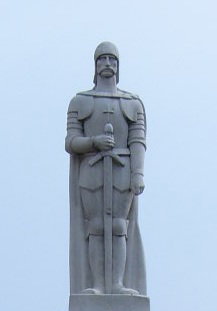
The last Serbian emperor Even today, historians do not agree on who he was or where he came from Today, Tsar Jovan Nenad is more a part of legend than history. They say that he was born in the "year of the beast" and that he had a huge black scar that stretched all over his right side of the body. And yet, maybe he was just black-faced, so he got a nickname for it. However, as strange as it may sound, his empire was real - it stretched in the area of today's Backa, parts of Srem and Banat or in the area we know today as Vojvodina. The last Serbian emperor died on June 26, 1527, not far from Senta, from a wound received in an ambush attack. **His name was neither Dusan nor Uros**! His name was ***Jovan Nenad*** and he ruled a small, self-proclaimed state that stretched on the territory of today's Vojvodina with its center in Subotica. The army of Suleiman the Magnificent defeated the Hungarian army in the famous battle on the Mohács field in 1526. After that, the territory was divided between the Turkish Empire and the Hazburg monarchy, and the surviving nobles joined two leaders - King Ivan Zapolje and King Ferdinand. It was at that time that Jovan Nenad, the mysterious and today almost fairy-tale leader of the Serbs, entered the scene. Today, historians do not agree on who Jovan Nenad was or where he came from. He claimed to be a descendant of Serbian rulers, even Byzantine emperors, but there were also those who considered him to be of low birth. In any case, Jovan Nenad proved to be a very good commander, who, with a company of Serbs, immediately after the Battle of Mohács, expelled the Turks from Bačka and took control of this area as well as parts of Banat and Srem. Small among the great powers, it seems that he did not lack megalomaniacal dreams - he proclaimed his independent state the Serbian Empire, and himself the emperor. He chose Subotica as the seat of his "empire". And at that time, the new ruler was a mysterious man. His subjects called him Tsar Jovan Nenad, and outside Serbian circles he was most often mentioned as a "Black Man" because of the black stripe in the width of one finger that stretched from his right temple to his feet - points out historian Dobrica Jovicic and adds that the only document who is left behind by this unusual man, he signed as "John the King sent by God". This was not the only oddity of the new ruler. Jovan Nenad lived ascetically - the story says that he slept only two hours, and that he spent an hour in prayer. He preached and prophesied and many came to him as a holy man. According to the testimony of one of his contemporaries, "Serbs rushed to him like a new saint and a prophet himself." - Few of his prophecies have survived to this day, but the most famous is certainly that the Turks will perish. Jovan Nenad wanted to present himself as a weapon of God and, in an atmosphere of collapse and despair, to impose the fight against the Turks as the only option - Jovicic explains. *Folk legends and faith in the new great man were fueled by the legend that he was born in the "year of the beast" - in 1492, when the end of the world could come at any moment*. The people loved him, but not other military leaders Other Serbian nobles and despots generally did not want to have any connections with Jovan Nenad, and it is interesting that there is no mention of this man in the chronicles from that time. - It was the time when a large number of despots fought for supremacy. Most of them were completely unimportant. The Hungarians used them for their personal benefit, and they only cared about their personal benefit. The appearance of Jovan Nenad therefore bothered some of them more than the enemies, because in a situation where everyone cared only for themselves, a man suddenly appeared who spoke of joint resistance and unification - Jovicic believes and adds that there are indications that Jovan Nenad took the title, the emperor just to be different from those other, greedy despots. Jovan Nenad proved to be a good military leader. He oscillated between Zapolje and Fendinand and used them at least as much as they used him - in the fight against stronger Turks, to whom his "empire" was first under attack. From the moment when Jovan Nenad left Ferdinand, Zapolje sent one army after another, but the "emperor" defeated them all, true with great losses. On the way to Ferdinand, with whose army he was supposed to unite, Jovan Nenad ***was mortally wounded*** by a Zapolje supporter. This was also the end of his small country, and for many years he also dreamed of liberating Serbs from Turkish rule. The "father" of modern Vojvodina Today, Tsar Jovan Nenad is more a part of legend than history. However, there are those who consider his "Serbian empire" to be the beginning of what we know today as Vojvodina. - Calling Jovan Nenad the "father of Vojvodina" is certainly a bit exaggerated, but it is true that his country spread precisely in the area of this Serbian province. He was the first to come up with the idea to create a separate Slavic state in southern Hungary. This idea will later be taken over by all Serbian champions from Vojvodina, although none of them will mention Jovan Nenad as a forerunner - the historian concludes. **To testify and remind of this unusual historical figure, a monument to Jovan Nenad was erected in Subotica on two occasions - the first was demolished by the Hungarian occupiers in 1941, and the second, erected in 1991, still stands on the town square today. It says, "Your thought has won."**

 @BaldurThorLoki
Is your phone's battery running low? Most smartphone components consume battery power, with some being larger while others are smaller consumers. Which components are the biggest consumers of our smartphones' batteries? The Android Authority site took this topic seriously and compiled a detailed list of them: Screen The screen consumes more electricity than any other component. It can affect battery life in four ways: - First, the bigger the screen, the more electricity is needed. - Secondly, the higher the screen resolution, the more demanding it will be, ie it will need more electricity. - Third, the higher the screen brightness, the higher the battery load. - Fourth, the higher the refresh rate, the higher the CPU load, so the situation is the same as with the screen resolution. Wireless connection Phone signal, mobile internet, Wi-Fi, Bluetooth, GPS ... Smartphones constantly use at least one wireless connection, if not several at once. Each of them represents a significant load for the battery, so the ones you do not use need to be turned off. This is especially true of Bluetooth and GPS. A weak signal from any of the wireless connections also increases battery consumption, as the device is constantly trying to check if there is a better or stronger connection. Processor and hardware Newer processors are typically smaller, faster, and more energy efficient. Therefore, it is necessary to regularly update the software for this type of hardware, in order to be better optimized and reduce the battery load. Cameras Cameras "squeeze" the smartphone's battery in several ways, although most of the consumption is on the processor and screen. With newer phone models, the partial culprit for that is the built-in photo post-processing, which additionally consumes CPU resources. The video is also quite an intense consumer, especially in 4K resolution. Other components Other components cannot be measured with the screen and processor in terms of power consumption, but that does not mean that they are not affected. So, for example, the motor that produces the vibrations of the phone also consumes electricity, and it is similar with the speakers. Whenever you watch a video, listen to music, leave notifications on... the battery works "overtime". Temperature and age Batteries work best when they are new and at room temperature. The older they are, the shorter they will last and the more often they will need recharging. In terms of temperature, the batteries lose capacity at lower temperatures, while too high can permanently damage them. No matter how careful you are about them, calculate that you will lose, approximately, a fifth (20 percent) of the battery capacity after approximately 1,000 charges. Active applications Applications that use GPS, a camera, large amounts of data and a constantly on screen are the biggest consumers of the battery. The mentioned Snapchat, for example, uses GPS, camera and data exchange at the same time. Especially big "battery eaters" are games for phones, because they load the processor and graphics chip, artificial intelligence, screen and speaker ... For example, **Pokemon Go** was the first game to use GPS, Bluetooth, camera, screen and data exchange at once. *After it appeared, sales of external batteries recorded a big increase.* Passive applications Applications that "spin" even when the screen is off are a special problem. Among them are applications for listening to music and podcasts, weather forecast, fitness.. Operating system and background processes Like processors, newer versions of operating systems are generally more economical or better optimized when it comes to power consumption. They also need to be updated regularly, so that new software solutions can be used. Background processes load the battery in two ways: by activating the device whenever they need it, and by using data exchange. Each of them individually does not consume much, but if several processes are active at once, it will start to affect the speed of the phone. Fortunately, newer versions of Android do pretty well with managing such processes, thanks to mode settings like Doze and Adaptive Battery.


+4 more
@BaldurThorLoki
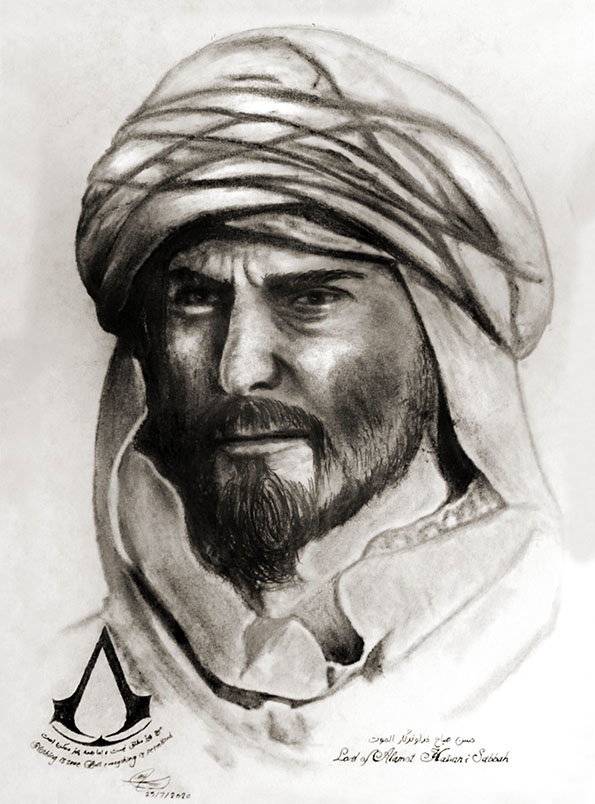
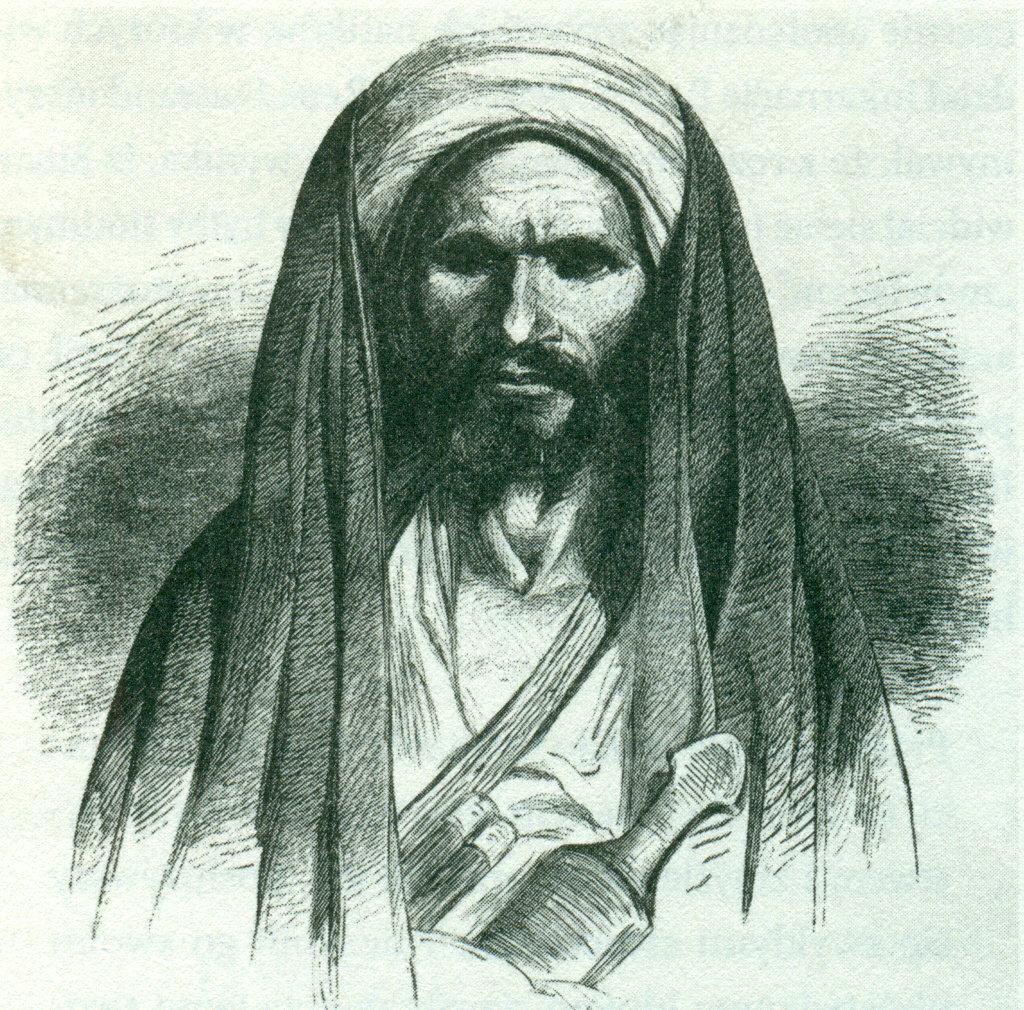
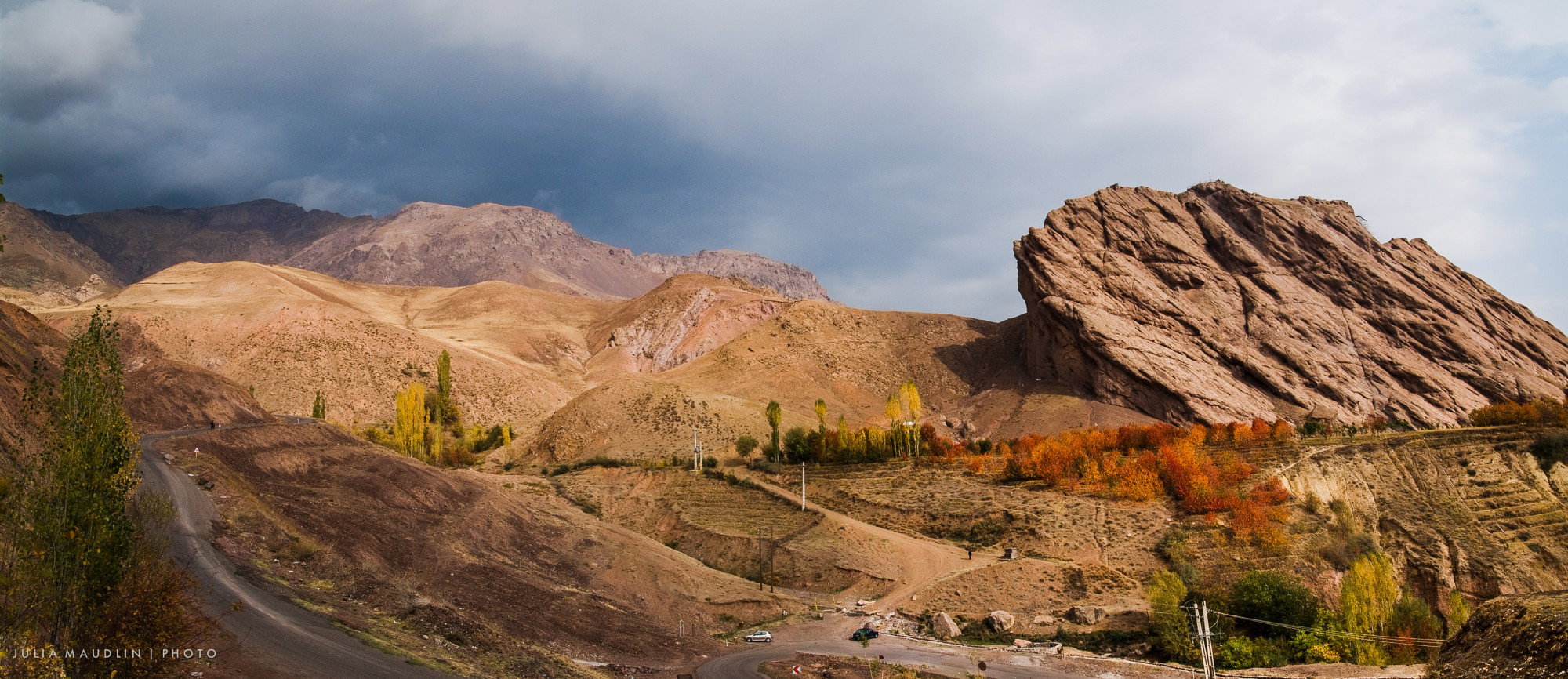
Assassins They represented the order of the most notorious murderers in the world. For almost two centuries, from 1090 to 1273, the Order of Assassins played a unique and gruesome role in the Middle East. The Shiite sect known as the Ismailis was relatively small and geographically dispersed, but thanks to the Assassins, this very weak group in terms of conventional military power sowed fear among both Sunnis and Christian invaders. more precisely to the crusaders who at that time occupied and lost Jerusalem. At the end of the 11th century, the charismatic and unscrupulous leader of the Ismailis, ***Hasan Sabah***, turned this persecuted sect into one of the most effective - it can be freely said - *terrorist organizations of all time*. Even the best-guarded and most powerful rulers of the age - the Caliphs of Abbasids and Fatimids, the Sultans and Viziers of Seljuk, the Emirs of Damascus, Homs and Mosul, and even the leader of Ayyubid, the great ***Saladin*** - trembled living in fear of the fearless Assassins who could always and everywhere strikes, which they did. Known by the nickname Fidai (from the Arabic word that signified sacrifice, "one who voluntarily risks his life"), Assassin's agents spent months, sometimes years, infiltrating enemy ranks before finally stabbing the target in the heart. The most frightening thing is that the Assassins usually did not flee the crime scene, but waited for certain death. *Their nickname* ***Asasini*** *came from the word "****hashish****", which means "****enjoyers of hashish****". This name was given to the Assassins by the enemies, due to the "relaxation" with which their agents performed their tasks. However, it is historically very unlikely that the Assassins actually consumed hashish, primarily because the delicate missions they performed required perfect concentration and sharpness of the senses.* **The fanatical and disciplined leader of the Assassins, Hassan Sabah, as well as his successors, were brilliant in the use of so-called "asymmetric warfare". They developed attack tactics that bypassed enemy advantages such as numerical superiority.** The ability of the Assassins to remove hostile, both political and military and religious leaders, enabled them to survive among the great powers in the Middle East. Unlike today's terrorist groups, Sabah's Assassins used terror for self-defense purposes, and their actions were very precise, aimed at a certain person, without collateral damage. In the middle of the eighth century, the Ismailis separated from the Shiites and decided to follow Ismail bin Jafar, the seventh imam, who was not accepted by other Shiites. Their sect was against the luxury enjoyed by the Sunni Caliphs, the rulers of much of the Muslim world. As both Shiites and Sunnis rejected Ismailis as heretics, they became a secret, practically revolutionary group within Islam. Hasan Sabah, who fled Cairo under Fatimid rule in 1076, moved to Isfahan where he met a mysterious man who would become his mentor. This teacher immediately recognized Sabah's potential and, with the help of rigid training, turned this physically and mentally brilliant man into a top agent and killer. For several years, Sabah carried out secret tasks throughout Persia - from assassinations to converting other Muslims to Ismailis. When he had gathered enough people, Sabah was given the task of finding a suitable place for the Ismaili base. He found it in the late 108-0s in the valley of the river Shah. Alamut Castle was located on top of a 250 meter high rock. The only way to reach the fortification was a narrow and steep road which enabled easy defense of the castle with very few people. **At the same time, the view was a great advantage because any approaching threat would be spotted in time.** Sabah then decided to "take over" the castle from Seljuk. The first step was to send missionaries to the surrounding villages to convert as many people as possible. When he consolidated his position in the area, his agents infiltrated the castle and began to carry out their agenda among the guards. When most of them converted to Ismailis, Sabah secretly entered the castle. While the Seljuks saw what was happening, most of the soldiers responded directly to Sabah. The castle commander then surrendered, paying Sabah 3,000 gold coins to release him. The Seljuks tried to regain the castle, however, it was almost impossible, so their efforts were reduced to burning the surrounding villages. The fight with the Seljuks lasted for some time, which Sabah used to expand his influence, establish several more fortifications and refresh his ranks. By the time the Seljuks realized that Sabah was not a minor local problem, it was too late. An agent named Bu Tahir had already been sent on a very dangerous mission - his goal was to infiltrate the Seljuk court and kill Vizier Nitam al-Mulk, Ismaili's greatest enemy. *Disguised as a mystic, Tahir managed to approach the vizier and, in front of the guards, stabbed him in the heart.* This assassination was the beginning of the Assassin era. The Sunnis then realized that although few in number, the Ismailis were a very serious enemy. Soon, Sabah trained enough Assassins to turn this small group into the front force of his secretary. Soon Caliphs, viziers, generals, emirs, religious leaders and Christian princes fell victim to the daggers of the Assassins. Sabah developed a network of young people, ideologically motivated who were ready to lose their lives at any moment. The best of the Assassins combined the sacrifice of Japanese kamikazes, the skill of special forces and the ability of the best KGB or CIA agents. In addition, the Assassins most often attacked from close range, in public places, in front of a large number of witnesses, which underlined their readiness to sacrifice and further spread fear among both the masses and the rulers. Among the victims of Assassin were many great people. The Vizier of Seljuk was killed by agents infiltrated as royal horsemen; the Turkish emir of Damascus was killed on the orders of "sleeping" agents who had been his bodyguard for years; the crusader leader Conrad of Monfer was killed by two agents who pretended to be Christians (which is why they had to seriously study the faith), and they were also his "close friends". ***The list of great men killed by the Assassins goes on and on.*** Until Sabah's death in 1124, more than 50 political, military and religious leaders in the Middle East were killed. In the past, however, the Assassins used more subtle tactics. So the Seljuks were forced into a truce when their ruler woke up one morning with a typical Assassin dagger stuck in his bed. After Sabah's death, the Assassins continued to be very successful, until the beginning of the 13th century, when the Mongols literally overran the entire region. The Mongols were very aware of the reputation of the Ismailis and Assassins, which is why they decided to delete this order once and for all. The last leader of the Assassins, Rukn ad Din Kur Kur Shah, was a pale shadow of Hasan Sabah, unworthy of the Mongol challenge. Soon, the Assassins became mere memories, and what was left of them in areas beyond Mongol control soon ceased to function in the way Sabah envisioned when he founded the Order. History of this order make game publisher to create one of very popular video game with graphics, story, gameplay possibilities and history presentation as it happen. In this video, enjoy great creativity and story of famous Assassins: https://www.youtube.com/watch?v=su-ogaUPBaw&ab_channel=BassBeats
+3 more
@BaldurThorLoki
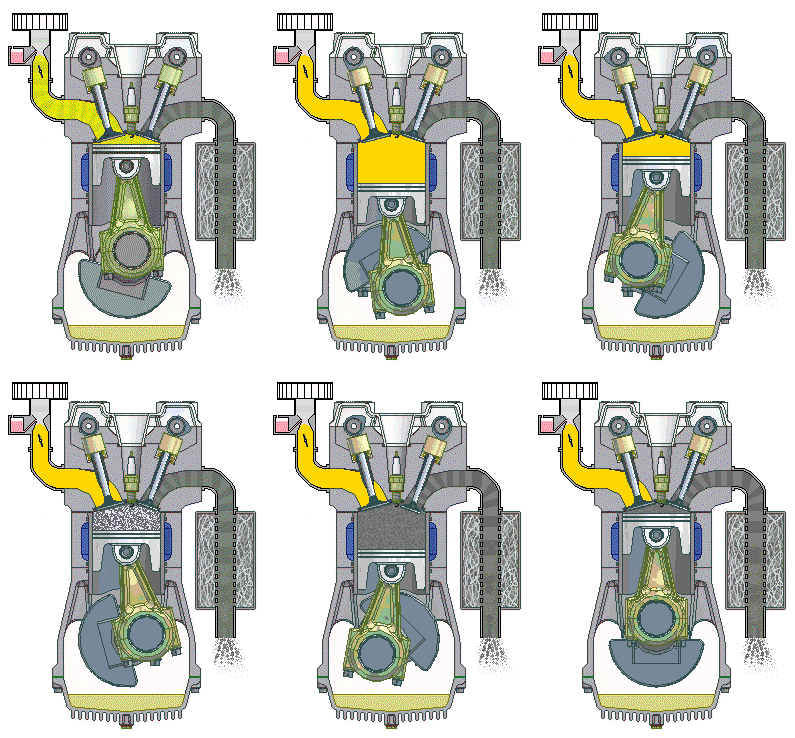
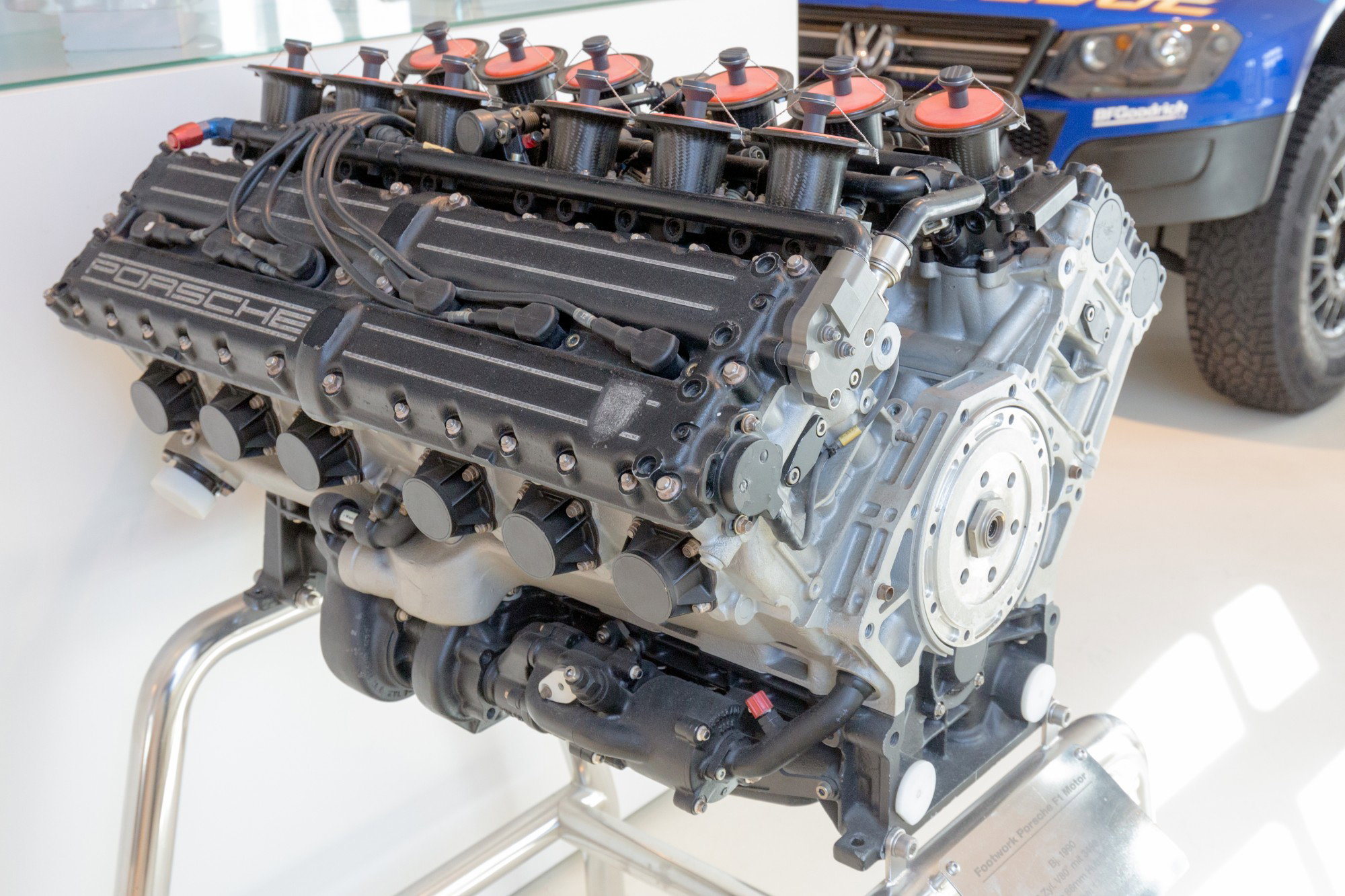
Internal combustion engine Although a car is a complex device consisting of tens of thousands of parts, we consider the engine to be its "heart". After all, it was the invention of the internal combustion engine that started the history of motoring. Today, most "tin pets" are powered by a gasoline or diesel engine, but there are other solutions… The engine is the source of power that drives the car and gives it character. According to the engine, we can find out how fast a car is, how much it consumes and where it has a place on the price scale. Unfortunately, the engine is also the most expensive part of the vehicle *that we can destroy*. Before we get to work, let's clarify what "internal combustion" is. Thermal motors (propulsion machines that use fuel combustion to generate energy) can have a separate combustion point (eg combustion chamber for steam locomotives) or integrated into the construction of the engine itself, which is the case with propulsion machines described here, which are called engines with internal combustion. Most of today's cars are powered by internal combustion engines. The energy required to start the vehicle in these engines **is obtained by burning a mixture of fuel** (petrol, diesel, alcohol, gas, etc.) **and air in the cylinders**. The air needed to burn the fuel is introduced from the atmosphere into the cylinder through the intake ducts, and the fuel, placed in the tank, is supplied by a pump that delivers it to the injection system or, in older cars, *to the carburetor*. The mixture of fuel and air is then compressed by the piston, which is ignited by the spark plug in the case of a petrol (Otto) engine, while in the case of a gas oil engine (Diesel) the ignition of the fuel is enabled by the high temperature of the compressed air. When the mixture is burned, the resulting gases are discharged through the exhaust system. If we talk about cars, we will most often hear about the term four-stroke (4-stroke) engine. These are propulsion machines that perform the above in four phases, which we call clocks. Individually, the working phases of a four-stroke engine are called: intake, compression, expansion and exhaust stroke. Four-stroke internal combustion engine 1st stroke - ***Intake***: the intake valve is open, the exhaust is closed; 2nd stroke - ***Compression***: both valves are closed and the piston compresses the mixture; 3rd bar - ***Expansion***: the spark of the spark plug ignites the mixture and the gases spread pushing the piston; 4th stroke - ***Exhaust***: The exhaust valve is open, the intake valve is closed. The difference between the performance of a four-stroke Otto engine and a four-stroke Diesel engine is that in the second the third stroke, expansion, occurs as a consequence of self-ignition of fuel (gas oil) and air caused by high temperature mixture under pressure. So Diesel engines do not have a spark plug (central element at the top of the cylinder). We said that it is necessary to mix air and fuel for combustion. If we take into account that the most favorable measure of fuel and air for complete combustion is constant (14.7: 1 in favor of air in gasoline engines - known in thermodynamics as adiabatic constant), we see how to increase the energy obtained (and thus engine power). it is simply necessary to burn more mixture. Therefore, larger displacement engines typically develop more power because they fit more mixture into the cylinder. The piston (which compresses the mixture) moves between two positions in the work: the lower and upper dead (end) points, crossing the path we call the piston stroke. If we take into account its diameter (pistons are usually round in cross section), it is possible to represent the volume of the cylinder as the space between these two end positions of the piston (exception in this theory are pistons that do not have a flat forehead, ie upper surface). Thus, the volume of an engine can be represented as the sum of the volumes of all cylinders. Engine capacity is most often expressed in liters (for commercial purposes or as a model designation) and in cubic centimeters (eg in technical data, according to the SI system). The Imperial system of measures uses the unit cubic inch, abbreviated cu-in. The cubic inch is 16.387064 cubic centimeters. Thus, volume (cm3) x 0.061024 = volume (cu-in). The degree of the largest volume of the cylinder (when the piston is in the lower dead center - DMT) and the space in which the mixture is compressed by the arrival of the piston in the upper dead center (GMT) is called the degree of compression. The power of the engine significantly depends on the degree of compression, and as a rule, with its increase (up to a certain limit), it increases. Due to the need for high-temperature compressed fuel-air mixture to cause its self-ignition, Diesel engines generally have a higher degree of compression than gasoline ones. The consequence of burning the mixture of fuel and air is an increase in the volume of gases inside the cylinder. This expansion drives the piston downwards (more precisely, towards the DMT because the engine does not always have to be placed upright). In this way, the movement of the piston is converted into a circle, which is then passed to the transmission system and eventually leads to the wheels. In order for the engine to be able to "breathe" properly, ie. introduce the mixture into the cylinder and expel the combustion products from it, the valves are taken care of. There are two types of valves: intake and exhaust, and the rhythm of their opening and closing determines the number of engine revolutions, which changes depending on how much the accelerator pedal is pressed. Modern engines are equipped with more valves per cylinder for better gas exchange. Thus, two intake and two exhaust valves allow a (4-cylinder) 16-valve engine to significantly "breathe", and thus achieve greater power compared to the classic (2-valve) version.

+4 more
@BaldurThorLoki
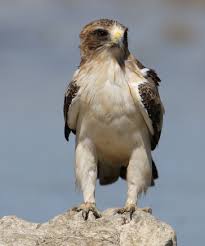
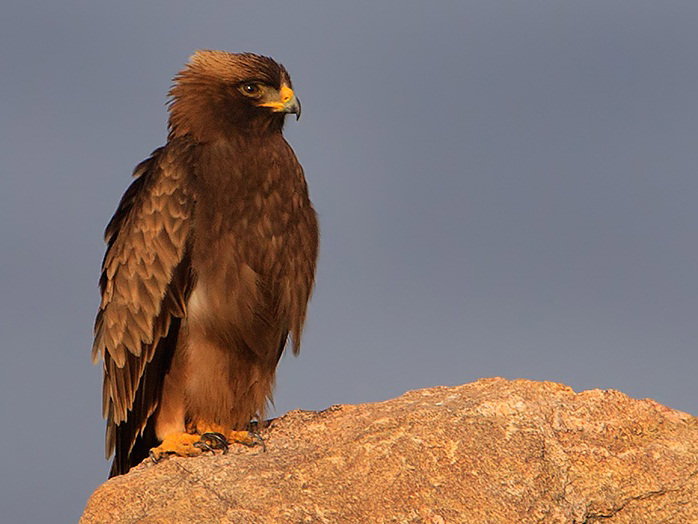
Booted eagle again in Serbia At the end of July this year, beautiful news arrived from the Vršac's Mountains. Booted eagle cubs (A. Pennata) are the new nesting bird of the Vršac's Mountains. This year, the nesting of one pair was confirmed, in whose nest are two cubs. The last registered nesting of this species in Vojvodina was more than 100 years ago. Booted eagle (lat. ***Hieraaetus pennatus***) is a medium-sized eagle from the hawk family (lat. ***Accipitridae***), which nests in the wider area of southern Europe, in North Africa and parts of southwest Asia. ***It is 42 to 49 cm long and has a wing span of 110 to 135 cm. It occurs in two phases of feather coloration (morphe): as light and dark morph. It inhabits habitats with preserved complexes of forests and open terrains (forest-steppes, valleys of large rivers, mosaic Mediterranean and sub-Mediterranean areas) in the plains and hills. It builds its nests on trees.*** It is a typical migrant and spends the winter in sub-Saharan Africa and southern parts of Asia. Its main food is lizards, other reptiles and smaller rodents. Due to such prey, it inhabits areas where it is available, primarily rocky hills, mountains and the southern parts of the European continent. Like other species of birds of prey, it is endangered by habitat loss, disturbance during reproduction, rodent poisoning with rotanticides, use of chlorine-based pesticides, theft of eggs and birds from nests, etc. The care of flora and fauna in the Vršac Mountains is taken care of by the nature conservationists of the PIO "Vrsac's Mountains" managed by JKP "Second Octobar" 365 days a year. Protection measures are carried out every day, and practical protection is done in accordance with the needs. Cooperation with professional institutions is at the highest level. We are also working on educating schoolchildren and the population, as well as visitors to the Vrsac's mountains. This geographical area - Vrsac's Mountains, Mali Rit and in general this part of Banat is very interesting because it is practically located on the border of 3 large regions - one is the Pannonian lowlands, on the other side of the Danube is the Balkans, and the east is the Carpathian region. biological characteristics that are practically confronted here and in this area you can find the specifics of all three regions and that is why this area is very interesting because it is very rich in diversity, says Milivoje Vučanović, keeper of the Vršac mountains. The area of exceptional features of "Vršac Mountain" is located in the area of the City of Vršac, on the territory of eight cadastral municipalities: Sočica, Jablanka, Mesić, Vršac, Veliko Središte, Malo Središte, Gudurica and Markovac. The area covers an area of 5,328.86 hectares, of which 4,157.32 (78.02 percent) are in state ownership, 40.44 ha (0.76 percent) are in public ownership, and only 315.13 ha are in private ownership, ie 5.91 percent, while 641.06 ha are in other forms of ownership, and there is no data for 174.92 ha. In the area of PIO "Vrsac's mountins ", the regime of protection of the first degree has been established on an area of 167.60 hectares, which is three percent of the total area. The second level of protection is valid for the largest part of the Landscape, on an area of 3,342.43 ha (62.7 percent), and the protection regime of the third level on an area of 1,818.84 ha (34.1 percent). **Thank you for your reading, subscription and likes..** **Have a nice time and keep it up with animals and their preservation..** **Cheers...!**

+3 more
@BaldurThorLoki
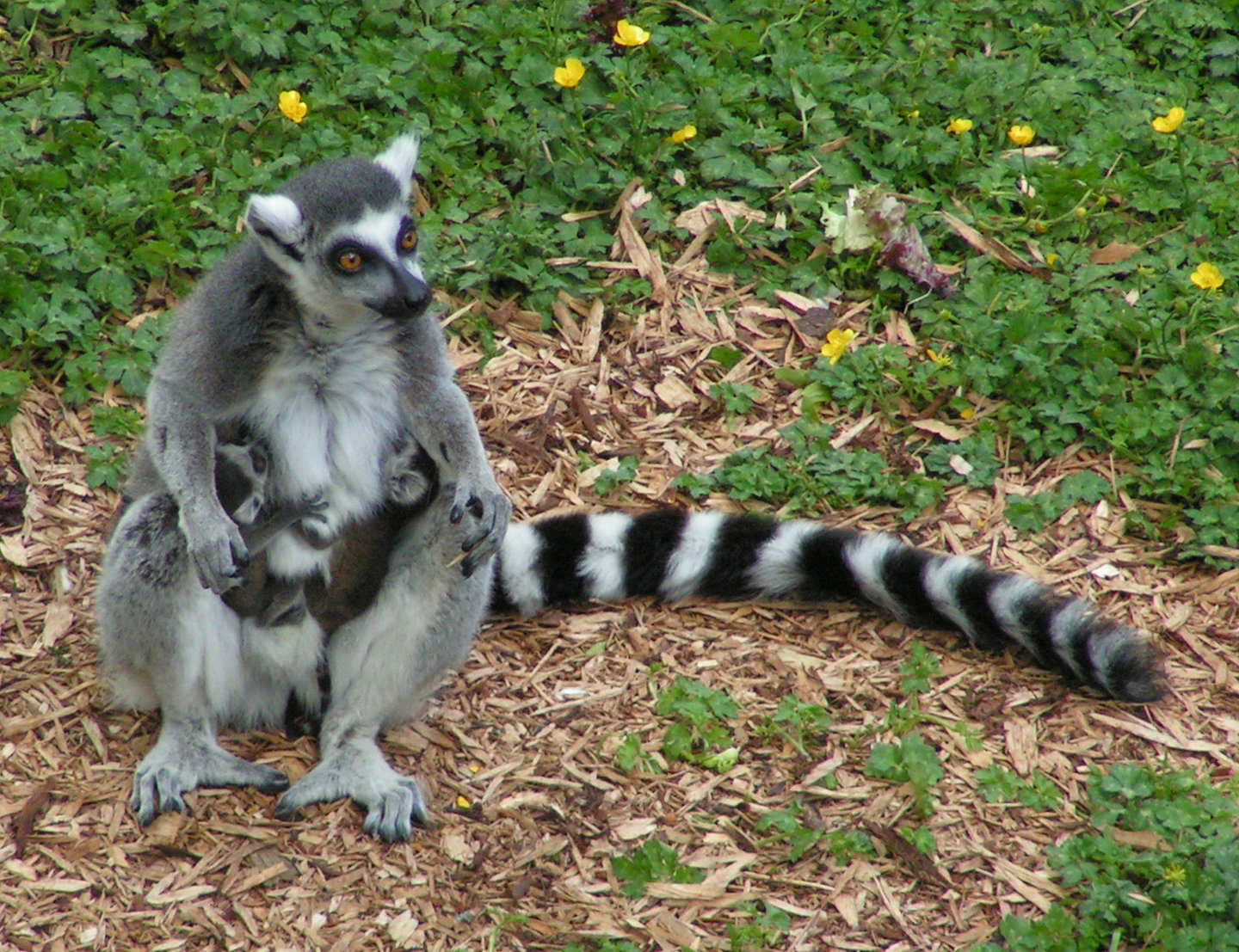
Climate change threatens the survival of lemurs from Madagascar Experts estimate that tropical storms and droughts will increase in Madagascar in the coming years. For narrowly specialized primates, this means an emergency call. Sandy beaches, lush rainforests, exotic plants and animals - are epithets that attract hundreds of thousands of tourists every year to an unusual island in the Indian Ocean. Due to its long history of origin and unique diversity in relief and living world, Madagascar is said to be a country that time has forgotten. Thanks to the fact that over 80 percent of the fauna of this fourth largest island on the planet is ***endemic*** (**ie species that only find their home there and nowhere else**), many ecologists speak of Madagascar as the eighth continent. This is not so strange considering that the island began to separate from Africa after the extinction of the dinosaurs and that many of the plants that live there today are relics or descendants of ancient species found at the time of separation. That is why the preservation of animal species from this island is especially important. Although from the previous descriptions it seems as if Madagascar is a tropical paradise of untouched nature and hospitable climate, this is not always the case, and its perhaps most famous inhabitants - lemurs - can especially testify to that. These lovely mammals, numbering over 100 species, live only in Madagascar and some neighboring islands. Although they have long adapted to life on most of the island, many of the species mentioned today are endangered and threatened with extinction. Leading endangering factors, such as hunting and destruction of their natural habitat (deforestation due to plantation expansion) are not the only threat to their survival. Climate change has imposed itself as another pressure. The example of affected cubs of a species of lemur that are in danger of not getting enough milk from their mothers, gives us an insight into how much the living systems are actually interconnected and in delicate balance with external influences. Specific climate conditions Lemurs are accustomed to two climatic seasons in their habitats - the warmer, rainy season from November to April and the colder, dry season from May to October. However, since Madagascar is characterized by an exceptional diversity of habitats, each of them has a different microclimate. Deviations from the existing rules are the cause of the negative impact of climate on endemic lemurs. Madagascar is often hit by trade winds and periodic cyclones. Its east coast is especially sensitive to the El Niño phenomenon, ie. ocean-atmospheric oscillations which are manifested here by periodic cycles of drought and extreme precipitation. For rainforests on the east and southeast coast of Madagascar, this unpredictable dry period is critical, when the amount of precipitation is drastically reduced. Heroes from canvas dissapper in real world In one species of lemur from the rainforest, Edwards' sifaka, during El Niño years, an increased mortality of cubs and a reduced rate of fecundity (reproductive ability) were recorded. Studies done on the population of this endangered species have shown that infants of older females are most affected. During droughts, such breastfeeding females feed on hard leaves that are drier and less nutritious, and due to worn teeth, they are not able to chew enough leaves for uninterrupted lactation. Because of that, their cubs are much weaker and more susceptible to diseases and become easy prey for predators. ***The effects of cyclones on lemur eating disorders are also not negligible. The lemur collar records a significant loss of weight and reproduction rate, due to the great storm damage inflicted on fruit-bearing trees whose fruits are the primary food source of this species.*** Even the usual arid areas of Madagascar have not been spared, as is the case with spinach forests. They are one of the natural habitats of the ring-tailed lemur, popularly known as King Julian XIII. And while the hero of the animated series Penguins from Madagascar seems to have no problem with the heat, his real-life counterpart is tormented by prolonged drought. Some populations of this species have experienced a large decline in numbers due to the increased intensity and frequency of the dry period in their environment. If this situation continues in the future, lemurs will probably have less chance to recover in time. Uncertain future Experts estimate that tropical storms and droughts will increase in Madagascar in the coming years. For narrowly specialized primates, this means an emergency call. It is believed that in the next sixty years, due to climate change, as many as two species of weasels and one species of dwarf lemur will lose their habitats. Species that are geographically limited to a very small area are always under the greatest threat of extinction because they are closely adapted and have nowhere else to go. However, scientists believe that not all lemurs will react to changes in the same way. Models of their research have shown that there is a chance that certain species of lemurs will find ecological corridors through which they can inhabit and conquer new spaces. But that, of course, depends primarily on how they cope with other, anthropogenic influences that threaten their survival. It is quite certain that global warming will also affect the population of Madagascar, which will also have to adapt to the new changes. ***The people will have to look for their lands and plots for cultivating the land in new places. This will inevitably lead to the deprivation of habitat of other species, such as lemurs, because the current unsustainable practices of the local population do not inspire hope that this time people will opt for coexistence with the flora and fauna of Madagascar, thanks to which they have survived on this unique island***. After this really worried words about famous cartoon character on canvas.. We can remind how fun king Julien is (don't forget to move it...👍😁😜): https://www.youtube.com/watch?v=ApuFuuCJc3s&ab_channel=Movieclips

+3 more
@BaldurThorLoki
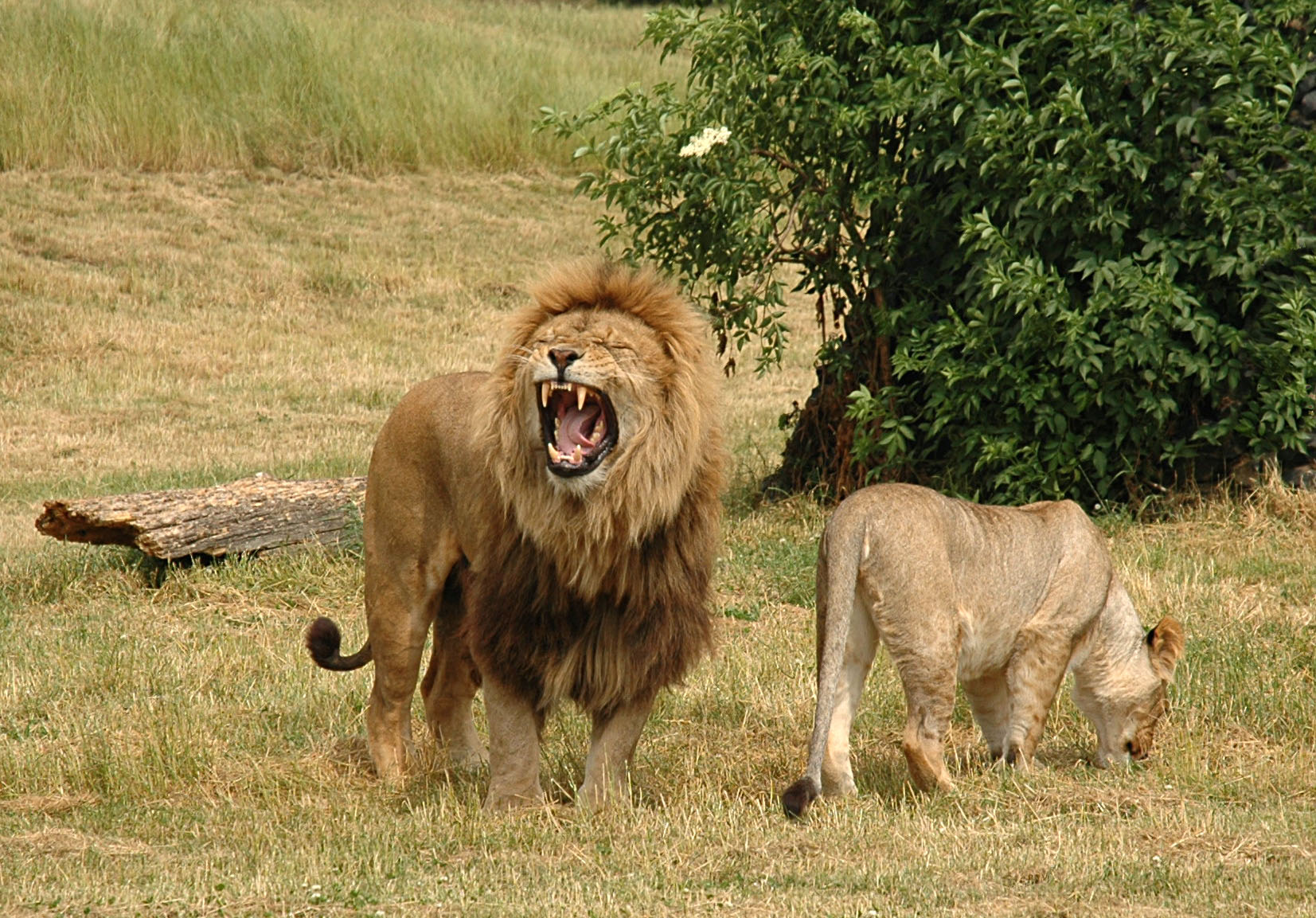
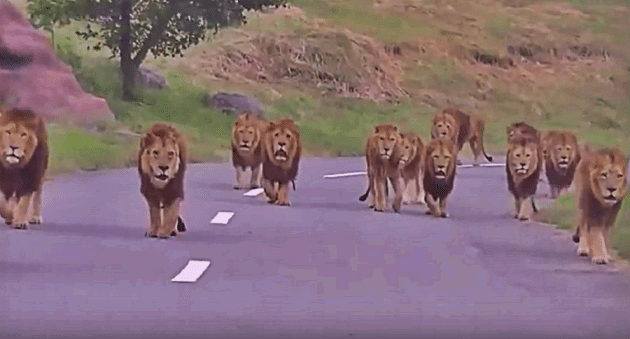
Exploring the evolution of lions leads to their salvation Scientists have sequenced the genomes of 20 lions for the first time, including extinct cave lions, revealing their family tree. Researching the origin, scientists believe that they have come up with a solution, how to save big cats from extinction. Three thousand years ago, different species of lions roamed the planet Earth, hunting prey on four continents. One of the most numerous, the cave lion, raced from Spain to Eurasia all the way to present-day Alaska and the Yukon, and was often depicted in prehistoric cave art. Meanwhile, the American lion, which was larger than the African lions and saber-toothed tigers, lurked throughout North America and probably in parts of South America. Other lions of various sizes and appearances inhabited Africa, the Middle East and India. Most of these creatures have disappeared since then, but scientists have managed to collect genetic clues that shed new light on them and offer a better insight into the study of their modern cousins, who are now facing extinction. Over the last 150 years, the global population of African lions has dropped more than 20 times, to less than 25,000, mainly due to poaching and habitat loss. Approximately 600 Asian lions remained in India. To save the remaining lions and to better understand how the different species are related, an international team of scientists has created complete genomes of 20 individual lions, 14 of which died a long time ago. Among those fourteen, there are two cave lions 30,000 years old, preserved in the eternal frost of Siberia and the Yukon. In a study published May 4 in the Proceedings of the National Academy of Sciences, researchers found that cave lions do not mix with other lion species, found that Asian lions separated from their ancestors about 70,000 years ago, and other secrets of the evolution of large cats. The work looks to the past to inform about the future. If we only looked at today's lions, we would not see the complete story. Out of Africa The results of the study support the idea that lions came from Africa in migrations, somewhat similar to humans. Cave lions were the first to leave Africa, and separated from the African race about 500,000 years ago, documents say. These lions then evolved and developed slightly different characteristics. For example, we know "based on good cave art in Europe, that males did not have manes. They spread throughout Eurasia and North America. However, it is surprising that cave lions and the ancestors of today's African lions were not intertwined, genetic analysis reveals. This is strange, because it is known that most big cats occasionally mate when given the opportunity - even very different animals, such as lions and tigers. There seems to have been something at the time that prevented them from interfering - and it's not just geographical distance, because their habitats once overlapped in southwest Asia. The reason is perhaps that cave lions did not have manes, because females of African lions recognize the mane as ***an important signal of fertility***. Another migration and separation occurred when the ancestors of the Asian lions separated about 70,000 years ago. These lions used to move from Saudi Arabia to India. There is now a small, isolated population left in the Gir forest in western India. Thanks to conservation efforts, the population has almost tripled since the 1990s, but this is practically a "native" population, with a low level of genetic diversity. As a result, male Asian lions have malformations in sperm and testosterone about 10 times lower than those in African lions. Extinct cats As part of the study, the researchers also collected genomes from individuals from three other extinct lineages: from Berber lions from North Africa, Asian lions and lions from South Africa. These three species differed slightly in appearance, but new genetic information indicates that they do not qualify as different species. Their work largely supports the current dominant view that there are two major subspecies of lions: Asian lions and African lions (populations in Central and West Africa - currently collectively classified as ***Panthera leo leo***; and in East and South Africa known as ***Panthera leo melanochaita***). **After a detailed study, the scientists, as a solution for the conservation of the species, proposed the reintroduction of lions to West Africa, where they are critically endangered; there are only about 400 left. Since West African lions are genetically similar to extinct Berber lions, West Africa could provide a good population if efforts to reintroduce bear fruit - although this is still an unlikely scenario**.

+4 more
@BaldurThorLoki
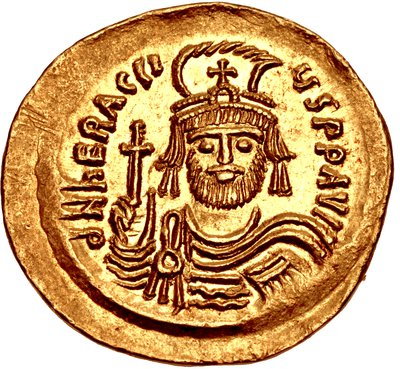
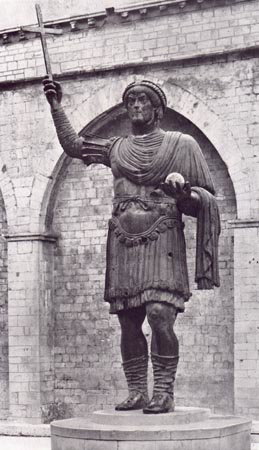
Heraclius *Heraclius is rarely mentioned, although he is otherwise well known to history buffs in both the West and the East as one of the most interesting emperors of the Eastern Roman Empire.* It will be that the Byzantine emperor Heraclius (575-641) did more for the Serbs than all other foreign rulers from their arrival in the Balkans in the 7th century until today, since he granted ***this Slavic tribe the status of a federation and allowed it to settle on the territory of the empire***. But, unlike other personalities, Heraclius is rarely mentioned in our public and culture, although he is otherwise well known to history lovers in both the West and the East as one of the most interesting emperors of the Eastern Roman Empire, which we now popularly call Byzantium, by the ancient name Byzant, for Constantinople or Constantinople. It is not known why Heraclius was particularly interested in this tribe from so many others throughout Sclavini, as the Romans called the territories that the Slavs forcibly occupied in the Balkans at the beginning of the 7th century. The Serbs, who, with the emperor's consent, immigrated and settled first in **Thrace**, and then in today's areas, recognized his supreme authority and had the status of allies - federations. Although they do not have their own written history at this time, the arrival of Serbs and Croats in the Balkans was long ago and unequivocally dated during the reign of Emperor Heraclius. The most reliable evidence of this is the famous work "***On the Management of the Empire***", written by Emperor Constantine Porphyrogenitus in the 10th century. This secret document was written by Porphyrogenitus as an instruction to rule his successors, without diplomatic and stylistic embellishments, and as it has long been hidden from the public, historians consider it authentic evidence. The scripture deals with the people on the territory of the empire, but also around it, in **order to describe the Serbs, their lifestyle, characteristics, customs and history in Chapter 32**. Along with his historical legacy, Heraclius was also a dramatic figure as a person. Various experiences were gained in his character - **he was big and strong, skilled in battle, but at the same time extremely well-read**. He allegedly observed the stars, practiced astrology and, like any educated Romeo, had theological knowledge. It is known for sure that he spoke Greek, Latin and Armenian. **He was born in Cappadocia, ruled Armenia in the east, and his father was a Byzantine governor, exarch of Africa, so he spent his youth in Carthage**. ***He knew Persia well and understood the way they fought, so he will go down in history as the ruler who finally defeated this empire. All these experiences of various cultures made Heraclius at least an unusually skilled ruler, at times cruel as he was towards the conspirators in 638, but also benevolent, as he was obviously towards the Serbs.*** With age, he became conservative, but still changed his temper. On the one hand, he led campaigns in thousands of stages, excitedly discussed theological problems, reconciled East and West, outwitted enemies. However, he sank into melancholy uncharacteristic of rulers, and occasionally had bouts of unreasonable fear. Kegi believes that after the battle of Yarmouk, *he suffered from a typical post-traumatic syndrome*. Namely, he reached the Bosphorus, and then he got a phobia of water, which is why the previously fearless emperor (who sailed the Mediterranean) was not allowed to enter the capital. ***He returned to Constantinople only when a pontoon bridge was built for him from boats by boat, on which grass was thrown***. He had numerous descendants, but his two sons were emperors. He married twice, in his youth Evdokia, and then **Martina**, to whom he was extremely attached. The *Empress accompanied Heraclius on every campaign and had a huge influence on his affairs and decisions.* Heraclius came to the throne in Constantinople in 610 by overthrowing the unpopular Phocas - at a time when Byzantium lost numerous possessions in the Balkans due to the Slavic invasion, while in the East, Persia conquered vast territories, Jerusalem, fertile Egypt and territories in Italy fell. The kingdom at that time, as many times before and after, was torn apart by one of the great theological conflicts - the struggle between the so-called Monophysites in the East and the Orthodox Chalcedonians over the question of whether there is only one spirit in the body of Christ. Heraclius will offer the two sides a compromise solution - monothelitism, the teachings of Patriarch Sergius, which had significant political weight in the era, but was later abandoned (which is why theologians will not glorify Heraclius too much later). In the years after the conquest of power, Heraclius will try to consolidate the economic and military forces of the empire, and at the same time he will inform about the fundamental reform that Mavrikije started with the introduction of the exarchate before Phocas. According to the ancestor of our Byzantine studies, Gregory of Ostrog, it was Heraclius who introduced the so-called thematic organization of Byzantium, which for centuries was the foundation of the military and financial power of the Eastern Empire. The topics are military-civilian areas managed by strategists and inhabited by stratiots, free peasants who pay taxes to the emperor and are obliged to provide military force for the needs of the empire. ***A decade after gaining power, in a series of impressive military expeditions, Heraclius defeats Persia and not only regains previously lost areas, but also brings to an end the Persian domination in the East with which the Romans fought for centuries. Heraclius liberated Jerusalem in 630, and according to legend, he discovered the Holy Cross.*** Although not personally present due to the campaign in the East, in his time, in 626, Constantinople managed to withstand the ***largest siege*** undertaken by the ***Avars*** and ***Slavs***, after which the Avar domination of the Balkans declined, and this people disappeared. In the time of Heraclius, in the south, Islam was born in Arabia, and some researchers believe that the emperor was in indirect correspondence with Muhammad himself, as well as that the two rulers respected each other, which is why Islamic sources speak of Heraclius in superlatives.
 @BaldurThorLoki
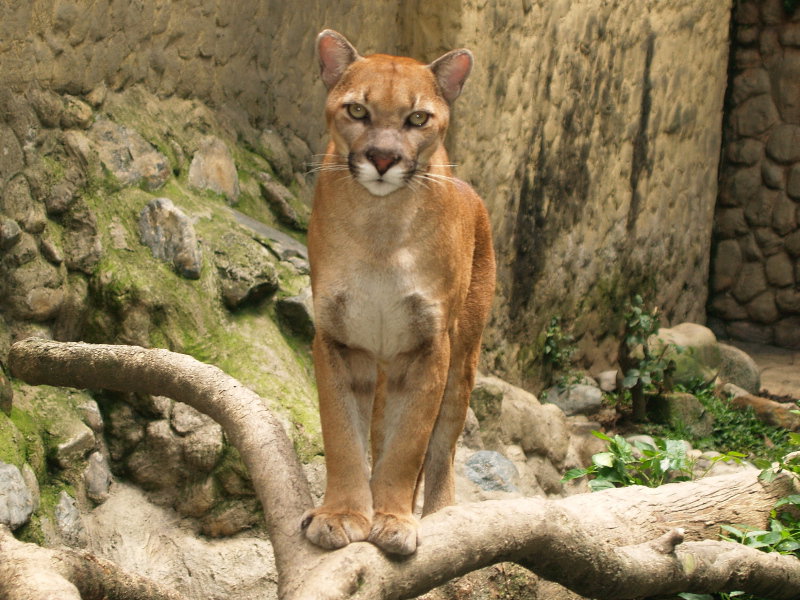
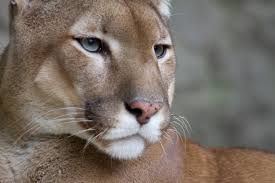
Mountain lion survival strategy ***The following study shows how mountain lions (also known as cougars or cougars) adjust their behavior to survive in the mountains.*** Research led by the University of Queens in Belfast has shown how mountain lions (also known as cougars or cougars) adapt their behavior to survive in steep mountains. And the answer is very simple - they save energy. As they climb or descend steep slopes, they go slower. *The effect is to save energy "for transport".* The research was published in the journal Movement Ecology. The study showed that mountain lions have the ability to assess what the terrain is like, **then adjust the rhythm of walking to it**, **so that it is energy efficient**. This is important because under current scenarios that are in the spotlight due to climate change and the loss of many habitats, large numbers of wildlife, especially large predators, have been forced to move to a new, energy-challenging environment as common areas are increasingly occupied by humans. . Accordingly, due to the new surfaces on which they move, the energy consumption of animals increases and affects the reduction of the population. Mountain lion habitats are rapidly declining due to agriculture and urbanization (a 35 percent loss in California, projected by 2030). In addition, lions have fallen victim to traffic accidents on roads that now pass through their habitats, fires and fewer and fewer animals that are their prey. Therefore, the remaining individuals face a great challenge, to take shelter in the steepest, and energetically for them "most expensive", parts of the mountains. The research team set itself the task of examining exactly how these big cats can cope with high energy consumption due to uninterrupted travel and hunting on steep terrain, and thus how they could survive if they remain completely isolated in this area. During the research, scientists trained captive mountain lions to walk on a treadmill so they could measure how much oxygen they needed as they walked on a flat and sloping slope. The team also equipped wild mountain lions in the Santa Cruz Mountains of California with GPS and accelerometers to track their movements and identify their preferred behavior. This allowed them to calculate the daily energy consumption of wild mountain lions and track when they decide to move through steep landscapes. The results showed that even a relatively small slope of 6.8 degrees increases the energy use of mountain lions by over 40 percent. The researchers found that mountain lions then circled the slopes to reduce the angle at which they climbed, and also traveled much more slowly when climbing, conserving their energy. Mountain lions also spent most of their time resting (60 percent) and traveling less than 10 percent of the day, further conserving their energy. With increasing human activity, the habitats of mountain lions in the lower parts are rapidly declining. Individuals who can survive high in mountain habitats will be crucial to population stability. We discovered how mountain lions survive in the mountains to conserve the energy that allows them to travel and survive on steep terrain. Conservation efforts must take into account the terrain in which they will inhabit as their hunting abilities could be compromised in landscapes that are too steep. This should also be taken into account when conserving habitats for other species that may not be as adaptable as mountain lions. ***The next step in the research is to examine these energy storage mechanisms when moving on steep terrain of males and females during the period of kitten breeding.***

+2 more
@BaldurThorLoki
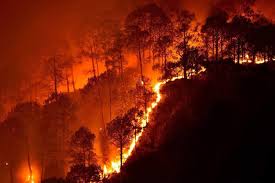
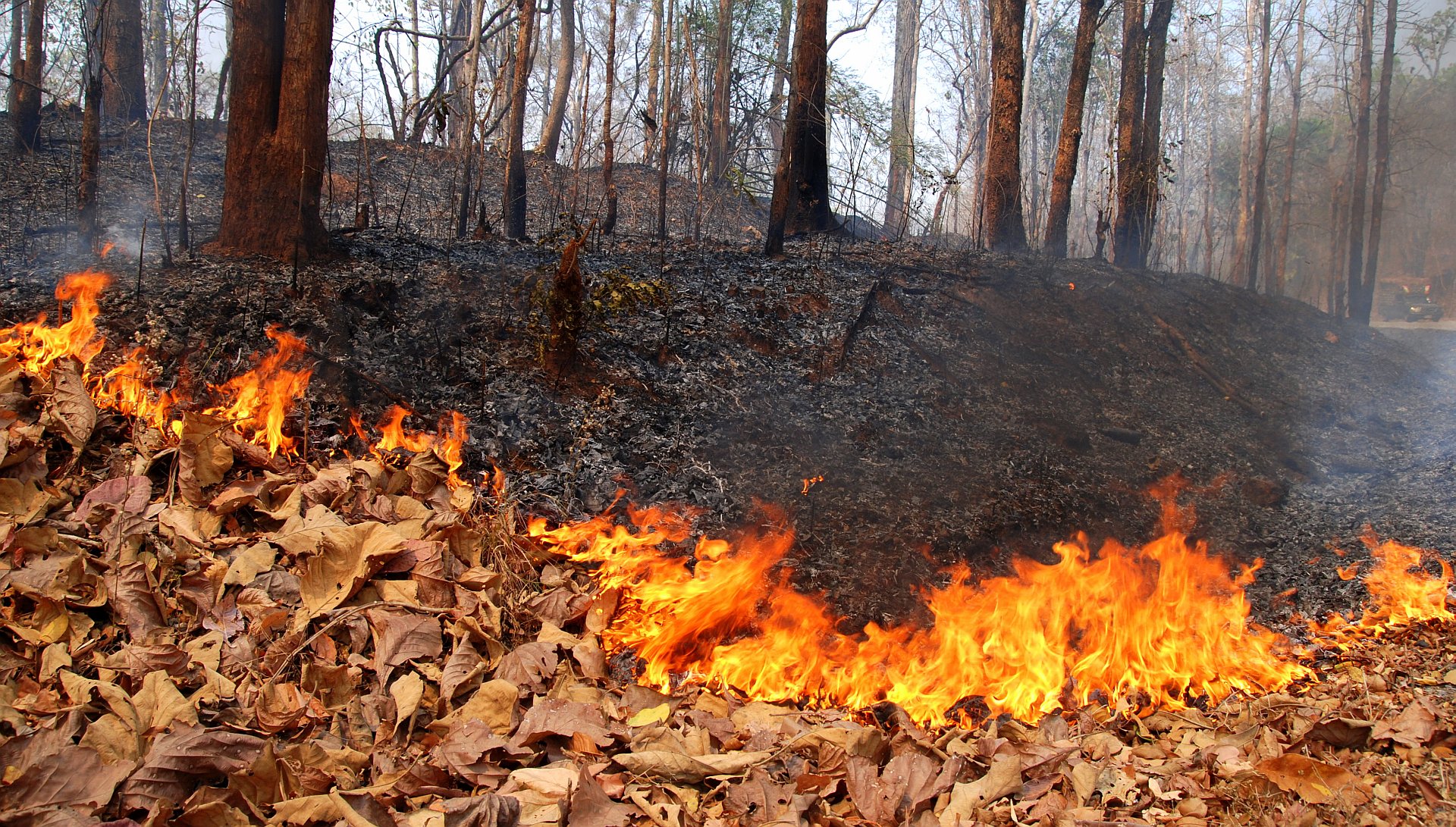
Australia's forest fire ***Fires in Australia were a major global issue in the first weeks of 2020. Since the beginning of the fire, 28 people have died, thousands of houses have been destroyed, and environmentalists from the University of Sydney have estimated that the lives of more than a billion birds, reptiles and mammals were taken by the fire that has been ravaging New South Wales since September last year. Although it is known that Australia has a so-called fire season and that their occurrence is not uncommon, this season brings completely new challenges and consequences for the population of this continent. The biggest fires spread along the southern and eastern coast, which is the most densely populated, and includes the surroundings of Sydney and Adelaide.*** Over 100 thousand square kilometers of land were burned, which is more than the area of the whole of Serbia! When asked why this season is so dramatic and why firefighters and volunteers have not been able to contain the fires for months, various answers can be heard, from that climate change acts like adding fuel to the fire, to claims that fires are intentionally started by people, to the complete negation of climate skeptics that climate change plays any role. Impact of climate change on fires Scientists have been pointing out for years that warmer and drier weather conditions brought about by climate change could lead to more frequent fires of greater intensity, and recently this warning was repeated in a special report on climate change and land of the International Climate Change Panel (IPCC) in August last year. The title of the warmest year in Australia, since the measurements were made, went to 2019, namely, the data of the Australian Meteorological Bureau show that the average annual temperature was higher by 1.52 ° C, compared to the period between 1961 and 1990, which brought it down previous record from 2013, when the mean temperature was 1.33 ° C higher. **Last year, the record of the average daily maximum temperature was broken, and December 2019 was the warmest month ever in Australia**. In addition to being the warmest, last year was also the driest. the average annual rainfall was significantly below normal and was 277mm, surpassing the previous lowest recorded value of 314mm from 1902. **Extremely arid conditions in Australia have prevailed since the end of 2017 and that is why some areas were burning in these fires. who are not otherwise so endangered by this calamity**. We are witnessing what science has been drawing attention to for a long time, climate change is causing more frequent and extreme high temperatures, which worsens the conditions and makes the vegetation drier and more susceptible to burning. The Australian Fire Department estimates the risk of fire and the risk of fire based on *the measured temperature, humidity, wind speed and availability of dry fuel*. Based on these calculations, it was concluded that in 2019, this risk was the highest since the calculations were performed, ie. since 1950 Climate scientists from various world universities, institutes and research centers are saying the same thing, global warming caused by anthropogenic activity is leading to more extreme and dangerous fires. The drier the vegetation, the easier the fires are, the longer they are maintained and the easier they spread, and what is particularly worrying is the possibility that the fires that are currently ravaging everything in front of them will become a "normal" phenomenon in the coming years in Australia. the mean global temperature rises by 2.5 to 3 ° C, compared to the pre-industrial period. How do fires affect climate change? It is estimated that about ***350 million tons of carbon dioxide*** were released into the atmosphere during the incessant fires, which is about two thirds of the total amount that Australia emits during the year. Until now, it was thought that forests reabsorbed all the carbon dioxide released in this way, however, since climate change leads to more frequent and intense fires, but also droughts, a slower rate of vegetation regrowth is expected between seasons and could pass. and a whole century before all the carbon dioxide released this season is reabsorbed. What other factors affect fires? Although the impact of climate change on the dramatic season of Australian fires is scientifically indisputable, other factors also play a role. The very occurrence of forest fires requires the presence of dry, solid fuel, a heat source that will lead to the ignition of the fire and suitable weather conditions for its spread. The most dangerous conditions for the spread of fire occur when dry and warm air, which travels from the desert central part of the continent to the coastal populated regions, meets an air mass of different density, forming an atmospheric front. This phenomenon can lead to a sudden change in pressure, temperature and wind speed, which in turn leads to the spread of fire in several different directions. In New South Wales and Queensland, legal proceedings have been instituted against citizens who intentionally lit fires during the fire season, including those who threw unextinguished cigarette butts and matches on the ground, which some climate skeptics used to launch a campaign that exaggerates this impact on fires. However, the main causes of fires are lightning strikes, and most of them, which were started by people, are accidental. Additionally, since these fires are so large and release a huge amount of heat, they create their own unpredictable and dangerous weather systems, which leads to storms, strong winds, and even fiery tornadoes. One such tornado killed a volunteer after he lifted a fire truck off the ground. Australia as the embodiment of the climate crisis Terrifying images of the state of emergency in Australia have traveled the world, people and animals have been left homeless, and those less fortunate and lifeless, firefighters have suffered burns and collapsed from exhaustion, rebellion and anger of residents towards national and local leadership has grown. The prime minister, Scott Morrison, has been the target of public condemnation for some time, since he went on a family vacation to Hawaii during the fire season, but also rejected recommendations to reduce the Australian coal industry, of which Australia is the world's largest exporter. The Australian government continues to insist that there is no direct link between this season's fires and climate change, despite public outrage, the number of victims and scientific warnings. The Prime Minister also claims that Australia does not have to reduce carbon dioxide emissions more aggressively in order to stop global warming. After such a scenario in Australia, it has become, unfortunately, obvious to laymen that the long-standing warnings of the scientific public about the consequences of global warming are no conspiracy, and that the loudest so-called climate skeptics have a slightly different motivation than preserving the human environment. fuel. ***If we do not reduce greenhouse gas emissions and then eliminate them completely by 2050, not only will this situation recur more frequently in Australia, but we will also see increasingly extreme weather and disaster conditions in other parts of the world, which will affect everyone us.*** Thank you so much for reading this article! Also, thank you for your patience.. Cheers!

+3 more
@BaldurThorLoki
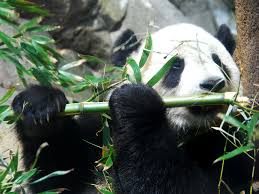
Development of giant panda Pandas are born as **tiny**, **pink**, **wrinkled** and **blind** creatures that whine. ***How then do they grow into soft furry black and white balls that people just adore?*** Scientists need six week to discovered the sex of a newborn panda. The sex was discovered by a genetic test and - it's a boy. The genetic test was done during the first veterinary examination in September, a full month after the birth on August 21. A genetic test is the only way to find out the sex of a panda cub in the first weeks of life, not only because mothers are extremely protective, but also because pandas are born without genitals. Helpless newborns Pandas are **born fragile and undeveloped**. It weighs between 85 and 150 grams, which is 1/900 of the mother's weight. This places them among the tiniest newborns in mammals compared to their mothers: *human mothers are about 20 times heavier than their babies, while mother killer whales are 50 times heavier than their babies. Only bagpipers are smaller than pandas, which, after being born, complete their development in their mother's bag (the weight of a red kangaroo cub is 1 / 100,000 of the mother's weight).* Researchers do not know for sure why pandas are born so small. In December 2019, a study published in the **Journal of Anatomy** examined the skeletal structure of giant pandas and their cousin bears, which also tend to be born small compared to their mothers. The study found that the reason for this is the shorter gestation period in pandas compared to other bear species. Since the gestation period, ie the time spent in the uterus is shorter, when they are born, their skeleton is still not developed. Short pregnancy probably has to do with diet, that is, with bamboo, which makes up the largest part of this bear's diet. For that reason, instead of spending a lot of energy necessary for the development of the fetus in the uterus, panda mothers dedicate themselves to creating milk with a high percentage of fat, so that their cubs can develop outside the uterus. Newborn pandas rely on their mother for milk and protection because they cannot see, hear or crawl. **They are so helpless that in the first weeks of life they cannot regulate their body temperature on their own or empty themselves**. The mother takes care of all this by holding her cub to warm him and rubbing his stomach to stimulate the intestines to expel feces. *In the first weeks after birth, panda mothers do not leave their cubs, even when they need to eat or drink. Motherhood is such a demanding job for giant pandas that those mothers who give birth to twins can often take care of only one thing - while, in the wild, they are forced to leave the other.* They are progressing quickly Although they do not develop much in the womb, panda cubs make up for it quickly when they are born. In the next 48 hours, the pink skin begins to be covered with white and black fur. Within three weeks, their fur grows almost completely. They also gain weight quickly, which is not surprising, because they suck their mother's milk 14 times a day. Newborn panda gained about 50 percent of her body weight at birth between the first two measurements, which took place less than a week apart. After about a month of holding the baby throughout the day, mothers begin to slowly place the cub on the ground, and leave it to take a break for food and water. As soon as the mother starts to separate from the cub for a long time, it means that it has just started to regulate the body temperature and that it is okay if it is left alone for a while. At six weeks, they begin to open their eyes, and by the second month, their ear canals also open. Around the third or fourth month, their genitals begin to develop and they can finally defecate on their own and urinate. They start crawling, their teeth grow, they even start biting bamboo, which signals that they are ready for the next phase of life. Approaching adulthood Pandas begin to become independent and separate from their mothers when they are about five months old. Then, for the first time, they leave the lair and learn to walk, climb and eat solid food. After the age of five months, the panda cub has developed cognitively to the extent that they can start training that will enable them to vaccinate the animal and conduct all health examinations (including blood sampling). Once vaccinated, the cub can go with the mother to explore the environment. Very quickly, he starts climbing trees on his own - which is very important for pandas, because he is safe on the tree while his mother goes to get food. Although his mother's milk is still the basis, he starts eating bamboo and other foods at the age of six months. By the first birthday, a panda cub can weigh as much as 75 kilograms. When he turns one and a half or two, the panda is ready to separate from its mother. Until they become sexually mature, which happens at the age of four in females, and at the age of six in males, nothing else changes significantly - except that they grow. Adult giant pandas can weigh up to 300 kilograms. Thank you for your patience! I hope you like this article... Cheers!
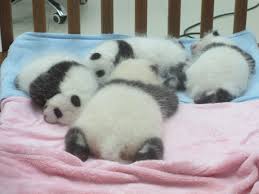
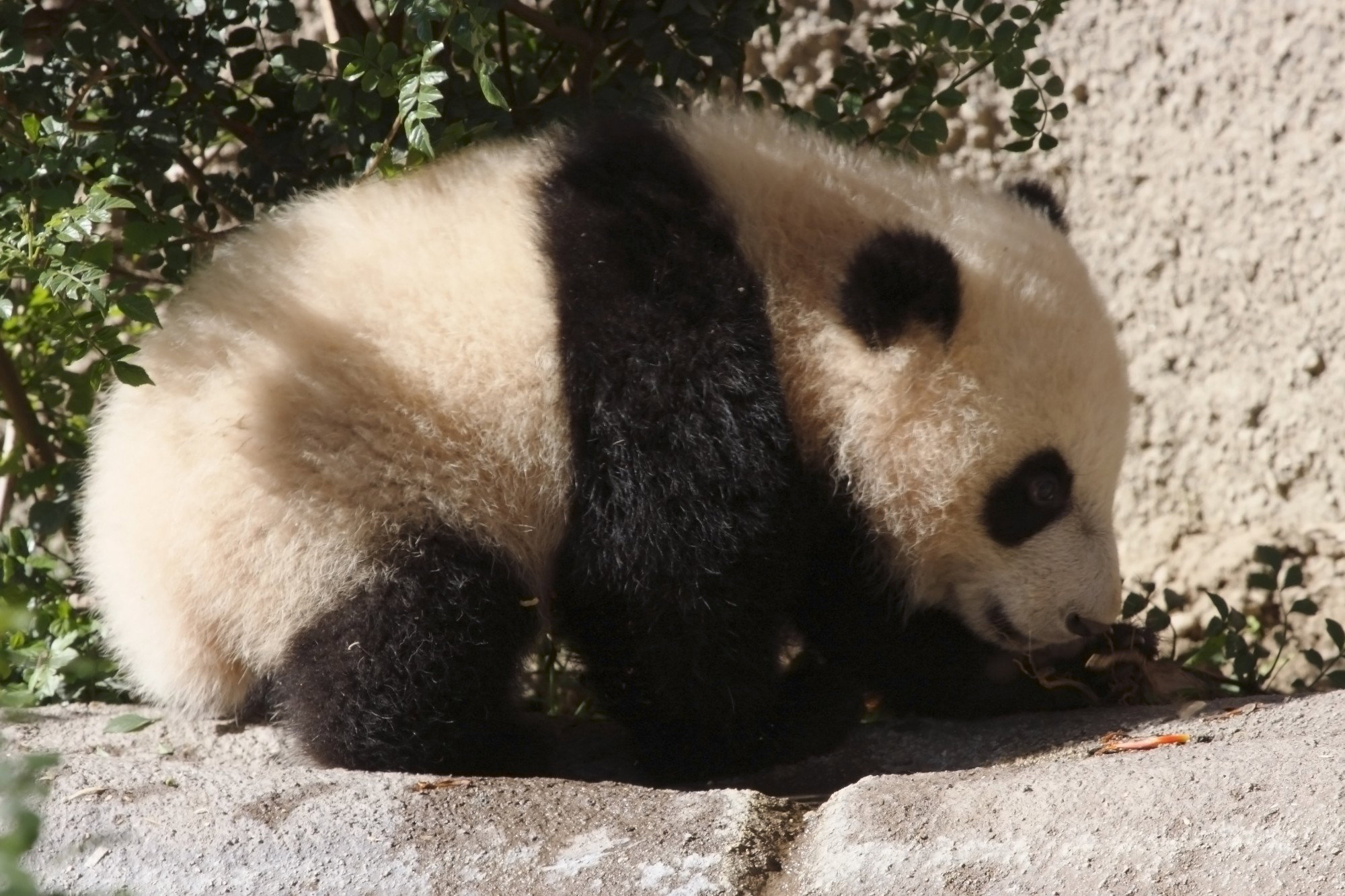
+2 more
@BaldurThorLoki
Report on life on the planet *The report on life on the planet in 2020. reveals that the world's populations of mammals, birds, amphibians, reptiles and fish have decreased by an average of two thirds in less than half a century.* **We will consider three items when analyzing the impact on life on the planet**: The causes are environmental destruction through deforestation, unsustainable agriculture and illegal wildlife trade, which contributes to the outbreak of viruses such as COVID-19 Freshwater biodiversity is disappearing much faster than in oceans or forests - the average rate of decline in freshwater species populations since 1970 is 84% WWF calls for urgent measures to reverse the trend by 2030, by stopping the destruction of natural habitats and reforming our food system ***The world's populations of mammals, birds, amphibians, reptiles and fish have shrunk by an average of two-thirds in less than half a century.*** This is largely the result of environmental destruction that also contributes to the emergence of zoonotic diseases such as the COVID-19 pandemic. The report on life on the planet is a comprehensive study of the state of our nature through the Living Planet Index (LPI), which monitors the state of the population of wild species. The LPI, provided by the Zoological Society of London, shows how the same factors, which are believed to increase the possibility of pandemics, are behind the 68% reduction in the size of vertebrate populations between 1970 and 2016. And while some of these factors are land conversion and wildlife trade, the main cause of dramatic population decline is habitat loss and degradation, including deforestation, all due to food production patterns. The report on life on the planet in 2020 points out that the accelerated destruction of nature, as a consequence of human activities, has catastrophic impacts not only on the populations of wild species, but also on human health and all other aspects of our lives. We cannot ignore the evidence before us because a serious decline in wildlife populations is a warning sign that indicates a malfunction of the system. The most threatened is the biodiversity of freshwater ecosystem Freshwater biodiversity is disappearing faster than in any other ecosystem. Since 1900, more than 70% of the world's wetlands have disappeared, and since 1970, populations of freshwater species have shrunk by 84%, more than those living in forests or oceans. The world's rivers are overcrowded with existing and planned infrastructure, water consumption is growing year by year, freshwater fishing areas are overexploited, and the lives of millions of people are becoming increasingly precarious. It is similar in our region. In Serbia, we are witnessing a great attack on our rivers. It is planned to build over 800 small hydropower plants. If we allow this to continue, most streams and rivers will be endangered and their waters will dry up. This will result in a large loss of biodiversity, and local communities will have to bear the brunt. We are committed to reconsidering these plans. Rivers in Serbia are still one of the last free-flowing rivers in Europe, and their contribution to local and global biodiversity is enormous, as is their impact on human health. We should find a way to protect rivers, instead of extracting negligible amounts of electricity from them, with selected individuals making significant gains. By abolishing subsidies for small hydropower plants, implementing river restoration projects and expanding the network of protected areas, we can ensure a sustainable and more resilient future for nature and people. *By increasing freshwater biodiversity, we contribute to improving human health in a variety of ways - from reducing the possibility of new diseases, to increasing food availability. The current situation indicates that we must act immediately. In order to stop the loss of freshwater biodiversity, an ambitious intervention plan is needed. It includes enabling the natural flow of rivers, reducing pollution, protecting key wetlands, stopping overfishing and unsustainable sediment excavation, controlling invasive species, and protecting and restoring the links freshwater habitats have with surrounding ecosystems.* Food production and consumption key drivers of biodiversity loss A similar plan is necessary for all of the world's biodiversity. Stabilizing and stopping the loss of nature will only be possible if we work bravely and ambitiously to preserve nature, and if we change the way we produce and consume food. Necessary changes include more efficient and environmentally sustainable food production and trade, waste reduction, and the selection of healthier and more environmentally friendly diets. The decline of biodiversity in the world contributes to the increase of global inequalities, deepening the divisions between the global north and the south. Likewise, it increases the vulnerability of small communities that will be most affected by the loss of nature. Therefore, all plans to stop the loss of nature should include addressing fundamental social and economic problems that are only deepening with the loss of biodiversity. *****We must focus on fair and sustainable agriculture and food production, fair wages, waste reduction, equal access to natural resources and an integrated approach to nature restoration and conservation. The joint implementation of these measures will enable faster mitigation of pressures on the habitats of wild species. Conversely, if we continue as before, the rate of biodiversity loss will continue to rise.***** Thank you for patience! Cheers!!!

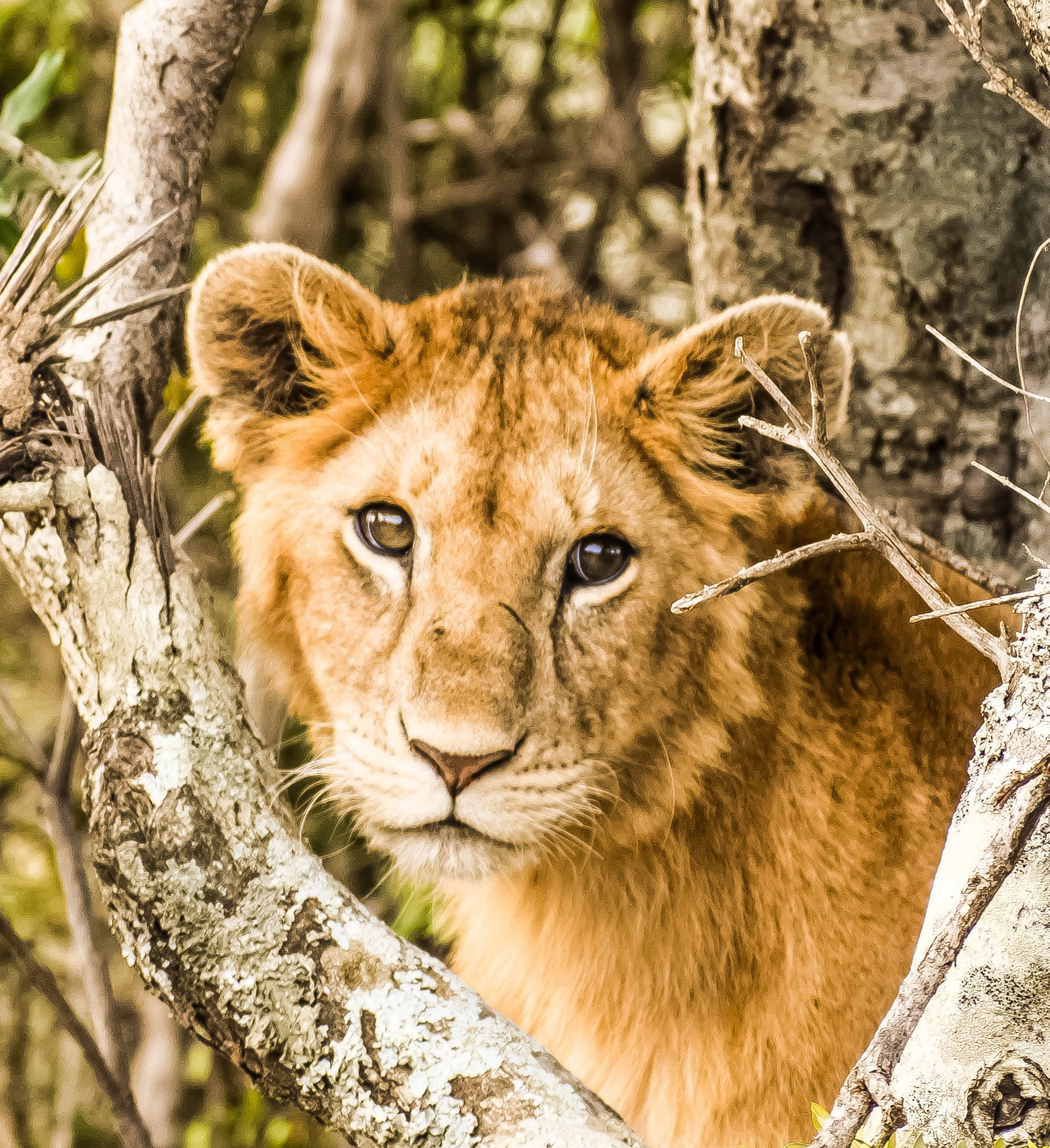
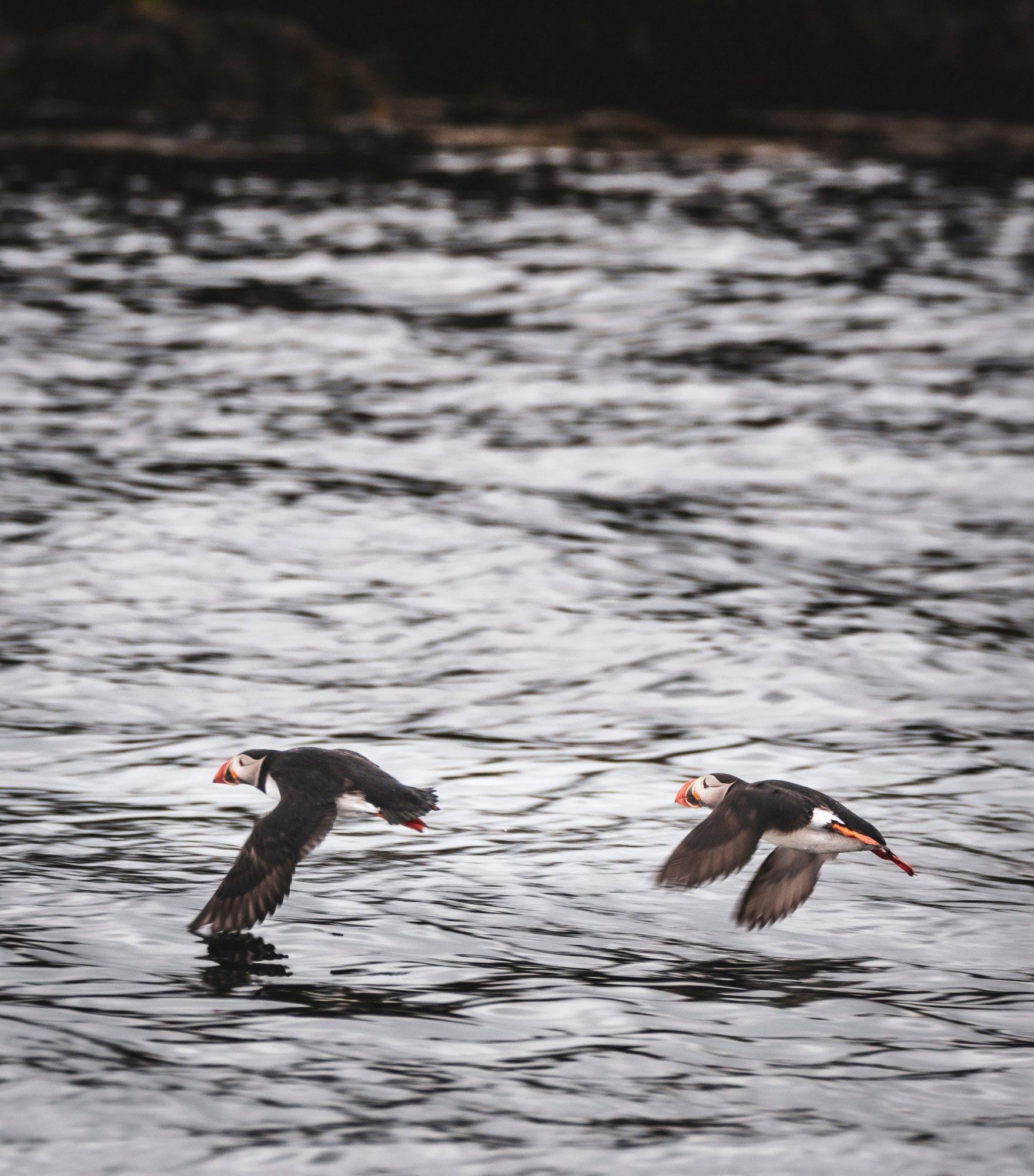
+5 more
@BaldurThorLoki
The impact of education on economic growth - the example of Serbia Education does have a positive impact on economic growth, but its contribution is weaker than other, institutional parameters such as the rule of law, property protection and good business regulation. Any change that would improve the quality of education would be welcome, but its implementation takes a long time. If we want a higher rate of economic growth, education is not the first or most important thing we should focus on. What does the theory say? Economists have been theoretically and empirically engaged in economic growth for decades. Initially, the main emphasis was on capital accumulation. Economic growth was viewed as a function ***of the amount of capital and labor in an economy***, so the most important parameters of growth were *savings and natural increase*. In 1957, Robert Solow included technological changes in this equation, as perhaps the most important component, but the very causes of these changes were not addressed. Mancu, Romer and Weil introduced education in 1992 as a component of this model, arguing that education could accumulate, which is called ***human capital***. More human capital moves the economy to a new state with a higher income, but when it does, education no longer has an impact on the rate of economic growth. On the other hand, theories of endogenous growth give much more importance to education - for example, Lucas and Romer claim that education influences the increase of the innovative capacity of an economy because it enables the development of new ideas and technologies. Their approach explains how education affects growth even years after the completion of the formal education cycle. The last look at the link between education and economic growth is given by theories of technology diffusion: authors like Nelson or Welch argue that economies grow by adopting new technologies that increase productivity, and that education facilitates the transfer of specific knowledge needed to implement new technologies. Emphasis on the quality of education, not its length When assessing whether and to what extent education has an impact on economic growth, the average number of years of education was initially used as the most available information from national statistics and censuses. However, it is clear that this is not a perfect metric because it implies that one year of schooling in different countries has the same impact on human capital creation. As we know that school systems differ between countries, this is hardly true. But it was only with the development of some **standardized international tests** - ***primarily PISA*** - that better metrics came about. **PISA tests** measure how much students are able to use school knowledge in practice by solving the problems set before them. While initial research showed that the number of years of schooling did not have much to do with the rate of economic growth, later research showed that the quality of education has a statistically significant relationship with growth. Assessing the impact of education on economic growth The fact that the quality of education has an impact on the rate of economic growth does not tell us how significant that impact is. Some estimates of this impact (Hanushek and Woesmann, 2000) clearly overestimate the reach of education to economic growth, as it is almost entirely attributed to the increase in the coverage and quality of education over the past few decades, and ignores a number of other variables. One of their later studies from 2009 also took into account certain institutional variables, such as the security of property rights, which significantly reduced the effect attributed to differences in education. This later study claims that in countries that would increase the quality of their education, measured by achievements on PISA tests by 25 points, there would be an increase in economic growth by almost 0.9% per year. If we put this claim into perspective, we see that students in Serbia had an average of 442 points in the last cycle of PISA testing in 2018 (while the average of OECD countries was 488). This means that there is a lot of room for Serbia to improve the quality of its education, as we are not in a particularly good place at the moment. At the same time, although 25 points seems ambitious (according to the PISA methodology, 38 points is equal to educational achievement during one school year), it is equal to Poland's progress during the previous two decades (from 489 in 2000 to 513 in 2018). But would increasing the quality of education help us significantly? Probably not. Problems arise: slowness and uncertain The first problem is slowness. In order to increase the quality of education, and significantly, time is needed. Even if we suddenly got a better quality education system quickly and easily, at the touch of a button - we would only see results in the years to come. It takes time for students to go through it - at least 12 years as long as primary and secondary education lasts. This would be even slower if something very radical needs to be done for these changes, such as increasing the quality of teachers. Replacing the work of older teachers who will find it harder to adapt to the new system of work would take years through their retirement and employment of new, young teachers with different education and skills. Therefore, the contribution of higher quality education will give its full result only later, as young people with better education will be included in the labor market and advance through their careers. To calculate that the new better education is diffused throughout the labor market, at least it takes more than 50 years - about 12 years for primary and secondary education (excluding college) and then one working life of about 40 years. Until then, the contribution of increasing the quality of education to the rate of economic growth would be significantly lower than the expected 0.9% per year. Another problem is that there is still no clear idea of how the quality of education systems can be improved. There are a lot of ideas and possibilities here, but nothing is written in stone. One of the variables that seems to have the greatest impact on the quality of education in international research is the quality of teachers - which tells us that these reforms would most likely take a significant number of years until the generational change in schools. But these new generations must be educated and motivated to do their job well, while it is still not clear what factors influence the attraction of such candidates to enroll in teacher training colleges. Is it worthwhile then to deal with education? Yes, a better education would bring us many positive things through a more significant accumulation of human capital. It should be understood that the improvement of education will take a long time, and that there is no magic wand for some easy and quick solutions. Better education is also not a magic cure for all social problems in Serbia. If we talk about whether better education will help us accelerate Serbia's economic growth, and help us get closer to other European countries in terms of living standards, it will certainly do so in the long run. But in the short term of a few years, that is certainly not the case. If we want the faster economic growth we need, it seems that we have no choice but to deal with those problems where the situation is extremely bad, and those are basic market institutions such as the rule of law and the protection of private property. Thank you for your patience! Cheers!

+2 more
@BaldurThorLoki
Industrial Revolution 4.0 - Everything we need to know **The first industrial revolution**, at the end of the 18th century, brought the world a steam engine and marked the beginning of a hitherto unimaginable, accelerated development. In the middle of the 19th century, with the application of electricity, the world entered the **second industrial revolution**, which lasted until the 80s, when analog technology was replaced by digital and when computers and the Internet became the main drivers of social and industrial development (**the Third Industrial revolution**). The notion of the **Fourth Industrial Revolution** in recent years is an unavoidable topic when talking about the progress and development of society, but also the economy. And while some believe that the world has stepped deep into it, other analysts say that we are just on the threshold and that the changes that the fourth industrial revolution will bring are still waiting for us. The phases between the two industrial revolutions used to last significantly longer, *a whole century passed between the first and the second*, **but today, only 40 years after the third, the world is entering the fourth industrial revolution with sure steps**. The term Fourth Industrial Revolution was first used by ***Klaus Schwab***, director of the World Economic Forum, in 2015. Previous industrial revolutions have mostly changed the way we work, while it seems that the latter will also affect the way we think and reduce, or completely close the gap between people and technology. The fourth industrial revolution will change not only what we do, but also who we really are. It will affect our identity and all issues related to it: our sense of privacy, perception of ownership, spending patterns, time we dedicate to work, free time, the way we develop our careers, nurture our skills, meet people and nurture relationships with them that speaks to what extent does its integration really affect people... We are witnessing that this is a global concept of digital transformation that indicates that we are entering a new industrial age. Artificial intelligent (AI), Machine learning, IoT (Internet of things), nanotechnology, robotics, 3D printers, biotechnology, smart cities, Big Data… are just some of the changes that have already taken over the world and rapidly spread. A new industrial age When it comes to artificial intelligence, its research began in the 50s of the 20th century. However, the greatest momentum in development has been achieved in the last few years. Today, ***we call artificial intelligence the ability of machines / computers to simulate human intelligence***. There is almost no term that has caused so much controversy in the modern world as artificial intelligence. **While experts point out the benefits that we can have, but also that we already have from the development of artificial intelligence, there are numerous conspiracy theories about how machines will one day "rule the world**". According to **today's AI systems**, they are only capable of performing an individual and specific task. These systems are good at logical tasks, but are not capable of intuition, empathy, or emotional intelligence. In other words, the fears that some people have are far from what is really happening in the development of AI. **The story of AI** is followed by machine learning, thanks to which computers can learn without explicit programming. It is based on the idea that there are generic algorithms that can tell you something interesting about a set of data, without you having to write special code for the problem. Instead of writing code, you insert data into a generic algorithm, and it makes its own logic based on the data. Thanks to **machine learning**, today we have a**utonomous cars, drones**, it manages numerous applications that we use every day and make our lives easier, there are also social networks, famous voice assistants such as Alexa, Siri ... The list is really long. Not so long ago, only our phones were "smart". Today, however, *we have smart TVs, clocks, refrigerators, stoves, machines* ... All these devices can communicate with each other, and we can control them from anywhere in the world. For this we can thank the term **Internet of Things (IoT)**, which refers to billions of physical devices around the world equipped with sensors and software, which are currently connected to the Internet to collect and share data. In 2020, between 20 and 200 billion such devices will be connected to the Internet, within the Internet of Things. IoT has the ambition to network smart devices in various cities, industrial plants, vehicles, in trade and healthcare, as well as many other domains. The extent to which the development of artificial intelligence has advanced and become important for every society is also shown by the fact that some countries have an official strategy on artificial intelligence. Do we have reason to fear? Now back to the question, should we fear the Industrial Revolution 4.0 and all the changes it brings? The fact is that changes are already happening, and they will be faster and more extensive. It is also true that the application managed to achieve a victory in the traditional strategy game Go over the multiple world champion, using special artificial neural networks for "learning". But does that mean that machines will rule the world? Although this question is not without basis, a scenario in which machines take over power from humans is unlikely. Mark Raben, CTO of SAP for Central and Eastern Europe, also believes that we should not be afraid of machines and technology. Technology has always been with man and we can never look at them as two separate concepts. It is man who has created and is creating technology, we must be aware of that. ***We need to keep reminding ourselves that all new technologies are primarily tools made by people for people. The fourth industrial revolution may threaten traditional human sources of meaning — work, community, family, and identity — or it may shift humanity into a new collective and moral consciousness based on a sense of shared destiny. The choice is only ours*** ..


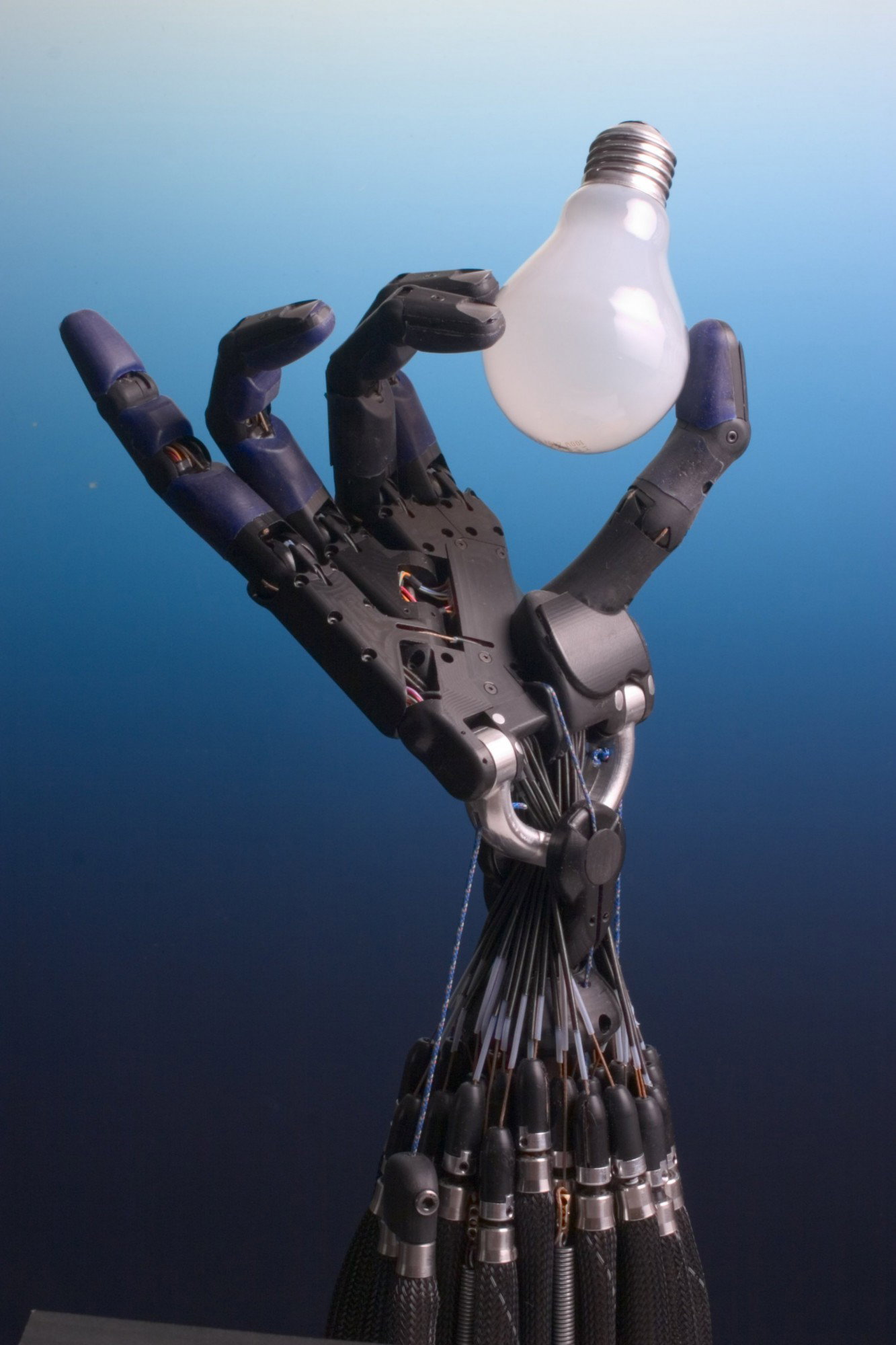
+1 more
@BaldurThorLoki
Air quality in Serbia for 2019 ***The air pollution in the winter of 2018 caused great concern among the citizens. Images from applications such as Air Visual, which show that the air in Serbian cities is highly polluted and dangerous to health, have been widely shared via social networks, and the topic of air quality in Serbia, with many years of delay, has finally reached the public's attention.*** Why is air quality so important? Before we embark on a more detailed analysis of the report, it is not bad to remind ourselves why air pollution is an important topic and what are the main parameters that indicate what kind of air we breathe. According to the World Health Organization, *4.2 million premature deaths* worldwide are recorded annually as a result of external air pollution. Research by the same institution has shown that over 6,500 people in Serbia die every year due to air pollution. The greatest damage to health is caused by particle pollution, which we monitor by measuring the concentration of small PM10 and PM2.5 particles in the air. The number next to the abbreviation PM indicates the particle size: PM10 is 10 micrometers or less, PM2.5 is 2.5 micrometers or less. Because they are so small, when inhaled, these particles reach directly into our bloodstream through the pulmonary alveoli and cause damage to the lungs and heart, and can also lead to malignant diseases. In addition to particulate pollution, the problem is also caused by pollution with certain gases, the most important of which are sulfur and nitrogen oxides. The Environmental Protection Agency has published its Annual Report on the state of air quality in the Republic of Serbia for 2019, which gives a detailed overview of everything that was recorded by official measuring stations during 2018. These data are quite late. What do the official data of the Agency for environmental protection say? The report shows that during 2019, excessive particulate air pollution was recorded in almost all major urban areas, ie that the allowed annual limit values were exceeded. Air quality was rated the worst third category in the largest cities in Serbia, such as Belgrade, Novi Sad, Nis, Subotica, Valjevo, Uzice, Kraljevo, Smederevo, Zajecar, Bor and Pancevo. Most days with excessive air pollution with PM10 particles were recorded at the measuring station in New Belgrade, as many as 169, while on average the highest concentrations of these pollutants were detected in Valjevo and Uzice, where in some days the pollution was 6 times higher than allowed. In addition to particulate pollution, which is the main pollutant in cities in Serbia, a large amount of sulfur dioxide pollution has been registered in Bor. The latest report also noticeably significantly improved air quality measurement. After only 22% of measuring instruments provided sufficient data availability in 2017, last year 85% of all measuring instruments met the necessary conditions for monitoring quality. This is very important because data on the situation on the ground are necessary in order to be able to implement measures that will contribute to solving the problem of air pollution. The air is clean only where there is no measurement Although the report paints a rather bleak picture of air quality in the largest urban areas in Serbia, a large amount of pollution still goes unnoticed. This report fully confirms that the air in Serbia is clean where particle pollution is not measured with the smallest particles. This means that the graphic presentation from the report, which shows that the air of the highest quality is in the greater part of Serbia, does not reflect the real situation. Unfortunately, the map showing the state of air quality, which is at the beginning of the Report, still confuses uninformed readers, and it is not good that the map shows cities in green, which are, in fact, black from pollution. *There live people who breathe bad air. People die there because they breathe bad air.* What does the future bring? The citizens of Serbia ***have finally started demanding to breathe clean air.*** **There is a solution to this problem and many countries in the world have already successfully implemented measures that have enabled air quality to improve significantly, and the benefits of improving quality of life, reducing hospital costs and lost working hours due to illness outweigh the necessary investments.** **Air quality measurement in Serbia must be significantly improved. When we know with greater reliability where the pollution comes from, concrete measures remain to be taken, such as subsidizing the purchase of quality heating fuel and new boilers and stoves for the poorest citizens and desulphurization plants in large thermal power plants.** **Time is of the essence here, because every year that passes further impairs the health of our population.**

+1 more
@BaldurThorLoki
America's first gold rush nearly wiped out the Cherokee Indians Two decades before the famous gold rush in California in 1849, the first American gold rush took place in the southeastern state of Georgia. It opened new frontiers, but nearly exterminated the Cherokee Indians. Angela Johnson, director of the **Dalonega** **Gold Museum Historic Site** in Georgia, explains how America's first gold rush began. In 1828, Benjamin Parks hunted deer about ten kilometers from here and stumbled upon a stone the size of a golden egg. Dan Parks, the great-grandson of Benjamin Parks, is a guide at the United Gold Mine, which in its most glorious days was the largest gold mine east of the Mississippi River. He said that they found 25 kilograms of gold in one day. So much gold was worth 13 thousand US dollars at that time. (***interesting fact, today is one bitcoin valued with this amount***). Johnny Parker, a tour guide at the United Gold Mine, has been researching the history of gold rush in Georgia for more than 20 years. *The word* ***dalonega*** *means the land of yellow metal, or in the language of the Cherokee Indians a yellow stone. You can pick it up and put it in your pocket. Within a year, 15,000 miners were found there, in such a small area, says Parker, adding that during the first wave of the gold rush in Georgia, from 1829 to 1839, gold worth tens of millions of dollars was mined. In the most successful period, the United Mine employed 1,200 miners. However, it all came at a price. Teresa Walker, a ranger at the historic site of New Ecotta, says that the Cherokee Indians, to whom the country is guaranteed by the agreement, were forced to leave.* Georgia decided during the 19th century, in 1830. President Jackson decided to move the Cherokee Indians to Oklahoma, to make room for immigrants. Johnny Parker adds that the Cherokee is the only tribe that has not given up its property. The Cherokees struggled to stay, because they arrived there first. Angela Johnson points out that that fight was in vain, because the state of Georgia seized Indian territory. They came and inspected one million and six hundred thousand hectares and divided them into plots with gold of 16 hectares and plots of 64 hectares of arable land. You had to qualify to get it. You were supposed to be a resident of the state of Georgia for three years and have a white man at least 18 years old in your family. You had to pay $ 18 for a 64-hectare plot. The forced relocation of the Cherokee tribe began in the winter of 1838. It was the worst winter in history. *They walked through two to three meters deep snow from Georgia to Oklahoma, and four thousand people - a quarter of the Cherokee tribe - died during a five-month journey west, which became known as the "Tear Trail"*. Back in Dalonega, Dan Parks says that the good times ended in 1906, when the price of gold dropped significantly. He says that after the gold rush, probably five hundred people lived there. Many did not even know about the gold in this area. They always heard about California. "Regardless of the fact that the local gold rush was the first, it remained in the shadow of the Tear Trail forever."

+2 more
@BaldurThorLoki
What are the key criteria for choosing a tire? As the colder weather approaches, with snow and the appearance of snow on the road, drivers have to 'put on' their vehicles with winter tires. Legislation, ie. The Law on Traffic Safety of Serbia prescribes that you must have winter tires if there is snow and ice on the road. *In order to align the characteristics of their products with the requirements of vehicle manufacturers, component manufacturers strive to meet market requirements and end-user satisfaction. The fact is that tires are a consumable element and are therefore very important criteria for their selection. Also, after choosing the right tire, it is important to know that proper monitoring of tire condition enables better driving performance, longer tire life and, of course, increases safety and reduces fleet maintenance costs.* At the conference "Towards Sustainable Transport 2017", held on Zlatibor, are **presented the parameters** for the selection of tires, the tire labeling system that came into force on 11/1/2012. year, the use of tires in winter conditions and the meaning of 3PMSF markings on the sidewall of the tire. *Economic parameters for tire selection include:* • costs of purchasing tires, ie costs of tires per kilometer traveled or duration of tire life (din / km); • the impact of tires on fuel consumption - through the degree of fuel efficiency expressed in the EU label. In addition to all this, we must not forget the standards and regulations that recommend us, and some even oblige, what kind of tires we should put on. The mentioned parameters include ISO standards (world valid standards), ETRTO standard (regional European standard) and local standards and regulations. In order to increase the efficiency of road transport in terms of safety, costs and environmental protection and so that the buyer of tires has detailed information about the product that would facilitate his purchase, from 01.11.2012. ECE Regulation 1222/2009 entered into force on. The regulation defines that tires are marked with special EU stickers on which assessments are given on the level of ***fuel efficiency, wet grip and noise emission***. In order for a tire to be rated according to the markings on the label, it must pass appropriate rigorous tests. Tire ratings go from A, as the best, to F, as the worst. Depending on the type of transport, key criteria for tire selection are determined. All premium manufacturers, in order to meet the strict requirements of vehicle manufacturers, have two lines of "on road" tires: **tires to reduce fuel consumption and CO2 emissions (only long-haul transport - Long Haul) and tires for universal use (regional transport - Regional Haul) .** The meaning of the 3PMSF label, which was also introduced on November 1, 2012, was explained. It was pointed out that the label can be put on the tire only if the tire has passed strict tests of compliance with the requirements of minimum performance on a snow surface (snow grip index). UNECE Regulation No. 117-2, the 3PMSF designation officially came into force, which is marked **as a mountain with three peaks and a snowflake in the middle**. It is important to note that the **M + S label is still in use**, it is valid, but it is not the same as the 3PMSF label because the new label is subject to testing. In order for a tire to receive the mark 3PMSF, it is necessary to pass rigorous tests on the snow track, which are based on the test of average acceleration on that surface, which is compared with the results of the reference tire. In order for a candidate to obtain the 3PMSF mark, he must achieve 25% higher acceleration than that reference tire. It should be noted that an increasing number of countries are introducing the obligation to use winter truck tires at certain times of the year or in certain weather conditions. *Germany* is one of the first countries to make a decision in July 2017 that in winter driving conditions, the 3PMSF mark is mandatory for all drive truck tires that will be produced from January 1, 2018. years. In Greece, Hungary, Bulgaria, Albania, Portugal, Great Britain, winter tires are not mandatory, while in our country, Croatia, Slovenia, Macedonia, Bosnia and Herzegovina, tires are mandatory during the entire defined period. When all the factors that influence the choice of the right tire to meet the needs of the end user, fleets, are considered and taken into account, it can be said that not everything is in the starting price of tires during the procurement itself. All other parameters should be well considered, because the final, real price of tires is obtained when the service life of the tires is taken into account.

 @BaldurThorLoki
Tarzan from Serbia: The famous Johnny Weissmiller was born in Banat The famous Johnny Weissmiller, an actor who became famous as Tarzan and a swimmer who won five gold medals at the Olympics and set dozens of world records in swimming, actually comes from Serbia. Johnny, whose real name is Johan, was born in the Banat village of Medja, near the Serbian-Romanian border, and when he was seven months old, he moved to America with his family. Although one version states that Weissmiller was born in Freidorf, *today's suburb of Timisoara*, there is numerous evidence that the real birthplace of the famous actor is, in fact, the Banat village of Medja. Parents Peter and Elizabeth gave their son the name Johan, but the boy was entered in the books as Janos due to the **violent** Hungarianization of the population. Seven months after Johan's birth, the Weissmiller family boarded a ship in Rotterdam and emigrated to America, and in their immigration documents, Pardanj, today's Međa, is mentioned as the place of Johnny's birth! After he became seriously ill as a nine-year-old, doctors advised little Johnny to go swimming, and in 1921 he became the champion of America in the disciplines of 45 and 200 meters. In order to obtain an American passport, he falsified his biography and cited the data of his younger brother Peter, who was born in America. The rest is history - Johnny broke the world record in the 100 meters in 1922, and then won five gold medals at the Olympics in Paris in 1924 and Amsterdam in 1928. It remains to be noted that during his incredible career, Weissmiller set 67 world records and that he retired as a man who did not lose a single race in which he participated! At the beginning of 1929, he started working as a model, and two years later he signed a contract with the film company MGM. He made his film debut in 1932 in "Tarzan the Monkey Man" and became a big star overnight. In the first six films in this series, his partner was Maureen O’Sullivan and the famous chimpanzee Chita. Weissmiller starred Tarzan in 12 productions, and appeared in about twenty other films. Johnny Weissmiller, who married five times (he had three children from those marriages), died on January 20, 1984, and was buried near Acapulco. Johnny's last wish was for Tarzan's famous cry to be heard three times during the funeral.


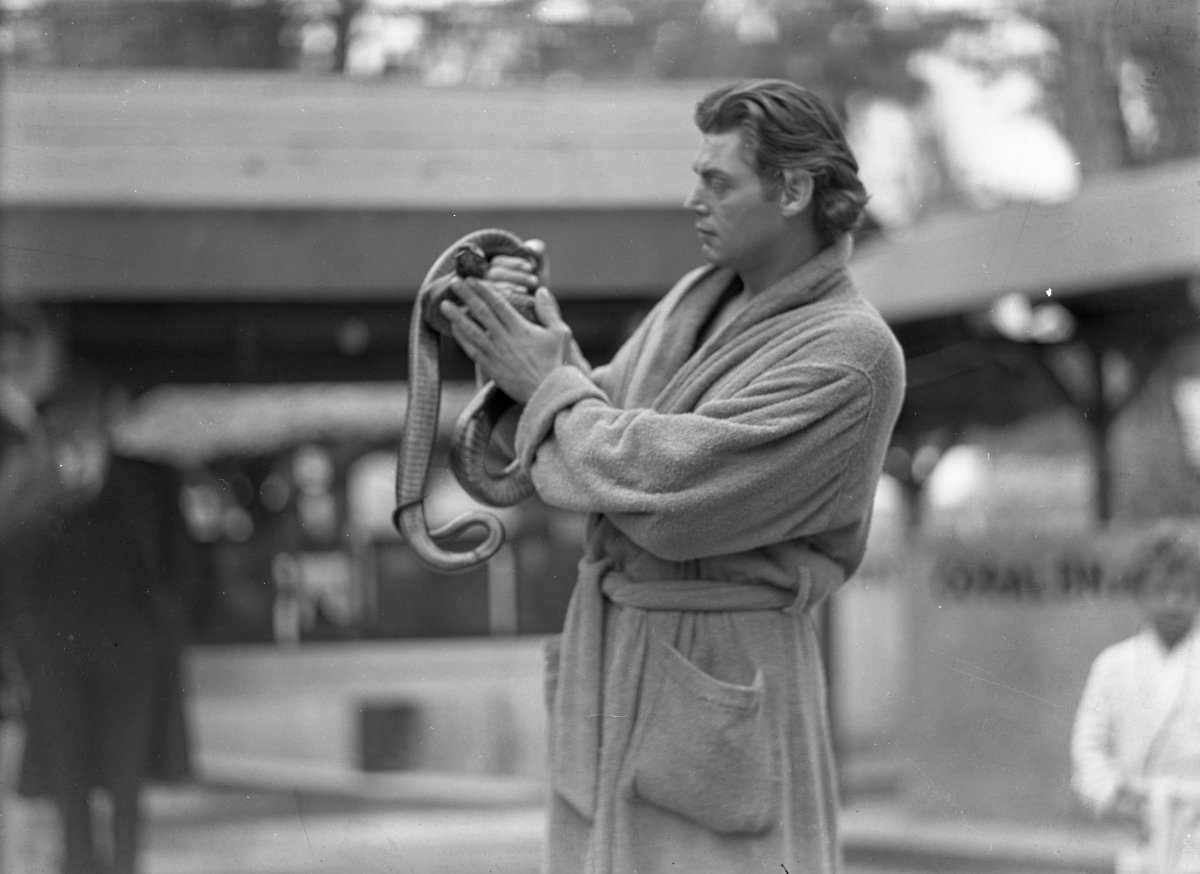 @BaldurThorLoki
Why Serbia does not use the potential of industrial hemp *Dr. Maja Timotijević, president of the Hemp Association, and Aleksandar Belevski, CMO of the Healina brand, also discussed the cultivation and potential of industrial hemp in Serbia.* For more than 10,000 years, humanity has used it in various ways. It can be a remedy for anxiety and pain, fodder, energy and building materials. Yugoslavia used to be its largest European producer, and in Serbia it was recently at the center of ***great controversy***. The plant in question is industrial hemp, best known for the fact that the substance *cannabidiol*, known as CBD, was obtained from its flower. Before we go deeper into how industrial hemp is grown in Serbia, one dilemma needs to be resolved: **what is the difference between industrial hemp and marijuana, or cannabis indica**? Industrial hemp belongs to the family of cannabis plants, as well as indica cannabis, and **they differ in the components they contain.** Industrial hemp contains many cannabinoids, one of which is CBD, while indica cannabis also contains tetrahydrocannabinod, ie. THC, which is known for its psychoactive effect. THC is the reason for the ban on the cultivation of cannabis in many countries, because the psychoactive effect potentially opens the space for the development of addiction. On the other hand, CBD has no psychoactive effect. Another difference between these two plants is their appearance: cannabis indica is bushy in appearance and grows in width, while industrial hemp grows in height and can grow up to 4 meters. It is a wild plant that does not require a lot of fertilizers and pesticides, and can thrive in a variety of climates. Despite the majority opinion, industrial hemp is much more than cannabidiol - its stem, root and fiber can also be used, and it is a plant that can respond to the various needs and problems of today with its existence. Precisely because of its wide use - as a medical device, biofuel or various materials for production - it is important to get acquainted with the properties of industrial hemp, its potentials and production in Serbia. Where is industrial hemp in Serbia today? Dr. Maja Timotijević, the president of the Hemp Association, points out that six years ago she started learning more about hemp and that it is a plant that is completely unjustifiably neglected. “The bad voice that accompanies her because of her marijuana sister has misled people that it is something that is forbidden and that she cultivates something that is illegal. We founded our association about seven years ago and, when we founded it, there were only 60 hectares under industrial hemp. We are already talking about about 1,500 hectares under industrial hemp. I think that is a really big progress, especially since the legislation has not really changed. We are spinning in a circle with huge problems because the legal regulations say that industrial hemp is used for fiber and as food for birds ", says Timotijević. She states that this formulation is completely obsolete at a time when about 50,000 different products are made from industrial hemp. How do the laws in Serbia regulate the cultivation of industrial hemp? As in many other cases - contradictory. The Ministry of Agriculture allows the cultivation of industrial hemp, and this area is covered by only one rulebook. This is the Rulebook on conditions for growing hemp, published in the "Official Gazette" in 2013. The **Rulebook** stipulates that only those varieties of hemp that belong to the hemp species (Cannabis sativa L) can be grown in Serbia, and the percentage of the mentioned tetrahydrocannabinol in them must be ***less than 0.3%***. The permit for cultivation is issued by the Ministry, and it can only be obtained by a person who is registered in the Register of producers of seeds, seedlings, mycelium of edible and medicinal mushrooms. What is the condition for obtaining a permit? The condition is that the grown hemp is used exclusively for the purposes of fiber production, production of seeds for animal nutrition, quality testing and seed trade. Farmers also have restrictions on the seeds they can plant. The register of varieties of agricultural plants recognizes five allowed varieties, but only three can be found in Serbia: **Fedora 17, Monoica and Helena**. For example, for a bag of 25 kilograms of Fedora 17 seeds (as much as is necessary if you plan to plant 1 hectare), it is necessary to set aside a little over 40,000 dinars. There is a possibility to start the procedure for adding new varieties, but this is a long and expensive process that can be stopped at any moment ****if the percentage of THC in the variety exceeds 2%****.

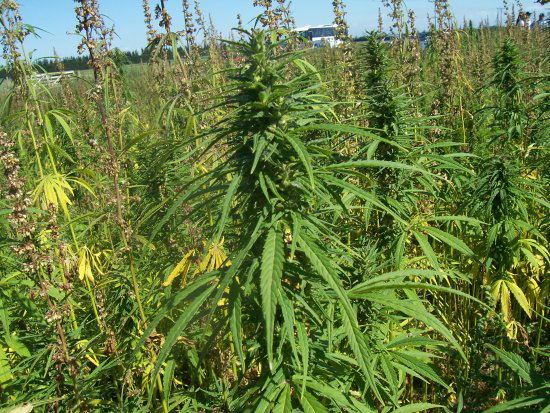 @BaldurThorLoki
Introduction to stock exchanges of crypto currencies Introduction to stock exchanges Stock exchanges are specialized platforms on which cryptocurrencies are traded. On such services, it is possible to exchange different cryptocurrencies for each other, and often for dollars and other national currencies. Primarily, the goal of stock exchanges is to enable users to easily and easily exchange cryptocurrencies for money or exchange one cryptocurrency for another. The first stock exchange to enable cryptocurrency trading was the Japanese stock exchange MtGox. MtGox was created in 2006, it was originally an online platform for gamers. This platform allowed them to trade and exchange cards for playing board games. In July 2010, just two months after bitcoin was first used for payment (“Bitcoin Pizza Day”), MtGox launched a platform for bitcoin trading. The moment it appeared, this stock exchange offered people something completely new, the opportunity to buy or sell bitcoins to anyone from their home, with a few clicks on their computer. In the years that followed, it turned out that this stock exchange had a huge impact on both the price of bitcoin and cryptocurrency trading. It is estimated that during 2013 and the beginning of 2014, as much as 70% of the entire world bitcoin trade took place on this stock exchange. In 2014, a major hacker attack took place, after which many MtGox users were left without much of their bitcoins. This significantly affected the price of bitcoin, which **dropped very quickly from over $ 1,200 to just over $ 200.** Security problem In the meantime, other stock exchanges such as **Bitstamp.net, Poloniex.com**, etc. *have been developed*. The example of MtGox a best shows how important it is to keep our funds so that they are safe and secure. When we store Bitcoins or some other cryptocurrency on the stock exchange, the private keys of our addresses, which are also all that is needed to send funds, are in the possession of someone else. This means that if someone manages to endanger the security of the stock exchange and break into their system for storing private keys, they will very likely permanently steal a large part of the funds, which directly means that they will also endanger us. Stock exchanges usually do not take responsibility in such situations, so it is the users who bear the loss. Many people practice keeping their cryptocurrencies on stock exchanges. The reasons for this are different. Some want cryptocurrencies to be readily available to them in case they decide to sell them. *Some are simply lazy to open a wallet* and keep their own funds, and there are those who are not aware of the risks that exist when keeping cryptocurrencies on stock exchanges. Whatever the reasons, this practice is very dangerous. There is no less secure place to store cryptocurrencies than stock exchanges. Due to the large amount of money that is on them, the stock exchanges are under constant attacks by hackers. Don't even think about using stock exchanges without 2-factor authentication, although that only prevents your account from being hacked, if they hack the stock exchange itself, there is no help. It is true that since the collapse of MtGox, stock exchanges have realized more significantly what the potential threats are, so in this regard they have begun to invest significantly more in security and creating mechanisms for safer storage of sensitive data. The most famous stock exchanges, where the most trades take place, have been present on the market almost from the very beginning of cryptocurrency trading, so they currently provide a more or less efficient and secure service. Yet, despite all safeguards, successful attacks on major stock exchanges continued to occur after the MtGox incident. In 2015, Bitstamp was hacked, and in 2016, Bitfinex. Trading on stock exchanges The most common reason for using stock exchanges is to trade cryptocurrencies. The principle of trading is the same as on any other stock exchange. A person who wants to trade cryptocurrencies must first provide certain funds on the stock exchange. Bitcoins are most often deposited on the stock exchange, and on some stock exchanges it is possible to deposit national currencies such as the euro or the dollar. After that, a certain cryptocurrency is selected, which is bought and which is later sold at a better price. What distinguishes cryptocurrency exchanges from classical exchanges is, first of all, a looser regulatory framework (where it exists at all), which causes **higher risk**, but also significantly higher price oscillations and opportunities for enormous profits. There are various advanced options for more serious traders, but that is *beyond the scope of this course*. When trading on the stock exchange, it is very important to take into account the conditions of use as well as the legal regulations, both in the country of the person who invests money on the stock exchange, and in the country where the seat of a particular stock exchange is located. This prevents legal problems that may arise when withdrawing money from the stock market. The situation here is a bit complicated by the fact that cryptocurrency trading is completely unregulated in many countries, but that is slowly changing. Cryptocurrency trading is an increasingly evolving field. Lately, the daily volume of trading often exceeds 10 billion dollars, and the number of new users who register daily on the stock exchanges is measured in tens, even hundreds of thousands. A significant number of traders from some other platforms or from other systems such as trading in precious metals, indices and bonds have over time switched to cryptocurrency trading as potential profits are higher. *Specialized tools have also been developed that make it easier for users to follow various stock exchanges, stocks and trends in their prices*. It is predicted that with the progress of regulations around the entire area, the **number of large investors who will enter the cryptocurrency market will increase, and who are now avoiding it precisely because of legal uncertainty.**

+1 more
@BaldurThorLoki
Does the "Heart of the Ocean" really exist? Thanks to director and screenwriter James Cameron, the story of the RMS Titanic, which sank in 1912, has finally become a success story. Cameron's film about the famous accident was extremely difficult to realize and drove the producers crazy. But despite the studio preparing to lose due to budget overruns, the Titanic looted the box office after its 1997 premiere. Today, there is almost no one who has not watched the shocking drama about Jack and Rose, two young people whose love was followed in the middle of a shipwreck. On the waves of their popularity, the diamond Heart of the Ocean, a fictional piece of jewelry and the initiator of a film shop, successfully entered the world of culture. *Singer Celine Dion took a replica of this blue prop at the 1998 Oscars, which was later sold at auction for $ 1.4 million*. Today, other copies are so available that they can be ordered through Aliexpress, while one of them could be seen at the Vetements brand fashion show last year. Cameron made sure that almost every detail in the film was historically authentic or possible. The script required that the necklace with the Heart of the Ocean sink to the seabed, so that no decorative item from the famous vaults came into consideration. Instead, the new gem is modeled on one well-known in the world - the **Hope Diamond**. The turbulent past of this blue gem, which allegedly adorned the statue of the *Hindu goddess Sita*, is so exciting that it deserves its own film. ***Hope's diamond*** was discovered in India and became the property of the French merchant Jean-Baptiste Tavernier in the 17th century. But, if you remember Cameron's drama well, except for the rare blue color, none of the above is reminiscent of the Heart of the Ocean. Everything we know about the diamond from the Titanic fits into a few sentences, which were uttered by the fiancée of the main character Rose. The heart of the ocean weighs 56 carats, said Cal Hockley, and was owned by King Louis XVI. Imagination and reality touch precisely in that footnote, which relies on the French court. Louis XIV bought the Hope diamond from the Tavern in 1668 and passed it on to his heirs, among whom he would become known as the Blue Diamond of the Crown. In the next century, this treasure, just like the movie Heart of the Ocean, will belong to Louis XVI. In 1839, the precious stone that was once adorned by French kings was bought by the wealthy British collector **Henry Philip Hope**, after whom the diamond is named today. The alleged curse, however, caught up only with his grandson, Francis Hope, who was left without wealth and died in poverty. The legend persists thanks to the famous American heiress Evelyn Walsh McLean, who lived with the diamond for 36 years, breaking the record in the length of his stay in private ownership. If there are curses, it selectively targets only her dear people - McLean lost her son when he had a car accident, her daughter when she committed suicide and her husband when he left because of another woman. Today's look of Hope's diamond dates back to 1910, when Pierre Cartier surrounded it with white diamonds and adapted it to Evelyn Walsh McLean's taste. Over time, the stories of the curse subsided. Hope's diamond, weighing **45.52 carats**, is kept today in the American Smithsonian, where it can no longer harm anyone, but the story of jewelry and the famous film has another chapter. The heart of the ocean is made of zircon and decorated with 130 crystals, and on the big screen it was taken by a heroine who reconsiders social conventions and loses a partner. In 2007, the necklace Love of the Sea was bought, an authentic piece of jewelry associated with the ship RMS Titanic, which is somewhat reminiscent of Cameron's film plot. To mark the fiftieth anniversary of the Smithsonian exhibition, the Hope Diamond was temporarily housed in a new luxury necklace in 2010. More than 1,500 people died when the RMS Titanic sank in icy water on the high seas. Kate Phillips is one of 705 survivors who are no longer with us. Memories of great events are deceptive even for history, which tries to penetrate their secrets with scientific attention. It is quite certain that many biographical stories will remain untold or, as in the case of Evelyn Marie's origins, unconfirmed. Maybe that's where our penchant for glittering little things comes from. Hope's diamond and Love of the Sea would not mean much without their owners. Jewelry doesn’t write drama. It only reminds us that, where there is life, various objects can become its witnesses. Thank you for reading this wonderful article!

 @BaldurThorLoki
What to eat for dinner? When it comes to dinner, overeating for humans can lead to poor sleep, and because of a meal that does not satiate you, you may want more food. According to the advice and recommendations of experts, there are three options: **First: A balanced source of vegetables, protein, grains and healthy fats** Dietitian Natalie Rizzo recommends that you include vegetables, proteins, cereals, and healthy fats in your dinner. Which will help you stay full and avoid snacking late at night. What should be eaten for dinner should be on one plate, and that half should be vegetables, a quarter protein, and a quarter starch and starchy vegetables. She also cited grilled salmon with quinoa and grilled vegetables, and a bowl of vegetables with brown rice and tofu as the main examples. Healthy fats can be included, both while preparing vegetables in extra virgin olive oil or if avocados are added. Second option: Eat as varied as possible, let it be everything Although the so-called "one-pot meal" comes in handy, dietitian Catherine Rayner encourages people to include more than one type of food in their dinner. Macaroni and cheese can be consumed as a side dish, with, for example, chicken or salmon with broccoli. He also advises you to chop apples, drink milk and enjoy. She also says that if you want a burger or cake, whatever you want to eat, feel free to do so. What you should eat for dinner, according to it, should be what you will enjoy and what you will enjoy. Third option: Vegetarian meal with proteins and complex carbohydrates Meredith Price, a dietitian, usually eats a large salad for dinner (a mix of greens, tomatoes and cucumbers with a light dressing in olive oil and balsamic vinegar), two to three pieces of baked tofu, and fried sweet potato fries with a large glass of water. According to the recommendations of this dietitian, make a balanced meal when choosing what you should eat for dinner, and that will reduce the desire for other foods because you will already eat everything you need: proteins, carbohydrates and healthy fats.

+2 more
@BaldurThorLoki
The scariest experiments on people The development of medicine often means more lives saved. However, in order to reach new discoveries, some scientists forget the basic ethical principles. It seems that some scientists, in the name of science, have decided that the goal justifies the means. These medical experiments, not only do not contradict the Hippocratic oath, but to a large extent also many moral principles. In this article I'll present several experiments that are touchy and you may disgusting: 1. Three identical strangers During the 1960s and 1970s, psychologists Peter Neubauer and Viola Bernard conducted a secret experiment that involved separating the twins immediately after birth and sending them to foster families. The aim of the experiment was to determine how much genetics and upbringing can influence the formation of behavior and personality. The experiment was funded by the National Institute of Mental Health in the United States, and the victims were *threesomes*, **Robert Saffron, Eddie Galand, and David Kelman.** A secret experiment came to light when the three brothers met quite by accident in 1980. Their physiognomies were too similar, which immediately aroused suspicion and confirmed the fact that they were related by blood. However, the terrible consequences of their separation were soon discovered. All three suffered from depression and anxiety at some point in their lives. It is also interesting that when they spoke, they said they had brothers. The film "Three Identical Strangers" was made about their unusual destiny. Unfortunately, only Robert and David were present at the premieres. Eddie Galand, after a long struggle with depression, took his own life at the age of 33, leaving behind his wife and daughter. An interesting fact is that Peter Neubauer and Viola Bernard did not show any pity or shame because of their deep conviction that they did a good thing for the children and gave them a chance to develop their personalities individually. 2. Medical experiments of the Nazis Some of the most notorious medical experiments of all time were conducted during World War II by Josef Mengele, a member of the SS and a doctor at the Auschwitz camp. Mengele singled out the twins from the trains that brought the camp inmates, in order to further use them for experiments aimed at proving the theory of racial supremacy of the Aryans. Many participants died during the experiment. In addition to collecting the eyes of his dead "patients," Mengele also used the inmates for experiments involving infectious diseases, chemical weapons, and aviation. A large number of detainees also underwent experimental sterilization. One of the detainees had her breasts surgically removed so that doctors could determine what it looks like when a baby dies of starvation. The "patient" injected her child with a lethal dose of morphine to prevent the baby from suffering. Some of the doctors who conducted these and similar experiments were prosecuted after World War II, while Mengele fled to Brazil where he died of a heart attack in 1979. 3. Monster study In 1939, a group of special educators working at the University of Iowa decided to prove the theory that stuttering was part of learned behavior caused by children's fear of public appearance. They wanted to prove their theory with an experiment aimed at causing stuttering in children who lived in a nearby orphanage, by telling the children that they were predisposed to start stuttering in the future. The scientists sat next to the children and told them to show signs of stuttering and that they should not speak unless they were sure they would speak correctly. The experiment did not cause stuttering, but it did make the once lively children anxious, withdrawn and quiet. Some of the children received approximately one million dollars in compensation when they grew up. 4. The crimes of Burke and Hale The only corpses that could be used in Britain for anatomical dissection and research until 1830 were those that came as a result of the murder. Because killings were rare at the time, many anatomists came up with the idea of buying corpses from grave robbers. The owner of a boarding house in Edinburgh, William Burke, and his friend decided to go a step further with this business. From 1827 to 1828, these two men drowned dozens of guests and sold their corpses to anatomist Robert Knox. Burke was later hanged for his crimes. 5. Surgical experiments on slaves The father of modern gynecology, James Marion Sims, gained fame by performing experimental surgical procedures on slaves. To this day, he is considered a controversial person because of the way his slaves are operated on with vesico-vaginal fistulas. The urination of a woman with fistulas, openings between the genitals and the bladder, was unstoppable and therefore often rejected by the environment, but also by the doctor. Sims performed surgeries without anesthesia, partly because anesthesia was new at the time, but also partly because Sims believed that surgery was not "painful" enough to justify the use of anesthesia.
 @BaldurThorLoki
Strange and interesting planet Earth The planet we all call home is more amazing than we can imagine. There are many interesting things that both frighten and fascinate us when it comes to the Earth, and they are related to strange landscapes, interesting animals and wonderful organisms. In this article we list 7 interesting facts: The earth's poles are turning We all know that the North Pole is in the north, somewhere above Alaska, and that the South Pole is somewhere down, near the center of Antarctica. This will always be the case when it comes to the geographical poles of the Earth, but not when it comes to the magnetic poles. For the past 20 million years, the Earth's magnetic poles have rotated every few hundred thousand years, which means that if you had a compass in your hand about 800,000 years ago, it would show you that the north is in Antarctica. Although scientists are pretty sure that this is really happening, it is still not entirely clear what causes these polar acrobatics. For now, the Earth's north pole is moving north at a speed of about 65 kilometers per year. Bearing in mind that the last gender reversal occurred 780,000 years ago, we are late for the reversal. The largest living organism on earth is… When it comes to the largest living thing on the planet, everyone thinks mostly of elephants, whales or trees. One would also remember coral reefs as the largest conglomerate creatures. However, it turned out that the world record for the largest living organism on Earth has a somewhat less impressive appearance, but in terms of size, it makes the blue whale act like a dwarf. It's about mushrooms. The title of the largest living organism on the planet belongs to the gingerbread mushroom that lives in the Blue Mountains in Oregon. This huge mushroom occupies about 965 hectares of land, which is as big as 1665 football fields. Honey fungus is actually a common name for several different species of fungi of the genus Armillaria. These parasitic fungi colonize and kill many woody plants, which is why they were called "gardeners nightmares". Some parts of the Earth look like we are on another planet The place that many call "Hell on Earth", the Danakil Desert in Africa, is one of the driest, deepest and warmest places in the world. It is located in the African (Danakil) Depression, where Lake Asal is located, the lowest point in Africa at -155 m below the level of the Earth and is one of the most extreme places on our planet. However, even here there are places to live. The multicolored hydrothermal vents are home to ecosystems that astrobiologists now use as an analogue in the search for life outside of Earth. One island has an "underwater waterfall" On the southwest coast of Mauritius, there is a unique natural phenomenon, more precisely a unique optical illusion of an underwater waterfall. The main culprits are the currents that over time stacked the sand off the coast of Mauritius, creating cascades, or deposits that create the impression of water flowing into the middle of the ocean. In satellite images, it looks especially dramatic, as if an underwater current is rising along the coast of this paradise island. Some clouds are alive Sometimes, at dusk, dark clouds appear very close to Earth. As they swirl and change shape, they can look quite vivid, when in fact they are. Formed by a hundred or even a thousand starlings flying in a flock, these "clouds" are actually a phenomenon known as murmur. Scientists suspect that daptics fly in tandem when looking for a place to hide or avoid predators. However, it is still a mystery how exactly they achieve such exceptional acrobatic synchronization while flying. There are also "underwater meadows" on Earth. The most widespread seaweed in the world, known as Posidonia, after the Greek god Poseidon, is also known as one of the oldest living species on Earth. Genetic sequencing recently revealed that the extensive meadow of Posidonia, which grows on the coast of Spain, could be hundreds of thousands of years old. This means that before our modern human ancestors even left Africa, the first seaweeds began the process of cell division and cloning to survive the global spread of humanity. There is a boiling river on Earth The mysterious river, about 6.5 kilometers long, deep in the heart of the Amazon is so hot that the water in it is boiling. The mysterious boiling river, for which it is not known why it has such activity, since there are no volcanic activities in the Amazon, attracts the attention of both scientists and people. At its widest part, it is about 25 meters wide and about 6 meters deep. The water in the river is hot enough to make tea, and it can also cause third-degree burns.
 @BaldurThorLoki
Keanu Reeves, atypical celebrity Keanu Reeves, the famous hero of movie The Matrix, is definitely an atypical celebrity. During one of his birthdays, he surprised everyone when he once celebrated himself, with coffee, on the street. He shared his "delicacies" with everyone who greeted him. Keanu Reeves became famous around the world after the release of the Matrix movie and the saga that followed. At first glance, she seemed to be one of many successful Hollywood stars, full of money and adored around the world. However, to the surprise of many, this is not the case at all. This wonderful actor stands out from the classic model of celebrities. In the life of Keanu Reeves, moments of glory alternated with great personal tragedies. His most beautiful trait is resilience. He does not pretend to be a guru or a saint, but a person who is able to recognize and appreciate what is really important in life. It is a source of inspiration for all who testify to his wisdom. The difficult childhood of Keanu Reeves Keanu Reeves was born on September 2, 1964 in Beirut (Lebanon). From an American father of Hawaiian origin and a Chinese mother of British descent. He also had a sister two years younger. The actor's childhood was marked by the character of the father of an alcoholic bully who left the family when Keanu was only 3 years old. The father was arrested for selling drugs and earned a high school diploma while in prison. Keanu met him at the age of 6, and later saw him again when he was 13 years old. They have never seen each other since. In order to have financial means for her children, the mother worked as a stripper in nightclubs. She often brought men home. The family first moved to Australia and then to the United States. In New York, she married a Broadway director and they all moved to Canada. The marriage lasted only a year. A life marked by tragedy In addition to childhood insecurities, Keanu Reeves also faced another difficult test. His sister fell ill with leukemia and although she later recovered from the disease, the experience deeply marked him. Years later, he himself had a relapse and went through horrible moments again. Keanu decided to dedicate himself to acting after an injury that prevented him from playing hockey, which he considered his true calling. He never finished high school, but from an early age he always felt prone to art. His father helped him move to the United States, and one of his first movies was "Belli e dannati." There he met the person who would become his best friend, River Phoenix, the younger brother of the famous Joaquin Phoenix. Unfortunately, he was a drug addict and died in his youth from an overdose of cocaine and heroin. Keanu felt responsible for that death over the years because he thought he could have done more for his friend. Strength of resistance In 1999, his then-girlfriend Jennifer Sime, also an actress and his personal assistant, became pregnant with him. On Christmas, she gave birth to a girl prematurely, unfortunately already dead. The event caused the actress to become deeply depressed, which required drug therapy. A year and a half later, she had a car accident on the way to the party and then she passed away. A year later, Keanu Reeves ’sister fell ill again with leukemia and he then waived all obligations to be able to be with her. Despite all the tragedies and difficulties, Keanu Reeves managed to progress in the best way. Unlike other celebrities, he lives in a modest apartment and travels by subway. He donated a large part of his wealth to charitable associations that fought against cancer, with the only condition that his name should not be mentioned. He also donated to poor hospitals. These contributions are believed to amount to several million dollars. He decided to lead a simple life, often stating that money and fame were not the most important to him. He loves motorcycle travel and deeply studies Buddhism, even if he does not consider himself a Buddhist. ***He is a calm man, who knows the value of emotional connections and that life is much more than Hollywood.***

 @BaldurThorLoki
Secret cryptocurrency mining Your computer could secretly dig up various cryptocurrencies, using the power of your processor to generate new and potentially lucrative "coins", from which you would not profit but someone else. **Malware incidents** involving cryptocurrency mining tools have increased sixfold last year, according to IBM's security service. Here's how to find out if you unknowingly agreed to use the power of your computer to mine cryptocurrencies. **Check your CPU load** In Task Manager, you can check if *CPU usage* is *unusually high*. If you notice high spikes on the CPU chart when visiting a particular site that shouldn't be as demanding on the processor, or if all your applications are closed, but the chart shows that CPU usage is still very high, then you may have a malware problem for digging cryptocurrencies. It's hard to say what "normal" CPU consumption looks like, given that the power of computers and applications that people run can vary a lot, but a sudden increase in CPU usage indicates an abnormal increase in CPU power demand. **An ad-blocker can help** Your computer may be forced to mine by visiting a specific site or displaying an infected ad. If this is the case, once you leave that website or close the tab, digging stops. To keep you safe, you can also block Javascript from running on a site that is known to be infected, simply by using the default privacy and content controls in your web browser. Ad blocking software can also filter out known types of mining in the search engines themselves. One such mining script is called Coin Hive, which is not meant to be malware. The script can be embedded on websites without the knowledge of visitors, although its developers encourage website owners to discover the presence of such a script to their users. One ad blocking software, AdGuard, will scan the site to see if Coin Hive is on it and alert you. AdBlock Plus, suggests adding filters to its built-in blocking options that target Coin Hive. Researchers at IBM have found more advanced, covert software for digging cryptocurrencies, which are penetrating the computer system. They are delivered via *infected image files* or by *clicking on links* that lead to a malicious site. Such attacks tend to target large business networks, and in that case it is necessary to contact a professional, or IT company, for help. If your system is infected with this software, degradation in CPU performance should occur. In this case, turn on the Task manager to check the CPU usage. In Task Manager, you can identify the process that eats all computer cycles and abort it. Bitcoin requires too much computing power to mine profitably this way, even if it uses millions of ordinary computers. Bitcoin miners today operate huge centers that contain thousands of machines specifically configured to dig for bitcoin. Instead, these miners usually try to generate Monero cryptocurrency. Like other cryptocurrencies, last year the value of Monera rose from about $ 15 in January to $ 140 in early September, per unit of currency. Probably everyone has heard the news that hackers managed to use malicious code to hack **supercomputer** and run it for bitcoin mining. This caused the system of this large computer machine, which solved the most complex mathematical processes in just a few seconds, to crash, which *would take 20 years for the best PC on the market with an excellent configuration*. In order to stop that process, the system was recovered and work on even bigger security barriers.
 @BaldurThorLoki
Crypto exchange A crypto exchange is an online platform where users can trade their digital assets. Many companies have embarked on the launch of their own exchange offices. On the other hand, end users have accepted cryptocurrencies and exchange offices due to low commissions, compared to traditional institutions such as banks or Western Union. How much do crypto exchanges earn? The mentioned profitability and popularity of crypto currencies and exchange offices led to the fact that at the beginning of May 2018, exchange offices exchanged assets worth $ 17.5 billion per day (~ $ 17,000,000,000.00). If we take the average trade fee that the exchange offices charge (0.2%), we come to the data that the exchange offices realized a daily inflow of about 35 million dollars only on the trade commission. The commission on trade is not the only way in which exchange offices earn money. There is also a deposit fee, a fee for withdrawing money, as well as a commission for the conversion of decree money. Crypto exchange offices also make money on marketing by selling advertising space on their web platforms, and also taking a commission for listing crypto currencies, which is very important for, now numerous, ICO (Initial Coin Offering) projects. The value of these projects increases significantly if between 50 thousand and one million dollars are invested, in order for the ICO to be listed in the offer of one exchange office. Some crypto currencies also have premium options, so users are not charged a commission on the trade, but they do charge additional options within the app. On the other hand, there are exchange offices that allow users to lend money to each other, for which they also charge a commission. All this, in fact, only shows how profitable it is to run a crypto exchange. There are two types of crypto exchange: **centralized** and **decentralized** exchange. Centralized exchanges "hold" the funds of all users on their servers, allowing end users easier trading and more options, while introducing certain restrictions, which, depending on what type of user you are, can be seen as both a positive and a negative attribute. Decentralized exchange offices operate on a distributed ledger as well as the crypto currencies themselves, which means that the users themselves are responsible for their assets. On the other hand, the way in which centralized exchange offices function is contrary to the vision of the community that presented crypto currencies. As we have already mentioned, centralized exchange offices charge a commission for their services and retain all profits, while decentralized ones share profits with service providers, ie. profits are shared with communities. At decentralized exchange offices, users can maintain their anonymity, while at centralized ones this is not the case. Since the centralized exchange office controls the assets of all users, it can at any time, arbitrarily or under pressure from another body (eg the government), take away the user's funds, or deny him access to them. Due to this, movements have emerged that advocate exclusively for decentralized exchange offices. The fact that with decentralized exchange offices the user has absolute control, has its negative sides. If a user loses his private key, he loses access to his funds forever. In case you forget your password and / or lose your phone, you can easily recover your account and your funds in a few simple steps (unlike the guy that threw a hard drive with a key up to 7,500 Bitcoins). Availability is another parameter in which decentralized exchange offices have an advantage.

 @BaldurThorLoki
Interesting facts about cryptocurrencies Everyone has heard of cryptocurrencies and with the development of technology, a lot of people are interested in owning digital as well as traditional fiat currencies. Here are some facts about digital money, explaining that there are both interesting and buzzing facts about the popular money that made the financial revolution: The most famous cryptocurrency is Bitcoin and as a blockchain technology it was "created" back in 2008, by an individual or a group of people under the pseudonym Satoshi Nakamoto. Who Satoshi is still a question and it is a real mystery who is behind that name. It has been established that there are signatures of the message with the keys from the first blocks of bitcoin that Satoshi mined, but so far no one has managed to do that, and it is possible that they cannot do that; There is an interesting fact that more than 30 billion dollars of ordinary bitcoin have been **lost forever**. The reason is that the owners could not remember their private bitcoin wallet key. The main feature of Bitcoin is the elimination of financial intermediaries. While with banks due to the loss of the pin code funds can be obtained in some way, with Bitcoin this is not the case due to the specific nature of the blockchain and precisely the elimination of intermediaries; China is the absolute leader in Bitcoin "mining". It owns more than 70% of the total bitcoin pool. Also, China produces a large part of mining equipment, and it is not surprising that large mining buildings are located in China, due to the advantages of very cheap electricity. Due to the very unfavorable policy of the Chinese government towards this cryptocurrency and activities related to it, the question is whether China will remain a leader in this field; After the G20 summit, a meeting of heads of government of 19 countries and the European Union, 11 countries adopted cryptocurrencies as legitimate, 3 remained domestic, while 4 countries restricted the use of cryptocurrencies. Only China has completely banned the trade in digital money. As a result, 57% of countries are reported to have approved cryptocurrency transactions; One of the first attempts to apply blockchain technology to the entertainment industry is the Cryptokitties project. The project allows players to breed, buy and sell virtual cats, and was developed by Axiom Zen. Baidu also created and marketed a similar game, Leci Gou, where dogs are bred instead of cats, which is a bizarre fact; The number of existing cryptocurrencies is higher than 2000. New cryptocurrencies are created every day, but the fact is that many will not last more than a few months. Since Bitcoin is the most successful and most popular cryptocurrency, it is followed by: Ripple, Ethereum, Stellar Lumens, EOS, Litecoin, Tether, Cardano, Monero, Tron, Dash, etc ; The FBI owns the largest bitcoin wallet. It is an innovative software program that enables Bitcoin storage with maximum technical precision. Security is achieved through a private key or a secret number that accesses bitcoins. Through the wallet, it is possible to send and receive Bitcoin, ie perform transactions. Satoshi Nakamoto is thought to own the largest number of bitcoins scattered across various bitcoin wallets, the FBI is believed to own the largest amount in a single bitcoin wallet.

 @BaldurThorLoki
About logo A logo has the potential to be a very powerful asset for a brand. Many companies are identified by their logo faster than they are by their name, highlighting our continuing shift from text-based to image-based content. Logos are all around us and well-known ones are easily recognizable by almost everyone. **The History of the Logo** The origins of the logo can be dated as far back as the Ancient Egyptians. They used hieroglyphics to brand and identify their possessions, until in medieval times when graphic imagery such as coats of arms was used to distinguish between the statuses of different nobilities. **Symbolism** The fundamental power of symbols remains most important element of logo design. A logo has meaning because it draws on centuries of signs and symbols (including the alphabet) in human literary and visual language. A logo designer who uses an image of an apple, for example, is drawing on centuries of potent symbolic usage. For most Western viewers, the image of an apple summons our associations with nature, food, the ‘forbidden fruit’ in the Garden of Eden, Snow White, Apple computers, et cetera. To design a logo with symbolic resonance is to participate in the lineage of social dialogue. Medival noble houses create signs for their banners, shields, clothes, or jewelry to show their difference in power, wealth, knowledge and army strength among the others. Symbolism of their signs and marks and seals speak about their concurrent nature for everyone else. Aldo a lot of houses have need to join another powerful house through marriage, peace and trade contractions, they have right to leave their sign as a proof their name and some that create their position in society have value. **Modern logo** Modern businesses depend a lot on making effective communication with their potential customers. Marketers make strategies to ensure that people can engage with a business in a variety of ways. Therefore, business owners spend a lot of money on creating visual tools to engage people and to interact with them. Today, logo is not just a business symbol to identify a company and its products or services rather helps in making a strong brand identity. A logo serves many purposes in the modern world of business. It can send the right business message to your target audience. A professionally designed logo has the power to convert people into loyal customers. ***Here Are 9 Powerful Tips For Effective Logo Design*** **01. Know The Brand** Before you set out to design your logo, make sure that you have some insight into the brand. Keep this in mind that the logo must reach a particular set of people, which is the target market and target customers. So, write down what your business, brand, and market are all about. Find out what the brand ideology is and what inspirations it holds for the future. Know the brand personality also. Is it a softer brand or a tough brand in terms of its tone. What is the way it wants to project itself amid its market and customers? All such details must be ready beforehand. Such information will serve you as a guide to create your logo design. You will pick your logo elements considering the information about your brand. **02. Reflects Nature Of Your Business** Make sure that your logo is fully capable of representing your business. The colors and images used in your logo should align with the business you run and the products or services you deliver. It is when a logo aligns with your business that it will create a brand identity for your company in the competitive market. The targeted customers will also get your message when the design reflects your business and its values or attributes. So, whether you are freshly designing or redesigning your company logo, consider these three major tips in mind, to establish your business in a competitive market. **03. Impression Is Crucial** Your logo design should make a lasting impression on the market and the customers. Just a glance at your logo is enough to mesmerize the people. The logo functions for a company by enticing the customers again and again once they have a good impression of the design. To create an impression, make sure that your logo is unique, which means that its design should be based on a new concept so that it stands out in the crowd of logos in the market. The logo must also be better in design than your competitors. **04. Use Colors In A Planned Way** Colors play a crucial role in determining a brand’s message. For example, if you use red as the main color in your logo, it will send the message of the brand being aggressive, passionate, and energetic. This means that your brand intends to target young customers. If blue is the chief color, it will evoke the feelings of intelligence and togetherness. This is the reason that most of the social channels such as Facebook have logos in blue. If you want to create a social media page, think of having blue as its main color in its design. Use bright and bold colors to grab people’s attention. But these colors should speak about your brand personality as well. Remember that every color evokes an emotion, which becomes its message for the viewers or customers. There is a science behind colors, which modern graphic designers effectively use. **05. Pick Fonts Carefully** Many designers just do not pay attention to the selection of typefaces and chose them randomly. The fact is that typefaces speak about the personality of a brand. For example, a typeface used for a toy company’s logo will most likely be a handwritten typeface. This is because the children are the target customers and you want to project your brand as a child-friendly business. **06. Chose The Type Of Logo** Do you want a logo that has your company’s name as the main feature? That could be the best logo idea. Such a logo is known as a logotype. Famous examples of logotypes include the logos of RayBan, IBM, and Coca-Cola. If you choose to have a logotype, it will have your company name visible to the customers immediately. This means that your logo will become your brand’s advertisement as well. You will not be spending much to generate publicity about your brand. The logo will tell your company name to the people. Small business with a small marketing budget benefits from logotypes. **07. Keep It Simple** Every expert logo designer and any graphic designer will lend you this advice. They all lay extra emphasis on creating a simple logo design by there graphic design services. When we speak of a simple logo, it implies that there should be the use of one or two colors, fonts and other elements. The viewers should get the message at first glance of the logo. But if there are too many confusing colors and fonts or a complex shape of the logo, then it will send a mixed signal to the viewers. A simple logo is also a memorable design. Most of the global business is represented by its simple logos. Take for example the Nike logo. It is a simple swoosh logo. The Pepsi logo is made of two colors only. The Samsung logo has one color. Apple logo has an application as a symbol of its business.. **08. Make It Scalable** Another quality of a great logo design is that it is easily scalable. Remember that your logo will feature a variety of advertisements. It should appear like an impressive logo on all the media. This means that when scaled up to larger proportions on a billboard, the logo should look impressive. It should become part of the billboard design. **09. It Should Be Impressive In Colorless Version** Another effective tip to create a powerful logo design is to make sure that it is equally impressive in black and white. There are many instances when a logo appears without colors. It may be on documents, faxed documents, newspaper ads, stationery, and many other items. For example, a newspaper ad generally is in black and white. I hope you have patience to read this long article. It's useful to know some techniques about it's creation, because graphics design is very popular and requires a lot of creativity. And this occupation is well payed. See you!
