An athlete's battle
I would imagine that an athlete aiming to be world-class, or outclassing fellow athletes in the world stage, would have to focus 1000% on the sport discipline they want to make a mark in.
That means the least distraction to take away their concentration from training, the better. And while they do need to be mindful about their diet and nutrition and health in general, any other thing outside of training life shouldn't be something they have to spend time over.
If they're training overseas - because of facilities and opportunities to compete - all the more an athlete will need to focus his or her energy into becoming the best at their sport, even when they have to be on their own for extended periods of time.
Away from family, unless a member is part of the athlete's team, they have to take care of themselves, or rely on someone among the small group of people helping them out in training.
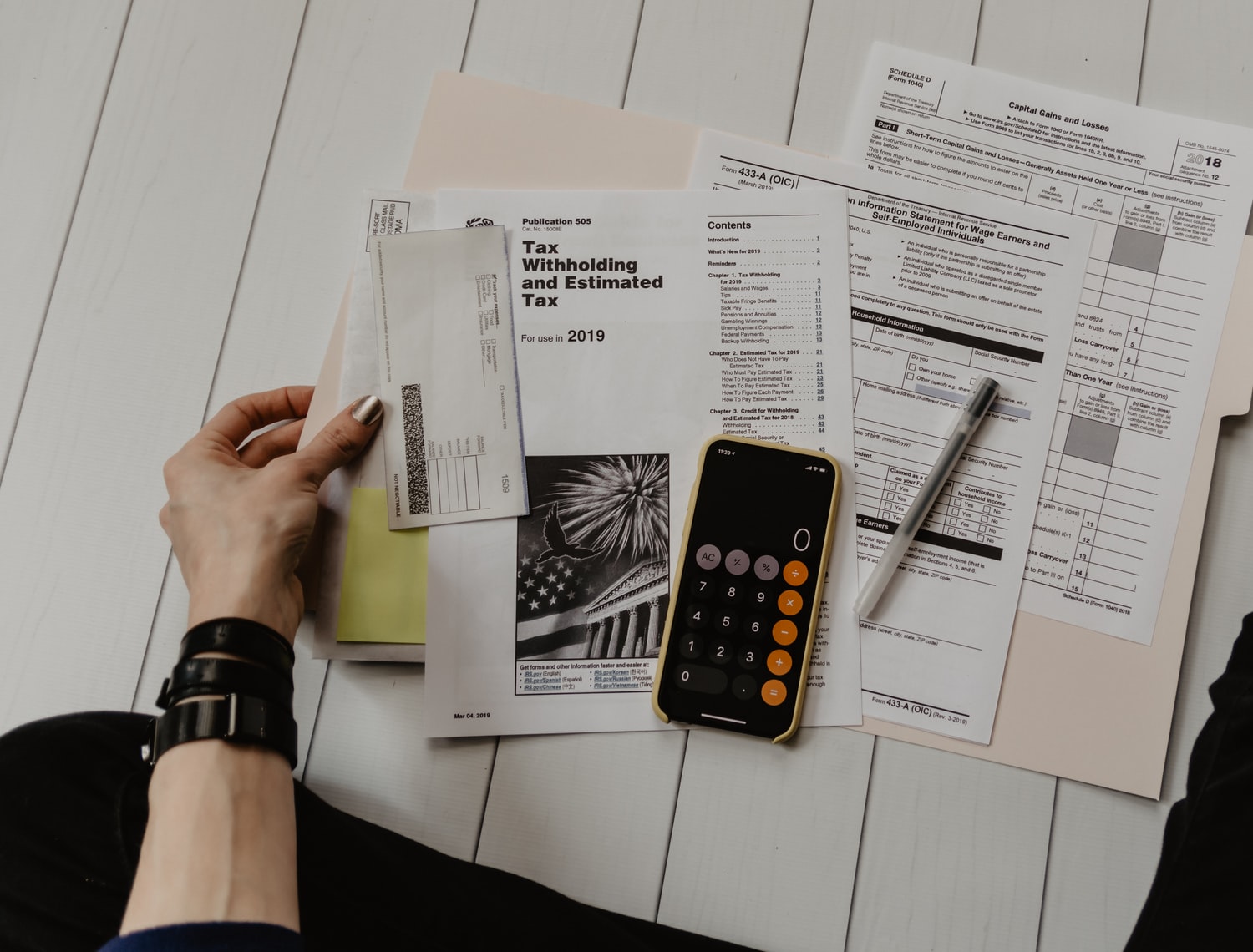
But can you imagine being an athlete and taking care of your own finances while training? If it's just the rent and other personal stuff, maybe that wouldn't be so bad. But having to budget measly funds provided by the national sports association that supports your sports discipline, including having to pay your coach's salary is a bit too much.
Exacerbating things is the delay in receiving the money, then having to liquidate every single centavo for accounting purposes because it is government providing the funds.
And then there is the fact that you need to convert the funds sent to you because they are in pesos when the currency you need is euro. That would boggle the mind of someone whose focus is on something else entirely!
That is the situation of Filipino pole vaulter EJ Obiena. For the record, he is ranked 5th in the world, in a sport that most Filipinos hardly know or care about. But he has been working hard to be the best in the sport, and has brought honor and glory to the Philippines many times over.
He missed a podium finish in the 2020 Tokyo Olympics. But he cemented his status as among the best in pole vaulting, and is now working triple time to compete in other international competitions in preparation for another crack at the 2024 Paris Olympics.
Then he hits a snag when the PATAFA (Philippine Athletics Track and Field Association) accused him of not paying his Russian coach and failing to liquidate the allowance given to him by the association.
Embezzler.
How will that make you feel if you were doing your darndest to represent your country, and win medals in the sport you excel in, if the group supposedly backing you accuses you of that?
PATAFA said EJ did not pay his coach and did not liquidate the funds sent to him. So, he must have run off with the money, which to begin with is so paltry for his needs.
I get it. EJ simply wants to give his all in training. To be the best. To be ready to compete where he can showcase his skill and talent, and bring glory to the country. So why does he have to live with a flawed system that takes away his focus on the very thing he was sent to do?
I never understood why PATAFA does not take care of paying for coaches or any other person helping an athlete train, especially when they're abroad and far away from home.
I am baffled why the money sent to EJ is in pesos when he must transact everything in euros. Why is the national sports association not taking care of its members and taking a load off their shoulders so they can focus on training alone and not mundane or complicated stuff?
And having worked in government and knowing that funding is always delayed (by months!), and liquidation is imperative as part of the bureaucratic process, I know what a headache it can be, even without converting currencies.
Thankfully, EJ has a friend in his adviser Jim Lafferty, who has also lamented the delays in release of funds and the circuitous process to get the money. Lafferty in the past has advanced the money to the Filipino athlete, and he does this willingly, just to lessen the pole vaulter's worries.
It was Lafferty who said that a number of countries are waiting to take in Obiena and support him if he played for them, but the athlete, bless him, is sticking to his guns and only wants to represent the Philippines.
Many athletes, including those who have brought home gold, silver, and bronze medals in other sports disciplines, have similar woes. They do not feel they have the kind of support from government and NSAs necessary to give them the boost to fight and be the best.
Source https://cnnphilippines.com/sports/2021/11/29/PSC-alarm-delay-EJ-Obiena-PATAFA-mediation.html
They've often had to beg for financial support. With weightlifter Hidilyn Diaz's gold medal victory in Tokyo, perhaps corporate sponsors may now be willing to throw in money behind other sports and not just the traditional basketball, (which I think we will never really be the best in) or boxing ( we're making inroads there) because we can excel better in something else given the proper support.
In the meantime, if the Philippines hopes to continue competing in the world stage, they need to overhaul the system and process of providing support for athletes aside from increasing the training allowance they are given. They deserve more. They deserve better.
Let the national sports association handle money matters, especially paying coaches' fees, and assist in the paperwork to unburden athletes and their teams as much as possible.
There aren't many EJ Obienas who are patriots, even when their government thinks very little of them until they win and our flag is raised and our anthem sung.
*Images from Unsplash unless source specified*
The things you pick up from the Internet
In between writing assignments, and other work, I would scroll through my You Tube feed for interesting stuff. That's usually BTS videos, or clips of interviews, both serious and funny. The former is to feed my curiosity, the latter to learn something new.
If I can watch a movie or an episode of anything multiple times, I do. Of course, these must be things I'm interested in to begin with. I do it not just to follow the story or plot but also for the technical and creative aspects.
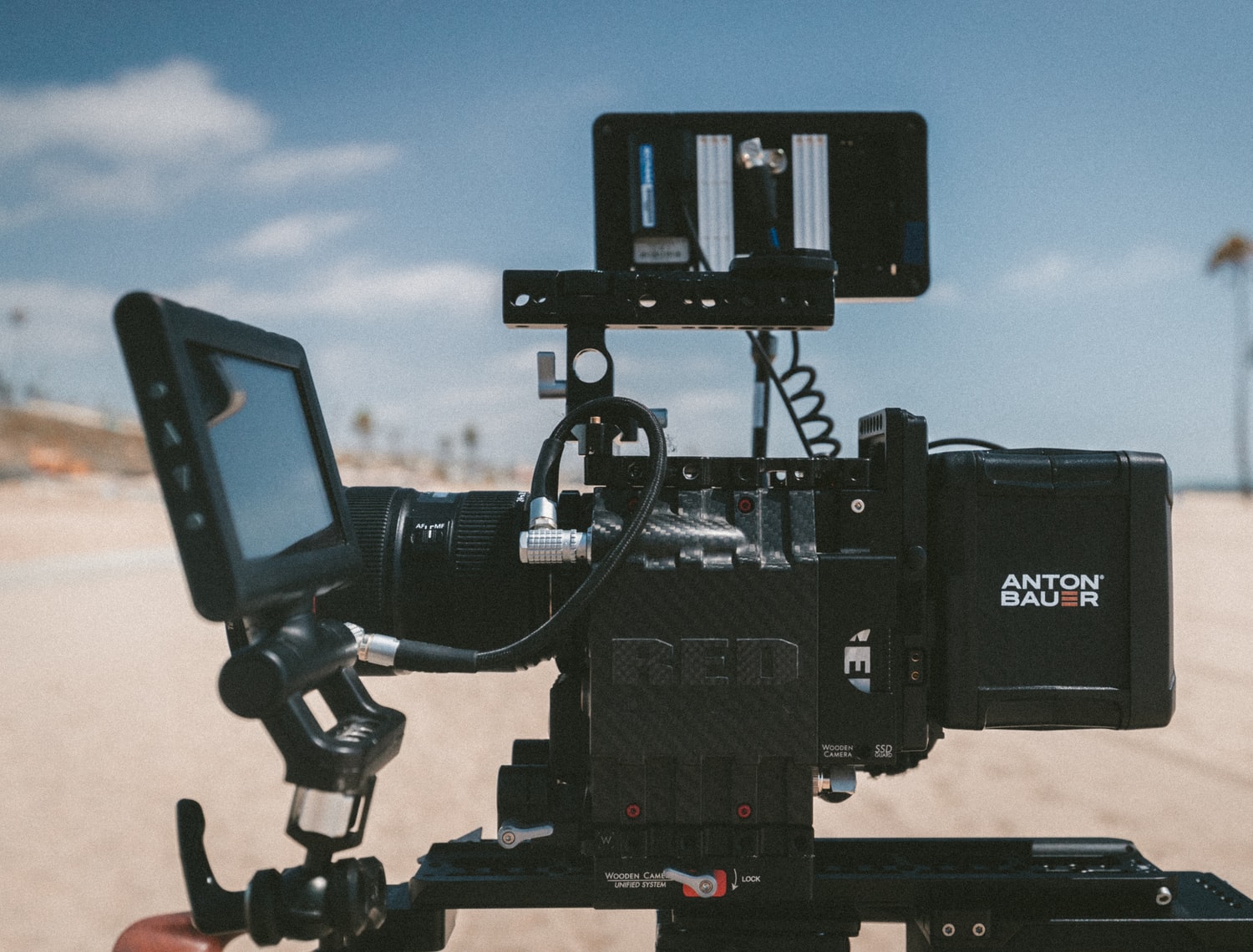
One thing that really piqued my curiosity is how a scene is shot or executed, in terms of camera work. I understand there are shows shot with multiple cameras, particularly those filmed before a live audience, but mostly these are filmed using a single camera. It is the single camera that really boggles my mind especially when the final cut shows several angles for one scene. Why?
There is such a thing as continuity in film work. Whether it's the blocking or wardrobe or position of actors as they enact a scene. Over time, I learned to watch out for these even if I just view something once.
I'd see the actor leaning sideways in one angle, then leaning back in the next shot, for a single scene. Or the arm would be positioned one way in one angle, and another for a second angle or a long shot. So, it distracts me when I catch such stuff.
Yes, filming is hard work and entails very long hours, so these little details are probably taken for granted if they don't impact the show or scene in a big way. But it makes me wonder if such things are caught during playback by either the director, or assistant, and the director of photography.
An editor would probably see it but by then it would be post production already and shooting is over so if they can do something in the splicing, they might fix it... or not.
Anyway, that's just the film geek in me talking and it must be boring for others.
Watching interview clips or talk shows that aren't available on local cable channels is another pastime. For instance, I thoroughly enjoy the Graham Norton Show. It's British, but he has on all kinds of A-list celebrities - both Hollywood stars and British actors and personalities.
Graham is not only entertaining but is excellent at handling his guests, even when two or three are big name celebrities seated on his signature red couch. While he does enjoy occasionally needling his guests with all sorts of embarrassing or hilarious stuff, which they take good-naturedly, he also has the uncanny ability to just ask one or two questions then let the interviewees take off on their own, and banter among themselves.
Now THAT is how a television host should be - shining the spotlight on the guests and not themselves, which most American hosts do - cutting off stars as they speak or going off tangent with the questions that can be quite uncomfortable.
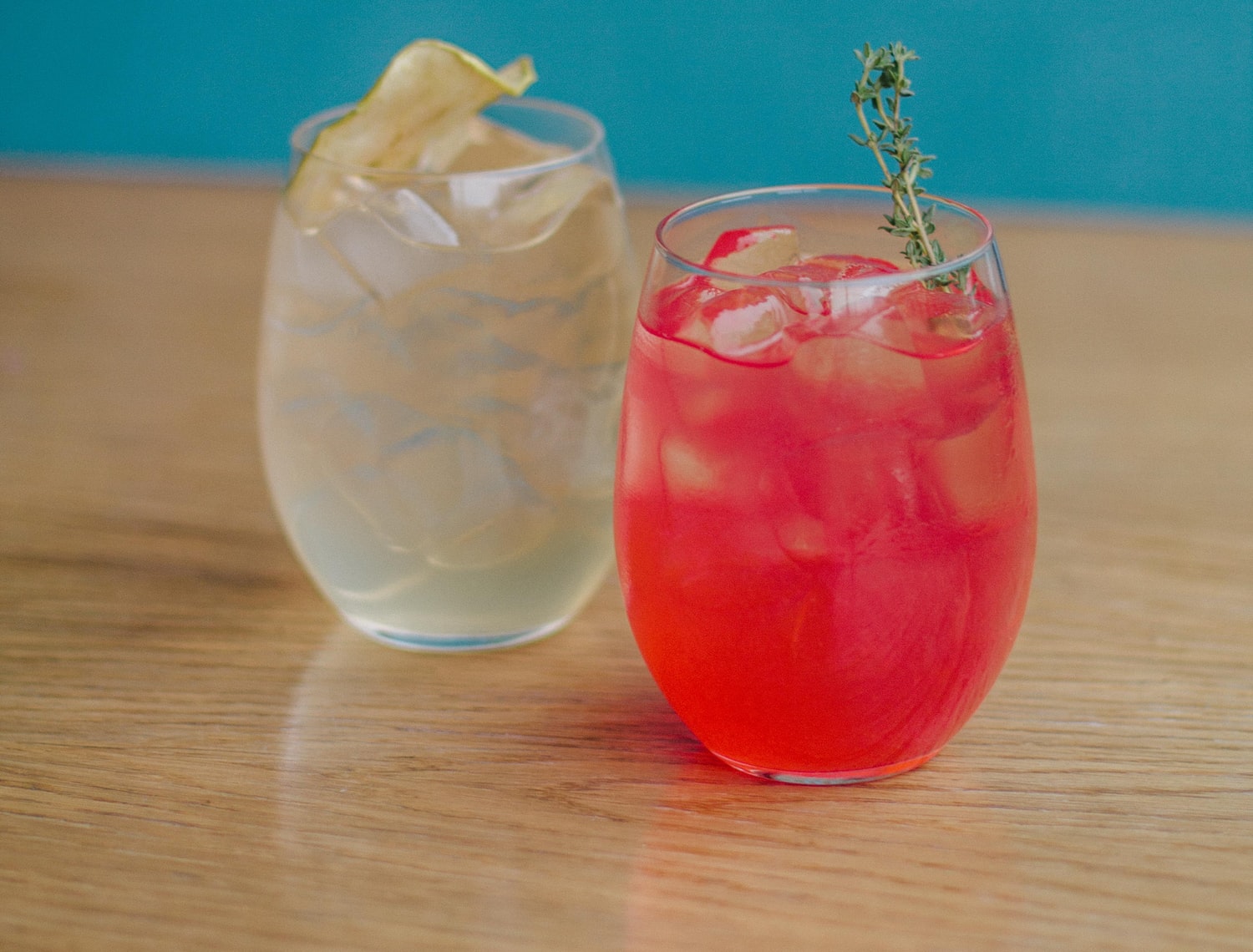
And unlike American TV talk shows where guests are only given water, Graham offers his guest their choice of beverage, so some would have wine, or juice or club soda and whatever they prefer. It does help relax the people before sitting for an hour, not totally knowing what to expect.
Between the drinks and Graham's manner, most of the guests are quite comfortable enough to share their experiences or anecdotes even when it makes them appear like a dolt. But credit it to the atmosphere in the studio and the affable host.
So, for this particular episode that I caught, on the couch were Hollywood actors Will Smith, Octavia Spencer, and Kevin Hart, and British newbie Naomi Scott. Naomi and Will were there to promote the live action movie "Aladdin."
Graham brought up that both Will and Kevin often shared motivational clips on Instagram and challenged the two to help out audience members, who shared their issues.
The first was a woman who had a fear of feet. And this was real because she absolutely looked squeamish at the mere mention of feet. Will Smith was hilarious and took off his shoe and would've stripped off his sock if not for the look of horror on the woman's face. He wanted her to "face her fear."
When it was Kevin's turn, surprisingly the comedian turned serious and dispensed this advice:
"Here's the best way to get over your fear of feet," he began. "You can't take steps in life without feet. Your fear is prohibiting you from progression. The minute you can look at your feet and understand that your feet are simply what move you forward, you will put your fear behind you."
Wow! And he thought of that spontaneously, in the middle of a room that was rowdy. What a genius, right? But then again, I've always held the belief that good comedians are extremely intelligent, especially when they do stand-up comedy.
Remember, it is three times as difficult to make people laugh than it is to make them feel other emotions. The late American icon Betty White said so herself, and she should know after 60 years of making people laugh.
I've picked up a ton of other stuff watching You Tube and FB, too. The ones that stick are those that stir emotion, like uncontrollable laughter, and those that make me pause and think. Always, there's a different perspective to things or issues that seem ordinary or mundane.
When I get stuck on what to write, I guess that's a good source of material...
*Images from Unsplash*
Beyond the movie screen
I came across content on YouTube from The Hollywood Reporter, where an editor or writer conducts a roundtable discussion with a group of actors, actresses, directors, and songwriters (s0 far).
Watching celebrities talk about their craft, work experiences, and the issues plaguing the industry, such as sexism, diversity, discrimination, etc., with their peers is very interesting and illuminating. Viewers have the privilege to get to know them better as professionals, as well as individuals.
Participants usually share something in common to be part of a group. Mostly, it's a group of six, although I've seen one of seven, with the biggest group of eight. I guess six is a pretty good number to allow everyone to share their thoughts and interact with each other without the exercise being too chaotic. When discussions get passionate or hilarious, they tend to talk over each other, and this is where the moderator has to step in and bring back order to the discussions.
It's an hour-long discussion, just enough to hear the actors' sentiments, thoughts, experiences, and words of wisdom, guided by the moderator.
I've seen three moderators handle the roundtable, and it was the women who were better at it than the men. Come to think of it, the actresses' groups are more engaging than actors so you end up staying for the whole hour to listen in on the conversation.
The THR Roundtable is far different from the usual press junket that celebrities have to go through before the showing of a movie or when a television or cable show series is about to drop. Here, they talk more openly and share their experiences and thoughts, especially on issues that have hounded Hollywood like pay equality and opportunities for actors of color as well as those with different sexual orientations.
When topics discussed are those rarely talked about publicly by a group of actors, they are all ears, paying close attention to whoever was speaking, being very respectful, just displaying a kind of kinship that is quite refreshing. So, other than admiring them for being consummate artists, you also get to know those with even more depth and intelligence.
Eavesdropping into this conversation is an eye-opener. Getting to know actors beyond the roles they play raises the level of respect you have for them. And picking up on the nuggets of wisdom shared by each one from their years of experience is a priceless education.
Given that the actresses' I saw featured in the Roundtable are all award-winning, it was not surprising to hear of their passion and dedication to the craft, describing what they had to go through to do the most challenging scenes, and how they could (or could not) immediately shed the character they were playing, and how it consumed them with emotion long after the director has yelled 'cut!'
Having a little background in acting, I understood what they were talking about and was very enlightened to hear them describe what was going on inside their minds and entire being while tackling a role or enacting a particularly challenging scene.
Anyone in the acting profession deserves a healthy amount of respect. It is not an easy job. It is a craft, and many strive to hone and perfect this over time. As challenging as it can be, acting is also fun. Imagine being able to step into the shoes of someone who is nothing like you and live their experiences.
But it is in stepping into the shoes of another human being, whether fictional or real, that can take away something from an actor's humanity. Because as the legendary Jessica Lange said during their Roundtable discussion, "the body doesn't understand that it's make-believe," making it extremely difficult to let go of a scene that was particularly draining to film.
"All the rage, the sorrow seeps into the marrow of your bones. Every molecule is believing that it is real, no matter what the mind is telling it..."
Such a powerful description of what actors have to live with because they choose to give their entire being to their craft.
From Oprah Winfrey, she said of acting, "It's a very intimidating thing, and I don't take it lightly. I have such regard for what it takes to dismantle yourself, open yourself up vulnerably and let the energy and spirit of another character come through that."
It was a Sunday well-spent watching those Roundtable discussions. I know I will go back for more insights, not just of actors, but their thoughts and experiences and what makes acting a really admirable profession.
For anyone interested to take a peek into one episode, here is a link to THR Full Drama Actress Roundtable featuring Oprah Winfrey, Nicole Kidman, Reese Witherspoon, Elizabeth Moss, Chrissy Metz, and Jessica Lange. https://www.youtube.com/watch?v=-bUz9VXogPs
Rambling when not feeling well
Let me get this out of the way, not because it is a bother, but lest I forget to be grateful... @Pichi28 I am humbled by your continued generosity! And to all my sponsors, I hope I've properly acknowledged you!
What's worse than having the sniffles? Having a very bad canker sore (in Filipino it is called 'singaw') located under the tongue! As it is, excreting mucus is already terribly inconvenient, especially when you have to do it so often to prevent a buildup. But each time I do that means a tongue movement that will chafe the sore! Ouch! And double ouch!
While I'm no stranger to canker sores (I seem to have a habit of biting my tongue every so often, although it's been quite some time since I last did) this one is kinda severe. Perhaps 2 - 3 millimeters in diameter? Imagine that! If I can guesstimate its size, then it must be huge, right?
I do remember suddenly chomping on my tongue for no apparent reason, but I didn't expect the result to be this bad. So, eating has become quite excruciating and takes away the enjoyment of food. Between excretions and chewing, it is energy sapping.
Before I get suggestions to up my vitamin C intake and put something on the sore to soothe it, let me say I've already been doing that. 3,000 mg of Sodium Ascorbate (24 Alkaline C is very good), plus lemon and honey in warm water every day, and Hyssop Oil for application.
It is a bit tedious to apply the oil and soak the sore because of course there is the matter of oral fluids and water, which I have to rinse my mouth with each time I spit. I just finally managed to eat soggy Korean noodles (easier to swallow that way) for my breakfast at 2:30 PM because it was the only time my stomach was already grumbling and my mouth could take a bit of beating when I chew or swallow.
Here's hoping the sore will heal by tomorrow. And more hope that the mucus I seem to keep producing (it's really the shifting temperatures with mornings very, very cold) will finally stop.
It doesn't help that every day the number of COVID infections is jumping 30 to 50 percent more than the previous day because you begin to think what if I was infected with the dreaded virus. So, I've had to keep monitoring my oxygen level with a pulse oximeter just for good measure. And deep breathing does a lot of wonders, too.
Still, I am grateful and blessed. There is no chest congestion even with mucus production. And listening with a stethoscope, my lungs are clear (no wheezing or whistling).
Yes, six months of caring for my bed-ridden father taught me to listen to these kinds of stuff, at least on a very basic level. Doctors were kind enough to guide me then to know what I should and should not hear with auscultation.
I feel sad for healthcare staff manning hospitals. The facilities are becoming overwhelmed again with COVID patients. And many are already understaffed. I really hope that something will be done to ensure nurses, allied healthcare staff, and doctors get the remuneration they deserve for the service that they render.
Imagining hospitals with just a skeletal staff because everyone else quit is a nightmare. And for the healthcare personnel who choose to stay and continue looking after patients even at great risk and with a pittance for pay, I salute you.
I know, you'd rather that the powers that be see you as human beings with needs like everyone else, than heroes who put their life on the line but don't even receive salaries and benefits equal to the hard work you perform day-in and day-out. For now, I can only pray this happens before it is too late and the healthcare system collapses.
There are so many topics I want to write about, so many thoughts swirling in my head, but it must be the clogged nose that's slowing me down. Here's hoping I get better in a day or two.
For now, am praying for everyone's safety and well-being. It's been a tough two years, and we're not out of the woods yet. Let's get our acts together to really beat this invisible enemy.
Be safe everyone!
*Images are Original*

On the rise, again...
And we're back to this... By this, I mean restrictions to mobility. So, unless you're going out for essentials (food, medicines, supplies), it's best to stay at home. At least for the next two weeks.
For a while in early December, everyone was happy to be allowed out once again. COVID cases were down (just 200 or so a day), and that was for a couple of weeks. Oh, joy! Kids could go out. You could dine in. Wow, you could even hang out at the mall.
I was like 'yikes!' Yes, being cooped up at home for close to two years was not fun. I'm going bonkers myself being confined in a space with people who are close to driving me nuts, but I did not want to get sick. For that matter, I didn't want anyone in my household to be struck with a virus and head to a health facility.
But allowing most everyone to go out, and live as if life were normal again, I was shaking my head... vigorously at times when I see photos or video clips of crowded places.
Before restrictions were eased, I've always been frustrated when I went out and would see folks improperly wearing their face masks, if not going without one at all, or using their face shields as a cap or headband, and people not minding how close they were to others in enclosed spaces.
I can't be the only one observing minimum health protocols! It just isn't going to work that way. So, it is annoying to be doing your part while others disregard them and go about their life as if everything is back to normal pre-pandemic.
So, each time I had to do the grocery I either made sure to go at some dead hour, or if unavoidable, to be in and out of the store in a flash. And I do not care if people think me aloof or standoffish as I put distance between us when queuing. I am only protecting myself and those living with me.
Then there are the stories of how faulty and lacking the contact-tracing system was, which was laughable that it can make you rage. How can you hope to do contact tracing efficiently when the people you recruit to do the task aren't even carefully screened?
With just one question asked during the interview (Do you know what contact tracing is?), how can you even determine an applicant's competence to carry out a sensitive task? And then there are the logistics... People lined up to be contact tracers primarily for the money. So, why are they being asked to advance transportation and communication expenses, which are prerequisites to accomplish the assignment, and be paid three months after?
On the part of the public, who were being subjected to investigation for possibly being in contact with a COVID-positive individual, many didn't like to be forthright with their answers. No one wanted to admit they exhibited symptoms because no one wanted to be told they're sick and need to be confined in a health facility... until it was too late!
This was especially true among those in lower-income households, who worried about leaving their families, children especially, if they had to be put in isolation. How will their family survive? Who will take care of the kids? So... they'd rather not disclose their whereabouts, or if they were feeling symptoms already.
And those forms or logbooks where people had to sign in and leave their numbers for possible contact tracing? Half of those who logged in would just scrawl ineligibly their numbers and names! How can you properly get in touch with them?
Further compounding the problem now are returning citizens or residents who breach quarantine because they can... they have money and influence, and are brazen enough to think the rules do not apply to them. What are these people thinking?
So now, cases are again on the rise. At alarming rates. And the decision is not just to restrict movement again, but to keep the unvaccinated at home totally, if possible.
I was just waiting when they would start reporting a rise in the cases because I did not, even for one second, believe it would not and that we would be out of the woods. I'm just grateful medical personnel were able to breathe a little during Christmas or the run-up to Christmas because they didn't have many COVID patients to attend to.
Of course I want the numbers to drop! But I am realistic enough to accept that unless every single person in this country does their part, the SARS-CoV-2 virus and COVID will continue to haunt us this 2022.
Young American poet Amanda Gorman has a new piece titled ***"New Day's Lyric"*** and I want to quote lines of her poem that paints everything so real at this time:
`... Even if we never get back to normal,/ Someday we can venture beyond it,/ To leave the known and take the first steps./So let us not return to what was normal,/But reach toward what is next./What was cursed, we will cure/What was plagued, we will prove pure./Where we tend to argue, we will try to agree...`
We want to move on, leave behind this nightmare. But we can only do that when we, all of us, agree that it is not just government's responsibility to quash this health scourge, and its defeat depends on every citizen, every individual, and their resolve to fight it and win.
*Images from Unsplash*
Farewell... Betty White
I am trying to remember if it was in 2020 or last year (like 2021 was so long ago... hahaha!) when I discovered a clip on You Tube, featuring American television icon Betty White. It was actually a blooper reel of her last sitcom, "Hot in Cleveland".
Yes, this memory is triggered by Betty White's passing on New Year's Eve. I thought it was a prank as I scrolled through my YT feed and saw the news that the 99-year-old grand dame of American TV had died, just 17 days before she would celebrate her centennial.
Funny how seeing her on TV all these years, especially in the last five, you'd think she was invincible and would always be there. That she still kept appearing on the small screen was amazing given how advanced in age she already was. But... she was still sprightly, witty, and very entertaining.
Anyway, at the time I saw that blooper reel I wasn't in very high spirits. Or at least, I could use some cheering up. And boy was I more than cheered after watching that nine-minute clip! I was in stitches and teary-eyed laughing at Betty White's bloopers - either dialogue or acting. Imagine they were filming the series before a live audience!
And I have since re-watched that clip several times and would always react the same way as when I first saw it. So, my conclusion is the woman was a genius. Her deadpan way of delivering the funniest lines truly cracks me up, or when she flubs them. And you can't help laughing when you see her co-stars (Valerie Bertinelli, Jane Leeves, and Wendie Malick) trying to be very professional by holding back their laughter but failing.
While she first became famous as a TV personality on The Mary Tyler Moore Show, I didn't catch that show, but would only see clips of it later. Betty White came to my consciousness watching ***The Golden Girls***. Her portrayal of the naive Rose Nylund was just so precious.
I love that there were re-runs on cable of the show, and while I've seen those episodes, it would still be as funny as when I first watched them many, many years ago.
I understand why Betty White is much-loved, not only by her audience but by the people who have had the opportunity to work with her. She is a gem, if you listened (or read about) to what other actors would say about her.
And as successful and popular as she was, what will strike you most hearing her speak as she received accolade after accolade is how humble she was. Yes, she knew she was popular and well-loved, but she always saw this ability and opportunity to entertain people as a privilege and gift.
To have worked in showbusiness for over 60 years is phenomenal! And to have never lost her luster as a performer was even more astounding.
https://www.youtube.com/watch?v=pqPNyn2s2pw
Often asked when interviewed about her secret to success and long life, Betty would reply that she just enjoyed her life and all that she was able to do. (And vodka helped, too! hahaha!) Yes, she was raised in a home where laughter was the norm, and so she learned how to make people laugh. I believe her love for animals was also a factor that helped her live as long as she did.
It is heart-breaking to learn of her passing, especially since just a few weeks ago she was quoted as saying how grateful she was to be in good health, and with no ailment unlike most people her age.
So far, reports say that she died in her sleep, and most everyone whose lives she touched is praying it was simply that. She deserved to leave this world free of pain or agony simply because she made one hell of an impact during her lifetime lifting people's spirits, as she did mine just watching her bloopers!
It saddened me to read about her passing, and as I watch clips and clips of tributes to her. Just goes to show how beloved the woman was, and how she appealed to people of all ages. Betty White has lived her life, and lived it well.
She was given that time (99 years) to use all of her talent and skill to fulfill a purpose, and that is to bring joy to people and to learn the most basic of values so we can each be good human beings.
Thank you, Betty White, for the laughter and the love that I hope we, who adored you over the years, can emulate.
Lead image source https://media.nbcchicago.com/2019/09/betty_wordup.jpg?resize=640%2C478

Closing out 2021
It's the 31st of December. In nine hours, we will ring out 2021 and welcome 2022. In the last hour or so, I've just been listening to music that has me grooving. Yeah, I like dancing, or at least moving to music and a beat. It lifts the spirit. And for most of this year, I've been in a funk and found there is a lot of joy in dance music.
Pharell Williams' Happy just ended. It's now Justin Timberlake with Can't Stop the Feeling. Earlier it was We Are Family by Sister Sledge, and a lot of Earth, Wind & Fire and Kool & the Gang. Next will be Bruno Mars.
Perhaps I should inundate my days with music. The dance kind. I don't listen enough. My taste for music is quite eclectic. But I will always be partial to 80s and 90s music simply because they are the best! (Ah, ah, ah, no arguing!)
Yesterday, quite unexpectedly I had to drive to Laguna for our belated Christmas get-together. Unexpected because the supposed driver bailed out the last minute. The other option is a newbie and I'd be more stressed sitting as passenger while thinking if he can step on the gas but control our vehicle as it speeds along the highway with other forms of transport also going at break-neck speed. So, I'd rather take the wheel.
It wasn't as bad, although there were pockets of traffic that didn't use to be there. Really, it's the traffic that I don't miss and is perhaps the best thing while we were on strict lockdown. I love driving through near-empty streets, or at least with disciplined drivers.
The one thing I didn't relish driving through provincial roads is contending with drivers of tricycles and jeepneys who don't know to keep to their lanes, insisting on driving on the left lane even when they're slow and have to stop anytime.
And as an observation, what kind of roadworks did they undertake in the province, especially that stretch from Calauan to Victoria, because I know it's not even three years but already it's jarring to drive along their expanded highways! That's a lot of wasted funds if the cemented highway can't hold the volume and type of vehicles passing through it and needs a layer or two of asphalt every year.
So much has changed in two years (aside from the traffic build-up), in terms of structures and buildings rising, which changes the landscape and scenery. But there is still something soothing spending time outside the city. You can have your fill of fresh air, and the simple living.
It helped to de-stress because the venue (a new resort owned by a relative) was spacious and filled with flora and fauna. Okay, I didn't take a photo of the cottages and covered spaces but was enthralled by the flowers and animals, so that's what I took.
Was it a good way to end the year, and a hopeful way to look forward to the new year? I haven't quite made up my mind yet. I was just extremely glad to have been able to drive back and forth ( a total of 7 hours???) safely and with no hitches. That's what I was grateful for yesterday.
There is much going on in my head... things that need to be thought of, decided on, resolved. And I don't think I'm ready to go over them all. I need to get back to, or start, a routine that will be good for my physical and mental well-being.
I need to persevere to allow myself to just lift my burdens to my God and have faith He will help clarify my mind and guide me to do what is not just right, but what is needed.
As traumatic as 2020 was because of the pandemic that seemed to halt the world, everything really came to a head in 2021 because all the pent-up emotions and struggles now came crashing down and became stark reality this year. So, if you were still feeling okay in 2020, things started to truly unravel a year after. At least that's what happened to me.
And that's what I have to get out of in 2022. I have to find my footing, my bearing. And make myself truly whole again. I need to accept, embrace, or discard things that have thrown me off-kilter.
Does it require me to make plans? I don't know that long-term is what I'm after. So, I'll do it day-to-day. Get through each day. Just sit down and plan how my day will go based on tasks that need accomplishing, then do things and find a sense of fulfillment in that.
And then keep praying that my countrymen will sit down, spend a few moments of quiet to reconcile what's in their heart and mind before they troop to the polling precinct to choose who the next leader of this country will be. I know there are many conflicted because their heart is saying one person, and their mind another. That's why they need that moment of discernment. The right leader - one who will serve and not just lead - will be good for my heart.
A blessed year to each and everyone here in read.cash, friends and fellow authors. Thank you for the supportive ones... you know who you are.
All original photos.
A happy Christmas memory
It is Christmas Day. For the second year, our paternal clan will not be holding its traditional reunion. It's partly COVID, but mostly on the request of my other cousins who want to spend the day with relatives on the in-law side. Instead, we will get together on December 30. It will not be the same. Because? Because it is not Christmas Day.
And while there is no shindig, there is a memory that lingers in my mind. It is a happy one. And God knows I sure could use one. Of course, it is something about my father. Or what he used to do when the clan is all together on Christmas Day.
Other than the food, one of the things we look forward to when we get together is the giving away of cash gifts. It's usually the elders - my dad and his siblings - who did that.
One uncle, who died quite young, had the tradition continued by his son. While another uncle is more generous (he would give away 100 peso-bills based on your age, so there was obviously a cut-off!) and there would be a long line before him.
Source http://www.thepinoywarrior.com/2012/12/namamasko-po.html
Who gets to line up? The kids mostly. So when we were younger, we'd be standing in line, too. Just for fun, even when we all had jobs and earned a living. We'd get 500 pesos from him.
What makes all this fun is not so much the amount you got, but the lining up, the needling and ribbing, the sneaky ones who after getting their share would go back to the end of the line. Yes, some get away with it because my uncle would sometimes forget!
But really, what the kids looked forward to, and by kids I mean grandkids of the elders, was my Dad's cash giveaway. Like I said, it wasn't the amount per se that everyone enjoyed but how to get it.
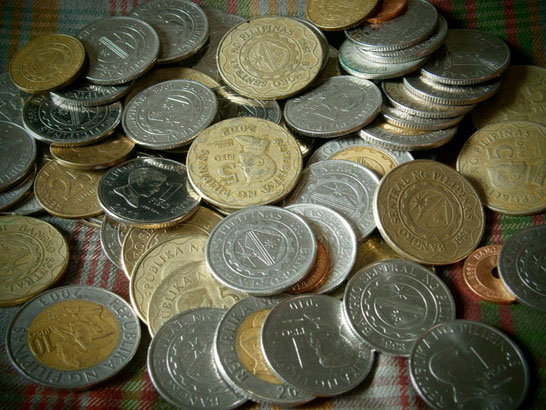
See, at the start of the year, my father would collect 5- and 10-peso coins and keep them in a big jar. Each time he got those coins, they would end up in his Christmas jar. He'd collect until December 24, and then we, his kids, and grandkids later, would be tasked to count how much he was able to accumulate in that period.
I had to ask my niece, because it was she and her two brothers who've been doing the counting in the last years prior to Dad's passing. She said it was a low of 3,000 pesos to a high of 6,000 pesos. That's a lot!
So, once the coins have been counted, they go into a container that we lug to wherever the party is being held. When it is my Dad's turn to give away cash to the grandkids (only), he would have them line up - smallest to biggest - and when it was your turn, you had to dig in and take as much coins as your two hands can hold! But that's it. No second try.
So, of course the parents (usually dads) of the tiny ones would do it for their kids and grab one handful to howls of protest by other parents whose kids can get coins on their own. UNFAIR! Hahaha!
The older and bigger the kids got, the more they naturally took as their cash prize. If there are still coins after everyone has had their turn, a round two can start, but this time, only the kids able to get coins by themselves can participate. And usually, since the coins are running out, it is the smaller ones who get to clean out Lolo's container.
After Dig for Coins game is over, everyone sits down and counts their loot. You really can't tell who will get more because sometimes a kid with a bigger hand gets mostly the 5-peso coins, while a smaller kid would be lucky and bring out more 10-peso coins.
Source https://gulfnews.com/lifestyle/community/13-quirky-filipino-new-year-traditions-1.1546005499753
I think there are 20 kids who partake of those coins, so the take-home for some can be quite substantial. And they love it! They might have received a few hundreds from generous uncle, but there is so much more fun earning their keep, so to speak.
The tiny chubby hands don't get as much as those with big hands and long fingers. I remember one nephew, who's quite competitive, dunked both his hands at the same time and amassed a mountain of coins, which he successfully balanced and brought out of the container into a bag.
Of course there were shouts of protest. But always in good fun. And whether we admit it or not, kids really much prefer coins than paper money because they jangle in the pocket, although the bigger ones can be quite heavy.
So, I am fairly certain the nephews and nieces miss this cash giveaway of my Dad. And with only my aunt living, they don't quite enjoy lining up before uncles or aunts for the cash giveaways. And I totally understand why...
I am not sure if we'd still get to hold this annual Christmas reunion. People seem to have places to go, or would rather be, and it's no longer fun when the whole clan is there on December 25. When traditions are no longer observed or honored, there is a pinch in your heart that makes you melancholy.
I wonder how my grandmother feels with this happening... she'd be mighty upset too. After all, it was a tradition she started and wanted to go on... But life happens, and people's priorities change.
Anyway, a blessed day to everyone whether you are enjoying Christmas and having a blast, or just ruminating the day away...
Deluge at Christmas
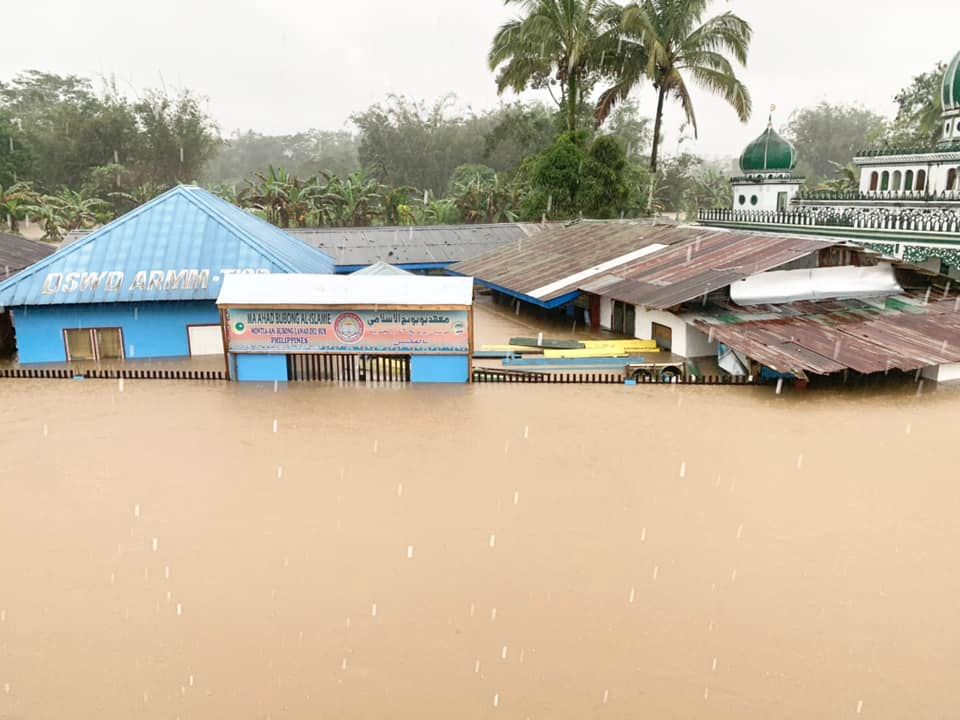
It has been raining nonstop since last night. The metro wasn't really in the path of the typhoon (Odette/Rai) that whipped through the country and ravaged several provinces in the Visayas and Mindanao. But there is a northeast monsoon affecting our part of the country, thus the rains.
Hopefully, it will letup later, although the still-gloomy skies make it difficult to believe it will, even when rays of sunshine peek now and again. My alarm went off the usual time set for weekdays but it was difficult to wrap my head around the time because it was so dark when usually there would be a glimpse of the sun in the horizon.
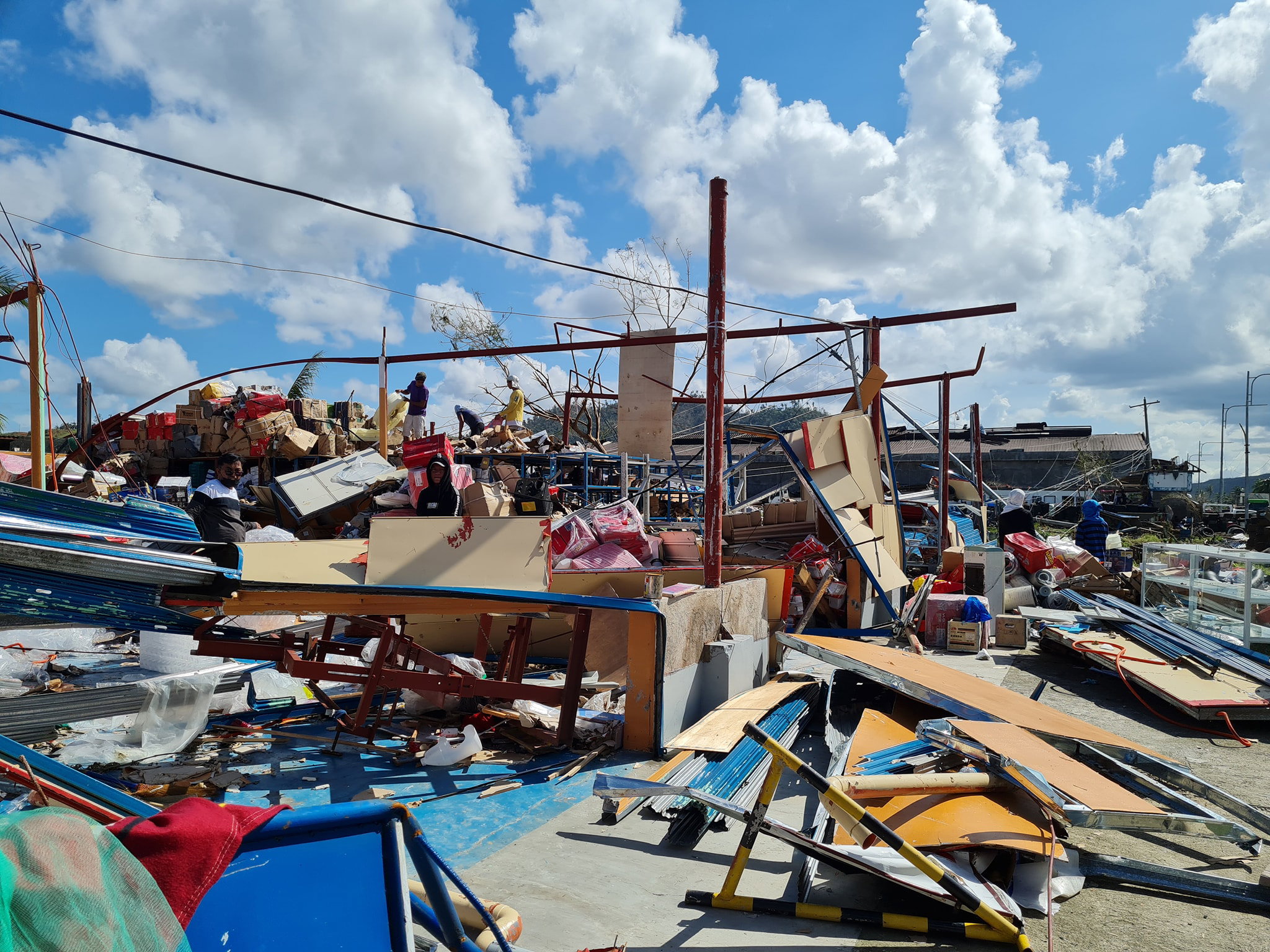
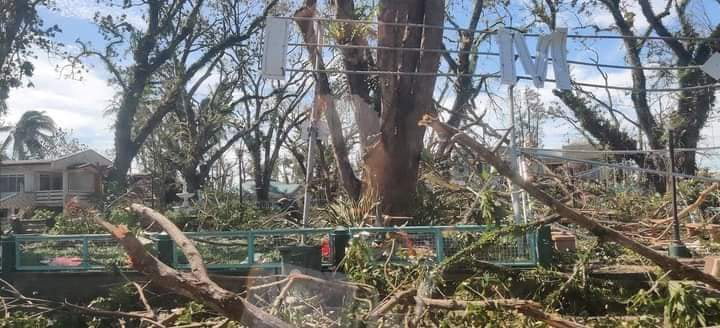
Going through my news feed and reading about the destruction left in the trail of Odette dampens the spirit. The island of Siargao, in the province of Surigao del Norte, raved about by residents and tourists as paradise, looks to be one area that suffered the brunt of the storm. Its mayor said 99 percent of Siargao's 180,000 population was affected by the typhoon.
Wiped out
Another town in Leyte province, Sogod, saw 4,000 homes totally damaged by a 5-meter storm surge. While the number of fatalities isn't in the thousands, like previous killer typhoon Yolanda (Haiyan) in 2013, one death is still one too many.
In the aftermath, and once assessment of damage is completed, loss to properties, livelihood, and agriculture will likely be in the billions. But more than this, it is the thousands of families who will be left without homes and their possessions that is heartbreaking.
While we have been fortunate never to have experienced such destruction and loss, even when strong typhoons make their way in our area, I have seen my share of what a powerful typhoon or extreme flooding can do and leave behind. And it is not through pictures or the Internet, but in real life.
Heart wrenching
The years of newspaper coverage gave me much of my first-hand experience in witnessing typhoon aftermaths. Even when you're not actually on scene as it happens, seeing what it leaves behind - despair, fear, hopelessness - can cut through you.
It can be very emotional having to listen to survivors tell their tales, imagining the horrors they faced as waters seeped through their homes, rising or gushing in as the case may be, watching their possessions get washed away yet having only to think of clutching at a branch or some door jamb to prevent being swept into nothingness.
Only someone without a heart will not be moved by such experiences delivered in raw and breaking voices, the fear still visible in the eyes of victims while recounting their ordeal.
Why Christmas?
But even more heartbreaking is that all this destruction happens around Christmas time. Especially at this time when people have become more hopeful that things were starting to improve and they could slowly pick up the pieces of their lives already shredded by a pandemic.
My most recent witnessing was in December 2019 in Tacloban City and Samar. Christmas was bleak for the residents there. Typhoon Ursula paid them an unwelcome visit on Christmas Day.
Can you imagine having to panic the night before and on the actual day because you had to secure your belongings, to keep them dry in case your home gets flooded, or to have to think if you can still get out should waters rise, or if you can clamber to the rooftop and be rescued? Power was cut off, water, too, in some areas, and worse, no telecom signals so you're cut off from the rest of the world!
Meanwhile, across an ocean, families are getting ready with some feast they will partake of, or dressing up, and exchanging gifts.
The airport was jampacked when we got there on the 26th, because several flights had been previously cancelled but everyone who had been planning to fly on Dec 24 and 25 were determined to still head home. It was nearly a 2-hour wait just to check-in and by the time we were in the departure lounge, it wasn't very long before boarding time.
When we landed in Tacloban City, grateful for cousins who came to pick up all eight of us, most of the storm debris around the airport had been cleared to allow the unhampered entry and exit of vehicles.
Vestiges of the Ursula were still around on our drive to downtown where our accommodations awaited us. Fallen trees, pieces of wood, galvanized sheets, leaves and branches littered the streets but had been swept aside to clear the roads.
Our supposed venue for the family get-together, an open space in my cousins' farm, was no longer an option. Aside from threats of rain, the grounds were wet and muddy, and there was some slight damage to the houses.
Traumatic devastation
Moving to an enclosed venue was easy. And we managed to hold that much-anticipated clan reunion, amid stories of how the folks there were shaking in their booties as Ursula pummeled through town, triggering trauma and memories of Yolanda.
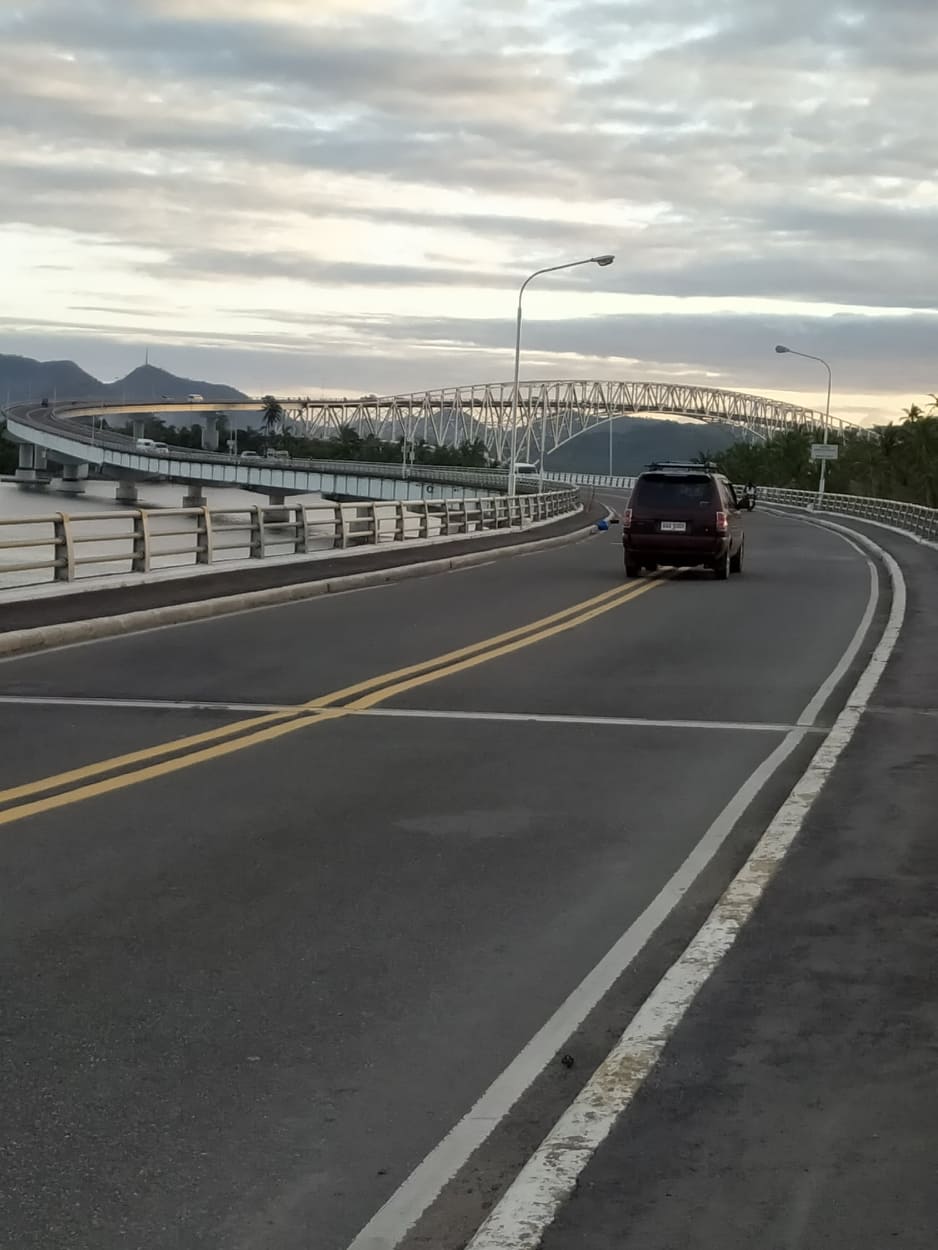
It was, however, our drive through Samar (just across the long-spanning San Juanico Bridge) to get to the town of Balangiga, when we did actually see what the typhoon left behind that was deflating.
There was this stretch of highway where we passed by homes, many of them flattened, roofless, or structures mostly gone, that we saw people milling around, trying to go about their day, with their furniture wet and ripped lying in what must've been their living room, their kitchen exposed to strangers passing by, beds, cabinets broken and personal belongings strewn on the ground.
Seeing all this as the van quickly drove past made you swallow hard thinking of the misery that those people had to endure on a day that was supposed to be merry.
Okay, those who live in that part of the country, even our relatives, are aware they will always be in the path of typhoons. But in the last decade or so, these tropical cyclones have become stronger, more vicious, and usually enter and make landfall the week of, or close to Christmas Day.
Since Yolanda and their harrowing experience, they've learned to prepare to protect their homes and to stay safe, but are still never ready for how it will make them feel or behave once the typhoon actually hits and their memories are triggered.
Tacloban City was not directly hit by Odette, but it still caused damaged. Power was out, and telecom signals were weak. But a day or two after, these were slowly being restored. Damage wasn't very extensive there. But my cousins and aunts still could not brush off their anxiety and worries.
How much more the people in Siargao, in Sogod, Matalom, also in Leyte, Bohol, Cebu, Bubod in Lanao del Sur, and other parts of the country that did not escape Odette's fury? Without homes to return to, their possessions gone, what will Christmas mean to them?
I pray that in the near future, our country and my countrymen will be spared from Mother Nature's wrath around this time of the year. For the folks, especially those living in vulnerable areas, to get to celebrate the holiday season free from worries about having a roof over their heads, food on the table, and clothes on their back. The money and opportunities will come. But hope, that things are good or will be better, should never not be taken away from them.
*Lead image from the FB page of MDRRMO-Bubong, Lanao del Sur*
Of cheese and bread
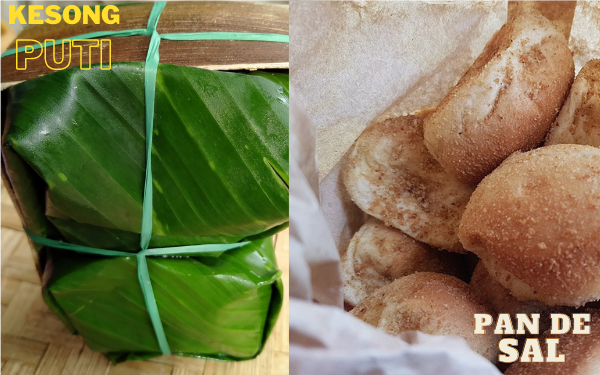
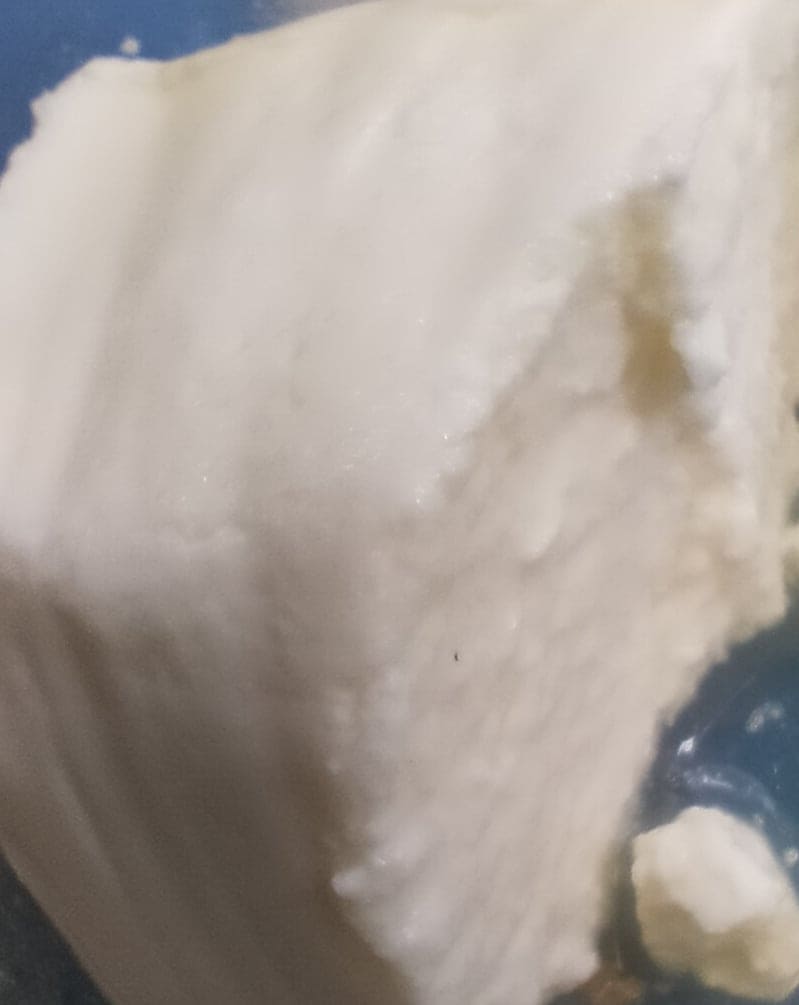
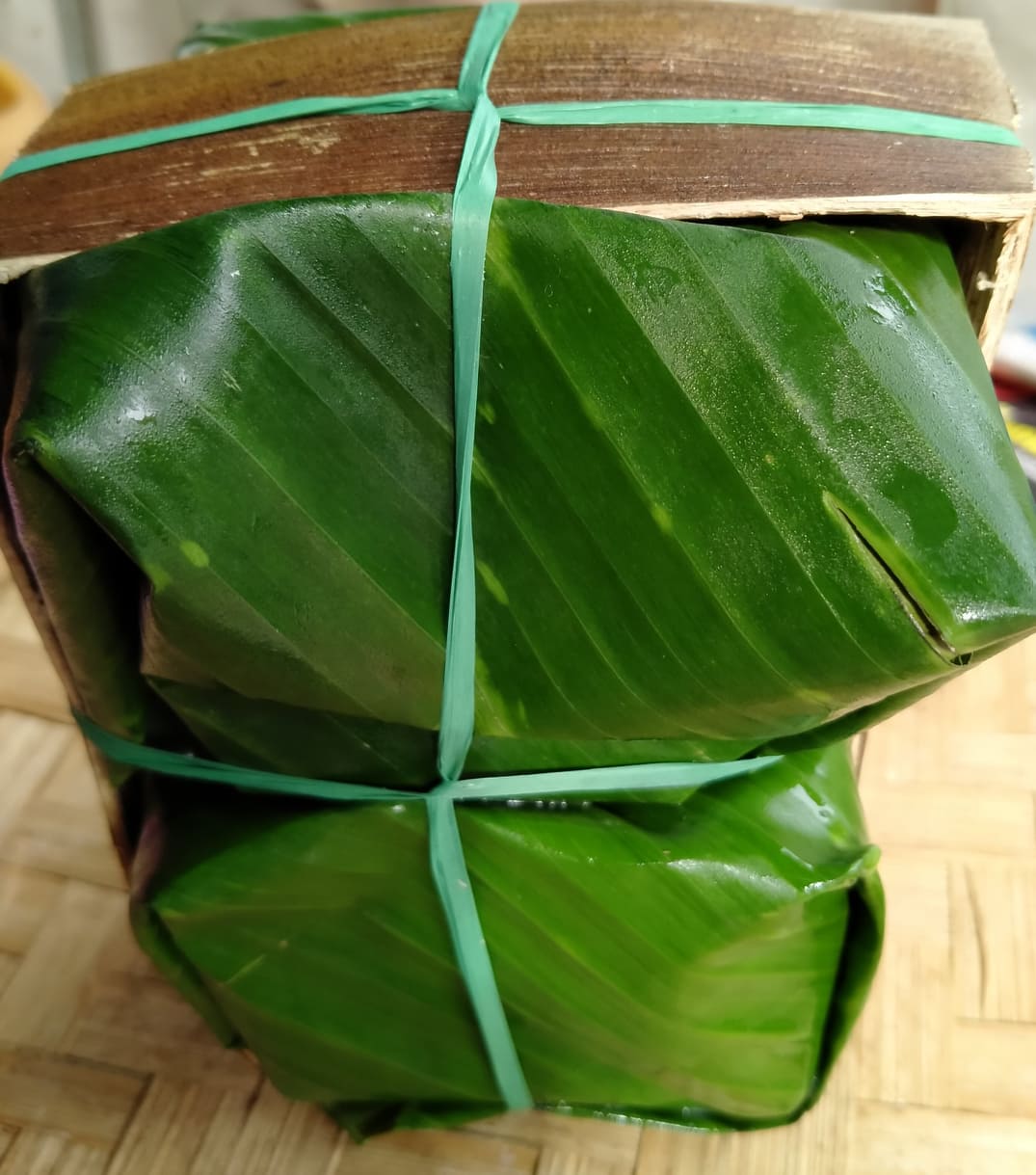
Just had breakfast. And I enjoyed it. Nothing fancy, just *kesong puti* (white cheese) and sunny-side up egg, the yolk of which broke. I usually make perfect sunny-side ups, but today... It doesn't matter. I still savored it. The rice was a bit drier than usual, but somehow, it went perfectly with the egg and cheese.
The cheese, imported from Sta. Cruz, Laguna (courtesy of Gil's Kesong Puti), is something I haven't had for almost two years. Yeah, it's the pandemic. But it tastes the same. And it's something you miss, and crave for.
Oh, it's made from carabao's milk, fresh everyday. It's not available all hours of the day. Two o'clock, the salesman will tell you. If business is slow, you can probably have what's leftover the next morning. But it usually doesn't last that long. So what we used to do is upon arriving in the morning, we drive to Gil's and place our order. Just in case it goes quickly, and it can, we've reserved ours for pick-up right before we head home.
So for the last two mornings, I've been having my fill of *kesong puti* and fried egg. And I don't mind doing it on repeat. Besides, keeping the cheese longer means losing out on its freshness. So the faster it's consumed, the better. And we'll simply have to wait for the next trip to get more.
Why am I so hung up on *kesong puti*? Because it's Dad's birthday today. And he loved it, and introduced us to this product that his hometown is known for. In marketing parlance, it's the OTOP - One Town One Product - that the town showcases during trade fairs.
Yes, there are other kinds of *kesong puti* elsewhere in the country's many, many provinces, and it's all different. Besides, it's not their OTOP as far as I can recall. And I don't enjoy it as much as Gil's.
Come to think of it, if it's not made by Gil's, I really don't enjoy it all. When we were much younger, our go-to *kesong puti* maker was a lady, Maurita, and she supplied us with the cheese. It was always like treasure hunting to find her "store" because while it was along the highway, it was so nondescript and so easy to miss.
Truth is, there is no actual store. For any of the cheese makers. They're all home-based. There are small stalls along the street, advertising the *keso*, and if you stopped by when someone was manning it (usually from 2 - 4 PM), you place your order then wait and pay.
I think Maurita was among Dad's many relatives, so many times removed. But as she aged, and eventually passed on, we had to look for another supplier. And someone recommended Gil's. In fairness, they produced something similar in taste to Maurita's. So, there!
It's very soft cheese, and will go good with either rice or our favorite *pan de sal*. If you're on the go, just slice and stick it in between the opened bread and get your fill. But it's so much better sitting down at the breakfast table savoring it early in the day with whatever carbs you choose to go with it.
And Dad preferred it with rice and sunny-side up. He had this habit - which required perfectly cooked sunny-side up - where he would neatly cut up the egg with the yellow yolk flowing like lava, then mix it with steaming hot rice until all the rice is coated in light yellow, thin strips of white visible. Then he would scoop up cheese and enjoy.
So simple, right? But he loved it. I could tell just by watching him eat. And he cleans up his plate in no time, maybe sipping coffee after, to wash down the meal. I especially enjoyed those moments when we were at the farm, with its idyllic environment.
*Pan de sal*, freshly made, is another food memory. Or the monay - another kind of bread that is a bit sweet and slightly firmer than *pan de sal*, which are tiny rolls, topped with slightly salted, finely ground bread crumbs. They're soft and fluffy, and perfect for dunking in hot coffee.
It is most everyone's favorite in the province. You had the *pan de sal* peddlers tooting their horn as they biked around selling hot bread that gets sold out before 7 AM.
Source https://commons.wikimedia.org/wiki/File:Pan_de_sal_(Philippines)_02.jpg
It used to be very cheap, but with prices of flour and gas and other ingredients rising, it had to go up, too. I can get a decent *pan de sal* here in the city for 4 pesos (USD 0.08 ) a piece. Two to three would fill you up.
Now back to breakfast... dunking *pan de sal,* yes. So, you've a cup of coffee in front of you and a couple of *pan de sal*. You tear off a piece of the bread then dunk it once or twice in your cup and straight to your mouth. I liked eating it with a little butter slathered before dunking and the taste was delicious!
Of course my father did that, too. And would be content after two or three pieces, with *kesong puti* on the side.
Alas, as I got older I realized coffee didn't sit well with me. Whatever kind. It would make my stomach roil a little. So I stopped. If I'm in the mood for some *pan de sal* dunking, I do it with hot choco or some chocolate drink. And that satisfies my craving enough.
Life is really simple... We just over-complicate things. We want more when we don't really need much to be happy. It's true when you strip down your life to the basics, you find it easier to survive and be content. And enjoy life's pleasures.
Will you look at that... remembering Dad, and *kesong puti* and *pan de sal* somehow brought me joy today. I am blessed!
*Lead image created with Canva*
*Images, unless otherwise with source, are original*
Missing joy
It was December 1989. Yes, Christmas month. My memory is hazy if she suffered a stroke that month. Perhaps. What is clear is that she wasn't going to be discharged before or even on December 25.
Imagine spending Christmas in the hospital. But spend Christmas Day in her hospital room we did. It must have been the holiday spirit that made hospital staff turn a blind eye to the roomful of family that didn't want to leave the aged matriarch alone on this day.
I'm thinking there must've been at least 20 people in that private room, which was spacious enough but every available space seemed to be occupied. The nurses who checked in regularly had to say "excuse me" every time they came in and made their way to my Lola's (grandmother) bed.
Yes, it was probably a shock when they finally realized that the number of people inside that room kept multiplying. Then again, it was Christmas. How can you shoo away family when they obviously stabilized the patient, who was paralyzed and unable to speak?
See, my grandmother had this tradition for her family - she had four sons and their young families, and an unmarried daughter and son- to gather together on Christmas Day and ever since I can remember this was something we had been doing every year without fail.
By this time, my grandfather had passed several years already but it was an event Lola looked forward to. It wasn't as if we didn't see each other regularly because two of her sons and their families lived in the same compound, while the other two were in the same city, which was just about half-an-hour's drive away.
Still, the Christmas get-together was special, especially the exchange gift part. As we kids grew older, the mechanics was to secretly choose one from the whole clan to give a gift to on Christmas Day. This often turned out to be hilarious because the jokers and pranksters among us would end up giving silly gifts.
There was even a song that we used to sing while hunting for the secret recipient.
"Love my monito, yes I do... Love my monito, yes I do... Love my monito but I won't tell who!"
One person usually starts the gift-giving session, with everyone seated in a circle as the giver goes around and identifies the person he or she picked and everyone singing loudly. Once the recipient has been identified, the two of them go around the circle again to search for the next recipient until everyone has had their turn to get their gift.
Other than a minimum price for the gift, there were no categories as to the kind you could give, which is why it can turn out to be rather silly. At the end of the Monito round, we were all supposed to wear or use whatever we got as gifts and had a grand picture-taking session. Lucky for those who got stuff that actually fit or could be used because always, there were those who got outrageous gifts, which made for the laughs.
Unfortunately, since we were in a hospital with our grandmother, we had to skip the gift-giving session that year. We just brought food, played games while trying to be quiet so as not to disturb the rest of the floor. Of course, many times we would get loud and be shushed!
We ended up telling stories instead and I do recall the younger ones eventually sprawling on the floor to sleep as the night wore on. I think since we had settled down, the nurses didn't have the heart to throw us out that night. We did end up leaving after midnight and by then Lola was already fast asleep, a faint smile on her lips.
Spending Christmas in a hospital room, however you try to make merry, is still heart wrenching. But you simply have to be grateful to even be given that chance to be with family and loved ones on a day that is supposed to be about love and family.
When Dad had to be rushed back to the hospital two weeks after being discharged, I pleaded with doctors to at least discharge us on Christmas Day. We did share Christmas Eve dinner inside a cramped room, but it was just immediate family and the caregiver.
By God's grace, we were able to leave for home around 6 PM of Christmas Day. And like I related in a previous post, the whole family was present to welcome Dad back, to what would be his last Christmas before he finally succumbed three months later. https://read.cash/@zolabundance2/painful-christmas-fb4f8942
Truthfully, it is a hazy memory which I would consider my best or most memorable Christmas. And that makes me sad.
Perhaps the loss of my sister and father not a year apart is clouding my judgement or memory. But I do recall the laughter during those exchange gift sessions. And I guess I have to hold on to those memories, however long ago and fleeting.
I have one prayer for this Christmas... that I may find joy again, that my heart will be filled with true joy, not just because it is the season but for what it represents.
*All original images*
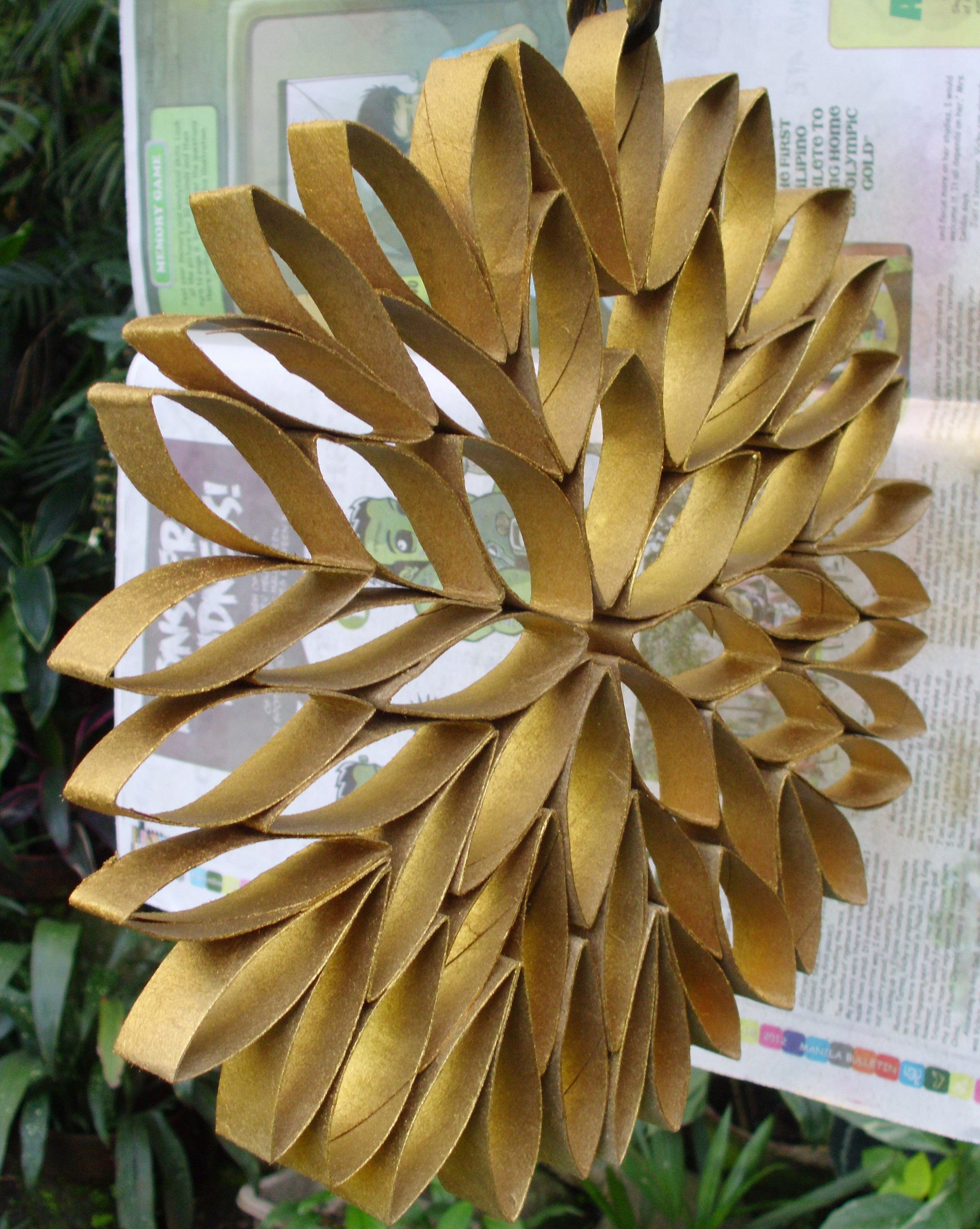
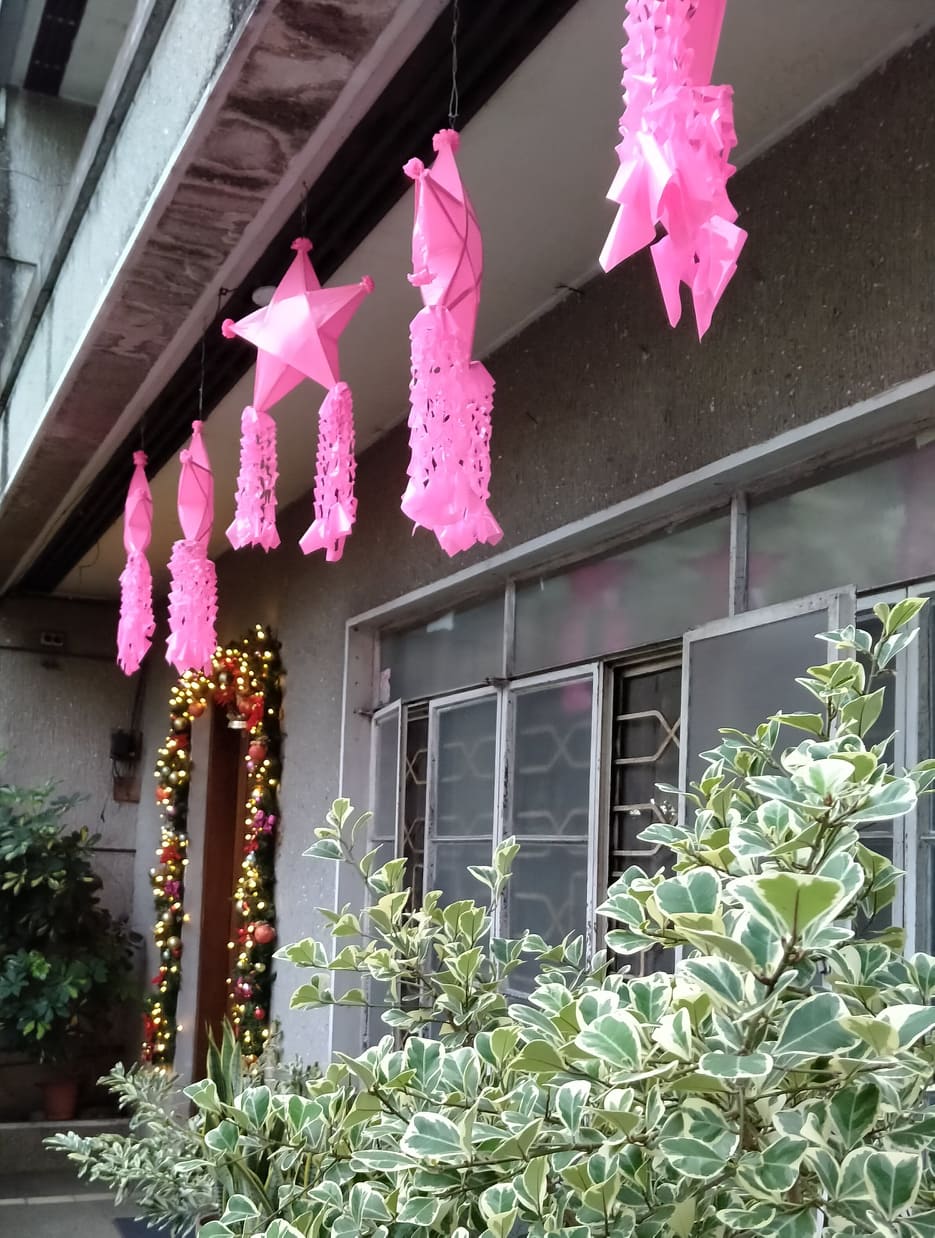
Okay, it's been quite a busy week and days and I've been remiss expressing my gratitude to wonderful people who continue to support me here at read.cash. So, without further ado, a huge thank you to the following:
@gertu13 (love reading your stories); @Eylz2021; @Pichi28 (big mwah to you!); @Bjorn; @foryoubtc09 (appreciate your coming onboard); and to the every busy but generous @emily2u!
The mall magnet
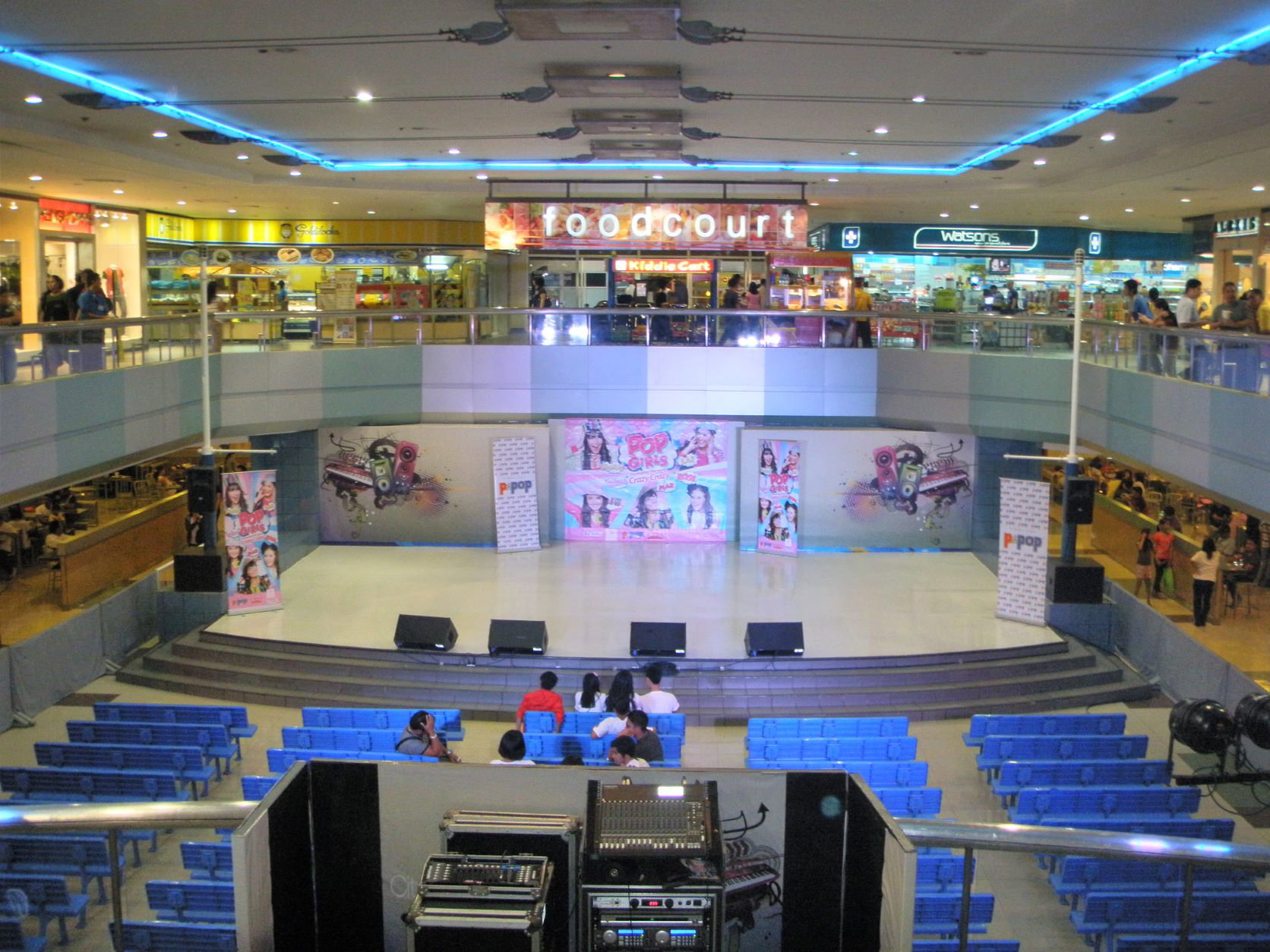
I confess... haven't set foot inside a mall since the hard lockdowns mid-March 2020 due to the pandemic. The last time I did was March 1, to celebrate my mother's birthday.
Do I miss it? Nope! Firstly, because I don't really like going to the mall. I only do because I need something that's only found there. If it's to dine out, okay, but that isn't everyday or a regular activity. Otherwise, I steer clear of them. And Christmas season at the malls? Horrendous!
If I go to the mall, I will do so when it opens and be out after my errand is done. Parking is a chore, and expensive. And since I like to shop in peace, I don't care for crowds.
In this country, people live for malls. Even when they don't spend. It's the cool air, no sun to burn the skin, the free Wi-Fi, the merchandise meant to entice, and that feeling of being seen in some posh place that draws them.
I am a park person. Or some open space. I rather like watching a movie in a near empty theater. I choose restos that have a few seats because it means I will be served quickly and can eat in peace.
When some relative from the US or Canada visits and are brought to our malls, their jaws drop at the sheer size of the establishments. It is mind-boggling to them that our malls are huge and crowded because back home, it's never that, especially on ordinary days. Besides, I don't think their malls are of the same size.
Why so massive? Well, the retail giants that put malls up want everything to be there - food, supermarket, cinema, recreation, concerts, arcades, medical and dental clinics, spas, hardware, and they even house telecom outlets. So, head to the mall and it's practically a one-stop shop.
And mall developers have become even smarter, offering to use their establishments as entry and exit points for train stations. This way, they have a captive market.
So, when restrictions were lifted and most everyone can go out, the first place people headed to was... the mall. It's now back to crowds, and heavy traffic. Are basic health protocols being followed? From the looks of it, not really. How can you observe physical distancing when so many people occupy limited space?
Thankfully, the number of infected by the virus is down, hovering around 500, compared to the thousands three months ago. Are the numbers real? Who knows? Government has been ramping up vaccination, and being prohibited from enjoying dine-in services is an incentive for many to get the jab.
Economic managers apparently think that malls are drivers of the economy and have been pushing to open these months ago. But is that really true? So many have lost jobs or their livelihood as a result of the pandemic. Most are simply getting by, so how much they will truly contribute to pump-priming the battered economy by way of malls is the question.
If more people had jobs or sources of income, then they can be active drivers of the economy. Otherwise, it is only the rich and those with enough money to spare that will get the economy going through mall activities.
I remain uncomfortable going out and being in crowded, enclosed spaces primarily because most people take for granted that there is still a virus in our midst that has yet to be contained. They feel bolder going back to the old normal because they've been vaccinated, without considering there are still risks.
Even if the minimum health protocols are lifted, I'm probably keeping my mask on and still observe physical distancing of some sort. It is this absence of discipline, which I am certain was a factor for the spike in cases months ago, that pushes me to show my community that I can and do respect others and are considerate of their safety and comfort, pandemic or not.
As to malls, entering one unless absolutely necessary, isn't in my horizon. I shied away from movie houses for many, many years. And with cable and Netflix, I can watch those films later, in the comfort of my home.
Meanwhile, I will stick to parks and open space - heck, the cemetery sounds quite appealing where I get to visit our dearly departed - and enjoy fresh air.
As much as I want the economy to recover, I also want my environment, my community, my country and this planet to be safe. We're already suffering the consequences of our disregard for nature, so I'd rather do my share to keep my fellow human beings safe and healthy.
Discipline, compassion, respect, decency. It's what has to be brought back to this country (and world even) to set things right again.
*All images are original*
Ever been starstruck?
Harry Potter movies are on the Cartoon Network. I've seen them all, some more than others. And of course, I've read all the books. J.K. Rowling did a marvelous job creating the characters, and just reading the books, her words painted a vivid picture in your head.
However, I have to hand it to Warner Bros, which produced the movie versions, for finding the right actors to portray the beloved characters. Eight books later, the image in your head of Harry, Hermione Granger, and Ron Weasley will always be of Daniel Radcliffe, Emma Watson, and Rupert Glint.
Which brings me to what I actually want to write about: feeling starstruck when face-to-face with someone extremely popular. I am taking off from an article where Filipino actor JC Santos recounted his experience running into Daniel Radcliffe when he was in the US.
Image Source https://commons.wikimedia.org/wiki/File:Daniel_Radcliffe,_2011.jpg
JC said Daniel asked how to find a pharmacy. So enthralled was he seeing Harry Potter in the flesh (never mind that he was way, way older then and no longer a boy), that he stammered in reply "Do you want me to take you there?" And he ended up escorting the actor to his destination, all the while speechless, then keeping him company as Daniel did his groceries.
Lucky guy, yeah? And the envy of many who read his anecdote and are fans of the Harry Potter actor.
I am sure that running into celebrities, especially the big-name ones, will have most people familiar with them, either giddy or tongue-tied. There's that effect of seeing them in your face without a movie or television screen separating you and it can be quite heady.
Have there ever been moments when I got starstruck? I can't quite call it that. Feeling the jitters, yes. But never in fan-girling mode, even if it was someone I really admired or looked up to.
And every time I hear of, or read about, anecdotes of people freezing up or getting fluttery in the stomach after encountering celebrities or important personalities, I can't help but think why I don't feel the same under similar circumstances.
At the top of my head is having covered presidents - three, in fact - and sitting across them, asking them questions, or just being around them when they don't wear their head-of-state hats. That can be pretty intimidating yet enjoyable as well. But since not everyone has that privilege, I'd like to think that's a feather on my cap, however edgy I may have felt at times.
Meanwhile, working in a newspaper, there have been several occasions of being around or introduced to celebrities who visit the office, and seeing them up-close somehow diminishes the glitter of their star and you just see people, whose jobs require them to be glamorous.
And to their credit, the more esteemed the celebrity the more ordinary they behave when people aren't fawning over them. So, that's probably one reason that keeps me from going all out as a fan. I see them as regular folks, like me and you, just well-dressed and made up.
Truth be told, I ended up more elated receiving answers to experimental fan mail I sent out as a teenager, even when the celebrity responding wasn't necessarily one I was a fan of. (The point of that experiment was to see who among celebrities reply to fan mail, and if they replied personally or sent out some generic, machine-generated response.)
Having rubbed elbows with important people (one of my favorites is being personally served by the Speaker of the House of Representatives with pasta he actually cooked for journalists, and later scooping more on my plate while he regaled us with stories), it kind of takes away the being starstruck or awed with VIPs and celebrities.
Besides, whenever I happen to be around popular actors or performers, my brain shifts to observation mode. And save for one or two actors who looked like they wanted to attract people's attention, most just go about their business, either trying to be incognito or not caring at all if people stare at them. I do appreciate those who take time to oblige a fan or two with a photo or autograph (that's from long ago when mobile phones were non-existent), and taking time to chat, however briefly.
I have also been around celebrities, who wear the badge all the time, and I don't much care for that, however skilled or talented they are. I appreciate those who do not behave like they were popular or think they are despite their achievements.
So, I am still waiting for that starstruck moment. And I really don't know who that person would be that will make me feel that way. But the more relatable the person, the more normal they present themselves, the more it makes me want to meet them.
*Images from Unsplash* (except with source cited)
Gone are the greeting cards
It was around 9 AM when our long-time neighbor (who thinks we're a general store) called up asking if we had a spare greeting card. My first thought was a gift card (you know, TO: FROM: Love...) but she was specific: the usual greeting card, even if it was blank.
Turns out my mother did have one! An old one, judging by the envelope's color and the fact that its flap seemed stuck. But never mind those stuff, she'd steam the envelope open. The important thing is there was a card she could use.
Several hours later, someone rings the doorbell and it's our neighbor's driver handing over a greeting card to replace the one Mom sent over earlier. I didn't inspect it but from afar saw that there was a flickering red light highlighting the words "Happy Birthday!"
Mom promptly crossed over to the neighbor's house and gave it back.
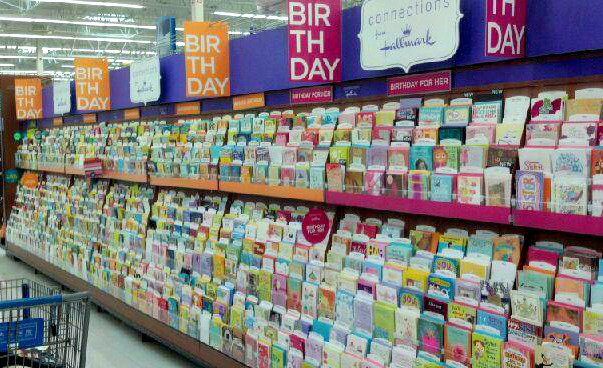
And this funny incident suddenly made me think about those greeting cards, specifically Hallmark cards, that were a huge thing even up to the late 90s. I confess it's been a long time since I've shopped for one. With virtual cards and emails and even social media sites, greeting cards seem to have somewhat faded. Kids today probably don't know what these are.
When I was much younger and my favorite haunt would be a bookstore, I would spend a great deal of time browsing through the greeting cards section, checking out the artwork and the witty, dreamy, sweet messages for every occasion imaginable. And yes, I would often hoard them - well, I'd pick three to five cards to buy each time - so I'd have some handy to send someone when the time came.
Source
Those were the days when snail mail was still a thing, and receiving letters and cards was exciting and brought a smile to our faces.
In fact, there was a time when I thought of applying for work with Hallmark (or any greeting card company) or sending some silly poem or greeting for printing on their cards. While I would never be credited for it, I was certain seeing my work on some card, with some pretty artwork would be a very proud moment.
That would be a very cool job, although at some point you might dry up or get writer's block after churning out so many messages that some individual would be passing off as their own to someone they cared about or was enamored with.
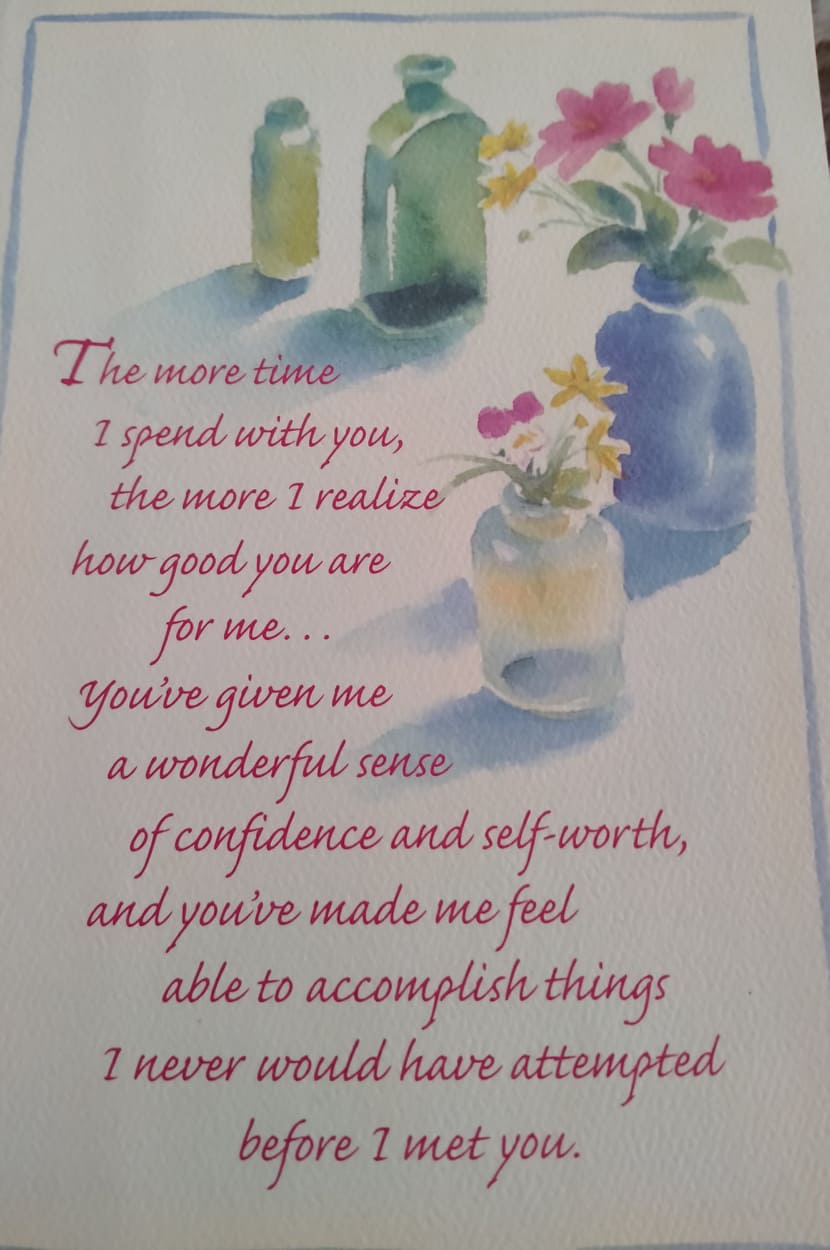
Greeting cards were precious. As much as I loved the creative and meaningful messages, I appreciated them even more when it came with the sender's own message in their handwriting. Yes, greeting cards demanded you sign it with a pen, or write on it (at least the Dear part, and Love closing) to add that personal touch.
Here's a confession: I hate it when my mother asks me to write on a card for her, usually birthday cards. Her excuse is I had a better, more legible handwriting. But the truth is she felt inadequate writing down her own message and would urge me to write something more, then sign her name for her. Ugghhh!
Like handwritten letters, greeting cards are personal. Even if you're just writing down a one or two-liner, doing it yourself makes it more special for the recipient. I always thought it was cheating when you couldn't even pen some short message on a greeting card on your own, or worse, sign it yourself!
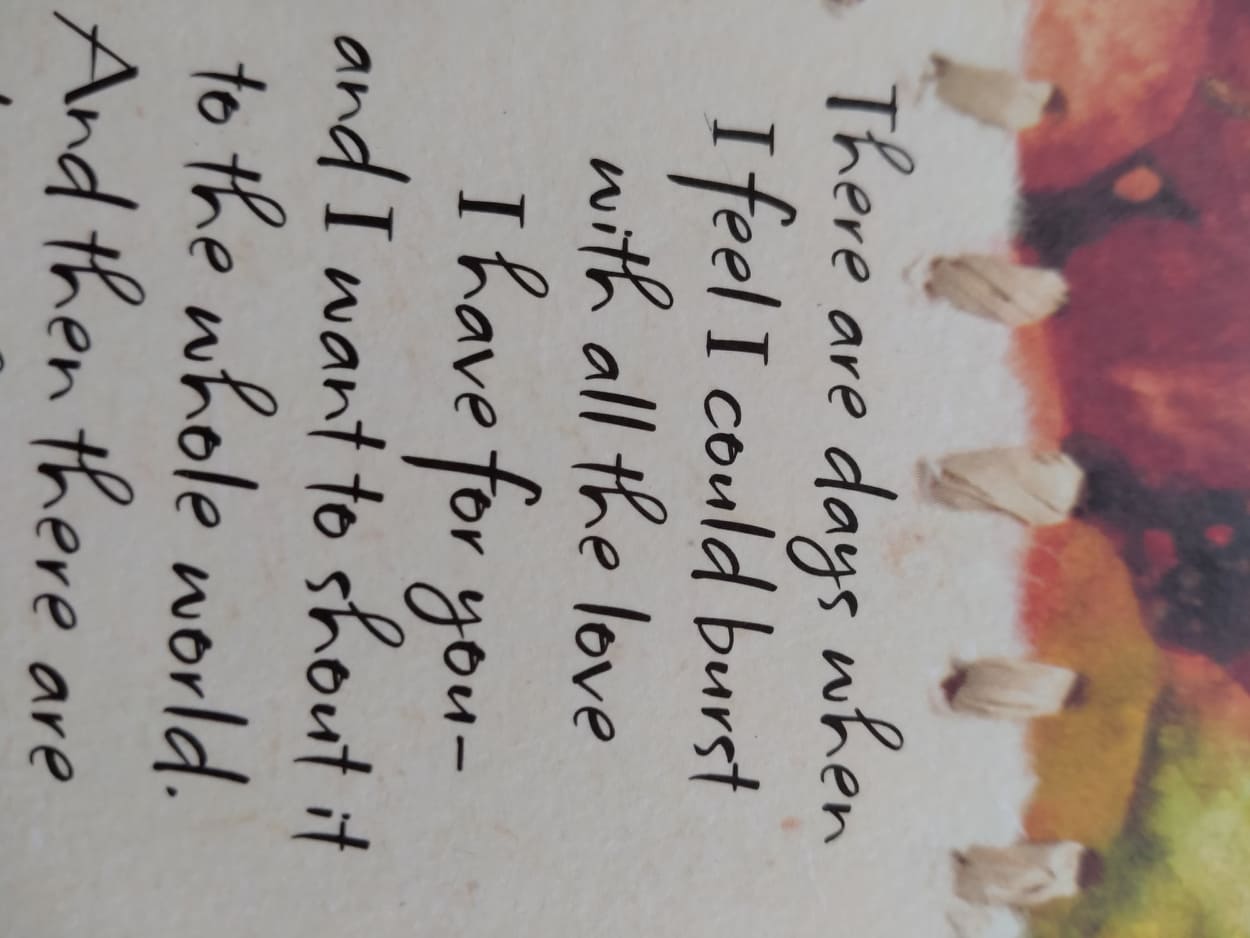
When the idea to write about this topic formed in my head, I went in search of old greeting cards I received to share as visuals. I know I've disposed some of the cards I got over the years, but I did keep more than a handful.
I have a healthy respect for those writers who sold their souls to make a living by creating those thousands of messages that people used to lap up and feel like it was exactly what they wanted to say. I wonder if they kept churning them out with little to no feeling after the first 10 or 20 that they produced.
Still, with emotion or not, I will always be in awe of such talent because it is not easy to create and string words together that will sound really, really heartfelt and even witty. Come to think of it, when I pen my own message for someone on a special occasion it takes me quite a while to complete it.
I know there are still greeting cards in bookstores, but it's no longer an extensive selection as it was before. Much like stationeries, which isn't that hot either. When things are really back to normal, I just might go check them out again. It would be interesting to see how the writings have changed over the years.
And if you've never sent anyone a greeting card in your life, it might be a good experience to try it even just once. Because if I remember it right, there is as much joy in giving one as there is in receiving it.
I know, it can be quite costly, but it's a worthwhile expense. What you'll get in return is priceless, I guarantee you.
Remember, go over all that's written in the card. Read it aloud even, just to make sure it's something you want to be saying, and you actually mean what's written there. The key to finding joy in greeting cards is sincerity. It was created for every person who feels they can't find the right words to say to someone else. So, like buying shoes or clothes, you need to pick the right one for that person.
Yes, social media can get your message across in real time, and for all the world to see. But you're only actually greeting them with the usual stuff. There is still something very sentimental about receiving a very personal greeting that says so much about what another person feels about you.
Life isn't always a race. Savoring moments is more important, because those are what last. Taking time to really say how or what you feel for another person - your parents, siblings, friends, significant other - gives so much more meaning to relationships. Sometimes, a greeting card with your signature is still better than a facebook or twitter post, or even an email.
Make someone smile, and feel good!
*Lead image: Original photo*
Painful Christmas
That first Christmas after the passing of a loved one is always the hardest, especially if this happened as the holidays are approaching.
I am reminded of the pain, after learning the passing of a dear family friend. He was a good man, full of life, and always with his plate full but enjoying every second of it.
But in his busyness, he might have missed the signs or ignored little symptoms so that by the time he was diagnosed with cancer of the esophagus, it was already Stage 4. Perhaps it was this abbreviated life that pushed him to accomplish as many things as he could in the time he was given.
My case was a bit more difficult, and to this day grips at my heart so I am hardly able to truly find joy in the holidays. I know it sounds Scrooge-like, but then again I wasn't so into Christmas years prior because of too much commercialism even as people kept saying this was a time to spread love and happiness and be grateful for what you have.
We lost my youngest sister in June. It was a swift passing, as only my sister could've arranged or prayed for. My father couldn't come to grips with that loss and instead of sharing his pain, chose to bury it inside, immersing himself in too much work.
That's the thing with holding emotions in, it can get very stressful. By September, he suffered a stroke, that left half his body paralyzed and unable to speak or remember a lot of things.
In the first three months of confinement (*we would be in and out of the hospital after that until he eventually succumbed*), there was never any mention of my sister even as all of us - mom, sister and her brood - were always at the hospital at one point or another. And my Dad made no mention of her whatsoever, so we chose to be silent about it, too.
I recall incidents in the hospital at night, when lights have been turned down and all was as quiet as can be, and my Dad would wake up from his naps and start pointing at the small dark hallway of the room as if someone was there. We would sometimes think he may have been seeing my sister.
We were finally discharged the second week of December. It would be just in time to celebrate my father's birthday, which was a week before Christmas. Celebrate we did, because it has always been him who had a party on his birthday. Unfortunately, being exposed to so many people didn't end up being good for him.
It was back to the ER on December 23. His condition wasn't as severe, though, and we pleaded to his doctors to let us out at least on Christmas Day. The clan always had a Christmas Day get-together, a tradition my paternal grandmother started and wanted continued.
He did get better and on the evening of December 25, we were on our way to the house and a party. Instead of letting people into his room, we let him stay in the living room on his wheelchair, so everyone - young and old alike - could interact with him even briefly.
That took quite a toll on him. But when inside his room, one or two of my cousins would drop in to chat a bit. It seemed like he enjoyed those moments, even if he was unable to speak.
It was the following day when I would experience the most heart-wrenching moment with my father. When I sat down with him, he suddenly lifted his good hand, palm open and was counting the fingers gesturing something.
It took a while for me to understand what he wanted to say, until he pointed to a family picture that was across the room. When I brought the photo to him, he then pointed to my sister! He was looking for her... the five fingers he was holding up was to indicate him, mom, me, my second sister and the youngest who passed away.
You know that feeling when something squeezes inside your gut and you don't quite know how to react or respond. At the very moment, it fell upon me to tell my father that his youngest daughter was gone.
As gently as I knew how, I reminded him what happened. And told him we could go visit her grave once he was stronger and feeling better. He broke down. Up until that point, I had never seen or heard my father break into tears. He sobbed and I sobbed with him as we held each other.
I will never truly understand the heartache and the pain he has had to bear all those months after her passing, so much so that he never once wanted to visit her grave even as we went every Sunday.
We held each other tight, and I know the caregiver assigned to him that day sat nearby crying, too.
Seeing all his nephews, nieces, and grandkids the day before must have triggered a memory in him to think of my sister. And why she was nowhere on Christmas Day.
Grieving our loss
I don't know if remembering his grief, the loss, made him worse instead of better. After that, we would again be back to the hospital twice for a week or two, until his last confinement of nearly a month, after which we finally let him go.
And it is that memory of December 26 that has been etched in my heart and mind since 2017 that keeps me from truly getting into the Christmas spirit in the years that followed.
So, yes, I understand how hard it can be to celebrate Christmas after losing a loved one. Because while we try to move on from the pain and grief, that exact moment when we know they're truly gone stirs memories in us, in whose clutches we are unable to break free from.
I barely had time to miss my sister on Christmas Day, she who loved the holidays and looked forward to gift-giving and wrapping, even if she did all of it for everybody herself.
And in missing her, I will always remember that fateful day when I had to remind my father of his loss and watch him come to grips with it. Which, he probably never did so he thought it was simply best to join his baby girl instead.
*Images from Unsplash*
@Bloghound, my friend!!! I am both honored and humbled for your continued and generous support. Thank you, sincerely. Be blessed.
Fingerprint erased?
It's one of those days when my brain just refuses to cooperate so I can string together words that will mean something that is worth reading. But I will force myself to write.
The ideas swirling in my head aren't coming together as I'd like so I have to table them for another day. In the meantime, let me just share about something interesting that I discovered yesterday. (*It was supposed to be TODAY but I didn't have the energy to finish the article last night*)
Government has rolled out a national ID and is encouraging every citizen from 5 years old and up to register. Many of our citizens, believe it or not, lack this vital document as proof of their identity. Without a proper and valid identification card, they are deprived of many privileges and benefits, primary of which is opening a bank account.
There are actually a number of government IDs that one can apply for but these are issued by various agencies and usually have multiple requirements which many people don't have or can't access, mostly because they lack funds.
Typically, it is the passport, driver's license, the SSS or GSIS card (social security for private and public workers) or PRC ID (for professionals) that are considered primary IDs. If you have any of these, you're good to go.
The first two not only have documentary requirements to obtain one, they also cost money. The social security cards are for free when you first apply for them, and the PRC (Professional Regulation Commission) I would think also has an accompanying fee, and has to be renewed regularly as with the passport or driver's license.
There is the TIN or Tax Identification Number card, but to date it's not the PVC type, and you need to provide your own 1 x 1 photo and have it laminated yourself for preservation.
The point is, with so many marginalized citizens who are barely scraping by everyday, applying for the many IDs from every government agency is not only tedious but time-consuming and costly.
The National ID, however, is for free and the Philippine Statistics Authority (PSA), which is tasked with this huge undertaking, has even gone around to remote areas or in places where low-income families reside, to help citizens get started.
The process can also be done online - at least the first step - while the next phase of taking individual biometrics has to be done either at PSA offices or satellite centers that have been set up in malls or establishments for easier access.
While issued for free, there are still required documents necessary to verify one's identity, although I believe it can be as simple as a barangay (village) certification that you are an actual resident in your area, and this costs around 100 pesos. You will need a Community Tax Certificate (Cedula) which costs 10 pesos or less for this.
Anyway, I do have valid government IDs and my birth certificate and this met the required documentation for the Step 2 Registration.
I find it funny that when registering online you need to set an appointment for your Biometrics because this is absolutely useless when you get to the satellite office. There were more walk-in clients than those holding appointments so it didn't matter if you had an appointed time to arrive or not - you do not get priority.
Source https://files01.pna.gov.ph/category-list/2021/08/07/philid-dfa.jpg
But I did find it more convenient that I accomplished the first step online because it meant not having to spend time filling up the form manually, and having the staff encode the data. For one, since I personally filled out the form, all information in there should be correct, including the spelling of names and addresses.
On the other hand, there is a risk that wrong or misspelled information may be encoded, which is being copied from your filled-out form and if you missed this during proofing, then it will be your fault.
The queue was haphazard so I managed to get ahead of people who weren't paying attention if it was their turn or not. The wait was perhaps 10 minutes.
Finally, it was my turn. It took a minute to scan my ID and birth certificate (and this process I could view on my screen), and another minute (because the staff inputted a wrong digit in my reference number) to pull up my filled-out form.
First was the front-facing photograph. Check. Then it was the iris scan. Cool. Check again. The last step was the fingerprint scan. Two thumbs first. It captured my left thumb but the image was unclear for my right, even when I stood up and pressed down harder. They needed to scan three times. I did mine for five because it took forever for it to successfully scan my right thumb. Oh-oh.
Then it was the four other digits of my hand. Again, the scanner refused to read my right fingers. The clerk asked to do the left hand first. While it took a few tries, it was successful. Back to the right hand digits.
It took maybe seven or eight tries but my ring finger and pinky never gave out clear prints. All failed. Huhuhu!
So, it means I've lost the clear whorls that make up fingerprints of my right hand? Oh my gosh!!! When I inspected my fingers, yup they were smooth to the touch but cracked when you looked at it closely.
The clerk just decided to make a notation and instead asked me to hold my right hand next to my face and took a picture of it. Done!
But I was very sad. Imagine, losing my identity via fingerprints. Good thing there's still my left hand.
I realized that in the last 18 months since we've been quarantined at home, I've had to do a lot of housework, primarily washing dishes and laundry, which meant exposing my hands to all sorts of chemicals and ingredients that have made my skin sensitive. There was a time that I burned the skin off due to epoxy glue getting stuck on my thumb and index finger. Plus the many nicks and cuts from chopping veggies.
Even with gloves on, the heat would make my hand sweat and chafe my skin. Water and chemicals can really be anti-skin, and I did develop an allergy for about two weeks.
It hasn't improved a lot, and it totally slipped my mind that it could affect my Biometrics. But I do appreciate that there was a solution to my "problem."
The National ID bears no signature, although most private establishments only accept identification cards with this. The PSA has been explaining that the Biometrics is a step up in terms of security because these days, so many have mastered the art of forgery and fraud, thus the need for strong authentication of identities.
Since one of the purposes of establishing the National ID system is to enable citizens to open a bank account, the government-owned Land Bank will accept the National ID for account opening.
In fact, there is a Land Bank table right outside the satellite office and even without the physical card (which will be mailed to you in a month or so), you can already open a bank account without need for a minimum deposit.
*Lead image from Unsplash*
Yolanda memories
To this day, I still cannot imagine the horror that my aunt - Mom's eldest sister - went through during the last minutes of her life. At nearly 80, she was hale and hearty, and was still taking care of her husband, a man who towered over her but was confined to a wheelchair after suffering from a stroke.
She absolutely refused to leave their home, some 300 meters from the beach, even as the winds and rain were already picking up and repeated warnings to evacuate were being broadcast everywhere.
Her daughter and grandchildren lived nearby and were ready to head out to a safer location. They were convincing the two to leave with them but my aunt was adamant. Their home had withstood countless typhoons over the years, and they always survived.
But Super Typhoon Yolanda (Haiyan) was not your typical storm that usually whipped through Tacloban City, and the rest of Eastern Visayas.
For one, it was a category 4 typhoon, which means it packed winds of up to 250 km/hour. For another, it was so strong that it triggered a storm surge - waves up to five to six meters high - that led to massive flooding.
Not tsunami
It is the unfamiliarity with storm surges that caught people flat-footed and resulted to the deaths and unrecovered remains. My cousins who experienced this first-hand lamented that most people didn't pay attention to the warnings because they didn't know what it was they were being warned about.
Had they been told it was similar to a tsunami, more would have likely understood the danger they faced and heeded the calls to evacuate and seek places of safety.
It was my nephew who was probably the last to see his *lolo* and *lola* before they were washed away by the rampaging waters. As he frantically clung to a coconut tree for dear life, he saw water rising inside their home.
Later, they would hear a witness account that my aunt and uncle were caught in swirling water, which likely swept them away, exactly where, no one knows. There were subsequent reports of their possible remains - my uncle's height in that area was not typical, which led their son to believe it may have been him.
But like thousands, whose remains were either never recovered nor identified, there was no actual bodies for us to bury. Most of the dead ended up in a mass grave. A memorial, where the names of those who perished are engraved, was erected at one of key infrastructure that served as evacuation center where 8,000 people fled to at the height of the typhoon.
Earlier at dusk today, hundreds of candles were lit on the streets of Tacloban City.
Today is 8-8. It's not an actual date (August 8) but still a day to commemorate the lives lost after the devastation left behind by Yolanda.
It is a symbol of the day of the month when the tragedy happened, and the 8th anniversary since it happened.
We lost another uncle, who mistakenly sought cover inside a comfort room which he was unable to open when the water quickly rose. When the door broke down, he was also swept away.
I can still hear the stories of my cousins and aunts about how they had to clamber to the ceiling of their house as they watched gushing water slam through the windows, the winds rip away roofs, trees uprooted and falling on top of cars as muddy waters rose quickly and swept away furniture inside the house.
They were shivering from the cold and fear, thinking how they would save themselves if waters reached the ceiling. They wanted to scream but were more anxious that any extraneous movements would cause the ceiling beams to collapse and they would fall down, injure themselves, or worse, drown.
It was before 6 AM when all this happened. They didn't sleep, hardly ate, and were running on adrenaline to survive.
Meanwhile, we who were hundreds of miles away the area of destruction, were tense watching the news and waiting for word from any of our relatives. Phones were dead, power was out and people were looking for missing loved ones, or mourning those they've lost.
It was a day after when we finally heard from one cousin, who lined up to put a call using special lines set up in the wake of the tragedy. There was still no confirmation as to the status of my aunt and uncle, and it would be weeks before my cousins finally accepted that it was futile to continue hoping they would find the two.
And it is the most painful, especially for my Mom, that they couldn't even pay proper respects and bury her sister.
And so every 8th of November, most of the folks in Tacloban have a ritual of lighting candles along the streets to remember those who perished from Yolanda's wrath and as thanksgiving for having survived and rebuilt their lives.
*Lead image: KMMLlamas*
Fruits of labor
One challenge faced by Filipinos working overseas is being able to save. The usual tale is after years and years of toiling in some foreign land, away from family, the OFW will come home with nothing to really show for all the hard work.
Well, the primary reason Filipinos decide to work abroad is to earn bigger salaries to support their families' needs and fulfill their dreams. Their monthly remittance will cover funds for the household's monthly expenses - food, utilities, and allowances for children attending school.
There are other expenses that often crop up - a birthday celebration, school projects or field trips, medical emergencies, or medical needs, and house repairs. Aside from the cash remitted, they will also send balikbayan boxes filled with all sorts of stuff - from canned goods to toiletries, clothes, small appliances and whatever else they can fit in a box measuring up to 24 by 18 by 24 inches.
If the spouse is left in charge of the children and household, it is expected they will know how to budget whatever amount is sent by the worker and hopefully save up for some big ticket item, usually a house or vehicle.
Handling money responsibly
Unfortunately, most Pinoys who head out into the unknown never have a very serious discussion with their spouse or family about managing finances. While salaries for overseas jobs, even for non-skilled workers like domestics or factory workers, will definitely be much more than what they will ever earn locally for the same work, it may still not be adequate for a family's needs. Aside from inflation, there is the fluctuating exchange rate that affects the money received.
Therefore, planning on how to handle the money to be sent by the working member is necessary so goals are identified, needs are met, and a responsible individual assigned to manage the remittance as against expenses.
And then the problems arise... and this can range from relatives who suddenly need monetary assistance too often, to children who get hooked on the good life, or the spouse who forgets how the hard-earned money should be allocated and spent.
Nothing to show for it
It is so disheartening to hear of OFWs' stories who finally decide to come back home and stop working only to find they are no better off even after five or more years of working overseas.
Yeah, they would have a big TV set, perhaps an air conditioner, and might have the beginnings of a house (if they're lucky), but among the tales is almost being penniless, like nothing happened during all those years of sacrifice being away and enduring abuses or abusive practices just to have something to send home to the family.
Fortunate are those whose kids are able to complete their education and eventually find work to help out or make something of themselves. Otherwise, the kids would either have married young or have children and end up needing support.
There are those blessed enough to meet people willing to guide and mentor them to go into microbusinesses so they can grow their money more, and will be able to come home and still have means to earn a decent income.
Sometimes, you come across an inspiring story about a spouse who honors their partner's sacrifice by saving up and surprising them upon their return home.
The story goes that the husband, who stayed behind with the couple's two children, first used some of his wife's remittance to set up a small store then later on not only saved what she was sending their family, but even added to it from the sales of their mini store.
Source https://www.pep.ph/lifestyle/lifestyle/161789/mister-ipon-ofw-misis-a4888-20211104?ref=home_default_widget_lifestyle
When the wife came back, he and the kids presented their 300,000-peso savings (mostly in coins and small bills kept in buckets instead of in a bank), plus their upgraded home, which was now made of concrete from the old bamboo house she left behind. In addition, the husband bought a motorcycle with sidecar, also for business.
All worth it
What made the wife more proud was being able to dispel all doubts by her relatives and friends about her partner being trustworthy enough to handle their finances. She didn't really make a whole lot while working in Malaysia and Kuwait, but what her husband was able to accomplish with her meager earnings was very, very impressive.
At the same time, her children have also learned the value of saving, which has been instilled in them by their father.
The key to responsible management of finances is really knowing how to first set aside a sum for savings once you receive any funds, either from salaries or profits, even if the gross amount is not that big.
Hopefully, there are more of this couple - or specifically the husband - who did his part to be able top improve their life and made his wife's sacrifice all worth it.
Better yet, may there be enough well-paying jobs in the country so Filipinos don't need to leave and work overseas, and be separated from their families for a long time.
Only when local wages, especially for skilled workers, are at a decent level will Filipino workers learn to have dignity of labor and not be forced to seek overseas employment.
*Lead image from Unsplash*
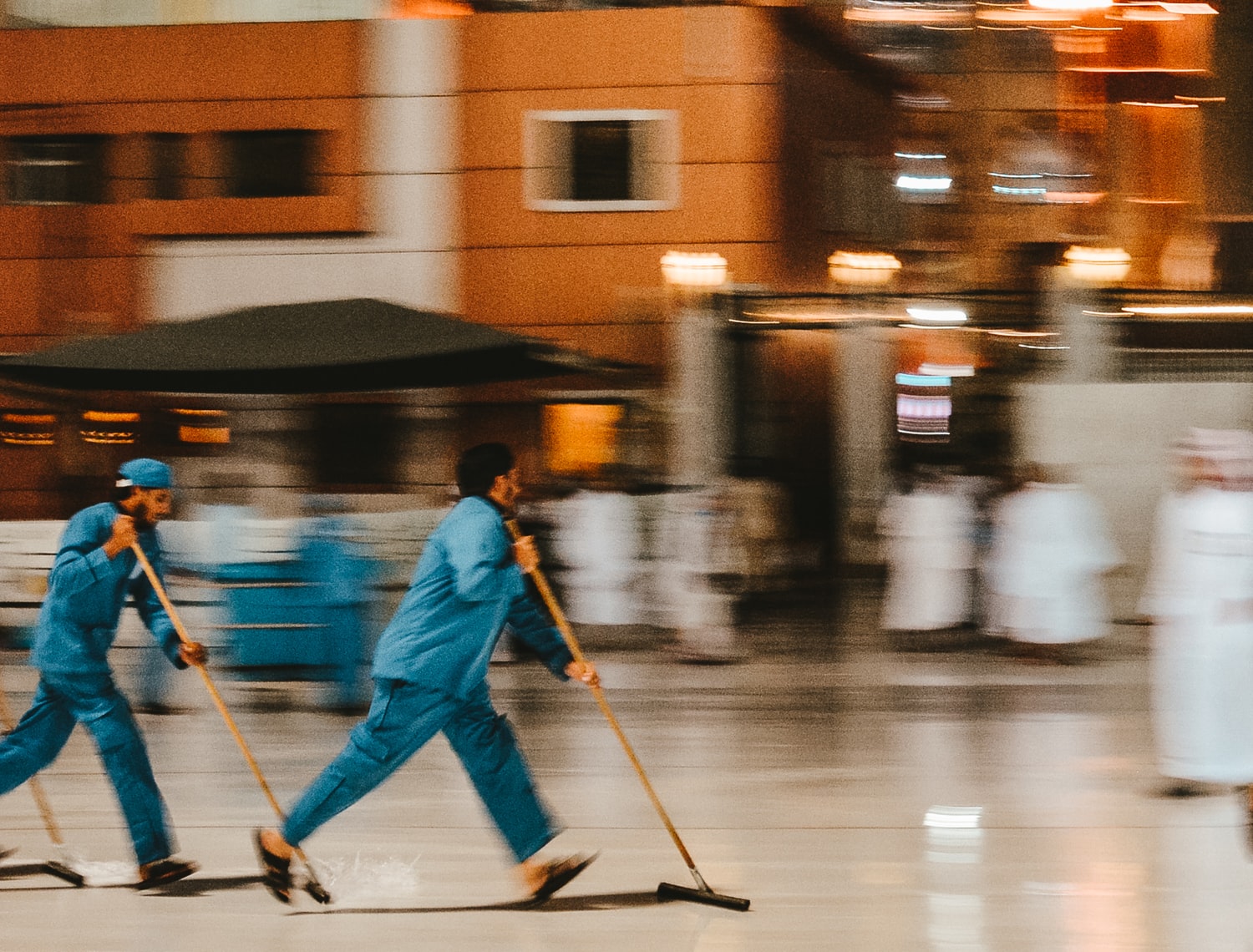
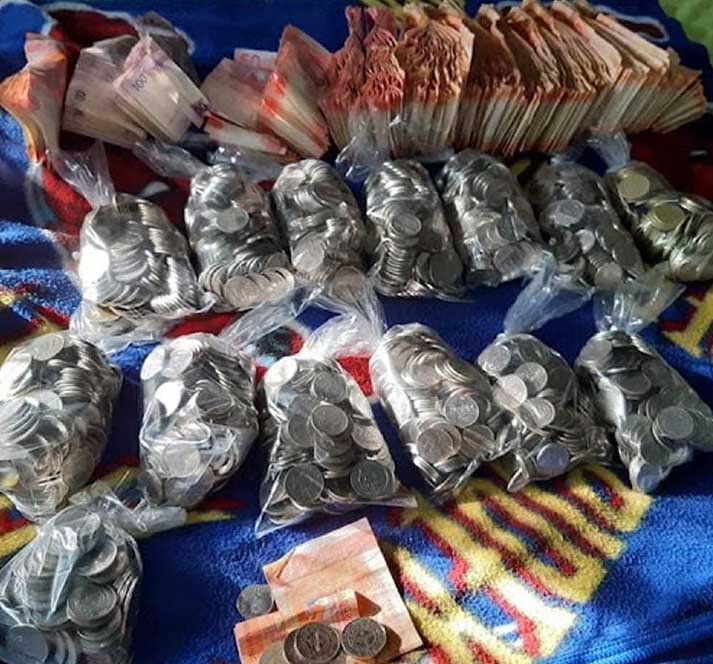
Burp and double burp
Going over an old post, I recalled one Sunday evening that had me rubbing my tummy in satisfaction after a filling dinner. It wasn't anything gourmet or some complex dish that had me double burping.
My humble dinner was fish balls... had right on the small stall near the church where I attended mass. Yes, I ate standing up, elbow-to-elbow with other customers (this was of course, pre-pandemic) while enjoying picking up the balls and rolling it in the perfectly balanced sweet-spicy sauce.
Fish balls are one of the more popular street food in the Philippines. And why not? For 10 or 20 pesos, you can have your fill of this fish paste formed into tiny balls and deep fried. They do turn flat once cooled but who cares, they're still delicious. Well, what really amps up the taste is the sauce.
Somehow, you can try replicating the recipe for the sweet and spicy sauce at home but it never really comes out exactly the same as the one used in stalls or mobile stores. There is also another kind of sauce, mostly sweet for those who don't fancy spicy, but it doesn't have as many fans.
When fish balls were initially introduced, the vendors were usually mobile - selling with a pushcart that was rigged with a compartment to hold a small gas tank used to fry the balls. Yup, it's always freshly cooked that's why there is often a long line in front of the cart as customers wait for their orders to be cooked.
Eventually, the pushcart evolved into two variations - a fixed stall like the one near the church - or the mobile version which was now a bike with a sidecar, which held the cooking equipment.
Source http://pinoystreetfuds.blogspot.com/2015/01/marian-rivera-and-dingdong-dantes-got.html
And while fish balls were first served on 7-inch barbecue sticks, which held 10 pcs, with customers double-dipping in the sauce jar (yeah, quite unsanitary when you think about it) sanitation regulations later demanded they be served on oval paper plates and the sauce poured over the balls.
There was just something communal about standing around the stall or cart eating fish balls on a stick, while avoiding sauce from dripping on our clothes, and chatting with fellow eaters. As you're eating, the sense of affinity is palpable.
With the switch to paper plates, it was more convenient to have a flat area to set them on, and since there's hardly any space on the carts, people just eat hurriedly or take away their orders.
Besides, 20 pieces of fish ball usually requires soda or juice or *sago't gulaman* (water for me is fine) to wash it down and help fill you up. So, counter space is really necessary.
From an old blog, let me share some thoughts about my fish ball experience:
***With fish balls, everyone is equal. It doesn't matter if you only have 20 pesos in your pocket, or 5,000 smackaroos. All you need is 10 pesos for 15 pieces of the balls. Sweet, spicy, or sweet spicy sauce? It is a very pedestrian experience that makes you feel good after because you are one with everybody... most of whom you don't know or will likely never encounter again.***
Source https://panlasangpinoy.com/lets-make-tusok-tusok-the-fish-ball/
For anyone who's ever eaten fish balls from a vendor, you know you're mingling with people from all walks of life - girl, boy, young, old - but it doesn't matter. You're there for the experience, or to assuage hunger, in which case it doesn't matter who you're rubbing elbows with.
If there was rice available, someone who had a very limited budget, would be able to tide over a meal.
I had about 30 pieces of fish ball, if I remember it right, and with a bottle of clear soda, I think, I was quite full even without any carbs. Since I decided to walk home it was quite alright to be stuffed because I could walk it off.
To truly appreciate life, we have to try something pedestrian - at least once in our life. It may be out of our comfort zone, but sometimes it is such experiences that open our eyes to something exciting and new and even widens our horizon.
Since the pandemic, I haven't enjoyed street fish balls. We've had them at home but it just isn't the same. I much prefer squid balls (more expensive though) for home cooking, and I'd rather it be added to soup or noodles.
I wonder how the fish ball vendors survived during the lockdowns. Yes, most are scrappers and would find ways to feed their families and continue with some other microbusiness.
So, here's looking forward to my next fish ball jaunt when life goes back to some sort of normalcy.
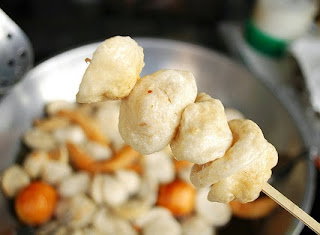
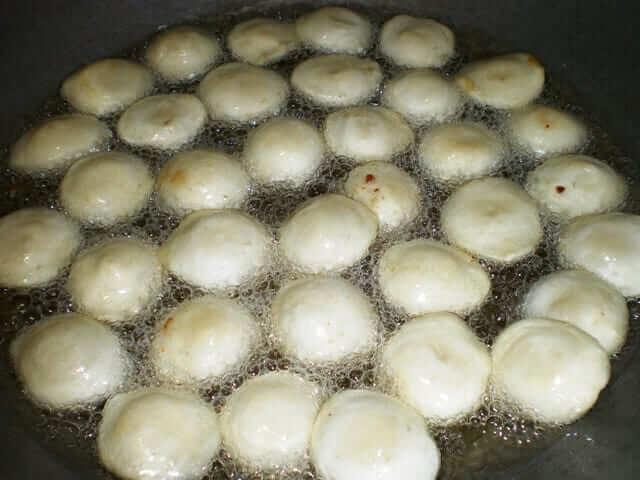
Honoring our dearly departed
One deeply ingrained tradition among Filipinos is honoring their dead on All Saints' and Souls' Day (November 1 and 2). This means trooping to the cemeteries on either of these days, or holding vigil for their dead loved ones from Nov 1 to the wee hours of the next day.
Over the years, the tradition has evolved. When once it meant a solemn occasion of just praying, lighting candles, and basically holding vigil, it eventually became a picnic for most people.
It meant camping at the graveside of their dead relatives, with food and drinks, and even music. Or it became an opportunity for reunions among families.
Families would start pitching makeshift tents very early in the morning, or laying out mats, then lighting candles for the dead. They would then spend the entire day at the cemetery, eating, drinking, praying, chatting, and even napping for those who can.
Eventually, traffic became horrendous just to get to a cemetery and it would take an hour or more to finally reach the destination, when on ordinary days, it would take 15 to 20 minutes to get there.
The two days are declared holidays, enabling more people to gather and fill up space that is usually deserted.
If you have a poor sense of direction, it could mean spending an hour hunting for a grave, in an area that is is several hectares wide, especially when you're parked in some far away spot.
One memory is having to tiptoe around other graves and plots, craning your neck to check if you were already in the right place. That's not us, of course, because we did make it a point to visit our grandparents' graves when they were the only ones there, regularly and not just in November.
But there was a giant mix-up before, which we only discovered when my uncle passed away and was to be buried. It turns out my grandparents were interred in the wrong location and have been for at least two decades! Gasp!
When making arrangements for my uncle's interment, my Dad and sister found out the mistake and so permits had to be arranged quickly to make the transfer. The right plot location was actually alongside my other uncle's grave, who had also died years ago.
Anyway, we've got everyone where they're supposed to be. We do miss a giant tree that used to provide us with good shade. Can you imagine that tree got hit by lightning and the branch that was felled from that incident landed right on my uncle's gravestone which broke in two? What luck!
We do miss our old 'neighbors' who we've been acquainted with when we were still joining the throngs who came on November 1.
I do know that it many provinces, such as Leyte where my mother hails from, they go to the cemetery on the evening of All Saints' Day (Nov 1) and hold vigil until dawn of All Souls' Day, which is actually the day to honor the dead.
But here in the metropolis, we've gotten used to going on the morning of Nov 1 and staying on until around lunchtime. Yes, we'd bring a little food, like bread and water, then leave in time to have a decent meal.
At the memorial park where our dead loved ones lay, they've had to institute a traffic scheme where entry is through one gate and exit is through another much longer route. Exiting isn't so much a problem unlike coming in because there is always the problem of finding a parking space, which does clog the roads.
A few years back, government laid down the law that music was prohibited (people used to bring radios and karaoke machines for entertainment) and it just added to the din. Liquor, too, has been banned. (Yes, there were actually some who came with whiskey, gin, beer).
It's not to say there is less chaos on those days, but the noise level has decreased considerably. Pre-pandemic, fast food outlets have been given permits to set up booths around the park because there really was a captive market. The service crew would either be peddling their products or taking down orders for delivery. Very good business, but for sure more tiring.
About a decade or so ago, we've stopped going on Nov. 1. Since my paternal grandmother's birthday falls on October 26, the family decided to converge there on the Sunday closest to the date. That means having already visited and honored them (my grandfather and two uncles are buried beside her, and now my Dad and sister are in the same park but in a different section) before the chaos of Nov 1 and 2.
This means avoiding the mayhem, especially the challenge of finding a parking space, on those two days. We are able to set up tents to provide us with ample protection against the sun or rain (like last Sunday), and we can bring food and drinks and enjoy a picnic while catching up.
For my immediate family, since the cemetery is about 15 minutes away, it is way easier to visit more regularly, without contending with traffic and a crowded memorial park.
In fact, when my sister passed away, for the first 3 months or so, we would visit every Sunday. And since Dad died nine months later, we continued with our regular weekly visits (as much as possible) until the rainy months hit. We pitched a tent and left it there for months, so that we didn't have to set it up and take it down each time since we were coming weekly anyway.
Alas, because of extended exposure to the elements, that tent just crashed and ripped when a strong typhoon hit!
When the lockdown was imposed, we had just celebrated Dad's second death anniversary (thankfully) and it would be a good six months or so before we were able to go back.
There have been times when I would go on my own, early in the morning or early afternoon when I run an errand in that area and spend time there. I do 'talk' to my father and sister and ask for their guidance when something is weighing me down.
I like the peace being in some vast open space, sometimes completely on my own (there are times when the caretakers are around) and it's a wonderful time to pray.
Yes, it is good to not just honor the dead on the special day for them, but to visit as much as we can to remember them.
*All photos are original...*

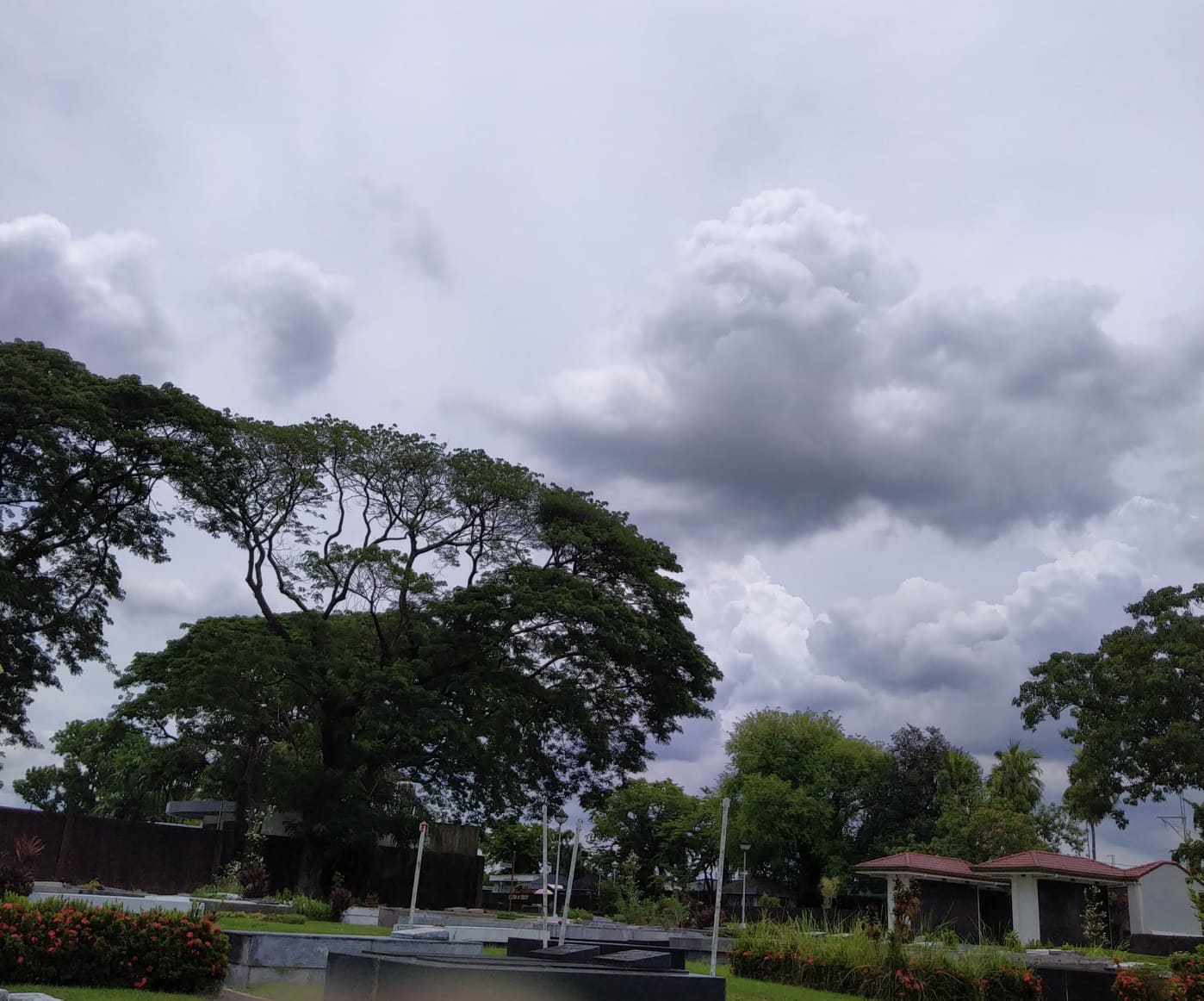
A very special gift
My first introduction to author Og Mandino was through the book **"The Gift of Acabar"**, which he co-wrote with Buddy Kaye. It was the first book I purchased on my own, at a bazaar, using money I saved up.
What drew me to the book? It escapes me now. Perhaps reading that the main character, Tulo, was a writer did. He was but a young boy, yet so full of wisdom. It was easy reading, the story quite simple, the message so profound.
Yes, it made me cry. Still does when I re-read it.
The greatest writing Tulo would leave is not actually his own words, but the ones dictated by the Star Acabar. It is a gift the star wanted to share with the world, and he used Tulo as an instrument.
The gift is a collection of life's simple lessons and is entitled **CREDENDA**. Many of them perhaps we already are aware of but just don't put into practice. I guess it's because the lessons of old are timeless, and remain relevant and valid today.
They struck me when I first read the book. But they took on a whole new meaning when I reviewed them when I was much, much older.
In the story, there were many conflicts, much like today, but the setting was a very small town. In the end, to settle such conflicts, someone had to make the greatest sacrifice. But not before completing a mission.
Yes, that mission was writing down the Credenda as shared by Star Acabar. And that sacrifice was giving up his life.
While fictional, especially the part about a star falling from the sky to help a young boy and his community, everything else is mostly real life. The setting of the story may be different, but a number of people could relate to Tulo and the circumstances he was faced with.
As good a writer as he was, Tulo had more real life concerns to handle so the writing had to take a back seat. Isn't that something most of us have to grapple with? Our being passionate about something, but because it won't put food on the table we have to forego them?
And Tulo, despite the seemingly insurmountable challenges he faced, wanted to make a difference in this world. What he failed to realize early on was that his purpose in life didn't necessarily have to be something grand to have an impact that will be felt by a lot of people.
In the end, however, giving up his life turned out to be such a huge sacrifice and was the answer to his quest for purpose.
My takeaway from that beautiful story? Each of us has a special gift. And the best way to show our gratitude for such gift is to acknowledge it, and more importantly, to share it with the world. Who knows, we may be touching someone's life with it.
Let me leave you with some of the lessons found in Credenda. But if you can find a copy of that book, please read it. It will, if anything, inspire you even with just one thought.
On HUMILITY:
Avoid boasting. If you see anything in you that puffs you with pride,
look close and you will find more than enough to make you humble.
**FOCUS**
*Concentrate your energy. To be everywhere is to be nowhere. Be jealous of your time, since it is your greatest treasure.*
TRUE PURPOSE
Turn away from the crowd and its fruitless pursuit of fame and gold.
Never look back as you close your door to the sorry tumult of greed and ambition.
Wipe away your tears of failure and misfortune.
Lay aside your heavy load and rest until your heart is still. Be at peace.
Already it is later than you think, for your earthly life, at best, is only the blink
of an eye between two eternities.
When we can't seem to carry the weight of the world on our shoulders, let us remember all that weight is not always ours to bear. Let the lessons of Credenda live in our hearts, and perhaps, we can find true joy in our lives.
*Lead image from Unsplash*

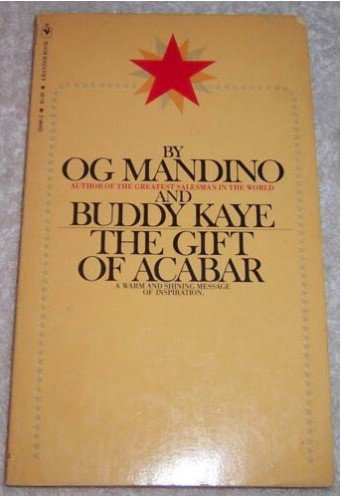
Winning back that special girl
***I am cleaning out my hard drive and have come across old work, which I can't even remember doing and for what, in some cases.***
***Here's one that might be worth sharing. Its filename is*** trial.rewrite, ***so it must have been for some writing job I was applying for. Whether I got the gig or not, I can't remember. But the words are here...***
She's gone. You may be apart now, but out of sight is certainly not out of mind. Is there any way to win back that woman who gave special meaning to your life?
Men are clueless when it comes to fixing a damaged relationship with that one special girl. They do better facing a pack of mad dogs.
How to go about it gets more complicated when you can't even figure out what caused the break-up in the first place. Was it a question of fidelity? Did I take her for granted? Were we poles apart in what we wanted? Was I even worthy to be her significant other?
So many questions, even more doubts, but nothing as bad as the pain. The best way to start is to get answers. No matter how small the spark that started it all, it was there. It's time to find out if the flame is still an ember that can be stoked to life again.
Groveling won't win you brownie points. She'll know she has the upper hand and will take advantage of it. And the last thing you want is to look more pathetic. If you want to gain her trust and respect again, start by respecting yourself. It is always so much harder to turn away someone respectful.
If she's the type to deal with sensitive matters face-to-face, request for a meet-up. Some place quiet that will allow you to really talk. If it won't hurt, a favorite restaurant where you can both recall good times would be a perfect choice.
Yes, it'll be awkward at first. An apology, if you think one is necessary, will go a long way in breaking the ice. But you must be clear about what you're sorry for because it builds your credibility and re-establishes sincerity.
When her defenses are lowered, you can begin to bring up what you shared together and how it was good for both of you.
Paint a picture of how much better you were as individuals when you were together. Then make her realize how much of a waste it would be not to work at resolving the issues that led to the break-up if you can be better people together than apart.
Going at it on your own can be scary. Mutual friends can come in handy to pave the way for a reconciliation. They can do this directly, telling the girl about how the two of you were a good couple, or how the break-up has made things worse for you.
Another hint would be for the friend to express how sad it was that you were unable to sort out the issues that caused the relationship to end.
Even with someone else intervening on your behalf, always be ready to act in case your ex-girlfriend shows signs of interest in reconciling.
Have a plan ready for when she decides to re-connect with you. While spontaneity works, it always pays to have done your homework in advance. The first meeting after the break-up is crucial if you want to win her back.
Think public speaking. You need to make an impact with your opening line. Once you have her attention, build your case, and state the possible options available for both of you. Remember your closing is to stress why you wanted to meet again.
The meeting is as much about you as it is about her. Be sensitive to her reaction. If she seems open to the possibility of getting back together, suggest it. A "no" or "not sure" answer should not make you lose hope. Instead, find out why she didn't agree so you can plan your next move.
She gave you a chance by agreeing to see you again. If the reason for the break-up was so grave, and no amount of apology is acceptable, you would not have gotten that far.
Keep at it so she knows you're serious about rekindling your relationship. As long as you make her feel you can handle the relationship better, work out your issues and emphasize why "US" is better than "YOU or ME" and the possibility of getting back together increases.
***I have no idea if what I wrote (based on someone else's idea) actually works. Perhaps you can share your thoughts...***
*Images from Unsplash*
Humans not heroes
It's quite distressing to read news that so many nurses have thrown in the towel and quit hospital work amid the ongoing pandemic.
According to a private hospital group representative, some five to 10 percent of nurses in private hospitals have resigned in the last three weeks alone. At the rate this is going on, hospitals will be crippled in five to six months!
Obviously, not feeling valued is the primary reason why the local Florence Nightingales are giving up. Pre-pandemic, nurses' salaries were already pathetic compared to the time rendered for service.
While nurses in public hospitals receive a little more than their counterparts in private hospitals, this still isn't much when taking to account the number of patients they are made to handle each shift.
Imagine how much more hazardous their job has become when COVID-19 cases spiked. It is criminal for a nurse, working a 12-hour-shift, and tending to 10 patients or more, to just be paid 8,000 pesos ($157.60 at today's exchange rate) for a month! How are they going to survive on that? Transportation alone will eat up that amount unless they find living quarters within a walking distance of the hospital.
The option of course is to apply for overseas employment where they will be paid 10 times more or even higher for the same kind of service. Yes, Filipino nurses are a premium in most other countries, and it is ironic that they are so undervalued and unappreciated in their own country.
With healthcare facilities severely lacking in qualified personnel, how can they adequately care for patients who are ill with COVID or other diseases?
Those still not qualified to work abroad would rather find other jobs than continue suffering in their work conditions. Not only do they fear contracting COVID, but collapsing from exhaustion due to overwork, where in many cases they don't even receive overtime pay.
Benefits, too, are not always part of the compensation package, as well as allowances to cover transportation, food, and insurance.
That is why they were howling in protest weeks ago because government had yet to release benefits promised them for their service during the pandemic.
Given how paltry they receive for the work they do, it is no wonder there is no motivation to stay on working in hospitals. And if nurses continue to quit their jobs, hospitals will be forced to downsize their operations and limit the capacity which they can serve or worse, turn away COVID patients altogether.
Nurses working in tertiary hospitals with ISO certification are much sought-after abroad because of their more extensive experience and knowledge of the latest medical technology and protocols.
Can they be encouraged to stay and continue serving the health sector in our country? Of course, this is possible but they must be taken cared of. The president of the Philippine Nurses Association lamented the low quality of life given to their sector.
They have repeatedly called on government and private health institutions to address the plight of nurses, starting with compensating them with salaries and benefits that will show they are valued and respected.
For starters, the discrepancy in salaries between public and private nurses is atrocious. A minimum standard amount must be set. Non-cash benefits to cover food and insurance should also be included. And transportation is a huge expense, so these must at least be provided for. And then there are cases in private hospitals where nurses have to pay for their swab tests out-of-pocket.
As much as nurses want to continue serving their country, they must also survive and provide for their families.
Nurses, according to the PNA president, are not superheroes but humans. Yes, what they do is heroic, but who will take care of them, their needs, when they don't even receive decent wages?
The pandemic only highlighted the inadequacies of the country's healthcare system. The biggest flaw in the system is the salary paid to healthcare workers, nurses especially.
While government may set a cap in the number of nurses deployed abroad, it does not guarantee they will take on vacancies in local healthcare facilities. Should the hospital workforce dwindle to an alarming level, this will be an even bigger crisis that the Philippines cannot afford to face at this point.
If health is truly wealth, then resources have to be poured into the sector to first take care of the people who are expected to take care of the sick, the injured, and the dying. Until and unless this happens, we may lose out on one of the best resources the country has - our nurses.
*Images from Unsplash*
One jeepney tale
Going over articles I wrote in the past, I saw one about a scenario which I hope is no longer commonplace especially when life returns to some semblance of normal.
To begin, jeepneys are iconic modes of transport here in the Philippines. It's become an attraction on its own, and for the adventurous among travelers, experiencing a ride is a must.
It is the most common mode of transportation, able to carry anywhere from 14 to over 20 passengers to distances near or far. Its advantage over buses, which it was patterned after, is being able to ply even smaller or narrow streets.
See, unlike other countries, Filipinos like being brought to their doorstep instead of some transport depot or terminal and walking the rest of the way. Here, to walk a-ways means you either have no fare money or you're lost.
Jeepneys can be hailed from anywhere and will stop to pick up passengers, crawling if two passengers are 10 meters apart instead of staying put and waiting for the riders to climb aboard in one spot or stop.
Like I said, Filipinos are accustomed to getting off in front of where they have to be, whether it's the gate of their homes, the entrance of a building or establishment, in front of the market... and it is jeepney drivers that are the enablers who do not help in teaching commuters about discipline.
And it is this terrible habit that is also one cause of traffic in many areas, whether in the city or province. Try going to market on a Saturday in one of the busy marketplaces and half the time will be spent negotiating traffic.
Anyway, the article was my experience taking the jeepney to Divisoria, a popular commercial center in the city of Manila where you can find most anything - food, fresh produce, clothing, toys, materials for anything and everything - at very affordable prices, hence its fame.
And because it attracts all sorts of people, it is notorious for being a traffic bottleneck, because there is basically one main road that runs right smack into the center, which jeepneys and other modes of transport ply.
**Let me quote my article:**
*Juan Luna Street, the main road connecting Binondo to the heart of Divisoria, is less than half a kilometer long. But aboard a jeepney, it can take more than 20 minutes before you are able to get out of that short stretch. The traffic is actually not due to the volume of vehicles, rather it is the result of stubborn jeepney drivers notorious for waiting at the street's end to load passengers.*
*Now on slow days like Sunday, Divisoria is not crawling with patrons because a number of establishments, mostly owned and run by Filipino-Chinese, are closed. It can therefore be an annoying experience to get on a jeepney at 11:00 a.m. and still not be out of Binondo after half-an-hour. But that is not unlikely. In fact, you begin to wonder if walking would have been a better alternative. Unless you are thoroughly loaded with purchases, you would have almost reached Lawton on foot - by then.*
*I wish I understood the psyche of drivers. It behooves me to think why they would waste diesel (the jeepney is on idle the whole time they are stopped) while hoping passengers would board their vehicle, instead of moving on and picking people up along other streets, where they usually are.*
*And while they're at it, they banter with the next driver, inch forward then block cars and other private vehicles and generally just pollute the already stench-filled air. In the meantime, passengers who are forced to wait until the driver decides to leave, become impatient and hop out leaving the jeepney emptier than when it started.*
**And the story does not end there because there was a little action during that wait.**
*On the day I had to endure this, we passed by some drunk swinging a bolo ( a large cutting tool/knife similar to a machete)! A Good Samaritan attempted to pacify him but he ended up facing the barrel of a gun of a stupid policeman who couldn't get the facts straight. As this unfolded, our jeepney driver was so transfixed with the scene that he stopped the vehicle in front of the gun-wielding cop forgetting that we were in the line of fire! I wanted to grab the bolo and brandish it in his face! Of course, traffic came to a halt because of this unexpected action scene.*
*When finally all the drivers decide to leave, we've lost a good hour and absorbed the heat and variety of odors of Divisoria. Come to think of it, local businessmen actually recommend that you take the calesa (horse-drawn cart) when in the area. It gets you where you want to go faster although for a bit more than the usual.*
Can you imagine that ordeal? And all because we wanted to try bargain shopping. After than experience, I think I rarely went back to Divisoria, or if I did, it was with a vehicle and driver. While the parking spaces are pretty far, they were located in streets not plied by jeepneys. A few years after, I stopped going there altogether, never mind the bargains and cheap prices.
One of the most affected during the pandemic were jeepney drivers. With the extended lockdowns, they were prohibited from traveling primarily because their configuration was not ideal to protect passengers from possible infection of the virus.
It was months and months of being sidelined from plying their routes that broke most of this sector. And even when they were eventually allowed to travel, a number of drivers already lost their vehicles, after being forced to sell these to survive during the government-imposed quarantine.
I do wish there could be an overhaul of jeepney riding discipline. That means both the driver and commuters have to be educated. Jeepneys cannot be stuffed with passengers like they used to be, so much so that the last passengers to come aboard hardly have space to squeeze in their butts, much less sit comfortably.
Pre-pandemic, the number of jeepneys plying the streets were in the thousands and they were a serious cause of traffic because they took up space on the roads but only carried a limited number of passengers, unlike buses or trains.
They were actually running the same routes as buses, which was illogical. They could be useful for smaller or side streets and ferry passengers to main bus or train terminals, but not compete with bigger, more efficient modes of transport in main thoroughfares.
Yes, jeepneys are ubiquitous and they are unique to this country. But to remain relevant and provide decent income for drivers, they have to implement a more efficient and comfortable system of operating.
For now, let me get off the jeepney. I'd rather walk, or drive.
*Images from Unsplash*
Perfect combination
Two Sundays ago, I decided to take a morning walk. The COVID numbers have been decreasing and alert levels are being lowered. The threat remains, of course, so adhering to the minimum safety protocols is still a must.
Anyway, the decision to go out for a walk was mainly for two reasons: exercise and for a change of scenery, and to determine how far I need to walk to complete praying the Holy Rosary.
From the house, there is a 300 meter walk that would bring me to a very long road that had rises and dips. All the better for variation and a bit of added challenge. The stretch of road is almost two kilometers from end to end.
When I say pray the Rosary, I mean all four mysteries - Joyful, Luminous, Sorrowful, and Glorious. Walking is a great way to focus and contemplate, another reason why I wanted to do both activities simultaneously.
Since I haven't gone on very long walks for nearly a year, I didn't want to push myself. I figured I would walk enough to complete two mysteries. It is okay to break up praying 20 decades of Hail Mary's, as long as it's not just reciting it.
One thing I discovered on that first outing is that praying while walking takes the focus away from any exertion necessary to cover the miles. While there was sweat involved as you climb and descend, the strain on the legs, and even the lungs, become negligible because I was reciting and contemplating Jesus' life.
Since the road I was travelling still had a lot of elements - people, vehicles, animals, trees, plants - it was still a must to be aware of my surroundings and to stay alert.
But the walk was definitely made more pleasant by the praying.
I think I managed up to two-thirds of the road before I turned back. The plan was to start back when I was on the next mystery, because it would be around the same distance covered as the Joyful mystery.
A stretch was necessary, and after five or 10 minutes of giving my legs and feet a good cool down, I went in and proceeded to do more stretching on an exercise mat. Oohhh, there were muscles that ached I wasn't aware of, but it was to be expected given the long respite from walking a good distance.
I was actually worried that my body would be aching the next day but fortunately, I was fine. So, I decided that the next Sunday (yesterday), I would again go for a walk.
This time, the goal was to see if I could complete all four mysteries while taking a route that would bring me full circle back to the house. I figure around five or so kilometers.
The excursion was completed in an hour and 20 minutes through that roundabout route. And yes, I did finish 20 decades. It was a huge accomplishment!
Many times I felt my calves and feet starting to ache, but I would dismiss it and continue reciting the Hail Mary and contemplating on each mystery. In my head, what I was doing, however painful, was still nothing compared to what Jesus Christ had to endure, especially in the Sorrowful Mysteries (Agony in the Garden, Scourging at the Pillar, Crowning of Thorns, Carrying of the Cross, and Crucifixion and Death on the Cross)! Every one of those had Him shedding blood, and that's to save humankind, me especially, from sin! So what right did I have to complain?
The longer route also meant running into more people - there were pockets where a small crowd would gather - and I had to be very conscious of distancing myself just to be safe. As it was Sunday, vehicles were sparse at that time of the day.
I think part of the praying was for protection against disease and to be kept safe from any harm. And a form of penance as well.
If the previous Sunday had me in slight pain, yesterday's long walk (my niece was quite aghast when I told her how far) had me writhing somewhat.
So the walk was again followed by longer stretching, and I think I was ready to collapse on the mat later. Still, I managed to get up and go about my day, although there was some discomfort.
Turning in early was necessary. Suddenly, I felt the tiredness of the early morning activity. I used a foot patch to help relieve some of the discomfort, and it worked wonders. I woke up even earlier than usual, but I was already refreshed. And there was no sign of any pain.
I'm just thinking praying, and Mama Mary had a lot to do with that. She prayed for my healing, I know it. And I am blessed.
Next Sunday there's a family activity lined up, so I'm not sure how the walking and Rosary will fit in, but for sure I will find the time. I must, both for sanity and spiritual nourishment.
*Images from Unsplash*
The joy of caring for babies
First off, my sincerest thanks to @Bloghound for the sponsorship renewal. Your support is much appreciated!
Back to regular programming...
I have a clear memory of my 8-year-old self rocking a little cousin to sleep. I am guessing I was that age because first, the baby was probably a year old or less, and given our age gap, then I would be around 8.
Yes, I liked taking care of my younger sisters, too, but they always had nannies and often they would think I was just underfoot and would shoo me away. Unless of course they needed to go out for a bit and they would ask me to watch over the little ones.
So even as a child, babies didn't scare me much. If they cried, I'd pat them gently on the thighs or their legs or recite nursery rhymes. Needless to say I would play with them if they were in the mood. Yes, I knew to feed them, both with a bottle and spooning food into their tiny mouths.
As I grew older, that fondness for babies stuck. And since we used to live in a compound with a few cousins, I would be asked to babysit one or two of my younger cousins.
When I started working and there were colleagues with children they brought to work, I would naturally gravitate towards them, even if they would initially be shy with me. Eventually, after much persistence on my part, they would feel comfortable around me and soon enough we'd be playing or they would be dragging me around to go some place.
A-huh, those friends of mine love me because I could take the kids off their hands for a while so they can breathe, or work. And when there were excursions that included families, I would be hanging out with the little ones there as well.
So yes, I was comfortable around tiny humans and could navigate my way around them, tantrums included.
Alas, I was not blessed to have kids of my own. So all of the practice I got taking care of someone else's kids I only put to use when my nephews and niece started arriving.
Since they lived with us since birth, I have had the privilege of helping raise them. And by raising them, I mean from the time they were infants.
For the record, I knew how to properly lift newborns, bathe them, change their diapers (even with the poo!), make formula, burp them, put them to sleep, and calm them down when they're fussy (that's a lot of singing!).
It was never a scary proposition to handle these tiny people even when they looked so fragile. The trick was not to be afraid of handling them but to move with a lot of care.
So why was I doing all those stuff? Because frankly, it was my sister - their mother - who was a little anxious taking care of the babies. She's a by-the-book type of person, always needing instructions even for the simplest of things. As a result, she moved too slow, and with babies you have to be quick and calm.
Her primary role really was to feed them!
The thing is I enjoyed doing all that. So when the kids were grown up, and there were babies around, I could always be counted upon to do one of those parenting stuff when necessary.
My younger sister helped out, too. She was as confident around infants and didn't mind rocking them to sleep, which she was quite good at. We used to have a game on who could put a kid to sleep the fastest.
And when one of the young ones were sick, we would also be around to help out.
I remember a time when my eldest nephew was having a bad episode of colic (which was a symptom of his lactose intolerance) and to give his parents a reprieve, he would stay with me and fall asleep on my chest. As exhausted as I would be because he wouldn't settle down for hours - likely due to pain - it was bliss when he finally quieted down.
So, yeah, that was a lot of sacrifice for those guys, but I love them to pieces and would always be grateful for the privilege of taking care of them.
While I was never blessed to be a mother, it is ironic that I have very strong maternal instincts. Perhaps because I was part of their growing up years, so I felt like they were my children, too, and would worry about them when they are out or if they had those little accidents (falls and bumps).
Seeing them all grown up now, I can't help but wonder how time flies so fast and I've witnessed life transform before my very eyes.
Gone are the babies I used to cradle in my arms, or who I'd chase around when they finally learned to walk and were getting ready to run, or who would squeal in delight as I threw them in the air and caught them in a hug.
Yeah, there were times when they were babies or toddlers and I'd watch them sleep, seeing all their innocence and imagining possibilities once they were grown.
I actually miss those baby moments. It was so much easier to handle them, however physically exhausting it can get. When they would look up to you for guidance and put their tiny hands in yours as a sign of trust, those were heart-melting moments.
I read to them, sang to them, taught them to work on puzzles, color, write, draw... the whole nine yards!
And those occasions when I would take them to the park and play with them, running around and after tiny tots with short legs, then catching them as they ran in to wrap their tiny arms around your legs.
I miss the laughter and smiles over very simple things. When being with them was really being present, and not seeing them now with their noses usually buried in their phones.
Dirty ice cream, cotton candy, fishball, slides and swings, throwing and catching balls, and just running while shouting in glee. Those are my memories of the kids. Very priceless, and heartwarming.
*Images from Unsplash*
Credit where it is due.
I mistakenly tagged @FarmGirl in a previous post. She said it wasn't her I was referring to. My Bad! I appreciate your bringing it to my attention, thanks!
And she was right. So let me rectify that mistake now: Thank you @CrazyRichFilipina for sharing the book "Becoming" with me. It was a wonderful read.
For women 35 and above
Gone are the days when women were confined to the home, and expected to marry, be a homemaker, bear and raise children. Today, they have the choice to build careers, earn money, become leaders, fly planes, even fight wars.
And it is having these varied options and opportunities to become their own person that has often postponed the need to fulfill the traditional role expected of them: have children.
In the past, a woman in her early 20s (or younger) would already have a husband and probably a child or two. Those who had yet to wed in their mid to late 20s would be considered nearing spinsterhood.
Today, it has become more common for them to start families, or at least have kids, in their 30s or even 40s. The initial goal after completing high school or earning a college degree is to explore, work, try out as many opportunities as possible, go out on adventures, and become successful, both financially and career-wise.
Delaying pregnancy
They may settle down by the time they reach 30, but would put off having children or not think it unusual if they don't get pregnant early on their marriage.
Fertility specialist Dr. Gia Pastorfide, however, warned that among women 35 is considered a high-risk age when it comes to conceiving. To postpone pregnancy, especially the first one, until one is much older, can become challenging.
In the obstetric world, she explained, 35 is a risky age because it is around this time when complications or comorbidities may set in. As a woman advances in age, so does the quantity and quality of her eggs.
Dr. Pastorfide, also a reproductive endocrinology specialist, stressed it is unnatural for a woman not to conceive after a year of regular, unprotected sex. In fact, obstetricians already define such cases as infertile.
And for women who are 35 or older, six months of regular, unprotected sex without getting pregnant likely means they already have fertility issues.
Technological advancements
But science has made so many advancements over the years. First, it has found ways to treat infertility, both for men and women. Second, it has discovered other methods by which a couple can conceive - artificial insemination and in vitro fertilization.
And while the technology only used to be available overseas and would cost a fortune, Filipino couples need not go far to get help for fertility and conception issues as there are already specialists and facilities in the country.
But for women, Dr. Pastorfide said there is another option to help ensure they will have less problems and difficulties getting pregnant even past 35.
The technology is called social egg freezing or oocyte cryopreservation. Simply, it is harvesting then freezing one's eggs until they are ready to be used for conception. No, it is does not come cheap, but neither are fertility treatments.
And the beauty of this method is that it can be done even when a woman is in her 20s. Doing this means the eggs' age will be retained even when they are used at a later time. If the eggs were preserved at 25, it remains that age.
Source https://www.whattoexpect.com/getting-pregnant/fertility/how-fertilization-happens.aspx
Freezing, Dr. Pastorfide added, preserves its reproductive potential, and can be used at whatever age as long as the woman has a uterus. While not really advisable to get pregnant at a very late age even using this technology, she said even menopausal women can still conceive using her cryopreserved eggs.
Retaining quality
So, the earlier the eggs are frozen, the better quality they are. While women are born with a finite number of eggs, over time there are those that die a natural death resulting in a reduced quantity. Age, too, affects their quality.
And while it is not always a guarantee that a frozen egg will result in a successful pregnancy, what is sure is a better quality embryo.
Considering the cost of cryopreservation, this may not necessarily be an option for all. Still, having this choice available for those who can afford it, is better than none. And although Dr. Pastorfide, who preserved her eggs before she hit 35, is elated at having this technology available, she advised it's better not to wait too long to have babies.
After all, it's not only a matter of conceiving and bringing them out into this world, but raising children and nurturing them to becoming good, productive human beings that is an even bigger challenge.
(For those curious or interested, you may check out Victory A.R.T. Laboratory in Makati City.) https://victoryivfphilippines.com/
**I interviewed Dr. Pastorfide a few years back and did a previous article on this topic*
*Lead image* *Source* http://www.koreabiomed.com/news/articleView.html?idxno=2002


 @zolabundance2