Why Portugal as an Investment Destination
More than listing a number of reasons that appear in the internal reports that justify the choice of Portugal as an investment destination, i will highlight the news in which the international community recognizes Portugal as a country capable of attracting foreign investment. These reasons range from safety and quality of life to developments in the real estate market.
The highlight goes to the ease of doing business, international tourist awards, safety, education and average life expectancy.
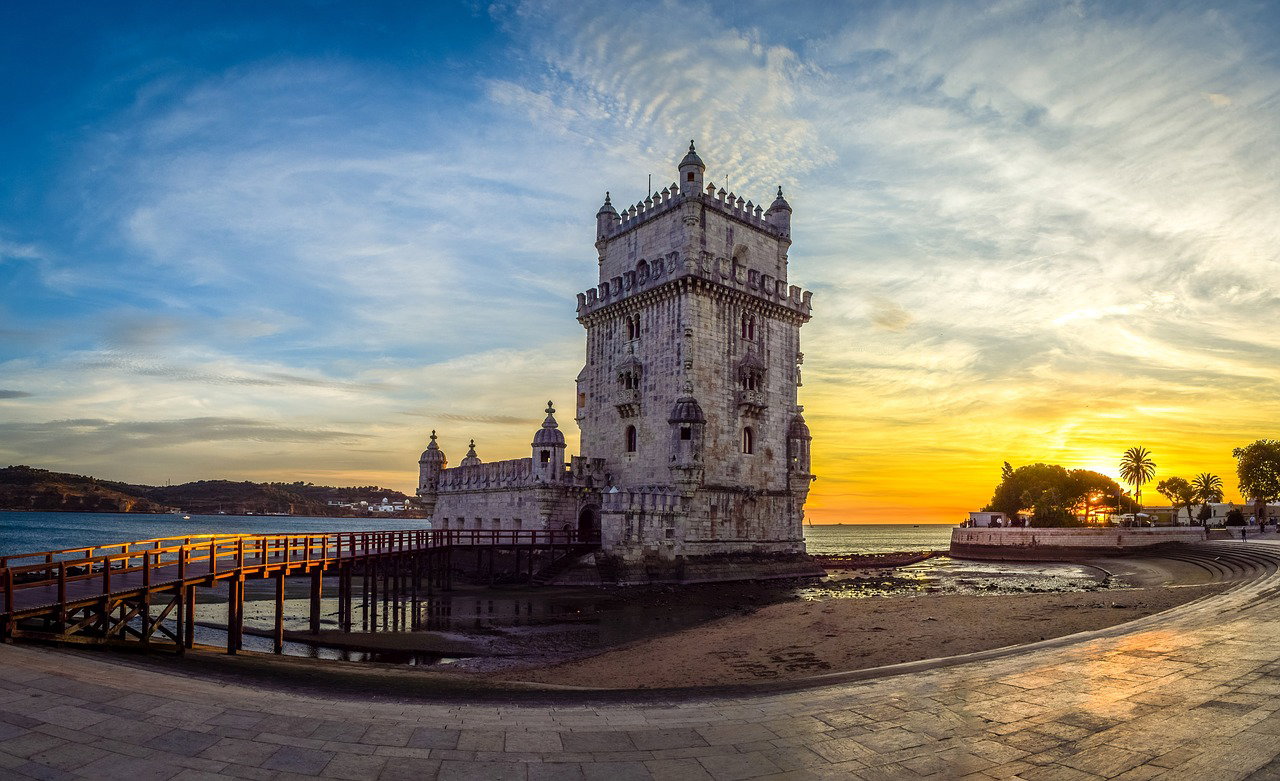
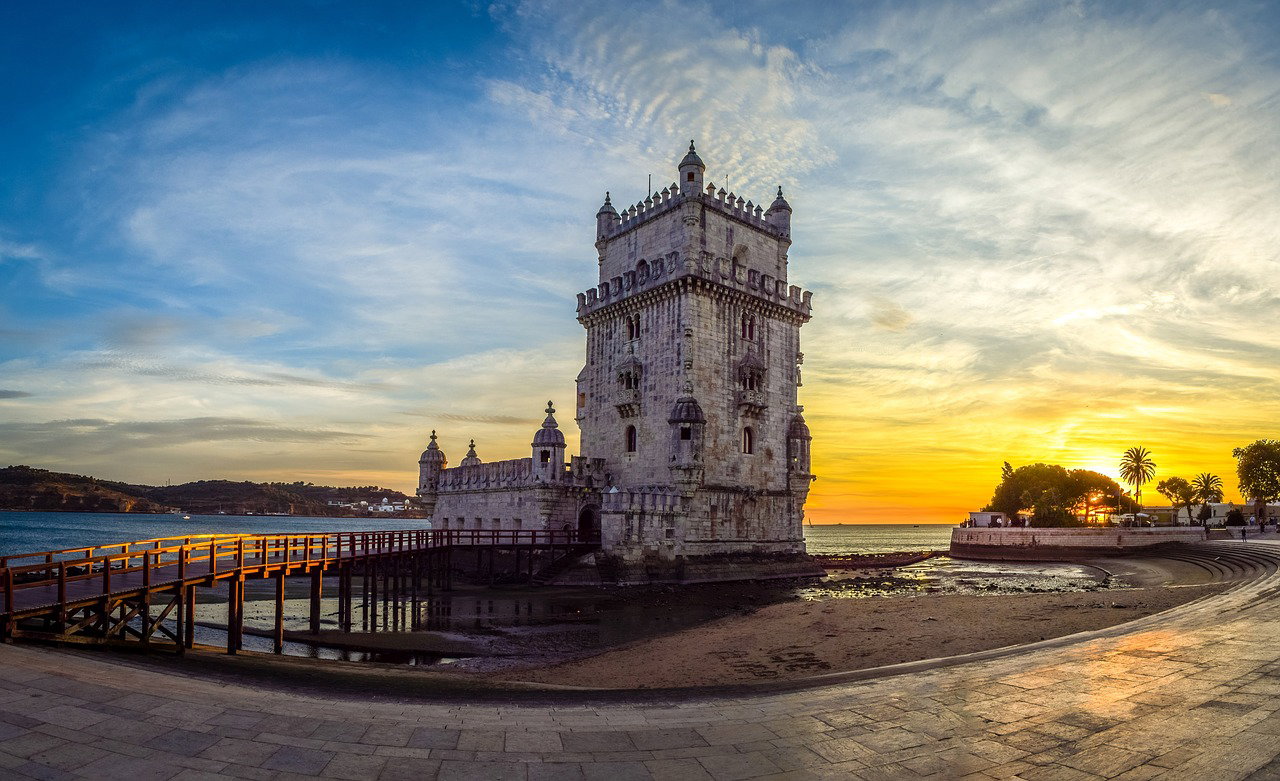
Image Source: Pixabay https://pixabay.com/photos/bel%C3%A9m-tower-belem-tower-lisbon-2809818/
Make business
Portugal climbs to 25th best country to do business on a list led by Singapore. The 12th edition of the Doing Business 2015 study assesses local business rules and regulations to compare the ease of doing business in 189 countries.
Greece, Italy, Portugal and Spain - all among the economies most adversely affected by the global financial crisis - have maintained a steady pace of regulatory reforms . Another change made between 2013 and 2014, which the report highlights, concerns the tax domain, namely the decrease in corporate profits taxation in 2013 from 25% to 23%.
However, in 2015 the Corporate Income Tax (IRC) has already fallen again from 23% to 21% with a forecast of a gradual decrease of the rate until 2016.
International Tourism Awards
Portugal has been internationally recognized as a destination of excellence for golf over the years. In 2014 it was voted the best golf destination in Europe and the world in the first edition of the "World Golf Awards", which are part of the "World Travel Awards" one of the most important awards of the tourist industry.
The World Golf Awards ceremony took place at the Conrad Algarve Hotel in Quinta do Lago, which won the Europe's Leading Luxury Resort Award. In addition to the above, Portugal has received 14 other awards.
In 2015 won in 16 categories with highlight to the Algarve which was considered the best beach destination in Europe.
Safety
Portugal is the 11th safest country in the world, according to this year's Global Peace Index ranking. There were a total of 162 countries in the analysis, with first being Iceland and last, as most dangerous of all, Syria.
Education
Some Portuguese universities are already present in the international rankings led by the best in the world, climbing positions despite their small size compared to foreign counterparts, and showing that training is an area where the country has international recognition.
The biggest highlight goes to business schools, which are getting better and better positioned in their international assessment of their executive education. And there are already three universities that have their business schools among the best in the world. The Catholic-Lisbon School of Business and Economics was the first to enter the Financial Times executive training ranking, where it has been in business for six consecutive years, appearing this year in 46th place. The New School of Business and Economics entered for the first time in 2011, and has already risen 11 places to 47th. The University of Porto also made its debut in 2011 in the ranking of customized training for companies, repeating the feat in 2012 and reaching 64th place.
Average Life Expectancy Above Average
OECD report places Portugal 16th in average life expectancy at birth, above UK and EU average.
Life expectancy in EU countries has increased by more than six years in two decades, according to the latest report from the Organization for Economic Cooperation and Development (OECD). On average, EU women live to be 81.7 years old and men to 75.3 years old.
Portugal is above the Community average, in 16th place: at birth, the life expectancy of the Portuguese is 82.6 years and the Portuguese 76.5. Just below is the United Kingdom. High up in the lead are France, with the highest value for women (86 years), and Sweden for men (79.4).
**Portugal awaits you!**
EU does not approve cryptos like Libra until assured that they do not create “unmanageable risks”
The Council and the European Commission have ensured that they will not accept new cryptocurrencies in the European Union (EU) until they ensure that these digital assets do not pose unmanageable risks, advocating the creation of “orderly monetary and financial conditions”.
Image source: Pixabay https://pixabay.com/illustrations/libra-crypto-currency-facebook-4283995/
In a joint statement released Thursday, these two European institutions say they are “ready to take all necessary steps to ensure adequate consumer protection standards and orderly monetary and financial conditions”.
“*All options must be on the table, including any measures to prevent certain stable cryptocurrencies [digital currencies not subject to market demand and market fluctuation] from giving rise to unmanageable risks,*”
This common position of the Council and the European Commission was released at a time when Facebook is talking about creating a digital currency Libra, this year.
The Libra cryptocurrency, which Facebook wants to launch this year, aims to be an alternative payment method to traditional banking channels. Inspired by cryptocurrencies such as bitcoin, digital currency should be managed by a nonprofit consortium. However, the project has already raised serious concerns from the sector, from both central and political banks, as well as regulators, particularly about risks to financial stability.
For the Council and the Commission, for the creation of such assets there must then be legal clarity. “Some recent world-wide projects have not provided sufficient information on how well they intend to manage risks and carry out their activities,” they criticize, pointing out that “this lack of adequate information makes it very difficult to reach definitive conclusions as to whether if and how the current EU regulatory framework applies”.
Therefore, they state that “entities wishing to issue stable cryptocurrencies, or other activities involving stable cryptocurrencies in the EU, must provide full and appropriate information as a matter of urgency in order to allow proper assessment against the applicable rules in force”.


Young male adults are the ones who invest the most in Bitcoin
Bitcoin celebrated its 10th anniversary in 2019 and the young people are the main investors in virtual currency, according to a study published by the Global Blockchain Council, 58% of about 24 million accounts belong to young people between 18 and 34 years old, and 71% of accounts are male.
Image source: Pixabay https://pixabay.com/
“Being a high-risk asset, traditionally there is a greater propensity to be acquired by men rather than women,” adding that “empirical studies of economic decision theory, in a context of uncertainty, have pointed to women being more averse to risk”.
**Only 3% of baby boomers, aged 55/65, have bitcoins.**
We can conclude that the fact that the younger population is looking for fast, cheap, and financially independent digital means of payment has triggered the use of bitcoin.
It's very interesting to realize that it's the youngest who have the most accounts, maybe because it´s an innovative technology... Firstly, “you can't fiddle in your pocket and find a bitcoin, because this coin doesn't exist physically, it's totally virtual,” and its issue is neither made nor controlled by a central bank.
Virtual currencies are stored in a kind of wallet that is created when you register. After registration, the person is given a code with letters and numbers, called the “address”, used in the transactions, and when the bitcoin holder wants to buy something, a game, for example, must give the seller that address.
Throughout the process the identities of the buyer and seller are kept anonymous, but the transaction is publicly registered and the purchase cannot be reversed.


A new journey... My introduction
Im here on read.cash for a couple of days but never introduce myself to community, so here´s my introduction.
I have 37 years old and i´m from Lisbon, Portugal.
I studied Webdesign and Graphic Production at Universidade Lusófona de Humanidades e Tecnologias de Lisboa.
Meanwhile, I started learning development languages like Javascript and Python and at the moment, i´m blockchain developer and a moderator of Portuguese Community on Steem Blockchain.
The English is my second language, but i also speak Spanish, French and some African languages. My native language is Portuguese.
I have lots of hobbies but what i like the most is helping cats and dogs at União Zoofilia de Lisboa. I'm a cat lover but i like all animals, even that are not pets, like snakes, lizards, etc...I have one cat called Garfield and two birds called Jonas and Eusébio, at home...
I'm loving being here on read.cash, enjoying all amazing articles from this community and trying to make some friends too :)
And thats it, this is my introduction!
Thank you all for your support!


 @warnas