Step outside your comfort zone despite your fears
Last week, perhaps for the first time, I had the opportunity to take a short walk in a deserted forest. I love being in nature, I do hiking routinely, but until now I have mostly done it in areas where there are people. When I had the opportunity, I started walking towards the forest on a whim.
There was no one around; just me, the trees, the wind, insects and the landscape. On the one hand I admire the view, on the other hand I listen to the sound of the trees accompanied by the wind. Suddenly the smell of pine in my nose enchants me. On the other hand, with every step I take, questions such as "What if I come across a large animal, is it safe to be here alone?" trigger my fears. But I love being in nature and having this experience and I continue my steps.
That day I realized once again that the greatest rewards come when you take a step "despite" your fears. It is only when you take a step despite your fears that you can be alone with nature, only when you take a step despite your fears that you can breathe in that wonderful pine scent, only when you take a step despite your fears that you can listen to the concert given by the trees under the direction of the wind. Only when you take a step despite your fears do you truly LIVE!
This is the same in every aspect of life. Yes, there is fear and it is real. So, what do you choose to do with this fear? Continue to live a life in a cage made of your fears, far from your authentic self? Or do you see your fears, accept them and take steps "in spite" of them?
Fear is a tool to get out of your comfort zone. For those who can use it. Usually the things you fear the most are actually the things you want to do the most. When the inner you is more free, even if it doesn't feel good for you, the idea of getting away from your city, your job, your toxic relationships scares you and you continue to live in that comfort zone. Until you reach a point where it is no longer bearable.
Only at that point do you realize, "This is not what I want, I deserve better, I want to be a freer person". And with the courage that comes at that last point, you take a step out of your comfort zone "in spite" of your fear and you move into a new world. This place is more spacious, the colors are more vibrant, you feel lighter, as if you have left your burdens behind. This lightness also makes it easier for you to take new steps.
Once you step into that new world, you realize that fear shrinks, maybe even disappears. Because fear is like a dark cave. Once you light the lantern inside it, it lights up. Whether fear will shrink or disappear completely depends on the size of the cave and the power of your flashlight.
When you look back from that new world, out of the corner of your eye, you wonder how you lived there for so many years. It's as if the world you have just passed through is a place you have always known deep down inside. It reflects your authentic self more. In fact, this was who you were, but your fear was shading the light inside you like a shell around you. With the step you took, that shell began to dissolve!
When I returned from my forest walk, I took a pine cone with me as a souvenir to remind me of those sensations. I hope that you will remember a time when you had the courage to take that step or that you will take that step soon. I wish that you will remember those sensations, how much taking that step has expanded and lightened you before. And I wish that in the next moment of fear, you make space for it to show you the way to take that step.


Don't let your dreams stop you from living your reality
Do you, like me, believe in the power of dreams? Do you think that if we want and work hard enough, we can achieve most of our dreams? Maybe because of the influence of movies like Rocky or TV series like Fame that I watched as a child, people who believe in their dreams and make them come true have always been my role models. You see, I am one of those who think that we did not come to this world to stand still. I am also aware that the goals we set make our lives more meaningful.
Although people often think of daydreaming as an empty activity, research shows that daydreaming has countless benefits. I am not talking about negative daydreams full of worries and disaster scenarios, but positive daydreams.
The term positive daydreaming was first coined by psychologist Jerome L. Singer. Singer described daydreaming as a highly enjoyable process that allows the individual to get to know themselves. Singer divided different types of daydreaming into "positive" and "dysphoric". Positive daydreams, as the name suggests, involve pleasant and creative scenarios, whereas dysphoric daydreams involve distressing scenarios consisting of themes such as unhappiness and failure.
Yes, having positive dreams can bring us joy, but what if the daydreams and daydreams we have prevent us from enjoying our real life? What if we postpone our happiness until our dreams come true? It is very satisfying to dream and then realize them, but our dreams should not prevent us from living our reality.
Throughout the day, we receive endless messages from various channels, especially social media, to be the best version of ourselves. Moreover, some of us don't like our own lives, especially because of the lives we see on platforms like Instagram, and constantly dream of a life where they are in a better situation. Constantly thinking about a better version of ourselves and our lives will eventually make us unhappy. By all means, let's dream, let's strive to realize them, but let's not miss the present in the process.
Let's set goals, let's chase our dreams, but let's not neglect to love ourselves and our lives as they are now.
With these questions you can understand whether your dreams are preventing you from living your reality:
***How much of your happiness depends on your dreams coming true?***
***How many hours a day do you spend thinking about your dreams?***
***How happy are you with your current situation and your life?***
In the meantime, it is useful to accept that some of our dreams will not come true, no matter how much we want them, no matter how hard we work on them. We can leave those dreams behind and use our energy to realize our new dreams.
I wish you days when you choose balance in your dreams, as you do in every aspect of life.
Let's develop a sense of responsibility in children together
Unfortunately, the concept of responsibility in childhood does not seem to be fun for children and even boring. In order for children to be able to stand on their own feet, make decisions on their own and act in a planned manner in their future lives, they need to be supported by their parents in terms of responsibilities.
Responsibilities are very important in terms of sustaining one's life, organizing one's relationships and communications, fulfilling self-care skills, and doing what is deemed necessary academically, socially and emotionally. Although these characteristics are not given much importance in childhood, they become very important in adulthood.
Parents may sometimes avoid giving responsibility to their children because they do not want them to get upset or tired. However, as the child takes responsibility in an age-appropriate manner, his/her self-confidence will increase, communication skills will strengthen and coping skills will improve.
Parents should be role models for their children in terms of responsibility. In addition to parents who avoid giving responsibility to their children, there are also parents who avoid taking responsibility. As in every situation, the best way to teach and show something to children is to be a role model. A child who sees and observes that his/her parents know their responsibilities will, over time, take them as an example and start to behave like them.
He/she will start to make his/her bed every morning, brush his/her teeth, wash his/her hands when he/she comes from outside, help his/her parents when getting up from the table, put back the things he/she uses... All these examples are behaviors that the child will learn by observing from daily life. Rather than giving verbal education to the child about responsibility, being a model in daily life will contribute to the child adopting these behaviors more.
Responsibilities should not be taught in a rigid and unchangeable way. One of the biggest mistakes that parents generally make is that they try to instill a sense of responsibility in their children, but they push them away from responsibility. In the period when all their perceptions are the most open and they are the most suitable for learning, using sentences such as "If you don't brush your teeth, you can't watch cartoons", "If you wash your hands, I will give you chocolate" in a rigid way will cause the child to see his/her responsibilities as a stepping stone to achieve what he/she wants, not to continue his/her life. Instead, it should be explained in an age-appropriate way why the child should fulfill that responsibility, that task.
On the other hand, you may be setting an example for your child in everything, but you may not be able to see the same behaviors in your child. Remember, especially the preschool period is a time when the child observes his/her family and the people around him/her. The child observes and internalizes rules, responsibilities, values, etiquette, parental attitudes and many other things. However, it cannot be said that children are able to apply everything they learn immediately like us adults.
Of course, there are some children who do, but the knowledge learned really starts to emerge at the primary school level. Therefore, it is important that parents show patience with their children during this process and continue to be role models without giving up on responsibilities.
How can we make room for mindfulness in our busy lives?
Many of us spend our days in big cities, running around, trying to cope with life's problems. Often we only have time to eat, get dressed and go to work. How many of us actually stop and smell the flowers as we pass by, or breathe in the smell of iodine when we go to the seaside? We always say "I don't have time", don't we? But mindfulness does not require a significant portion of your day. In fact, you don't need to make time for it at all. So how can we make room for mindfulness in our busy lives?
Author **Jan Chozen Bays** says, "**Mindfulness unites our body, heart and mind and brings them together at the point where we focus our attention.**" "**When we are mindful, we can give ourselves fully to what we are doing, let go of unhelpful thoughts, and act without the pressure of our emotions**" says **Russ Harris**, another author. How?
Walking is one of the most relaxing exercises in the world. But it's also possible to ruin this relaxing exercise by thinking too much about life's issues. Instead, look more consciously at the world around you as you walk. Pay attention to your five senses. Think about the movement in your legs, the sensation of that movement. In this way, you "ll actually be meditating.
Eating mindfully is one of the best things we can do for our mind and body. When you start eating mindfully, you become more aware of the food you eat. This allows you to appreciate the nutrients, the digestive process and leads to a healthier diet. Take your time while eating and focus on the food you are eating.
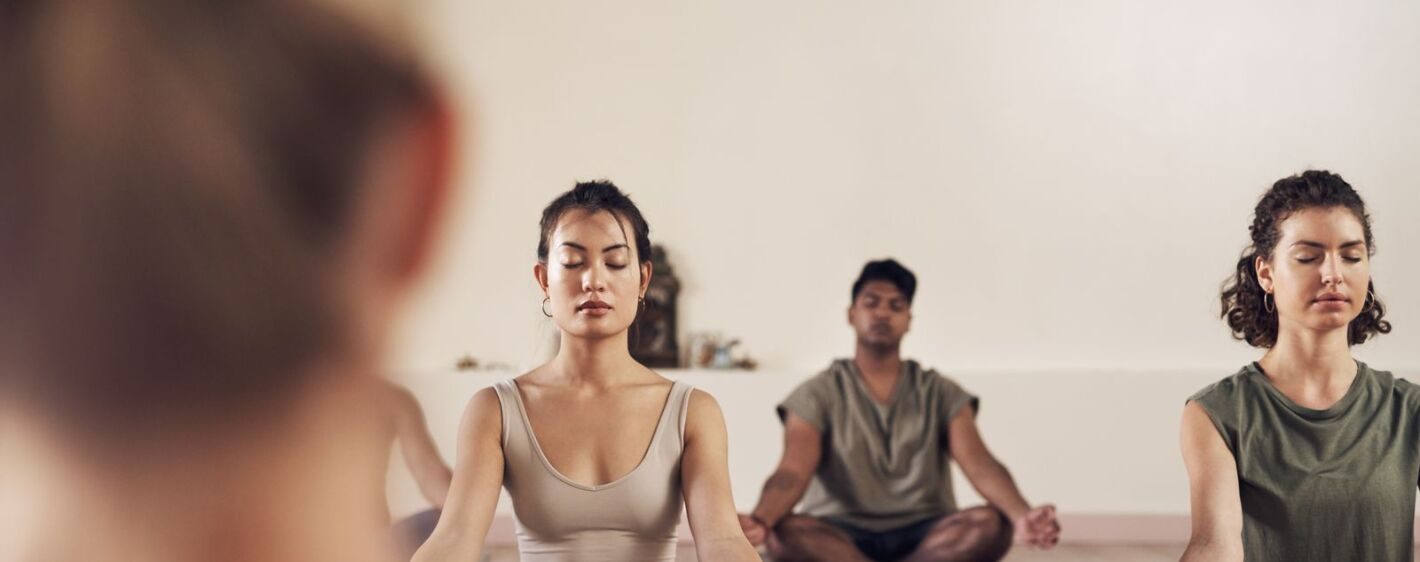
Here is a great suggestion to save time: Meditate while waiting in line somewhere! If you need to do nothing for a while, you can enjoy this short period of time. Close your eyes and focus on your breathing. If you feel uncomfortable closing your eyes in public, focus on one point and think about your breathing. In this way, you will make the most of your wasted time.
You can use the time you spend on the road by meditating. If you can find a seat on public transportation, sit down, close your eyes or leave them open and direct your gaze downwards at a 45-degree angle. Focus only on your breathing.
Exercise both your body and your mind. Sometimes when our body is exercising, our mind can still be elsewhere. Instead of making this mistake, you can think of physical exercise as an exercise for your mind as well. All you need to do is focus during the exercise. Some exercises are well suited for this, but weight lifting or competitive team sports may not be.
How often do you watch TV? Many of us turn it on and start preparing dinner, thinking about what we have to do at work the next day, talking on the phone or cleaning. This creates a gap between mind and reality. If you are watching TV, sit in front of it and focus on what you are watching. When it's over, turn it off and keep it off while you do the rest of your work.
You can even meditate while making yourself a cup of tea or coffee. Focus on the sound of the kettle as the water boils. Think about the process of making your tea or coffee. In this way, you can learn to be grateful for what you drink and to stay in the moment. You don't have to sacrifice your life and devote a significant part of your day to mindfulness. You can also be mindful while doing the things you have to do. In this process, you can reinforce the satisfaction and happiness you get from life.
 @vinnieflores