Binance Smart Chain-The hottest thing in Defi right now
Binance smart chain which launched in September 2020 has seen an explosion of defi apps run on it mostly because of the gas fee problem it solves (currently a sore issue o the ethereum network. BSCA has suddenly become a major competitor in the defi space.
In this article I wont delve into all the projects just the one I am in currently. As i write i am on BNB farm.
What is BNB farm?
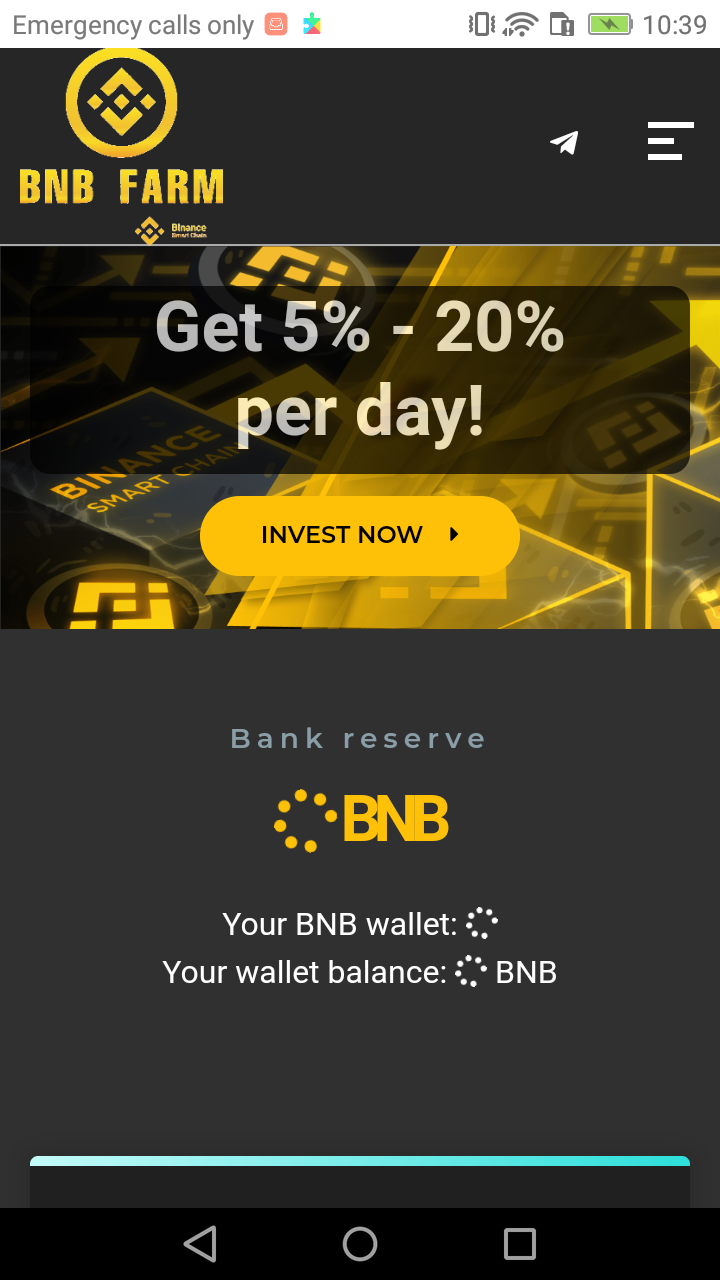
Simply put, it is a smart contract running autonomously on the B SC
What does that mean?
A smart contract is simply code that has been inputed into a system (the binance smart chain) to always produce the same result. Once put on the system the code cannot be edited or changed. This brings in a layer of security assuring you that funds put into the contract will only do what the code specifies it to do and assures you noon will just tuck and hide with your funds. Then one would ask How do I know the site is legit in the first place? There are currently auditing companies that ensure a site is safe and not a scam one of which is Haze auditing https://hazecrypto.net/ which has audited BNB farm. What auditing firms do is check the source code for bugs and back doors to ensure no malware or background programs are put in that could be used to scam the public. BNB farms audit report can be found on the link given.
**What does the BNBfarm contract offer?**
5 investment plans:
Diamond Plan
[ Daily ROI ]
5%
Dividends every second
**Forever**
Total return **∞**
Min. investment is 0.05 BNB
Platinum Plan
[ Daily ROI ]
10%
Dividends every second
**20 days**
Total return **200%**
Min. investment is 0.05 BNB
Gold Plan
[ Daily ROI ]
15%
Dividends every second
**10 days**
Total return **150%**
Min. investment is 0.05 BNB
Bronze Plan
[ Daily ROI ]
20%
Dividends every second
**6 days**
Total return **120%**
Min. investment is 0.05 BNB
Which plan am I in?
Currently I am in the diamond plan offering 5% daily forever and I put up 0.05 BNB. I have been in the plan for 3 days now and have nothing to complain about. I enjoy the freedom I have to withdraw any amount accumulated although I cant get back the amount I invested. I'll get my return on investment in 20 days and will report on it for those interested in following my journey.
Bankroll Network ;The Bank of the people
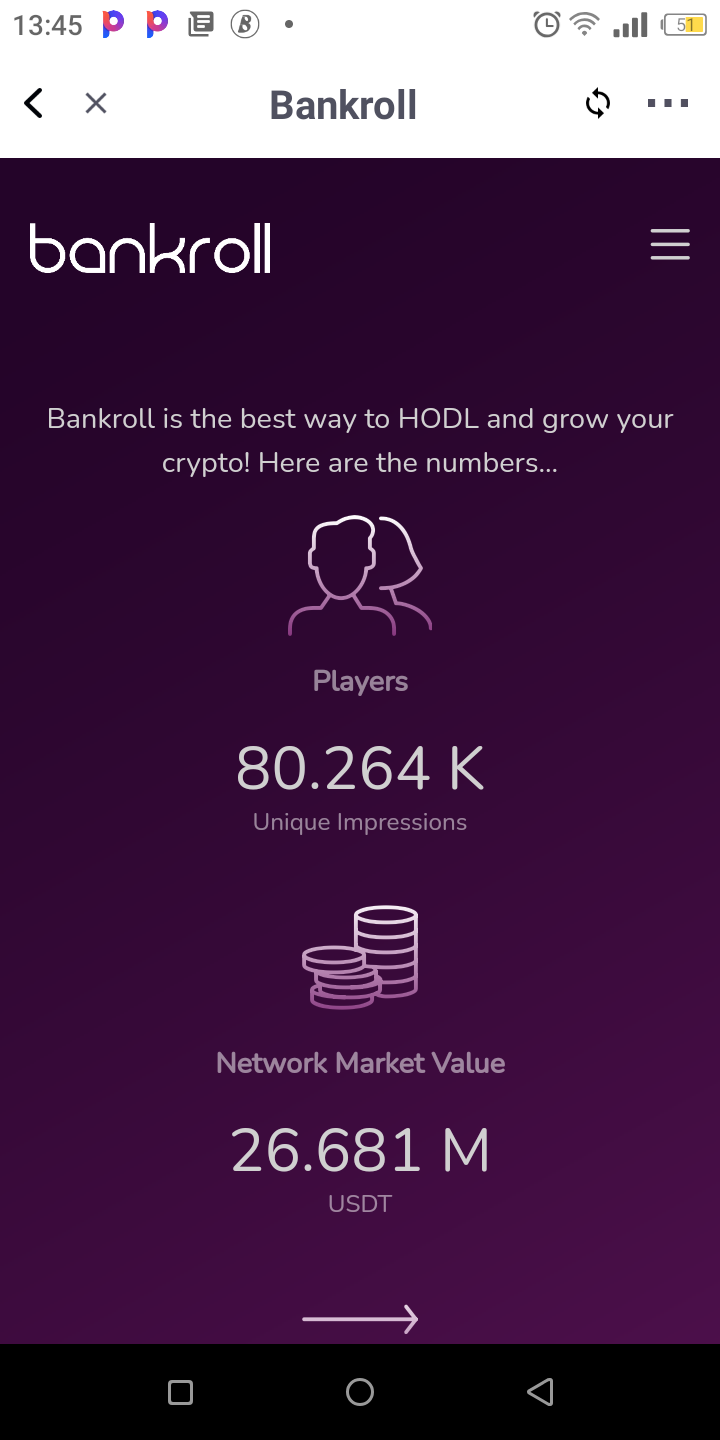
In this article I want to talk about bankroll.network, a defi project running on the tron network. I believe the bankroll project has the power to change the way we view banking and savings. Keep reading to see how.
**What is bankroll?**
Bankroll is a defi banking game which can be found as a dapp running in the tronlink pro wallet. To access it one would first have to download the tronlink pro wallet which is on google play store.
**What's with all the hype?**
The game simply put is a bank where the base currency is the banker token (Bnkr) To participate in the game one has to purchase the native token Bnkr or Bnkrx and use it in the game. There are a number of investment options the most lucrative of which is bankroll flow. In flow you put a deposit of **bankrx** yes I mean **Bnkrx** not **Bnkr** which is a separate token used exclusively in flow and can be obtained by swapping Bnkr to Bnkrx a function in the game. Flow promises 1% daily which is withdrawable at any time. The dividends are withdrawable up to 150% given one has not opted to re-invest. In the game you find 2 options; to roll or to claim. Rolling is re-investing while claiming is withdrawing to your wallet. If one opts to reinvest then you continuously earn as a reinvest is taken as a fresh deposit. Once you re-invest you begin to earn 1% of your new total. Essentially if you continue to re-invest you can earn cumulatively and indefinitely.
**Case study**
If i wanted to deposit $100 in flow i would purchase first purchase trx equivalent to that (at the time of this article the price of trx is roughly $0.08. I would then enter the game and enter the flow option. In flow I would then purchase Bnkrx which at the time of this article is worth $0.15. This means **$100** would get me roughly 667 Bnkrx. I would then deposit that into flow and in 24hrs would have accumulated **1%** of that which would be roughly 6.67 Bnkrx ( roughly $1) which is totally withdrawable at any time to use or re-invest. This means in 100 days I would get my return on Investment (ROI) and would continue to earn for another 50 days if i never re-invested. If however I chose to re-invest my 1% daily then at the end of 365 days (1 year) i would be earning **3700%** of my original investment!!!! Meaning I would turn my **$100 into $3700o in 1 year!!!!!** I hear the questions Is this for real?? How long has the site been in existence? Has it been audited?? The answers are yes; 2 years (paying out) and yes respectively.
**What's the catch?**
Nothing. The owner of the dapp who goes by Bankteller is a firm believer in community driven wealth. With over 20 years in the banking industry and IT industry he believes its time to give back to the people and he has done and continues to do so through the bankroll network.
**Tokenomics of Flow**
Now how the coin gains value is based on the economics of the system. Once a player makes a deposit. That deposit is burned meaning your deposit ceases to exist. That means you cannot withdraw your initial deposit. You only get it back when you ROI in 100 days (assuming you didn't reinvest) I must say you can ROI faster by reinvesting. The purpose of burning is to control inflation allowing the coin to gain value. Your deposit is burned but returned to you 1% at a time. In essence your money is given back to you over 100 days in such a way that it doesn't rock the boat allowing the coin to remain relatively stable in value.
**My own Experience**
I've been in Bankroll flow since December and Bankteller has kept to everything he promised. I continue tp earn my 1% dividend daily which i use as i see fit. The only drawback for me is that when I joined flow I spent $0.40 per Bnkrx token which is now worth $0.15 meaning I'm currently down 60% of which I'm not complaining as I still benefited from when the token upped in value almost 400% and I was earning close to $4 daily.
**My opinion**
Bankroll is a good passive investment which is in safe hands with Bankteller
This article is not investment advice and as we say in this business DYOR!!
Life in the pandemic: Living with a killer virus in the air (Aka Life during the Covid-19 Pandemic
Zimbabwe has 36,535 confirmed coronavirus (COVID-19) cases and 1,507 deaths as of March 16, 2021. https://zw.usembassy.gov/covid-19-information-2/
These are some of the images and text we've gotten used to seeing, something no-one dreamed or imagined would happen in our time.....but it did. A killer virus that has done what 2 world wars failed to do; which has a stronger will than that of the human heart to survive that it mutates at an unprecedented rate.....
Late March in 2020 when our first lockdown was effected the world around me literally stood still. Every business immediately ceased operation and I remember going home to sit and do nothing, literally just sit and do nothing. The first month was the worst, not knowing if I would have a salary at the end of the month and just feeling so weak and so useless. Coupled to the fear of contracting the virus and being stigmatised and locked away if that ever happened, the fear was unbearable. I missed the freedom of just meeting my girlfriend, giving her a hug, holding her and having to settle for whatsapp conversations. The real downer was celebrating her birthday over the phone. I still remember how low she was and how low that made me feel. That month passed.
Image courtesy of Pexels https://www.pexels.com/search/fear/
In the second month, our workplace had begun moving into the digital space and we started being given data and we got paid. Suddenly I was able to breathe for the first time, the walls didn't feel like they were totally caved in. I started spending more time reading up and thinking of ways I could make my own money, become my own boss. We could travel into town though under strict conditions. It was scary walking into town to discover you're the only one, and after a month of staying home it felt like a taboo to be doing that. This was to be my life for the next 3 months, a new normal.
Image courtesy of Pexels https://www.pexels.com/photo/photo-of-man-kneeling-while-praying-2652088/
I can't say I'm totally used to it yet or that I ever will be, but i will continue to survive and enjoy the pleasures life has to offer in this time. We are currently in a second lockdown after about 3 months of no lockdown till December of 2020 and in that time I was able to spend time with the love of my life almost daily and reconnect with her and friends. It makes those moments all the more memorable. Life is short and even moreso now. It's a priviledge to get to spend another day with the people we love and a blessing. This is life during the pandemic
Financial Education II
In the first series I provided an introduction to the theme of this series.
We looked at how the current job market is shrinking as a result of the covid19 pandemic. I would like to add that as a second wave is resurfacing we find ourselves again at the mercy of the elements.
We cannot sit on our laurels and hope for the best.
In this article I want to take a look at traditional banking and compare it to what I would consider the new way of banking
Source:https://www.pexels.com/search/bank/
Source https://www.pexels.com/photo/abundance-bank-banking-banknotes-259027/
Traditional Banking
Traditional banking is the financial institution that is dedicated to the administration of the money that its clients deposit in custody and, on the other hand, the bank uses that money to grant it as a loan to individuals or companies, charging them interest. https://blog.mercury.cash/2019/10/26/5-disadvantages-of-traditional-banking-compared-to-cryptocurrencies/#:~:text=Traditional%20banking%20is%20the%20financial,or%20companies%2C%20charging%20them%20interest.
Traditional Banking operates in a way that never allows clients the freedom to grow their money. The system is limiting in the following ways:
**1) Slow processing of transactions**
The processing of transactions is delayed by the fact that transactions pass through a third party and usually this "middleman" link is usually the source of delays
2)**Low interest rates that discourage saving**
The interest accrued on savings is usually slightly above the inflation rate of a country meaning over time little movement is made in terms of increasing the value of savings. In fact the lockdown saw interest rates fall to negative figures in some countries in essence meaning you lost money for saving your money with the bank. As a result a huge number of people removed money from the bank and saw to invest in stocks, bonds commodities and even cryptocurrencies.
**3) Bank and transaction charges**
All deposits in traditional banking attract charges in the form of storage fees, deposit fees and withdrawal fees. In all keeping money in the bank is an expensive process
**The alternative..**
The list of disadvantages can go on. But the question is what then are my options?
Fintech Banking
Financial technology companies are generally startups founded with the purpose of disrupting incumbent financial systems and corporations that rely less on software.” https://www.finextra.com/blogposting/12890/what-is-fintech-and-where-does-it-live
Fintech Banking considers all the disruptive emergent technologies that have put finances in the hands of the ordinary person.
Source https://www.pexels.com/photo/blue-and-yellow-graph-on-stock-market-monitor-159888/
**Cryptocurrencies**
Cryptocurrencies are one such technology that essentially through the blockchain network (software) and peer to peer transactions (removal) of the third party have essentially put financial freedom in to each individual's own hands.
**What am I saying?**
Financial Education is the prerequisite for financial freedom. My hope for yo after reading this article is that your eyes are opened enough to empower you to see your finances in a new light. To see how power can shift to your hands. In essence this is my financial education to you. In my next article we will explore fintech In a little more detail.
This is Victor
Signing out
Financial Education
“Financial education is the ability to understand how money works. It is the art of investing and managing money and the ability to make sound financial decisions.” https://www.entrepreneur.com/article/320917
I’m starting a new series called financial education. This series is inspired by my own journey to financial freedom. We will talk in depth about how the world system and how it has dulled our senses to not see how many is made or rather how debt is minimized and can be used to generate income.
We have come to rely on our gifts, skills and talents as the only way we are going to be rewarded and find our worth in our jobs and in peoples acceptance of how good we are at our jobs. Since the 2008 wall street crash its been a downward spiral for us the pre-millenials and the millennials which has seen the job market shrink. Yet to counter this we have become better students, we get higher grades to become the most sought out worker; we work longer hours and make bigger sacrifices to keep our jobs. All the while the gap between the rich and the poor is ever widening and the dream gets further and further from our reach. Living alone is unaffordable let alone one day owning property.
Source: Pexel Free Images
According to the OECD Employment Outlook
" Up to 10 times fewer hours were worked in some countries, compared with the first few first months of the 2008 financial crisis.” http://www.oecd.org/employment-outlook/2020/#report
According to experts, The job market isn’t set to get any better. With the direction the world is taking for us to catch up to the boomers we need a game-changing strategy. In this series I want to share the strategies I am using to find my way out of poverty. Financial Education is a must!!!!!
Stay tuned to this series where I will endeavor to provide factual and meaningful articles that will improve all our lives
Value Investing: A Fool Proof Guide to Investing VI
Beware the investment activity that produces great applause; the great moves are usually greeted by yawns
-Warren Buffett
Source:https://pixabay.com/
***Hi everyone***
*This is my 6th article in the series as we continue to look at value investing. Today we will look at th EV/EBITDA ratio as a measure of undervalued stocks*
****EV/EBITDA ratio****
This ratio is used to compare the entire value of a company (Enterprise Value) with the company’s financial performance (Earnings before Interest, Tax, Depreciation and Ammortisation.
**EV**
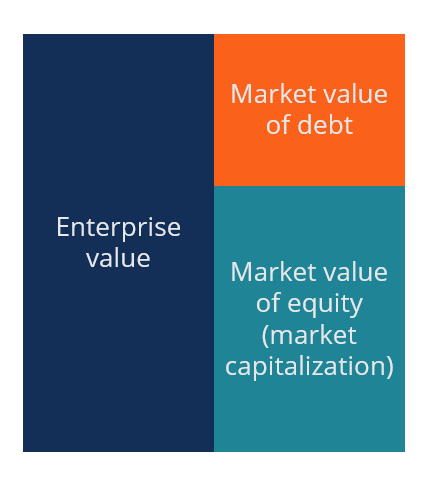
The Enterprise Value (EV) of a firm is: its market capitalization+ debt-Cash or Cash equivalents
Market Capitalisation is: the price of a company’s shares on the market x the number of issued shares.
Source:https://corporatefinanceinstitute.com/resources/knowledge/valuation/ev-ebitda/
In general EV represents the entire value of the business.
Source:https://www.investopedia.com/ask/answers/072715/what-considered-healthy-evebitda.asp
**EBITDA**
This ratio talks about Earnings Before Interest, Tax, Depreciation and Ammortisation. It is a measure of the financial performance of the company in terms of cash earnings.
To calculate EBITDA, earnings, interest, tax, depreciation and ammortisation figures are needed. These can be taken from the company’s **income statement**. All these figures are added together.
Source:
https://corporatefinanceinstitute.com/resources/knowledge/valuation/ev-ebitda/
EBITDA= E +B +I +T + D + A
Alternatively, the company’s operating profit figure (which can be taken from the **balance sheet** can be used. Operating profit is EBIT. To calculate the EBITDA we simply add Depreciation and Ammortisation figures to the operating profit figure.
EBITDA=Operating profit (EBIT) + D + A
**EV/EBITDA**
A healthy ratio value is generally below 10. Lower values tend to show higher performance relative to the companies worth. Higher performance can serve as an indicator of a stock being undervalued but may also be an indicator of financial problems in the company as it may indicate a low market cap. Having said this we go back to what we’ve always discussed in my previous series that the indicators work better when used in concert. The EV/EBITDA ratio is widely used with the P/E ratio.
**Conclusion**
*As always its good to learn the small money management techniques to allow us ordinary people to think and grow rich. For those who are reading this article for the first time I don’t have a financial background. I am the average Joe who just took an interest in investing. Everything I write is written from experience and using these techniques I am yet to make a loss having been investing for 2 years.*
Value Investing-A Fool-Proof guide to Value Investing V
If you don't find a way to make money while you sleep, you will work until you die
-Warren Buffett
Source:
https://wallpaperaccess.com/warren-buffett
In today's article we will add to our arsenal more tools we can use in value investing to get the most out of our investments.
Now onto the work of the day. The tools needed for successful value investing.
**Debt to Current Assets ratio**
The debt to current assets ratio simply tells you whether a company has more debt than assets or less debts than assets. The value is calculated by
total liabilities / current assets.
These values can be located in the balance sheet.
Source
https://www.google.com/search?q=debt+to+current+assets+ratio&prmd=inv&sxsrf=ALeKk03fpa22M8FtG1q7WSZtLTzszWszGA:1600615773120&source=lnms&tbm=isch&sa=X&ved=2ahUKEwj5i9C0hvjrAhUgRxUIHdSPDeYQ_AUoAXoECA8QAQ&biw=360&bih=476&dpr=2#imgrc=JNoeg2eSWvAGOM&imgdii=-KVqhOI-FYRkmM
**Analysis of ratio**
-A value of 1 shows that the amount of debt is exactly equal to the amount of assets which signifies a fairly healthy company. A value of less then 1.1 is usually a good figure to work with.
-A value of less than one shows good growth in a company and reflects relatively lower debt than assets. These are very good results.
-A value greater than 1 shows a balance learning in the favour of debts t o current assets.
Generally one would prefer lower debts to assets when looking at good stock picks.
Value Investing-A Beginners Guide To Fool-Proof Investing IV
A study done by Bankrate found that 52 percent of Americans don’t own any stock or stock-based investments. Even more alarming, 74 percent of adults under 30 own no stock at all.
[Source](https://www.moneyunder30.com/value-investing)
The major reasons cited for this were that most of them either didn't know much about stocks or they thought stock trading is too risky.
I'm here to show you all it isn't too risky and it's easy to learn how to do it.
“Long ago, Ben Graham taught me that price is what you pay; value is what you get. Whether we’re talking about socks or stocks, I like buying quality merchandise when it is marked down.” – *Warren Buffett, from his* *2008 Berkshire Hathaway Chairman’s Letter* http://www.berkshirehathaway.com/letters/2008ltr.pdf
In this article I want to draw in on tips you can use to reduce risk and grow your stock portfolio.
In previous articles I drew in on technical analysis in other words ***research.***
This is probably the most important tip I can give. In your analysis you are looking for stocks trading below their intrinsic value. We spoke about the book value and important ratios we can use to analyse whether a stock is trading below or above it's book value. We want to look at other things we can do.
**Diversity**
It is important as an investor to spread risk. You do this by investing in stocks from different unrelated industries. For instance May pick some stocks in the finance sector, others in the food sector and others in the energy sector. This ensures when one sector is experiencing a situation your whole portfolio isn't affected. This is an advantage when a sector is performing poorly.
**Stick to the facts**
Never be emotional when picking stocks. There is no right or wrong only sound business decisions.
**Have Discipline**
It's always tempting to buy a stock that just happens to be on the market and it's that rare steal opportunity or a stock that is appealing is there for the taking but it violates all the principles you set for stock picking. Don't be tempted stick to the plan.
It's very easy to become successful at investing and it's becoming more and more accessible to all of us. We just need to take that first leap of faith and we can all be Victors.
"My Mobile Wallet"
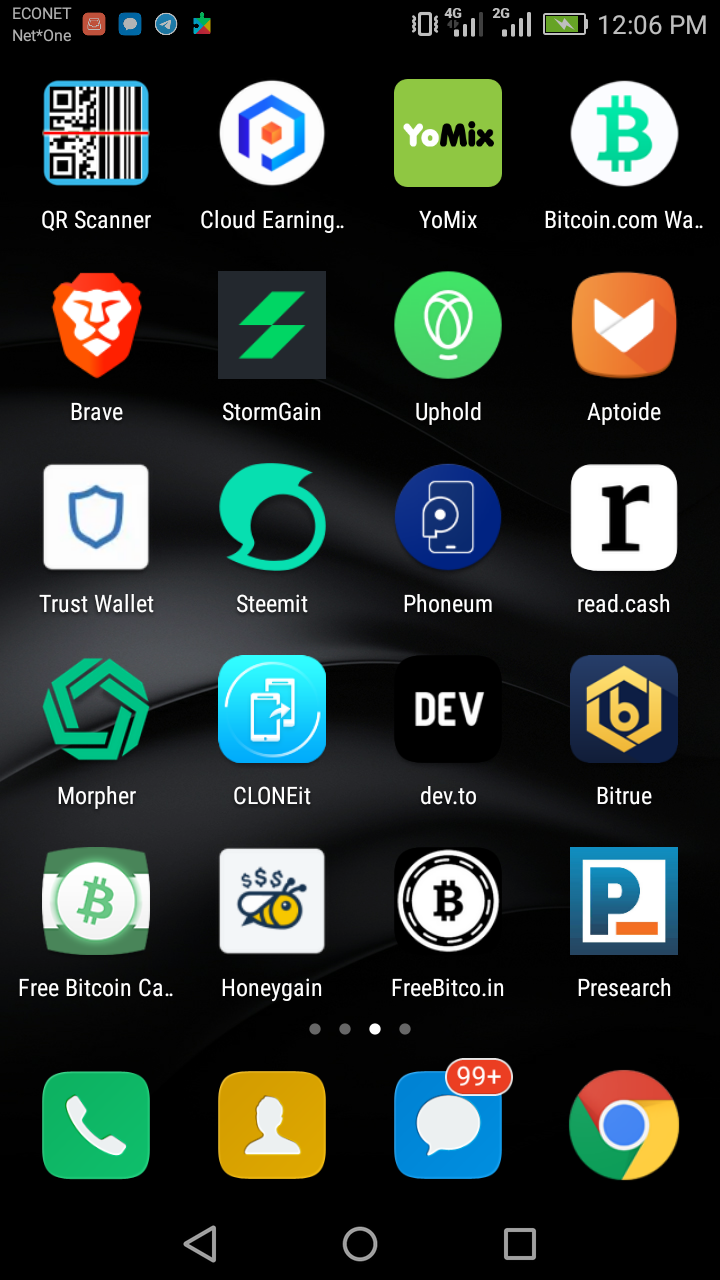
I'm writing this short article to talk about how I've turned my phone into digital money. I've essentially installed a number of apps which ensure that whenever I am online I'm churning the dollar. These are the apps I'm sharing with you now:
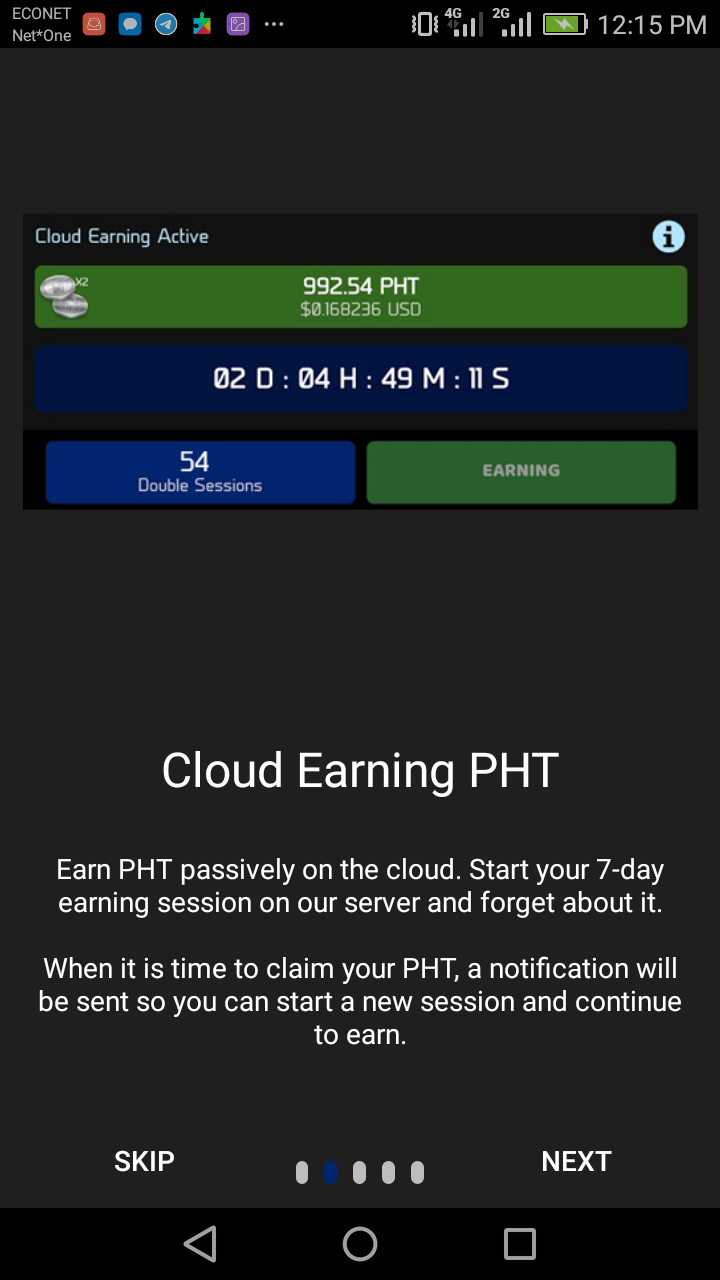
**1) PHT cloud miner app**
The phoneum cloud miner app is one I use for passive PHT earning. All I have to do is press the earn button once every week. The weekly earning is approximately 700 PHT per week which is equivalent to almost $0.04 The withdrawal minimum is 20000 PHT.
It essentially means it would take a year to withdraw but I keep the app because I do very little to earn. The token is a trc10 token meaning it's compatible with a tron wallet.
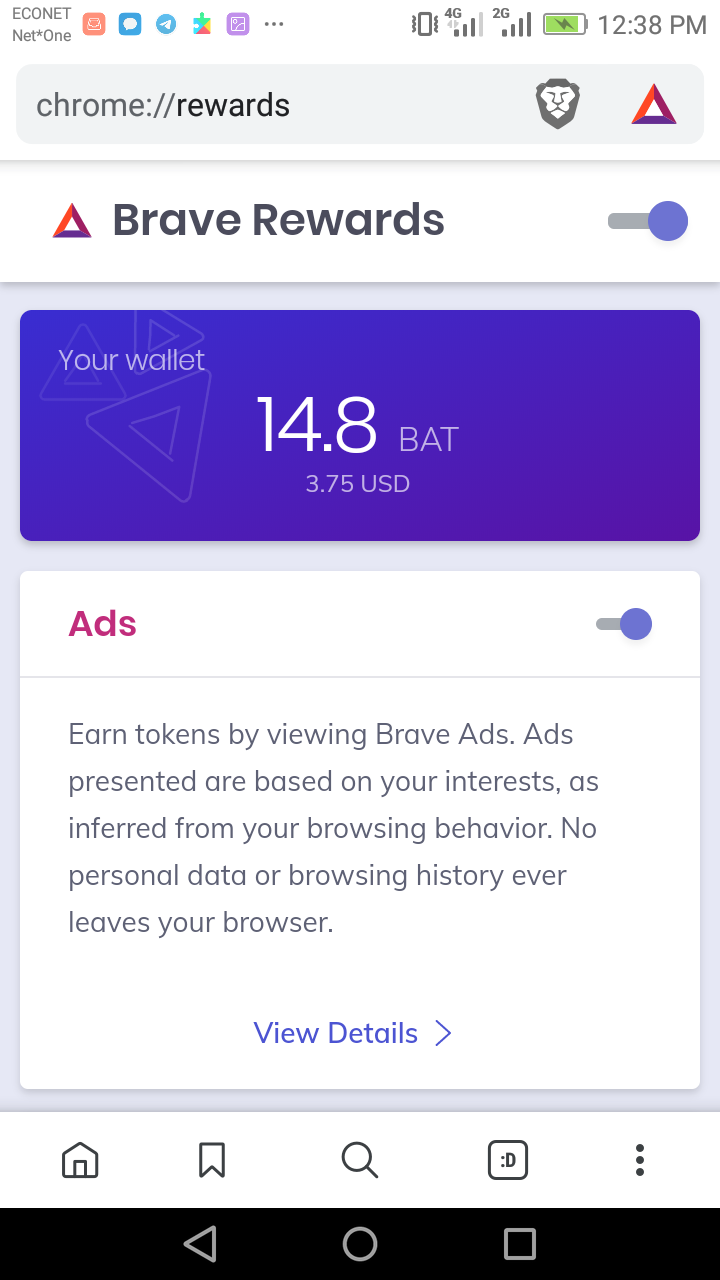
2)**Brave Browser**
I'm sure almost everyone understands the value of having the brave browser. Passive earning of bat tokens just for allowing the browser to push paid ads. I had at some point also downloaded crypto browser but found it wasn't that friendly to me. I know most people wonder if there are ways to increase the number of ads coming your way. The answer is yes there are. Just send a question in the comments section and I'll answer.
I have to however reach a minimum of 25 bat which I am getting to after 2 months of using the app. I expect to reach it in my third month. Of course this minimum is to verify my mobile wallet. Afterwards all I need is a minimum of 5 bat to withdraw. I'm excited about my first withdrawal.
**3) Pi mobile mining app**
I also have the pi mining app and have had it for approximately 3 months. Currently pi is not on any exchange and as such has no value yet but the hype following this project is huge. If the hype is anything to live by, then there's alot of profit to be made so this is a watch this space kind of app for me.
*Today I will only share these 3 but I will continue to share the rest of my apps.*
*I purposely made sure this article wasn't technical because let's face it passive earning should be easy and fun.With cryptos am I right? These are simple no brainers and it's just good to lay people of like minds know what space you're in so that we move as a herd.*
*I'm expecting comments to confirm what others are doing on their mobiles in terms of passive earning and also get new ideas. So I'm really really waiting for comments*
Signing out
Victor
Value Investing-A Fool-Proof guide to Investing for Beginners III
*****INTRODUCTION*****
Hi everyone. I know it's been some time since I posted. With recent events of spammers and people throwing articles everywhere that mean little, I have dug my heels in to providing quality well-researched articles to enrich my readers. With that said, I present my third article on value investing. It's time to dig in to some delicious knowledge.
We continue from where we left off. I wish to begin the article by looking at the next valuation indicator, the:
*****Price to Earnings ratio*****
The Price to Earnings ratio is simply calculated by dividing the share price by the earnings per share. Again earning per share can be found in quarterly reports but you can research the actual price to earnings ratio for any particular stock.
****High P/E ratio****
A high P/E ratio basically means you pay far more for the share than the profit each share makes. This could be interpreted in one of 2 ways
1) The stock is over valued. This would mean as a value investor this world not be a good investment
2) The high price reflects investor confidence in the stock therefore it's value on the exchange increases
As such we go back to previous articles and continue to say it is difficult to make a decision about a stock based on one indicator.
Having said that we can now combine what we've learnt so far, namely the P/B ratio and the P/E ratio.
**1)Low P/B low P/E**
A low P/B ratio would indicate an undervalued stock but at the same time might indicate low investor confidence which caused the market price to slide. Applying the P/E ratio to the mix, a low P/E ratio might indicate an underrated stock or further confirm the position that the stock is not a market performer. We would still need further analysis of other indicators.
**2)Low P/B High P/E**
A low P/B value would speak to either an undervalued stock or low investor confidence. In this case a high P/E would indicate investor confidence isn't low so the only explanation left would be that the stock is undervalued. We might want to confirm using a third indicator but we can be relatively certain a that the stock is undervalued and would be able to make a decision based on that.
**3)High P/B High P/E**
The high P/B value would indicate an over valued stock or high investor confidence whilst a high P/E ratio would still indicate the same. Generally it would be difficult to come to a conclusion and further investigation with other indicators would be useful at this point.
**4)High P/B Low P/E**
A high P/B would indicate an over valued stock or high investor confidence. Coupled with a low P/E we would be led to the conclusion that the stock is over valued as a low P/E would mean low investor confidence.
***My Comments***
I find that these simple valuation tools can be used to repetitively buy stocks on purpose that will always give you not only steady profit but peace of mind. As I was writing this article I asked for input from a colleague who has a degree in Financial Accounting. He found that this information provides the necessary information for the average Joe or Jane to make effective financial decisions when it comes to Investing. This is the goal of my series, to educate the simple person to begin to operate and think like the rich. The end will be that what we see and practice we become.
Signing Out
Victor

Hi everyone!! I've just posted my follow-up article Value Investing and I know quite a number of you were waiting for the next one. It's here!!! So click on the link be
low to read it. Thanks again!!
https://read.cash/@viczwa/value-investing-a-beginners-guide-to-fool-proof-investing-ii-a2aff408
Value Investing-A Beginners Guide To Fool-Proof Investing II
****Why, when and how do companies sell shares? (continued)****
In my last article we spoke about the various stages of growth in a company leading to the company going public. We ended with a use case of a company started by Jack and John each with a 50% holding of their private limited company. For more information on the previous article visit my link to the previous article.
https://read.cash/@viczwa/value-investing-a-beginners-guide-to-fool-proof-investing-115d6c72
We introduced the concept of book value which in essence is the actual value of the company as reported in the company's financial records.
****To continue:****
Let's say the company begins to grow further in leaps and bounds and the company has up to 50 or more shareholders and is still growing to the point where more capital is needed to further growth maybe to finance a new production line or to finance expansion into new markets. The company would the seek to list with a stock exchange which would come with the following n benefits over and above additional capital:
1) Helping existing shareholders realise their investment goals through increasing activities of the company.
2) Increasing the public profile of the company.
Listing May also provide me benefits where the company may incentivise employees through offering share options
The process of listing begins through a process called **Flotation**. Flotation is the actual process of converting the private company into a public one or what is commonly known as **"going public"** where the company issues shares to the public for buying. The process involves the company making itself elligible to qualify to list on an exchange by meeting the requirements of listing (which on successful listing world have to be maintained to remain so)
****Valuing the shares of a company****
Now you don't need to be a financial guru to be able to evaluate stocks. There are **key indicator**s which anyone can easily get used to and can use to evaluate any stock. In this article I will look at one of them. I will look at how we use it and will give an actual example of a stock I applied it on.
1) **Price to Book ratio (P/B) ratio**
We have spoken about the Book value of a company. I want to expand on that abit.
The book value of a company is the total net assets of the company minus the liabilities of the company.
I like to view it as the price a share is selling for on the market vs it's actual value in financial records.
**Why are there 2 prices for 1 share?**
A share is actually worth the company's assets (what the company owns in cash, bank and property etc) after we have deducted an debts and financial commitments the company has to other parties. We will call that price B (book value). When the shares are in the exchange however they value of the share is determined by how much people want it (demand and supply). If for some reason alot of people at any one time suddenly find the need to buy shares in the company the increasing need will force those who own the shares on the exchange to increase the price they choose to sell their shares at. This has the effect of increasing the shares price (P) on the exchange while the company's book value B remains the same. In this case if the company's share price rises above the book price we say the company is over-valued. We say it's under-valued when the situation is reversed. Now this gives some indication of the value of the company. The P/B ratio is given by:
(Price of share on exchange)/(Value of share in the books)
**A high P/B value** indicates that you pay more on the exchange for a share than it is worth.
**A low P/B value** indicates that you pay less on the exchange than the price is worth. This can be a good sign as it shows a gem of a company in the future or it could indicate problems in the company which are causing its price to fall
Having explained this you cannot make a stock pick decision based on this ratio alone which is why we use other indicators which I will bring to you in my next article.
****Picking a stock based on P/B ratio****
**Option** 1
Look up stocks on your local exchange and Google their P/B ratios.
A P/B ratio of 1 indicates the book price and market price are the same.
You would find it safe to buy such a stock as you would be assured it can only go up and if it were to fall it would not fall far. Such stocks perform well in depressed markets.
A P/B ratio below 1 would represent an under-valued stock which would eventually move to it's actual book price in the future (a correction) this is what we are looking for.
Anything above 1 would represent some reevaluation though it must be said a healthy P/B ratio is usually between 1.5 and 2 depending on your country and exchange
**Option** 2
Reading financial records
This is for those who want to take a more active approach.
You would look at a company you might be interested in then you'd download financial records like quarterly reports so you can track it's performance
**Book ratio**
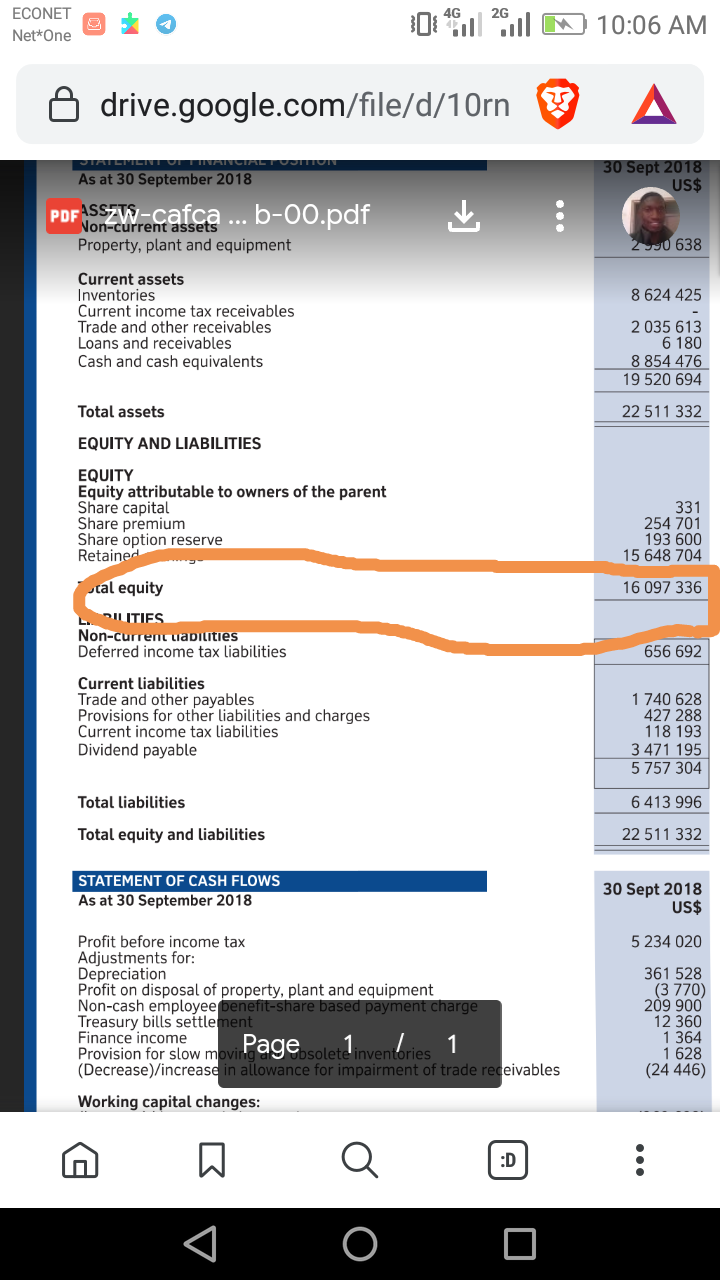
1) To calculate the book ratio from the records in the report you'd look for the **Statement of Financial** position and under it you'd look for total equity. That figure represents the value of the company minus all it's liabilities
2)What you want is the equity price per share. So you'd look for the number of shares issued at that time .
3)You'd then divide the former by the latter to get the book price.
In this case:
16 097336/33 059 000=$ZWL 0.487
4) Then you'd head over to the exchange to check the price on the market
At the time of my buying these shares in 2018 the shares were worth $ZWL1
5) Finally you'd divide the price on the market by the book price
so calculating:
1/0.487= 2.07
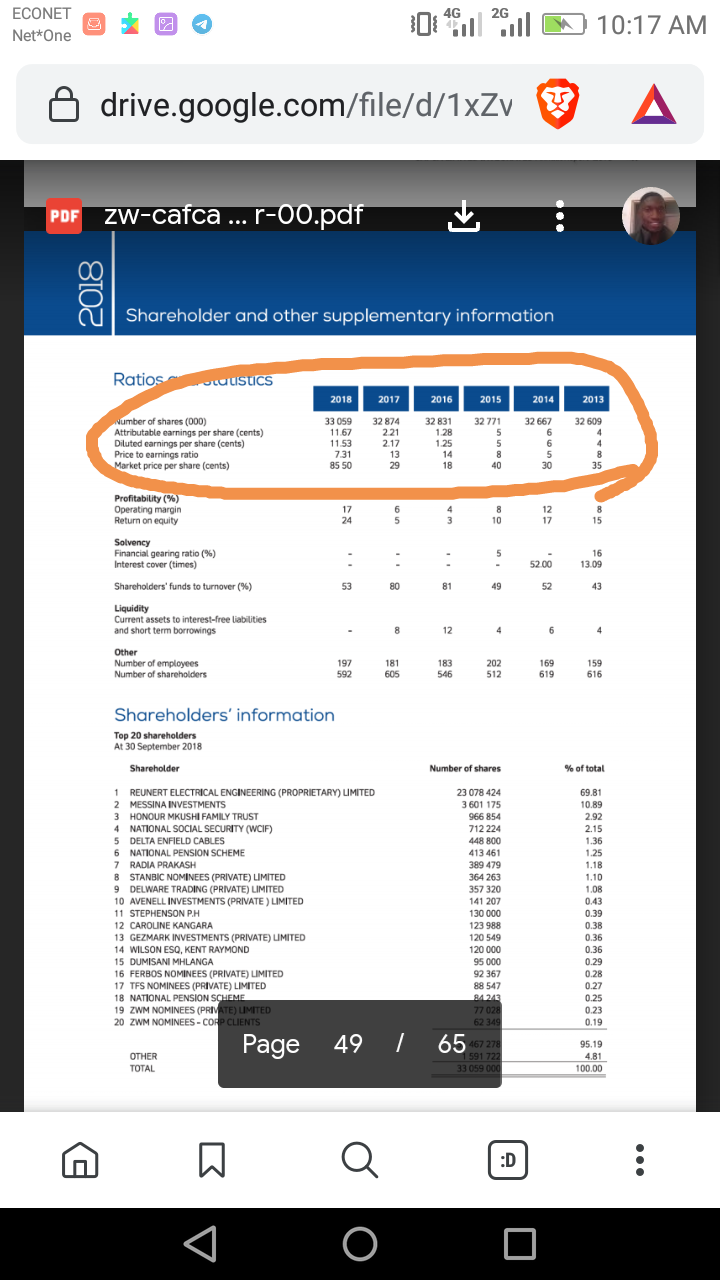
Currently the shares are $ZWL61 per share although that's at a current P/B ratio of 5.08 for the shares in question
In the next article we will discuss other ratios used together with the P/B ratio. My hope is someone is encouraged to go do some research on stocks after reading this article
Thank you all for taking the time to go through this lengthy article. I know it will be of benefit to someone
Till next time
Signing out
Victor
Value Investing-A Beginners Guide To Fool-Proof Investing
I'm beginning a series on a topic called value investing
****What is value investing?****
Simply put, it is the buying of stocks/securities that appear to be **undervalued.**
*****When we say undervalued what do we mean? What's the standard********?***
In short, there are evaluation methods of valuing a stock that are used as a measurement tool when looking at the price of a stock on the market compared to it's value in the company. However there's a lot I've just said which I know is confusing so I will start right from the basics of commerce.
****Background****
A couple of years ago when I got hold of the principles applied in value investing I began buying stocks in though my local stock exchange the Zimbabwe Stock Exchange. Through these strategies I have made consistent returns and have yet to make a loss. I'm here to show everyone how.
****The beginning- What is a stock?****
A stock is simply a share/part of a company which one owns by purchasing a portion of the company.
Once you own shares you are said to be a **shareholde**r because you share in the profits of the company.
*****Why, when and how do companies sell shares?*****
Most companies begun small, owned by a single person who puts money into the business. The money put into the business is called **capital**. Such an individual is called a sole trader meaning this person takes all the risks of running their business on their own and as a result bear alone the burden of loss (if and when there are losses) and win all the profits alone (if and when there are profits)
The individual may find the business growing to a level that requires more than they are able to feed into their business or may find a need to inject more capital than is available to them. In such a case they may solicit the help of other individuals To inject money into the company with the promise of sharing in the profits according to agreements they will make, the most common being proportional sharing meaning if 2 partners each put 50% of the total capital they share profits the same way. Each partner is said to be a shareholder. Such a company is called a **Private Limited** company. Commonly you see it written following a company name as Pvt Ltd.
****Features of a Private Limited Company****
1) A Private Limited Company is one formed with a certificate of incorporation as spelled out by a relevant company licensing body.
2) Commonly such a company can have up to 50 shareholders
3) As the selection of partners is limited by number and by the shareholder(s) discretion the company is private.
4) As the company is legally incorporated it stands as a legal entity separate from an individual an therefore all losses are limited to the company and each shareholder is not personally responsible for the company's liabilities.
***Use Case***
Let's say Jack and John start a company each having put US$1000 such that the total company is worth $2000. Assuming everything they buy and own as company assets came from the $2000 then the company is valued at $2000 we could say Jack owns a 50% share of the company valued at $1000. That would be the **book (what would be written in the books) value** of his share. This of course is an over simplification of what book value actually is but for the purpose of this article we will restrict ourselves to this use case. In articles to follow we will build on our definition of book value.
**Book value** is the centre of valuing a company and automatically a share. This is where we begin to evaluate a stock and from this baseline begin talking about the value of a stock (**whether it is fairly, over or under valued)**
In the next article we will talk about public companies and the purchase of shares on the stock exchange
Keep engaged as I take you on a journey of discovery and enlightenment. The principles I will talk about can be applied to a number of investing disciplines besides stocks
Signing out
Victor
Swissborg Community Review
Today I'm going to be reviewing the Swissborg Community project.
The project basically consists of an application powered by an ERC-20 utility token.
**What problem does the project solve?**
The project seeks to correct the disparity between the formal financial market and the common person (community) In the simplest terms they want to allow the average person to be able to trade without the need for a financial advisor who will simply use the opportunity given to take advantage of the average person.
**How do they do this?**
By educating the average person to the level of being in charge of their own personal wealth.
**How?**
Firstly by designing the Swissborg Community App, a gaming app which encourages you to learn. Basically it's a learn and earn game.
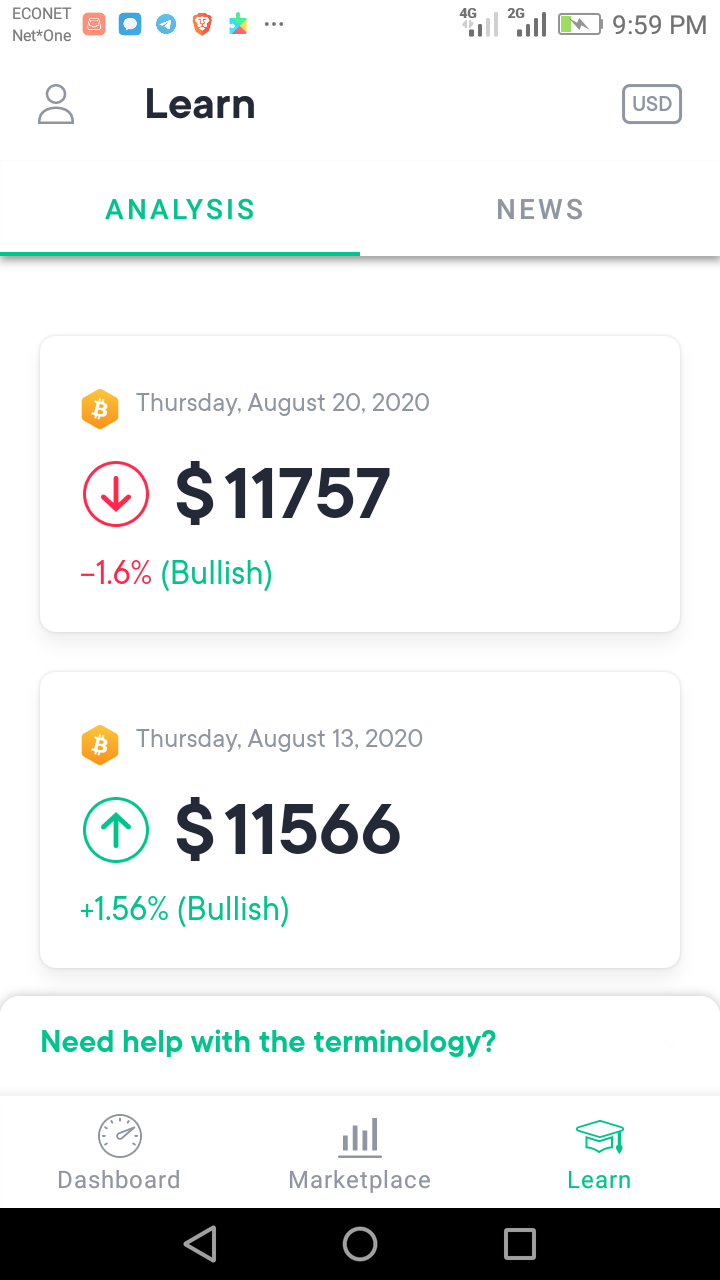
The Game comprises predicting the 24hour direction of the bitcoin price, simple right? Exactly.
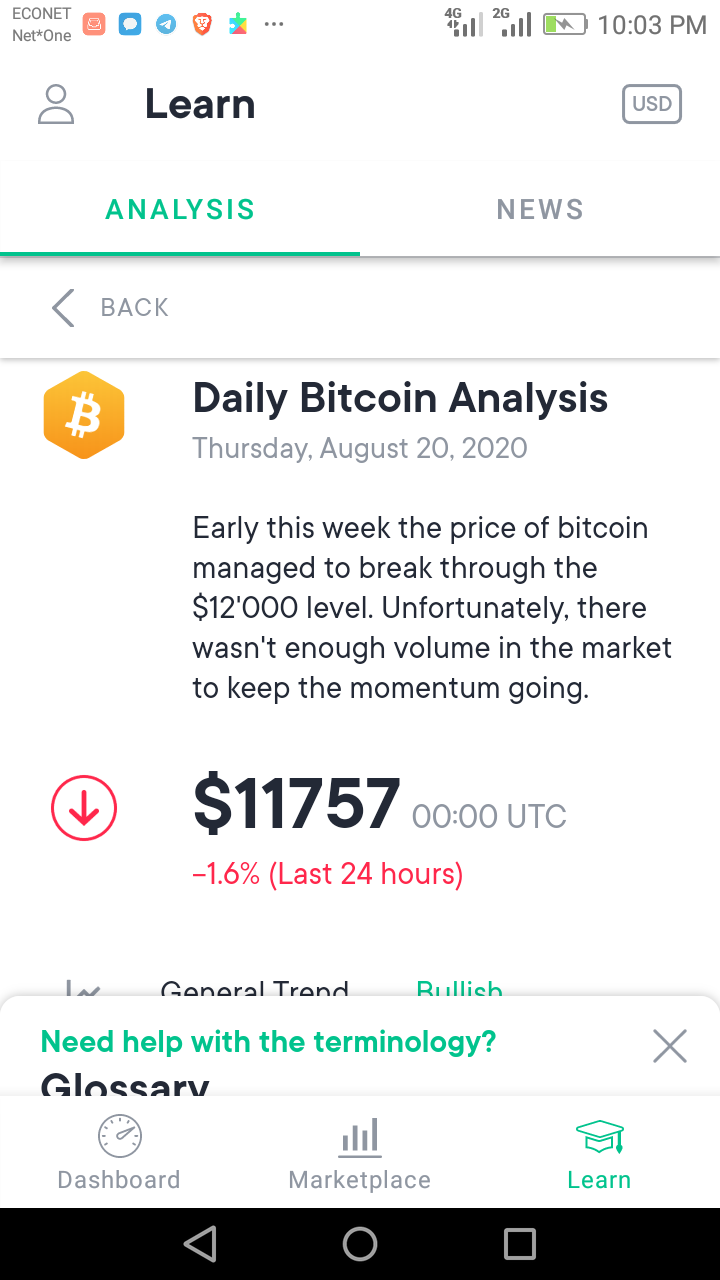
On starting the game you begin by simply guessing (I assume that's what any average person would do) but as you begin to explore the app you realise that there is quite a lot of learning material and analytical data
The above pic shows a week on week price change and trend analysis. On selecting each analysis, a short description and further analysis is given
Also included are price charts.
With all this information at your fingertips you begin to play to win meaning you start trading and analysing. This is one of the goals of the game, to get you engaged and allow you to learn whether you know it or not (the proverbial wax on wax off) So eventually you will get to the point where you will be making predictions based on technical analysis. Also people are incentived to win by being allowed to collect points. The points are converted to the Swissborg token CHSB
**To what end?**
The culmination of your education and token collection is the Swissborg wealth app, the place to buy and sell the token.
Swissborg Wealth App
The app is a trading app that promises holders of the token
1) No hidden fees
2) Technical analysis
3) Community technical analysis (which is correct approximately 50% of the time
4) A financial smart engine which collects data from major exchanges and allows you to buy crypto at the best
**To what end?**
To give the average trader The peace of mind and confidence to place a trade with minimal risk to themselves having used everything given to them.
**Why would I use the token above any other token?**
They have yet to define a clear reason why the token is useful but they do offer that it's an ERC-20 token which allows for scalability and it offers a layer for community based apps.
To me in English they are saying they have yet to find a niche problem to solve but in the future if you hold the coin they promise to find a number of useful purposes. They state that the token is a multi-utility token.
**My comments**
I love the idea of community and sharing of wealth. I love the community app which I use. I find for those seeking to learn to trade it's a must have app. However in terms of utility they are not clear on the purpose of the token. Is it a coin that will have value in the future? I don't know, the only way that can be answered is when the token solves a unique problem.that other tokens don't.
Brave Browser Withdrawal using mobile
I want write a quick article because I noticed a lot of people are having a challenge understanding withdrawal of bat tokens from the brave browser to their uphold wallet. It's quite simple really. I'll show you how.
Firstly this is how the browser l looks like on mobile
You'll notice there's the triangle at the top left corner
On clicking it you'll get here...
You notice in the top left corner you are prompted to verify. Now listen carefully. Most of you have done the uphold wallet verification that's fine. But this verification prompt is **not** for the uphold wallet verification. I repeat it is **not** for the uphold wallet verification.
It is for your brave browser wallet **verification**
Once you press the icon you get the following prompt
Meaning you need to accumulate 25 bat worth of ads to verify your **browser wallet.**
On completing that you get the option to withdraw appearing in your mobile browser.
In other words you need to do 2 verifications on mobile in order to withdraw bat to your uphold wallet
1) The first is the uphold wallet verification which you do on uphold
2) The second is the one which links your browser wallet to your uphold wallet. This requires 25 bat
I hope this article has helped someone.
Morpher Token Review
The morpher token is a cryptocurrency that powers the morpher trading platform. The problem that the token solves is simple. As a token powering a trading platform, it's utility is found in that it serves as the main currency for trading and settlement for all trades. Tradable assets on the platform include cryptocurrencies, fiat, commodities and stocks.
****Why is using the token better than using any other asset?****
1**) Trades using the token are all done at near zero**
2) **There is infinite liquidity**
Infinite liquidity is achieved by the use of the trading software. When you win a trade, the value of morpher tokens gained is minted and credited to your account and even you lose, the proportional asking amount is burned so there is no shortage of liquidity and inflation is controlled. When you place a trade, the counterparty is the software so all trades are instant as you don't have to match a trade with a counterparty. Also slippage is reduced.
3) **Fractional trading**
On the platform through the token you can buy parts of a whole share. For shares which cost A lot of money you can buy (or sell) a fraction of a share and benefit from price differences. Ofcourse you never own any of the assets that you trade.
4) **Investing, trading, and speculating**
On using the platform although it's not easily apparent, you can invest and hold for the long term or and you can trade at the same time using leverage meaning you can benefit twice from one trade.
5) **24/7 trading**
Trading hours are flexible that for stocks you can benefit from premarket and after hour trading as well as being able to close and open trades even after the markets close so that you don't have to pay fees for holding a trade overnight. I think that's a plus for people like me who live in a time zone to the nyse.
****How does the trading work? How do I make money?****
Okay so alot of people are thinking that this whole thing is just a poor man's dream that lacks practicality. So I'll explain the technical aspect.
The idea behind morpher is that traditional trading is made to benefit the trading company through exorbitant trading fees and difficult trading conditions. Those who choose to trade with morpher will do it for the advantages I mentioned. So the idea is, because you realise the advantages of trading with morpher you would take your fiat currency and trade it for morpher tokens to carry out your trading and on finishing your trading you would then withdraw your profits in morpher tokens then exchange to the currency of your choice. So morpher tokens are utility tokens for trading.
When you trade using morpher tokens you are actually staking the tokens. I'll explain how.
Let's say you purchase 100 morpher tokens. You then proceed to buy stock A using the 100 tokens. Let's say stock A goes up buy 10% and you close the trade. Your token balance will go up by 10% meaning from 100 tokens after your trade you will have 110 tokens. The value of your profit is determined by the price of the morpher token (which at the time of my writing is about $0.03)The 10 extra tokens are minted and added to your account hence the use of the word staking. Ofcourse sometimes it means certain coins if changed to morpher tokens traded and converted back may not yield profit.
**M******y Comments****
I signed for a morpher token airdrop a few weeks ago. The airdrop was worth 500 tokens ($15USD). Because the platform is still in the testing phase, trading was by invite. I've been trading for the last day on the morpher platform
The platform is very simplistic and although not much help or instruction is given on how to navigate the platform it's fairly easy to get the jist of it
I tried to look for a separate spot trading function and a separate margin trading function fill I just decided to take the risk of placing a buy order. On doing that I noticed there was The option to buy at x1 leverage where you buy the asset and essentially can hold it if you wish as there are no trading fees or trade it. Also you can select leverage based on you risk aversion.
Trades can be leveraged up to x10
In my opinion I'm not so sure if day trading is best when using the platform. I wouldn't mind buying the coins for long term investing by buying and holding assets. It's essentially staking on my own terms in relation to how long I stake for and what profit I take from staking.
Well, that's all for this review I hope this was good edutainment.
Till next time
Victor
Signing out
My City
This article is a follow through from a previous article titled my neighbourhood.
In this article I'm going to take you through my city called Bulawayo (which means where people are killed). I'll write another article on the history of my country, I'm sure you'll laugh again there's a lot of funny naming involved.
So, here we
The first image this is the view I get on my way into town this large banner and the open view. To either side of this road are 2 parts of the park. First the left side..
As you can see there's a fountain (in blue) which isn't spouting water but the view still is green lol and note the right....
Now this, though not so grand is the entrance to our only museum in the city. Sadly I was on my way to work but it's awesome and when I find time to go I'll be sure to take you with me
Now the city and its streets...and we're in town!!
In my next article I'm going to take you into our shops so stay connected
As always signing out....Victor
Feel free to comment
A typical Day at Work-Online Teaching
https://lbry.tv/A-Typical-Day-at-Work:2
In this video I've sent a clip of what I do when I'm not writing articles
Plus you get to see and hear me
Blockchain & Crypto Technology Quiz
1) What does the following stand for? I)altcoin
II)crypto
III)DLT
IV)HODL
V) ICO
VI) KYC
2) What is:
I) Bitcoin
II) An exchange
III) Fiat
IV) Genesis block
*3) Where did the term HODL originate from?
First person to reply with the first 2 questions correct gets $0.02 *Bonus question for an extra $0.01 for the first person to get number 3
Quick quiz
1) What does the following stand for?
I)altcoin
II)crypto
III)DLT
IV)HODL
V) ICO
VI) KYC
2) What is:
I) Bitcoin
II) An exchange
III) Fiat
IV) Genesis block
*3) Where did the term HODL originate from?
First person to reply with the first 2 questions correct gets $0.02
*Bonus question for an extra $0.01 for the first person to get number 3
Cryptocurrency-Spatial Arbitrage
Spatial Arbitrage is trading (or investing) by taking advantage of price differences between 2 platforms in order to make a profit. The price differences are also called arbitrage spreads.
In order to execute spatial arbitrage, the trader would first have to identify an opportunity in the market to execute his trades. This would require extensive knowledge of the liquidities and volumes of various exchanges. What the trader will be looking for is a specific cryptocurrency which is trading at A lower price on one exchange relative to it's trading price on another exchange. The trader would buy the cryptocurrency at the lower price on the exchange trading at A lower price and then sell on the exchange trading at the higher price.
As an example say a trader spots a price difference in Bitcoin Cash trading between trading platform A and trading platform B. On platform A the price of 1 bch is $262.19 while on platform B the price is at $308.47 a 15% difference (which is rare usually differences are usually lower than 5%). The trader would buy bch at $262.19 on platform A then transfer the funds to platform B to sell at $308.47 for a tidy profit of $46.27. The advantage would be that the trader would not have to wait for the price to fluctuate to make profit they would instantly be in profit on executing the final trade. The trader would however have to be quick in executing the trades as spreads are constantly changing as such the opportunity could disappear in minutes if not seconds also the trader would want to minimise slippage. The trader would have to ensure that they make enough profit to cover trading and transfer fees.
Another way of carrying out the same trade would be to do the buying and selling simultaneously on both platform A and B. The trader would buy on platform A at $262.19 while at the same time selling bch he already has at $308.47 on platform B. In this way slippage is minimised and transfer fees eliminated.
Arbitrage is a good method of making money when price fluctuations in the market aren't many such that other day trading methods aren't viable. Again, the trader has to ensure they have enough volume to make profit.

My Neighbourhood
Today I felt that I would tell a story about my neighborhood but in pictures.
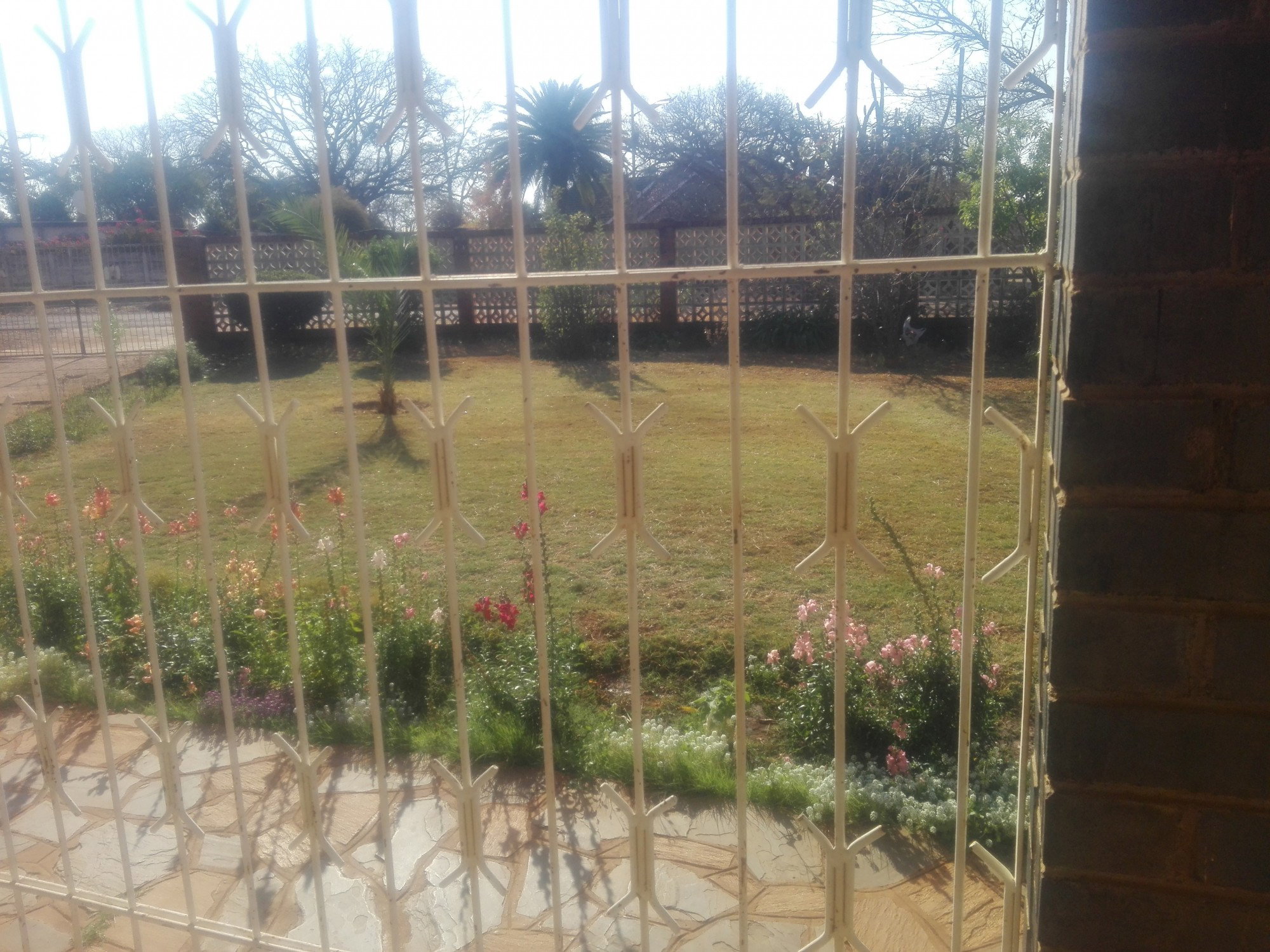
I decided to take a walk and invite you all to some site seeing. First...the view from my verandah....
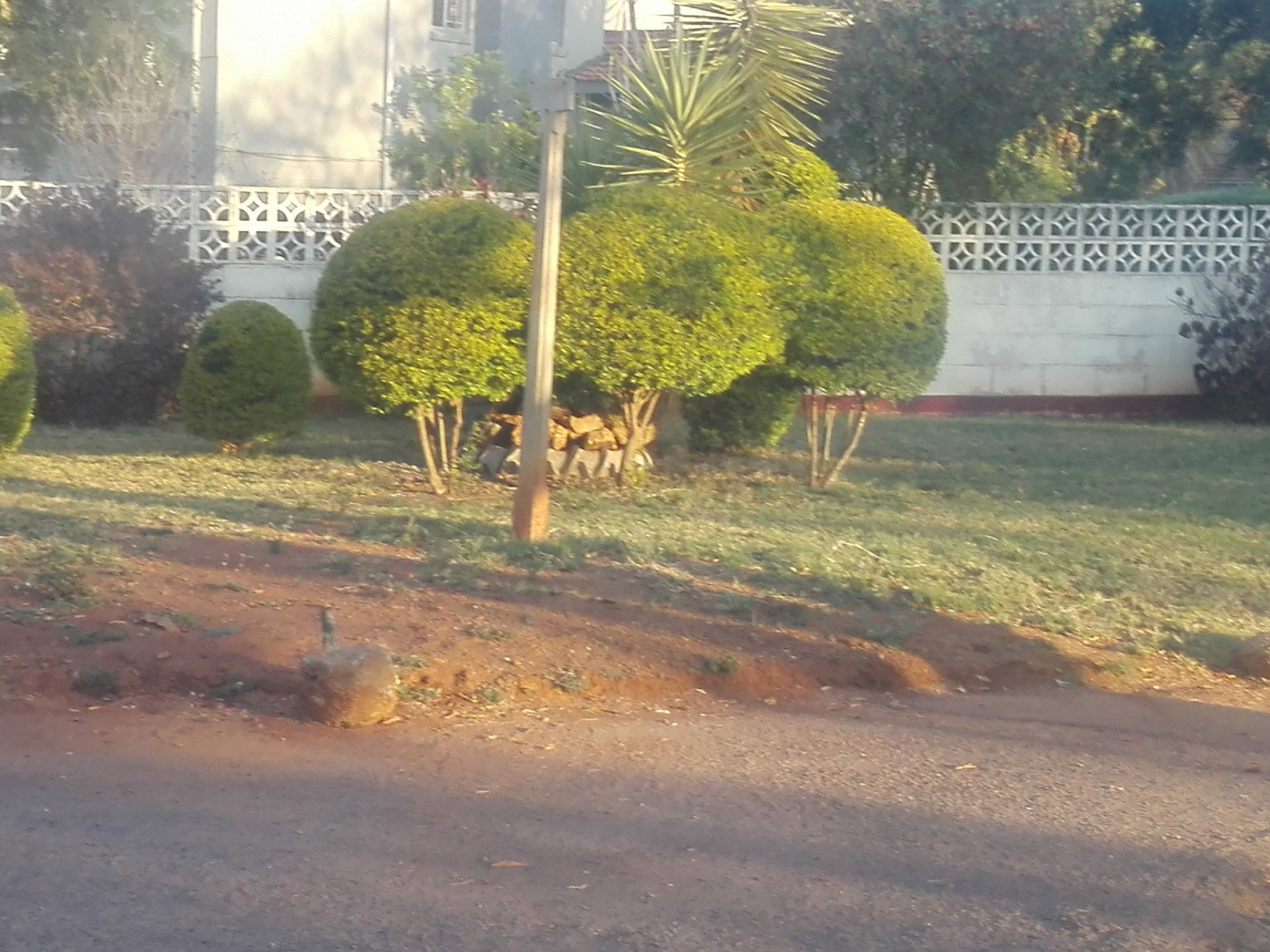
I live in a low density suburb called Khumalo. It's named after one of the historical Kings in Zimbabwe's history. This picture is the front yard as I was on my way out.
And this is the street right outside, a very lonely one at that. Nothing much to day there.
This road is called George Avenue. It's a long straight road that stretches about 2km from my home. I love walking this road when I've got to think about. The trees are majestic, they line the whole road.
For the sake of site seeing, I decided to take a right which you can see above...and.....wait for it.....
There!!! More majestic trees. And if ever you're in the neighborhood....
The local lodge.
Well thanks for taking a walk with me.
It felt good to post something on the lighter side.
The pictures you've just seen are from a suburb called Khumalo, in a City called Bulawayo, in a country called Zimbabwe.
Don't hesitate to upvote and comment if you liked this.
Christian-Supernatural Encounters 1-Seeing
Hi. My name is Victor and I'd like to introduce myself to everyone. I'm new to the community and I've been a Christian for a number of years and have had quite a number of experiences I'd like to share
I once went into a fast that started out as the regular 3 day church fast. I would fast from 6am to 6pm each day. On the third and final day I went to church to pen some time in prayer and felt it impressed upon me to not only continue the fast but abstain completely from food. I did exactly that.
On the fifth day of my fast, the second day of my complete fast while laying in bed in complete pain and my whole body was cramping I fell into a trance. In that trance I saw myself at praise and worship practice where my leaders were talking about a book (one I knew but had never read) saying that it was heresy and I should never read it. The author is a man I knew though not that well who was a youth leader at a church in the pentecostal circuit, a man I held in respect.
I never truly understood the meaning of this vision because I had never read his book nor had the intention to, furthermore the book was an autobiography and I failed to see how that could be of harm.
A year later the man left his church and turned his back on the word of faith movement which is the core of our faith. He believed that the pentecostal movement was a lie (this being the heresy spoken of in the trance)

ZIMBOCASH-A decentralised cryptocurrency for Zimbabweans and the world!!!
Hi guys.
Today I would like to write an article about one of the crypto projects Im involved in that I feel has great potential for the future. This project is called Zimbocash. Now what is Zimbocash?
Zimbocash (Zash) is Zimbabwe’s first cryptocurrency for Zimbabweans by Zimbabweans and its comes at a time in Zimbabwe’s history where we have no currency at all and live in a hyperinflationary environment earning very little (for more background read my article My Crypto Journey
https://read.cash/@viczwa/my-crypto-journey-a-zimbabwean-story-c4aee902
The ZASH project.
The zimbocash project as mentioned above is one designed by Zimbabweans. It isn’t known who the founder is but the spokesperson for ZASH is Philip Haslam,an economic adviser and speaker who trained as a Chartered accountant in South Africa. He is also the author of the book “When money destroys nations.” His goal is to influence multinational monetary policy with sound economic reform. This gives an indication as to why the project is dear to him.
Zimbocash is a decentralised crypto currency for Zimbabweans with the goal of establishing for Zimbabweans trust in the money and banking system.
The founders of zash are largely looking to establish a currency which (thanks to decentralisation) cannot be inflated or hoarded by corrupt politicians which were the fundamental causes of the destruction of the Zimbabwean dollar which at its peak traded at 1:1 ratio with the British pound. As such the main goal around the project is to put money into the hands of the average Zimbabwean and through sound principles establish a healthy financial ecosystem in Zimbabwe by allowing Zimbabweans to trade with it internally, building its value by increasing its demand which will foster international confidence and rebuild Zimbabwe’s international trading networks.
I remember comments from my last article where I was asked to about the crypto atmosphere in Zimbabwe. Well the project is new to Zimbabweans and over 95% of Zimbabweans don’t know what a decentralised currency is let alone a cryptocurrency which provides a unique challenge in getting Zimbabweans to understand it but as you’ll read in the whitepaper which I’ll provide through my referral link, the details of the project are written in a very simplified manner.
https://zimbo.cash/3ffea
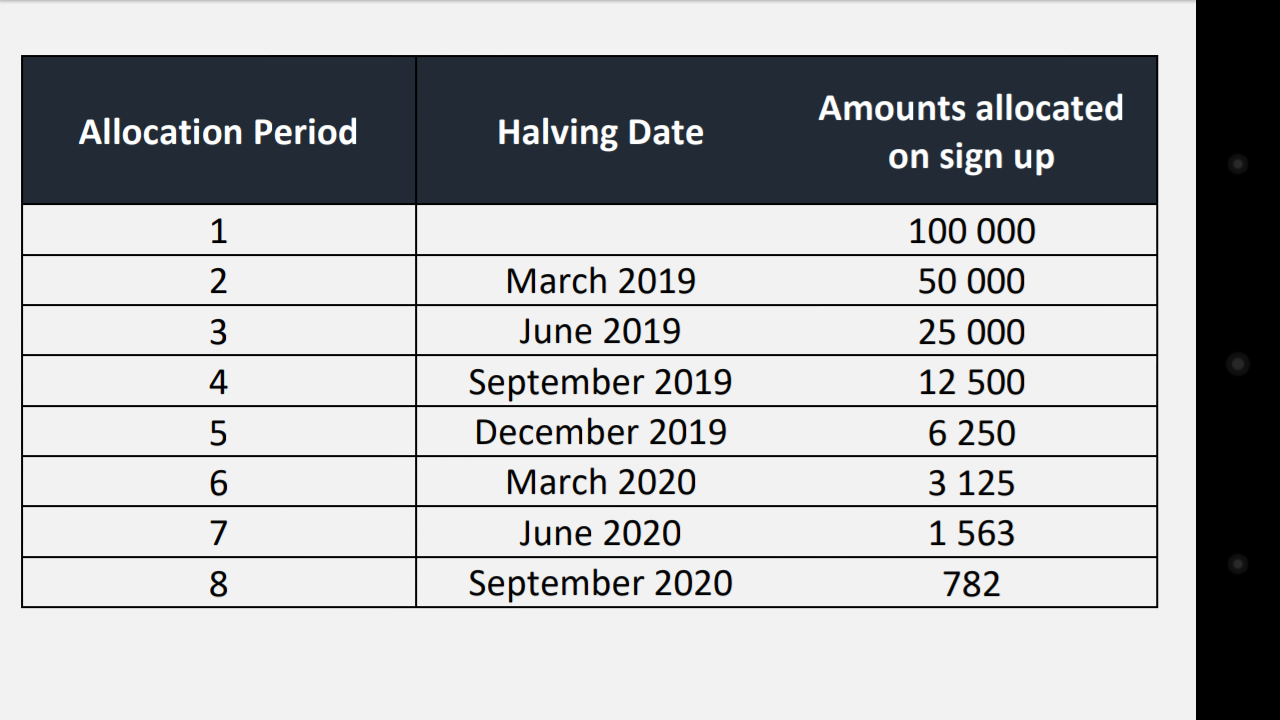
So to ensure that the crypto lands in the hands of Zimbabweans, the project was divided into airdrop phases where at each stage, simply registering would earn you an airdrop. The first stage which began late 2018 saw subscribers earning 100 000 zash (Of which I’m also a beneficiary) and the subsequent stags saw halving of this amount every 3 months. The goal was and is to get zash into the hands of 7.2 million Zimbabweans by the end of 2020.
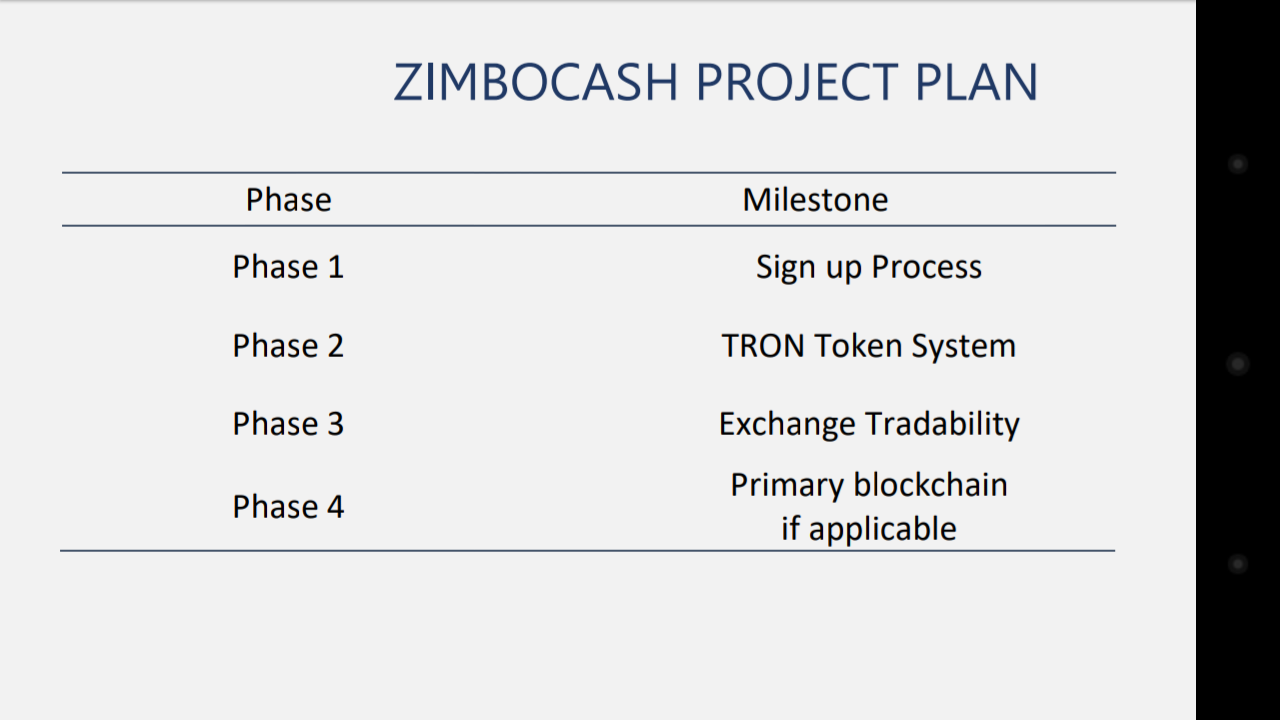
The project was also divided into 4 major milestone phases, 3 of which have passed which have seen zash rise in value from 0 in the first phase to a high of $0.004411 which it reached 128 days ago. Multply that figure by 100 000 to see what my zash balance equated to in USD!!!! I know you guys must be wondering how that could possibly be and how incredulous the first airdrop was.
The all time high can be explained by the fact that zash wallets in Zimbabwe at that time were enabled to send and receive. A few moths before that, zash was listed on Bithumb global where the founders had begun trading it and it then came to life!! Currently zash’s price has dropped to $0.002334 as currently in Zimbabwe the wallets ( which have been very simplified to make usage for Zimbabweans as uncomplicated as possible) are going through security upgrades hence there is no movement of zash in Zimbabwe. This means as soon as we begin using our Zimbabwean wallets, expect the price to soar back to $0.004411 and double. The security upgrades are expected to be completed in October which presents a profit making opportunity for anyone looking to make a score.
As zash is listed on bithumb, you guessed it, you can get your own share of zash by buying at the current price, As Zash is a TRC20 token, it can be strored in a tron wallet.
8m2dat
Zash is here to stay as the founders are committed to bringing a currency which Zimbabweans can call their own for the first time in over a decade. Owning zash therefore isn’t just owning a crypto but actually owning the Zimbabwean currency. There is a lot of room for growth.
For more information on zash you can check zash out on CoinGecko
https://www.coingecko.com/en/coins/zimbocash
Victor Signing out
My Crypto Journey- A Zimbabwean Story III
Hi, this is my third article in a series of articles I’m writing about my journey to financial freedom through cryptocurrency. I’m a Zimbabwean living in Zimbabwe navigating my way through cyberspace as I try to make the most out of crypto in 2020. For more background you can read my previous articles all under the same title.
In my last article I spoke about the scams I went through and how I reached a low point. I’ll continue from where I left off.
Coming from the scam with biostry, I found a new resolve in finding a legit HYIP. I figured if there were fakes the real deal had to exist, so I came up with a new plan; I would put small amounts of money in cloud mining sites, in the hopes that I would eventually catch the right one, and that happened. I found one site called hashflare. Having done my research and finding nothing negative about hashflare I signed up. I purchased the minimum amount of hashrate available (which was $1) and never thought much about it. Little did I know that it would be hard to find available contracts on hashflare in years to come. As I report, my existing contract is alive and well but as I’m sure most of you will know there are no significant returns if any on a dollar hence I can’t withdraw. I’m waiting for contracts to be available so I can invest bigger amounts and hopefully that’s someday soon.
Hashflare signalled a turn of events for me and ever since then I’ve had an eye for solid investments in the crypto space. There are so many challenges that we face on a daily basis no matter which part of the planet we stay in. I would like to encourage everyone who is trying so hard to catch a break but can never seem to get one that there’s light at the end of the tunnel. If I can invest $20-$30 when that practically is my whole monthly salary and still live another day you can afford to do the same.
I’m learning more and more that money is just ones and zeros and it’s not how much money I have in my pocket but how much that money can do for me. My current ambition is to establish solid sources of passive income which I will talk about in my next article.
I’m so glad to have a family online at read.cash and to have a voice. I’m currently referring my Zimbabwean friends to read.cash and hopefully will grow the family more.
I’m also excited to tell you all about a Zimbabwean cryptocurrency that is set to revolutionise the financial space in Zimbabwe and its home-grown. For those into bounties and airdrops you’ll love this one and I’m here to give you the skinny on it.
Signing out, till next time
Have a good one
My Crypto Journey- A Zimbabwean Story Part II
Hi everyone, this is my second article in a series of articles I’ve entitled My Crypto Journey, an article I am really enjoying writing. I’ll jump straight into it. I've added photos of my beloved country to bring you all to Zimbabwe as you read.
To continue my story, it was late 2017 and I had just purchased USD$10 worth of bitcoin, some of which I’d already spent on purchasing referrals for a PTC site (a scam). By this time I was left with roughly USD$5 worth of bitcoin. (As a side note, the price of bitcoin was about $7000 per bitcoin when I first purchased and was on a bull run which I struggled to keep up with.)
From one scam to another, I discovered a new term as I sought ways of putting my $5 to good use “HYIP” High Yield Investment Program. You can only imagine what this phrase did to my heart. I immediately began to look for an investment program that would help me grow my bitcoin exponentially.
I came across an investment company called Biostry and I was immediately drawn to the pitch of the company. The institution purported to be a leading and innovative biotechnology company seeking to develop the industry in their own innovative way. Being a biochemist I didn’t think twice. As quickly as I read through the company profile my bitcoin was sent. I was well aware of blockchain technology and the uni-directionality of all blockchain transactions and was still raw from the deal I’d been served with the PTC site, but all the same believed I could trust this company.
The very day after I sent my money, when I typed in the website details there was an error message reading the domain doesn’t exist….I can’t begin to describe the mix of emotions that I started to go through as each repeated attempt to get into the website yielded the same result. I then began reading up on all I could find about the company and realised there were so many people who had been scammed by this company. I won’t lie, that was one of my lowest points in my journey, I couldn’t sleep for days afterwards. It was a small amount of money I know but to get it cost me a huge chunk of my salary and at that time I seemed to be the only person who had ever heard of bitcoin and the few who knew about it thought it was a pyramid scheme so I felt pretty stupid after that huge mistake.
I think it would be good to mention my first wallet was a blockchain wallet and also I bought my first bitcoin on localbitcoins at $14000 per bitcoin when the actual price of bitcoin was $7000 simply because the Zimbabwean dollar only works in Zimbabwe as it is only legal tender in Zimbabwe and the only person willing to accept it was charging that price. (I’ll mention that I learnt about escrow as well and I won’t lie the escrow service system was scary, I still cringe whenever I use it).
I’m bringing up all these things to drive the point that I was learning through the whole process. As I speak I now know to go through Trust pilot and Alexa Ranking when reading up on new cryptocurrency ventures, a lesson I learnt in blood.
In my next article I will talk about my eventual success in finding an HYIP and how it’s still going for me 3 years later, though not in the way you’d expect. Stay tuned in.
I would like to thank you all for the encouraging comments that have actually led to me writing a second article so soon.
I hope you enjoy this article!!
I leave you with this image an average day in my city Bulawayo
My Crypto Journey- A Zimbabwean Story
In a country where the price of bread is 100ZWL (Zimbabwean dollar) while the average salary is 2000ZWL (US equivalents of USD$$1 and USD$20 respectively), I have decided to embark on my own journey to financial freedom which started in 2017 with the words “Satoshi Nakamoto”; “Decentralisation”; “Bitcoin millionaires” among other striking phrases. This is my story.
In 2017 as a recent graduate in Applied Biology and Biochemistry, I began working for a chemicals start-up where my bosses were more interested in exploitation than paying. At that time a friend of mine introduced me to a Paid to Click (PTC) site where, after generating USD$20 from viewing ads at 1.5 cents per view, I was devastated to discover I needed 6 referrals to withdraw. I then found some light at the end of the tunnel when in one corner it read “…alternatively, you can pay for referrals.’
Interestingly there was a payment option, bitcoin. “Where has I heard that name before?” I thought.
I then remembered it was on a series I had watched called start-up. With my interest peeked, I began my journey towards financial freedom. At this point I’ll let you know I did buy bitcoin and paid for my referrals which I never got, and yep, I realised it was a scam. The situation however opened my eyes to bitcoin and all the opportunity it represented.
Herein lies the rest of my story which I will tell you all in a series of articles. I hope you will enjoy reading them as much as I am enjoying writing them
 @viczwa