Suffer without pain
Congenital Insensitivity to Pain with Anhidrosis, HSAN type IV (CIPA)
To begin, I do not study medicine.
We all feel pain and wish we didn't, but is it really a good thing? Pain is a very important protection mechanism, it alerts us to the existence of injury or damage and contributes to protecting the body.
If we support the hand on a surface with high temperature, the damage it generates in the tissue, would activate specialized molecular sensors, these will generate electrical signals that propagate quickly through the nerves until they reach the spinal cord, where it connects with other neurons. From there the signal goes to many parts of the brain, which processes the information and responds with ultra-fast mechanisms (reflexes) in this case by withdrawing the hand, since it acts to protect the body.
Introduction
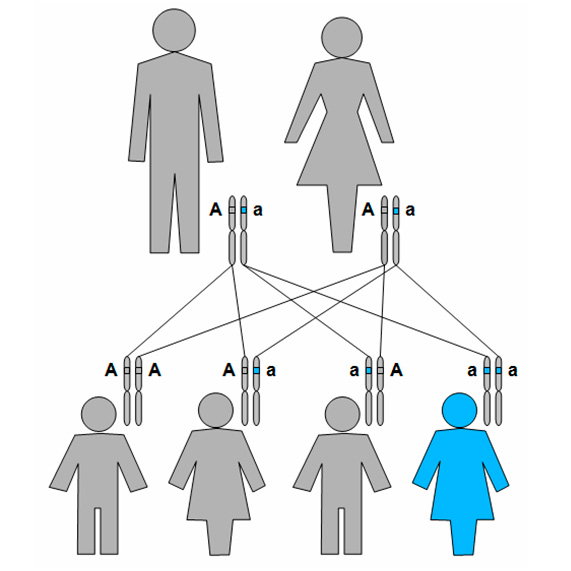
CIPA is a very rare disorder that affects the central nervous system (CNS), the pain sensing nerves are not properly connected in part of the brain that receive the pain menssagers, appears at very early age of life and is inherited autosomal recessive; it means that to have the disease, the person must have two mutated copies of the same gene, if the person inherits a mutated copy of the gene and a normal one; it would normally be a healthy person who is a carrier, which means that they do not have the disease but still contain the copy of the mutated gene.
Cause
This condition is due to the mutation of the NTRK1 gene located on chromosome 1, a gene whose main function is to regulate and give instructions for the creation of a protein with great importance for the survival of neurons, especially sensory neurons, its mutation generates malfunction leading to loss of sensory neurons.
Consequences
This disease stands out mainly in the inability to detect pain and anhidrosis; which is the lack or absence of perspiration and the regulation of changes in body temperature. This carries a great risk, as it is very common for affected people to sustain repeated and serious injuries, and a great possibility of intentionally hurting themselves. Lack of sweating can lead to high body temperature (hyperpexy), which can cause febrile seizures.
The person may also suffer from ostiomyelitis (infections in the bones or bone marrow), or Charcot arthropathy, which is a destructive neuroarthropathic lesion, means that the bones and tissues surrounding the joints are destroyed. Mental retardation at different levels, behavioral or emotional problems and intellectual disabilities, learning problems, etc. Lesions in the extremities due to the accumulation or loss of nerve fibers, which are those that allow the transmission of information from one neuron to another, type C unmyelinated cells and a decrease in the size of delta type A myelin cells.
*Characteristics of C and A delta fibers*
*Type C:*
*A type of fiber that is not covered by myelin, this causes its conduction to be slow, and its function is to respond to thermal, mechanical and chemical stimuli (polymodal nocioceptors)*
*Type A delta:*
*A type of fiber that is covered by myelin, hence its rapid conduction, and its function is to conduct short-latency pain signals that require a rapid response.*
Sufrir sin dolor
Insensibilidad Congénita al Dolor con Anhidrosis, HSAN tipo IV (CIPA)
Para comenzar quiero aclarar que no estudio ninguna rama de medicina.
Todos sentimos dolor y desearíamos no hacerlo, pero es realmente algo bueno? El dolor es un mecanismo de protección muy importante, nos avisa de la existencia de lesiones o daños y contribuye para proteger el cuerpo.
Si apoyamos la mano en una superficie con temperatura alta, el daño que genera en el tejido, activaría sensores moleculares especializados, estos generarán señales eléctricas que se propagan velozmente por los nervios hasta llegar a la médula espinal, donde se conecta con otras neuronas. A partir de ahí la señal va a muchas partes del cerebro, el cual procesa la información y reponde con mecanismos ultra rápidos (reflejos) en este caso retirando la mano, ya que actúa para proteger el cuerpo.
Introducción
CIPA (por sus siglas en inglés) es una enfermedad muy rara que afecta en el sistema nervioso central (SNC), donde los nervios sensibles al dolor no están correctamente conectados en partes del cerebro donde se lo recibe, aparece a muy temprana edad de vida y es de herencia autosómica recesiva; significa que para padecer de la enfermedad, la persona debe tener dos copias mutadas del mismo gen, si la persona hereda una copia mutada del gen y una normal; normalmente sería una persona sana portadora, lo que significa que no tiene la enfermedad pero aún contiene la copia del gen mutado.
Causa
Esta afección se debe a la mutación del gen NTRK1 localizado en el cromosoma 1, un gen que tiene como principal función regular y dar instrucciones para la creación de una proteína con gran importancia para la supervivencia de las neuronas, especialmente las sensoriales, su mutación genera mal funcionamiento que lleva a la perdida de neuronas sensoriales.
Consecuencias
Esta enfermedad se destaca principalmente en la imposibilidad de detectar dolor y en la anhidrosis; que es la deficencia o ausencia de transpiración y la regulación de cambios de temperatura corporal. Esto lleva un gran riesgo, ya que es muy común que las personas afectadas sufran lesiones repetidas y graves, y una gran posibilidad de que se lastimen a sí mismos intencionalmente.La falta de sudor puede llevar a una alta temperatura corporal (hiperpexia), lo cual puede causar convulsiones febriles.
También la persona puede sufrir ostiomelitis (infecciones en los huesos o médula ósea), o la artropatía de Charcot, que es una lesion neuroartropática destructiva, significa que se destruyen los huesos y los tejidos que rodean las articulaciones. Retraso mental a diferentes niveles, problemas de conducta o emocionales y discapacidad intelectual, problemas para aprender, etc. Lesiones en las extremidades por acumulación o pérdida de fibras nerviosas, que son las que permiten la transmisión de la información de una neurona a otra, amielínicas tipo C y disminución del tamaño de las células mielínicas tipo A delta.
*Características de las fibras C y A delta*
*Tipo C:*
*Un tipo de fibra que no esta cubierta por mielina, esto genera que su conducción sea lenta, y su función es responder a estímulos térmicos, mecánicos y químicos (nocioceptores polimodales)*
*Tipo A delta:*
*Un tipo de fibra que está cubierta por mielina, por eso su rápida conducción, y su función es conducir señales de dolor de corta latencia que precisan una repuesta rápida.*

A marcial art is born: Taekwondo ITF
*"Here I leave Taekwon-Do for mankind as a trace of man of the late 20th century” General Choi Hong-Hi*
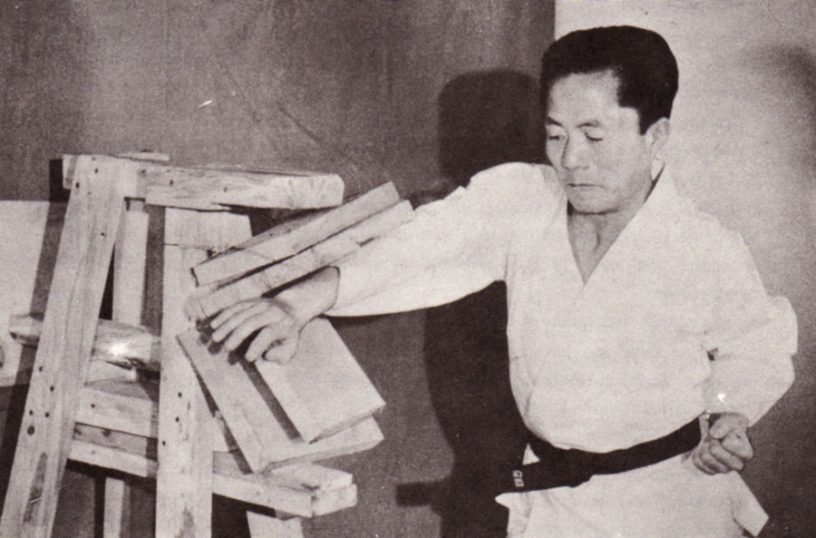
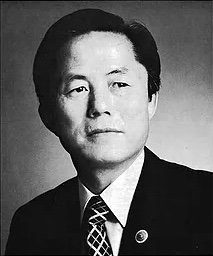
Taekwondo is a martial art formed in Korea by the Korean General Choi Hong-Hi, a man with a very interesting history; General Choi was born on November 9, 1918, in the Dae Hwa district, in what is now North Korea, which was then under Japanese rule. When he was twelve, he was expelled for revolting against the Japanese authorities, then his father sent him to study calligraphy under Han II Dong, who also taught him Taekkyon, an ancient Korean martial art. In 1937, at the age of twenty, he traveled to Japan to continue his studies, there he met also learned Shotokan Karate-Do under Funakoshi Gighin, he attained the rank of 1st dan in 1939, and then 2nd dan soon after. During World War II, Choi had been forced to serve in the Japanese army and the Empire. When he returned to North Korea, Japanese people designated him as a planner of the Korean Independence Movement, for this reason he was imprisoned for eight months prior to the trial. In prison he continued polishing his training, and began to develop a new martial art, where his jailer and cellmate were his students, followed throughout the prison yard. Choi managed to leave after the liberation of Korea, then over time his military career increased, and he continued to polish his techniques and promote his martial art, which in 1955 he decided to call Taekwondo. Analyzing the word "Taekwondo"; Tae: action of jumping, hitting or destroying with the foot, Kwon: hitting or destroying with the hand or fist and Do: art or path, it could be said that it means "The path of the fist and the kick", referring to a mental training with combat techniques, without weapons and self-defense, highlighting the skill of the limbs.
International Taekwondo Federation (ITF) was founded in 1966.
Due to disagreements in some training methods and due to political issues, a separation was formed, where was born a new federation: World Taekwondo Federation (WTF), which has similarities and differences with the style ITF.
After a lifetime of effort and dedication to developing his martial art, General Choi died of stomach cancer on 15 June 2002, in North Korea. His remains are interred in the Cemetery of the Patriotic Martyrs, Pyongyang, North Korea.
*"To help others to develop and succeed in life is a reward itselfs and only has value when nothing is expected in return" General Choi Hong-Hi*
Nace un arte marcial: Taekwondo ITF
*“Aquí dejo el Taekwondo para la humanidad como una huella del hombre del final del siglo XX” General Choi Hong-Hi*
El Taekwondo es un arte marcial formado en Corea por el General coreano **Choi Hong-Hi**, un hombre con una historia muy interesante; el General Choi nació el **9 de noviembre de 1918** en el distrito Dae Hwa, lo que hoy es Corea del Norte, una época donde el Imperio del Japón dominaba Corea. Cuando tenía la edad de doce años fue expulsado por sublevarse contra las autoridades japonesas, luego su padre lo envió a estudiar caligrafía con el maestro *Han II Dong*, quien también le enseñó **Taekkyon**, un antiguo arte marcial coreano. En **1937**, a la edad de los veinte años fue enviado a Japón para continuar sus estudios, allí conoció al maestro *Funakoshi Gighim*, que le enseñó **Karate-Do** estilo Shotokan, el cual alcanzó ser cinturón negro primer dan en 1939, y luego consiguió ser segundo dan. Al declarase la **Segunda Guerra Mundial** Choi fue obligado a alistarse en el ejército japonés y servir al Imperio, cuando volvió a Corea del Norte los japoneses lo señalaron como planificador del Movimiento de Independecia Coreano, por esta razón fue encarcelado durante ocho meses previos al juicio. En la cárcel continuó puliendo su entrenamiento, y comenzó a desarrollar un nuevo arte marcial, donde su carcelero y compañero de celda fueron sus estudiantes, seguido a todo el patio de la prisión. Choi logró salir tras la liberación de Corea, luego con el tiempo su carrera militar fue aumentando, donde siguió puliendo sus técnicas y promocionando su arte marcial, el cual en **1955** decidió llamar **Taekwondo**. Analizando la palabra “Taekwondo”; *Tae:* acción de saltar, golpear o destrozar con el pie, *Kwon:* golpear o destruir con la mano o puño y *Do:* arte o camino, se podría decir que significa “El camino del puño y la patada”, referiendo a un entrenamiento mental con técnicas de combate, sin armas y de autodefensa, destacando la habilidad de las extremidades.
En 1966 fué fundada la **Federación Internacional de Taekwondo** (ITF, por sus siglas en inglés).
Por desacuerdos en algunos métodos de entrenamiento y por cuestiones políticas se formó una separación, donde nace la federación: **Federación Mundial de Taekwondo** (WTF, por sus siglas en inglés), la cual comparte similitudes y tiene diferencias con ITF.
Tras una vida de esfuerzos y dedicación al desarrollo de su arte marcial, el General Choi falleció por cáncer de estómago, el **15 de Junio de 2002**, en **Corea del Norte**. Sus restos están sepultados en el Cementerio de los Mártires Patrióticos, Pionyang, Corea del Norte.
*“Ayudar a otros a desarrollarse y triunfar en la vida, constituye una recompensa por sí misma y tiene valor solo si no se espera nada a cambio”General Choi Hong-Hi*

 @seleneblas08