My Experience using lazyfox.io
Hello people of the world and especially to all read.cash users.
It feels really great to be back here and lazyfox.io in fact led me here. Check this article also. https://lazyfox.io/ https://read.cash/@saddit42/the-lazyfoxio-beta-v2-has-just-launched-earn-bitcoin-cash-for-answering-questions-6af93712
So today, I will be sharing to you my wonderful experience in using lazyfox.io.
Personal Experience
I should say, I joined lazyfox.io two days ago and I heard the news in memo.cash. I went to try it and honestly I just want to check it. So here are my experiences:
Creating an account was very easy.
The site is perfect and it's not complicated. You can easily understood how it works by just exploring.
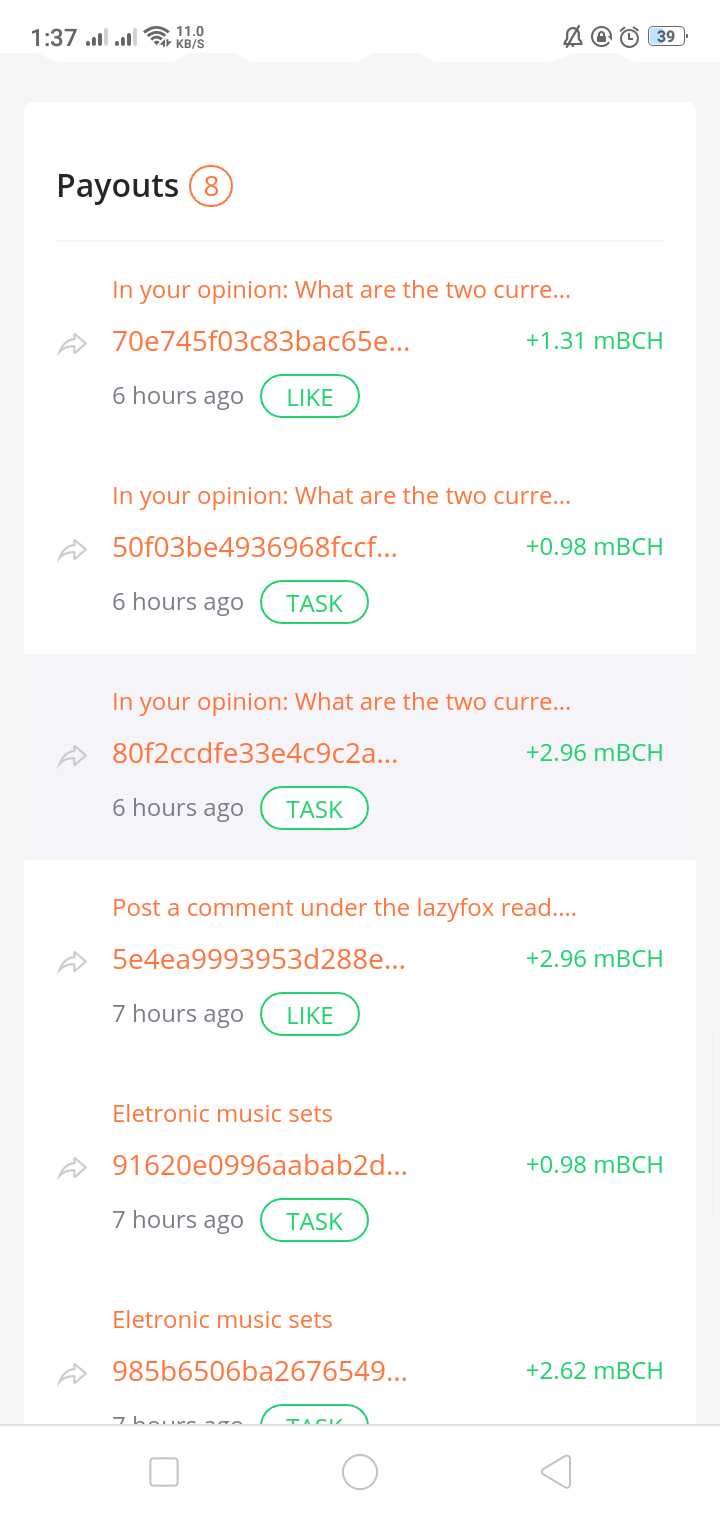
Payouts are sent after your task has been approved. You can also get extra $BCH if someone likes your solution so don't forget to give your best shot!
Most of the task are very workable even by an average person like me.
Support is really great. After giving them a feedback and reporting the bugs, they'd act instantly to fix it.
Most importantly, you can earn $BCH and at the same time help others :)
Recommendation
I think it would be great if you can be notified through email that your application was approved. There'll be times that you might forgot that you applied for this task and the creator already approved it. Yet you weren't able to pass because the time is already over.
Overall, the site is really great and I highly recommend that you should try it also :)
https://lazyfox.io/
Not Too Much Praise, Please!
If you want your children to grow up in the best version of themselves, it's crucial to replace damaging words in your vocabulary with alternatives that help build character. Some of the things parents say to kids seem harmless or even constructive on the surface, but, experts say, they may hurt more than help.
For example, for years, we've been told that boosting a child's self-esteem is important to his or her success in life. But child experts are now learning that too much praise can backfire. Praiseaholic tykes who expect compliments at every turn may become teens who see the same kind of approval from their friends who offer them a cigarette or an alcoholic drink. The implication of saying "You're the prettiest girl in class" is that you love her only because she is beautiful; talking about the goal she achieved but not her overall effort indicates that you care it about her accomplishments, not her overall effort. And this attitude carries over into the classroom.
At Columbia University in New York, social psychologist Carol Dweek tested the effects of overpraise on 400 fifth graders. She found that kids who were praised for "trying hard" did better on tests and were more likely to take on difficult assignments than those lauded for being "smart."
"Praising attributes or abilities makes a false promise that success will come to you because you have that trait, and it devalues effort, so children are afraid to take on challenges," says Dweek. "They figure they'd better quit while they're ahead."

From a Different World
Many teens feel that their parents don't understand them. It is as though their parents are "*from a different world*." This is a normal reaction, due to the generation gap between teens and their parents.
Parents tend to be conservative in the child-rearing philosophy. They are under a lot of financial and social pressure to succeed, and they don't have enough time or energy to devote themselves exclusively to taking care of their children. They probably remember experiencing many of the same problems their kids are going through, but they also recall how naive they were at that age. Of course, they also hope their progeny can avoid some of the mistakes that their parents made. One of the few guides they have is remembering the way adults (especially their own parents) responded to them when they were young, so they tend to act the same way. This is how families have been raised for millennia.
Kids, however, have not lived through any earlier time. They don't have a large backlog of experiences. Everything is relatively new to them, and full of possibilities. "Some people look at the world and ask why, but I look at it and ask why not?" is likely to be a dominating attitude. They are unsympathetic to their parents apparent apathy. They know the world is full of hypocrisy and unfairness, and they strongly believe that they can change it. This is how human society makes progress, though it is far slower and less complete than the young want.
What happens of course, is that the young, impatient (and maybe radical) as they are, eventually grow up, get a job, and start a family; and the cycle begins anew. Before they know it, they are the hide-bound conservatives they had despised in their youth, and the children they conceive are the ones with the time, energy, and vision needed to try to create a new society.

My Life as a Rebel
My rebellion started in earnest when I was 16. I was against anyone in authority- especially my parents and my teachers. I only did what I wanted to do, and of course mostly what I wanted to do was that adults around me told me what I shouldn't do. As time went on, I kept getting into bigger and bigger jams, one after another. My dad told me I needed discipline, and sooners or later I would get it, he said, whether in army or in prison. But of course I laughed in his face. Because of alcohol and drugs, I was in a fog a lot of time. Somehow I made it through high school, but it didn't take me long to flunk out of college. So, naturally, I went into the army. My dad was wrong, though: my know-it-all attitude got me a dishonourable discharge in less than six months. I couldn't find a job and, quite honestly, I didn't look very hard for one.
After all, working is certainly no fun. It didn't take me long to get into trouble with the law, but I was lucky once again. I got off on probation. I got only into another, bigger mess, and this time the judge gave me 12 years. I'm in prison now. I don't have any freedom, the food is terrible, and my only friends are criminals. I count the days until I can get out of here. I hope that my father was right, after all; maybe the army didn't give me the discipline I need, but maybe prison life will. There is nothing I want more than to get out and try again to make a different life for myself.
The point I want to make is this: Even if you don't agree with your parents, listen to them. They were once your age, even if it was a long time ago, but you haven't gotten to their age yet. So they know more things more than about you do, because they have twice as much experience. When people who care about you tell you something, maybe you should listen to them. Now that it's too late, I realize I was wrong about all the important things. Yes, Mr. Rebel Man, I hear your scorn and your ridicule. Laugh if you want to, just like I did. After all, you know better than everyone else, don't you? But when you end up behind the bars, who is the joker then?