 @rapsantos
more from that month
@rapsantos
more from that month
The Spanish Colonization that lasted for 3 Centuries (Part 6)

As the list goes on, this is a continuation of the list of Philippine Revolts against Spain. Ladia Revolt A **Moro-Bornean**, and *a self-claimed descendant of* ***Lakan Dula*** named ***Ladia***, came to **Malolos** in **1643**. His land was confiscated by the Spaniards and he thought it's about time to stage an uprising and declare himself as the King of the Tagalogs. Despite that a priest tried to convince him not to pursue his plans. He was captured, then executed in Manila. Sumuroy Revolt (1649-1650) In **Northern Samar**, in the town of **Palapag**. A ***Waray*** named ***Agustin Sumuroy***, and his followers rose to arms on **June 1, 1649**, over the forced labor system being undertaken in Samar. The government issued all natives not be sent to places distant from their hometowns to do forced labor. Under orders from various ***alcaldes*** (***mayors***), the Warays were sent to the shipyards of **Cavite** to do their forced labor, which sparked the revolt. The parish priest of Palapag was murdered, and it eventually spread to **Mindanao** and **Visayas**. A rebel government was successfully established in the mountains of Samar. Agustin Sumuroy was captured after their defeat, and executed in **June 1650**. ***David Dula***, his co-conspirator continued to fight against the empire. Several years later, he was wounded, captured, and executed along with his seven lieutenants in Palapag, Northern Samar. Maniago Revolt (1660-1661) Named after its leader, ***Francisco Maniago***. An uprising in **Pampanga**, and drew most of the attention from the Spanish religious orders because of its relative wealth. They also bore the burden of more tribute, forced labor, and rice exploitation. They worked for eight months under unfair conditions and were not paid for their rewards. This sparked their revolt by setting their campsite on fire, it was a much bigger and even bloodier revolt. After hearing news of a Kapampangan chief siding with the Spaniards, Maniago and his forces arranged a meeting with ***Governor-General Sabiniano Manrique de Lara*** which they gave their conditions to end their rebellion. Satisfied with the conditions of the agreement, de Lara accepted their demands after Maniago and his forces stepped down the rebellion. Malong Revolt (1660-1661) ***Andres Malong***, a ***maestro de campo*** (***field teacher***) of **Binalatongan** (now **San Carlos City**), **Pangasinan**. Started his campaign in a small town called Malunguey, but failed. He led the people of Pangasinan to rise against the Spanish. It spread like wildfire, and of his success, he proclaimed himself the King of Pangasinan. Almazan Revolt of 1661 With the influence of the ***Malong Revolt***, the people of **Ilocos Norte** took arms against the empire and were led by ***Pedro Almazan***, an illustrious and wealthy leader. He receives a letter from ***Andres Malong***, narrating the defeat of the Spaniards in his area and urging other provinces to obtain any support among the natives. Pedro Alamazan proclaimed himself as *the* ***King of Ilocos***, but he was captured, then executed. The Chinese Revolt of 1662 The Spanish feared an invasion from the Chinese led by a pirate named ***Koxinga***, the garrisons around Manila were reinforced. An increasing anti-Chinese groups grew within the population. In the end, the invasion did not go through, but many locals massacred hundreds of Chinese in Manila. Panay Revolt of 1663 A religious revolt led by ***Tapar***, a native of the island of Panay who wants to establish a religious cult in the town of **Oton**. He attracted followers with his stories about his frequent conversations with a devil. Tapar, and his men died in a clash against the Spaniards. Their corpses were impaled on stakes. Zambal Revolt (1681-1683) A group of local leaders from **Zambales** refused to accept the authority of the Spanish and staged a revolt. The empire was very swift, as they sent an expeditionary force of 6,000 soldiers to suppress the uprising. 2 years later, the Spaniards placed the entire area and all chieftains of Zambales who participated in the revolt were executed. Agrarian Revolt of 1745 Between the years **1745 and 1746**, in the provinces of **Batangas**, **Laguna**, **Cavite**, and **Bulacan**. Indigenous landowners took arms over the land grabbing of Catholic religious orders, with native landowners demanding that Spanish priests return their lands based on their ancestral domain. It resulted in numerous riots, massive looting of convents, churches, and ranches burned to the ground. An investigation was organized by the Spaniards and was even heard in the court of ***Ferdinand VI***, in which he told the priests to return the lands they've captured. The priests were able to appeal the return of lands back to the natives, resulting in no land being returned to native landowners. Dagohoy Revolt (1744-1829) https://read.cash/@rapsantos/dagohoy-revolution-d2720b59 One of *the longest revolts ever recorded in* ***Filipino History***. The Boholanos who participated in this revolt took them **85 years** to rebel against the Spaniards as they experienced the same things as they did to the 8 provinces of Luzon: *oppression*, *forced labor*, *tax collection*, and *injustices*.
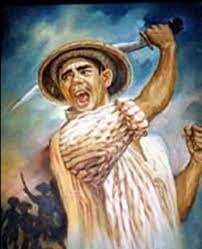
https://www.boholchronicle.com.ph/2019/10/01/duterte-declares-july-4-as-francisco-dagohoy-day/ Unlike *the* ***Tamblot Revolt*** *which was a* ***religious revolt***. This was *a revolt against a church tradition*, when ***Francisco Dagohoy's*** brother and constable, ***Sagarino Dagohoy*** was sent by ***Padre Gaspar Morales*** to arrest a man who abandoned his faith. Sagarino was dead, then Francisco brought his corpse for proper burial, but the priest refused to bury the constable. *It was prohibited by the church since it was a duel between the constable and the man who escaped his faith*. Anger, and Infuriated at the priest. Francisco wants revenge which ignites this revolt. It started on **January 24, 1744**, as they took down ***Giuseppe Lamberti*** at **Jagna**, **Bohol**, and Francisco took down Morales afterward. It also led to the establishment of a free Boholano government. Twenty Governors-General tried to suppress this revolt, but Francisco died two years before the revolt ended in **1829**. 19,420 survived but were pardoned by Governor-General Ricafort and they were allowed to live in their new villages. Silang Revolt (1762-1763)
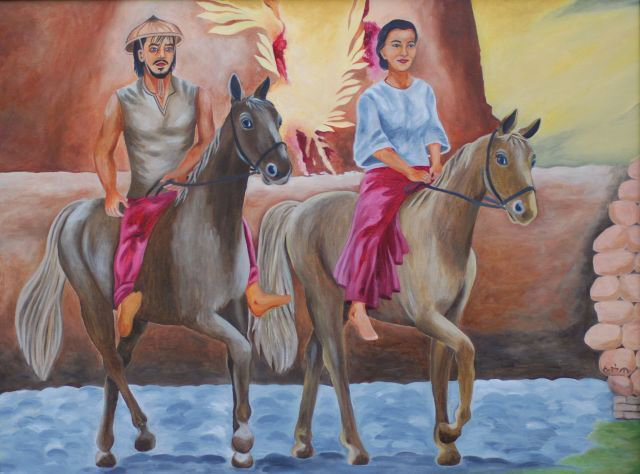
https://www.visitilocandia.com/philippine-heroes-diego-and-gabriela-silang/ *One of the most famous revolts in Filipino History* that took place during the ***British Occupation of Manila***. Led by ***Diego*** & ***Gabriela Silang***. On **December 14, 1762**, Diego declared Ilocos as an independent state and proclaimed Vigan as the capital of the newly independent state. The Brits heard about this revolt and asked for their assistance in fighting the Spanish. Diego was killed on **May 28, 1763**, but Gabriela continued her husband's struggle Through her many victories in battle, she earned the title ***Joan of Arc of Ilocos***. The revolt ended with the defeat of the Ilocanos. Gabriela Silang was executed on **September 10, 1763**. Palaris Revolt (1762-1764) Led by a nickname, ***Palaris***, along with his co-conspirators ***Colet***, ***Andres Lopez***, and ***Juan de Vera Oncantin***. During *the* ***Seven Years' War***, the principalia of Binalatongan protested the abuses committed by the provincial governor. The town leaders demanded that the governor should be removed and the colonial government stop collecting taxes since the land was already under the Brits at that time. ***Governor-General Simon de Anda*** dismissed the demands and the revolt started in **November 1762**. All officials, except the Dominican friars who were in charge of the missionary, had left **Pangasinan**. The colonial government needs to apprehend **the British** and the ***Silang Revolt*** in **Ilocos Norte**. On **March 1, 1763**, at the ***Battle of Agno*** he faced the Spanish forces under the command of ***Alfonso de Arayat***, but withdrew after losing casualties on his side. The Pangasinenese took over all functions and controlled the province up to the ***Agno River***, which borders their neighboring province Pampanga in the south. Palaris commanded 10,000 men, and also kept in touch with Diego Silang who has bigger plans against the Spanish The Seven Years' War ended on **February 10, 1763**, followed by the signing of the ***Treaty of Paris***. 3 months later, Diego Silang was assassinated by Miguel Vicos on **May 28, 1763**. The Spanish were able to focus on the uprising and to surround Palaris. The Dominican friars were allowed to stay in the province and started a campaign to persuade the residents of Pangasinan of the futility of the Palaris Revolt. In **March 1764**, most of the province had already fallen. Palaris had no other ways to escape, except through the ***Lingayen Gulf*** and the ***South China Sea*** (now ***Western Philippine Sea***). He stayed in the province and hid among his supporters. His presence terrified his protectors and ***Simeona***, his sister who was threatened by the friars, betrayed when he was arrested on **January 16, 1765**. Palaris was brought to the provincial capital of **Lingayen** for trial. He confessed to being the leader of this revolt. On **February 26, 1765**, he was sentenced to death by hanging.
No comments yet