 @rapsantos
more from that month
@rapsantos
more from that month
Hiroo Onoda: The Last Imperial Warrior of World War II **March 11, 1974**, an intelligence officer of Imperial Japan *continues to fight after World War II, and will only be relieved by his superior to surrender*. After hiding for 3 decades in the vast jungles of the Philippines, he publicly surrendered to ***Pres. Ferdinand Marcos***. Who was this Imperial Officer? https://en.wikipedia.org/wiki/Hiroo_Onoda
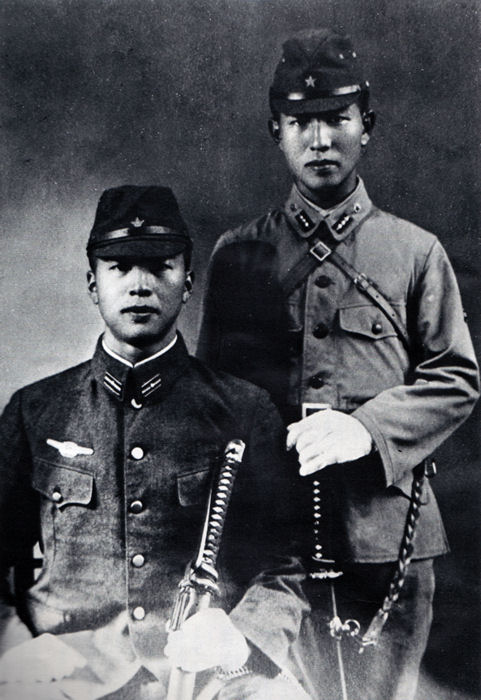
https://en.wikipedia.org/wiki/Hiroo_Onoda ***Hiroo Onoda***. A Japanese Intelligence Officer who fought in **World War II**. Born on **March 19, 1922**, in **Wakayama Prefecture, Japan**. He worked at a trading company in **Wuhan, China** at the age of 17, a year later *he enlisted in the* ***Imperial Infantry of Japan***. Onoda came from a lineage of warriors that his ancestors served in Japan's feudal history. He was selected to be trained as an intelligence officer at the ***Nakano School***, an elite commando school, equivalent to modern Special Forces training where the recruits will be trained in guerilla warfare, sabotage, counter-intelligence, and propaganda skills where he'll use these to fight within years to come. https://en.wikipedia.org/wiki/Nakano_School Hiroo-san's role in World War II In **1942**, the Japanese conducted a surprise attack on **Pearl Harbor, Hawaii** followed by a series of invasions throughout **South-East Asia**. The Philippines was seized and overthrew the Commonwealth Republic. The United States declared a state of war against the Empire of Japan a day after the attack on Pearl Harbor. Japan colonized its new territory for a short time, not until the Allied forces of the Far East made a decisive blow to invade the lower regions of the Philippines in **October 1944**. Hiroo-san was sent to Lubang Island on **December 26, 1944**, which lies to the northern end of Mindoro, Philippines. His objective was to engage in guerilla warfare against American forces in the area. When he arrived in Lubang, his commanding officers refused his previous orders and prevented him to carry out his objectives by taking out strategic locations within the island, which made it easier for the Allied forces to take the island on **February 28, 1945**. Hiroo-san was under strict orders not to surrender or take his own life if captured or defeated. Hiroo-san along with the other three soldiers: ***Pvt. Yuichi Akatsu***, ***Cpl. Shoichi Shimada***, and ***PFC. Kinshichi Kozuka*** went into the jungles of Lubang Island to begin resistance against the Americans. On **August 6, 1945**, in the city of **Hiroshima, Japan**, the United States dropped an atomic bomb followed by dropping another one at **Nagasaki, Japan**, as the empire declared its ***unconditional surrender*** on **August 15, 1945**. Hiroo-san and his squadron began to engage in guerilla raids against our local troops, by creating ambushes for farmers and shootouts with the police in the area. They had no idea that the war was over until they got a leaflet dropped out from the sky as they studied it informing them of their country's surrender. Why did Hiroo-san and his men continued to fight after World War II? The moment they studied the leaflet, they concluded that it was just propaganda. By the time they'll move out from the jungle, they'll be captured. Toward the end of **1945**, more leaflets were dropped informing the official surrender signed by ***Gen.*** ***Tomoyuki Yamashita*** of the ***14th Area Army***. Hiroo-san studied the leaflet, and again it is still propaganda. https://en.wikipedia.org/wiki/Tomoyuki_Yamashita https://en.wikipedia.org/wiki/Japanese_Fourteenth_Area_Army As the squadron continues to conduct raids on farms for supplies as they collect food from rice to fruits, attacking farmers and police officers using their remaining stash of ammunition and other equipment available in their arsenal. In **September 1949**, Pvt. Yuichi Akatsu woke up from his senses that the war was over, and left the group to live on his own. 6 months later, he surrendered to the ***Philippine Army*** in **1950**. 2 years later, letters and family pictures were dropped urging them to surrender, but Lt. Onoda wondered that his country was now under American occupation and they were forced to write these letters. Again, the remaining soldiers continued resisting even if the war was over.
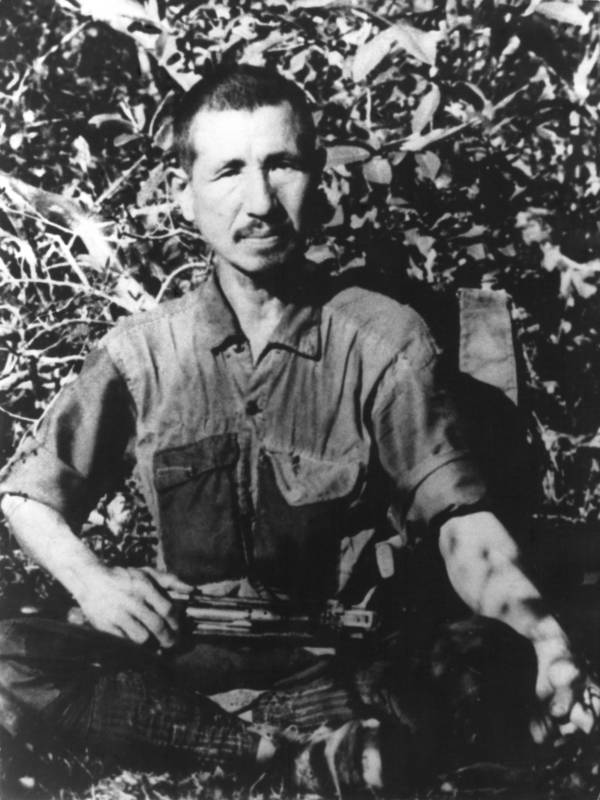
https://allthatsinteresting.com/hiroo-onoda On **May 7, 1954**, Cpl. Shoichi Shimada was killed by a search party of Filipinos who were looking for them, intended to arrest and bring them to trial for the atrocities they've committed. 18 years later (**October 19, 1972**), PFC. Kinshichi Kozuka was killed after clashing with the police and farmers. Hiroo-san was now alone and still refuses to surrender. The Last Imperial Warrior of World War II After Kozuka's death, Hiroo-san met ***Norio Suzuki*** who was traveling around the world, and landed on the island on **February 20, 1974**. Norio-san tried to sympathize with Hiroo-san that the war ended for decades but still refuses to surrender only if he is relieved by his commanding officer. https://en.wikipedia.org/wiki/Norio_Suzuki_(explorer) Norio-san returned to Japan to tell the tale to their government, along with the photographs of himself with Hiroo-san as additional evidence that he is alive. As the Japanese government is on the clock to find Hiroo-san's superior, ***Maj. Yoshimi Taniguchi***. He went to Lubang Island on **March 9, 1974**, Hiroo-san accepted the order from his commanding officer to at last surrender. 2 days later (**March 11, 1974**), he went to the Office of the President of the Philippines to formally surrender wearing his torn-up imperial uniform. He turned over his officer-class katana, an Arisaka Type 99 Rifle, 500 rounds of ammunition, grenades, and a dagger that his mother given him to commit the ritual suicide if he's defeated or captured.
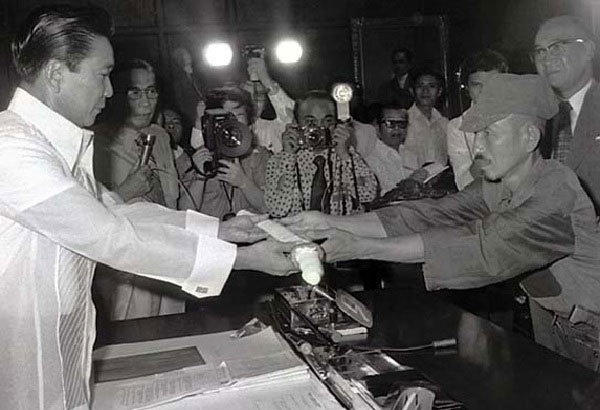
https://en.wikipedia.org/wiki/Hiroo_Onoda He had killed people and engaged with the police for several occasions from ambushes to raids, when 2 of his men were taken down, except for Pvt. Akatsu surrendered to the authorities. ***Pres. Ferdinand Marcos*** pardons Lt. Onoda of his actions and he returned to his homeland. Later Life
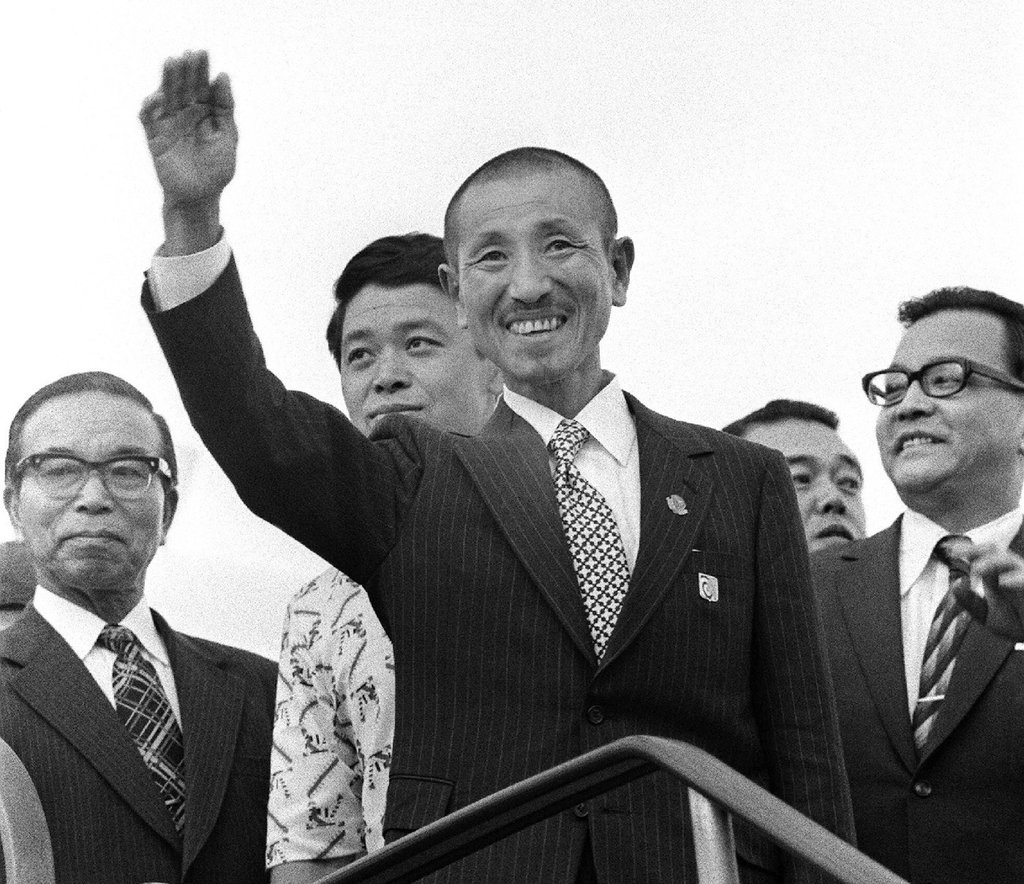
https://www.nytimes.com/2014/01/18/world/asia/hiroo-onoda-imperial-japanese-army-officer-dies-at-91.html Hiroo-san was hailed as a hero upon returning to Japan, but he was troubled by the country he returned to. He still believed in their code of honor to fight until their last breath, including their traditional values. In **April 1975**, he left the country and went to **Brazil** to live as a farmer. He married ***Machie Onoda*** in **1976**, and he allowed his land to train recruits for the ***Brazilian Air Force***. While reading the news about a teenager who murdered his parents in **1980**, Hiroo-san returned to Japan in **1984** and established the ***Onoda Nature School***, an educational camp for the youth. He never apologized or expressed anything during his confrontations against farmers and officers, then pardoned by our former president. Hiroo Onoda died of heart failure due to complications from pneumonia on **January 16, 2014**. https://www.theguardian.com/world/2014/jan/17/hiroo-onoda-japanese-soldier-dies%20/ 30 years after World War II, one man believed that the war was still in progress at that time. It proves that he did his sacred duty for the glory of his country according to their code of honor. He was a relic of the past who couldn't accept changes that gripped the world after the horrors of World War II.
No comments yet