MidJourney and the Advent of "Text to Museum Quality Art"?
No doubt you've seen them. The odd cultural mashups. The current pop stars rendered in Renaissance style. The not-quite-deep-fake, but what are these images?
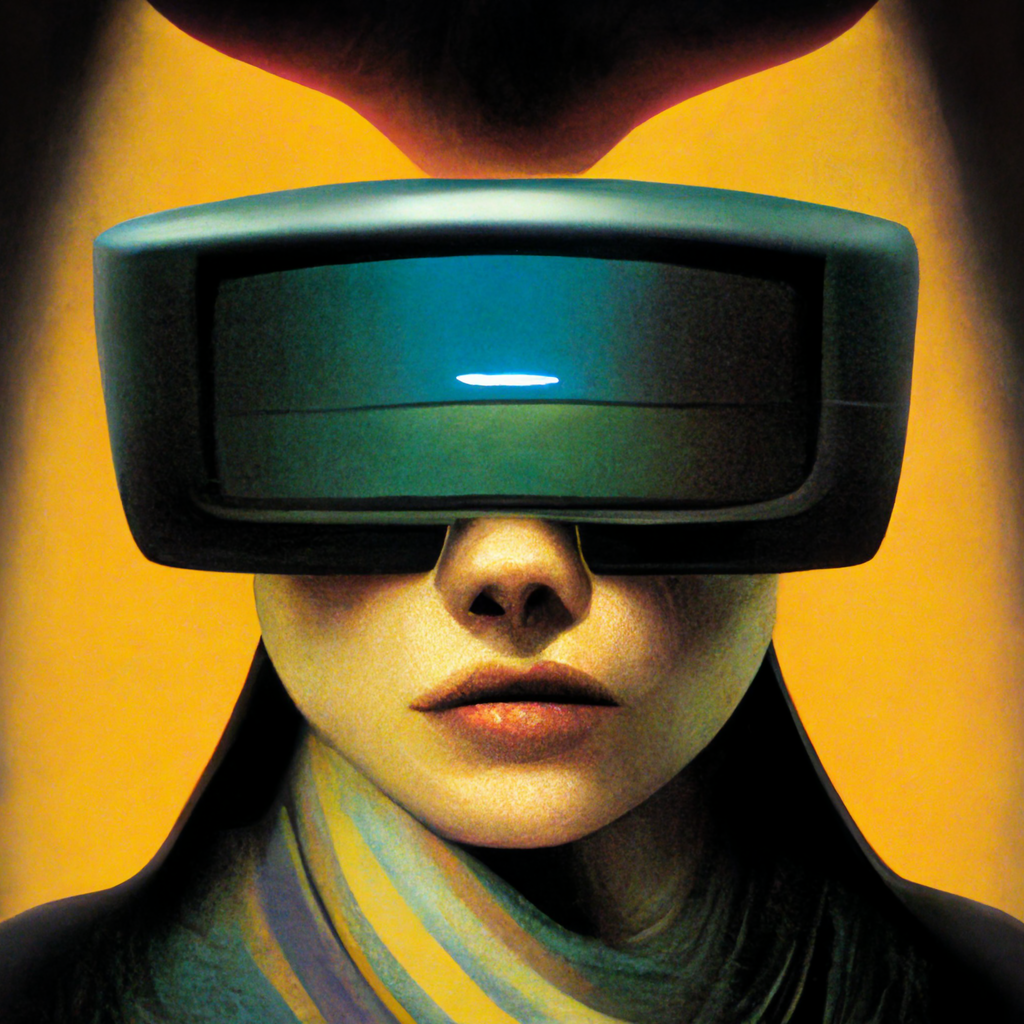
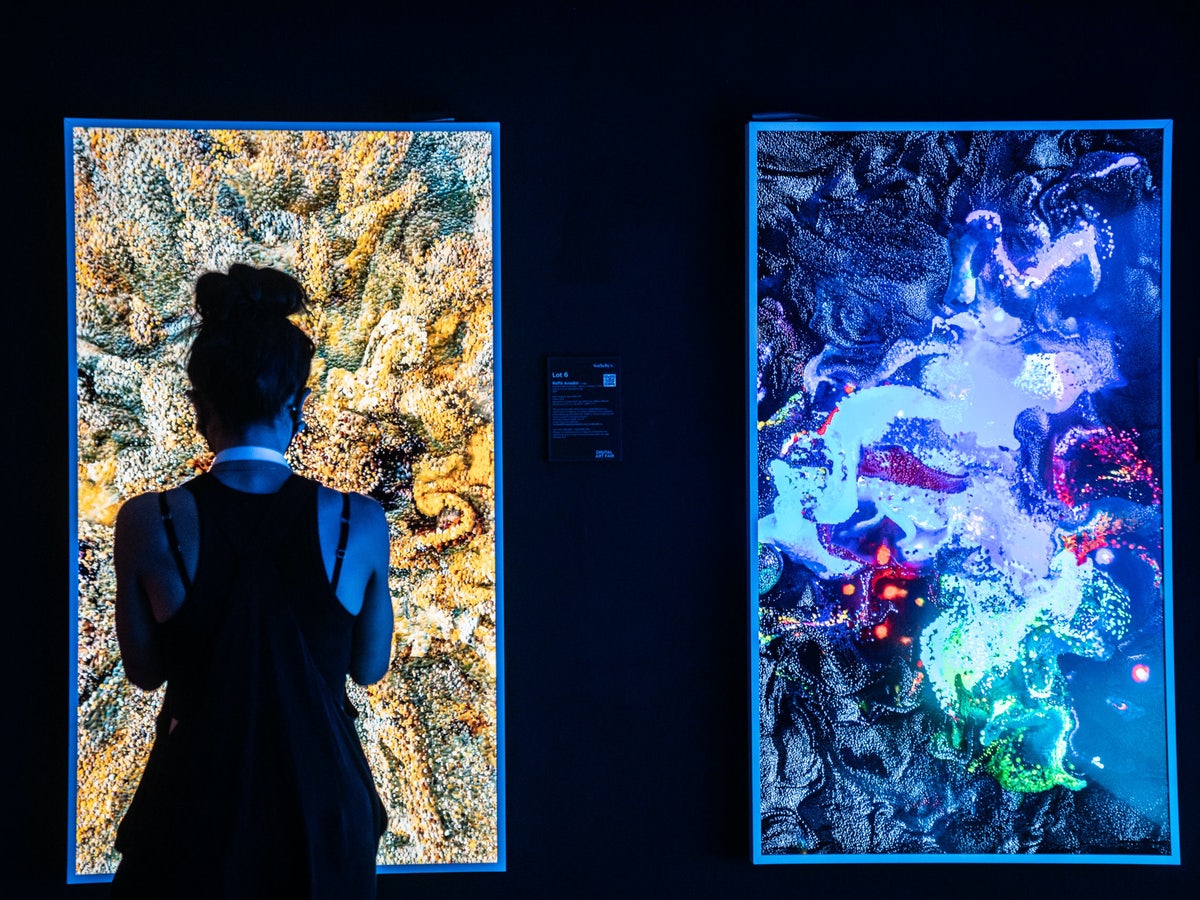
The past few months have seen AI image generation engines tip into the mainstream. From DALL-E to MidJourney. Each operates on the same principle of analyzing millions of web images, and then spitting out a custom amalgamation as the result of a user's text prompt. https://www.midjourney.com/
The results are stunning. Worrisome? Controversial?
This is clearly something new going on. And it's so early that we can't predict the implications. Does this spell the end of fine artists as we know them? Is this the next phase in the machines are taking our jobs on their way to world domination? Who knows. Time will tell. Our fates are sealed.
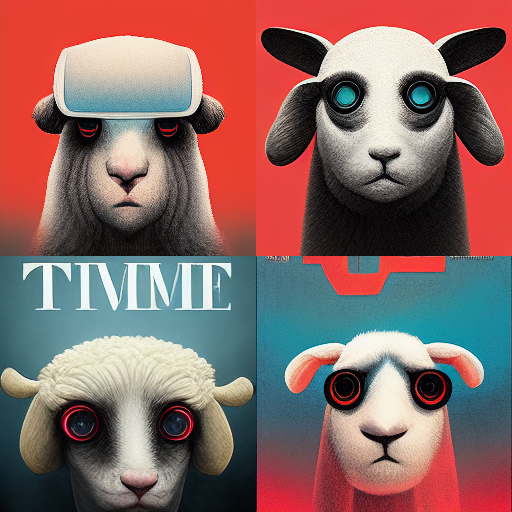
But having played around with the form a bit myself, I can give you my early takeaways. MidJourney has proven an interesting experiment in the creative process. As you navigate the Discord server, you see the same things over and over again. Scientific images of Pokemon. Classical portraits of Bill Murray. When given "unlimited possibilities" to humanity, trends of sameness emerge.
After having spent a career in the creative industry, using MidJourney has many echoes of the creative process. The first things you try out are basic, first thoughts. A lot of people get stuck here, or don't find the motivation to move beyond that. But then something happens. After spitting out an image of a "dog," they notice that someone else has tried a "viking warrior dog" or some such variation. The results surprise and spur the mind further off the beaten path. This is the alchemy of brainstorming. The adding of one, single disruptive thought, that has the power to reshape the entire idea. This kind of thinking usually leads to the best and most memorable types of creative work. Breakthrough films. Watchable commercials.
With MidJourney, we are seeing millions of minds breeding and cross-pollinating in a petrie dish of creativity. With the speed at which images are pulled from text to final execution, you can feel the group evolving, iterating, remixing. And you can watch it all happen in real-time within the channels of the Discord.
Again, it's early. But this exercise in imagination is fascinating. The machine is acting as a kind of bicycle or race car that takes our ideas further. It misinterprets us. It ignores us. It spits out something highly graphic and definitive. It's this surprise that keeps us coming back. If the machine spit out EXACTLY what we were thinking, we would be over the act quickly. There is no magic there. The magic always lies in the chaos of the process. We as humans crave drama. We want the insanely shocking plot twists. We want these things because they make us feel corners of ourselves that we've never encountered before. Ironically, the machine behind MidJourney can help us access our humanity. Through our pop culture mashups and reimagining of Keanu Reaves as every character in history, we are opening ourselves up to surprise and delight.
No one knows how this story will end. But with MidJourney, this current chapter we find ourselves in will prove to be highly visual and enthralling. And I have a feeling that the big thing or behavior that we'll never expect is lurking just around the corner.
You can view my MidJourney brainstorms on my profile here. https://www.midjourney.com/app/users/799177809410916392/
Is ApeCoin The Coin of The Metaverse?
When a new cryptocurrency is introduced, the reactions are always volatile.
I remember early talk of Bitcoin in 2010, when the only sites you could access it on looked like shady, ad-ridden, back worlds of the internet. It was a new concept and only the die hards really bought into it back then. People had no idea what the blockchain was and the idea of "internet money" felt like something small out of video games.
Flash forward to 2022 and Bitcoin has been normalized. Nation states have backed it. Well respected investors and institutions have added offerings. Today you can easily buy into Bitcoin from supposedly "trusted platforms."
Then there was the wave of meme-coins like Shibu Inu and hundreds of other such coins looking to capitalize on the craze. There are no fundamentals that drive these coins other than the errant tweet from cult leaders like Elon Musk.
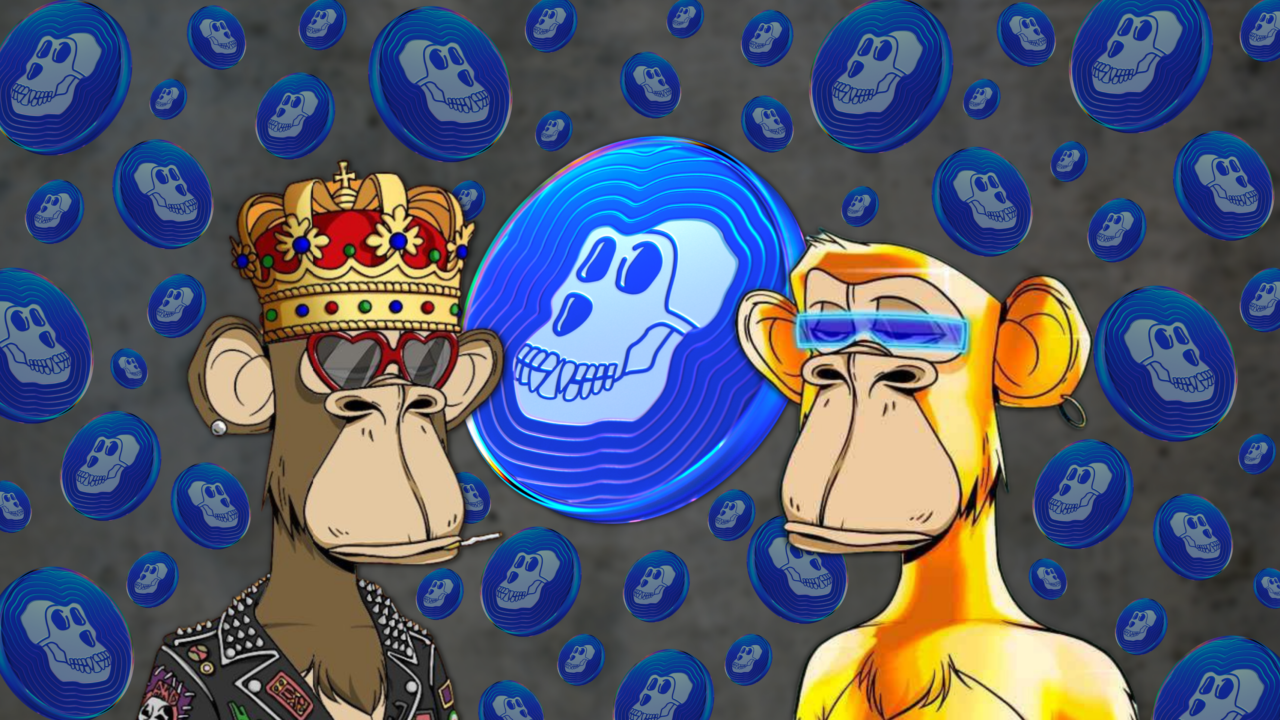
With last week's release of ApeCoin in connection with Yuga Labs and the Bored Ape Yacht Club NFT phenomenon, a new type of coin has been thrust into the conversation. And as expected, reviews of the coin are mixed early on. Bears lump the primate branded coin in with fleeting meme coins that have looked to cash in on a weekend's worth of hot press. Bulls are dropping extensive, hyperbole-filled Twitter threads designating the newly minted coin as the currency of the revolution. Mixed in with all this is accusations of pumping one's bag.
While it is too soon to render historical judgement on ApeCoin, the early documentation and investor backing does indicate something more than a meme coin level of shallowness. There is a grander vision attached to the coin around creating a multi-metaverse ecosystem which is powered entirely by ApeCoin. Right now, the evidence is mere speculation as Yuga Labs only offers six to seven figure Bored Ape NFTs and recently acquired supporting blue chip NFT collections on their roster.
But you can imagine that one day, there will be an "Apple" of the metaverse. A singular entity that manages to create a space where the NFTs travel freely, digital goods are bought and sold at scale and the ecosystem offers something for everyone to enjoy. Think: what Apple did with the App Store and turning it into a connected juggernaut and network effect supercharged revenue stream.
Right now, most NFT projects exist in bare-bones isolation. People might buy into them for the art or the hopes of scoring a free or exclusive hooded sweatshirt. This is like when an iPhone came with a calculator and a flashlight. But now imagine all of these developers working like crazy in the shadows to build apps, experiences, games and utilities. There are thousands of these projects going on. And they will all need somewhere to live.
You can imagine a world were the ApeCoin powered metaverse becomes that App Store and connected marketplace where all layers of apps and games can live. Where you can drop in, with whatever digital identity you want to rep, and play in a casino, play a game of basketball, buy digital clothes for your avatar, meet up with friends, watch videos and do all the things you already do in different places right now. But what if Yuga Labs is able to create the singular space where you can do all of this? Developers would be incentivized to build amazing experiences because they would be able to reap the profits in ApeCoin. It's just like developers who try to get into the App Store and secure their cut. The difference is, or should be, that in the web3 ethos, more of those earned profits should go back to the creators. If there is a standardized and frictionless payment system built into the App Store of the metaverse, you will start to see creators switching their focus in mass.
Who knows if Yuga Labs will be able to create the platform that unifies a critical mass of metaverse projects, but as the first mover and leading brand in the native space right now, they are the only ones to have a chance. Facebook, I mean, Meta, has the existing network effects to make a powerful entry into the metaverse, but they will need to prove that they can keep the creators and users as a priority, which would be a stark contrast to the web2 ethos of company control that they have operated in.
There is no telling what will happen next, but I think it's fair to give ApeCoin and Yuga Labs a chance. They have boldly taken a step into the metaverse and have the positioning to connect the dots and bring a hell of a lot of users with them. The question will is, will the users want to stick around once they find what is waiting for them? Whoever can offer the best experience and financial rewards to participate in their metaverse, will emerge a winner.
Spotify to Integrate NFTs
How do you onboard a billion users into web3?
That's the question every NFT startup is asking themselves every minute of the day.
And sure, perhaps one of those startups will crack the code or come up with the killer app that ushers the masses into web3. But a more likely scenario is already established giants entering the web3 game and offering their hundreds of millions of users an enhanced (and profitable) experience using NFT technology.
Imagine YouTube suddenly enabling NFTs and issuing some kind of token based on your lifetime viewing hours on the platform. Or imagine Facebook converting all of the times your content was liked and issues a similar token. Suddenly users will have thousands of dollars worth of NFTs just sitting there and waiting for them to convert. Perhaps the haters will still hate, but history shows that most people love free money. And that's what NFTs are turning out to be in a lot of cases.
Spotify is the latest web2 giant to throw its proverbial hat into the web3 game as they've announced that NFTs will be integrated into the platform. We have yet to see the details of how this will take shape. Will they let artists mint NFTs that lead to gated merch? Will artists be able to mint unheard tracks and demos as NFTs? Will every single track eventually be an NFT? We'll see in the coming months what they have in store for the platform.
The interesting thing I see with music NFTs is how they fundamentally change how musicians are compensated. With the actual smart contract of the NFT, royalties become fair and automated. A fixed, artist favorable percentage will flow back to the artist. This already is a huge course correction to an industry that has famously undercut the very people creating the value. However looking at how smart contracts can revolutionize the music industry gets even more intriguing.
In the past, musicians would collaborate with other musicians and enjoy a split in royalties. Or one artist would ghost write for another artist, and get a cut of the pie. What music NFTs offer, is the chance for this collaborative spirit to work at an unprecedented scale. Instead of artists needing to work with lawyers to broker royalty collaborations with other artists, the collaboration rights are already built into the smart contract of the NFT. This opens up a wild new way that collaborations could work.
With music NFTs, artists can sell their tracks, or samples, or stems, and their listeners will be able to collaborate with them and participate in a fair share of the profits. Imagine an artist minting a track as an NFT. Their fan buys it and has the rights to use it as the track on their TikTok video. As the video is played, it generates royalties that will be split between the artist and the fan. Imagine if the TikTok video goes viral and gets millions of views. Add this royalty multiplier to the NFT and the smart contract is rewarding the artist and the fan automatically. Now imagine an artist creates a hit song that thousands of fans use to create their own content. Suddenly the artist is getting a whole new stream of revenue from every fan who is creating content using the song. This model doesn't exist now, but is precisely what music NFTs can offer.
As Spotify enters the NFT space, they could be the ones to establish the ground rules on this new model. They could empower artists on their platform to mint songs as NFTs and earn additional revenue beyond their streaming money (which has been much maligned). By adding a new way for artists to make money from their music, they could incentivize artists to stick with the streaming service as they pivot meaningfully into the NFT space. This would be the equivalent of Netflix pivoting from DVD sales into the streaming game. This could be the first meaningful web2 to web3 transformation. And with the pivot, 400 million Spotify users could turn into newly minted NFT users overnight.
Of course, YouTube or Facebook could also make the pivot to web3 and bringing their billions of users along for the ride. At some point, they will all make the switch. Maybe at first in a small, experimental way. Or maybe they will boldly go all in with a splashy token airdrop that announces their pivot and rewards all the NFT naysayers with fat stacks as a balm for their potential hate. Once people see how NFTs don't really change things, and that they only empower people to profit from doing what they are already doing, the tides of sentiment will change on NFTs and we will officially enter the widespread adoption of web3.
And once we go full web3, we will never go back to an era where we didn't own our content and where we didn't have the opportunity to be co-owners of artists content. We are about to enter the era of artist to fan mass collaborations. We don't know what this will mean, but the possibilities are fascinating.
ApeCoin Marks The Start of NFT Execution Season
Roadmap season has officially ended.
With the launch of the Bored Apes Yacht Club affiliated coin token, ApeCoin, we are officially moving into the next phase of our shared NFT journey. Trading on the meteoric success of their illustrated profile pictures of apes, Yuga Labs is looking to build out the business. With their recent acquisition of Larva Labs and the Cryptopunks franchise, they are clearly looking to become the Amazon of NFTs.
The ApeCoin will trade on all major crypto exchanges tomorrow, which marks the first mainstream NFT project to launch their own coin. Smaller projects and artists have launched social tokens before, but this is the most famous project in the space making a big bet.
Details around the utility of the coin are vague, but the creators and holding company have gone out of their way to emphasize a community centric distribution. Previous holders are rewarded with tokens. As is an independently formed DAO. As is a flow of profits going to the Jane Goodall foundation.
There are promises of utility and ability to spend and earn ApeCoins in an upcoming suite of currently in development games. On paper it seems roughly to be aping a similar model as trailblazing play-to-earn darling, Axie Infinity. What the Ape themed games are, remains to be seen as there have been no leaks at this time.
The launch of an entire financial ecosystem is a big play. It's the first tangible round of infrastructure utility from the NFT superstar. For a year now, Bored Apes have dominated headlines and become a poster child for the NFT space with outlandish sales prices and a continuous string of celebrities aping into the project. Holding a Bored Ape has become the ultimate status symbol of web3. It either denotes you were crazy early into the space and were able to mint them at around .08 ETH. Or it signifies that you can afford the seven digit asking prices. Either way, Bored Apes took the momentum of Cryptopunks and came out of nowhere to become the bluest of chip projects.
Now the metaverse will watch and partake of the token era of Bored Apes. No doubt there will be an immediate spike as the ApeCoin represents the first widespread entry point into the Ape-verse. The fate of the ApeCoin will be decided by the quality and breadth of the ecosystem Yuga Labs is able to build out. If the upcoming games prove to be on the level of adoption and financial appeal of an Axie Infinity, the ApeCoin will no doubt continue to see a value boost. Within the ecosystem they can also offer tangible benefits like being able to buy gated merchandise with only ApeCoins. Or having future Bored Apes booster NFTs or airdrops exclusively set aside for hoarders of the ApeCoin.
Other projects will be watching what Yuga Labs does here. Will NFT projects launching their own coins simply be a repeat of the ICO bubble of a few years ago? Will be become oversaturated with derivative token projects now? Of course it's possible that meaningful projects, with passionate communities will be able to support their own distinct coins. Imagine traditional companies eventually offering their own tokens that act as loyalty programs. Imagine Nike or Starbucks giving you tokens for every purchase and letting you spend those tokens on exclusive, gated products and benefits. It's like a mailing list and rewards program on steroids. Marketers are going to go wild for this. And if these programs and implemented so that actually value and desired access are set as the rewards, it will create a win-win for brands and their customers.
The power of the blockchain is that it is transparent and trackable. Brands will be able to reward exactly those who are most invested in their communities. No more blind mailers. No more wasted resources. If a wallet holds your project, you can reward that wallet. This maximizes the value for both sides.
So check those exchanges tomorrow and see how the ApeCoin fares on it's initial offering. Tomorrow it will be traded on hype and speculation. The future value of the ApeCoin will come down to the execution and value that Yuga Labs is able to build into their ecosystem. Will this be a novelty in the history of NFTs? Or is it an important inflection point that will determine which of these blue chip projects has the business model and demand to still be around and vital in ten years?
Branding 3.0
In my career in advertising, I remember encouraging brands to take a look at YouTube when it just launched. They laughed at me. I didn't understand media, they said. It was small time, they chided. TV was king, they assured me. I took my lumps and dug deeper into offering them more "traditional" campaigns.
It didn't take long for the early "virality" of YouTube to spin its way into the consciousness of brand managers. Suddenly I started getting briefs to "make a viral video." Oh, the clients loved this. They'd see a group of no name kids who kicked a football against the cross bar, and suddenly they'd "re-imagine" the idea with famous global football stars. Narrative was dead they said. YouTube was all about the quick, magical stunt. Kobe Bryant jumping over a car. Wayne Rooney hitting targets with the ball. The only goal of YouTube was to game the system and make a video that got passed around.
This is the phase we are at with the emerging web3 and NFT scene. Brand managers are looking for 24-hour derivative turn arounds that result in pfp projects and virtual beer/deodorant/pizza. I get it. It's intoxicating to join the hot, new conversation that your audience is aware of. Just like it was exciting to "make virals" back in the day for YouTube. But savvy brand marketers will realize that behaviors and possibilities are changing radically. It's a fundamental shift. It has implications for your business, not just for making a cheap "WAGMI" joke on a Tuesday afternoon.
Eventually, YouTube didn't go away. It grew into THE platform for digital video. People flocked to YouTube for everything. To learn things. To relive their childhood culture. To laugh. To sing. To feel. YouTube ate all of digital video. It was no longer about being "viral" or trying to capture or fake some unbelievable stunt. YouTube just became a platform to tell stories and give information on. Eventually all the marketing budgets starting pumping into YouTube as the place to get your TV ads seen. Showing up early on YouTube, this didn't come as a surprise. It was easy to see that what YouTube was on launch, wasn't what it was going to always be. It ushered in a new fundamental form of online behavior. Suddenly video was king. And it hasn't gone away since then.
This is where we are at in web3 and NFTs in March, 2022.
Brand managers are looking to make "viral" projects. They are thinking about the next two weeks, and that's it. What they are failing to realize, is that NFTs, and the underlying technology, is doing what YouTube once did to online behavior. NFTs let you own your presence on the web. No more like buttons. No more hearts feeding straight into a marketing algorithm that prints money for their holding companies.
For the first time, users, individuals and people matter.
That's what NFTs represent.
You have to look past the headlines and the easy memes about bad drawings or right-click-and-save crusaders. This is just the first volley. This is "everything has to be a viral video" phase. No. This is just the first chapter. It's the early innovators playing around and casually defining one form or use case. From here, the pie gets bigger. From here, behavior gets normalized. From here, the jargon goes away and "digital ownership" starts to become tangible.
People in charge of brands need to realize that the digital world is evolving. It's not just a passing lightweight meme. The fundamentals are changing. The visionary and the first movers will catch this early, and they will start building out their actual business models to fit into the evolution of our digital lives.
That's exactly what Michael Jordan and his son are doing with HEIR. They have founded a web3 and digital culture company that will bring elite athletes and their fans closer together. This is an actual business. This is not a weekend project. HEIR will use Jordan's legacy as a centerpiece, and then build their business around this generation's co-signed athletes to offer digital products (NFTs), access and physical merchandise. To align with this, they have filed a series of relevant patents to stake their claim to the space strategically. Nike has done the same thing. The smart businesses are not just going for the one-off campaign or cash grab. They are adapting their business to where digital behavior and commerce are leading us.
It's easy to be a hater. It's easy to look at the stupid, amateurish videos that first came out on YouTube and dismiss the entire platform. How is it premium? How can it compete with TV advertising? But for those who look deeper and consider the operation and potential in emerging technologies, they give themselves a chance to see a longer runway. And those who get their first and create a tangible impact early, will be able to define the space and position themselves and their companies as first movers. This in itself is a branding win. The Nike's of the world are consistently early to emerging technology and it has helped them to control and distribute their message, brand and products consistently with where culture is gathering.
If you're spinning your wheels trying to come up with the perfect blockchain pun to post on Twitter, you're probably not gonna make it.
So keep your antenna up as these evolutions in technology speed up. If you pay attention enough, see what is being done, you'll start to see gaps where you can do something differently. That's where the wins for a brand lie. And unlike media only innovations, the emergence of the blockchain brings together media and business possibilities.
If you haven't realized, every brand is a tech brand now. The winners will be the ones who opt in earliest.
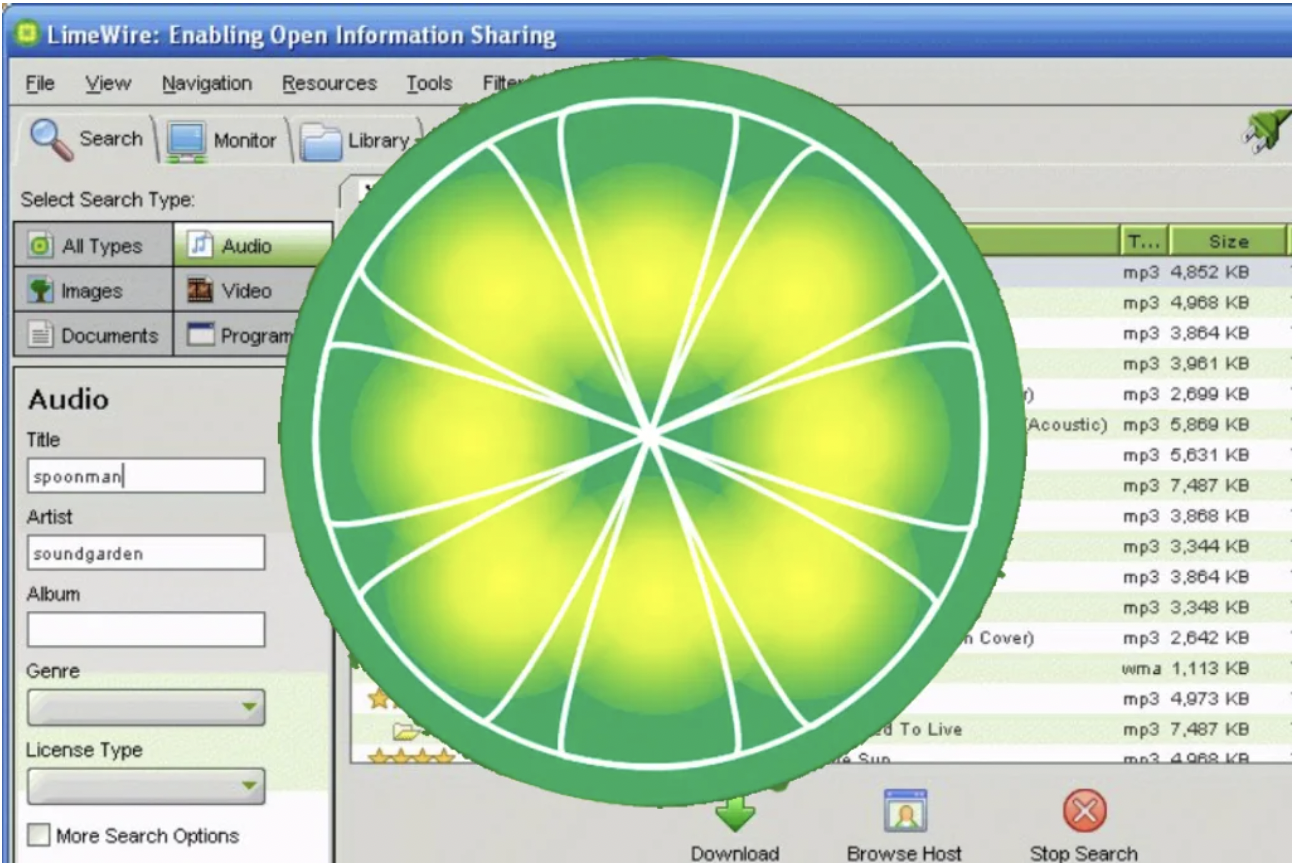
Limewire: From mp3 Piracy to NFT Marketplace
Millennial music pirating darling Limewire sprang back into headlines this week after decades of dust and silence. The once foundational music piracy service, was buried in lawsuits and eventually out-scaled by legitimate streaming services like Apple Music and Spotify.
However, as we've seen, companies and IPs can undergo radical transformations and reimaginings in the web3 era. And so, next up is Limewire, who according to new management is fully pivoting into music NFTs. While there have been a host of web3 native music NFT platforms coming into the limelight, none of them have yet to reach a widespread adoption or traction. Could a former major player have the brand recognition needed to jump start the official beginnings of the web3 music revolution? It's only a matter of time until someone gets a critical mass of artists on board, sorts out the smart contracts and begins allowing artists and listeners to participate in the growth and profits of musical acts.
In their initial volley, Limewire is looking to launch with artists unreleased, live and bonus tracks. Effectively giving artists an easy route into NFTs, by only requiring them to test out the platform with their forgotten or cast aside tracks. If the traction gains momentum, you could imagine artists starting to launch new albums onto the service and finding out what the financial and fan reach rewards might be. Musicians, long unfairly squeezed for mere pennies per stream on Apple and Spotify, represent a key demographic to demonstrate the freeing powers of digital ownership. And abstract concept that needs its Robin Hood moment. If a struggling musician or group of musicians could come out and declare that they have become profitable off of their music NFTs, that could create a watershed moment similar to how struggling visual artists have found success in the initial phase of jpeg based NFTs.
Expanding into music, would also allow NFTs and web3 in general to prove that an "NFT" is really just a bit of coding, with the power to raise any sort of digital content. This isn't about the shoddily illustrated animals that have dominated early NFT branding. NFTs are simply like "html" or "http", they are a protocol, like web pages that can be applied in infinite ways. To say that you "don't like NFTs" is like saying you "don't like websites." Do you not like all websites? Do you not like the internet? NFTs, like webpages or the internet are not one thing. They are simply the underpinnings that allow for passage of digital ownership. I feel like once music NFTs rise into public awareness, the depth to which people understand the emerging technology will grow. This is simply the evolution of the internet and a new frontier of what is possible with digital behavior.
When you "buy" an NFT, you are not "buying an NFT." That's like saying you "bought a receipt" when you bought a piece of art or a book. The NFT is simply the record of the transaction. There is nothing inherently valuable in that. It's just the record of who paid what for what asset. The record of ownership, combined with the digital asset is what gives NFTs their power and value.
In the future with music NFTs, you could imagine it working like this. Say an unheard of artist released an album on a music NFT platform like Limewire. Fans would be able to buy a share of the album or an individual track. From here, fans would then be able to "stake" their album and generate passive income every time the album or tracks were streamed. The artist themselves would generate the highest percent of income every time the track was streamed. If the artist happened to blow up and get millions of streams, the early owners of the music NFT would see their investment rise. The initial NFTs would be more valuable based on the popularity that the artist gained. If the artist didn't blow up, there would still be proportionate profits based on the size of their fan community.
Imagine an already established artist like Kanye West dropped a music NFT. Let's say Donda 3 was dropped onto Limewire. It would be like any high profile NFT drop, and there would be a massive queue of people trying get get one of the limited edition NFTs, that would allow them to earn profits based on the crazy amount of streams they imagine Donda 3 will receive. With the staking of music NFTs, the longer you stake, the more you stand to gain. So if you consistently buy blue chip artists on their release, you will create a steady stream of income based on the number of streams they get. Currently, all of that action is going back to Apple Music and Spotify. The artists, unless they have separate deals directly with the streaming services, get mere fractions of pennies per stream. It can not support their careers. Web3 stands to use smart contracts to guarantee sizable profits go back to the creators of content. Whether they be visual, motion or music artists. Their name and contract is baked into the NFT, and every time someone interacts with or buys the NFT, the profits automatically go where they are deserved. No record labels. No middle managers stealing profits. It's all out in the open.
Record companies and streaming services could adapt to web3 and get in on the profits by creating their own native web3 music platforms. That way they would be able to offer distribution and a more fair deal to artists to stay involved in the process. Of course, artists like Kanye would be better served to create their own web3 music platforms, where they have the scale and power to recruit other acts, give them a fair deal, and get percentages of all of the action. Major athletes like Michael Jordan and LeBron James are already establishing their own web3 native brands, which will give them massive scale and influence in the space. All public creators need to be taking this seriously, as the earliest ones to get in will profit the most and dictate the ground rules of web3.
Limewire will be one of the first public tests of music NFTs. It will take a combination of major acts and independent artists to move the needle in this space. But due to the nature of smart contracts, a more profitable future is guaranteed to artists in web3. And the interesting addition is that early fans of artists, also stand to profit alongside the music they like. This is the nature of web3 and potential benefit of merely participating and engaging with the new era of digital culture.
Star Wars Obi-Wan Kenobi Trailer Reaction
Star Wars always gets you with the music. I remember when I saw the trailer for *Episode 1* back in the day. It came after a lengthy dry spell for the franchise, when there was no guarantee that Star Wars live action films would ever come back. Of course we got an entire prequel trilogy. Then Disney bought the franchise and they've been pumping out content around the clock.
But when I first saw the trailer for *Episode 1,* I was mesmerized by the flashes of imagery set against John Williams' masterful themes both old and new. It felt instantly Star Warsian, and the effects on screen looked fresh and modern. This was going to be Star Wars for the modern era. Of course, the prequels came out and were initially criticized, but nothing can take away the power of that original trailer. Star Wars, as one of our "forever franchises", exists largely in our own minds as fans. The head canon is strong in the Star Wars community. That's why you see the crazy blowback around Luke Skywalker's character arc or the decision to include a certain plot point of not. Fans are over invested in the franchise, and take the unfolding stories on an insanely personal level.
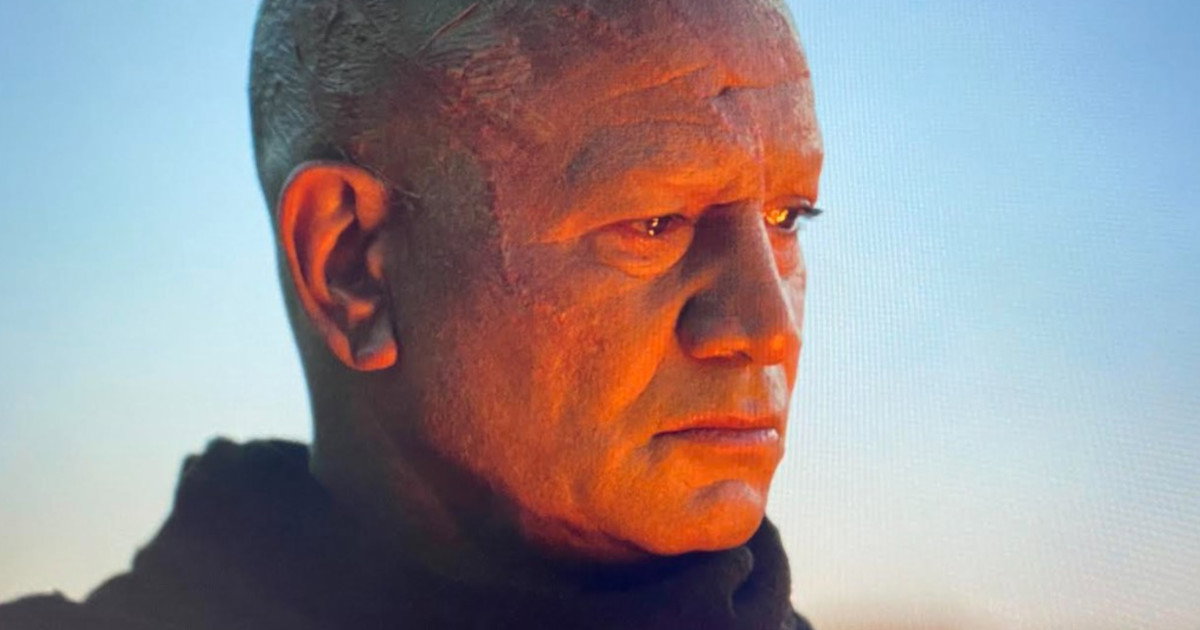
Star Wars marches back again with the May 2022 arrival of Obi-Wan Kenobi on Disney Plus. Ewan McGregor is back as the titular Obi-Wan, who was universally revered as a bright spot in the otherwise tepidly received prequels. What's more, is he is joined by Hayden Christensen, who played Anakin Skywalker slash Darth Vader alongside McGregor's Obi-Wan in those prequels. It's a match made in revisionist Star Wars heaven.
The first trailer delivered the feels with the John Williams' score and fresh scenes of McGregor as Obi-Wan. It also showed a diversity of landscapes beyond the well-trodden Tatooine. We saw some Blade Runner-esque urban environments. They showed some new intimidating red lightsaber users who packed a menace in their appearance and how they delivered their lines. We even see a cameo from a young Luke Skywalker appearing around 7 years old. Aside from a touch of breathing, Vader and Anakin Skywalker have been held out. The central question and tease remains, what will the nature of Obi-Wan and Vader's relationship be. And will we see the two former friends appearing in the same time and place together? Or will they merely be communing aka "Force Zooming" as we've seen possible in recent Star Wars offerings. The trailer does what it is supposed to do, by giving hungry fans their first new visuals and vibes from the upcoming series. It remains the details and plot points well out of sight for now. More to come. https://www.youtube.com/watch?v=TWTfhyvzTx0
While recent Disney Star Wars offerings have operated at the periphery of the franchise's galaxy, minting new heroes (*The Mandalorian)* and glorifying fan hyped background characters (*Boba Fett*), *Obi-Wan Kenobi* boldly dives right into the center of Star Wars as we've always known it. We're picking up the pieces directly adjacent to the universally beloved original film that established the beloved franchise and immediately sent it into hyperspace.
The plot points in *Obi-Wan* will not be mere footnotes or side curiosities for the overly invested. The character decisions and story here will have direct implications for how we view the original films. They have the chance to fill in things that we have always assumed, and perhaps boldly challenge what we thought we knew by showing events from a "different point of view."
The latter is where my new hopes lie for the franchise. I would love for this series to show us more than what we expect and have envisioned for over forty years. It's got to be about more than Obi-Wan meditating in the sands of Tatooine. It's got to be about more than Darth Vader in a *Rogue One* rampage, simply being one dimension and bad ass wielding his iconic red lightsaber.
The show creators have a chance to fundamentally reshape how we view the original films. This is an exciting and terrifying proposition. You doubt that Disney would let them take too much of a risk, and would rather they simply pull out their action figures and dole out a healthy amount of fan service.
But what if they did something radical?
Here's what I would love to see:
I'd love to see *Obi-Wan* reshape Darth Vader's narrative. I've always thought that Darth Vader was not the one-dimensional terror we've become accustomed to. I always saw *The Empire Strikes Back* as not a blood thirsty tyrant looking to kill Luke Skywalker. I saw Vader on a hellbent mission to reach his son Luke before the Emperor could destroy him. I saw Vader as the protagonist who was carefully toeing the Empire's political lines, so that he could essentially serve as a double agent to track down and save his son from the world of hurt that he had caused.
With that head canon in place, I think it would be incredible if we learned that Obi-Wan and Vader/Anakin Skywalker had formed a secret alliance. That Vader vowed to protect the secret of his son from the Emperor, and that Obi-Wan agreed to be Luke's bodyguard, in the trenches of Tatooine. All until a future time when Vader could figure out how to get the monkey of the Emperor off of his back and rejoin Obi-Wan and his son.
In this light, perhaps the whole theater of the lightsaber duel on the Death Star was simply to keep up the illusion of Vader hating Obi-Wan. When in truth, it was the only way to protect Vader's mission and buy him more time to connect with his son.
There is also something fascinating that could be done with playing on a split personality of Vader and Anakin. It's not impossible to think that Vader had moments after being confined in his black suit, when he partially or fully returned to being Anakin Skywalker. It's also possible that he spoke to Obi-Wan, in person or through the Force in this state of being Anakin. Here is where things could get really interesting. Perhaps Obi-Wan will try to fully return Vader to the light side, with varying degrees of success. Maybe within this show, we will see the seeds of Vader's ultimate return to the light.
After all "Obi-Wan once thought as you do," Vader famously said to Luke in *Return of the Jedi.* Maybe Vader himself also felt a vulnerability to returning to the light. Consider how terrifying it would be if the Emperor realized that you were considering switching sides? It's a dark secret and vulnerability that could serve as the central dramatic tension not only for the series, but it could fundamentally reframe how we see the characters and events in the original films.
Star Wars has made its name and cultural sticking power based around shocking plot twists and character reveals. What would be more galaxy shaking than finding out that the big baddie we've always feared, actually was the central protagonist of the franchise all along?
Come May 2022, we'll see if the creators have managed to take any big swings with the material, or if the powers that oversee the franchise have cajoled them into maintaining the status quo.
I'm rooting for a disturbance in the Force...
NFT Branding: 101
The cat is out of the bag on the technical side of NFTs (or should I say Crypto-Kitty?) Every day, new services pop up that make it easy to drag, drop and mint your own NFTs. The barrier to entry to create your own digital items is low. And this has led to a flood of criticism that NFTs are a bubble. Who wants to buy all of this crap art?
But just because it's easy, doesn't mean it's easy to win in this space.
Take T-shirts. In the 1950s, if you wanted to sell t-shirts, you had to own or have connections to a factory that physically made them. Then there was shipping. Then there was distribution. Etc. Flash forward to 2022, and t-shirts have been "drag-and-droppified." Technology has eliminated the barrier and the middlemen. Does this mean that t-shirts are a bubble? Does this mean that people will no longer buy t-shirts just because now everyone can make them? No, they'll buy the shirts they *want.*
People buy t-shirts that fit their style, make them feel cool or fashionable or have some personal meaning to them. T-shirts are a form of self-expression. People will always need to express themselves and differentiate themselves from the people around them. Brands and creators that can use t-shirts as a vehicle to transport their own worldview and ethos, will sell. Generic knock offs., or random t's uploaded to Amazon will get ignored. As in all things; T-shirts to NFTs, it's survival of the coolest. Survival of who can create the most meaning and emotional connection.
NFTs aren't cheesy illustrations of animals. They are units of brand identity. They are signal boosters. Just because you can technically make an NFT, does not mean you're going to make it. The digital items that thrive are just like the t-shirts, lunch boxes, branded candy bars, hot sneakers and cool cars that people keep buying. The creators that imbue their NFTs with meaning and manage to *mint culture*, will make it. All others will fade away.
Maybe in 2017, the superstars who moved the needle in the space were the coders who technically enabled non-fungible tokens to be created. But in 2022 and beyond, the technical abilities have spread out and are no longer the differentiator. The value and importance of digital items will be in the hands of brands that can put their cultural cool into digital amber, preserving authentic meaning on the blockchain.
There will be low hanging fruit as always. A shallow, profit printing way to get involved at some layer. Think: world-beating IPs like the Disneys, the Marvels, and the imagery that you can put on a pair of underwear and socks and manage to sell out on autopilot.
There will be newcomers, like Bored Apes, who seemingly come out of nowhere, capture the cultural zeitgeist and manage to start up a legacy from ground zero.
There will be niches in every category you can imagine. Artists and musicians who connect with the heart and soul of their fans. This will create a symbiotic relationship where both sides will contribute and benefit from the increased exposure of the creators as they push further into culture.
Those who know branding, will win.
It could be personal brands, legacy brands or new cultural phenomenon brands.
But the ones who rest on their digital laurels at merely being able to technically show up at the NFT table, or who copy and paste derivative ideas onto the blockchain will be ignored. In our attention culture, we crave meaning, story and values. We look for things to cheer for. And we want easy ways to express our values. This is what branding is an onramp for. Without branding and meaning, NFTs are hollow vessels. A collection of directionless pixels taking up space on the vast sea of the distributed web.
Brands with sharp POVs and clearly communicated world views will have lasting power. Just because the medium of communication has changed, doesn't alter the basic rules of branding that have proved successful at each iteration of culture.
Brand your project or be forgotten.
Azuki NFT Releases First Fractionalized NFT
We have hit a wall with NFTs. The word is out. You either love or hate them. But whichever side you fall on, you feel like you know what they are about. And it's either for you or not. Of course those who are writing off NFTs already, are sounding a lot like the people who dismissed the Internet as a fad back in the 1990s.
Yet, even as a convert to NFTs and the potential of web3, I can understand where the hate is coming from. It's like when the Internet only had a few web pages and you had to get access by getting "minutes" on a physical CD. The infrastructure of web3 doesn't exist yet. It forces you to use all of your powers of imagination as to what the space could look like once that infrastructure is built out. Leaving value to the power of imagination alone looks an awful lot like speculation.
But I just ask myself a simple question: Will people's lives become more digital in the future? Or will people start abandoning technology. Will the Internet become the fad that it was predicted to be in the 1990s? If you think people's lives will be more digital than they are today, then that is a vote of confidence for web3.
But if web 3.0 is the destination for mainstream adoption, we will start needing more than imagination and speculation to get us there. This means we need innovation. We don't need cryptopunks version 47. We don't need 394 different flavors of monkeys. We need honest innovation that unlocks the next chapters of this story. We need NFT projects that make people go "oh, I never thought of that." We need NFT projects that move the needle and start filling in the wild imagination of early adopters.
This brings me to a new wave of NFT projects that are standing out. Projects like Azuki NFT, an anime inspired PFP project that comes with a blue chip pedigree and an ambitious roadmap to match. Azuki started out as a series of anime inspired characters and a promise for future metaverse integration. Its members have worked for Marvel and Disney before, and what they are looking to accomplish is directly related to that path. Instead of designing characters that raise the stock prices for Disney shareholders, these creators are looking to mint original IP that will fund their own vision that they will be able to control and profit for. No longer putting their hard labor in for the House of Mouse, they are out to make an impact for themselves. This is the promise of web3. Digital ownership that many can participate and profit in. https://www.azuki.com/
The Azuki NFTs quickly shot to the top of the NFT rankings and their floor price quickly vaulted out of reach for most. Which makes their recent offering intriguing. They have just "fractionalized" one of their IP's core characters, a bean farmer named Bobu, and offered those fractions at an affordable mint price for new members to join the community. There were 50,000 such fractions minted and they went fast.
Azuki is promising that the Bobu fractional NFTs will be an experiment in project governance. Effectively creating a DAO based around one of the characters in their world. It's like if JK Rowling suddenly decided that Hagrid was going to be owned by the fans and offered shares of ownership in the character. Holders of the fractional Bobu NFT will be able to vote in the community to help decide the direction of the character. The projects roadmap lists ambitions to create animations, games and even films around the Azuki universe, and Bobu's fate will be fan controlled. This is having a stake in the game. And as word of the project moves forward and sales of the fraction continue to rise, they will keep generating more funding that goes towards fulfilling their future ambitions. It's a brilliant marketing move that has brought more attention to the Azuki brand, and has also lived the spirit of web3 by giving those who missed the initial wave an affordable entry point into the project. It's a show of innovation that could be adopted by other out of reach NFT project like Bored Apes, should they look for ways to acquire new members in a future wave of the project.
It's still early innings for these projects, but every time one project decides to try something new, the whole space can learn and benefit from the attempt. And hopefully, we will see more of these properties taking risks and trying to add new innovations to what they are offering. One of these days, someone will add a new use case that will serve as the springboard to mass adoption of web3. We are still playing in tech savvy, early adopter spaces. But with every new attempt, the mainstream gets a little closer. Innovation is the only path toward opening the floodgates. Because everyone who already cares about NFTs is here and content. It's the 99% that need to get excited about this space, and so far, they haven't seen anything that gives them enough FOMO to join. Yet.
Shibuya NFT Creates Web3 Native Film Platform
Hollywood has long been looking for new ways to fund and market films. With the emergence of NFTs and web3, filmmakers and film producers have actively been searching for ways to harness the exponential fund-raising potential that the space has demonstrated. As out-of-nowhere, original IP like Bored Apes have vaulted into the spotlight, Hollywood has been left on the outside looking for where they can plug in their IP.
Yes, we have seen traditional IP money printing NFT launches around the typical tentpoles. Marvel and Star Wars minting one off collections for a limited number of fans. But these moves are a flash in the pan. Web3 has moved on from the quick flip, cash grab days, into having a large concentration of smart and creative people looking how to build out meaningful ecosystems within the space. With web3 native creative projects, it seems like eventually, the next Star Wars or the next Harry Potter could be spun out of passionate creative team delivering surprising characters and worlds to an adoring and high-spending audience that funds higher production ways to bring those creations into the world.
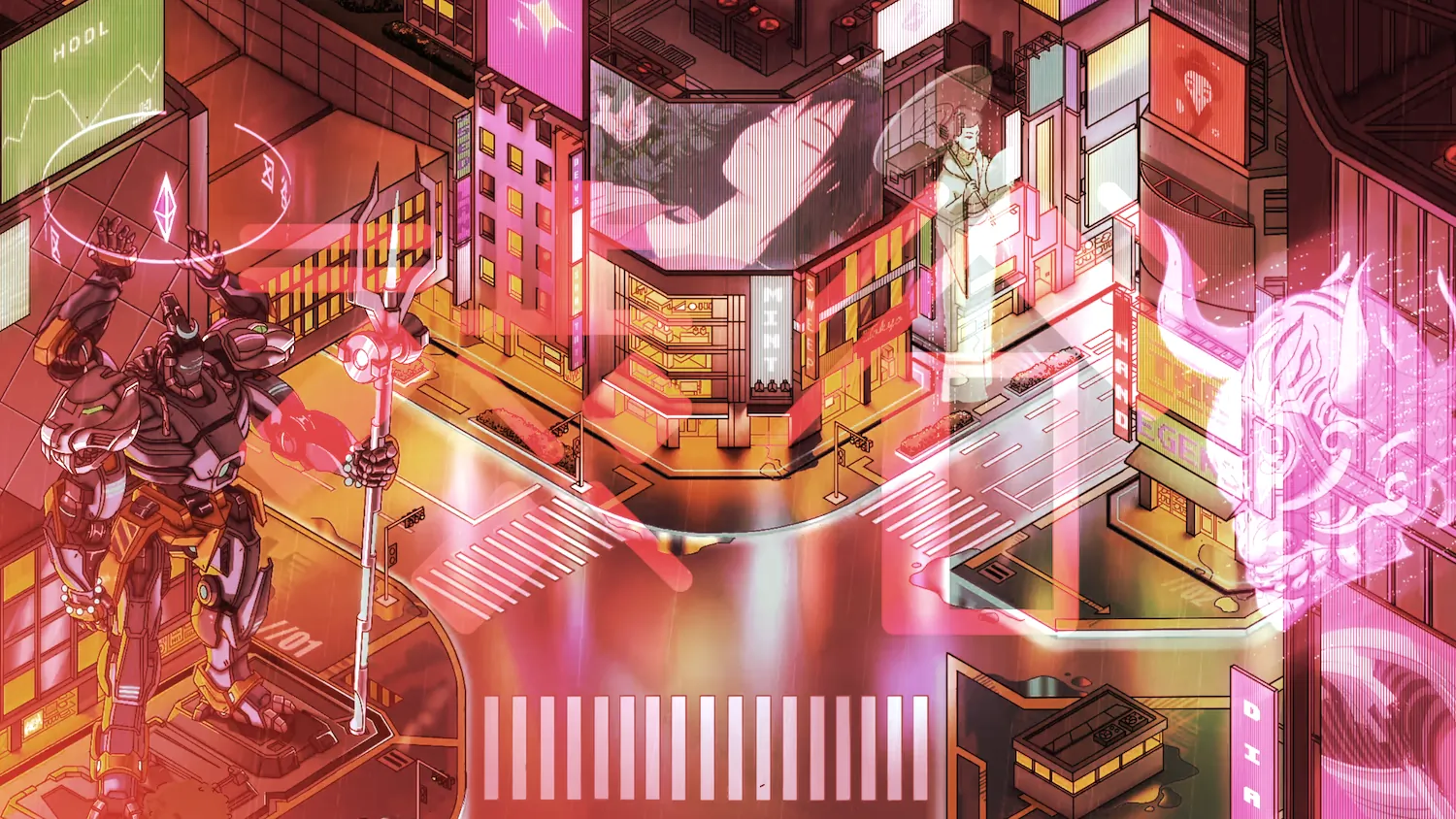
The latest web3 film attempt to step onto the stage is the Shibuya project by crypto-creators **@pplpleasr1** and **@maciej_kuciara****.** What they have brought to the table is a stylish website and the opening moments of an original animation that hearkens to the style of Japanese anime powerhouse Studio Ghibli. The website features a stunning and modern version of Tokyo's central hub, Shibuya, rendered in a metaverse friendly style that has all sorts of future leaning implications. The film, is an Alice and Wonderland style animation, which ends with a cliffhanger of Alice standing in front of two doors, left and right. https://www.shibuya.xyz/https://twitter.com/pplpleasr1https://twitter.com/maciej_kuciara
As you get into the project details, you see that you can mint a "Producer Pass" which acts as a governance token to the project's DAO. With the NFT, you can vote for which door Alice should open. It's like the interactive films that Netflix has been playing around with, only in this case, you vote with buying into the ecosystem. Once the votes have been cast, it will unlock Chapter 2 in the story, upon which a new round of Producer Passes will be minted and the process of deciding the main character's fate will be in the hands of the community again.
The project also has "White Rabbit Tokens" that will be generated based on how early users join the project. The earlier you get in, the more tokens you will accumulate. At the end of the film, the film itself will be fractionalized into an NFT, and all participants will be able to stake an ownership in the final film.
Hopping into the Discord and AMAs you find that there are plans of this being the first film in a web3 film platform, where original stories will be created, and then delivered "direct-to-community." It's like Netflix meets Patreon or other crowdfunding analogies from the web2 era.
Again, reverse engineer your favorite franchise, and you can start to see how a launchpad for characters and stories could escalate. Luke Skywalker could have been introduced this way. George Lucas could have presented the opening atmosphere of Star Wars and allowed fans to buy into it from the get go. Imagine owning an NFT minted in 1977 that represented a share of ownership in the character Darth Vader. The future is impossible to predict, but creative minds are actively looking how to scale their original stories and turbocharge their development and funding via the power of web3.
It's also possible that eventually Hollywood will see the profit potential in fans wanting to have some skin in the game of the franchises they love. What if instead of having an Ironman lunchbox, you could own a part of Ironman, and participate in the success and profits of the character moving forward. Suddenly we aren't talking about fleeting animal illustrations. We are talking about cultural forces opening up and rewarding fans' for their passion and promotion. Think of the money big studios could cut from their marketing budgets, if they just allowed an energized and invested audience to preach the good word and hype up the latest release. We are several steps from this point, but all signs and ingenuity are pointing this way.
Until then, check out the Shibuya project and see if the community will send Alice through the door on the left or right.
Michael Jordan Enters the Metaverse
Quickly and quietly, things are picking up with basketball legend Michael Jordan's involvement in the web3 space. There have been reports of the hoops icon meeting with multiple web3 and NFT companies over the past months, and now we are starting to see some of the fruits.
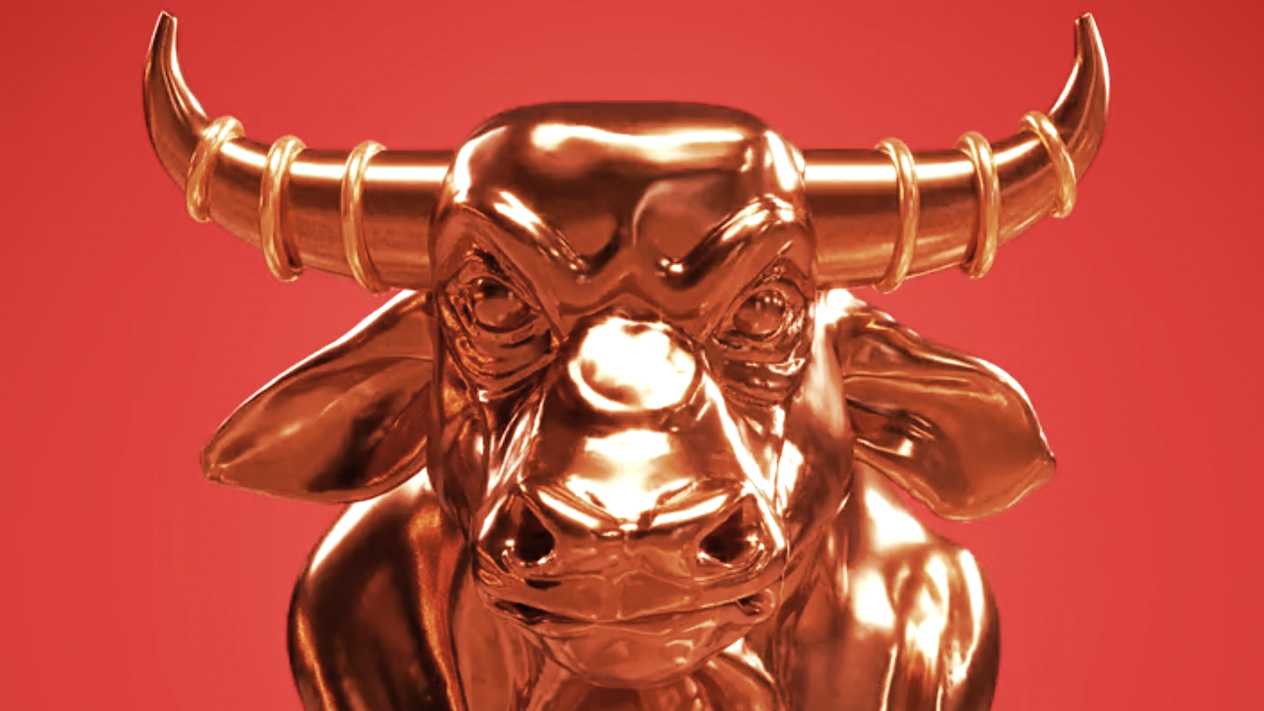
Jordan's company that he founded with his sons, HEIR Company, have minted their first NFTs on the Solana Network. The genesis collection is called 6 Rings and consists of 3D bulls with six rings displayed on their horns. The bulls come in various colors and finishes, set against a range of Chicago Bulls colored backgrounds. Each NFT comes with a unique code that the project's Discord community is frantically trying to decode like the DaVinci Code. The codes appear to be linked with the different years that Jordan played in the NBA, but no utility has been revealed. https://www.heir.app/https://magiceden.io/marketplace/6rings
The details are sparse, but HEIR is promising to create a new era of digital culture, that gives a platform to premium athletes, from high school to the pros, to interact with their fans on a more personal level. Buy in to get this exclusive access will come in the form of athlete NFTs. The 6 Rings collection is considered the "founder token" and will grant early access to subsequent offerings within the app. The app has not been released yet, nor have the roster of athletes been revealed.
Many athletes have jumped into the web3 and NFT space in various capacities. But no one has so far set up an entire company dedicated to the space. MJ and his team, led by his son, seem to looking to create a long turn, new value offer in the emerging web3 and metaverse. With the most iconic and successfully branded athlete of all time setting up the beginnings of a media empire, it's worth taking a look at.
Again, no utility or specifics have been offered at this time. The collection has just dropped and sold out, and there is already frenzied activity on the marketplace as pure speculation fuels the early interest. People are speculating which athletes will be involved, and if at some point there could be a crossover collaboration with Jordan Brand and an exclusive line of sneaker drops. Again, all speculation, but not entirely out of leftfield considering Michael Jordan himself is a part of the company and listed as a strategic advisor. With MJ's connections and clout, any premium collaboration or partnership could be expected in the future.
What gets me excited is the long term thinking. This isn't a one off PFP project, or a dashed off in a weekend project to rug a bunch of fans like we've seen other athletes hastily put together. And it makes sense that Jordan would not go that route. He is famously selective when it comes to where he will allow his image to be used. Not to mention his world-class business and branding acumen that have re-invented the rules in multiple industries on how to market products and services.
As a lifelong MJ junkie, this project is a no brainer. He has never been "just another athlete." He has been the standard bearer and trailblazer that has expertly created and grown every platform he has been involved with. He fueled the globalization and interest around basketball and turned the NBA into the world's second most popular sport after decades of the sport receiving almost second class pro citizenship. He turned Nike into something we'd never seen before with his mix of charisma and marketing savvy alongside the brand and its partners. That he would turn his attention to web3 is not surprising. The money and business opportunities are there. And knowing what a legendary competitor MJ is, you can imagine him sitting back, seeing what other athletes and celebs are doing in the space, and then setting out to blow them away with quality and innovation like we haven't seen before.
I expect MJ to play a role in raising the bar on what an NFT or web3 project can be. If he truly puts his focus on the space, I'm riding with him all the way. Time will tell. But if history is any indication, you don't bet against Michael Jordan once he sets his sights on something.
Boba Fett Chapter 7 Review
Well, *The Book of Boba Fett* has come to an end.
While the lasting reactions and memories of the show will take some time to settle in, I can give a glimpse of what I was feeling in real time. The bar for the series was quite high, coming off of the smashing success of *The Mandalorian,* so it had a tough task looking to meet those expectations.
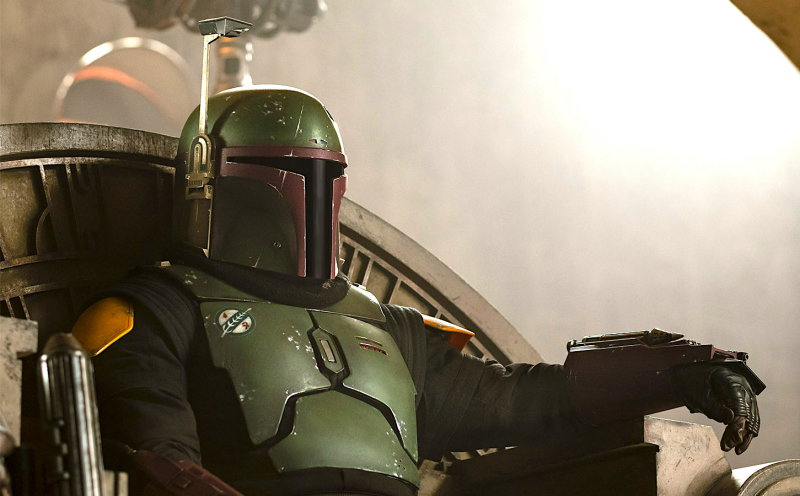
In the end, the latter series did not top what they were able to achieve with the former. *Boba Fett* feels like a sidestep in the more sweeping thematic story of *The Mandalorian.* It was an amusing aside that created some all time visuals, but that left fans scratching their heads about the sudden U-turn in attitude from the titular star.
In the head canon of fans, Boba Fett was the most badass bounty hunter in the galaxy. A man who once stood up to Darth Vader. A loner who Darth Vader had to plead to use more humane tactics. With this build up of a character that was long fan beloved, and extremely limited in actual screen and story time, we had no idea what we were in for. But given the triumphant and brutal return of Boba in *The Mandalorian,* we did expect that the character would flex his muscle at all that stood in his way.
What we got in the series however was a suddenly pacifist Boba Fett, who spent long stretches without his signature helmet on. He was a character long on monologues and short on action. And while the sudden turn of Boba Fett into a ruler who wanted to lead by respect and not fear was intriguing, the thought was never paid off. We never concretely understood why he had the sudden change in temperament. We were just asked to accept it.
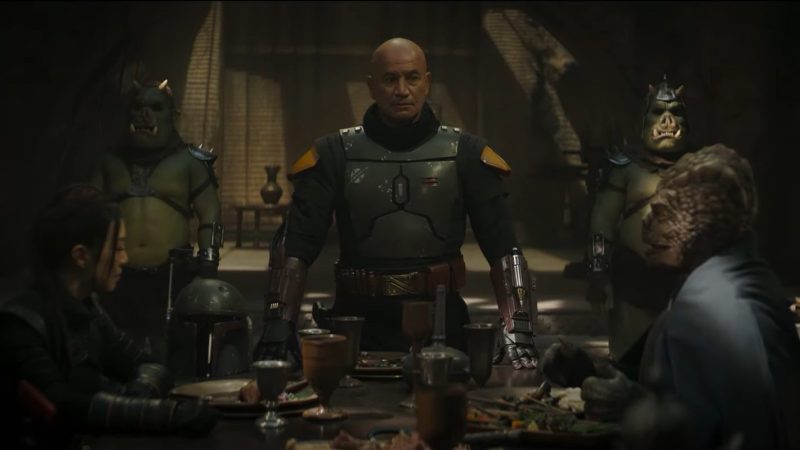
The series suffered from a lack of dramatic conflict. An interesting opposing force was introduced near the end of the series in rival bounty hunter Cade Bane. It seems like the story would have gained in tension and menace had a character like Bane challenged and threatened Boba in the opening episode. There was never a face to the danger that Fett was up against. There was a masked crime gang, but we were never taught to fear them, only to believe that they had a stranglehold on Tatooine. It seems there is a strong story to be told here, and I wonder what employing some *Breaking Bad* level tactics could have revealed. *Breaking Bad* put on a masterclass of revealing one menacing underworld character at a time that the main character had to go through. Each character was introduced as unhinged and brutal in their own way. From Tuco Salamaca to Gus Fring, we always knew exactly who was threatening the well-being of the characters in *Breaking Bad.* In *The Book of Boba Fett,* evil had no face. We never got to see Boba really agonize about who he was up against. It would have led to much more dramatic storytelling and still could have worked with the slow burn tempo of the opening episodes.
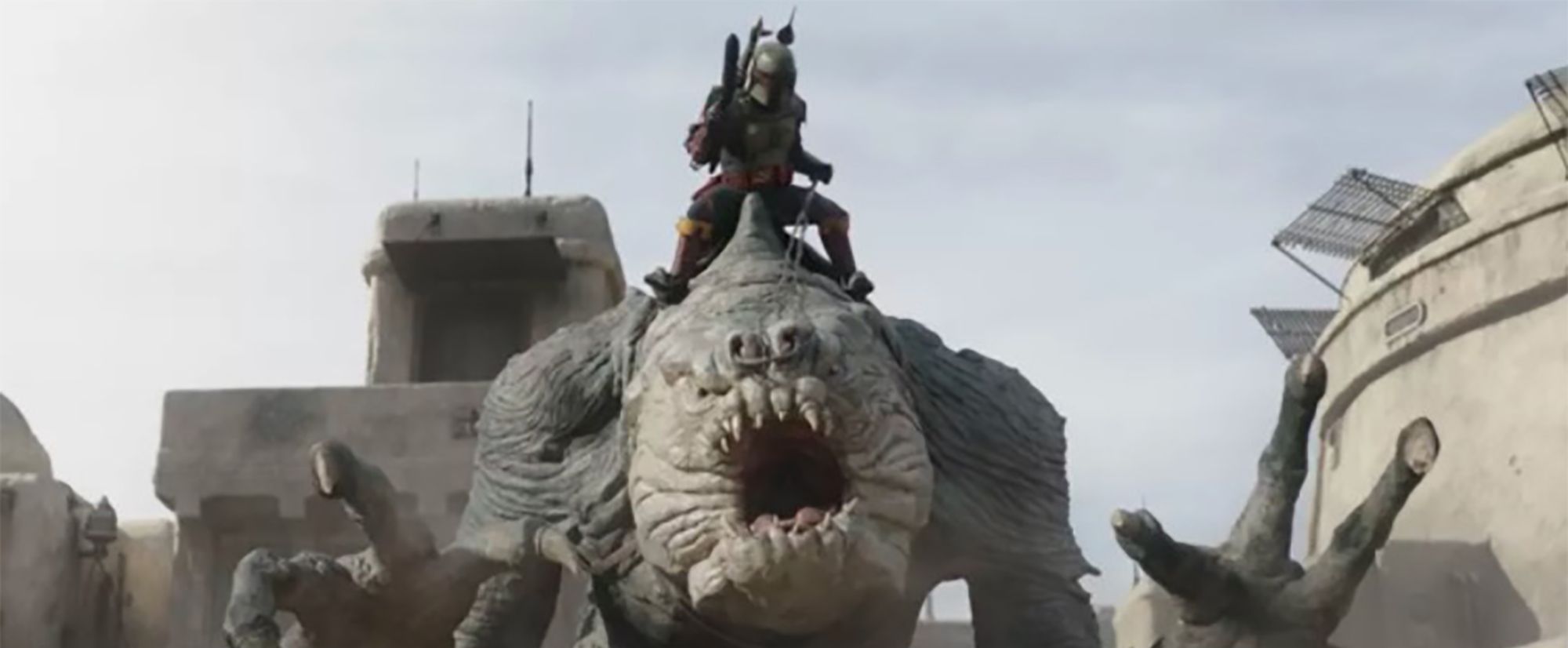
In the end, all of our heroes come back to Tatooine to assist Fett in his defense of the town from the Pike Syndicate. Big shootouts and set pieces abound, and we are given some cool and noteworthy action. The setup gives an excuse for Boba Fett to satisfy fan desires by showing him riding on top of a fearsome Rancor beast through the dusty streets of Tatooine. The beloved Grogu shows up and saves the day in Boba Fett's show with his new mastery of the Force. In the end, Fett is seen as the hero of the town and the other characters go off on their next adventures.
While the ratings proved to be a success, you have to wonder where the story of Boba could go from here. Will a season two see him defending the town from a new crime gang?
I was expecting to see some tie in to the Han Solo Star Wars film, which heavily featured crime syndicates. The Emilia Clarke character from that film, Qui-ra, was set up as a capable crime lord working alongside Darth Maul. That would have been a blockbuster worthy pairing to be the tormentor of Boba Fett in this series. But they were no where to be seen. Instead we got a masked gang who we had to accept as being brutal and ruthless.
In the end, *The Book of Boba Fett* feels like a series searching for an identity. There are cool sequences that lean into the space western trope. There were soulful moments where Fett learned the culture of the Sand People, where it felt like Star Wars culture was moving forward. But then there were also the bland gangster scenes that felt like they could be further developed. And lastly, there were full episodes devoted to The Mandalorian, which served as great asides in that parallel story, but felt shoe horned into a series supposedly building up Boba Fett. It makes you wonder if this wasn't a part of the original series vision, but came down in feedback from Disney looking to get the most popular characters of the new Star Wars era back on screen as soon as possible. Understandable from the Disney brand perspective, but it came at the cost of muddling the narrative around Boba Fett.
The positive side is we are still getting more Star Wars live action. While the series didn't take big risks or develop Boba in the most coherent way, it did create some magical visuals and nostalgic Star Wars vibes that kept me entertained. I'll always want the best for Star Wars, but I'll keep coming back for their live action offerings whenever they drop.
Next up, Ewan McGregor returns in the title role for the upcoming Disney Plus series, Obi Wan Kenobi.
A presence we have not felt since...
A DAO is Trying to Buy the Denver Broncos
As we rocket through 2022, the web3 and NFT space continues to evolve at warp speed.
Grabbing headlines today, is the latest DAO with an ambitious moon shot set out before it. The aptly titled, BuyTheBroncosDAO is attempting to do exactly what its name pitches, become the first DAO to buy a major sports franchise, in this case the NFL's Denver Broncos. The latest estimate on the value of the franchise is sitting at around 4 billion dollars.
BuyTheBroncosDAO is the latest in pithily titled and boundlessly ambitious DAOs set out to do something extraordinary and culture changing. Sports teams have famously been publicly owned before, like the Green Bay Packers, but this would mark the first time that a professional sports team went fully web3 native, should the DAO succeed in their mission.
Part of the DAO's team include former blue chip tech lawyers and entrepreneurs with solid looking track records. The team is doxxed and their reputations seem legit and built for a project along these lines. The team has also smartly wrangled some political players into the early PR for the project, with Colorado governor Jared Polis being quoted heavily by business blogs and coverage. Polis comes out entirely in favor of the DAO succeeding, which looks to serve his state's political agenda of becoming a crypto first state. This is PR where everyone can win.
While web3 famously generates insane amounts of capital, a funding aim of 4 billion dollars is still a highly ambitious target. This is acknowledged by the founders of the DAO, unlike previous DAOs which have set an all or nothing approach to their financial goals. The founders of BuyTheBroncosDAO have lower tiered contingency plans that include raising only a portion of the 4 billion dollar franchise valuation, and then partnering with traditional investors to round out the purchase. It appears they are willing to stick with the project while having a firm grounding in reality.
The founders have also undertook a bit of financial engineering, which has caused previous DAO attempts to stumble when it comes to regulation. Instead of creating a separate LLC business entity for the DAO, which would be subject to high taxation and regulation, the founders are looking to establish a co-operative, much like how the outdoor brand REI is structured. This would give governance to the members of the DAO, while avoiding the scrutiny of higher taxation and regulation. Again, it seems the project has their financial and legal ducks in a row as they head into their opening sales.
The project has a launch target set for early March, and are currently hitting the PR trail hard and trying to drum up support for the ambitious cause.
We are still so early in the history of web3 and DAOs specifically. We haven't even really stepped onto the ambitious roadmaps they have set out. Only time will tell if this is a feasible and revolutionary way to organize group efforts and funding. On paper, it is all very sexy and exciting. Of course, once the first DAO succeeds, and changes history, it will only accelerate the momentum of the movement to push the boundaries further.
I can't help but think this whole group financial thinking was triggered by the success of reddit's Wall Street Bets and their single minding mooning of the Game Stop stock. This episode proved that even the most money loaded institutions are actually vulnerable to collective passion and pooled resources. This is the promise of web3, NFTs and DAOs. Right now we are seeing a million archers pulling back their bows with hopes of revolution. With hopes of re-writing the tired stories of a world that has forever been dominated by the 1 percenters. If these bands of rebel archers can band together and focus their passion and resources, they have a chance to chip away at the control of the old world and old money.
This is an exciting promise.
This is what deciding to invest in something like BuyTheBroncosDAO represents. Before this time, there was never a chance for someone off the street, with no connections and no qualifications to be a part of bidding on a major sports franchise. If they succeed in achieving the impossible, what else previously considered untouchable will fall next?
Why NFTs? Feb 2022 Edition
NFTs are a trend.
Every brand is panicking and coming up with a reactionary NFT strategy. Some are even rushing projects out just so they don’t miss the moment. But spoiler alert, this moment is going to last a while. All of these rushed out projects have all the weight of a late-night fleeting tweet from a social media account manager. Having worked deeply with brands for nearly two decades, I recognize the fight or flight impulse. It happens every time brands are afraid of a shiny new thing that their customers are suddenly talking about. It’s the brand equivalent of small talk or making a throwaway cheap joke just to seem relevant and connected to culture.
These impulse reactions rarely move the needle. At most they cause cringe embarrassment. And these token gestures are almost always forgotten.
But behaving this way with NFTs is problematic, because the underlying technology is not fleeting. The space will reward those with long term vision, and not those who treat NFTs like the flavor of the week.
Look closer into the space. Participate before you hate. Look beyond the looping headlines about the environment or overnight millionaires or money laundering. Those are distractions to the real opportunity and ingenuity at play here.
You have creators like RTFKT, the upstart virtual fashion brand, playing the slow tease, long game by engaging and empowering a literal army of creators and first movers in the space to build culture with them. They’ve put out an open invitation for people to join and build with them, rather than just shilling quickly rendered JPEGs and netting an overnight profit founded on hype. This approach is a far cry from the Super Bowl-esque “dude, wanna buy a virtual beer?” cycle we’ve seen many brands fall into.
Or check out NFT pioneer NBA Top Shot, now in Season 3 of their earnest and fully licensed documenting and archiving of NBA culture on the blockchain. Imagine if there were a verifiably scarce digital record of Jordan’s greatness. Imagine if your grandfather passed you a 1 of 1 Wilt Chamberlain digital asset from the 60s. These records and digital documents are immutable, unable to be damaged and have provable ownership in an increasingly liquid and instant 24/7 marketplace. This is the future.
It’s taken the legacy of cardboard sports cards or Pokemon cards, and turned it into a technology-fueled, always on stock market that rises and falls based on the legacies and speculations around NBA players. Again, Top Shot is now in Season 3, breaking sales records, going up in financial and emotional value. If you are about sports at all, you’d be doing yourself a favor to at least check out, and maybe grab yourself a few of today’s rookies and stars, because the demand will only continue to grow as our lives become increasingly digital. Your grandkids will thank you for checking it out this early. Afterall, “Season 3” is not usually language you hear attached to passing trends or fads. We are squarely in an era now, albeit the early innings of it.
The infrastructure is still being built out in the web3 space, but when you swim around a little, you’ll find incredibly smart minds working around the clock with the intention to build these ecosystems and innovations out. To make them effortless and inevitable.
And you can see in the headlines, people are starting to jump from Silicon Valley jobs, into web3 native opportunities. The smart technology people are making the move. Again, I’m betting on the movement and influx of smart people who have seen what web2 had to offer, and are left craving and believing in something more. I’m not betting on cartoon animals. I’m standing with people with a history of culture creation and digital innovation. Because their guts and willpower are turning web3 into a revolution.
If you bristle at tech giants buying and selling your private data to the highest advertising bidder, web3 flips the table on this, by promising a future where you permanently own, control and profit from your content.
Imagine if instead of getting a little flashing heart when someone likes your content, you instead got a few cents or dollars instantly transferred to your wallet when your content resonated. What if instead of that heart feeding a soulless and profit seeking algorithm, it helped provide for your family or fund the charitable cause of your choice?
That’s what the adoption of smart contracts at scale can look like. It cuts out the middleman, like Facebook and Google, and makes all users early partners and CEOs of their own domain.
And when we turn to art, if an artist isn’t starving, how do they usually make a living? By creating commercial art of graphic design and illustration that helps brands sell their products by appearing more human and visually appealing. With web3, the artist’s own work becomes what’s on offer. They don’t have to make illustrations that end up on seasonal Starbucks cups, they can make art that people dig and buy into literally and directly. This is the Creator Economy at its finest. This is The Artist as CEO. NFTs aren’t about crypto bros getting rich. Yes, hungry investors will always get theirs. But NFTs give the economic power and buy-in to previously starving artists and offers them a platform and voice to reap financial and life-changing rewards from their purest and most personal art.
And what about gaming? Instead of paying up for items and bonuses that only result in profits for the game company, NFTs turn gamers into co-owners and partners in their gaming career. Letting them participate and enjoy profits in the re-selling of old items and creation of new items for the games they play.
In our house, we have two young daughters who live in the metaverse. This is their native state. They’re all about games like Minecraft and Roblox. And for them, every spare dollar of allowance and birthday money goes into the buying of digital goods and items they can use in the game. Cars and dresses and fairy wings, all come at a cost. Little digital flourishes that their friends don’t have yet, that drives their conversations and sets them apart. This is an entire generation. While we might laugh now at buying digital sneakers for a virtual avatar, this is their childhood. This is baseline behavior. What do you think these kids will do when they have more than a couple of dollars of allowance to spend on digital goods? With these signs, I’ve never been more bullish on the metaverse and web3 space.
And now, after working inside of the beast for several months, and being privy to the insanely smart minds and strategies that consider 10 year plus timelines, combined with the flourishing business model that is scaling fast, I know this is here to stay.
For all the curious readers and animated haters on Twitter, my DMs are always open if you want to talk this through in private. Especially if you are in charge of a brand, looking at your newly minted NFT strategy–you should probably start hiring minds and talent specifically schooled in the metaverse, because hey, your clients are. Nothing puts fear in an agency like client demands…
If you want some help dipping your toes in, hit me up. If you want to simply point and laugh at me, take a number or block me on Twitter, because that’s been happening a lot lately.
See you out there, or maybe not. Your next move, or decision not to move, is up to you.
Boba Fett Chapter 6: Well-Funded Fan Fiction
Star Wars is a franchise like no other in the history of entertainment. It's existed for over 50 years, which is basically over half of the lifespan of modern Hollywood.
It's not just another franchise, it's quite literally the genesis franchise that showed how bold and how much of a pop cultural force movies can be. Not to mention the firestorm of marketing innovation that it has pioneered, from action figures to lunch boxes to, Star Wars branded fruit? Anyway, we are dealing with a forever franchise here, which means that every new entry comes with a billion microscopes focuses on every pixel of every frame.
Ever since Disney acquired the Star Wars IP from creator George Lucas in 2014, we've only seen that scrutiny and polarization intensify. From manbaby fans decrying the death of their childhood over filmmakers choices to near religious fervor over the arrival of the Mandalorian and baby Yoda as the saviors of modern Star Wars.
Star Wars is a difficult game to win from a creator's perspective. What started off as deeply personal films, are now expected to challenge all-time box office records on every drop. It's not fair, but that's precisely where we are.
With the Mandalorian and The Book of Boba Fett, the creators have taken a notably safe road with the storytelling. The deep cut references to the original Lucas trilogy are plentiful. Many of the locations are repeated. And there is a straightforward earnestness about the series that harken to the religious, new myth reverence of the original films. The Force is treated like an actual religion and is shown deep respect and pontificating by the characters.
In Chapter 6 of The Book of Boba Fett, the bended knee worship of the original trilogy is on full display. We get 20 minutes of a CGI perfected, Return of the Jedi era looking Mark Hamill as Luke Skywalker, teaching the most popular Star Wars character since the 1980s, Baby Yoda, the ways of the Force. Luke's character is presented in stark contrast to his bitter and flippant old wizard portrayal in 2017's divisive film The Last Jedi, directed by Rian Johnson. Luke's incarnation in The Book of Boba Fett feels like a conscious course correction of the character, to win back the hearts of fans who had decried that the aforementioned film's portrayal was "not their Luke Skywalker."
And so we get exactly what purist Star Wars fans want out of Luke Skywalker. We get him speaking with reverence about the Force in a vaguely eastern philosophical way. We see him training Baby Yoda in a nearly identical manner that we had seen him training with the original Yoda in The Empire Strikes Back. There is quiet meditation. There is talk of the Jedi code. There is levitating space frogs. Nothing is surprising. Everything is executed at a high visual level. This is what the fans want.
It feels like series creator Jon Favreau and episode director Dave Filoni have gone to the altar of George Lucas and are trying their best to win his approval. It feels like two Star Wars fans, reaching into their toy box and pulling out their Luke Skywalker figure from 1983 and going at it on the floor of their bedroom. The only difference from a childhood playtime and what we witness on screen is a budget of ten million dollars to bring that imagination to life. It's solid and probably the pendulum swing that the franchise needed to show it could pull off.
Still, there are bits of the original films DNA that feel absent more and more in these entries. The absence of a cynic to the talk of the ways of the Force, for example. The original trilogy gave us the smug and sarcastic Han Solo to take jabs at the religious fervor surrounding the Force. Here, everyone enters a literal bamboo forest and speaks in vague tones of Buddhism without question. The earnestness could use a little subversion if you ask me.
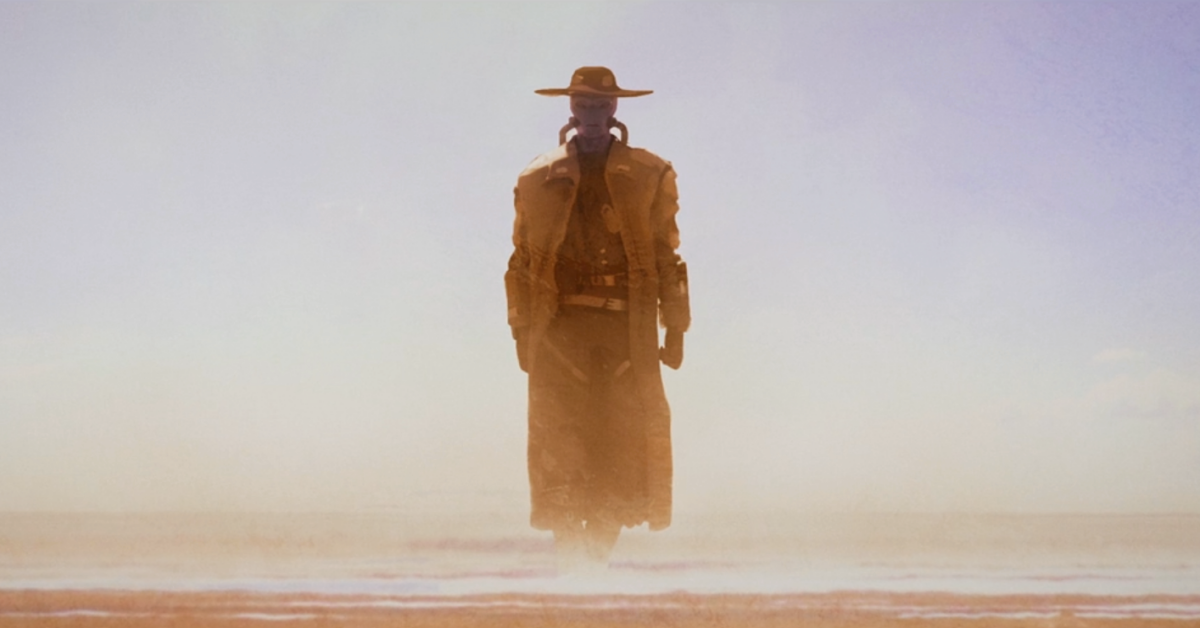
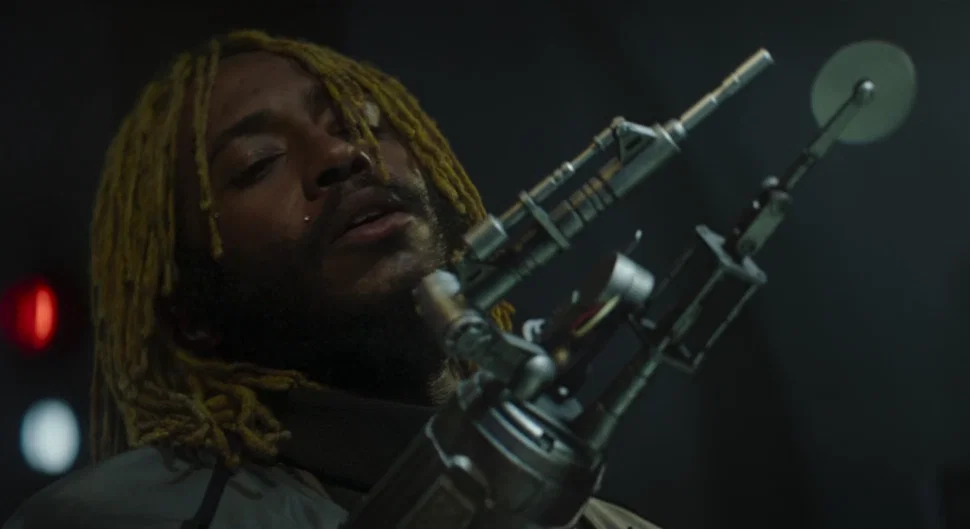
Back on Tatooine, trouble brews with the spice trading Pike Syndicate. We get a call back of Cobb Vanth, the sheriff of a dusty Tatooine outpost. He runs into trouble when a laser gun slinging stranger wanders into town to speak on the Syndicate's behalf. The episode goes full Good, Bad and the Ugly western here, complete with tense standoff and cowboy hat tipping villainy. The baddie, a menacing blue alien named Cad Bane, shoots up the sheriff and his men as he issues his final warning. It's a good bit of menace that it feels like the show has been lacking. It would have been nice to give a face to the evil that Boba Fett must face earlier on in the series, but we still have one more episode to go, so perhaps there is a healthy payoff being set up.
In a quick scene, Boba Fett appears on screen again, as his motley crew of mercenaries grows. They scheme for the upcoming war, one that will hopefully play out in an extended season finale.
As we near the end of The Book of Boba Fett, the final verdict is still out. There are plentiful loose ends to tie up, including the curious character divergence of the titular character from the cold-blooded assassin we assumed he was. Has his pacifist turn been justified? Is he holding back his unrestrained methods until he needs to deliver the final blow? It feels like we need a major shocking twist in ole Boba's behavior if this entry is to pay itself off. Without that, the mini-series will take its place as a between seasons appetizer to the Mandalorian, which is where the thrust of the character intrigue and storytelling lies in modern Star Wars.
Until then, sit back, enjoy some familiar vistas and vibes and enjoy the biggest budget fan fiction devoted to Star Wars that's ever been made.
YouTube Embraces NFTs
Good morning.
With media monolith YouTube acknowledging that NFTs will play a role in their platform in the future, we are preparing to enter a seismic shift in the space.
With mainstream adoption from a major player like YouTube, the shockwaves will be immense. Until now, internet users could choose to avoid NFTs and simply spew hate and misinformation about them on Twitter. When YouTube integrates NFTs into their platform, there will be nowhere to hide. It will go a long ways towards educating the mainstream on what NFTs actually are and what opportunities they present.
People will be able to see that NFTs are not just weird drawings of giraffes and dismissible "JPEGS." People will come to see that NFTs are simply code, much like HTML that will open the possibilities around all types of use cases. We are simply too early for people to make an educated opinion against NFTs. With YouTube adopting them into their strategy, they will spread awareness and larger appreciation for the emerging technology.
While YouTube hasn't outlined their next steps, you can imagine what integration could look like. It probably won't fundamentally change the YouTube experience, but rather give creators and viewers an additional way to be connected and support each other. Think of it like Patreon or other crowdfunding services, but natively baked into the YouTube experience. Hypothetically, every view could turn into a token. The more views/tokens you earn, the more crypto you accumulate. YouTube could also introduce a staking scheme, similar to crypto-powering blogging and content creation services like Hive. Here, users could be incentivized to stake their YouTube tokens to earn more tokens and provide stability to their favorite creators.
Adding NFTs to YouTube could also provide a monetization scheme that could overtake those annoying pre-roll ads. If enough engagement and royalties were generated by NFTs, that would be the monetization scheme and you potentially could see the end of forced ads on the platform.
If YouTube really wanted to pivot to web3 with a splash, they could airdrop tokens to all of their users based on retroactive usage of the platform. What if everyone received tokens proportionate to how much they'd watched YouTube up until now? An airdrop equalling many thousands of dollars in value could be one way to turn skeptics into believers. NFTs aren't just a tool for cryptobros to get rich quickly as some of critiqued. If a massive ecosystem like YouTube implemented NFTs, it would stand to benefit everyone who engages with the platform. It sounds good in theory, but until people experience the unexpected personal gains, they probably won't be able to see beyond the hypey headlines clouding the mainstream view of NFTs.
The ball is in YouTube's court, but if they do this in a right and meaningful way (not just pumping out and shilling random NFTs from YouTubers) it could stand to be a major pivot point in mainstream adoption and understanding of web3, blockchain and NFT technology.
The Book of Boba Fett: Chapter 5 Review
This is the episode where the *Mandalorian* fully crosses over with *The Book of Boba Fett.* And the entire episode delivered gripping, visually stunning Star Wars content that will delight the hell out of fans.
To me, the biggest step up in this episode, was that the drama was clear and present. There was no odd backstory tangent. There was no just hanging out. From the opening sequence, the episode brought danger and drama and it never looked back.
Ironically, the best episode yet of *Boba Fett* is an episode completely without Boba Fett. This was the sequel to season 2 of *The Mandalorian.* We pick right up with Mando, who is now in possession of the darksaber, and watch as he does his bounty hunter business, now with a legendary blade as his weapon. We follow him as he bursts into an industrial meat packing plant and confront the boss he's been hired to track down. Immediately conflict brews. And Mando is surrounded. The ensuing battle steps up the action as blasters fire and the darksaber slices through all manner of meat, hanging from the ceiling or in the form of a gangster.
Mando emerges victorious, but not without getting a nasty burn on his thigh. He makes his way out of the factory, bounty in hand, and then heads off.
Next he connects with the Armorer, who gives us a lesson in Mandalorian history and the plight and suffering they sustained at the hands of the evil empire. We get some more backstory and context around the darksaber as a hallowed artifact of Mandalore. The Armorer forges something for Grogu at Mando's request. We get a little more context into the origin of the darksaber, and how it was forged by someone who was both Mandalorian and Jedi. The scene closes with a fellow Mandalorian challenging Mando to a duel for the saber and control of Mandalore. The fight feels dangerous and raw as neither of the duelists know how to wield the mighty darksaber. Just before Mando is about to end his foe, the Armorer calls a stop to the duel. Then, despite the win, Mando is exiled and stripped of his Mandalorian title after he confesses to having removing his helmet before. An act strictly prohibited in Mandalorian culture. Mando is sent on his way.
Mando ends up on a commercial flight to Tatooine, since he has no ship of his own anymore. Here, Mando is re-united with Peli Motto, the mechanic who said she could replace his lost Razor Crest spaceship. On Tatooine, as they build a new ship together, we get references to the Prequel Trilogy, as the ship itself is a starfighter seen in Episode 1. The ship is put together, and Mando takes it for a successful test flight. The episode ends with Fennec Shand showing up and asking for Mando's help in Boba Fett's war. Mando agrees to do it for free and we cut to credits.
Chapter 5 is the best piece of Star Wars we've seen on TV. The stakes were high. The plot and character motivations were progressed. We even got new insights on the ways of the Jedi and Mandalorians. This is myth building at its finest. And with Mando crossing over into another character's show, it feels like the possibilities of a true connected universe of stories is within grasp. There were no Skywalkers in sight, and the story was gripping. You felt the danger and recklessness when Mando was wielding the darksaber. It seems like he is on a path to become a brand new type of character. We were also teased with breadcrumbs of a future reunion between Mando and his former charge, Grogu, who has been the most consequential character added to Star Wars canon in the modern era. Fans will eagerly await the next chapter, knowing that drama and danger are brewing. This chapter was the closest to the magic of the original Star Wars films that we've ever seen on TV. It bodes well for the future connected projects and shows that the galaxy far, far away still has mesmerizing yarns to spin.
The State of NFTs: January 2022
I think my ah-ha moment with NFTs came when I realized that they weren't just one thing. After I dug a little behind the splashy headlines, I started to see a world of potential.
After a number of months observing from the outside, following thought leaders on Twitter and swimming through Discords, my conviction on the space and possibilities kept expanding.
The NFT and web3 space is moving so fast, that the rules are being written and revised every day. If you meet someone who claims to be a web3 or NFT expert, be wary. Nothing is set in stone. Projects are set in the blockchain. But there are layers of nuance, utility and future plans that are constantly shifting. And all signs are pointing towards big things ahead. That's why you see OpenSea shattering their single month sales records. It's an accumulation of ah-ha moments, and realizing that while we are "still early," right now is the best time yet to fully commit to the space.
Afterall, diving into NFT ownership is the only real way to understand what's going on. You can understand the basic academic theory from afar, but until you are a holder, and see the unique risks and benefits of the space, there are levels of understanding you won't get. I'm still early in my journey, but after dipping my toes in, the realizations are starting to accumulate and my excitement for the space is snowballing.
Trends come and go. Fads have their season. But NFTs have now had an entire year (at least) of being fully exposed and scrutinized in the spotlight. They've been memed and mocked and over-simplified. Popular culture still doesn't know what to do with them. And the creators deep in the space are just getting started.
What the hell is "digital ownership" anyway?
Well, you can think of it in a lot of different ways. You can see ownership in a transactional way, like "I own a basketball card of Kobe Bryant." And yes, you can think about some NFTs as kind of one-off digital items or collectibles. But I think the ownership we're dealing with here is much broader and potentially mind-blowing than that.
I see digital ownership as a mix of identity plus being a shareholder plus being an insider plus getting fast-tracked for future dividends or bonuses. When you own something on the blockchain, it's public. The issuers of that NFT can see that you are still holding. And they can decide to reward you for continuing to have faith in the project. This is the antithesis of what quick flippers and pyramid scheme artists are out to do when they're looking for a quick score. NFT holders belong in their own class. A class with daily expanding benefits. Card carrying members of the future, who are expecting big things down the road, and who are seeing the fruits of their conviction being rewarded in airdrops, merch, whitelisting and sometimes whole new rare NFTs with their own tail of benefits.
That's a messy definition. It's fluid because the best practices are still being hammered out. When something works in the space, you see it copy and pasted around other projects. The baseline expectations are constantly rising. We're no longer talking about buying and selling JPEGs. The stakes are rising.
This period in NFT history is when we are seeing the early signs of what makes a "blue chip" project. Cryptopunks have broken out. Bored Apes. VeeFriends. Each of these projects have reached a certain level of status, utility and access that have propped up their perceived value. While 99 percent of the projects will fall in on themselves, just as with ambitious startups, the one percent class is starting to emerge. Therefor it makes sense to hedge your approach into the space by investing in some tried and true projects, and some that simply resonate with you. Maybe it's the art. Maybe it's your belief in the creators. NFTs are a risky space, so if you have a little extra to spend, it's not a bad thing to lean into that risk and see what the perks of digital ownership might mean across different projects. Afterall, even in the losses, you learn something and hone your instincts around what makes a project promising.
I don't know where this rant is heading, but I've found it useful to record my thinking as I explore the space more. It's useful to have a record of thought that I can go back on and see what still holds up, and what I have moved on from or evolved my thoughts around. I do the same thing with traditional companies. Evaluating which ones I believe have a promising runway ahead of them, and which are simply out of business models and levers to pull.
NFT projects are like mini-companies. They start very small in scale, but as we have seen, they can experience explosive, overnight growth, that then leads to new opportunities and partnerships. Like how the Bored Apes ended up forming an alliance with Adidas. And RTFKT was quickly bought out by Nike. This is the mixing of the old and the new. And in web3, the distinction between the two is completely blurred. If you have the audience with the right conviction, you can make it in the space.
That's enough for now, but I'll be back again soon to drop my high level thoughts on the ever-evolving NFT space. Maybe it's helpful for someone else out there to see. Maybe not. At this point, I just need to get down in black and white my gut reactions to everything that is going on. Hopefully you found something a little useful in the rant. Until next time.
Boba Fett: Chapter 4 Review
This is the episode Star Wars fans have been looking for. In Chapter 4 of *The Book of Boba Fett*, we start to see a lot of the loose threads of the series starting to come together. It answers questions about Boba Fett's motivation to pivot from a feared intergalactic bounty hunter into a crime lord. It also grounds us in the Star Wars timeline with solid references to past films and the recent events in *The Mandalorian.*
Chapter 4 is also where we get the proper origin story of Boba Fett and his trusted assassin Fennec Shand. We follow as Fett finds her bleeding out in the desert, after the events of a shootout seen in *The Mandalorian.* Fett then takes Fennec into town, where we go into a "mod" station where the town's youth are eagerly getting robotic implants added to their bodies. It's a nod to the recent biker gang who joined Boba's crew. Here, Fennec is fully repaired with the aid of some heavy duty machinery.
We then lean into the Western vibes of the series and find Boba and Fennec bonding around a campfire in the chilly Tatooine desert evening. In return for saving her life, Boba asks for her help in completing one job. A one-off mission to rescue Fett's iconic spaceship from the innards of Jabba's palace. After a scouting mission, Fennec probes Fett, grilling him with the exact criticisms that audiences have levied at Fett's portrayal in the series so far. It was a kind of meta-turning point in the series. Fennec interrogates Fett on why he's grown soft after his encounter with the Tuscan Raiders. Fett retorts that he's grown strong, and realizes that true power comes from being a part of a tribe. When grilled on why he suddenly gave up a legendary career as a bounty hunter, Fett counters that he's tired of working for idiots and that he'd rather work for himself. Becoming a crime lord, and growing his own tribe are clarified as his motivations at this point in his life.
These are precisely the kinds of answers fans have been looking for, after being left scratching their heads in the first few episodes at Boba Fett's sudden change of spirit.
After the powerful moment of soul searching, the two are ready to raid the Jabba's palace and recover Fett's ship. The following sequence delivers the heist vibes with signature action punctuated by comedic beats like the pair facing off against a sushi-slicing robot in the kitchen. After the culinary bot makes a quick display of six whirling and twirling knives, Fennec quickly cuts the power from the droid's neck, diffusing the threat in a nice little nod to the famous *Raiders of the Lost Ark* scene.
Finally we get to Fett's iconic ship as the guards of the palace close in on the duo. Fett mans the controls as Fennec shows her elite skills battling off all manner of attackers with her blaster rifle and martial arts skills. Finally, the guards are dispatched and the two fly up and away from the palace.
While they are still catching their breath, Fett offers to drop Fennec wherever she wants as she has now earned her freedom. Instead, Fennec turns the question back around on Fett and asks where he's headed to. All he says is that he "has a few scores to settle" to which Fennec responds, she's happy to tag along.
Cut to Fett hunting down the speeder bike gang that slaughtered his Tusken Raider tribe. In the show's biggest display of violence yet, Fett mercilessly cuts down the pack of thirty or so riders right there in the sands of Tatooine. Next stop, back to the Sarlacc pit as Fett tries to recover his swallowed armor. What follows is a nightmarish exploration down the throat of the mythical sand monster, which suddenly springs to life and tries to eat Fett's entire ship. With some quick thinking, Fennec releases a seismic charge into the beast's mouth, which makes quick work of the ancient beast.
We then see a quick flash of Fett popping Bib Fortuna off of Jabba's throne, and taking his place as the new crime lord, before we cut back to the present day.
Fett arranges a sitdown with the crime families of Tatooine to discuss how they plan to handle the encroaching Pike Syndicate. The other crime lords are hostile and not willing to play fair. In another nightmarish turn, the claws of the Rancor from the pit below the dining table, stab up through the protection grate, giving a menacing threat from underneath. The crime lords stand down and agree not to help Fett, but rather stay neutral as Fett manages to take on the entire Pike Syndicate on his own.
The episode ends with Fett mulling his next steps and confiding in Fennec that they have enough money, but not enough muscle. After which the theme music from *The Mandalorian* plays as we zoom to the end credits. It seems we will be getting some sort of Avengers style team up in the next episode in Fett's war against the crime syndicate.
This episode filled in all of the gaps that fans have been questioning. It saw strong performances from both Temuera Morrison and Ming-Na Wen. We understand now where both of their motivations lie, and why Fennec is so loyal to Fett. We also understand Fett's weakness of not having enough muscle, as he has been seen so eager to build his tribe. He's playing nice with questionable parties because he can use all the help he can get.
This is a strong entry in the series and works as a solid midpoint reset for the story. The stakes are clear. We know what the main characters need and we know it won't be a guaranteed victory. It's entirely possible that we are watching a tragedy unfold, though I doubt Disney would kill off the popular Boba Fett when he could drive future projects, including additional seasons of this show. Chapter 4 offered some surprises, so it feels like there are some good curveballs ahead. The show feels like it has found its footing with the character and story.
The Book of Boba Fett: Chapter 3 Review
The ongoing adventures of Boba Fett are drawing the ire of some vocal Star Wars superfans. In what has now become typical, every new entry to the Star Wars universe is subjected to the very intense personal expectations of fans who have been living with the galaxy far, far away for decades. If something is a smidge off from the original trilogy of films, the rowdy fans will dismiss it and undertake a campaign to get the new entry removed from canon.
Which brings us to Chapter 3 of The Book of Boba Fett. The episode continues with Boba's trials and tribulations of trying to establish his crime syndicate on Tatooine. After a flashback sequence in which we see that he has been double crossed and his entire new family of Tusken Raiders have been massacred, we jump to the present where a humble water collector claims he is being ripped off and seeks Boba's protection and enforcement.
As Boba takes to the nighttime streets of Mos Espa, he confronts a biker gang outside of the water collector's shop. Here, he learns that the gang is unable to find work and can't pay the exorbitant fee the collector is charging for water. Fett sides with the biker gang, and orders them to only pay a reduced restitution for the water they have stolen. On top of that, he then hires the biker gang to come work for him. Leaving the water collector shaken and wondering what to think of the new crime boss.
Back at Boba's palace, he is attacked in the middle of the night by a Wookie assassin sent by the Hutt Twins. The attack is brutal and comes when Fett is sleeping in his bacta tank. The commotion nearly kills Fett, but is raucous enough to wake the biker gang and Fett's other guards. A fight ensues and eventually the Wookie is outnumbered and succumbs.
The next morning the Hutt's approach the palace to make a peace-offering and declare they are leaving Tatooine. The gift is a mythical Rancor, a gargantuan killing machine of a beast originally seen in 1983's Return of the Jedi. Robert Rodriguez's go-to tough guy, Danny Trejo, plays the Rancor keeper in a delightfully sensitive role for the well-known macho man actor. Also in the scene, the Hutts hand over the Wookie assassin to Fett, who responds in kindness by releasing the Wookie to go free.
Next we get a sequence of Fett in the Rancor pit with Trejo and the beast. Here we get details about how the nightmarish creatures are actually "quite loving" and only fight when they feel fear or are threatened. While this turn has thrown many Star Wars fans, it is rooted in a small scene after the death of the Rancor in Return of the Jedi, where the Rancor Keeper is seen sobbing tenderly after the death of his charge. Now we get insights from Trejo that a loving bond with a Rancor is possible, and instantly Fett is intrigued and declares that he will spend time with the beast and one day learn to ride it.
As this is settling in, Fett is called away to an urgent meeting with the Mayor. When Fett and his sidekick Fennec Shand arrive at the Mayor's quarters, they are turned away by the Mayor's majordomo. After a beat, Fett and Shand realize the majordomo has made his escape, and a chase ensues.
Here the biker gang swoops in, riding candy colored, vintage hover bikes, and tracks the majordomo down through the backstreets of Mos Espa. This sequence has been torn apart online as critics claim it has "not a single ounce of Star Wars" in it. While it is a departure from the dusty, colorless desert vibe of Tatooine, the aesthetic of the bikes is deeply rooted in George Lucas' love of all things retro and Americana. It's the Star Wars homage to Lucas' American Graffiti and builds off of my feeling that The Book of Boba Fett is really creators Jon Favreau and Robert Rodriguez's love letter to Lucas' Star Wars. And honestly, I have a feeling that if budget weren't an issue, George probably would have loved to throw in some candy colored racing bikes into the original films. During the prequel era, Lucas did add 1950's American vibes to several of the locations and vehicle designs. So for those paying attention, I don't think the biker gang is as cluelessly "un-Star Wars" as the tweet storms would allege.
Anyway, the majordomo is tracked down and the episode ends with the arrival of the Pike Syndicate on Tatooine. The crime family who was guilty of killing off Fett's family of Tusken Raiders. It's all pointing at a war brewing. The only question is will Fett be able to wrangle enough support to challenge the dominant crime syndicate. So far the series has shown a benevolent Fett, who is a sharp contrast of the cold-blooded bounty hunter that once even Darth Vader had to advise to stand down. I feel like they might be saving some epic show of brutality from Fett, but as we reach the halfway point of the season, fans are growing impatient about Fett's portrayal.
As for being "un-Star Wars," I disagree. The Book of Boba Fett is adding interesting nuance and detail to the world we thought we knew. But not in a way that discounts anything that came before. It's simply giving us another point of view, and building out a character that intrigued us, but that we knew relatively little about. They will need to stick the landing in a memorable way, but I've very much enjoyed the time we've spent with Fett and in the sands of Tatooine's underworld.
Street Fashion in the Metaverse
Street fashion might not sound like a perfect analog for the NFT space, yet early on it's seeming like a match made in metaverse heaven.
Lately, Bobby Hundreds, owner of the street brand, The Hundreds, has become an NFT uber-evangelist on full blast across his social channels and podcasts. He's turned into this inspirational, almost Steve Jobs type figure, who has made it his mission to open up the NFT space and personally onboard as many people as possible.
Last year The Hunrdeds had their own NFT drop called the Adam Bomb Squad, consisting of illustrated bomb characters that have graced the brand's streetwear for decades. The founder of Hundreds ah-ha moment was when he realized they were sitting on this deep legacy of IP and a super passionate community: the two main drivers of a successful NFT project. After a few tests, The Adam Bomb Squad was a success. Selling out its first mint and now experiencing a healthy life cycle on the secondary market. This has only fueled Hundreds enthusiasm and conviction in the space. And like I said, he's bringing as many people with him as possible. Including all of his OG streetwear friends, which means street fashion could really be the next big thing to follow art into the metaverse. https://abs.thehundreds.com/
Another early streetwear foray into the metaverse famously came from RTFKT and their fusing of meta-video game, hyper aesthetics to create a line of virtual sneakers and become the first famous metaverse fashion brand. Nike took note and acquired RTFKT just when their heat couldn't get any hotter.
Streetwear circles tend to be tight and insular, so it was no surprise, yet also a pleasant surprise, when RTFKT tapped streetwear legend Jeff Staple to bring his game-changing and iconic Pigeon Dunks into the metaverse. The alchemy of the old and new came together to create an instant classic. What must have first felt like an experimental lark for Staple, turned into his own ah-ha moment in the NFT space as he witnessed the awesome community embrace and power that comes when an authentic creator offers something meaningful and heartfelt in the space.
And so after the hype of the drop settled down, Staple is approaching the metaverse again, this time with his own solo NFT project.
Enter the Stapleverse. https://esp.stapleverse.xyz/
A connected community universe built around Staple's iconic Pigeon brand. Here, hypebeasts will be able to mint "Feed" and later have the option to risk throwing their feed to turn it into either a "Pigeon" or "Poop." It's the kind of risk it all layer that we've seen implemented in a few NFT projects. Like the Bored Apes Serum, which takes away your original Ape forever and gives you a brand new Mutated Ape in return.
The website is slick. The passion and creativity leaps off the screen. The art for the first drop is perfectly executed by illustrator B. Thom Stevenson. This week, Chapter 1 dropped. It presents a series of graphics that represents the highs and lows of living in New York. As the project builds out, Staple envisions adding references to new cities around the world to the Stapleverse. https://www.instagram.com/bthomstevenson/
There is a roadmap for the Stapleverse, and it's already clear that Staple has the passion and energy to keep creating in the space. With a known, authentic creator behind the project, confidence rises that this will not be a rug pull. Staple has already been a part of NFT history and now is looking to build off his legacy in the space.
There is a strong psychological connection between hypebeast street culture and NFT culture. Both worlds center around literal "drops" of their products. In both space, catching wind of early hype is credibility and currency, as well as often the difference between those who ape in early and those who live with FOMO in perpetuity.
For those who need the right Nikes that no one else has, or the t-shirt that only came from one single shop, NFTs area a kindred spirit. For streetwear and NFTs are both markers of status. And as our lives turn increasingly digital, it figures that we will need more than just a follower count to signal our status and what we are into. Found out about Bored Apes before anyone else? Your Twitter profile will be the judge of that. Get in on the first Stapleverse drop? Just flash your wallet. From now on, your cool points will be stored on the blockchain, available for all to see and judge. It's Supreme drops, but for the web3 savvy.
You won't see the long mysterious lines of people with insane kicks in questionable New York or Tokyo alleys. Instead, these early streetwear adopters will be going on whitelist quests inside of Discord servers. All hell bent on finding out first, where the the latest cool is at.
Australian Open Mixes Metaverse with Reality
OK this is interesting. Most brands aping into the NFT space do so with the most basic of strategies. They take their existing IP, freeze it into a static JPEG and hope their "fans" will want to take a piece of the brand back to their wallets. This kind of move wreaks of a cash grab, and users savvy to the space know when an offer is not authentic and just trying to pick up some profit.
Enter the Australian Open who have released their tournament NFT strategy with the Australian Open NFT. Now, here's where things get interesting. Each NFT represents a precise plot of physical space on the tennis court. Meaning, once you mint your NFT, you own a piece of "land" on the championship courts of the Australian Open. To make things even more dynamic, if a winning shot lands in your plot of the court, you will win the actual ball from the match, plus merch, plus additional rewards. Basically holders of the Australian Open NFT will see their NFTs gain additional rarity based on the real-world performance and history that goes down in the tournament. https://www.coindesk.com/business/2022/01/05/australian-open-apes-into-tennis-nfts-and-decentraland-too/
Each NFT will be a virtual tennis ball that represents a piece of the court, and will be designed by various artists. This project marks the first time that on-chain and off-chain data have been combined into a single NFT. The traits of the NFT will be determined by what actually happens in the tournament. It's an instance of the virtual and the real having a dynamic relationship. It's a fascinating use case. And imagine how much value those winning plots of land will gain over time. What if we see a historic performance go down? The owner of the NFT will be forever linked to the on court legacy of the tournament and winning player.
Just think back in time to other iconic sport moments, and imagine if this same direct link to the game through an NFT existed. Imagine if you were the NFT holder of the spot on the court during the 1998 NBA Finals where Michael Jordan hit his legendary "Last Shot" to defeat the Utah Jazz and win the Chicago Bulls' sixth championship. Or imagine if you held the section of the boxing ring where Muhammad Ali knocked out George Foreman in 1974 during the "Rumble in the Jungle."
With the laser precise mapping of professional sports' playing surfaces in the modern era, we are just at the very beginning of how digital technology and virtual reality can bring fans closer to the game. In fact, with the advent of the metaverse, fans can literally overlap and share the same space as their heroes. Forget sitting courtside as the ultimate flex. Now you can be halfway around the world and claim that your NFT was "on the court." To some, it may just smack of hyped up digital marketing. A new way to squeeze money out of sports entertainment. But I think as our digital lives and behaviors evolve, we will become more comfortable with this way of thinking. Hell, we're already sitting in meetings with people from around the world via Zoom. Having NFTs live in different parts of the world, and in this case, in hyper-specific locations loaded with meaning is the next logical step.
Sports provides a perfect use case for this technology. Championship highlights and iconic plays live on forever. And now there exists the technology to provably and authentically verify exactly where something happened. And this is precisely what the Australian Open and their partners Chainlink are offering.
There is also a Decentraland integration into the campaign. Where NFT holders will be able to visit a virtual court inside the metaverse and view their plot of land virtually.
The project is another step in the evolution of NFTs and the metaverse. Art was a strong starting point into mainstream awareness of NFTs, but now we will start to see innovation and progress in other sectors as brands and users realize that you can do more than copy and paste previous successful drops. You can take the DNA of what you do and what your supporters are passionate about, to craft a thrilling new experience that adds something completely new to the table. You know sports leagues around the world will be watching the Australian Open NFT project closely, and no doubt there will be more copy and pasting ahead, as it is a template that is easily repeatable across sports. But there will also be those out there who will be inspired by the imagination and utility offered by the project, and will look to take their own unique step into the space as well.
Until then, grab your plots of tennis court and stay tuned to where those championship points land.
LooksRare Rises as a Challenger to OpenSea
Once upon a time, AOL was king of onboarding people to the "internet." Then up rose a host of other services and you could take your pick how you wanted to surf the worldwide web. As the internet matured, social media started to emerge. And there was a time when MySpace was the darling of how you could have a personal presence online. Then along came Facebook with its fresh out of the dorm room energy, ambitious wizard coders and prestigious VC funding and hype.
If history has taught us anything, it's that internet platforms can rise to power overnight. Conversely, they can go away just about as quickly.
Flash forward to the present day. In the NFT space, 2021 was undeniably the year of OpenSea. The NFT marketplace where all the major transactions took place. They created the first user-friendly way to navigate, buy and sell NFTs. The blue verified check on the platform became one of the early badges of honor in the space. If you weren't on OpenSea, you didn't really have any skin in the NFT game. https://opensea.io/
However, being the only show in town had its pros and cons. OpenSea maintained a platform first control over the paying out of creator's earnings. As they built their rocket ship while it was catapulting toward the moon, everything didn't always work perfectly. But, being the only option of such scale, users just had to sit tight through the turbulence.
Yesterday, a challenger entered the NFT platform space, with the arrival of LooksRare. They created quite the splash on NFT Twitter, as they initiated a so-called "vampire-attack" on OpenSea users. They offered their newly minted platform tokens, $LOOKS, as airdrops to OpenSea users based on their spending on the platform. Overnight, NFT collectors were rewarded for using OpenSea by a completely different platform. NFT Twitter was shook. $LOOKS is unproven, but as a marketing move, everyone in the space now knows about LooksRare and their ambitions. https://looksrare.org/
Digging into their information and roadmap, a generous amount of $LOOKS tokens will be distributed to the community. And in fact, even the 2% fee taken by the platform, will be re-distributed to the holders of the token. They bill themselves as a "Community-first NFT marketplace with rewards for participating." It's a Robin Hood kind of ethos that stands out amid the recent rush of press around the billions of dollars valuation of OpenSea. With the rise of DAOs, LooksRare seems to be offering an NFT marketplace that caters to creators and values participation.
After a solid year of marketplace dominance, many have felt the need for an OpenSea competitor to arise. And honestly, the more democratic positioning of LooksRare does fit nicely into the democratic, participation is valuable evolution we have been tracking in the space. As many wait on OpenSea to initiate their own airdrop or governance tokens, other players are proving more nimble and beating them to the punch. It's crazy to think that in a space as new as NFTs that there could be an establishment already, but that's precisely what OpenSea has become.
This development should bode well for creators. Not just with LooksRare, but with seeing innovation and marketing coming from new players in the space. Eventually, creators may be able to pick different platforms to share their work on, considering which pro and cons work best with what they have to offer.
LooksRare made a splash with their "fair play" move of rewarding users on a different platform. It fits with the web3 vibe of openness and not really seeing others as competition. WAGMI as they say. Some have argued that platforms like OpenSea are simply taking a web2 and centralized platform approach to web3. If LooksRare or another entity can emerge and prove themselves to be natively web3 and win the support of the NFT community at large, there is a large slice of the pie to be enjoyed. And with the free dealing of bonuses to those who participate, that could mean there is a whole lot of pie to go around.
Worldwide WEBB and the Interoperable Future of the Metaverse
In the past year, we've seen metaverse projects step into the spotlight. Early blue chip projects include The Sandbox and Decentraland, which feel almost like blockchain versions of open worlds like Minecraft or Roblox. We've seen a rush of money and crypto go into "land wars" as people speculate about future utility and what they can build in the space moving forward. Just last week, technology giant Samsung announced they were opening a flagship store inside of Decentraland. As they say, probably nothing... https://discover.sandbox.game/#/en/https://decentraland.org/https://www.theverge.com/2022/1/5/22866792/samsung-ces-2022-zepeto-metaverse-experience
There is another metaverse project that has flown under the radar, but has recently been gaining some momentum for their innovative and mysterious approach. It's called Worldwide WEBB and it is slowly building out a sprawling world and mythology as users start to flock to it. https://www.webb.game/
The Worldwide WEBB experience is so far based around an in-browser game that is absolutely free for anyone to play. With a heavily 80's and retro aesthetic, Worldwide WEBB weaves together various sci-fi tropes and easter eggs to send players on missions to explore the streets of locations like Tokyo and Kyoto Gardens. Within the world there is an Arcade where you can play games to earn in game rewards and various other buildings to check out.
Recently Worldwide WEBB put on a dance competition, where users had to move their characters into different hot zones on the dance floor to try and achieve the top score. Just the other day, they announced that 100 winners of this dance competition were airdropped discoball NFTs. These were given to users who played for free, and the floor price is already approaching 4 ETH at the time I'm writing this. This is an absolute fairy tale of a play-to-earn, or in this case "dance to earn" model. The Worldwide WEBB quests are completely free for anyone with a wallet to sign up for. The world is intriguing to explore, and you might just end up scoring free NFTs that have real value in a project that continues to be built out. https://opensea.io/collection/worldwidewebbitems
In addition to the generous freebies, Worldwide WEBB also offers metaverse apartments of small, medium and large size that will be a part of the metaverse moving forward. Apartments and land in the project already have a floor of nearly 2 ETH, with more utility and in-game functionality expected to be rolled out in the coming months. https://opensea.io/collection/worldwidewebbland
A key feature of Worldwide WEBB so far is its approach to interoperability. They already support users in setting any avatar or PFP held in their wallets as their in-game characters. When you wander the streets of Worldwide WEBB you encounter punks, apes and other notable PFPs. They appear to be taking this interoperability to the next level as they have just announced a platform fighting game that will be dropping soon, where you will be able to compete as your PFP avatar. A tournament is forthcoming to determine which NFT community reigns supreme. Rare NFTs are expected to be passed out as prizes to the winners. https://twitter.com/WebbEmotional/status/1479530865147351043
With more land and zones rolling out soon, the ability to port your PFPs into the game and new experiences being built on top of the metaverse, Worldwide WEBB is a project worth checking out. Afterall, there is virtually no barrier to entry, and you might walk away with being airdropped a rare and useful item to use in the world moving forward.
Recycle Your Worthless NFTs with IlliquidDAO
With the NFT market continuing its meteoric rise, wallets are being flooded with JPEGs as owners hope to ape in to a potential winner. However, the rule of speculative investing is at work, and 99% of those projects will end up going back to zero. With these NFTs having no market or leaving users hung out to dry after a rug pull, what will be the fate of these millions of cursed NFTs?
Enter IlliquidDAO. The DAO that touts being the place to "send all your worthless JPEGs." https://www.illiquidjpegs.xyz/
It's a simple scheme and passes the instinctual Twitter test of seeming clever and meta upon first glance. The input of the project is clear. They are directly addressing a growing problem. The output is not certain, other than being promised $JPEG tokens in return for your NFTs. How those tokens will perform in the long run is yet to be determined. But as a project, they have found a way to speak to the largest possible addressable market: every NFT wallet holder.
As of this posting, 12 million NFTs have already been sent to the IlliquidDAO Treasury. The number continues to rise and the $JPEG tokens keep getting distributed.
There is no roadmap for the project yet, beyond a breakdown of how the 100 million $JPEG tokens will be distributed. 70% will go back to the Community via airdrops. A portion will be held in the treasury. (Perhaps some of the NFTs will prove to be not so worthless after all, or some whales will donate blue chip NFTs on a lark to help fund the project.) Another subset will be held for future incentives. And the smallest portion will go to the founders. On paper, the ratios don't smell classic rug pull. There is no promised utility other than the tokens, and the founders are taking a minimal cut.
Perhaps this NFT recycling program is simply to give rise to a new alt-coin, that has an ongoing engine to be continually financed through forgotten JPEGs. It's a clever scheme and over time it will be interesting to see what gets built around the core concept. Having a one-stop destination to discard of illiquid NFTs is intriguing as people look to better curate and become more selective around what they hold onto.
It's also interesting to see a DAO built around emerging NFT behavior. It's not over-promising real world results or world domination. It's simply filly a need that everyone in the space can relate to. The opt in is easy. You only send the NFTs you don't care about into a Treasury of losing NFTs. It's a lose-win situation. Maybe the $JPEG tokens will catch on. If not, at least your wallets are a little lighter with the dead weight being stored somewhere else.
It's another interesting theoretical DAO project to follow. And who knows, maybe a roadmap will pop up that adds some surprise utility at some point down the road. Until then, happy recycling and continue to collect and hold onto only what you believe in. Send the rest on over to IlliquidDAO and claim some of those $JPEGs to see what might be in store for you in the future.
The Book of Boba Fett: Episode 2 Review
The second episode of Star Wars' *The Book of Boba Fett*, finds us crawling deeper into the sands of Tatooine. We knew we were getting a Western genre Star Wars with this series, just like it's forerunner *The Mandalorian*, and this week finds us exploring space western tropes even more.
There is a great train robbery. There are more scenes fleshing out the native culture of the long-maligned Sandpeople. There is also a very weird desert vision quest sequence.
Two episodes in, it's starting to feel like *The Book of Boba Fett* is turning into a love letter to George Lucas and Tatooine. We know that series creators Jon Favreau and Robert Rodriguez both worship at the temple of George Lucas' Star Wars, and the resulting series feels like they are trying to pay homage to that gritty, visual and atmospheric version of Star Wars.
The episode is again split into two storytelling tracks. The present day and flashbacks. Only the flashbacks are feeling more like "longbacks" as they dominate their share of screen time. The present day bits fill out the familiar set pieces and environments from the old Star Wars films. We see aliens we recognize. Jabba the Hutt's cousins crash the party and confront Boba about his assuming of Jabba's throne. The flashbacks are where we get the fresh goods. Like a nuanced exploration of the Sandpeople's traditions and culture.
The drama of the flashbacks in the episode center on a train heist. After outlaw spice traders race through the sands, blasting the Tusken Raiders they come across, Boba devises a plan to stop the train. Some light-hearted training with speeder bikes ensues, and soon the mission begins. The heist itself gives us some big screen action, like we've come to expect in *The Mandalorian.* Here Fett leads the charge and manages to stop the train in its hover tracks. Confronting the spice traders and demanding at blaster point that they pay a toll every time they rampage across the Tusken sands. Reluctantly, they agree.
As a reward for his leadership, Boba then participates in a ceremony to make him a full member of the tribe. But first, things get weird. The tribal chief gifts Fett a small lizard who will "show him the way." After an inquisitive look from Fett, the lizard proceeds to leap up Boba's nostril and disappear. Hallucinogenic dreams ensue. Boba wanders through a mindscape that combines his past on the watery cloning planet of Kamino with his escape from the snarly tentacles of the Sarlacc. In the end, he comes to a tree in the middle of the desert. The tree tries to strangle him, and then, it's over.
It is a short sequence, but one that feels exciting and maybe important for Star Wars. Ever since *The Empire Strikes Back* dropped a galaxy shaking plot twist, it feels like Star Wars has been shackled to a template of needing to repeat similar surprising twists. While it's important to keep the audience guessing, exclusively chasing culture shaking ah-ha moments feels like a losing proposition. What I like about Boba Fett's dream sequence is it feels like a zone of Star Wars we haven't explored much before. Getting poetic and weird with the visuals. Like something David Lynch might pull in one of his films. Seeing a desert suddenly filled with water. Having a trip inducing lizard crawl up someone's nose. Sign me up.
It's still early, but the second episode feels like it's starting to turn into its own thing and move away from the Star Wars template and Skywalker family tree.
One gripe would be that the second episode feels like another introduction. Here's to hoping that the third episode brings some clarity around the threats that will challenge Fett in his attempt to rule over Tatooine. Where is the menacing villain? Where is the ruthless crime lord without a conscience? So far all we have seen are idle threats, and quick retreats from these standoffs with Boba.
I'd like to see *The Book of Boba Fett* take a page out of the storytelling drama of a show like *Breaking Bad*, where every choice becomes a matter of life and death for the central character or someone he cares about. Think about how menacing the villains in *Breaking Bad* were. Where are the Tuco Salamancas and Gus Frings of Tatooine?
We get it, Boba Fett is in the midst of an identity crisis and is no longer the ruthless, cold-blooded bounty hunter we know and love. He aims to rule with respect, for some reason. Fair enough, but where is his shadow that will show no remorse in ruling with fear? The show would benefit from the arrival of a character who felt truly dangerous.
*The Book of Boba Fett: Episode 2, The Tribes of Tatooine* is streaming now on Disney Plus.
Hollywood Hears the Siren Song of NFTs
It's only a matter of time before Hollywood jumps into the NFT game. Sure there have been little rumbles here and there, like when Quentin Tarantino offered up his original Pulp Fiction screenplay as an NFT. But so far, we haven't seen a native web3 NFT project come to fruition. The question is, who will build it first: Big studio player or upstart indie filmmaker? https://tarantinonfts.com/
Ben Mezrich is the author of a number of culture defining books. Many of which have been turned into Hollywood movies. He is the man behind *The Social Network* and *Bringing Down the House.* And now he is dabbling in the NFT space, with an earnest mission to make an NFT movie that is deeply connected to the NFT community. It's the meta project of the NFT metaverse.
Phase one of the Ben Mezrich NFT Project just dropped. With a set of tokens based around rocket illustrations that touch on his history of books. The art is well-done and the creator seems invested in the space. But it's the roadmap that makes this one a project to watch. https://mintbenmezrichnft.com/#/
Owners of all three of the token drops will be eligible to claim a "Screenplay Token." According to the roadmap, 50% of the screenplay will "belong" to the community. So in essence, claiming the three tokens makes you a shareholder in the future film project. Mezrich says he aims to write the screenplay in the next six months, using research and discussions with the community to inform and flesh out the story. While creative control will fall to Mezrich as the screenwriter, there will be opportunities for the community to suggest storylines and highlight important players in the NFT space.
Speaking on various podcasts, Mezrich referred to *The Social Network* when speaking about how he sees the NFT movie coming to life. *The Social Network* put a Shakespearean drama around the key players in the rise of Facebook. While there was some fictionalizing going on for drama's sake, the characters were all based on real people. Mezrich sees the same thing happening here. The story will follow key NFT creators as the space builds and grows. He is still looking for the central drama and narrative thread to develop the story around, but the project is underway.
It's a novel approach to both filmmaking and NFTs. It essentially fuses the two together to create a work of art that could only exist because of both of them. It's similar to the Bored Apes spin off book project, Jenkins the Valet, but this project will be the "based on a real story" version of an NFT tale.
Mezrich has the track record, Hollywood connections and existing community to give this project legs. While nothing is a sure deal in Hollywood or the NFT space, this project feels as about a sure of a bet as there has been so far. People scoffed when the idea of a movie about Facebook was floated around, but then the film itself ended up turning into its own entity, garnering awards and Oscar buzz as a piece of art.
With Mezrich's roadmap, perhaps one day we will see a community of NFT holders lining up on the red carpet come Oscar night. With the press asking "who dressed your PFP?"
Stranger things have happened.
DAOs: Country Clubs for Millennials
Our grandparents joined country clubs to signal their social status. Now, thanks to the blockchain, a new type of social club is taking shape. The DAO or "decentralized autonomous organization." DAOs are quickly emerging as the next big thing to follow NFTs into public consciousness and vernacular.
First there was ConstitutionDAO which attempted to buy an original copy of the United States Constitution. https://www.theverge.com/22820563/constitution-meme-47-million-crypto-crowdfunding-blockchain-ethereum-constitution
Next we had KrauseHouseDAO, whose goal is to crowdfund the purchase of an NBA franchise. https://krausehouse.club/
Then there was BlockbusterDAO, which aimed to literally buy Blockbuster Video and re-skin it into a lean, mean, web3 streaming service to rival Netflix. https://twitter.com/BlockbusterDAO
Now we have LinksDAO, a DAO whose mission is to literally buy a golf course and open it up to members who hold their NFT. Finally, some utility that even grandpa will get excited about. https://twitter.com/linksdao?lang=en
LinksDAO gained quick attention and successfully sold out all of their tokens on the drop, raising a cool 10 million dollars in the process and taking a confident step down the fairway to buying their very own golf course.
The founding group behind LinksDAO says they are aiming to create the ultimate "golf and leisure club" by exploring what that could look like in the web3 era. The crown jewel of the effort would be the purchase of a PGA ranked gold course. Beyond this, there may be connected restaurants and other tangible benefits they will attempt to line up for members.
As the ambition of this new field of DAOs continues to grow, there are financial and logistical questions that will need to be answered and maneuvered around. Currently, there aren't many rules and regulations around what a DAO is defined as legally, or what its limitations are as an entity. Right now, a DAO is not legally allowed to hold traditional securities like real estate. This would require LinksDAO to find a workaround, involving possibly setting up a trust or third party entity that could legal hold the golf course and additional assets. The legal connection between the third party and the members of the DAO would need to be established.
We are still in the infancy of DAOs, but the trend is all about making the splashy Twitter-friendly pitch. Which, as we have seen, can generate quick hype and a successful initial round of funding. We are still waiting to see which of these DAOs will first achieve their lofty goal. ConstitutionDAO set an iconic and simple goal of buying a single document. When it failed, the founders admitted that the project had run its course. With these emerging DAOS like LinksDAO, they are adding layers of complexity that would essentially turn them into companies, needing ongoing resources, management and consistent execution. Owning and running a golf course or establishing a leading Hollywood movie studio is much more ambitious than making a splashy, one-time purchase.
However, while the results remain to be seen, it's clear that there is ample demand for people to join a DAO with a driving sense of purpose. And this is when we see what the excitement for the potential of the blockchain is all about. People are driven to own things that matter to them. They want to have a stake in the game of what they are passionate about. They want to be members of exclusive clubs and directly contribute to the creation of new culture. This is the promise of DAOs.
The NFT Revolution Will Not Be Gamified, Yet...
When game studio Ubisoft announced that they would be incorporating NFTs into their titles, the backlash from gamers was immediate and fierce. They did not want the latest tech trend of the day to invade their hallowed gaming space. Yet the question remains, for those who are already into NFTs, don't they seem like a win-win proposition that would only benefit gamers in the short and long term?
Nearly every NFT enthusiast you talk to or hear on a podcast starts off by saying how they have a background in gaming and that when they heard of the concept of NFTs, they got it instantly. NFTs are essentially unique digital items. Not unlike the skins you buy in Minecraft. Or the special weapons you can by in RPG games. The revolution of NFTs is that from now on, the digital items you buy, you own. Not just in the walled-garden of the game title you're investing hundreds of hours in. But you own your digital items, as long as you want, on the blockchain, where they will exist forever.
Even if the game studio shuts down or stops supporting a title, if you bought the NFT-ized version of the in-game item, it's still yours. And as NFTs advance into gaming, you'll soon be able to take items, weapons, skins and characters from one game to another. This is the gaming version of the metaverse come to life. If you pay 2oo dollars for a legendary sword, and you own it on the blockchain, chances are there will be more titles, and even more in the future that will let you use that specific and unique weapon in their games. Imagine if you could take the sword from the original Legend of Zelda, and use it in an adventure RPG today. With NFTs, this will be possible. Game developers can sync up with the blockchain, so that when you sign in to the game, all of your digital items come with you. You won't just have Link's sword. You will have your specific and uniquely issued (forged) version of Link's sword.
With the rise of e-sports and the legitimacy of gaming as a profession, it's hard to fathom why the community at large isn't going all in on NFTs just yet. Instead of spending hundreds of hours and hundreds of dollars on a particular title and getting nothing out of it aside from the entertainment--NFTs will let you spend money and time in the same way, but with the ability to make real profit on top of the entertainment value. You'll be able to re-sell your items to other gamers, turning them into real profit and cold hard cash. In combination with e-sports, NFTs represent another tool that gamers can use to create real returns and profit on their time and resources within these gaming worlds. Each game will have its own ecosystem and economy.
NFT gaming to this point has started in an NFT native way. Games like Axie Infinity have started from the technological ability of NFTs and built simple games that users can play around them. The next step in the evolution of NFT gaming will be for major game studios to seamlessly incorporate NFTs into their platforms. Merging highly entertaining and lucrative game franchises, with the power of NFTs to offer even more rewards, incentives and profits for gamers to enjoy.
NFT is a loaded term and it can be quite polarizing. But success will come when gamers don't even realize they are interacting with NFTs. They'll just see them as skins, weapons and in-game items, just like they do today. The only difference will be that they can sell and profit from those items. Just don't tell them they are actually NFT owners. It's still too soon...
How Steph Curry Changed Basketball Forever
Sports fans and the media love to stir up the GOAT debate. Every generation has their handful of players who get thrown into the discussion. It gets debated from all sides. The stats. The championships. The cultural impact. It's a fun but after a while tiring exercise that just ends up leaning on whoever a person's favorite player happens to be.
While the greatest of all time accolade may be up for debate, there are certain players who objectively have changed the game itself. Not all potential GOATs can claim this. Shaquille O'Neal was a force of nature during the early 2000's, and the league had to bend to his hulking presence--but how he played the game did not change the game. He was a beautiful one-off. Then there is Kobe Bryant, who willed his way into being one of the all-time greats by mirroring the template set by Michael Jordan. It was a mirror-imaging to near perfection, but it did not change the course of basketball itself. Michael Jordan had already done that.
Then came along Steph Curry.
An unassuming and overlooked son of former NBA player Dell Curry. Steph had grown up on TV sitting on the sidelines of his father's games. He started to make a name for himself in college when he hit some big shots in the NCAA tournament where he starred for the small-school program at Davidson. But despite the brief spotlight and splash on the big stage, NBA teams were not lining up for the diminutive shoot-first point guard when the 2009 Draft rolled around.
Six teams passed on Curry. Names like Hasheem Thabeet and Tyreke Evans were picked higher. Blake Griffin was the number one pick that year. He's certainly turned into a solid player and put together a stunning highlight reel over his career, but he is no Steph Curry. At the time, there simply were no comparisons to what Curry brought to the table. He was undersized. He shot too much. The media and teams just didn't know what to do with him.
It didn't take long for Steph Curry to show the world that a new type of player was on the scene.
Steph came into the league and immediately proved himself as a three-point shooting threat. Averaging over 40 percent from downtown on nearly 5 attempts per game. As each season passed, Steph turned his shooting from a novelty, into an all-time weapon. As he matured, the freewheeling Golden State Warriors began building their offense around the spritely assassin. As he became more of the centerpiece of the offense, his shooting was emboldened, and the Warriors kept winning.
In 2015, Steph's ascent had reached the mountaintop as he claimed the NBA MVP award while helping his Warriors win the NBA championship. The little shooter who could had been certified an NBA legend. But it was what came next that changed the game and showed the basketball world that Steph was more than a splash in the pan.
In 2016, Steph went ballistic and turned into a video game version of himself, as he hoisted up over 10 three point attempts per game, while connecting with his usual lethal accuracy. Steph was a living revolution at this point as teams and marquee shooters also began to model their games after Steph. The NBA saw a dramatic rise in three points attempted per game as the sport slowly transitioned its play style to mirror the meteoric rise of Curry.
The next three years would see Steph's Warriors getting to the NBA Finals, and winning two championships. It was all built around Steph's insane long distance game, that proved to be the engine of the best team in the world and a legitimate dynasty that started to draw comparisons to Jordan's Bulls an era earlier.
It wasn't just the high frequency of Steph's shooting that morphed the game, but it was the fearless manner and insane depths he shot them at which were routinely ridiculous. It became common for Steph to pull up just in front of half court, right after tip off and drain a HORSE level three to start the game. Other players like the Portland Trailblazers Damian Lillard joined the revolution and built their games around a similar audacious long range attack.
Aside from Steph's shooting, he also left an imprint on the game in how he led his Warriors to victory. He did it with fun and games and pranks. He always carried a smirk on his face and a twinkle in his eye as he involved his teammates in his pre-game antics and in-game celebrations. This was not a guy trying to intimidate and look cool for the cameras. This was a guy living his best life, playing free and easy and letting his game and stats flex his greatness for him. He showed that the road to the top doesn't have to be a clenched jaw, hyper competitive mania as Jordan and Kobe had lived out. No, a consistent MVP candidate and multiple champion could do it his way.
Steph showed virtually no ego when NBA legend in his own right, Kevin Durant came to Golden State for a couple of seasons. Steph adapted his game and welcomed Durant into the fold. The results? Back to back NBA championships, with Kevin Durant getting a whole lot of shine for his role, and Steph noticeably taking a back seat in the name of the team. Now with Durant gone, Steph has returned to his number one option role, and the stats and accolades have bounced back to his MVP levels. There is a feeling that he'll be adding more trophies and records to his accomplishments.
But even if he up and retired today, it doesn't change the fact that his legacy has changed the game of basketball forever. That's GOAT stuff right there.
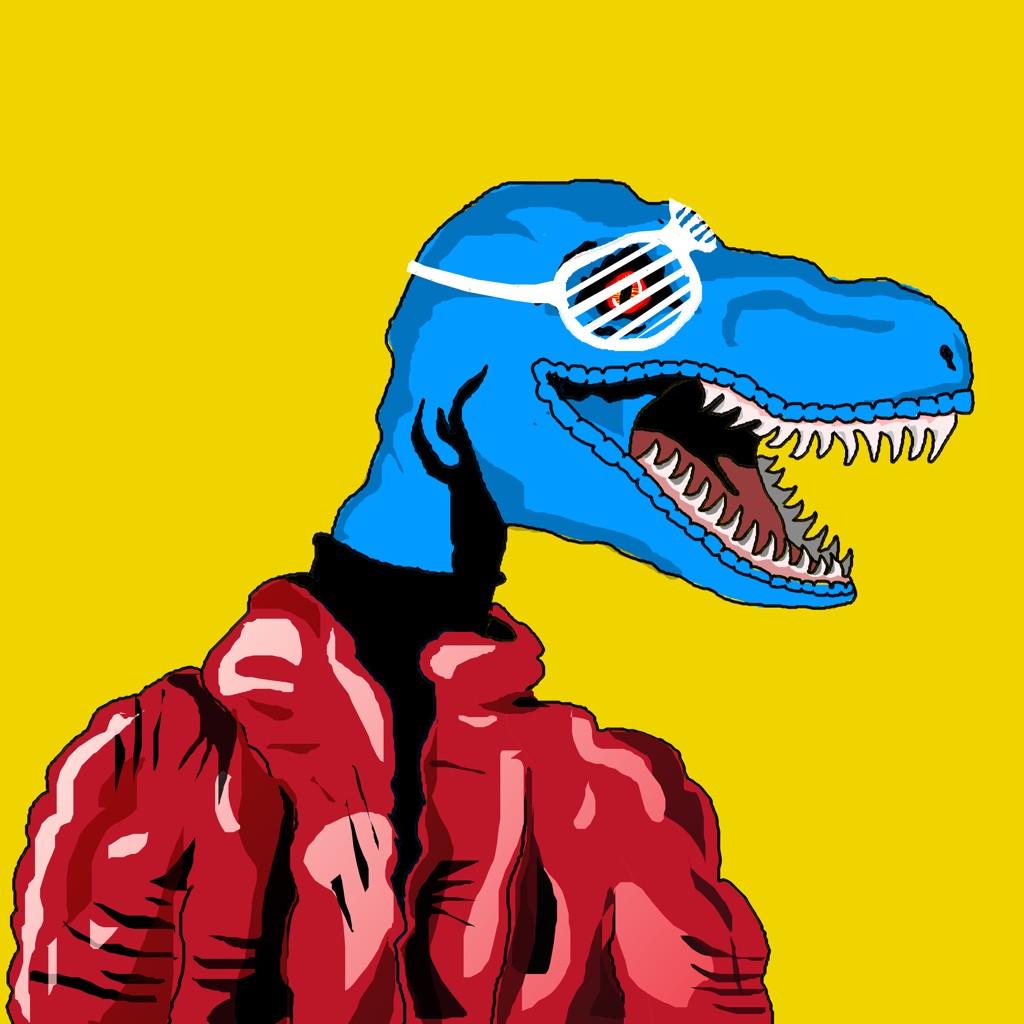 @oyl
@oyl