BCH for beginners Part 3
Hi there! I am now in the last part of my article about BCH. In the first part, I discussed what is Bitcoin Cash, the hard fork, and the soft fork. Na don the second part, I discussed two camps( Big blocker and Small blocker), and how Bitcoin Cash was created.
BCH for beginners https://read.cash/@missD/bch-for-beginners-654a12ce
BCH for beginners part 2 https://read.cash/@missD/bch-for-beginners-part-2-8417a6a8
Now, you understand why it's so hard to get any change to the Bitcoin protocol approved. You basically need to get all of these groups to agree. Throughout Bitcoin's history, there have been several cases where such agreements were reached, but as the network grew larger it became harder to reach a consensus.
Going back to our history in 2017, the end result of this Mexican standoff between the two camps was that each side did what they initially intended to do. Leaving it to users to decide which coin to adopt as the true Bitcoin.
**On August 1st, 2017, Small blockers activated Segwit on the original Bitcoin protocol while big blockers created Bitcoin Cash, a Bitcoin fork with an 8mb block size.** Initially, it was unclear which version of Bitcoin would win, when "Winning" in cryptocurrency terms means having a longer blockchain, or ledger of transactions. The more miners a coin has onboard means more computational power, hence a longer blockchain and a more robust network.
Bitcoin cash had support from mining giant Bitmain, and as a result, the original Bitcoin's hashing power was cut nearly in half when the fork occurred. However, when the dust settled it became clear that the original Bitcoin was still standing strong even after the fork.
**Since the fork, Bitcoin Cash has consistently maintained its space at the top of the cryptocurrency charts. The coin is backed mainly by Roger Ver, a Libertarian that allegedly owns around 100,000 Bitcoins making him one of the first Bitcoin billionaires. Ver also purchased the domain Bitcoin.com, to promote Bitcoin Cash, as opposed to Bitcoin.org, which is the website for the original Bitcoin.**
**BCH vs. BTC**
Bitcoin Cash is mostly similar to Bitcoin, but with some exceptions:
Bigger block size
When it first started out, Bitcoin cash's block size was capped at 8mb. later on, the coin went through another update and its block size limit increased to 32mb. In practice, Bitcoin Cash isn't popular as Bitcoin and its blocks rarely surpass 1mb of transactions.
No Segwit and Lightning Network
Bitcoin Cash adjusts its mining difficulty for mining new blocks more quickly than the original Bitcoin.
I won't go into details but it's claimed that miners can actually manipulate this feature to create questionable advantages. While there are additional differences between the two coins, the ones I've just mentioned are the ones that are most notable.
In November 2018, Bitcoin cash went through its own hard fork. This time the two camps were the original Bitcoin Cash, also known as ABC, and Bitcoin SV, which stands for Satoshi's Vision.
photo source
**Bitcoins ABC**'s camp was **led by Roger Ver and Bitmain.** While the **Bitcoin SV** camp was **led by Craig Wright**, **a person who claimed to be Satoshi Nakamoto but never supplied ample proof**, and **Calvin Ayre**, the **owner of the largest Bitcoin Cash mining pool, Coingeek.**
There are two main differences between the two Bitcoin Cash versions. Bitcoin ABC maintained a maximum block size of 32mb, while Bitcoin SV increased its block size to 128mb with additional increases planned in future updates.
Additionally, Bitcoin ABC added smart contract-like functionality into its code while Bitcoin SV chose not to accept this change. For now, it seems that Bitcoin ABC has become more popular and is considered by most as the "true" Bitcoin Cash.
**Closing Thoughts**
I'd like to leave you with some food for thought. **Sometimes the obvious solution to a problem is not necessarily the best one**. Low transaction fees are important to the usability of Bitcoin, but not at all costs, and a quick fix often has unforeseen consequences.
I mean just imagine what life would be like if instead of investing in and developing file compression technologies, we would simply have to buy additional hard drives just to save all of our uncompressed documents, photos, videos, and projects to our computers.
How much longer would it take to transmit those files along with the internet to our friends, family, colleagues, or clients?
Keeping this in mind, it would seem as though optimizing data within small blocks while maintaining decentralization will pay off in the long run. Adding to the block size might prove necessary, but it should be used sparingly.
For now, the Bitcoin Cash hard fork saga stands as a testament to the decentralized nature of the Bitcoin network. It demonstrated how unbiased the system is, and how no single party can dictate what will happen even when very powerful interest groups are involved.
*Bitcoin Cash- a hard fork of a Bitcoin protocol that created a new coin with a larger block size*

BCH for beginners Part 2
Good day! This is the second p[art of my latest article posted a week ago, which is BCH for beginners. I would suggest that you read it first for you to understand this part of my article. here is the link. https://read.cash/@missD/bch-for-beginners-654a12ce
When you consider the average Bitcoin transaction size, you'll find that a block is able to hold about 2700 transactions. 2700 transactions every 10 minutes means 4.6 transactions a second, and that's not a lot.
Visa, for comparison, can confirm 1,700 transactions per second. This means that when a lot of people want to send Bitcoin, during price rallies, for example, transactions get stuck in a very long queue waiting to enter a block and get confirmed.
Of course, Bitcoin allows you to pay a higher transaction fee if you want to jump the queue, but this might cause fees to reach ridiculous levels as more and more people try to "cut the line" with their transactions. This isn't something you want to have happened if you're building Bitcoin to become a global payment method.
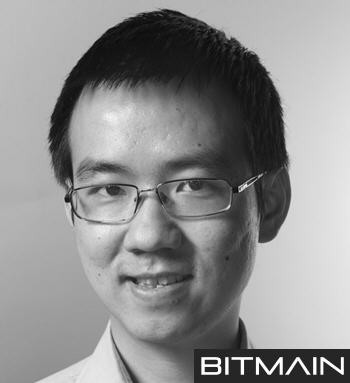
As a result of this **scalability issue, two different camps emerged.** The first camp was the **BIG BLOCKS** camp. This camp was led by Chinese mining giant Bitmain and Roger Ver, an early Bitcoin investor who was involved with a number of startups when Bitcoin was just gaining initial adoption.
photo source https://www.google.com/search?q=bitmain+and+roger+ver&rlz=1C1GCEB_enPH891PH891&source=lnms&tbm=isch&sa=X&ved=2ahUKEwjW3frg4_PvAhWlHqYKHcBcDaAQ_AUoAXoECAEQAw&biw=1366&bih=663
**Big blockers were afraid that Bitcoin's scalability issue would prevent it from becoming what** **Satoshi Nakamoto, Bitcoin's inventor, initially intended a peer-to-peer payment system.** With such long confirmation times and high fees, people wouldn't use Bitcoin for day-to-day transactions and would instead treat it as a store of value like gold. The supporters of this camp suggested a very simple solution, and that is **increasing the block size.**
If we increase Bitcoin's block size to 8mb, we'll be able to confirm as many as 8 times the number of transactions per second. And this will reduce the existing congestion of the network, and in the future, we'll increase the block size as much as needed s Bitcoin achieves further adoption.
Opposing them was the **"Small Blocks"** camp. The supporters of this camp rooted in keeping the current 1mn block size, while finding solutions for optimizing transaction size and handling, in order to enable scaling.
One such solution was **Segregated Witness or Segwit for short**. Segwit is an upgrade to the Bitcoin protocol, which among other things effectively **reduces the transaction size by 75%**. This means that a 1mmb Segwit block can hold the same amount of transactions as what would be a 4mb nonSegwit block.
Additionally, Small Blockers talked about the development of the **Lightning Network,** **a second layer on top of the Bitcoin protocol that allows for instant and feeless transactions.**
Now, the lightning network is a pretty broad topic on its own, I will explain it in my upcoming articles on detailed explanation on how it works.
But why would the small blockers against increasing the block size, to begin with? The reason is that small blockers believe that in the long run, this would hurt Bitcoin's decentralization and functionality.
Here are some of the arguments to justify their claim;
For one, an 8mb or even 32mb block takes more time to travel through the network than a 1mb block. Additionally, once the block reaches a computer on the network, that computer now needs to verify all of the transactions inside that block. If the block is too big, it might not be able to finish verifying all the transactions before the next block arrives within 1o minutes or so. This means the network will start lagging behind new transactions, which can create disputes about the current state of the Bitcoin ledger.
On top of that, by not optimizing transactions, you're also not optimizing the size of the Blockchain which already takes up several hundred Gigabytes. Forcing computers to verify oversized transactions, reduces the number of computers that can store the Blockchain on their hard drive and therefore diminishes the network's decentralization.
To make it simple to understand, consider this analogy;
Imagine a street that's suffering from heavy traffic. The obvious solution would be to increase the number of lanes, effectively the same solution as increasing the block size. But what would you do once the street becomes more popular and even more cars come in?
Eventually, there's a limit to how many lanes you can add before running out of land to build it. On the other hand, you could reduce traffic congestion by promoting public transportation routes or carpooling.
A solution similar to optimizing the transaction size and how transactions are handled by the network.
This heated argument between the two rival camps went on for several years until it climaxed in **August of 2017**. Back then, Bitcoin was making the first steps over the $1200 mark and the network was pretty crowded due to an overflow of transactions.
As a result, many transactions got delayed, and transaction fees skyrocketed as people were outbidding each other to "cut in line" and get confirmed faster. The average fee around that time was as high as $37 per transaction!
Now, you may be wondering why nobody took action to avoid this situation. Well, in order to answer this question, we need to understand who actually decides anything on the Bitcoin network. You see, Bitcoin is **decentralized and this means there's no one person that decides anything**. Participants in the network vote through their actions. Their vote is actually whatever version of the Bitcoin protocol they choose to run on their computer.
**There are several players on the Bitcoin network.**
First, **there are the miners and mining pool operators.** They are the ones **in charge of creating blocks and updating the ledger of transactions**. Some would argue that they have the ultimate say in what changes are finally accepted to the Bitcoin network.
Then we have the **developers**, **which are a group of individuals collaborating together to maintain Bitcoin's source code**. Some believe that this group has the ultimate power since they are the ones writing the actual code that runs the network.
We also have the **exchanges, which are the gateways for cryptocurrency adoption.** They can decide which version of Bitcoin to list under the ticker symbol BTC. They have the power of connecting people with the actual coins.
Another important groups are **the wallet providers. They write software that allows user to manage their coins.**
Additonally, **we have the nodes, which are the different computers that run the Bitcoin code and make sure no one is breaking the rules.** These nodes are the **backbone of the Bitcoin network.** Owners of the nodes can decide to only accept transactions that support specific changes.
And finally, **we have the Bitcoin users**, **who get to choose which coin to buy, which exchange to use, and which wallet to download**. Without even knowing it, they actually have the most power. **The coin that users decide to adopt will have a brighter future.**
***Miners, exchanges, wallet providers, and even developers all rely on the acceptance of the public to survive.***
That is why in the end, the users have the final say.
***to be continued....***
Its been 5 days since I posted an article. I will work for the second part of my last article.. Thank you again Sir @ErdoganTalk for your generosity.
BCH for beginners
Disclaimer: I am not an expert on cryptocurrency. I am also in a learning process. This was based on my understanding after surfing the web.
***This article is for all the noobs out there including me. All about Bitcoin cash.***
What is Bitcoin Cash? Is it the same as just Bitcoin? What is the difference between the two, and which is the true Bitcoin?
A lot of people who are just starting with Bitcoin or cryptocurrency in general, get confused when they see that there's not just one type of bitcoin. For example, Bitcoin Cash, Bitcoin Gold, and Bitcoin Diamond are all **forks** of the original Bitcoin.
**Fork can be describe as an alternate version of a coin**. There are two types of forks, soft forks and hard forks.
Soft forks are versions that work well with both the original versions and the alternate version of the coin, so as a user, you can choose which version to run without a lot of concern.
Hard forks on the other hand, don't play well with the original version. This means that you need to choose whether to update your software to run the alternate version, or to stick with the original one.
In other words, if the alternative is not accepted by 100% of the users, then a sort of split will occur in the network and a new coin will emerge. One that similar to the original but not identical.
Now we know that Bitcoin Cash was a hard fork of Bitcoin, let us but why is it created?
Let's go back a few years and talk about the most controversial topics of bitcoin's code- the block size and scalability issue
Bitcoin transactions don't get confirmed easily. In order for the transaction to be considered as confirmed, it needs to be included as part of the block transactions on the Bitcoin ledger known as the blockchain. A new block of transactions is added to the blockchain on average about every 10 minutes. Similar to any type of digital data, adding Bitcoin transactions to a block requires storage space, and the maximum capacity for each block of transactions is 1MB.
*to be continued....*

Hello
Hi, I am new here. I saw someone posted read.cash on Facebook saying I can earn by just writing and interacting in some users in this platform. I was skeptical at first, I thought maybe it is just one of those "legit paying app" but in truth, it is actually a scam. But then again, I thought, why not give it a try.
So here I am now, introducing myself to each and everyone who would read this. Let me give you a little introduction of myself. I am in my mid 30s, I have a daughter. We live in the Philippines. I am a stay at home mom. I actually work before like 10 years ago, but after I gave birth of my daughter, I decided to be a full time mom.
I would like to stay anonymous, if you may. I was known by everybody so at least here, I want to be a little mysterious. I am not a good writer, I'd rather call myself a trying-hard wannabe writer. Even when I was a student, I love to write. Writing helps me express myself. Whenever I feel anxious, I would write everything on a piece of paper. Whenever I have feelings for someone but I couldn't tell him, I would just write it on a paper and then throw it in a trash bin after. I guess everyone can relate to what i have just said, or not?
Anyway, that's it for now. I hope to earn readers as well as friends in this platform.