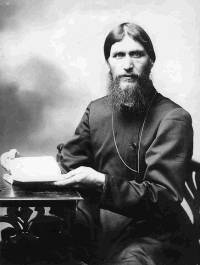
Pirates - interesting discoveries
A 200-year-old ship was discovered on the west coast of the Gulf of Mexico, which many thought belonged to pirates.At a depth of 1200 meters there was a wreck full of cannons, musket shells as well as large quantities of wine and gin, because of the depth the ship was in a preserved condition.The wreck was discovered while searching for a new place to build an oil rig.Most of the wood was damaged but the copper frames as well as the kitchen remained intact, who is the origin of the ship?
Some people think that the ship belonged to Texas pirates during the Texas Revolution or the war between Mexico and America.
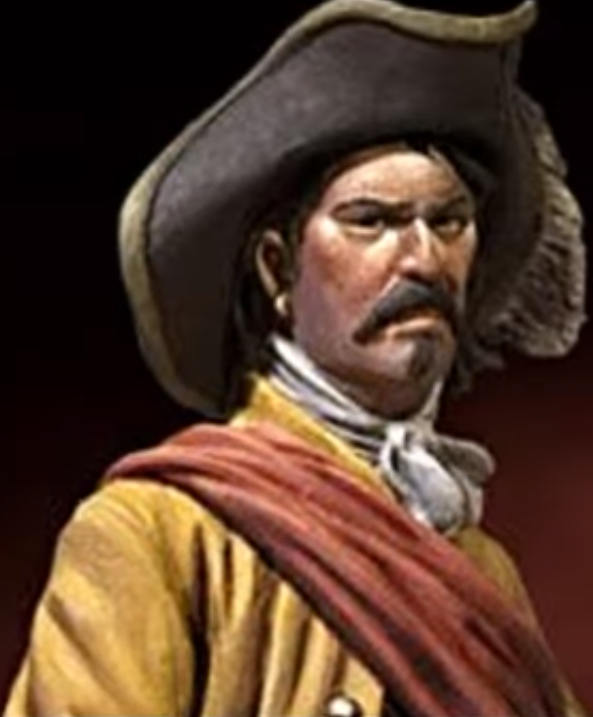
Some researchers who explored the coast of Madagascar allegedly found a treasure that belonged to Captain Kidd, there is one secret about this treasure that was not immediately revealed.William Kidd was a pirate from the 17th century, he was hired by European countries to sail British ships, which was a lucrative job for those who knew how to do it, and it was called Corsairs.
A lot of people were skeptical about finding the treasure as it was hard to find it in the end it turned out that the silver board was actually a hunting lever and that it was actually one big scam that tricked everyone.The President of Madagascar was shown this false relic from the past, the real treasure of Captain Kidd is still somewhere in the world. Now a little more about Captain Kid
William Kidd was a Scottish sailor who was hanged for piracy after returning home from the Indian Ocean. Some modern historians consider his pirate notoriety undeserved because he acted as a legal pirate. His fame was greatly contributed to by the fact that he was questioned before the English Parliament during the trial. His actions on the high seas, whether pirated or not, were far less harmful than other pirates and pirates of his time.
"Merry Christmas
"As the holiday season approaches, I just wanted to take a moment to wish you a very Merry Christmas and Happy Holidays. It's been a challenging year for all of us, but I hope that this special time of year brings you joy, comfort, and the opportunity to spend quality time with your loved ones. May the coming year be filled with prosperity, good health, and happiness for you and your family. Best wishes to you and yours."
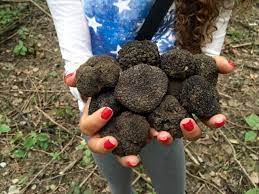
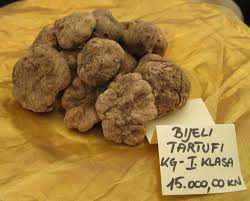
Truffles
Truffles are a type of mushroom that grow in the dark and are often used in cuisine. The most well-known are black truffles, which are most commonly found in Italy, but there are also other types, such as white truffles and brown truffles. They are known for their strong, distinctive aroma and are often used to add a special flavor to dishes. Truffles are highly valued and expensive, as they are difficult to find and more expensive than most other types of mushrooms.
Are there poisonous truffles? There are some types of mushrooms that are called truffles but are poisonous and should not be eaten. However, there are also mushrooms that are called "truffles" but are not real truffles and should also be avoided due to the risk of poisoning. If you are looking for truffles to eat, you should seek out a specialist dealer or local restaurant to ensure that you are getting real, edible truffles.
Can a person produce truffles at home? Truffles are difficult to produce artificially, as they grow in a natural environment and require specific conditions for growth. However, there are a few ways in which truffles can be grown in a domestic setting, although they are more difficult and expensive projects.
One way to grow truffles is through a process called "inoculation," in which truffle seed is placed in the soil and fed a specific diet to encourage mushroom growth. However, this process is very difficult and requires a lot of patience and time, and it is often difficult to successfully grow truffles.
There are also other methods for growing truffles at home, such as growing mushrooms in greenhouses or under glass domes. However, these methods are also very difficult and expensive, and it is often not worth the effort to try to grow truffles at home.
If you do decide to try growing truffles, it is advisable to seek the advice and assistance of experts in the process.
Here's a simple recipe for preparing truffles:
Ingredients:
1 truffle
2 tablespoons butter
1 clove garlic, minced
1
Salt
Instruct
Wash
In a small saucepan, melt the butter over medium heat. Add the minced garlic and cook for 1-2 minutes, until fragrant.
Add the heavy cream and sliced truffles to the saucepan and bring to a simmer. Cook for an additional 2-3 minutes, until the cream has thickened slightly.
Season with salt and pepper to taste. Serve immediately, either alone or over pasta, meat, or vegetables. Enjoy!
"Thank you for reading this article."
Jedna stara fotografila sa dosta uspomena ,podseca na neka srecnija vremena .
Is this a corona virus or not?
Hello everyone, I want to share with you my experience regarding the corona virus.
It all started about seven months ago.
In those days, I didn't move around your house much, I went to the store to the bank and to some other usual places where I definitely go, and even if I didn't eat, I couldn't avoid it. A couple of days before I got the temperature, I didn't feel very well, I was a little weak and I couldn't eat much food. On the third day, somewhere in the evening, I felt the temperature, I thought it would pass, but, but.
I haven't felt well for a couple of days now, I had a temperature, sometimes a little higher, sometimes lower. I finally decided to go to the doctor. When I left they told me to take a lung scan and get tested for the corona virus, everyone thought the corona was in question and I believed it until then. After the lung scan, I was told that I had pneumonia and that it was most likely a crown and that I was being tested.
The next day I went for testing again but miraculously it was not a crown.
Of the drugs, if it can be called drugs, they gave me some vitamins and said that I would be better. But Every day that got worse. The temperature exhausted me a lot, until there was a climax. After a couple of days, I felt a little better, but it didn't last long, that day my saliva became somehow liquid, I was a little confused, I didn't know what it was. In the evening when I went to bed, I felt all bad, and in the end I fainted, I was dehydrated and I was very scared. The ambulance came, they gave me an infusion and I felt a little better, but that's not the end of this nightmare of mine .
At my mother's insistence, I go to the hospital and the ladies leave me in the ward where there are patients who have a crown and they tell me that I don't have a crown and I'm there with them, there are great chances that I will also get a crown.
At the hospital, I practically didn't know about myself, they probably gave me a lot of medicine, so I wasn't even aware of myself . What was worst for me then were hallucinations. That can be really scary. And so I spent about ten days in the hospital and I finally felt better, those ten days were like an eternity for me.
Now, thank God, I'm fine, I'm just still in a dilemma whether I had the corona virus or not, and does the corona virus exist at all? Thank you for reading,

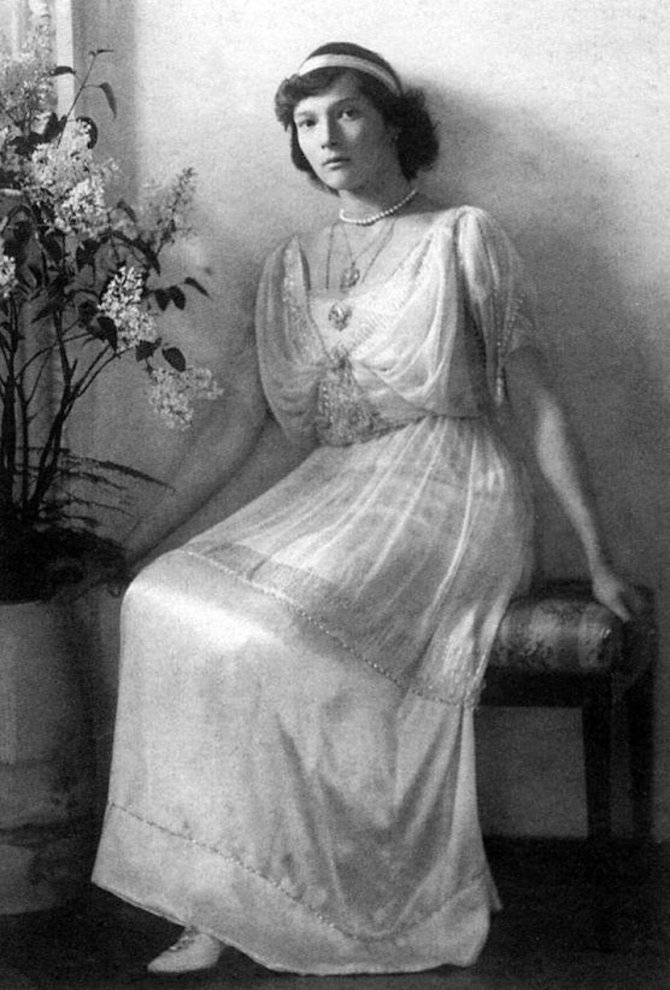
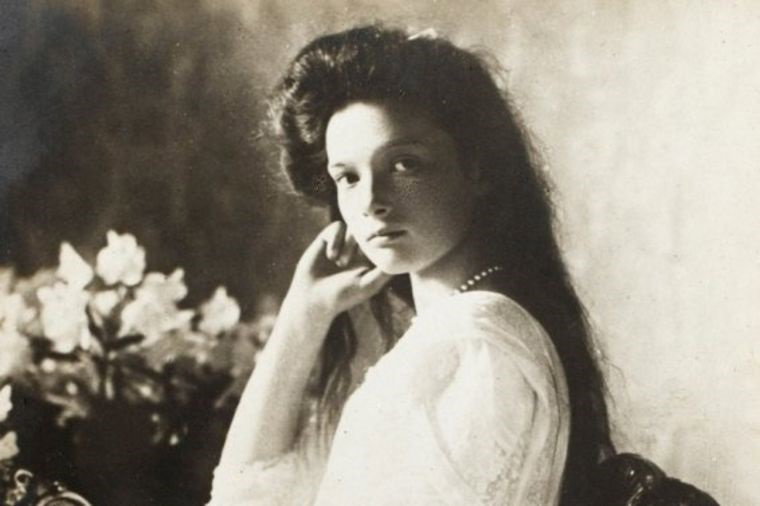
The story of Tatiana Romanov
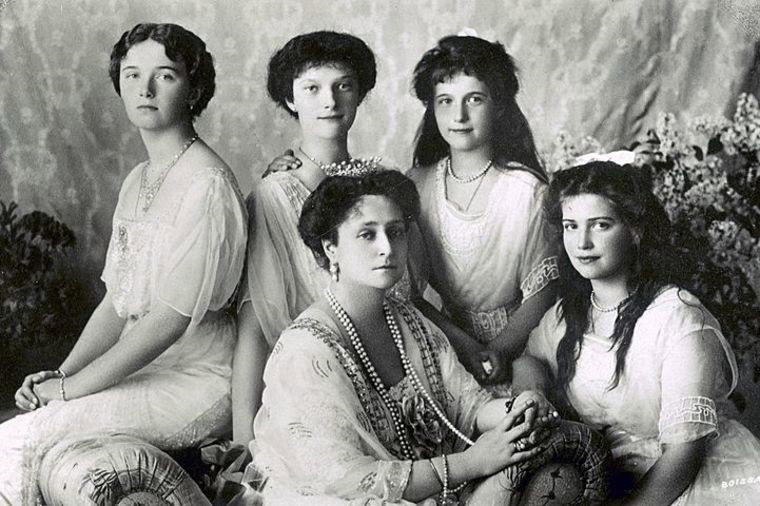
She was born on June 10, 1897 in St. Petersburg. Tatiana was fair-skinned, with blue-gray eyes and beautiful auburn hair. It was said in the palace that she was the most beautiful of the four sisters and the most similar to her mother Alexandra, with whom she was very close. Moreover, it was rumored that she was also the Empress's favorite daughter.She was the most beautiful daughter of the last Russian tsar, Nikolai II Romanov. The beautiful beauty, Tatiana Romanov, was named after Pushkin's heroine of the novel "Eugene Onegin", because the Russian tsar wanted to have daughters Olga and Tatiana, according to the famous song. In the family, out of mercy, Tatjana was called Tanja, Tatjanočka and Tanuška.
From an early age, she had a close relationship with her 18-month-old sister Olga. She shared a room with her, her secrets and wishes. They were so inseparable that they were nicknamed the Great Couple.But, although they were both princesses, they were raised like their younger sisters Maria and Anastasia, with a certain dose of rigor. They slept on extra beds without pillows, bathed in cold water every morning, and were expected to knit items in their free time, which were then given to charity.The Romanov sisters did not have any contact with the outside world until the First World War, when Olga, Tatjana and mother Aleksandra completed a hospital course and cared for the wounded as Red Cross nurses. This was especially suitable for the beautiful Tatjana, who was practical from an early age and had a natural talent for leadership. She was born to lead, so her sisters gave her the nickname "Governor".
She was deeply religious and constantly, like her mother, read the Bible. Together with Olga, she even had her own regiment in which she was an honorary colonel; she loved to go to inspect the soldiers and had sympathy among them as well as among the wounded.Russian Tsar Nicholas II Romanov was atypically liberal for the ruler of that time. He showed that on several occasions, especially when the Serbian king Petar I Karadjordjevic asked for the hand of his Tatjana for his son and heir to the throne Alexander I.
"My daughters will choose for themselves when they will marry," he replied in writing, although arranged marriages were a normal occurrence at the time. But he noticed that Alexander could not take his eyes off his daughter when they came to visit.
The marriage negotiations were interrupted due to the outbreak of the First World War, but the couple allegedly exchanged letters until the tragic end of the Romanov family.For a while, Tatjana saw and corresponded with her cousin Dmitrij Jakovljević Malam, who was a member of the imperial army. He delighted her with an unexpected gift - a French bulldog, which she named Ortipo.After the outbreak of the Russian Revolution in 1917, the entire royal family was arrested and taken to Ekaterinburg. Although they were under all-day supervision, they lacked nothing. The Russian tsar was relieved of all duties and performed trifles like any other man - he chopped firewood, walked around the estate and hung out with his family.There are stories of how the Romanov sisters became close to the contestants, and talked to them during afternoon tea as acquaintances.The following year, 1918, the entire family was thrown into prison. On a summer evening, July 16 of that year, the emperor, Empress Alexandra and their five children were pulled out of their beds and taken to the basement of the Ipatjev house where they were, where they were thrown in chains.They were heartlessly executed at that place, together with the servants and the family doctor. Along with the beautiful Tatjana, her beloved dog Ortino, a French bulldog, was also killed.
After this, the myth arose that one child managed to survive and continue living in the interior of Russia. Hundreds of theories state that the Bolshevik death squad escaped either Anastasia or her son Alexei. The news of the execution reached the Thessaloniki front, where Alexander I said goodbye to the untried Yugoslav queen in tears.Their remains were exhumed in the early 1990s and buried in the royal tomb in St. Petersburg, and the whole family was canonized in 2000 by the Russian Orthodox Church.
Willow as a medicine
Many doctors say that the willow is a real boon for people who live or live next to swamps and feverish places.Because they can get rid of the attacks of fever and other diseases that come from such an unhealthy environment if they drink it every day - tejodvar from willow bark.Not only that, but the decoction works well when it washes all wounds and sores.
The bark is best when it is believed in the spring before leafing. It is better to be dry, and it can also be used raw. The decoction should be boiled for a long time.When willow buds are harvested in the spring and dried, then a pleasant tea is made from them.
How to make white willow tea
Boil 1-2 grams of the bark of this tree in 2 dl of water for 10 minutes. To treat arthritis, it is necessary to drink about 5 cups of tea a day. In that case, the daily intake of salicin should be 60 to 120 mg. Compared to stronger synthetic preparations, herbal medicines usually take a long time to show their therapeutic properties, so white willow bark should be used for about 15 days to Although white willow is safer than aspirin, long-term use is not recommended.
That is why it is wisest to take a break after 45 days. Nausea and diarrhea can occur before sensitive people or in excessive amounts.

Yeti-snowman
The Yeti's Mickey Snowman belongs to the order of cryptids, the science that deals with their research is called cryptozology.This science deals with the exploration of unknown animals and the levitra between science and fiction.
Legends of hairy creatures living in the wild are present in many cultures however biological materials have never been tested by modern scientific methods by which quality results can be obtained. Yeti or strength man is often imagined as a human-like animal that most likely lives in the Himalayas, many eyewitnesses claim to have seen this animal walking in the mountains on snow and leaving behind large tracks.In the testimonies, the Yeti is sometimes like a monkey and sometimes like a human, although some have seen it as a bear completely covered with fur whose color varies from white to black.Some people claim that their feet are similar to humans and some that they are enormously large.The first descriptions of the Yeti date back to 898 were left by the researcher Major Vadel, the big traces of traces in the snow are most likely the traces of a hairy big man who lives in the area of eternal snow, wrote Vadela.
The Everest Expedition found traces of a wild snowman at an altitude of more than 6,000 meters in 1929, and since then the Yeti has been successfully hiding until the 1954 expedition.The deli mile expedition was composed of scientists and mountaineers and they searched the Himalayas for months, unfortunately they did not find a monster, but they found unknown traces.The British team announced that they will investigate the DNA parts of the calf that allegedly belonged to this monster, examine the hair bones and other materials from the collection collected by the Swiss biologist Bernard Haumelans, which is kept in the museum in Lausanne.
This wild man has many names called Yeti in the Himalayas, then Fut in North America, Amasti in the Caucasus and Orang Fendek in Somatri.People heard exciting stories and countless testimonies, saw unusual photos in the snow and mud, drew countless pictures and collected a handful of frozen feces and hair that should belong to this snowman. But none of his photographs broke the suspicion and confirmed his existence, speculations remain, but the fact remains that the Yeti was never photographed, even if there are countless pictures and drawings that show him in the memory of eyewitnesses.No fossil remains of this creature have ever been found.
Thank you for reading this article
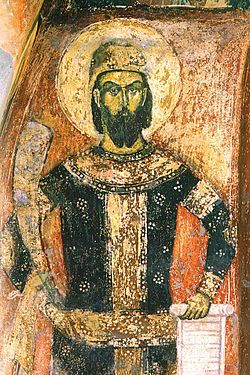
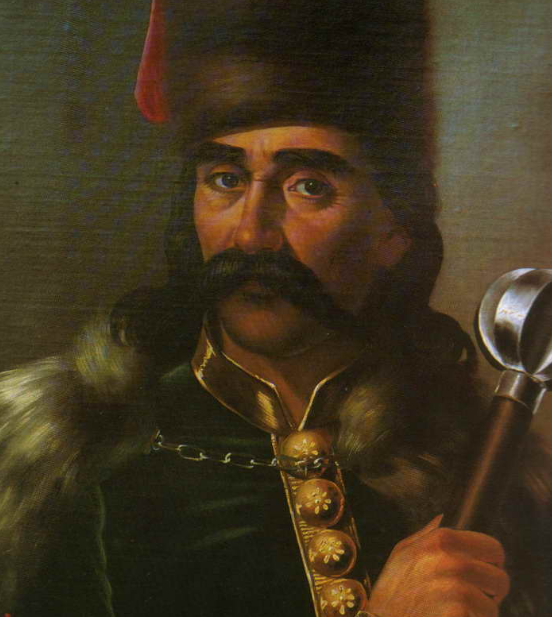
Marko Kraljevic
That our history is still sufficiently unexplored is evidenced by the fact of interpreting the personality of Kraljevic Marko. He is often approached from two points of view - negation, as a Turkish vassal and traitor, and excessively positive - as a Serbian superhero. It is true that Marko Kraljević was a knight who in his time respected the great respect of his contemporaries.
When Marko Kraljevic is mentioned, it is usually immediately added that he was a Turkish vassal and a marginal person. The first reliable information about him comes from 1361, when he was the head of the embassy of the Serbian Empire in the negotiations in Dubrovnik. From then until his death in 1395, he was at the top of the government all the time and among those people who led the Serbian people in dramatic historical circumstances. He became a vassal only when all his Christian neighbors either disappeared from the historical scene or became Turkish vassals themselves. Although many went into exile from Serbia in those difficult times, including his own brothers, Marko Kraljevic remained with the Serbian people and was the last Serbian ruler to survive in these parts.
Marko Kraljevic was a soldier, a knight, a nobleman, but also someone who was very attached to his family. He grew up in a military family, which owed its success, primarily to its military skills. His father Vukasin was extremely ambitious, which left a deep mark on Marko as well. That is how Marko spent the first part of his life, youth and his first two marriages in the shadow of his ambitious father, Vukasin Mrnjavcevic. The behavior of Marko Kraljevic from the time when he was an independent ruler shows that he was actually very different from his father. Vukasin used every opportunity to win a new piece of power, until he finally grew into the most powerful person in the empire.
Despite the fact that from the very beginning of his reign he faced the revenge of other Serbian authorities, as well as other difficulties, Marko always tried to maintain good relations with other Christians. He was not vindictive, but provided help and understanding. Thus, when his wife Jelena left him and fled first to Montenegro, and then to his brother Toma in the town of Janjina, he still allowed Tomi to donate his property, which he had in Marko's state, to the monastery in the name of his recently deceased daughter.
With this act, Marko showed his chivalrous side, and despite the woman's infidelity, he understands her brother's parental grief.By such and similar actions, Marko secured great respect from his contemporaries, who remembered and retold his words and actions.
Marko Kraljevic lost his lifeMay 17, 1395 in the battle of Rovine..
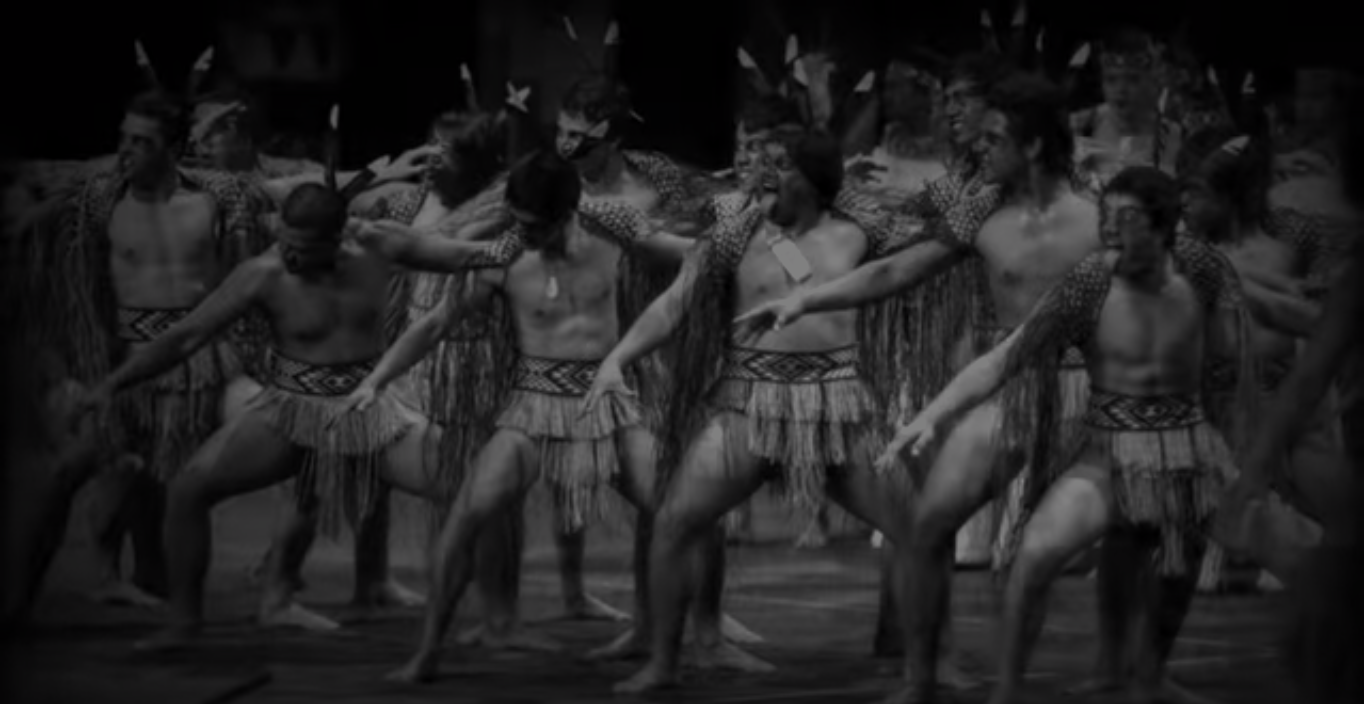
The story of the Maori Warriors
Today, the strength of the state and the people is measured in the strength of the economies and the power of the army they have, once the strength of the army was reflected in the power of its strongest warriors.There were warriors and tribes who fought each other and fought a battle, Achilles was able to motivate an entire army and that reflected his strength.Maori Warriors - tattoos were especially significant among Maori warriors, both men and women wore them, they were most often worn on the face, but some Maori also tattooed their arms and neck and the rest of their body.Most Maori start getting tattoos during adolescence, each tattoo design was unique, but all tattoos were in the shape of spirals.They were tattooed during the ceremony and each line spoke of the courage and strength of that person, the tattoos were not done like today with a gun and what is used today, they were engraved with hammers and bone smoothers and the ink was made of ash and grease .
One of the traditions used by Maori warriors is a traditional indigenous dance called haka.In this dance, the participants sing a song, strike with their feet, stick out their tongues and poke their eyes out, this dance was performed as a welcome for special guests, but it was actually created for war purposes.It was also used to scare the opponent before the battle.
The most common weapons used by Maori warriors were sticks, weapons were often decorated and considered a family treasure, weapons were in the shape of tearsThe most common weapons used by Maori warriors were sticks, weapons were often decorated and considered a family treasure, weapons were in the shape of tears.The war unit called Haku never consisted of more than 100 men and sometimes women also fought, the more warriors there were the less organized they were.The warriors were trained from an early age.The Maori attacked other tribes by traveling quietly to enemy villages, pretending to be hunting..
I hope you enjoyed this article.
Poppy in the diet
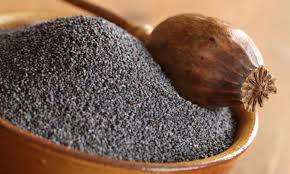
The symbol of sleep and death, as poppy is otherwise called, because of the opium obtained from it, has been used in the diet since ancient times. It allegedly originates from Mesopotamia, where it was used for medicinal purposes, but also as a plant. for different types of bread and pastries.Fresh poppy seeds have no taste, but during technical processing they get a spicy taste similar to walnuts.Whole seeds are used to sprinkle pies and muffins, and ground poppy seeds as a filling for gibanice, small cakes, baklava and cakes.Poppy seeds are also used to make cold-pressed oil, which can be bought in health food stores.
Poppy is the largest source of calcium of all foods used in the daily diet. This black seed also contains omega 3 fatty acids, which raise immunity and protect our disease, as well as omega 6 fatty acids that can slow down the development of multiple sclerosis, protect the cardiovascular system. and regulate blood pressure and carbohydrates give us energy, it is also effective in treating skin diseases, protects the heart, improves eyesight and much more.
I hope you enjoyed this article, thanks for reading.

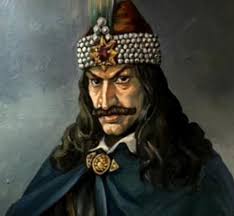
The story of Count Dracula
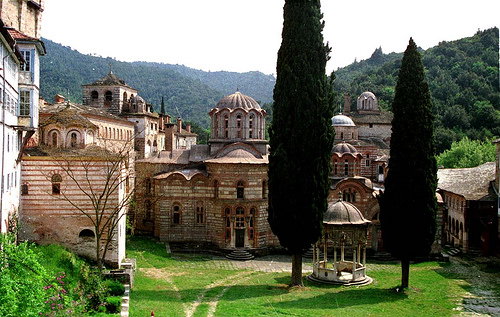
Count Dracula was definitely not as scary as his character was demonized on the world historical stage. This is evidenced by the list of donors of the Hilandar monastery on the Holy Mountain, among which is Dracula, ie. Duke Vlad Cepes III.For a time, he had patronage over the monastery and provided significant privileges for Hilandar.The role of patron and founder of the monastery was great, especially during the Turkish rule. On behalf of her family, the former Sultan Mara Branković helped Hilandar by convincing Duke Vlado Cepeš, called Dracula (1456-1462; 1476), to take over the patronage of the monastery.
Mara Branković did not have a great influence on her husband, Sultan Murat II, but she did have on his son Mehmed II the Conqueror, who considered her a second mother.Upon her accession to the throne, he dismissed her from the harem, returned her dowry and gave some territories for administration. She settled in Halkidiki, near Mount Athos, engaged in Serbian diplomacy and distributed a large part of her property to her serfs. According to her, the whole area near Thessaloniki is called Kalamaria (Good Mary).
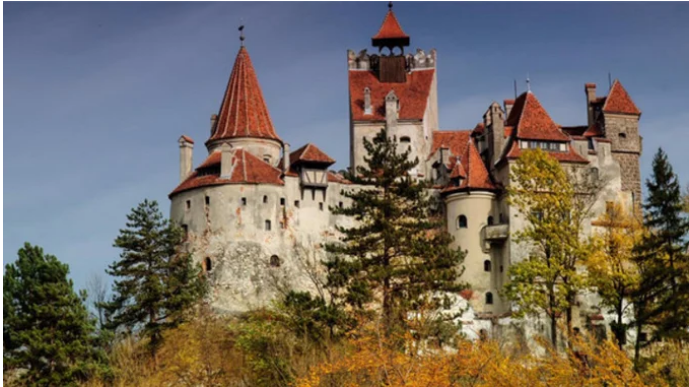
Travel agencies around the world, even in Serbia, organize a "Dracula tour" that leads fans of horror stories and the most famous vampire in his footsteps in Transylvania. During the visit to the medieval city of Sighisoara, which is under the protection of UNESCO, travelers will learn that the famous Vlach prince was just born in that place.The medieval castle of Bran, located near Brasov, on the border between the Romanian provinces of Transylvania and Wallachia and also known as “Dracula's Castle.” What will surprise visitors a bit is the fact that Vlad the Impaler spent the least time in that castle. Bran was home to Romanian King Ferdinand and Queen Mary.
About 800,000 visitors who visit this historic building every year will find out that the locals loved Queen Victoria's granddaughter so much that they gave her the 14th century fortress. Instead of Dracula, visitors to Bran discover the Romanian Queen Maria.The initial disappointment will soon be forgotten, when they see the secret passage, the multitude of seemingly hidden rooms connected by narrow corridors, the beautiful view of the inner courtyard. They will also be surprised by the sparsely equipped rooms, in which the modest ruler spent her days in prayer and solitude.
What is especially interesting for us is that Queen Marija was the mother of the Yugoslav Queen Marija, the wife of King Aleksandar Karađorđević. A favorite among Serbs, Marija Karađorđević learned from her mother to be gentle, to help the people, and it was noted that they cared for the wounded together during the First World War.
Dracula is a national hero for Romanians
Vlad the Impaler III was the inspiration for Bram Stoker for the story of the world's most famous vampire. Born as a Vlach duke, his nickname translates as "son of Dracula", from the Latin word "draco", which means dragon. It is a sign of his father's affiliation with the Order of the Dragon. He was remembered in history for his brutality because he impaled his opponents, raised them and left them to die in the worst torments.
POENARI CASTLE - the only real Dracula's home
As historians claim, Vlad the Impaler restored this castle. According to legend, his first wife killed herself by jumping from a tower during the Ottoman siege in 1462 so that the enemy would not capture her. It is interesting that 1,462 steps lead to it.Legend has it that Vlad the Impaler was buried in the Snagov Monastery, on the lake of the same name near Bucharest, but traces of the tomb have never been found.Although Romanians are bothered by the fact that their hero and fighter against the Turkish Empire is recognizable by the "fiction of an Irishman", it is the brand "Dracula" that brings Romania a lot of money from tourism and they use it a lot.
Thank you for reading this article
The most dangerous roads in the world
The roads lead us to some destinations and allow us to quickly reach the desired destinations, the harder the driving routes, the more connected they are with nature and the environment, we come across some destinations that are very wild and difficult to reach. incredibly spooky and dangerous.
One of the most dangerous roads in the world is located in Italy in the Veneto region, the road contains 52 tunnels, because of the tunnels that throw ours there and emit light with dangerous curves, this road is one of the most dangerous in the world.The road was built for military purposes in the First World War. For inexperienced drivers, the road represents a great danger, and for those who are more resourceful, it is a real challenge.Surrounded by beautiful nature and mountains, it offers an incredible view, the length of the road is 6.5 kilometers, the tunnels are 30 to 100 meters long.
Taroko is one of the most dangerous roads in Taiwan, it has a lot of blind curves, turns and narrow paths that lead through cliffs and mountains, barely one bus passes the width of the road.The road is very dangerous because pedestrians, cyclists and vehicles fight on the place on it, when it is heavy rains, they throw stones on the road and landslides occur, and floods occur due to river overflows.Taroko means magnificent - wonderful, it certainly provides that as we ride it.
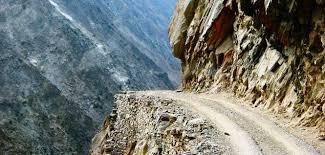
The Himalayas are also known for dangerous roads, one of the most dangerous is Kiswart in Panga, sometimes on this road and wheels higher above the abyss, the road starts at an altitude of 2 and a half thousand meters and ends at an altitude of 1600 meters in Kisvar.This road is part of a high mountain trail and it is a high windy road without fences or safety edges.The road is very dangerous at night and on rainy days, cars cannot be memorized, but one has to stand on the very edge of the road for the other to pass, it is really rugged, but again for adventurers it is a beautiful experience.
Another of the most dangerous roads in the world is located in Alaska, the road stretches for 666 kilometers, the road requires caution and concentration, as well as the permanent included headlights, which has poor visibility and poor driving conditions.The road is intended for Trucks and Tanks, if a smaller vehicle is found on it, there is a great danger that it will not survive that road.
There are many more dangerous roads in the world, so we must be extremely careful when driving. There are very dangerous roads in Siberia, thank you for reading.
Plant -Salep
Almost the entire fire world of Serbia and the Orient knows what salap is, and many also know that it is medicinal, so they drink it instead of coffee and various tejos.And so there are salesmen in all parts of the Orient all the way to the Sava, Danube and Una who prepare it for drinking and carry and sell it on the streets.Whoever drank regularly for a long time, thank you for doing well against various chest and stomach ailments.Scientific medicine claims the same and something more.
Famous doctors present evidence from scientific and practical observations that the use of salep is a medicine and food for all those who are thin, pale, worn out and helpless and who suffer from tightness and pain in the fingers inside, as well as for those who suffer from diarrhea and heartburn. .
For the treatment of the above diseases, you should inhale salap, beat it or grind it completely, then boil it and drink three glasses every day.It should never be hot but lukewarm, and for the recovery of sick children, as well as for the treatment of diarrhea and heartburn, the salap should be fried so that it is only ruddy, then beat it finely and give it once a day, one teaspoon mixed in a glass. milk or in meat broth.
In addition, if the children are comfortable and lose weight in general, they can drink a decoction of salep instead of coffee and other drinks, two or three glasses a day.One well-known doctor claims that the children were completely healthy, respectable and strong after two or three months of using salap. This medicine is much more useful for health than all meat extracts, is salap a mild food and medicine, and meat extracts are harsh and sharp, which can cause other illnesses or pain after recovery.


Crazy Experiments
You can thank science for many things that make up our world, such as food storage, clean water and comfortable homes. However, stories like Frankenstein or the Jurassic Park have shown us that the path to innovation can sometimes lead to gruesome immoral choices. I present to you some of the most controversial experiments ever conducted during which scientists were so obsessed with the question of whether they would succeed if they did not stop to wonder if they should do it, enjoy.
During the 1950s, CIA scientists began experimenting with mind control, using LSD, electroshock therapy, and sound repetition. Most of their findings were destroyed during the Watergate scandal, but there is evidence that the government then dosed naive citizens with drugs to gain their respect.
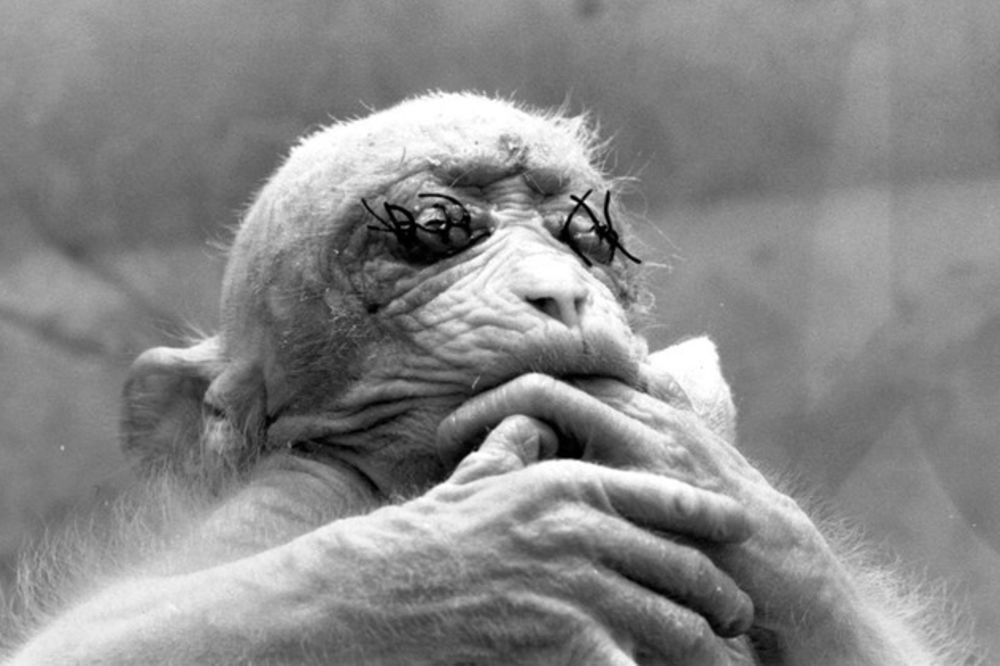
Briches was the name of a monkey who was taken from his mother and forced to test on animals at the University of California. He was tested for a prototype sonar device for blind people. The only problem was that Bricis was not blind. Scientists sewed uphis eyes. He was eventually released by the Animal Liberation Front during a 1985 raid.
3. Testicular transplantation to criminals
Leo Stanley, the chief physician of the San Quentin prison in 1913, believes that the men who committed the crimes had less testosterone than other people, so he tested his theory by giving the prisoners new testicles. Due to the lack of testicles, he sometimes gave prisoners animals instead of human ones.
4. Skin firming
In an effort to harden the soldiers' skin, Albger Kligman did experiments on prisoners. He would inject them with dangerous chemicals, but all his unfortunate subjects came out of the experiment with burns and permanent scars.
5. Stanford Prison Experiment
Respondents were organized into two groups. Some were "guards" and others "prisoners." Although arbitrarily labeled with roles, the “guards” very quickly began to display sadistic behavior and forced the “prisoners” to strip naked and sleep on hard concrete. One "prisoner" was so dehumanized that he had a nervous breakdown and was forced to leave the experiment.
6. A shocking experiment of obedience
Participants in this experiment were told by scientists that they had to press a button that would give an electric shock to another person in the room. The person receiving the "shock" is actually just an actor pretending, but of course the participant didn't know about it. All he was told was that because of the experiment, he had to continue to shock the person and raise the tension until they stopped moving. The study showed that 65% of people would still shock a person even after that person would scream in pain. Shocking, isn't it?
7. Harl's experiment in isolation
The monkeys were separated from their mothers as babies and forced into Harl's "pit of despair", more precisely a cage with only a bottle of water to keep them company. The point of this project was to examine the impact of isolation on child development and subsequent depression. Not surprisingly, baby monkeys have become depressed. They also developed physical problems such as indigestion.
8. Syphilis experime
A public health center in America deliberately injected black people with syphilis in order to study the effects. The effects, of course, were terrible on the skin and eventually the subjects died. The government seems to have neglected to treat them after infecting them. By the way, this happened between 1932 and 1970, which is 40 years! It lasted longer than the rule of one president. It turned out that the whole "crazy scientist" project could not be limited to cartoons. The crazy thing is that all these people thought they were doing a great service to humanity and were willing to continue their dubious work at any cost.
Thank you for reading this article
The Mystery of the Missing Submarine
I bring you one interesting story, enjoy.
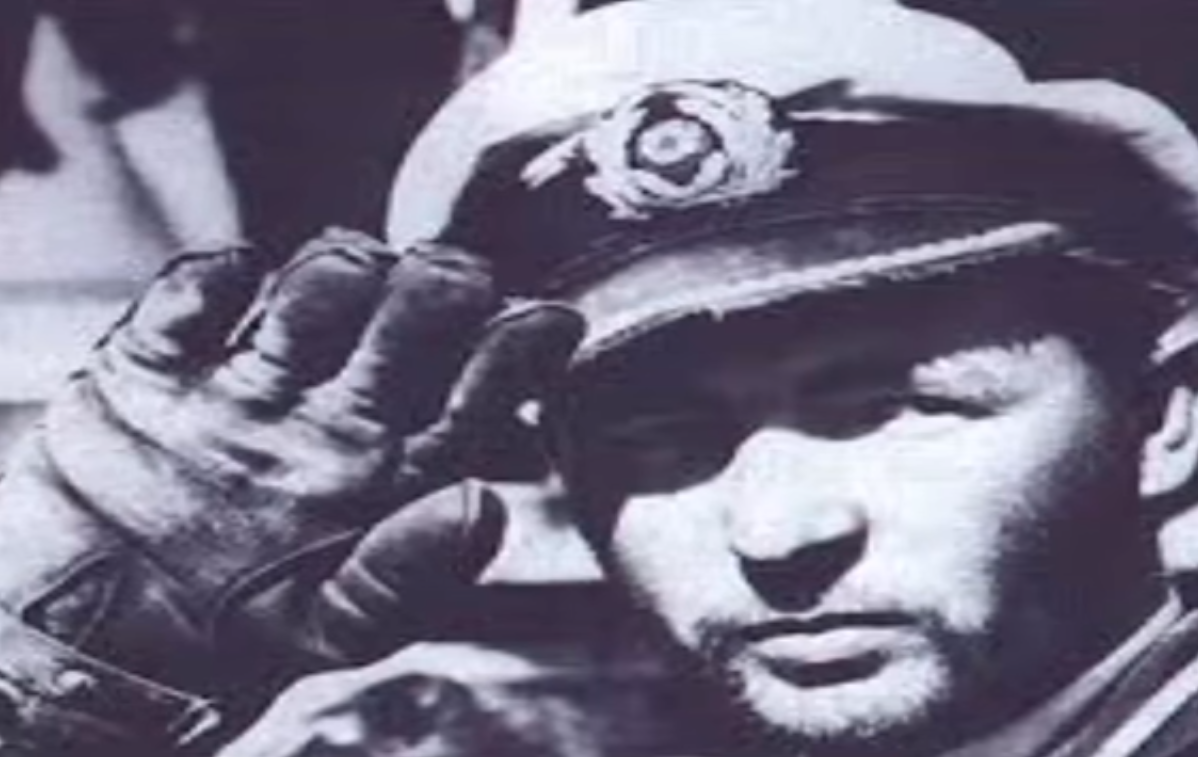
In this article, I will write about the mysterious attack on the German submarine UB 85, this event may have created the story of the Lock Ness monster, what attacked the submarine and is a mystery today.On April 30, 1918, at the end of the First World War, a British ship while sailing the Belfas Lox in Ireland encountered a disabled German submarine UB 95 floating in the North Atlantic. not in the middle of the day.
The possession of UB 85 was picked up without any provocations from either side, after boarding the British ship, the captain of UB 85, Gatar Kretsch, was immediately questioned, one of the first questions asked by British officers was, why did he stay afloat in broad daylight?Captain Krech responds, the submarine surfaced the night before to recharge the batteries, the captain was on deck simply to breathe some fresh air and exhale a few cigarettes, but then there was a sudden blow that damaged the submarine.Suddenly, from the depths of darkness, while our submarine is swaying from the impact and the waves that are splashing ours, a huge beast rises and descends on the submarine itself.
The beast had a pointed and small head and huge eyes and its teeth shone in the dark, the soldier took out his weapons and started shooting at the monster, but the monster was not harmed by anything and still held on to the submarine, the beast was so big that almost capsized the submarine, the estate continued to shoot the beast until it finally released the submarine.
There is no explanation for this event and what attacked the submarine, but near Skocka a preserved German submarine from World War I was found, it is possible that it was the submarine that destroyed the sea monster, so the submarine was sunk as I understood, I hope you liked this article, sorry for the spelling mistakes.
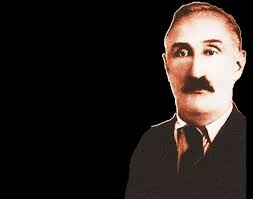
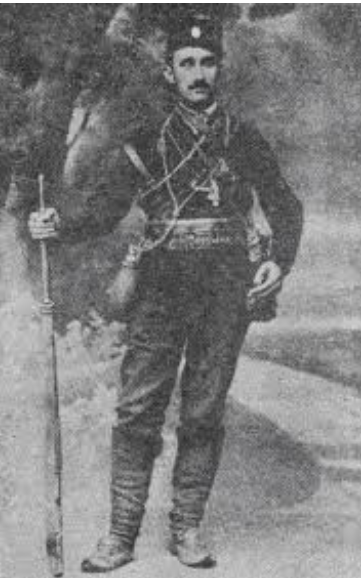
SECRET AGENT MUSTAFA GOLUBIĆ: Stalin's man originally from Serbia
Mustafa Golubić, since he was an excellent student, became one of the main people of Apis, so he went to Russia and became Stalin's man. He returned to Belgrade during the Second World War
In the first half of the twentieth century, there was no important historical event in the Balkans in which Mustafa Golubić did not participate. He was born in 1891, in a family neither poor nor rich. As a gifted child and as the best student of the elementary school in Stolac, the municipality sent him to the high school in Sarajevo. His schooling was interrupted due to the First Balkan War, from which he left with the rank of sergeant of the Serbian army and the Order of Obilić for his courage. After graduating in 1913, with a scholarship from the government in Belgrade, he went to study law in Lausanne and Geneva, and then to Paris, where he joined the Black Hand, which was headed by Dragutin Dimitrijević Apis.
In 1914, Apis appointed him a clerk in the Užice Army, and in 1915 he sent him to Russia to collect volunteers for the Serbian army. He is returning with a thousand new warriors at a time when the Serbian army is already largely retreating through Albania. At the Apis trial in 1917, Golubić was sentenced to one year, but he fled to France.
He returned to Belgrade in 1918, and the Serbian authorities arrested him in 1921 on suspicion that he was preparing to assassinate King Alexander. Details about this assassination are not known, but it is known that Golubić once swore in front of witnesses on Terazije, while the king's car was passing, that he would avenge Apis. He went to Paris, then to Vienna, where he was arrested four times at the request of Belgrade. It is not known when he started working for the Soviet intelligence service, but he quickly gained such a reputation that he entered the Kremlin under Stalin without a pass. He will perform several spectacular deeds, and the biggest of them is certainly the murder of Leo Trotsky.
Trotsky was the second man of the October Revolution, and after the conflict with Stalin, he fought in Europe until he hid in Mexico in 1937. It is known that Golubić discovered his shelter, and then it was easy - another Russian agent killed Trotsky with blows to the head with a pickaxe. At the beginning of the Second World War, Golubić came to Belgrade. With Mato Vidaković, a saboteur educated in Moscow, he blew up the fortress in Smederevo on June 5. A terrible explosion, which almost destroyed the city, killed 2,500 people.
It seems that Tito, fearing his connections with Stalin, betrayed him to the Germans. They arrested him and, after torturing him, broke him, took him to the park in front of today's Presidency in a tent wing and shot him. It was June 26, 1941. When the Russians and partisans liberated Belgrade in 1944, intelligence officers of the Third Ukrainian Front found and transferred the remains of Mustafa Golubić to Moscow. He was buried there with all military honors as a lieutenant general of the Russian NKVD intelligence service. In the first half of the twentieth century, there was no important historical event in the Balkans in which Mustafa Golubić did not participate.
Hello friends, I was banned from this site, I don't know for what reason, I'll be back soon.
A little about Podubica
Podubica is a low herbaceous plant that grows on dry and sunny meadows and on rocks.This beautiful plant has reddish flowers and small leaves. The above-ground part of the flower is collected from the podubica.This plant has an aromatic scent and a slightly bitter taste, it contains essential oil, bitter and harsh ingredient
This herb is used in the form of openings to strengthen the stomach, to improve appetite, for better bile secretion and for cough.Podubica is similar to live grass, then desperate or good, and a couple of smaller plants from this family.
Podubica plant is widespread in Central and Southern Europe, especially in the Mediterranean countries. It thrives on dry, sunny limestone slopes, on hilly meadows and rocks. Dubčac grass can be found in light oak and pine forests up to 2000 meters above sea level. It blooms from June to August.
Podubica plant contains large amounts of tannins (as much as 12 percent), essential oils, flavonoids (luteolin), iridoid monoterpenes, diterpenes. It also contains trace alkaloids (betaine type). All these substances contribute to its bitter taste, which is why it is extremely healing and appreciated in phytotherapy.
Preparation and use of tea
Pour 2 tablespoons of finely chopped grass with 5 dl of boiled water, cover and let stand for 30 minutes. After that, strain the obtained podubica tea well. Dose 1 to 2 cups after meals. Apart from drinking, the drink prepared in this way can be used for compresses and medicinal baths. Do not sweeten sage tea, it is necessary to drink it bitter, three times a day.


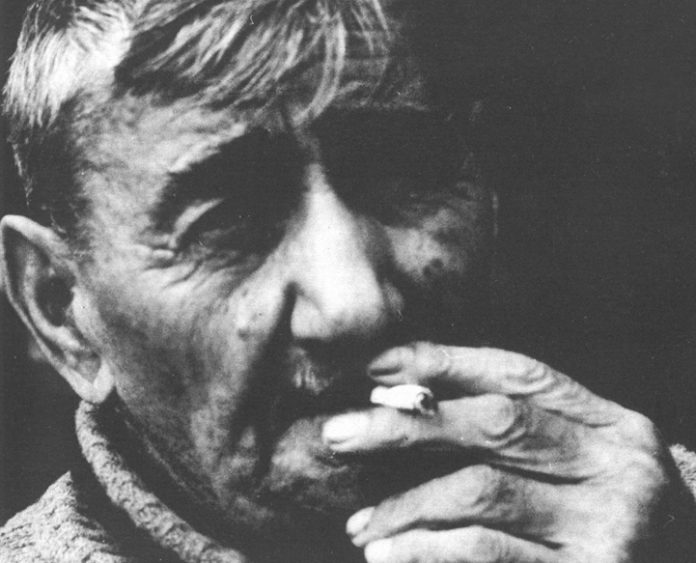
Do you know who Ilija Basicevic Bosilj is?
Ilija Bašičević Bosilj-painter, world classic of marginal art. He was born in 1895 in Šid, where he spent his whole life in agriculture and animal husbandry. He only had 4 grades of elementary school. Ilija had two sons, of which Dimitrija Bašičević was a famous art historian and was highly esteemed in Belgrade and Zagreb.
He was engaged in agriculture until 1957. On March 28, 1957, his land was confiscated, and when the law on expropriation came into force, he had to hand over all his land to the authorities. In the desire to redirect his thoughts to something else, Ilija started painting at the age of sixty. His son Dimitrije, wanting to discourage him, tore up all his paintings, but Ilija did not give up, he continued to paint her and very successfully. Defeated by his father's persistence, he began to encourage him and began to see the greatness of his father's work, which managed to achieve what the greats of Serbian painting never managed to achieve.
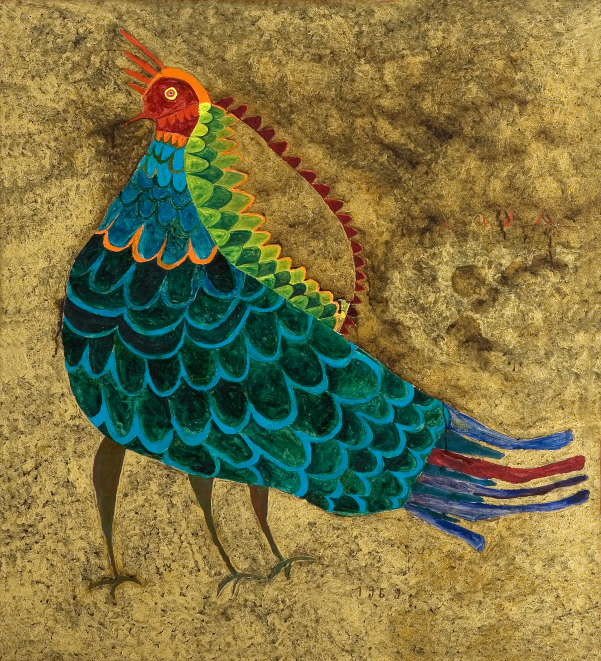
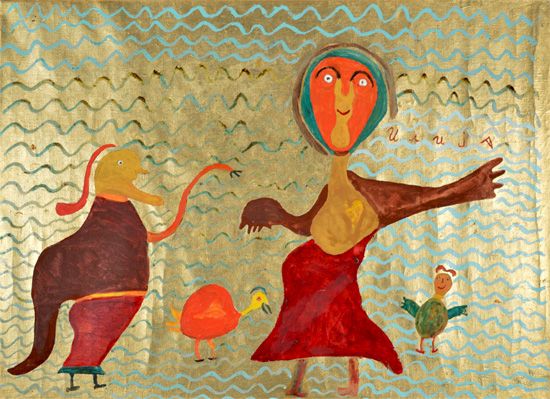
Ilija's works are original and authentic. At the beginning, he makes drawings and gouaches, then oil on wood, canvas, hardboard, paper, less often on glass. He exhibited independently for the first time in 1962, and independently in 1963. Thanks to numerous performances, he was quickly recognized as one of the most original phenomena in the world of naive art at the time. The most numerous are paintings of biblical motifs, especially Old Testament scenes. The following are motifs inspired by epics, legends and myths.
Ilija is the only painter who had to prove that he is the author of his works, so the Commission of the Educational and Cultural Council in Zagreb invites Ilija to prove the authenticity of the creative act before the selected commission. Until then, it seemed that the author of all the pictures was his son Dimitrije. In Zagreb, on February 18, 1965, in the apartment of Dimitrij Bašičević in Freudenreichova 3, a four-member commission observed Ilija Bosilj creating a work of art. They unanimously confirmed the authenticity and one hundred percent authorship of the previously painted works to the relief of Elijah and his family and the shame of all those who doubted.
In his ecstasy, Ilija painted several hundred paintings. One hundred was bought by a large gallery of naive art in Lausanne during his first exhibition abroad. In addition to fantasy in the implementation of his ideas, Elijah also used the pop icons of that time, so at an exhibition in Switzerland, Carlo Ponti found himself face to face with a picture of his wife, Sofia Loren. It is said that at that time Ponti wanted to buy the entire exhibition, but that the Basicevic family rejected it. Ilija's paintings are also in the private collection of the Rockefeller family.
He presented a legacy of paintings to his hometown of Shido. Today it is a gallery-museum collection that bears his name Ilijanum. He died on May 14, 1972 in Šid. One of his paintings "Bačinački brest" is on display at the current exhibition in Paris. At the Third Triennial of Naive Art in Bratislava in 1972, Ilija was posthumously awarded the recognition of the international jury for achievements in the field of naive art.
I hope you enjoyed this article.
The most poisonous plants in the world
Hello dear friends, I often read about the healing properties of some plants and their use, but as much as some herbs are medicinal, some are unfortunately poisonous and can kill a person, as well as mushrooms, we all love and eat them, but there were also poisonous ones. This time I have singled out some of the most poisonous plants in the world.
White Snekrut is believed to be responsible for the death of the mother of US President Abraham Link. She died of a milk disease that arose as a result of consuming milk stained with toxins from plants that one cow had.Thousands of people died in America at the beginning of the 19th century, only when a doctor found out about the properties of this plant, the cause was discovered, and that is the type of alcohol tremetol, which is the cause of toxicity.
Another poisonous plant is Liander, this plant originates from Asia and today is a popular ornamental plant.If you ate this plant, you would start to feel the effects almost immediately, and they appear as a combination of heart and gastro symptoms, such as bloody diarrhea, vomiting, irregular heartbeat are side effects caused by poisoning with this plant.
Another poisonous plant that we need to get rid of is Manchinbel, this plant can be found in the coastal regions of Florida, South and Central America and is probably the most poisonous tree in the world.The biggest threat is actually only the tree, which is full of strong toxins, the most important of which is the juice that contains porbol, which causes strong irritation on the skin.Contact with the sap causes strong dermatitis and there is a high risk that it will happen during the rain when anyone who takes shelter under the leaves of the tree risks being sprayed with drops from this poisonous tree.
I will call the plant Bedlin because the awkward name belongs to the potato and padadajza family, however, even if we had to eat a large amount of tomatoes to poison ourselves, one leaf of belladonna could be fatal for us.The main toxin of this plant affects the nervous system by blocking certain neurotransmitters. The root of this plant is the most poisonous, but so are all other parts of this plant.Symptoms of poisoning are blurred wall, dry pupils, hallucinations, loud heartbeats all the way to aggressive behavior, coma and death.
The next poisonous plant I want to tell you is believe it or not Djurdjevak, this plant is a poisonous plant that contains 38 different cardiac glycosides all parts of this plant are poisonous.Symptoms of poisoning include severe headache, nausea, vomiting, slow heart rate and excessive urination.
Hemoc is a plant that was used in ancient Greece as a form of execution, mostly by Socrates around 400 BC and there are several poisonous varieties.The most famous in Europe is the poisonous kidney in North America Aquarius.Poisonous hemox contains a powerful toxin of honia, it is estimated that a dose of about 15 grams is enough to kill an adult.The poison kills on the outside, the extinction of the extremities slowly spreads inwards, leading to lung paralysis and death.
The castor oil plant is known for the production of castor oil, this vegetable oil is widely used in food production and is also available in medicines because it contains vitamins A and D.Regardless of the fact that this plant has a positive use, it is interesting that the seeds of this plant are the source of one of the most powerful toxins on earth, ricin.Castor oil is a powerful poison made of cyanide, strychnine or the strongest snake venom, it is most dangerous if inhaled or injected, but if it is eaten, castor oil is still dangerous but much less deadly.Symptoms of poisoning include stomach cramps, internal bleeding and inflammation of the kidneys.
Wolf Stick, any plant with this name should be a warning to us of the danger of being poisonous.This plant is also known as the queen of poison, this is the most probable and most poisonous plant in Europe.This purple flower is a common window at the foot of the mountains throughout North Euroma and Asia, 2 meters high with all parts of the plant containing deadly aconitine.Just touching the plant can cause serious symptoms, while swallowing can often be fatal.The effects are immediate and begin with burning of the mouth followed by bloating, vomiting and diarrhea as the venom progresses the victim may also experience throbbing, irregular heartbeat, tingling and eventually heartburn from cessation of breathing.
Rosery pi or small pea is a plant that contains grains that are many times more deadly than castor oil, the toxin of this plant is called abrin and there is little doubt that this is the most deadly plant poison known to man.Black and red peas have different uses including peas that dissolve for jewelry, hence the name crown pea, for those who wear jewelry with this plant it has a very firm protective coating but for jewelry manufacturers it stings your fingers while working can cause death.
I hope you enjoyed this article.
Serbian Pigeon from the period before Christ
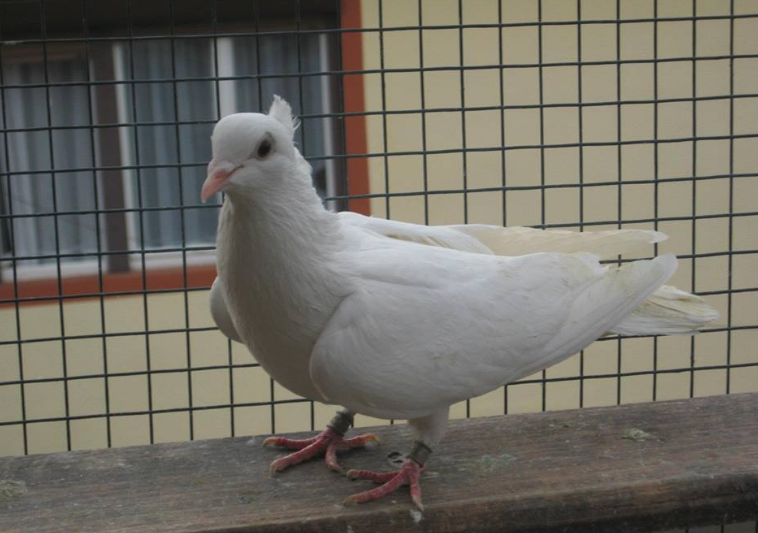
The Serbian high-flyer is a type of sport pigeon from the high-fly breed whose origin is considered to date back to Babylon. About 2000 before Christ, during the great migration of peoples, many tribes left Babylon and settled in the central Balkans. They brought with them culture and religion, and within it the Babylonian holy bird-pigeon.
For centuries, selected to "touch the sky" and bring the messages of the gods, this pigeon was still characterized by a high circular flight. The Romans would call all these peoples Illyrians, and their holy dove Columbia Illyrica. With the development of Christianity, Illyrian sanctuaries became Christian churches, and the Illyrian holy dove was named "Archangel" in accordance with Christian teachings in Serbia.
From that time, there are records that he was raised in the courts of nobles, in monasteries and churches, but also in towns and villages. A document from 1349 mentions pigeons, God's archangels on the estates of the Pec Patriarchate. The wife of King Uroš I, Jelena Anžujska (13th century), raises these pigeons at court, and paints her endowment with dozens of beautiful furry pigeons (Gradac, Brnjci).During the Turkish slavery, the Serbs continued to raise their "hairy" archangels, which according to the records the Turks call feslije, that is. kapasti. Unlike them, the Turkish breeds brought are te-fesi or without a tuft, mostly turners. Medieval priests raised pigeons as postmen, so the Illyrian pigeon was kept in Serbian monasteries. Wealthier Turks who kept these pigeons in Serbia during the Ottoman Empire (16th-18th century) procured them from the same source, i.e. from Serbian monks. In the areas from Hungary to Kosovo and Metohija and from Nis to Smiljan (Dalmatia), only the Serbian furry pigeon will be kept, which is characterized by a circular, peaceful and high flight, while in Bosnia and Macedonia, the Turkish breeds Dunek, Masarka and Izmir will prevail.
At that time, due to isolation, strains of Serbian high-flyers were developing, among which Belgrade, Nis, Smederevo, Krusevac would be specially shaped and established… During the great migrations of Serbs, this pigeon will inhabit all areas inhabited by Serbs. That is how it will reach Buda and Pest, Slavonia, Lika, Dalmatia. All today's breeds of hairy high-flyers from Budapest to Kotor and from Zajecar to Istria, originate from the old Serbian or more precisely Illyrian pigeon.Especially in Vojvodina, the Serbian pigeon will flourish. From town to town, from village to village, Serbian families will raise brought Serbian beaked high-flyers for centuries. The Belgrade pashaluq, and especially the city of Belgrade, will preserve perhaps the most important and strongest strain of the Serbian high-flyer. After the liberation from the Turks, the Principality of Serbia flourished, so the Serbian high-flyer stood out with his circular, high, but also extremely long flight by mixing strains.According to records from the history of this breed, even then we have flocks that fly at the heights of glittering spots for 7, 8 or more hours. That part of the history of this pigeon is documented by extensive historical material and records. Already in 1905, the Belgrade Society of Seen Pigeons was founded in Belgrade, in the tavern of Mića Miljković. In 1910, all Belgrade pigeon fanciers joined the old society and a new, large and Belgrade pigeon fancier society was founded. After the First World War, the First Society was renewed in 1922, 1924. II society was formed, and in 1928 III society. Excellent breeders from that period should be mentioned: Milan Stanisavljevic "Tisler", Mirko Njemec, General Barjaktarevic, Jovan Markovic, Bran Todorovic professor, Ziko Kapunac, Carlo Smith, Milan Bandist, Mito Uzar, Kolakovic merchant, Djoko Djordjevic, city of cassation. Belgrade, Karl Fospihal, Mihajlo Stankovic Colonel, Ilija Batic, Spas Petrovic, General Jankovic, Mico Miljkovic cafe…
Before World War II, Belgrade was by far the strongest pigeon center in the Kingdom of Yugoslavia.There were 4 societies and over 600 members of breeders in Belgrade at that time. "New forces" appear, younger pigeon fanciers whose flocks know how to "break the clouds" from morning to dawn.
After World War II, pigeon breeding was an extremely popular hobby. Competitions between the regions of Dorćol, Čubura, Zvezdara, Voždovac, Dušanovac, Senjak begin… and the Union of Belgrade will be formed, and a little later the Union of Serbia of pigeon breeders of Serbian high-flyers. The race will be standardized, regulations will be made and through actions this breed will be brought to a climax. Today, there are more than 600 breeders' associations in Serbia, and over 150,000 young pigeons of this breed are bred annually.From May 1 to September 30, every year there is a whole series of competitions, from social to federal. The winning flocks reach the "Durbin heights" in a circle and fly there for more than 12 hours.
Characteristics of a Serbian high-flyer
High and long flight (up to an altitude of 1500 m)
Circular flight (flies in circles with a diameter of 50 to 200 m)
Group flight (in flocks of 5 to 14 birds)
Colors: There are monochromatic specimens as well as specimens in many combinations of colors and patterns. It is available in all colors, from the basic one that looks like a domesticated wild pigeon (Columba livia domestica), to red, white or black. Regardless of the color, this pigeon has a specific feather crest on the back of its head (pigeons also say "kapa" or "ćuba"). Pigeons distinguish them by shapes and colors, each color and shape has a unique name, for example: bearded, leafy, Mavian, Silver (silvery), Schimler, white-tailed, white-bearded, long, colorful-tailed, colorful-winged, copper-eyed, muddy, etc. If the pigeon has a black color on the tips of the wings, then it is "Spitzler", and if it has only a white head and white wings, then it is "Capar". The dark shiny pigeon is "porcelain". These names vary from place to place, in different regions and regions. The races themselves also have their traditional names. The older races are "Arabs", and the newer breeds have a combination of fattening place and color in their name. So we have Apatin blue-heart, Novi Sad blue, etc. Specific color names and color combinations are common, dating back to the Turkish era. Since the pigeon is also genetically descended from the east, some names in use are also derived from the Turkish language (Tekir, Darcin, Karapal, etc.).
https://youtu.be/ZAGXH-zoy1w
Thank you for looking at and reading this article.
source opanak. rs
Tarabić's prophecy
The collection of prophecies that are claimed to have been written before the events that took place in the 20th century are skremlje and are also called skremlje prophecies.While France has its Nostradamus, Serbia has illiterate peasants from the Kremlin who have built a reputation by predicting the future, it is about the Tarabics, that is, about Milos and his nephew Mitar Tarabic.
Both Tarabićs died before 1900, and the priest of the village recorded their predictions.The Tarabićs foresaw the public's attention because they foresaw many political upheavals both in Serbia and in the world, because of these records, the members of the Obrenović and Karađorđević dynasty took all of Tarabić's prophecies seriously.
Tarabic was predicted to have Hitler come to power, both world wars, the establishment of Soviet rule in Tsarist Russia and the arrival of technology.
Mitar Tarabić lived in the period from 1829 to 1899, he was a religious person, he even had a priest for his godfather, and he told him all the details about his prophetic visions that occasionally appeared to him.That priest Zaharije Zaharih wrote everything in a small notebook, one of the predictions is related to the events until the end of World War I. After the assassination of the King and Queen, the Karadjordjevics come to power, then the war against the Turks will begin, and after the attack of 4 Christian States, our border will be on the river Lim, where we will avenge Kosovo.Soon after this, a new war will begin in which a lot of blood will be shed, the mobster across the river 3 times bigger than ours, will destroy everything in its path and penetrate deep into our country, hard times will come and our army will almost give up but suddenly.
An intelligent man on a black horse will take command and cry forward to victory, the fighting spirit of our army will expel the enemy across the river, but from the north will come an even larger army will overrun our country and devastate, for 3 years Serbia will be in complete darkness, our army will be abroad surrounded by the sea and fed by friends from the sea, they will return home by boat and liberate their country.Addressing the priest during the presentation of this prophecy, Mitar said that the invading army would come to Kren exactly on the day of his baptism, he would stay for 3 years and leave on the same day as they came to St. Luke, then he told him that he would not see the end of the war. that he will die.In addition to predictions for World War 1, he also made predictions for World War II to his godfather, the priest Zacharias.There will be murders of the one who sits on the throne of our Cast and will leave behind a widow and an orphan, then his cousin will come who will try to rule fairly and take care of his children but people still do not love him and he is accused of an unjust ruler, the army overthrows him from the throne and imprisonment, the English King and Queen will save his life.The whole of Europe is under the rule of the false antichrist, at first the Russians will not wage war, but when they are attacked, the army will strike back, there is a red Tsar on the Russian throne and men with a star on their forehead will appear.
In the war itself, a man with blue eyes appears on a white horse and a star will shine on his forehead thinking of Tito, he will gather a strong and powerful army and liberate occupied Belgrade and drive the enemies out of our country and our Empire will be bigger than ever.Russia makes an alliance with the great kingdoms across the sea and liberates the enslaved people of Europe.The priest said that the man with blue eyes would break off his love with our Russian brothers.
There were predictions that follow the end of the war, peace will rule the whole world after the great war, new states will appear, an international court will be formed, if war happens, the court will judge fairly.
The prophecy further says, a man with blue eyes will come to the throne and be strong and healthy and live for almost 100 years, on one occasion during the hunt he will fall off his horse and thus lose his leg and die from it.After the Second World War, people will forget God and love only their human intelligence, a man will make a box and inside it a tip of a device with pictures.After the Second World War, people will forget God and love only their human intelligence, a man will make a box and inside it a tip of a device with pictures,It's actually a TV.
Thank you for reading this article.
The biggest escapes from prison
Law enforcement should protect society by keeping those behind bars but on rare occasions these prisoners use their skills and wanderings to escape.Opportunities for escape are rare, but when that happens, it explodes like a bomb, a real scandal followed by great grandfather's attention.
Yoshi Shiratori not only escaped from prison but did so four times in three years.
After he was sentenced to murder, his sentence was life imprisonment, plus another 23 years. In 1936, Shiratori escaped from prison and was captured, but escaped again in 1942 and again in 1944. Before escaping from prison, he corroded handcuffs and the opening with the help of soup, but was caught again in 1946 and sentenced to death by a court in Sapporo, which is why Shiratori desperately tried to find a way and escape from prison.In 1948, the police arrested him again, but this time he himself admitted to the police that the fugitive was a convict, then his death sentence was revoked and he received 26 years in prison, and was eventually released on parole in 1961.
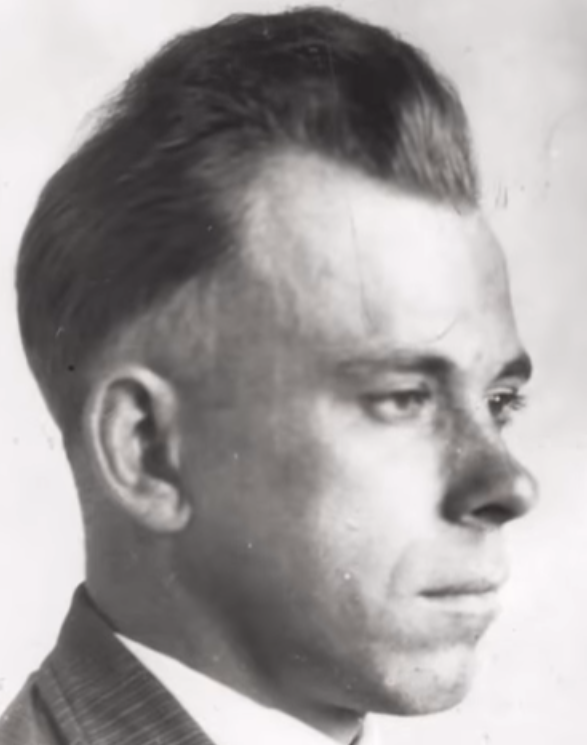
John Diriger was an American bank robber and murderer during the Depression era.
During his tenure, he robbed two dozen banks and four police stations, and escaped from prison twice in his criminal career.In a prison in Indiana, Diringer befriended a number of experienced robbers who taught him to be a successful criminal. After being released at the height of the Great Depression he immediately returned to crime. After the robbery of two banks in the fall of 1933, he was taken to the prison in Limija, and he used his time in prison to help a group of prisoners escape, which was reported during his stay in the previous prison.Prisoners looted rifles in their prison cells from which they escaped just 4 days after Dillinger was taken into custody. After escaping from prison, the group returned to prison and falsely introduced themselves to the prison officers, and then successfully rescued Dillinger from their cell.After another series of bank robberies, he was arrested again in 1933 and sent to Crown Point Prison.Police boasted of catching the fugitive but Diringer made a fake gun out of a piece of wood for which he used shelves in a cell and a razor to carve wood then tricked the guard into opening the cell with the help of a fake gun that he even painted black.
In the spring of 1943, a large escape of prisoners of war from the Stalg Luft III camp took place. Bushehr commanded the escape committee in the settlement of the north, where the British pilots were housed.
His plan included the construction of 3 large deep tunnels under the camp fences, more than 600 prisoners were involved in the construction of the tunnel, and Bushel aimed at 200 free prisoners. The tunnels descended 9 meters below the surface, the prisoners were very creative, they did not have shovels and cramps, but that is why the limestones became shovels.The wicks were made of old clothes, the sand of the excavated tunnel was discreetly loosened while the prisoners were walking around the camp.
Two hundred potential fugitives were divided into two groups, the first group of 100 fugitives known serial offenders was guaranteed a place and included prisoners who spoke German well or had a history of escapes.On Friday, March 24, an escape attempt began, instead of entering the nearby forest, the tunnel they were digging came out and was close to the line of trees and dangerously close to the guard tower.
But despite that, 76 men slipped through the tunnel to freedom before 77 fugitives were spotted at dawn on March 25th. What happened in the end? 73 fugitives were caught, of whom 50 were executed as an example. This story is screened there is also a movie about this.
Alfred George Hints, while serving a 12-year prison sentence, successfully escaped from prison three times, from a high-security prison.
His first escape was from the prison in Nottingen in 1958, where he managed to break through a locked door and a wall 20 meters high in order to reach his freedom.After escaping from prison, the media named him Houdini Hinch.During his time on the run, he traveled throughout Europe, working as a painter and decorating, but was arrested again on the 248th day after his release.He used that arrest to his advantage and sued the authorities and thus managed to be brought before the court, in court he asked to go to the toilet, he was accompanied by two guards, but 5 X after the escape he was caught at the airport.
Less than a year has passed since his third and last escape, then he fled to Ireland, where he lived under a false name for 2 years. He was once stopped driving an unregistered vehicle and was arrested again.
The Labyrinth Prison or Maiz Prison was the site of the largest prison outpost in British history, breaking its way out of the maximum security prison on September 25, 1983, when it is considered one of the most protected prisons in Europe.The prison fences were 5 meters long and the 7-meter concrete walls lined with barbed wire surrounded by a hub block, the solid steel doors prevented all exposures from the prison.The inmates had been planning an escape for several months, and two inmates, Geli Storey and Bobby Storey, began working as wardens to uncover weaknesses in the prison system itself.
Shortly after 2:30 p.m., the prisoner was taken over by the guards and the guards were taken hostage. I did not mention that 6 guns were loaded into the prison. the gate . When leaving the truck after two cars from the prison set up a roadblock, the prisoners escaped over the fence and on that occasion, 20 policemen were wounded.
Thank you for reading this article, sorry for the spelling mistakes.
A recipe from my grandmother
Grandma’s cake or biscuits are a favorite treat of all of us. They were prepared with a lot of love by our mother and grandmother according to a recipe that was passed down from generation to generation, but also jealously guarded. Grandma’s cakes are cold crunchy, warm soft, with an irresistibly sweet smell. As such, delicious, soft and fragrant, grandma's cakes are perfect for children. An irresistible airy treat with a crispy crust and an unforgettable scent.
sweet grandmother's cake
Pour chocolate over the sweet grandmother's cake, coat with cream, jam, enrich the taste with fruit and ice cream to taste, sprinkle with biscuits, powdered sugar, walnuts, almonds, coconut, decorate with whipped cream or simply enjoy their original taste and aroma with a cup of coffee or milk.
salty grandmother's cake
Spread sour cream, Russian or urnebes salad on your grandmother's salty cake. Add ham or kulen, cheese, lettuce, tomato or rocket, put another salty grandma's cake on top and with a glass of yogurt your perfect breakfast is ready.
Replace the meal with a nutritious sandwich from grandma's cakes! Put fried bacon and eggs or fried chicken fillet between two grandmother's cakes and enjoy a delicious meal with your favorite salad.
Combinations for sweet and savory grandmother's cake are numerous and depend only on your imagination, needs and desires.
Basic recipe for grandma's cake
COMPONENTS:
3 eggs
9 tablespoons sugar
1 vanilla sugar
a small cup of oil
1/4 l milk (250 ml)
1/2 kg of flour
1 baking powder
grated lemon peel
PREPARATION:
Whisk 3 egg whites until foamy.
With constant whipping, add sugar, vanilla sugar, egg yolks, oil, milk, lemon peel and finally baking powder mixed with flour. Stir until smooth. Bake grandma's cake in a biscuit machine. Fill them to your liking. Drizzle them with chocolate, spread with cream or jam, decorate with whipped cream or ice cream.
Grandma's chocolate cake
COMPONENTS:
1/2 liter of milk
300 g of flour
1/2 teaspoon baking powder
3 eggs
2 tablespoons sugar
1 vanilla sugar
100 g butter or margarine
2 teaspoons cocoa powder
3 cubes of cooking chocolate
grated lemon peel
cinnamon as desired
PREPARATION:
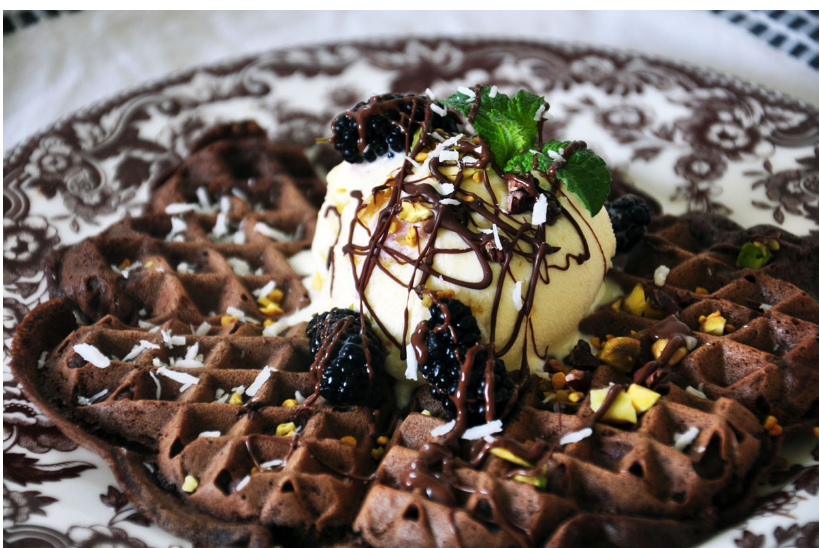
Whisk the eggs and add the sugar and vanilla sugar and continue beating. Add melted chocolate, cocoa, cinnamon as desired and lemon peel to the mixture and whisk. Pour milk into the mixture and lightly add flour with baking powder, stirring constantly.Whisk the mixture well to avoid lumps of flour. Finally add melted butter or margarine and whisk.Bake waffles. Pour the chocolate topping over the finished waffles. Preparation of chocolate topping .Heat sweet sour cream with sugar on the stove. Add chocolate cubes to the heated sweet sour cream and mix until a uniform, smooth mass is obtained.Remove from the stove and wait for the topping to cool. Pour over the waffles.
Thank you for watching this article, enjoy and enjoy.
Time for a little vacation
Hello dear friends, I want to thank you for the great support on previous articles, I was diligent in commenting, liking, reading articles, today is a short break on Saturday, today I am writing new articles. Have a nice weekend everyone.
I will share with you a funny video from the home series Happy People, the series was shot in difficult times, but whenever I watch, a smile always comes back to my face.
https://youtu.be/2RyWsOfAXeA
Thank you for watching this video, hello and see you soon.
source youtube channel Aleksa Petrović
Charlie Chaplin
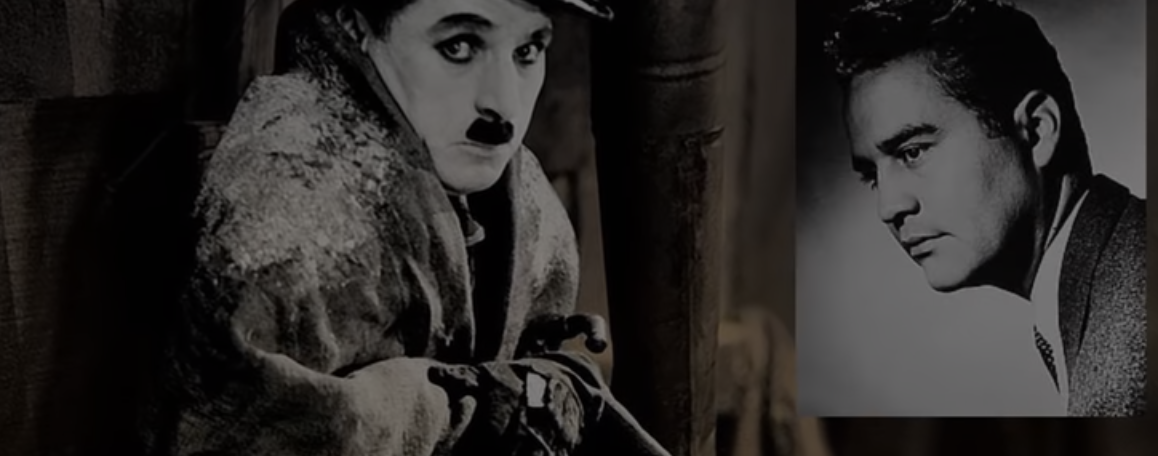
Nobody made us laugh and rejoice like Charlie Chaplin, he is known everywhere, some people today would recognize him only by his picture. Despite the fact that he brought us serenity and laughter every day, his real life was not funny.Chali Chaplin had a torturous life off stage from an early age until his late years when he was abused by the American Political Establishment.Charlie Chaplin was a clown who not only cried behind a painted face but screamed in his own way through a gloomy existence, Charlie Chaplin's father was also famous.
It might have been an honor for Charlie that his father was known but his father Charles got drunk and ruined himself with alcohol.Charlie Chaplin is left without a father at the age of 12, it was a tragic experience for Chaplin, but he did not feel it like anyone else, because his father did not give him the love and support that his son should feel.
But Charlie Chaplin was fascinated by his mother's career, it's not hard to imagine a little boy who wants to join his mother on stage at the age of five.Charlie Chaplin's wish came true in the worst possible way, during one of Hana's hustle and bustle of his mother while Charlie watched behind the curtain for half a song, she lost her voice.The manager flushed and pushed Charlie onto the stage this was the beginning of Charlie’s career.
This was the end for Charlie's mother, she went crazy as I understood it and was transferred to a psychiatric institution so Charlie practically remained very young without both parents and support. At the age of few, Charlie was forced to fight for a job in order to survive, he did a lot of horrible jobs, he was even a newspaper seller.At the beginning of the 20th century, he could return to the stage. In 1908, at the age of 18, Charlie Chaplin got the role of a drunkard in a comic sketch for a group of pantomime artists.Charlie Chaplin was liked by the Americans, in 1912 the producer McSennet signed for a young comedian to appear in the film, this time a great breakthrough was real.After Sennett signed with Charlie, the young star exploded, from 1912 -1914, San made 34 films in another film, created Trump's character, after which he later got the nickname Little Trump, this has nothing to do with today's Trump, and I first thought.In 1915, Charlie Chaplin signed for the Insight Studio and got his own voluntary department, in 1916 he had the highest salary in Hollywood.
Things went well for Charlie and continued for several more years. Chaplin was simply obsessed with Chaplin and gained the status of the most demanding man in Hollywood, Chaplin was able to remake every scene 100 times.Charlie Chaplin would play everyone’s role instead of directing and then he would say do it like this, fire the actors halfway through the film and restart the film that was crazy.Charlie Chaplin ran his production company until 1918 and made films that are still considered classics.
Unfortunately, the dark side of Charlie Chaplin appeared, he started seducing young girls, Mirbard Harris was barely 16 years old, he even thought she was pregnant and organized the marriage and later discovered that the pregnancy was not real, so he took revenge and did it. to become real so he divorced her he left it that way.He did the same with another girl.There were more scandals in his love life.Due to seduction, Chaplin will later be banned in several countries.Despite his private life, he became more and more brilliant in art, and in 1919, Chaplin founded the United Artist, where he continued to make films.When the Second World War broke out, Chaplin was not only famous, he was an icon, he considered himself untouchable, he even held speeches in honor of the Soviet Union.
Chaplin's private life comes to an exposition because of the allegedly pregnant actress Joan Barry, earlier this would have remained in the new ones, but because of the new law, Charlie Chaolin was arrested.Despite various tests proving that he was not the father, he was acquitted of the charges, she sued him for alimony, he got a picture and Chali Chaplin had to pay a child who was proven not to be his, his reputation was destroyed.Chali Chaplin lived in America for 40 years until 1952. He never had American citizenship.In the fall of 1952, he decided to visit Britain and stay in Europe for 3-4 weeks when he was to return. He was banned from re-entering.A real shame, Charlie Chaplin gave people his films and was able to resell heavy boils, and in return he was kicked out of his home.We come to the last decade of his life which consisted of ups and downs, he made only 2 more films on one side and on the other he created a happy family in Switzerland with a woman who was 18 and he was 54 and they lived together until of his death in 1977.
This would be the end of his sad life, but after his death, two gravediggers dug up his body and stole it for 11 weeks, asking for 600 thousand dollars for ransom, and his wife managed to catch them with the help of the Swiss police.
Thank you all for reading this article.
A secret recipe for the Pljeskavica cabin has finally been revealed
As a kid, I used to enjoy my favorite characters in the Sponge Bob cartoon every day, definitely one of the favorite cartoons of my childhood, I really enjoyed it.
I’ve always been bothered by one thing about whether Keba’s sandwich can actually be made in real life and what are the ingredients that make it so delicious.
Yes Yes Yes, I found a recipe for the famous burger, I was thinking whether to share it with you or save it for myself, I will still share it with you hahh.
WHAT YOU NEED FOR 4 PEOPLE:
Mixture:
olive oil
½ cups of onion
½ chopped celery stalks
1 teaspoon thyme
2 cups crab meat
¼ cups of mustard (best Dijon, but it will be fine and plain)
tablespoon of ketchup
¼ cups of mayonnaise
one egg
½ cups prezle prezle
pepper
sea salt
Other:
buns (preferably with sesame)
silver onion
4 pickles
2 tomatoes
4 slices of cheese (cheddar is best, but others can be)
4 lettuce leaves
tablespoon of ketchup
Pour a little olive oil into a pan heated over a medium heat. When heated, fry the finely chopped onion and celery in oil, then add a little fresh or dried thyme. Fry for about two to three minutes, until the onions are slightly softened, then remove from the heat.
In the bowl in which you have crushed the crab meat, add the onion and celery. Mix, then add mustard, ketchup, mayonnaise, pretzels, pepper, salt and break one egg into it all.
Mix the mixture well, so that it is not too dry, but not too wet. Then, shape the burgers and fry them, in a pan with oiled olive oil, over medium heat for about three minutes on each side. The goal is to give the burgers a beautiful golden crust.
Then, place the burger, salad, tomato rings, slice of cheese, cucumbers, onion rings on a flat or slightly baked bun, and finally cover with the other half of the bun coated with ketchup.
Pleasant!
Thank you for reading this article.


The story of a mysterious man.
After an unsuccessful attempt to become a monk, Grigorij Jefimović Raspućin became a wanderer who ended up at the court of Tsar Nikola 2, he was brought to the court because of his healing abilities, he is considered the most controversial person of the 20th century, who is he anyway?
Raspucin was born in Subir in 1869 and it is assumed that he never learned to read or write, but what is interesting is that people from his village said from an early age that he possessed supernatural powers, and his name Raspucin means interesting. -where two rivers meet and describes the area where he was born.On January 1, 1917, Rasputin's body was found trapped under the icy surface of the Neva River, he was shot 3 times and even his right eye was taken out. .On December 29, 1916, Raspucin received a strange phone call and said that he did not understand the voice, but he understood the message and the message was that his days were numbered.After his murder, Prince Felix Ius Popov claimed that he and four other people killed Rasputin, but he is not a murderer, because he states in his statements that he charmed the victim that day and Rasputin was visibly nervous after that strange phone call, regardless of it was not the first threat.
Raspucin was indeed in Jusup's house that day, there they prepared a great feast for him, he ordered his man to coat the food with cyanide his plan was to feed Raspucin with poison according to his allegations so much poison would be enough to kill the Elephant however at the calf autopsy Not the slightest amount of poison was found in the crack.Raspucin was indeed in Jusup's house that day, there they prepared a great feast for him, he ordered his man to coat the food with cyanide his plan was to feed Raspucin with poison according to his allegations so much poison would be enough to kill the Elephant however at the calf autopsy Not the slightest amount of poison was found in the crack.As the story goes on, it is very interesting to me, a man disguised himself in a crevice and went to his house to deceive the trail to convince everyone that he returned home that evening, after which they returned to remove the body, but something terrible happened.
Something terrible happened, Raspucin jumped abruptly and froze in his mouth, they shot at him a few more times and hit him with a rifle, what kind of man is he to survive all this and survive being thrown into the river, Yusuf said only then did I realize that this man it is none other than Satan himself.But this story does not match the facts, forensic expert Kosoroto claims that 3 bullet wounds were found on his body, but other gunshot wounds, but according to Yusup's testimony, 3 bullet wounds when they returned home, there were no wounds on the body none are close to the heart and in Yusup's statement it was that he hit right in the heart, where the bullets actually passed according to the autopsy the bullets passed through the stomach liver and kidney and skull.The bullet in the skull also exists in Jusup's statement, but it was hit from a distance in the back of the head and the wound was from the front.
The next part of Yusup's statement is that Raspucin moved even after the bullet in his skull and that his arms and legs were tied and his body was wrapped in cloth and then thrown into the river. According to the legend, Raspućin was still alive, but when he was found, his hands were untied and raised above his head, they say that he drove under water but drowned after that, the autopsy reveals that he had air in his lungs and that he was thrown alive into the water.
When Raspucin's body was found, there was visible evidence of beatings, which also did not coincide with Yusuf's statement, but these injuries were not the ones he suffered in the fight, but those after he was killed. his body floating in the water is also believed that the ice could have broken the rope with which his hands were tied these are just guesses. What is certain is that his body was found with severe wounds and whether it could not be determined from man or nature . Rasputin wanted to bring peace between Russia and Germany in World War I, so there is a theory that he was killed by the British intelligence service.Yusupov's British friend Rainer had a caliber revolver that hit Raspucin in the head, but Yusupov denies that he was there, there is a belief that Rainer fired a deadly shot at Raspucin on the orders of the British intelligence service. The British government has denied that Rainer had anything to do with Rasputin's death, stating that Rainer identified the killer with the story for small children and may be telling the truth.A group of soldiers exhumed Raspucin's body, set it on fire with gasoline, a whole horde of people came out to see his body burning, everyone saw his body disintegrate in the fire, Raspucin foresaw all that.
There are many more theories about Rasputin's death, and there is also a theory that Yusup wanted to make himself a hero, so he described his death this way, everything will remain a mystery.
Kukurek
Kukurek healed heroes, poisoned emperors and won wars. According to beliefs, it has magical and healing properties, and although its flowers are beautiful and large, and they really represent the first newspapers of spring, no one mentions it for such beautiful features ... Would you give a loved one a bouquet of the first porcupines? People somehow opt more for violets and visibabes, and not without reason, because we remember this plant, which entered many ancient legends through a small door, not for its beautiful flowers, but for its strong poisons.Kukurek is one of the first "messengers" of the new spring. It blooms already in January or February, depending on the climate. It is a perennial plant up to 60 cm high, with beautiful large flowers of green, purple, white or pink color.
It inhabits forest areas and is very common so it can easily be found in forests around cities and settlements. Even in the middle of winter if there is not much snow we can discover a place where a new flower stalk will emerge because many species of corn have so-called ground leaves that are evergreen and while the flower stalk withers and rots the ground leaves stoically endure winds and snow and stay green throughout winter. . The ground leaves have a long stalk, on the upper part of which there are palm-shaped narrow and long leaves, so that the whole leaf looks like a small dark green palm tree that protrudes under the snow. In addition to these "palms", new stalks and flowers of corn will sprout in February.
And although it is one of the first spring plants, cornflower simply never enters that well-known "set" of spring plants, which includes visibabe, violets, saffron and hyacinths. A person simply does not have the habit of giving a bouquet of corn to a loved one, for example! And such a gift would probably be understood by some as an insult. People have always been wary of this beautiful and attractive plant, and of course there is a justification for that - because corn is better known for its poisonous nature than for its attractive appearance. The main reason for that is several chemical poisons that are found in the tree and rhizome of this plant. These poisons are not at all naive and in some species of corn, which fortunately do not grow in our country, they are so strong that they can lead to severe disorders and even death. It is known that cows or sheep that inadvertently eat corn on the pasture can become seriously ill.The healing and poisonous properties of corn have been known since ancient times. The scientific name for corn is Helleborus, and it comes from the Greek word "heleboros". Under that name, the Greeks meant both corn and a completely different plant called hellebore (genus Veratrum). Kukurek was called black heleboros and čemerika white heleboros. Some believe that the word heleboros means bad food or poisonous food, but there are also those who think that heleboros means food for goats or food for deer. The latter link their interpretations to the allegations that epilepsy was treated by patients drinking the milk of goats fed corn.
Judging by old records and legends, corn was a very important plant of ancient times, especially because of its poisonous and healing properties. The ancient Greeks used it in the treatment of madness and madness, as well as in very efficient and fast poisoning of the enemy. The main toxins of corn are helleborin, helebrin and helleborein, and they are also responsible for the deadly reputation of this plant.According to one legend, Melampod from Pila, who knew a dumb language, cured the daughters of King Preto from the madness that overwhelmed them precisely thanks to the medicine he made from corn. In exchange for the medicine, he asked for and received a third of the kingdom of Argolis.
Hercules (Hercules), an ancient hero, when he went mad from time to time, was also cured thanks to corn. He was cured by Antikiros, who made a medicine from a very poisonous black corn (Helleborus niger). Thanks to Heracles' healing, Antikiros became a very famous healer, and the settlement in the vicinity of which the black corn grew was named Antikira after him.
But corn, as it brings healing, can cause death in an even easier way. Some historians believe that Alexander the Great died from an overdose of corn, which he took as a medicine for a long time. The case of the first chemical war in the history of European civilization, which was fought with corn, is also known! According to legend, the Phocians of the city of Cyrus intercepted and plundered pilgrims going to Delphi for years. The Delphi rebelled against that, and after a couple of years of "fighting" and quarreling, a war known as the First Holy War began. It lasted for 10 years (585 to 595 BC) and finally the Phocians were defeated by the warriors who defended Delphi poisoning their water with corn, and that was the one brought from Antikyra! The soldiers drank that water and all of them got sick from stomach problems and heart arrhythmias, because corn poisons mostly disturb the work of the heart, so they were not able to fight further and their city of Kira was finally conquered.One of the most famous and most widely used species of corn is the one for which Antikira became famous - black corn (Helleborus niger). It is extremely poisonous but also very suitable for creating various hybrid species that are grown in gardens.
So today there are various varieties of garden corn that only slightly resemble the "original". They are less poisonous and have much nicer and larger flowers. Kukurek is especially popular with gardeners because it blooms even in January when the gardens are usually deserted and cold. Precisely because of its great resistance to frost and winter and flowering in the middle of winter, when the time is not right, black corn is also known as the Christmas rose, because in England some varieties bloom at the end of December, ie. somewhere around Catholic Christmas.
According to one legend, the corn called the Christmas rose is of angelic origin and originated 2000 years ago when a girl named Madelon came to Bethlehem to greet the newborn Jesus, but when she saw the gold, incense and myrtle (myrrh) brought by the three Sages to gift to Jesus, she was very sad because, unlike them, she had nothing to give him. Then the angel saw the weeping girl, came to her and touched the ground with her wings, and at the place of that touch, large white flowers of a Christmas rose sprang up, which Madelon picked and gave to the newborn god.
It is well known among our people that corn is both a poisonous and medicinal plant, and it has often been given various magical properties. According to Veselin Cajkanovic, they put corn roots in water and sprayed children with them on holidays. It was used as a medicinal herb and was traditionally picked on Biljana Friday (Friday before St. George's Day) and on Cveti (the week before Easter). It is believed that corn brought misfortune if it is brought into the house before St. George's Day, and if it is brought on St. George's Day, then it will protect the house from sorcery and evil eyes.
Cajkanovic states that in some parts, children sing the magic song "Kukurek from the hill calls: marry me!" A beautiful rose extends its hand: take me! ”
The corn belongs to the Ranunculaceae family, and includes about 20 species that mainly inhabit Europe and the Mediterranean, and the largest number of species is found in the Balkans.
Tibetan corn (Helleborus thibetanus) grows in Tibet.
In our country, 4 species of corn are known, of which the most common is the fragrant corn Helleborus odorus. Helleborus serbicus, or Serbian corn, is an endemic species that grows only in Serbia.
Black corn or Christmas rose Helleborus niger, which is extremely poisonous and whose use leads to heart disorders and often death does not grow in Serbia

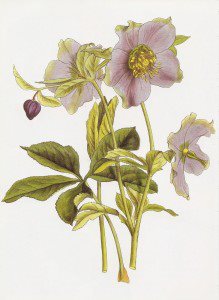
 @milos1998