 @mc5punk
more from that month
@mc5punk
more from that month
Short story: The Weaver of Memories
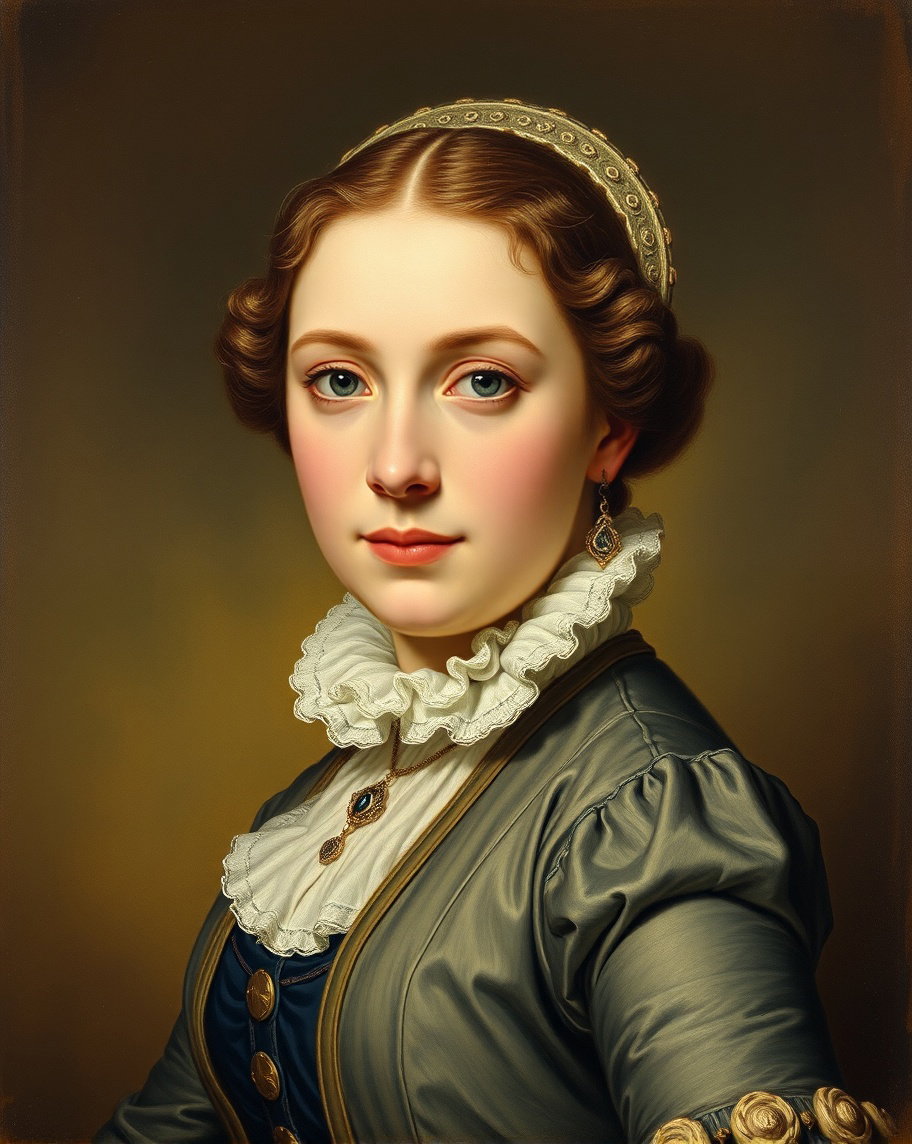
The city of Hierapolis stood like a grey stone reliquary, its cobbled streets guarded by statues of exemplary mothers carved from ashen marble. Among those figures with serene faces and prominent bellies, Luna walked with her wool basket hiding rolls of silk dyed with pigments extracted from night beetles. His workshop—an abandoned cistern under the old inn on the Street of Whispers-smelled of ancient moisture and lantern oil. There, between arches of worm-eaten brick, his ebony loom sang stories that no book dared to record. The first to arrive was Marisol, the baker. She was carrying among her bales of flour a manuscript sewn with saffron thread: the memoirs of her great-great-grandmother, midwife of the rebels of Cerro Alto. Luna taught her how to weave the lines into the fabric of tablecloths, using knots that could only be read by immersing the fabric in lemon water. Soon others joined: Irene, the blacksmith, forged darning needles with the steel of broken chains; Luciana, twelve, memorized the songs of the washerwomen to turn them into embroidery patterns in Morse code; Doctor Vega, expelled from the Medical College, drew diagrams of female anatomy on the margins of the bridal tablecloths. Every Thursday, while the Matriarchal Guard carried out its round of belly inspection, they wove chronicles of astronomers who had mapped comets from convents, or of engineers whose bridges survived under rivers like steel skeletons. The conspiracy took the form of an ephemeral installation. Luna had grown phosphorescent lichens in the cesspools of the city, and with them she impregnated the hems of twenty tablecloths. They hung the fabrics at the dawn of the vernal equinox, when the guards celebrated the Fertility Ritual. In the Square of the Docile Daughters, the mantle of Valentina (the surgeon) showed golden arteries that connected forming a map of underground bunkers. Over the Bridge of the Loyal Spouses, the Ixchel fabric shone with a constellation that marked the location of the Forbidden Sheet Music Archive. The women pretended to admire the designs while deciphering messages with fingertips trained in reading textures. The Matriarchal Council acted at dawn. Welded with olive oil torches they burned the fabrics on a pyre that illuminated the city with violet flashes. But Luna had mixed spores of Omphalotus olivascens — a bioluminescent fungus - into the dyes. Where the ashes fell, blue fungi arose that, when stepped on, gave off a dust that permanently stained the watchers' pupils with night. While the authorities were blinding, the women collected spores in empty perfume bottles. With them they painted murals on the walls of public bathrooms, where the stories shone only under the light of menstrual lamps. Five generations later, an apprentice shoemaker found a message woven with hair on the lining of some boots from 1892: *"Resistance is not declaimed, it is sewn"*. In Hierapolis — now called Heliopolis - girls learn chemistry by mixing hair dyes, and loaves are baked in the shapes of starry wombs. No one remembers Luna, but every time a woman knots a red thread on her left wrist, the walls of the cistern whisper complete biographies in stitch code. Creativity had proven to be the most effective virus: it mutated, adapted, and above all, was transmitted in the daily act of creating. Source of the images. Image created with Starryai.
No comments yet