 @mc5punk
more from that month
@mc5punk
more from that month
Short story: The Tree That Kept the Night
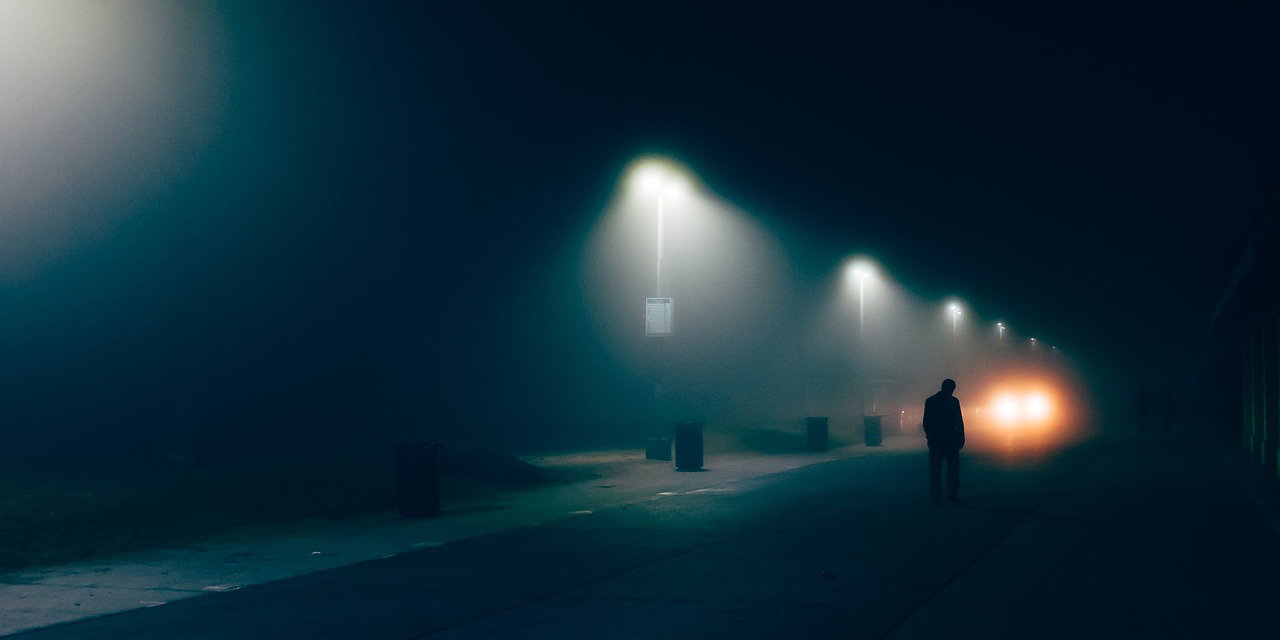
The rain had begun as a whisper and within an hour had turned the city into a map of reflections. The streetlights cast trembling light over Avenue 12 at 8th Street, in the Los Olivos neighborhood, and the asphalt answered with puddles that held inverted fragments of windows and faces. The tree on the sidewalk, an old ahuehuete whose branches stretched like tired fingers, stood out against the overcast sky. That night its figure seemed older and more patient than any human witness. The first report came from someone who did not seek to be a protagonist. Ricardo, a delivery driver who knew every corner by heart and liked to finish his rounds before the heavier rain, stopped his motorcycle out of habit when the silhouette looked strange. At first he thought a plastic bag had become caught in the branch, tossed by the wind. He approached with his phone’s flashlight; the light first traced the outline of a body. “Goddamn,” he exhaled, more to himself than to the world. “This isn’t right.” His pulse raced with the urgency of someone who still trusts disbelief. He backed away, turned on the bike’s signal, and his phone searched for the emergency number before he could change his mind. He didn’t know that, minutes later, another voice would join the silence. María, who lived on the third floor of the building across from the tree, had stepped outside for a cigarette. She liked watching the street from the shadowed doorway; it was a habit that let her feel the city belonged to her for moments. That image pierced her in the first second: an inert form, suspended, a scene that defied any immediate explanation. “My God!” she shouted, the exclamation shredding the slow pulse of the night. “Help! Please!” The screams acted like a magnet. Neighbors who did not know one another found themselves at the edge of the invisible line separating everyday life from horror. Some arrived in pajamas, others with coats still unbuttoned; all brought a fragment of the community: Julia, the single mother who always left at seven with the shopping cart; Don Ernesto, the retired man who repaired radios; and a group of young people returning from the corner store. The lights of phones summoned the night’s soul and lit it with restless flashes. “Don’t touch him,” Ricardo muttered through clenched teeth when someone moved too close. “Do not touch him.” The sirens took as long as the neighborhood needed to fully wake: mothers’ voices, a dog’s bark, the murmur of those who always expect the worst and name it anyway. When the patrol car arrived, they set the perimeter with yellow tape that flapped like tongues. The police handled the scene with measured movements, because they had learned that haste spoils evidence. “Step back, please,” an officer ordered, his voice a barrier. “This is a scene. We need space to work.” The scene was handed over to a team of investigators who worked with the cold mixture of professionalism and fatigue that nights demand. They began to extract the human detail from the setting: photographs, measurements, notes passed from hand to hand. Every small object was interrogated. A buckle, a piece of rope, a blurred footprint in the wet earth—everything gained value as if any of those pieces could hold the truth. “There’s mud here,” the forensic technician said in a neutral tone that forced everything into objectivity. “Note its position. Does it look like a struggle?” “There’s no apparent sign, but we’ll photograph everything,” the patrol chief replied. “Get the medical examiner here.” People watched from afar, encapsulated by their own curiosity and by the imprecise ethics that govern involuntary spectacle. Some murmured stories, mixing suspicions with memories: a quarrel heard on a balcony at three in the afternoon, a group of kids arguing outside the corner store the night before, a car that passed with high beams at midnight. The community narrative wove a web of possible causes that competed in plausibility and malice. “My girl told me she saw him with some guys two nights ago,” Julia confessed, her voice breaking. “She said he looked woozy.” “Do you recognize him?” Don Ernesto asked, curious and horrified at once. “No, I don’t know him,” she said. “But I saw him on the street last week.” The rain intensified, and faces hardened. Each drop seemed to erase evidence: washing shoes, fading footprints, making the yellow tape stick to the pavement. Time became an enemy working silently to undo proofs. The investigators knew it and acted with contained urgency. “Get the security cameras from the corner building,” the technician ordered. “If someone passed by here, we’ll see them.” “Requested,” a policeman replied, typing into his device. “Note the exact time of the discovery.” For a moment the night allowed the city to breathe denser air: conversations at windows, glances between couples calculating whether the horror might reach them too, and children, guided by curiosity, peering with more bravery than prudence. At one window, a teenager covered her mouth with her hands and said to her friend: “Do you think it was suicide?” “I don’t know,” the friend answered. “He didn’t seem like someone who… I don’t know.” As the forensic team and police worked, a fragmentary story of the young man began to take shape. No identification was visible at the scene; he was identified by clothing and later testimony. Investigators spoke with the corner store, the bar on the corner, and acquaintances. Piece by piece, elements accumulated, but none closed the primary question: choice or violence? The technician, with the sagacity of someone who has seen men and fates, described the body’s posture, the presence of marks that could indicate strangulation or merely the weight of the body in the noose. The medical examiner, who would arrive shortly, would be the one to articulate facts in cold terms: dead as a result of… a pause required for the autopsy results. That pause demanded patience and fed theories. “Until we have the autopsy, we can’t say more,” the investigation chief said. “Don’t fuel rumors.” Still, rumors swelled. One group said they had seen a man loitering the previous night; another insisted there had been an argument in an apartment on the block. Human voices that once seemed comforting now fragmented into suspicion. Some pointed to suicide with the moral distance of those who judge from afar; others, more cautious, mentioned the possibility of third-party intervention. “If that’s the case, someone left him here intentionally,” Don Ernesto murmured. “This isn’t a place where someone removes their life and expects to be unseen.” “Let’s not rush,” Julia replied. “Sometimes people decide in silence, without telling anyone.” The rain, relentless, kept washing sidewalks and fragile memories. Time, unforgiving as the night, forced the neighborhood’s residents to return indoors with the knife of unease lodged in their throats. Some shut their windows and heard the night’s footsteps as if expecting another visit. Others, like María, remained in the doorway, bound by the need to know. “I won’t sleep easy,” Ricardo said finally, the certainty pushing through his fatigue. “I saw things I don’t want to have seen.” “Neither will I,” Julia murmured. “It’s like the street changed us again.” When the medical examiner arrived, the scene took on the definitive tone that science imparts to tragedy: thorough collections, detailed photographs, descriptions that brooked no melodrama. The procedure had the rigor of one who transforms mystery into evidence. Bodies, however, do not speak; they only provide data that experts must interpret. “It’s best not to speculate to the press,” the chief instructed. “There are already enough versions circulating.” Cameras, testimonies, and material evidence would, in the following hours, begin to form a picture that might point to a cause. The forensic team said they would have a preliminary report soon on whether it was suicide or if third parties had been involved. That phrase, repeated like a fragile beacon of hope, offered the neighborhood a chance to close the wound or, at least, to understand it. As the early morning thickened, teams finished their work and the scene was released with the delicacy of closing an open wound. The body was carried away, wrapped with the same discretion as the night. The yellow tape was taken down and some neighbors returned to their homes, carrying stories that from now on would belong to the neighborhood’s collective memory. But the tree remained. Its trunk, blackened by rain, stood as a mute witness. No one touched it that night; no one dared erase it from the landscape of memory. In the silence that followed, and in the conversations of the next day, the scene would be retold and recounted, each version adding a new shadow. In the end, as the city tried to resume its rhythm, an uncomfortable certainty lingered: some questions do not accept immediate answers. The chief’s closing line—“in the next few hours the cause will be determined”—floated like a fragile lighthouse. The night, which had guarded the secret for hours, had handed it to science and to the community, but not to peace. And under the persistent rain, on Avenue 12 at 8th Street, Los Olivos learned a lesson it did not want to learn: certain truths take time to reveal themselves, and the city always remembers in silence. Source of the images. https://pixabay.com/es/photos/oscuro-gente-hombre-para-caminar-2602656/
No comments yet