 @mc5punk
more from that month
@mc5punk
more from that month
Short story: The forgotten inheritance
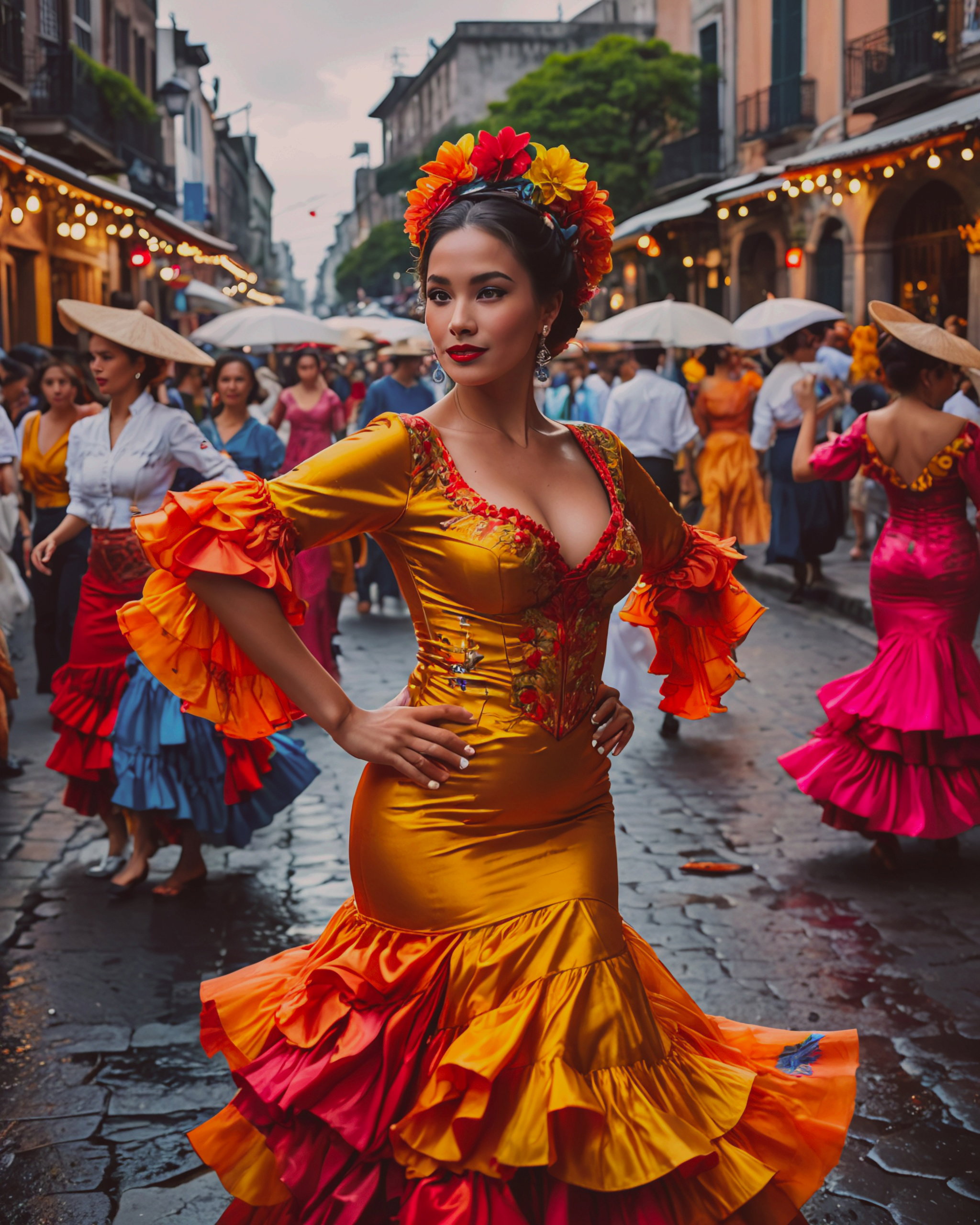
In a small coastal town in the Philippines, where the sound of the waves intertwined with the murmur of the wind, lived Elena, a nineteen-year-old girl with a deep passion for literature. Since she was a child, her grandmother used to tell her stories about the time when the Philippines was part of the vast Spanish empire. The narratives spoke of a time when Spanish was the language of government and culture, and where the Manila Galleon sailed between the coasts of his home and the distant lands of Spanish America. Elena used to sit in her grandmother's rocking chair, listening intently while the old woman related how Spanish merchants brought with them not only goods, but also ideas and customs that were intertwined with local traditions. However, as she got older, Elena began to notice that Spanish had begun to fade in her community. American influence had imposed English as the dominant language, and many of his friends barely knew a few words in Spanish. One day, while exploring the local library, Elena found an old book of poems written in Spanish. The words danced before her eyes, evoking images of distant landscapes and shared traditions. Determined to rediscover her heritage, she began researching more about the connection between the Philippines and Latin America. Her search led her to meet José Dalisay, a renowned Filipino writer who had dedicated his life to preserving literature in Spanish. Elena felt nervous as she approached him to ask for an interview. In a cozy cafe in the center of Manila, they met for the first time. "Mr. Dalisay,“ Elena began with a mixture of shyness and determination, "I have read about your work and how it has influenced Philippine literature. I would like to understand more about the role of Spanish in our culture.” Dalisay smiled kindly. "Spanish has been an integral part of our cultural identity. Although my generation did not have the opportunity to learn it as we should, its influence is felt in our works and in our way of seeing the world.” "Do you think we have lost something important by stopping using it?"Elena asked, looking to delve into her thoughts. "Without a doubt," Dalisay replied, looking out the window as if searching for answers on the horizon. "Language is a vehicle for culture. When we stop using it, we also lose the stories and traditions that come with it. It's a painful loss.” Elena nodded, feeling the weight of his words. “I want to do something about it," he said determinedly. “I want to revive the interest in Spanish among the young people of my town.” “That is a noble cause," Dalisay said. "But remember that it's not just about the language; it's also about reconnecting with our cultural roots. I encourage you to go ahead with your project.” With renewed energy, Elena decided to look for more information about the connection between the Philippines and Latin America. That was how she got to know Javier Galván, director of the Cervantes Institute in Manila. During their meeting at the institute's facilities, Elena raised her concerns with him. "Señor Galván,“ she began, "I have been researching about how Spanish has influenced our culture and I would like to know more about your perspective.” Galvan smiled and offered him a seat. "Of course, Elena. Spanish was the language of the government during the Spanish colonization and had a significant impact on our society. However, after the American occupation, its use declined rapidly.” “Why do you think that happened?"Elena asked curiously. “When the Americans arrived, they imposed English as the official language,” Galvan explained. "This led to a decrease in the use of Spanish in schools and in everyday life. But there is still a strong cultural bond with Hispanic America; many Filipinos feel that connection.” “That's what I want to highlight," Elena said passionately. "I want to organize a literary festival to celebrate our Hispanic heritage and show how Spanish is still alive in our culture.” Galvan nodded approvingly. “That's a wonderful idea. A festival can be a great way to attract young people and remind them of their roots.” With the moral support of Dalisay and Galván, Elena dedicated herself to organizing the literary festival in her coastal town. He spent weeks planning every detail: he invited local writers and cultural experts to talk about the impact of Spanish in the Philippines and how Chabacano - a Creole language that had emerged from this cultural mix- was still alive on the streets. The day of the festival finally arrived. The village was filled with vibrant colors, joyful music and infectious laughter as the inhabitants gathered to celebrate their shared heritage. During the opening of the event, Elena took the microphone nervously but also with determination. "Welcome everyone," she began in a clear voice. "Today we celebrate not only our shared history with Latin America but also our cultural legacy that endures despite time.” Applause echoed as she continued: "Through Spanish and our Creole traditions like chabacano, we keep the stories of our ancestors alive.” Throughout the day, participants attended writing workshops in Spanish and listened to old stories told by local storytellers. The atmosphere was filled with nostalgia and hope. At the end of the festival, Elena watched as her neighbors exchanged ideas about what they learned during the event. He approached a group where some young people were animatedly discussing the literary works presented. “What did you think of it?"Elena asked enthusiastically. “It was amazing," said one of them named Marco. "I didn't know we had so much cultural wealth related to Latin America.” "Yes," added another young woman named Ana. “I would like to learn more about Spanish; I feel that it is part of me.” Elena's heart was filled with joy when she heard those words. He had accomplished more than just an event; he had ignited a spark of curiosity about the shared history between the Philippines and Hispanic America. While the last rays of the sun illuminated the town at sunset, Elena sat by the sea reflecting on what happened that day. He had created a space where stories could be retold; where young people could reconnect with their roots. The cultural connection would endure for future generations, reminding them that although time had changed the spoken language, the roots were still firm and vibrant beneath the surface. The story was not lost; it was simply waiting to be rediscovered by those willing to listen to it and share it again. With a satisfied smile, Elena felt that she had started a new chapter not only for herself but for her entire community. Source of the images. Image created with Starryai.
No comments yet