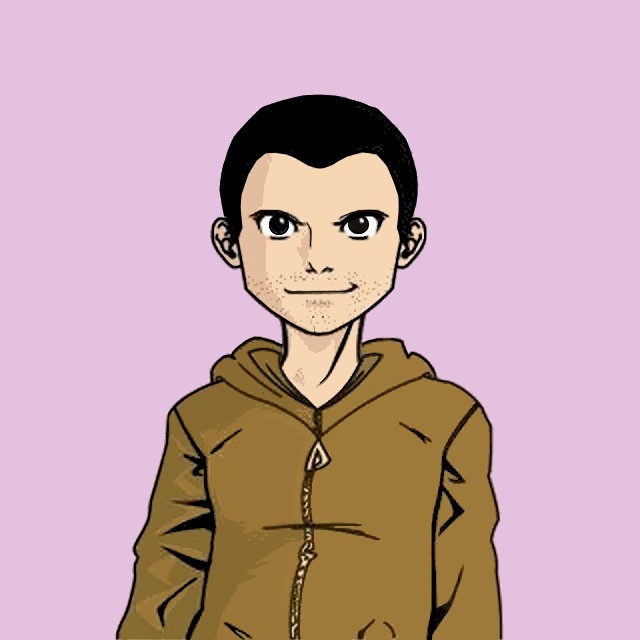
 @mc5punk
Short story: The House of Stored Greetings

When she was a child, Martina believed the world was made of invisible rules that everyone else knew except her. There was a map in other people’s heads: paths for speaking, gestures to show warmth, timetables for laughter. She learned those maps as one learns borrowed songs: with a tight throat, measuring every note so as not to be off-key. The teacher forced her to shake hands and the touch became a bridge of thorns; at the family table, the gestures that sketched affection felt like phrases in a language she could not understand. The early years slipped by between attempts and mistakes. On the school playground she watched other children join games that seemed to have implicit instructions: smile at a certain moment, touch a shoulder to include someone, lower your voice when saying goodbye. Martina imitated, practiced in front of a mirror, corrected herself with discipline, but when it came time to perform something there was a friction: the gesture became mechanical, the smile stuck, and her chest tightened. There were days when anxiety settled like a constant buzzing, and at night she wondered why her body and mind could not find the same rhythm as everyone else. At home, well-intentioned attempts to “help” her were often wrong. Her parents repeated formulas they believed useful: “Shake hands to seem friendly”; “Don’t shut yourself away, learn to relate.” The insistence had the opposite effect. By forcing her to shake hands they turned contact into a test that triggered her internal alarm; the touch felt invasive, and she pulled back her hand in shame when the adult insisted. Despite the love, her family didn’t realize the norm they defended was a net that smothered her. Years later, in adolescence, Martina attended a talk where Dr. Camila Ríos spoke about neurodivergence. It was not in a closed academic class but in a community hall filled with people with expectations and questions. The doctor’s voice had the calm pace of someone who weighs every word so it won’t lose its meaning. “It is not an anomaly within a ‘typical’ system,” she said, and those words sank deep. For Martina it was as if someone had quietly untangled a ball that tightened around her: the notion that brains can be different without being defective offered a new map where she finally appeared as a legitimate part of the landscape. The idea that all human beings have unique brains — structures with similarities but diverse functions — transformed her perspective. Suddenly, the way she processed stimuli stopped being a flaw and became a natural variation. The word neurodivergence brought relief that did not erase past pain but gave it meaning: what had been presented as an impediment began to be seen as a particularity that required adaptation of the environment, not necessarily correction of the individual. With that shift came a new form of intervention: the functional and naturalistic model. Instead of imposing protocols that sought to homogenize behaviors, professionals proposed realistic goals centered on the person’s well‑being and autonomy. Martina began attending sessions where the objective was no longer to “look like others” but to acquire skills useful for her life. She learned to structure her routines —small dreaded rituals that, when organized, stopped destroying her day—, to identify signs of sensory overload, and to step away before anxiety overwhelmed her. The therapists and professionals who accompanied her practiced active listening. That listening was not passive; it involved asking, validating sensations, and building strategies together that respected her identity. In one session, occupational therapist Sofía helped her create a personal “containment plan”: signals to ask for time in meetings, a backpack with calming objects, and a short script to explain to new acquaintances her preferred way of greeting. Sofía said, “We work on useful goals: routines, self‑regulation and strategies to participate in groups without forcing identity.” The phrase became daily practice. People appeared around Martina who, in different roles, wove a support network that did not seek to erase her but to empower her: - Héctor (Martina’s father): “At first I didn’t understand why she rejected the handshake. Now I see the peace it brings when we let her choose.” Héctor learned to hold back the impulse to correct and to ask before acting; his pride grew as he saw his daughter’s calm when she could decide how to present herself. - Rosa (Martina’s mother): “It was hard to unlearn. Today I celebrate when Martina finds her way of saying ‘hello’ without anguish.” Rosa cried many times in private before allowing herself to change her approach; she now shares with other mothers the experience of putting herself in the child’s place. - Daniel (childhood friend): “I thought it was shyness until she explained her way of connecting. Since then we bump fists and talk much more.” Daniel became an everyday ally, willing to adapt small forms of relationship that deepen their friendship. - Sofía (occupational therapist): “We work on useful goals: routines, self‑regulation and strategies to participate in groups without forcing identity.” Her practical, respectful approach provided concrete and measurable tools. - Mateo (workshop colleague): “Seeing Martina organize her day inspired me to be more consistent with my own routines.” The influence was reciprocal: Martina’s visible progress motivated others to reflect on their practices. - Dr. Camila Ríos (specialist in Child Neurodevelopment): “We do not seek to homogenize; we promote meaningful skills under the active listening of the person.” Dr. Ríos promoted a discourse that became practical policy inside schools and intervention centers. The transformation was neither immediate nor linear. There were setbacks, nights of sadness, and episodes when social pressure returned forcefully. But each step, however small, left a mark. Martina remembered the first time she dared to say aloud that she preferred a fist bump to a handshake: the initial uncertainty, the expectant silence, and then the acceptance of the person receiving the explanation. It was a moment of self‑empowerment: naming a need and seeing it respected. Nostalgia accompanied each advance like a soft shadow. She recalled afternoons when her mother sat her in front of the television to “practice smiles,” or family gatherings where her silence was interpreted as distance. That nostalgia was both grief for what was lost —countless hours of anguish, the feeling of not belonging— and recognition of the resistance that had sustained her. That ambivalence was important: without memory of the pain, gratitude for the present would not have had the same depth. Martina also found refuge in reading and writing. Recording her sensations allowed her to order chaotic thoughts and construct narratives that represented her better than any clinical label. In those texts she wrote about small rituals that soothed her: arranging pencils by color, listening to a specific song before leaving, having tea at the same hour each evening. Those acts, once dismissed as quirks, began to be understood as self‑regulation strategies with functional value. The community organized around Dr. Ríos —the organization “Falta Tu Voz” (You’re Missing) — became a meeting space where diverse voices could speak. Meetings were marathons of stories mixing anger, tenderness and concrete proposals: - Clara (activist mother): “My son found his voice when someone finally listened. That changed everything.” Clara worked to have local schools include training on neuroaffirmative approaches and organized talks where families shared successful practices. - Iván (neurodivergent teenager): “Being asked how I feel makes me feel respected. I don’t want to be fixed; I want tools.” Iván went on to lead peer groups exploring alternative coexistence strategies, and his testimony was crucial for teachers to rethink expectations. - María (educator): “We changed classroom goals: don’t force gestures, teach real coexistence strategies.” María restructured her curriculum to prioritize autonomy, conflict resolution and practical skills that encouraged participation without homogenizing. At those meetings, the word dignity occupied a central place. Participants debated not only therapeutic techniques but rights: the UN Convention on the Rights of Persons with Disabilities was frequently cited as a framework legitimizing autonomy and dignity regardless of support needs. Political questions arose: how to adapt public spaces so difference is not an obstacle? How to train teachers in active listening? What does it mean to design educational goals that prioritize well‑being over appearance of “normalcy”? Martina attended those meetings feeling like someone returning to her hometown: the streets were familiar, but signposts and facades now bore new words. There were testimonies that felt close —the mother who fought for a respectful diagnosis, the elderly man who finally found words to name his life—. In each voice she recognized pieces of her own story and, at the same time, understood that her experience was part of a larger movement seeking to reconfigure society’s view of neurological diversity. In time Martina learned to articulate her boundaries calmly. She learned to ask for space when overstimulation threatened to break her composure; she learned to explain her needs to coworkers and negotiate collaboration methods that respected her pace. The term “useful practices” took shape in concrete actions: flexible schedules, alternatives for interaction in group activities, allowing written responses instead of oral ones, providing low‑sensory spaces. Those measures, simple in appearance, transformed many people’s daily experience. The impact also reached her family. Héctor and Rosa, once preoccupied with appearances, redefined their priorities. They began to share with other parents strategies that worked: ask first, offer options, validate emotions without imposing solutions. The pride of seeing their daughter make her own decisions replaced the urgency to normalize her. For Rosa, the greatest victory was seeing her daughter smile freely, without the weight of a forced grin. Nostalgia did not vanish; it changed. It was a sweet sadness for missed opportunities and, at the same time, an acknowledgment that that personal history nourished her identity. Martina started looking at old photos without the sense of absolute failure: she saw the child on the park bench, on the edge of a game, and felt both tenderness and understanding. That child had been a precursor to an adult who learned to claim her place in the world. One of the scenes that moved her most was at the school, in front of the banner with the UN Convention. There she understood that her struggle was not only personal but collective: respect for inherent dignity and individual autonomy must be guaranteed for all people, regardless of how they process the world. She thought of the metaphor Dr. Ríos often used: brain biodiversity. Imagining humanity as a diverse ecosystem implied responsibilities: preserve, adapt and celebrate each variation, because losing any impoverishes everyone. Social practices began to replicate: teachers who changed assessments to value autonomy, health centers that included people in their own processes, cultural spaces offering sensory alternatives. Change was fragmentary and slow, but real. Neurodivergent people began to hold representative roles, share experiences in public forums, and participate in policy creation that directly affected their lives. Martina took part in awareness initiatives. In school meetings she described her experience plainly: she explained why she preferred a nod instead of a handshake, described how small adjustments made a day more accessible, and suggested simple strategies anyone could adopt. Her testimony, direct and without theatrics, moved and persuaded: empathy translated into concrete actions is more powerful than the best intention. Daniel’s story —the friend who now bumped fists with her— resonated in daily life as an example of reciprocity. It wasn’t a heroic gesture: he simply asked and accepted the answer. That small adaptation strengthened the friendship and showed that inclusion often comes down to willingness and interpersonal creativity. In the workshop where Martina worked, her discipline with routines became contagious. Mateo, her colleague, recognized in her practice a source of inspiration. It wasn’t about imposing a way of being but sharing tools that, when useful to one person, can also benefit others. That dynamic shattered the idea that diversity is a limitation; rather, it became a source of collective resources. Meetings at “Falta Tu Voz” consolidated a network that went beyond individual therapy. They designed materials for schools, organized teacher training courses and promoted campaigns aimed at the community. Dr. Ríos, as president, pushed local policies to incorporate real testimonies to modify protocols. The foundation of the work was listening: not imposing technical solutions but learning from those who lived the experiences. One winter night, Martina opened a drawer and found childhood photographs: a girl sitting on a bench, fingers interlaced, a distracted look. She looked at those images with a mix of compassion and gratitude. On the back of one photo she found a note from her mother: “I know you want the best.” Martina felt no resentment; she knew many decisions were made from the desire to protect. However, now she could recognize that protection is not the same as homogenization. It is possible to care and, at the same time, respect a person’s way of being. She thought about the gesture of teaching how to greet. Before, she was taught to reproduce a pattern that made her uncomfortable. Now they spoke of alternatives that respected the child’s comfort: a hand wave, a slight nod, a verbal greeting from a distance, a fist bump. That simple reflection contains an ethic: does it make sense to teach something that causes anxiety when socially valid, natural options exist? For Martina the answer was clear: education must expand possibilities, not close paths. Changes in daily life were subtle but transformative. She learned to negotiate at work: she requested flexible hours during high sensory demand, agreed on communication channels that avoided constant interruptions, and proposed small rituals before meetings to facilitate focus. Her decisions did not result in less professional commitment; on the contrary, they improved performance and reduced emotional wear. The effect on her self‑esteem was palpable. Where the idea of not belonging once settled, the conviction that her way of being had value now grew. It wasn’t about maximizing differences or building identities around a diagnosis, but about recognizing that human capacities are distributed along a spectrum and that society must organize to enable full participation for everyone. In the square where she used to stroll, one afternoon she found a group of children playing without rigid protocols. A mother, seeing it, explained to her child that there are many ways to say “hello” and showed different gestures. Martina paused to watch the scene with hope: small practices normalized in everyday parenting can make the future less hostile for those who now face barriers. In the talks she later gave in schools and community centers, Martina emphasized two concrete ideas: listen before imposing, and prioritize functional skills over the appearance of “normalcy.” She shared practical examples: teach anxiety management before forcing a social gesture; include sensory rest periods in the school day; allow alternative expressions at school celebrations. These proposals, put into practice, showed that inclusion is viable with will and attentive design. Nostalgia remained a faithful companion. Some nights she thought about the times she gave in to fit in, or the harsh words a teacher once spoke without measuring their weight. Yet that nostalgia had a different texture: it was no longer an anchor, but a compass reminding her where she came from and pointing the direction she wanted to go. Memory of the past shaped her present strength: it reminded her why systemic change was important so others would not go through the same. At the heart of her home, the “house of stored greetings” slowly became a workshop. There Martina honed her language, adjusted routines, and wove support networks. That workshop was not a laboratory to “fix” behaviors, but a creative space: she designed strategies to move through the world with less friction and to sustain authentic relationships without giving up her identity. The workshop metaphor was apt: it was not about forging a replica of the norm but about crafting tools that allowed her to live more easily. Over time, the society around her also changed, starting from local initiatives and many voices’ testimonies. Schools adopted functional objectives, health centers integrated people into their own processes, families learned to ask before correcting —these changes intertwined. Dr. Ríos and her group pushed for public policies that recognized the need for neuroaffirmative approaches, and although structural transformation advanced slowly, it continued to unfold. Source of the images. Image created with Bing.
No comments yet