 @mc5punk
more from that month
@mc5punk
more from that month
Short story: The Night of Borrowed Lights
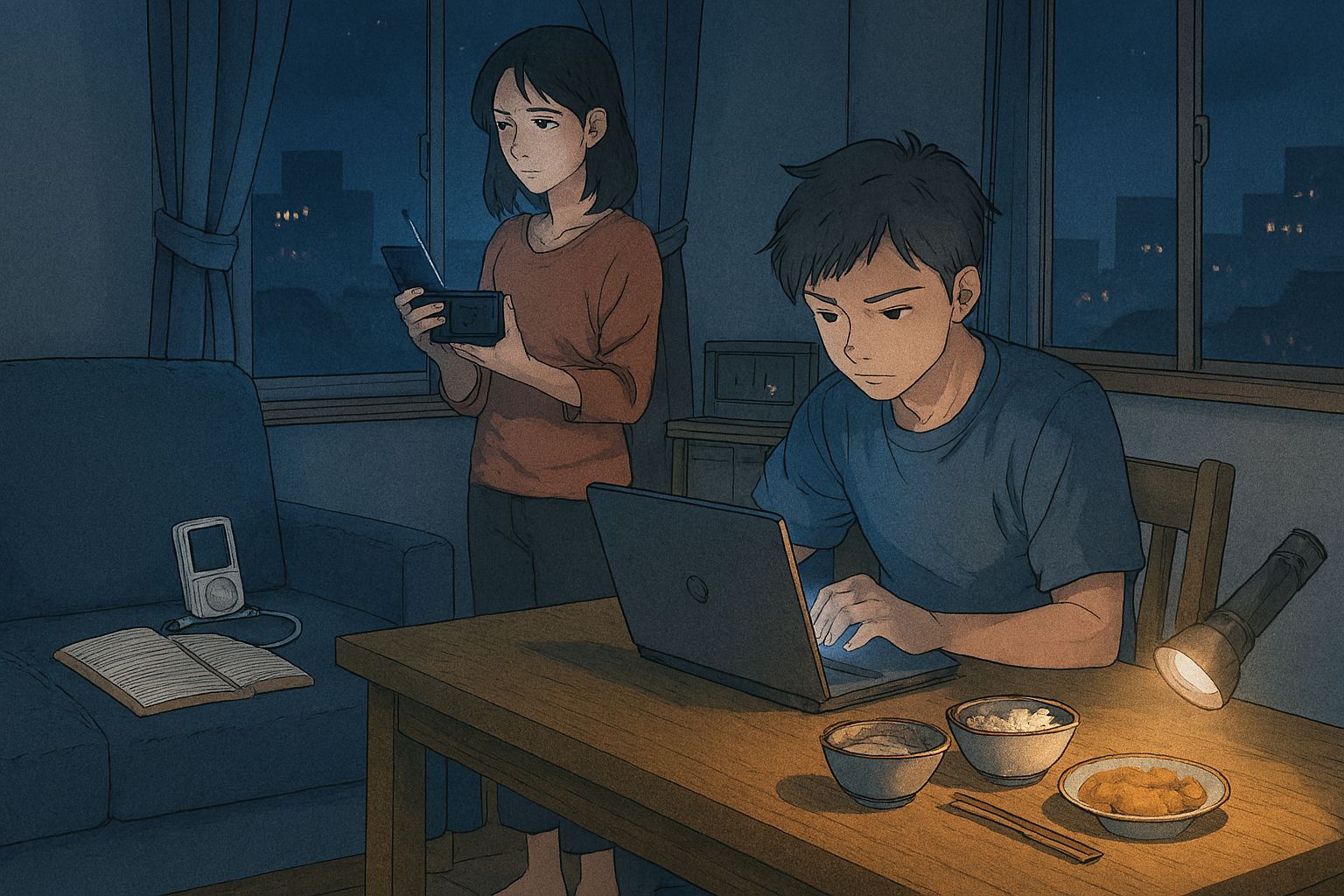
Another night without electricity falls over our house, like a bitter habit that has repeated itself for more than a week. The darkness is not total: the bluish, faint glow of the surviving screens casts shadows on the walls and turns the living room into a stage where every object seems both closer and stranger at the same time. My mother sits near the window, her cellphone in hand. Her only diversion is the radio: between stations struggling to stay on the air, the presidential broadcast plays intermittently. The president’s voice fills the room — announcements, reports and promises of the revolution — and my mother listens with the same mixture of resignation and hope with which one listens to a repeated family ritual. For her, those words and the familiar voices on the dial act as company: a thread that connects her to an outside that, though uncertain, still exists. My brother sits at the table, making the most of his laptop’s battery. Backlit, the screen lights his focused face while he reads a PDF. He reads eagerly for an hour, trying to squeeze as much productive time as possible before the battery forces him to stop. Each page devoured is a small victory against the inertia of the night and the scarcity of resources. I take refuge in my iPod Touch. Music acts as a handful of memories and small promises: songs that have accompanied me for years, melodies that now help organize thoughts and soften the noise of the imagination. Between one song and another I write my memories, trying to capture the everyday pulse of this repeated blackout: the small habits that emerge, the half-finished conversations, the worries that recur but go unresolved. I try to put into words what it’s like to live like this, night after night, without falling into exaggeration but without hiding the fatigue. Outside, the city sounds different: fewer vehicles, measured footsteps, a dog breaking the calm. At times the official broadcast ends and stations return to their usual programming; sometimes there is music, sometimes news, sometimes simple empty spaces that the radio fills with its murmur. Those changes on the dial alter the house’s atmosphere little: we remain attentive to the immediate — the draining battery, the phone that barely vibrates, the light switch that gives no signal. The night stretches slowly. We have a simple dinner by the light of a borrowed flashlight, speak quietly about trivial things (the market, school, a recipe to try) and sometimes keep silence, each in our own sphere. Routine is a web of small gestures: covering the windows, leaving the charger ready, setting alarms, bringing blankets closer. There is no drama in our resignation; rather there is a mix of practical patience and accumulated weariness. When tiredness wins, each of us goes to our corner. My mother, with the radio still on, lets the announcer’s voice be the sound cushion that holds her thoughts. My brother carefully shuts the laptop, knowing that the battery may not be enough next night. I put away the iPod and read a few more lines in the notebook where I pour these memories, as if by writing them I make them less ephemeral. Eyelids begin to grow heavy and the world becomes more blurred. Sleep arrives as relief: not just physical rest, but the temporary pause that suspends the night’s anxiety. We sleep with the window ajar, hoping the morning will bring the natural light we so long for. And when it comes, when the first rays pass through the curtains and again paint the walls with brightness, we will know that another day begins — with the same uncertainties, the same small battles — but with the fleeting, tangible feeling that, for a few hours, everything has returned to its place. Source of the images. Image created with Bing.
No comments yet