 @mc5punk
more from that month
@mc5punk
more from that month
Short story: The Last Quarter of the Year
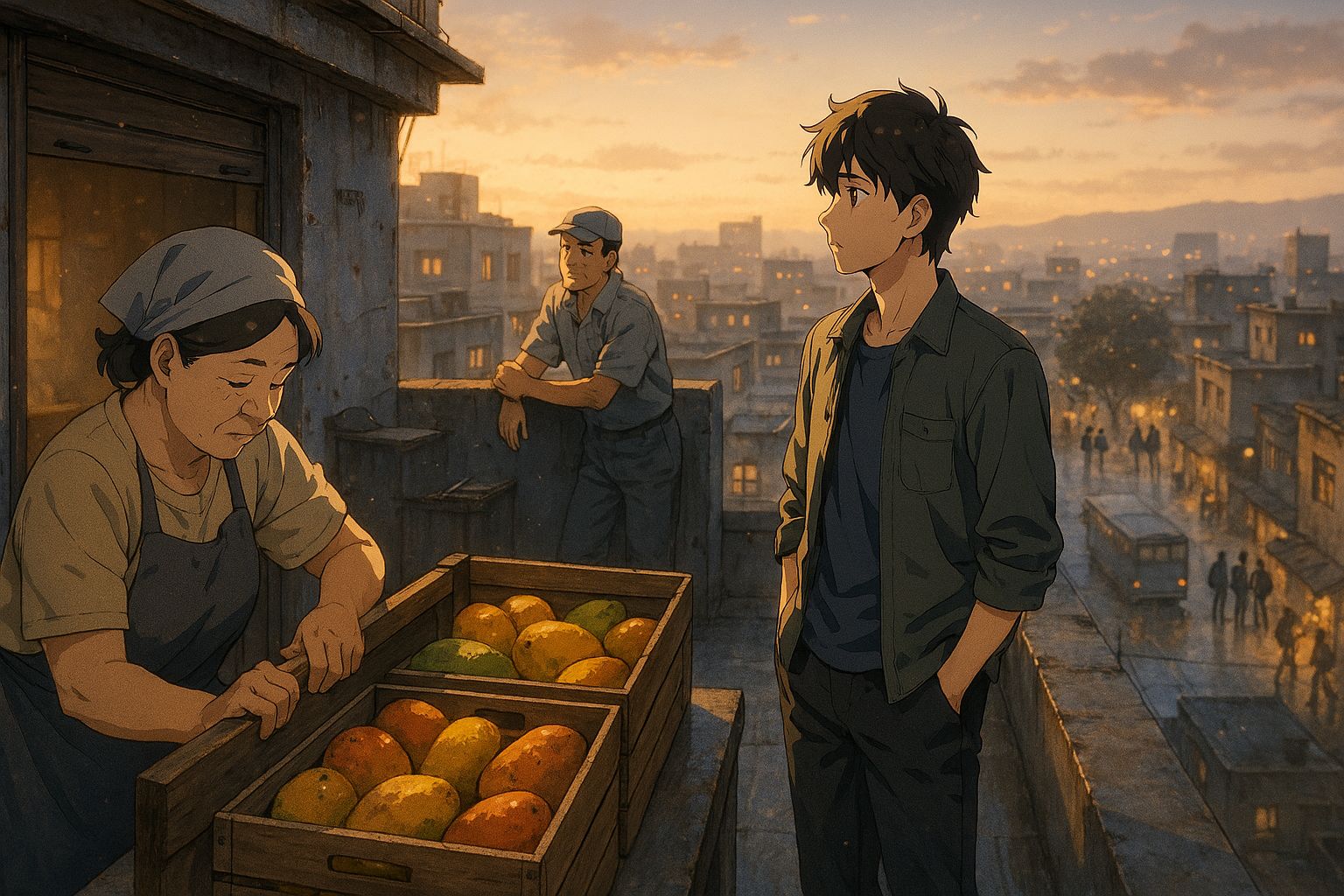
The city seemed like a creature of habits, its breathing marked by repeated cycles that no one bothered to question. In that unremarkable rhythm, Marcos found his place: he walked every morning along streets he knew by heart, greeted the same shopkeepers, and noticed small changes that nevertheless spoke of deeper transformations. Facades wore down a little more each month; the closed shutters of a long-standing shop left a gap another, newer business tried to fill with gleaming displays and prices that did not always match the neighborhood’s reality. Marcos did not see himself as a hero, not even as an agitator. He was a man of routines and schedules, but with a persistent unease lodged in his throat every time he listened to the news or read the messages passed from hand to hand in cafés. He had hoped, like many others, that the opposition would offer more than words. Clear calls to action? Concrete strategies? A proposal that went beyond slogans? In plazas and platforms, in university corridors and at street stalls, the same demand was repeated: that the self-proclaimed leaders assume responsibility. Yet that waiting left a civic void: the citizens who once took to the streets and organized assemblies in yards and avenues seemed to have shifted toward passivity. Only in villages and hamlets, away from the easy lens of cameras, did the spark of action still burn with less noise and more conviction. Laura, the fruit seller on the corner, contrasted with that apparent calm: with calloused hands and a frank look, she spoke without euphemisms. “They’re leaving,” she told Marcos one morning as she arranged boxes of mangoes and papayas; her voice was not melodramatic but a cold statement of fact. She described how youths she had known since childhood had departed with backpacks and crumpled papers, how cousins and neighbors had crossed borders seeking temporary jobs that might give them some breathing room. “They go where they can get some air,” she repeated, and Marcos thought of the phrase as a physical truth: that air the city now denied, a breath many sought elsewhere. Appearances deceived. The big headlines and reports painted a picture of defeat: deserted streets, morale at rock bottom. But the city —that sum of daily gestures— contradicted the narrative. People still rose early, bought bread, took the children to school, ate in the same diner. That routine was not indifference, Marcos thought, but minimal resistance: a refusal to let life be wholly folded into politics. Nevertheless, there were voices that could not be silenced. In the market, in taxis, and at bus stops, stories tinged with anger were heard: wages that no longer sufficed, jobs that disappeared, plans derailed. An echo of helplessness that, far from dying, found its channel in everyday conversations. At home, talks about public services had become almost ritual, a way of taking the country’s daily pulse. Javier, Marcos’s brother and a maintenance technician, had the habit of reporting failures and fixes with the tone of someone explaining a technical but inevitable phenomenon. “Water has been arriving with some regularity lately, but you never know if there will be a suspension by the end of the day,” he said one night while they were preparing dinner. Marcos remembered the recent evening the power went out during dinner and how they had to make do with the phone’s light, with all the visibility and routine problems that implied. Javier spoke of gas reaching central apartment buildings, of neighbors in outlying areas who were not so lucky, of landline calls that dropped without warning, and of mobile phones that, while more stable, had made communications more expensive. “Internet depends on the company and on the wallet,” Javier concluded with a resigned grimace. Those prosaic technical details told a story of inequality: neighborhoods that received better services and others that survived with patches. In neighborhood conversations, the quality of water or the frequency of power cuts mingled with stories about how a change of provider affected the corner school or the small bakery that used to be a meeting point. Insecurity had changed its shape and tempo. It was not the everyday fear—of footsteps at night or forced doors—that had marked other times; in the past two years Marcos had not witnessed a serious crime firsthand. Still, the stories continued to circulate: the account of a friend whose phone was snatched on a corner, the rumor of a neighbor who had his car battery stolen while waiting at a traffic light. “I couldn’t do anything,” Elena, his neighbor, said, her voice still trembling from the experience. These incidents, although isolated, fed a collective sense of fragility and distrust. Above all, there was migration: a hemorrhage of people who, one by one, left behind families and memories. In the neighborhood square, farewells repeated like a bitter ceremony: backpacks, short embraces, promises to return that often sounded hollow. Young people leaving for the south —to neighboring countries where they hoped to find opportunities— left behind letters, phone numbers and the hope for a more stable future. “My sister found a ticket to Brazil,” a young man told Marcos before boarding the night bus. “The route through the Andean region closed with the visa requirements; the only path left is Brazil.” Marcos felt he was hearing an account of destinations: maps unfolding with new routes and, alongside them, risks and hopes in equal measure. The implementation of visas for the Andean region had become a new obstacle. For many, the only feasible alternative was a longer, sometimes more dangerous journey via the Brazilian side; a route that demanded resources not everyone had. Laura spoke of cousins who had crossed months earlier, of temporary jobs and the precarious nature of the employment they found abroad. When she described them, her eyes showed pride and sorrow at once: pride because they survived, sorrow because survival often meant saying goodbye to what was theirs. Marcos began to see those departures as chapters of a collective novel: individual stories that, when added together, formed a portrait of a nation reconfiguring itself. Resignation and perseverance coexisted in every conversation, in every purchasing gesture or greeting. People invented ways to resist: small meetings in homes, informal barter, tiny businesses emerging to cover specific needs. These were modest acts, but they sustained the social fabric. In the final hours of the day, from the rooftop of his building, Marcos surrendered to contemplation. He saw the city under a light that made it feel more intimate: aligned roofs, lights turning on in windows closing their day, the line of buses leaving for the outskirts like a promise of escape or return. There, at that temporal height, he thought about his mother, who always waited for news from relatives who had left; about Javier, who talked about breakdowns and improvised fixes; about Laura, who each morning kept arranging her fruit with the same patience. He thought of news reports and of the conversations that really mattered: the face-to-face talks with the smell of fresh bread in the background. “Do you think anything will change before the end of the year?” Javier asked one afternoon, leaning his back against the wall as if seeking a certainty he could not find. “I don’t know,” Marcos replied, looking at the city as if trying to read a map of diffuse meaning. “Maybe something unexpected will happen. Maybe not.” Uncertainty had become the only shared certainty. There was a persistent feeling that the year would close with the same tone: sustained routines, departures continuing, services working half-heartedly, and a citizenry that, although less mobilized in public spaces, found other ways to persist. That possibility of continuity—the possibility that nothing would change—weighed like a slab, but it also opened a small window: the window of surprise, of the unforeseen event that might alter the plot. Marcos climbed down from the roof with the same cadence he used every night to return to his room. He crossed the street and ran into Laura, who was closing her stall. “How did it go today?” he asked. She smiled wearily. “A little better than yesterday,” she answered. “But worse times and better times will come, sometimes all in the same week.” Marcos nodded. In that acceptance he found a kind of hope: one that does not demand guarantees but the ability to keep living amid many uncertainties. In the end, the city continued breathing by habit, and Marcos with it. Between resignation and waiting, between farewell and the promise of return, small and powerful stories unfolded—the material from which slow transformations are made. And while the lights came on one by one, the question that floated in the air remained the same: will the unexpected happen to change the story’s direction, or will the year close repeating the familiar pattern? They would not know until the moment arrived; until then, the city kept living, and the people, with it, searched for whatever breath the place could still offer. Source of the images. Image created with Bing.
2 comments
This story lingers in that delicate space between routine and surprise, where hope quietly survives. It’s a reminder that even in the most ordinary days, the unexpected can tip the scales—and that’s where life’s true magic hides.
Totally true, thanks so much for reading. A hug.