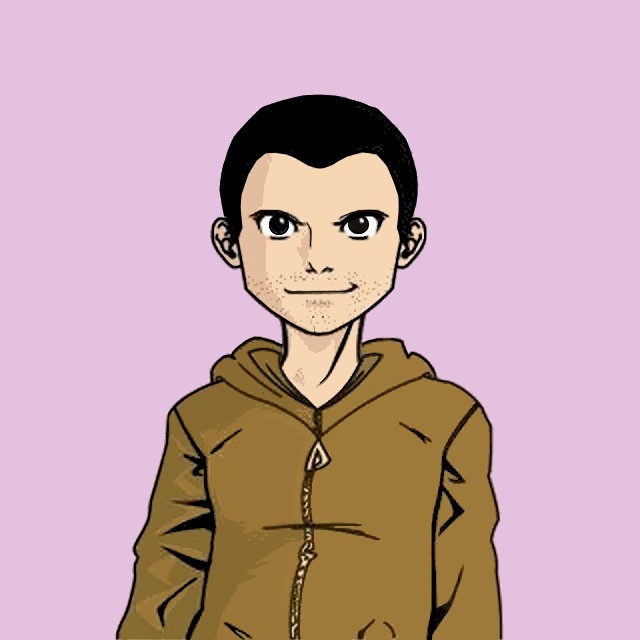
 @mc5punk
more from that month
@mc5punk
more from that month
Short story: Matthew's Compass

Matthew had always lived in a world that followed its own rules. Since childhood, routines were his refuge, a way to make sense of an environment that he often found chaotic and overwhelming. Her day always started the same way: she woke up at 7:00 o'clock, had toast and strawberry jam for breakfast while listening to the soft murmur of the radio that her mother turned on in the kitchen, and then went for a walk in the park with her father. For Mateo, that structure was like a well-drawn map that allowed him to navigate through life without getting lost. But everything changed the day her parents were gone. The accident happened one rainy afternoon. Mateo was not present, but the news came as a dry, direct and devastating blow. A doctor explained what happened to him with carefully chosen words, but for Mateo, those words were like pieces of a puzzle that he couldn't put together. "It can't be," he thought over and over as he stared into the void. "They are always here. Always." But when he returned home and saw the dining room table empty, with the dishes still in place but with no one to fill them, reality slowly began to seep in, like ice-cold water sneaking through the cracks of a wall. The house, which had once been a warm and lively place, now seemed immense and desolate. The curtains remained closed, letting in just a shy ray of light that illuminated the specks of dust floating in the air. The rooms were intact, as if his parents could return at any time. His mother's favorite mug was still on the kitchen counter; his father's newspaper was still folded on the armchair by the window. Mateo clung to those details as if they were anchors in a turbulent sea. If everything stayed the same, maybe—just maybe-he could convince himself that nothing had changed. For weeks, Mateo was closed in on himself. He spent hours sitting in his parents' room, looking at the objects they had left behind: his father's wristwatch on the bedside table; the unfinished book his mother read before going to sleep. He didn't cry or talk about the subject with anyone; he simply existed in a suspended state between denial and pain. It was Andrew who broke that silence. Andrés was his best friend since childhood, someone who had always understood Mateo's particularities without judging him or trying to change him. I knew that Mateo saw the world from a different prism and respected that, but I also knew that this time he could not stay on the sidelines. One gray afternoon, Andrés arrived at Mateo's house with a bag full of freshly baked bread and two cups to make tea. He knocked gently on the door before entering; he knew well Mateo's need for clear warnings and predictable gestures. "Mateo—" she said as she placed the things on the kitchen table, "I brought something for us." Mateo appeared a few minutes later, walking slowly as if every step was a monumental effort. She sat down in front of Andrés without saying anything and began to observe how he prepared the tea with meticulous movements. The kitchen was silent except for the sound of boiling water and the slight clink of spoons against cups. Finally, Andres broke the silence. —I know this is very difficult for you," she said in a soft voice. Losing your parents... there are not enough words to describe what that means. But I've noticed something: you're holding on too tightly to how you think things should be. Mateo looked up slowly, frowning. He didn't like it when someone questioned his way of thinking. —I don't understand why everything has to change," he replied after a moment. If only things were as I say... if only everyone followed the rules... nothing bad would have happened. Andrew sighed deeply before answering. —I know," he said as he stirred his tea. And I understand why you think like that. But the world doesn't work according to our rules, Mateo. It's chaotic and unpredictable... but it also has beauty in that imperfection. Your parents taught you many good things; perhaps you can honor them by learning to adapt as they did. Mateo looked down at his steaming cup. Andrés' words were difficult to accept because they implied something terrifying: recognizing that he could not control everything that was happening around him. His perspective was a shield against that deep fear, but now that shield seemed heavier than ever. That night, after Andrés left, Mateo sat down in front of the desk where his father used to work and opened an old dusty notebook. She began to write about her memories: how her mother always found creative solutions when something went wrong; how her father taught her to be patient even in the most frustrating moments. As he was writing, he felt a small spark inside him: maybe Andres was right. His parents had faced the challenges of the world with courage and love; maybe he could try too. The next day, Mateo decided to take a small but significant step: going out to the park for the first time since the accident. Andrés accompanied him without saying much; he just walked next to him while Mateo watched the trees swaying gently in the wind and listened to the distant song of the birds hidden among the branches. At one point, Andres pointed out something unexpected - a yellow flower growing between the cracks of the cracked pavement. "Look at that," he said, smiling. Even in the most unexpected places there can be life. Mateo stopped to observe her carefully. The flower was small but vibrant, an explosion of color amidst the gray of the weathered concrete. He didn't say anything, but something inside of him began to change. Over time, Mateo began to find new ways — and his own— to face his pain. He wrote every night in his diary to process his emotions and gradually reorganized the house: he kept some important objects but allowed to create new spaces for himself. She also explored new activities with Andrés: a painting class here; a visit to the museum there. Although he still had difficult days —days when he felt as if he were walking against a storm—Mateo discovered something important: adapting did not mean forgetting or betraying who he was or what he had lost; it meant growing up while honoring everything his parents had taught him. Mateo's internal compass was still unique and unshakable, but now it was adjusted to navigate the unpredictable winds of the real world. And although she would never completely leave her pain behind, she knew that she could move forward with small but firm steps towards a new life where there was still room for hope and the unexpected beauty of change. Source of the images. https://pixabay.com/es/photos/lonely-boy-playa-al-atardecer-gente-2531764/
No comments yet