 @mc5punk
more from that month
@mc5punk
more from that month
Short story: The Language of Broken Bodies
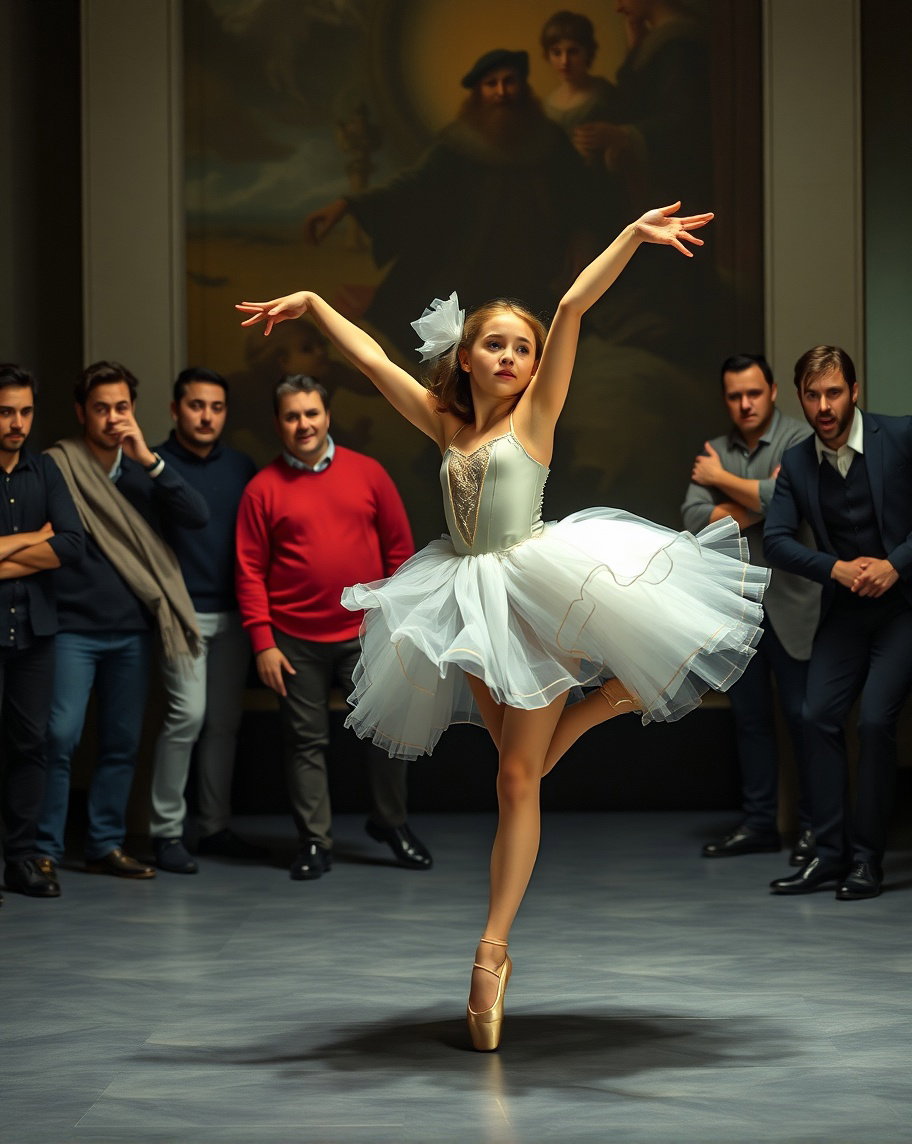
Under a sky tinged with amber by the dust of the desert, Al-Sahar breathed between adobe walls and silences carved by dint of traditions. In this corner of the world where women walked with their eyes fixed on the earth, 17-year-old Zara drew invisible maps with her bare feet. The deafness, acquired after a fever in childhood, had sharpened his perception of vibrations: he felt the rustling of palm leaves, the distant drumming of wagons, and above all, the dull echo of unspoken words. Amira, his mother, wove tapestries with woolen threads dyed in ochres and garnets, patterns that hid messages in code. Each knot represented a women's story: a forced marriage, a secret childbirth, a stifled moan. At night, when the people were sleeping, she unrolled the fabrics and with slow signs told Zara the embroidered tragedies. "Our voices are seeds under the asphalt," she explained, while the young woman replicated the stories with movements of her ankles and wrists, creating a parallel language. In the market, where the screams of the sellers pierced the hot air, Zara developed her first act of rebellion. Leila, his 14-year-old sister, tried to claim when the merchant Yusef stole two coins from her. Before the slap came, Zara got in the way and started dancing. His arms went up like snakes ascending to the sun, his fingers drew flying coins, his heels hit the ground in a cadence that imitated the heartbeat. The crowd huddled, mesmerized, until Elias, the religious leader, burst in brandishing his ebony walking stick. "Desecration!", he roared, but Leila, with a smile she inherited from her deceased father, translated: "She asks how many coins a man's dignity is worth." The old abandoned mill, with its blades eaten away by time, became his sanctuary. There, among cobwebs and the remains of fermented wheat, Omar emerged from the shadows one waning moonlit night. The choreographer, whose face hid burns under a leather mask, had been hiding for years after his exile from the capital. "Your dance screams where others are silent," she told him, revealing her own scars: chain marks on her ankles from choreographing "immoral" works. Together they developed a vocabulary of resistance: sharp neck twists to represent marital yokes, zigzag steps that simulated failed escapes, hands clasped behind their backs as a symbol of clandestine solidarity. Sofia, the midwife with calloused hands and a hawk's gaze, fed her choreographies with stories collected at births and wakes. She would arrive at the mill with stories written on strips of sterile gauze: "Mariam broke three ribs when she fell from a window," "Noura lost her voice after denouncing her brother-in-law." Zara transformed them into sequences where every movement was a testimony: a sudden turn followed by a fall into the void, palms that opened like trampled flowers, controlled spasms that imitated convulsions of pain. On the night of the equinox, when the desert wind carries away ancient promises, Zara executed her definitive work. Dressed in a knitted suit with used bandages and torn Koran ribbons, she danced in front of the mosque. Her body told the story of Lila, a 12-year-old girl sold to a camel merchant: fingers that counted imaginary coins, hips that shuddered at violent caresses, a sudden jump that ended in the fetal position. The people held their breath when she imitated a childbirth with the help of a bloody shawl that Sofia gave her. Elias ordered their capture, but Leila jumped into the torchlight circle. "My sister speaks for everyone!," she cried, tearing her veil. In response, fifty women emerged from alleys and rooftops, repeating the forbidden movements. Men who had never seen their wives hold up their heads witnessed how they transformed years of submission into a symphony of feet pounding the ground. Sofia filmed the revolt with a camera hidden in her basket of medicinal herbs; at dawn, the video titled *"The sermon of the bodies"* went viral on social networks under feminist hashtags. In the following days, the mill became an underground school. Deaf girls from neighboring villages arrived hidden in hay carts, learning to turn their limitations into weapons. Omar taught how a turn of the wrist could report an abuse, while Amira wove choreographic instructions on tablecloths that were sold as household items. Elias, consumed by tuberculosis that he hid behind inflammatory speeches, began to find drawings of ballet shoes among his sacred books. The repression came with the new moon. Men armed with torches surrounded the mill, but found only Zara dancing alone. Her performance *"The Ashes that Await Us"* confronted them: she imitated the act of setting herself on fire, then was reborn from the imaginary flames with a dress made of pages of the Koran reconverted into wings. When they tried to capture her, hundreds of kites with dancing instructions flew across the sky, piloted by women from hidden rooftops. Ten years later, the *Festival of the Spoken Steps* attracts global choreographers. In the square where Elias used to preach, deaf girls teach foreign journalists how an Arabesque can narrate a rape, or how a port de bras accuses a femicide. Leila, now the school's principal, points to the mural where Zara (disappeared after the last raid) smiles with a finger over her lips. Under his feet, a phrase in twenty languages: * "Here, silence learned to dance"*. In the evenings, when the wind lifts the red sand of the desert, the elders say that the dunes repeat the forbidden choreographies. They are movements that no decree can erase, bodily memories that are transmitted from skin to skin, an ancestral language that finally found its words. Source of the image Image created with Starryai.
No comments yet