 @mc5punk
more from that month
@mc5punk
more from that month
Short story: The July Curve
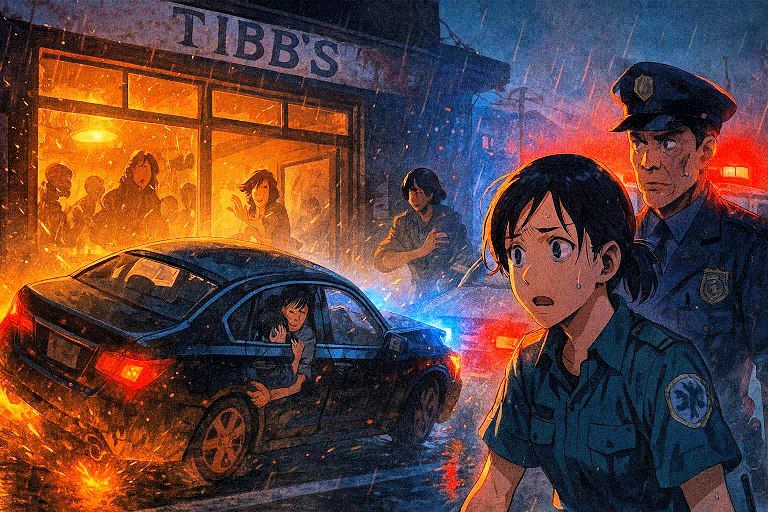
The highway stretched like a scar of asphalt under the July sun, a corridor that divided neighborhoods and encouraged haste. At that hour the city beat with its routine: people leaving work, cars joining the flow, and bars opening for the night. Nothing in the landscape warned that a timeline was about to snap. A video began circulating on phones before the police could assemble their version. On the screen, a dark vehicle moved like a shadow in a hurry, a point that lengthened and swallowed lanes. The footage, filmed by a dashboard camera and a curious neighbor, showed abrupt maneuvers, sharp passing, and an engine that seemed to demand more than the machine could give. In forums and message chains, that clip was not just a clip: it was a high‑definition omen. Marco didn’t think it would happen. He thought he could make it in time, that haste justified breaking limits that would have been respected another night. His fingers gripped the wheel until his knuckles whitened. Ana, beside him, looked without seeing, clutching the lie of normality: “Just a little more,” she had repeated like a talisman. In the back seat, Luis held Sofía with the intensity of someone unwilling to let go of a promise; the girl slept and, now and then, opened her eyes as if to check that the world still contained safe things. Nearby, at the avenue corner, Mara counted her register with the precision of someone who knows the value of change. The bar she ran was her life: walls full of photos, tables marked by years of regulars, a chalkboard with specials, and a worn spot on the wood where an old neighbor always rested his cup. Carlos, her right hand, wiped the last tables and, unaware of the company the night would bring, cracked jokes about a tip nobody had promised. Eva, a regular at her habitual table, scrolled through messages that made her smile with the softness of little joys. The vehicle entered the curve as if committing a premeditated offense against the city. The asphalt, hot from the day, perhaps had a treacherous sheen; perhaps a patch of oil waited like a trap; perhaps it was just the sum of speed, fatigue, and distraction. Pressed by time, Marco chose the straightest line: to accelerate. The steering responded—until it didn’t. A squeal tore the air: metal against friction, a brief protest before silence. The impact was a concatenation of tiny acts that, united, produced disaster: the façade taking the blow, windows shattering, tables overturned, glasses becoming rain. Not everyone experienced the crash the same way: for some it was a flash and then darkness; for others, time stretched in slow motion, allowing the mind to recite things the body refused to repeat. Ana screamed orders—“Right! Hold her!”—with the voice of someone trying to impose control on the uncontrollable. Luis, his face filling with dust and blood, tried to shield Sofía with his arms. The first police and ambulance crews turned the scene into an emergency theater. Sergeant Rivera coordinated like someone repairing a failing mechanism: cordons, triage priorities, removal of dangerous debris. Rivera, a veteran hardened by worse summers and winters, had the expression of one who stores difficult images in a compartment opened only when the law requires it. “Secure the perimeter,” he ordered. “Evacuate through the west aisle. I need a list of the injured, names and priorities.” Nia, a young paramedic, worked with disciplined compassion. Her hands, steady and precise, applied bandages, checked pulses, stroked cheeks in a gesture that was not rhetorical consolation but vital command. “Breathe with me,” she told Eva as she fitted an oxygen mask. “One… two… three…” Amid the crowd voices called for names: “Carlos? Mara? Eva?” The shouts were needles that pierced confusion. Carlos, jaw broken, held Mara as the emotional collapse took hold. Others, less visible, lay beneath the rubble: the toll was a knife the city had not expected. Marco was detained in a state of confusion. His words were loose fragments: “I don’t remember… I was going fast… I lost control.” Police recorded each assertion, each silence. Inside his car, remnants of a life run over: a parking ticket, a scratched CD, a folded list of numbers. Those fragments fed the investigation that would follow. The audiovisual evidence became the investigation’s guiding thread. Frame‑by‑frame analysis by experts showed the car’s trajectory, estimated speed, interaction with the curve, and potential external factors: worn tires, spilled fluid, an evasive maneuver. Sergeant Rivera requested camera logs, witness statements, fingerprints and forensic analyses to rule out mechanical failure versus negligence. In the emergency room the tempo was different: that was where lives were tallied like unpaid accounts. The lights were white and harsh, like questions without pause. Luis held Sofía on a gurney, listening to monitors as if trying to extract meaning. The girl clenched a napkin in her hand. Her small world had shrunk to a promise of protection her father could not always keep. “Daddy,” she said, a voice that made fragility audible to every ear, “I’m scared.” “Me too,” Luis answered, and the phrase could not tell whether it was bodily truth or spiritual confession. Official word confirmed the worst: four dead and eleven injured. Names took time to come from morgues and hospitals, but when they did they hit like blows. Families gathered in corridors smelling of disinfectant and cold coffee. Shouts demanding justice or answers filled rooms, alternating with dripping sobs. The neighborhood—defined by predictable routines—suffered a fracture noticeable in small ways: empty tables, clocks turned toward memory. The criminal investigation proceeded. The prosecutor presented evidence: asphalt samples, speed expert reports, witness testimony, and the pivotal video replayed in preliminary hearings like a hammer. Marco’s defense deployed mitigating factors: possible mechanical failure, altered emotional state, even the absence of malicious intent. Reconstruction specialists debated angles of impact, braking, and likely technical failures. Experts in crash reenactment agreed on one point: the car’s path showed signs of losing control before the final impact, but assigning culpability remained contested ground. Meanwhile, the community sought repair in both symbolic and concrete acts. Meetings at the neighborhood plaza demanded barriers at the curve, speed reducers, and better signage. Sergeant Rivera attended one such assembly, answering questions, taking names and promises that sometimes institutions keep and sometimes leave on the pending list. The press handled the case with both voracity and caution: front‑page stories, safety analyses, interviews with experts and witnesses. The video that initially detonated grief evolved into the public debate’s central piece: tragic accident or criminal negligence? An isolated case or symptom of a city that rewards haste? Inside the bar—whose wood once held the warmth of countless conversations—an improvised altar formed: photos of the missing, letters, a napkin with a dedication, a cup of flowers. Samuel, the corner old man who shared cookies with the owner each afternoon, left sweets and a note: “So memory has something sweet.” Sofía, holding a small flower, placed it carefully on the table nearest the window; her childlike act carried the force of gestures that require no explanation. Preliminary hearings exposed the case’s legal complexity. The prosecutor requested detention measures, presented reconstructions and asked for preventive custody on grounds of social danger. Marco’s defense argued mitigating circumstances. The process brought psychological evaluations, drug and alcohol tests, mechanical inspections and reviews of Marco’s driving record. The courtroom became a stage where words were instruments of power and solace for some, threat for others. Meanwhile life resumed in fragments: people drove more cautiously through the curve, some with tears unconsciously in their cheeks; others avoided the avenue entirely. The bar’s tables stayed empty for days until the neighborhood decided memory should not be only mourning but a spur to action. Road safety days were organized, public readings of victims’ stories and signage campaigns. The initiatives were small repairs in an open wound. Marco, in the solitude of temporary cell and later court hearings, showed the dim expression guilt and fear leave behind. His statements oscillated between memory and denial: “I didn’t want… it was a sequence that overwhelmed me.” A lawyer framed that fragment as mitigation; the prosecution replied with facts: excessive speed, reckless risk, and the chain of choices that ended crossing lives. In the days after the crash, encounters shaped futures. Nia the paramedic received thank‑you letters and also long nights where sleep refused her. Samuel was interviewed on local TV and recounted anecdotes about Mara that revealed the woman behind the counter: her laugh, her care for young people. Slowly, the city implemented measures: the local government approved speed reducers and improved signage at the curve, ordered a road maintenance audit and allocated funds for awareness campaigns. Those steps—demanded by the community—arrived with the recognition that prevention often follows loss. Legally, the case continued: technical reports, psychological assessments and testimony accumulated until the prosecutor charged Marco with aggravated culpable homicide and serious bodily injury by negligence. The case that began with a viral video became a substantial judicial file. Families of the victims testified; some asked for imprisonment and retribution, others simply described what losing someone at a dinner table or on the route of daily life meant. The sentence arrived months later after expert testimony, supplemental reports and a draining process for many. For some, the ruling felt insufficient; for others, it provided formal closure. Nothing brought back the four who did not return, nor erased the scars of the eleven injured, but the legal resolution—within its limits—offered a formal end to the public chapter of blame. Privately, wounds remained. Luis and Sofía rebuilt routine day by day: therapy, medical visits and the slow learning that life alters in attention to small details. Eva left the bar for a time, recovering from injuries and the lingering fear; when she returned, her presence carried the solemnity of someone who had survived. The city learned, grudgingly, that haste exacts a price. The July curve became a cautionary tale and an impetus for change: more speed reducers, clearer signage, educational campaigns. The altar at the bar remained for weeks and then months, until the flowers dried and were replaced by actions: commemorative plaques with the names of the lost and a community road‑safety program in their memory. The video that had started everything continued to circulate, but its meaning shifted. From documentary of a tragedy it became pedagogical material in workshops, evidentiary content in hearings and a living reminder in neighborhood meetings. For some it was cold evidence of a reckless act; for others, the confirmation of human fragility. On clear nights, when the breeze carried the scent of the sea and the city breathed quietly, people paused at the curve and looked toward the now‑repaired bar. Some still felt a knot in their throats as they passed; others believed the changes forced by tragedy were the least bad way to honor those who were gone. Years later, Sofía placed a flower on the table with the same tenderness she had as a child, but with a maturity pain had imposed. The July curve left concrete marks and long silences. Justice did what it could within its bounds; the community acted where it could; the affected rebuilt faces and routines. And in that weave of judicial, communal and personal acts lay the lesson some learned: speed not only measures distance—it measures consequences, and every decision at the wheel can become the line that separates lives. Source of the images. Image created with Bing.
No comments yet