 @mc5punk
more from that month
@mc5punk
more from that month
Short story: Night of Refuse
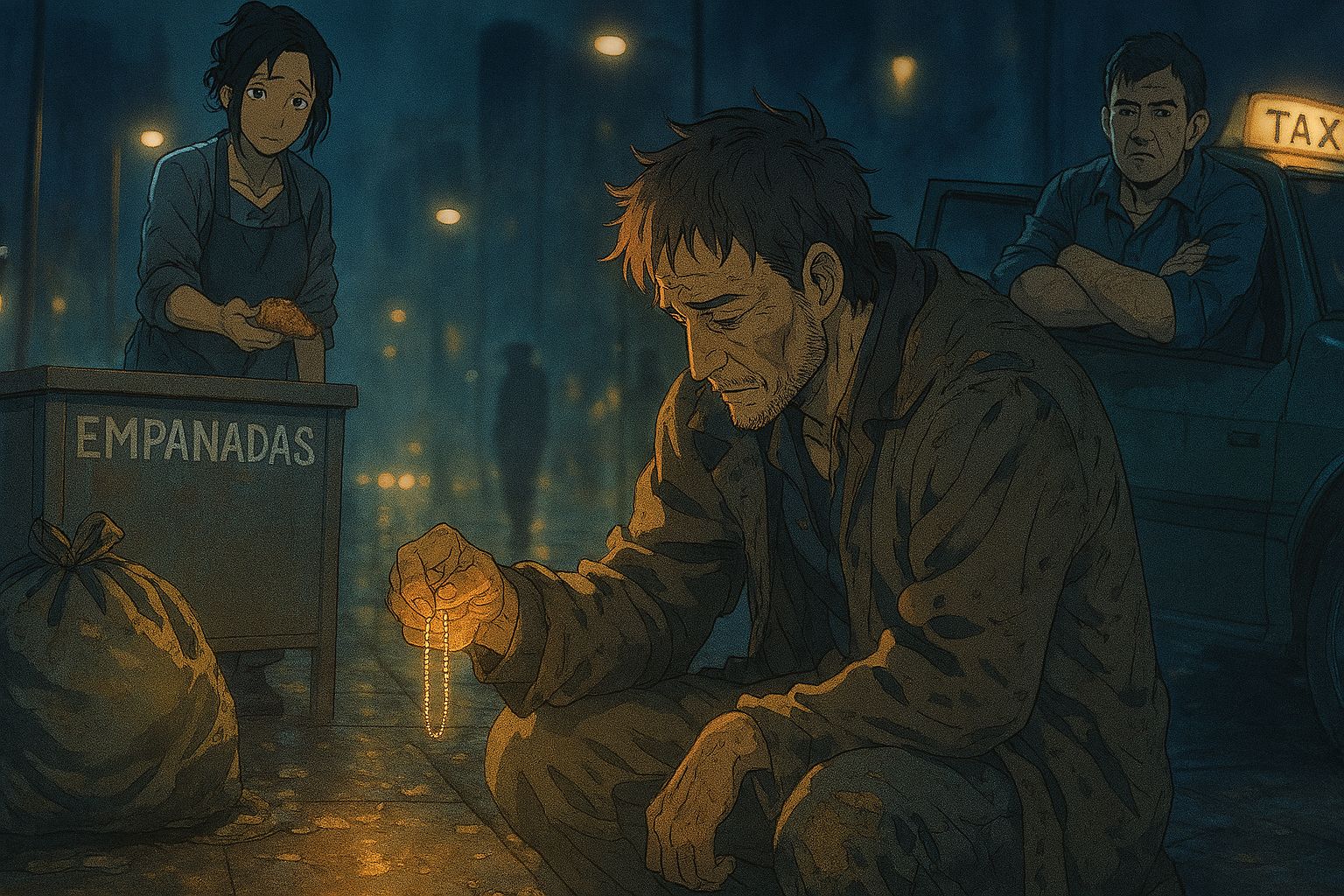
The night stretched with an almost deliberate calm: mild, serene, as if the sky and the wind had agreed to grant the world a reprieve. From the sidewalk, the walker felt that reprieve as an empty space that could be filled with thoughts without the compulsive hum of daily routine. It was not a simple stroll: it was a sought truce against the accumulation of worries that besieged him — insecure work, the rent that always seemed to arrive with more urgency than his pockets could bear, the constant search for new sources of income. Going out was a practical, silent act: to step away in order to think, or at least to avoid thinking aloud. He moved through streets he knew by heart, along stretches where the sidewalks creaked with their usual cadence. Turning onto the main avenue, the tone of the scene shifted: the streetlamps, spaced at irregular intervals, cast circles of light on the asphalt; vehicles appeared and disappeared with the discretion of those who respect the hour. The avenue was not empty, but human presence felt reduced to isolated points, as if the city had become a stage where everyone played their part without coinciding much. On a weathered wooden bench, Marta arranged her empanada stall. Her hands, accustomed to a monotonous and efficient movement, wiped the tray with the same routine that let her sustain one more day. Marta knew the neighbors, had seen lives and small tragedies pass by, and her gaze carried the fatigue of someone who works so that other hands, sometimes invisible, do not go hungry. Across the road, a taxi waited for patient passengers. Raúl, the driver, leaned against the open door as if he needed the support more than the vehicle, watching the square with eyes used to reading silences. His experience on the street had taught him that behind every person there was a set of circumstances, timely or forced, and that laziness or guilt were not always responsible for someone's fate. Near the dumpster, among bags that gave off smells and waste, a middle-aged man rummaged with worn hands. His clothes were torn where prolonged use and exposure had taken their toll; his beard and tangled hair outlined the silhouette of someone forgotten by his cares. He did not seem to search frantically; rather, he had the resigned patience of someone who knows the reward, if it comes, will arrive in small measures. Marta let slip an observation as one shares a thought into the void: - There are days when one slip is enough for everything to fall apart. The walker, who heard everything from the other curb, approached without intending to impose and, in a low voice, asked: - Do you think it was his fault? Marta shook her head with an expression that said more than words: - No. It's the system that doesn't hold when it breaks. People don't fall by chance; they fall because there are no safety nets. Raúl closed the taxi door gently and added his view, harder from habit: - I see it every day. It's not lack of will. It's that real opportunities are missing. One dismissal, one illness, one missed payment... and the wheel swallows you. The man among the trash raised his eyes. His voice, both rough and direct, cut through the exchange: - I don't need pity. I need them to stop treating me like refuse. In his sentence there was a mix of pride and fatigue. He did not ask for theatrical compassion or alms that get lost in daily bustle; he asked to be recognized as human, something institutions and everyday glances seemed to deny him. Moved by a quotidian empathy that could not change structures but could relieve a throat, Marta offered a simple gesture: - Do you want an empanada? The man looked at the offer as someone who assesses more than immediate food. His answer was a bitter and clear synthesis: - It's not always food that's missing. It's that nobody feels responsible. That phrase hung in the air. The avenue collected the pulse of the conversation and returned it as an expectant silence, until the crinkle of bags added a new shade to the scene. With slow, careful hands, the man pulled something from a withered bag: an object that, for an instant, reflected the lamp's light with a warm gleam. It was, at first glance, a gold necklace. The appearance of the necklace changed the dynamic: a material object promising value burst into the urban choreography like a discordant note. The walker stepped closer, tempted by the ethical question every finding brings: - Do we pick it up? Do we take it to the police? To whom would we return it? Raúl furrowed his brow with experience weighing on his judgment: - If we hand it in, it'll be another procedure. They'll probably catalog it, but I doubt anyone will claim it. No one asks about what they abandon. The man held the necklace between his fingers with a mix of astonishment and distance. It was not a gesture of greed; it seemed more the recognition of an irony: that which should be cared for and protected now lay among refuse the city no longer wanted to see. His voice, dry, added: - Maybe they threw it away because it weighed on them. Maybe I find it because the system left me here. The underlying reflection was inescapable: an object of apparent high value could end up among waste, and the person who picked it up would not find in that act an automatic social elevation. The necklace would not fix the life of the finder; it only raised more questions about how value is assigned and why certain human beings fall outside the system that protects goods and lives. Passersby on the avenue glanced sideways, some in a hurry, others with the distracted look that prevents commitment. No one stopped to offer a firmer hand than Marta's; no one proposed immediate solutions. The scene, on its small scale, revealed the mechanics of an indifference that not only protects those who practice it but also consummates an injustice repeated in silence. Each character occupied a precise place in that brief night theater. Marta embodied attainable empathy: the act of sharing, giving something concrete though small. Raúl represented the gaze that understands causes and consequences, the voice of someone who has seen so much that he comprehends without romanticizing. The walker was the witness, the observer who did not pretend to be a hero but felt the moral obligation to understand. The man among the bags was the most exposed voice: that of someone suffering exclusion, who does not seek alms but wants to be recognized as a subject with rights. The night continued, and with it the avenue returned to its rhythm of silences between flashes of light. Whether the necklace stayed with the man, it would not resolve the complexity of his situation. If it was turned in, perhaps it ended up in some police box until procedure dissolved it; if he kept it, it might bring brief relief or a new complication. In any case, the scene offered no easy endings. The episode, long as it may be, was merely a test strip: a small but clear sample of how society organizes its edges. Valuable objects can end up as refuse; people can be reduced to figures who search among the trash for solutions to structural problems. Indifference functions like armor: it protects those who look away but perpetuates the vulnerability of those who are looked at. When the walker resumed his route, he did so with the sense that words spoken were not enough. He carried the image of the man with the necklace and the voices of Marta and Raúl, vitrines of a city that lives in a fragile balance between individual charity and collective failure. He thought about social networks, formal and informal support systems, policies that fall short, and the need for political and communal will to generate real change. The night closed as plays do when they give no answers: with the feeling that the theater had fulfilled its function of showing, provoking, and leaving questions. The melancholy was not only for the scene witnessed but for the realization that isolated compassion, however noble in intention, is insufficient. For lasting change to occur, small actions must be joined with collective decisions: greater social protection, effective safety nets, and redistribution that stops treating certain lives —and certain goods— as expendable. The avenue lay behind him, but the echo of the night remained: a fleeting shine in the trash, a voice demanding dignity, and the certainty that responsibility, to be transformative, requires more than an empanada offered on a bench under the tenuous light of a streetlamp. Source of the images. Image created with Bing.
No comments yet