 @mc5punk
more from that month
@mc5punk
more from that month
Short story: The Tent that Held Out (Chapters 9 and 10)
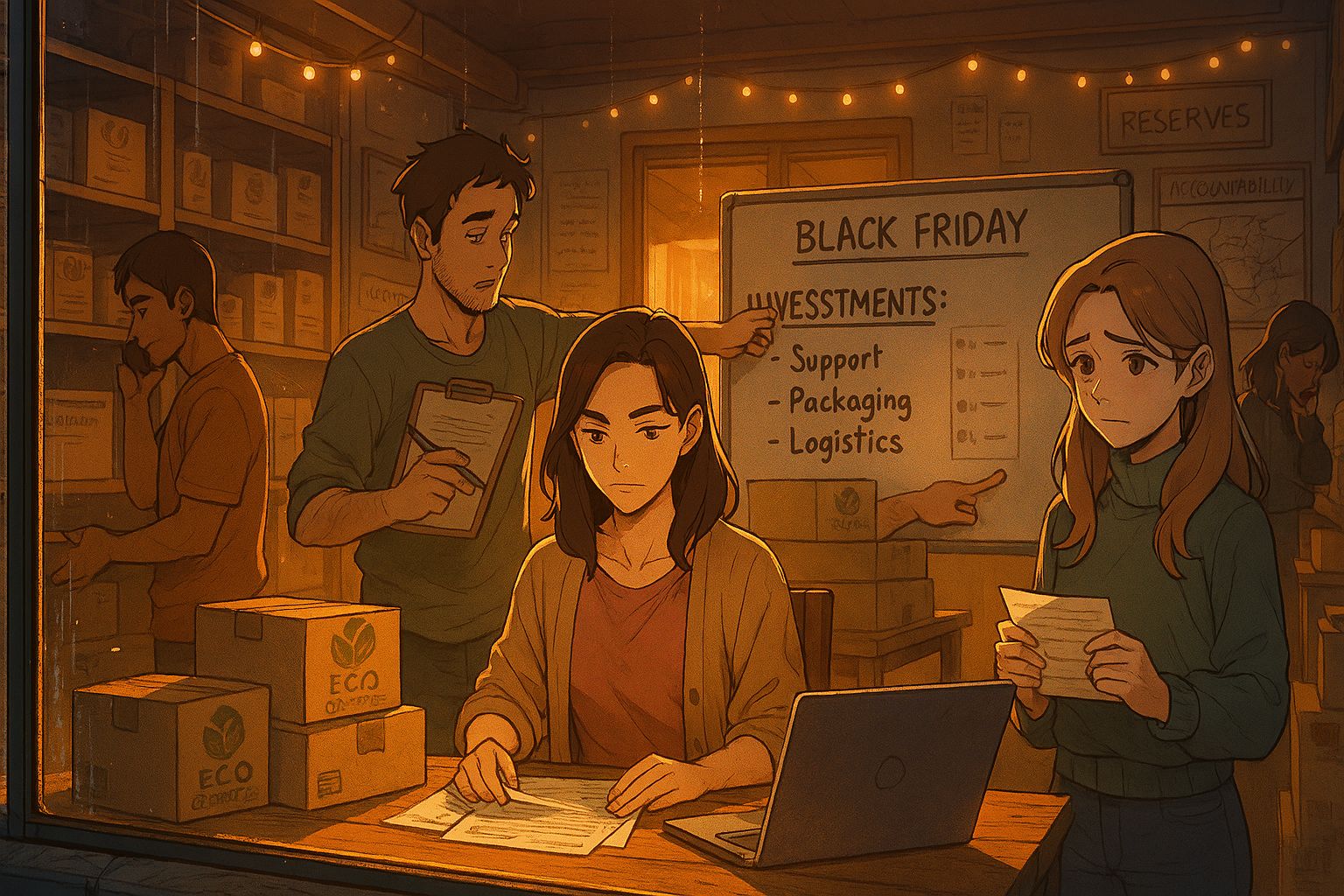
Chapter 9 — Consequences and Reconciliations When the night ended, what remained was not the complete fulfillment of the dream but a tangible portion that was enough to keep breathing. Marina managed to raise a large part of the funds needed for the eco‑certified batch; she did not cover the entire cost, but she secured enough to ensure the project’s continuity and plan a more gradual, orderly replenishment. Diego, exhausted yet relieved, finally understood that investing in infrastructure should not be seen as an expendable cost but as an insurance policy: they arranged with a technical provider a support scheme for demand spikes and set aside a fund dedicated exclusively to paying for critical services. Valentina returned with a letter of apology that fell like a late rain over the makeshift office. She entered with a face pale from shame and guilt, and her voice broke as she tried to explain. “I was wrong,” she said. “It wasn’t bravery; it was cowardice. Will you forgive me?” Marina looked at her for a long moment. There were no theatrics or grand gestures; her words were the measured expression of a calm that surprised with its firmness. “This is not about immediate forgiveness,” Marina replied. “It’s about consequences. If you want to be part of this, show that you’ll act responsibly and not sell everything to the highest bidder.” Valentina nodded with determination. She then proposed a renewed commitment: honest reviews, tiered commissions tied to results, and participation in campaigns that prioritized delivery times and quality standards. She wanted her actions, more than her words, to rebuild trust. Omar, for his part, offered a staggered payment plan and stronger guarantees; Carla, after verifying the effective delivery, confirmed new projects. It became clear that loyalty was not restored with isolated apologies but with sustained, coherent work. Lucía and Andrés managed to maintain volume sales, but they suffered a decline in reputation due to logistical failures. The big chain proved that price without service was a fleeting illusion: on forums and social networks dissatisfied customers shared experiences of missed deliveries and unanswered complaints, and the polished narrative of the mass brand showed visible cracks. The consequences became tangible on every front: operational adjustments, new contractual clauses, financial reserves, and greater demand for transparency from partners and customers. But there were also reconciliations that did not avoid accountability: clear agreements, performance metrics, and accountability mechanisms were imposed, allowing the crisis to be turned into an opportunity to strengthen processes and relationships. In the end, what remained was a network rebuilt with greater prudence and foresight, a business community that learned to measure risks and commit to deadlines and quality, and a lesson about how collective responsibility can restore trust when intentions are accompanied by concrete actions. Chapter 10 — Lessons and Plans What remained in the end was not a resounding triumph nor a victory to display; the city would not remember the shop as the Black Friday champion. Instead, what endured was something less flashy but more valuable: the continuity of the project, deep learning, and clearly defined limits that now governed every decision. Marina and Diego drew up a realistic, phased investment calendar. They prioritized permanent technical support to prevent similar failures; planned improvements to packaging to reduce breakage and returns; and redesigned logistics, incorporating alternative routes, more conservative delivery times, and suppliers with better traceability. They also established a pricing policy that would allow restocking prudently: revised margins, staggered orders, and a minimum cash threshold before committing to new purchases. The goal shifted from growing at any cost to securing continuity through sensible financial decisions. Omar took responsibility for more reliable shipping: he agreed to staggered payments, implemented a more transparent tracking system, and committed to clear delivery deadlines and penalties for noncompliance. That change was not only contractual but cultural: the supply chain gained verification protocols and checklists that had not existed before. Valentina did more than apologize: she presented a plan to restore trust based on verifiable actions. She committed to honest, verifiable reviews, to avoid indiscriminate promotion in exchange for the highest pay, and to publicly report performance metrics for the campaigns she participated in. Her transparency included accepting informal audits by the team to verify that her practices aligned with the project’s values. The scars left by the crisis did not disappear, but they yielded concrete lessons. Risk memory became a tool: every decision now included a vulnerability assessment and a mitigation plan. Mistakes were translated into “useful punishments”: stricter contractual clauses, financial reserves designated for emergencies, and escalation protocols for operational incidents. Marina learned that honesty attracts allies and builds reputation, but honesty alone does not guarantee survival: margin, liquidity, and foresight are also required. She therefore allocated part of future profits to create a financial cushion and to diversify suppliers so as not to depend on a single source. Diego, for his part, understood that prudence is not the enemy of ambition; rather, it is its foundation. He adopted metrics for sustained growth—quarterly targets based on real fulfillment capacity, not optimistic projections—and reinforced internal governance to make less impulsive decisions. The plan also included measures to protect reputation: faster customer service protocols, proactive communication about delays, and a shared-responsibility policy with partners and collaborators. Formal accountability mechanisms were agreed upon, with periodic performance reviews and strategy adjustments every quarter. On a human level, the team gained maturity. They learned to set limits: not accepting orders that exceeded their capacity, negotiating realistic timelines, and prioritizing quality over volume. That discipline reduced operational stress and allowed the project’s coherence to be maintained over the long term. In the end, the lesson was practical and profound: it was not only about surviving an adverse event but about using the experience to forge structures that would prevent repeating the same mistakes. With phased investments, contractual guarantees, transparency, and financial reserves, the shop chose not to shine for a single day; it decided to build a sustainable future. That shift in focus, more than a promise, became a detailed plan—with milestones, responsibilities, and periodic reviews—that turned the crisis into the foundation for more solid, responsible growth. Epilogue — The Calm That Remains When the city was already asleep and shopping bags piled on doorsteps glinted in distant lights, Marina allowed a small, contained smile to form. It was not the elation of triumph nor the smile of someone who has conquered a market; it was the serenity of someone who had weathered a test that could have undone her and yet left her more whole. She sat with Diego at the work table, reviewed the figures once more, and together they drew the roadmap for the coming year: carefully phased critical investments, responsible campaigns that prioritized delivery over promises, partners bound by clear delivery clauses, and a community to serve without abandoning principles. As they tidied papers and turned off the lights of the makeshift office, Marina ran through the names and scenes that had made the shop possible: the hands that actually made the goods, Omar carrying boxes in the rain until his boots were soaked, Carla designing proposals with patience and rigor, and those customers who, by choosing to pay a bit more, decided to support a different kind of economy. She understood more clearly that her shop was more than a point of sale: it was a small refuge where coherence still held weight and meaning. Diego placed his hand over hers in a silent gesture that was enough to seal the decision. No words were needed; the night, a mute witness, kept the calm of the resolution: to resist, with well-defined limits and hope ahead. In the center, the big chains continued their feast of offers and feverish lights; in the small shop remained, instead, a bitter but necessary lesson: growing without betraying what you are has a cost, and often that price proves to be the ultimate measure of dignity. The calm that remained was not simple rest: it was the peace of someone who knows that, having learned, they can build a more prudent, humane, and resilient project. See previous chapters: https://read.cash/@mc5punk/short-story-the-tent-that-held-out-chapters-7-and-8-596e3a21 Source of the images. Image created with Bing.
No comments yet