 @mc5punk
more from that month
@mc5punk
more from that month
Short story: The Future of Psychology in the Age of Artificial Intelligence
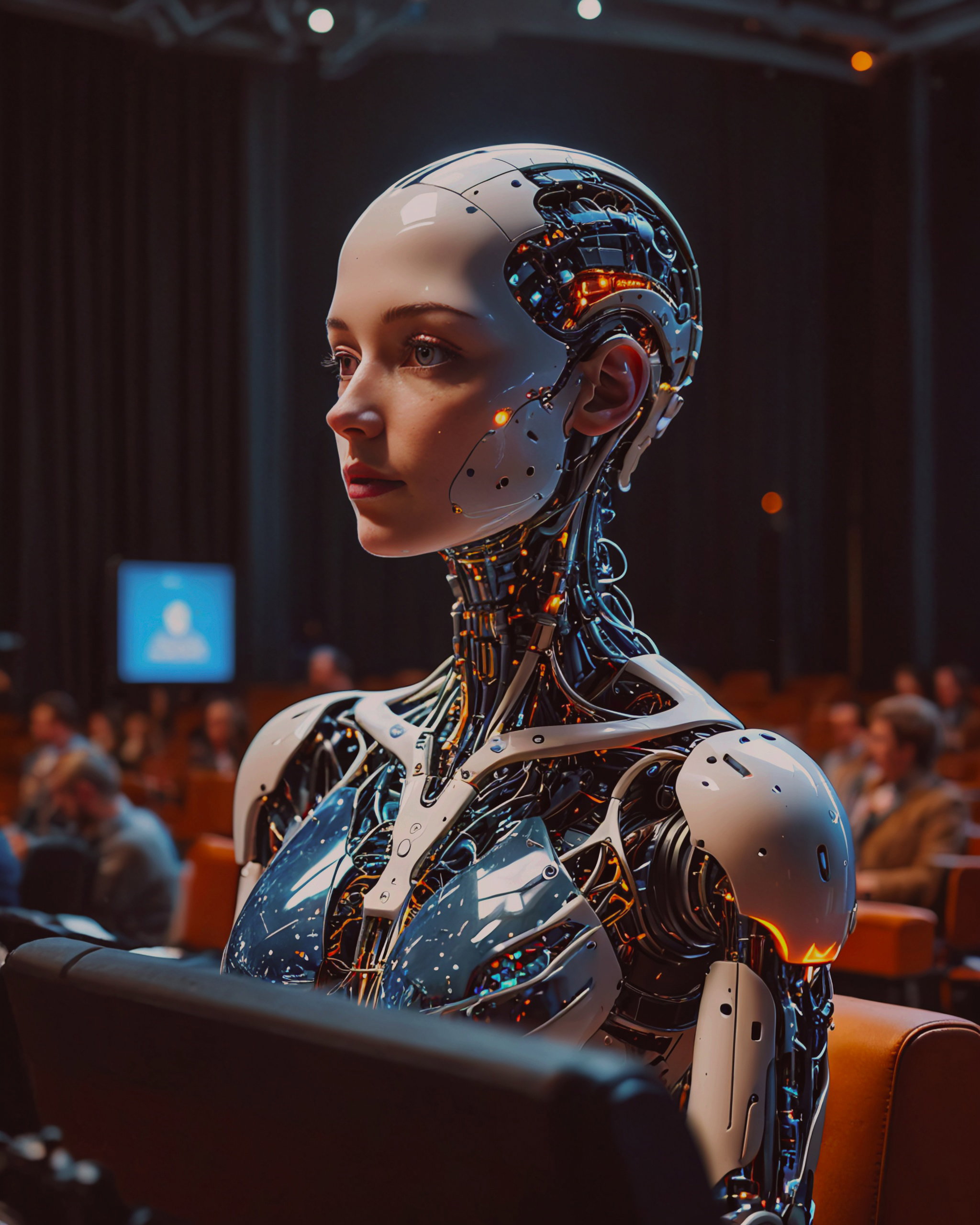
In an auditorium full of expectation, a group of academic specialists gathered to discuss the future of the different branches of psychology in a world increasingly influenced by artificial intelligence and other emerging technologies. The room was full of renowned psychologists and academics, each with their own perspective on how these technologies could transform traditional theories and practices into psychoanalysis, humanism, behaviorism and more. The debate began with the intervention of Dr. Elena García, a prominent psychoanalyst who argued that artificial intelligence could be a powerful tool to delve into the human subconscious. "AI can help us analyze patterns of behavior and thinking that were previously difficult to detect," he explained enthusiastically. "Imagine being able to identify and treat hidden traumas more accurately and efficiently. However, I also have my reservations about how automating certain therapies could dehumanize the healing process. The emotional connection between the therapist and the patient is fundamental for the success of psychoanalytic therapy." Then Dr. Carlos López, a defender of humanism, took the floor. "Technology can be a means, but it should not replace human connection," he emphasized with conviction. "Humanism focuses on subjective experience and the search for meaning, aspects that AI cannot replicate. Humanistic therapy is a personal and emotional journey that requires empathy and deep understanding, qualities that only another human being can offer. Although I recognize that technology could facilitate access to therapy, I think it is a mistake to think that it can replace the human essence of our profession." Dr. Sofía Rodríguez, a behaviorist, presented a more pragmatic view. "Artificial intelligence can help us personalize behavioral interventions, making them more effective and efficient," he said with a smile. "By analyzing large amounts of data, we can identify behavioral patterns and develop more accurate behavioral modification strategies. In addition, AI can automate repetitive tasks, freeing up time for therapists to focus on what really matters: human interaction and solving complex problems." Finally, Dr. Julián Hernández, an expert in cognitive neuroscience, intervened to talk about how AI is revolutionizing the understanding of the human brain. "The ability of AI to process and analyze large amounts of neuroscientific data is enabling significant advances in the understanding of cognition and behavior," he explained. "However, we must be aware that AI does not replace the complexity of the human experience, but complements it. Cognitive neuroscience can benefit enormously from AI, but we also need to make sure that we don't lose sight of the importance of subjective experience in our research." As the debate progressed, opinions began to diverge more deeply. Dr Garcia expressed concern about the possibility that AI could be used to control or manipulate people, rather than help them. "What happens if the AI falls into the wrong hands? What guarantees do we have that it will be used ethically?", he asked uneasily. Dr. Lopez stepped in to support his concern. "AI can be a powerful tool, but we must not forget that behind every algorithm there is a human decision. If we do not ensure that these decisions are ethical and fair, we run the risk of creating a system that perpetuates existing inequalities and prejudices." Dr. Rodriguez was more skeptical about these concerns. "I think we are being too pessimistic. AI can be regulated and monitored to make sure it is used responsibly. In addition, the benefits it can offer in terms of efficiency and accuracy are too great to ignore." Dr. Hernández tried to mediate, but the tension in the room was palpable. "I understand everyone's concerns, but I think we need to find a balance. AI is not inherently good or bad; it depends on how we use it. We must work together to make sure that it is used in a way that benefits humanity, without sacrificing our human essence." However, the debate ended in a stalemate. Dr. Garcia stood up, visibly frustrated. "I cannot accept that efficiency is prioritized over empathy and human understanding. Psychology is not only a science, it is an art that requires heart and soul." With those words, she left the room, followed by Dr. López, who nodded in silence. Dr. Rodriguez and Dr. Hernandez remained seated, looking at each other with a mixture of disappointment and determination. "I guess this isn't over," Dr. Rodriguez said, breaking the silence. "The battle for the future of psychology has just begun." Dr. Hernández nodded, and together they decided to move forward, each from their own perspective, in an attempt to shape the future of their discipline in a world increasingly dominated by technology. Source of the images. Image created with Starryai.
No comments yet