 @mc5punk
Short story: The Network of Silence
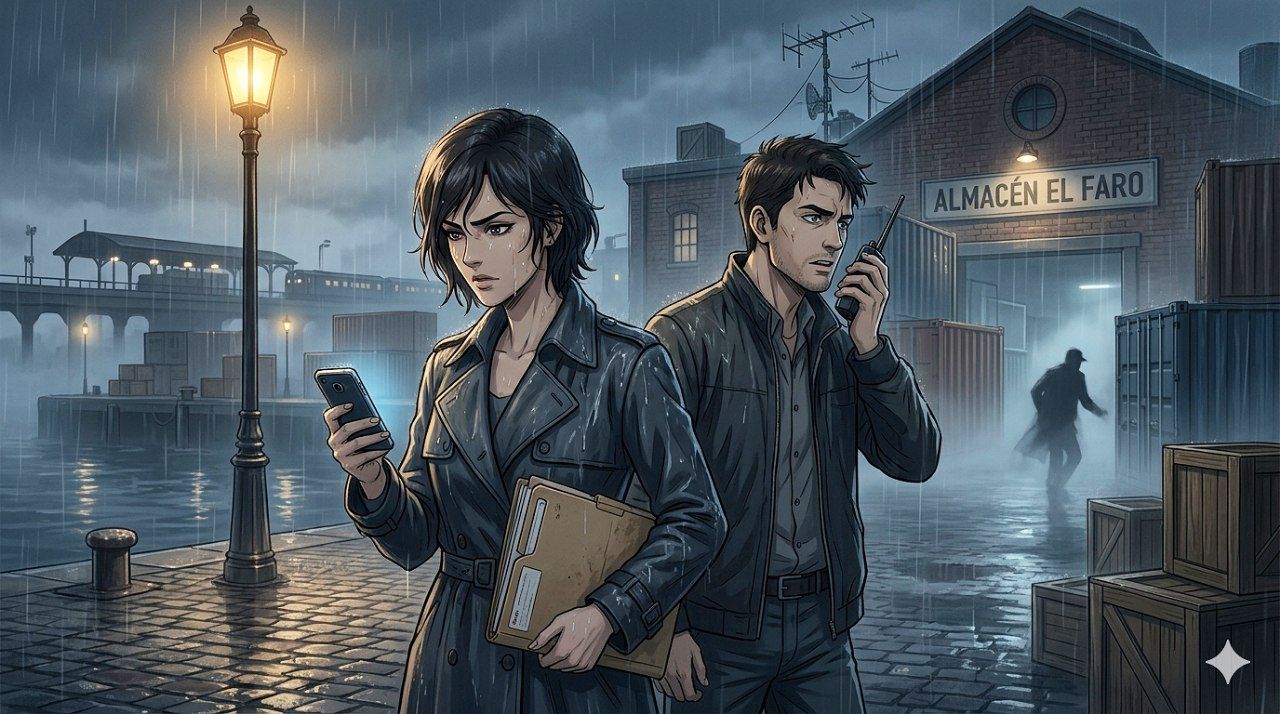
The rain had a metallic edge that afternoon over Puerto Arenal; it fell in straight lines that seemed to cut the air and turn the streets into mirrors. When Detective Mara León opened the message on her phone, the screen’s glow made a small slit of light across the rain: “Urgent operation. Possible virtual extortion ring. Report to Headquarters.” At the Forensic and Judicial Investigation Agency (AIFJ) nerves were taut; reports spoke of a sustained increase in calls that paralyzed merchants and online shop vendors. In the meeting room, Commissioner Héctor Murcia spread the papers with steady hands and spoke slowly, measuring each word so it would land. “Mara,” he said, “this is no longer just phone extortion. They’re forcing people to travel to remote locations and then demanding payments for alleged kidnappings. Form a team, trace Marketplace and the virtual bazaars. We have more than thirty complaints and the pattern points to an organized network.” Mara took the files. The evidence was cold and precise: call logs with changing prefixes, screenshots of shops that existed only in code, automated messages that invited purchases and links that opened doors to fake identities. Something chilled her: the victims received the call at the same stretch of their day, almost the exact moment they went out to deliver or pick up an order. The criminals knew routines, understood schedules, and handled approximate locations thanks to information left by online activity. First night: the trap The first lead took them to Valeria Ramos, a delivery worker who made her living selling garments on the Mercado Verde platform. Valeria had reported the call with a voice still trembling: they threatened her with an implausible story —that she had attacked a relative— and forced her to drive to a ruined road at the edge of the estuary. Fear had made her obey. Mara and Inspector Julián Ortega followed her quietly from the mall parking lot. Lights reflected in puddles turned every movement into a shadow; the surveillance car’s engine purred beneath the rain. On the radio, Julián whispered, “If it’s a fake call, they’ll cut it once they get the money. We can’t let that happen.” Valeria, face ashen, remembered the voice that cornered her through the earpiece: dry, without warmth. “Don’t try to run. If you move, we’ll kill you. Give us a family member who can pay.” Her heart beat against the wheel like a drum. She gave her brother’s name. The voice on the other end didn’t hesitate: it called the number and demanded a transfer. When AIFJ operators tried to trace the origin, they hit a technical maze: IMEI spoofers, cloned numbers redirecting to an anonymous cloud server, gateways that erased traces within seconds. It was the work of skilled hands, not amateurs. Game of shadows As the investigation advanced, the network of false identities revealed itself in detail. Profiles with believable names, photographs stolen from social media, shops that existed only to lend verisimilitude to fictitious transactions. Mara watched the connections appear on the office whiteboard: lines linking accounts, transfer numbers, registered addresses that didn’t match any known premises. “We have a financial lead,” she said, drawing arrows. “A transfer payment from an exchange account to two addresses on the outskirts. One appears in the records as ‘Almacén El Faro.’” Almacén El Faro —a grimy out-of-town warehouse with flaking paint and a barely visible sign— was a nest of dust, old boxes and neglect. Among cartons they found a clandestine antenna and reconfigured telecommunications equipment: devices that forwarded calls and split them across remote servers. On a table, a phone held recent messages: lists of names, schedules, and two repeated initials: R.M.O. and C.Y.A.F. The sense was that someone had designed fear as a service: set up the threat, choose the timing, collect the fee. Truth and betrayal Digital forensics allowed them to pin down two pieces: a thirty-nine-year-old technician, Ricardo Molina Otero (R.M.O.), and a thirty-year-old runner, César Yánez Aponte (C.Y.A.F.). Under interrogation their alibis unraveled with the steady force of the evidence: entry logs to the warehouse, account movements, phone locations tying them to Almacén El Faro. Ricardo, voice breaking, confessed part of it: “I only built the antenna… they paid me little. I didn’t know they were going to move transfers that large.” His explanation had the cadence of someone excusing a wrong step out of need; yet his hands had held cables and configurations not typical of mere installers. César, by contrast, stayed defiant. From the dock he threw a warning with teeth: “They won’t catch the brains. This is a system, not two culprits.” The accounts didn’t lie: transactions had passed through exchange houses, through shipping companies with opaque records and through anonymous digital wallets. Between the lines, investigators found an operator selling “alarm services” to small businesses —a masked protection promise that in fact was the key to activate extortions and collect commissions on each “ransom” paid. The network was wide, stretching to usurped identities and financial routes that changed hands with almost industrial precision. The final ransom The gang prepared their biggest strike with the cold calculation of one who sizes up the most valuable prey. They chose a restaurant entrepreneur who had sold furniture on BazarNorte. His daughter received the call and was forced to move to an old train station, where rusted beams seemed to watch the stranger drama. The AIFJ set up a controlled surveillance operation: let the scene play out, keep communications under monitoring, and cut the money source the moment the transfer was confirmed. Mara sat in the mobile operations room, screens spitting waves and maps, watching the thread of extortion in real time. Julián stood next to her, ready. From the station, the daughter, trembling, complied. The voice on the line issued instructions and demanded confirmations; the panic tones and psychological pressure functioned like a trained mechanism to break resistance. When the signal to move the money came, Julián pushed the button to freeze the account; orders from the room translated into a technical strike that sealed the escape route. Cutting the transfer fractured calm into screams over the line and, seconds later, silence: the call went dead. “Perfect cut,” Mara murmured. “Now.” The attackers tried to vanish into the city, but the AIFJ’s coordinated net closed around them: Ricardo was arrested in his workshop, coated in dust and parts; César was taken in the cargo hall, among pallets and crates, eyes still searching for an exit. Their belongings held a list with more than thirty names: victims who had already been forced to move and to transfer money. These were not isolated incidents; they were a machine in motion. Echoes in the city The news echoed through the city like thunder that compels people to look. In a press conference, Commissioner Héctor Murcia explained the modus operandi and issued practical recommendations: verify identities on platforms, don't give family details over the phone, and report any coercion. His words were necessary, yet in the streets people knew catching the perpetrators wasn’t enough; the masterminds and the financial structure feeding the scheme were still at large. Later, in a cold corridor of Headquarters, Mara received an unmarked envelope. Inside was a card with three words written in black ink: “It was not enough.” The note fell like a stone into her stomach. Turning a corner to leave, a figure dissolved into the mist rising from the port — an ephemeral presence, a notice that the strings were not fully cut. “There are still hands behind it,” Julián said quietly. “They haven’t finished.” Mara clenched her fists until her knuckles hurt. She knew the city breathed with a little less relief, but still with fear. Now they had names, routes and evidence; they had landed an important blow, but the Network of Silence could regenerate, move through other channels and learn. She knew the next call would not only force someone to move; it would send the message that fear was still a tradable currency. “Then we continue,” she answered without hesitation — “until we find the boss.” The rain did not stop. It fell like an impartial witness, erasing footprints where pursuers had passed and marking the start of a longer hunt. Every message, every account, every transfer became a possible clue. The AIFJ had dismantled part of the machine, but now the hardest phase began: tracing the shadows who gave orders from afar, cutting financial routes, and dismantling the network so that silence would cease to be a weapon and return to simply meaning the absence of voices asking for help. The city, between the murmur of rain and flickering lights, kept its night; and Mara, walking under the damp dawn, felt that the chase had only just begun. Source of the images. Image created with Google Gemini.
No comments yet