 @mc5punk
more from that month
@mc5punk
more from that month
Short story: Voices in Debate
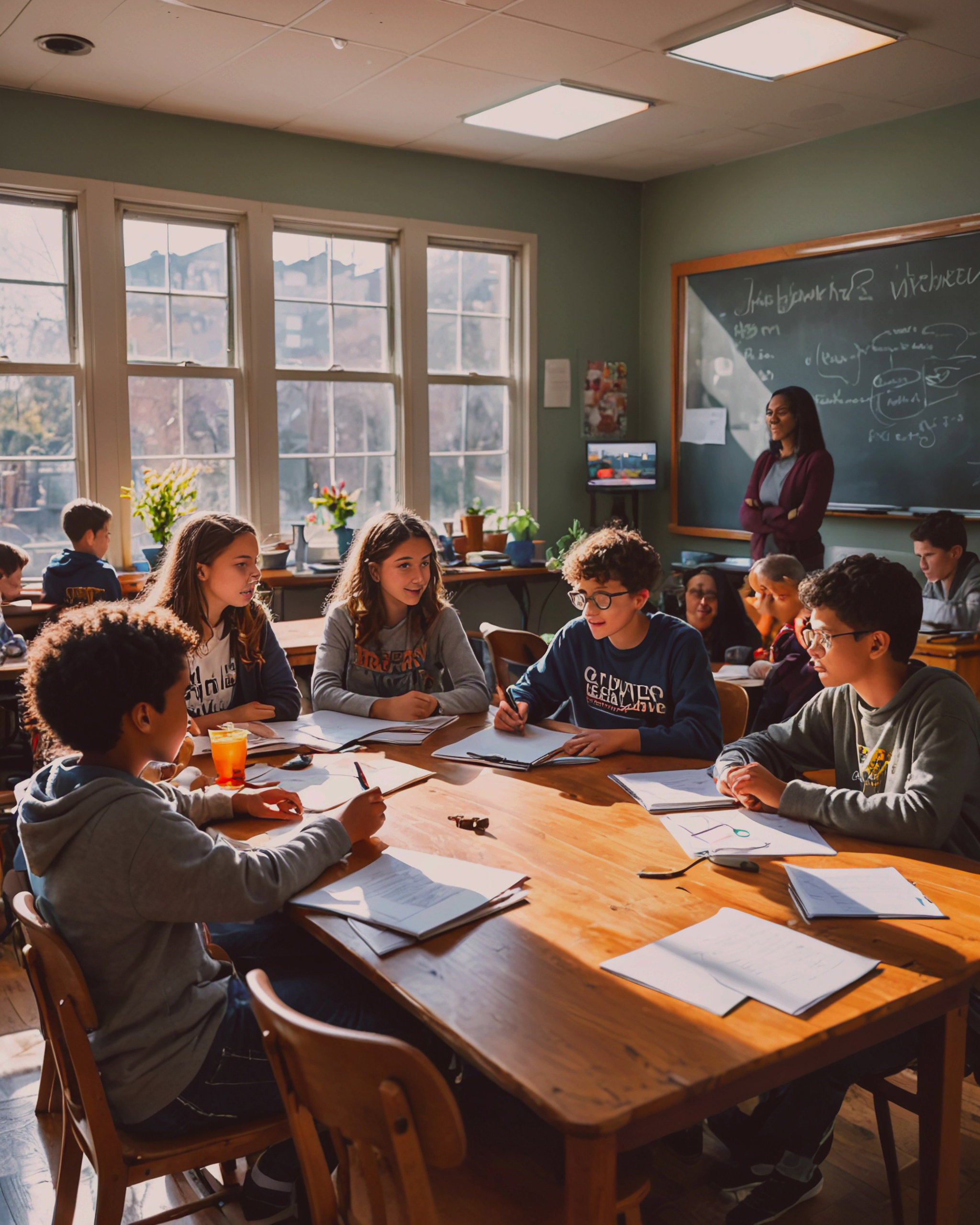
It was a cool December day at the University of Communication and Media, where the bustle of students filled the halls with laughter and lively conversations. Sunlight filtered through the large windows of the main building, illuminating the walls decorated with posters of student campaigns and exhibitions of academic works. In one of the largest classrooms, with tables arranged in a U-shape, Professor Laura had convened her students for a special debate on a topic that had generated controversy in their classes: the differences between journalism and social communication. Clara, a young woman with curly hair and bright eyes, came running into the classroom, with a folder full of notes in her hand. His enthusiasm was palpable; he had always dreamed of being a journalist. Next to him, Javier, a charismatic social communicator with an infectious smile and a casual style, entered with a nonchalant air, as if he were ready for an informal chat instead of an academic debate. Anna, on the other hand, was more reserved. With her straight hair pulled back in a ponytail and glasses that gave her an intellectual air, she sat at the back of the classroom, ready to observe and take notes. Teacher Laura, a middle-aged woman with a warm and energetic presence, welcomed her students. His voice echoed in the classroom as the students settled in. "Thank you all for coming—" Laura began. Today we are going to explore the differences between journalism and social communication. I want everyone to express their opinion and argue their point of view. Clara, do you want to start? Clara stood up, her heart pounding as she felt the attentive gaze of her companions on her. He cleared his throat and started talking. -Journalism - he said with conviction - aims to inform the public about current and relevant facts. Every piece of news must be verified and presented objectively. It's not just about telling stories; it's about reflecting reality as it is. While Clara was talking, her hands were gesticulating passionately. His face lit up by the fervor of his words showed the importance he attached to his professional future. Javier raised his hand with a playful smile that contrasted with the seriousness of the subject. "I understand your point, Clara—" he said, "but social communication goes beyond just informing. It's about connecting with audiences on an emotional level. We are not only looking to transmit data; we want to generate awareness and dialogue. Ana was carefully observing the interaction between her companions. She was inspired by the debate that was taking place and decided to intervene. "Both perspectives are valid—" he explained. Journalism is based on a specialized training that includes skills such as research and writing. On the other hand, social communicators have a broader training that allows them to address different contexts and audiences. The classroom began to fill with energy as the students debated fervently. Clara passionately defended the importance of objectivity in journalism, while Javier argued about the need for creativity in social communication. "The content of the journalist must be factual," Clara insisted, frowning as she spoke. We cannot allow ourselves to fall into subjective interpretations. The truth is our compass. Javier replied calmly, resting his elbows on the table while looking Clara in the eyes. - But the social communicator has the power to transform a message to make it accessible and attractive. Sometimes, that's what the audience really needs. Not everything can be black or white. Ana felt the atmosphere becoming more and more intense; emotions were running high. He decided to bring a broader perspective to calm the spirits. "What they both say is valid—" he explained. Journalism works within traditional and digital media to keep society informed. Meanwhile, social communicators can work in marketing or public relations, adapting to various public needs. As the debate progressed, Clara began to feel a mixture of frustration and admiration for Javier. His arguments were solid and well-founded; however, he was concerned that his approach might dilute the objective truth that he valued so much. Voices rose as other students began to add their opinions to the debate. Some supported Clara in her defense of traditional journalism; others aligned with Javier in his broader vision of social communication. The classroom was full of youthful energy; nervous laughter and excited murmurs echoed everywhere. Finally, Laura gently interrupted: —I love to see this discussion so lively—" she said smiling. Remember that both journalism and social communication are vital for our society. Everyone has their place and their purpose. The students nodded slowly, realizing that they had come to a common understanding. In that classroom illuminated by the winter sun, they had found a meeting point between the lines where journalism and social communication could coexist and collaborate for a better future. With the debate closed but the ideas still fresh in their minds, Clara and Javier decided to collaborate on a joint project for their final class: a series of articles that would combine the rigor of journalism with the creative approach of social communication. Ana offered to advise them from her academic experience, thus creating a bridge between their professional worlds. The three met at a campus cafeteria days later to discuss ideas. The aroma of freshly brewed coffee filled the air as they settled at a table by a large window overlooking the central garden full of leafy trees and students enjoying the winter sun. While they were discussing the topics that they could address in their articles, Clara felt a spark of emotion as she saw how her ideas flowed alongside those of Javier and Ana. The collaboration allowed them to explore new perspectives; together they were creating something bigger than themselves. Thus began a new stage in his university life where every line written not only informed but also connected hearts and minds in search of positive change on and off campus. In "Voices of Change", the student newspaper where they would publish their joint works, they learned that together they could echo their voices in the real world, leaving a mark on those who read their carefully chosen words between the lines. Source of the images. Image created with Starryai.
No comments yet