 @mc5punk
more from that month
@mc5punk
more from that month
Short story: The Silence of the Terrace
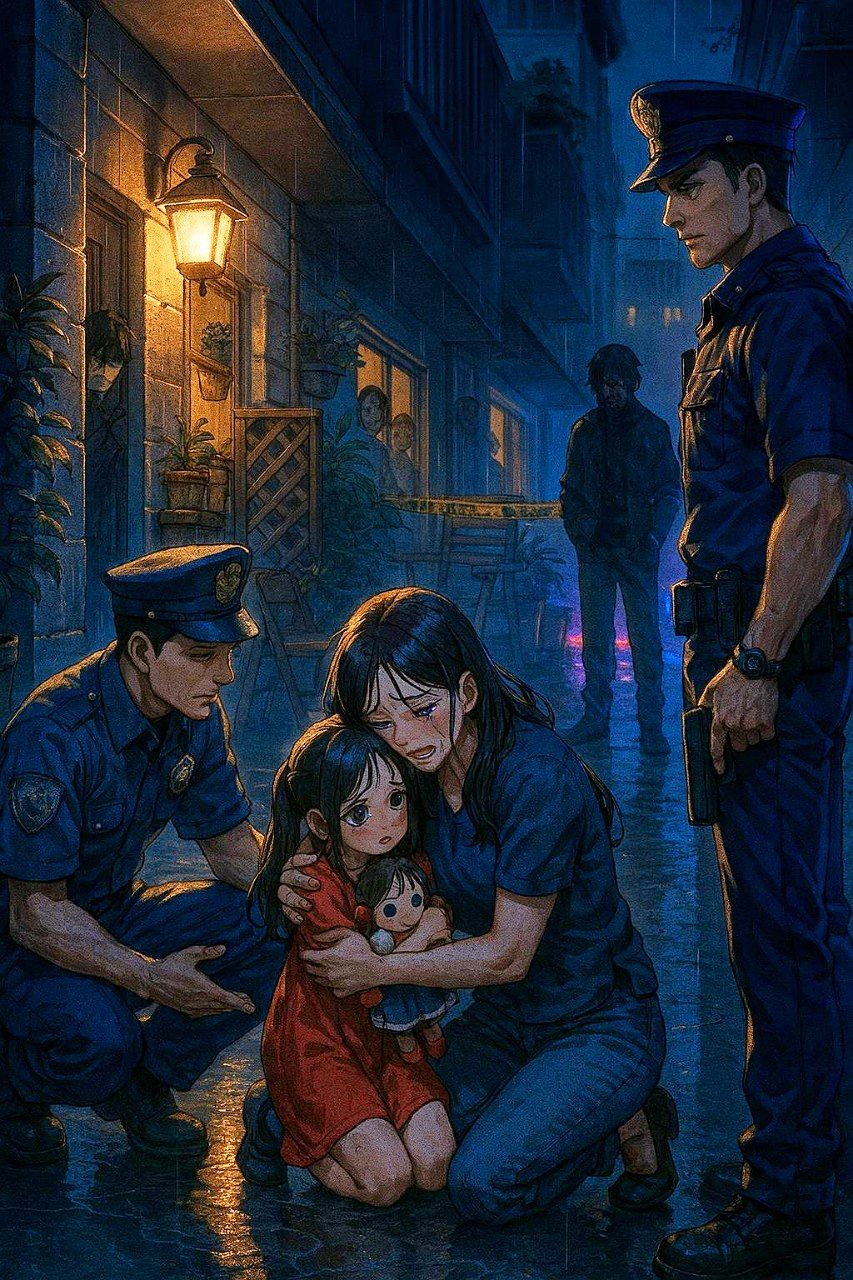
The night had closed over the housing complex like a hot metal lid: quiet streets, yellow lights marking the edges of windows and doors, the steady breathing of buildings that believed themselves safe. At ten o’clock sharp, that supposed calm was shattered by a scream that tore open windows and slipped through the cracks in the walls. “Martina!” Sofía’s voice echoed between balconies, a raw cry of fear. The name fell into the dark and hung there, trembling and empty. Neighbors switched on lamps, doors opened, shadows peered into the corridors. Doña Carmen, who carried the years with the patience of someone who knows every neighbor and every rumor, was among the first down the stairs. Her robe brushed the steps as she asked, voice hoarse with surprise, “What has happened, daughter?” Sofía stood for a second unable to speak. Her hands trembled, and when she finally did the sentence came out like someone losing a lifeline: “She got up to drink water and never returned. She’s not in her room. I can’t find her.” The tremor spread like a stain: questions, phones, the police rising to the top of the emergency list. Tomás, who lived one floor below and had grown up with Martina—playing on the same landings, sharing empanadas on rainy afternoons—stepped forward with his phone in hand. “I’ll check the cameras,” he said, fingers scanning recordings. “I won’t leave her alone, Sofía.” The footage returned a fragment of the night: corridors lit by the intermittent beam of a light, a figure sliding along the steps, a shadow entering a terrace. It was only a rectangle of pixels on a monitor, but for those who watched it, it felt like a sentence. Inspector Álvarez arrived with the gravity of someone who understands that every second counts: immaculate uniform, boots that made no noise on the entrance floor, eyes sweeping faces for something to clarify them. “Split into two teams,” he ordered. “Cameras, access points, terraces. Rojas, with me; the rest, cover the exits.” The neighborhood, which had relied on routine for protection, began naming faces that once passed unnoticed. Whispers carried the name “El Gato”—Carlos Mendoza—a solitary man with strange hours, known to wander the stairwells at odd times. Doña Carmen, with her memory full of small observations, said she had seen him that afternoon carrying a box. “He was going to the terrace of block C,” she said. “There was something odd about him.” The camera feed confirmed what no one wanted to admit: at half past seven, a figure had entered the terrace of block C. The face wasn’t clear, but the motion was enough for Inspector Álvarez to order a raid with the necessary caution; this wasn’t simply about recovering a child, it was about ensuring the rescue wouldn’t expose her to further harm. The terrace door opened with the dull sound of careful pushing. The air that came out smelled of dry earth, plastic, and nights that crawl by without witnesses. Stacked chairs, an open box, pots with dried leaves. And a tiny voice, hardly more than a thread that cut the silence: “Mama…” What followed was a choreography of restrained tension. Inspector Álvarez moved forward with measured steps; Officer Rojas covered the flank, eyes fixed, hands ready; the rest of the team held at the entrance, poised to act. The inspector’s voice was low and warm, intended to tear down the wall of fear around the child. “Martina,” he said. “I’m Inspector Álvarez. We’re here to help you.” The girl emerged from the shadows, clutching a rag doll to her chest, hair disheveled, eyes wide like moons. Her lashes glistened with the sheen of someone who had cried but wasn’t yet exhausted from fear. Dust marked her knees; her shirt was slightly stained. Everything about her spoke of hours awake, of childhood interrupted by a night of uncertainty. Sofía burst into the terrace like a hurricane of love and dread. The hug that followed was both magic and necessity: hands searching, fingers counting heartbeats, a body reclaiming its lost half. “My life,” Sofía stammered through sobs. “Don’t ever let go.” The antagonist’s presence—Carlos Mendoza—was less theatrical than the rumor that surrounded him. They found him hunched in a corner, hands dirty with soil, gaze evasive. His words tried to tangle excuses and explanations. “I… I only took her to the terrace so she wouldn’t run away,” he said, voice breaking. “I didn’t mean to hurt her.” Inspector Álvarez listened and held the calm that the law demands. His replies were short and measured, like placing pieces on a board. “Remain where you are. We will clarify this at the station.” The next minutes were an intersection of procedure and humanity: neighbors gave statements, forensics collected prints and objects, Tomás reviewed recordings searching for a detail in the shadow. Doña Carmen kept repeating certainties that felt like accusations: “I always had a bad feeling about him,” “he wasn’t a man for children,” “he used to come and close doors abruptly.” An ambulance waited at the complex’s entrance and advanced with serenity when informed that Martina would be taken to the hospital for evaluation. During the ride, Sofía never let go of her daughter’s hand. The silence inside the vehicle was woven from relief and questions that remained unanswered. Tomás stayed behind, leaning against the rear door with his gaze fixed on the terrace that was now only a scatter of upended objects. In the emergency room, professional hands worked with precision. Doctors and psychologists examined Martina with the tenderness and rigor required by fragility. A physical exam looked for marks or signs of abuse; a psychological assessment sought to measure the invisible wounds those hours might have left. Sofía remained by her side, eyes raw, voice a steady murmur of promises: “I’ll stay with you,” “everything will be all right.” Meanwhile, at the police station, Carlos’s account began to show uncertainty. His words spun a whirlwind of justifications: “I found her confused and brought her to the terrace to look after her,” “I didn’t know what else to do.” But physical evidence and neighbor testimonies started to contradict attempts to erase facts. Inspector Álvarez, with the authority earned through experience, ordered the necessary procedures: fingerprints, formal statements, timelines. The building, briefly cleaved by anguish, slowly stitched itself back together with threads of solidarity. Neighbors brought tea, offered words laced with awkward consolation, promised to help. Doña Carmen repeated an offer that went beyond mere words: “If you need anything, don’t hesitate. We’re here.” In the following days, the investigation unraveled like a skein being carefully sorted. Inspector Álvarez guided the inquiries with meticulousness; he did not trust first impressions. He cross-checked schedules, reviewed cameras from neighboring buildings, interviewed those who lived nearby. Tomás became an indispensable witness: his image analysis and knowledge of Carlos’s movements furnished elements police had not initially considered. Martina’s family endured a storm of emotions: relief at her recovery, fear of public exposure, simmering anger at the idea that someone close could be implicated. Sofía alternated between being a protective mother and a woman who had to steel herself to face the legal process. In sleepless nights she found herself checking her daughter’s hands, inhaling her hair, repeating gestures to make sure everything was real and not a fragile truce. The community was also wounded. Residents who had exchanged polite greetings began to share something more intimate: accounts of small violations of trust, new routines for care that had to be rethought. The terrace where Martina had been was temporarily sealed; chairs and pots were removed and kept as material evidence and as reminders of a night no one wished to relive. Police interviews with Carlos grew tense and protracted. He maintained his version: that the child got lost and he took her to the terrace for her safety. But contradictions emerged—his behavior in the building, neighbors who had seen him enter that terrace alone with a box, the inconsistencies in his timeline. The judicial process was only beginning; the inquiry had already left marks on everyone’s lives. Martina remained under medical and psychological observation. Professionals made clear that recovery would be gradual: the body might heal quickly, but emotional scars require prolonged care—steady routines, the constant presence of loved ones. Sofía clung to this as a beacon: regular schedules, a gradual return to school when the child was ready, therapy to rebuild trust. The complex gradually regained the semblance of normal life, but caution had replaced naive confidence. Hallway conversations now included practical advice: lock doors, watch children at entrance and exit times, share emergency numbers. Doña Carmen continued to sit at the portal in the afternoons, her gaze often on the terrace that had become the site of anguish. Tomás visited the family often; he refused to let the incident become silence. Inspector Álvarez kept steering the investigation with patience. He knew justice would take time, that gathering proofs and following legal steps is a long road. Above all, he knew the priority: protecting Martina and supporting the family in the immediate steps. In the community’s memory remained the image of the rag doll Martina had clutched on the terrace; the small, stained object became a symbol—of vulnerability, yes, but also of hope. Because despite the night, the shadow, and the fear, the child had returned. Her return didn’t erase the scare or the uncertainty, but it set a repair process in motion that, while slow, began with the embrace Sofía refused to release in the terrace and with the hands of professionals who cared for the little girl in the hospital. The investigation continued, statements were consolidated, and the community learned to look more closely. At the center of it all was Martina—her care and her future. The complex worked to rebuild its routine gently, aware that a fragility revealed in one night could be countered by the constancy of days. And in that constancy lay the real promise: that the girl, wrapped by those who loved her and by a community that decided not to look away, could gradually be just a child again. Source of the images. Image created with Bing.
No comments yet