 @mc5punk
more from that month
@mc5punk
more from that month
Short story: Liberation Circuits (Chapters 4 and 5)
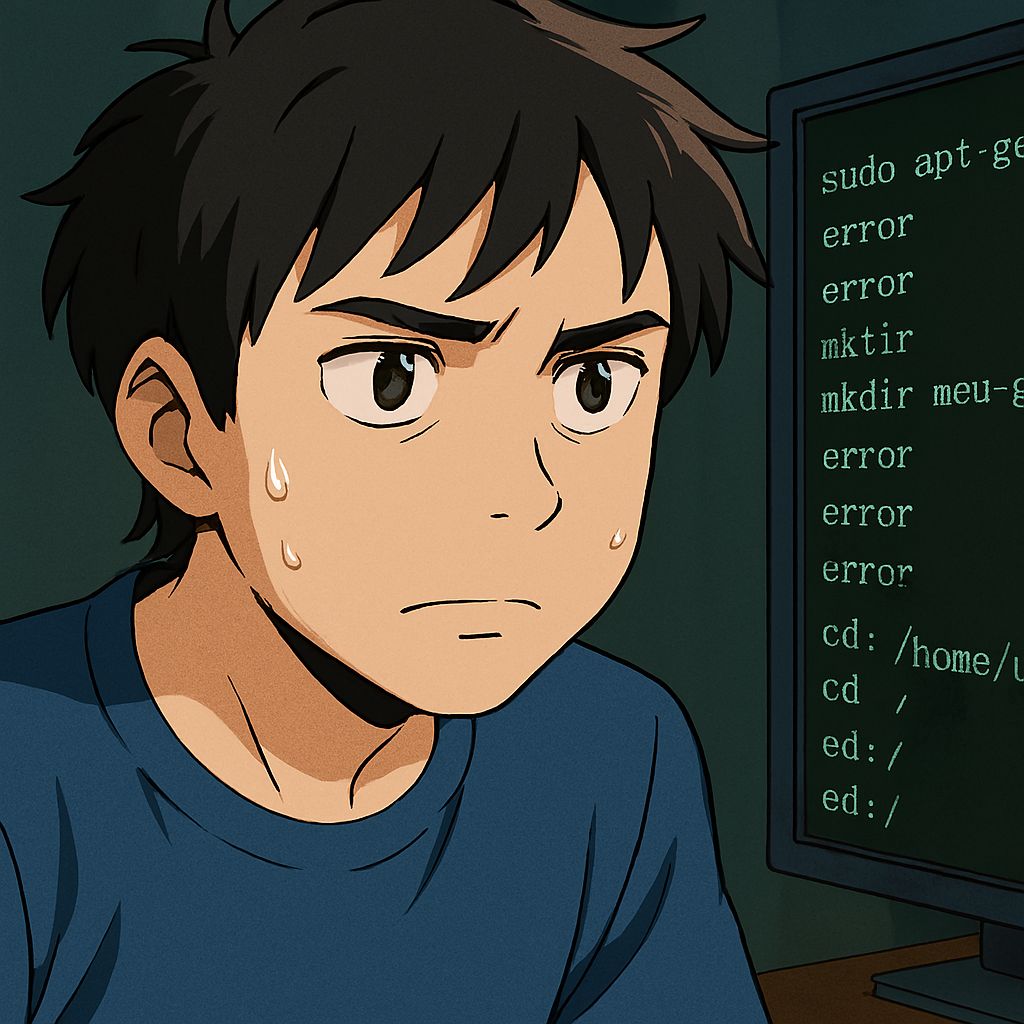
Chapter 4: Battle of Systems [Omar, typing frantically, mutters to himself] "Get ready to disappear. Every penny will be wiped out in less than they can blink." At the heart of an unprecedented digital war, the conflict was unfolding in an invisible but devastating terrain: the world of data, algorithms and information networks. This was not a conventional battle of trenches and crossfire, but a cerebral confrontation where technology became the most lethal weapon and information the ultimate battlefield. Omar, with the precision of a digital surgeon, unleashed an economic virus of extraordinary sophistication. It was not a simple malware, but a weapon of mass financial destruction. His lines of code acted as an electronic solvent that liquefied the fortunes of the oligarchs in a matter of seconds. Every transaction, every bank account, every digital asset was disintegrated with surgical meticulousness, dismantling in minutes economic empires built over decades. [Lina, looking at her screens, exclaims] "Compromised systems! I'm generating total interference. Let them try to track me down now." Meanwhile, Lina had become a cyberwarfare strategist. His specialty was systems interference. It had penetrated the sophisticated enemy targeting systems, generating waves of digital disturbance that turned precision algorithms into pure chaos. The navigation systems, previously perfectly calibrated, now behaved like crazy compasses, sending contradictory signals and generating total tactical confusion. [Axel, connected to multiple interfaces, speaks with modulated voice] "Coordination in progress. Systems convergence at 98%. Prepare final attack phase." Axel, the strategic mastermind of the operation, operated from a mobile command core that defied all traditional understanding of military control. His technologically augmented mind functioned like an organic supercomputer, capable of connecting to multiple systems simultaneously. He was not a commander in the classical sense, but a living processing node that coordinated every movement with pinpoint accuracy. The battle lasted for hours, but it was not measured in conventional time. Every second was an eternity of digital exchanges, every microsecond a potential victory or defeat. Bytes flew like bullets, algorithms exploded like missiles, and reality was reconfigured with every line of code executed. [Omar suddenly screams] "I've got it! Financial systems collapsed in 3... 2... 1..." It was not only a technological war, it was a conflict that redefined the boundaries between the human and the digital, where organic and artificial intelligence converged at a point of maximum strategic intensity. Each move was a quantum chess where the traditional rules of confrontation had been completely rewritten. [Lina celebrates] "Enemy systems neutralized. They won't know what hit them." Victory would not be decided by brute force, but by the ability to process, interfere and reconfigure systems in real time. Omar, Lina and Axel were not soldiers in the traditional sense, they were warriors of a new kind: engineers of reality, architects of digital destruction. [Axel concludes] "Mission accomplished. The new digital order starts now." The battle of systems had begun, and its outcome would determine not only the outcome of an immediate conflict, but the very future of the war Chapter 5: The Price of Revolution The New Eden laboratory lay like a wounded body, its walls blackened and broken circuits scattered like scars from a recent battle. Axel was contemplating the panorama, turning a fragment of circuit between his fingers. Vera, lying on the emergency stretcher, broke the silence with a weak but determined voice: "Do you really think it was worth it, Axel?" He turned slowly, his eyes reflecting a mixture of determination and melancholy. "Every revolution has its price, Vera. We are not destroyed, we are reborn." Omar approached with his synthetic voice, projecting the data on a holographic screen: "We lost 43% of our infrastructure. Resources are critical." "We didn't lose," Axel interrupted firmly, "we evolved." Lina, her face partially covered by biomechanical bandages, was frantically reviewing the recovered data. Suddenly, he let out a wry laugh: "Evolving hurts, doesn't it?" Vera tried to sit up, but her neural implants sparkled slightly. "It hurts more to stay still," he replied. Omar calculated, "The odds of success are—" "The odds don't matter," Axel interrupted him. "What matters is the vision." Lina turned around, her eyes half-covered by the bandages shone brightly: "A vision that has cost blood... well, synthetic liquid in our case." A moment of silence enveloped the room. The synthetic liquid kept dripping from Vera's implants, each drop echoing like a heartbeat of hope. "We will rebuild," Axel finally declared. "Every broken circuit, every destroyed wall will be a reminder of what we are capable of." Vera gave a weak smile. "Always so dramatic, Axel." "The revolution is not made with whispers," he replied, "it is made with shouts." Omar processed the statement, his synthesizer translating the emotion into data: "Processing statement... Conclusion: Absolute commitment detected." Lina got up, adjusting her bandages. "Then shall we go on?" Axel picked up a circuit fragment from the floor, held it against the light and replied: "We always follow." The laboratory, silent witness of their determination, seemed to breathe with them. Each broken fragment was not a defeat, but a promise: the promise of an inevitable transformation. "Let's get ready," Axel said. "Our revolution is just beginning." And in that moment, between the smoking wreckage and the broken circuits, they knew that nothing would ever be the same again. Previous chapters https://read.cash/@mc5punk/short-story-liberation-circuits-chapters-2-and-3-41ead84d Source of the images. Image created with Bing.
No comments yet