 @mc5punk
more from that month
@mc5punk
more from that month
Short story: Connections on the Screen
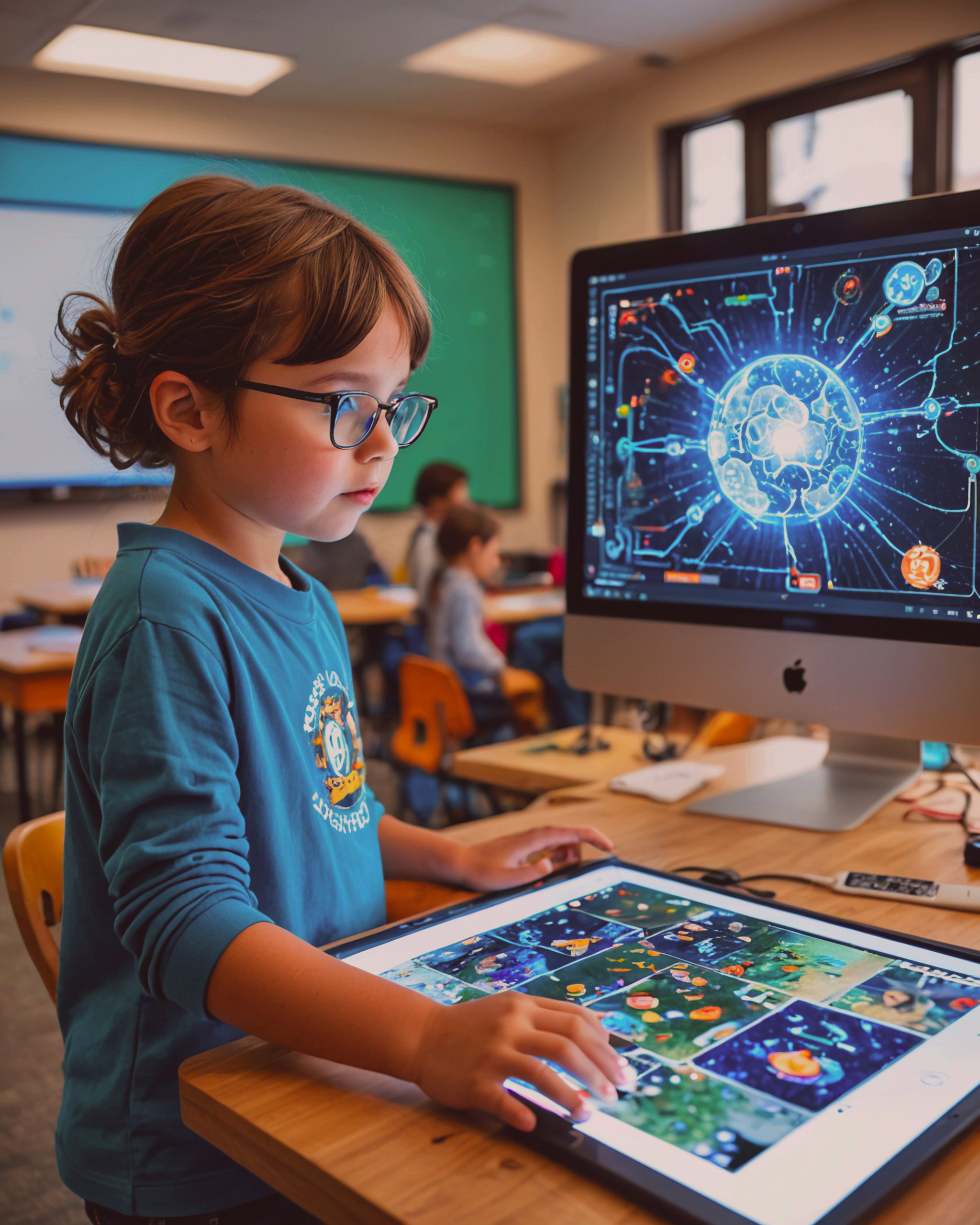
In a bright and modern TV studio, a diverse group of characters were gathering to participate in a special program entitled "Moderna en Debate". The stage was designed to be cozy and professional at the same time. The walls were covered with light wood panels that brought warmth to the environment, while the LED lights, strategically placed, illuminated the space with a soft and enveloping glow. In the center, an oval table made of polished glass reflected the light, creating a focal point where the participants sat, surrounded by ergonomic chairs of contemporary design. Behind them, a giant screen projected images of Moderna classrooms where children interacted with tablets and educational robots. The images were dynamic and colorful, capturing the audience's attention and setting the tone of the debate. On the sides of the stage, high-definition cameras moved smoothly, capturing every angle of the panel and broadcasting the audience's reactions in real time. Maria, an elementary school teacher with more than ten years of experience, sat on the panel with a determined look. Her light brown hair fell in soft waves over her shoulders, and her eyes sparkled with a mixture of passion and concern. The teacher remembered her own classrooms: walls decorated with drawings of her students and shelves full of colorful books. As the moderator introduced the topic, Maria settled into her seat, crossing her legs and resting her hands on her thighs, preparing to share her perspective. His posture was open and receptive, but there was a palpable tension in his jaw that betrayed his restlessness. Next to him, Javier, a software engineer and father of two young children, was smiling enthusiastically. Her dark, messy hair reflected her laid-back style, while her blue eyes oozed curiosity. Javier was thinking about his home: a room full of technological toys and books piled everywhere. While listening to the moderator, he slightly moved his head from side to side, as if he was processing every word. When it was his turn to speak, he leaned forward, resting his elbows on the table and interlacing his fingers. Ana, a psychologist specializing in child development, was watching intently from her seat. Her blonde hair was pulled back in a messy bun, and her round glasses accentuated her thoughtful expression. In her mind, Ana visualized her office: walls adorned with children's drawings and therapeutic toys scattered everywhere. With her hands clasped on her lap, she maintained an attentive posture; sometimes she ran a hand through her hair nervously when she thought about the emotional impact that technology could have on children. Luis, a government official in charge of educational policies, sat upright in his chair. His well-fitting gray suit contrasted with his brown skin and short, neat hair. Luis was thinking about the office where he worked: tables full of documents on educational policies and graphs showing statistics on school performance. With his arms crossed over his chest, he watched the others with a serious but open expression. When he spoke, he gesticulated with his hands to emphasize his points; every movement was deliberate and measured. Finally, Clara, a young activist fighting for digital rights and online privacy, couldn't contain her impatience. Her short, colorful hair was a reflection of her vibrant personality; while listening to others, she constantly moved one leg nervously under the table. Clara was thinking about the demonstrations where she had been: banners raised in the air and voices crying out for digital justice. When it was her turn to speak, she straightened up in her chair and dropped her hands determinedly on the table. The program began with a short introductory video about the advances in AI and its application in the educational field. The images showed Moderna classrooms where children interacted with tablets and educational robots. The screen behind the panel projected vibrant scenes: children laughing while learning to code or collaborating on group projects using advanced technology. The moderator then invited each participant to share their opinion. Maria took the floor first: "Let's imagine a classroom where each child learns at his own pace," she said enthusiastically while gesturing with her hands to emphasize her words. "Artificial intelligence can adapt educational content according to individual needs." Her eyes sparkled as she recalled the success stories she had witnessed in her classroom. Javier nodded with interest but added, "That's true, Maria. However, it is also essential to find a balance." His voice was calm but firm as he leaned forward. "Technology should not replace our family interactions." She paused to let her words sink in before continuing: "We need to make sure that our children are not only good students but also good communicators." As he spoke, Javier lightly pressed his hands on the table as if to emphasize the importance of his words. Ana interjected worriedly. "Social interaction is fundamental for emotional development," she said as she leaned forward too, as if to convey the gravity of her words. "If children spend too much time interacting with machines," she continued while gently moving her head from side to side, "they may lose critical skills for relating to others." Her eyes reflected a mixture of sadness and determination as she thought about the children who might be affected. Luis took note of Ana's point before responding. "We are working on policies to integrate AI without sacrificing soft skills," he confidently stated while maintaining an upright posture. "We promote programs that combine technology with group activities to encourage both learning and socialization." His tone was conciliatory but determined; he gesticulated openly to show that he was willing to listen and collaborate. Clara raised her voice passionately: "But what about privacy? Educational platforms collect data about our children," she exclaimed while moving her hands expressively upwards as if she wanted to raise her concern to the very air. "We need to make sure they don't become products more than they become students." His intense gaze encompassed everyone present; he could feel how each word resonated deeply between them. As the debate progressed, moments of tension and deep reflection arose among the participants. Some nodded while others frowned as they considered the points raised; there was a palpable air of urgency and relevance. Finally, after lively exchanges and some nervous laughter among the panelists, the moderator intervened to close the program: "We have heard passionate voices today on an issue that affects all of us: our children and their educational future." With a serious but kind look, he continued: "It is clear that artificial intelligence has the potential to transform early childhood education positively; however, we must also be aware of the associated risks." The moderator looked at each of the participants before concluding: "The key is to find a balance between taking advantage of technological tools and maintaining our essential human connections." She paused dramatically before adding, "Education should not only focus on academics; it should also nurture our family and social relationships." With a hopeful smile that lit up his tired face after hours of intense but productive debate, he concluded: "I invite you all to continue reflecting on how we can use artificial intelligence to enrich education without compromising the most important thing: our human relationships." The audience erupted in applause as the studio lights slowly dimmed, revealing an air full of reflection on the future that everyone shared. As the cameras turned off and the audience began to disperse, Maria felt a knot in her stomach; she knew that this debate was just starting outside the studio. Javier exchanged meaningful glances with Ana; both understood that there was a lot of work to be done to balance technology and humanity in early childhood education. Clara approached the moderator after the show to discuss more about digital privacy; there was a lot more to explore. That evening, everyone returned home with questions floating in their minds: How could they contribute to creating a more humane educational environment? What role would you play as parents or educators in the face of this new reality? In that studio lit by bright lights and surrounded by screens full of digitized information, everyone knew that the real challenge was just beginning. Source of the images. Image created with Starryai.
No comments yet