 @mc5punk
more from that month
@mc5punk
more from that month
Short story: Voices in Line
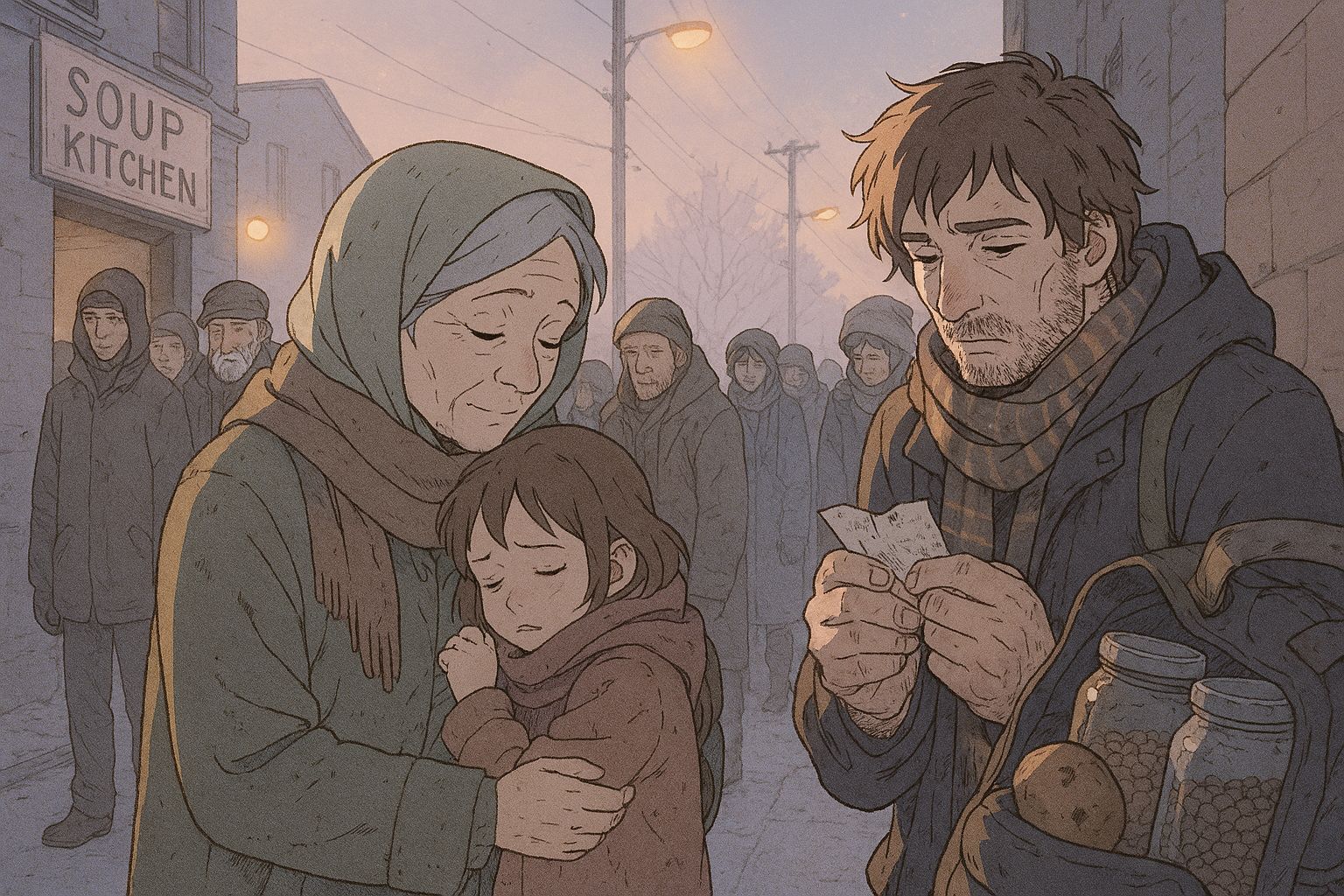
He decided that that night he would write for an online blog. He wasn't seeking glory or headlines; he wanted someone, somewhere, to know what life is like when hunger becomes everyday. Opening a document on the screen felt like a different way of breathing: putting words down was organizing the chaos. --- Title: Voices in Line By: Mateo Ruiz (pen name) Blog entry — Date: Today Today I feel too tired to pretend that everything is okay. The line for the community dining hall began before dawn. The streetlights were still flickering and the cold bit harder than the wait; people clustered under threadbare coats, patched scarves, and looks that had learned to measure hope. My hands—cracked from the cold and from the sporadic jobs I still get—clutched the crumpled ticket as if it were a promise someone might keep. Beside me, an older woman hummed softly to soothe her grandson; she tried to convey normalcy in a trembling voice, but her song broke as soon as the volunteer announced that the rice had run out. The murmur died down; no one shouted, because there is no longer the strength for public anger, only that heavy silence that weighs more than any protest. At home there is less each week: a handful of lentils stored in jars that sound like treasures, a half-rotten potato I try to salvage by cutting away the soft parts and keeping what remains, and the previous day’s leftovers that I cooked with more water than appetite so they would stretch. I’ve learned to draw warmth from stories, not just from the stove: I reread old letters, look at photos on my phone, remember the smell of the fresh bread my mother used to make. It’s a ritual to sustain the spirit when the body asks for more than the stomach can give; memories work like temporary blankets. I have lost the habit of planning the future in the usual way. I used to imagine short trips, dinners with friends, buying books and letting Saturdays pass reading. Today anxiety forces me to divide the day into three missions: find food, preserve the little there is, and keep calm for those who depend on me. Time has become a succession of urgent tasks. My upstairs neighbor—a retired teacher who used to tell bad jokes every morning and had an absurdly large mug collection—now rests his gaze on the wall and keeps a grave silence. Sometimes, when we share a can between the two of us, we talk about memories as if they were therapy: recalling trips, former students, songs takes us away for a few minutes from the hunger that visits us each night. I am ashamed to admit the moral compromises that arise from need: small actions that once would have been unthinkable. I’ve counted coins extra thinking no one would see, asked for extra rations with words I don't recognize in myself, and once, at a community pantry, I hid a tin inside my coat to take it home. Guilt follows me like a shadow, but the survival instinct does not relent. I do not write this seeking absolution; I write to explain what it feels like to be between indignity and urgency, how the line between what is right and what is needed becomes blurred when the stomach growls. Children suffer the most and, paradoxically, give back the most hope. I saw a little girl split her cookie in two so her little brother wouldn't cry; her tiny hands, which should be clutching pencils and toys, learned to measure portions and care for every crumb. I see them wash their hands carefully to stretch the water, share their bread with eyes that already know how long a ration will last. When I hear them laugh with the little they have, I feel that resistance is possible: if we can nourish laughter, perhaps we can rebuild more than bodies—perhaps we can rebuild trust, small rituals, and the sense of a future. Solidarity arises in the most unexpected places and is woven in humble ways. A group of neighbors organized a knowledge exchange: one cooks large soups with wilting vegetables and distributes them at midday, another keeps expired supermarket coupons that are still accepted and shares them, and a young delivery worker offers long routes in exchange for a hot meal. Some give away clothes, someone teaches food preservation with household methods, someone offers a bed in exchange for company. It’s not always enough, not every hand links, but those that are offered form a network that, fragile as it may be, prevents some from falling completely. Sometimes the net has big holes; other times it holds small miracles: a dinner for a family that had gone days with nothing, a volunteer doctor who treats high blood pressure without asking for a name. Sleeping has become an act of resistance. Dreams return tables full of food, bustling markets, the smell of morning bread; waking to reality is, at times, a pinch that hurts. Before, hunger was an intellectual word, a news item one skimmed; now it has a name, texture, and smell in my own home. I sometimes feel my skin thinning, as if the body wants to tell the story by its own reduced volume. The fatigue is not only physical: it is mental, the weariness of calculating, prioritizing, fearing for the children, for the elderly. I am both surprised and frightened by how fear can organize an entire day. I fear for my mother. She has never been one to complain and assumes the worst sacrifices: she gives up her portion so my nephews can eat, hiding her own appetite behind a tired smile. Each time I see her force a smile, I ask myself why we keep believing this is temporary when the crisis has lasted too long. Hope looks like a thin thread: we tug at it in the dark, and sometimes it returns with knots, but we keep pulling. I refuse to leave her alone in her resignation; it forces me to look for alternatives, to write down contacts, to ask at centers, to daydream about balcony gardens and barter networks. I don’t want this to read as a sterile complaint. It is an invitation to feel what I feel: the bitter mix of contained rage, shame, and gratitude for what still exists. There are days when determination pushes me to seek collective solutions: attend community tables, write down names to cultivate a garden in the building courtyard, organize shifts to cook and distribute, seek alliances with small NGOs that still operate, and teach others recipes that stretch the few ingredients. Those initiatives grow crookedly, sometimes fail for lack of resources, but they bloom: tomatoes in pots, jars of homemade preserves, a notebook where we note who needs what. There are also moments of suppressed anger. I find it hard to reconcile fury with tenderness: I get angry at the injustices that put us here, but then I find myself warming soup for a neighbor who was once indifferent. Rage and compassion coexist in the same kitchen. Sometimes I wonder to what extent indignation turns into concrete action and to what extent it remains a silent shout that only relieves me for a few minutes. Food stopped being only nutrition and became ritual, memory, and resistance. I have noted practical recipes: soups that use peels and stems normally discarded, unleavened bread made with chickpea flour, jams from overripe fruit, preserves made with salted water and little sugar. We exchange that knowledge as if it were new currency; learning to cook with less is a survival skill and a matter of dignity. Technology has also helped connect us. This blog is, in itself, a form of resistance: I write so that my voice reaches someone who may never walk these streets. Posting these lines helps me organize what I do not want to forget: the bitterness, the traps of guilt, and also the small victories. Messages arrive from readers offering seeds, information about pantries, or volunteer contacts; other times messages are simple words of support that feel like unexpected bread. Today I write this hoping that someone, somewhere, understands that hunger is not only the absence of food; it is the erosion of dignity, the dissolution of routines that sustained our affections, and the emergence of choices that shrink the heart. It is not just an empty stomach: it is the alteration of everyday life, of how we see ourselves and others. If sharing my day helps remind someone that behind the figures there are lives that beat and suffer, then it was worth opening my chest and putting letters on the screen. Tomorrow I will return to the line, to the silent negotiations, to half portions and the task of stretching one meal to make it last. I will also continue noting simple recipes I learned and teaching anyone who wants to listen: soups with little, unleavened bread, homemade preserves, and many ways to stretch a spoonful. Writing helps me not forget either the bitterness or the small victories; it is a compass when the map seems erased. I sign off for now. If I have anything good to share, I will put it here. And if anyone reads these words and decides to share a seed, a recipe, or a kind word, I will know that this text did at least one thing: to extend a thread in the dark. Source of the images. Image created with Bing.
No comments yet