 @mc5punk
more from that month
@mc5punk
more from that month
Short story: The Ascension of Brazil: An Epic of Power and Technology
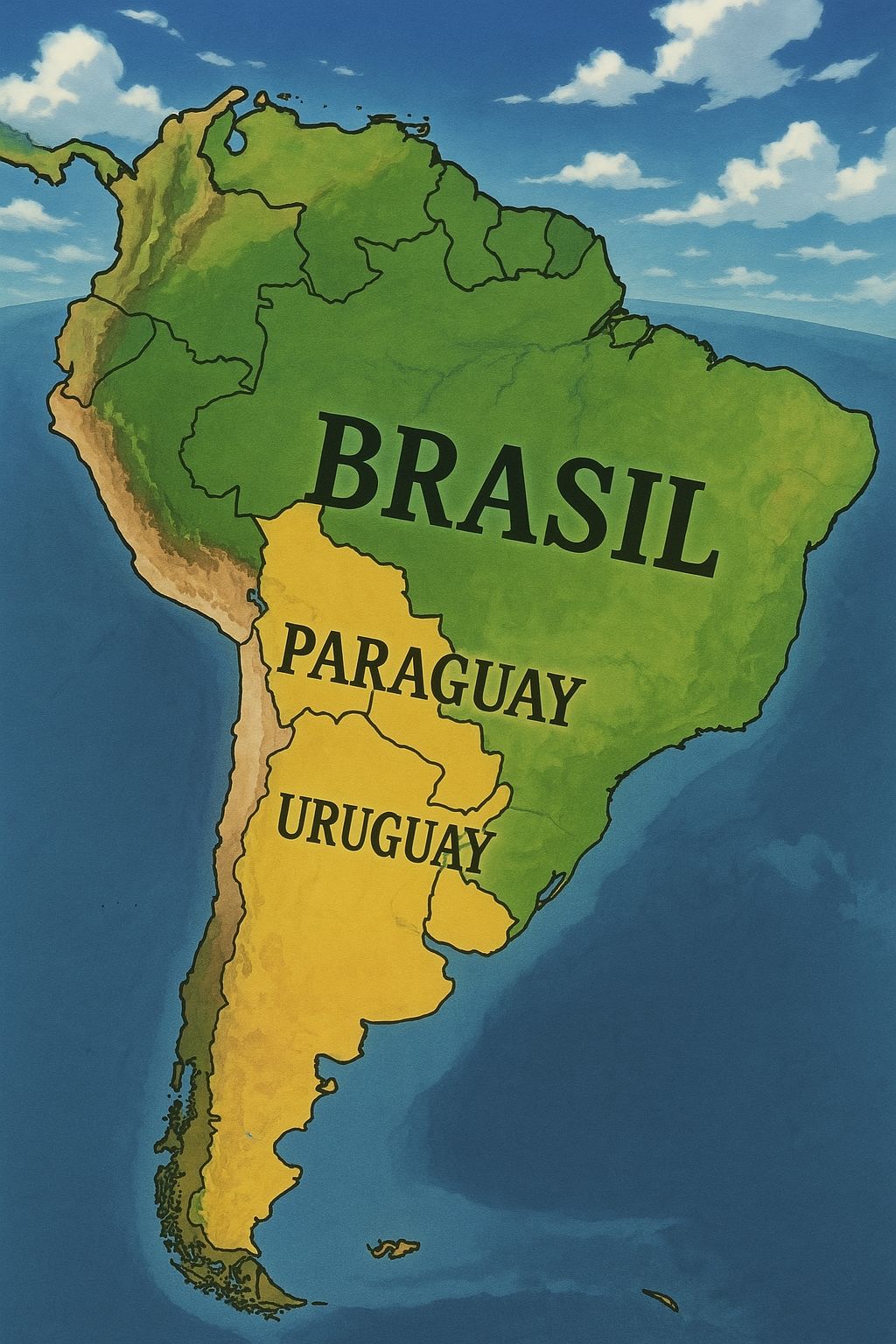
By the year 2050, humanity had reached a critical point in its evolution. Technology had advanced to the point that clean energy and artificial intelligence had revolutionized society. Brazil, a country that had been considered as an emerging on the global stage, had managed to implement a series of innovations that catapulted it to the top of power. The key to this success lay in the combination of smart public policies, investments in education and technology, and a growing influence in the region. Brazil became a leader in renewable energy, sustainable agriculture and information technology. The Brazilian government implemented programs to encourage innovation and entrepreneurship, which attracted foreign investments and stimulated economic growth. However, in 2070, Brazil took an unexpected turn. With its increasing economic and military might, the country began to expand its territory by invading and colonizing neighboring nations. Brazil's advanced technology, including drones and robots, allowed Brazilian forces to move quickly and accurately, conquering territories and natural resources. The first nation to be invaded was Uruguay, which had been a close ally of Brazil for years. The Uruguayan government strongly opposed the invasion, but could not cope with Brazil's technological and military superiority. Within weeks, Uruguay became a Brazilian province, and its government was replaced by a Brazilian-appointed administrator. Next, Brazil focused on Paraguay, which had been an independent country since the nineteenth century. The Paraguayan invasion was more difficult than that of Uruguay, as the country had a tradition of resistance to foreign occupation. However, Brazilian technological superiority eventually prevailed, and Paraguay became another Brazilian province. The international community was divided on the situation. Some countries, such as the United States and China, stayed on the sidelines, arguing that it was a regional issue. Others, such as the European Union, condemned the Brazilian aggression and demanded a peaceful solution to the conflict. As Brazil continued its expansion, the region was plunged into a climate of uncertainty and tension. Many countries began to question their own security and look for alliances to protect themselves from the growing Brazilian influence. Argentina, which had been a historical rival of Brazil, became one of the main opponents of Brazilian expansion. By 2075, Brazil had managed to establish a vast territorial empire stretching from the Caribbean to Patagonia. The region had changed forever, and the future seemed uncertain. The history of Brazil became a reminder that, in the world of international politics, ambition and power can lead nations to make decisions that change the course of history. But Brazil did not stop there. With its increasing technological and military might, the country began to explore space. In 2080, Brazil launched its first mission to Mars, establishing a permanent colony on the red planet. The Brazilian colony on Mars became a research and development center, and Brazil became one of the main players in space exploration. The ascension of Brazil had been a rapid and surprising process, and the country had become a global power. But with power comes responsibility, and Brazil had to face the challenges of its new status. How would he use his power for the benefit of humanity? Or was he going to follow the path of ambition and conquest? The answer was known only by time. But one thing was for sure: Brazil was here to stay, and its influence was going to be felt all over the world. The era of Brazil had begun, and nothing was going to be the same again. Source of the images. Image created with Bing.
No comments yet