 @mc5punk
more from that month
@mc5punk
more from that month
Short story: The Inheritance of the Battery
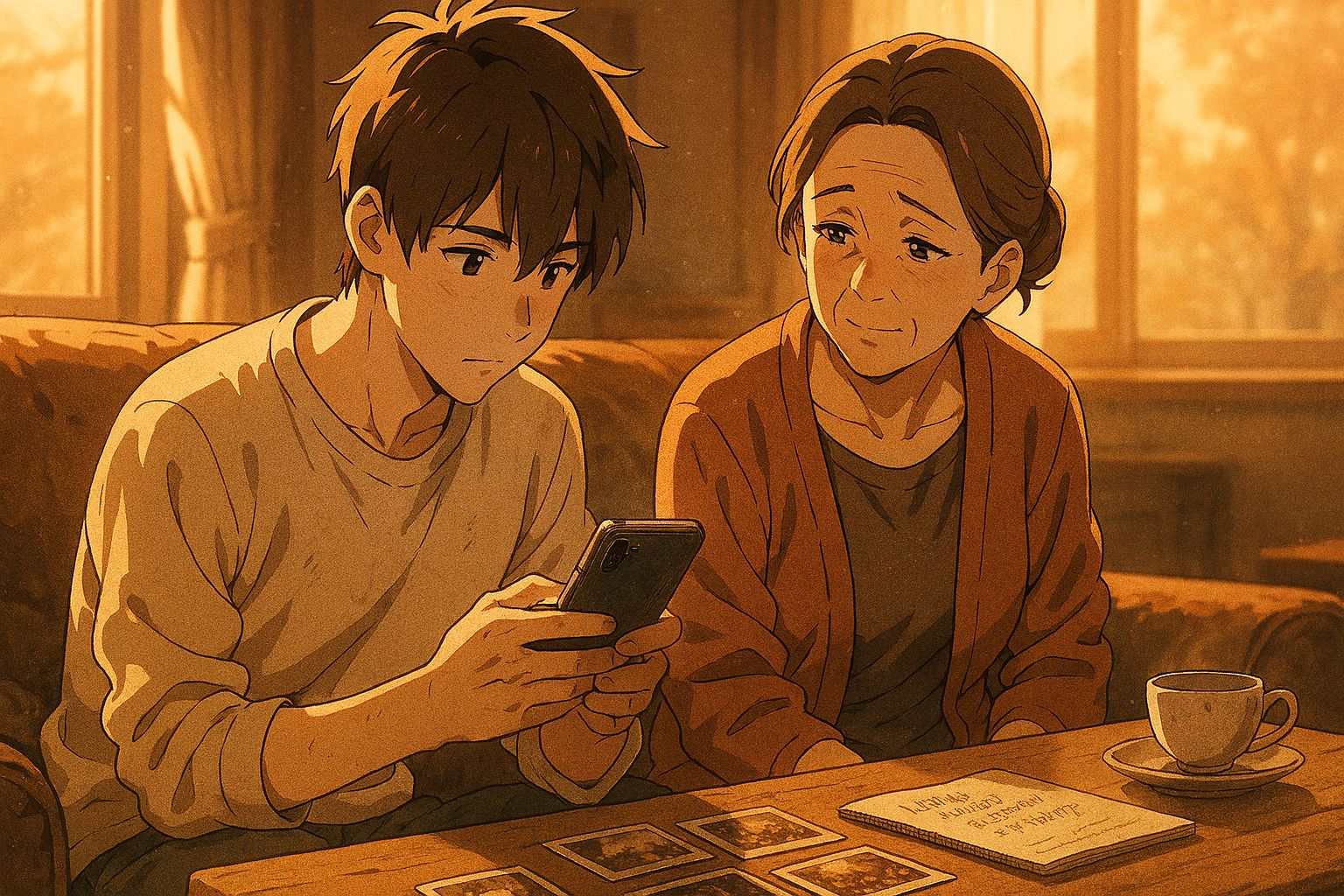
The aunt arrived one winter afternoon with her hands in her pockets and a crumpled paper bag under her arm. She wasn’t the aunt who appears in the family photos; there was something hurried about her step and a gaze that wouldn’t quite stay in one place, as if she carried news folded into the fabric of her clothes. Her nephew, a twenty‑three‑year‑old who still lived in his childhood house, greeted her with a mix of surprise and tenderness: the recent absence of Aunt Rosa was still in the air, and the presence of another aunt revived memories and nostalgia. “I brought something for you,” she said, setting the bag on the table. Inside, wrapped in black paper like someone presenting a fragile object, was a smartphone. It didn’t shine for being new; its edges bore small marks of use, the case kept a barely visible fingerprint, and the screen—though intact—had the muted glow of things that have been part of someone’s everyday life. Holding it, the young man felt as if he were cradling something that had belonged to Aunt Rosa, another trace of her tangible presence. Mentioning Rosa was enough to open a succession of memories. She had been the aunt who arrived with improvised gifts and recipes stored on wrinkled slips of paper, the one who always had a crossword puzzle half‑finished and a laugh that filled the room. Her recent death had left unmapped spaces: places in the house where her teacup used to sit, a chair with a still‑warm cushion, a notebook with notes on the table. The phone, when he held it, had the power to instantly return some of those moments: messages, photos, voice memos—small proofs of a routine suspended for the time being. It wasn’t long before the young man turned the device on. The screen lit up and with it surfaced old notifications: archived conversations, photos from family gatherings, birthday reminders, and doctor’s appointments that seemed like dried petals from a time that would not return. As he scrolled through folders, he found images that took him back to afternoons smelling of soup, to consoling embraces, and to Rosa’s patient look as she taught him to tie an apron or to write a postcard. He decided to start using the phone. He carried it in his pocket like a small reliquary; he downloaded his apps, synced contacts, and in the first days treated it with the care one gives something not entirely one’s own. Soon, however, technical problems surfaced: the battery dropped at an alarming rate, the indicator fluctuated between percentages that didn’t match actual usage time, and on more than one occasion the device shut down without warning, leaving messages unfinished and photos mid‑load. There were times when the phone showed hours of remaining power and, a minute later, rebooted and turned off, as if it were fighting an inner force it could not overcome. Faced with the persistent faults, the young man tried home remedies: he removed energy‑hungry apps, lowered the brightness, closed background processes, and disabled automatic updates. Everything seemed palliative; the battery continued to decline like a slow illness. On a gray, damp afternoon he decided to take it to a repair shop. Before leaving, he slipped one of Aunt Rosa’s photos into the case’s cover, like placing a medal in a work coat. The technician’s diagnosis was clear. The battery was swollen and the charging port had been damaged by previous shoddy repairs. It could be fixed by replacing the battery and repairing the connector, but the cost—though reasonable—required a decision: keep the phone in its symbolic state of neglect, or invest in its continuity as a useful object and bearer of memories. For the young man it wasn’t a mere financial choice; it was an act of preserving an emotional continuity. Paying for the repair felt like more than restoring a device; it felt like honoring the memory of someone who had given him so much in everyday gestures. While the phone remained at the shop, the young man discovered that the absence paradoxically made Rosa’s presence sharper. There was more time to sift through physical notes, scraps, grocery lists, and recipes stained with oil and with small ink corrections. He remembered times when Rosa had asked him to help turn on the TV or write a message, and how he had often promised to return and not kept the promise. The repair became an excuse to reunite with his memories; the wait, a period of reconciliation. When he retrieved the phone, the change felt almost symbolic. With the new battery and the repaired port, the device once again held reliable hours of use. He noticed that old photos loaded without interruption, voice notes played clearly, and he could keep the phone in his pocket without fearing a sudden blackout. But it wasn’t only the functionality that brought relief: it was the ability to keep interacting with Rosa’s digital trace without the fragility that had tormented him whenever the battery percentage fell. Gradually the phone became a bridge between absence and daily life. On long bus rides, rainy afternoons, and sleepless moments, he would take it out and immerse himself in the images: birthday photos with poorly cropped cakes, voice notes in which Rosa left messages in her measured tone and with the laugh that always surfaced at the end of each anecdote. He wrote messages he never meant to send—intimate letters that were acts of preservation. Sometimes he laughed aloud at the crackle of her voice; other times he was moved to tears by a reminder of a medical appointment turned domestic memory. Among the files he found a particular note: a list Aunt Rosa had written, a set of small joys and everyday habits that made life kinder. “Little things that make me happy,” the heading read. There were simple items: an evening walk, tea with honey, a call from her nephew, a plant on the windowsill. At the end of the list, Rosa had added a line that struck him like an instruction or a confession: “Let the things I love have another use.” That brief, direct phrase gave the phone a different meaning. It was not merely an imperfect object; it was an expression of Rosa’s will, a fragment of legacy asking to be respected through continued use. Over time the device stopped being a painful reminder and became company. In the kitchen, while preparing lunches, he would play a recording of Rosa reading fragments of old letters. At night, before falling asleep, he listened to voice memos about books or parks and felt close to his aunt as if she were in the next room. At family gatherings, the phone functioned as a shared album: photos that had existed only in memory could now be viewed on the screen by everyone. Anecdotes resurfaced and laughter spread, as if Rosa’s presence—mediated by pixels and sounds—made things easier to bear. The aunt who had brought the phone visited again weeks later. When she arrived, the young man invited her to sit and showed her how the device had been brought back to life. He played a voice note, swiped through images, and read aloud parts of Rosa’s list. The other aunt listened with wet eyes, unhurried, as someone who recognizes that something cherished has been well cared for. There were thanks, yes, but also shared silences that spoke more than words. That afternoon they talked about responsibility, memory, and small repairs that sometimes make no sense to postpone. They spoke of Rosa’s death with tenderness and with an acceptance that life continues in unexpected ways: through a phone with a new battery, a restored photo, or a voice memo that can still provoke a laugh. The aunt who had left the phone confessed she felt relieved to have it in the hands of someone who would care for it, and the young man understood that by accepting the object he had also accepted a part of the family’s story. Months passed and the phone filled with new moments: photos from outings with friends, messages of love, voice notes of his own about small victories. But always, among those contemporary files, were Rosa’s traces: images, texts, and sounds that recalled her presence. He handled the device with a mix of technical care and affection, aware that its maintenance was not mere consumption but an ongoing act of care. Each time he charged it he remembered the final line of Rosa’s list: let the things I love have another use. He kept the phone in the nightstand drawer when he slept—not out of forgetfulness but out of respect for the rest beloved things deserve. Sometimes, during sleepless nights, he would take it out and, with the battery showing a steady percentage, play a short recording. That voice—once the voice of a woman in the kitchen or living room—had become a thread that gently tied past to present. In the end, replacing the battery was more than a technical intervention. It was a gesture that allowed memory to continue functioning in daily practice. The aunt who had brought the phone had known, without saying it explicitly, that he would care for it. He, in turn, had learned that accepting a flawed object meant embracing the fragility of lives and the continuity of bonds. One autumn afternoon, when cousins and aunts unexpectedly filled the house for a simple meal, the young man placed the phone on the table. It was consulted like a family album: voice notes played, photos shown, and the list of “Little things” was read aloud. Amid laughter and quiet moments, everyone understood that the phone now had a double life: the one it had with Rosa and the one they were building together. And so the new battery did more than power a device—it enabled a memory to be lived on. Source of the images. Image created with Bing.
No comments yet