 @mc5punk
more from that month
@mc5punk
more from that month
Short story: Echoes of Paper
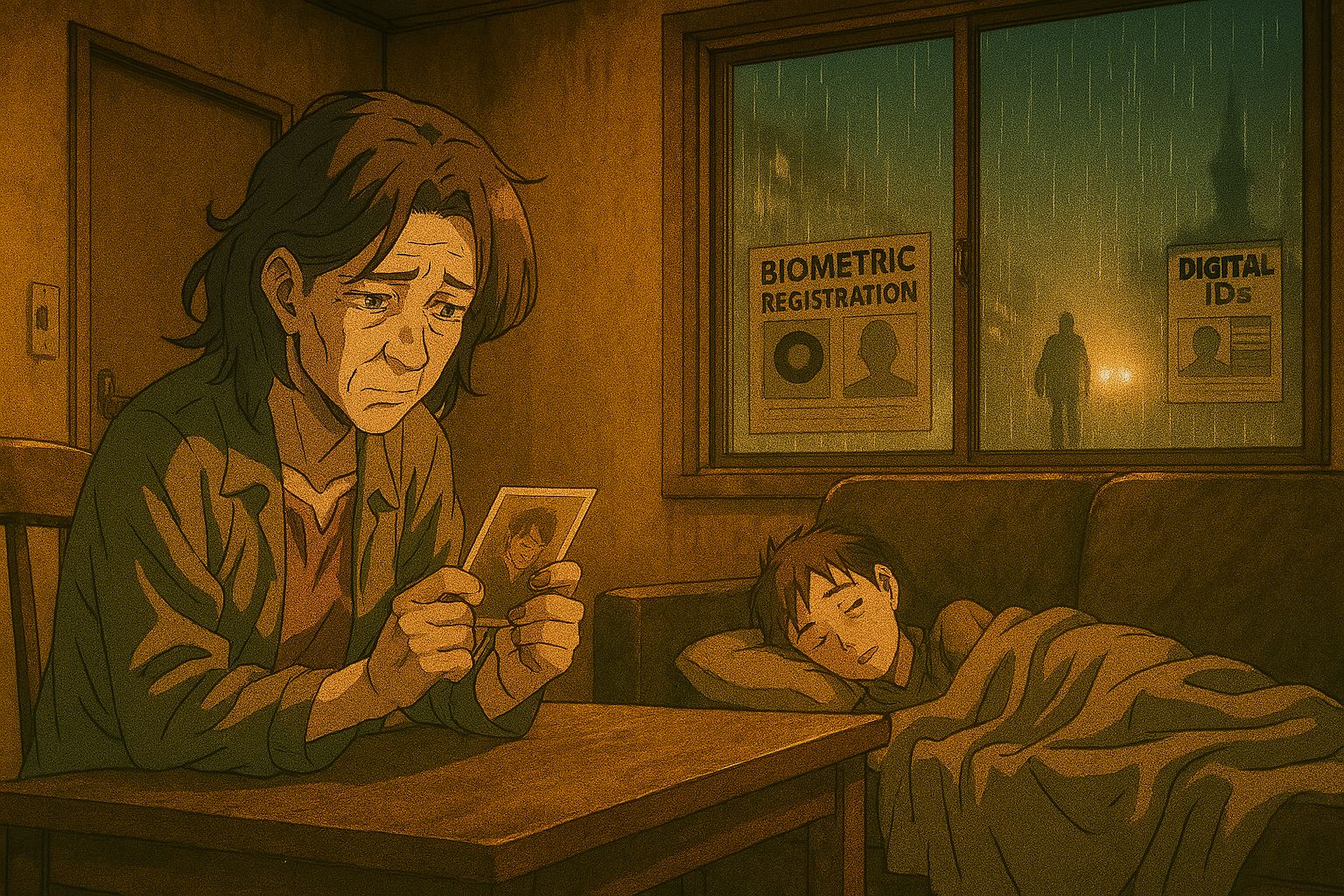
The night stretched over the neighborhood like a heavy hand that covered everything. In the apartment with yellowed walls, the light was a trembling lamp casting long shadows over worn furniture. María carefully slid a cereal box among the belongings as if every movement could betray her; she knew the hiding places by memory: a bill folded beneath a pile of rags, a medical card tucked between cookbooks, the envelope with names and dates wrapped inside an old sneaker. Each stored object was a small survival ritual against a world that seemed intent on erasing them. Carlos stood by the door, watching the entrance with the tense expression of someone who has learned to read sounds. His hands, rough from carpentry work, opened and closed without rest. Between them words were both unnecessary and lacking; they were silences filled with questions neither voice wanted to ask. The room smelled of cold coffee and sawdust, of habits tied to endless days and postponed dreams. "Don't leave the hospital paper in plain sight," she whispered, trying to sound firm. "I put it where we always do," he answered, squeezing the hand she offered him around the box. "It's under the tools. We won't lose another chance." The apartment was a microcosm of precautions. Javier, the twelve‑year‑old, slept in the next room; his dreams were inheriting the adults' tension. He had learned to speak in low tones, to measure curiosity with the same rule he used to check his mother's pulse. On the building's staircase, Doña Carmen, in her seventies and full of stories, leaned her back against the wall as if both wall and life sought support. "Doña Carmen, where is Señor Luis?" Javier asked in a low voice, with the curiosity of someone who still clings to innocence by a thread. "They took him at dawn," she replied, voice broken and face dried by too many goodbyes. "They say there was a flight this afternoon... My God." The city had changed. Posts were filled with notices promising "security" in exchange for information; shops displayed cameras and terminals requesting biometric registration to make purchases. The Federal Government had approved legislation promoting data digitization and the gradual elimination of cash, arguing efficiency and control. For families without papers, these measures became an invisible, suffocating net: every transaction, every call, every movement risked being recorded and added to databases that turned everyday life into a map of danger. In the neighborhood's small church, Ana Morales worked tirelessly. A young immigration attorney hardened by experience, Ana had made the place an administrative sanctuary: there, petitions were prepared, forms filled, and strategies woven with the same care used to mend torn fabric. Father Miguel, a large‑handed man with a gentle voice, dispensed comfort and water, opening the door to anyone in need of shelter. "We need to file an application to stay the deportation today," Ana said one morning, the confidence of preparation and urgency in her tone. "If we can prove strong community ties, we can gain time and prepare appeals." "Time for what?" María asked, desperate, feeling life hang by threads. "What if it's not enough? What if they transfer him first?" "We'll do everything we can," Father Miguel replied, calm as someone who offers consolation without empty promises. "But we must move quickly." Outside, Agent Thompson moved with the discipline of one who carries out orders mechanically. His presence produced a chill that required no words to assert itself: a tablet in one hand, a list in the other, a marked target. People saw him as another face of a system that no longer observed individuals but spoke in categories. "We're looking for Carlos Rivera," he announced one morning in front of the block, his voice void of doubt. "If you see him, notify us and we'll call for backup." The neighborhood's response was immediate and discreet: averted gazes, doors shuttered, quiet currents of assistance kept secret. Elena, an activist with more scars than youth, raised her voice from the church doorway. "They cannot enter without a warrant," she declared. "We have witnesses and cameras; we will document any abuse." Carlos didn't wait. That same afternoon, as shadows lengthened, he hid in the storeroom of the workshop where he worked. The place smelled of wood and tools; there, among boxes and dust, he surrendered to the patience of hiding. María and Javier remained in the church with a list of phone numbers and Ana's precise instruction: do not open to anyone, do not sign, remember the emergency number. News arrived like a gale: new raids, long deportation lists, flights organized to empty whole sections of the city that lived in administrative shadows. Mass deportations left stations full, corridors packed with waiting people and suitcases without owners. Digitization, touted as efficiency, made it easier for those seeking to locate, process, and expel. What once required time now accelerated through systems linking data to decisions. The call that turned waiting into agony came at dawn. A rumor, a confirmation, and daily life entered emergency mode. "Will Dad come back?" Javier stammered, his voice on the edge of hope. "We're going to fight," María answered, embracing him as if to armor him. "Ana said there's a hearing next week. We won't leave him alone." The church became a center of operations and comfort. Ana gave precise, survival‑style legal instructions in meetings that mixed law and faith: don't sign anything without a lawyer present, document what you can without exposing yourself, come to the community if possible. Elena organized temporary shelters: rooms lent by acquaintances, spare beds, routes out of the city. Doña Carmen, whose hands had fed generations, cooked dishes that were nourishment and a symbol of belonging. "If you face a raid," Ana told them, "call the number, come here if you can, and don't sign anything without a lawyer." As the community did what it could, local media began paying attention. Reporters sought faces and testimonies; in courthouse hallways, lawyers fought against procedures that advanced with bureaucratic coldness. There were demonstrations calling for humanity and appealing to public conscience. "They're not numbers!" Elena shouted in a plaza, her voice cracking from the strain of the struggle. "They're families!" But the protests, however valuable, confronted a machine operating under different logic: decrees, transfer orders, deadlines. In the courtroom, Ana presented a meticulous dossier: employment receipts, bills, letters from teachers attesting integration, photographs of everyday life. Neighbors' voices and testimonies vouched for Carlos's existence and contribution. "Deportation would cause extreme hardship," Ana asserted with the clarity of one holding an uncomfortable truth. "He works, pays taxes, participates. His removal would leave a void affecting not just his family but the whole neighborhood." María held a photograph of Carlos fixing a park bench—hands stained with sawdust, a tired smile of someone who put his strength at the service of a place. The simple image demanded humanity against an administrative machine. But the law, in this instance, showed its implacable face. The judge, with the severity granted by the courtroom, denied the stay. Technical arguments, new directives, and a political climate that dismissed exceptions combined to deliver a verdict that opened a fissure in hope. "The stay is denied," the judge announced in a dry voice. "Proceed with transfer notification." The blow was more than procedural; it was the collapse of a tangible possibility. Ana leaned against the table, the dossier's pages scattered like leaves in autumn. María let the photograph fall; Carlos's face seemed to float in the air, now alien to the closeness that days before had been home. What followed were hours of gestures meant to contain the irreparable: calls to representatives, emergency petitions, pleas in offices that provided bureaucratic responses instead of solutions. Carlos was transferred at dawn, escorted under the cold glare of headlights and public indifference. Javier, eyes swollen and heart clenched, clung to absence like someone who has lost a beloved possession. Carlos's departure shattered not only the family but the home's economic and emotional fabric. Without his income, bills piled up; without his hand in the workshop, jobs went unfinished. María found herself alone raising Javier, facing a horizon widened by new worries and fewer resources. The community tried to support them—collections, temporary aid—but the administrative tide that carried Carlos away was difficult to reverse. Elena organized vigils and tried to keep the protest flame alive. Ana kept fighting legally, now for other cases in need of defense. Still, the repetition of procedures, the exhaustion, and the sense that policies were often unassailable began to erode resistance. Support networks, though sincere, did not always suffice against a system adept at tracing and expelling. Nights in the house without Carlos grew long. María spent hours replaying conversations, searching drawers for any sign that fate could change. She took out the letter he had left and read it over and over—promises and words that now sounded like echoes from another life. "I will return," his shaky handwriting said, daring to promise the impossible. "Take care. I will work to come back." But promises do not always survive borders and official stamps. Time elapsed, and distance nested between the two shores. Javier stopped writing his full name on the school roster. At first it was almost imperceptible: an omission, a line left blank. Then it became habit. His grades slipped, his laughter dimmed, his youth smoothed down by the weight of an absence that found no answer. Some friends drifted away; others looked on in pity but without means to help. The church kept its doors open. Where once meetings buzzed with neighborly energy, attendance dwindled. Fatigue settled into bodies; solidarity, though present, was eroded by the persistence of repression. Ana won small victories in other cases, but the feeling remained that every triumph was overshadowed by hundreds of quiet defeats. The city continued, indifferent, to its rhythm: traffic, lights, notices promoting a security that cost privacy and the lives of many. Raids went on with the methodology now sharpened by digitization; cash disappeared from streets like another refuge removed. Names became codes processed with the same cold efficiency that once handled numbers in a database. One gray afternoon, María found a photograph of Carlos smiling beside Javier on the park bench. The image had survived moves, hiding places, and tears. She held it until the light made circles in her eyes, then left it on the table like someone depositing a relic without faith. She sat by the window and, for the first time in months, watched the city continue without noticing the wreckage. Javier slept on the sofa, blanket half pulled over him. His breathing kept a rhythm that returned no promises. María closed the window, feeling something inside her close as well. Voices that had demanded justice in plazas and courthouses faded little by little against the steady noise of the machinery that administered expulsions. Months consolidated the wound. Letters from Carlos, when they came, were sparse and contained automated words about processes and impossibilities. Distance turned memories into a dull ache; certainties into absence. The community, resilient but tired, continued its work: Ana defended cases, Elena organized support networks with fewer members, Doña Carmen still cooked for the few who came. But the collective energy had dwindled to a fainter pulse. At school, Javier became a boy who no longer permitted himself to be fully present. The principal, with well‑meaning but insufficient measures, tried to connect him to counselors and tutors, but the needs exceeded the responses. The word "future" wore thin until it sounded hollow. The apartment with yellowed walls remained a home, but now with the echo of absence. Nights were filled with memories that offered no comfort. The lamp trembled less; the city's noise filtered through as a reminder of life moving on, indifferent. María would sometimes rise at dawn and check the hiding places, as if the act of hiding papers kept her in a perpetual vigil. Echoes of paper, she often thought as she walked through the church hallways and watched others arrive with similar stories. The case files stacked on her desk—names, dates, numbers—each page an attempt to halt the flow that reduced lives to procedures. The work continued, but the exhaustion hurt more: not only physical fatigue, but erosion of affections, self‑worth, and the sense that the struggle had meaning. Time, relentless, left its mark. Statistics showed rising deportation efficiency; the increasingly digital streets felt less hospitable. For María and Javier, the lesson was harsh: the "security" promised by new technological infrastructure had been used to locate and empty homes. Hope, once a flame fed by concrete acts, had been reduced to embers that burned quietly. One afternoon, María cleaned the table and tucked Carlos's photograph into a drawer. The handwriting in his letter—"I will return"—got stuck in her throat as if it had been spoken wrong. She closed the door and sat, waiting for time to dull the pain. Outside, the city breathed its bureaucratic normality. Curtain. Source of the images. Image created with Bing.
No comments yet