 @mc5punk
more from that month
@mc5punk
more from that month
Short story: The Legend of the Chiripa at El Saborín
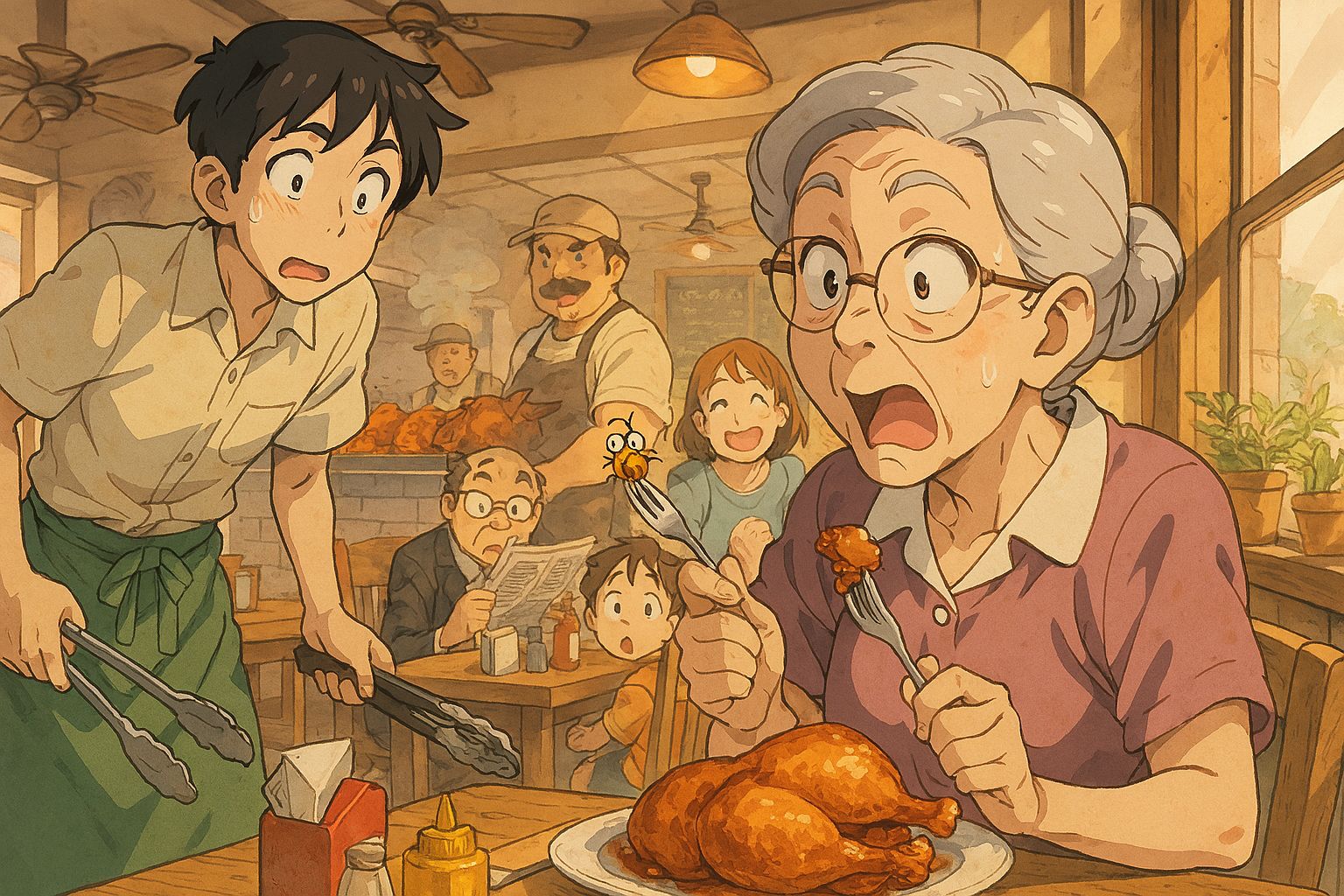
Mrs. Remedios arrived at El Saborín with a complaining stomach and the determination not to waste time: it was lunch hour. She pushed open the door into the warm kitchen air and the smell of charcoal, sat at a table by the window, and ordered without beating around the bush: “Fries, please, and no surprises.” Ramiro, the young man at the counter who filled in as waiter when needed, smiled with that blend of confidence and habit that belongs to those who spend hours among trays and orders, and replied, “Trust me, ma’am: our chicken comes from the sacred ritual of the grill.” Ramiro wore an oil-stained apron and carried a notepad filled more with memory than notes; his wink was part of the restaurant’s human decor. El Saborín was a neighborhood place, with slow-turning fans and creaky tables that seemed to share gossip instead of meals. Regulars included Mr. Alfredo, who always brought a newspaper and an opinion on every subject; Mrs. Beatriz, who came to the same table at the same hour to tell anecdotes; and little Mateo, who awaited his portion as if it were a small feast. At the counter, Lucía worked her shift as a university student: taking orders, smiling when no one watched, and trying not to mix her academic worries with the griddle’s. The food arrived without ceremony. Mrs. Remedios cut the chicken with her fork and, on the third bite, her expression shifted from satisfaction to surprise. Between two pieces appeared a tiny, rigid creature, as out of place as a hat in a swimming pool. “Look at this, boy!” she exclaimed, raising the half-eaten bite. The restaurant’s usual noise stopped as if someone had pressed pause. Mr. Alfredo set his paper aside and murmured, “But what is that?” while Beatriz burst into nervous laughter that soon became contagious. Mateo dropped his fry and whispered, “Gross,” his eyes wide. Some customers approached out of curiosity; others kept their distance like people watching an odd spectacle from the right seat. Ramiro moved quickly, as one attends to a minor emergency. He grabbed tongs, extracted the creature, and placed it on a napkin as if presenting a trophy. He examined it with the seriousness of a food inspector and, in a measured voice, said, “This… looks like a chiripa.” The retirees at their usual table applauded in jest; someone joked about it being a collectible, and a relieved laugh rippled through the room. Claudio, the shift supervisor, appeared when attention turned to management. Claudio always smelled of cheap cologne and quick fixes; he had a talent for offering discounts and promises with the same practiced hand. In a conciliatory tone he said, “Ma’am, we’ll offer you another portion, on the house.” Mrs. Remedios shook her head and, without losing her dignity, replied, “No, thank you. I already feel cheated: I paid for chicken and they gave me a zoo.” Her remark drew laughs and nods. At the register, Lucía discreetly photographed the insect and whispered, “This goes straight to social media,” aware that news now traveled by more channels than before. Meanwhile, regulars started to dig up past anecdotes that tied the incident to the restaurant’s history. Alfredo said he once found an olive that stared at him with more attitude than his ex; Beatriz added that a sauce once smelled like a cumbia concert. Don Ramón, the grillmaster, worked calmly behind the grill like someone who had seen it all and said softly, “I just cook it; the visitors are included with the supply.” His words didn’t reassure everyone, but they did earn a resigned smile. News quickly reached the manager, Mauricio, who coincidentally was not visible when the scene unfolded. “Relax, I’m on my way,” he muttered into the phone, trying to end a call with the voice of someone juggling too many fires. Management offered a voucher for a free meal as a formal gesture; Mrs. Remedios accepted the slip with a mix of irony and dignity. She folded it with the precision only those who handle recipes know and said wryly, “I’ll redeem it when the chiripa opens its own restaurant and invites me.” Before she left, Lucía posted the photo of the insect to her social channels with the caption: “Gastronomic tour with a local guide: the chiripa.” Within hours the image had circulated through the neighborhood and into the city: comments, emojis, playful jibes, and reproaches in equal measure. Word of mouth activated faster than a fan on a hot day; the story grew, and the incident shifted from a single complaint to an urban anecdote. The next morning El Saborín opened to a line it hadn’t seen in weeks. It wasn’t a sudden surge of barbecue fans but curious onlookers, local influencers, and neighbors who wanted to see whether the chiripa had decided to stay and open its own stall. Mauricio watched from the doorway with equal parts resignation and urgency. “Why are there people outside?” he asked, bewildered. Don Ernesto, an older man wearing a magnifying glass around his neck who had just been hired as the desperate management’s “official inspector,” replied solemnly, “I’m here to ensure the menu is free of surprises… or at least to catalog them.” To calm things down and win back customers, Mauricio added a touch of humor to the strategy: he hung a new sign at the entrance that read—half-ironically—“100% roasted chicken… subject to entomological inspection.” Don Ramón cleaned the grill with renewed vigor and staged the meat with gestures meant to reassure of its quality; Ramiro doubled down on customer service, and Claudio coordinated a supplier review that, at least in the official story, promised to prevent future unexpected guests on the plate. Over time, the chiripa story shifted from a day’s anecdote to a small neighborhood myth. At gatherings people recounted it with the same solemnity used for grandma’s recipes: noting the chicken’s punctuality, the customers’ expressions that afternoon, and Mrs. Remedios’s knack for turning incidents into lessons. Some embraced the joke and ordered “the chiripa” as if it were a special garnish; others preferred to treat the tale as a warning. The legend nevertheless left practical traces: more inspections, greater care with suppliers, and a new set of stories in the neighborhood’s collective memory. Some patrons kept coming for the familiar taste; others stayed away out of caution. And at tables afterward, between recipes and gossip, people still closed with the same phrase Mrs. Remedios left floating in the air that day: “Ask the surprise to sign the bill.” Source of the images. Image created with Bing.
No comments yet