?esoohc uoy dlouw ohW
Disclaimer: This is just a quick alternative reality version of Cain's article. If you're not Cain, ignore. https://read.cash/@Cain/who-would-you-choose-758e053c
***Friday, August 21st, 2020***
You need to fire a CTO.
One guy took the role from the start and has been given the opportunity to perform as CTO for the past 3 years. Although several people launched Bitcoin Cash that guy is the figure everyone recognizes and he often represents Bitcoin Cash alone. Prior to that, he was working in other unrelated technology companies but left. There can be many reasons for his decision to leave but the facts are that, as CTO in Bitcoin Cash, he is often in conflict with other developers. He may find them incompetente but they are highly regarded by the Bitcoin Cash community. The community constantly criticizes his decisions but he dismisses it as noise. While performing his role as CTO, the number of people that stopped working with him kept growing while the value of BCH kept falling. Now, this CTO wants a raise, the developers that criticize him to leave and hire fresh people. And he wants everyone else to pay for it or he will walk away. His message, without me the Bitcoin Cash network is destined for irrelevance.
On the other hand, you have this other guy. He was one of the people that participated in launch of Bitcoin Cash although he hardly ever gets credit. In part because he remained anonymous and avoided attracting attention. Still, he always participated respectfully in community forums showed balance and consideration in all his interactions. Now, after the main CTO made his threat, he reluctantly comes to the forefront with an alternative direction and vision. Naturally, he attracts most developers and community members. In a short span of time, he leads a collaboration that creates a competing node implementation, adopted by a significant portion of miners. Although he led this new effort there's a clear distinction in how he recognizes and values everyone contribution to it. The different is so distinct that funding campaigns are quickly completed with success. Something that has always been a problem under the current CTO. People really seem to like him.
Who would you fire?

The Mythical Community and the Permissionless of Bitcoin Cash
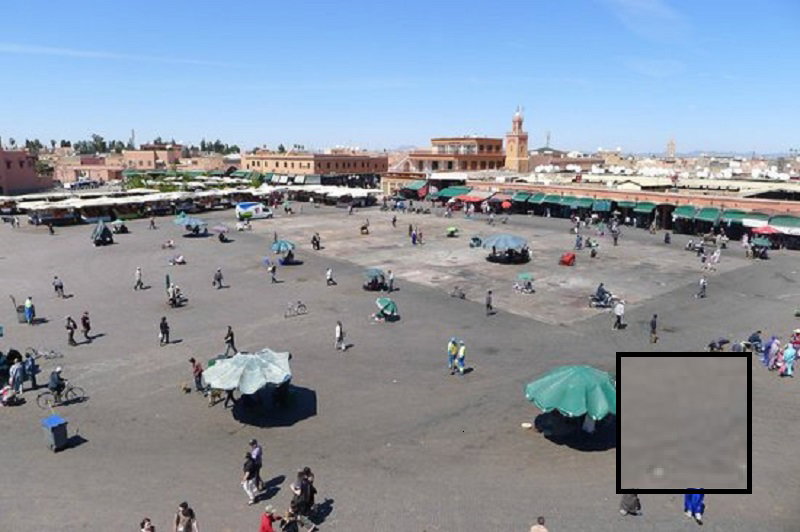
This is the Marrakech market in the morning, with a close up of the underlying technology that powers it, Jemma el-Fnaa.
This, however, is the Marrakech market in the evening. Exactly the same underlying technology but filled with people coming together to exchange goods and services. Even ignoring the warm evening tones, it's evident there's a much more vibrant and rich atmosphere. It's full of life.
So what exactly is the Marrakech market? It certainly exists, since it's internationally famous, described in several guides, and I'm writing about it. But it's not only the public square. Nor is it a specific group of people, since those change every day. The market is all of those things together, a pattern of behaviors around Jemaa el-Fnaa that changes constantly but that still keeps some recognizable purpose and consistency over time. Could the Marrakech market be moved to another space outside of the medina? Hardly. It's certainly possible to move all the people, tents, and behaviors to that new place. People may even call it the Marrakech market but there would always be a new and old market. Jemaa el-Fnaa, inert as it is without the people, is an essential part of the market's identity.
The Bitcoin Cash Community
What has any of this to do with Bitcoin Cash?
It's easier to talk about a concrete and recognizable thing but both share enough important characteristics to talk about communities. The underlying technology is inert and worthless without the people that value what it provides. People can enter, leave, and participate. And in both there are specialized groups of people, that band together in certain corners. This allows to talk about the Bitcoin Cash community by comparison.
Several people have been talking about what the Bitcoin Cash community wants, what it decided, that some decisions are its prerogative, what it rejects or accepts, all sort of things. But if we use the Marrakech market as example, would those statements even make sense. Can the market want something? Off course not. Spice merchants in the spice souk could all be in agreement that the market needs something to block the evening wind but if they announced "the market has decided to install some panels at the entry of the market" they would be laughed at and ignored.
Spice merchants may be important and well established Marrakesh merchants. Their local status could carry weight and influence other merchants to agree but it's ridiculous for a person, or even all merchants of a souk, to claim to represent the entire Marrakesh market.
Consider an every day person that frequently goes to the market to buy vegetables and cloths. Even if that person is comfortably at home, there's an expectation that she can go to the market tomorrow evening and find everything she needs. The Marrakesh market's community includes her and everyone like her because their collective behaviors is what makes merchants gather there at around the same time. We could argue the extent, but even tourists abroad share some membership in the Marrakesh market. They may decide to finally go there, after seeing the travel brochure for the hundredth time, and they have a certain expectation of what they'll find.
Size and borders
The Marakech market has no precise border that you can trace. There's no way to know who's inside and who's outside. Without that border, there's no way to speak for all its members.
The common answer to this criticism that, although we can identify this amorphous group of people it's meaningless to speak in its name, is that this might be true when Bitcoin Cash becomes world money but it's not true now because we're so few people. There's clearly a community since we almost feel we could name every one. We can also come together share opinions, come to agreement, and then speak with confidence that most think the same. As if the Marrakesh market currently had only the builders quarter.
The main issue, though, is that you can't have a concrete community, with the characteristics people ascribe to the Bitcoin Cash community, without the border. Without a way to control who comes in. Without a way to say "we abide by these rules and if you want to join so must you". We can't count the people we don't know even exist and they all form their own expectations about Bitcoin Cash. Clearly there are people that are more influential than others, the so called opinion leaders, but no opinion leader was appointed or elected so it makes no sense to speak for the "silent majority".
Imagine you take the same bus to work for years. It's a small bus, 20 people capacity. You're used to see some people. Neighbors, people that enter two stops after, people that enter when you're about to leave. There's a sense of familiarity. You even know the driver's kids and ask how they're doing... Is this a community? It's not because all sort of strangers also enter and leave the bus. You have no way to say "we've decided 15 people are enough and you can't enter" to someone at a stop.
Bitcoin Cash is a permissionless network making it impossible to create a border, like we could with a physical place. It's a totally unsuitable technology to form a unified community. Like cash. It's forever permeable to foreign elements and dissidents that can never be spoken for. As it should. Like the Marrakech market, the Bitcoin Cash community exists in the totality of people's expectations and behaviors over time. Although some characterizations can be made, like "its paranoid" or "aims for p2p cash for the world", no specific action or opinion can be claimed to represent the entire community.
It is true that opinion makers, in a small network, can hold more sway on the opinions of users. If their opinion changes, it's easier for a greater portion of the users to follow. It's also true that builders, in a small network, can raise in status more quickly. If you're competent and the competition scarce then you're skills are quickly recognized and highly valued. But to say this is how it should be is to want the network small. To want your opinion dominate other opinions is to want the network closed.
That's the main danger I see with this collectivist mentality. The sense of belonging, unified goals, and common action requires borders and checkpoints. It requires the network to be permissioned. If the idea of having it gated now and opened in the future could even work, to foster a more healthy culture in its infancy, it would still require a shift that is uncertain and unnecessary. Instead, we can just start treating the Bitcoin Cash community as it already is and will always be: full of different people that cannot be expelled or stopped from doing what they want. Seeing it like this, forces us to find sustainable solutions to foster the desired culture of celebrating permissionless p2p cash. It forces us to look forward and outward, towards global adoption, without conflict as the first option for conformity.
Let's keep Bitcoin Cash permissionless, shall we?
The Bitcoin Cash Room
**2020-06-29**
**WARNING**: The SSB Bitcoin Cash Room was decommissioned due to lack of participation from the community. Being decentralized, anyone using SSB is still accessible through other rooms, pubs, or directly. If interested, just ask around.
Who wants to try (yet) another social network?
Here me out.
The next step for Bitcoin Cash development is one of unprecedented collaboration. One of the things that enables collaboration is a a social platform for open participation and discussion. There's no shortage of social platforms like *<insert names of social platforms here until you feel tired>* but I've been monitoring Scuttlebutt and I think it fits the culture of the Bitcoin Cash development and wider communities very well. https://scuttlebutt.nz/
**Anyone can join**. You just need an app. But it obviously helps - being a social network and all - if you can also find another person.
**It's peer-to-peer**. You can exchange messages via Bluetooth or Wi-Fi directly.
**You can't be banned**. At most you can block people or be blocked but that does not affect anyone else. Everyone following you will see your messages the same.
**No content can be censored**. All messages are stored in your and your followers' devices. As long as someone is available your messages are available.
**No blockchain is hurt in the process**. Although messages are public and immutable that is achieved the "normal" way. No proof-of-work is required.
A meeting place
A common "problem" with these kind of networks, for very distributed communities, is how to find other people. You just can't connect to others directly through the Internet so you need some kind of meeting place.
For that reason I've setup the Bitcoin Cash Room. It simply allows people that connect to it to find other people and exchange messages. https://bch-room.m4ktub.ws/
To connect to room just copy and paste the following invite code into Manyverse or Patchwork. This invite code and a QR code is also available at the room's landing page. https://www.manyver.se/ https://github.com/ssbc/patchwork/releases https://bch-room.m4ktub.ws/
**EDIT**: You might not be able to see other people in the room, if you use Patchwork. Click on the room and follow it. It will not follow you back, as the Pub, but if everyone does that then you can discover people the same.
`net:bch-room.m4ktub.ws:8008~shs:8eyMoHDDGcbxHPc8tUs971k59LZyBoHqwNyJvNwnVAc=:SSB+Room+PSK3TLYC2T86EHQCUHBUHASCASE18JBV24=`
With a Scuttlebutt room the server never stores any of the messages. This is the more private option but it also means people need to be online at the same time. Remember that you and your followers are the ones that store your messages so you and another follower need to be online for her to get your messages. Then, either you or that follower can be online for another follower to get your messages. And so on.
Your friendly bartender
Although rooms are a great addition to Scuttlebutt it does make it harder to bootstrap the relations initially. Specially if people are in different time zones, which they are. It also diminishes the user experience somewhat because, when you finally have the time to check what's new, you might actually miss everyone that might have new messages for you.
To help with that, I've also setup what in Scuttlebutt is called a *Pub*. Like your local pub, it's the place for all the gossip to spread. It achieves that because the "bartender" will always be your friend (follow you back) when you join the pub. That means it will get and store all your new messages when you connect and also give you new messages from the people you follow.
Obviously, in this case, the Pub (or the bartender) stores all the messages from its friends. Although the Scuttlebutt network is public, in the sense that anyone can see your feed, the more privacy oriented people might want to avoid the Pub sine that reduces the exposure somewhat. The plan is to close the Pub once a network of people is formed as it should no longer be needed.
As with the Room, to connect to the Pub just copy and paste the following invite code into Manyverse or Patchwork. You will then be able to see all the Pub's friends and follow them regardless if they are online or not. https://www.manyver.se/ https://github.com/ssbc/patchwork/releases
`bch-room.m4ktub.ws:9008:@bja5QOu5uqT/MC8udTZbE21fI+L0R2KH0QDJRTHwkYM=.ed25519~UKrMEEE+S6rSEUyefJjz5fc3yj271ldNtd3bQKXK+yc=`
Invitation
The most popular platforms and channels are not doing any favors to themselves by filtering information and banning people with dissident opinions.
Let's join? What about just trying new thing?
The future will be person-to-person!

Revisiting Ownership in Bitcoin
People like @vinarmani, and more recently @DustinDry1st, have defended the notion that you cannot own bitcoins [3], [4]. This is met with resistance since it goes against a popular notion of ownership in Bitcoin, and a tradition that goes back to Satoshi Nakamoto and the whitepaper. https://twitter.com/vinarmani https://twitter.com/DustinDry1st https://www.youtube.com/watch?v=Jh7BTOPh5qM https://medium.com/@dustindreifuerst/the-principles-of-bitcoin-2c69ad339ea https://bitcoin.org/bitcoin.pdf
I have already written a post describing the concept of ownership in Bitcoin. I want to defend this tradition again by showing that the particular reasoning done by Vin Armani and Dustin Dreifuerst is invalid and by arguing that, in their argument, they ignore that language, as a consensus mechanism, depends very much on the context. http://m4ktub.ws/posts/2018/12/22/bitcoin-cash-101-ownership/
I'll start with the logic part.
A hidden assumption
The reasoning, supporting their conclusion that you can’t own bitcoins, is made in a slightly different ways. Put simply, they argue that if something is made of parts and you can’t claim something on any of the parts then you also cannot claim that something on the whole. More specifically:
Vin said “If you can’t own UTXOs and you can’t own private keys, you can’t own bitcoins”.
Dustin said, In relation to private keys, “no matter how many digits you affix to it, you have no more ownership of it than a reduction of that number to anyone or more parts”.
This reasoning has an underlying assumption that is not proven and therefore, even if the conclusion ends up being true, the reasoning is invalid. You cannot conclude the latter from the former because it is not sufficient. Later I will also argue that the conclusion is not true at all and why.
The underlying assumption, in the presented reasoning, is that the whole is in the same *class* as the parts and therefore that any property that is valid for the part is also valid for the whole and vice-versa. Intuitively we can think of “class” as a name for a group of things sharing the same properties like “numbers”, of which 1 is a particular element.
To avoid getting too abstract let's explore some examples.
Simple examples
The simplest way to show what this means is to provide examples for both valid and invalid arguments.
A valid argument, in the same form, could be something like “if 2 is even and 4 is even then 2+4 is even”.
Proving mathematically that 6 is even is beyond the point. What’s required here is to know that “parity” is a property of “integers”, that adding two even numbers results in an even number, and that all 2, 4 and 6 are “integers”. In this example, it makes perfect sense to talk about the parity of 6 in relation to 2 and 4 because it is in the same “class” of 2 and 4.
An invalid argument would be something like “if 2 is even and 4 is even then the point (2, 4) is even”.
In this example we can see that (2, 4), interpreted as the representation of a point in a graph, is not in the same “integers” class as 2 and 4. As a “point” it’s not even correct to talk about its “parity” because points have no such property. With this example we can see that just by combining the parts differently we produced something of a “different” class.
Vin Armani, for example, needs to assume that combining the exclusive knowledge of a private key with the public Bitcoin ledger produces nothing more than another “number”. If that was the case then he could simply have said that you can't own a number. If that's not the case then the argument is invalid.
You just need to consider that this combination of parts could produce something different to allow the possibility that ownership is a valid aspect of it. The same way you can consider that a combination of ingredients produces something different, like a meal, and not just another ingredient.
A more visual example
I think Dustin's formulation requires a different kind of example because, in his post, it is clear that if you're just adding numbers then the result is still a number, that is, it is in the same class.
To keep with a theme close to the the original argument, consider the encryption of a message. We don't need to know details of encryption but only that you also have a private key and there's a mechanism that takes the private key and a message to produce an encrypted message.
The encrypted message can only be read by someone that has the private key or someone with a powerful enough computer to "break" the encryption, that is, try a lot of keys until they find one that works.
Given that, you can ask "is the encryption secure, that is, can I send the encrypted message over the Internet, for anyone to see, and be relatively sure that no-one will be able to 'break' it in the next 10 years"? What you find is that answering that question depends on the size of the key.
A small key is in the class of “insecure keys”. A large key, above a certain level, is called secure or, in other words, is in the class of “secure keys”. In this example, encryption keys are still just numbers but, when combined with an encryption mechanism, they become of a different quality as their size grows. Adding one more digit may be the difference between a secure key and an insecure key. This means Dustin’s argument also fails to account for this possible transition. If the argument is restricted to the math domain then speaking about ownership is meaningless anyway, as that concept does not even exist. But if the argument is made in the Bitcoin domain then you also have to show that all numbers are of the same quality, if you want to draw the conclusion that ownership of the private key is as meaningless as owning a number.
The importance of context
Every language evolves by consensus. It's probably the first permissionless and decentralized consensus mechanism. But the world has infinite things and we have too few words so we reuse them. A star is not only that thing in the sky but also that person in the stage. You have two legs but so can a race...
Meaning depends fundamentally on the context. Since what separates a context from another is arbitrary, people can and do develop different languages to talk about different aspects of the same thing. For example, when talking about perfumes you can identify a rose by “C6H12O2”, the language of chemistry, or by smelling a “pleasant floral or fruity rose aroma”, the language of fragrances.
What is important here, is that although both languages are valid they are most useful when communicating within their specific context. There’s nothing “fruity” about either geranyl acetate or a rose but the meaning of “fruity” is well defined in the slang of fragrances. To connect with the previous examples, and go back to the main point, saying that an acetate is “fruity” is as nonsensical as saying a point in a graph is even. You can’t just take a word out of context and assume it will have the same meaning.
The language of Bitcoin
The Bitcoin system is still young and is still being constantly redefined but it’s evident that we can talk about Bitcoin and there’s already a specific language for this new domain. We talk about miners, which are not not actual miners, and about a blockchain, which is neither a chain nor formed by actual blocks. Sometimes the meaning of a word changes as more people get involved. The term blockchain started with Satoshi but was already used very broadly, by a large number of people, to describe cryptocurrencies that have no resemblance to what motivated the term. Sometimes even to describe an entire industry. It now seems to be settling on a more generic version of the original meaning, as the majority of people discover other words to use, like “crypto”...
In this context, the meaning of ownership in Bitcoin was never ill defined. It comes directly from the whitepaper so it’s no wonder that the popular notion of ownership is deep-rooted. It’s simple, easy, and useful. It greatly simplifies importing other concepts, like “custodian”, into this domain because their meaning can be easily adapted. As owner of bitcoins you already know it’s your responsibility to protect them. As you transfer them to a custodian you know you’ve given up ownership but also the responsibility to secure them.
This meaning may evolve and the term “ownership” may even fall in disuse, if it proves to be too confusing or simply not useful when communicating. But the arguments presented against the possibility to “own” bitcoins don’t make the claim that the term is not useful, or provide an alternative meaning. Instead, they claim the word is meaningless, that is, that you can’t even claim ownership of a bitcoin.
Crossing domains
It’s perfectly possible to understand the sentence “not your keys, not you bitcoins” without any knowledge of the whitepaper, cryptography, or mathematics. The traditional meaning of ownership is well defined in this Bitcoin context. Therefore, and as mentioned before, it’s important to see if, in the arguments against ownership, the meaning of ownership was imported from a different context. If it was, then we might as well be using two completely different words and claiming they are the same is the confusion.
Let’s take, from Dustin’s article, one of the last conclusions around Bitcoin ownership: https://medium.com/@dustindreifuerst/the-principles-of-bitcoin-2c69ad339ea
[...] money implies ownership with certain legal rights that in Bitcoin cannot be enforced.
My understanding of what is meant is that Bitcoin can never achieve “money” status because you can’t claim “ownership with certain legal rights” of Bitcoin. But the “ownership” that is used here is a different concept, related with properties of fiat money. We can make a sentence like “you can own a bitcoin but you will never money-own it”, if you’re assuming you’re talking about Bitcoin. By “money-own” I’m referring to the other concept of ownership. If we’re not assuming Bitcoin, as a context, we might say the reverse “money in your hand is protected by certain legal rights of ownership while the Bitcoin notion of ownership grants no such rights”. In this last case “the Bitcoin notion of ownership” is a whole lot of words to say “ownership” if you’re in the Bitcoin context.
Dustin, while never actually being clear about this distinction, does not make the strongest case that you can’t own, in any sense, Bitcoin. The article can just be interpreted, in this sense, as claiming that if none of the historical definitions of ownership apply to Bitcoin then people should understand Bitcoin not as money but primarily as an enabler of greater individual sovereignty, from which money can emerge. It’s in Vin Armani’s video that a stronger claim is made.
If you can’t own UTXOs and you can’t own private keys, you can’t own bitcoins.
Two different “ownerships” are also being used here. In this sentence “UTXOs” are not in the Bitcoin domain. Previously in the video Vin mentions they're just numbers. If they are just numbers they are in the math domain. The private key is a term from the cryptographic domain. It's also claimed that it’s just a number so we’re again talking about the math domain. But “bitcoins”, the final part, is in the Bitcoin domain and the audience is assuming that. Besides the reasoning aspect previously mentioned, ownership is being used in the math domain where it is, in fact, meaningless and that meaninglessness is being transported to the “ownership” of Bitcoin as if it was the same concept in the same context.
If we interpret UTXOs and “private keys” in the Bitcoin context, it’s indifferent that they can be decomposed into numbers. The only thing that matters is their properties in relation to people and the Bitcoin protocol. If bitcoins are to be interpreted in the math world then they are also a very long sequence of numbers and ownership becomes indeed meaningless. The problem is in bridging these worlds, taking a word from one, and speak it in the other expecting people to understand you.
Conclusion
Communication is challenging and I’m a believer that it’s of primary importance to understand your audience and meet them where they are. If you speak to yourself, while it may challenge a listener to come closer to you, there can be no reasonable expectation of being understood. And the more you speak to yourself the more people misunderstand you as you create new meanings that are inaccessible.
While I’m making this criticism, I must note that I’m not challenging most arguments. Vin and Dustin’s reflection provides an important insight that may expand people’s understanding of their relationship with cryptocurrencies. More importantly it may guide people into seeking and valuing what is indeed revolutionary in this experiment. But the fact that you can’t own Bitcoin is not that insight and I believe this mutual understanding will help the exploration move forward towards a new consensus and meaning for ownership.

 @m4ktub