Riddle
A doctor and an engineer are in love with the same girl.
https://pixabay.com/it/illustrations/apple-mela-frutti-frutta-cibo-1988506/
One day the engineer has to go on a trip, he will be away for a week. Before he leaves, he leaves the girl a bag with seven apples.
**Perché?**
***An apple a day keeps the doctor away***.
The famous saying suggests eating an apple a day as the properties and benefits of this fruit are many and complete.
In a world full of assholes, the only pure and free spirits are creative people. by kork75
Pirati (un racconto by kork75)
Il Sea-Blue era un gioiello della cantieristica navale, un moderno yatch da quarantacinque milioni di dollari. In una calda sera di luglio il suo guscio d’acciaio, con prora in direzione di Montecarlo, sfrecciava elegante e potente sul mare calmo delle Canarie. Al termine di una breve sosta a Las Palmas, per imbarcare l’ultimo passeggero, la traversata oceanica iniziata un mese prima stava per concludersi. Gli unici quattro ospiti, sistemati comodamente nelle lussuose suite, avevano ricevuto chiare istruzioni di non scendere da bordo per nessun motivo e di rimanere all’interno dei loro alloggi dorati. Una prigionia, la loro, ben motivata e retribuita da Eleonora Gray: la proprietaria di questa favolosa “top boat” di cinquanta metri. La Gray era il CEO di un grande colosso bancario di Wall Street, una figura di rilievo della finanza internazionale e probabilmente era una delle donne più influenti nel mondo degli affari. Per la trentasettenne newyorkese quella oltre che una vacanza era anche un periodo di maternità, un sontuoso relax, da condividere con il suo primogenito di pochi mesi. Nell’assolata insenatura di Montecarlo il Sea-Blue era alla fonda dalle prime luci dell’alba. Dalle grandi vetrate del ponte principale Eleonora Gray, allattando il piccolo Martin, ammirava rapita il panorama surreale di quel tratto di Costa Azzurra, fatto di palazzi e sfarzo, in netto contrasto con il verde delle colline e l’azzurro del mare. Martin terminata la poppata passò dalle amorevoli braccia della madre a quelle esperte e sicure della tata. Eleonora, dopo aver dato le ultime indicazioni alla balia, scese le scale di servizio dirigendosi alla sua cabina.
*“Disposizioni per la cena di stasera”,* disse Fabian, il tuttofare e segretario personale della Gray, entrando nella suntuosa cabina armatoriale.
*"Niente di elegante, qualcosa d'informale..., useremo il salotto a prua, nessun Galà Dinner insomma. Sarà un semplice saluto di benvenuto ai nostri ospiti... liberandoli dopo un mese di duro lavoro"*
*"Cocktail a base di antipasti internazionali, bionde bollicine e gran giro di sushi. Decide", scrive il segretario.*
*"Facciamo per le ventuno. Orario utile per il riposino di Martin. Il Comandante ha detto quando l'affiero?*
*“Alle quindici, ma al nostro posto d’ormeggio andremo verso le diciannove, dobbiamo prima sbarcare la Bentley. Ho già pianificato il tutto per il viaggio di domani a Zurigo. Inutile perdere tempo”,* concluse Fabian congedandosi e lasciando sulla scrivania della Gray una pesante cartella portadocumenti in pelle.
*“Frank sarà entusiasta di tutto questo. Ora per me si è fatto tardi, mi aspetta la poppata della nanna. Signori è stato un piacere a domani”. “La rete dei telefoni cellulari è tarata per sopportare un certo numero di chiamate contemporanee. Andrà completamente in tilt, perché un'infinità di numeri chiamerà alla stessa ora. Solo che a chiamare non saranno individui, ma software specializzati programmati dalla mia squadra di hacker. Metteremo in ginocchio alcuni dei siti simbolo della Rete”*, spiegò ai tre uomini presenti nella saletta launge, finemente arredata in stile marinaro, un giovane ragazzo sui vent’anni in pantaloncini di jeans, polo e berretto da baseball, il tutto mentre addentava dal vassoio dell’aperitivo delle tartine al caviale.
*“Joy, noto che avete già fatto conoscenza”,* esordì la Gray rivolta al giovane per poi varcare la soglia accompagnata da Fabian.
*“Signora Gray è un piacere rincontrarla”,* rispose l’uomo in doppiopetto gessato, cravatta, camicia e gemelli, rigorosamente d’oro come il suo vistoso cronografo*.*
*“Mr. Swerosky sempre elegantissimo. Frank ha chiesto di Lei”,* rispose Eleonora porgendo la mano*.*
*"E' già a Zurigo?" Chiese l'uomo.*
*“Da una settimana. Sia io che Martin non vediamo l’ora di riabbracciarlo. Da quando il piccolo è nato l’ha visto solo due volte, ma recupereremo il tempo perso con gli interessi”,* rispose la donna con un velo di malinconia pensando al marito.
*“Voi due immagino che siate Mr. Obodo e Mr. Ming”,* chiosò poi, rivolgendosi all’uomo di colore e a quello asiatico, prima di sedersi sul divanetto sotto l’oblò. I due risposero presentandosi.
Terminate le convenevoli di rito e la frugale cena, che era stata preparata a regola d’arte dal bravissimo chef del Sea-Blue, la Gray aveva atteso che gli inservienti liberassero il tavolo di teck, per poi dalla sua cartella portadocumenti estrarre un voluminoso fascicolo.
*“Signori era fondamentale che in questo mese il vostro unico pensiero fosse il nostro progetto, quindi mi scuso con voi per la reclusione forzata. Ho cercato di esaudire tutte le vostre richieste in merito ad attrezzature, supporti informatici, dossier e quant’altro mi avete chiesto, e vedo dai vostri volti che il soggiorno a bordo è stato comunque di vostro gradimento. Ora passiamo agli affari. Fabian cortesemente…”* Disse la donna passando delle cartelle al segretario che prontamente le distribuì ai presenti.
*“Joy, è il tuo momento… Illustraci il piano”,* esortò la Gray*.*
*“I motori di ricerca saranno i primi a cadere, collassando, successivamente sarà la volta dei popolari siti di aste e di quelli di commercio elettronico, compreso il negozio più famoso del web, e infine loro: i tre siti prescelti, quelli frequentati dai broker online per la compravendita delle azioni…”* Cominciò a spiegare il giovane. *“Sapete cosa comporterà tutto questo?”*, domandò, interrompendo Joy, la Gray ai tre uomini.
Schiarendosi la voce il giovane hacker concluse:
*"Per milioni di persone nel mondo non ci sarà verso, per varie ore, di collegarsi a questi siti affetti da un imponente Dds, rifiuto di fornire il servizio. I siti non ce la faranno, in altri termini, a rispondere a tutte le richieste dolosamente lanciate nello stesso momento dai pirati informatici"*
*“Capisco”*, disse Mr. Swerosky per poi prendere parola:
*"L'effetto certo di questi raid si ripercuoterà su Wall Street, dove gli investitori inizieranno a vendere i titoli delle più importanti società Internet. Quasi tutte le aziende finite nell'mirino degli hacker registreranno una sensibile flessione: a metà della giornata di contrattazioni i siti e-commerce scenderanno fino al 2,5 per cento a quota vicina ai 135 dollari. Le azioni dei motori di ricerca dell'1,51 per cento a quota 360 dollari e altri di questa lista, che vi ho fornito, da 1,65 per cento per 80 dollari... Con la successiva impossibilità di effettuare operazioni finanziarie, sempre grazie all'operato del nostro Joy, le tensioni si allargheranno a tutto il settore di brokeraggio on-line. Solo perdite sino a quando non interverrà il governo asiatico".*
*“Esatto! Mr. Ming prego continui”*, esortò la Gray
*“Il mio coinvolgimento in questa operazione mette a repentaglio la vita mia e quella dei miei famigliari, ma se ho deciso di buttarmi in questa avventura è perché la posta in gioco vale il rischio. Il compito della mia agenzia sarà quello di porre fine agli attacchi pirata ai siti del governo e alle aziende nazionali”,* l’uomo bevve un sorso d’acqua e continuò:
“*Stabiliremo un accordo, tra le nostre nazioni a collaborare per ristabilire gli standard di sicurezza su Internet. A quel punto le accuse del governo, sul coinvolgimento dell’esercito del mio Paese nelle violazioni da parte dei pirati informatici, saranno viste come una campagna di diffamazione. Nei giorni che seguiranno continueranno a essere colpite diverse società, siti d’informazione, grandi industrie e reti intranet di ambasciate. La crisi non sarà solo economica, ma politica e necessiterà di soluzioni drastiche e immediate. Grazie al mio intervento e a quello Mr. Joy finirà nel momento da noi stabilito*, spiegò il diplomatico con assoluta calma.
“*E qui che interverrà il nostro Mr. Obodo, prego ci illustri”*, sollecitò la Gray rivolgendosi al taciturno uomo di colore seduto difronte a lei.
*"Chiedo scusa per il mio inglese. Avrei preferito il francese", replica l'uomo un po'*
*"Obodo, la posso chiamare George? È anche per questo che lei ci servirà domani a Zurigo. Oltre ovviamente..." Rimpallò la Gray.*
*“I miei soldi. Certo Eleonora chiamami George”*, liquidò Obodo. Dopo una breve pausa preparatoria l’uomo tuonò bruscamente:
*“Voi altri adesso aprite bene le orecchie. Le prime aziende che guadagneranno dopo l'intrusione forzata nelle reti saranno le mie. Andranno in rialzo dal 14,68 per cento a 30 dollari ad azione. Inoltre, le mie due società che vendono sistemi di sicurezza per Internet, faranno una fortuna, le loro azioni saliranno alle stelle rispettivamente del 2,59 e dell'8,71 per cento”,* Obodo si alzò in piedi e con un gesto che lasciò tutti a bocca aperta lanciò al centro del tavolo una pistola; si appoggiò con le mani al tavolo sporgendosi in avanti, squadrò le loro facce paonazze e li fissò negli occhi e continuò:
*“Avete parlato di pirati, e io vi sono stato a sentire, ma qua l’unico vero pirata sono io. In Somalia, le mie ciurme di corsari che gravitano sul porto di Mogadiscio hanno fondato una cooperativa di finanziamento dei propri abbordaggi nel Golfo di Aden e nell’Oceano Indiano, una specie di mercato borsistico che raccoglie capitali e li reinveste in motoscafi, kalashnikov ed esplosivo. Ridistribuendo utili. Una borsa nera: la Wall Street della pirateria. Nel suo particolarissimo listino, si quotano società di navigazione ovvero le mie ciurme di pirati. Quindici all’inaugurazione della Borsa, due anni fa quando arrivai dal Gabon, già oltre ottanta oggi. Parte dei riscatti pagati per la restituzione delle navi rientra nel ciclo economico attraverso il finanziamento delle istituzioni locali. Le quali, a loro volta, costruiscono infrastrutture, scuole e ospedali. Il business legato alla pirateria è diventato l’attività più redditizia della nostra organizzazione, noi dipendiamo dai suoi profitti… Avete capito? Non posso permettermi di sbagliare in questo affare”,* l’uomo si avvicinò alla Gray e fece cenno a Fabian di restare seduto e calmo mettendogli una mano sulla spalla.
*“George il suo intervento alquanto teatrale rende perfettamente l’idea. Comprendiamo”*, rispose impassibile la donna.
“*Signora Gray, i proventi dell’impresa collettiva “abbordaggi & sequestri” sono aumentati negli ultimi mesi da un totale di 2-3 milioni di dollari a circa 12 milioni. Oggi sono qua per mettere sul piatto un capitale di 250 milioni di dollari”*, concluse Obodo, riprendendosi l’arma e tornando a sedersi, lasciando tutti allibiti. *“Sono felice e fortunata. Ho una squadra ben motivata come vedo. Domani mattina metteremo in opera la parte seconda del nostro piano. Fabian brevemente”*, disse la Gray. L’uomo a disagio dopo l’intervento dell’africano si ricompose e prese la parola:
*"Si partirà per Zurigo alle ore 06.30. La Signora Gray, Mr. Swerosky e Mr. Obodo. Swerosky guida lui, conosce la strada"*
*“E il piccolo Martin”*, precisò la donna.
*"Già e il piccolo Martin. Le operazioni sono in corso a paio di giorni. Dobbiamo passare i fondi, gentilmente investiti da Mr. Obodo, alle società del signor Swerosky che investirà la capitale coadiuvato da suo marito Signora Gray"*
https://pixabay.com/it/photos/sfocatura-grafico-computer-dati-1853262/

Attack on the Republic
I have always been intrigued by the fact that in the subversive operation against the Italian State of 7-8 December 1970, called Golpe Borghese (named after its organiser), the operative role of the subversive plan, i.e. to establish a reactionary and neo-fascist government through a direct attack on the democratic institutions of the Republic, should have fallen to the military column of the State Forestry Corps. The foresters, assisted by former paratroopers and neo-fascist paramilitaries, were to occupy the RAI TV headquarters in via Teulada, the Ministry of the Interior and Defence: their task was to take power in a coup d'état and their objectives were the deposition of the Head of State (the then President of the Republic Giuseppe Saragat) and the police.
The operation was never completed, although it was said that about two hundred men were already ready to leave when a phone call arrived in Borghese that led him to stop the operation. A thousand men of the forester, like the other armed forces and police, were certainly not unprepared, on the contrary, they were a compact body and certainly had enough weapons and ammunition at their disposal.
However, it was ascertained that almost all the students, NCOs and officers who took part in the expedition of the two hundred were unaware of the real intentions of their nocturnal mobilisation. On the contrary, they collaborated fully to bring important evidence to justice. The weapons, however, were not only those of the forester: some were found in the house of conspirators, while others, with the complicity of some soldiers, had to be taken away from the armouries of the barracks. It was not possible to ascertain why the counter-order was given. One thing is certain: that evening Borghese did not bluff and went very close to his intentions. Most probably the black prince (so-called because of his past in the Italian Social Republic where he commanded an independent militia flanking the Nazi army against the allies) really thought he had complicity nested in political and military classes that instead of at a certain point turned out to be insubstantial.
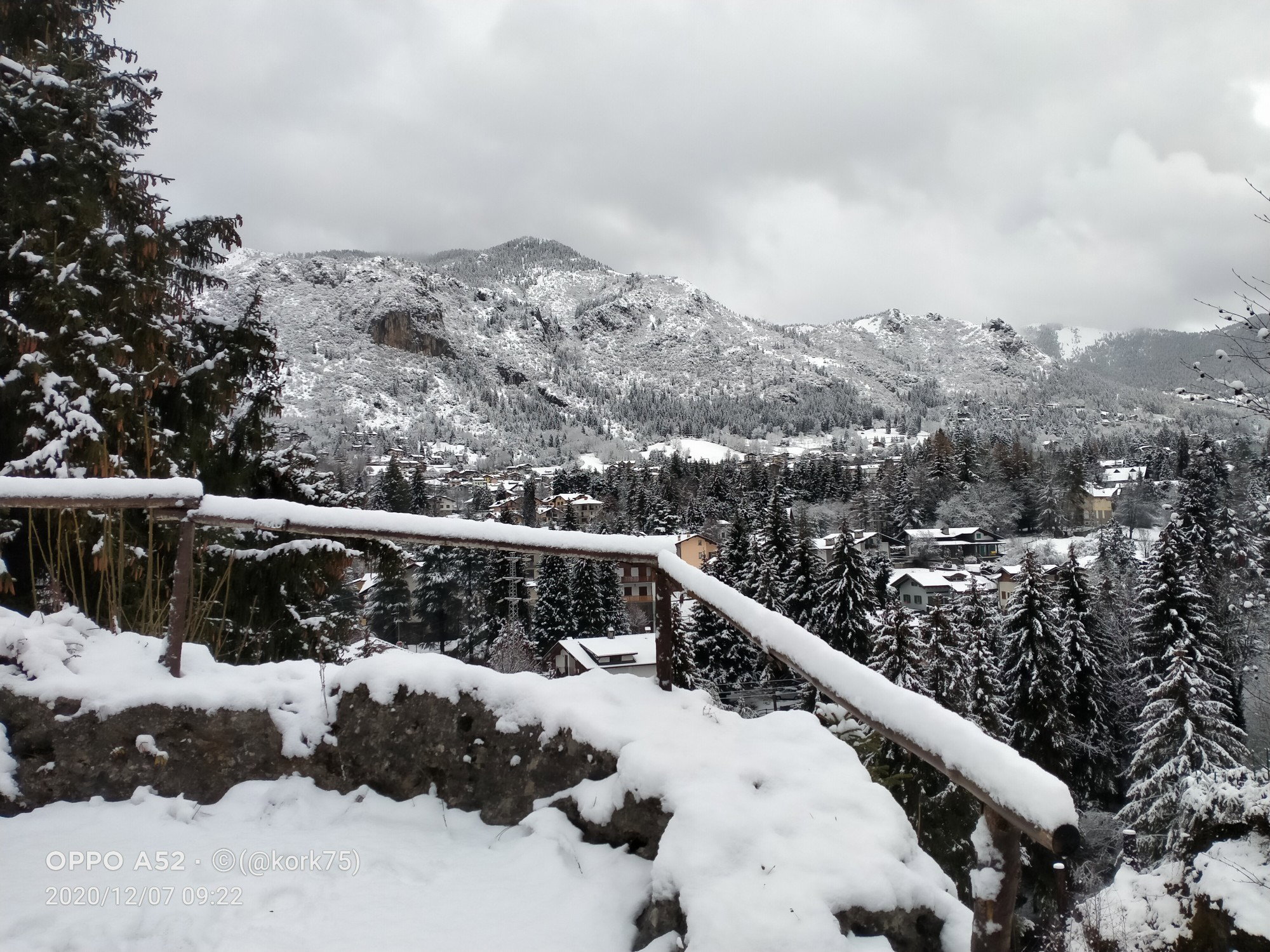
The photo of the day
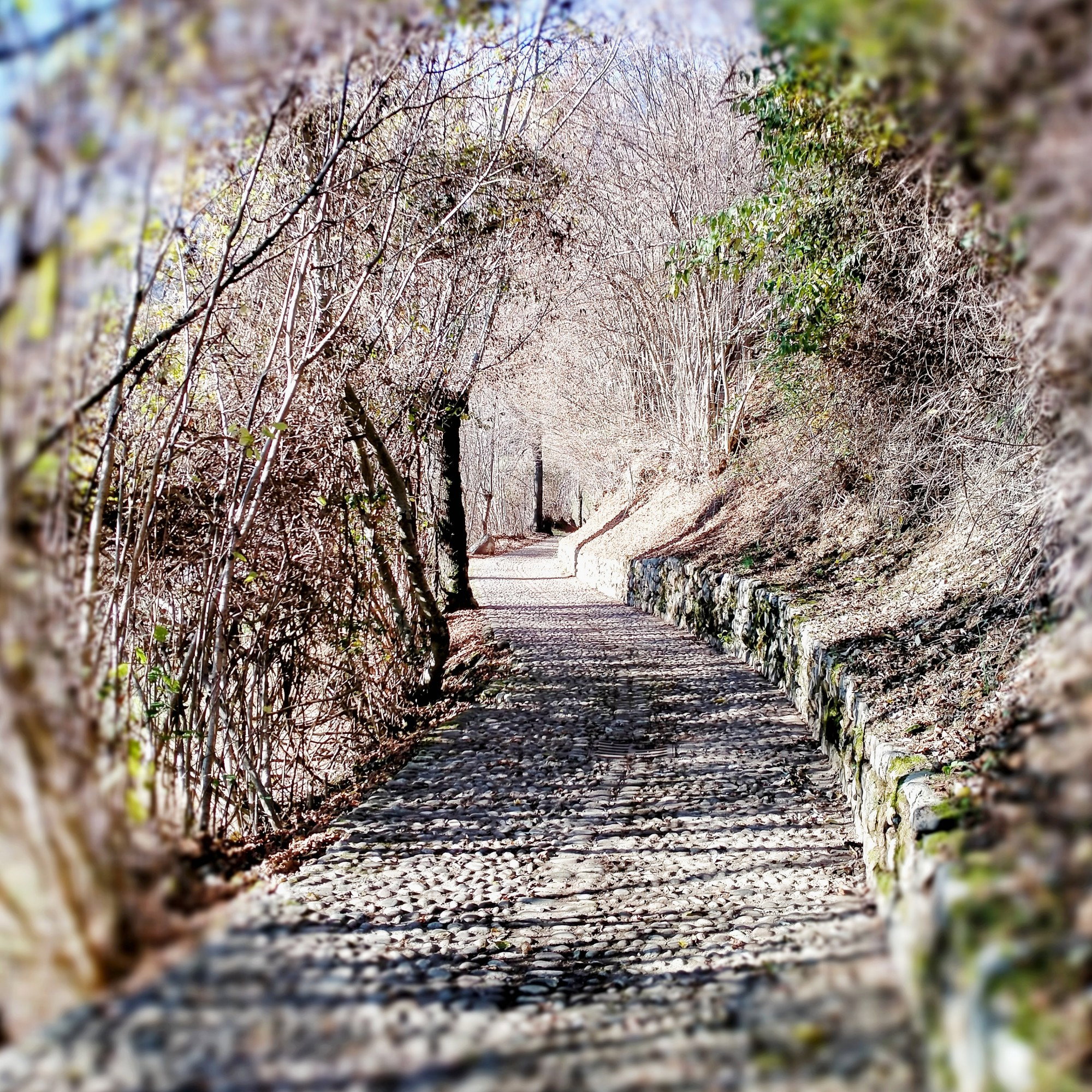
📸 Castione della Presolana (Bg)🇮🇹🏔️
"Even if snow falls and fury is all frozen, it's not cold what I feel inside".
Pearl Harbor
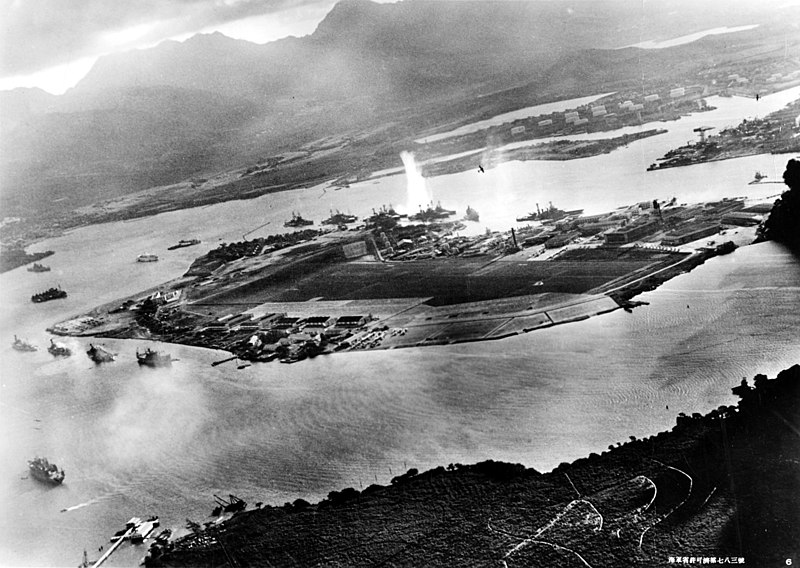
At 7.40 a.m. on a quiet Sunday morning at Pearl Harbor US Air Force Base in Hawaii, a surprise attack began one of the most dramatic in world history, without any declaration of war. It was a prodigious but classically military attack that had as its aim the destruction of the US Pacific fleet and which resulted in the decision of Roosevelt and the US Congress to take the field against Japan, provoking the declarations of war by Germany and Italy. The fire raid, conceived by Admiral Isoroku Yamamoto, went on for two hours, delivering death and destruction to the bay: 2,400 victims and 1,700 injured and damage to the US fleet (8 battleships, 3 cruisers, 3 destroyers, 2 auxiliary ships, 1 minelayer and 188 aircraft shot down). For the Japanese it was a great victory crucial to their expansionist aims in the Pacific Ocean. That December 7, 1941, President Franklin Delano Roosevelt called it, speaking at the Congress, the day of infamy and obtained full support for the declaration of war on the Japanese empire.
https://en.wikipedia.org/wiki/Attack_on_Pearl_Harbor#/media/File:Attack_on_Pearl_Harbor_Japanese_planes_view.jpg
While America has always been determined to remember that day, Japan would like to wipe out the entire Second World War with a clean sweep. Erase the past and only look forward to the future. This is what the Japanese people have not stopped doing since the aftermath of the bomb, succeeding in cashing in the defeat and becoming a great economic power, this is a natural inclination of theirs (made up of assimilation, metabolism and removal) that they have sewn on in 2000 years of history. By virtue of this innate ease, the Japanese would pretend to pass through history while remaining outside of it. On the part of Japanese historians, Pearl Harbor could not be avoided for the simple reason that the unconditional demands for withdrawal from China and Indochina on the American side amounted to an ultimatum of war. It was, in essence, a colonial conflict for the empire of the rising sun: where Japan tried to emulate America, Great Britain, France and Holland, where all parties would be branded with the mark of infamy. The Japanese expansionist aims were born in '31, the day Hirohito turned thirty, and the Japanese army unleashed the war against Manchuria, a war that was difficult and long (so much so that it would last over four years) and represented the first step of Japanese militarism aimed at upsetting the political and military balance of the Pacific. Today it is fair to ask whether Hirohito was responsible for having thrown his people into the world war, and if so to what extent, for not having known or wanted to use his immense authority against the extremists, and the same question applies to December 1941 when he did not or could not prevent the prodigious attack on Pearl Harbor that Japan would have paid for with two million dead. Many biographers agree that Hirohito was a puppet in the hands of the military, especially those of the army. Surely he allowed himself to be deceived several times by his advisors, so much so that he himself later confessed that he did not understand and did not oppose them. Pearl Harbor was fatal, also because that distant war episode, which remained engraved in American memory, laid bare an unexpected fragility of the American superpower, causing a historical certainty to collapse: the supposed inviolability of its territory and the various commissions of enquiry set up by Congress ascertained serious responsibilities of the high military and government offices, including Roosevelt, in underestimating the Japanese threat. In the end, Pearl Harbor was a fatal miscalculation on the part of the Japanese military regime, which accelerated the final victory of the Allies with the decisive contribution of the United States.
https://youtu.be/MKBNBADbXCY
Rich film production on the episode among which we must remember: From Here to Eternity (1953) Zinnemann, Tora! Tora! Tora! (1970) by Richard Fleischer and more recently Pearl Harbor (20019) by Michael Bay. But the first filmmaker to stage Pearl Harbor was John Ford. The story of his December 7, a documentary about the prodigious Japanese assault on the war still in progress in 1943, is very curious. Ford used truly extraordinary images of the assault. With one small detail: they are almost all fake. Think about it for a moment. The Japanese attack, at dawn on December 7, 1941, took the Americans by surprise. How could they have placed cameras everywhere and turned the whole assault around? Above all, how could they have got aerial shots from the Japanese bombers' point of view? Actually, two American cameramen managed to record a few frames of that attack. These materials were made available to Ford, who worked for the army during the war like many other important Hollywood directors. But very few real shots are present on 7 December: the truth is that Ford, given the scarcity of the material, decided to reconstruct the attack in the 20th Century Fox studios, with plenty of models: the special effects of the time. The result is a very strange film, in which two characters describe Hawaii to the American public who have never seen it and explain the reasons for the attack.
TheRandomRewarder, he forgot about me... 8 articles without reward... Who has the same problem?
Prohibition in America
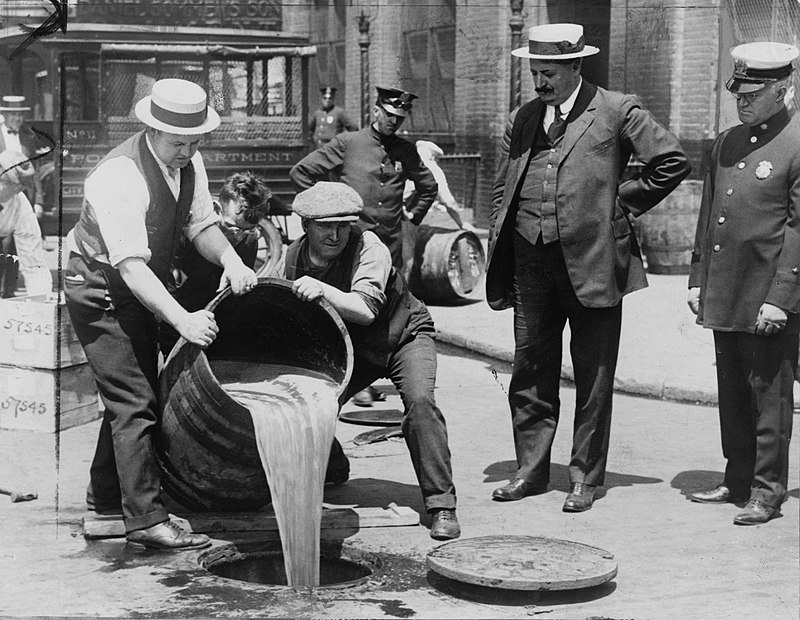
On 5 December 1933, Heber J. Grant's Utah of the Mormons, the long season of American prohibition, opened in 1919 with the approval of the 18th Amendment, which had banned the consumption of alcohol. That day, at 5.27 p.m. (New York time), America took back the freedom to drink and the less noble thing to get drunk by rising to the sky twinkling toasts of beer mugs and glasses of whisky.
Thus ended the obsessive crusade against alcohol, or as many considered it a disastrous experiment. Born in 1919, the prohibitionist movement, driven by the so-called temperance societies, fought, supported by religious political movements, against the era of the mythical roaring twenties of great jazz, the lost generation, the emerging gangsterism of Al Capone, or against the period of speakeasies and the greatest mass transgression in American history.
It was in this context that the government imposed a ban on the manufacture, sale and transport of alcohol in the country. While the level of alcoholism was lowered, the business of organised crime, which made a golden business out of smuggling alcohol, increased.
https://en.wikipedia.org/wiki/Prohibition_in_the_United_States#/media/File:5_Prohibition_Disposal(9)_(cropped).jpg
This scenario also led the prohibitionists who pushed President Roosevelt to promise an end to the ban in the 1932 election campaign. After the collapse of Wall Street, America turned the page. The state needed money, new taxes on the alcohol trade as well, and the alcohol industries themselves could be useful to the cause of economic revival and provide jobs.
Democrats and Republicans agreed: Prohibition had "miserably" failed, the 18th amendment had to be repealed. However, the majority of three-quarters of the states were obliged to make it official. And the seal came from Mormon Utah, where abstinence from tobacco, coffee and alcohol is still preached today.
Witches' hunt
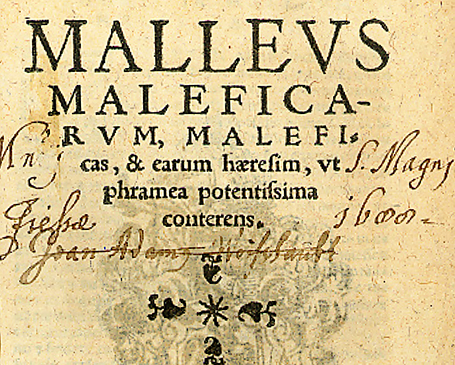
On 5th December 1484, Pope Innocent VIII with the bubble *Summis desiderantes affectibus* *(Desiderando con supremo ardorato)*, officially banned witchcraft. This was the basis of the notorious witch hunt. It was a horrible massacre of humble and anonymous victims of all ages and conditions: midwives, healers, peasants, prostitutes and in many cases simple women. Victims were often arrested for reporting an envious neighbour or for simple gossip. https://en.wikipedia.org/wiki/Pope_Innocent_VIII https://en.wikipedia.org/wiki/Summis_desiderantes_affectibus
But not only women accused of witchcraft, but also practitioners of popular medicine and pre-Christian archaic cults who, between 1500 and 1650, were persecuted by an anguished and paranoid "hunt" and then tried and burned at the stake all over Europe. In Spain, England and Germany this happened with particular violence.
The repression of witchcraft began at the beginning of the 14th century, mixing with the persecution of Jews and heretics. The persecution, which reached the character of a collective obsession, was not only a prerogative of the Catholics and the Inquisition but also of the Protestants.
https://en.wikipedia.org/wiki/Pope_Innocent_VIII#/media/File:Malleus_maleficarum,_K%C3%B6ln_1520,_Titelseite.jpg
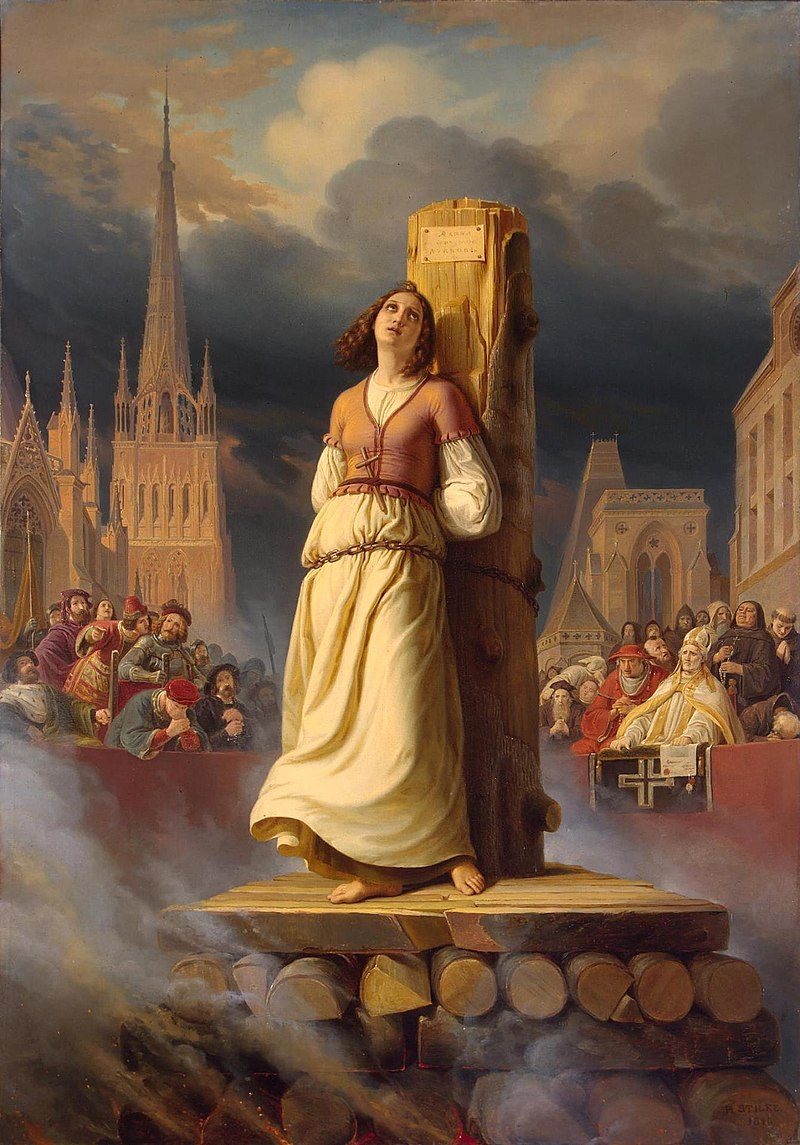
Under torture heretics (especially women accused of witchcraft) were forced to admit their guilt before the inquisitors. But pleading guilty and repenting did not save them from being burned at the stake. Joan of Arc ended up burnt alive in 1431 and after suffering terrible tortures she came to accuse herself of betrayal of God but, undergoing other interrogations, she was equally condemned and burnt alive as a heretic and witch. Five centuries later she was made a saint. https://en.wikipedia.org/wiki/Joan_of_Arc
https://en.wikipedia.org/wiki/Joan_of_Arc#/media/File:Stilke_Hermann_Anton_-_Joan_of_Arc's_Death_at_the_Stake.jpg
The first Instruction for judges of witch trials dates back to the 14th century, but it was Pope Innocent VIII, as mentioned above, who with the Bull of 1484 endorsed this ignoble practice with the highest ecclesiastical authority, appointing two figures of inquisitors, the German Dominicans Heinrich Kramer Instintor and Jacob Sprenger, charged with the extreme harshness of prosecuting heretics, magicians, healers and witches. https://en.wikipedia.org/wiki/Heinrich_Kramer https://en.wikipedia.org/wiki/Jacob_Sprenger
The Bubble catalogued the main evil produced by witches, giving the inquisitors ample faculty for their repression and threatening canonical punishment for those who opposed it. Undocumented accusations were made, suspicions arose, trials were organised and people were burned. To instruct the inquisitors the *Malleus Maleficarum* (The Witches' Hammer, 1487) was reprinted, in which witchcraft was tackled as a purely feminine phenomenon. https://en.wikipedia.org/wiki/Malleus_Maleficarum
In the treatise, it was made clear that the witch is distinguished from the demon. While the latter is the victim of the devil from whom he can be freed through exorcism, the witch is the protagonist of a sought and desired relationship with the devil with whom she weaves a sexual relationship.
Being female witches, they remain closely and exhaustively connected to the sexual sphere. It can be said that the so-called witches were often guilty more in their imaginations of inquisitors polluted by forced chastity than in the facts. A compendium of superstition and misogyny that found fertile ground well beyond the German borders where the inquisitors operated with extreme freedom, spreading and spreading, favoured by the pause and ignorance of the peasant world and the poorer classes throughout Europe.
Without inquisitors, doctors and intellectuals the obsession would never have existed. It is impossible today to calculate the exact number of those persecuted, a probable figure for the period 1575-1700 is one million executed, one-third of them in Protestant countries.
It is also impossible to trace the victims of those dark years, as in many cases they preferred to burn and destroy the acts of the trials both by the Church and by the relatives of the victims. Wrongly framed in the medieval context (during the course of the war there were more persecutions of heretics and other religions), the witch-hunt lasted until the middle of the 17th century.
Sms
Today, December 3, 1992 First SMS📳 in history: "Merry Christmas"🎄 was the content of the message sent from a computer... A Christmas wish made well in advance. The first SMS between two phones was sent the following year.
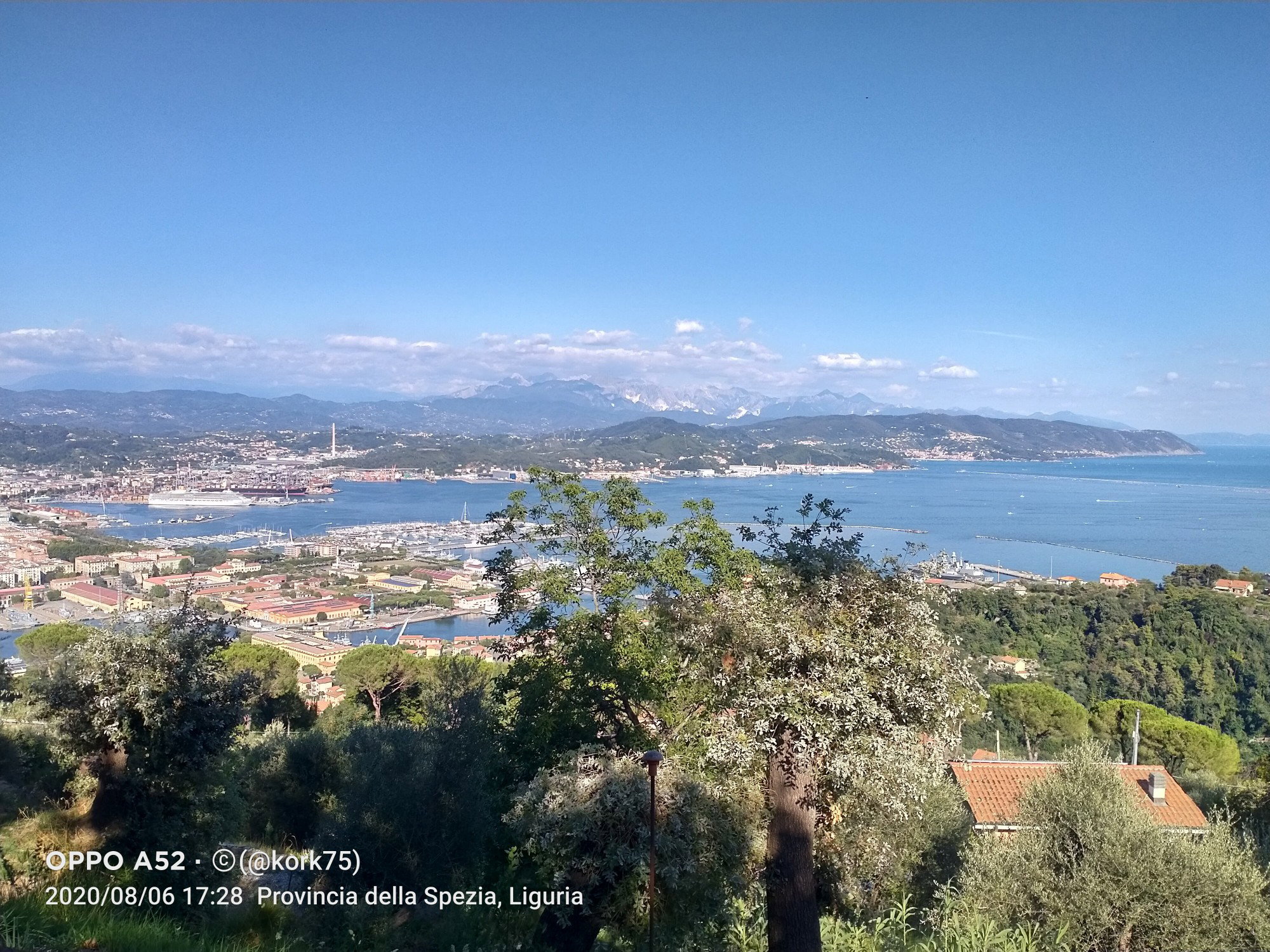
The photo of the day (by kork75)
The Gulf of La Spezia, with Lerici and Portovenere, is also called the Gulf of Poets. Its beauty kidnapped David H. Lawrence, Lord Byron, D'Annunzio and Shelley.
The city of Peter the Great
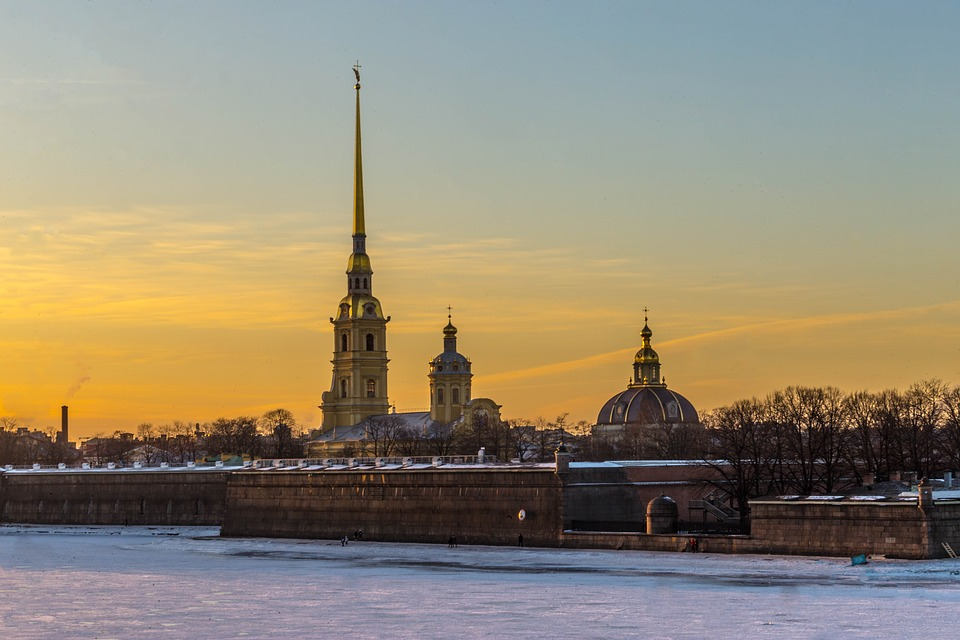
The Soviet Union (followed by its satellite countries) experienced many changes in toponymy for political reasons, for example, Tsaritsyn on the Volga became Stalingrad, the scene of an epic battle during the Second World War, but after Stalin's death, it changed to that of Volgograd. Just as the capital of Tsarist Russia, founded on the marshy estuary of the Nevà, what the Russians liked to call the Venice of the North, with its canals and cathedrals, was St. Petersburg. Founded in 1703 by Peter the Great as a window on Europe and baptised St Petersburg, German-style. During the First World War, that name sounded too Teutonic and it seemed inappropriate to the Tsar to keep a Germanic root name for capital since the country was fighting against the Austrian and German empires and therefore it was changed3 into the more Slavic one in Petrograd.
https://pixabay.com/it/photos/san---pietroburgo-russia-2093362/
The second city, after Moscow it was the capital of Russia for a long period (from 1712 to 1918) almost without interruption. The city continued to be called Petrograd even after the October Revolution, but on Lenin's death in 1924, the second Congress of Soviets decided to rename it in Leningrad, in honour of the one who had launched the Revolution here. And it was under this name that, in the Second World War, the city was besieged by Nazi troops for 900 days. Cut off from the rest of the country and only occasionally supplied, the Leningraders held out until the counter-offensive of 1943: 700,000 of them, however, had lost their lives in the battle. With the collapse of the USSR, the city regained its original name.
History Notes: On December 2, 1804 in NotreDame, Napoleon Bonaparte "self-corrected" emperor of France. "Men of genius are like meteors destined to burn to illuminate their century" cit. Napoleon.
Rosa P.
History is sometimes written by small gestures, for example refusing to give up her seat on a bus, as Rosa Parks did in Alabama in 1955, just because the colour of her skin is not the right colour, starting the fight for black rights. Rosa Louise Mc Cauley was born on 4 February 1913 in Tuskegee, Alabama, to peasant parents. She had to leave high school to care for her sick mother, and at 19 she married Raymond Parks, a barber in her neighbourhood. Her husband was active in NAACP (National Association for the Advancement of Colored People), the political movement for the emancipation of black people, and convinced her to take the diploma. Rosa had listened to him, but she ended up being a dressmaker in a department store in Montgomery. Every morning she took the bus to work and it was not a pleasure, because the segregation laws called Jim Crow had turned the journey into a daily humiliation. Black people were only allowed to sit in the back seats, while white people were allowed to sit in the front. They were allowed to sit in the middle, but they had to give them up if a light-skinned person claimed them. And if there was no more space on the bus, they were obliged to get off. https://en.wikipedia.org/wiki/Rosa_Parks
https://pixabay.com/it/illustrations/destra-diritti-umani-umano-le-mani-597133/
On December 1, 1955, at six o'clock in the afternoon, Rosa was on her way home after a day's work, sitting above one of the central seats of the yellow and green Cleveland Avenue bus, along with three other black women. At the height of Cleveland Avenue, a white man got on the bus and demanded the seat. The driver James Blake, who had kicked Parks off another public transport a few years earlier, asked all four black women to get up. The other three did so, but Rosa answered no, defying the social conventions of the time and the biased glances of the whites on board the bus. *“If you don't get up”,* threatened James F. Blake the driver, *“I'm calling the police to arrest you”*. Parks stared at him and said, *"You can do it too"*. A few hours later Rosa was at the police station, where they had taken her fingerprints: accusing her of misconduct and violating city regulations. On 5 December, she had ended up before the court, which had sentenced her to a fine of 10 dollars, plus 4 dollars in court costs. The news made the African-American communities of the entire nation quickly and in a few days the indignation spread, the civil rights movement was waiting for nothing else. On 4 December the blacks, starting from Cleveland, had proclaimed the boycott of public transport. At the head of the revolt was a young reverend from Dexter Avenue Baptist Church, named Martin Luther King. After 381 days on foot, the blacks took revenge. On November 13, 1956, the first major victory came, the Supreme Court banned segregation on buses. On December 20th the order arrived in Montgomery and the day after the boycott ended. From that day on, other important victories followed with the approval of the Civil Rights Act of 1964. The civil rights movement became a consolidated reality, a wave of justice and freedom that invaded all of America in the name of Mrs Rosa.
Pink
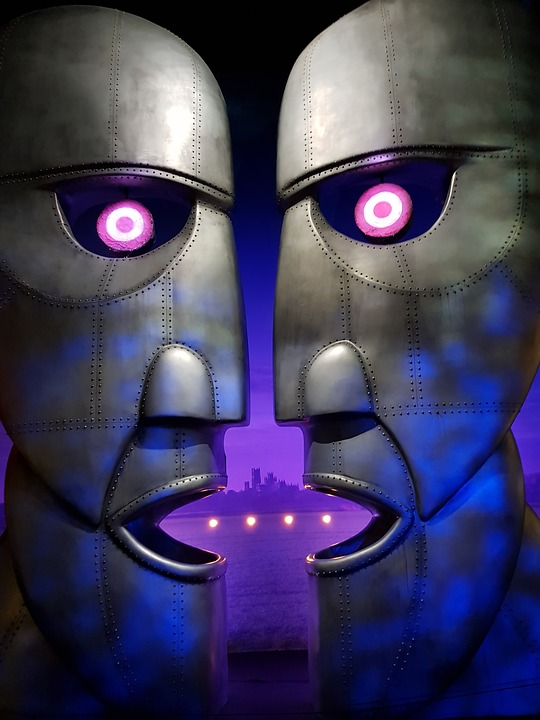
The Wall: a historical album, the one with the cover shaped with white bricks, surrounded in black with the name of the band and the title of the album written on it in block letters, of those that remain in time and are part of the collective imagination. The story of The Wall, as we know, is partially autobiographical and comes after a long psychoanalytic work, twenty years of therapy, by Waters. The leader of Pink Floyd said that the anger and fear he had had to face at the age of 35 had alchemically transformed him into a concept album, it is the same fear that dwells in the hearts of human beings and that, unfortunately, often burns in a fire capable of shaping racism, sexism, religious fundamentalism, manipulation. https://en.wikipedia.org/wiki/The_Wall
https://en.wikipedia.org/wiki/The_Wall#/media/File:PinkFloydWallCoverOriginalNoText.jpg
The protagonist of this imaginary story is the character of Pink, an interpreter of rock who sees his existence condemned to isolation due to an impassable wall. A wall erected to protect himself from the traumas of his life, inside it we find mighty autobiographical glimpses: his father's death in war, his difficult adolescence and his divorce from his wife. Pink's death is a real case of self-destruction. He locks himself in a room and erects a wall (the wall) between himself and others. Here his imagination leaves the real world and wanders in his nightmares, heading towards probable madness.
https://youtu.be/YR5ApYxkU-U
That is, above all, the turbid and restless life of Roger Waters, who is the dictatorial creator of The Wall, the bassist is the author of much of the album starting with the famous Another Brick in the Wall. A challenging and complex *“concept-album”*, more than you can imagine the great commercial success, linked more than anything else to winning singles like Another Brick in the Wall, with its famous *“Teachers, Leave the Kids Alone”*, destined to become a student protest slogan. A baroque and imperfect rock opera, sometimes even unpleasant. But fascinating in its many facets and atmospheres, even in its contradictions, such as going from the psychedelic wonders of Comfortably Numb to the tight dance of Run Like Hell, a disco catchphrase. A disco still current, in its contents and, why not, also in its sounds, always a bit sinister and not very reassuring.
https://pixabay.com/it/photos/pink-floyd-musica-pietra-rosa-2647618/

The origins of the division
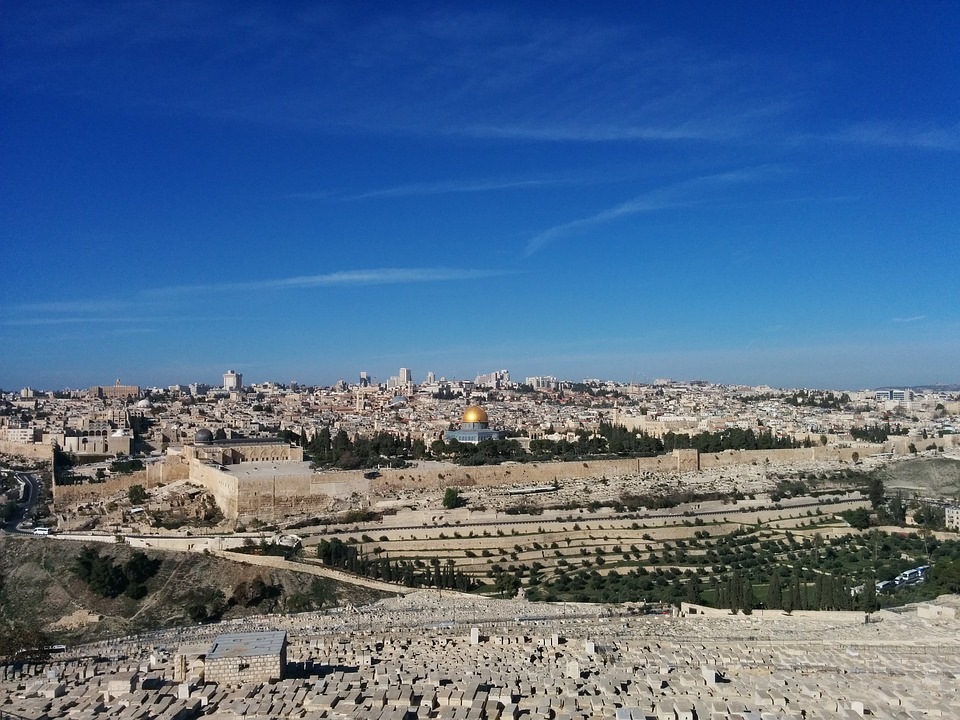
In February 1947 the British government decided to disengage itself from the Palestinian situation which had become impossible to govern, thus creating the conditions for the international definition of the Israeli-Palestinian question. And the partition plan approved by the UN through Resolution 181 provided for the birth of an Arab state and a Jewish state (placing the Jerusalem area under international mandate). The conclusions of the commission of enquiry led by the British Robert Peel in 1937, which had proposed an initial division of the area into two states, were enlightening. An uncontrollable conflict had arisen between two national communities within the narrow borders of a small country: almost one million Arabs were at war, open or latent, with the community of 400,000 Jews who had arrived in Palestine through various waves of migration. The first partition recommended by the Royal Commission of Inquiry chaired by Lord Peel to ascertain the causes of the Arab revolt, which began in 1936, provided for the limitation of Jewish immigration to 12 thousand units per year and the partitioning of Palestine into a Jewish state on 20% of the territory (Galilee and the coastal strip), an Arab state on the remaining 75% and a permanent special mandate on Jerusalem and Bethlehem. The commission then recommended a transfer of populations to ethnically unify the two states, taking the attempts to resolve the Greek-Turkish crisis as a model. The method envisaged to obtain the transfer of populations was compensation. The British thought, therefore, to obtain the exchange in a consensual way. But if the Arabs opposed, they would have been ready to execute the plan by force. The Arab High Committee rejected this first plan. The Jews accepted its principle, but many of them considered the portion of the Jewish state unsatisfactory. At this point, however, the British withdrew the idea of partition because of the Arab opposition. The difficult international situation required the English not to displease the Arabs by throwing them into the ranks of England's enemies. After the victory in the Second World War, the situation continued to appear blocked. A new series of conferences and committees of enquiry highlighted the impossibility of reaching a satisfactory solution for both sides. But now, the British acceptance of India's independence also made British engagement in Palestine anachronistic. London, therefore, decided in February 1947 refer to the problem of Palestine to the UN. https://en.wikipedia.org/wiki/United_Nations_Partition_Plan_for_Palestine
https://pixabay.com/it/photos/gerusalemme-monte-degli-ulivi-2262550/
In November 1947, with the horror of the Second World War, which ended just two years earlier, the international institutions found themselves engaged in a complex phase of geopolitics by redesigning the geography of some territories, which would deeply mark the political balances of the following decades. In this scenario, the United Nations General Assembly met in special session to examine the report of the Special Commission on Palestine. Resolution 181 passed on 29 November with 33 votes in favour 13 against and 10 abstentions. The UN measure was based on the conclusions of Unscop, a committee made up of representatives of 11 states (Australia, Canada, Guatemala, India, Iran, the Netherlands, Peru, Sweden, Czechoslovakia, Uruguay and Yugoslavia) and charged with studying the best solution for the new arrangement of the Palestinian territories, on which the United Kingdom had renounced its mandate, putting it back into the hands of the UN. Resolution 181, which established a plan for the partitioning of Palestine that gave rise to the birth of an Arab and a Jewish state (while Jerusalem was placed under international control) was a historical event that sanctioned through international law the legitimacy of national Jewish aspirations towards Palestine. The resolution provided for a partition of the Palestinian territory and created a Jewish state of 14,100 square kilometres with 558,000 Jews and 405,000 Arabs and an Arab state of 11,500 square kilometres inhabited by 804,000 Arabs and 10,000 Jews; and an area under international regime including Jerusalem, Bethlehem and other smaller villages with 105,000 Arabs and 100,000 Jews. The Jewish state represented 54% of the whole of Palestine. An economic union including the two states and the internationalised zone should have balanced the division. The definition of the status of Jerusalem can be found in Part III of Resolution 181. The project provided for the city to be established as a corpus separatum under special international regime administered by a Trustee Council (Trustsheep Council) on behalf of the United Nations. The Council was to draw up a statute for the city to ensure religious peace and coexistence between communities. After 10 years, the statute would be submitted to a referendum for possible amendments. The inhabitants of the international area would not have the citizenship of either the Jewish or the Arab state. British politics had clear responsibilities in what would later become the Middle East conflict, the typical multi-table game of the British had led them to delude the aspirations of the Arabs now those of the Jews. The situation on the ground and the role of leadership did the rest. While the Jews accepted a Jewish state below their hopes, but which could become a solid basis for development, the Arabs rejected the international solution seen as a Western diktat.
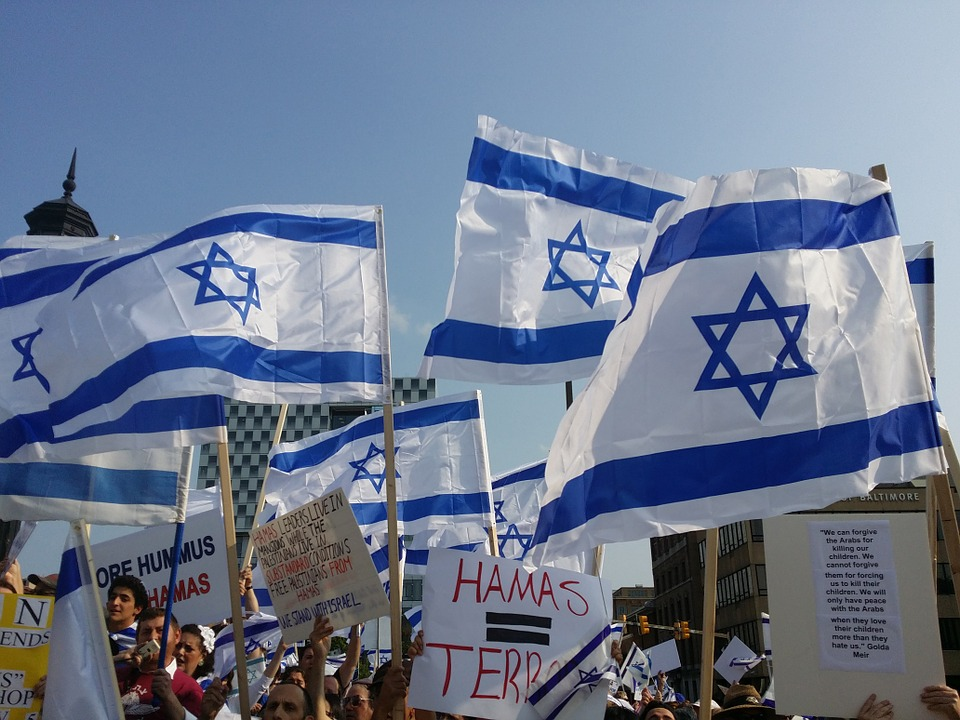
https://pixabay.com/it/photos/protesta-dimostrazione-israele-519814/
The decision of the General Assembly to divide Palestine between a Jewish and an Arab state, with the internationalisation of the Jerusalem area, proved incapable of bearing the weight of its intrinsic weakness. There was a fierce struggle between the Arab population (at that time the majority with 1,200,000 units) and the Jewish population (which had 600,000 inhabitants). The map showed three enclaves substantially arranged in a chessboard pattern that would have made the connections between the various parts of the Arab and Jewish states difficult. The complexity of the proposed solution would probably have required, in addition to the acceptance of both sides, a direct intervention of the UN and, above all, the active collaboration of Great Britain which, instead, continued to pursue its own interests even after the birth of the State of Israel. After the proposed partition began what can be defined as the first phase of the Arab-Israeli war. It lasted from November 1947 to May 1948: after the proclamation of the state of Israel on 14 May, a conventional war between the newly formed Jewish state and the armies of five Arab countries began. The Arab rejection of the compromise was motivated by the non-recognition of Jewish nationalism assimilated to Western colonialism and distrust of Jews (immigrants and natives) considered as outsiders. In the Arab world, from Syria to Aden, demonstrators assaulted American and Soviet diplomatic missions against Jews, setting their homes and synagogues on fire and causing numerous victims. This was the beginning of the bloody theory of clashes, revenge and brutality that has accompanied the history of the Middle East over the last seventy years. During the peace negotiations with the Netanyahu government and then with the Barak government, the Palestinian leadership demanded a return to the borders of Resolution 181 of 1947, which was objectively very advantageous for the Arabs given the current situation on the ground. But Israel replied that the rejection of the plan by the Arab world had caused it to lapse, thus freeing the two sides from any commitment. The Arab world's hostility towards the State of Israel and the five wars (the 1948 war, the Sinai conflict in 1956, the Six-Day War in 1967, the Yom Kippur war in 1973 and the Lebanon war in 1983) that followed after the Arab rejection of Resolution 181, effectively overturned the conditions on the ground. Jerusalem, which should have been the real symbol of coexistence, has become the stone of the scandal of a conflict all based on force. The most dramatic aspect of those events was the diaspora of 700,000 Palestinians (UN estimate), forced to flee or forcibly evicted, to which corresponds the flight of as many Jews from other Arab countries due to the spread of feelings against Israel. It was only the first act in the wake of wars and terrorist attacks, which subsequently bloodied the entire Middle Eastern area, and the beginning of a political, but above all humanitarian crisis that is still unresolved.
https://pixabay.com/it/photos/gaza-striscia-palestina-3829393/
The savage of music
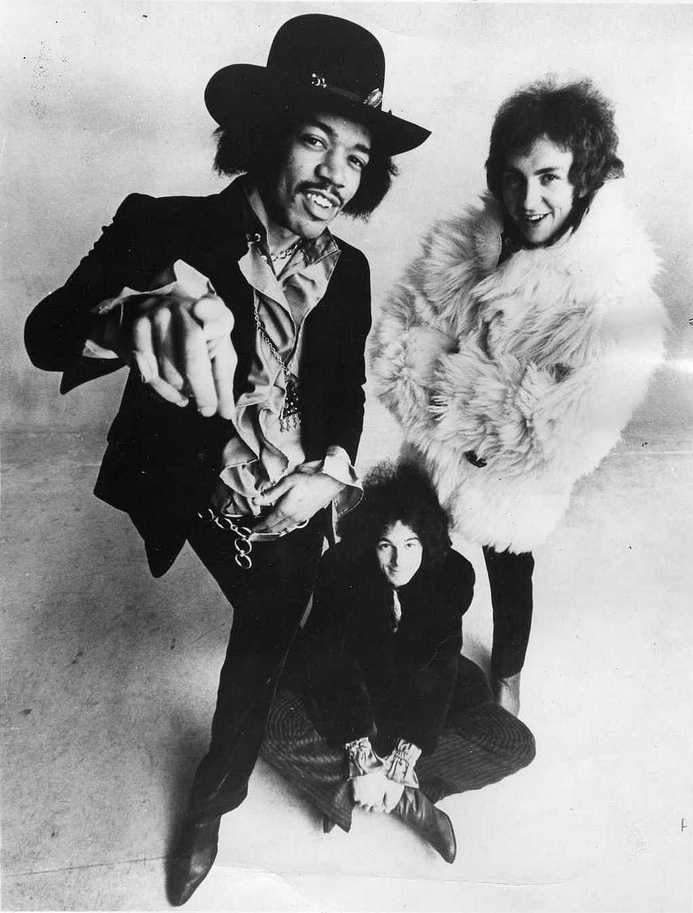
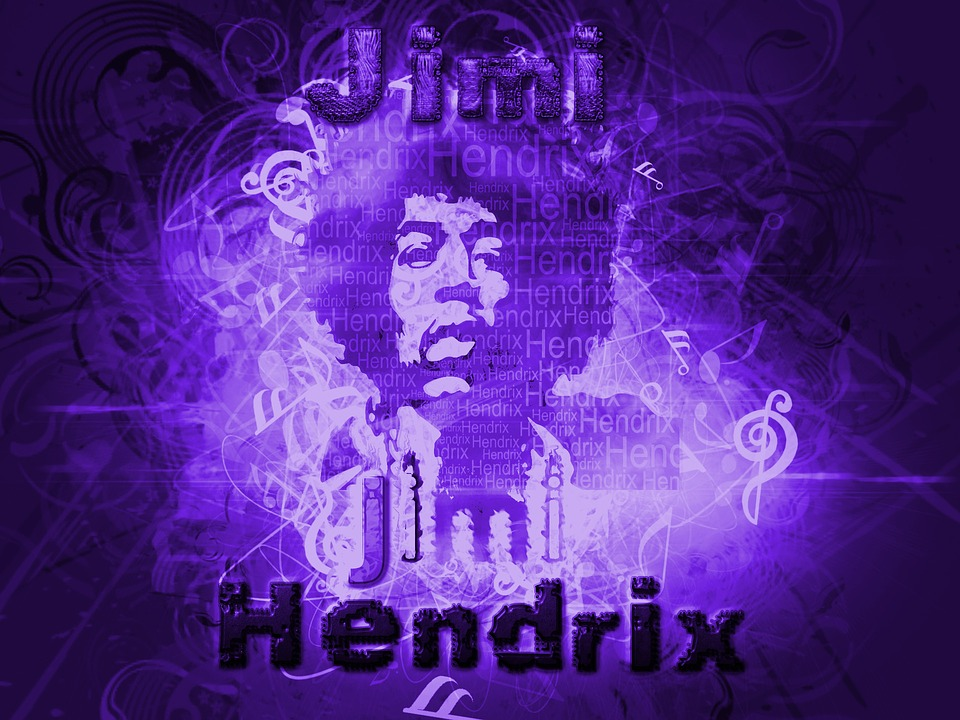
Johnny Allen Hendrix (Jimi) the wild savage of music, half Afro and half Indian Cherokee, was the greatest guitarist of all time for critics and insiders, a record also recognized by the prestigious Rolling Stone magazine in 2001. Despite the poverty, he suffered during his childhood and his miserable social and economic condition he managed to cultivate his great passion for music (as a child he built himself a guitar with a cigar box and a rubber band). https://en.wikipedia.org/wiki/Jimi_Hendrix
https://en.wikipedia.org/wiki/Jimi_Hendrix#/media/File:Jimi_Hendrix_experience_1968.jpg
Jimi Hendrix was unique, even in the world of rock music madness; before becoming a famous singer had been a marine. He debuted in 1961 and gained prominence between 67' and 70', with three studio albums and two live recordings with his band The Jimi Hendrix Experience. With these albums, with new psychedelic sounds and seasoned with an experimental rock never heard before, came success. The powerful sound of his electric guitar gave this instrument new potential, setting new standards. His performance at the Woodstock Festival in 1969, during which he performed the provocatively distorted American anthem, remains memorable.
https://www.youtube.com/watch?v=TKAwPA14Ni4
He used the guitar in the most eccentric ways; in his hands, the instrument became a symbol. He played it with his teeth, smashed it and set it on fire. He played and screamed louder than any other musician. The Daughters of the American Revolution, a conservative women's organization, had banned him because they judged his obscene appearances obscene, but the music world adored him in recognition of his grandiosity: among his greatest admirers were the Beatles and the Rolling Stones. Jimmy, with his ruffled hair and extravagant clothes, was the sexiest of all pop musicians. He was the first black man to harmoniously blend the blues with white pop music under Bob Dylan's influence. In 1967, British fans voted him the best musician in the world. He was very rich: in four years he had made a fortune with his music. On stage, he was a savage, but in private life, they described him as shy and modest. He died prematurely and tragically in Kensington in 1970. In 1992, fifty years after his birth, he was awarded by heart with a "star" in the Rock and roll Hall of fame (the most important rock museum in the world) in Cleveland.
https://pixabay.com/it/illustrations/jimi-hendrix-desktop-sfondo-1546874/
Work in progress Christmas 2020
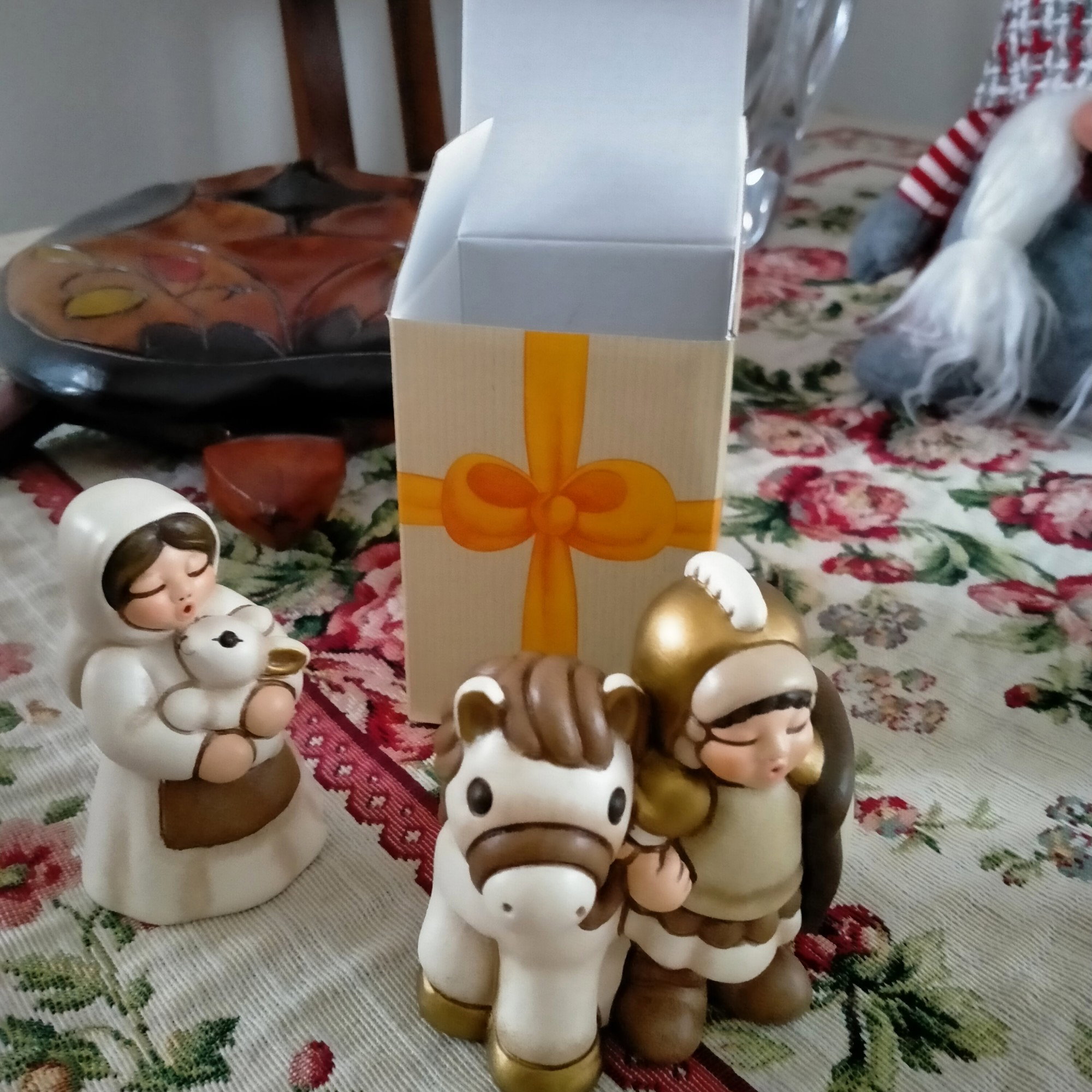
Presepio 2020....New extras: woman with rabbit and Roman soldier... soon Christmas 2020 🎄
https://www.instagram.com/p/CIFzdcHAi5--o6_IP0XuFtbx9Lf-hh4hUyR8vI0/?igshid=1wmidkd1fe8az
Photo of the day
Tri-car
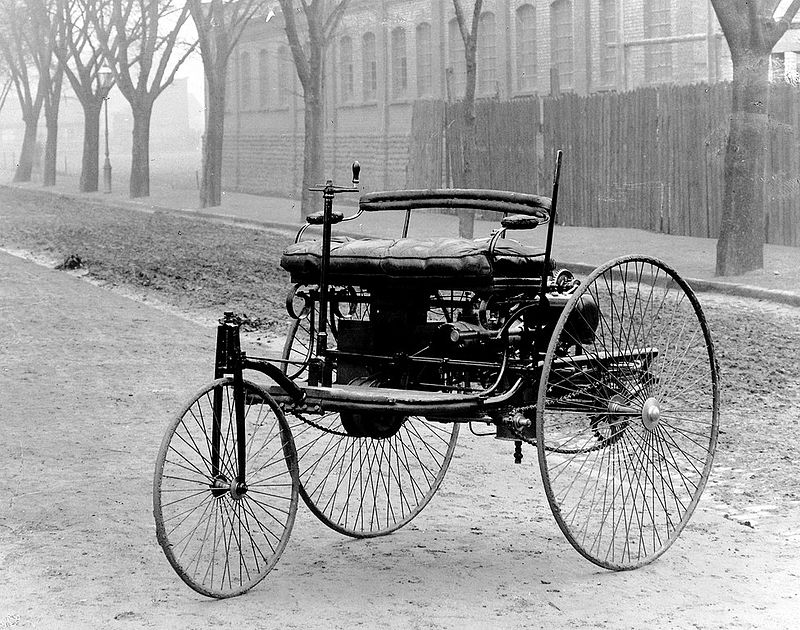
On 29 January 1886, Karl Benz obtained the patent for the combustion engine: he went down in history as the father of the first car. Three years earlier, in 1883, Benz founded Benz&Cie. Rheinische Gasmotorenfabrik, to design and build two-stroke gas engines and thus lay the foundations of what would later become the automobile industry. Thus the famous Motorwagen was born in 1886: an eventful tricycle powered by petrol.
https://en.wikipedia.org/wiki/Carl_Benz#/media/File:1885Benz.jpg
Course, in the field of technology, it is difficult to establish records with absolute certainty: new ideas are often in the air and may contribute to them, and this constantly evolving and competing technological process made one of its direct competitors, the Daimler Motoren Gesellschaft, establish itself on the market with the first Mercedes models. Years later (1926) the two companies merged to form a happy partnership: Mercedes-Benz. There is no doubt, however, that Benz was the first to conceive and build a sextant motor car and not as a horse-drawn carriage adapted to mechanical propulsion. The engine of that pioneering car was 4-stroke, had an output of 0.8 Hp at 250 rpm and was installed at the rear. Since then, the refinement of the car has not stopped until today's goals of economy, performance and safety, and indeed it is surprising how a mature technology such as automotive technology is still in effervescent evolution.
https://pixabay.com/it/illustrations/auto-automobile-motore-veloce-1335674/

Chronological disorientation
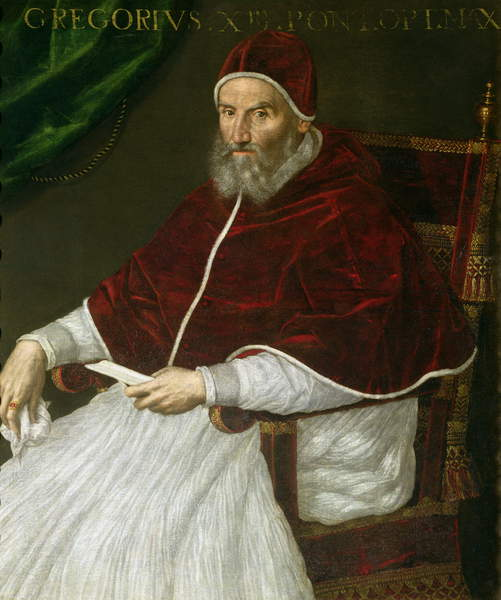
To Pope Gregory XIII we owe the first chronological disorientation of the modern era, and Gregory's reform caused quite a bit of it. Here are the facts. In the 16th century A.D., which began with the year 1501, things are not going so well in Europe with the count of time. The fact is that Holy Easter, year after year, presents itself in an increasingly hot season. After consulting the astronomers, the pope realises that the reason for the postponement lies in the slight "dyscrasia" between the tropical and Julian years. The tropical year is nothing more than the time it takes the Earth to make a complete turn around the Sun. It lasts, exactly: 365. https://en.wikipedia.org/wiki/Pope_Gregory_XIII
The Julian year, wanted by Caesar in his calendar reform, launched in 45 B.C. on the model known in Egypt, lasts instead, for pure mathematical convenience, 11 minutes and 14 seconds longer: and amounts to 365.25 days. The arithmetic convenience lies in the fact that three years of 365 days can be alternated with a year of 366, to maintain the synchrony between legal and astronomical time. Between the tropical year and the year of Caesar, there remains, it is true, a gap of 11 minutes and change. But the error is small: equal to 0.002%. The trouble is that time sometimes amplifies even small errors. So, after 1500 years, dyscrasia amounts to a dozen days. To stop the sliding of legal time through the seasons, on the advice of astronomers, Pope Gregory orders that we stop considering leap years as leap years that end in double zero, unless, like 1800 and 2000, we are divisible by four. And, above all, Pope Gregory XIII orders that from Thursday 4 October of the year of grace 1582 we pass, in a single night, directly to Friday 15 October.
https://pixabay.com/it/vectors/vintage-astronomia-zodiaco-4167444/
It is easy to imagine the chronological disorientation of the simple people who, from Rome to Madrid and Lisbon, are no longer caught between dates and deadlines. The time situation in Europe is also tangled up because Protestants, suspicious, fear that the greedy Pope of Rome, with his reform, wants to steal ten days of their lives from them. And they reject that papist devilry. What confusion! The continent is reduced to a sort of temporal puzzle. Henry III's France aligns with Rome's calendar, but only in December 1582. The Catholic states of Switzerland and Germany in 1584. Some resist until 1587. As for the Protestants, well they give in, yes, but much later. The last one is England, with its colonies: it will adopt the Gregorian calendar 170 years later, in 1752. In Russia, then, you see the oddities of the time, it was only the atheist revolution of 1917 (March or February?) that imposed the "papist" dating. Since the Julian calendar was still in force in Russia, as we have seen it was back to the Gregorian calendar, the February Revolution took place in March and the October Revolution took place on 7 November. It was the October Revolution that reformulated the Russian calendar, just as it reformulated Russian spelling to demonstrate the depth of its impact. And in China, it was Mao's revolution in 1949 that imposed the European calendar.

The challenge: 2050
In the latest report by Irena, the International Renewable Energy Agency (IRENA), entitled *"Rise of renewables in cities: Energy solutions for the urban future"*, it is clear that large urban centres are responsible for 70% of the world's climate-altering emissions linked to energy production. According to Irena, the city of the future must pay more attention to urban planning and energy systems, so large cities (cities with a population of between 5 and 10 million inhabitants) must implement long-term programmes to increase the development of smart green cities, also encouraging the use of electric vehicles, energy efficiency in buildings, the implementation of storage systems and the adoption of intelligent energy management systems for the integration of high volumes of energy produced from renewable sources. The declared objective is to achieve the year 2050 with greater production of renewable energy in urban centres, only in this way can we hope to significantly reduce CO2 emissions and create more liveable cities. Of the 671 cities that have decarbonisation programmes, few metropolises aim to have 100% renewable energy. On the other hand, smaller towns and cities, with between 50,000 and 100,000 inhabitants, often promote ambitious plans to build urban networks powered entirely by green energy. Unfortunately, most of these cities are located in Europe and North America, leaving the question as to what the energy fate of southern countries such as Asia and Africa will be. https://www.irena.org/publications/2020/Oct/Rise-of-renewables-in-cities https://www.irena.org/-/media/Files/IRENA/Agency/Publication/2020/Oct/IRENA_Renewables_in_cities_2020.pdf
https://pixabay.com/it/illustrations/uomo-foresta-alberi-edifici-5606892/
As far as the sources and technologies used are concerned, the use of solar thermal and geothermal energy in cities is increasing, although their potential remains virtually untapped, while the possibility of including wind energy in city contexts remains an open question that clashes with legislative, regulatory, financial and aesthetic limits. The real potential of photovoltaics remains to be discovered, once substantial shares of installed systems in urban centres are reached. A special focus should also be given to waste management which, especially in developing countries, should be integrated with energy management. It is estimated that 60-80% of the waste produced in these countries is organic and could represent an excellent resource to be converted into biogas.

History notes
The Second World War, fought from September 1939 until August 1945, was the bloodiest conflict in history and saw the deaths of over 50 million people, both civilian and military, on the battlefields, in the cities or the lager. It was a conflict that changed the history of the 20th century and determined the world's political order up to the present day. At the origins of the war, there was the deep world economic crisis of '29. From the crisis, which affected all the world's economies, in the thirties, only the United States recovered with difficulty, which highlighted its resounding industrial supremacy and the insufficiency of the internal market to absorb the mass of goods produced and the consequent strategic plan to enlarge its commercial borders, but this aim clashed with the division of the world market, with competition from Great Britain on one side and Japan on the other (the other two only true economic powers). In this perspective, Stalin's Soviet Union welcomed a conflict between the capitalist nations, waiting for an eventual expansion towards the West (with its eyes on Poland). European nations that were always looking for new expansionist aims such as, for example, the continuous Italian-French and Italian-English contrasts, due to the claims of Italy in Nice, Savoy and Corsica and the nationalistic and militarist policy in North Africa of Mussolini's government in constant contrast with Great Britain. All this political-military and ideological fervour were in stark contrast with the immobility and inefficiency of the League of Nations. The League of Nations proved to have little effect in international controversies: from the Spanish Civil War to the Japanese war initiative in Manchuria, to Italian colonial expansionism in 1935, to the rearmament of Germany (violating the Treaty of Versailles) and the subsequent annexation of Austria, to Hitler's blackmail of Czechoslovakia (Munich Pact 1938) and the Russian refusal to continue to oppose Hitler's expansion policy of 39' (Hitler-Stalin Non-Aggression Pact of August 1939).
https://pixabay.com/it/vectors/libri-biblioteca-educazione-25160/
This war saw two opposing sides: on the one hand, the Axis powers (Germany, Italy and Japan) and, on the other, the allied countries (England, France), later joined by the Soviet Union and the United States (1941). Summing up the stages that led to the war that preceded the German invasion of Poland due to the question of Gdansk (the "Polish corridor" that would have allowed Germany to extend and reunify the old Prussian territories) were: the Japanese invasion of Manchuria (1931); the Italian invasion of Ethiopia (1935); the German and Italian intervention in the Spanish Civil War (1936-39); the German invasion of Austria and Czechoslovakia (1938-39), followed in 1939 by the invasion of Albania by Italy. In this complex geopolitical picture it was evident that if one part of the world did not want war and did everything to avoid it, another part glorified and desired it (Hitler, Mussolini and their Rome-Berlin axis).
The Rif rebels
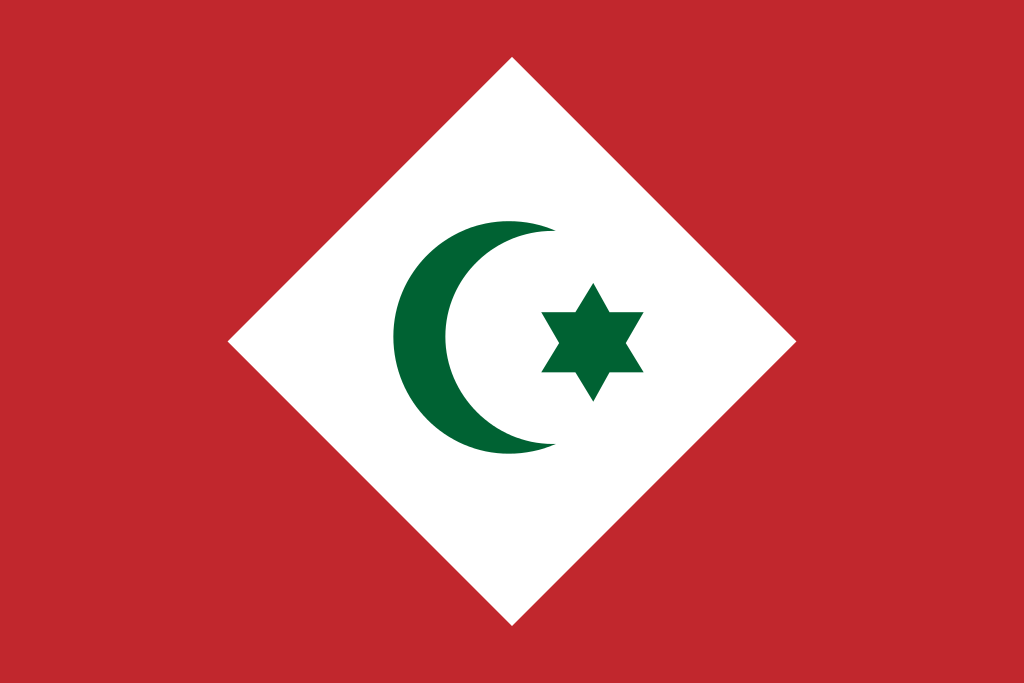
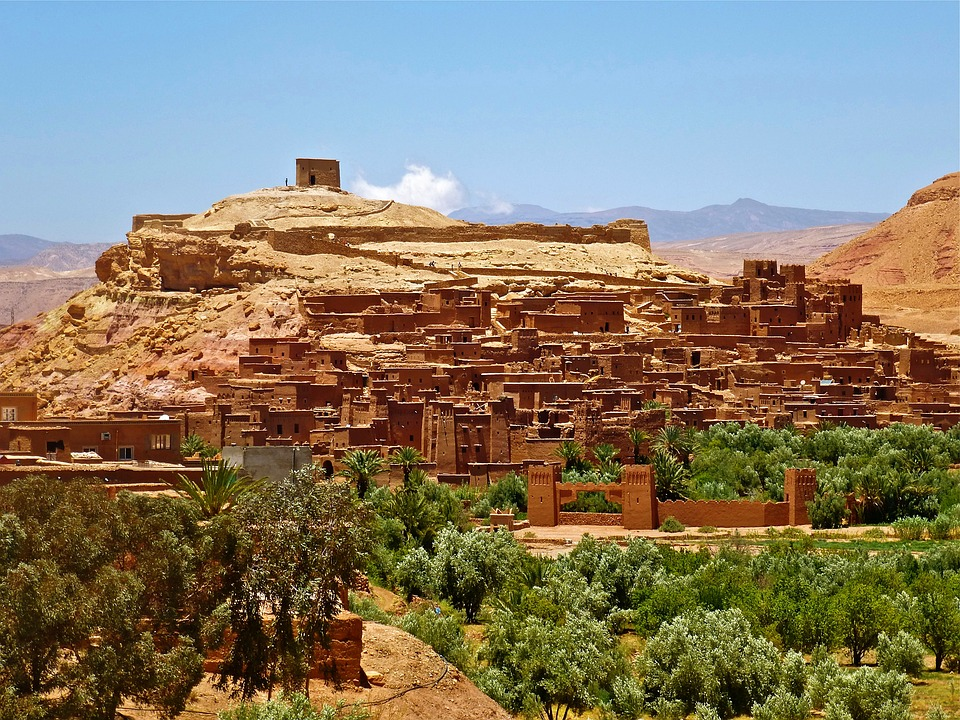
Abd-el-Krim, the legendary Rif warrior, has spent 36 years in exile since the day he was taken prisoner after six years of bloody war with the French and Spanish colonialist armies united against his Berbers in northern Morocco. Abd-el-Krim was born in 1883 into a family of Berber nobles with a great following and influence among the tribes of the Rif mountain range. The French occupation of central and southern Morocco and the Spanish occupation of northern Morocco, which began in 1912 with the acceptance of the colonial protectorate by the Sultan, caused a lively ferment among the Arab and Berber population of the country. The tribe of Abd-el-Krim rebelled against the Spanish in 1920 when the troops of the government of Madrid occupied the holy city of Chefchaouen. Gathered a group of warriors, they took refuge in the impervious mountains of the area, starting an incessant armed struggle against the Spanish. https://en.wikipedia.org/wiki/Abd_el-Krim
https://it.wikipedia.org/wiki/Repubblica_del_Rif#/media/File:Flag_of_the_Republic_of_the_Rif.svg
The successes won him the loyalty and devotion of all the Berber tribes of the Rif, where the revolt became general. The Spanish colonialists were defeated at Annual and left 20,000 men in the field. Abd-el-Krim discerned the Sultanate of Rabat, whom he called a servant of the occupants, and proclaimed himself the Sultan of Morocco: proclaiming the Republic of the Rif. In 1925 Abd-el-Krim found himself engaged in war even with the French, who came to the aid of the Spanish, certain that by getting rid of him they would also conquer Morocco. Abd-el-Krim and his warriors fought against the overwhelming forces of the two colonialist powers, until the end, which came in 1926. Captured by the French, Abd-el-Krim was deported to Reunion Island in the southern Indian Ocean, and the Berbers in the mountains laid down their weapons, but his name was not forgotten among the warriors of the Atlas Rif: the man who tried to free Morocco from imperial colonialism.
https://pixabay.com/it/photos/marocco-fortezza-adobe-castello-1188570/
The contemporary alibi
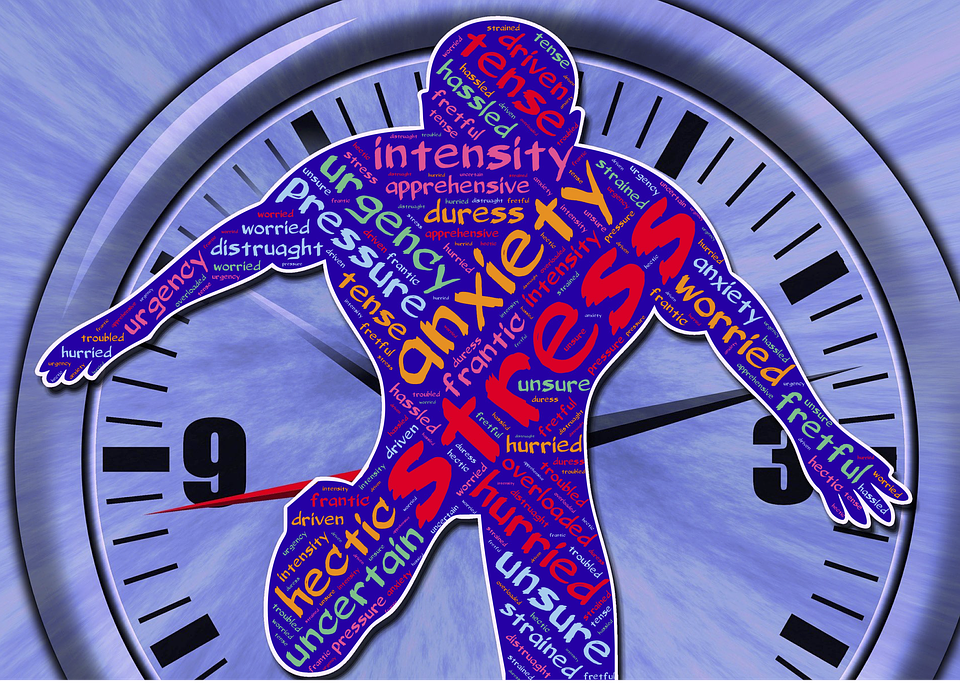
Stress, the contemporary alibi for every malaise: nervousness, dissatisfaction with the world or horror of oneself. Some people attribute this malaise to tiredness, to illness (stress, precisely) the lack of meaning of one's existence, hostility towards society and those who come to terms with it. Stress in English means "difficulty", "adversity", "pressure", "tension". In the collective imagination, then, this word triggers representations linked to effort, discomfort, in short, to any human difficulty overcome or to be overcome, even if the illustrious Hans Selye already in the years immediately following the Second World War succeeded in demonstrating that stress is also vital energy, an adaptive response, confirming that he knows how to keep his inner balance unchanged concerning the continuous external aggressions. His famous phrase from 1974 *"Life would be boring without the challenge of stressful situations"*. And he divides stress into positive and negative: eustress the former, distress the latter. Selye means positive all functional and psychologically appropriate responses of the individual to internal and external stimulations. In practice, it is positive (eustress) the use of sufficient energy to overcome problems without affecting our homeostatic balance. And it is negative (distress) the use of excess energy to overcome a certain difficulty without respecting a personal inventory of one's values and problems. https://en.wikipedia.org/wiki/Hans_Selye
Of course, perhaps there have never been so few moral defences against the labours of living, all the more so since intellectual honesty forbids us to adopt them, for our convenience and comfort, without perhaps finding a way out. To recover from this illness means to find the courage to enter into communication with ourselves and with the world, at the cost of a total or partial change in our own opinions; at the cost of finally having to admit that we have the right to make mistakes, that we can say no, that we know how to recognise the need to take care of others. etting away from work problems and spending time with the family can be an excellent source of emotional and moral support, but avoid abusing alcohol, smoking and other substances, which cause conditions that lead to constant stress. Develop positive attitudes towards stressful situations in life. Give up negative mental traits such as attitudes of fear, anger and revenge, which germinate stress. Try to return to holistic relaxation and techniques such as meditation, breathing and exercises (taking relaxing walks in nature), listening to music, healthy eating, buying a plant, reading a book, laughing and smiling more, in short, reshaping your lifestyle. In the case of chronic stress, however, it is always advisable to consult a professional. My way out of this disease so current, I found it in the importance of friendship, of the group, the fatigue of being people not too old-fashioned or too up-to-date, the terrible energy of being intrusive or conquering.
Armed train
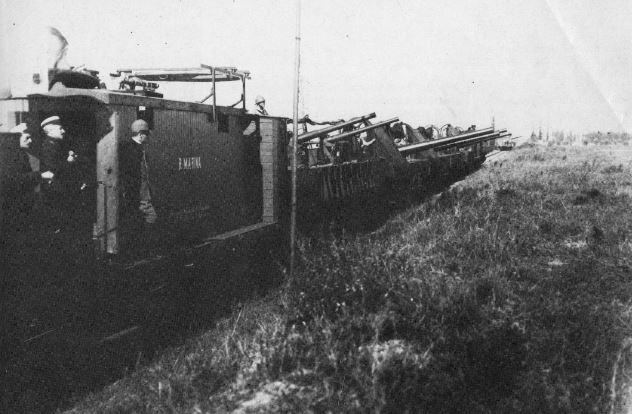
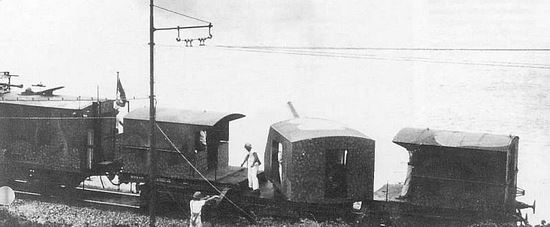
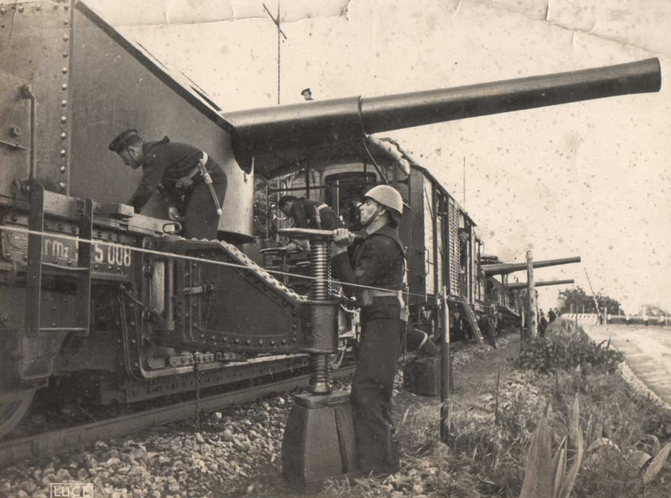
At the outbreak of the First World War Italy along the Adriatic coast appeared immediately vulnerable and so at dawn on 24 May 1915 six Austrian naval teams fired undisturbed on the Italian peninsula from north to south (the cities of Rimini and Barletta were hit). The Regia Marina, which was entrusted with the surveillance and protection of the coast, even though it had an excellent naval fleet, found itself caught off guard in defending the maritime cities from the Austrian naval bombardments which continued until September 1915, when the Italian command realised that the Italian coast was defenceless and that the few cannon batteries were not going well and studied the possibility of putting armed trains on the railway. The armed trains were of three types and with cannons of calibre between 76 and 152 millimetres.
https://it.wikipedia.org/wiki/Treni_armati_della_Regia_Marina#/media/File:Treno_armato_-_cannoni_76_e_152.JPG
The freight wagons on which the cannons were placed were prepared in La Spezia. Each train was equipped with a battery of four pieces of 120 or 152, plus a section of 76 anti-aircraft guns, plus the necessary armoured service wagons for the sailors and the locomotive. In all, each train consisted of 70 sailors, and 5 officers plus the train drivers. In all, the Regia Marina introduced 12 trains employing over 1000 men.
https://it.wikipedia.org/wiki/Treni_armati_della_Regia_Marina#/media/File:Treno_armato_120-45_su_carro_poz.JPG
The damage inflicted by the armed trains on the enemy was derisory (five aircraft shot down, the interruption of three naval bombardments against the coast and two foiled air attacks), but their presence and their speed of manoeuvre and intervention worked very well as a psychological deterrent against the Austrian ships which, since 1916, carefully avoided approaching the Italian coast.
https://it.wikipedia.org/wiki/Treni_armati_della_Regia_Marina#/media/File:Treno_armato_152-40_su_carro_poz.PNG
The Suez Canal
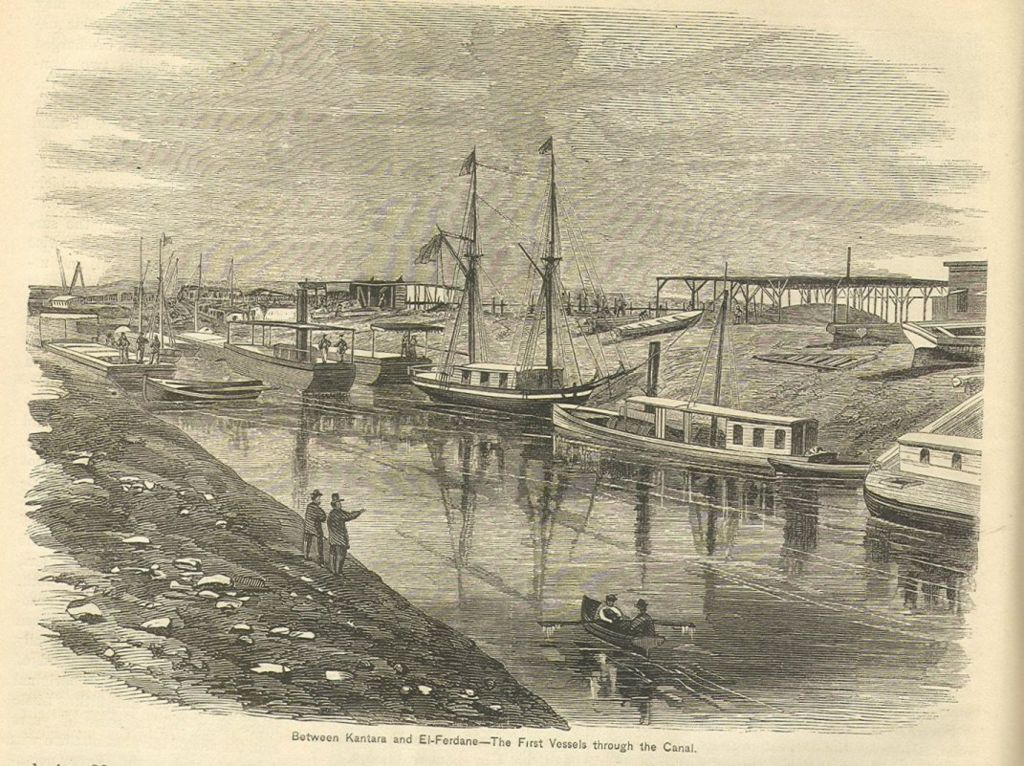
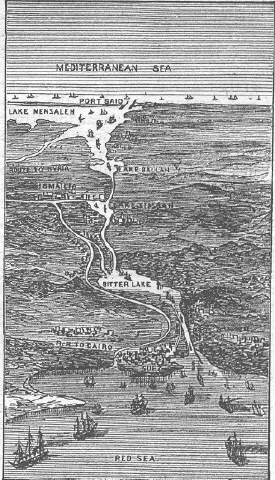
A gigantic work in the service of humanity. Scholars of geology believe that a million years ago, where the Suez Canal now stands, there was a natural strait between the Mediterranean and the Red Sea. They have been able to establish that the terrain of the isthmus is of Quaternary origin, i.e. recent. That ancient strait could not serve the men who had not yet appeared on earth; when they appeared and invented navigation, a little bit the maritime deposits, a little bit the contributions of the more eastern arms of the Nile delta, and perhaps the seismic events had filled that passage. The ancient strait had become an isthmus, leaving as its memory the depressions of Lake Timsah and the Amari Lakes. The subjects of the Pharaohs, who communicated with the Mediterranean via the Nile, felt the need for a way to the Red Sea too; and, from those engineering masters who were, they dug a channel that, via the Amari Lakes, connected the Red Sea to the easternmost branch of the Nile delta.
https://en.wikipedia.org/wiki/Suez_Canal#/media/File:SuezCanalKantara.jpg
A canal is something different from a strait: to close a strait requires the work of geological eras; to let a canal die a few inept governments are enough. The canal of the Pharaohs, the object of subsequent treatment by the Romans and then by the Arabs of the golden age, was eventually left to dry up. After the Indies road was found around the southern tip of Africa, it was thought, especially on the French side, of a possible shortcut through Suez. France had excellent ports on the Mediterranean: passing through the Red Sea it could have beaten the English ships that made the round trip through Africa. This thought was not foreign to Napoleon during his expedition to Egypt.
In 1861 the first act of the concession in favour of a Universal Company of the Suez Maritime Canal was signed with Egypt, in a second act, signed in 1856, it was established that the Canal should remain at all times a neutral passage, open to all merchant ships, without distinction of individuals and nations, provided that transit fees were paid. The concession period was to last ninety-nine years from the date of opening. The Company's capital was set at 200 million francs divided into 400,000 shares (the work than costing more than double that amount). A company for the study of the Suez Canal had been set up in Paris since 1816 and the Italian engineer Luigi Negrelli was called to join it. He drew up the project where the Pharaohs and Napoleon had failed. Negrelli's project was approved by the Study Society set up in 1846, when the age-old question of cutting the Isthmus of Suez, which had always separated the Mediterranean from the Red Sea, was resumed, forcing European ships to circumnavigate Africa.
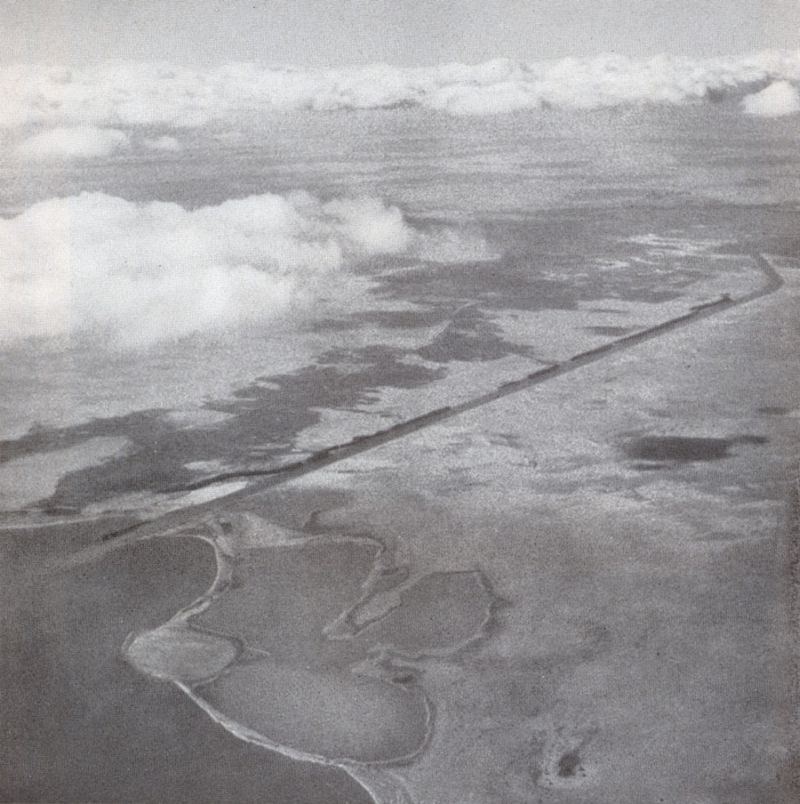
https://en.wikipedia.org/wiki/Suez_Canal#/media/File:Mittelholzer-suezkanal.jpg
The work entrusted to the Universal Company of the Suez Canal and financed thanks to the skilful diplomatic work of Ferdinand de Lesseps, vice-consul of France in Alexandria, the first pickaxe was given 11 25 April 1859, in Porto Sald. The Canal was opened on 17th November 1869, with grandiose celebrations in the presence of the most powerful people on the planet. With the opening of the Canal, the world's geography was enriched with a new element, an instrument of progress available to all peoples and with this in mind, in 1888 the Convention of Constantinople matured, approved to allow free passage both in times of peace and war. The Canal is 163 kilometres long and this is the only numerical data that has remained unchanged. The width, which was at the beginning of twenty-two metres, has been increased to over one hundred. The initial depth of eight metres was increased to fourteen.
https://en.wikipedia.org/wiki/Suez_Canal#/media/File:SuezCanal4_byDanielCsorfoly.JPG
An eleven kilometre-long side road (Faruk By-Pass) was created in the northern part of the Canal to facilitate convoy traffic. In 1913 5000 ships for 20 million tons passed through; in 1951 11 thousand ships for 80 million tons passed through. Passengers in transit now far exceed 1. 600 thousand nodded, and ships from over 40 different countries pass through it every year. Over the years the Canal ended up being the object of contention first between the colonial powers and then between them and Egypt. Egypt came to nationalize it, triggering the harsh reaction of the United Nations in 1957 and the dispute between Egypt and Israel. It reopened to international shipping in 1975 and was extended in 2015, and today the Canal is the largest and most crucial trade route.
Nivola
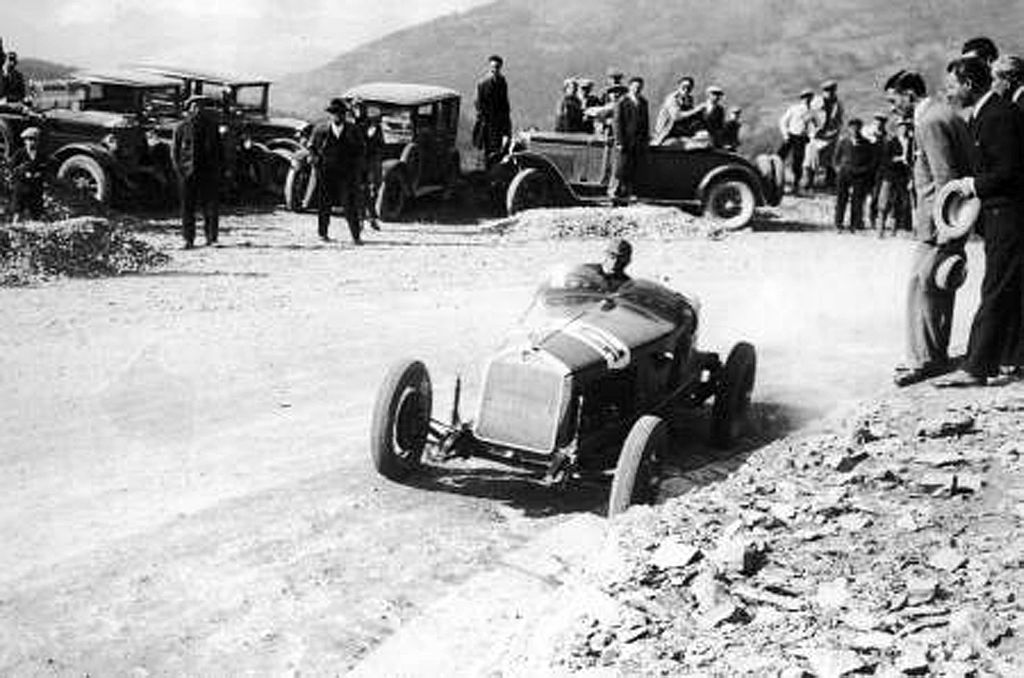
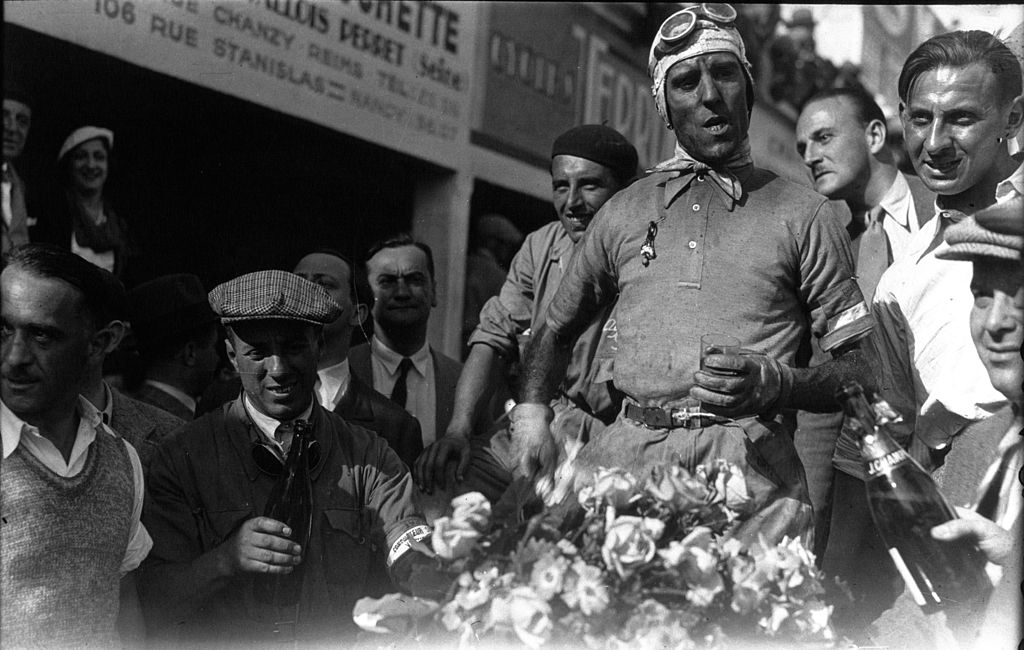
Born in Castel d'Ario (in the province of Mantua) on 16 November 1892 and died in Mantua on 11 August 1953, he was a motorbike and car driver from 1920 to 1950. The press has created various nicknames for him, "Mantovano volante" and "Nivola". He entered the history of sport, not only Italian, and few, like him, in the 30's fascinated fans, crowds, fans, newspapers, government men, ministers. Nuvolari, before the Second World War, managed to represent, in the hearts of those who had seen him pass on the dusty roads of the "Mille Miglia", a perfect symbiosis between man and engine. It might sound like a cliché, but in reality Tazio always appeared, to everyone, as someone who was born inside cars and who literally never got out of them: a man of speed and of the future, in short. That air of progress that one breathed around, before the war swept everything away, was really due, in the different fields of activity, to characters like Nuvolari. To one, in short, who, bolt after bolt, beacon after beacon, wheel after wheel, would have been able to put together, from nothing, a bolide able to beat any other bolide and give everyone the impression that the path of the future and progress was traced. https://en.wikipedia.org/wiki/Tazio_Nuvolari
https://en.wikipedia.org/wiki/Tazio_Nuvolari#/media/File:Nuvolariconsuma.jpg
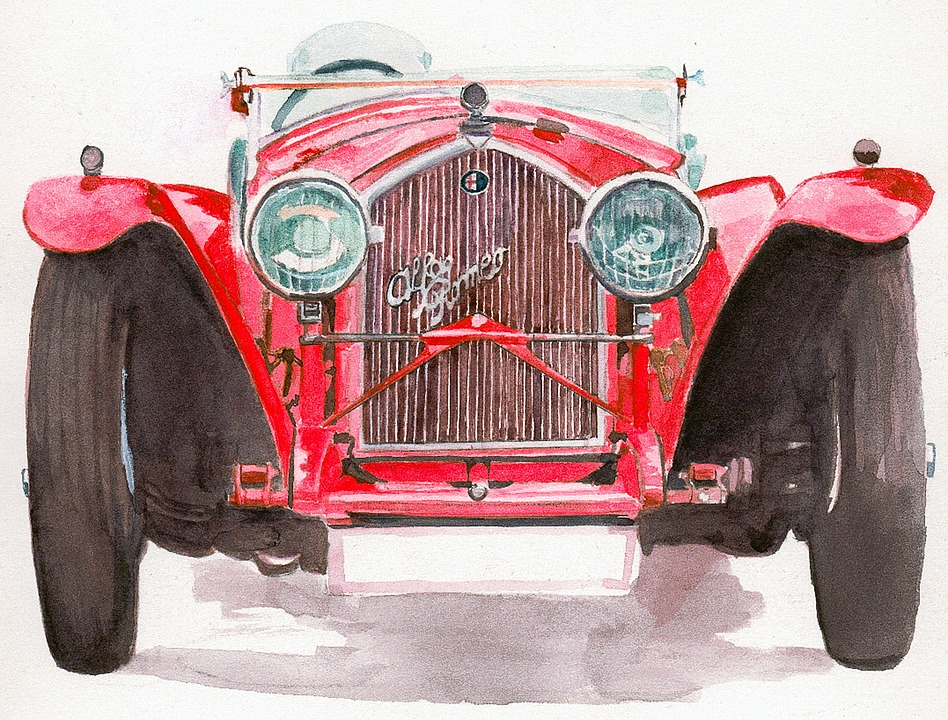
His father, Arturo Nuvolari, was a passionate cyclist, incredibly attracted by engines, and he passed on his passion for Tazio who, still very young, became a motorcyclist. The motorbikes, however, immediately made him known and "created" the character. One day "Nivola", with a patch on his leg, asked him to go out on the track. To race, he was tied to the motorbike. In April 1930 he was consecrated "ace" of engines: the champion won the "Mille Miglia" with an Alfa Romeo of 1750, at an average speed of over one hundred kilometres per hour. From that moment on (1935-1937), successes no longer count, but his great passion for engines is killing him because of the continuous inhalation of petrol vapours. In 1947 and 1948 Tazio ran the last two "Mille Miglia". Just in 1948, in Turin, at the finish line of the Brezzi Trophy, he arrived with the car without steering wheel, turning the steering wheel with the spanner.
https://en.wikipedia.org/wiki/Tazio_Nuvolari#/media/File:Tazio_Nuvolari_at_the_1932_French_Grand_Prix.jpg
A myth, a great myth, a kind of solitary knight who seemed to come out of the Middle Ages. At that time there were no electronic devices on racing cars, the position of the opponent was not communicated on the headphones and the victories or defeats were never for a thousandth of a second. As in cycling, when one went away, he just went away. If necessary, the driver would get off and, at the side of the road, he would repair himself the distributor of the car that had got wet from the rain. But in the agricultural and poor Italy of that period, the unleashed bolides that arrived in the dust seemed to promise modernity, progress, wealth for all. The people, sweaty, tired, with a big smile printed on their mouths, rushed from the fields to see those "madmen" who ran away like the wind and felt somehow gratified.
https://youtu.be/_lZNQfjRzcQ
The great "Nivola" retired from racing on 10th April 1950. Tazio had never had an easy life: two children he had had since his marriage to Rosa Carolina Perina had died of illness. On 1 August 1953, at the age of 61, Tazio surrendered to his incurable illness. One of the great myths of world motor racing, the "son of the devil", the man with "nerves of steel", was unfortunately beaten in a sprint by the disease. Nuvolari, therefore, could only be beaten by misfortune and all the dreamers, those in need of freedom and those who imagined a world without obstacles could be recognized in him. The beautiful song written some years ago by Roberto Roversi and sung by Lucio Dalla pays homage to Nuvolari's spirit.
https://pixabay.com/it/illustrations/alfa-romeo-acquerello-auto-veterano-1848011/
Polenta
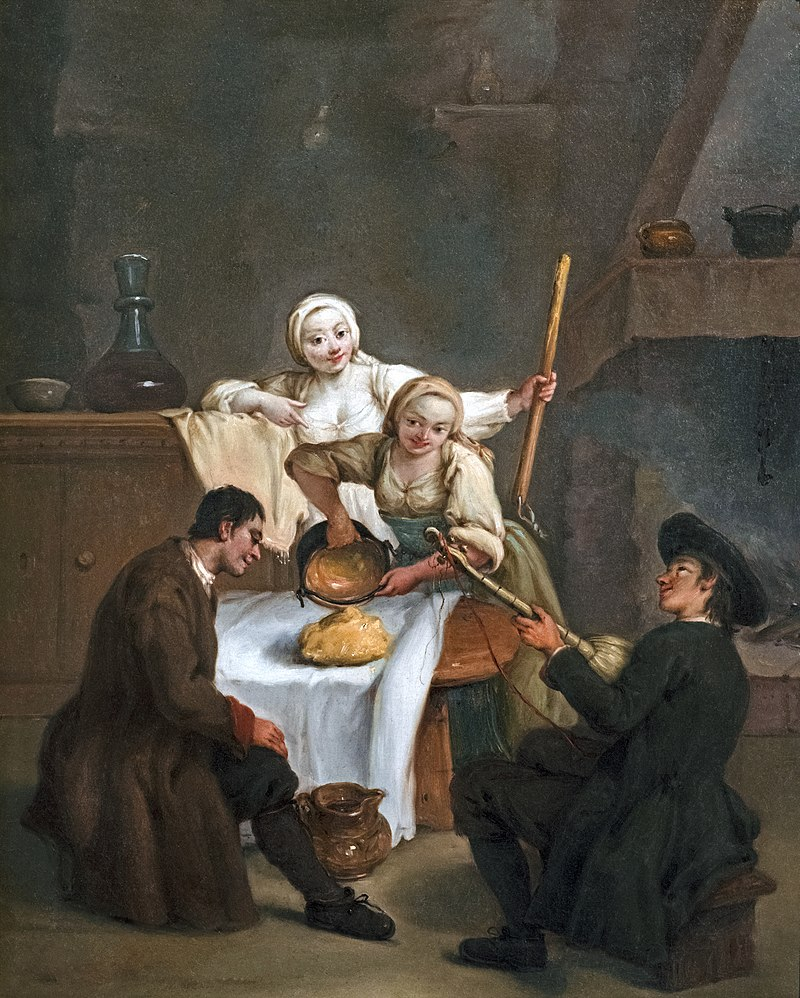
The polenta was the first hot food, the first soup, the first act of the great prehistoric food revolution. A search for the origins of polenta could take us a long way and its cooking and seasoning technique is reminiscent of the Roman *“puls”* of spelt. The etymology is obvious: from *“pactus”*, dense, compact. A poor dish that can be seasoned in many different ways, a typical dish for the cold season. The cold season has its particular gastronomy, linked precisely to the need to store additional energy compared to summer when the dispersion of heat by the body causes less discomfort. Our old people, whose science of nutrition was left not only to empiricism but also and above all to the economic opportunities that the times reserved, founded a good part of their gastronomic heritage on polenta. https://en.wikipedia.org/wiki/Polenta
https://en.wikipedia.org/wiki/Polenta#/media/File:Ca'_Rezzonico_-_La_Polenta_-_Pietro_Longhi.jpg
Spelt polenta, millet polenta, wheat polenta, barley polenta, legume polenta, chestnut polenta and acorn polenta, but polenta par excellence became maize polenta. The easy reproduction of American wheat favoured the designs of the agricultural transformation wanted by the northern states at the beginning of the modern age, but also the economic interests of landowners in every region. The preparation of polenta has always taken on the flavour of the ritual in farming families. It was the main dish and therefore deserved respect.
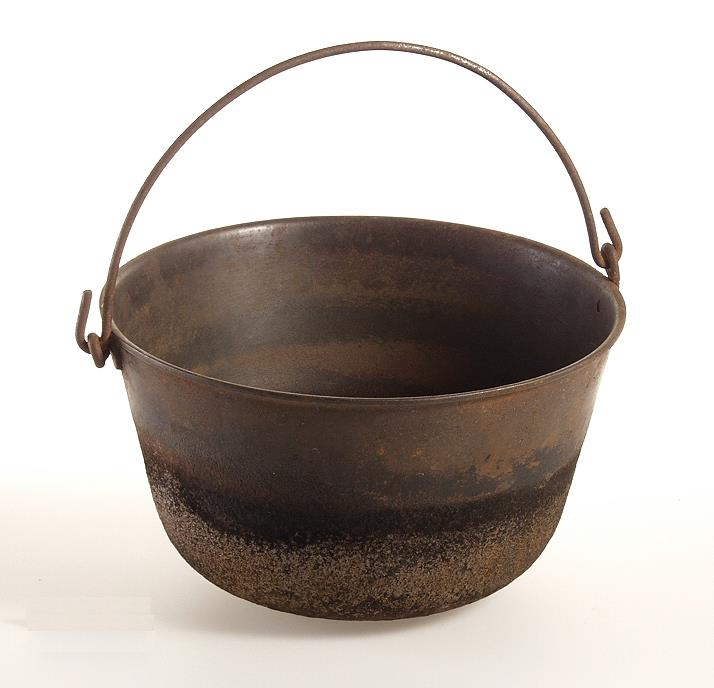
https://it.wikipedia.org/wiki/Polenta#/media/File:Polentakessel.jpg
The ancient recipe narrated: In water and salt brought to a boil, in a "paiuolo" of copper or cast iron, handfuls of yellow flour were poured in a sprinkling, taking care that no lumps were formed. It was stirred continuously with a long stick that was always used for this purpose. It was cooked for a long time until it detached from the edges. It was poured on a chopping board, left to rest for a while and then cut the slices with a cotton thread. Polenta, present above all in the area of northern Italy, is no longer silent about its interactional vocation. There is no territory of the Italian Peninsula where peasant families and workers have not tried their hand at attacking polenta lying on the table.
RECIPE
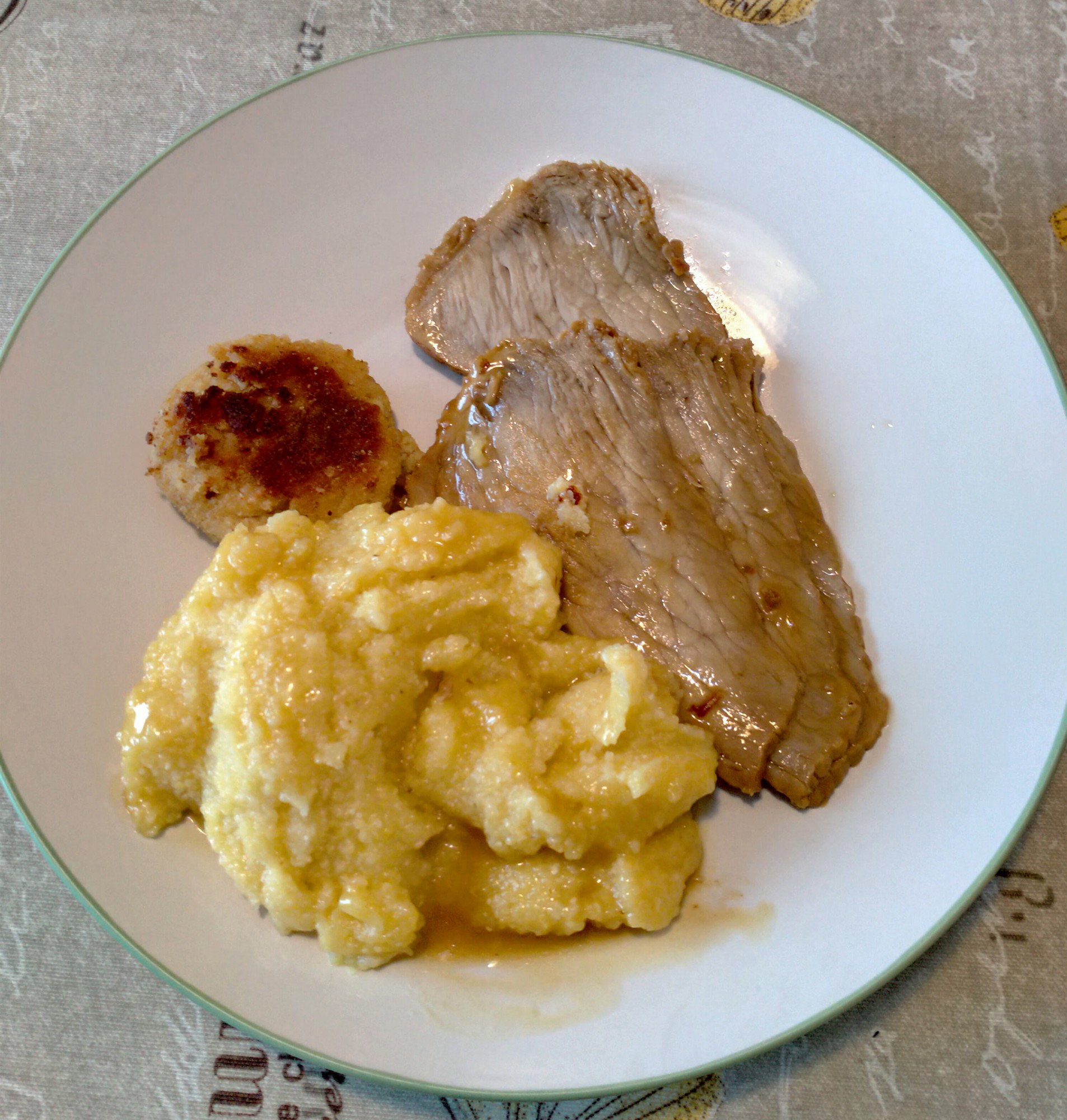
The warm and good "polenta concia"
Prepare a normal polenta with water, salt and coarsely ground flour according to the classic recipe; boil a pot with a litre and a half of water, a large spoonful of coarse salt and when the water boils, sprinkle the polenta, always stirring with a wooden stick. Let it cook for at least 40 minutes, stirring very often and keeping it quite soft. In case add one or two ladles of boiling water. When the polenta is cooked, pour it into an earthenware pan to bring to the table; add the fontina cheese cut into not too small cubes and half of the butter, stir for a moment to evenly distribute the cheese cubes, then cover and let the polenta rest in the heat for about ten minutes without touching it. After this time remove the lid, with the wooden spoon make a few circles in the polenta so as to distribute only partially the melted cheese, which will be in strips when you taste the polenta. Brown the other half of the butter until it becomes a dark golden colour and pour it on the surface of the polenta, serving immediately. If desired, it can be presented in a single terracotta pan, following the same procedure. INGREDIENTS 500 gr of coarsely ground polenta flour, water, salt, 250 gr of fontina cheese, 100 gr of butter.
https://pixabay.com/it/illustrations/cuoco-mangiare-simbolo-forma-494022/
Along the river Don
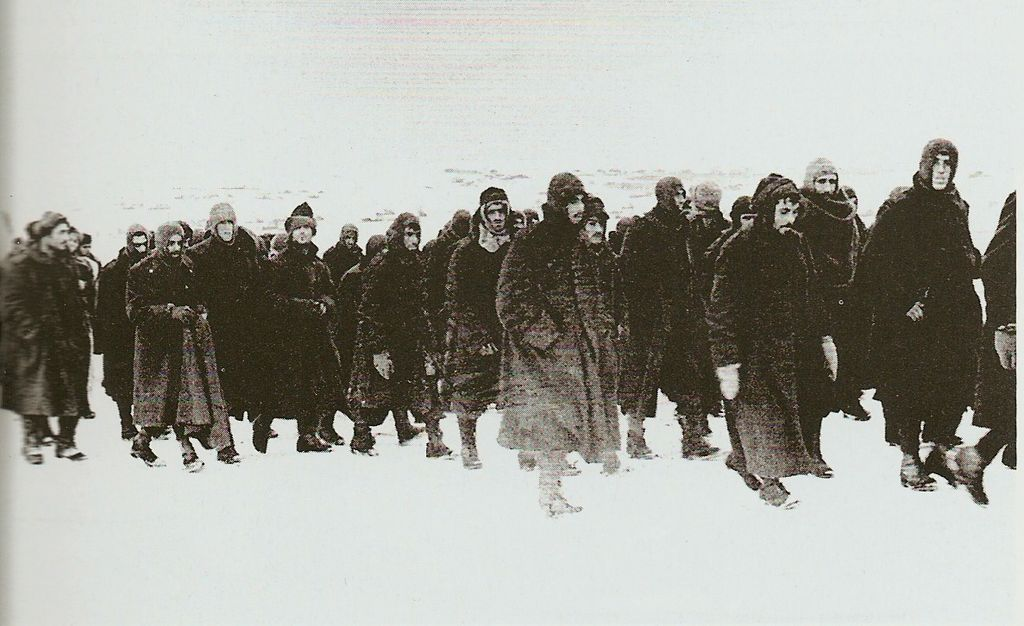
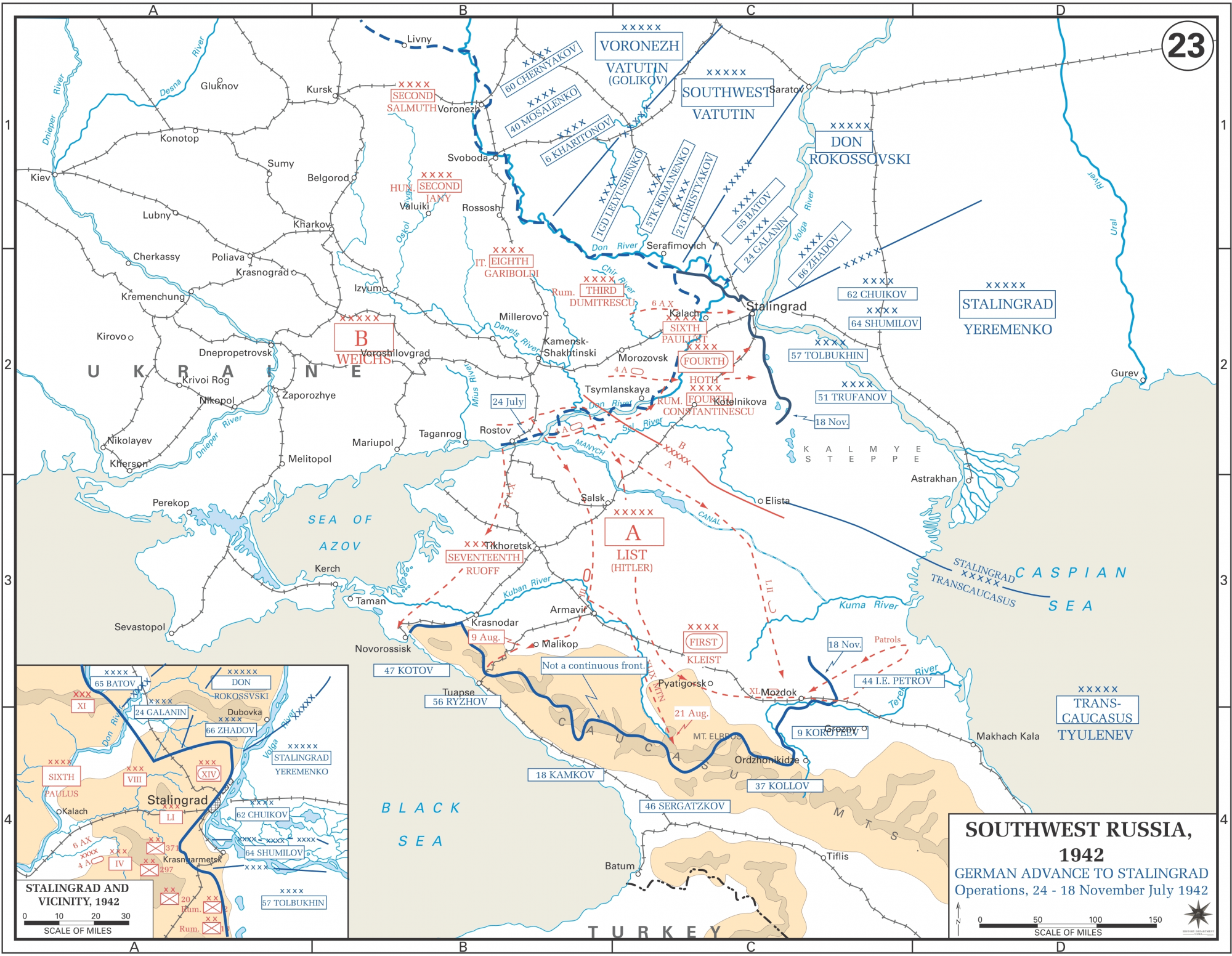
As in 1940 during the German advance on Paris, when he declared war on France on his knees, so in the summer of 1941, on the occasion of the Nazi aggression against the Soviet Union, Mussolini wanted to participate and sent the Italian army to fight alongside the Wehrmacht, to participate in the spoils of war after the victory. In August 1941 the CSIR, the Italian expeditionary corps in Russia (62,000 men) under the command of sixty-year-old General Giovanni Messe, was sent to Russia, repatriated in 1942 because of disagreements with the German command. Alongside the German armies and the Romanian and Hungarian-Slovak troops, the CSIR advanced on Ukrainian territory for more than 1,500 kilometres, but the Italian soldiers did not know what kind of army they were modest and subordinate allies of. They did not know that, while they were familiar with the civilian population of the occupied villages, they acted as rearguards of the special German armies (Einsatzgruppen) in charge of the extermination of all Russian Jews. The "blitzkrieg" planned by the Germans in the great Russian plain was based on the use of armoured vehicles, fully motorised infantry and a large supply of anti-tank weapons. But in the first Italian expeditionary corps (the CSIR), the armoured vehicles were represented by a single battalion of three-tonne tanks, and our anti-tank pieces, the 47/32 guns, were only tickling the Soviet's mastodontic T34s.
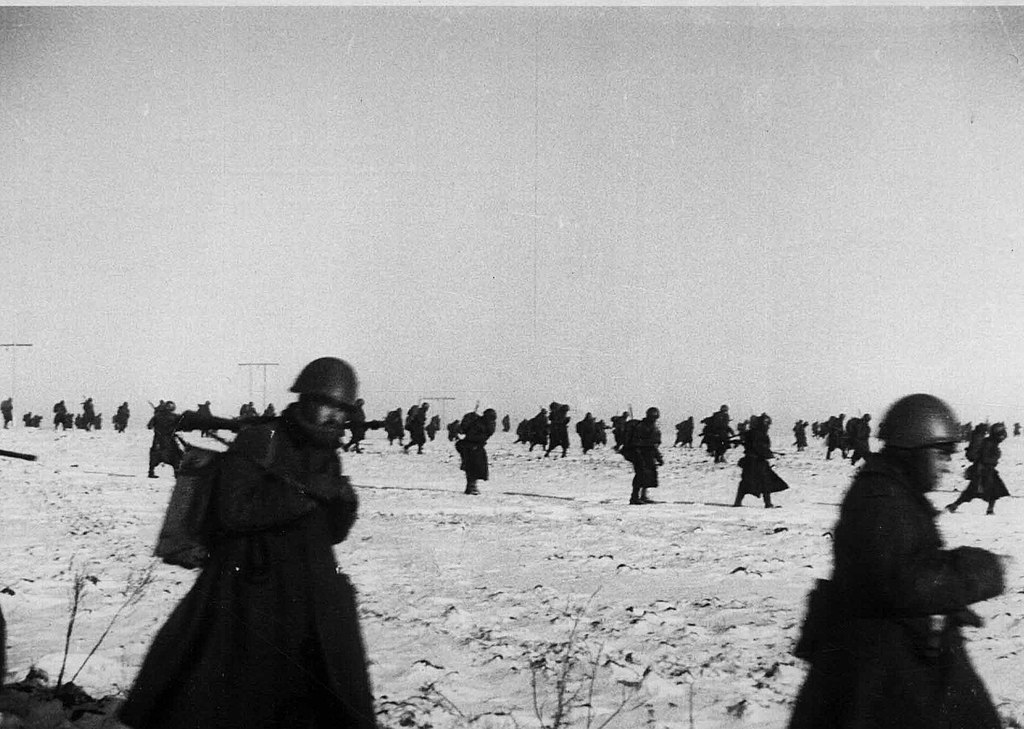
In the spring of 1942, Mussolini brought the Italian staff to 220,000, incorporating the CSIR into the ARMIR. Under the impact of the Red Army, the already precarious logistics and organisational system of the ARMIR collapsed completely and the individual departments were forced to retreat into the most chaotic isolation, and in the most adverse environmental conditions, during snow and with temperatures of 30-40 degrees below zero. But why did our soldiers have to pay that terrible price of blood? Why so many dead, missing, frozen in the Don sack? What are the reasons for the defeat of ARMIR? Many things were already known, from the inadequacy of the weapons to the mistakes of the commands, to the absolute lack of clothing suitable for the freezing temperatures of the steppe. It was like after 8 September: there were no links, no orders, no directives. The losses were enormous, among the dead, missing and prisoners lost along with the retreat, the survivors gathered for repatriation were only 45 thousand. The retreat was particularly painful for the Cuneense, which covered about 250 km in the Russian steppe: sixteen hours of march a day. Of the 15,000 men who made it up, 12,575 were the fallen and the missing: boys just over twenty, who had found themselves in the whirlwind of an unintended and unheard war. According to the German Supreme Command, they were supposed to protect the retreat of the other "Great Units", both Italian and German, after the breakthrough of the Soviets in the sector held by the Romanian-Hungarian Army. The Alpine troops, under the command of General Emilio Battisti, already tried by fatigue, hunger and fighting, headed first to Novopostoyalovka and then to Valujki, where they found their end, surrounded by an enemy superior in number, weapons and armoured means. https://en.wikipedia.org/wiki/Italian_Army_in_Russia
https://en.wikipedia.org/wiki/Italian_Army_in_Russia#/media/File:Italiani_-ARMIR.jpg
Of course, for those boys from the "Cuneense", the "Julia" and other divisions who escaped the Soviet counter-offensive attacks on the Don and ended up prisoners, life in the camps, especially in the very first period, was extremely hard. They were exhausted, often sick, covered with rags while the thermometer went down to 40 below zero, and everything was missing, but almost everything was also missing for the soldiers of the Red Army. A lethal epidemic of petechial typhus also came to the massacre. Only, later on, did medicines and hot food arrive. https://en.wikipedia.org/wiki/Alpini
https://en.wikipedia.org/wiki/Italian_Army_in_Russia#/media/File:German_Summer_Offensive,_24_July-18_November.PNG
For many years we have wondered and discussed the immense tragedy that was, for Italian soldiers, the Russian campaign. A delicate subject, which in the postwar years became the subject of propagandistic instrumentalisation, hot controversies and not only verbal clashes. Seventy-five thousand people were killed by the Italian army sent by the Fascist government to the Eastern front to collaborate in the Nazi aggression. The soldiers of the Russian campaign actually lived inhuman situations and conditions, without food, without adequate equipment, piled up in prison camps like cattle in pens. The ruthlessness of the victors? No, it was answered, it was the frightening price of war, moreover a war of aggression without reason and without justification, with all its horrors. If any cruelty there was or may seem to have been, it was the consequence of other cruelties, of other violence, or the effect of that terrible condition of abnormality that is always war.
 @kork75