That lazy (pigro) rocker
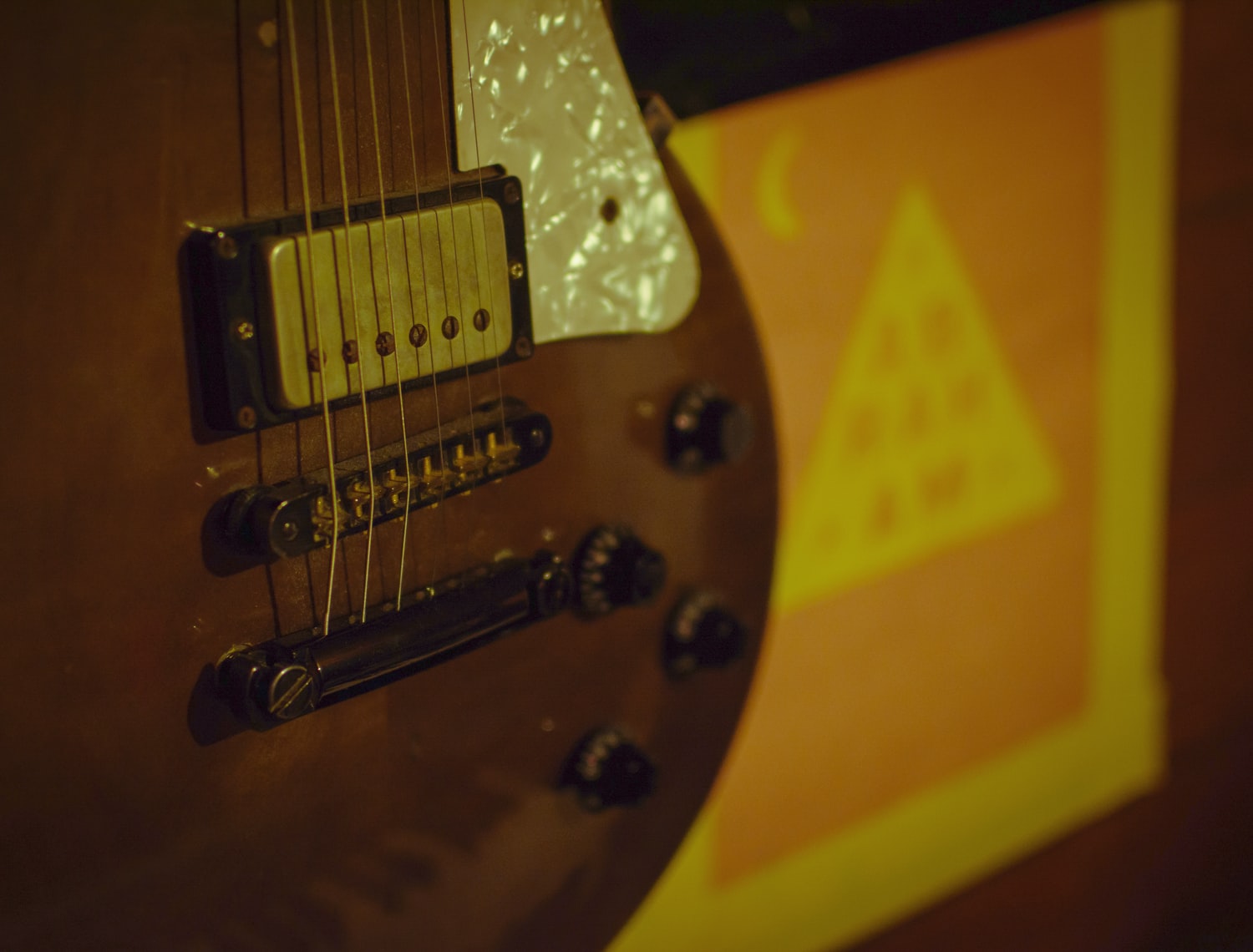
Ivan Graziani was born in Abruzzo, in October '46, he moved to Urbino where he studied graphic arts, but then he chose a musical career. Vocation for music? Rather, he answered ironically, for a question of money, because being a guitarist helped him make ends meet. But then he got serious. Ivan Graziani was anti-star par excellence, despite the fame and popularity he had acquired, he didn't often go on television, to say the least; he didn't call boring and sometimes useless press conferences for the presentation of records, or even didn't even try to tear the headlines, as long as they talked about it: he was entitled to the anti-star patent, a pass that few people have today. In his curriculum Graziani boasts a background of nightclubs and dance halls, arenas and applause that he barely won at the beginning of the '70s in the Brera clubs in Milan, offering an original type of guitar-bar outside of any typical canon of that period. It was also during those years that he collaborated with Lucio Battisti, P.F.M. and Antonello Venditti, among others. His first record, now unobtainable, is "La città che io vorrei", released in 1973, followed three years later by another album, "Ballata per quattro stagioni", full of impressionistic suggestions. The song that launched him is from 1977: it was entitled "Lugano addio", the record was "I lupi", a title chosen because, as he declared, he was literally fascinated by this animal. It was a record released in 1978, entitled "Pigro", and above all thanks to what remains one of his most beautiful songs, "Mona Lisa", inspired by the theft of the "Mona Lisa" that the singer-songwriter tells with lively rhythm and funny lyrics to make Ivan Graziani's subtle voice and pungent irony really popular, his dry style, always halfway between singer-songwriter and rock, his glasses with big red coloured frames. His stylistic style has always been to play with wisdom between sentimental ballad and melodic rock, light, mixing irony and melancholy, light, tender female portraits, but also small satires of everyday life and cultural conformism (for example in Pigro). Graziani's career continues regularly. One record a year: in '79 "Agnese dolce Agnese" was released, in '80 it was the turn of "Viaggi e intemperie" (with the beautiful and sad Florence). Graziani continued to release records with her tireless regularity until the early nineties. http://ivangraziani.it/
https://youtu.be/kylk6KVu4ZI
The silicon
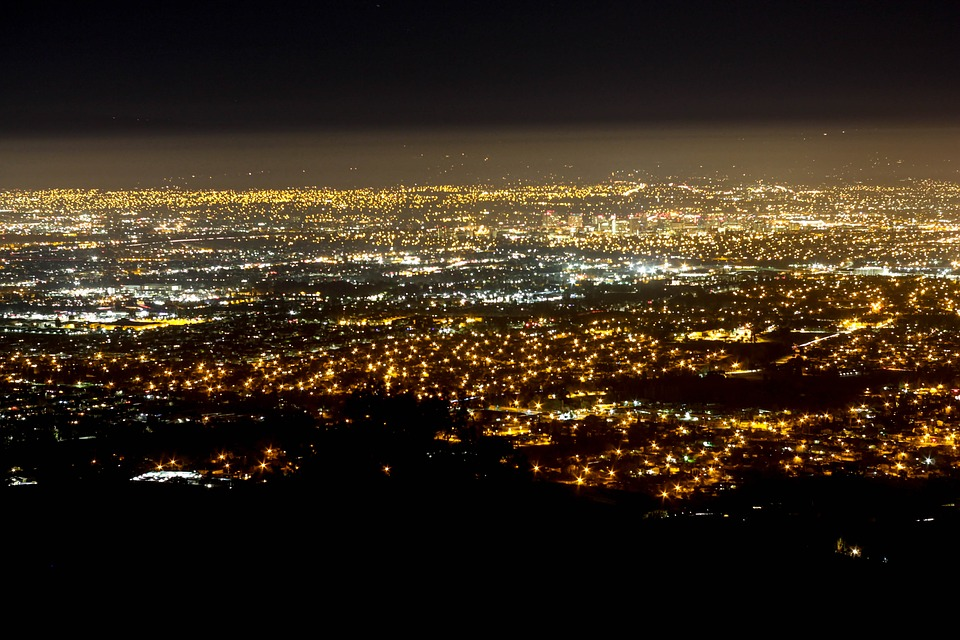
Silicon Valley is known almost all over the world, but what determined the fame of this Californian place was the birth and mass diffusion of the computer. There, in the southern part of the San Francisco Bay Area, due to a strange combination of fate, the largest industrial concentration of semiconductors, the basic material for the manufacture of integrated circuits and therefore microprocessors, has arisen, and there, today thrives the largest business in the world. https://en.wikipedia.org/wiki/Silicon_Valley
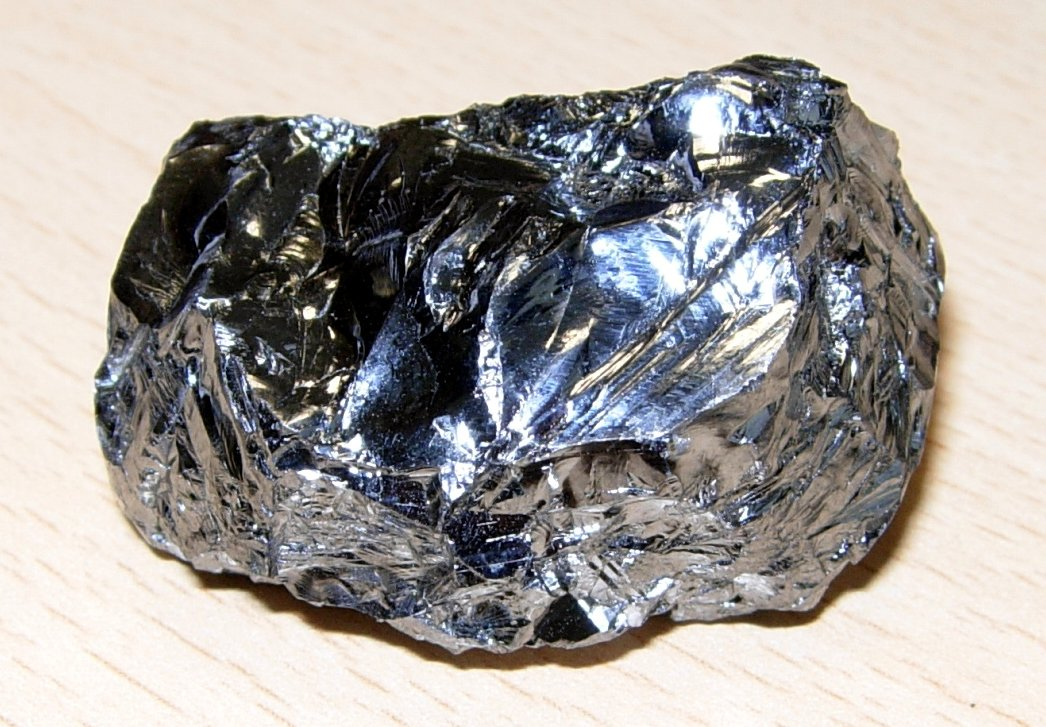
Few, however, know what silicon is, the element that gives its name to that valley of wealth. At the beginning of the 19th century, a group of scientists discovered a new chemical element: silicon. They were students of Antoine Laurent Lavoisier. It was the great French chemist, in fact, who understood that quartz or silica (silicon dioxide) was the result of combining oxygen with an unidentified element. It was 1789, but research was abruptly interrupted by the premature death of the scientist, who ended up under the blade of Robespierre's guillotine. From that moment on, the history of this chemical element, which will prove to be the most abundant material on the Earth's crust, is intertwined with the history of technology: from steelmaking to wireless telegraphy, from military radar to transistors, it finds its application in various sectors. In the beginning, in fact, silicon competed for supremacy with another chemical element: germanium. Then, however, the abundance in nature and the possibility of obtaining samples of extreme purity, made the balance lean towards silicon. https://en.wikipedia.org/wiki/Silicon https://en.wikipedia.org/wiki/Antoine_Lavoisier
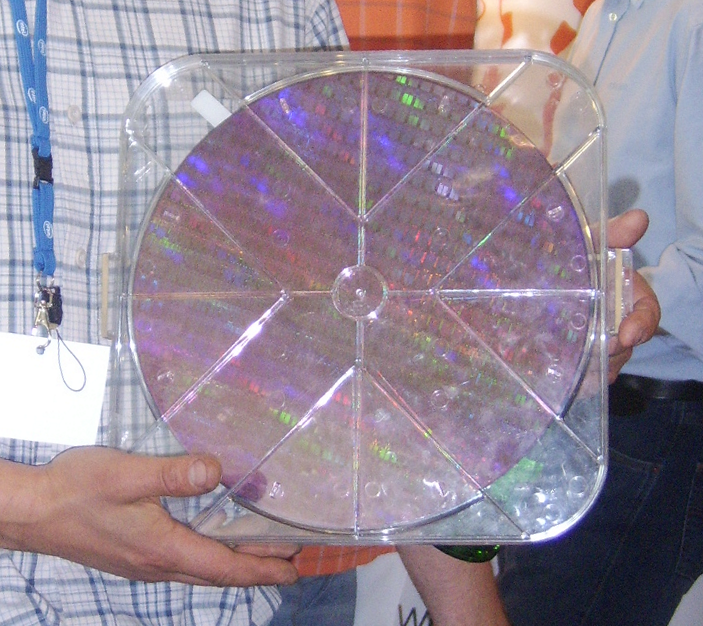
But, even in the early 1950s, the importance of this material was not clear: a company like DuPont decided to stop production, not realising that wafers (those thin semiconductor discs on the surface of which integrated devices are made) of monocrystalline silicon would produce a turnover of billions of dollars. The "silicon era" begins, therefore, a decade later. It was then that the evolution of electronics based on this material took place, paving the way for the computer revolution we are experiencing. https://en.wikipedia.org/wiki/Wafer_(electronics)
Even the names of the protagonists of those years tell us that their era did not end at all: Texas Instrument and Intel (born from a rib of the Fairchild Semiconductor in 1968). In the Seventies there is a further acceleration of events: in 1971 microprocessors are born, in 1978 William Henry Gates founds Microsoft. The rest is today's history.[Immagine CC0 creative commons] https://en.wikipedia.org/wiki/Texas_Instruments https://en.wikipedia.org/wiki/Intel https://en.wikipedia.org/wiki/Microprocessor https://en.wikipedia.org/wiki/Bill_Gates https://en.wikipedia.org/wiki/Microsoft
https://pixabay.com/it/photos/scheda-principale-chip-elettronica-89050/
The challenge remains the same, from the beginning of the computer age to the present day, to put more and more integrated components on a single chip, decreasing the size and increasing the performance and memory of the machines. Semiconductors play a key role in this challenge and with the silicon and Silicon Valley.
https://pixabay.com/it/vectors/chip-icona-micro-processore-1710300/
Asbestos
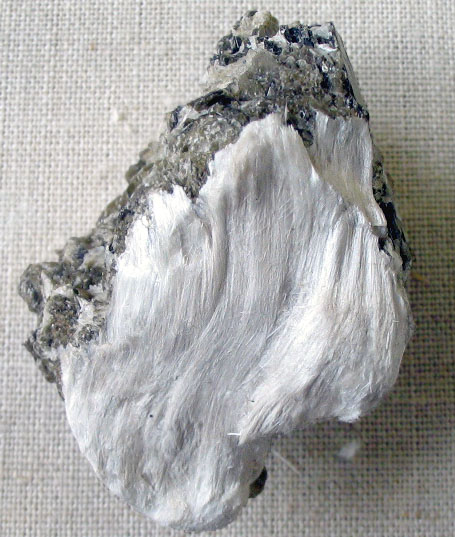
The term asbestos is used to indicate the fibrous form of certain minerals that have been commercially exploited in the past for their peculiar physical-chemical characteristics. Asbestos is virtually indestructible: it resists fire and heat, chemical and biological agents, abrasion and wear. It is so flexible that it can be spun or woven and yet has very high tensile strength. It has sound-absorbingAsbestos (tremolite) capabilities and is a good electrical insulator. The minerals are in the form of elongated fibres. https://en.wikipedia.org/wiki/Tremolite
https://en.wikipedia.org/wiki/Asbestos#/media/File:Asbestos_with_muscovite.jpg
**CONFORMATION (**Mineralogical configuration)
*Serpentine*
Chrysotile
*Amphibole*
Tremolite
Antofillite
Actinolite
Crocidolite
Chrysotile
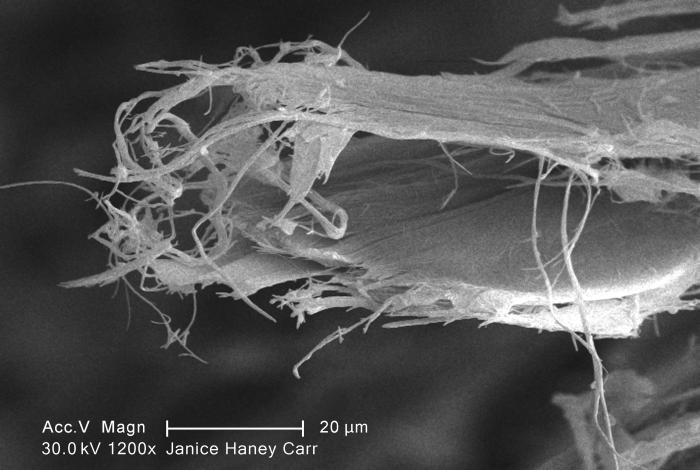
The chrysotile, being curved, is more difficult to progress along the airways with the flow of the inhaled air and therefore to penetrate the interstice through the alveolar membranes. https://en.wikipedia.org/wiki/Chrysotile
https://en.wikipedia.org/wiki/Chrysotile#/media/File:Chrysotile_SEM_photo.jpg
**Amphibole**
Amphiboles, on the other hand, which have a straight shape, are more easily transported to the most extreme points of the respiratory tree.
**THE FIBER**
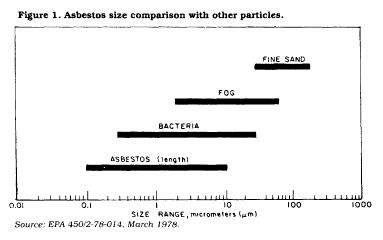
What has considered an asbestos fibre is actually an agglomerate of thousands of fibres which, when subjected to stress, can break down and release individual fibres. This peculiarity, if on the one hand, it imparts the typical characteristics of asbestos, on the other hand, it makes it dangerous because it is precisely the single fibres released that are responsible for known pathologies. These minerals also have the property of dividing themselves longitudinally into long and very thin fibres, improperly called fibrils, and this is the cause of their danger to health (unlike artificial fibres that fracture transversely). Asbestos fibre is 1300 times thinner than a human hair. There is no risk threshold below which the concentration of asbestos fibres in the air is not dangerous; theoretically, the inhalation of even a single fibre can cause mesothelioma, however, prolonged exposure over time or in high quantities increases the probability of contracting them exponentially.
https://en.wikipedia.org/wiki/Asbestos#/media/File:Epa_450_2-78-014_march_1978_asbestos_comparison.JPG
Balangero Amiantiferous
The open-cast mine of Balangero, in the province of Turin, is the largest asbestos quarry in Europe. It came into operation in 1921 and was finally abandoned in 1995. In its 74 years of activity, it has produced almost 160,000 tons of asbestos fibre per year and has radically changed the landscape of the area: the construction of the quarry has involved the removal of over 45,000,000 cubic metres of rock and gravel. Today it is occupied by a lake basin about 50 metres deep and 400 metres wide. The steps that flank the quarry, about 10 metres high and 6 metres wide, bear witness to the extraction process: the rock was blown up with explosives and the material was then transported by truck to the crushing plants. https://it.wikipedia.org/wiki/Amiantifera_di_Balangero
**THE FIRST DOUBTS**
In the United States, cases had increased sharply between the 1960s and the end of the 1980s, when massive exposure to asbestos, especially during the Second World War, came to the fore, especially among the workers in the shipyards where aircraft carriers and battleships were built.
**DISPOSAL OF ASBESTOS**
The use of asbestos has been outlawed in Italy since 1992. Law no. 257 of 1992, in addition to establishing terms and procedures for the disposal of activities related to the extraction and processing of asbestos, was also the first to deal with workers exposed to asbestos. Today Russia produces about half of the world's asbestos (about 1,000,000 tons per year). Following a ban by the European Community, Putin's Russia established a commission of experts to investigate the matter, but their work was resolved in 2002 with a protectionist (and definitive) defence of asbestos. Asbest is the world's largest open asbestos deposit, the quarry is 11 kilometres long and 320 metres deep. https://it.wikipedia.org/wiki/Asbest
https://it.wikipedia.org/wiki/Asbest#/media/File:Flag_of_Asbest_(Sverdlovsk_oblast).png
**THE GENESIS** **MESOTHELIOMA** https://it.wikipedia.org/wiki/Mesotelioma
The risk of contracting diseases is proportionate to the period of exposure to asbestos. Amphiboles (amosite, crocidolite) are more dangerous than chrysotile. Asbestos becomes dangerous if the matrix containing it is damaged, thus releasing the fibres into the environment. But how do the asbestos fibres that cause lung diseases penetrate the body? The fibres penetrate exclusively through the respiratory tract. The inner wall of the respiratory system is covered from the nose to the smallest bronchioles by ciliated cells. The mucociliary removal system is based on the movement of mucus caused by the motion of the eyelashes, extensions similar to the hair on the surface of some cells. All these lashes make a movement towards the pharynx, causing the layer of mucus above them to move in waves. Anything that ends up trapped in the mucus can thus reach a point where it can be spat on or ingested. The irritating action of cigarette smoke is also accompanied by specific damage to the hair cells of the respiratory tract; it is assumed that blocking their activity facilitates contact between the carcinogenic substances and the walls of the lung alveoli. Despite all these physical and mechanical defence systems, small particles regularly reach the alveoli in the deepest part of the lungs. There are no hair cells here and the irritating particles are attacked by alveolar macrophages. These particular white blood cells incorporate the particulate matter and remove it from the lungs by transporting it to the mucociliary system or transferring it to the intercellular spaces (from where foreign substances can be eliminated via the lymphatic system).
**Asbestos dust**
The asbestos fibres present in the air of inhabited areas mainly derive from the deterioration of products of human origin and partly from the crumbling of natural deposits. These fibres are extremely resistant and are not degraded by other compounds that may be present in the atmosphere; for these reasons, once released into the environment, they may remain there for decades.
**Regulated fibres**
Regulated fibres are defined as fibrous particles having the following dimensional characteristics: length greater than 5 microns, diameter less than 3 microns, elongation ratio (length/diameter) greater than 3.
**PROTECTION OF WORKERS**
https://pixabay.com/it/photos/natura-legno-all-aperto-albero-3216890/
Based on the above, we know that asbestos fibres are dangerous when they are breathed in and reach the pulmonary alveoli. It follows that to protect ourselves from these fibres, during removal and treatment, we must protect our airways with special personal protective equipment.
https://pixabay.com/it/photos/segno-cautela-amianto-vernice-spray-3789310/
The reformer
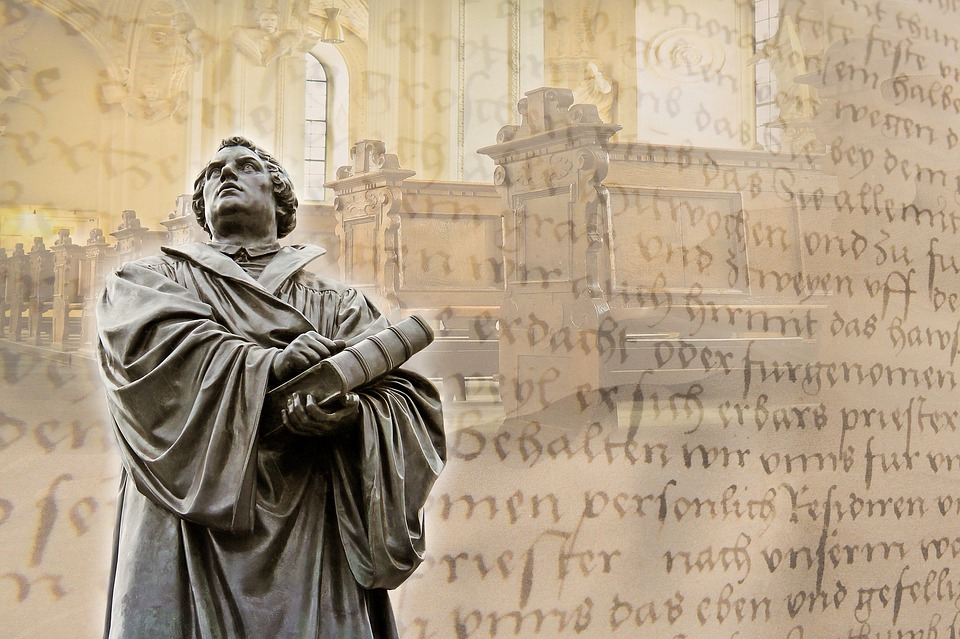
History remembers him as the man of the schism, who with his revolutionary ideas marked the destiny of Christianity, giving life to a second way towards the salvation of the soul. But in 1516 Luther was an Augustinian friar and professor of theology at the small Saxon university in Wittenberg. He was born in Eisleben in northeastern Germany and died there in February 1546 from a family of peasants. He completed his studies by graduating in theology and training on the readings of St. Paul and St. Augustine. His profound knowledge of sacred texts earned him the chair of dialectics and physics at the University of Wittenberg. The Catholic Luther was an extremely busy man: very busy, deputy prior to his small convent. He was not a rebel, but a monk in career, who by order of his superiors had thrown himself into a frenetic activity of teaching. https://en.wikipedia.org/wiki/Martin_Luther
https://pixabay.com/it/illustrations/luther-martin-lutero-wittenberg-1821759/
Scandalised by the rampant corruption of the clergy in Rome, in response to the papal indulgences promised by Leo X, in exchange for an offer for the construction of St Peter's Basilica, posted on the cathedral door, challenging the world to contradict him, a document that would become famous the 95 theses against papal indulgences was on 31 October 1517: almost an official birth certificate of the German Revolution and Protestant reform. In them were indicated some concepts contrary to Catholic doctrine: the sufficiency of the Holy Scriptures (excluding the intermediation of the popes in their understanding); the Universal Priesthood (which denied the clergy in the relationship between God and man making them individual and autonomous); the denial of papal infallibility. On the throne of Rome was Leo X, of the house of Medici. Elegant and indolent, Leo X excelled above all in squandering the riches of the Church until he became famous for having managed to dissipate the resources of himself, his predecessor and his future successor. With such a pope, the crisis in European squares and universities was inevitable.
https://pixabay.com/it/illustrations/luther-simbolo-protestante-lutheran-2623843/
Luther's strong objections can be summarised in three points. The first is the earthly and political one of the already well-known poverty of the German people and the pope who built St. Peter's with the blood of his sheep. The second, the pope's jurisdiction over purgatory, has entered the theological field.
If Rome had the power to free souls in purgatory why had it not been decided to empty that place of punishment immediately without asking for money? A third point was finally the most essential: there is no remedy for the sinner. Peace is offered to us only by Christ received directly and individually through Faith. This was the basis of the schism. The thunder of applause that Luther received from Germany and Europe left no doubt that he had hit the mark. Welcomed in Germany, both by the nobles and the more humble classes, Luther's theories led to the birth of the Protestant Reformation and the subsequent doctrine of Lutheranism, still widespread in Germany, Scandinavia, Estonia, Lithuania, the United States of America and Ethiopia. https://en.wikipedia.org/wiki/Lutheranism

The Wall
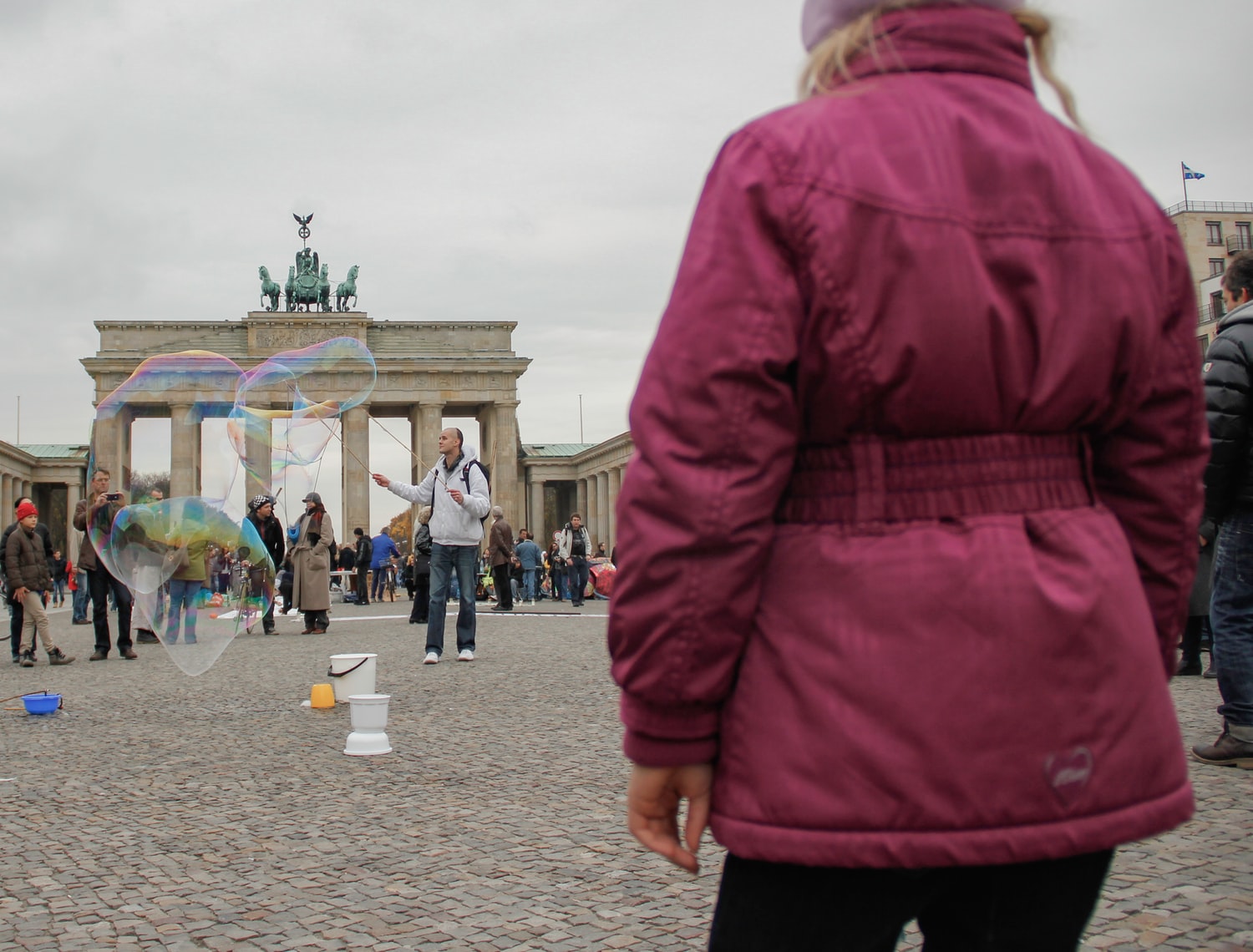
In Berlin, shortly after midnight on 13 August 1961, soldiers of the National Volks Arms, the National People's Army of the German Democratic Republic, were frantically at work at the Brandenburg Gate: thousands of bales of barbed wire had to be unrolled. So began, at one o'clock in the morning on a quiet Sunday, Operation Pink, the codename of the most dastardly architectural project in history, conceived by the communist regime of Erich Honecker and Walter Ulbricht to stop the bleeding of men fleeing to the west, which was running out of technicians and skilled labour throughout East Germany; their crazy project was simple: a concrete furrow, built, Ulbricht said, to defend socialism. That night Berlin was shattered by the sound of thousands of jackhammers tearing the asphalt; uniformed workers kneaded the cement, while others passed bricks on bricks and frantically erected what the whole West would soon call the "Wall of Shame". Protected by tanks, about fifty thousand soldiers and border guards worked all night long and at dawn, Berlin woke up cut in two: a fence and brick cage isolated East Berlin and its inhabitants from the rest of the world, a 155 km long partition, about 4 meters high, which is a few hours had torn the city, the streets, the houses, the hearts from the daily life of the city, with its noises and voices, with its people moving from one point to another, abruptly stopped (193 streets ended up being dead ends, the underground lost twelve stops). On that summer night, East Berlin suddenly became an open-air prison, armoured by 300 control towers, Vopos patrols with orders to shoot fugitives, police dogs and spotlights. A small world "locked out", from which many prisoners tried to escape. It took 10,680 days to admit that the construction of the Wall on 13 August 1961 was an act of confession of the inferiority of the Rdt, the starting point of the capitulation of communism, which had its epilogue on 9 November 1989.
On 9 November 1989 the cry of "freedom, freedom!" fell, the "wall of shame" fell and tens of thousands of East Germans joined in a big hug with the brothers of the West, among rivers of beer offered free of charge by the locals. News of the fall of the wall bounced around the world on the news, in which images of a party that put an end to a silent revolution that had begun months earlier and that had led to the fall of the communist leader Erich Honecker, loyal to Moscow. The decision to open the border, said GDR Propaganda Minister Gunter Schabowski, came unexpectedly to the government offices of East Germany and just as it quickly leaked through radio and television, entering the homes of millions of Germans and giving the "green light" that after 28 years opened a different horizon for Berliners and the whole world: the wall had always been associated with the Cold War and the division of the two opposing blocks. The soldiers guarding the infamous checkpoints, scattered along the "Iron Curtain", had no choice but to let the human tide pass, which, without any possibility of identification, crossed the inviolable borders of the GDR up to a few hours.
https://www.youtube.com/watch?v=zmRPP2WXX0U
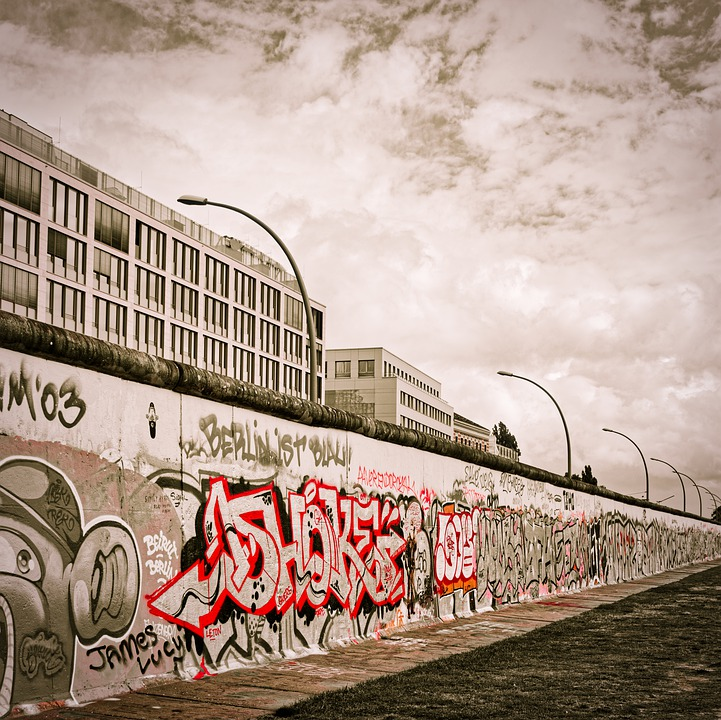
In the new face of Berlin, a contemporary Arab phoenix reborn from its ashes, the Wall has radically disappeared, so much so that not even Berliners born after 2000 can indicate precisely where it once stood, and today only a few points, left as a monument of a historical era, like the murals in the Berlin of the "allied forces" where the Wall became a tourist attraction and for the artists a concrete canvas whose graffiti is now a habit for the Berliners, while there is a memorial to remember the 170 people who were killed by the military during the desperate attempt to cross the border raised for the will of the Soviet Union on 13 August 1961: The first to do so was Petty Officer Schumann. Two days after the construction of the Wall, young Conrad, on patrol on the border, helmet on his head, rifle on his shoulder, in a mad race against death, jumped over the barbed wire and took shelter in the free world. The snap of a photo consigned his escape to history.
https://www.youtube.com/watch?v=qMtSisXjYZo
Hand with Rings
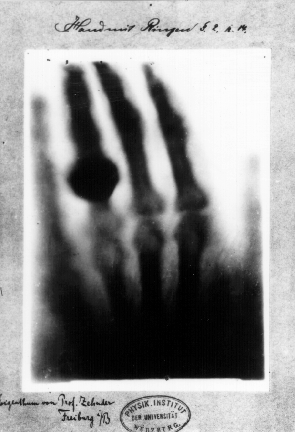
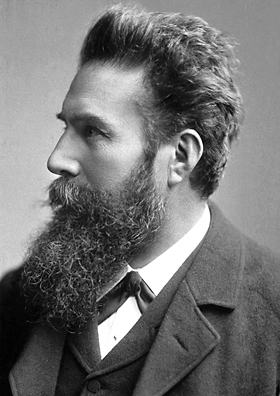
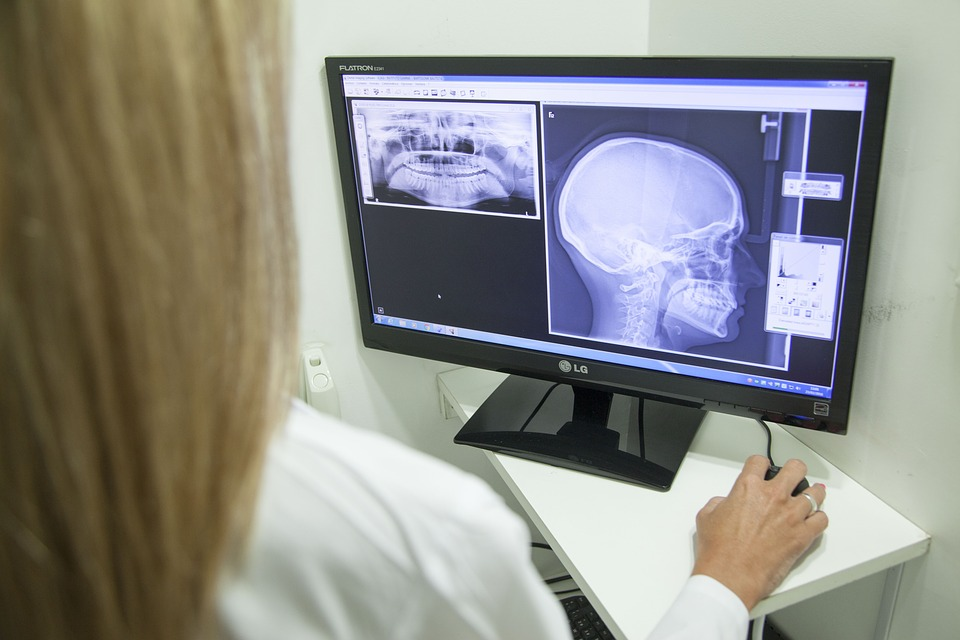
The study of cathode rays in the physics laboratory at the University of Wurzburg led to another major discovery, that of X-rays, made in 1895 by Wilhelm Conrad Rontgen (1845-1923). Rontgen observed that when cathode rays hit a metal, radiation of unknown nature was emitted (hence the name X-rays). The emission of these rays, invisible to the eye, was revealed by the fact that they caused luminescence in certain substances. Subsequent observations allowed Rontgen to conclude that X-rays impressed photographic plates and could therefore be revealed by this means. Even more important from a practical point of view was the discovery that X-rays can pass through numerous opaque bodies in the light. For example, X-rays pass through muscles, projecting only the shadow of bones onto the screen or photographic plate. By dosing the X-rays appropriately, it is possible to get X-rays not only of the skeleton but also of other internal organs, providing the doctor with a valuable means of investigation. https://en.wikipedia.org/wiki/X-ray https://en.wikipedia.org/wiki/Wilhelm_R%C3%B6ntgen
https://en.wikipedia.org/wiki/X-ray#/media/File:First_medical_X-ray_by_Wilhelm_R%C3%B6ntgen_of_his_wife_Anna_Bertha_Ludwig's_hand_-_18951222.gif
Rontgen's studies led to the first X-ray in history, the skeleton of a left hand with a ring finger wedding ring (the hand was that of his wife). Subsequent studies made it possible to ascertain that the X-rays are not deflected either by the action of electrical charges or by magnets, behaving in this respect in the strict manner of visible light. This fact and the discovery of other phenomena made it possible to conclude that X-rays are radiations of the same type as visible light (i.e. electromagnetic radiations), with a much shorter wavelength.
https://en.wikipedia.org/wiki/X-ray#/media/File:WilhelmR%C3%B6ntgen.JPG
It also turned out that the smaller the wavelength of the X-rays, the more penetrating they are. With great energy, X-rays can cause chemical reactions and tear electrons from atoms and molecules, transforming them into ions. The discovery of X-rays, which was fundamental for later studies of radioactivity, won Rontgen the Nobel Prize in Physics in 1901.
https://pixabay.com/it/photos/x-ray-della-mascella-mascella-2416945/
Songs that are poetry
**Piero Ciampi** (Livorno, 28 September 1934 – Rome, 19 January 1980) was an Italian singer-songwriter https://en.wikipedia.org/wiki/Piero_Ciampi
Young people may not even know its name, but its strength, its sincerity of expression, bring its song back to the most dramatic line of 1950s poetry, and its memory has remained in the hearts of the most mature generation of Italian songwriters. A bitter, ironic and sweet poet, he lived his story of words and drinks and when Piero Ciampi left, he was 45 years old, hectolitres of wine and tons of tobacco had slowly but surely consumed him, making him reach the end of his life, thus completing his obstinate work of self-destruction, the result of an inescapable, lacerating existential discomfort. In seventeen years as a singer-songwriter, he had barely recorded four records and had managed to make himself hated by most of his colleagues, collaborators, impresarios, public and critics. In short: the ingredients were all there to make him an absolute cult figure. After all, he was the first and only cursed poet that the Italian song has ever had, painful and bizarre figure of bohemian on the road never reappeared on our music scene.
https://youtu.be/9cfgyLH4T_4?list=PLIoTnIuVV86xgDlLMQxUbW4Dsalw1I0Js
Very few people followed him when he was alive, almost forgotten when he died, he is almost never talked about, his songs today considered unsalable must be rediscovered and paid homage because of their rare poetic intensity supported by music that is certainly not banal but certainly melodic. The author had adopted a hybrid form of narration that mixes documentary and fiction and the first to appreciate it and recognise its greatness as author and performer were some friends and fellow songwriters. They spoke of him as a person who was often indisposed, unbearably aggressive and vulgar, this is Ciampi, fed by the legend that wants him always contemptuous and free and that merges the singer-songwriter and the man were as if they were exactly the same thing: poignant and quarrelsome, ironic and dramatic, licentious, wild, violent. Then there is the other Piero Ciampi, the helpless, fragile and kind, who every now and then, despite everything, manages to get out, like that time when, as usual without a lira in his pocket, in order to get his daily dose of alcohol, he proposed a barter to his landlord friend: he gave him his passport in exchange... And so that the whole thing was not just a colossal drink, with the bottle of wine he also asked for a red rose.
**Ha tutte le carte in regola (**Album "Andare Camminare Lavorare" 1975)
Ha tutte le carte in regola
Per essere un artista
Ha un carattere melanconico
Beve come un irlandese
Se incontra un disperato
Non chiede spiegazioni
Divide la sua cena
Con pittori ciechi, musicisti sordi
Giocatori sfortunati, scrittori monchi
Ha tutte le carte in regola
Per essere un artista
Non gli fa paura niente
Tantomeno un prepotente
Preferisce stare solo
Anche se gli costa caro
Non fa alcuna differenza
Tra un anno ed una notte
Tra un bacio ed un addio
Questo è un miserere
Senza lacrime
Questo è il miserere
Di chi non ha più illusioni
Ha tutte le carte in regola
Per essere un artista
Detesta lavorare
Intorno a un parassita
Vive male la sua vita
Ma lo fa con grande amore
Ha amato tanto due donne
Erano belle, bionde, alte, snelle
Ma per lui non esistono più
È perché è solo un artista
Che l'hanno preso per un egoista
La vita è una cosa
Che prende, porta e spedisce
**It has all the cards in order**
It has all the cards in order
To be an artist
Has a melancholic character
Drinks like an Irishman
If he meets a desperate
Does not ask for explanations
Divides his dinner
With blind painters, deaf musicians
Unlucky players, stunted writers
It has all the cards in order
To be an artist
He is not afraid of anything
Let alone a bully
He prefers to be alone
Even if it costs him dearly
It makes no difference
Between one year and one night
Between a kiss and a farewell
This is a miserable
Without tears
This is the miserere
Of those who have no more illusions
It has all the cards in order
To be an artist
Hates to work
Around a parasite
He lives his life badly
But he does it with great love
He loved two women so much
They were beautiful, blonde, tall, slender
But for him, they no longer exist
It is because he is only an artist
That they took him for a selfish
Life is one thing
Taking, bringing and shipping

Monopoly
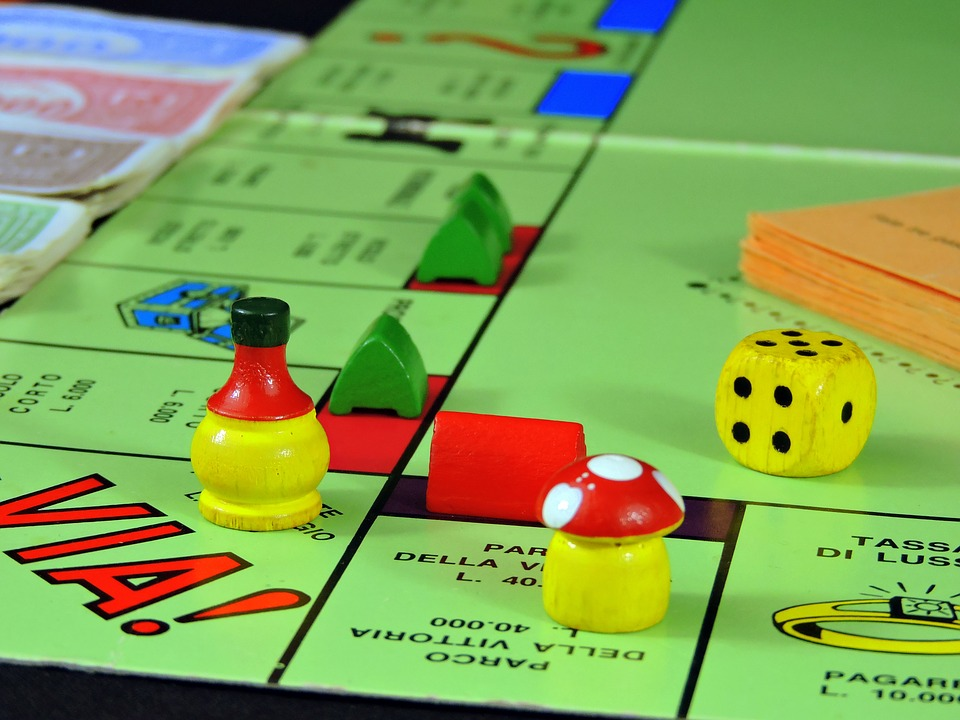
I remember when I was a child that at parties at one point someone would bring out the Monopoly. The green board folded in four came out of a square box, the place cards were a candle, a green pear, a flask, a vase with a plant, they were made of wood like houses and hotels: it was The old dear Monopoly the most famous box game in the world. Then we would all sit around the board and spend our hours doing business, buying and selling property, hoping for luck between Probability and Unexpected and above all trying not to end up in prison. In practice, we tried to achieve our financial monopoly.
https://pixabay.com/it/photos/giocare-gioco-da-tavolo-monopolio-1538336/
With Monopoly in 1935, boxed games were born. Monopoly was born in America, the first version was launched by the Parker Brothers publishing house, in November 1935, on the idea of Charles Darrow (a former domestic heater salesman who fell into disgrace after the 29' crisis) who, taking up a similar game already in vogue in the States at the beginning of the 900', created by Elizabeth Magie, created a playable version and gave it certain rules. At the first refusal of Parker Brothers not to finance his game the man was not discouraged and in 1934 he decided to produce it himself. The unexpected sales success decided the big publishing house to retrace its steps and finance the game by launching it in shops under the name of Monopoly. Sold in over 270 million copies worldwide, the Monopoly has been interested over the years by innovations and special editions, including an online version.
The Italian version of the game dates back to 1936 and dreamily suggested the design of a Milan of the time. With Monopoly, the capitalist economic system is represented in a portrait of itself much more similar to that offered by many novels or films. Monopoly has an intrinsic message that is authentically effective, practically suggestive. Monopoly is pedagogical, edifying for some, sinful for others.
To be precise, I have always preferred RisiKo! to Monopoly.
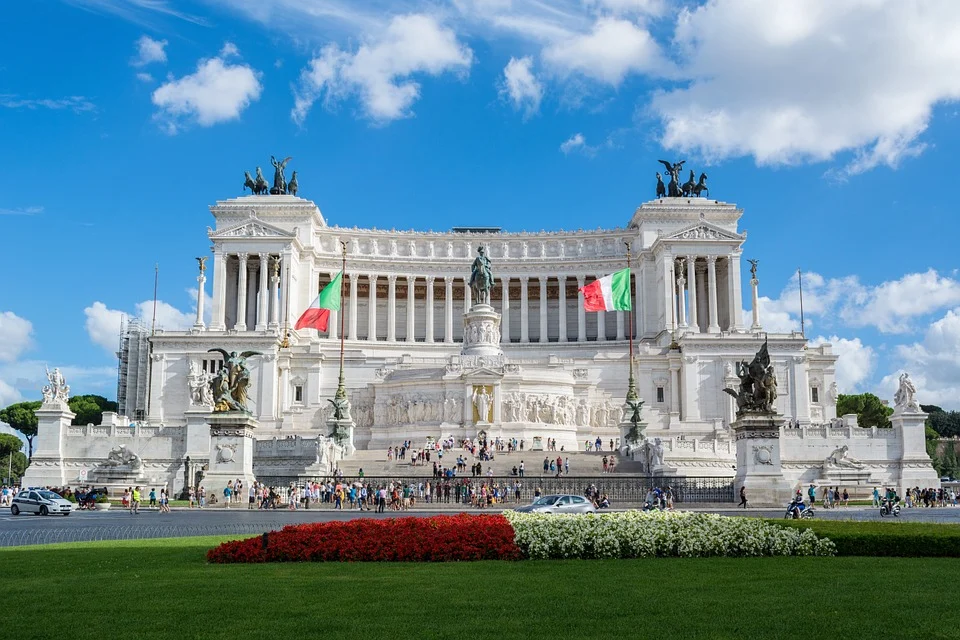
Italy - 4th November, National Unity and Armed Forces Day
This commemoration was established in 1919 in memory of the victims of the First World War.
On 3 November 1918 with the armistice of Villa Giusti in Padua, Italy ended the war against the Austro-Hungarian Empire. The armistice sanctioned the victory of the Triple Entente (United Kingdom, France and Russia) to which the Kingdom of Italy was allied and granted it the territories of Trentino-South Tyrol and the city of Trieste, thus ideally fulfilling the Risorgimento dreams of national unity. The fighting poet Gabriele D'Annunzio called it the "mutilated victory" because the initial agreements would not be respected and many territories conquered in battle were not annexed to Italy (such as Dalmatia and the city of Rijeka). It was therefore established in 1919 and has the peculiarity that it is the only bank holiday always commemorated, both during the monarchy, under fascism and then in republican Italy. Suspended in 1977 as a festivity and considered a working day, it has regained interest and importance in the last decades as a commemoration in memory of the fallen of all wars and to pay homage to the Armed Forces of our country, in order to strengthen the values of the homeland and the sense of duty, values unchanged over time in all our soldiers.
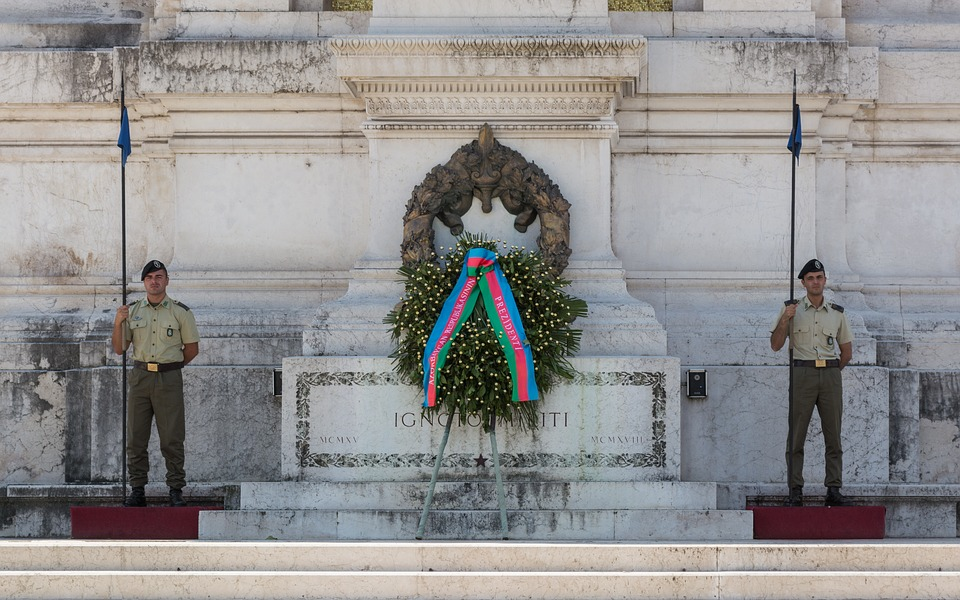
Tomb of Unknown Soldier
https://pixabay.com/it/photos/roma-monumento-a-vittorio-emanuele-ii-1282035/
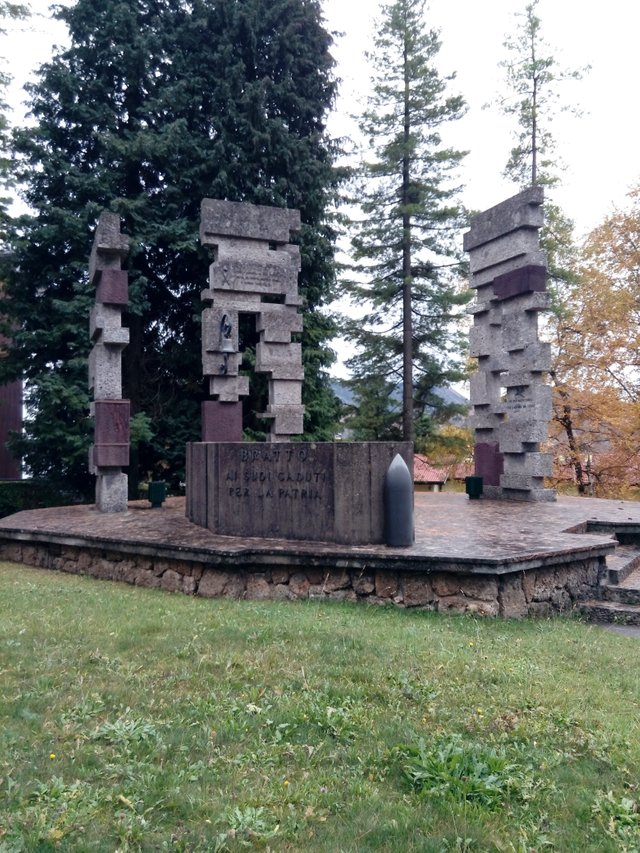
It was precisely at the end of the First World War that the communities (certainly stimulated also by the political ideology of the time) began to erect monuments to pay homage to their own concidentines who had died on the battlefields. Monuments also of a certain architectural and artistic interest, which should ideally remind posterity of the sacrifice for the homeland, bearing the names of the deceased soldiers or phrases reminiscent of their heroism. In every city or inhabited centre, there is almost always one, this is the one close to my house.
https://pixabay.com/it/vectors/italia-europa-roma-bandiera-504725/
The bra
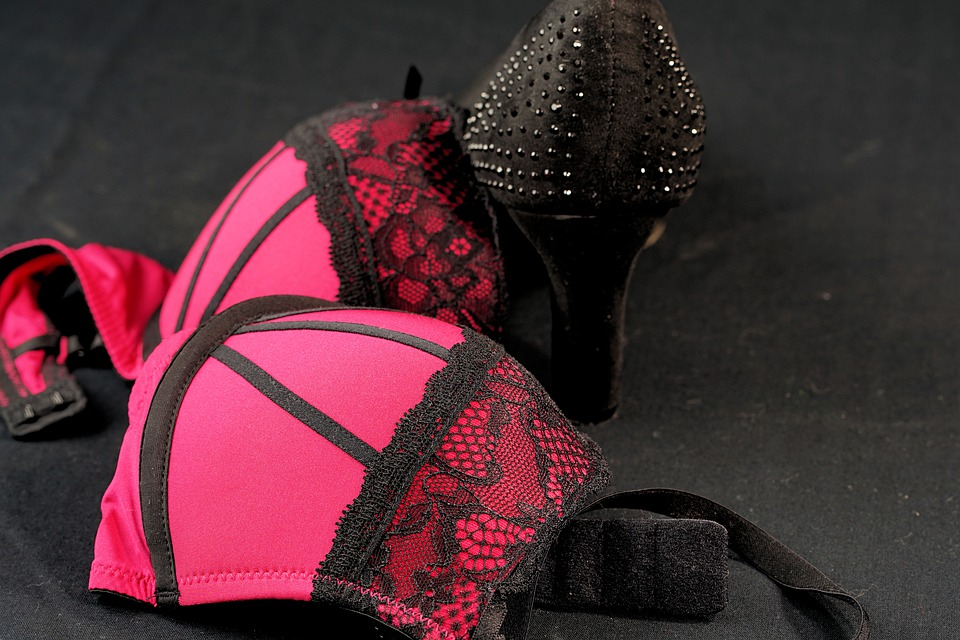
In 1903 Mr Otto Titzling of Hamburg had horrendous difficulties with the laces of his wife's guépière and dressing her was like arming a sailing ship. But Otto was an ingenious man and to free himself from this task he did some geometric research and invented the bra, but all this is not very credible. However, if the invention is not the Germans', it is their wittiest advertising slogan for the bra: *"It contains the strong, supports the weak, collects the lost"*. The first modern bra appeared in 1913, made by a wealthy New York lady, Mary Phelps Jacobs. The fashionable women of the time wore a corset made of whale sticks and ropes, similar to a box, which was very uncomfortable and hindered free movement. Mary Jacobs bought an expensive evening dress for a society party. The dress revealed the contours of her corset, so Mrs Jacobs, with the help of her French maid, Marie, designed a reduced bra that would not cover her back, using two handkerchiefs, some ribbon and a cord. Her friends who admired this light and improvised fashion received a sample as a gift. Mrs Jacobs gave the patent rights to Warner Brothers Corset for 1500 dollars. Since then the patent has been valued at $15 million.
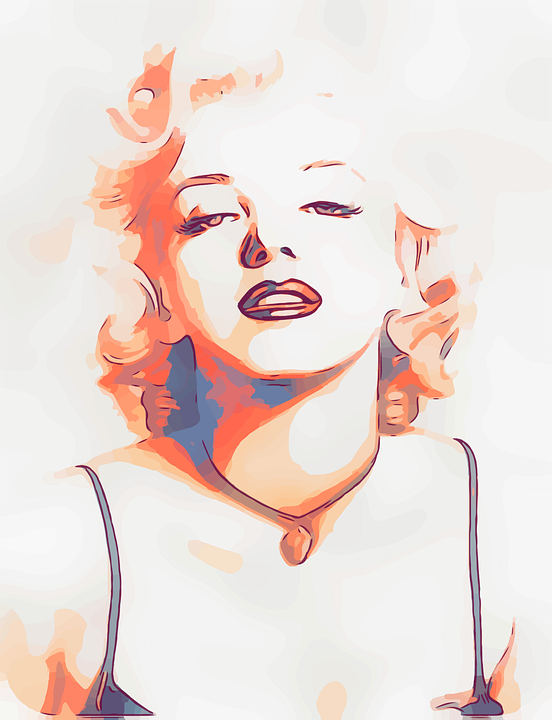
The bra was born in Paris in 1889 thanks to Mrs Herminie Cadolle, an envelope and owner of a fashion house specialising in lingerie from which the garment that redeemed the woman from centuries of constraint came out. Historically, the only approach to women's breasts, in terms of clothing, consisted of a band that compressed them. Then came the bust, an instrument of torture. Tired of torturing women said Herminie Cadolle invented, in 18889, the garment that freed women from sticks, corsets and bandages, and they could finally breathe. What's more, her creation was in keeping with the female form instead of repressing it. He called this garment *"Bien-ètre"*, to be well. It was a bra made of small sticks, silk and tulle. Madame Cadolle did golden business until the eve of the First World War when she competed with the more practical bra of the second generation of Warner Brothers. Since then the bra has had alternating fortunes. The Twenties were those of the "crisis woman", the imperative of fashion was to reduce the shapes to a minimum and the bra became again a band of constraint. At the festival of the Great, Gatsby women were all flat. But Ida Rosenthal, a seamstress and fashion designer, convinced that this would not last long, that breasts would soon be back in fashion, created Maidenform, a $40 million industry. In the 1930s there was the irruption of the prosperous women of Boccasile. After the war, the *"oversized"* ones arrived and there was Marilyn Monroe who didn't hide her use of padded bras: she called them underwear and on sultry days she put them in the fridge. During the years of the protest, feminists burned the bras in the square to symbolise sexual liberation. Over time the bra has evolved to become an element of elegance, design and fashion.
https://pixabay.com/it/vectors/arte-disegnare-marilyn-monroe-3862931/
The tragic end of a poet
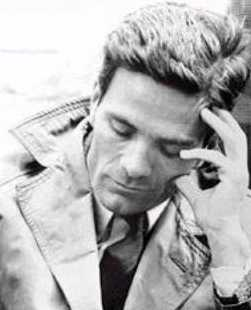
In the early hours of the night of Sunday 2 November 1975, a carabinieri patrol on duty on the Ostia seafront stopped a car going the wrong way, Pino Pelosi was driving. At dawn near the Ostia waterway, the lifeless body of Pasolini was found by some residents, tortured and almost unrecognizable for the blows suffered. A heinous crime for which they accused Pelosi, indicating a sexual motive. Pasolini was certainly not the victim of a single person, nor a brawl at the height of a banal quarrel in a mere homosexual affair, but of several people who massacred the poet in that muddy space of Ostia. And there were at least two cars involved, not just Pasolini's Alfa, which, by the way, could not even be the real murder weapon, since it had no traces of dents at the point of a collision with the victim's ribcage. The car that killed Pasolini, did not do so in a hurry to escape as the accused Pino Pelosi said, who in 2005 retracted his testimony on TV, confessed that he was not the murderer, but that he kept silent in retaliation against his family.Pelosi spoke of three or more people, and reported to the investigators the whole dynamic of the crime, made up of repeated attacks, beating, attempted escape and crushing the helpless victim. Assassins arrived in a car with Catania plates, which he said spoke with an accent "Calabrian or Sicilian" and, during the massacre, they would have repeatedly railed against the poet. So it wasn't a crime of passion? Thirty years after his death, together with Pelosi's retraction, the testimony of Sergio Citti, a friend and colleague of Pasolini's, about the disappearance of copies of the last film Salò and about a possible meeting with gangsters to deal with the restitution has emerged. Sergio Citti died of natural causes a few weeks later. A much more disturbing hypothesis links it to the power struggle that took shape in those years in the petrochemical sector, between Eni and Montedison, between Enrico Mattei and Eugenio Cefis. Finally, the uproar that had caused the announcement of the discovery of Chapter XXI of Petrolio, perhaps stolen from Eur in the Pasolini house after his death, and which could contain the key to the murder. Which key? The role of Cefis, Eni's powerful ras after Mattei, and then Montedison, a role that Pasolini was investigating by collecting explosive material and sewing up a thesis: Cefis had Mattei eliminated in a fake plane crash in 1962 (an attack) to succeed him and change his oil policy and cut off the role of the nation-state industry, within the framework of a pact with the transnational potentates of the global economy. And finally to stabilize the Republic from above, with massacres and plots. All this is written in Petrolio, the novel published posthumously in 1992, on which the poet worked before his death. Pasolini, then, had his nose in deadly things? What did he understand? And why was the investigation so sloppy that he didn't protect the crime scene, didn't listen to witnesses and left the alleged killing machine in a garage without protecting it and without finding the clues in it? Why was there a bridge in that car that was not Pasolini's, with an insole worn by the poet? And whose footprint was the footprint on the roof of the Alfa?In conclusion, it was not a cursed and literary affair or a homosexual crime, hypocritically buried by the Italy of the time as the figure of an obligatory end for someone like Pasolini. But of a piece of a much larger story, not at all retrological, intertwined with the rebalancing of the powers of the time and which continues. A story to be clarified until the end, without comfortably thinking that it is water under the bridge. The truth and the debt to honour to a great civil poet, who told us many things in advance without being listened to and even mocked in death, demands it. The rich heritage he left us counts among other things over 20 films, theatre texts, collections of poems, translations of Greek and Latin classics, essays. The film Pasolini, an Italian crime by Marco Tullio Giordana, is dedicated to the thriller of death and the subsequent trial.
https://it.wikipedia.org/wiki/Pier_Paolo_Pasolini#/media/File:P_p_pasolini.jpg
https://en.wikipedia.org/wiki/Pier_Paolo_Pasolini
https://www.youtube.com/watch?v=6kez7fugpOU
Outlaw winning and satisfied
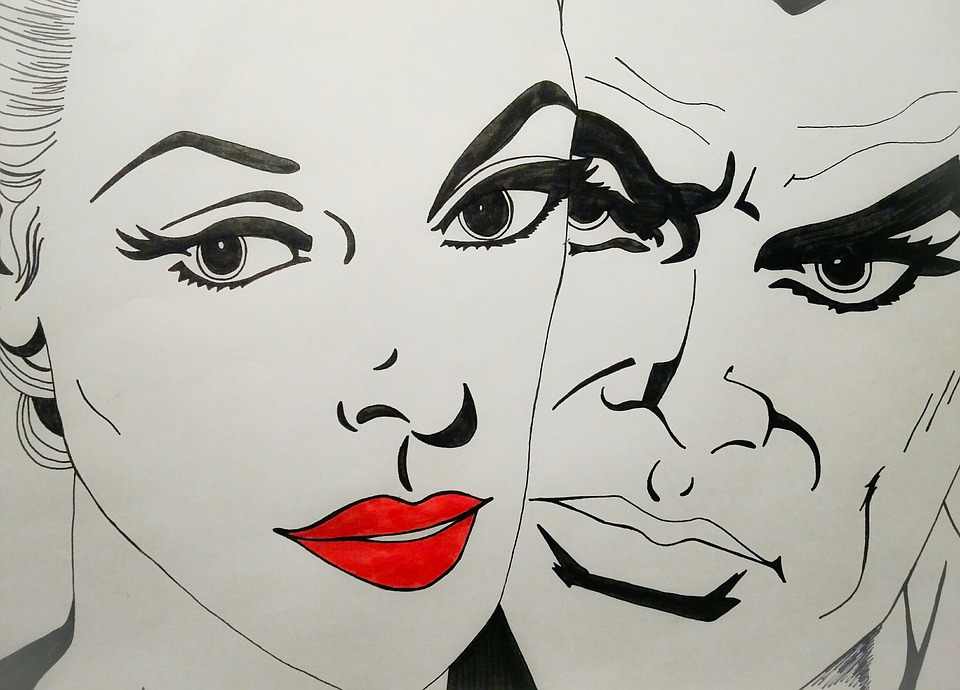
They didn't know how to draw or write, and they knew very little about comics, but the Giussani sisters (Angela and Luciana), with a stroke of genius, were inspired by a crime story that took place in Turin in 1954, where, following the discovery of a FIAT worker, a series of letters claiming the murder, signed under the pseudonym Diabolik, reached the newspaper La Stampa in 1962, creating a key character in our recent history, translated in various countries and becoming a cult for comic book collectors. Diabolik immediately presented himself with an emblematic title: The King of Terror by throwing a hissing knife (in the first advertising postcards) at the reader. In the world of stripes a different, uncomfortable and, above all, outlaw hero made his debut. Without a name, without past, he dedicated all his genius to theft, to robbery (killing even, in case of need). He always got away with it, while his antagonist, Inspector Ginko, the guardian of the order, ended up perpetually in check. The revolutionary comic book was immediately successful and became a myth. It irritated the well-thinking, moved various praetors to kidnap the newspaper, but everyone liked it: bourgeois and intellectuals.
https://pixabay.com/it/illustrations/diabolik-disegno-disegnare-fumetto-1803163/
The Giussani sisters were very attentive to the events of modernity. They wrapped themselves in a dense network of consultants (between doctors and technicians), they put announcements on university notice boards to find new subjectists. To be punctual, precise and sensitive to what was happening around them, the designers followed, for example, the evolution of costume and fashion with attention. Diabolik's (romantically and tenaciously monogamously) stainless girlfriend Eva Kant resembles Grace Kelly, one of the sex symbols of the time. She is always up to date in the wardrobe, from miniskirts and trousers to Brigitte Bardot and 70's folk dresses. While bourgeois society was preparing to discover and accept feminism, the registers of the Giussani sisters hosted the thoughts and adventures of Eva Kant. A faithful companion, but also one of the first thinking, demanding, autonomous co-stars of our comic strip. She was one of the first to emerge without leveraging the fulcrum of eros. Always ready to claim her subjectivity, she asks to be understood, respected, listened to, and not only loved.
Diabolik has always been a successful and satisfied outlaw, but he has found comfort in redeeming himself several times by crucifying vices and plagues of our country. He fought the mafia, drugs, political corruption, denounced the horrors and despair of asylums, recorded the discomfort of prisons, stigmatized violence against women, but the final K of his name, ironically or seriously, was a symbolic march of perfidy. With time, he is no longer subversively, scandalously, unbearably evil. Some people even fear the goods turn, but Diabolik continues to be the outlaw of all time and has no intention of redeeming himself. His opponents have become more evil. Today, the rich are the target of his shots, drug dealers, money launderers, human organ dealers, shady businessmen and bribers.
The birth of the euro
The 1st January 1999 is a day that will remain mentioned in all history books and the manuals of economic and financial sciences. In fact, with the beginning of the last year of the second millennium, the third and final phase of Economic and Monetary Union (EMU) began and, with it, a new currency was officially born: the euro. First of all, the euro was born at the same time in eleven states of old Europe; which, another unique fact in history, had taken this decision without any constraint, but of their own free will. A gesture that had political implications that were not insignificant, because it meant limiting its decision-making power in monetary policy; it meant reducing the freedom of action of its central bank; it meant decreeing, albeit gradually and almost painlessly, the disappearance of its national currency. Achieving such a result had not been an easy task. It is precisely the long and troubled gestation that gives us further proof of the extraordinary nature of the birth of the euro. The idea of a common currency took shape within the then European Economic Community (EEC) in 1986, when, with the Single European Act signed in Luxembourg on 17 February, the Heads of State and Government of the EEC countries began to remove controls on capital movements and the remaining tariff barriers, accelerating the creation of an integrated banking and financial market and, in fact, creating the conditions for the start of the first phase of EMU, which ended in 1993. In 1989, with the so-called Delors Report, the operational lines for the achievement of EMU and the creation of a single currency were further specified. Based on this document, the Maastricht Treaty, signed on 7 February 1992 and well known to all, was formulated. The notoriety of Maastricht derives from the fact that in that treaty the macroeconomic requirements were specified, the full fulfilment of which would have allowed the signatory countries to enter the single currency. With the entry into force of the Maastricht Treaty, a crucial political path began for the Old Continent, bringing to an end the objective of achieving economic monetary unification: it is the official act of birth of the European Union.
https://pixabay.com/it/illustrations/proteggere-le-mani-euro-mano-665088/
Thus, with the drafting of the economic and institutional convergence criteria, the second phase of EMU, that of sacrifices and strict financial laws, began. Between 1993 and 1998 exchange rate stability, the reduction of the public deficit, the compression of the public deficit and the downward alignment of prices and interest rates were the objectives pursued by all the signatory countries at Maastricht. Meanwhile, in December 1995, the Madrid European Council decided that the euro (the name chosen for the new currency) would be born on 1 January 1999 and would coexist with the other national currencies until the end of 2001; that from 1 January 2002 until 30 June of the same year there would be dual circulation; that from 1 July 2002 all national currencies would be declared out of the legal tender. The sacrifices required of European citizens to comply with the Maastricht parameters were not in vain if it is true that on 1 May 1998 eleven of the fifteen EEC countries were promoted directly to the third stage, i.e. euro adoption from 1 January 1999.
https://pixabay.com/it/vectors/blu-giallo-white-stelle-euro-logo-39105/


Between science and politics
Today at least 1% of the population of the world's most industrialised countries are scientists or people working in the field of high and innovative technologies. Scientific research absorbs between 2 and 3% of the wealth produced each year in these countries, which make up the wealthy part of the world. Scientific knowledge is the source from which, for at least a century, the technological system has been systematically drawing on to produce innovation. But the twentieth century is the century of technical innovation where science has acquired an intensity and speed unknown in any other historical era. There is no doubt that since the twentieth century, men who practice scientific research have an enormous and unprecedented influence on society and, therefore, on politics, but the history of the twentieth century reminds us that science can be manipulated and misused by politics. The scientific discipline is born from research and the problem is not the use of later, but the researcher's awareness of the potential of his studies and the use of them. Too often, in the twentieth century dominated by totalitarianism, scientists had to dress as bureaucrats called upon to justify theories of a regime: Stalin exterminated entire peoples in the name of ethnic science. But scientists are men like everyone else, some rebel and those who have always compromised with political choices.
https://pixabay.com/it/vectors/frenologia-fisionomia-testa-5649932/
Let us look at the history of Italy since the beginning of the twentieth century. Italy was a very poor country, illiteracy was very widespread, in the South there was a lack of infrastructure, there was no postal service or transport. But the climate of euphoria and trust allowed the country to invest in science, innovation and education. Quintino Sella, a training engineer, as Minister of Finance, made drastic cuts in funding, but never in school funding. And the scientists, who had fought for the unification of Italy, actively participated in the construction of the newly united Italy, also holding institutional positions. The commitment was born from the idea that for the civil development of the country it was necessary to raise the technological level and therefore a national science policy was needed. Then a professional political class was formed that undermined the scientists and already at the beginning of the 20th century the honeymoon between science, society and politics was over. In 1945 Italy came out of the war in disastrous conditions and nobody would have bet a lira on its future. But even here a climate of trust that was created between science and some productive sectors allowed Italy to rise from the rubble. Between 1945 and 1964 Italy grew exponentially also thanks to its trust in research and innovation. So much so that at the beginning of the 1960s the country boasted poles of scientific and technological excellence that the world envied it: IT, oil, nuclear, chemical and medical. And the stories of Olivetti, Mattei (to name a few) are there to testify to this. Almost fifty years have passed since then and there has never been such a happy relationship between science, society and politics in Italy.
https://pixabay.com/it/vectors/grattacieli-paesaggio-urbano-edifici-152754/
As we have seen, the twentieth century is the century of the great consequences of the bad choices of politics (it was so for Italy and so in many other countries), in all fields: economic, social, scientific, artistic and cultural (how did a very gifted poet like D'Annunzio manage to push an entire nation into war? political ardour). Time and history condemned Mengele and Hiroshima, but scientists cannot but study the effects of Hiroshima, for example on radiation and cancer, and if something useful came out of Mengele's horrors in the extermination camps, the scientist would surely study it, without absolving the executioner. Science should be neutral and far from politics, but it has never been and has always been linked to political choices. We should try to imagine what would have been the great scientific research of the twentieth century in different states, for example, if nuclear power had been developed before the Nazis of the allies, but the scientist is no less neutral than a philosopher, listen to three of them and they all think differently. Certainly, some dangers are well pointed out by critics of science: some maintain that our society would be better off without the atomic bomb, those who point out that science leads in some fields to the dehumanisation of work, those who accuse science of threatening religious faith, those who see science as a manifestation of Western thought alone and a deplorable instrument of Western domination over other cultures. Today's scientist, much more so than in the twentieth century, is forced to ask himself what are the social consequences of his actions. This necessity clashes with the traditional reluctance of men of science, who love talking to each other about their things. However, it is not bad, not even for society, that the scientist is forced to go into politics. Politics is nothing more than an attempt to find in society the best balance between different visions or interests. The teaching received in the twentieth century tells us that the man of science has the right and the duty to pursue the interests of his studies, but he must accept that the best possible balance is achieved, also taking into account other legitimate interests: i.e. based on clear and rigorous analyses that are the result of his morals and professional ethics. The politician, of course, when called upon to make a choice involving new scientific knowledge, must also assume his or her responsibilities and choose among the various scientific options available to him or her. Who, then, must the politician listen to? Well, first and foremost, his conscience, which requires him to always respect, according to the constraints of the law, the freedom of research, but also requires him to select the various scientific options available to him.
https://pixabay.com/it/vectors/verit%C3%A0-bugie-frecce-filosofia-4432841/
Trick or treating
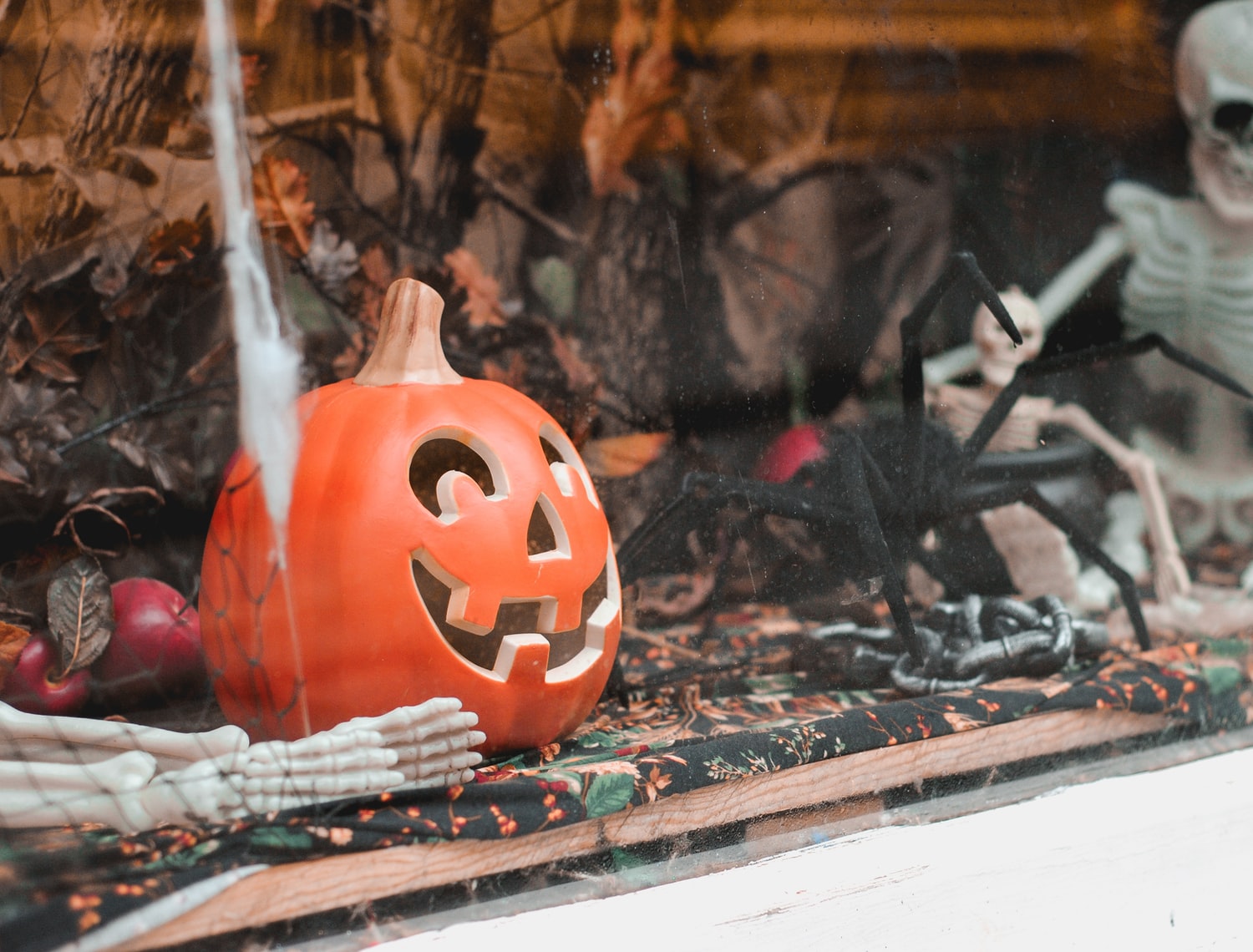
Halloween is celebrated on the night of 31st October and in the Celtic language it means “The Vigil of Every Saint”: feast of death and rebirth. It is generally attributed to countries such as England, Ireland, the United States, Australia, although it would be more appropriate to consider it a celebration common to the peoples of Europe. On the night between 31st October and 1st November, people dress up as gnomes, monsters, witches and walking around the streets of the cities they knock on the doors of houses asking with the typical phrase: Trick or treating There gift of sweets or some change.
But what do the Celts have to do with the Halloween party? An ancient myth tells of the meeting between Dagda, the father of all the gods, and Cailleach: from their harmonious union was born the power of the gods, from which all creation had its origin. Their meeting took place on the day of Samhain, the 1st November, which according to the Celtic calendar, based on the moon phases, marked the beginning of the winter period, a symbol of death and rebirth at the same time. This winter period coincided between October and November when these ancient tribes prepared to shelter their livestock indoors to ensure their survival in the cold season: this was the period of Samhain. Samhain is a day unrelated to time and space in which two worlds meet, the earthly and the spiritual: it is the beginning of the dark half of the year but also the bright half in the Other World.
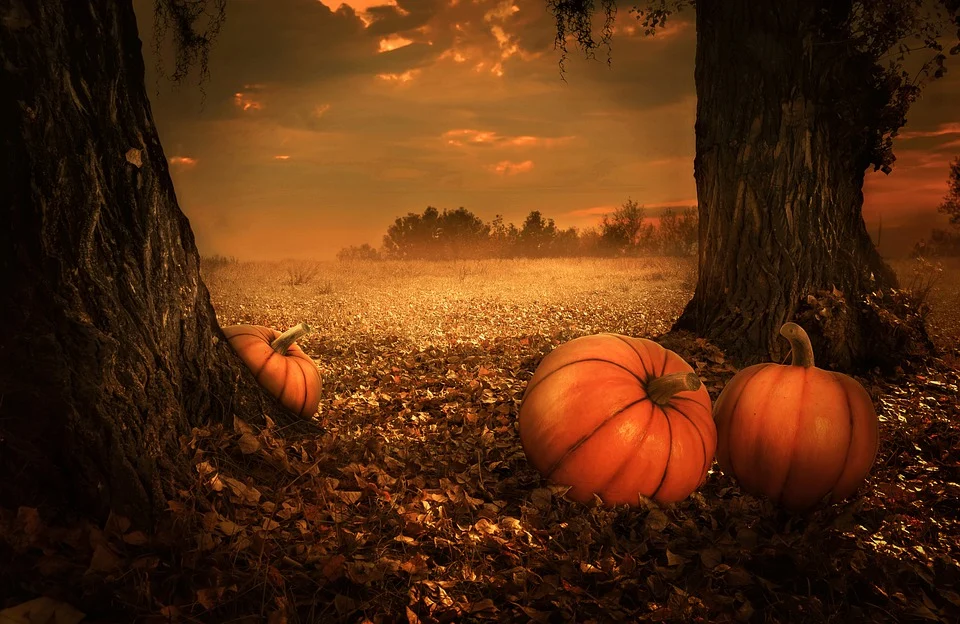
https://pixabay.com/it/photos/zucche-alberi-prato-halloween-5675502/
People love to disguise themselves, thus resuming an ancient practice of ritual disguise used by shamans who, taking the form of supernatural beings, put themselves in communication with spiritual reality. The pumpkin, which we see these days on display in the shop windows, emptied, carved, with a funny and disturbing sneer together or lit inside by a candle? Important traditions are mixed with funny stories and ancient rituals are flanked by the games of the festival populated by ghosts, skeletons, witches, fairies, goblins joking, dancing, evoking the spirits of the earth. The origin of the illuminated pumpkin, called Jack of the Lantern, is contained instead, in an amusing Irish story about a great drinking man and his meeting with the devil. Witches and monsters are the characters who live again on Halloween night.
https://pixabay.com/it/illustrations/costumi-di-halloween-candy-3743795/
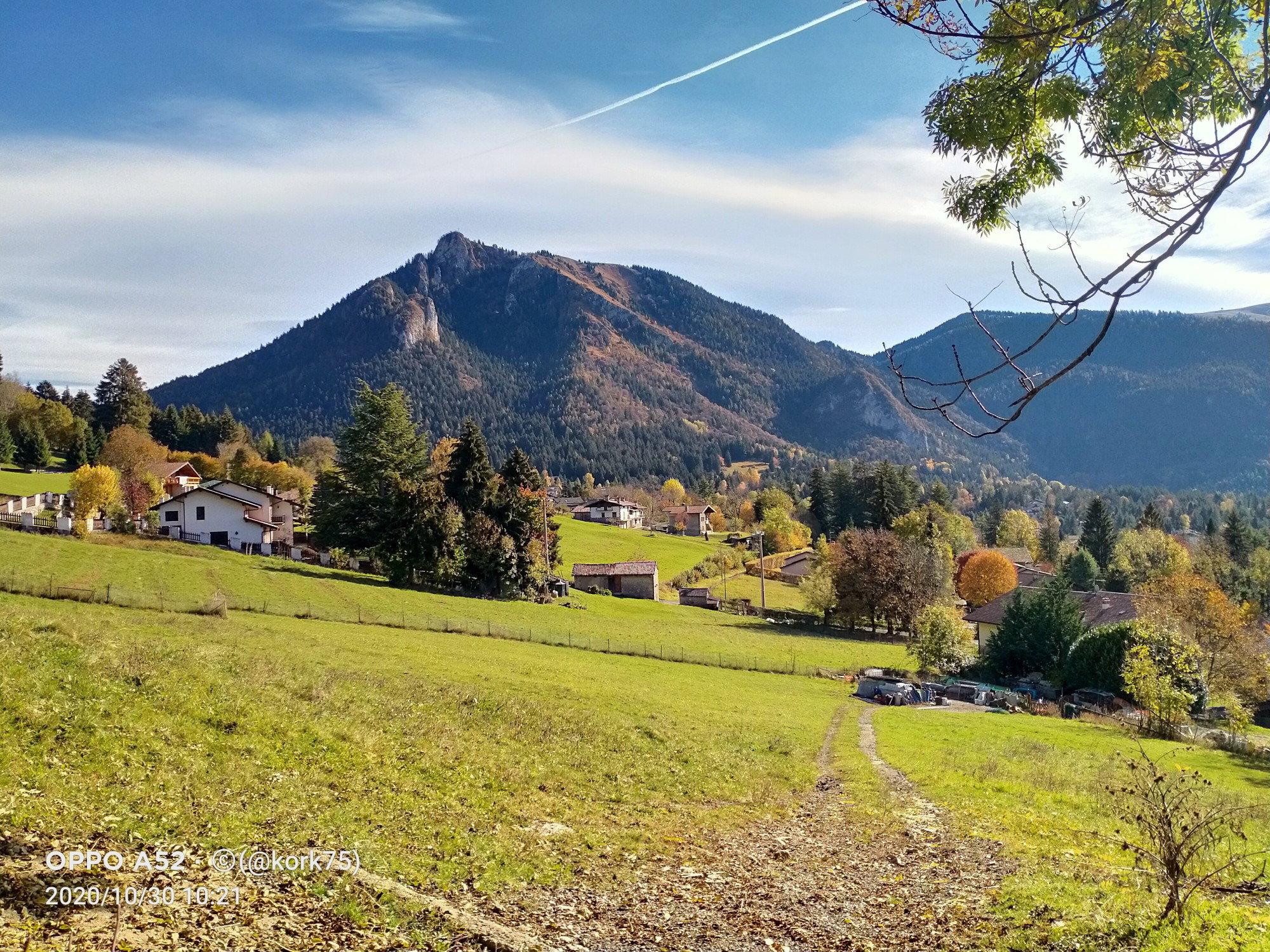
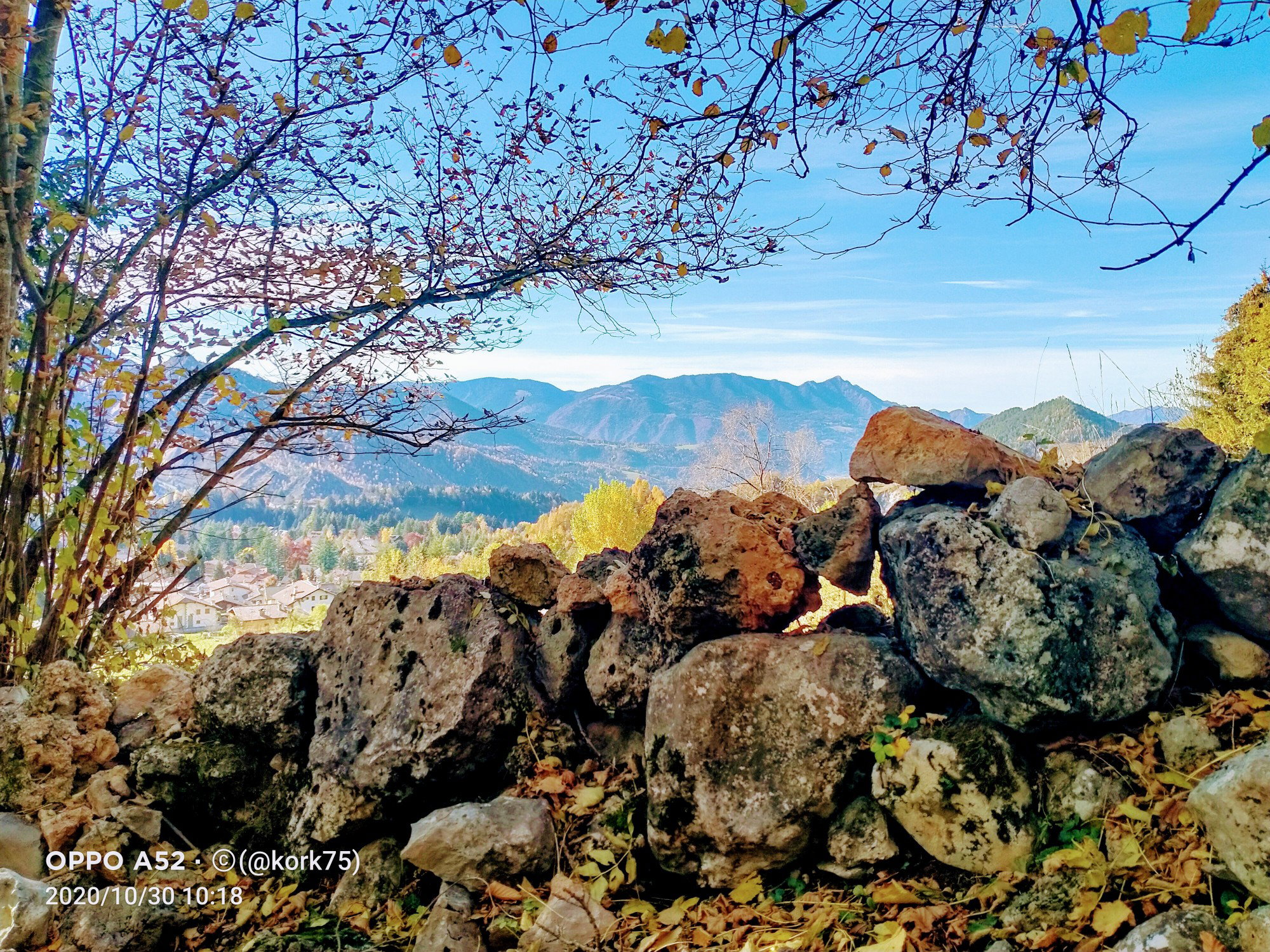
My photo of the day
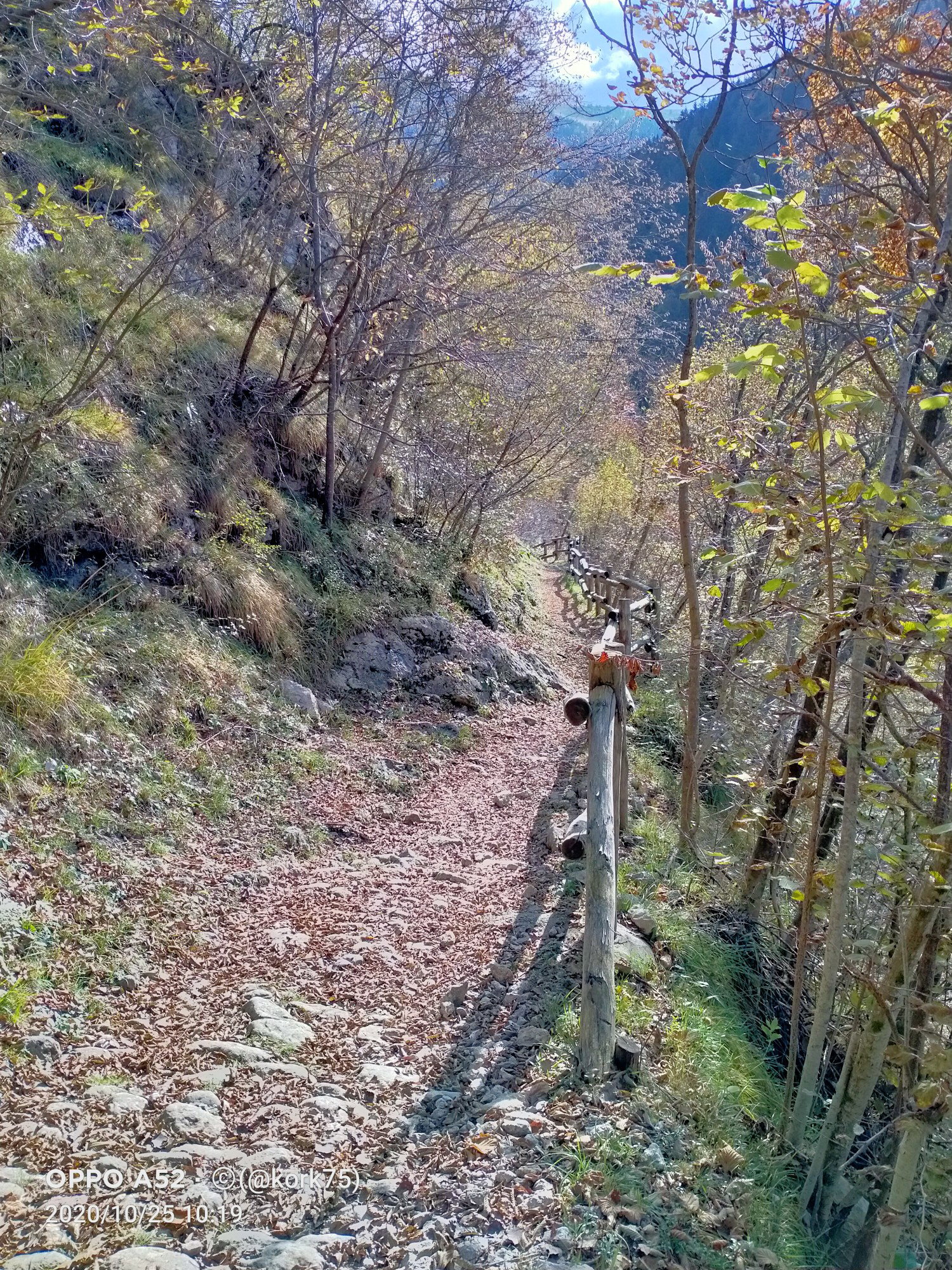
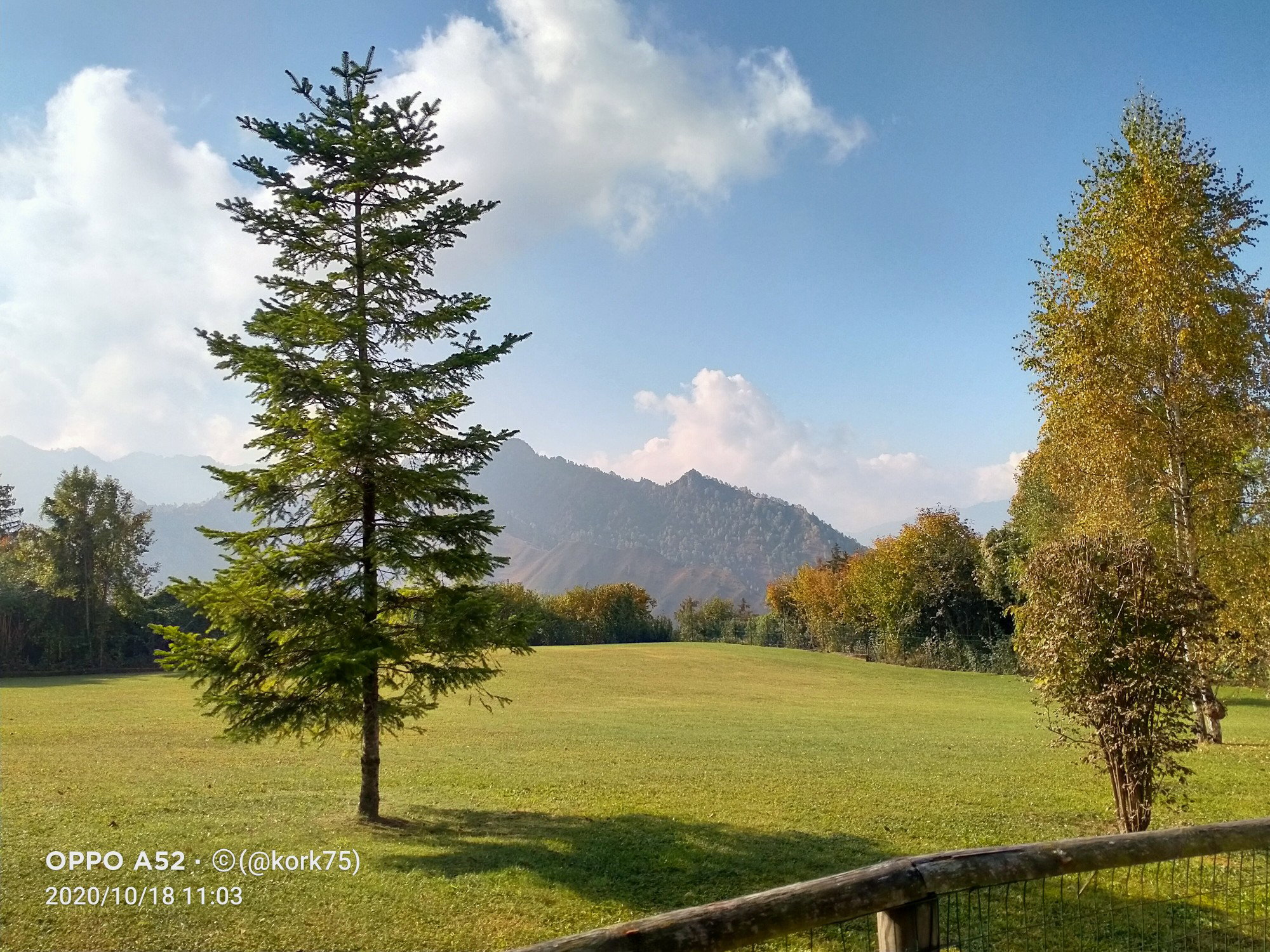
*"If you are looking for angels or on the run from demons, go to the mountains. (Cit.Jeffrey Rasley)"*
😁👍
Like a Bull
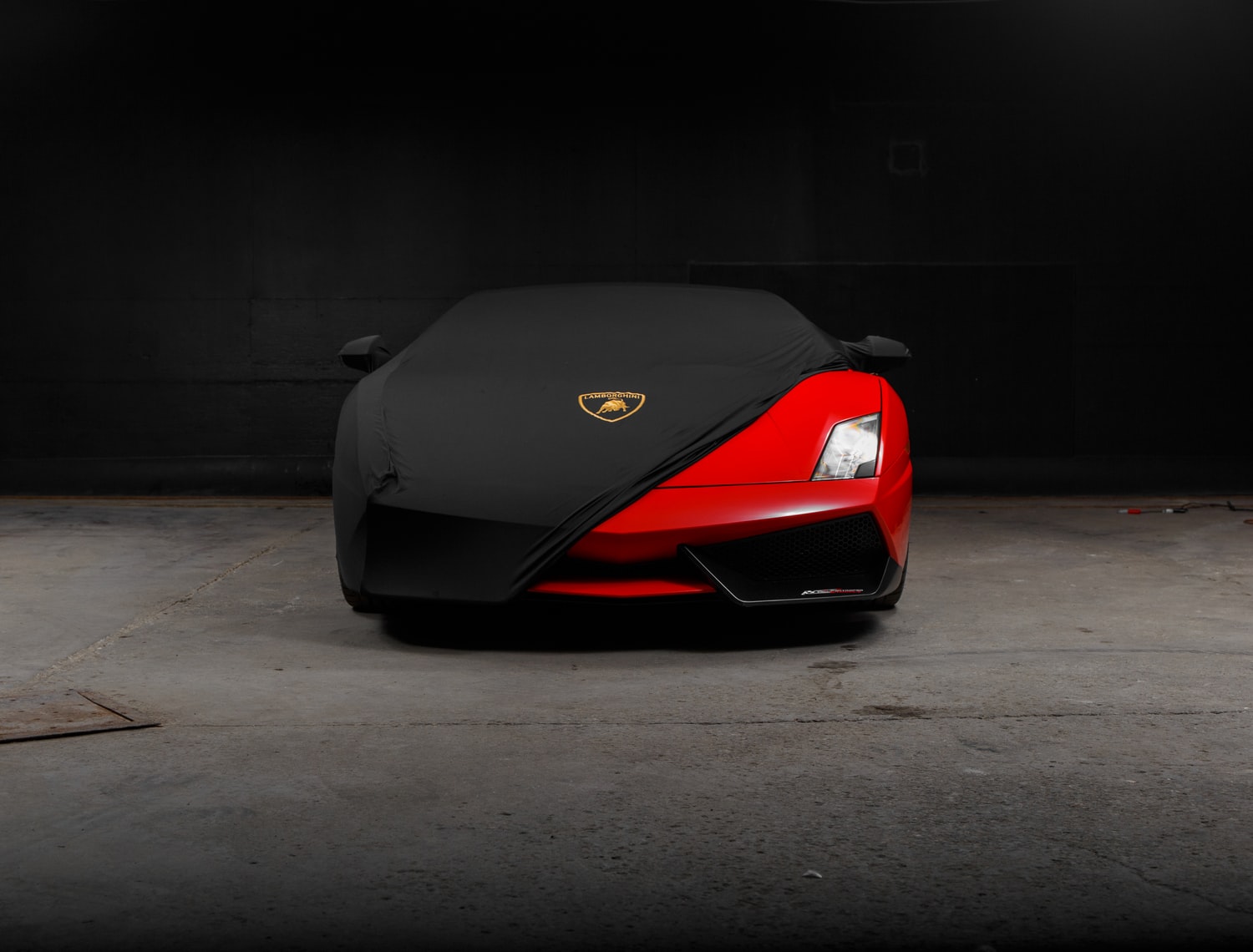
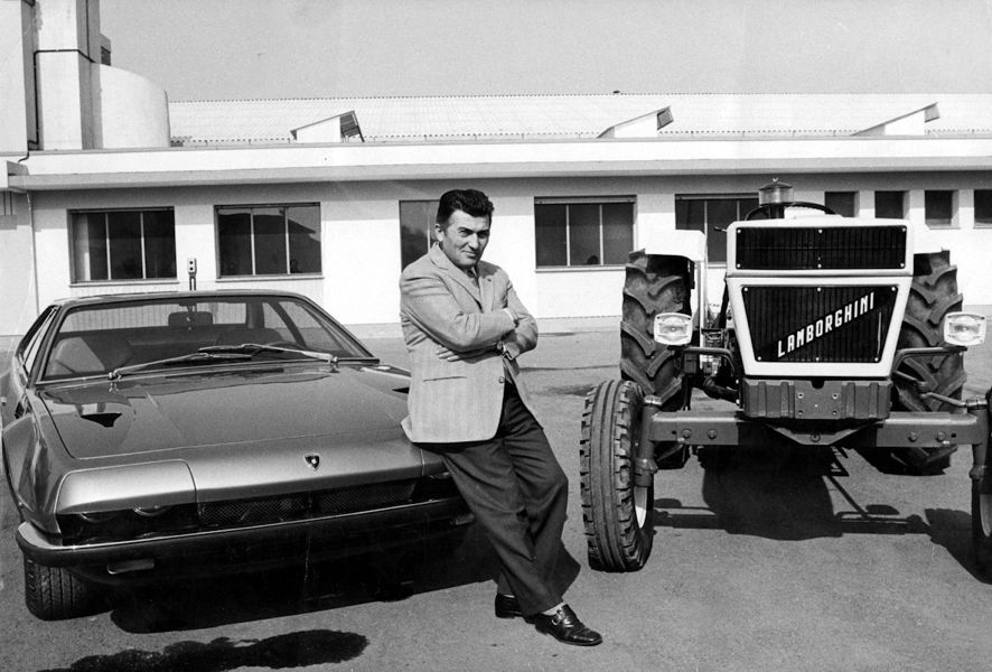
At the beginning of the 1960s, Ferrari had already dominated the international car scene for twenty years, thanks above all to the sporting triumphs of its driving champions (Tazio Nuvolari, Juan Manuel Fangio and Alberto Ascari). At that time (1963), twenty kilometres north of Maranello (Ferrari's historical headquarters), in the small town of Sant'Agata Bolognese Ferruccio Lamborghini founded his car company. Lamborghini, after collecting successes and billions of liras manufacturing tractors, decided to focus on the sports car sector, launching the challenge to the nearby Ferrari. The idea had come to him after a discussion with Enzo Ferrari, to whom he had suggested how to improve some of the flaws revealed by his machines, feeling abruptly liquidated, reminding him that he was a tractor manufacturer, he decided to build a high level and ultra-modern sports car. So at least he wants the legend endorsed by himself.
https://en.wikipedia.org/wiki/Lamborghini#/media/File:Ferruccio_lamborghini.jpg
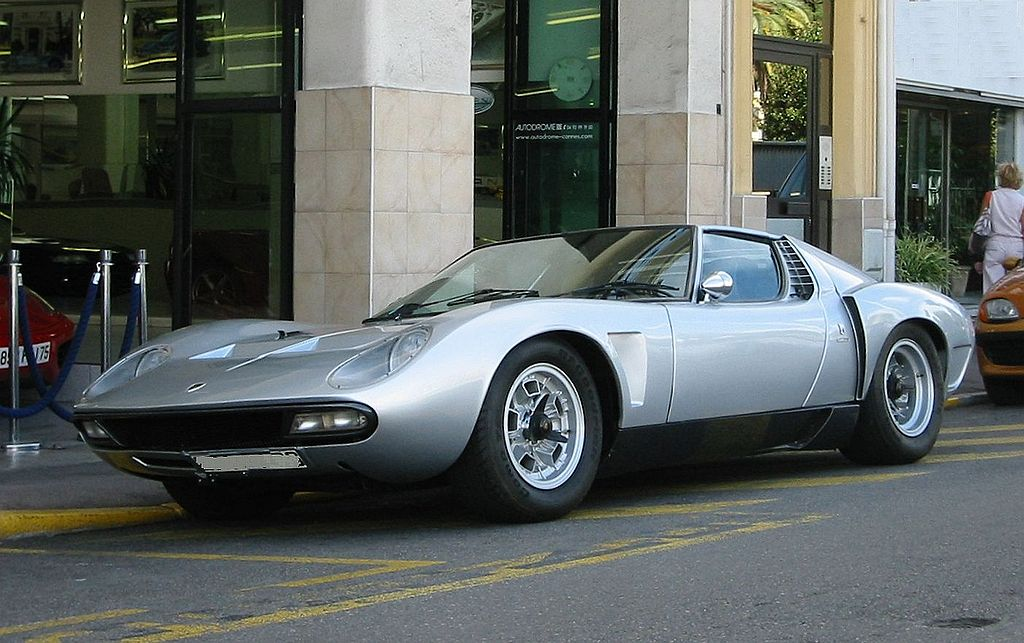
Three young engineers (Gian Paolo Dallara, Paolo Stanzani and Giotto Bizzarrini) working at record-breaking speeds created the prototype of the first Lamborghini in less than a year: a coupé with a 12-cylinder engine, four overhead tube axles, 3.5-litre displacement and 360 hpThe Miura, the four independent wheels. Designed by Franco Scaglione, it was called 350 GTV and was presented at the Turin Motor Show. The Touring production model made its debut in Geneva in 1964. Speed and daring were Lamborghini's watchwords: in 1965 the sensational P400 chassis was presented in Turin for a sports car in which the V12 was rear and transversal: a stroke of genius by Dallara, who had intuited the great possibilities of this solution for a revolutionary GTV. Bertone began a twenty-year collaboration and created the beautiful Miura (from a race of fighting bulls). Lamborghini was born under the sign of the bull and names of bulls are still adopted today. The Miura debuted in Geneva in '66; this saloon was often a springboard for new models: the Marzàl in '67, a futuristic 4-seater coupé with a 6-cylinder rear engine; the Espada coupé in '68, Jarama in '70. The following year here is the prototype LP 500 Countach: the letters mean Longitudinal Rear, to indicate that the Miura solution had been abandoned, the number referred to the 5-litre displacement. Countach in Piedmontese means “wow!” and, it is said, was the exclamation of Nuccio Bertone when he saw the car.
https://en.wikipedia.org/wiki/Lamborghini#/media/File:Lamborghini_miura_svj_spider_4808.jpg
With subsequent modifications and variations, it remained alive until 1989. The recurring economic crises convinced Lamborghini to accept a partner (the Swiss Rossetti) and then to leave. The first period of the company's life ended in 1971. The second, until mid-1998, was the most troubled, with many changes of ownership. However, there was no lack of interesting models. From the 1970 Urraco type derived a four-seater series with the rear V8 engine; in 1986 the fastest off-road in the world was produced: LM 002. And also marine engines that continue to win offshore. In 1990 the 4-wheel drive Diablo was produced with 11 variants until 2000. The design of the new models was supervised for years by Marcello Gandini. By Giorgetto Giugiaro la Cala and the brand new Gallardo. After the first Swiss owner and a confusing period with various purchase attempts culminating in the company's bankruptcy and auction, other vicissitudes and a twist that promised good news: in 1987 Chrysler bought Lamborghini promising not only an industrial relaunch but also entry into Formula 1. This happened with the arrival of Mauro Forghieri, former Ferrari. The programme took off, Lamborghini engines powered the Lola Larrousse (even reaching points). But in 1993 Chrysler retired, giving in to an Indonesian group that in turn, hopefully, the then No. 1 Di Capua who sold the company to Audi. In June 1998 began the third period in the history of this brand, which has carved out a place for itself in the Olympus of supercars. The German group carried out a major renovation of the plant under the direction of Giuseppe Greco. In 2001 it launched the Murcielago model and this year, to celebrate its fortieth anniversary, a "discovery" derived from the same model was proposed at the Detroit Motor Show. The latest great novelty was the Gallardo, presented in Geneva, with a rear V10 engine, all-wheel drive and aluminium structure. A name, obviously Spanish, from bull to the more recent Huracán.
https://pixabay.com/it/photos/lamborghini-automatico-auto-giallo-85731/
Conflict in the South Atlantic
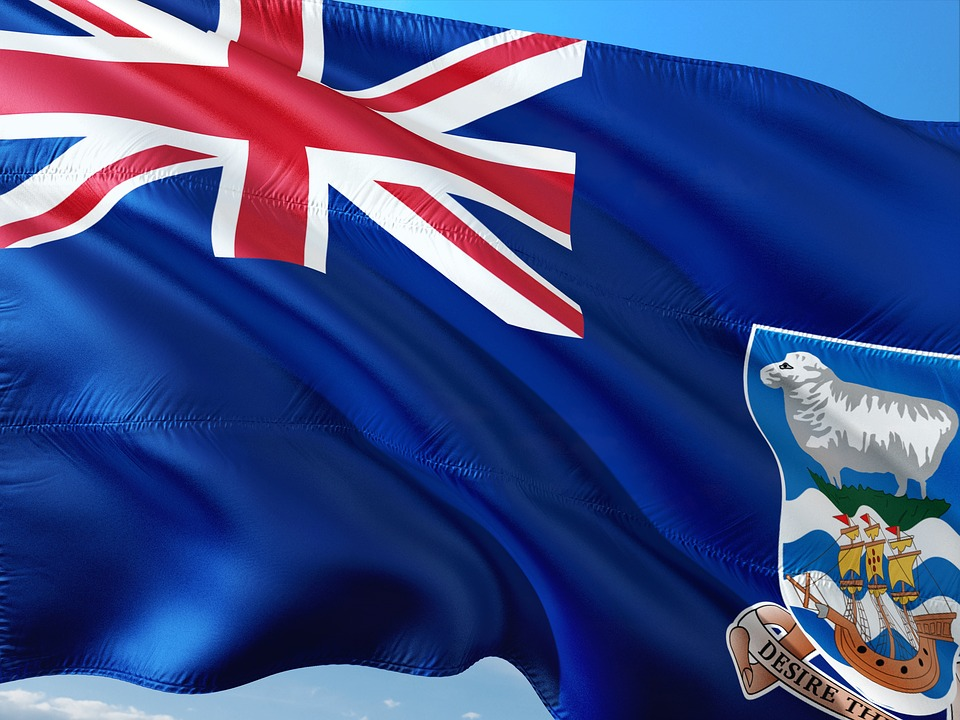
1600 square kilometres for only 1800 inhabitants, all faithful subjects of Her British Majesty: but it was, on the other side of the ocean, that one could measure the density of Argentinean irredentism at the time when there was not a single schoolboy from Buenos Aires who, from the first class, had not learned the name of Las Malvinas by heart, thinking of when, when he grew up, he could take part in their liberation. Lonely, desolate and far away, the Falklands have no nationality, if not a hard life, in contact with the negative elements they can offer their population. In the now distant 1833, settlers set sail from Portsmouth (like the English fleet): robust people of Scottish origin, accustomed to life in the open air and bad weather; farmers and shepherds who, since the Victorian era, did not disdain the tremendous effort of the pioneers to reach the Promised Land. And there they have remained, until today, to raise sheep. The Argentineans have only gone there once in 150 years. But in 1982 the military junta decided to recover by force the British usurpers, those mythical, cold, uninhabited islands that everyone had heard about since the cradle: *"Las Malvinas son Argentinas"*. They sparked a small world conflict, but after 74 days they had to lower the flag and watch the Union Jack flag fly up the flagpole. The Malvinas had returned to Falkland. So how was the war? Simple. The military governed and General Leopoldo Galtieri was the president. For Buenos Aires circulated the black Ford Falcon with the plaque covered, who went in search of rebel students, loaded them and took them to police stations to torture them. A group of their mothers had made a habit of gathering in the May square to ask about their children. The union had just called a big demonstration against the military. And these responded, on 1st April 1982, by occupying the Malvinas, inhabited in all by 2 thousand English settlers, the kelpers, with their sheep, the cold, and the frost and distance from the whole planet. A great propaganda action, nothing else, destined to inflame Argentine patriotism. A mother in the May square was photographed with a small sign: Las Malvinas son Argentinas. Los Desaparecidos Tambien. But in those days there was an air of victory. Foreign Minister Costa Mendez, who had studied at Oxford, said on television: *"I know the English and their psychology well. They will never come to take these islands back"*. He was wrong. Margaret Thatener also had her problems, and although newspaper polls found that the vast majority of British people confused the Falklands with the Shetlands in the north of Scotland, she decided that the affront should be washed away. He organised a fleet of a hundred warships that crossed 8,000 miles of the Atlantic Ocean to take back that last forgotten crumb of the empire.
https://pixabay.com/it/photos/international-bandiera-2693148/
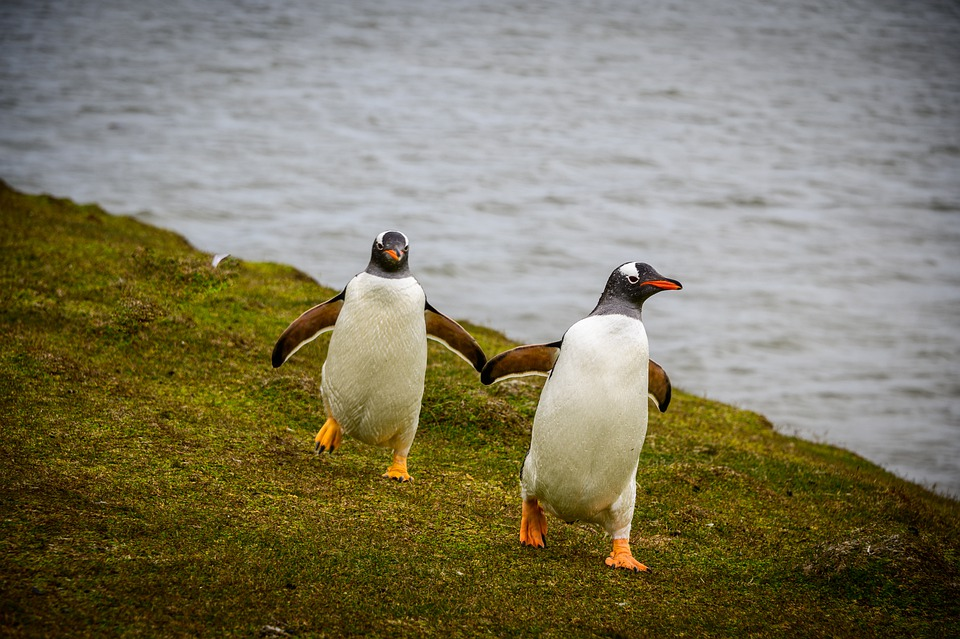
For the *"Old Iron Lady",* it was her great moment. It was a starter of the Gulf War, the Malvinas' war. International legitimacy wandered, the declaration of war was non-existent, the role of the UN was questionable, it was the first military expedition that imposed censorship on the press. The great mediators, from US Secretary of State Alexander Haig to John Paul II (who went back and forth between London and Buenos Aires), failed in their undertaking. London demonstrated how it was possible in a short time, in a modern country, to mobilise public opinion. Within two weeks, the consensus on the Thatcher hard-line reached almost one hundred per cent. The popular British newspapers were headlining: "Kill the Argies!". The war ended on 14 June with the surrender of Argentina. Shortly afterwards the dictatorship fell apart, and the conservatives won the elections in England. Of all the strength that Galtieri deployed, 80% were conscripted and came from the Northern provinces, Missiones, Corrientes, Santa Fe. They were catapulted to the Malvinas with war equipment in the desert: shoes, shirts, even mosquito nets. Most of the 2,000 victims died of cold. Many hundreds had their limbs amputated due to frost. The British arrived in heat-heated suits, with the award of the terrible Gurka, a painter following the Royal Navy, infrared instruments for night fights. The American satellites informed them of the Argentinean movements, a fact that the Argentines still consider today a great betrayal because after all, they say, Galtieri had warned Reagan of what would happen and he had given him the green light. In the 74 days of the war, both the Argentinean military junta and the Foreign Office issued daily communiqués. Many today are acknowledged to be false, on both sides. For example, the sinking of the Argentine cruiser General Belgrano (386 dead) took place far outside the war zone. The Argentines announced the sinking of the English cruisers *"Invincible"* and *"Hermes"* and it was not true. They announced the shooting down of 26 British Harrier planes, while there were only nine. They stubbornly denied that the ground war was being lost. Before the ground attack, they hoped for a solution to the conflict through Exocet missiles, produced by the French. A large number of international traffickers promised the Argentinians supplies that never arrived. Of the bloodiest ground battle, for the control of Goose Green, none of the parties ever gave exhaustive versions. The British, attackers, reported 12 dead. For the Argentineans, who were defending, the figure of 250 circulated unofficially. A disproportion, for military laws. Only after years, on the English side it was admitted that there was *"overkilling"* at Goose Green, that is, *"excesses"* were committed. A story of males and lack of fair play, Goose Green. It seems that the Argentineans raised a white flag and then opened fire. The British reacted by pulling the trigger even when they had already surrendered. Still today there are no official figures on the dead, the wounded, the assertors. The cemetery of the Argentinean fallen in the Malvine, the relatives of the victims can only visit it with enormous difficulty. In the Malvinas, there has never been anything other than seals, 2 million penguins and 27 species of seabirds. *"If Kuwait had only produced broccoli",* Bush would not have waged war, his opponents said a year ago. "And Saddam would not have invaded," the realists replied. The Malvinas, down there in the cold in the middle of nowhere, do not produce broccoli or oil. There are a few sheep, whose wool is worthless and less on the markets. And yet, a war broke out, a dictatorship fell and the minstrels sang.
https://pixabay.com/it/photos/pinguini-falkland-natura-uccello-5208545/
The mouse
One of the key figures in the development of personal computing was Douglas Engelbart. Engelbart never got rich because he developed some of the innovations that transformed the computer from a hidden tool in the inner sanctuary of computer centres into a desktop object capable of supporting any activity from play to work. He was a shy and humble man. It was his invention of the mouse, patented by his research institute and then sold to Apple for $40,000, without having the slightest idea of the inestimable value of the artefact.
https://pixabay.com/it/illustrations/maschio-bianco-modello-3d-isolato-1992571/
Invented by Douglas Engelbart at the Stanford Research Institute, the mouse was born as a square wooden box, slightly larger than it is now. There were two plastic wheels placed perpendicularly, which transmitted the movements in the two axes. The device, patented in 1970, is an “X-Y position indicator”. For friends (and for the long cable that protrudes like a tail), “mouse”. The nickname was so popular that the Spanish called it “ratón”, and even the French, the usual nationalists of computer language, preferred to keep the name “Souris”, mouse.
In 1984 with the birth of the revolutionary Apple Macintosh computer, the mouse became indispensable to make the interaction between man and machine more intuitive. Engelbart and a few other researchers including Joseph Licklider and Bob Taylor were the hidden protagonists of the revolutionary idea that the computer could be a tool for communicating with which it was easy to enter into a relationship by interacting with it. Engelbart was responsible for the concept of Intelligence Augmentation.
The idea that the machine should not replace man and perform activities in his place, but support human intelligent activities by supporting them and amplifying their performance. The vision that the computer was neither the cold and distant executor of calculations, nor the substitute for human intelligence (as in the case of artificial intelligence), but the support for all intellectual activities of human beings, capable of facilitating their work and increasing their capacities without the ambition to replace them.
https://pixabay.com/it/illustrations/binario-codice-uomo-display-dummy-1327512/
From the late 1950s, he worked at the Sri (Stanford Research Institute) where he founded and directed the Augmentation Research Center. Engelbart adhered to a powerful philosophy of technology: the idea that devices and human beings could coexist through an intense process of communication. The mouse is only the most famous of his inventions: he is the creator of the very idea of the graphic interface, the use of icons and windows to interact and give orders to the computer, teamwork and communication between human beings through machines.
And above all, it is to him that we owe the vision of interface friendliness. According to some critical scholars, the intuition that the electronic device had the characteristics of a terminal with which to entertain a communication accessible even to laymen without high technical skills, decreed the success of computers.
The system included all the graphic innovations he had worked on up until then, it was the interface model that became so familiar to us. His projects were financed, among other things, by that office of the Arpa (Advancedresearchprojectagency) which later also implemented the Internet's forerunner network, Arpanet. It was not by chance that Sri was one of the two nodes connected for the first time on 21 November 1969 by a communication protocol, the first embryonic version of a communication network between computers, the first two nodes of Arpanet, that planetary network that seems to have now definitively enveloped us.
The connection between graphic interfaces and the network shows that there was a considerable connection between the two areas of research. The idea that they had in common is the ease of communication with and through technology, although the network took longer to find the killer application than the graphical user interfaces. Engelbart's role seems to have ended in 1976, but only formally, because most of his collaborators passed through Xerox's famous Parc (Palo alto research laboratory), to whom we owe the greatest innovations in personal computers, from whose nursery of researchers and projects both Bill Gates and Steve Jobs drew when they created the successful graphical user interfaces that we are all used to using.
https://pixabay.com/it/vectors/computer-desktop-workstation-158675/
Signor Bonaventura
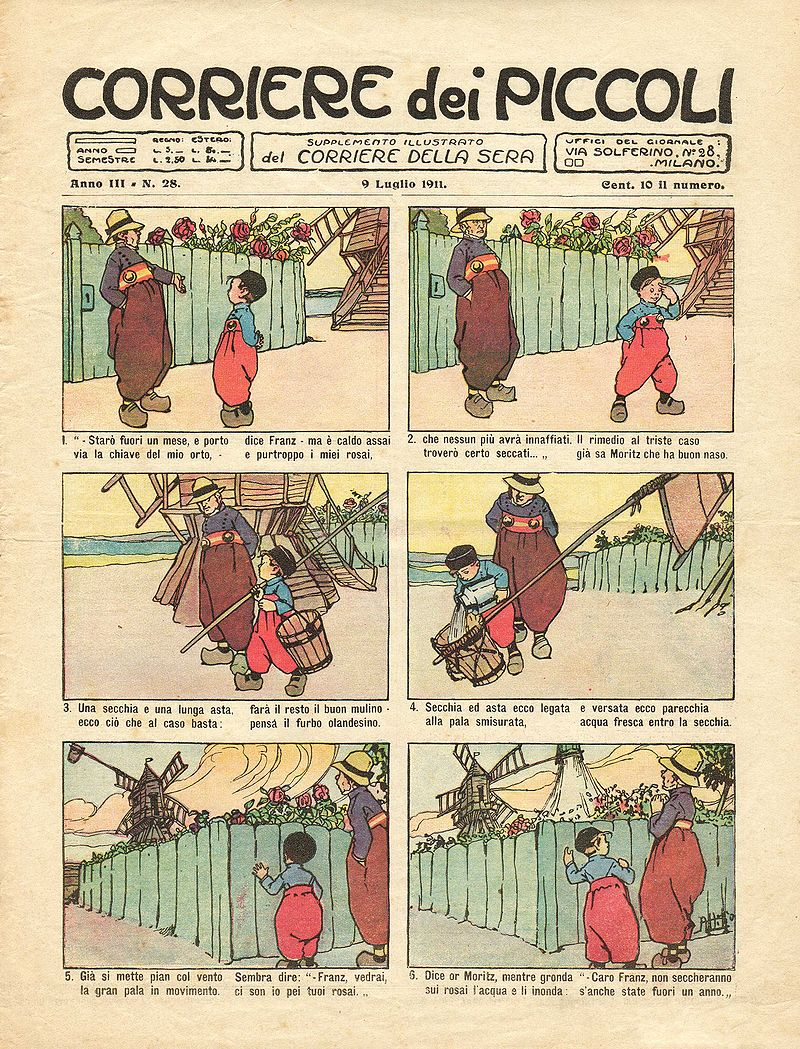
The famous little man, tall, slender, with a crooked nose, egg-shaped eyes, red jacket, bowler hat and wide white trousers, born from Sergio Tofano's pen, before forging the contours with his imagination, seems to have existed. The little man seemed to have a name and a surname: his name was Ildebrando Bonaventura. When they told him about him in Tofano, it was 1917, in the middle of the world war. Sergio Tofano, a Roman, graduated in literature and dreamed of becoming an actor, had stayed in Rome during the first war, assigned to the army censorship office. In the spring of 1917 he heard that in the front line, on the slopes of Mount Ortigara, among the officers, there was a very young and original lieutenant: his name was Ildebrando Bonaventura of Treviso. Bonaventura came from a wealthy family of landowners, and this sets him apart from his companions. The lieutenant carried with him, even at the front, a small brown dachshund dog, from which he never strayed and with which he climbed the steep mule tracks with him and soon the dachshund became the battalion's mascot. The image of Lieutenant Bonaventura and his faithful friend intent on climbing the plateau to take up a position in the Italian trenches perhaps inspired Tofano with the fateful phrase: *"And here begins the misfortune of Mr Bonaventura"* and who can say?
https://it.wikipedia.org/wiki/Corriere_dei_Piccoli#/media/File:Corrierino-dei-piccoli.jpg
The Roman cartoonist tells that, remembering the lieutenant and the dachshund, he worked on fantasy and proposed them in the form of comic characters, with the signature of *“Sto”*, to the then director of the Corriere dei Piccoli for a series of funny cartoon pictures. Bonaventura, who expressed himself through nursery rhymes much loved by children, appeared for the first time in Corriere dei Piccoli n.43 in October 1917 and from that moment on he entered the hearts of young and old (since Corriere dei Piccoli was a supplement to Corriere Della Sera). And there began the fortune of that gentleman, *“now so rich as to be afraid”*, who, at the end of every story, showed the gigantic million (later brought to a billion). The character was the answer to Frederick Burr Opper's (Happy Hooligan) unfortunate fortune. This comic character remained the undisputed protagonist for half a century on the pages of *“Corrierino”* and then inspired several sketches of Carosello, a cartoon TV series.
More details:https://en.wikipedia.org/wiki/Signor_Bonaventura
Lady Liberty
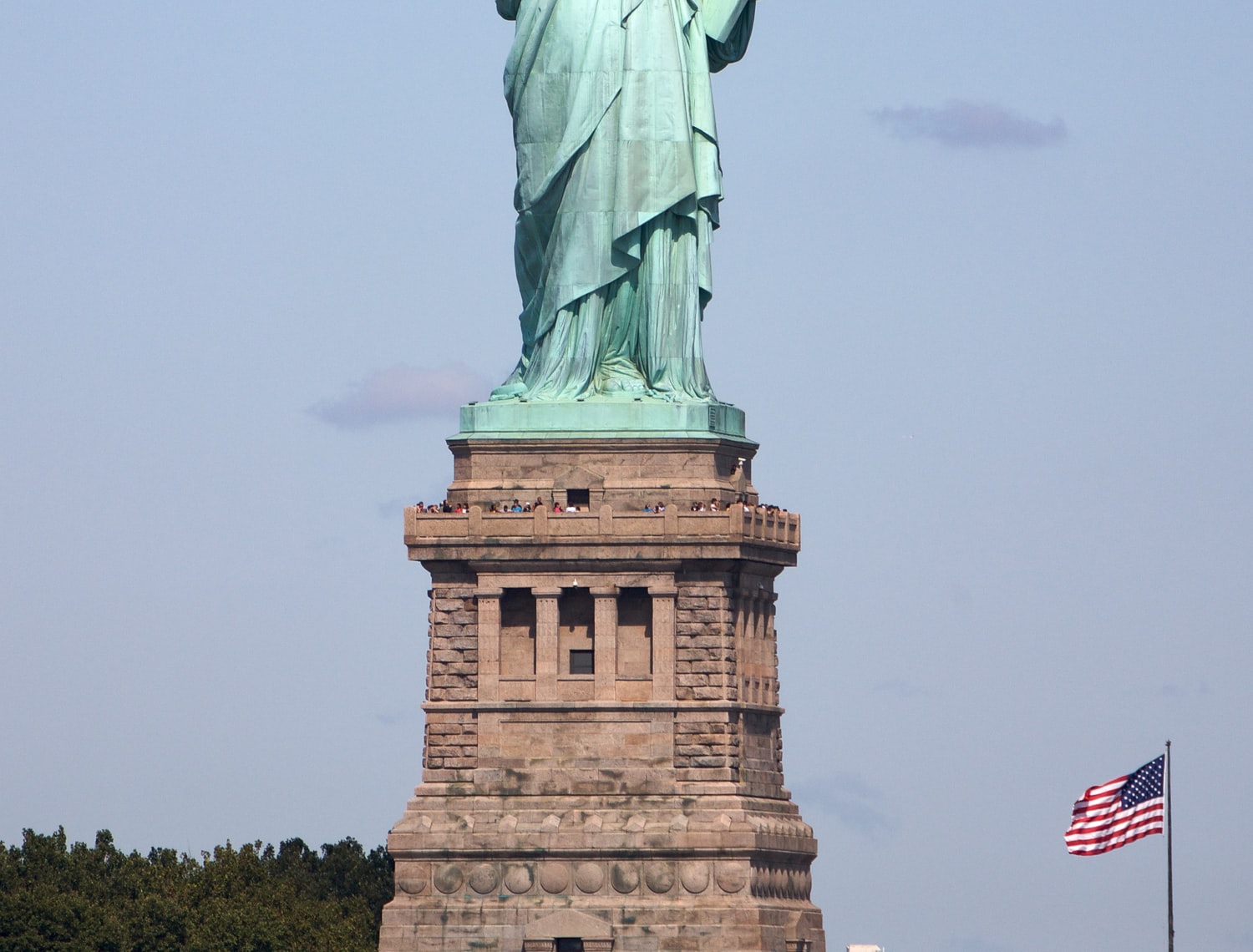
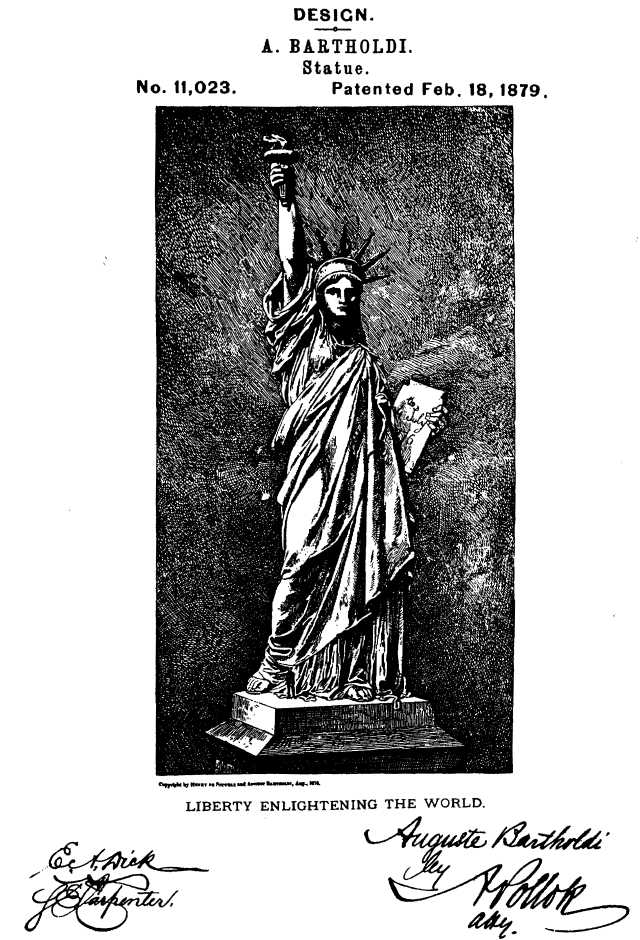
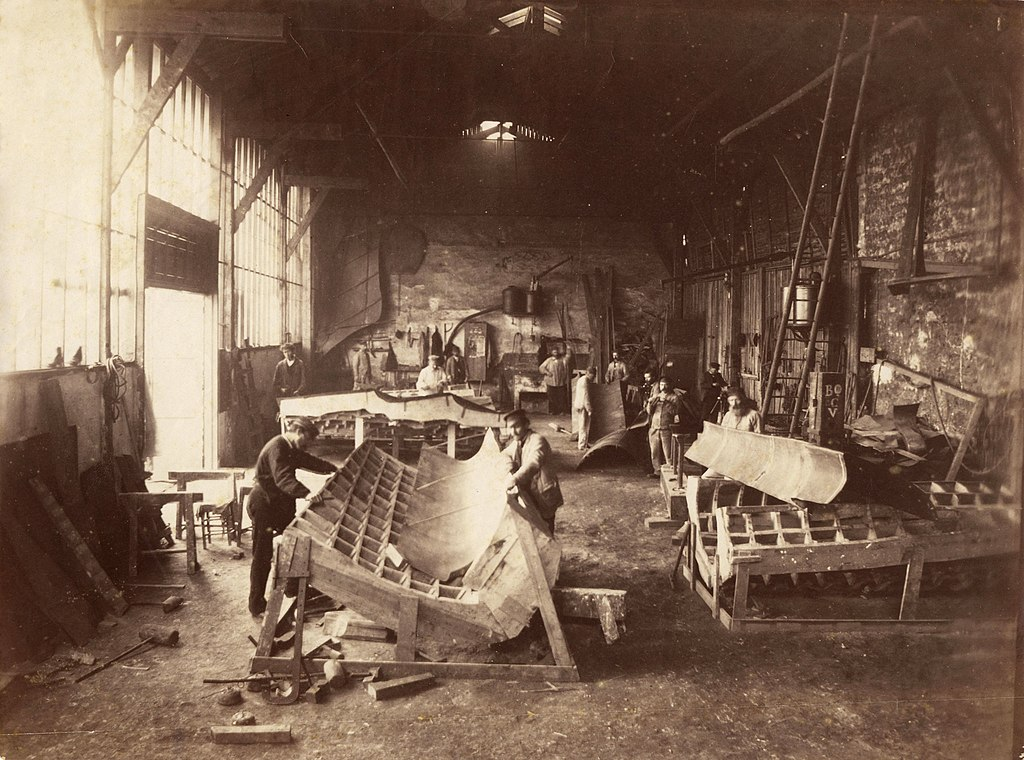
In the memory of desperate people from all over Europe (Poles, Russians, Irish, Greeks and Italians) who at the end of the 19th and half of the 20th century emigrated to North America to escape hunger and misery from political and racial persecution or just for the spirit of adventure, the immense and severe size of the Statue of Delta Freedom, which stands at the Port of New York, with that arm outstretched towards the sky to hold the jib, has remained forever the first image of their new homeland: America. Almost all the members of this tragic European diaspora died without knowing or worrying about where it had come from, who had conceived and built it like this: with that austere woman's face, the seven-pointed crown, the book of the law and the torch (Masonic symbols?) and how long it had been at the entrance to the port of New York to welcome the ships of thousands of desperate aspirants in search of the new Eldorado. Probably most of them believed that the statue was born with the United States, it was an American product destined to give hope to the desperate, to promise bread to the hungry and justice and freedom to the persecuted, after all, they did not care about its history, but only about what it represented for them at that moment: the hope of a better existence. In truth, how many Americans today know his story more than a century later, which began in Paris with a family lawsuit that had Napoleon III as its main actors, Professor Edouard Laboulaye, a Republican and liberal, a young Alsatian sculptor named Auguste Bartholdi and an engineer, Gustave Eiffel, who later built the tower that would make him famous. So the statue was an all Parisian story, which only later became the incarnation of the American dream. The statue was the bone of contention between the emperor and his republican and liberal adversaries, between the first who in the war of secession agreed for the slave South and the second for the North if only to irritate him without compromising himself in open internal political positions (always dangerous at the time of the Second Empire).
https://en.wikipedia.org/wiki/Statue_of_Liberty#/media/File:U.S._Patent_D11023.jpeg
The story goes that this was the case: Edouard Laboulaye and his friends from the "society against slavery" had decided to offer the United States a statue symbolising freedom for 1876, the first centenary of their independence, and Bartholdi, who had already tried unsuccessfully to place a gigantic statue at the entrance to the Suez Canal, which had not yet been inaugurated, offered to make it, being a maniac of gigantism. As for Napoleon III, once faced with a fait accompli he could not have done much to prevent the donation: in the worst case, he would have had a bile attack, in the best case he would have blessed it and inaugurated it by plugging his nose. Months of slowdowns followed, even bureaucratic ones, in the realization of the statue, but the story always ends up settling things. Two years later France was defeated at Sedan and under the internal revolutionary uprisings the Second Empire collapsed and from its ashes, the Third Republic was about to be born with a new constitution. Bartholdi without work and without money, went to refresh his memory in Laboulaye: "we finish the Statue now that Napoleon is no more and the centenary of the Independence of the United States is near". Having said that, Bartholdi is summoned to the United States to decide the location of the statue and when he returns home he communicates the place: the bay of New York. But the coffers of the new French Republic are empty and the statue, according to an estimate, without a pedestal, will cost the new government 600,000 francs, a fortune. In 1876 (the year of American Independence) Bartholdi had only completed the immense arm holding the torch and showed it to his American friends, the latter were sceptical and more than once in their national newspapers laughed at the work, convinced that it would never be completed. In 1878, with his arm still around America, Bartholdi presented the enormous head at the Universal Exhibition in Paris at the Champ de Mars where, twenty years later, Eiffel would build his tower. It was on that very occasion, while the Parisians were amazed to learn about the enormous crowned head that Gustave Eiffel came into play. At the end of the day and knowing the overall weight of the Statue of Liberty in copper plate, it was necessary to design and build a solid internal structure on which to model the immense body, the structure had to be weatherproof in Hudson Bay and resist the powerful gusts of wind. And Eiffel threw himself head down into the project, building the huge frame of iron beams and cross stairs that were the skeleton of the statue, convinced that his engineering work could last at least a hundred years without extraordinary maintenance. Eiffel came up with the idea for his iron tower during the construction of the Statue of Liberty.
https://en.wikipedia.org/wiki/Statue_of_Liberty#/media/File:Construction_of_the_Statue2.jpg
Finally Bartholdi, thanks to a fundraiser (and the help of Freemasonry?) both at home and in America, managed to finish the body of his statue. In 1884 the inhabitants of Paris saw the "new colossus of Rhodes", a statue almost fifty metres high, rise high on the rooftops of their city. All's well that ends well, if as well as the Americans, no longer believing in the project, had interrupted the construction of the pedestal. But the statue was there ready to take to the sea, disassembled and packed in 220 numbered boxes, destined to dominate the bay of Ney York. In record time the Americans put their hands back on their wallets and completed the base. Twenty years after Edouard Laboulaye's idea, the statue was finally inaugurated and presented to an incredulous and excited Bartholdi. From that 28th October 1886 Lady Liberty: a statue 46 metres high (93 metres including the base) dressed in a long toga and holding a torch on the right (symbol of freedom) and on the left the book engraved with the date of American independence (4th July 1776), with a crowned seven-pointed head (representing the seven seas and seven continents) with broken chains at the feet symbolising any liberation from tyranny, dominates the bay of Ney York.
ITA
Nella memoria di disperati di tutta Europa (polacchi, russi, irlandesi, greci e italiani) che alla fine del 800’ e per metà del 900’ che emigrarono nell’America del Nord per sfuggire alla fame e alla miseria alle persecuzioni politiche e razziali o soltanto per spirito d’avventura la mole immensa e severa della Statua delta libertà, che si erge all'Imbocco del porto dì New York, con quel braccio teso verso il cielo a reggere la fioccala, è rimasta per sempre la prima immagine della nuova loro patria: l’America. Quasi tutti i membri di questa tragica diaspora europea sono morti senza sapere o senza preoccuparsi di sapere da dove fosse venuta, chi l’avesse ideata e costruita così: con quel volto austero di donna, la corona a sette punte, il libro della legge e la fiaccola (simboli massonici?) e da quanto tempo si trovasse all’entrata del porto di New York ad accogliere le nave di migliaia di disperati aspiranti in cerca del nuovo Eldorado. Probabilmente la maggior parte di essi credeva che la statua fosse nata con gli Stati Uniti, era un prodotto americano destinato a dare speranza ai disperati, a promettere pane agli affamati e giustizia e libertà ai perseguitati, del resto a loro non importava la sua storia, ma solo quello che per loro in quel momento rappresentava: la speranza di un’esistenza migliore. In verità quanti al giorno d’oggi sia americani conoscono a più di un secolo di distanza la sua storia, cominciata a Parigi con una querelle di famiglia che ha come attori principali Napoleone III, il professor Edouard Laboulaye, repubblicano e liberale, un giovane scultore alsaziano di nome Auguste Bartholdi e un ingegnere, certo Gustave Eiffel che più tardi costruirà la torre che lo renderà famoso. Quindi la statua era una storia tutta parigina, diventata solo in seguito l’incarnazione del sogno americano. La statua era il pomo della discordia tra l’imperatore e i suoi avversari repubblicani e liberali, tra il primo che nella guerra di secessione patteggiava per il Sud schiavista e i secondi per il Nord se non altro per irritarlo senza compromettersi in aperte posizioni politiche interne (sempre pericolose ai tempi del Secondo Impero). Si narra che era andata così: Edouard Laboulaye e i suoi amici della “società contro lo schiavismo” avevano deciso di offrire agli Stati Uniti per il 1876, primo centenario della loro indipendenza, una statua che simboleggiasse la libertà e Bartholdi, che aveva già tentato senza successo di piazzare una gigantesca statua all’ingresso del canale di Suez non ancora inaugurato, si era offerto di realizzarla essendo un maniaco del gigantismo. Quanto a Napoleone III una volta messo di fronte al fatto compiuto non avrebbe potuto fare un granché per impedirne la donazione: nel peggiore dei casi avrebbe avuto un attacco di bile, nei migliori l’avrebbe benedetta e inaugurata tappandosi il naso. Seguirono mesi di rallentamenti, anche burocratici, nella realizzazione della statua, ma la storia finisce sempre per sistemare le cose. Due anni dopo la Francia viene sconfitta a Sedan e sotto i moti rivoluzionari interni il Secondo Impero crollò e dalle sue ceneri stava per nascere la Terza Repubblica con una nuova costituzione. Bartholdi senza lavoro e senza soldi, andò a rinfrescare la memoria a Laboulaye: “*finiamo la Statua ora che Napoleone non c’è più e il centenario dell’Indipendenza degli Stati Uniti è vicino”.* Detto fatto, Bartholdi è convocato negli Stati Uniti per decidere la collocazione della statua e quando torna in patria comunica il luogo: la baia di New York. Ma le casse della nuova Repubblica francese sono vuote e la statua secondo un preventivo, priva del piedistallo, costerà al nuovo governo 600.000 franchi, una fortuna. Nel 1876 (anno dell’Indipendenza americana) Bartholdi aveva completato solamente l’immenso braccio che reggeva la fiaccola e lo mostrò agli amici americani, quei ‘ultimi si rivelarono scettici e più di una volta sui loro quotidiani nazionali derisero l’opera convinti che non sarebbe mai stata completata. Nel 1878, con il braccio ancora in giro per l’America, Bartholdi presentò l’enorme testa all’ Esposizione Universale di Parigi a Campo di Marte dove un ventennio più tardi Eiffel costruirà la sua torre. È proprio in quell’occasione, mentre i parigini fanno stupiti la conoscenza dell’enorme testone coronato che entra in gioco Gustave Eiffel. A conti fatti e conosciuto il peso complessivo della Statua della Libertà in lamiere di rame, occorreva progettare e costruire una solida struttura interna sulla quale modellare l’immenso corpo, la struttura doveva essere resistenze alle intemperie della baia di Hudson e resistere alle potenti raffiche di vento. Ed Eiffel si lanciò a testa bassa nel progetto, costruendo l’enorme intelaiatura di travi di ferro e scale incrociate che erano lo scheletro della statua, convinto che la sua opera di ingegneria potesse durare almeno cent’anni senza manutenzioni straordinarie. Eiffel maturò l’idea della sua torre di ferro proprio durante la costruzione della Statua della Libertà.
https://pixabay.com/it/photos/statua-della-libert%C3%A0-stati-uniti-516086/
Finalmente Bartholdi, grazie a una raccolta fondi (e all’aiuto della massoneria?) sia in patria che in America riuscì a finire il corpo della sua statua. Nel 1884 gli abitanti di Parigi videro sorgere alta sui tetti della loro città il “nuovo colosso di Rodi”, una statua alta quasi cinquanta metri. Tutto bene quello che finisce bene, se nonché gli americani, non credendo più nel progetto, avevano interrotto la costruzione del piedistallo. Ma la statua era lì pronta per prendere il mare, smontata e imballata in 220 casse numerate, destinata a dominare la baia di Ney York. A tempo di record gli americani rimisero mani al portafoglio e completarono la base. Dopo vent’anni dal’ idea di Edouard Laboulaye la statua venne finalmente inaugurata e presentata la mondo al cospetto di un incredulo ed emozionato Bartholdi. Da quel 28 ottobre 1886 Lady Liberty: una statua alta 46 metri (93 compreso il basamento) vestita di una lunga toga e che regge nella destra una fiaccola (simbolo della libertà) e nella sinistra il libro con incisa la data dell’indipendenza americana (4 luglio 1776), con un testa coronata a sette punte ( in rappresentanza dei sette mari e dei sette continenti) con le catene spezzate ai piedi simbolo di qualsiasi liberazione dalla tirannia, domina la baia di Ney York.
https://pixabay.com/it/illustrations/liberty-statua-liberazione-liberato-1003288/
The Mattei case
It is the 27th October 1962, it is 6.57 pm. Eni's private plane, which brought back to Milan, from Catania, the president and founder of the National Hydrocarbons Agency, Enrico Mattei and the pilot and an American journalist, exploded on landing on Linate, falling on a field in Bascapè (Pavia), a small town of 1800 inhabitants. With him, the pilot Irnerio Bertuzzi and the American journalist William Mc Hale lost their lives. Forty years later, while an investigation by the Public Prosecutor's Office of Pavia was still in progress, the only fact established was that it was an attack. In 2003 the Pavia prosecutor, Vincenzo Calia, asked for the case to be dismissed, confirming the malicious nature of the incident, even though it was impossible to identify the culprits, pointing out that there was a lot of pressure to divert the investigation. A sentence that in part did justice to one of the most fascinating and controversial figures in the political and economic history of the Bel Paese. Mattei, within himself, realised that he was increasingly seen as a threat and began to fear for his own safety, to the point of enlisting former partisans to defend him. This did not prevent the sabotage of the plane that led to his death. In 2014, during further examinations conducted by the Carabinieri, metal fragments emerged that reinforced the hypothesis of the presence of a bomb on board the plane. When, on that rainy 27 October 1962, the plane that brought Enrico Mattei back from Sicily to Milan crashed in Bascapé, the country seemed to be able to take advantage of the impressive and impetuous economic development that had begun in the previous decade. Italy's domestic policy in those years favoured programmatic aspects over those that prevailed, transforming, and it was necessary to set strategic objectives: overcoming the imbalances between North and South, between industry and agriculture, priority of collective consumption over individual consumption. This overall plan also included the project for the nationalisation of electricity, which was finally approved one month after Mattei's mysterious death. In his intentions, it was part of the strengthening of the instruments to implement the country's energy policy. In truth, that measure, which for its promoters responded to strategic objectives in the country's modernisation process, took on much more modest objectives. In those months, even before it was fully deployed, the reformers of the centre-left failed to achieve the project of making Italy a normal country, capable of following the pace of other industrial democracies. And this plan perfectly included the work that Enrico Mattei had been pursuing since the end of the 1940s.
https://en.wikipedia.org/wiki/Italian_economic_miracle#/media/File:Milano,_Centro_Direzionale_01.jpg
In his vision, a public intervention was not merely a substitute for the failures and inadequacies of private enterprise, as it had been in the case of IRI, but a driving force behind the transformation of Italian society into a modern industrial country. For Enrico Mattei's generation, the experience of Fascism, i.e. a dictatorship based on a political party-nationalist religion, was decisive. Born in 1906, a Catholic, like the political ruling class that was hegemonic in the years of the Republic until the 1970s, Mattei was decisively marked in his ethical and political formation by his participation in the anti-fascist Resistance, of which he was, with Paolo Emilio Taviani, the most authoritative exponent of democratic Catholics. An anti-fascist resistance that saw him as a Catholic partisan during the war of liberation. After the death of the partisan-nationalist political religion, leaving moral and material rubble, the Catholic ruling class took the lead in the construction of a democratic Italy: the foundations of the political system were laid but, at the same time, the historical weaknesses of the country were faced and the age-old problems of dualism, underdevelopment and backwardness were unresolved. Mattei was called to liquidate Agip (a state body for the extraction, processing and distribution of oil), which had been set up in 1926, and which had unsuccessfully sought oil resources in Italy and in the colonies, was aware of the human and technical heritage that had been formed there, and made it the springboard for the construction of the energy policy of a country without natural resources and completely dependent on the outside world for its energy needs. Opposed to the liquidation supported by the USA and the great Italian entrepreneurs, Agip raised it by encouraging mining activities and laying the foundations for the birth of ENI (Ente Nazionale Idrocarburi) in 1953. As president of ENI Mattei, he took up and made his own the frustrations of a poor nation that in nationalistic illusions had tried to escape from its own modesty, and turned them into instruments of development. Certainly, he was not, and could not be, free from national defects. Mattei was a moderniser, who set himself a more than an ambitious goal, which could have changed Italy's economic and political profile forever: to achieve energy autonomy, buying oil directly from the producing countries and bypassing the so-called "seven sisters", the main American oil companies that monopolised the crude oil market. To do this it needed the public opinion, which won itself over with a targeted communication campaign and to do this it needed the media. In the discouraging daily press scene of the 1950s, in which political, cultural and social conformism and an unbearably provincial custom prevailed, the publication of Il Giorno in 1956, a newspaper he controlled and where the great names in journalism of the time worked, was his laboratory for gaining the support of the masses. In parallel, he created a diplomatic network that allowed him to expand his contacts with African and Middle Eastern countries. Among these he turned to the poorest, focusing on the common economic difficulty. Having an important role among the great world powers seemed, in short, finally possible for a country in desperate need.
ITA
Il caso Mattei
È il 27 ottobre 1962, sono le 18.57. L'aereo privato dell'Eni che riporta a Milano, da Catania, il presidente e fondatore dell'Ente nazionale idrocarburi, Enrico Mattei, il pilota e un giornalista americano, esplode in fase di atterraggio su Linate, cadendo su un campo di Bascapè (Pavia), piccolo comune di 1800 abitanti. Con lui persero la vita il pilota Irnerio Bertuzzi e il giornalista americano William Mc Hale. Quarant'anni dopo, mentre era ancora in corso un'inchiesta della procura della Repubblica di Pavia, l'unico fatto accertato è che si trattò di un attentato. Nel 2003 il procuratore di Pavia, Vincenzo Calia chiese l’archiviazione del caso confermando la natura dolosa dell’incidente, pur nell’impossibilità di individuare i colpevoli, evidenziando che molte furono le pressioni per sviare le indagini. Una sentenza che in parte rese giustizia a una delle figure più affascinanti e controverse della storia politica ed economica del Bel Paese. Mattei dentro di sé si rendeva conto di essere visto sempre più come una minaccia e cominciava a temere per la propria incolumità, al punto di arruolare ex partigiani per la sua difesa. Ciò non impedì il sabotaggio dell’aereo che lo portò alla morte. Nel 2014, nel corso di ulteriori esami condotti dai carabinieri, sono emersi frammenti metallici che hanno rafforzato l’ipotesi della presenza di una bomba a bordo dell’aereo. Quando, quel piovoso 27 ottobre del 1962, l'aereo che riportava Enrico Mattei dalla Sicilia a Milano precipitò a Bascapé, il Paese sembrava poter mettere a frutto l'imponente e impetuoso sviluppo economico incominciato nel decennio precedente. La politica interna nazionale italiana di quegli anni privilegiava aspetti programmatici rispetto a quelli, che prevalsero, trasformistici, e doveva gioco forza porsi obiettivi strategici: il superamento degli squilibri tra Nord e Sud, tra industria e agricoltura, priorità dei consumi collettivi su quelli individuali. In questo disegno complessivo si inseriva anche il progetto di nazionalizzazione dell'energia elettrica, approvata definitivamente un mese dopo la misteriosa morte di Mattei. Nei suoi intenti, si inseriva nel quadro del rafforzamento degli strumenti atti a realizzare la politica energetica del Paese. In verità, quella misura, che per i suoi promotori rispondeva a obiettivi strategici nel processo di modernizzazione del Paese, colse obiettivi assai più modesti. In quei mesi, a ben vedere, ancora prima che si dispiegasse compiutamente, si realizzò il fallimento degli intenti riformatori del centrosinistra, il progetto di fare del nostro un paese normale, capace cioè di seguire il passo delle altre democrazie industriali. E in questo disegno rientrava perfettamente l'opera che Enrico Mattei aveva perseguito fin dalla fine degli anni Quaranta.
https://en.wikipedia.org/wiki/Italian_economic_miracle#/media/File:1962_Fiat_500_--_2012_DC_2.JPG
Nella sua visione, l'intervento pubblico non era mera supplenza ai fallimenti e alle insufficienze dell'impresa privata, come era stato nel caso dell'Iri, ma strumento propulsivo della trasformazione della società italiana in moderno paese industriale. Per la generazione di Enrico Mattei l'esperienza del fascismo, e cioè di una dittatura fondata su una religione politica partitistica-nazionalistica, fu determinante. Nato nel 1906, cattolico, come del resto la classe dirigente politica egemone negli anni della Repubblica fino agli anni Settanta, Mattei fu segnato in modo decisivo nella formazione etico politica dalla partecipazione alla Resistenza antifascista, della quale fu, con Paolo Emilio Taviani, il più autorevole esponente dei cattolici democratici. Resistenza antifascista che lo vide protagonista come partigiano cattolico durante la guerra di liberazione. Morta la religione politica partitistica-nazionalistica, lasciando peraltro macerie morali e materiali, la classe dirigente di matrice cattolica assunse la guida della costruzione dell'Italia democratica: si gettarono le fondamenta del sistema politico, ma, allo stesso tempo, si affrontarono le debolezze storiche del Paese e ci si ritrovava, irrisolti, i secolari problemi di dualismo, di arretratezza, di sottosviluppo, di ritardo. Mattei fu chiamato a liquidare l'Agip (ente statale per l’estrazione, lavorazione e distribuzione dei petroli), che era stata costituita nel 1926, e che aveva infruttuosamente ricercato risorse petrolifere in Italia e nelle colonie, era consapevole del patrimonio umano e tecnico che vi si era formato, e ne fece il trampolino di lancio per la costruzione della politica energetica di un paese privo di risorse naturali e completamente dipendente dall'esterno per i suoi fabbisogni energetici. Oppostosi alla messa in liquidazione sostenuta dagli Usa e dalla grande imprenditoria italiana, la risollevò l’Agip incentivandone l’attività estrattiva e gettando le basi per la nascita dell’ENI (Ente nazionale Idrocarburi) era il 1953. Da presidente dell’ENI Mattei, raccolse e fece sue le frustrazioni di una nazione povera che nelle illusioni nazionalistiche aveva cercato la fuga dalla propria modestia, si trasformarono in costruzione degli strumenti dello sviluppo. Certo, non era, e non poteva esserlo, esente dai difetti nazionali. Mattei fu un modernizzatore, che si propose un più che ambizioso traguardo, che avrebbe potuto cambiare per sempre il profilo economico e politico dell’Italia: raggiungere l’autonomia energetica, acquistando il petrolio direttamente dai paesi produttori e bypassando le cosiddette “sette sorelle” ossia le principali compagnie petrolifere statunitensi che monopolizzavano il mercato del greggio. Per fare ciò aveva bisogno dell’opinione pubblica, che si conquistò con una mirata campagna di comunicazione e per fare questo aveva bisogno dei media. Nel panorama sconfortante della stampa quotidiana degli anni Cinquanta, nella quale dominavano il conformismo politico, culturale, sociale e un costume insopportabilmente provinciale l'uscita del Giorno nel 1956, giornale da lui controllato e dove lavoravano grandi firme del giornalismo di allora, rappresentò il suo laboratorio dove ottenere l’appoggio delle grandi masse. Parallelamente, creò una rete diplomatica che gli consentì di ampliare i suoi contatti con i Paesi africani e del Medio Oriente. Tra questi si rivolse ai più poveri, puntando sulla comune difficoltà economica. Avere un ruolo importante tra le grandi potenze mondiali sembrava, insomma, finalmente possibile per un Paese che ne aveva disperatamente bisogno.
Crêuza de mä
Crêuza de mä as a turning point in Italian popular music, as a foretaste experience of the "world" wave (or ethnic, if you like), but above all as a parable of the journey of dialogue between the peoples of the globe. It was 1984 when, Fabrizio De Andrè and Mauro Pagani (violinist, multi-instrumentist and composer already in the Premiata Forneria Marconi), published that record revealing themselves as two travellers or rather two explorers: theirs was a passionate immersion in the sounds and traditions of a Mediterranean that they had loved and read voraciously in the pages of a thousand books. The title of the album, and the opening song, takes up a term that means Mulattiera di mare, that is the small road that, precisely, led to the sea, although also on the term and on the real meaning of the term "Crêuza" there are various interpretations. The attack, now very recognizable, brought to the ears of millions of people the Macedonian Gaida, a sort of bagpipes that gives the song a hand. A record built around that never removed language of childhood that is the Ligurian dialect of the singer-songwriter De Andrè, a record of a passionate search for roots, womb, origins. Not only are the seven songs written in Genoese, but every sound and instrument on the record belongs to the musical heritage of the Mediterranean. Supported by Mauro Pagani, Fabrizio De Andrè managed to create a mixture of words, melodies, landscapes and truly extraordinary sound. Not even a comma of Crêuza de mä has the cold, place-like flavour of remade folklore. Evidently, the miraculous link between the great Mediterranean musical unconscious and its transposition into song form has been identified with precision and love by the Pagani-De Andrè couple. The album is full of "dittonghi", redundant with vowels and long sounds, the Genoese sung by De Andrè blends inextricably with the sinuous, swaying sounds of ethnic instruments by breath and strings until it creates a perfect alloy, amber, Arab dream. Sounds without haste, from the sea and from heaven, sounds from a long journey. So you have to grasp the reason for this disk between one digression and another. The Genoese have been a people of wanderers for centuries. Wherever they have gone and wherever they go today, they always meet, talk, ideally return to Genoa. They were extraordinary travellers and merchants, but when they arrived in any Mediterranean canton they did not ask for land or fortresses, but only the freedom to trade, to and to continue their journey: a bit like the Phoenicians or like all sea peoples. In contrast to the people of dry land, birds of prey, rulers, who divided the land, thought only of marking the limits of property, they looked to the horizon at their sea or The "Mare nostrum" as a metaphor for freedom, the circulation of ideas and men. De Andrè decided to take the liberty of experimenting with a new sound, never had bouzouki been played as a solo instrument, and to use the ancient Ligurian language. The language of the "dream" as the singer-songwriter calls it, a Genoese dialect that had assumed Arabic-Turkish characteristics. Nor did an album come out that today we will define out of the market, and that, instead, has become a classic, appreciated both in Italy and abroad.
https://www.youtube.com/watch?v=Bz7qrj_SGBM
ITA
Crêuza de mä
Crêuza de mä come disco di svolta nella musica popolare italiana, come esperienza anticipatrice dell’ondata “world” (o etnica, che dir si voglia), ma soprattutto come parabola del viaggio di dialogo tra i popoli del globo. Era il 1984 quando, Fabrizio De Andrè e Mauro Pagani (violinista, polistrumentista e compositore già nella Premiata Forneria Marconi), pubblicarono quel disco rivelandosi due viaggiatori o meglio due esploratori: la loro fu un’immersione passionale nei suoni e nelle tradizioni di un Mediterraneo che avevano amato e letto voracemente nelle pagine di mille libri. Il titolo dell’album, e della canzone d’apertura, riprende un termine che significa Mulattiera di mare, ovvero quella stradina che, appunto, portava verso il mare, sebbene anche sul termine e sul reale significato del termine "Crêuza" ci siano svariate interpretazioni. L'attacco, ormai divenuto riconoscibilissimo, ha portato all'orecchio di milioni di persone la Gaida macedone, una sorta di cornamusa che dà il la alla canzone. Un disco costruito attorno a quella mai rimossa lingua dell'infanzia che è il dialetto ligure del cantautore De Andrè, un disco di appassionata ricerca di radici, di grembo, di origini. Non solo le sette canzoni sono scritte in genovese, ma ogni suono e ogni strumento del disco appartengono al patrimonio musicale del Mediterraneo. Assecondato da Mauro Pagani, Fabrizio De Andrè riuscì a creare un impasto di parole, melodie, di paesaggi e di sonorità davvero straordinario. Nemmeno una virgola di Crêuza de mä ha il sapore freddino e posticcio della del folklore rifatto. Evidentemente il miracoloso nesso tra il grande inconscio musicale mediterraneo e la sua trasposizione in forma di canzone è stato individuato con precisione e amore dalla coppia Pagani-De Andrè. L’album è ricco di dittonghi, ridondante di vocali e di suoni lunghi, il genovese cantato da De Andrè si fonde inestricabilmente con le sonorità sinuose, ondeggianti degli strumenti etnici a fiato e a corde, fino a creare una lega perfetta, ambrata, da sogno arabo. Suoni senza fretta, da mare e da cielo, suoni da lungo viaggio. Così bisogna cogliere il perché di questo disco tra una divagazione e l'altra. I genovesi sono stati per secoli un popolo di viandanti. Dovunque siano andati e dovunque vadano oggi, si ritrovano sempre, si parlano, tornano idealmente a Genova. Furono viaggiatori e mercanti straordinari, ma quando arrivavano in qualunque cantone del Mediterraneo non chiedevano terreni o fortezze, ma solo la libertà di commerciare, di e di continuare il loro viaggio: un po' come i fenici o come tutti i popoli di mare. Esattamente all'opposto dei popoli di terra ferma, rapaci, dominatori, che dividevano la terra, pensavano solo a segnare i limiti delle proprietà, loro guardavano all’orizzonte al loro mare o Il “Mare nostrum” come metafora di libertà, di circolazione di idee e di uomini. De Andrè decise di prendersi la libertà di sperimentare nuove sonorità, mai il bouzouki era stato suonato come strumento solistico, e di usare l’antica lingua ligure. La lingua del “sogno” come la definisce il cantautore, un dialetto genovese che aveva assunto caratteristiche arabo-turche. Né uscì un album che oggi definiremo fuori mercato, e che, invece, è diventato un classico, apprezzato sia in Italia che all'estero.
https://www.youtube.com/watch?v=TlukK5-WZN8
Creuza de mä (1984)
Tracce
1 - Creuza de mä
2 - Jamin-a
3 - Sidun
4 - Sinan capudàn pascià
5 - 'A pittima
6 - A dumenega
7 - Da a me riva
*Crêuza de mä*
*Umbre de muri muri de mainé*
*dunde ne vegnì duve l’è ch’ané*
*da ‘n scitu duve a l’ûn-a a se mustra nûa*
*e a neutte a n’à puntou u cutellu ä gua*
*e a muntä l’àse gh’é restou Diu*
*u Diàu l’é in çë e u s’è gh’è faetu u nìu*
*ne sciurtìmmu da u mä pe sciugà e osse da u Dria*
*a a funtan-a di cumbi ‘nta cä de pria.*
*E ‘nt’a cä de pria chi ghe saià*
*int’à cä du Dria che u nu l’è mainà*
*gente de Lûgan facce da mandillä*
*qui che du luassu preferiscian l’ä*
*figge de famiggia udù de bun*
*che ti peu ammiàle senza u gundun.*
*E a ‘ste panse veue cose che daià*
*cose da beive, cose da mangiä*
*frittûa de pigneu giancu de Purtufin*
*çervelle de bae ‘nt’u meximu vin*
*lasagne da fiddià ai quattru tucchi*
*paciûgu in aegruduse de lévre de cuppi.*
*E ‘nt’a barca du vin ghe naveghiemu ‘nsc’i scheuggi*
*emigranti du rìe cu’i cioi ‘nt’i euggi*
*finché u matin crescià da puéilu rechéugge*
*frè di ganeuffeni e dè figge*
*bacan d’a corda marsa d’aegua e de sä*
*che a ne liga e a ne porta ‘nte ‘na creuza de mä.*
*Crêuza de mä*
*Ombre di facce facce di marinai*
*da dove venite dov’è che andate*
*da un posto dove la luna si mostra nuda*
*e la notte ci ha puntato il coltello alla gola*
*e a montare l’asino c’è rimasto Dio*
*il Diavolo è in cielo e ci si è fatto il nido*
*usciamo dal mare per asciugare le ossa dall’Andrea*
*alla fontana dei colombi nella casa di pietra.*
*E nella casa di pietra chi ci sarà*
*nella casa dell’Andrea che non è marinaio*
*gente di Lugano facce da tagliaborse*
*quelli che della spigola preferiscono l’ala*
*ragazze di famiglia, odore di buono*
*che puoi guardarle senza preservativo.*
*E a queste pance vuote cosa gli darà*
*cosa da bere, cosa da mangiare*
*frittura di pesciolini, bianco di Portofino*
*cervelle di agnello nello stesso vino*
*lasagne da tagliare ai quattro sughi*
*pasticcio in agrodolce di lepre di tegole.*
*E nella barca del vino ci navigheremo sugli scogli*
*emigranti della risata con i chiodi negli occhi*
*finché il mattino crescerà da poterlo raccogliere*
*fratello dei garofani e delle ragazze*
*padrone della corda marcia d’acqua e di sale*
*che ci lega e ci porta in una mulattiera di mare*
**Fonti e approfondimenti:**
https://en.wikipedia.org/wiki/Cr%C3%AAuza_de_m%C3%A4
http://www.fabriziodeandre.it/
Ritorno a Kasiha - Seconda Parte Capitolo Primo
**Ritorno a Kasiha - Seconda Parte**
**Capitolo Primo**
**Il club**
Giada ci mise molto di più dei cinque minuti previsti per affidare le nipotine alla baby-sitter e questo fece spazientire Jo, che nell’attesa del ritorno della donna restò seduto in macchina in compagnia dell’ammiraglio Gerison. I due uomini discussero del più e del meno e John si dovette sorbire anche un barbosissimo soliloquio del suo interlocutore, relativo alle eccellenti doti del genero ufficiale di marina, prossimo al comando di un modernissimo cacciatorpediniere-lanciamissili di ultima generazione. Tutti quei termini tecnici, quei nuovi sistemi operativi e d’arma elencati dall’ammiraglio Gerison, per Jo erano cosa totalmente sconosciuta. Il suo interesse relativo ai mezzi della marina militare era finito ormai da un decennio circa, da quando il comando centrale delle capitanerie si era rifiutato di sostituire l’ormai vetusta e obsoleta motovedetta Orion. Una cosa comunque ci tenne a dirla, l’ex comandante Thompson all’ammiraglio delle capitanerie:
*“Parlando di nuove imbarcazioni, le voglio dire una cosa. L’isola di Groote Eylandt e la marina militare dovrebbero elogiare il buon Smith. Grazie alle sue “amorevoli” cure manutentive, è riuscito da solo a tenere a galla per tutti questi anni la vecchia bagnarola in dotazione. Il suo predecessore valutò negativamente la mia proposta d’acquistare un nuovo mezzo, tempo addietro. Ovviamente ciò all’epoca mi mandò su tutte le furie! Gerison, non pensa che sia l’ora della pensione anche per l’Orion? Suvvia, la sostituisca con una motovedetta più moderna ed efficiente! È lei che comanda, giusto?”*
*“Questo è un altro discorso Thompson. Capisco il suo disappunto, ma la politica navale internazionale esula da quella interna. Ho, come si suol dire, le mani legate. I mezzi finanziari di cui disponiamo come guardia costiera sono esigui, la vedo dura riuscire in tempi brevi a sostituire le vecchie motovedette americane classe Nelson. John passi davanti, si sieda qua vicino a me”* , rispose Albert osservando Jo dallo specchietto retrovisore, visibilmente seccato per la risposta negativa ottenuta.
John si sedette in parte all’uomo, chiuse la portiera, si accese una sigaretta e cambiò argomento di discussione:
*“Gerison, lo vede questo foglio? Qui sopra ho un’informazione importantissima da comunicare a Taylor. Se non erro è stato proprio lei a dirmi che qualsiasi cosa possa essere d’importanza per la salvezza dei kasika ha priorità su tutto, quindi mi stia a sentire, appena arriviamo al club ho bisogno di parlare con lui. In questo mi può aiutare?”*, domandò con tono sarcastico.
*“Certo, appena mia moglie si sbriga! Aveva detto cinque minuti, ne sono già passati venticinque”, sospirò profondamente Albert tamburellando nervosamente le dita sul volante. “Fortuna che io ed il vecchio George siamo amici da una vita ed è abituato ai miei ritardi”*, rispose Albert riferendosi all’ammiraglio Edison, suo vecchio commilitone fin dai tempi dell’accademia militare.
Giada arrivò di corsa, stretta nel suo succinto abito da sera giallo. Prese posto sul sedile posteriore, rimanendo impegnata per alcuni secondi in buffe contorsioni, nell’intento di sostituire le ciabatte da casa con un paio di scarpe col tacco dello stesso colore del vestito. Manovre che attirarono l’attenzione di Jo, il quale si accorse solo in quel frangente di quanto fosse affascinante ed attraente la signora Gerison. Quest’ultima fece cenno al marito che era tutto a posto e si scusò della prolungata attesa, imputandone la colpa alla tata delle bimbe:
*“Signori miei perdonatemi, ma Jessica, che sarà anche una brava ragazza, non capisce proprio niente. Sempre le stesse cose bisogna dirle, eppure sono già due anni che fa da baby-sitter ai miei angioletti”*
La parola “angioletti” fece sorridere Jo, che si sentì sollevato di proseguire il viaggio senza quelle due bambine indemoniate al suo fianco. Ormai ne era certo, non sopportava i bambini! All’età di cinquantasette anni, era anche sicuro che la paternità non avrebbe mai più potuto essere un suo “problema”. Quello di avere o no dei figli, era un altro di quei temi che era meglio evitare con Sally. Lui sapeva che la sua giovane compagna, prima o poi, sarebbe tornata “alla carica” sul discorso di mettere su famiglia, ma sapeva anche di essere stato chiaro fin da subito. Ogni volta che la fidanzata tutto pepe toccava l’argomento, le rispondeva sempre che non aveva le qualità per essere un buon padre. Gli unici pargoli con cui aveva avuto a che fare in vita sua, erano i figli di Smith e Miller, che conosceva fin dalla più tenera età, essendo stato nominato, suo malgrado, padrino in occasione delle loro prime comunioni. Ora che Martin e Simon erano due adolescenti ribelli, poteva comportarsi come lo “zio simpatico”, che per fare un dispetto ai rispettivi padri, dava loro di nascosto da bere e da fumare e gli insegnava i trucchi del poker, il tutto tra i rimproveri di Sally.
*“Va bene Giada, andiamo adesso che è tardissimo. E lei, John, non ha detto che deve fare una telefonata importante?”*, disse Albert rivolgendosi ai due.
*“Giusto! Allora andiamo, non facciamoci attendere troppo, sarebbe scortese”*, rispose Jo spegnendo la sigaretta nel posacenere, sfoderando un grosso sorriso rivolto alla donna seduta dietro. Gerison finalmente mise in moto l’auto e partì a razzo, sgommando sul vialetto di fronte alla casa del genero.
Il Royal Navy Club era situato all’interno di una rigogliosa tenuta che si affacciava sulla baia di Sydney, a poco meno di dieci minuti di macchina dalla trafficata città. Giunti davanti all’insegna del club, Gerison mostrò il lasciapassare dell’auto al personale di servizio, che gli aprì la pesante cancellata. L’utilitaria percorse un viale illuminato costeggiato a destra da bellissime aiuole e da una curatissima area verde, mentre, a sinistra, lo sguardo di Jo venne rapito da un suggestivo lungomare con le luci della città a fargli da sfondo. La strada poi terminava proprio di fronte all’esclusiva associazione nautica e al porticciolo adiacente. Parcheggiata l’auto, i tre scesero e si diressero verso l’ingresso. La sede del circolo era una costruzione di mattoni rossi a tre piani, simile ad un cottage britannico. Appena varcarono il bellissimo portone bianco, si ritrovarono nell’atrio dell’edificio arredato in stile marittimo, dove trovarono Mr. Edmond, il responsabile del club, immerso in un’animata discussione con altri due soci. Edmond, lo storico gestore del circolo, era un anziano uomo d’affari in pensione, appassionato di vela e motonautica. Celebre per la sua eleganza e per l’abbigliamento sempre impeccabile, quella sera sfoggiava un blazer scuro con ricamato sul taschino lo stemma del club, pantaloni e camicia bianca, scarpe da vela e al collo un appariscente foulard giallo. Accortosi della presenza dei coniugi Gerison e di Jo, Edmond si congedò dai suoi interlocutori e si avviò verso di loro a passo svelto, accogliendoli calorosamente:
*“Buona sera Signora Gerison, bellissima ed elegantissima come sempre. Ammiraglio Gerison, l’ammiraglio Edison la sta aspettando nella sala lettura”*
Poi Edmond si rivolse a Jo con voce squillante, stringendogli con vigore la mano:
*“Lei è il Signor Thompson? Certo, chi altri potrebbe essere. Mi permetta di porgerle i miei omaggi ed il benvenuto al Royal Navy Club. Le consegno la tessera di socio onorario. Spero di avere il piacere di conversare con lei uno di questi giorni, voci autorevoli mi hanno detto che è una persona molto importante per il nostro paese!”*
Jo, preso alla sprovvista dalla cortesia inaspettata di Mr. Edmond, pronunciò un timido “Grazie!” e ritirò dalle mani dell’uomo un simpatico “member kit”, il quale includeva un’agenda, una penna stilografica e un portadocumenti utile per la sua nuova tessera.
Le attenzioni dell’anziano responsabile della struttura si rivolsero poi a Giada. Esibendosi in un galante baciamano, le sussurrò con tono pacato:
*“Signora Gerison le ho già detto che stasera in giallo sta benissimo? Quest’abito mette in risalto i suoi bellissimi ricci biondi ed i suoi occhi azzurri. D’altronde il giallo è il colore del sole, dell’energia positiva, di chi è in pace con se stesso; e poi si abbina perfettamente alle belle persone come noi”*, proferì Edmond sorridendo a trentadue denti, toccando lo sgargiante fazzoletto che portava al collo.
Nel frattempo, un giovane maggiordomo ritirò i loro cappotti e gli oggetti di Jo appena ricevuti in omaggio. Giada ringraziò elegantemente il gestore per i complimenti riscossi e spiegò a John l’utilità e l’importanza di un club come il Royal Navy, che oltre ad essere un circolo prestigioso frequentato dalle più alte cariche e personalità australiane, era anche attivo nel sociale con numerose campagne per le più disparate cause benefiche. La donna, accortasi dell’interesse di Jo, lo condusse alla bacheca dove era affissa una locandina inerente ad una lotteria per la raccolta fondi a favore delle popolazioni aborigene, con lo scopo di costruire delle scuole ad uso esclusivo dei nativi all’interno della riserva.
Albert, approfittando dell’allontanamento dei due, prese in disparte Edmond e allarmato gli domandò:
*“Senta, mi scusi, di che umore è? Anche stasera l’ho fatto aspettare più del dovuto, avevamo appuntamento per le ventuno. Lui odia i ritardi. Non mi abituerò mai al traffico di questa città, maledizione”*
*“Stia tranquillo Ammiraglio, è di buon umore. Inoltre è in compagnia della moglie, non penso che ci renderà partecipi di qualche sfuriata delle sue. La cena è stata prenotata per le ventuno e quarantacinque. Pensi, mi ha fatto anche ordinare un dolce in onore del vostro ospite! Mi ha detto che è una persona importante questo John Thompson, anche se ad essere sincero in quindici anni che gestisco il club, non l’ho né mai visto di persona, né ho sentito parlare di quest’uomo. Adesso, riceve per conto del presidente la tessera di socio onorario... Strano, non trova?”*
*“Edmond mi dispiace ma da me non avrà altra informazione sul conto del Signor Thompson se non quella che già sa, ovvero che è un ex ammiraglio in congedo di Darwin. Poi ormai ho imparato a conoscere che tipo di persona è lei, sa caro Edmond? Sono sicuro che ha già svolto le sue indagini sul vecchio John, attingendo informazioni sul suo conto da tutte le conoscenze altolocate di cui dispone. O mi sbaglio?”*
Stupito di tali affermazioni, Edmond rispose di rimando:
*“Albert, così lei mi offende! Mi sta dando dell’impiccione? Mi sembra più che legittimo chiedere informazioni su chi entra nella nostra casa, non crede? Le serve qualcos’altro, ammiraglio? Ora devo dedicarmi alle attività del circolo, è in programma per le ventidue la serata danzante, sono in attesa degli orchestrali; inoltre, il ristorante è pieno, al terzo piano è in corso un torneo di scacchi e al porticciolo è previsto l’ormeggio di due yacht per le due di questa notte. Come vede, non ho tempo per fare l’ispettore di polizia e di indagare sui nostri soci”*
*“Chiedo venia Mr. Edmond, non volevo essere scortese”*, si scusò Gerison.
*“A dopo caro mio. Ah, quasi dimenticavo, Thompson deve fare una telefonata. Se ne occupa lei?”*
*“Certo, comunque gli dica pure che può usare il telefono pubblico nel corridoio, ma nel caso in cui avesse necessità di un posto più tranquillo, può servirsi senza problemi di quello nel mio ufficio al pian terreno. Mi faccia sapere”*
Albert congedò Edmond, con un’affettuosa pacca sulla spalla, ma non appena l’anziano gestore si voltò, una smorfia di insofferenza apparve sul suo volto. Egli sapeva benissimo che Edmond era un tipo a cui piaceva avere sempre tutto sotto controllo, perciò un nuovo socio sbucato dal nulla era per lui un mistero da risolvere al più presto, senza badare ad inutili sottigliezze. Non avrebbe mollato la sua preda finché non fosse riuscito a colmare l’insana sete di curiosità.
A passo svelto, controllando l’orologio, Gerison raggiunse la moglie:
*“Ora è meglio se andiamo, siamo già in abbondante ritardo. Ti farà piacere sapere che c’è anche Charlotte insieme a George, così potrete discutere a riguardo del progetto per la costruzione della scuola destinata agli aborigeni che ti sta tanto a cuore”*
Insieme a Jo, che girava e rigirava nelle mani il suo nuovo tesserino di socio e si domandava perplesso come avessero fatto a recuperare quella sua terrificante fototessera, salirono le scale che conducevano al primo piano, dove era situata la sala lettura.
Continua...
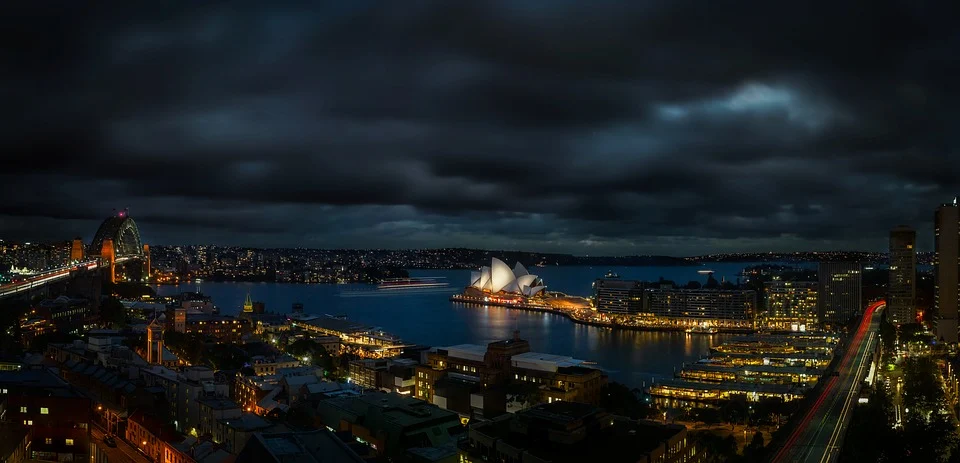
Pride
The 4th of April to which the well-known *"Pride"* of U2 refers is that of 1968, the life, that of the Reverend Martin Luther King. An ordinary day, for a man who was no ordinary man and who was preparing to face another battle like so many others he had already fought and won. The Memphis scavengers, who had been asking the mayor for months in vain for recognition of their rights, were waiting for him that evening for a rally: they expected words of encouragement, perhaps a little more public attention, instead, they would only receive news about his murder.
https://www.youtube.com/watch?v=LHcP4MWABGY
*“Pride”* (In the name of love) speaks of the importance of people who carry a message of universal love and a verse was dedicated to Martin Lither King killed in Memphis on 4 April 1968: *“Early in the morning, on April 4th, four gunshots rang out in the sky of Memphis”...*
https://pixabay.com/it/illustrations/martin-luther-king-mlk-giorno-4748929/
Martin Luther King Jr. was born in Atlanta, Georgia, in 1929, in an environment closely related to the Baptist Church. Growing up in a racist environment as the southern United States could have been during the Great Depression, he soon realized that the life of a black child was different from that of his white peers. Prohibitions marked his childhood: no talking to white people, separate schools, separate games and separate entrances to shops. They were overwhelming constraints, especially for a child like Martin, gifted with acute and lively intelligence. At the age of fourteen, a bus trip with his teacher impressed him indelibly. During the journey, some white passengers got on the bus and the white driver ordered Martin and his teacher to get up and give them their seats. And because he didn't think they were moving fast enough, the driver started cursing at them. The two got up for the whole hundred and forty kilometres before they reached Atlanta. That night he never erased himself from his mind. The deep questions that segregationist aroused in him pushed him to study with passion and anger, to understand and, later, to help change the state of things. The youthful dream of becoming a lawyer had given way to a deeper thrust that slowly but surely matured in the years of university: embracing religion. After high school, he enrolled in the Chester seminary in Pennsylvania where he engaged in a serious study of the social and ethical theories of the great philosophers. In 1952, during the preparation of his thesis, he met a singing student, Coretta Scott Young, who shared with him the dream of trying to do something for the blacks of America. In 1953, she became his wife and, moved by a genuine moral duty, they decided to move to Montgomery in Alabama, in that difficult south where they were born and where both were determined to fight not to be judged inferior, but citizens with equal rights. Minister of the Baptist church on Dexter Avenue since 1954, Luther King soon became famous for his sermons inciting his brethren to fight for civil rights but proposing a non-violent model of struggle, inspired by the example of Gandhi. On 1st December 1955, on a bus from Montgomery, the turning point. The dressmaker Rosa Parks refused with a calm, subdued and dignified attitude to leave the seat on which she was sitting free, reserved for white people. She was arrested. The Reverend, informed of the incident, decided it was time to raise his voice and accepted the proposal to boycott public transport.
The initiative was a huge success and not only among coloured people: the buses travelled almost completely empty for many days. The authorities, unable to cope with the situation, found nothing better than to sue Martin Luther King for damaging the public transport company. The Supreme Court's ruling came when the trial was just around the corner: on 13 November 1956, the laws imposing the segregationist regime on buses were declared unconstitutional. It was a great victory for King and the civil rights movement. A victory that, however, in addition to bringing great popularity and visibility to the situation of African Americans, cost him and his family a great deal on a personal level. A privileged target of both racist fanatics and law and order, over the years the black leader has been the victim of bomb attacks, assaults, stone attacks, beatings and constant threats. The arrests during the peace demonstrations were at least twenty and more than once John and Robert Kennedy, his supporters, intervened to obtain his release on bail. In the summer of 1963, at the end of the march for work and freedom, he was able to gather in Washington in front of the Lincoln monument, a crowd never saw before: two hundred and fifty thousand people. To that immensity, he delivered his most famous and emotional speech, opened by the words *"I have a dream"*. President Kennedy had responded by introducing legislation to end segregation in the public sector. The following year, 35-year-old Luther King received the Nobel Peace Prize and Pope Paul VI welcomed him to the Vatican. The reaction of enemies of all time was not long in coming; a Southern newspaper wrote: *"The people of the South know that where King passes, he leaves violence and hatred"*. The road to equality of rights was still a long one, King knew this well, as demonstrated by the success that organisations with the most drastic and extreme methods such as those of Malcolm X, Black Power, Black Panthers, have joined the ranks of an increasingly exasperated black people. On April 4, 1968, Martin Luther King returned tired to room 306 of the Lorraine Motel in Memphis. He still had to write his sermon for the following Sunday and then, later, the strikers were waiting for him downtown. After dinner, he shaved, tied his tie and went out to get some air on the balcony. Who was waiting for him was cold and precise: the large calibre bullet reached his chin, death was practically instantaneous. The ghettos exploded and the balance was terrible: twenty-seven thousand people arrested, three thousand five hundred wounded, forty-three dead, tens of millions of dollars in damage.
Two months later, the arrest in London of James Earl Ray, who confessed to the murder, was an opportunity to put an end to an uncomfortable affair. Ray was sentenced without trial to 99 years in prison, but shortly afterwards he recanted his confession, fuelling the conspiracy. Despite much evidence that would confirm the political matrix of the assassination, as many as five commissions of enquiry confirmed that Ray killed King and acted alone, but no investigation considered the possibility of government or organised crime involvement.
https://pixabay.com/it/photos/martin-luther-king-washington-682116/
The litigation Italy Yugoslavia (Trieste)
The memory of 26 October 1954, the day when the return of the Italian troops to Trieste put an end to eleven years of separation from the country, is rooted in the collective memory of the Italians.
https://en.wikipedia.org/wiki/Trieste#/media/File:Triest_1885.jpg
Annexed to the Kingdom of Italy in 1918 (officially after the Treaty of Rapallo in 1920), the city of Trieste ended up in foreign hands after the armistice of 8 September 1943 and then passed under military occupation with the constitution of the Free Territory of Trieste, defined by the Treaty of Paris in 1947. Together with it, the territory was divided into two zones: A controlled by the allied army and B entrusted to the Yugoslav administration.
That 26th October 1954 was a grey day, with pouring rain and gusts of bora, and the long wait for the return to Italy had begun the night before with the people of Trieste gathering along the twenty kilometres from the city centre to Duino, where at that time was the border between zone A of the Free Territory of Trieste and Italy. On 5 October 1954, a memorandum was signed in London which had sanctioned the will of the British and Americans to entrust Italy with the control of zone A, despite protests from Yugoslavia by Tito who controlled zone B, Istria and most of Venezia Giulia.
https://it.wikipedia.org/wiki/Questione_triestina#/media/File:Trieste-Italy_border.jpg
On 6 October 1954 the governor of the "Free Territory of Trieste", Major General Thomas John Willoughby Winterton, English, and General Edmondo De Renzi met in Duino Castle to define the details of the transfer of power. Shortly after midnight on October 25th at the border post in Duino, the first Italian department that took over from the Americans arrived. At 5:30 a.m. the actual entrance began: first the column of General Mario Gianani, two battalions of Carabinieri, a company of the Guardia di Finanza and a police department. At 8:40 a.m., at the cry of "Italia, Italia" a festive crowd watched the raising of the flag on the tower of the Castle of San Giusto where the tricolour donated by President Einaudi went up, at 10:00 a.m. the passage of power took place. At 11 and 25 a.m. the cruiser Duca degli Abruzzi, the destroyers Artigliere, Granatiere and Grecale, arrived in the roadstead, and the bersaglieri of the eighth regiment entered Piazza Unità d'Italia. The chronicles tell of the whole city in the square, three hundred thousand people and tricolours everywhere. Then there were the words of the mayor, Giovanni Bartoli: "Italy has returned". The 26th October 1954 is a fundamental junction in the history of Italy, after eleven years of foreign domination the Julian capital returned under Italian jurisdiction, as a result of the "Memorandum of Understanding" signed twenty-one days earlier.
https://it.wikipedia.org/wiki/Questione_triestina#/media/File:Trieste_1954.jpg
**By kork75!**
The winner of Giro d'Italia number 103 is Tao Geoghegan Hart
Tao Geoghegan Hart wins the Giro d'Italia number 103.
In the most exciting final stage in the history of the Giro d'Italia, the 25-year-old Briton from INEOS Grenadiers is radiant after beating Australian Jay Hindley in the last time trial. Hart finished thirteenth in the Cernusco Sul Naviglio time trial in Milan and 39 seconds behind Jay Hindley (Jai Team Sunweb) in the pink jersey, winning the "Endless Trophy": the two had the same overall time, but Geoghegan Hart claimed his time trial skills for the final triumph. Tao Geoghegan Hart wins the 103rd edition of the Giro d'Italia setting a record impossible to beat: he wears the pink jersey only at the end of the last stage, the 21st, in the previous stages he had never been at the top of the general classification (it happened only once, through the posthumous verdict of the sports judges and therefore not in the race, in 2011 and the Giro had gone to Scarponi). An act of great revenge for Hart after last year's fall at Colle de Lys and the consequent retirement. Hart had arrived at the Giro thinking he was helping Geraint Thomas, then put out of action by a bad fall caused by a water bottle. Day after day and stage after the stage he earned the rank of captain. The British rider faced the toughest climbs in this Giro fighting like a lion and winning two stage victories (Piancavallo and Sestriere), but the most important victory of his career came at the end of the final time trial of the Giro, winning the "rose" with only 39 seconds ahead of Jai Hindley. Third in the general classification the Dutchman Wilco Kelderman. The last stage of the Giro was an all flat time trial starting from Cernusco Sul Naviglio and finishing in Milan and as in the opening stage in Palermo, the triumph was of Ganna. Filippo Ganna performed yet another feat at a fantastic speed of 54.506 km/h. The 24-year-old Piedmontese from Verbania won the fourth stage of his first Giro with a time of 17'16" and 32 seconds ahead of Belgian Campenaerts and Australian Dennis.
https://www.youtube.com/watch?v=aGC6zetCFyU
Order of arrival of the 20th and final stage of the Giro d'Italia
1 GANNA Filippo INEOS Grenadiers 100 80 54.556 17:16
2 CAMPENAERTS Victor NTT Pro Cycling 40 50 52,921 0:32
3 DENNIS Rohan INEOS Grenadiers 20 35 52.921 ,,
4 ALMEIDA João Deceuninck - Quick Step 12 25 52,479 0:41
The final ranking of the 103rd edition of the Giro d'Italia
1 GEOGHEGAN HART Tao INEOS Grenadiers 85:40:21
2 HINDLEY Jai Team Sunweb 0:39
3 KELDERMAN Wilco Team Sunweb 1:29
4 ALMEIDA João Deceuninck - Quick Step 2:57
5 BILBAO Bahrain Leather - McLaren 3:09
6 FUGLSANG Jakob Astana Pro Team 7:02
7 NIBALI Vincenzo Trek - Segafredo 8:15
8 KONRAD Patrick BORA - hansgrohe 8:42
9 MASNADA Fausto Deceuninck - Quick Step 9:57
10 PERNSTEINER Hermann Bahrain - McLaren 11:05
Stitch classification (cyclamen jersey)
1 Arnaud DEMARE 233 points
2 Peter SAGAN 184
3 Joao ALMEIDA 108
Mountain ranking (blue jersey)
1 Ruben WARRIOR 234
2 Tao GHEOGHEGAN HART 157
3 Thomas DE GENDT 122
Youth ranking (white jersey)
1Tao GHEOGHEGAN HART
2 Jay HINDLEY at 38"
3 Joao ALMEIDA at 2'57".
**By Kork75!**
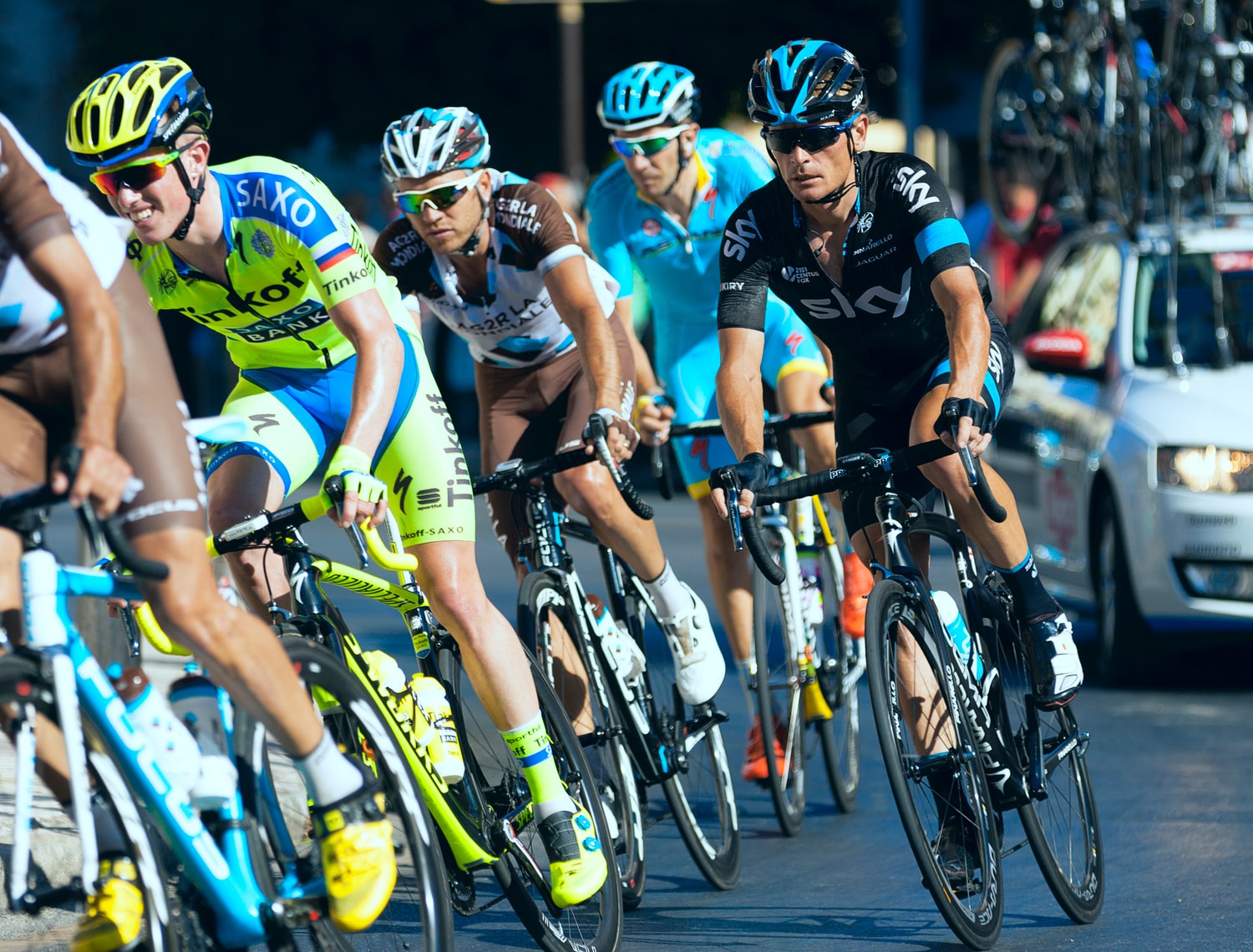
Autumn thoughts
*🌰🍂🍁"autumn is a second spring where every leaf is a flower" by Albert Camus*🍁🍂🌰
Greetings by kork75!
An art genius
In the course of his life, he has been a real sign of contradiction, often at the centre of violent polemics, and this has happened because his activity has never been that of a *"neutral"* artist, both from a character point of view and from a political-social one, which is why his painting has found itself deeply involved in history. An artist and a man of alarm and emergency, who with his painting has been able to address the great issues that worry millions and millions of people around the world: think of the *"Bombing of Guernica"*, the *"Massacre in Korea"*, and especially the *"Dove of Peace"*, which has become a universally recognized and loved symbol. On the other hand, he did not hesitate, directly, to expose himself, to take sides, to make his prestige weigh in favour of the causes he believed to be right. For more than sixty years Picasso dominated the modern art scene. He was born in Malaga on 25 October 1881 and died in Mougins in April 1973. His father, José Ruiz Blasco, was a painter and drawing teacher at the Provincial Art School. The name of Picasso, with whom he began to sign his works, omitting his paternal name, is that of his mother: Maria Picasso Lopez. His first attempts at painting were very early. Living in a house full of brushes and colours, his natural inclination was certainly favoured. Just look at a painting like the *"Old Couple"*, painted when she was only ten years old. In 1897, in Madrid, Picasso enrolled at the Academy of San Ferdinando, but in reality, in the capital, he preferred the Prado Museum and independent work to academic classrooms. So he ended up interrupting his studies to devote himself to painting according to his own impulses.
https://pixabay.com/it/photos/pittore-vernice-artista-pennello-1937575/
In the fervour of the early 20th century, his friends are a group of artists and writers, influenced by the cultural circles of the time where people recited, played, discussed and drank, he developed his personality. The influences acting on him are various and different: Greek, Japanese prints, English Pre-Raphaelites and German draftsmen. But times were shortening and his fame as a young painter became apparent. In 1901, an exhibition with seventy-five works was organised in Paris: bullfights, cabaret scenes, variations on the theme of lovers embracing each other. In the same year, he began his first completely autonomous and original period, the *“blue period”*, which lasted until 1904, when the *“pink period”* began, followed by other periods: *“African period”* and *“synthetic cubism”*. Years later it will be considered forever the *“father of Cubism”*. In the meantime, he had met the great contemporary poets and discovered Cézanne's painting. The Cubist season was just around the corner: between 1908 and 1909. But many other things were happening in these years. The year before the outbreak of the war, in '13, his father died; the war took many friends away from him. The post-war period marked for him the full expansion of the neoclassical experience that began in '15, an experience that continued at the same time as the further development of Cubism.
https://pixabay.com/it/photos/picasso-pablo-picasso-museo-pittura-1691133/
It would take a long time to follow all Picasso's movements in those years, but we cannot forget to mention his stay on the Mediterranean coast, in Juan Les-Pins, in the spring and summer of '20: this stay had aroused the most constant motives of his art, the mythical ones, and the sea, from now on, will be an indelible memory for him, so much so that, from '22 onwards, his usual home will be that one. In the meantime, he was also involved in scenography, but above all in sculpture, producing a series of masterpieces: "the Cock" of '32, "The Man with the Lamb" of '44 and "the Goat" of '50. But for Picasso's art, a decisive year was 1934, the year of his return to Spain, when he seemed to discover almost for the first time the energy, vitality and exalting the beauty of his homeland. This passionate contact with his homeland also gave particular strength to his adherence to the cause of the Spanish Republic. The Republican government, in the very first days of the civil war, which broke out in July 36, appointed him director of the Prado Museum. The following year, Picasso engraved the two plates of *"Franco's Dream and Lie"*. The drama of the war that led Picasso to choose to side with the Spanish Republic against Franco is, after all, in the very character of his life. From his adolescence, he had had precise political inclinations. Picasso was in Paris when he heard the news of the bombing of Guernica, perpetrated by the Nazi-Fascist air force on 28 April 1937. In June, the masterpiece, which commemorates the bombardment suffered by the civilian population of the Basque city of the same name, was exhibited in the Spanish pavilion at the International Exhibition in Paris. The painting is now in the Museo Nacional Centro de Arte Reina Sofia in Madrid.
https://pixabay.com/it/photos/euskadi-guernica-guernikara-picasso-3554980/
In 39, the Museum of Modern Art in New York organized a major exhibition, which confirmed the value and recognition of Picasso on the other side of the Atlantic. But here, alongside this triumph, there was the painful announcement of his mother's death in Barcelona and, in September, the outbreak of World War II. During the summer in Antibes, he painted a large and happy picture: *"Night fishing in Antibes"*; with the war and the invasion of France, his paintings became increasingly tragic. After the liberation, Picasso joined the French Communist Party, explaining the reasons for it in a letter sent to an American magazine: *"My membership of the Communist Party is the logical consequence of my whole life..."*. The feeling of a civil and political duty to fulfil will accompany him until the end of his days. In 1948 he participated in the Congress of Intellectuals for Peace in Wroclaw, Poland. The following year, for the same reason, he went to Italy. This is also the year in which he gave Aragon, for the manifesto of the World Peace Congress, the lithograph of the famous Dove. With this same spirit, in the summer of '50, he painted the *“Massacre in Korea”*, and in '52 *“War and Peace”*. Some believe that Picasso was able to make his paintings because he suffered from migraine, believing that the disproportionate and vertically cut faces are the effect of the broken visions that those who suffer from this pathology have. Migraine or not, his artistic power was inexhaustible. Animated by a creative fervour of extraordinary intensity, even at eighty and ninety years old his creativity and ability to work seemed anything but extinct and paintings, drawings and engravings continued to accumulate in his studio leaving us all with an immense artistic and cultural heritage.
https://pixabay.com/it/vectors/picasso-firma-pablo-picasso-pittore-39592/
When rich America plunged into misery
The Wall Street apocalypse came on 24 October 1929 with the collapse of the New York Stock Exchange which caused the closure of very powerful banks. Suddenly *"the roaring years"* of cyclopean industrial development came to an end. He called it *"Black Thursday"* and made millions unemployed. Hundreds in the following days killed themselves in debt, thousands of families ended up living in shacks or under bridges. The ruin was so rapid, unexpected and total that even today economic specialists cannot give plausible explanations for what happened on Wall Street on 24 October 1929. The United States that day plunged from the intoxicating heights of dizzying wealth into the abyss of misery. Twenty-four hours were enough to destroy the world's most colossal economic empire and lead to begging those who had not dared to shoot themselves in the head. There were suicides, even sensational ones, but the burden of the Wall Street collapse was borne for many years by the blameless, those who did not even know that there was a fascinating but terrible game: speculation on the stock market. The first victims were the women who after years of battles for equal opportunities were immediately cut off from the world of work. For at least three years, Americans had sat at the inviting table of the stock exchange, gambling. For many years it was like this, the stock had been growing steadily since 1920 and the United States had never been so proudly rich. At the end of the war adventure in Europe, the Americans had returned home with the certainty that they were unbeatable. They began the years of crazy consumerism fuelled by cyclopean industrial development. Literature and cinema left us precise evidence of the Golden Twenties.
After the momentum of war production, the industries soon converted, threw cars, radios, telephones, civil planes, railways and roads onto the market at an increasing pace: the Americans created a new god, the wealth achieved no matter how to escape from the grey and dark mediocrity and free themselves from daily frustrations. The cinema and popular newspapers suggested visions of luminous existences, famous actresses made millions of women dream with the pomp of clothes and jewels, girls with skirts above the knee, *“à la garsonne”* hair and the unscrupulousness of attitudes dancing the charleston imitated them imposing a turning point in American costume. In the popular newspapers, rich in photographs and poor in text, the popular actors and fashionable writers were the idols of a disoriented society; in the daily vortex of dollars passing from hand to hand, many Americans lost their heads, really believed that the United States was the Lord's favourite and launched into the craziest speculation. Very rich and extravagant, however, the Americans kept a sense of inferiority before Europe, and if famous actresses and the daughters of billionaires married poor and decayed European princes, others followed the example of the most famous American writers, invaded Europe, bought castles in Scotland, rented entire floors of hotels in Paris, Rome, Venice. Excited by so many stimuli, the Americans of the middle class became small investors who had tried to attack the diligence of wealth. The way to make money was very simple: just buy shares on the stock exchange and sell them a few days later at higher prices. By 1922, the Wall Street Stock Exchange was on the rise and had taken a surge that seemed unstoppable. In 1927, when the demand for shares became almost frenetic, all Americans *“played the stock market”*, from market porters to cleaning ladies and kitchen maids, underground delivery men, department store orders, showgirls and waitresses, threw themselves into the exciting game.
Women have always played an important role in the United States, and women's magazines have had circulation comparable to the New York Times. It was these newspapers that gave women a new perspective on life; women had long since given up homework and moved into jobs, workplaces and factory jobs. The industry filled the kitchens with washing machines, refrigerators, cans, juices and freed women from the slavery of the cooker. Already emancipated, the American woman sought wealth and began to play the stock market. And as mentioned before, it was the women who paid for the crisis first; those who had committed their family's savings in shares, or had borrowed the money to play upwards, the first helpless victims of the terrible stock market crash. But still in the spring of 1929 everything seemed to be allowed, even hoping for impressive fortunes starting from little. In March 1929, on the eve of the catastrophe, President Hoover said: *"I am not afraid for the future of our country, the future shines with hope"*. The apocalypse was behind the door. Threatening warnings had been heard in September when panic spread like an epidemic; the stock exchange had had some downturns, but then collapsed with a crash that hit the world on Tuesday, October 22, and crumbled like a house of cards on Thursday, October 24, *"Black Thursday"*. In the space of a few hours colossal fortunes dissolved, solid banks closed their branches and went bankrupt. A black veil descended over the whole of America like a black veil on the roulette table when the bank jumped. Many Americans cruising with the money earned on the stock exchange killed themselves in Europe, or in Asia. Hundreds of Americans, faced with the difficulty of paying their debts, shot themselves at home. Millions and millions of other Americans lowered their heads and began another life. Terrible years followed those known as the *"Great Depression"*.
https://en.wikipedia.org/wiki/Great_Depression#/media/File:Lange-MigrantMother02.jpg
In 1930 there were four million unemployed, in 1931 there were eight million; two years later there were already twelve million. Endless rows of men and women dressed in rags waited for a bowl of slop in front of the charities, looking for leftovers in the dustbins. Thousands and thousands of families slept in cardboard shacks and boxes, under bridges and everywhere they put up signs with *"we don't hire; we don't need staff; there is no work"*. Unemployment had become a way of life, a plate of boiled beans was considered a lunch. These were difficult times.
 @kork75