Facing the Exams of Wisdom from the Future to the Present
Like everyone else, I live dreaming of tomorrow. Leaving what will happen tomorrow for tomorrow. I will have time to do the homework that needs to be done tomorrow anyway. I think we might see the next summer anyway, when postponing an important summer vacation for business or other reasons. We say, "**I'll call and talk tomorrow**" we sigh, "**What will happen?**"
We live in the future, a new home that does not exist today, but will be ours tomorrow, is what makes us happy. On the other hand, the one who was unhappy because we were not at that moment. We dream of being accepted for a job, and our job at that moment is unpleasant. Our view of what we have today changes with the dream of tomorrow. We live with the hope of tomorrow and forget the moment we were.
I want to take a closer look at the time, the opportunities we face with the flow of time, the sets we put between today and the future, and the beauties of today that we miss with the hope of the future. Is there a concept we skipped? In fact, while running into tomorrow, do we overlook at this moment when we say, "Whatever we have, better than now, will be presented to me in time"?
Although these questions seem very simple, they can actually offer us an important way to grasp the point of view here. What we think will happen tomorrow, our goals, and what passes through our hearts are actually taking root and turning into life today, right now, at this time. We hold them in our hands like the string of a kite. The kite itself takes off in the wind of the future and continues to rise. The ability to fly exactly depends on what we want today and what we work hard.
So if this situation is so easy to understand, why do we separate the future and the present? I would like to explain the answer to this question with an example. When my beloved **Amy Winehouse** announced her concert in Istanbul years ago, I was very excited. And I bought tickets that I knew would be exhausted with their release to the market right away. One of my wishes, which was on my list of must-experiences throughout my life, was to attend a live concert. I waited excitedly, waited, and the day of the concert was fast approaching. The excitement of the future surrounded me.
But that summer's **Amy Winehouse** concert was canceled in June, days before the concert took place. I was stuck with my concert tickets in my hand. Yet as I consoled myself and continued to search for a next concert, another piece of news came. **Amy Winehouse** died on July 23, 2011 by committing suicide. So this was the last possibility I could think of, how many different possibilities there were in the world so that **Amy Winehouse** could no longer take the stage; His concerts could have been postponed for any reason, it could be sick, his schedule could be disrupted, he could have stopped giving concerts for a while, but **Amy Winehouse** was dead.
Our life flow is that simple. The main thing is today. The heart of time is today. The foundation of tomorrow is today. Now. The one. On. And when it is done, the moment passes. The future has not yet been achieved and will always remain unattainable. When we arrive tomorrow, we will not be able to get the next day again. We only have today, this moment, this breath.
Well, are you ready for this wisdom test; is it today or will it come? Which one is more important? Which one is superior to the other? If you had the right to choose someone, would you prefer today to the future? So which one would you choose?
**I don't know where it came to me, but open it today, watch a video in memory of Amy Winehouse.**
**Good views for you already...**
Notes from My Joy of Life Notebook
***You have surely encountered people like I'm going to talk about.*** You know, people who shine light around them, who are happy just to exist, who do not lose their joy of life despite the problems that life brings. Yes, these types of people come across rarely. However, most of us live our days in a routine, getting used to the wonders of the world. Do you think our miraculous blue planet, with life on it, thanks to its perfect distance from the sun, deserves more than that?
The French simply call the joy of living "**joie de vivre**". This is a philosophy of life and expresses the appetite for life, the passion, the joy of even the simplest situations in life, such as drinking tea or chatting. In fact, these pandemic days are perfect to inspire us to be happy just because of living. But if you are still wondering what you can do to increase your joy of life, you can take a look at the list I prepared for you.
Buy a notebook you like from the stationer. This will be your "**Notebook of Joy of Life**". Write in your notebook for five to ten minutes every day about the beautiful events that happen to you, the topics that bring you joy and warm your heart. Just like the song "**My Favorite Things**" sung by Julia Andrews in the movie "The Sound of Music", write down your favorite things in your notebook that make you happy. When you feel pessimistic, you can look at your notebook and remind yourself of the beauties in your life and events that you will be grateful for and continue your day in a more optimistic way.
**Make it a habit to infect your well-being**
Research shows that doing kindness, infecting our kindness wherever we go, has the ability to increase our level of happiness. For example, in a study conducted in 2015, university students were told to do favors five times a week for six weeks ***(Lyubomirsky & Sheldon, 2015)***.
Some students were asked to do these five favors in 1 day, and some students were asked to spread these five good things over a week. At the end of the study, it was observed that the happiness levels of the students who did five different kinds of favors on the same day increased. In other words, the more good we do during the day, the more gentle we are around us, the better we feel. It is worth noting that the favors in the research are also good things that we can always do, such as giving our turn to someone else at the checkout queue at the grocery store or leaving a friend with our car where they go.
**Take your time to the beauties of nature often**
Watching the sunrise, listening to the chirping of birds, a walk we take by leaving ourselves to the greenery of the forest. Yes, nature always has a side that heals us and is an ointment to our souls. In order to benefit from this power of nature and increase your joy of life, make it a habit to witness the sunrise or sunset, observe the phases of the Moon, watch the sky, and take nature walks by following the pandemic rules. Increase your level of joy of life by routinely reminding yourself what a miraculous place the world is.
I **wish you days full of joy of life where you are always aware of what a miraculous planet we live in. I declared the year 2021 "*******The Year of Loving Yourself and Making Life Better*******". Come on together to love ourselves and make the world beautiful.**
A Look at the World from the Window of Optimism
***Once in a post; I talked about an approach to learned optimism and I completed my article exactly as follows.*** So does optimism always work? Could there be situations where it wouldn't work? And even are there situations where this way of thinking should not be used at all? Let's look for some answers to these questions.
Admittedly, optimism is a good thing for us compared to pessimism. It allows you to change your negative generalizations that do not support you and do not work for you, and scenarios that cause concern. But what if one of those scenarios comes true.
I would like to list a few items as follows. Whatever the result you want to achieve, if it is a risky issue or if the risk level is high, do not use optimism techniques.
I want to give an example. During my cancer treatment, I tried many complementary exercises and practices that were very good for me, and at one point even came to the following thought. I was feeling incredibly well and I was saying I don't need surgery. I strongly believe that all of my examinations performed before the planned surgery would be good and I thought they would cancel my surgery. It didn't happen that way, surgery was decided. There are concrete, real data here. If I ignored this data and jumped out of myself as an optimist, just because I was fine, maybe I wouldn't be with you right now. Reading the data and choosing an optimistic point of view.
For example, this; To be able to say "**Yes, then I get rid of these bad cells with a very good surgery**".
It would be unbelievable behavior for a pilot to take flight because "nothing will happen to us" in a situation where he cannot be given a flight permit due to weather conditions. This way of behavior is also the product of a stupid idea, far from optimistic.
Other areas where optimism techniques don't work, says ***Martin Seligman***.
When counseling people whose futures are not so bright, do not use optimism at first.
I think it's a controversial thought. However, I always think that hollow, unruly, excessive motivation, gassing, so to speak, would be very dangerous. In my opinion, getting caught up in excessive enthusiasm causes a person to lose his judgment.
Another area is this; If you want to share in other people's troubles, don't start with optimism, says ***Martin Seligman***. Build trust and understanding first.
Here I agree with this thought. The best friends who supposedly try to boost people's morale, may list the beautiful possibilities with all optimism, but it is such a correct approach to try to understand what the other person is experiencing first. Understand your emotions, tell them you understand, try to understand, then look for alternatives through the optimistic window what might happen.
You are either born optimistic or you are on your way to learning optimism. There's something I've always said. Optimism includes reality. While looking through optimism in these areas exemplified by ***Martin Seligman***, we need to enlarge our reality filter a little more. See the data and evaluate the options from every angle.
If you don't have a lot of risk, optimism always pays off. For example, pick up that phone that you hold and don't call. What is the worst, you will be rejected. Then what happens, maybe you will learn how to persuade. So much of life is full of frustrations with a lot of unnecessary helplessness that is not death at the end. In such situations, looking through the lens of really optimism brings a lot to people. If the risk is high, you can enlarge the reality filter in front of the optimism window a little more and it will be over.
***I wish you healthy days.***
Experiencing Living Like Buddha
***I have prepared a nice article for people who are looking for different things.*** Living 500 years after Christ and considered one of the wisest people in world history, **Buddha** was one of the pioneers of enlightenment in our world. It is not known whether he left the palace when he was born as the son of a king in Nepal and was a monk or enlightened under a tree that made him so valuable. Although two thousand years have passed since his death, his enlightened messages are still read and adopted by millions of people.
**It is better to see it in a single day of life than to live a hundred years without seeing the almighty path.**
**Buddha**
**Right View**
Purification of hatred adopts the idea of being harmless. The understanding of "**correct mindset**" is attained by the fact that thoughts have an infinite openness and generosity, purified from ambition and hatred. Another meaning of the "correct mindset" understanding can be regarded as the desire of the Zen priests to purify the world of thought. This understanding argues that good thoughts will be beneficial, and bad thoughts will bring pain and negativity on the contrary.
**Right Intention**
Resistance to desire, good will, resist anger and hatred, intention not to harm, being merciful.
**Right Word**
What is meant by this article is that people should stay away from lies, slander, insults and idle talk. People should only take actions that are called beneficial. As in the "correct mindset" understanding, there are concepts such as useful-harmful, necessary-unnecessary, right-wrong in the understanding of "**right word**". In this understanding, if the facts are told at the right time, in the right place, with a pure thought, good behavior is displayed.
**Correct Action**
This understanding suggests avoiding killing, stealing, and going astray. "Right action" is one of the Buddhist virtues. According to this understanding, complaints should be avoided while taking any action. The action taken should definitely benefit the individual and others.
**Living Right**
It is adopted by giving up all worldly pursuits that are outside of this understanding. These pursuits are actions that a candidate to become a Buddhist cannot do but people do. Weapons, pets, meat, alcohol products, drug trafficking are examples of these actions. In other words, the "Correct Way of Life" means continuing life in accordance with the Eight Noble Ways without harming other living things.
**Right Effort**
This concept is associated with the body. It is the understanding of being fully confident in bodily actions such as breathing, walking, and stopping. It is a matter of being sure of the soul, emotions and all intellectual actions. In order for a person to control himself, he must be confident and in control. Human "**inner**" attention tests spiritual mobility. It takes place by being able to dominate oneself, stabilize their emotions and be confident. The "**outer**" attention of man should be in the present, not in contemplating the past, being caught up in the pleasure and joy of the future.
**Correct concentration**
It is achieved through the ability to control emotions and thoughts that disturb inner peace. Being able to control the concentration and spirit, which is the basic part of Buddhism, defines this understanding. In order to achieve "**Correct Concentration**" Buddhist schools have developed many methods and techniques. The only way to maintain concentration in meditation is through proper breathing. In this way, the human spirit and thoughts are purified and attained peace.
**The more you get rid of your feelings and thoughts that don't serve us, the closer we are to the "*****enlightenment*****" that Buddha spoke of.**
**Stay in health and peace, friends.**
The Importance of Forgiveness in Gold Value
It is a situation that I often do in my life and get good results. ***Forgiveness can be thought of as a selfish act, because all benefits are to the forgiving person.*** In fact, this quote summarizes in advance the whole idea that I will try to give in my article. Forgiveness does not mean forgiving, approving, forgetting, or letting go of your behavior. Forgiveness is all about you.
**What does it mean that forgiveness is all about the person who forgives?**
Think about it, the person you forgive doesn't have to know about the act of forgiveness you've committed. This process that you will carry out within yourself means that you decide not to carry the feelings you have about this person anymore. The accumulated emotional loads sometimes weigh more than carrying physical loads. When you forgive, you release the mental and emotional burden you have about what happened.
If inside of you, "**Is it the same that I will forgive after all this?**". If there is a resilient side that says, try to understand his feeling. Do you realize you're still in pain? For your own sake, you may decide not to bear this pain anymore. You can free yourself, choose to leave alone. Forgiveness does not necessarily have to be against someone else. One of the heaviest emotional burdens is the guilt in which we turn the poisonous arrows at ourselves. When it comes to forgiving yourself or others, when you dare to forgive, you should know that you are doing it only for your own good. ⠀
Forgiveness is a choice. When you don't forgive, part of you continues to live out of anger, guilt, pain, fear, or shame. You may believe these emotions help protect yourself at some point, but they actually hinder your progress. Learning to forgive changes your attitude towards life and heals you, so your relationships with your environment will improve in this direction. When you forgive, you release your negative emotions so that they cannot surface over and over again. You leave behind what happened, break the chains of the past and move on with your life.
I choose to forgive and say, **"How do I do this?"** The steps below may help. You can also find many meditations related to this on the internet.
First of all, move to a quiet place where you are not disturbed. Determine who and why you want to forgive. ⠀
Determine what you honestly think about the situation and, more importantly, how you feel. You may also want to write them down. Identifying your emotions clearly is the first step in choosing to get rid of them. ⠀
Think about how you would like to feel when you forgive. It will probably be the reverse of the previous item. ⠀
Now close your eyes, focus on the person you are considering to forgive and your intention to forgive. Release the feelings and thoughts you identified in point 3, focusing on the benefits of being forgiven.
You can relive that intensity of emotion while releasing your emotions. Stay in focus and think that you have released those emotions and how you would like to feel from now on. ***Remind yourself that you forgive that person again when necessary.***
On the Belief of Abundance: The Cases of Money
The rich father used to say ***that money turns into whatever you want it to be***. This meant that money was the product of our minds, thoughts. It can be really hard for someone who says it's hard to make money.
***If the person says 'I can never get rich' or 'It is really hard to be rich', these words are likely to be his truth. If someone says, "The only way to get rich is to work hard," he will work hard. If the person says, "If I had a lot of money, I would put it in a bank, how do I know what else to do?" If you know how many people's thoughts are real, you'd be very surprised. If the person who says "It is risky to invest" tries to invest one day, he will enter into risky investments. The rich father would say, 'Dress up as you want money to be' "***
***The Rich Dad's Investment Guide***
The concept of abundance is a concept that we see among people at very different levels. While some of us cannot improve our welfare, whatever we do, some of us reach the point of well-being that we would never have thought possible with less educated, less knowledgeable or less technical equipment. Well, why is the consciousness of abundance that shows such a difference among people, or the belief of money that I want to look deeper with you in this article, our relationship with money, our feelings towards money, why are we different? Why do some of us have a relationship with money like a close friend without any worries, while others are afraid of money, worried about not having money, or believe that money comes and goes like water?
In fact, our relationship with money is taking shape from our young age. I want to give an example about myself. Sharing as the older child of my family has always been the most important point from my young age. I should have shared my pen, eraser, toy or money with my brother. I always thought of buying him something before myself, I would buy not one but two everything. I learned that. And I always had enough money, if not enough to buy two, I would buy one and share it or not at all so that there is no inequality between us.
This sharing awareness is still the most important concept in my relationship with money today. I strongly believe that my money increases as I share. If there is some money reaching me, I think that I should definitely support this flow in the universe, that is, I should love to share and spend it. Money is a tool that increases exponentially as I share it and actually brings the responsibility of sharing more.
Yes, there were times when I was very hard and broke, but sometimes I shared a lira, sometimes much more. I know very well that when I hesitate to share, when I try to hold the money in my hands, I cannot be happy at the end, I cannot feel it works, and I cannot manage the money. But when I share my money, it gives me much greater pleasure and the meaning of being in life. I really think I'm doing something, and if I can make a little person smile with my money, then I believe I deserve that money.
When I looked with this awareness, I saw that no matter how difficult I was, the dear universe and the energy of money returned to me. As I gave, the money gave me much, much more. So in this article I would like to ask you who are with me today, what does money mean in your life? Are you afraid of spending your money? Can you give your money? Will money find you only when you work hard? Can you share your money with the consent of your mind? Is money hard to earn? Is money bad? Is money ominous? Doesn't money like you? But do you love money? What do you feel most about in your relationship with money, are you afraid, worried, resentful or excited?
***Today, I would like to ask you who accompany me in this article, what disguise does money take for you?***
Patience is an Active Action
**In that world that we think flows outside of us, the things that grab our attention are the impatient. However, if we can take a closer look at the nature, which progresses step by step and is prepared with cycles to the goal, we will observe patience in its true and pure form.**
Time is subjective for us. It flows quickly when we enjoy it, but when we are in pain, we perceive it as interrupted. It is our inability to be alone with the pain experienced in that standing zeptosecond, which leads to impatience and grief. Epic films are made that glorify the virtues of courage and compassion, but since patience is perceived as a passive waiting, telling a story about it is not preferred. Because almost most of us think patience is a static attitude, we don't try to change our relationship with circumstances that cause harm and pain.
Patience is not combining "**acceptance**" with "**peace of mind**". Acceptance is often used in social perception as an excuse for indifference. However, those who remain indifferent are basically the ones who escape from the truth, those who do not accept them. If someone is on fire, the person who produces the indifferent reaction sees that fire, but does nothing to relieve the pain of the burners. Whereas, those who experience active patience first accept the fact that someone is burned, and then begin to prepare to find water to put out the fire. "Patience is the name of the path that shapes the preparation and leads to a step-by-step solution."
We were raised by internalizing the oppressive approaches of a labor-exploiting, discriminatory and sexist society. Either we rebelled impatiently or we waited without even moving our hair. Our expectations were shaped by our complaints and our disappearances in this world that we are constantly told about. However, apart from these, thanks to the active patience we can apply, we can shape that essence that spreads from the smallest moment of our daily life to our whole lives, and we can initiate that process that will enable us to carry the responsibility of expressing ourselves and finding solutions to problems with awareness.
The perception of patience, which is one of the virtues praised by religions and philosophers for ages, has also been the subject of scientific research. Researcher Dr. According to the findings of ***Sarah Schnitker***, patience is interpreted under three main headings.
**Interpersonal patience**
Interpersonal patience is patience with other people, their demands and failures. You may think that some people behave in a slow, difficult to understand, or even downright irrational way, or they may have bad habits that drive you crazy. But most of us have experienced through experience that losing our patience with them can make things worse in a holistic sense.
The main reason it is so difficult to be patient with others is because we experience ourselves as the center of the universe. And as long as we look at it from this point of view, we can be hurt, upset and angry when others seem to not suit us. So, to cultivate patience with others, we must go beyond selfishness and begin to see that true self-interest includes the interests of others. We must be willing to question our anger and anger.
It also covers many important areas such as patience, listening skills, and empathy. When dealing with difficult people, you will also need self-awareness and emotional intelligence to understand how your words and actions affect the situation. You cannot expect things to develop for the better by doing the opposite.
To be able to tolerate a person gently and to be free from expectations and consequences. Impatient thoughts come and go, just like the breath will come and go. Understanding their pain when we feel conflict with others; It is the first step in communicating, forgiving and starting over. The practice of forgiveness happens when we can understand the underlying cause of our anger and impatience. Peace and tranquility will develop as we learn to accept the flaws in others and in ourselves. The important thing here is that what you endure does not threaten your vital rights.
Patience with life's difficulties
We can use the term persistence to summarize patience in facing life's difficulties. It means having the patience to overcome a serious setback in life, such as waiting for the outcome of a case for a long time or the healing power of a medical treatment. But it also includes your ability to work towards a long-term goal, for example, when you want to get promoted or go on a path to stay in shape, and you enter the field of persistence.
Whatever obstacle you have to overcome, determination and focus will likely be required to achieve it. And it will be useful to keep your emotions under control throughout the journey. Your enthusiasm for success can vary over time due to the frustrations you encounter along the way, and you may run out of patience over time. Being able to continue on the road even with troubles by focusing attention brings about a great transformation.
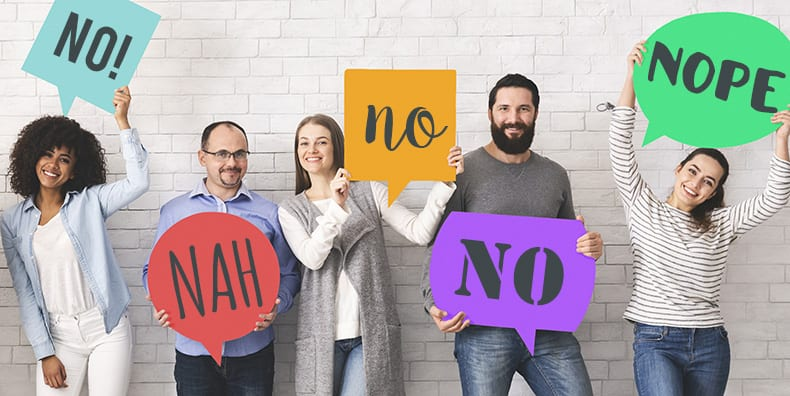
Let's Discover the Art of Saying NO!
****NO****. In fact, this is just one word of five letters. It's easy to say, but hard to say. How many jobs have we accepted that we didn't want just because we couldn't say that word? How many times have we done someone else's work even though it was not our responsibility? Or how many times have we left it and rushed to help someone else when we had homework, work or something else to train just because we couldn't say no, even though it wasn't very important? Or how many times have we neglected ourselves just so that our friend doesn't hurt us? I'm sure many people have quite a lot of answers to these questions. So why are we so afraid of saying this word? Why do we choose to be unfair to ourselves rather than saying no?
**Why is it so hard to say no?**
Many explanations can be made about why we cannot say no. All of them are correct and valid in one respect. The most important reason is that we fear what will happen after we say no. There is no guarantee that an adverse event will happen, but the prospect scares us. Because the no answer threatens one of our most basic needs, our need to be part of a group, to be accepted and loved by people.
This need is so important that we try to eliminate situations that could prevent this. We compromise ourselves just to be accepted and loved. Of course, we don't help those around us just to be loved. Sometimes we do it just to make them happy. But when we neglect ourselves, put our priorities in the background and focus on the needs of others just to please others, then there is a mistake.
Sometimes the reason we can't say no is because of our role in the group we are in. The roles are dispersed in such a way that we are the one who fulfills the requests and the more often this happens, the stronger the roles. However, there is a small detail as follows; By saying yes to everything in the first place, we determine our role ourselves. In fact, this role may seem like we were given, but by saying yes to this, we are the final decision. W*ell, can't these roles change? Will it always continue like this?* Of course it can change. What we will do for this is to give a word more space in our lives: No.
**How can we say no?**
First, decide what you want to say no to. "**If you were someone who could easily say no, what would you say no to first?**" Answer the question. Your answers will draw a clear road map for you.
Set your principles and rules. Determine when you spend it for yourself, when you spend it for others. *What do you dislike and do not like to share, what are your priorities?* Have clear choices about them and share them with people. In this way, you will show that the no answer you give when appropriate is not a personal situation, it is valid for everyone. In this way, you will prevent possible discussions and misunderstandings.
Draw your boundaries. The principles and rules you set are the biggest and most important part of this. If you set your limits, people will respect you and approach you accordingly. That way, they won't come up with demands that require you to say no from the beginning.
Even if you make all these preparations, it is not easy to say no at once. You can say yes instantly, even as a reflex. For this, ask for some time to think and evaluate before answering. This time may vary depending on the situation and the event. This period of time will help you gather your courage.
It's a big step that you once said no. But this alone is not enough. The important thing is to have this continuity. Saying yes to the same situation once and no once gives an indecisive message to the other party and causes them to come back with the same request. So be consistent about what you say no to.
You can explain why you said no. A short and clear explanation you will make will help the other party to see the situation from your perspective. However, avoid making the explanation in complex and long sentences as much as possible. A simple explanation will suffice.
**Saying no is a skill that can be learned. This only takes time and practice. Remember; the goal is not to say no to everything. This is not a very correct choice, either. Where saying yes to someone else means saying no to yourself, it is important and necessary to say no. You owe this to yourself before anyone else.**
The Importance of Autonomy in My Business Life
**In the years when I did not have the idea to focus on people in my business life, while working as a risk expert in the financial sector, I experienced a situation that I would later think about.** The work we did was the kind of job in which the outcomes containing important details were passed through a series of approvals according to the level of authority. Careful control was required to get it right, and that was the responsibility of everyone in the approval chain.
Although I am the same me, there were noticeable differences in my business results between the two successive executives I worked with. First, it had a style that we call "micro-management" today. When I sent my work for approval, he was always sending it back with a change or correction request. These changes were not significant enough to affect the outcome of the business, but it was because my manager aimed for excellence. I started to make mistakes in the works I sent, and to overlook it. It was as if the more we tried to be faultless, the worse the situation got.
During a restructuring in our department, managers and all teams changed. With the new manager who coincided with me, I started to experience this in the similar approval process: Every job I sent was quickly approved and going to the top management in large amounts. Nothing I sent for approval would not come back to me unless it was a very important requirement. I panicked a little first. This manager was obviously more likely to get the job done without getting distracted by too much fine detail. If there was something important overlooked, especially if it was noticed in senior management approval, I would be just as much a problem for me!
This moment of awareness, I know today, transformed me. That is the moment when I take full responsibility for my work. I was a responsible person before, but I had a hard time imitating someone else's point of view and my work seemed to be off. There was even an indifference in knowing that it would not be enough anyway. However, now I felt the true ownership of the work that emerged with its mistake and merit. There is hardly any other way for an adult to own their job. My second manager has been mentioned in my memories as one of the people with leadership qualities and who I still respectfully remember today. Over time, as I got to know him, I realized that he showed his trust in us with his actions and did it from the very beginning. In return, I remember that although we have different personalities, we all cling to the work as a team, successfully accomplishing the work even in difficult times, and that we do not complain when overtime is required.
In one of the job changes, which was an important turning point in my career, I experienced the absence of any other knowledgeable or authorized person in the institution that I am responsible for. I, who have been accustomed for years to come to a conclusion with the chain of approval for everything I can, experienced a performance explosion when I became the sole authority. My business results have improved significantly, as well as my motivation.
All these comparisons, before and after stories point to the same concept: autonomy. There are other benefits that we adults want to get other than making money, which keeps them satisfied with the work they do and produce. These are actually linked to our personal values. For example, if success is an important asset to us, here we are looking for success. (Someone who does not care much about this can easily overcome the times of failure at work.) If we value the concept of prestige, we want the job to be the kind that gives us prestige, and when this is not the case, we may lose our motivation. Autonomy is one of them. Being independent while doing our job feeds us and our business. According to research, autonomy has a great impact on both employee well-being and job satisfaction. Although it does not directly affect job performance alone, it indirectly affects job performance due to its positive effects on satisfaction, motivation and health, and its stress-reducing effect.
We can define autonomy as follows: Having conditions that allow us to do a job in the best way possible. This also means taking initiative in how to get the job done. In the opposite case, there is a situation like not being satisfied with the result of the work and defining how the job should be done in fine detail or controlling every step. This leads to a decrease in employees' self-confidence and motivation and indirectly their performance in the long run. It can cause stress, up to health problems.
***Providing autonomy does not mean that there are no rules at all, because we all do our work by the rules.***
My Preparations for the Next Evolutionary Process
I was going through a somewhat chaotic period and I wrote, erased, typed, erased. What I wrote and wanted to share did not satisfy me. I wanted to meditate on it for a long time and to be clear, and it does not take me to say “**This is the way it is**” with one or two book sentences. I feel the need to meditate to the point of reading, researching and sharing, we are responsible for what we say and do because we are in a wonderful interaction. Especially with the influence of social media, information is spreading very quickly. Therefore, I think it is necessary to think 3-5 times without sharing. In short, when I was talking about my learning process, trainings, and lessons, I only said “**this is okay**” and these flowed through me in a more systematic way.
The cosmos is based on evolution and every living being becomes air, liquid, gas, then it starts to take form. Every living thing has been a plant, an animal, a mountain, an ocean during the previous evolutionary process. After experiencing them all, they combine all their energies in cosmic chaos, a new wormhole is formed and a new planet is formed. It also continues its evolutionary processes.
Just as we cannot come to secondary school without passing primary school, we load on what we need to learn in the evolutionary chain and all variables start to form, when we learn one, the other comes; Scenes repeat every time we can't learn, but the theme is the same! Variables of each dimension are different from each other, there is a three-dimensional perception within the planet earth, and living things evaluate variables only through trial and error and try to learn in a before-after order. Therefore, "**Election is an illusion!**" Our perception of the world is unfortunately not capable of seeing the cosmos fully, we come to the world to learn what tasks we undertake in that evolutionary chain.
While living our lives in trial and error, we should look at the ultimate goal, which is exactly what we call God. We all perceive differently according to the capacities of our brains and, according to our information filter, we attribute different meanings by taking advantage of our experiences. For this, we must be skeptical of everything we read. Every piece of information we perceive is a kind of interpretation of another mind, very valuable, but it should actually serve as a reference for us in our learning process. Because both the universe and we are constantly evolving, knowledge also evolves, and we must constantly open ourselves to cosmic knowledge by thinking this way. The mentioned "**Information Age**" actually means this.
The world is made up of dualities. Good-bad, good-ugly, chaos-order must be together. If we go from one side, our learning process stops and we live in the same cycles. There is a duality system for this. Breaking down the dualities is not the solution, they are great tools coded to see the difference between the two and always move forward. When a new evolutionary process begins, we feel chaos, think our balance is disoriented, we shift to dualities, then when we notice them and learn what needs to be learned here, the stones settle and life returns to normal until the next evolutionary process and a new cycle begins. In fact, being out of balance is a good sign in the learning process.
I have been working on duality, balance, and cosmic chain for a long time, and mention it from time to time, I felt that I should share today. When I was making the Shamanic Circle in the morning, I experienced "**moment**" for my own existence. Since the quarantine process - actually this process started for me in 2013, but I think the quarantine process hit me a little more - there have been many changes in my life and all of these seemingly "**chaos**" situations prepared me for my next evolutionary process.
I accepted my new cycle and thanked first myself, then the spirits that I have created and helped me to learn about the variables that have occurred, and then the cosmos. I have a calm, peaceful, completed, sweet energy inside me and I hope that you will feel with me as you read this article, because I want you to feel this energy, I believe that it is possible since we are all connected, and I hope you have a lot of meditation to find your own chains. I suggest you do it.
***As I mentioned above, these are my mind's perceptions, maybe yours will be different. Take good care of yourself, see you.***
My New Mind Control Experiences - Rumination
My mind never stops. If my family / country / boss / school / work were not like this, I would not be like this. Other people's life is fine, but mine is not. I am very angry with myself for not being able to change anything. I wish I could turn back the time and fix everything. My struggle with an inner voice drove me to this test. Rumination, which manifests itself, is defined as the repetitive spinning of thoughts in the mind or mental occupation with a negative content. In other words, rumination is a constant state of mental preoccupation by reconsidering your emotions, possible causes and consequences, without taking action to solve your problem by sticking to the past.
While rumination, you usually isolate ourselves from our environment and focus on your own problems and negative emotions caused by the problem. Thus, you cannot stop rumination because you think you will find a solution to your problem. Because it is very difficult to let go of something that you think has a function in your life.
Problems to be solved in daily life and problems you experience with other people may be stressing you out. How you evaluate the stressful event and how you deal with it determines your emotional response to the event. These coping styles can also lead to the rumination that keeps turning in your mind. Difficulties in life, stressful situations and traumatic experiences are the main causes of rumination.
*Traumatic experiences lead to rumination as they shake basic beliefs. These kinds of experiences create radical changes in your cognitive structure that divides life into two as before and after like a "knife", and helps to make sense of yourself and the world. Many approaches that explain post-traumatic reactions explain this shock and change through the concept of “hypothetical world”* **(Janoff-Bulman, 1992).**
The hypothetical world contains your core beliefs about how to act, how things happen, and your ability to influence events. These assumptions provide a structure within your subjective world and allow you to perceive, interpret, anticipate and plan other people and events. However, traumatic experiences can shatter and shake this internal hypothetical world.
This inner world, which basically includes your beliefs about yourself, the outside world, and the interactions between the two, contains the assumptions of "**the good of the world**", "**the meaningfulness of the world**" and "**self-value**". Accordingly, it is believed that the events in the world have a certain logic and significance ***(meaningfulness of the world)***, including the knowledge of why events happen and why some events happen to some people; You basically have beliefs that the world is a good place and that other people are good, helpful and kind ***(the good of the world assumption)*** and that people will not be hurt in a just world (***self-worth***) due to the fact that people see themselves as valued, honest, and good.
These assumptions about the world provide you with a reality that makes you feel safe, that even though you know that there are bad things "out there", "your own world" is good and safe, that evil will not find you. However, after traumatic experiences, this hypothetical world unfortunately falls apart and this perception of vulnerability is lost and people face their own vulnerabilities. This sudden change leads to post-traumatic stress symptoms, depression, and decreased psychological functioning, as well as providing an opportunity for positive changes such as post-traumatic growth.
Nowadays, it seems unlikely that someone who watches a little news and uses social media will not be traumatized. Being traumatized causes the mind to be lost in the negative thinking cycle (rumination), unhappiness and psychological problems. One of the reasons why you get stuck in this thinking cycle is that you think you will solve the problem by rumination, and the second is that you have some dysfunctional beliefs and attitudes about yourself and the world. So the way out of this cycle is to realize that rumination doesn't work and to become aware of these attitudes and beliefs. ***If you want to get online support from a psychological counselor in this regard, you can write somewhere to get information about the process. Stay with love.***
6 Techniques for a Strong Psychology!
We all (**especially mine**) need strong psychology for our well-being. Mental endurance plays a very important role in all the work we do in daily life. However, sometimes you may not feel that solid psychologically. It may be difficult from time to time, you may feel mentally tired from time to time. This situation may be caused by business life or you may face problems in your private life. However, no matter what the problem is, keeping our psychology strong is very important in many ways. Therefore, you can take a look at some of the techniques you can do to gain a stronger psychology or consider the help of a psychologist.
Our brain is a machine that constantly produces thoughts, even if you want not to think, your mind will always take you somewhere. While doing this, it also gives a lot of room to negative thoughts in order to protect you. Only when we have a strong psychology; we can be more successful in the tasks. We can resist, manage, and overcome the doubts, worries, and circumstances that prevent us from achieving a goal you set to achieve. When you have a strong psychology, you will have these 3 benefits in particular;
You get more life satisfaction. A strong psychology helps us to accept ourselves. When we approach our difficulties with compassion, we begin to enjoy life more. We are also more confident in the decisions we make.
Strong psychology, strong performance. Increased mental strength is the key to performing at the top. Whether you are an athlete or an entrepreneur, building mental strength will help you reach your greatest potential. Mental strength helps you manage your thoughts, regulate your emotions, and be productive. This means you can focus your effort and energy on the things that matter most.
Your resistance to life events increases. You cannot control many things that happen to you in life. However, you can control how you react to adversity. When you feel mentally strong, you can overcome any difficulty you encounter. But remember, mental strength isn't just for hard times. Apart from that, it is also very important to manage stress in daily life. As your mental strength increases, you will feel confident in your ability to deal with the problems you face.
**How to Become a Strong Psychology?**
As you can see, having a strong psychology is really important in every field. It helps us deal with stress, such as being able to think productively and find solutions. How we can provide a strong psychology then seems like a really important question for a quality life. One of the most important factors for a strong psychology is "**psychological flexibility**".
*Psychological flexibility; It is the ability to stay in touch with the present moment, regardless of unpleasant thoughts, feelings, and bodily sensations, while choosing one's behavior according to the situation and personal values. Studies show that psychological flexibility is associated with quality of life and mental well-being and may mediate symptom reduction.* (**Eilenberg, Hoffmann, Jensen, & Frostholm, 2017; Forman et al., 2012; Hayes, Luoma, Bond, Masuda, & Lillis, 2006; Wicksell, Olsson, & Hayes, 2011**) So psychological flexibility is just a happiness or comfort not the state; It is also important to realize that there is the ability to flexibly navigate through changing life demands when difficult thoughts and emotions arise.
This is crucial because thoughts and feelings tend to be unreliable indicators of long-term value. If we trust and act on our thoughts and emotions, we can often overlook the more important and sustained patterns of action that bring true meaning, vitality, and wealth to our lives. However, when our psychological flexibility increases; It adapts more to changing situational demands, restructures mental resources, and your perspective changes.
**6 Important Techniques for a Strong Psychology**
If you are thinking, "**How can I do therapy for myself for a strong psychology?**", You can take a look at these 6 important techniques. If you have difficulties despite these techniques, you can take online therapy and talk to an online psychologist about your situation.
Stay in the moment with mindfulness. Negative thoughts get cold, especially in situations that you cannot control, and draw you into that negativity. When we think about too much past or the future and worry, we start to falter. Therefore, staying in the moment and being able to control the present moment calms us down and allows us to think more clearly. With mindfulness, you can stay in the moment with conscious awareness and thus become more active on your thoughts and behaviors.
Don't judge yourself. We tend to judge ourselves, but this weakens us psychologically. You should not forget that the truths we do are more than our mistakes. You just focus on mistakes. When you are going to criticize an event or give advice, try to tell yourself what you say to your friend. The more you do this, the better you will feel.
Include routines in your life. Routines help you trust the process rather than focusing on the result. So instead of thinking too much about the next process, you can be more interested in what you are doing at the moment. Because thinking prevents us from being in the present and trusting your skills. When you get a routine, it focuses on a set of words or actions so you start thinking about less next steps.
Accept it and make room. The more I say "I won't think about" an object, situation or event, the more I think. How we do not run away from positive emotions and thoughts; We should not run away from negative thoughts. We must embrace them and accept them. We must experience them as they are. So we must approach thoughts in a flexible way.
Do breathing and physical exercises. Mind interacts with body; When we relax our body, our mind is also relaxed. Focusing on breath brings us to the present, regulates hormones. You will see the difference in physical exercise, even if it is a little walk. Listen to your breath and body, what does it tell you? Relax and relax. This way, you will feel stronger psychologically.
An Interesting Formula for Coping With Jealousy
**Jealousy is an unwanted emotion that negatively affects our lives, but sometimes we cannot prevent it. Most of us can experience this feeling at some time in life.**
Feelings of jealousy can arise for many reasons. One of them is "competition". Have you ever thought why you don't feel the same degree of jealousy for a celebrity as you do for a friend at your workplace? Because we can actually feel this feeling more towards the people we compete with. You will never be jealous of a person if you do not think that he is a strong opponent and you do not question your own abilities to defeat him.
So is there any behavior that can resist jealousy? There is such a behavior, according to a new study; the more generous people are better protected from jealousy.
People who are givers to other people are also less jealous of what others have, so being givers can help generous people cope with the depressive side of seeing what others are better than them.
These results came from a study that investigated how people's happiness varies according to their own and the fortunes of others.
Researchers developed an equation to predict people's happiness. Our equation can predict how happy people are not only based on their own experiences but also on what other people around them experience. On average we are less happy when other people get more or less of us; Of course, this is a situation that can vary from person to person.
Interestingly, this equation allows us to predict how generous one person would be in a different scenario where they were asked how they could share a small amount of money with another person. We can guess which individuals are altruistic based on how inequality affects their happiness.
The study included a series of games in which people gamble and had a chance to share their winnings with others.
Whether we are generous to strangers or not is related to how our happiness is affected by the inequalities we experience in our daily lives. Those who gave half their money when given the opportunity felt no jealousy but felt guilt when faced with inequality in another assignment.
On the contrary, those who kept all the money for themselves showed no sign of guilt, but they were very jealous. In other words, being generous is beneficial for you because generosity controls jealousy; It makes you not jealous when you see that others have more.
**Finally, the essential qualities for being sensitive are being very understanding and trying to do whatever you can. A sensitive partner; show understanding towards the other rather than denying or ignoring their problems.**
Methods to Overcome Trust Problems in Relationships
One of the most important factors that keep the relationship alive is the feeling of trust, and when this feeling is shaken, feelings and thoughts such as doubt, insecurity, feeling anxious, and extreme jealousy may begin to develop in people. There may be periods when individuals in a relationship are faced with negative experiences from time to time, and trust problems may arise accordingly. The individual may have been deceived, caught a lie from their partner, or subjected to behavior that could undermine any trust. In individuals faced with such situations, the behaviors of questioning some things more than they should be, constantly checking, and excessive jealousy may increase.
While some of the individuals can accept these negative events more easily, some of them can create a trauma effect and give a negative direction to other future relationships. Some people, on the other hand, may have difficulties in trusting the other party due to the schemas in their mind and the traumas created by the negative experiences they have been exposed to in the past. However, some unwarranted doubts and thoughts felt by individuals while maintaining a healthy relationship other than these mentioned ones can also create insecurity and disturb the person. This negatively affects the course of the relationship.
**Expressing yourself and communicating**
One of the most common problems in relationships is that individuals do not express themselves to the other party, but expect their partner to understand and take a step towards this request. In cases where individuals do not express their wishes to each other and wait, this process can make the relationship a little difficult. Therefore, individuals can express their unpleasant behaviors in their partners, eliminate uncertainties and help them gain some awareness.
**Empathize**
When you interpret your partner's reaction to you as angry and keep your mind busy all day long, it will be a very healthy situation to empathize. How would you react if you were in his place and were experiencing that situation at that moment? Thinking in style will help you understand the other side better, and your reactions will tend to calm down in that direction.
**Focusing only on the negative point in your events and not being stuck there**
Even after the slightest argument with your partner, you may find yourself listening to the most negative thoughts you can have and the thoughts you have bumped into your mind. However, doubts arise in your mind and you may find yourself pushed to seek meaning in your partner's every move. This situation in your mind will affect your mood and cause you to feel negative emotions. For this reason, trying to understand the person and the event in front of you and seeing some positive points instead of attaching meanings to the event and sticking to only one negative behavior will take you away from the doubts you have set up in your mind.
**Realizing that your partner does not always have to fulfill your wishes**
In some cases, there may be situations when your lover does not respond to your requests in the way you expect and should say no. In the face of this situation, you may be getting into some jealous attitudes and thinking why he did not want to, who to meet, what to do, his style, and you may be bringing the worst scenarios to your mind. However, realizing that the person in front of you can have a life outside of you and accepting that saying no as well as saying yes can be a natural behavior will make your relationship healthy and turn the feeling of insecurity that develops as a result of bad scenarios into a healthier one.
**Not reflecting your negative experiences in your old relationship into your new relationships**
You can judge a negative situation that you experienced in your old relationship with thoughts such as I know the end of it when you live in your current relationship, the same things will happen again. But every relationship and individual is unique, the same thing you have experienced with your old partner can take a very different shape in your new relationship, and it can be met with many other reactions. Associating every similar event you have experienced in this process with your negative experiences in your past will make you feel uneasy.
**Get expert support**
If you are unable to overcome your trust problem due to the bad traumas you have experienced or the schemes developed in childhood, getting expert support will help you in this regard.
Working from Home and Productivity
**Agenda is known to everyone, everyone tries to keep their social distance by following the motto of stay at home.** Yet, many people continue their work routine from home. So what are the advantages of working from home? Could the corona affect future working styles with this effect? How to increase efficiency when working from home? After reviewing many studies, I would like to tell you a psychologist's opinion on these issues.
While people normally ask questions such as "**how to increase productivity in the workplace**", "**efficient working methods in business life**" in psychologist sessions, these questions were updated as "**what are the methods of working from home and productivity methods**" with our agenda. First of all, let's talk about the advantages of working from home for the employee and employer.
Since working from home is not an office stress, cognitive solution-finding, creativity, productivity, and problem evaluation skills are much higher. Stress is an important factor in these skills.
The habit of working from home can greatly reduce air pollution and will be effective in reducing the traffic problem during work hours. Air pollution in China has already been greatly affected by the quarantine process!
Working from home can increase the morale of the employees in an institution and thus can affect productivity positively.
Since there is no time for commuting to work in the home-working method, time can be saved and working from home will positively affect both the work accumulation and the time belonging to the person.
Looking at the long term, if the style of working from home can give companies an idea of their future working principles; Ownership, building costs, etc. costs of companies will decrease and the efficiency of human resources will increase. Working from home style is increasing day by day in many European countries and America.
Everyone is curious about ways to improve the efficiency of working from home. As a psychologist, we apply many studies to increase efficiency in business life while performing therapy and sessions. We share with you the efficient ways of working from home, with both research and experience of psychologists and psychotherapists, with our experiences in these studies that we apply throughout the therapy sessions.
Many people have trouble focusing on their work at home. Create a "**work**" space in your home where you can work instead of working on a sofa or bed. There may be a table corner reserved for this job. Let this be your permanent business.
Don't work in your bedroom. Being in your bedroom may cause you to sleep and not work. Instead, choose an area in your home where you feel more energetic.
Another mistake is to start working with pajamas. This can make it difficult for you to concentrate. Instead of working in pajamas, maybe you can prepare yourself and your brain for work by dressing a little more casual-formal.
Set yourself a time to deal with distractions that interrupt your work. For example, after doing an hour of work, put in a 15-minute break so you can take care of other things. This keeps your mind from constantly slipping into the distraction, because you know there is a time to take care of it.
Keep in touch with your colleagues. Stay in touch about the work done. If necessary, contact your supervisor from time to time. This ensures your continued motivation and productivity on your job.
A work schedule should be made between the employer and the employee in the style of working from home. Talk to your employer about the daily tasks and work schedule. The principle of working from home can be based on a work schedule instead of a very detailed hour by hour structured calendar, hours will be more flexible than having to work all day.
While preparing your study program, take some breaks and stick to the breaks in this program you are organizing. Don't keep them short. Take the right time. Your mind needs these breaks. Be aware that to be more efficient, you need to take breaks. Avoid straining your mind when you say, "**Let me take a break after that.**"
Internet Addiction in Other Dimensions in Pandemic
Due to the **pandemic**, the whole world has been trying to stay in our homes for a while, and we are physically socializing. When we need to go out, we leave a few meters of **social distance** between us and other people who are outside with us. Looking back, we've all tried to get used to an order that affects and may even change all our normals. **In fact, this has become our new normal for this process.**
However, although we have given a break from socialization, human evolution is a social being due to its evolutionary nature. It needs regular communication and interaction with other people in order to survive. Our ancestors formed small groups in order to meet their basic needs such as shelter, protection and nutrition in time and thus survived against external factors.
We have carried this strong interaction instinct to this day and we are here now. When this is the case, it can be quite challenging to completely break off communication with other people. For this reason, although we cannot physically socialize, we continue to maintain this communication through online platforms. We continue our business online, talk to our environment on the internet, maybe even continue our sessions with psychologists and psychiatrists as online therapy.
**Has Internet and Technology Usage Increased During Pandemic Process?**
It is very normal that we find it difficult to find an event for the time we spend at home during the coronavirus process. Trying to find a different activity each day after the past two months, forcing ourselves to be productive can be overwhelming. Therefore, we try to fill the gaps in our days with social media, games and internet.
For example, when we look at the rates, we can see that the use of Netflix has increased by 3 million. On the other hand, we see that the use of zoom exceeded the usage rate of the whole year in just a few months of 2020. This is to a certain extent nice and can be a useful way to have fun and spend time. In this way, we can communicate with our environment through online channels, play games with them, make video conversations, and organize many activities such as these. However, the longer the process, the stronger our ties with these technological tools. Although we can see that such technologies are nice and useful tools for socializing, when their use goes beyond the necessary measures, they can create addiction and harm us.
**How Does Internet Addiction Affect Us?**
Under normal circumstances, we can count the many effects of internet addiction and talk about the damages on us. The effects such as restricting our social relations and distancing us from our daily life can be given as examples. However, when there is a coronavirus pandemic, it would not be right to evaluate these effects on our social relationships. Because the reason why the use of the internet has increased so much is actually to provide our social relationships and to meet our needs.
For this reason, I would like to talk about the physiological and behavioral effects of internet addiction. According to a literature review conducted in 2012, internet and game addiction causes changes in our brain structure and behavior. When we first look at chemical changes, internet addiction causes a decrease in dopamine levels.
This leads to a decrease in your sense of being rewarded. Prolonged occurrence of this situation may cause psychological disorders such as depression. In addition, when we look at our neural circuit level, we can see that internet and game addiction causes long-term increase in activity in the brain areas associated with addiction and, as a result, structural changes in the brain. For its behavioral effects, it is possible to say that it limits our cognitive functions.
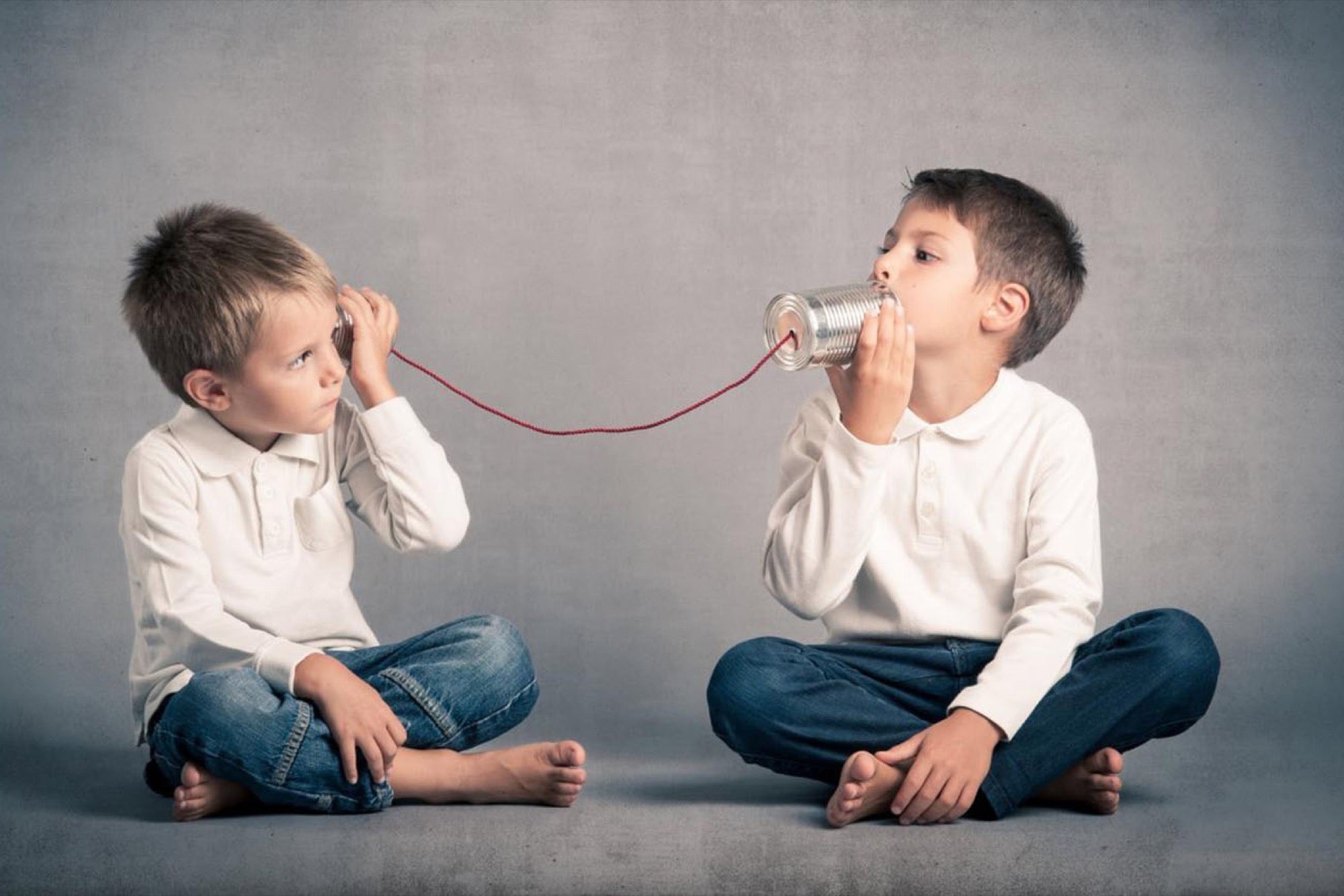
Understanding and Understanding in Good Communication
In our daily life, we all have many needs in different areas. In fact, we often chase these needs on autopilot. New items, new clothes, a new job, new friendships, phone, computer, house, car… this list goes on and on. However, there is an important issue that we do not realize most of the time, which is one of our most basic needs. Be heard. Understanding and being understood. Feeling that others can also understand us. Likewise, listening to others with the intention of understanding, not with the intention of responding.
When we look at the main problems in situations where there is no good communication, we see that the parties often act with the intention of defending themselves rather than understanding. This situation fuels the need for understanding in all of us. Moreover, we can experience this problem at all ages. Child or adult… when it comes to proper communication, age doesn't matter. We all have a need for our emotions, worries, and sorrows to be understood by others. At this point, it is important to say the following. When we say understanding and being understood, we are not actually talking about everyone's agreement with us. Perhaps we want these feelings to be accepted.
You can ask yourself, for example. How do you respond when someone from your circle tells you about their feelings about something you disagree with? "**You're talking nonsense, I don't think what you think is true.**" is it? Otherwise, "**Even though I think differently, I can see how much your experience has affected you.**" is that Which of these two answers would you feel better if you were told?
In fact, we are exposed to this situation first in our childhood. Even the most caring parents can sometimes exhibit this behavior without realizing it. This can even set an example for children. Of course, they do not do this on purpose to harm the child. In fact, the main reason is not being aware of how much our responses affect others. Let's go through an example.
**The Importance of Good Communication and Understanding**
Let's think of a kid who complains "**I wish there was no school today!**" At this point, the parent's answer is "**I go to work at 7 in the morning to earn money every day, you should not complain!**" When it happens, maybe the child won't even understand what that means. Because the name is kid! Having to earn money, work stress, mobbing, growing a job.
Any concept we can think of, we complain about is not yet familiar to him. He will feel bad not only because he cannot understand his parents, but also because he is not understood. Maybe even with the feeling of loneliness, he will become aggressive and display wrong behaviors. What if the parent had made a sentence like this for understanding, not defense? "It must be difficult to start school with a math lesson after the holiday. But we all have to fulfill our duties in some way." In which sentence do you think the child would feel more "**understood**"? How would you feel if your family had told you this sentence?
We don't only experience this situation in childhood. In our adulthood, we also live in business, social and romantic relationships. Let's consider our relationships. When the other person says, "You don't understand me," many of us say, "**Don't be silly, what sacrifices have I made for this relationship! How can I not understand you?** " we tend to answer like. However, in this very sentence, we are trying to defend, not understand. In fact, the solution of all these problems is possible and very simple right now.
**Mindful Communication**
We can call it focusing on what the other person is talking to, not what we will answer. What is the person you are listening to saying, are you really aware? How are their facial expressions, how are their looks, how are their mimins? Can you make inferences from his expressions about his feelings? What is he feeling at that very moment? Can you focus only on what he's telling without judging him? If the answers you give to him come to mind, focus on your breathing and try to bring back awareness to what he is telling. Try to discover what he said with curiosity and interest.
**Magic Sentences**
Understanding and being understood is important for all of us. We all love to hear that we are understood. When the other person tells us about an issue, we can make us feel that we understand it, regardless of whether we agree or not. Some magical expressions can help. Try to say the following, focusing only on what he feels, regardless of our own thoughts. "**I can see that you are not feeling good about this.**" "**I can understand from your speech that what you told didn't make you feel good.**"
If you have noticed, we are completely independent of what the issue is, what is right and wrong. We focus only on how the other person feels about what they are saying. In this way, it becomes easier not to judge him and listen as he is.
The Psychology of Being Human and Our Personality Patterns
When talking about the Psychology of Being Human and introducing ourselves, we often resort to social classifications primarily. Like "**I am a woman**" "**I am a teacher**" or "**I am a mother**"… But in fact, we are all human beings at the core of them all.
Each of us is unique individuals with different personalities, different living conditions and different stories. So what is being human? This is a situation that has been discussed for centuries. With the change and structuring of history, of course, the perspective of human beings also changes. If we look at its definition today, “A person; It is an entity that possesses certain abilities or characteristics such as intelligence, morality, consciousness or self-consciousness and is part of a culturally established form of social relationship such as kinship, property ownership.
So, as we can see from the definition, we, as humans, lead a social life and we are always in an interaction. In fact, one of the most important things that make us who we are is that our psychology is also shaped by this interaction.
**What is Human Psychology?**
The psychology of being human gives us a lot of meaning. We have a certain consciousness; We get to know those around us, talk to them, grow, develop and learn. Physical growth has already been developing since the day we were born, and we usually go the same in this regard. But on the other hand, our psychology is developing. It is not our only body that changes as we progress through infancy, childhood, adolescence, and adulthood. The psychology of being human is influenced by concepts such as our feelings, mindset and psychology that change and evolve over time.
Here, we can compare this situation to the construction of a building. Buildings are built on a certain soil, so there is a material on which the building sits. This is the "temperament" in us. In fact, we do not come to the world as an empty plate, we have a certain structure, namely temperament, that we bring from ourselves. Actually, we notice this in newborn babies. Some cry more, some are calmer. We can even see completely different reactions of two siblings who grew up under the same conditions. These are situations related to our temperament.
But on the other hand, it would be wrong to say that we are completely biological creatures. How do you lay bricks one by one to build a building and gradually build a whole building; human psychology is created with such a construction. Another factor that makes us who we are and influences the shaping of our psychology as a person is the environment. This environment primarily consists of mother, father or other caregivers. Then we find ourselves in school; teachers and friends come into play here. All the other environments that we have been in throughout our lives actually add more or less something from themselves, and this is our personality. Therefore, while understanding that being human is the main thing, understanding personalities is also important.
**Personality Patterns and the Psychology of Being Human**
First of all, the primary question here is: what is personality? What is the impact on the psychology of being human? While there are many different definitions of personality, most definitions focus on behavioral patterns and traits that can help predict and explain a person's behavior. So basically personality; It is the characteristic thought, emotion, and behavior patterns that make a person unique and are considered to be relatively consistent throughout life.
Studies on personality can provide fascinating insights into how personality evolves and changes over a lifetime. For example, personality assessments are often used to help people learn more about themselves and their unique strengths, weaknesses, and preferences. Some assessments might look at how people are ranked according to certain characteristics, such as whether they are high in extraversion, conscientiousness, or openness.
Other assessments can measure how certain aspects of the personality change during the development process. This type of personality assessment can also be used to help people determine which careers they can enjoy, how well they can perform in certain job roles, or how effective a psychotherapy is.
In other words, personality has a determining role in many aspects of our lives and the psychology of being human, and it would be wrong to look at personality only from one angle. Personality has a direct bearing on what kind of person we are, what we care about or our career planning. Therefore, the effect of our personality on our psychology cannot be denied. For example, if you have a pessimistic nature, it is possible to have a more depressed mood, or if you have an ambitious nature, perhaps you may feel more stressed.
Depths of Bipolar Affective Disorder
I'm not going to say, unfortunately, I am a person with bipolar mood disorder. Generally, when I say that I am bipolar, the responses I get are either meaningless looks or worrying expressions. However, I am happy that I am bipolar.
This is a feature that makes me unique from others. Just as our fingerprints are different and unique from each other. There are so many things I want to tell you in this article. However, I can only reach as much as I can type on my keyboard. Sorry in advance for the sterility of my narration. I am writing this article for those we marginalize, it will actually be selfish, but I am also writing it for myself. Because now I'm tired of hiding some facts.
**"It is harder to break prejudices than to shatter the atom."** As he said, **Einstein**, I want to write exactly about this topic. Because I think the biggest cause of wars in the world is prejudices. When you smash the atom, you can extract great energy and start a war. But the most insidious of wars is the cold. Aren't the divisions within us also from prejudices?
The mentality that says when they see someone covered is reactionary and when they see someone with a mini skirt they are a bad woman is the same. And it is these prejudices that also cause us to send the atomic bomb to a country. Does the struggle of who is superior to whom is not prejudiced, while none of us has superiority over the other? The external forces that distinguish us from Eastern and Western are aware of the power of prejudice, but we still continue to call each other names as.
**It is better not to know anything than to know it wrong.**
But even if you don't know anything about bipolar, I want to tell you the right things. Because unknown is also tiring you… While all sciences are built on knowing, I think you should know about us bipolar people.
Let me flavor my story by summarizing: 7 years ago, when I was 18, I took the university entrance exam and won it. Here is the sentence I formed with these three or five words, has a huge history and success story. The story I'm going to tell is not a success story, unfortunately… It's a failure story… You may have wondered how a memory I started saying I won would fail. I will witness how the 12 years of effort I have made in the past to win the university was garbage.
Yes, I won, and I got the psychological counseling and guidance department at a prestigious university like Istanbul University. However, in the 2nd grade, things turned upside down. Irregularities in my sleep, running away from home, going out at night, and many other nonsensical movements… I can give this example to illustrate the gravity of the situation. I studied for the final exam I got on my midterm exam all night and instead of going to the exam in the morning, I went to the cinema.
I started to think there was something wrong with myself when I started making unconnected gestures. I would not say I took my breath at the psychiatrist, I went unwillingly and in fear. My father also had an illness that I thought I might have. And I did not believe my father's illness for years and always blamed him for what he had done.
Did he find me a disease I don't believe in? I went to the doctor with curiosity and my feet backed up. The psychiatrist listened to me and, sitting calmly, muttered something like "subthreshold bipolar." Me and being sick… I could not make it like myself, but on the other hand, I welcomed it very calmly. He told me for a long time that I should use medication. I remember going home and sobbing. On the one hand, happiness… Because there was an explanation for the absurd movements I made. On the other hand, from sadness… Because it was possible for me to have a life that is called normal with drugs. I refused the medication. I suspended the school. And I could not finish school in 7 years.
Nothing I've been successful has happened since then, except for one thing: my marriage. I got married about a year ago and now I'm happy. I use my medicines regularly. Everything is going normal. But this story is not a success story, it is a story of holding on to life. There are many more things I cannot explain. I'm telling you this because you don't have prejudice, whether it's against bipolar people or individuals who display abnormal behavior that society doesn't want. Because we already have enough burden on our shoulders.
We have great problems in protecting our emotions and what you can easily accomplish is difficult for us. While all this is going on, do not make us bother with your prejudiced and marginalizing looks.
**I'm going to say I hope I didn't bore you this much. For those who do not have bipolar, those who read, those who do not hear, those who hear.**
 @kerlukealek