@hebrew
I was not able to post links nor upload images to read.cash this evening. I refreshed and tried logging out and back in. I guess this is goodbye. Nice knowing you all. Find my work on Hive.Blog/@hebrew/posts Best wishes.
Joined 16 February 2022 · 71 posts
Self-taught Hebrew learner for over ten years. Blogging the process as I go.
120 KT
0 KT · $5.48 received · 0 KT · 59¢ given
@hebrew
I was not able to post links nor upload images to read.cash this evening. I refreshed and tried logging out and back in. I guess this is goodbye. Nice knowing you all. Find my work on Hive.Blog/@hebrew/posts Best wishes.
@hebrew
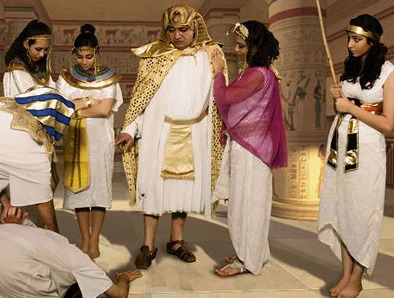
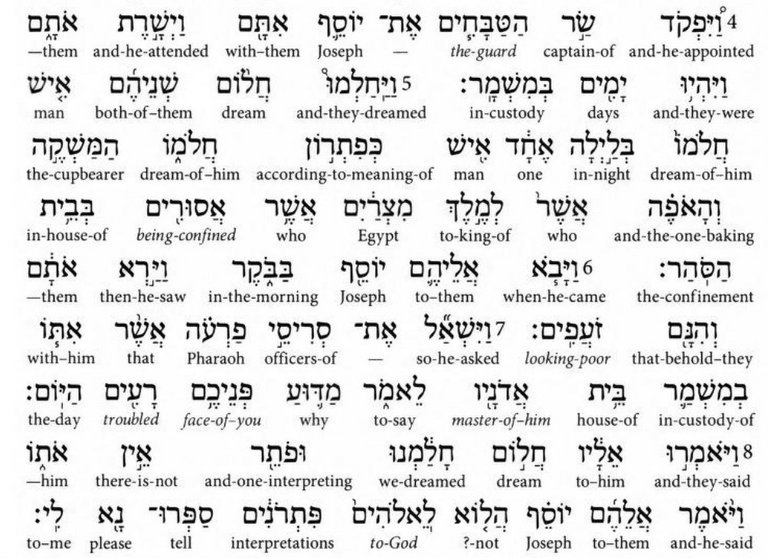
The language of ivrit ( עברית ) Genesis 40, Post #2 Welcome to my Hebrew reading & language series. Genesis 40:4-8 *source* https://tse2.mm.bing.net/th?id=OIP.R20_8pK-xL15AJ82BXSHPgHaFj Last week we heard about the troubles of Pharaoh's officers and how they were tossed into prison. We do not know their names. Just that one was the cupbearer and the other was the baker. They were put in Joseph's care while they did their time in jail. Next we hear that the each had a dream and that they were upset. Joseph noticed the looks on their faces and asked what the problem was. They were troubled about their dreams and wanted to know what they meant. Joseph's first reaction was to tell them that God has the interpretations of all dreams, and in a roundabout way, he said that he would be able to interpret the dreams... Next week we will hear about at least one of them... Today's reading *English* The captain of the guard appointed Joseph to be with them, and he attended them. They continued for some time in custody. And one night they both dreamed— the cupbearer and the baker of the king of Egypt, who were confined in the prison— each his own dream, and each dream with its own interpretation. When Joseph came to them in the morning, he saw that they were troubled. So he asked Pharaoh's officers who were with him in custody in his master's house, "Why are your faces downcast today?" They said to him, "We have had dreams, and there is no one to interpret them." And Joseph said to them, "Do not interpretations belong to God? Please tell them to me." *Hebrew* ***The story continues next week as the cupbearer speaks...*** Info on each letter starting at the beginning *If you are just starting, my lessons are all here starting at Alef, adding vowels (the dots and lines) as we go. I explain the meaning of each letter and its numerical value. Just go to my blog and scroll to the bottom or* *click here* https://hive.blog/test/@hebrew/test ***Get your Hebrew Bible now!*** Click here to obtain the book we are using. It is a free download or browser usable. https://archive.org/stream/ESVInterlinearOT/ESV%20Interlinear%20OT#page/n3/mode/2up **Thanks for reading.** Shabbat Shalom
 @hebrew
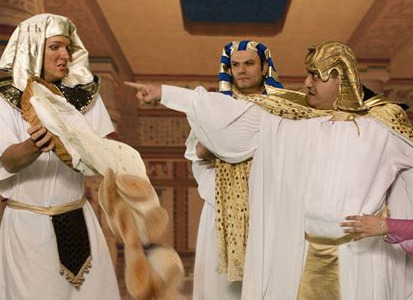
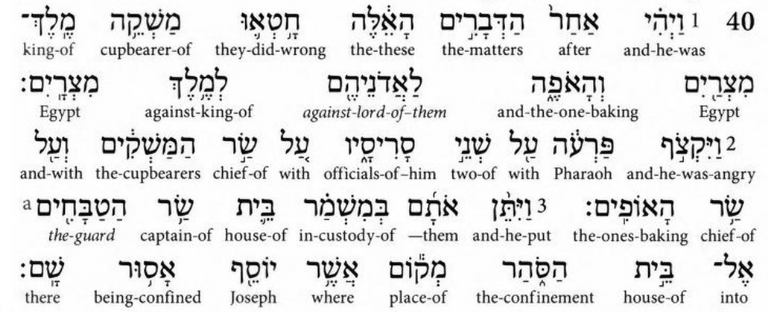
The language of ivrit ( עברית ) Genesis 40, Post #1 Welcome to my Hebrew reading & language series. Genesis 40:1-3 *source* https://tse3.mm.bing.net/th?id=OIP.sLNh4Xh2D7-TwGBIA1XhdAHaFj We are into a new chapter as of today. Chapter 40 is our new home for a few weeks. This is the story of Joseph, or rather the third part of the story which takes place in Egypt (Mitsra'im). We saw how Joseph was blessed by God and drew scrutiny from his brothers who sold him into slavery. Then we saw Joseph's rise to be the keeper of his master's household, followed by an accusation of attempted rape. Now we are looking at his rising to new status as the keeper of the prison where he is being held. The story now continues with the unstated offenses committed by the chief cupbearer and chief baker who served the king of Egypt. So Pharaoh was angry with these two and sent them to jail. The same jail where Joseph was being held. Joseph is also the keeper of said prison. This sets us up for the famous interpretation of dreams for which Joseph is known. I find it strange that the text makes a distinction between the king of Egypt and the Pharaoh. The text in Hebrew says that they "did wrong against the king of Egypt." and later that , "Pharaoh was angry with his two officials." It says clearly that these officials belonged to the king and again to the Pharaoh. Who will take care of the former officials of Pharaoh as they arrive in prison? Today's reading *English* Sometime after this, the cupbearer of the king of Egypt and his baker committed an offense against their lord the king of Egypt. And Pharaoh was angry with his two officers, the chief cupbearer and the chief baker, and he put them in custody in the house of the captain of the guard, in the prison where Joseph was confined. *Hebrew* ***The story continues with Joseph speaking to...*** Info on each letter starting at the beginning *If you are just starting, my lessons are all here starting at Alef, adding vowels (the dots and lines) as we go. I explain the meaning of each letter and its numerical value. Just go to my blog and scroll to the bottom or* *click here* https://hive.blog/test/@hebrew/test *Get your Hebrew Bible now!* Click here to obtain the book we are using. It is a free download or browser usable. https://archive.org/stream/ESVInterlinearOT/ESV%20Interlinear%20OT#page/n3/mode/2up Thanks for reading. Shabbat Shalom
 @hebrew
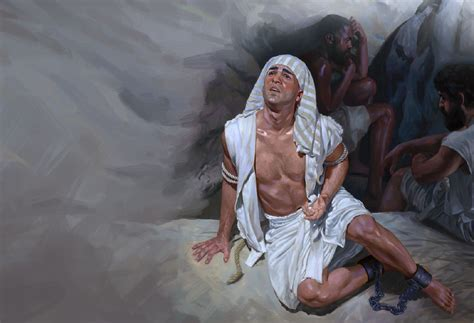
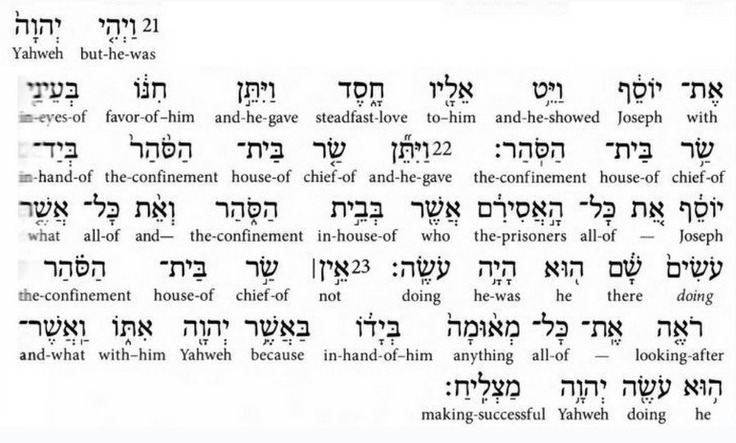
The language of ivrit ( עברית ) Genesis 39, Post #5 Welcome to my Hebrew reading & language series. Genesis 39:21-23 *source* https://tse3.mm.bing.net/th?id=OIP.D8LgZjEs7_XabpJU8giu4AHaFD We knock out another chapter today so if you are still with me, congratulations for your tenacity! The end of the chapter talks about how God used his ***khased*** (steadfast love) which he showed to Joseph in prison. For that same love the keeper of the prison did as Potiphar had done. He put Joseph in charge of everything in the prison and then sat back and enjoyed a worry free life. Note also that the text mentions the name of God, which some texts render as *the Lord*. They may as well just say "the God." Do you know the founders of Islam, Buddhism, and Christianity? For the most part, even non-believers know what names those faiths worship. Something called the Spanish Inquisition somehow eliminated Ha Shem (the name) from all English texts of the Tanakh, and the followers complied. Today's reading *English* But YHVH was with Joseph and showed him steadfast love and gave him favor in the sight of the keeper of the prison. And the keeper of the prison put Joseph in charge of all the prisoners who were in the prison. Whatever was done there, he was the one who did it. The keeper of the prison paid no attention to anything that was in Joseph's charge, because YHVH was with him. And whatever he did, YHVH made it succeed. *Hebrew* ***The story continues next with bread and wine...*** Info on each letter starting at the beginning *If you are just starting, my lessons are all here starting at Alef, adding vowels (the dots and lines) as we go. I explain the meaning of each letter and its numerical value. Just go to my blog and scroll to the bottom or* *click here* https://hive.blog/test/@hebrew/test *Get your Hebrew Bible now!* Click here to obtain the book we are using. It is a free download or browser usable. https://archive.org/stream/ESVInterlinearOT/ESV%20Interlinear%20OT#page/n3/mode/2up Thanks for reading. Shabbat Shalom
 @hebrew
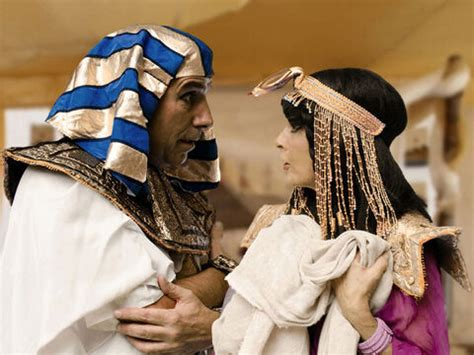
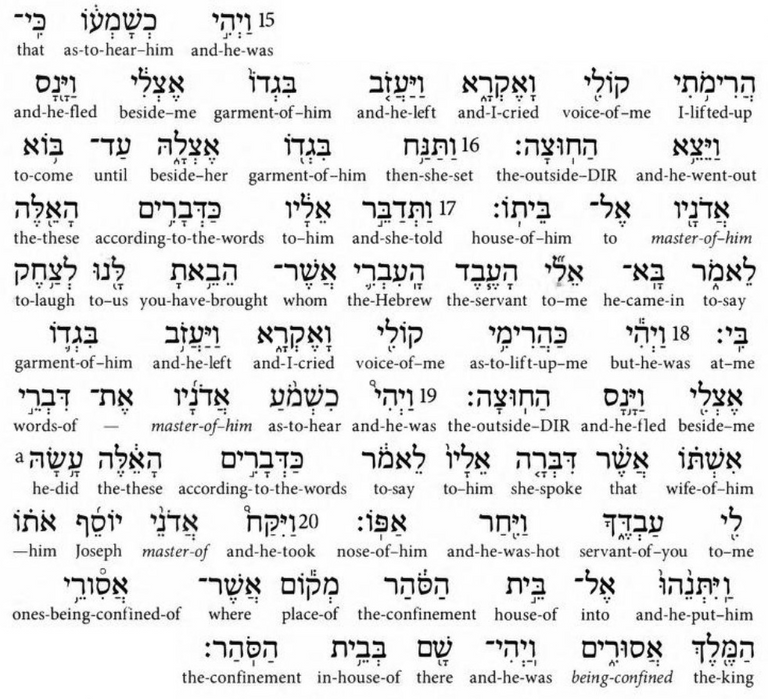
The language of ivrit ( עברית ) Genesis 39, Post #4 Welcome to my Hebrew reading & language series. Genesis 39:15-20 *source* https://tse1.mm.bing.net/th?id=OIP.copEnDaUyavPdwqyNwqOeQHaFj It is time for a fairy tale today. And so she told it to one, then the others. Then she waited for her husband. Having practiced the tale a couple of times, she performed it for him also. He was jaded and believed her, although Joseph had never attempted to take anything from Potiphar before and he could have, but his thoughts were about his wife and her protection from another man without considering Joseph's track record. Joseph ended up in prison that same day, where he would continue to be blessed by God himself in everything he did. If you know the story, you will see that his abilities to dream and interpret dreams will also come in handy. Today's reading *English* And as soon as he heard that I lifted up my voice and cried out, he left his garment beside me and fled and got out of the house." Then she laid up his garment by her until his master came home, and she told him the same story, saying, "The Hebrew servant, whom you have brought among us, came in to me to laugh at me. But as soon as I lifted up my voice and cried, he left his garment beside me and fled out of the house." "As soon as his master heard the words that his wife spoke to him, "This is the way your servant treated me," his anger was kindled. And Joseph's master took him and put him into the prison, the place where the king's prisoners were confined, and he was there in prison. *Hebrew* ***The story continues as Joseph prospers in jail too...*** **Info on each letter starting at the beginning** *If you are just starting, my lessons are all here starting at Alef, adding vowels (the dots and lines) as we go. I explain the meaning of each letter and its numerical value. Just go to my blog and scroll to the bottom or* *click here* https://hive.blog/test/@hebrew/test ***Get your Hebrew Bible now!*** Click here to obtain the book we are using. It is a **free** download or browser usable. https://archive.org/stream/ESVInterlinearOT/ESV%20Interlinear%20OT#page/n3/mode/2up Thanks for reading. Shabbat Shalom
 @hebrew
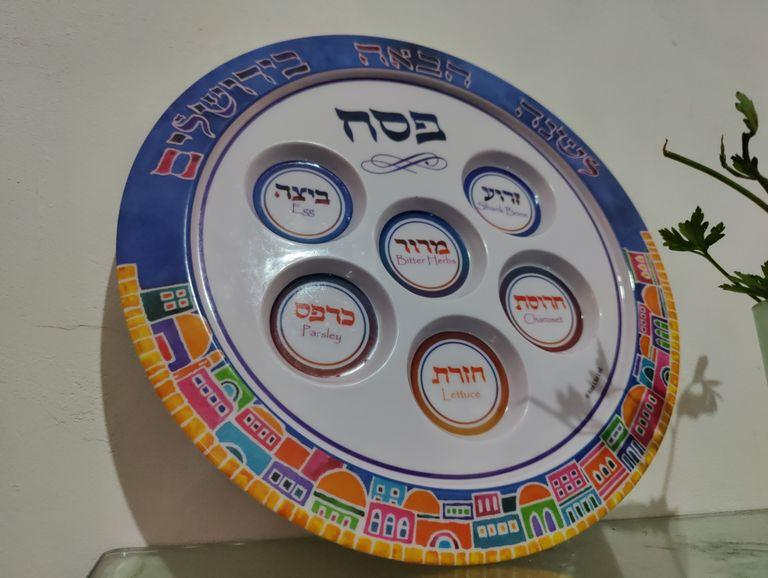
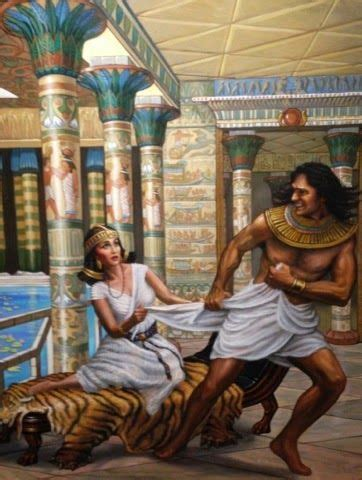
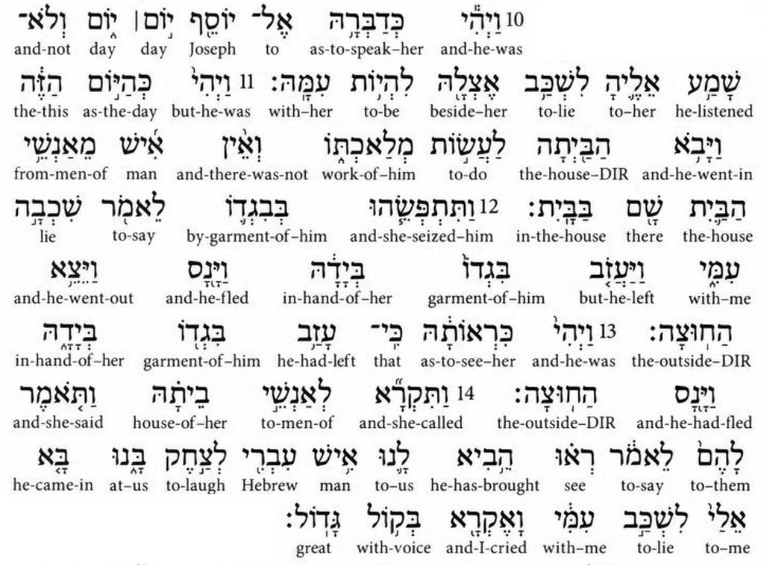
The language of ivrit ( עברית ) Genesis 39, Post #3 חַג שָׂמֵחַ - Chag Sameach - Happy Festival Welcome to my Hebrew reading & language series. ***I hope you are all having a wonderful rest during Pesach.*** This week has three days in a row in which we are supposed to rest. All my work is done and I will begin my *forced vacation days* (what a mean God) this evening with a wonderful roast and all the trimmings for the Passover Seder dinner. I make my own Matzah! Here is the plate that I will be filling with the traditional trimmings. https://duckduckgo.com/?q=Typical+seder+plate&iax=images&ia=images Now on to our weekly Hebrew post. Genesis 39:10-14 *source* https://tse3.mm.bing.net/th?id=OIP.iyhsDiOxIqibMLtehzMjFgAAAA Premeditated rape claim. The text says that she begged Joseph to sleep with her day after day and he refused to do so. It appears that she planned something for a day when none of the other men were in the house. Things were quiet. So this time, she grabbed his clothing and told him to get in bed with her. He took off running (fled - vaya-nas) and then she raised her voice - in Hebrew it says, vateekra, which is **to call**. It is obvious that she saw an opportunity to hold up evidence that would support her vengeance plan, hurt that he had rejected her so many times, and maybe this would make her feel better. Who knows? Today's reading *English* And as she spoke to Joseph day after day, he would not listen to her, to lie beside her or to be with her. But one day, when he went into the house to do his work and none of the men of the house was there in the house, she caught him by his garment, saying, "Lie with me." But he left his garment in her hand and fled and got out of the house. "And as soon as she saw that he had left his garment in her hand and had fled out of the house, she called to the men of her household and said to them, "See, he has brought among us a Hebrew to laugh at us. He came in to me to lie with me, and I cried out with a loud voice. *Hebrew* ***The story continues next week as Potiphar gets home...*** **Info on each letter starting at the beginning** *If you are just starting, my lessons are all here starting at Alef, adding vowels (the dots and lines) as we go. I explain the meaning of each letter and its numerical value. Just go to my blog and scroll to the bottom or* *click here* https://hive.blog/test/@hebrew/test ***Get your Hebrew Bible now!*** Click here to obtain the book we are using. It is a free download or browser usable. https://archive.org/stream/ESVInterlinearOT/ESV%20Interlinear%20OT#page/n3/mode/2up Thanks for reading. Shabbat Shalom
 @hebrew
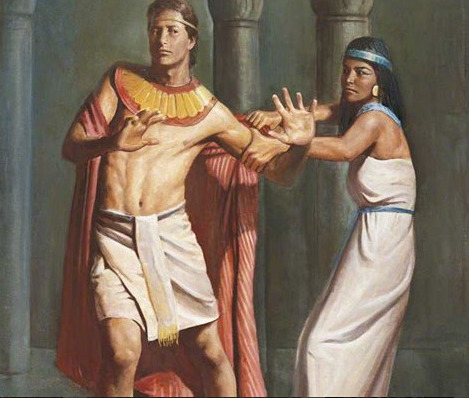
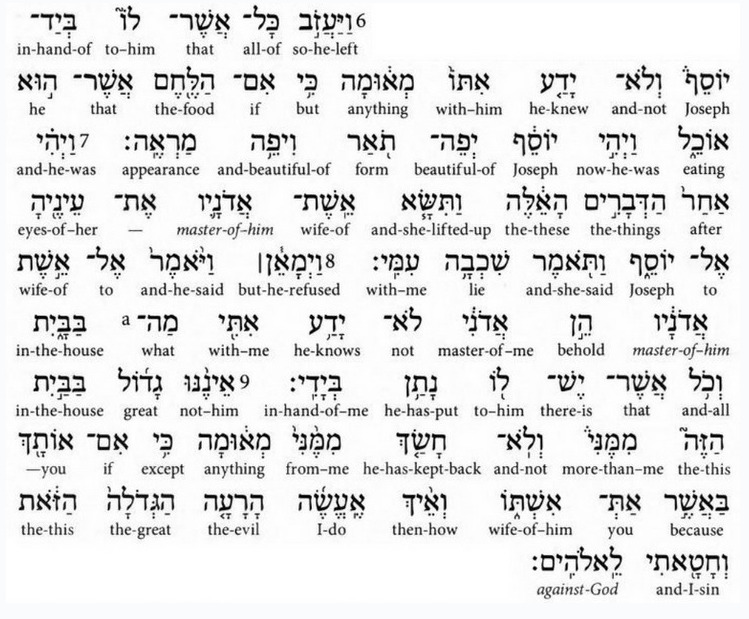
The language of ivrit ( עברית ) Genesis 39, Post #2 Welcome to my Hebrew reading & language series. Genesis 39:6-9 *source* https://tse1.mm.bing.net/th?id=OIP.Ru1BJYGtm8AFWbFITLYLWwHaGS We saw how Joseph started his stint as a slave in Egypt (Mitsraim) last week and that God had blessed all that Joseph touched. Now we see that everything Potiphar had was in Joseph's charge. I am pretty sure that did not include his wife though, besides, Joseph is just a slave. As with many people, they see something they want and cannot resist. The wife of the house had no credit limit. Anything she wanted she could get. The text says that Joseph was handsome, the Hebrew says "y'feh" which means beautiful. Soon, the wife of Potiphar had spoken her desire aloud. Her words, "Sheech'vah eemee" (lie with me), sparked a kvery long and detailed explanation of the way Joseph feels about being elevated above all other slaves into a the best job he could have imagined as a slave, how it is against the rules and for that reason he exclaimed, "How can I do this great wickedness and sin against God?" I admire Joseph for this. I have had times when I make it to the top of a work environment and new temptations come to mind. It goes without saying that giving in to one of those evil temptations would end the current gig. That is how sin is presented to people. It comes as a thought that you think is your own. Today's reading *English* So he left all that he had in Joseph's charge, and be- cause of him he had no concern about anything but the food he ate. Now Joseph was handsome in form and appearance. And after a time his master's wife cast her eyes on Joseph and said, "Lie with me." But he refused and said to his master's wife, "Behold, because of me my master has no concern about anything in the house, and he has put everything that he has in my charge. He is not greater in this house than I am, nor has he kept back anything from me except you, because you are his wife. How then can I do this great wickedness and sin against God?" *Hebrew* ***The story continues next week as she yells "Rape!"...*** Info on each letter starting at the beginning *If you are just starting, my lessons are all here starting at Alef, adding vowels (the dots and lines) as we go. I explain the meaning of each letter and its numerical value. Just go to my blog and scroll to the bottom or* *click here* https://hive.blog/test/@hebrew/test *Get your Hebrew Bible now!* Click here to obtain the book we are using. It is a free download or browser usable. https://archive.org/stream/ESVInterlinearOT/ESV%20Interlinear%20OT#page/n3/mode/2up Thanks for reading. Shabbat Shalom
 @hebrew
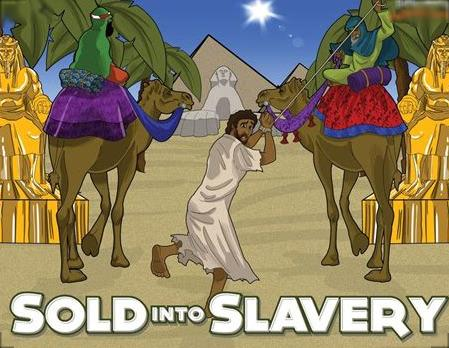
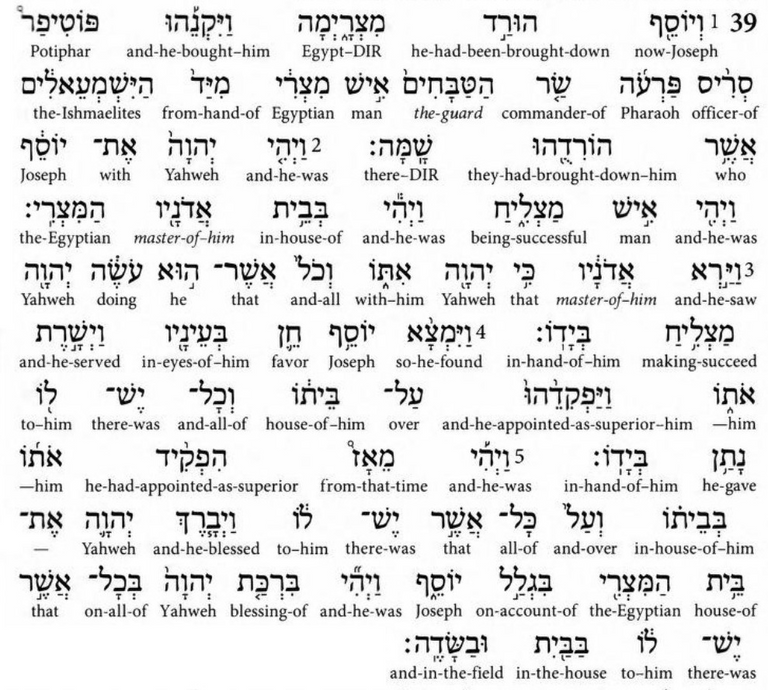
The language of ivrit ( עברית ) Genesis 39, Post #1 Welcome to my Hebrew reading & language series. Genesis 39:1-5 *source* https://tse2.mm.bing.net/th?id=OIP.gVv1CW9vcpW711PiXedHFQHaFu A new chapter starts today but we are going back to where we left off with Joseph as a slave. His brothers had thrown him into a pit and then instead of killing him, they sold him into slavery. We pick up with Joseph arriving there and being bought by Potiphar who was the captain of Pharaoh's guards. Potiphar saw that YHVH was with Joseph and everything he did succeeded. Not only that, but Joseph's master knew it was this Hebrew God who was responsible for his success and he did not feel the need to ridicule or demean that same God - a good move! One should never look a gift horse in the mouth. Potiphar quickly made Joseph the overseer of all that he had so that, one would imagine, **all would be blessed**. And it was. I am not sure if I have mentioned this in the past, but whenever you see these at the end of a noun in Hebrew, it means "toward" that noun or "in the direction of" that noun. In this case, "he was brought toward Egypt" and the English interpretation shows a '-DIR' to let you know about the rule in Hebrew. Look for the word Sham (there) followed by this structure in the Hebrew text below and think about what that means. Today's reading *English* Now Joseph had been brought down to Egypt, and Potiphar, an officer of Pharaoh, the captain of the guard, an Egyptian, had bought him from the Ishmaelites who had brought him down there. YHVH was with Joseph, and he became a successful man, and he was in the house of his Egyptian master. His master saw that YHVH was with him and that YHVH caused all that he did to succeed in his hands. So Joseph found favor in his sight and attended him, and he made him overseer of his house and put him in charge of all that he had. From the time that he made him overseer in his house and over all that he had, YHVH blessed the Egyptian's house for Joseph's sake; the blessing of YHVH was on all that he had, in house and field. *Hebrew* ***The story continues next week as Joseph is tempted...*** **Info on each letter starting at the beginning** *If you are just starting, my lessons are all here starting at Alef, adding vowels (the dots and lines) as we go. I explain the meaning of each letter and its numerical value. Just go to my blog and scroll to the bottom or* *click here* https://hive.blog/test/@hebrew/test ***Get your Hebrew Bible now!*** Click here to obtain the book we are using. It is a free download or browser usable. https://archive.org/stream/ESVInterlinearOT/ESV%20Interlinear%20OT#page/n3/mode/2up Thanks for reading. Shabbat Shalom

 @hebrew
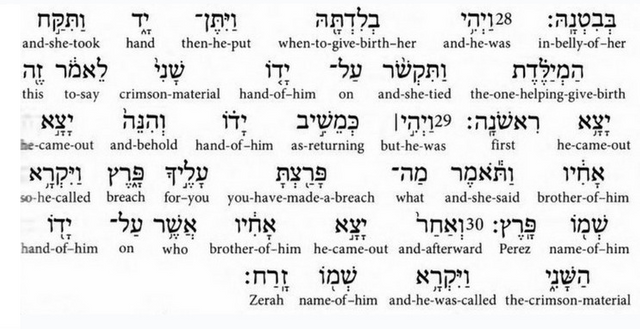
The language of ivrit ( עברית ) Genesis 38, Post #5 Welcome to my Hebrew reading & language series. Genesis 38:28-30 *source* https://tse1.mm.bing.net/th?id=OIP.sNkrwYFhDMOpGYcI9_np-wAAAA Today we are finishing up the thirty-eighth chapter of Genesis. We saw Judah humiliated last week when he was called out for being the one who tried to get a hooker into bed. Now we are seeing the results of his union with Tamar and her twins. We have the experience of giving birth to her twins and the naming of them. The birth was similar to that of Jacob and Ishmael because one came out first (his hand only). Then the other one was fully born first. Perez came out first and Zerah was the one who had the marking on his hand. Next week, we will be looking in on Joseph who was sold into slavery in chapter 37. We will start chapter 39 next week and see how he is dealing with his new situation. Today's reading *English* And when she was in labor, one put out a hand, and the midwife took and tied a scarlet thread on his hand, saying, "This one came out first." But as he drew back his hand, behold, his brother came out. And she said, "What a breach you have made for yourself!" Therefore his name was called Perez. Afterward his brother came out with the scarlet thread on his hand, and his name was called Zerah *Hebrew* ***The story continues with Joseph next week...*** Info on each letter starting at the beginning *If you are just starting, my lessons are all here starting at Alef, adding vowels (the dots and lines) as we go. I explain the meaning of each letter and its numerical value. Just go to my blog and scroll to the bottom or* *click here* https://hive.blog/test/@hebrew/test *Get your Hebrew Bible now!* Click here to obtain the book we are using. It is a free download or browser usable. https://archive.org/stream/ESVInterlinearOT/ESV%20Interlinear%20OT#page/n3/mode/2up Thanks for reading. Shabbat Shalom *Note: I did notice all of the new readers and the quantity of comments that came in last week. I appreciate hearing from you all. Thank you!*
 @hebrew
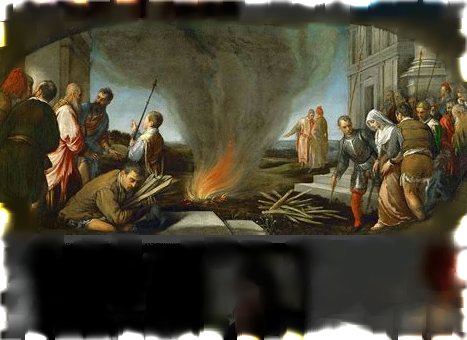
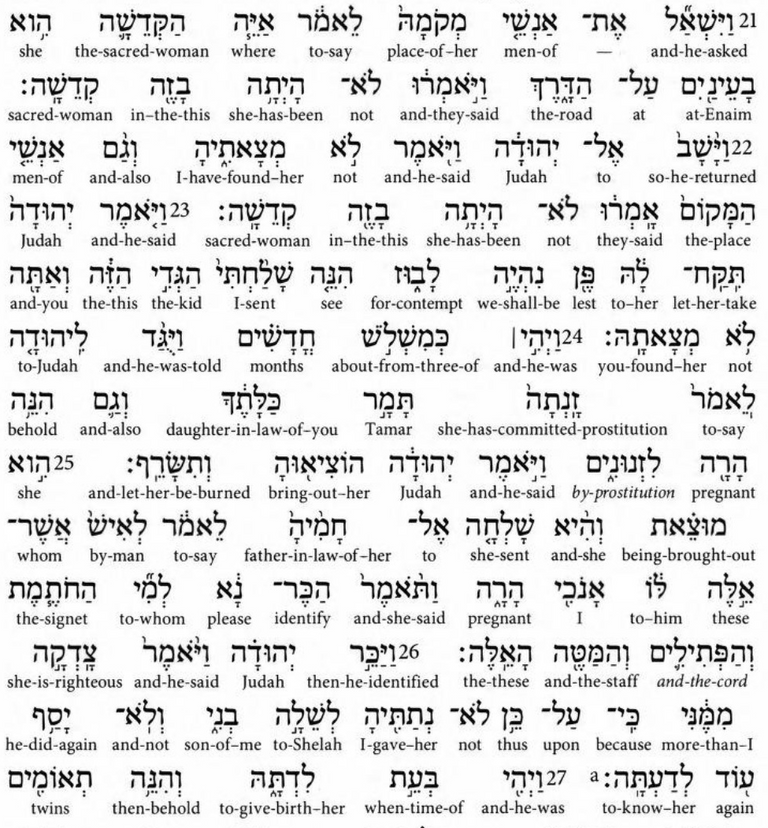
The language of ivrit ( עברית ) Genesis 38, Post #4 Welcome to my Hebrew reading & language series. Genesis 38:21-27 *source* https://tse3.mm.bing.net/th?id=OIP.WLf90Uh9u6x9LXqkMNWlbQHaDZ We left off last week with the story of Judah "gettin' some" as it were. He had sent someone to pay the woman for her services. Now, he is hearing the story of how *there is no prostitute that hangs out where you said she was* and they said there never has been. Judah basically said, "Oh well, we tried to pay her..." but do not quote me quoting him as saying it like that. Time goes by and Judah finds out that his twice widowed daughter in-law is pregnant. Yes, the one he had kept waiting for a child by his own son. **Now comes the part about the pot calling the kettle black...** Judah orders that she be brought out and orders her to be burned. I guess she was cheating on her two dead husbands. But Tamar has been holding the trump card and quietly sends word to Judah identifying the man who got her pregnant by his pledge for payment - Judah's own staff and signet! Judah admits that he himself is the bigger sinner and drops all punishment of Tamar. I agree because while Tamar was cheating on a dead husband, Judah had cheated on his own wife and ended up fulfilling the role that his son should have done - according to the law. Throughout history, women have been held to a higher moral standard than men have. This case put one man in his place. Reminds me of a classic song that goes, "Before you accuse me, take a look at yourself." Today's reading *English* And he asked the men of the place, "Where is the cult prostitute ' who was at Enaim at the roadside?" And they said, "No cult prostitute has been here." So he returned to Judah and said, "I have not found her. Also, the men of the place said, 'No cult prostitute has been here.' " And Judah replied, "Let her keep the things as her own, or we shall be laughed at. You see, I sent this young goat, and you did not find her." About three months later Judah was told, "Tamar your daughter-in- law has been immoral. Moreover, she is pregnant by immorality." And Judah said, "Bring her out, and let her be burned." As she was being brought out, she sent word to her father-in-law, "By the man to whom these belong, I am pregnant." And she said, "Please identify whose these are, the signet and the cord and the staff." Then Judah identified them and said, "She is more righteous than I, since I did not give her to my son Shelah." And he did not know her again. *Hebrew* ***The story continues next week as Judah has twins on the way...*** Info on each letter starting at the beginning *If you are just starting, my lessons are all here starting at Alef, adding vowels (the dots and lines) as we go. I explain the meaning of each letter and its numerical value. Just go to my blog and scroll to the bottom or* *click here* https://hive.blog/test/@hebrew/test *Get your Hebrew Bible now!* Click here to obtain the book we are using. It is a free download or browser usable. https://archive.org/stream/ESVInterlinearOT/ESV%20Interlinear%20OT#page/n3/mode/2up Thanks for reading. Shabbat Shalom
 @hebrew
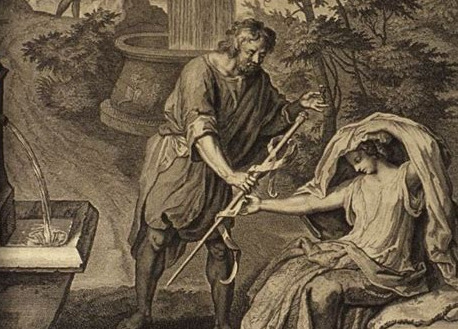
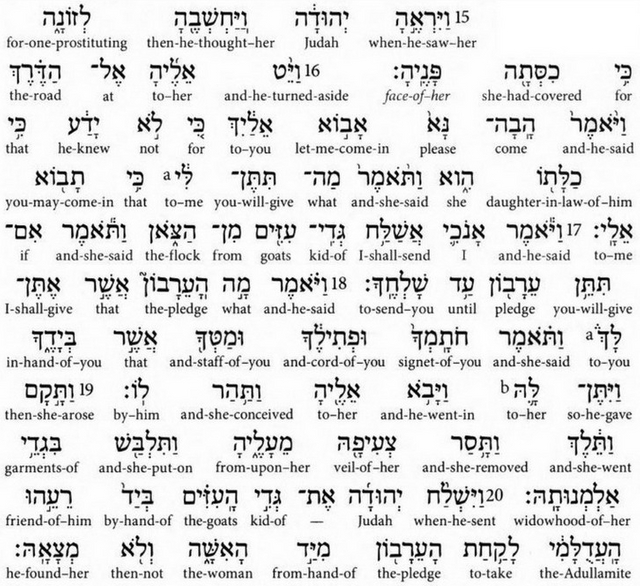
The language of ivrit ( עברית ) Genesis 38, Post #3 Welcome to my Hebrew reading & language series. Genesis 38:15-20 *source* https://tse1.mm.bing.net/th?id=OIP.GjWtGKOHYpfCQWmDwSfU7wHaLN Today, we see an example of a woman teaching one of the men in her family a lesson. We left off last week with Tamar heading to her father's home where she was to wait patiently for Judah's other son to grow up so that she can have children by him. That ***is*** the rule when a man marries and then dies leaving his new wife a widow with no kids. Tamar saw that Judah's other child had grown up and she was still waiting. She heard that Judah was going to trade his animals and she went to Enaim which is en route to his destination. She sat at the roadside and played the part of a prostitute near there. When Judah came near, he made a deal with her for sex. He said he would pay her a goat and she made him leave her his staff and signet (unique to every person and identifiable like an ATM card is today) as a pledge. When the deed was done, Judah went to get the goat that he had promised and Tamar sneaked back home to change back into her widow's clothes. Judah sent his servant to give the goat to her but nobody in the town had ever heard of a prostitute at the entrance to Enaim, so they will now be searching for a ghost woman in order to get his things back. . . Today's reading *English* When Judah saw her, he thought she was a prostitute, for she had covered her face. He turned to her at the roadside and said, "Come, let me come in to you," for he did not know that she was his daughter-in- law. She said, "What will you give me, that you may come in to me?" He answered, "I will send you a young goat from the flock." And she said, "If you give me a pledge, until you send it—" He said, "What pledge shall I give you?" She replied, "Your signet and your cord and your staff that is in your hand." So he gave them to her and went in to her, and she conceived by him. Then she arose and went away, and taking off her veil she put on the garments of her widowhood. When Judah sent the young goat by his friend the Adullamite to take back the pledge from the woman's hand, he did not find her. *Hebrew* ***The story continues next week as Judah finds his staff...*** Info on each letter starting at the beginning *If you are just starting, my lessons are all here starting at Alef, adding vowels (the dots and lines) as we go. I explain the meaning of each letter and its numerical value. Just go to my blog and scroll to the bottom or* *click here* https://hive.blog/test/@hebrew/test *Get your Hebrew Bible now!* Click here to obtain the book we are using. It is a free download or browser usable. https://archive.org/stream/ESVInterlinearOT/ESV%20Interlinear%20OT#page/n3/mode/2up Thanks for reading. Shabbat Shalom
 @hebrew
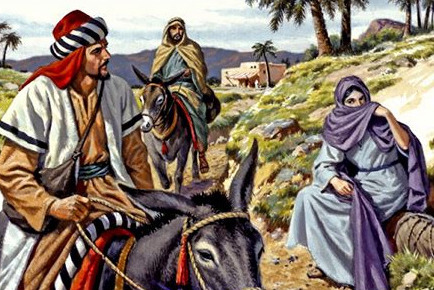
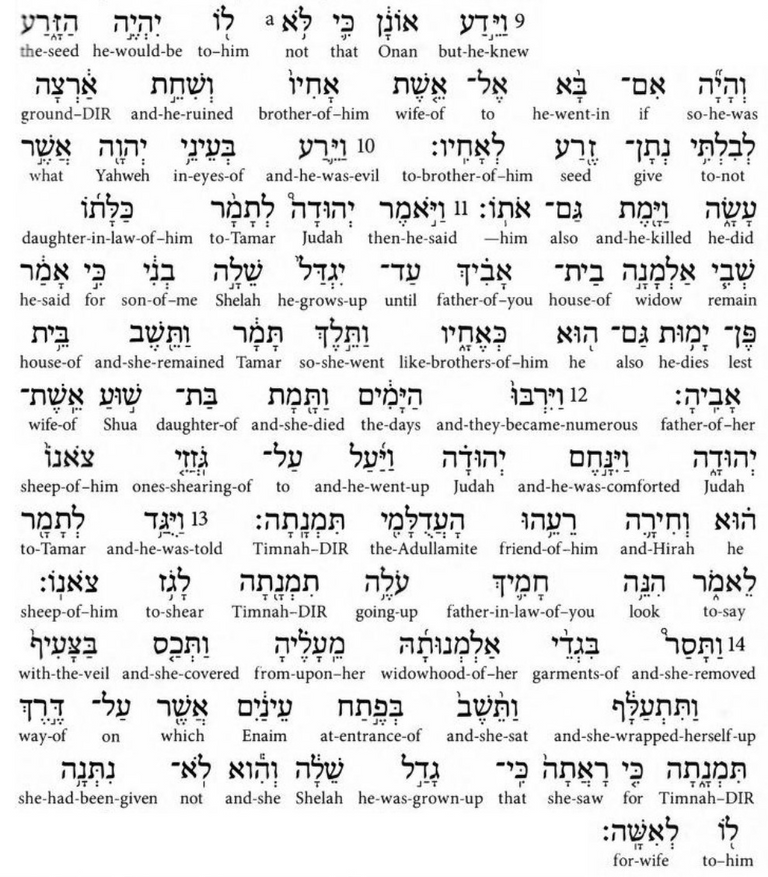
The language of ivrit ( עברית ) Genesis 38, Post #2 Welcome to my Hebrew reading & language series. Genesis 38:9-14 *source* https://tse4.mm.bing.net/th?id=OIP.5fxzDwRG8NrZWElS3fbIIwHaE1 This week we see a pretty meaty piece of scripture. One part of it is that God has put someone to death for being wicked. He did not do that to Ishmael or Jacob who each did some wicked things. Secondly, there was Judah's son who was supposed to give his sister-in-law a child in lieu of his brother - and when he did that, he tried not to (we will leave it at that). God saw that as wicked, and that one also died. Then Judah asks Tamar to wait for his other son to grow up and she did as she was asked. Until she saw that Judah had not kept his promise... Now she will expose him and his cheating heart using the long-game strategy, and I do not blame her... Today's reading *English* But Onan knew that the offspring would not be his. So whenever he went in to his brother's wife he would waste the semen on the ground, so as not to give offspring to his brother. And what he did was wicked in the sight of the Lord, and he put him to death also. Then Judah said to Tamar his daughter-in- law, "Remain a widow in your father's house, till Shelah my son grows up" — for he feared that he would die, like his brothers. So Tamar went and remained in her father's house. In the course of time the wife of Judah, Shua's daughter, died. When Judah was comforted, he went up to Timnah to his sheepshearers, he and his friend Hirah the Adullamite. And when Tamar was told, "Your father-in-law is going up to Timnah to shear his sheep," she took off her widow's garments and covered herself with a veil, wrapping herself up, and sat at the entrance to Enaim, which is on the road to Timnah. For she saw that Shelah was grown up, and she had not been given to him in marriage. *Hebrew* ***The story continues next week as Judah is fooled...*** Info on each letter starting at the beginning *If you are just starting, my lessons are all here starting at Alef, adding vowels (the dots and lines) as we go. I explain the meaning of each letter and its numerical value. Just go to my blog and scroll to the bottom or* *click here* https://hive.blog/test/@hebrew/test *Get your Hebrew Bible now!* Click here to obtain the book we are using. It is a free download or browser usable. https://archive.org/stream/ESVInterlinearOT/ESV%20Interlinear%20OT#page/n3/mode/2up Thanks for reading. Shabbat Shalom
 @hebrew
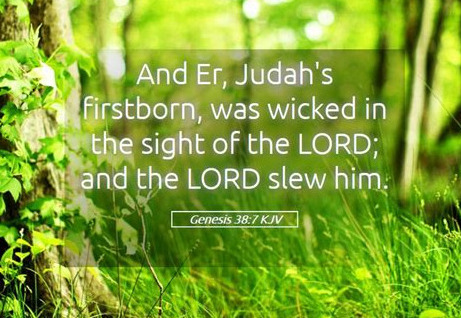
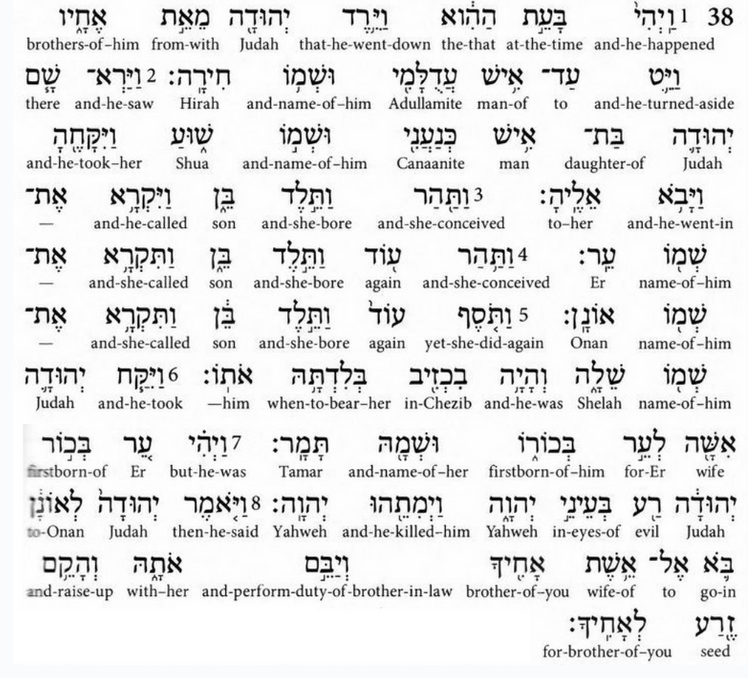
The language of ivrit ( עברית ) Genesis 38, Post #1 Welcome to my Hebrew reading & language series. Genesis 38:1-8 *source* https://tse1.mm.bing.net/th?id=OIP.zT06PaC0pnMBMzkjwdb6AwHaHa Last week we finished with the story of Joseph's betrayal by his brothers. So now that he has begun his life in bondage, we get on with the lives of his brothers who put him there. Our story continues with Judah heading to see an Adullamite (Adulami in Hebrew) and had met his wife among the Canaanite women. Her name was Shua, his first son was Er. He then fathered Onan and Shelah. I'm not sure what her did wrong, but God put him to death. Apparently, he did something evil or maybe he was just evil as a person. According to Hebrew tradition if a man dies and he had no children, his brother is to get together with his sister in law and have kids for his brother so that his name will not be blotted out of history. It would also be very good that the deceased's wife is not left alone and so that the children she has would support her in her old age. The children would also inherit the deceased brother's possessions and money. It is strange yet interesting that going to bed with another woman would not be considered adultery. But in this case, I believe the brothers were younger and not yet married so the next in line would be asked to "do the right thing" and did go to bed with Tamar. We will leave this story to unfold a bit more next week. It is a famous one and ends up going places that only a woman could contrive. Today's reading *English* It happened at that time that Judah went down from his brothers and turned aside to a certain Adullamite, whose name was Hirah. There Judah saw the daughter of a certain Canaanite whose name was Shua. He took her and went in to her, and she conceived and bore a son, and he called his name Er. She conceived again and bore a son, and she called his name Onan. Yet again she bore a son, and she called his name Shelah. Judah-was in Chezib when she bore him. And Judah took a wife for Er his firstborn, and her name was Tamar. But Er, Judah's firstborn, was wicked in the sight of YHVH, and YHVH put him to death. Then Judah said to Onan, "Go in to your brother's wife and perform the duty of a brother-in- law to her, and raise up offspring for your brother." *Hebrew* ***The story continues next week as things get sticky...*** Info on each letter starting at the beginning *If you are just starting, my lessons are all here starting at Alef, adding vowels (the dots and lines) as we go. I explain the meaning of each letter and its numerical value. Just go to my blog and scroll to the bottom or* *click here* https://hive.blog/test/@hebrew/test *Get your Hebrew Bible now!* Click here to obtain the book we are using. It is a free download or browser usable. https://archive.org/stream/ESVInterlinearOT/ESV%20Interlinear%20OT#page/n3/mode/2up Thanks for reading. Shabbat Shalom
 @hebrew
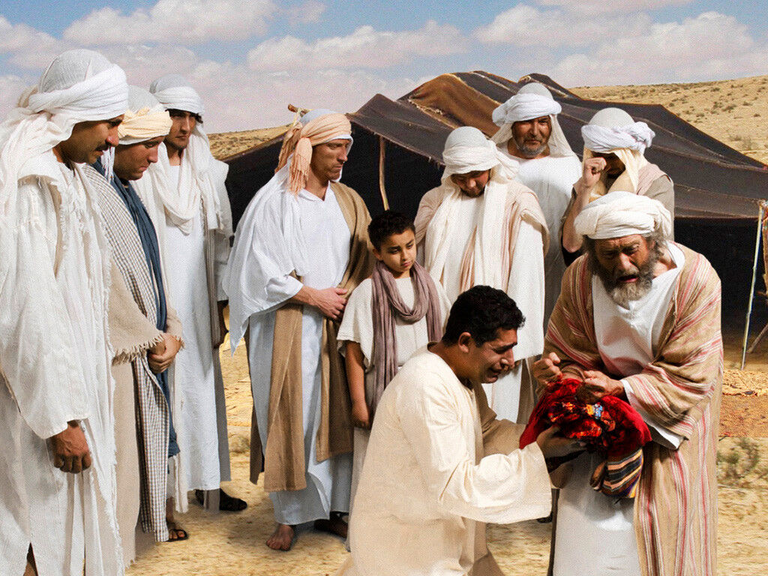
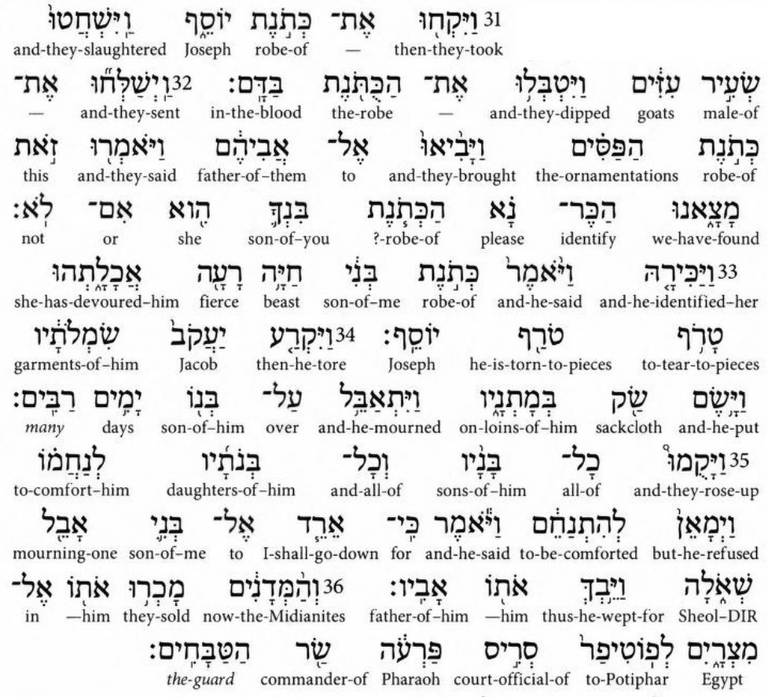
The language of ivrit ( עברית ) Genesis 37, Post #7 Welcome to my Hebrew reading & language series. Genesis 37:31-36 *source* https://media.freebibleimages.org/stories/FB_Joseph_Slave/overview-images/022-joseph-slave.jpg?1538657646 That is it for chapter 37 - congrats if you are still with me. That is it for Joseph and his dreams as well. He is out of the picture now as far as his family is concerned. He was sold to the Midianites (Medanim), then sold again when he go to Egypt (Mitsraim). They had taken Joseph's special robe back to their father and let him assume the worst. They only asked him to identify the clothing as Joseph's. Israel only wished to go to his grave to be with h is son and it did not matter how much the other kids tried to comfort him. I believe that the brothers had a much more difficult life without Joseph as opposed to dealing with his lofty dreams. The real dig is that the dreams ended up being true later on. It is a prophetic catch-22 of sorts because the dreams telling the future caused the future it seems. If he had not gotten the dreams, would his brothers still have sold him into slavery? Today's reading *English* Then they took Joseph's robe and slaughtered a goat and dipped the robe in the blood. And they sent the robe of many colors and brought it to their father and said, "This we have found; please identify whether it is your son's robe or not." And he identified it and said, "It is my son's robe. A fierce animal has devoured him. Joseph is without doubt torn to pieces." Then Jacob tore his garments and put sackcloth on his loins and mourned for his son many days. All his sons and all his daughters rose up to comfort him, but he refused to be comforted and said, "No, I shall go down to Sheol to my son, mourning." Thus his father wept for him. Meanwhile the Midianites had sold him in Egypt to Potiphar, an officer of Pharaoh, the captain of the guard. *Hebrew* ***The story continues next week with Judah...*** Info on each letter starting at the beginning *If you are just starting, my lessons are all here starting at Alef, adding vowels (the dots and lines) as we go. I explain the meaning of each letter and its numerical value. Just go to my blog and scroll to the bottom or* *click here* https://hive.blog/test/@hebrew/test *Get your Hebrew Bible now!* Click here to obtain the book we are using. It is a free download or browser usable. https://archive.org/stream/ESVInterlinearOT/ESV%20Interlinear%20OT#page/n3/mode/2up Thanks for reading. Shabbat Shalom
 @hebrew
The language of ivrit ( עברית ) Genesis 37, Post #6 Welcome to my Hebrew reading & language series. Genesis 37:25-30 *source* https://tse3.mm.bing.net/th?id=OIP.Uhx2LvapZ4xc1bnPUY9UKwHaId Reuben had talked his brothers out of killing Joseph last week, suggesting that they put him in a pit. Now Judah sees the Ishmaelites (Ismaelim in Hebrew) passing by and he talks his brothers out of killing Joseph, yet again, suggesting that they sell him. That way they would not be raising a hand against their brother - their own flesh. Wow. It does not say where Reuben had gone, but when he returned to the pit to rescue his brother, he was not there. Tearing your clothes was a sign of grief and Reuben tore his and did not know which way to turn after that. All that is left now is to do the cover-up, practice lying and then deal with the tears and pain that their father will be dealing with for many years. Today's reading *English* Then they sat down to eat. And looking up they saw a caravan of Ishmaelites coming from Gilead, with their camels bearing gum, balm, and myrrh, on their way to carry it down to Egypt. Then Judah said to his brothers, "What profit is it if we kill our brother and conceal his blood? Come, let us sell him to the Ishmaelites, and let not our hand be upon him, for he is our brother, our own flesh." And his brothers listened to him. Then Midianite traders passed by. And they drew Joseph up and lifted him out of the pit, and sold him to the Ishmaelites for twenty shekels of silver. They took Joseph to Egypt. When Reuben returned to the pit and saw that Joseph was not in the pit, he tore his clothes and returned to his brothers and said, "The boy is gone, and I, where shall I go?" *Hebrew* ***The story continues next with the bloody coat...*** Info on each letter starting at the beginning *If you are just starting, my lessons are all here starting at Alef, adding vowels (the dots and lines) as we go. I explain the meaning of each letter and its numerical value. Just go to my blog and scroll to the bottom or* *click here* https://hive.blog/test/@hebrew/test *Get your Hebrew Bible now!* Click here to obtain the book we are using. It is a free download or browser usable. https://archive.org/stream/ESVInterlinearOT/ESV%20Interlinear%20OT#page/n3/mode/2up Thanks for reading. Shabbat Shalom

 @hebrew
The language of ivrit ( עברית ) Genesis 37, Post #5 Welcome to my Hebrew reading & language series. Genesis 37:19-24 *source* https://tse3.mm.bing.net/th?id=OIP.xurPfYfjitxIvHl8LfJk9QHaHZ Last week the brothers saw Joseph coming far off after having tried to evade their younger brother. Now he has tracked them down and they are really upset. Now, he has found them and they are tossing around the idea of killing him, tossing him in a pit, or selling him to passers by. They are plotting to put blood on their brother's coat, planning to say that he was attacked by an animal and "Then we will see what will become of his dreams." Before he arrives, Reuben comes up with the idea of putting him into a pit. It seems he had hoped to get him out of the pit and send him back to his father later later on. So, we leave the story today with Joseph in a pit with no food or water in it... Today's reading *English* They said to one another, "Here comes this dreamer. Come now, let us kill him and throw him into one of the pits. Then we will say that a fierce animal has devoured him, and we will see what will become of his dreams." But when Reuben heard it, he rescued him out of their hands, saying, "Let us not take his life." And Reuben said to them, "Shed no blood; throw him into this pit here in the wilderness, but do not lay a hand on him" — that he might rescue him out of their hand to restore him to his father. So when Joseph came to his brothers, they stripped him of his robe, the robe of many colors that he wore. And they took him and threw him into a pit. The pit was empty; there was no water in it. *Hebrew* ***The story continues next week as Joseph is sold...*** Info on each letter starting at the beginning *If you are just starting, my lessons are all here starting at Alef, adding vowels (the dots and lines) as we go. I explain the meaning of each letter and its numerical value. Just go to my blog and scroll to the bottom or* *click here* https://hive.blog/test/@hebrew/test *Get your Hebrew Bible now!* Click here to obtain the book we are using. It is a free download or browser usable. https://archive.org/stream/ESVInterlinearOT/ESV%20Interlinear%20OT#page/n3/mode/2up Thanks for reading. Shabbat Shalom

 @hebrew
The language of ivrit ( עברית ) Genesis 37, Post #4 Welcome to my Hebrew reading & language series. Genesis 37:14-18 *source* https://tse1.mm.bing.net/th?id=OIP.IqLpp9Qewl0EqWc4i5-SuQAAAA So Joseph went to his father and was sent to see how his brothers were doing. When he arrived, his brothers were no longer where they were supposed to be. They seem to have wanted to avoid further surveillance and bad reports back to Israel. Joseph met a man who tells him where his brothers had gone. He went to where they were and when the ten saw him coming, they plotted to kill their brother. Jealousy is like a snake's poison. It creeps in where the feelings start, at the site of injection. Then the venom, jealousy, spreads to infect the whole person or even a group, as in the case of Joseph's brothers. Today's reading *English* So he said to him, "Go now, see if it is well with your brothers and with the flock, and bring me word." So he sent him from the Valley of Hebron, and he came to Shechem. And a man found him wandering in the fields. And the man asked him, "What are you seeking?" "I am seeking my brothers," he said. "Tell me, please, where they are pasturing the flock." And the man said, "They have gone away, for I heard them say, 'Let us go to Dothan.'" So Joseph went after his brothers and found them at Dothan. They saw him from afar, and before he came near to them they conspired against him to kill him. *Hebrew* ***The story continues next week as the betrayal occurs...*** **Info on each letter starting at the beginning** *If you are just starting, my lessons are all here starting at Alef, adding vowels (the dots and lines) as we go. I explain the meaning of each letter and its numerical value. Just go to my blog and scroll to the bottom or* *click here* https://hive.blog/test/@hebrew/test ***Get your Hebrew Bible now!*** Click here to obtain the book we are using. It is a free download or browser usable. https://archive.org/stream/ESVInterlinearOT/ESV%20Interlinear%20OT#page/n3/mode/2up Thanks for reading. Shabbat Shalom

 @hebrew
The language of ivrit ( עברית ) Genesis 37, Post #3 Welcome to my Hebrew reading & language series. Genesis 37:9-13 *source* https://tse2.mm.bing.net/th?id=OIP.94xqY_ddeR8M1KnjU-IWBAHaFu Last week, the brothers complained about a dream Joseph had recounted about the sheaves bowing and now, there is another dream which includes the parents bowing. This annoyed Israel (Jacob) a bit. The brothers were like, "We told you so. . . " Next we hear about the older boys going out into the fields near Shechem. I am assuming that the people of Shechem do not want anything to do with the ones who carved up all the males of their city, but that is another part of the story. So Israel calls Joseph to come and announces that he will be sending him to check up on his brothers. Joseph naively replies, "Here I am." Poor kid. He does not have a clue how much he has gotten under his brothers' skin. Today's reading *English* Then he dreamed another dream and told it to his brothers and said, "Behold, I have dreamed another dream. Behold, the sun, the moon, and eleven stars were bowing down to me." But when he told it to his father and to his brothers, his father rebuked him and said to him, "What is this dream that you have dreamed? Shall I and your mother and your brothers indeed come to bow ourselves to the ground before you?" And his brothers were jealous of him, but his father kept the saying in mind. Now his brothers went to pasture their father's flock near Shechem. And Israel said to Joseph, "Are not your brothers pasturing the flock at Shechem? Come, I will send you to them." And he said to him, "Here I am." ... *Hebrew* ***The story continues as Joseph is sent to check on his brothers...*** Info on each letter starting at the beginning *If you are just starting, my lessons are all here starting at Alef, adding vowels (the dots and lines) as we go. I explain the meaning of each letter and its numerical value. Just go to my blog and scroll to the bottom or* *click here* https://hive.blog/test/@hebrew/test *Get your Hebrew Bible now!* Click here to obtain the book we are using. It is a free download or browser usable. https://archive.org/stream/ESVInterlinearOT/ESV%20Interlinear%20OT#page/n3/mode/2up Thanks for reading. Shabbat Shalom

 @hebrew
The language of ivrit ( עברית ) Genesis 37, Post #1 Welcome to my Hebrew reading & language series. Genesis 36:40 - 37:3 *source* https://pxhere.com/en/photo/496140 We finish another chapter today and learn that the reason Esau is called "Edom" is because he was the father of Edom, the father of the Edomites, as they are called. I split the end of chapter thirty six, rolling into thirty seven this week. I wanted to get out of the genealogy passages and on to Joseph. I was a bit worried when I saw verse two saying, "these are the generations of Jacob..." But then I saw that it began with Joseph, his age, his job, and the start of Joseph's problems with his brothers. The few words at the beginning of this chapter lay out the foundation for the rest of the dastardly deeds of the eleven that will follow. Joseph was a surveillance service for Israel and the brothers will hate him for *that* as well as many his other actions. And don't forget about the jealousy over the "coat"... Ha-Ke-tow-net Kaseem The last words of our Hebrew reading, depicted above, describe a robe of ornamentations - some manuscripts render it "with long sleeves" - either way, it was a wedge of favoritism that will gravely impact all their lives for decades. Today's reading *English* These are the names of the chiefs of Esau, according to their clans and their dwelling places, by their names: the chiefs Timna, Alvah, Jetheth, Oholibamah, Elah, Pinon, Kenaz, Teman, Mibzar, Magdiel, and Iram; these are the chiefs of Edom (that is, Esau, the father of Edom), according to their dwelling places in the land of their possession. 37 Jacob lived in the land of his father's sojournings, in the land of Canaan. These are the generations of Jacob. Joseph, being seventeen years old, was pasturing the flock with his brothers. He was a boy with the sons of Bilhah and Zilpah, his father's wives. And Joseph brought a bad report of them to their father. Now Israel loved Joseph more than any other of his sons, because he was the son of his old age. And he made him a robe of many colors. *Hebrew* ***Next week, this all blows back on Joseph...*** Info on each letter starting at the beginning *If you are just starting, my lessons are all here starting at Alef, adding vowels (the dots and lines) as we go. I explain the meaning of each letter and its numerical value. Just go to my blog and scroll to the bottom or* *click here* https://hive.blog/test/@hebrew/test *Get your Hebrew Bible now!* Click here to obtain the book we are using. It is a free download or browser usable. https://archive.org/stream/ESVInterlinearOT/ESV%20Interlinear%20OT#page/n3/mode/2up Thanks for reading. Shabbat Shalom

 @hebrew
The language of ivrit ( עברית ) Genesis 36, Post #5 Welcome to my Hebrew reading & language series. Genesis 36:31-39 *source* https://tse3.mm.bing.net/th?id=OIP.Okt1HpfCwM4VS73crdZunAHaHa Last couple posts were all about who was born to whom. This week, we have a record of the kings who reigned over the different cities in the land of Edom. So it was a *who is who* passage last week and now we are reading a *who did what* in the history of the children of Esau, specifically the kings reigning in the different lands. Much of this is duplicated with dates and duration of each reign in the books of Chronicles and I often compare the stories in each book, sometimes side by side, though I will not do that while we are only in Genesis. There is not a lot more I can say about the text for today, but next week we will be moving on to the story of Joseph. He is a model of Machiach, having been betrayed, then suffered and finally ruling. The name ***yosef*** (Joseph) name means - **God will increase** - **God will enlarge** - or **God will do again**. We will see how everything Joseph touched prospered, was enlarged, and how his life is one of many repeating models of the coming reign of Mashiach. Today's reading *English* These are the kings who reigned in the land of Edom, before any king reigned over the Israelites. Bela the son of Beor reigned in Edom, the name of his city being Dinhabah. Bela died, and Jobab the son of Zerah of Bozrah reigned in his place. Jobab died, and Husham of the land of the Temanites reigned in his place. Husham died, and Hadad the son of Bedad, who defeated Midian in the country of Moab, reigned in his place, the name of his city being Avith. Hadad died, and Samlah of Masrekah reigned in his place. Samlah died, and Shaul of Rehoboth on the Euphrates reigned in his place. Shaul died, and Baal-hanan the son of Achbor reigned in his place. Baal-hanan the son of Achbor died, and Hadar reigned in his place, the name of his city being Pau; his wife's name was Mehetabel, the daughter of Matred, daughter of Mezahab. *Hebrew* ***The story continues next week as we meet Joseph the Dreamer...*** Info on each letter starting at the beginning *If you are just starting, my lessons are all here starting at Alef, adding vowels (the dots and lines) as we go. I explain the meaning of each letter and its numerical value. Just go to my blog and scroll to the bottom or* *click here* https://hive.blog/test/@hebrew/test *Get your Hebrew Bible now!* Click here to obtain the book we are using. It is a free download or browser usable. https://archive.org/stream/ESVInterlinearOT/ESV%20Interlinear%20OT#page/n3/mode/2up Thanks for reading. Shabbat Shalom

 @hebrew
The language of ivrit ( עברית ) Genesis 36, Post #4 Welcome to my Hebrew reading & language series. Genesis 36:20-30 *source* https://tse2.mm.bing.net/th?id=OIP._L8Er-LCrO-tTAMD-n694wHaE8 This seems to be the last post dedicated only to the names of the children of Esau (Edom). I chose a wilderness hot spring for this post because there is a person named Anah, who found the hot springs in the wilderness near where he pastured his father's donkeys. It is just a small part of the story and a welcome bit of normal dialogue in a sea of names. This passage also breaks from the description of the *children* of the sons, etc. to the *chiefs* of the Horites (Horee in Hebrew) who lived in the land of Seir. I am hoping for more interesting story lines as we get past t his one, still it is all good for practice. Today's reading *English* These are the sons of Seir the Horite, the inhabitants of the land: Lotan, Shobal, Zibeon, Anah, Dishon, Ezer, and Dishan; these are the chiefs of the Horites, the sons of Seir in the land of Edom. The sons of Lotan were Hori and Hemam; and Lotan's sister was Timna. These are the sons of Shobal: Alvan, Manahath, Ebal, Shepho, and Onam. These are the sons of Zibeon: Aiah and Anah; he is the ***Anah who found the hot springs in the wilderness, as he pastured the donkeys of Zibeon his father***. These are the children of Anah: Dishon and Oholibamah the daughter of Anah. These are the sons of Dishon: Hem- dan, Eshban, Ithran, and Cheran. These are the sons of Ezer: Bilhan, Zaavan, and Akan. These are the sons of Dishan: Uz and Aran. These are the chiefs of the Horites: the chiefs Lotan, Shobal, Zibeon, Anah, Dishon, Ezer, and Dishan; these are the chiefs of the Horites, chief by chief in the land of Seir. *Hebrew* ***The story continues next week for kings and where they reigned...*** Info on each letter starting at the beginning *If you are just starting, my lessons are all here starting at Alef, adding vowels (the dots and lines) as we go. I explain the meaning of each letter and its numerical value. Just go to my blog and scroll to the bottom or* *click here* https://hive.blog/test/@hebrew/test *Get your Hebrew Bible now!* Click here to obtain the book we are using. It is a free download or browser usable. https://archive.org/stream/ESVInterlinearOT/ESV%20Interlinear%20OT#page/n3/mode/2up Thanks for reading. Shabbat Shalom

 @hebrew
The language of ivrit ( עברית ) Genesis 36, Post #3 Welcome to my Hebrew reading & language series. Genesis 36:14-19 *source* https://tse1.mm.bing.net/th?id=OIP.ZQ6jCMpdP8VMFFhyfKgoaAAAAA This is the second of three posts where we read through the names of the wives and children of Esau (Edom). I read through all of the names and compared them to the English words written below the Hebrew. They all match our known pronunciation! These three posts would be a great place to start for people who are first starting to learn Hebrew. With these passages, one could read and confirm their pronunciation as well as practicing the right letter/vowel order and sounds as one goes through it. If you are learning Hebrew, you will see how valuable this is. Besides those reasons, the history and genealogy of the blood lines needed to be tracked to find out who is of what line for the purpose of rights and ruling class placement over time. Today's reading *English* These are the sons of Oholibamah the daughter of Anah the daughter of Zibeon, Esau's wife: she bore to Esau Jeush, Jalam, and Korah. These are the chiefs of the sons of Esau. The sons of Eliphaz the first-born of Esau: the chiefs Teman, Omar, Zepho, Kenaz, Korah, Gatam, and Amalek; these are the chiefs of Eliphaz in the land of Edom; these are the sons of Adah. These are the sons of Reuel, Esau's son: the chiefs Nahath, Zerah, Shammah, and Mizzah; these are the chiefs of Reuel in the land of Edom; these are the sons of Basemath, Esau's wife. These are the sons of Oholibamah, Esau's wife: the chiefs Jeush, Jalam, and Korah; these are the chiefs born of Oholibamah the daughter of Anah, Esau's wife. These are the sons of Esau (that is, Edom), and these are their chiefs. *Hebrew* ***The story continues next week as we do one more list of sons...*** ***Info on each letter starting at the beginning*** *If you are just starting, my lessons are all here starting at Alef, adding vowels (the dots and lines) as we go. I explain the meaning of each letter and its numerical value. Just go to my blog and scroll to the bottom or* *click here* https://hive.blog/test/@hebrew/test ***Get your Hebrew Bible now!*** Click here to obtain the book we are using. It is a free download or browser usable. https://archive.org/stream/ESVInterlinearOT/ESV%20Interlinear%20OT#page/n3/mode/2up Thanks for reading. Shabbat Shalom


 @hebrew
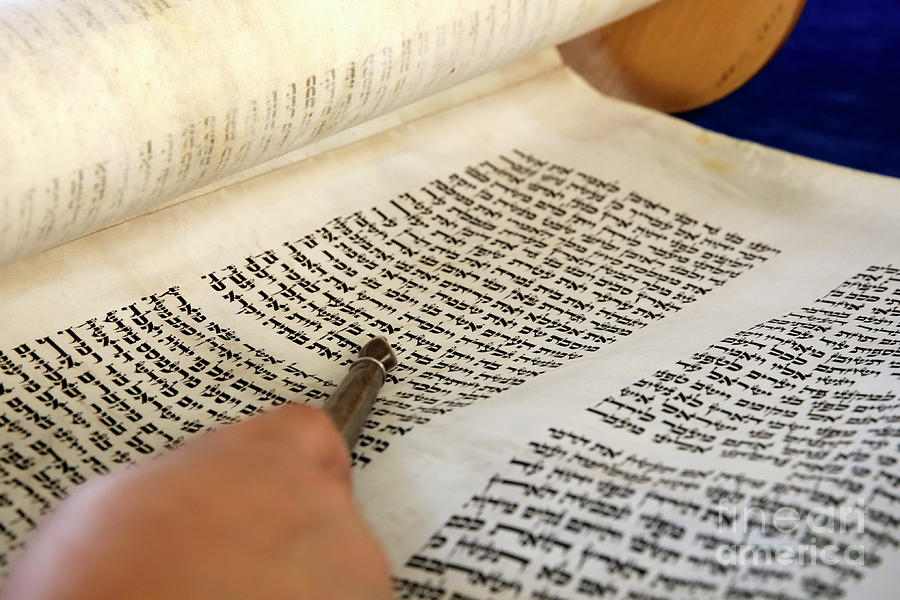
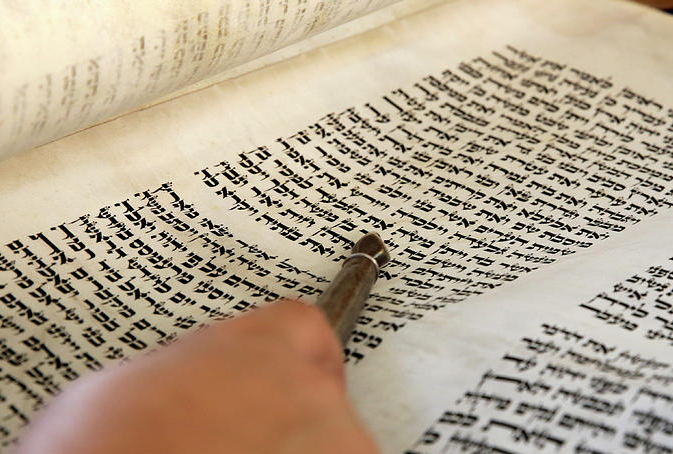
The language of ivrit ( עברית ) Genesis 36, Post #2 Welcome to my Hebrew reading & language series. Genesis 36:8-13 *source* https://images.fineartamerica.com/images/artworkimages/mediumlarge/1/1-reading-the-torah-scrolls-photostock-israel.jpg We learn that Esau is Edom, likely in another language, and his descendants will be referred to as Edomites. When we see that term in Hebrew it will be pronounced "Edomee" or "Edomay". Where the "ite" ending comes from I am not sure. It is probably used to make it easier to pronounce and spell in English. The text tells us that Edom settled in Seir and we saw that Esau and Jacob (Israel) had separated from each other because of all the great wealth, in animals and possessions, that they had both acquired. Last week, we learned the names of Esau's wives and this week, the break down of who was born of whom, which wife, and their names. Again, I like reading names in Hebrew because it tells me that the assumptions I have made, regarding pronunciation, over the last ten years have been correct or at least corrected over the same years. I read through this passage and every name is exactly what is written in English below them. The only differences are the "th" at the end of some which can only be pronounced "t" in Hebrew (example: Shabbat is correct and Sabbath is and Anglicization.) and the "z" in many words is really the tsadik, a letter that is pronounced 'ts' as in "Matsah" but some may find it difficult to pronounce that sound at the beginning of a word, like Tsadik, which means "just" or "righteous" in most texts. There is a letter in Hebrew that is pronounced with a 'z' sound. There it is above the "E" in Eliphaz. It looks like a mini T with the top crooked. There are many examples of zayin being changed in English to sound like an "s" but these are very small differences. What counts is that the Names of people are represented in English, for the most part, to sound as they do in Hebrew. Today's reading *English* So Esau settled in the hill country of Seir. (Esau is Edom.) These are the generations of Esau the father of the Edomites in the hill country of Seir. These are the names of Esau's sons: Eliphaz the son of Adah the wife of Esau, Reuel the son of Basemath the wife of Esau. The sons of Eliphaz were Teman, Omar, Zepho, Gatam, and Kenaz. (Timna was a concubine of Eliphaz, Esau's son; she bore Amalek to Eliphaz.) These are the sons of Adah, Esau's wife. These are the sons of Reuel: Nahath, Zerah, Shammah, and Mizzah. These are the sons of Basemath, Esau's wife. *Hebrew* ***The story continues next week with sons of...*** Info on each letter starting at the beginning *If you are just starting, my lessons are all here starting at Alef, adding vowels (the dots and lines) as we go. I explain the meaning of each letter and its numerical value. Just go to my blog and scroll to the bottom or* *click here* https://hive.blog/test/@hebrew/test *Get your Hebrew Bible now!* Click here to obtain the book we are using. It is a free download or browser usable. https://archive.org/stream/ESVInterlinearOT/ESV%20Interlinear%20OT#page/n3/mode/2up Thanks for reading. Shabbat Shalom


+1 more
@hebrew
The language of ivrit ( עברית ) Genesis 36, Post #1 Welcome to my Hebrew reading & language series. Genesis 36:1-7 *source* https://tse4.mm.bing.net/th?id=OIP.gQaVsP5v1XX9t1iv3epS_gHaFX Starting a new chapter with the generations of Esau and they begin to talk about the four wives from the women of the Canaanites. Then it says which of his kids was born to each of those women. Some say the names being listed is boring. In English that might be true, but I learn a few things from reading them. Each name means something in Hebrew and as I read them, sometimes I see a word that I know, which makes me think about why they would have named that son "tablecloth" for example. A crazy, made up example. The other thing is that I am able to confirm that my pronunciation of the words on the page are correct, or where maybe the interpreters changed the English for whatever reason. Example: Yeshua was changed to Jesus. A real example. Another interesting thing is that Esau's first wife was Elon's daughter. Then if that seems interesting to you, then you can see how "Elon" looks in Hebrew. Finally, we have a bit of the story which leads us to believe that the brothers were so rich in possessions that they had to separate or the land would not produce enough for their livestock. I would just assign them carbon credits and make them pay money to somebody who could not possibly impact the amount of carbon... (tangent) In reality, the earth has plenty of resources for eight billion people and I know this because we have eight billion people on the earth. The earth has plenty but Mr Gates has purchased hundreds of thousands of acres just to make sure nobody plants anything on them (in order to make what he says true). But God provides and nobody can change that. There is an abundance of water and God distills it for us every day and every year. We drink sea water that has gone up into the clouds, then it rains down and fills our wells and lakes. Today's reading *English* These are the generations of Esau (that is, Edom). Esau took his wives from the Canaanites: Adah the daughter of Elon the Hittite, Oholibamah the daughter of Anah the daughter of Zibeon the Hivite, and Basemath, Ishmae's daughter, the sister of Nebaioth. And Adah bore to Esau, Eliphaz; Basemath bore Reuel; and Oholibamah bore Jeush, Jalam, and Korah. These are the sons of Esau who were born to him in the land of Canaan. Then Esau took his wives, his sons, his daughters, and all the members of his household, his livestock, all his beasts, and all his property that he had acquired in the land of Canaan. He went into a land away from his brother Jacob. For their possessions were too great for them to dwell together. The land of their sojournings could not support them because of their livestock. *Hebrew* ***The story continues next week with more names...*** Info on each letter starting at the beginning *If you are just starting, my lessons are all here starting at Alef, adding vowels (the dots and lines) as we go. I explain the meaning of each letter and its numerical value. Just go to my blog and scroll to the bottom or* *click here* https://hive.blog/test/@hebrew/test *Get your Hebrew Bible now!* Click here to obtain the book we are using. It is a free download or browser usable. https://archive.org/stream/ESVInterlinearOT/ESV%20Interlinear%20OT#page/n3/mode/2up Thanks for reading. Shabbat Shalom


 @hebrew
The language of ivrit ( עברית ) Genesis 35, Post #4 Welcome to my Hebrew reading & language series. Genesis 35:18-29 *source* https://bibleblender.com Shabbat Shalom, we have finished another chapter, and we are burying two people today. We have Rachel who was buried on the way to Ephrath. Later in this passage, we see that Isaac breathed his last and his sons buried him as well. Aside from losing two to the grave, we have Reuben sneaking off to sleep with his father's concubine and Israel found out about it. There was no reaction or dialogue mentioned due to the sharing of his woman... The passage names all the sons and who they were born to and then goes on to talk about how Isaac was 180 and how he died all old and full of days. Sometimes I do not understand why so little is mentioned when it comes to disgusting sexual escapades of one or the other. Just move on to where they went next... Today's reading *English* And as her soul was departing (for she was dying), she called his name Benoni;' but his father called him Benjamin. So Rachel died, and she was buried on the way to Ephrath (that is, Bethlehem), and Jacob set up a pillar over her tomb. It is the pillar of Rachel's tomb, which is there to this day. Israel journeyed on and pitched his tent beyond the tower of Eder. While Israel lived in that land, Reuben went and lay with Bilhah his father's concubine. And Israel heard of it. Now the sons of Jacob were twelve. The sons of Leah: Reuben (Jacob's firstborn), Simeon, Levi, Judah, Issachar, and Zebulun. The sons of Rachel: Joseph and Benjamin. The sons of Bilhah, Rachel's servant: Dan and Naphtali. The sons of Zilpah, Leah's servant: Gad and Asher. These were the sons of Jacob who were born to him in Paddan-aram. And Jacob came to his father Isaac at Mamre, or Kiriath-arba (that is, Hebron), where Abraham and Isaac had sojourned. Now the days of Isaac were 180 years. And Isaac breathed his last, and he died and was gathered to his people, old and full of days. And his sons Esau and Jacob buried him. *Hebrew* ***The story continues next week as we do the generations of...*** Info on each letter starting at the beginning *If you are just starting, my lessons are all here starting at Alef, adding vowels (the dots and lines) as we go. I explain the meaning of each letter and its numerical value. Just go to my blog and scroll to the bottom or* *click here* https://hive.blog/test/@hebrew/test *Get your Hebrew Bible now!* Click here to obtain the book we are using. It is a free download or browser usable. https://archive.org/stream/ESVInterlinearOT/ESV%20Interlinear%20OT#page/n3/mode/2up Thanks for reading. Shabbat Shalom

 @hebrew
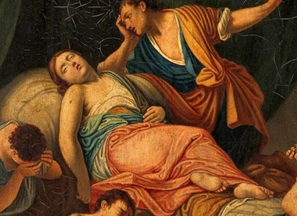
The language of ivrit ( עברית ) Genesis 35, Post #3 Welcome to my Hebrew reading & language series. Genesis 35:12-17 *source* https://tse4.mm.bing.net/th?id=OIP.YZKWfOiCxFDDEBIbmRHAOAHaFj The promised land is now promised again to Jacob in the conversation we started last week. Then God leaves, it says "and God went up from him", so they made a place to mark the location and made offerings to God there. Along with that, they also gave the place a name. Bethel in Hebrew is Beyt El which means House of God. Changing to another point in time the story sees Rachel going into labor. This is a very hard labor and she is having a son. We will continue next week with the birth and naming of Benjamin. Benjamin, incidentally, means **Son of the Right Hand**. Today's reading *English* The land that I gave to Abraham and Isaac I will give to you, and I will give the land to your off- spring after you." Then God went up from him in the place where he had spoken with him. And Jacob set up a pillar in the place where he had spoken with him, a pillar of stone. He poured out a drink offering on it and poured oil on it. So Jacob called the name of the place where God had spoken with him Bethel. Then they journeyed from Bethel. When they were still some distance from Ephrath, Rachel went into labor, and she had hard labor. And when her labor was at its hardest, the midwife said to her, "Do not fear, for you have another son." *Hebrew* ***The story continues next week as Banjamin is born...*** Info on each letter starting at the beginning *If you are just starting, my lessons are all here starting at Alef, adding vowels (the dots and lines) as we go. I explain the meaning of each letter and its numerical value. Just go to my blog and scroll to the bottom or* *click here* https://hive.blog/test/@hebrew/test *Get your Hebrew Bible now!* Click here to obtain the book we are using. It is a free download or browser usable. https://archive.org/stream/ESVInterlinearOT/ESV%20Interlinear%20OT#page/n3/mode/2up Thanks for reading. Shabbat Shalom


 @hebrew
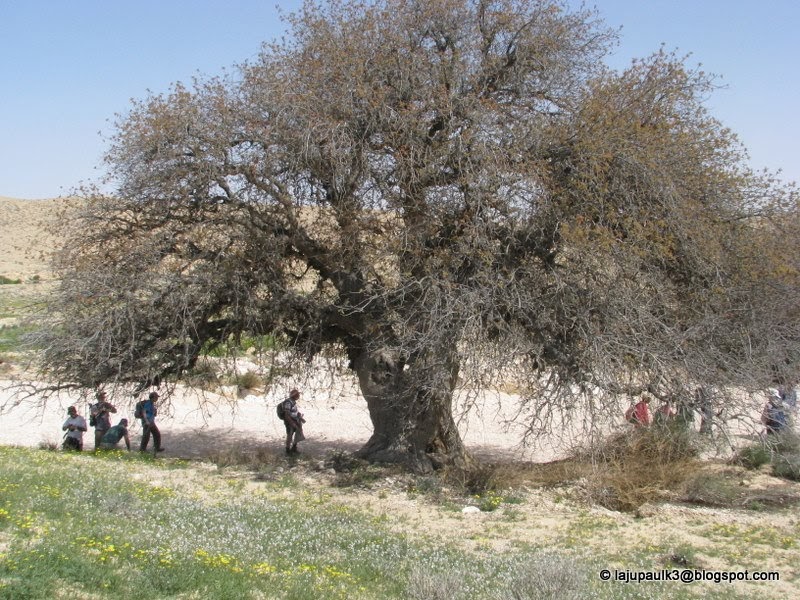
The language of ivrit ( עברית ) Genesis 35, Post #2 Welcome to my Hebrew reading & language series. Genesis 35:6-11 *source* https://en.diklaphotography.co.il/deborah-the-nurse-of-rebecca/ It seems that Jacob has no problem remembering where he had met God in the past. They arrived to Bethel (Beyt-El) and everyone build an alter there. They also needed to bury Deborah there under an oak tree. The name they called it was Allon-bacuth, which means "Oak of weeping." Isn't this the place where he had fallen asleep and seen the ladder? God remembers too because he decided to visit him again in this same place. If I remember right, Jacob was already renamed Israel after struggling with a man right before he met Esau. So God wants to tell him again about the name change. He also tells him to 'be fruitful and multiply', the same thing he told mankind many times, and that kings will be among his grandchildren. We never really know what are children will amount to as we raise them and teach them. It would be nice to get some future insight about what they will become. We leave this at mid-sentence as God speaks. We will pick up next week with the thirty fifth chapter of Genesis. In my personal reading, I am in the book of Esther now. Today's reading *English* And Jacob came to Luz (that is, Bethel), which is in the land of Canaan, he and all the people who were with him, and there he built an altar and called the place El-bethel,' because there God had revealed himself to him when he fled from his brother. And Deborah, Rebekah's nurse, died, and she was buried under an oak below Bethel. So he called its name Allon-bacuth. God appeared to Jacob again, when he came from Paddan-aram, and blessed him. And God said to him, "Your name is Jacob; no longer shall your name be called Jacob, but Israel shall be your name." So he called his name Israel. And God said to him, "I am God Almighty: be fruitful and multiply. A nation and a company of nations shall come from you, and kings shall come from your own body. *Hebrew* ***The story continues next for God's promise...*** **Info on each letter starting at the beginning** *If you are just starting, my lessons are all here starting at Alef, adding vowels (the dots and lines) as we go. I explain the meaning of each letter and its numerical value. Just go to my blog and scroll to the bottom or* *click here* https://hive.blog/test/@hebrew/test ***Get your Hebrew Bible now!*** Click here to obtain the book we are using. It is a free download or browser usable. https://archive.org/stream/ESVInterlinearOT/ESV%20Interlinear%20OT#page/n3/mode/2up *Thanks for reading.* Shabbat Shalom


 @hebrew
The language of ivrit ( עברית ) Genesis 35, Post #1 Welcome to my Hebrew reading & language series. Genesis 35:1-5 Select an Image source https://3.bp.blogspot.com/_mMSNJByhKvY/TFwLbfK_sPI/AAAAAAAAHi4/y6Epxayemgs/w1200-h630-p-k-nu/Mount+Ramon+199.JPG Jacob was upset last week. He did not know what he would do after his sons massacred all the men of Shechem. But this week starts with God telling him to take his family to a place called Bethel, which means "house of God", and to make an alter (Meezbe-ach) to the God that appeared to him when he was running from Esau. Jacob tells his family to change their clothes and to give up all the plunder, especially the foreign gods they had taken from the city. He told them where they would be going and why. He took the silver, gold, and idols then hid them under an oak tree in Shechem. Then God made the other cities afraid of Jacob and his sons so that they would not be attacked as they went through them. Today's reading English God said to Jacob, "Arise, go up to Bethel and dwell there. Make an altar there to the God who appeared to you when you fled from your brother Esau." So Jacob said to his household and to all who were with him, "Put away the foreign gods that are among you and purify yourselves and change your garments. Then let us arise and go up to Bethel, so that I may make there an altar to the God who answers me in the day of my distress and has been with me wherever I have gone." So they gave to Jacob all the foreign gods that they had, and the rings that were in their ears. Jacob hid them under the terebinth tree that was near Shechem. And as they journeyed, a terror from God fell upon the cities that were around them, so that they did not pursue the sons of Jacob. Hebrew The story continues next week as they arrive in Luz... **Info on each letter starting at the beginning** If you are just starting, my lessons are all here starting at Alef, adding vowels (the dots and lines) as we go. I explain the meaning of each letter and its numerical value. Just go to my blog and scroll to the bottom or click here https://hive.blog/test/@hebrew/test **Get your Hebrew Bible now!** Click here to obtain the book we are using. It is a free download or browser usable. https://archive.org/stream/ESVInterlinearOT/ESV%20Interlinear%20OT#page/n3/mode/2up Thanks for reading. Shabbat Shalom


 @hebrew
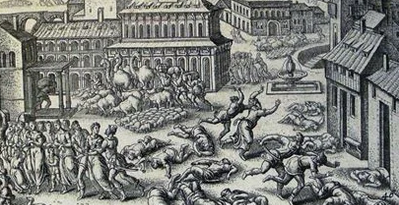
The language of ivrit ( עברית ) Genesis 34, Post #6 Welcome to my Hebrew reading & language series. Genesis 34:27-31 *source* https://mylordkatie.wordpress.com/tag/jacobs-journey/ We are finishing another chapter today. Chapter thirty four is history! The topic of today's reading is the wholesale butchering of the people of Shechem. After making a deal with the men of Shechem, the brothers went there after they had all been circumcised and were weak. They killed all the men including the prince who would have married Dinah. Then they took all the valuables, the animals, the women, and the children from the city. Jacob was very upset because the peoples of the region would likely gather and take on the people of Israel because of their shady dealings with Shechem. The brothers argued with their father with outrage still about what had happened to Dinah. The chapter abruptly ends there. Today's reading *English* The sons of Jacob came upon the slain and plundered the city, because they had defiled their sister. They took their flocks and their herds, their donkeys, and whatever was in the city and in the field. All their wealth, all their little ones and their wives, all that was in the houses, they captured and plundered. Then Jacob said to Simeon and Levi, "You have brought trouble on me by making me stink to the inhabitants of the land, the Canaanites and the Perizzites. My numbers are few, and if they gather themselves against me and attack me, I shall be destroyed, both I and my household." But they said, "Should he treat our sister like a prostitute?" *Hebrew* ***The story continues next week as they move yet again...*** **Info on each letter starting at the beginning** *If you are just starting, my lessons are all here starting at Alef, adding vowels (the dots and lines) as we go. I explain the meaning of each letter and its numerical value. Just go to my blog and scroll to the bottom or* *click here* https://hive.blog/test/@hebrew/test ***Get your Hebrew Bible now!*** Click here to obtain the book we are using. It is a free download or browser usable. https://archive.org/stream/ESVInterlinearOT/ESV%20Interlinear%20OT#page/n3/mode/2up Thanks for reading. Shabbat Shalom

 @hebrew
The language of ivrit ( עברית ) Genesis 34, Post #5 Welcome to my Hebrew reading & language series. Genesis 34:25-27 *source* https://tse1.mm.bing.net/th?id=OIP.gYKbTxKIup10qV-vcYm3_AHaFl They waited until the city was quiet after all men had gone under the knife. They killed the king and his son, the son having defiled their sister, and they went on to kill all the males in the entire city. I assume it was revenge for one rape - as bad as rape is, they overdid it. Then they took all the animals and goods out of the city as plunder. I do not like the way they did that. The prince had admitted his transgression and Dinah would have been a princess, even queen one day. What does she have now? Her husband-to-be is dead and she may end up having a child who would grow up with no father. If you feel that killing every male is the solution, why did you agree to, and even impose, rules of engagement in order to become part of the community in Shechem. Going back on deals is not a good thing for any man to do in my opinion. Last week was a long reading. This one has a lot going on in a short reading. I try to keep the topics in bite sized portions when posting. Comment if you like. Today's reading *English* On the third day, when they were sore, two of the sons of Jacob, Simeon and Levi, Dinah's brothers, took their swords and came against the city while it felt secure and killed all the males. They killed Hamor and his son Shechem with the sword and took Dinah out of Shechem's house and went away. The sons of Jacob came upon the slain and plundered the city, because they had defiled their sister. *Hebrew* ***The story continues next week as Jacob hears about it...*** **Info on each letter starting at the beginning** *If you are just starting, my lessons are all here starting at Alef, adding vowels (the dots and lines) as we go. I explain the meaning of each letter and its numerical value. Just go to my blog and scroll to the bottom or* *click here* https://hive.blog/test/@hebrew/test ***Get your Hebrew Bible now!*** Click here to obtain the book we are using. It is a free download or browser usable. https://archive.org/stream/ESVInterlinearOT/ESV%20Interlinear%20OT#page/n3/mode/2up Thanks for reading. Shabbat Shalom