An Islamic Perspective on Women's Dress
No subject seems to receive more attention as an issue unique to Muslims than that of women’s dress. Muslims and non-Muslims alike dwell on this issue, using women’s appearances to categorize others in an effort to understand them. In some instances, the dress of the Muslim woman ends up meaning more to others than it does to the woman herself with often far-reaching political and social implications. Examining the reasons for such obsession is beyond the scope of this position paper, but deserves consideration nevertheless, as we ask ourselves why so many people are so preoccupied with the appearance of Muslim women.
Our purpose here is to at least develop a basic understanding of this issue from the point of view of the Islamic texts, that is, the Qur’an and then hadith. We are not interested in coming to conclusions that result in a set of rules on how to dress. This has been done in numerous books and articles written over the centuries, including many authored very recently. Rather, we seek to understand the spirit and focus of the original texts to get an overall sense of the message being conveyed. In general, the overriding principle that comes through is one of modesty for both men and women.
**Qur'anic Text**
From Yusuf Ali or Muhammad Asad translations:
Say to the believing men that they should lower their gaze and guard their modesty: that will make for greater purity for them: and God is well acquainted with all that they do.
And say to the believing women that they should lower their gaze and guard their modesty; that they should not display their zeenah (charms, or beauty and ornaments) except what (must ordinarily) appear thereof; that they should draw their khimar (veils) over their bosoms and not display their zeenah except to their husbands, their fathers .... and that they should not strike their feet so as to draw attention to their hidden zeenah (ornaments). (24:31-32)
O Prophet! Tell your wives and daughters and the believing women that they should draw over themselves their jilbab (outer garments) (when in public); this will be more conducive to their being recognized (as decent women) and not harassed. But God is indeed oft-forgiving, most merciful. (33:59)
And know that women advanced in years, who no longer feel any sexual desire incur no sin if they discard their thiyab (outer garments), provided they do not aim at a showy display of their zeenah (charms or beauty). But it is better for them to abstain (from this); and God is all-hearing, all-knowing. (24:60)
These are the only verses which address the issue of clothing so specifically. Clearly, the basic principle is that of modesty. The first verse emphasizes the importance of one guarding her or his modesty, lowering one’s gaze in order to remain pure. This means that, in order for women and men to have respectful relationships (such as at work or school, etc.) they must focus on modesty in their behavior. This is enhanced by dressing in a way that reinforces one’s image as a modest person. It must be emphasized that behavior and appearance are both important in setting the tone of respectful interaction between men and women.
In addition, the second verse shows that the purpose of covering oneself is to "be recognized (as decent women) and not harassed." Many women who cover their hair and dress modestly do notice that men are more respectful and people are more inquisitive about their faith, so they are "recognized" not just as decent women but also as Muslims. Occasionally, women who cover their hair may also experience harassment and discrimination because of stereotyping and misunderstandings about Islam and women.
Interestingly, the Qur’an is really not that explicit about the exact definition of modest dress. By reading the Qur’anic verses above, women are advised to cover their breasts and put on their outer garments in a way that enables them to avoid harassment. In addition, women are advised not to draw attention to their "beauty" (zeenah). This term has been translated as both beauty and ornaments (as women used to strike their feet to draw attention to hidden ornaments such as ankle bracelets). Of note is that the Qur’an uses the term zeenah elsewhere, perhaps showing that in different contexts the word has slightly different meanings:
O Children of Adam! Wear your beautiful apparel (zeenah) at every time and place of prayer…(7:31)
The exact rules defining women’s dress have been determined based on interpretation of these verses and incorporation of concepts established in hadith. The inclusion of a head covering is derived from interpretation of the word khimar in 24:31 above. Most translators and commentators agree that this was a loose scarf worn at the time of the Prophet (pbuh) which covered a woman’s head, neck and possibly shoulders, leaving the rest exposed. Women were thus ordered to use the khimar to cover their breasts. Naturally, a woman would continue to cover her neck, head and shoulders and would then also cover her breast. This understanding of the khimar as a head-covering explains why Muslims believe that the Qur’an tells us to cover our hair. The injunction, however, regarding covering the hair in addition to everything else is implied, not specified in the Qur’an.
In addition, the verse says not to display one’s zeenah except to husbands, fathers, sons, etc. except "what naturally appears thereof". Most scholars writing on the subject consider a woman’s chest, hips, legs, neck (basically her whole body) as zeenah, which should thus be covered. Yet, as mentioned above, the Qur’an itself reveals that, in different settings, the word may have different implications; also, the (perhaps intentional) lack of specificity in defining zeenah may actually allow for differing interpretations based on a variety of circumstances.
Similarly, traditional interpretation considers the phrase "what naturally appears thereof" (illa ma zahara minha) to be limited to the hands, feet and face (although some feel that the face is also part of a woman’s beauty and should be covered). Again, when referring to Qur’an alone, the exact determination as to what naturally or ordinarily appears is left unclear.
In the second verse (33:59), the word jilbab refers to outer garments, used to cover in a way that lends oneself to be recognized and not harassed. The jilbab was commonly understood to mean loose fitting clothing and, more specifically, a long loose dress or overcoat worn by many Muslim women today. But again, the focus of the verse is on the result, avoiding harassment and preserving one’s dignity, and not on the details of the actual article of clothing.
The basic message and instruction expressed in the Qur’an is for Muslims to act modestly, dress modestly, and avoid drawing attention to oneself, especially those features that are physically attractive and perhaps enticing to the opposite sex. This applies for both men and women.
**The Term "Hijab"**
Literally, the word hijab means "curtain". In the Qur’an the term hijab is not used as a reference to women’s clothing; rather, it was the screen behind which the Muslims were told to address the Prophet’s wives. (The term is also used to describe the "screen" separating God from Moses, as he received divine revelation.) When the Prophet’s wives went out, the screen consisted of a veil over their face. It does not appear that covering the face was adopted by the other Muslim women at the time since it was a special injunction for the Prophet’s wives as is clear in the verses below:
And (as for the Prophet’s wives) when you ask for anything you want (or need), ask them from behind a hijab (screen), that makes for greater purity of your hearts. (33:53)
O wives of the Prophet! You are not like any of the (other) women: If you do fear (God) be not too complaisant of speech, lest one in whose heart is a disease should be moved with desire: but speak with a speech (that is) just. (33:32)
Among Muslims today, hijab refers to the head scarf worn by many women. It is a term used to distinguish between women who cover their hair (muhajabat) and those who do not, even if the rest of their clothes are equally modest.
Finally, the Qur’an also talks about our clothing as something both to cover our nakedness and serve as an adornment, reflecting the beauty of God’s creation. But, as in the verses above, it is behavior and attitude that are most important. Regardless of how we dress, we must have faith and taqwa, God consciousness or righteousness:
O you Children of Adam! We have bestowed libasan (clothing or raiment) on you to cover your nakedness and as a thing of beauty. But the raiment of righteousness (taqwa), that is the best. Such are the signs of God, that they may receive admonition. (7:26)
O Children of Adam! Wear your beautiful apparel (zeenah) at every time and place of prayer: eat and drink: but waste not by excess, for God loves not the wasters. (7:31)
Those are all of the verses in the Qur’an which speak to the issue of dress.
**Hadith Text**
The hadith also address women’s (and men’s) dress. The most oft-quoted hadith attributed to the Prophet (pbuh) is as follows:
Aisha said, "Asma, daughter of Abu Bakr (that is, Aisha’s sister), entered upon the Apostle of God (pbuh) wearing thin clothes. The Apostle of God turned his attention from her and said, "O Asma, when a woman reaches the age of menstruation, it does not suit her except that she displays parts of her body except this and this," and he pointed to her face and hands. (Sunan Abi Dawud)
This hadith is found only in the hadith collection of Abu Dawud (no. 4095). According to Abu Dawud, it is considered weak because the narrator who transmitted it from Aisha is not known (mursal). Other hadith found elsewhere talk about not wearing see-through clothes or clothing intended for wear by the opposite sex. Also, Aisha reported that when the verse above was revealed about covering the breast (24:31), the women tore their thick outer garments to make veils.
Based on the interpretation and understanding of the above verses and hadith, the scholars (namely, from the major Sunni and Shi’a schools of thought) have determined that hijab (covering from head to toe) is a religious obligation (fard). The notion of ijma’a , or consensus of scholars and or schools of thought, is a well-established component of Islamic jurisprudence from which numerous laws have been derived. Needless to say, determining exactly which scholars and which opinions qualify as "consensus" is not without controversy, a topic that needs expanded discourse among learned Muslims today.
**Discussion**
Without a doubt, God in His wisdom advises the believers to dress and behave in a way that elevates their status both in this life and the hereafter. Most Muslims do not view modest dress as an imposition meant to oppress either women or men. Indeed, many women who voluntarily wear hijab actually feel liberated; free from society’s rules about women’s looks, free from being slaves to fashion, free to reserve their beauty for their husbands and so on.
A more important question in this discussion is whether individuals, Muslim or non-Muslim, should be forced to dress in a certain way. Every society is entitled to establish minimum standards of dress (in the US, we do have limits as well, defining "indecent exposure" according to this society’s norms). How those standards are enforced and to what extent individuals are punished for violations is of extreme importance in those countries which strongly regulate the dress code.
When reviewing both Qur’an and hadith, there is no precedence for how to deal with such violations; the Prophet (pbuh) or his wives and companions simply reminded others to follow the guidelines. Not a single example of violence, imprisonment, humiliation or coercion can be found during the lifetime of the Prophet (pbuh)that would imply that such practices today are consistent with his example.
The Qur’an does not spell out any punishment (hudud) for violations of a dress code. Also, in the verses outlined above, the Qur’an clearly addresses "the believing women" meaning Muslims, so that it is difficult to find an argument to justify the imposition of an "Islamic" dress code on non-Muslim women. Thus, by inference the decision to dress a certain way is left to the individual who will face the consequences for all actions in this life, to her benefit or detriment, as God sees fit.
The Qur’an also says "There is no compulsion in religion" (2:256). Those who choose to behave a certain way as a reflection of their belief in God and His message and thus accept the challenges therein are not the same as those who behave to satisfy other people or laws set in place. The freedom and ability to choose to do good make the reward that much greater.
Among many Muslims today, hijab is often equated with piety, both by those who cover their hair and those who do not. Unfortunately, too many assume that a woman who covers must naturally be more religious or conservative that one who does not. This generates expectations and pressure on Muslim women in hijab , whose behavior is held to different standards, perhaps undesired on the part of the woman. On the other hand, according to popular opinion, the Muslim woman who does not cover her hair (even if she is otherwise dressed modestly) has not quite arrived at the perceived goal of all righteous believing women. The scarf, an article of clothing, has sadly become a litmus test for a Muslim woman’s faith and devotion to God. Indeed, the importance which some Muslims have attached to hijab has made some sarcastically refer to it as the "Sixth Pillar" of Islam, on par with prayer, fasting, alms-giving, pilgrimage and bearing witness to the oneness of God.
While our faith is manifested in our deeds, only God can judge our piety and righteousness. The Prophet himself (pbuh) would not venture to say who, for certain, would reach Paradise. Such knowledge is with God alone such that the judgement of one person regarding another’s religiosity is totally irrelevant.
How Muslims dress is only one aspect of our identities. For many women, dressing conservatively and covering one’s hair are felt to be acts of faith. Therefore, discriminating against a woman for dressing a particular way violates her freedom to practice her religion, a fundamental right cherished here in the United States. The non-Muslim community, particularly the media, needs to get beyond its own narrow one-dimensional view of the conservative dress of the Muslim woman as a sign of oppression. It is a choice that American Muslim women make, perhaps not the same as that of other women, but equally valid. Ultimately, what really matters is the attitude, behavior and demeanor of the person in question.
**A Source of Division?**
Among Muslims, the division and intolerance expressed regarding women’s dress is one factor that impedes our growth and development as a meaningful presence in the world today. All Muslims struggle with matters of faith, identity, and community. With the pressing issues facing the Ummah today such as poverty, illiteracy, violence, warfare and other ills, we must ask ourselves if we want to be consumed and paralyzed by the issue of women’s dress. Placing the burden primarily on women without calling for the accountability of men to control themselves and their sexual appetites is in violation of the spirit of the Qur’an which is about self-control and self-restraint.
In addition, the extremely negative attitudes which consider women who do not cover as somehow unchaste are most egregious and unjustifiable. Wrongful accusations against a woman’s honor are met unequivocally with severe consequences as mentioned in the Qur’an (24:4-20).
Only together, through cooperation, tolerance and forbearance, as exemplified by the Prophet (pbuh) can Muslims overcome the obstacles to success in this life and the hereafter that often are expressed in our attitudes towards women.
**Muslim Women's League**
**3010 Wilshire Blvd. Suite #519**
**Los Angeles, CA 90010**

Financial Intelligence by Karen Berman and Joe Knight
Joe Knight
Get the book. Read my notes. https://www.amazon.com/Financial-Intelligence-Revised-Managers-Knowing/dp/1422144119?tag=natsite-20 https://www.nateliason.com/notes/financial-intelligence-karen-berman-joe-knight
“*After reading this book, you should know a lot. So use it! Use it to improve cash flow. Use it to analyze the next big project. Use it to assess your company’s results. Your job will be more fun, and your impact on the company’s performance will be greater.”*
There’s nothing particularly exciting or fascinating about this book, but it was a great introduction to basic accounting and financial thinking that helped immensely with structuring Growth Machine in the early days. If you run a business and you haven’t read a book like this, I highly recommend it. https://www.yourgrowthmachine.com/
**Interesting section**: One part that was particularly useful for me was how to think about cash flow, and restructuring your payment schedules to allow for better cash flow for the business and not need to raise money or take out loans. Great for service-based and ecommerce businesses.
12 Rules for Life by Jordan Peterson
Get the book. Made You Think episode. Read my notes. https://www.amazon.com/12-Rules-Life-Antidote-Chaos/dp/0345816021/?tag=natsite-20 https://madeyouthinkpodcast.com/12-rules-for-life-by-dr-jordan-b-peterson/ https://www.nateliason.com/notes/12-rules-for-life-jordan-peterson
“*To treat yourself as if you were someone you are responsible for helping is, instead, to consider what would be truly good for you. This is not “what you want.” It is also not “what would make you happy… You need to consider the future and think, “What might my life look like if I were caring for myself properly?"*
There’s something refreshing about Peterson’s take on self-help. It feels like a mix of Jocko Willink and Joseph Campbell, low-bullshit tough love with a religious mythology spin on it. I’d recommend this over most self-help books, since he doesn’t waste time with questionable psych studies, but focuses on advice that makes sense intuitively while being actionable and memorable.
**Interesting section:** Peterson has a chapter on comparing yourself with who you were yesterday, not who someone else is today (rule 4). This is something I struggle with a lot, and it was interesting to read his take on it. Particularly the reference to Finite and Infinite Games (intentional or not). https://www.nateliason.com/notes/finite-infinite-games-james-carse
Skin in the Game by Nassim Nicholas Taleb
Get the book. Made You Think episode. Read my notes. https://www.amazon.com/Skin-Game-Hidden-Asymmetries-Daily-ebook/dp/B075HYVP7C/ref=as_li_ss_tl?s=digital-text&ie=UTF8&qid=1533234933&sr=1-1&keywords=skin+in+the+game&linkCode=ll1&tag=natsite-20&linkId=f37ef2754fb9306079b65138900c5cbc&language=en_US https://madeyouthinkpodcast.com/skin-in-the-game-by-nassim-taleb/ https://www.nateliason.com/notes/skin-in-the-game-by-nassim-taleb
“*If your private life conflicts with your intellectual opinion, it cancels your intellectual ideas, not your private life.”*
Skin in the Game felt like an epilogue to Antifragile, but I enjoyed it. It’s a concept that doesn’t come intuitively to most people most of the time, and seeing how Taleb expanded the ideas to other areas was interesting. Plus, if you like his writing style, he’s a delight to read. https://www.nateliason.com/notes/antifragile
**Interesting section**: There’s a great chapter on how little agency most of us have. As a perfect example, almost everyone prefers the taste of hamburgers to steaks, but we order steaks because we think they’re fancier and higher class.
The Myth of Sisyphus by Albert Camus
Get the book. Made You Think episode. Read my notes. https://www.amazon.com/Myth-Sisyphus-Essays-Vintage-International-ebook/dp/B009UAO2H8/ref=as_li_ss_tl?ie=UTF8&qid=1532635968&sr=8-1&keywords=the+myth+of+sisyphus&linkCode=ll1&tag=natsite-20&linkId=8b32ff9bdb98868d84425d852e2d54d6&language=en_US https://madeyouthinkpodcast.com/the-myth-of-sisyphus-by-albert-camus/ https://www.nateliason.com/notes/myth-sisyphus-albert-camus
“*At each of those moments when he leaves the heights and gradually sinks toward the lairs of the gods, he is superior to his fate. He is stronger than his rock… The workman of today works every day in his life at the same tasks, and this fate is no less absurd. But it is tragic only at the rare moments when it becomes conscious.*”
“The Myth of Sisyphus” explores whether or not it makes sense to commit suicide. It’s a fascinating discussion and resolves in a way I wasn’t expecting. It’s short, so if you haven’t read it, it’ll only take you an afternoon.
**Interesting section**: I liked Camus’s exploration of Nietzsche’s “God is dead” idea from Thus Spoke Zarathustra. Camus concludes that to kill God means to become God yourself, and take full responsibility for your fate. I hadn’t heard it framed that way before.
Smoke Signals by Martin A. Lee
Get the book. Made You Think episode. Read my notes. https://www.amazon.com/Smoke-Signals-Marijuana-Recreational-Scientific-ebook/dp/B0061OQWY2/ref=as_li_ss_tl?ie=UTF8&qid=1536095364&sr=8-3&keywords=smoke+signals&linkCode=ll1&tag=natsite-20&linkId=1f73b73e586aa6434b4450531eabe9b4&language=en_US https://madeyouthinkpodcast.com/smoke-signals-by-martin-a-lee/ https://www.nateliason.com/notes/smoke-signals-martin-a-lee
*“Once they tried marijuana, many Americans wondered if they could trust the government to tell the truth about anything.”*
“Smoke Signals” is a very in-depth history of marijuana and its status in the US, leading up to almost the present day. What I liked about it was how much I learned about US political history alongside learning a lot about marijuana, and the book really shows just how insane our current drug policies are.
**Interesting section**: There’s a long section in the book on Nixon and his presidency, especially his treatment of drugs, and it’s crazy to see how racist and anti-semitic he was. He hated all drugs and created many of the strict policies we have today, but he was an alcoholic and addicted to sleeping pills.
Homo Deus by Yuval Noah Harari
Get the book. Made You Think episode. Read my notes. https://www.amazon.com/Homo-Deus-Brief-History-Tomorrow-ebook/dp/B01BBQ33VE/ref=as_li_ss_tl?ie=UTF8&qid=1533226083&sr=8-1&keywords=homo+deus&linkCode=ll1&tag=natsite-20&linkId=639bca384057730a28a2e01112a45412&language=en_US https://madeyouthinkpodcast.com/homo-deus-by-yuval-noah-harari/ https://www.nateliason.com/notes/homo-deus-by-yuval-noah-harari
“*If by ‘free will’ we mean the ability to act according to our desires – then yes, humans have free will, and so do chimpanzees, dogs and parrots… But the million-dollar question is not whether parrots and humans can act upon their inner desires – the question is whether they can choose their desires in the first place.*”
“Homo Deus” isn’t as good as its predecessor, “Sapiens,” but it’s still a great exploration of what we know about humans and culture now, and how that might shape the future. Harari has a fascinating way of looking at our species as if he’s some sort of alien, and the conclusions are both insightful and somewhat discomforting. https://www.nateliason.com/notes/sapiens-yuval-noah-harari
**Interesting section:** Similar to Darwin’s Dangerous Idea above, there’s a long section in Homo Deus on whether or not there is a “Mind” separate from the brain. Harari’s conclusion? No, because what happens in the mind that doesn’t happen in the brain?
The Best Articles I Read in 2018
The Tower by Hotel Concierge
Read the article. Made You Think episode. https://hotelconcierge.tumblr.com/post/162571849189/the-tower https://madeyouthinkpodcast.com/the-tower-hotel-concierge/
“*Of course I support gay marriage; my point is that if ones views before were well, it is kind of weird, then being told soon there will be enough of us that we won't have to deal with people like you at all--that makes homophobia logical. And at least you can change your opinion of gay marriage. Its much harder to change being white and low-class.*”
I think this is my favorite article ever. It explores a topic I find really interesting: memetics and the current culture war, and does so in a writing style that’s provocative and fun to read, almost poetic. It also changed how I think about a lot of what’s going on in the memeoplex right now, which always makes for a good article.
The Straight Dope on Cholesterol by Peter Attia
Read the articles. Read my notes. https://peterattiamd.com/the-straight-dope-on-cholesterol-part-i/ https://www.nateliason.com/notes/straight-dope-on-cholesterol-peter-attia
“*It is the LDL particle that is the ultimate delivery vehicle of cholesterol back to the liver in a process now called indirect reverse cholesterol transport. However, under certain circumstances the LDL will penetrate and deliver its cholesterol load to the artery walls. THIS IS EXACTLY WHAT WE DON'T WANT TO HAPPEN.*”
There is so much arguing, confusion, and misinformation about cholesterol floating around out there that this series of articles was a very welcome explanation. It shows why there is some truth to the “cholesterol doesn’t matter” idea, but also where that idea breaks down, and how cholesterol IS an important risk factor for cardiac disease and atherosclerosis, but the way we measure it right now is bad. Anyway, it’s a must read before you say anything about cholesterol on the Internet.
The Drugging of the American Boy by Ryan D’Agostino
Read the article. https://www.esquire.com/news-politics/a32858/drugging-of-the-american-boy-0414/
“*What I call the 'moral diagnosis' gets made: You're bad. Now go get a doctor and get on medication so you'll be good. And that's a real perversion of what ought to happen. Most boys are naturally more restless than most girls, and I would say that's good. But schools want these little goody-goodies who sit still and do what they're told—these robots—and that's just not who boys are.*”
This was a great exploration of how the differing behavior of young boys and girls may be influencing the massive overprescription of ADHD medications, and how we might rethink these behaviors and differences to create a better learning environment for young boys. The whole ADHD industry terrifies me, I think we’re going to see serious consequences for putting children on amphetamines in the near future.
The Family that Built an Empire of Pain by Patrick Radden Keefe
Read the article. Read my notes. https://www.newyorker.com/magazine/2017/10/30/the-family-that-built-an-empire-of-pain https://www.nateliason.com/notes/the-family-that-built-an-empire-of-pain-by-patrick-keefe
“*According to training materials, Purdue instructed sales representatives to assure doctors—repeatedly and without evidence—that “fewer than one per cent” of patients who took OxyContin became addicted. (In 1999, a Purdue-funded study of patients who used OxyContin for headaches found that the addiction rate was thirteen per cent.)*”
This story is wild. I’ve never even *heard* the name Sackler, but they’re the family behind so much of what’s going on right now with the opioid epidemic. This history of how they created this massive opiate market by manipulating doctors, patients, hospitals, and public perception is fascinating and terrifying, and makes me worried about what else could be slipping through the medical establishment.
Stay On the Bus: The Helsinki Bus Station Theory
Read the article. http://www.fotocommunity.com/info/Helsinki_Bus_Station_Theory
“*What to do? Its simple. Stay on the bus. Stay on the f*cking bus. Why, because if you do, in time you will begin to see a difference. The buses that move out of Helsinki stay on the same line but only for a while, maybe a kilometer or two. Then they begin to separate, each number heading off to its own unique destination. Bus 33 suddenly goes north, bus 19 southwest.*”
A great article on the importance of not quitting in the early days of a creative pursuit when you feel like you’re just making worse versions of someone else’s work. Copying an art style is a great way to get started, and as you learn and evolve you’ll naturally diverge from where you started. You just need to stay on the bus.
Love and Happiness by Lou Keep
Read the article. https://samzdat.com/2018/08/22/love-and-happiness/
“*How you study something determines what it is, which means you’re making a strong claim well before you begin investigating. If you assume that “love” can be studied with neural imaging, then you’re assuming it’s the kind of thing tied to a brain state.*”
Keep’s essay perfectly explains why so many “studies” about brain states like happiness, grit, love, are flawed. They’re self-referential in how they’re defined and studied, and in doing so erode any meaningful way of measuring them. They’re important, but ultimately we can’t study them the way we want.
College as an Incubator of Girardian Terror by Dan Wang
Read the article. https://danwang.co/college-girardian-terror/
“*When were not so different from people around us, its irresistible to become obsessed about beating others. Girards framework vastly improves Freuds phrase the narcissism of small differences. Its also a framework for Kissingers quip: Academic politics are so vicious because the stakes are so small.”*
This essay fits closely with the recent article on America’s “Rich White Civil War.” Political divides, protests, and outrage on college campuses is partially driven by how similar everyone in the school is, leading them to feel even more pressure to fight and distinguish themselves from the others. https://www.nytimes.com/2018/10/15/opinion/politics-race-white-tribalism.html
Crony Beliefs by Kevin Simler
Read the article. Read my notes. https://meltingasphalt.com/crony-beliefs/ https://www.nateliason.com/notes/crony-beliefs-kevin-simler
“*I contend that the best way to understand all the crazy beliefs out there — aliens, conspiracies, and all the rest — is to analyze them as crony beliefs. Beliefs that have been "hired" not for the legitimate purpose of accurately modeling the world, but rather for social and political kickbacks.”*
One of my all time favorite articles. I use the concept of “crony beliefs” frequently to try to analyze my own thinking and other popular ideas, and it’s an endlessly useful tool. If you don’t read Elephant in the Brain, at least read this article.
If you're looking for more recommendations, I also have posts for the best books I read in 2017, and best books from 2016. https://www.nateliason.com/blog/best-books-2017 https://www.nateliason.com/blog/best-books-2016
You Might Also Like...
*The 12 Best Books I Read in 2017* https://www.nateliason.com/blog/best-books-2017
*The 18 Best Books for College Students to Read Before Graduating* https://www.nateliason.com/blog/best-books-college-students
*10 Books to Read After Discovering Stoicism* https://www.nateliason.com/blog/books-after-stoics
*The 12 Best Books I Read in 2016* https://www.nateliason.com/blog/best-books-2016
*15 “Pivotal” Books that Changed How I Think and Live* https://www.nateliason.com/blog/pivotal-books
**381Shares**
Did You Enjoy This?
Then consider joining the 25,000 other people getting the Monday Medley newsletter. It's a collection of fascinating finds from my week, usually about psychology, technology, health, philosophy, and whatever else catches my interest. I also include new articles and book notes. https://www.nateliason.com/join
© Nathaniel Eliason, 2020 | You're looking great today | This site built on Webflow
https://webflow.com/?rfsn=1149276.d13103
https://c.sharethis.mgr.consensu.org/portal-v2.html
**Shares**

Darwin’s Dangerous Idea by Daniel Dennett
Get the book. Made You Think episode. Read my notes. https://www.amazon.com/DARWINS-DANGEROUS-IDEA-EVOLUTION-MEANINGS/dp/068482471X/?tag=natsite-20 https://madeyouthinkpodcast.com/darwins-dangerous-idea-by-daniel-dennett/ https://www.nateliason.com/notes/darwins-dangerous-idea-daniel-dennett
“*Darwin’s dangerous idea is that Design can emerge from mere Order via an algorithmic process that makes no use of pre-existing Mind.*”
“Darwin’s Dangerous Idea” explores what it really means for us to accept the reality of evolution. On the surface, evolution is a harmless concept that explains speciation and divergences throughout biological history. But when we dig in, we have to accept that evolution suggests there is no Mind, no meaning to life, and certainly no afterlife.
**Interesting section**: One point Dennett makes about the evolution of ideas is that there’s likely great wisdom in the ideas that have stuck around, including the core ideas of many religions and certain kinds of ancient medicines. We’ve seen this idea popularized recently too in *Antifragile*. https://www.nateliason.com/notes/antifragile

The Elephant in the Brain by Robin Hanson and Kevin Simler
Get the book. Made You Think episode. Read my notes. https://www.amazon.com/Elephant-Brain-Hidden-Motives-Everyday/dp/0190495995/ref=as_li_ss_tl?s=books&ie=UTF8&qid=1533137959&sr=1-1&keywords=elephant+in+the+brain&linkCode=ll1&tag=natsite-20&linkId=2bed8fec6eebe0fbd1e7ef1db08d0eba&language=en_US https://madeyouthinkpodcast.com/the-elephant-in-the-brain-by-kevin-simler-and-robin-hanson/ https://www.nateliason.com/notes/the-elephant-in-the-brain-by-robin-hanson-and-kevin-simler
*“We, human beings, are a species that’s not only capable of acting on hidden motives—we’re designed to do it. Our brains are built to act in our self-interest while at the same time trying hard not to appear selfish in front of other people.”*
“The Elephant in the Brain” is all about how we have unspoken underlying motives to our actions that don’t make us look great, but that give a rational explanation for why we do seemingly irrational things.
**Interesting section**: One application of the concepts of the book was to college, and the authors explain how if Harvard (and other universities) actually cared about education, they would franchise and be less exclusive. Since they don’t, it suggests these schools care more about prestige and signaling than about educating.

Family Disintegration and Its Relation to Child Delinquency
Family disintegration is one of the most common problems that family members encounter in modern society. Sadly, the relationships between family members have become (overwhelmingly) marked with indifference, neglect, and slackness. Neither the father nor the mother is concerned with strengthening family relationships, and each of them is preoccupied with their own life and personal activities that they prefer not to share with anyone else! When the father returns home from work, he rests for a while and then runs out to spend the rest of his day outside the house! Likewise, the day of a stay-at-home mother is filled with hard work, spent in carrying out endless household chores and caring for her children until, at the end of the day, she throws her tired body on the bed, drained of energy, and falls into deep sleep. If she is a working mother, it is even worse!
As a result, the children remain lost between studying, communicating with friends, engaging in random entertainment activities, surfing the internet, and watching numerous online programs. In this way, the family misses out on engaging in dialogues among themselves which strengthen the relationships between family members. This leads to family disintegration, which in turn results in a weak society lacking connectedness and cohesion.
Causes of family disintegration:
If we wish to underline the reasons of family disintegration and its root causes, we must first understand what is meant by the term “family disintegration”.
Family disintegration can be defined as: the emotional and physical estrangement among the members of a single family.
It has many causes that are all correlated, the most important of which are the following:
1- The absence of the father and his nominal presence in the family.
2- The absence of the mother and her negligence in shouldering her family duties.
3- The competition between the husband and wife, each trying to replace the other, and this is known as ‘role conflict’.
4- The addiction to using modern means of communication and the negligence resulting thereof.
5 – The total dependence on the maid and entrusting all the household affairs to her to replace the wife.
6- The economic status of the family, whether it belongs to the elite upper class or the poor low class. The economic status of a family significantly affects the cohesion and communication among the family members.
7- Divorce and the resulting problems and disputes.
8- The preoccupation of the parents with the burdens of life and their failure to allocate enough (quality) time to spend with their children.
9 – Unfaithfulness of either spouse, thus igniting problems between them.
10- Their failure to honor marital life, monitor the children, and provide them with a good righteous upbringing.
The effects of family disintegration on children:
The primary victim in all family problems and bad marriages in different societies are the children, who bear the consequences of the wrong actions done by either parent, especially given that they are the weaker party.
Family disintegration is one of the major factors that cause child delinquency; it causes children to live in a state of constant anxiety and turmoil due to the absence of one of the parents. Such absence makes the children feel insecure and drives them to search for their lost sense of security and stability outside the family, even if done through ways deemed unlawful by the Sharee‘ah!
Family disintegration also has a role in the emergence of some psychological disorders in children, such as hostility, addiction, stress, tendency to seek solitude, introversion, weak academic performance, and many other disorders that are difficult to treat if neglected by parents.
Moreover, family disintegration may result in sexual or material exploitation of the child, as the child feels like an outcast, ostracized from the community, and his self-confidence plummets, rendering him an easy prey for material or sexual exploitation.
Solutions and remedy:
Family disintegration is a plight that afflicts societies and must be treated and eradicated, especially since this is urged by Islam. Allah, The Exalted, Says (what means): ***{Then, either keep [her] in an acceptable manner or release [her] with good treatment.}*** [Quran 2:229] Kindness, good companionship, and mutual respect are among the key factors and components to a successful family life. Both husband and wife are jointly responsible for tending to the needs of the children, managing their affairs, and taking care of them. Our noble Messenger clarified this meaning in his statement: ***“Every one of you is a guardian and is responsible (shall be held accountable) for the people under his guardianship: The ruler is a guardian over the people and is responsible for his subjects, a man is a guardian of his household and is responsible for those under his guardianship,*** ***a woman is a guardian in her husband's home and is responsible for those under her guardianship, and a slave is a guardian of his master's property and is responsible for that. Beware! All of you are guardians, and all of you are responsible for those under your guardianship.”*** [Al-Bukhari and Muslim]

Zakat (The Poor Due): Meaning, Ruling and Benefits
The literal meaning of "Zakat" is purity. Its Islamic technical meaning designates the annual amount of wealth, food, property etc. which a Muslim with the adequate means must distribute among the rightful beneficiaries**.**
Zakat is a remarkable institution and a major pillar of Islam. Allah, Almighty, Says (what means): ***"And establish the Prayer, and pay Zakat (the poor due)..."*** [Quran, 2:43]
Moreover, Zakat is an obligatory act because it is one of the pillars of Islam: The Prophet said: *"Islam was built upon five (pillars): `The testimony that none has the right to be worshipped but Allah and that Muhammad is the Messenger of Allah; the establishment of the prayer; paying the obligatory charity (Zakat); pilgrimage to the House (Hajj to the Ka'bah in Makkah) and fasting (the month of) Ramadan."'* [Al-Bukhari and Muslim]
Zakat is a small portion of the Muslim's wealth that must be given to the poor or to other specified beneficiaries. Whoever claims that Zakat is not obligatory and refuses to pay it, is not a Muslim, but a Muslim who refuses to pay Zakat due to stinginess, while affirming its obligation, has committed a great sin for which one will be severely punished**.**
Allah, Almighty, Says (what means): ***"...and as for those who hoard treasures of gold and silver, and do not spend them for the sake of Allah, announce unto them a painful torment. On the Day when that [hoarded wealth] shall be heated in the Fire of Hell and with it will be branded their foreheads, their flanks, and their backs, (and it will be said unto them): `This is the treasure which you hoarded for yourselves. Now taste of what you used to hoard."*** [Quran 9: 34-35]
He, Almighty, also Says (what means): ***"And let not those who covetously withhold of that which Allah has bestowed on them of His bounty (wealth) think that it is good for them (and so they do not pay Zakat). No, it will be worse for them; the things which they covetously withheld will be tied to their necks like a collar on the Day of Resurrection..."*** [Quran 3:180]
There is no equivalent in any other language to the word "Zakat" and the meaning it conveys. It is not just a form of charity, or alms-giving or tax or tithe. Nor, is it simply an expression of kindness; it is all of these combined and much more. It is a duty enjoined by Allah and a source of purification for the individual and society as a whole**.**
He, Almighty, Says (what means): ***"Take from their wealth 'sadaqah' (Zakat) in order to purify them and sanctify them with it."*** [Quran 9: 103]
Zakat benefits the society in many ways. Here is an explanation of the far-reaching effects of it**:**
1. Zakat purifies the individual and his wealth. The status of his wealth is increased with Allah and in turn, he will be rewarded. When a person becomes liable for paying Zakat, a certain percentage of his wealth should be distributed immediately in the correct manner, because at that point, the wealth which is to be distributed does not belong to him. If this wealth is retained, it spoils the status of all of his wealth**.**
2. Zakat does not only purify the property of the one who gives it, it also purifies his heart from selfishness and greed. In return, it purifies the heart of the recipient from envy and jealousy, and it fosters in his heart good will and warm wishes toward the contributor. As a result, the rich and poor of society are bound together as a unit, working together and helping one another**.**
3. Zakat decreases the sufferings of the needy and poor members of society, however, those in need should not depend on it completely**.**
4. Zakat is an effective means of developing the spirit of social responsibility on the part of the well-to-do, and the feeling of security and belonging on the part of the underprivileged**.**
5. Zakat is a clear manifestation of the spiritual and humanitarian interactions between the individual and society. It is a sound illustration of the fact that though Islam does not hinder private enterprise or condemn private possessions, it does not tolerate selfish and greedy control of wealth and property. It is an expression of the general philosophy of Islam which adopts a moderate and effective course between the Individual and Society**.**
In conclusion, we mention a calling by Allah, Almighty (what means): ***"O You who believe! Shall I lead you to a bargain that will save you from grievous suffering [in this world and in the life to come)? You are to believe in Allah and His Messenger and strive hard in Allah's cause with your possessions and your lives: this is for your own good – if you had known it."*** [Qur'an, 61: 10-11]

Islam Facts
The word “Islam” means “submission to the will of God.”
Followers of Islam are called Muslims.
Muslims are monotheistic and worship one, all-knowing God, who in Arabic is known as Allah.
Followers of Islam aim to live a life of complete submission to Allah. They believe that nothing can happen without Allah’s permission, but humans have free will.
Islam teaches that Allah’s word was revealed to the prophet **Muhammad** through the angel Gabriel. https://www.biography.com/religious-figure/muhammad
Muslims believe several prophets were sent to teach Allah’s law. They respect some of the same prophets as **Jews** and Christians, including Abraham, Moses, Noah and **Jesus**. Muslims contend that Muhammad was the final prophet. https://www.history.com/topics/religion/judaism https://www.biography.com/religious-figure/jesus-christ
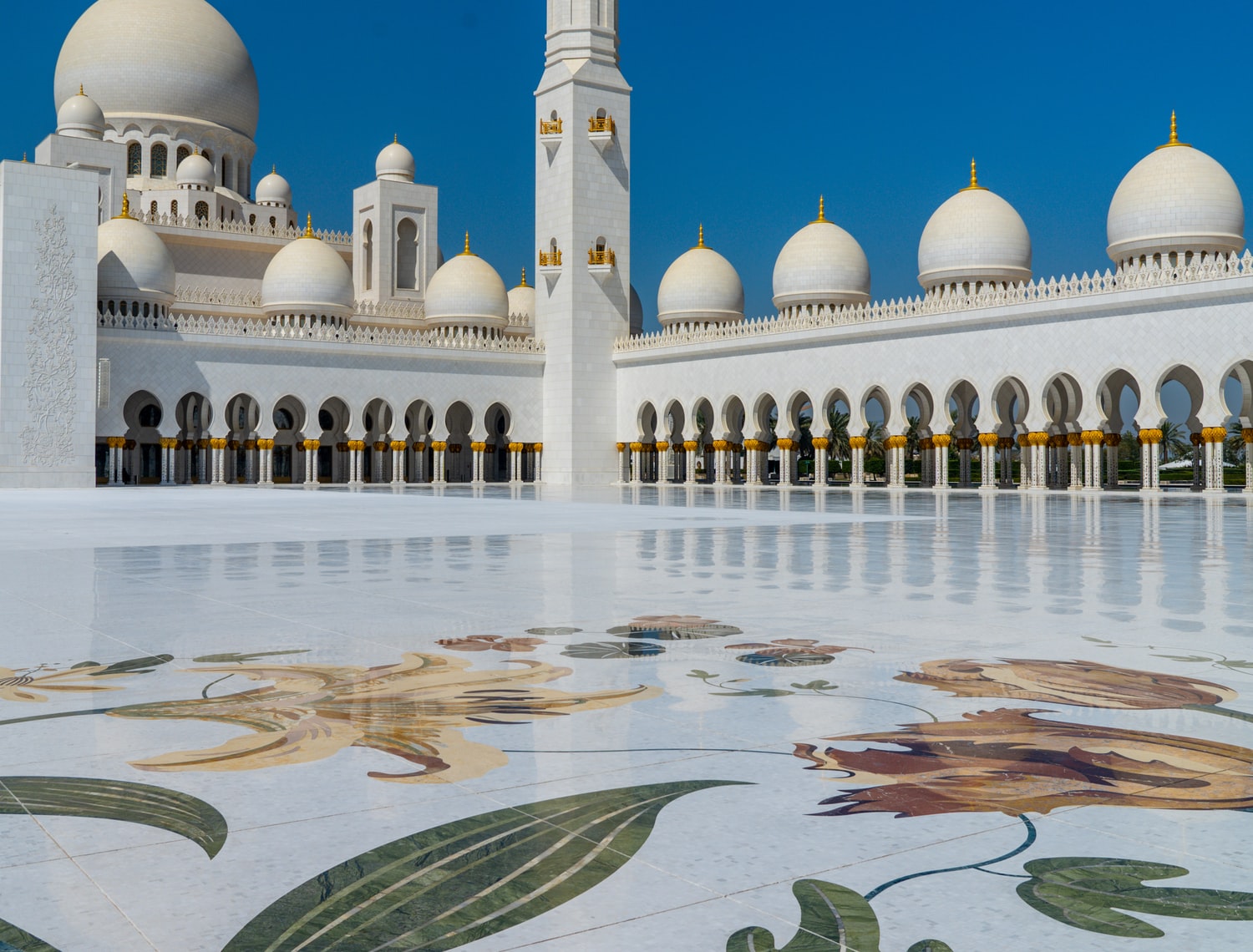
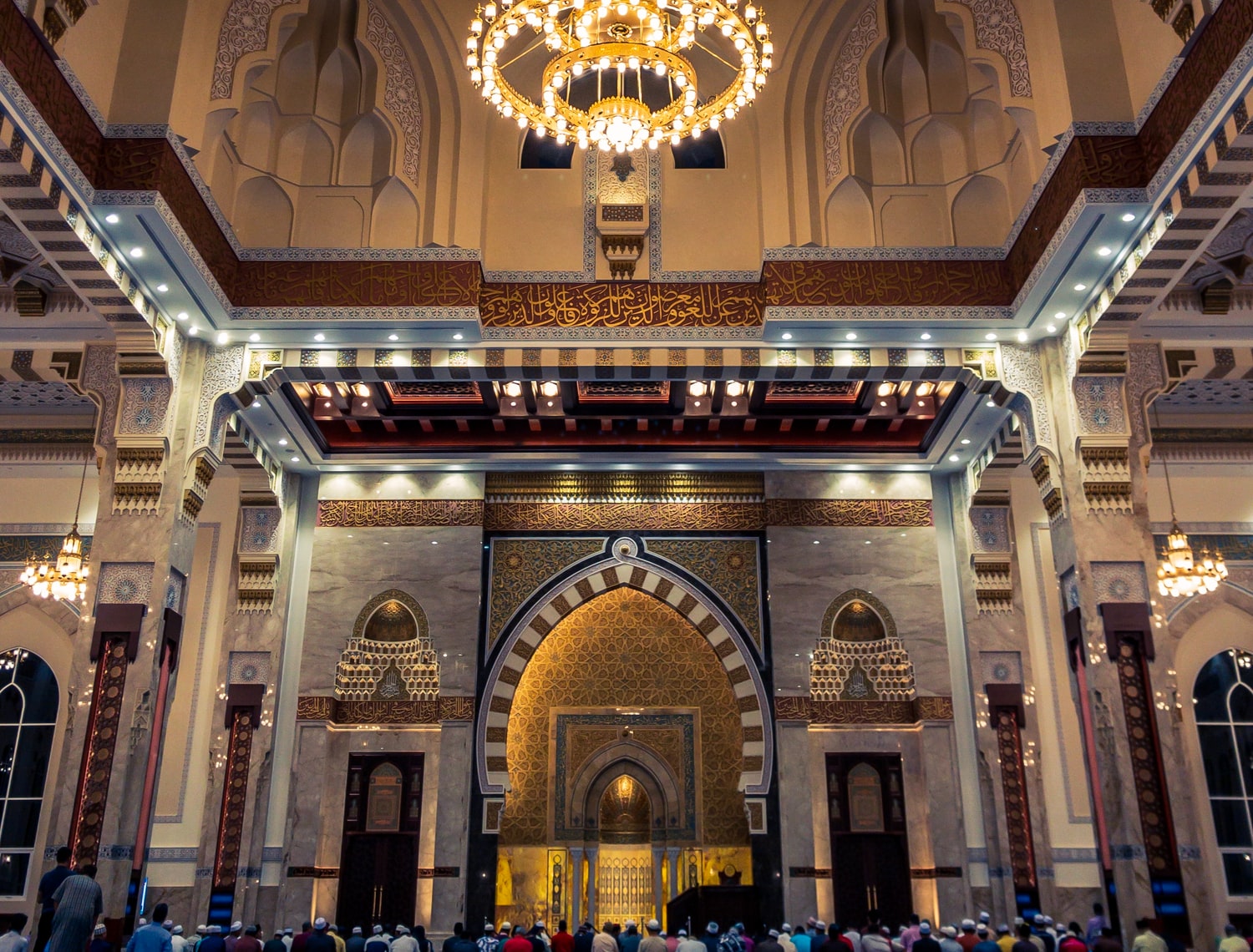
Mosques are places where Muslims worship.
Some important Islamic holy places include the Kaaba shrine in Mecca, the Al-Aqsa mosque in Jerusalem, and the Prophet Muhammad’s mosque in Medina.
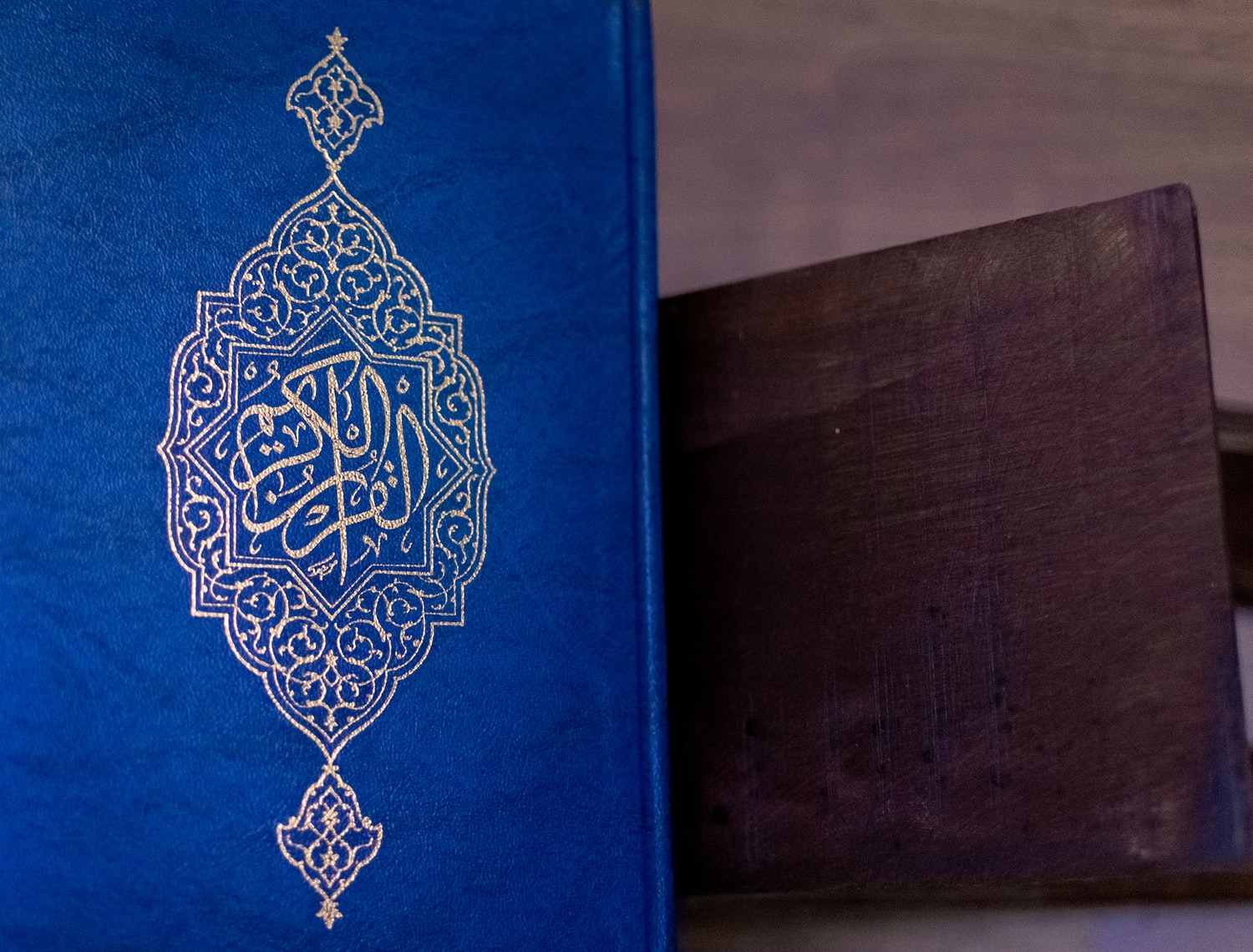
The Quran (or Koran) is the major holy text of Islam. The Hadith is another important book. Muslims also revere some material found in the Judeo-Christian **Bible**. https://www.history.com/topics/religion/bible
Followers worship Allah by praying and reciting the Quran. They believe there will be a day of judgment, and life after death.
A central idea in Islam is “jihad,” which means “struggle.” While the term has been used negatively in mainstream culture, Muslims believe it refers to internal and external efforts to defend their faith. Although rare, this can include military jihad if a “just war” is needed.
Islamreligion
HomePhilosophy & ReligionScriptures https://www.britannica.com/ https://www.britannica.com/browse/Philosophy-Religion https://www.britannica.com/browse/Scriptures
Islam
**religion**
**WRITTEN BY**
**Annemarie Schimmel** **See All Contributors**Former Professor of Indo-Muslim Culture, Harvard University. Author of *Gabriel's Wing; Islamic Calligraphy;* and others*.* https://www.britannica.com/contributor/Annemarie-Schimmel/2619 https://www.britannica.com/topic/Islam#info-article-contributors
See Article History https://www.britannica.com/topic/Islam#info-article-history
**Alternative Title:** Al-Islām
**ARTICLE CONTENTS**
**Islam**, major world religion promulgated by the Prophet Muhammad in Arabia in the 7th century CE. The Arabic term *islām*, literally “surrender,” illuminates the fundamental religious idea of Islam—that the believer (called a Muslim, from the active particle of *islām*) accepts surrender to the will of Allah (in Arabic, Allāh: God). Allah is viewed as the sole God—creator, sustainer, and restorer of the world. The will of Allah, to which human beings must submit, is made known through the sacred scriptures, the Qurʾān (often spelled Koran in English), which Allah revealed to his messenger, Muhammad. In Islam Muhammad is considered the last of a series of prophets (including Adam, Noah, Abraham, Moses, Solomon, and Jesus), and his message simultaneously consummates and completes the “revelations” attributed to earlier prophets. https://www.britannica.com/topic/religion https://www.merriam-webster.com/dictionary/promulgated https://www.britannica.com/biography/Muhammad https://www.merriam-webster.com/dictionary/illuminates https://www.britannica.com/topic/Allah https://www.britannica.com/topic/sacred https://www.britannica.com/topic/Quran https://www.britannica.com/biography/Adam-and-Eve-biblical-literary-figures https://www.britannica.com/topic/Noah https://www.britannica.com/biography/Abraham https://www.britannica.com/biography/Moses-Hebrew-prophet https://www.britannica.com/biography/Solomon https://www.britannica.com/biography/Jesus https://www.merriam-webster.com/dictionary/consummates
Rain Prayer
This prayer is a means of seeking rain from Allah, the Exalted, during times of drought. That is, people are naturally disposed to ask help from the One Who is able to support them; Allah Alone. This prayer was known among the previous nations. It is regarded also as one of the acts of the prophets, peace be upon them all, as Allah, the Exalted, Says (what means):
***"And [recall] when Moses prayed for water for his people..."*** [Quran 2: 60]
Similarly, the Seal of Prophets, Prophet Muhammad performed Prayer for Rain for his people many times, and in many ways. In addition, Muslim scholars unanimously agree on the legality of such an act.
The Prayer for Rain is ordained during times of drought and times when rain fails, which causes harm to people. Then there is no way out except by supplicating their Lord and asking Him for water (rain). People may supplicate Allah in various ways. For instance, people may supplicate Allah in Prayer, whether in congregation or alone. They may also supplicate Him by invoking Him during the sermon of the Jumu'ah (Friday) Prayer, in which the Imam may invoke Allah, and Muslims say, "Ameen".
Furthermore, it may be by invoking Allah, the Exalted, after performing prayers, or by supplicating Him in seclusions with neither prayer nor sermon. All such acts are related about the Prophet .
The Prayer for Rain is regarded as a stressed Sunnah (Prophetic tradition) as ‘Abdullah Ibn Zayd said: "The Prophet went out to invoke Allah for rain. He faced the qiblah (the direction of Ka’bah in Mecca), invoking Allah. Then he reversed his cloak and performed two Rak'ahs (units of prayer) and recited the Quran aloud in them." [Al-Bukhari and Muslim]
There are many hadeeths in support of this practice.
The Prayer for Rain is similar to that of the Eid Prayer concerning its relevant rulings and the place where it is performed. That is, it is viewed desirable to perform it in the place where the Eid Prayer is performed; outside the mosque. Moreover, its rulings and practices are the same as those of the Eid Prayer, namely the number of Rak'ahs, the loud recitation of the Quran, being performed before delivering the sermon, and the additional Takbeers (saying ‘Allahu Akbar’) in the first and second Rak'ahs before the recitation of the Quran, as illustrated before.
Ibn ‘Abbas narrated:
"The Prophet performed two Rak'ahs as he does in the Eid Prayer."
At-Tirmithi says that this is a hasan (good) and saheeh (authentic) hadeeth, and Al-Hakim and others view it as a saheeh (authentic) hadeeth, as well. The one performing the Prayer for Rain is to recite the chapter of Al-A’laa in the first rak'ah, and the chapter Al-Ghashiyah in the second one. People are to perform it in a vast spacious place, away from the place of residence, as the Prophet did not perform it except in the desert. This is because performing it in such a place is a means of showing much need to Allah, the Exalted. When the Imam wants to proceed to perform the Prayer for Rain, he should start with reminding people of what may soften their hearts by mentioning Allah's reward and punishment. They should also be commanded to turn to Allah in repentance and return rights to whom they are due. This is because sins are amongst the main reasons that cause rain and blessings to be withheld. On the other side, repentance and asking Allah, the Exalted, for forgiveness are reasons for Allah's answering of supplication. Allah, the Exalted, Says (what means):
***"And if only the people of the cities had believed and feared Allah, We would have opened [i.e. bestowed] upon them blessings from the heaven and the earth; but they denied [the messengers], so We seized them for what they were earning"*** [Quran 7: 96]
Furthermore, the Imam should command people to give charity to the poor and needy, as this is regarded as a cause for sending Allah's mercy. After that, he is to set for them a certain day, at which they are to come out and be prepared for such an honorable occasion, and according to that which best suits it as an act of the Sunnah. At that date, people are to go out to the place of prayer showing humbleness, submissiveness and neediness of Allah, the Exalted, as Ibn 'Abbas said:
"Allah's Messenger went out to perform the Prayer for Rain showing humility, humbleness, and submissiveness, and supplicating (Allah)." [At-Tirmithi said that this is a hasan and saheeh (good and authentic) hadeeth.]
No Muslim should stay behind (from going out) while able, even boys and women, whose presence does not cause temptation, are to go out to perform it. Then, the Imam is to lead people performing two rak`ahs, as mentioned before. After doing so, he is to deliver one sermon. However, some scholars view that the Imam is to deliver two sermons. Both opinions are permissible, but the soundest opinion is to deliver one sermon, according to the most preponderant legal proof. In most cases, the Prophet delivered the sermon after performing the Prayer for Rain, and Muslims acted according to this. However, it is related that the Prophet delivered the sermon before performing the prayer. This is the view of some scholars, but the first view (delivering the sermon after performing prayer) is more preponderant; and Allah Knows best.
In the sermon of asking for rain, the Imam should ask for Allah's forgiveness as well as recite the verses that command asking for forgiveness, in abundance, as this is considered a cause for sending rain. Moreover, the Imam should supplicate Allah, the Exalted, with much invocation, asking for rain. When supplicating Allah, the Imam should raise his hands, as the Prophet used to raise his hands when invoking Allah in the Prayer for Rain, so much that the whiteness of his armpits became visible.
The Imam should also confer blessings upon the Prophet as this is a cause for (Allah, the Exalted) answering his supplication. He may invoke Allah, the Exalted, with the supplication related about the Prophet in such situations, as a means of following him. In this regard, Allah, the Exalted, Says (what means):
***"There has certainly been for you in the Messenger of Allah an excellent pattern for anyone whose hope is in Allah and the Last Day..."*** [Quran 33: 21]
It is viewed as an act of the Sunnah to face the qiblah at the end of supplication, and to reverse one's clothes, as related in the Two Saheehs (Al-Bukhari and Muslim, the two authentic books of Hadeeth) that the Prophet turned his back toward the people and faced the qiblah asking Allah (for rain). Then he reversed his cloak. The wisdom behind this - Allah Knows best - is that it is like a good omen that the present hard condition may turn into prosperity and the sending of rain. People should also follow the Imam and reverse their clothes, as Imam Ahmad related, "... the people followed him (the Prophet, sallallaahu alayhi was sallam) and reversed their clothes." In addition, what is stated as done by the Prophet is to be done by his nation, unless it is proved that he alone is particularized with such a thing.
This would be until Allah, the Exalted, sends down rain; otherwise, Muslims should repeat asking for rain, as long as there is a need for that. It is considered an act of Sunnah that when rain starts to fall, one is to stand and receive some of it and say, "O Allah! Let it be a strong fruitful rain," and say, "The rain is due to the Favor and Mercy of Allah." However, when rain falls heavily and there is fear that it might cause harm, one should say as the Prophet used to say:
"O Allah! (Let the rain be) around us, not on us. O Allah! (Let the rain be) on the plateaus, on the mountains, on the hills, on the hillocks, in the valleys, and on the places where trees grow" [Al-Bukhari and Muslim] Allah Knows best.
Rain Prayer

Al-Layth Ibn Sa'd: the Imam of the Egyptians
He was one of the great Imams of jurisprudence. He was a pious, ascetic, truthful scholar who abstained from unlawful acts. He was also sincere, humble, forbearing, and kind-hearted when dealing with people.
He had strong faith in Allah and was fearful of Him all the time. He used to frequently recite the Quran. As well as this, he was very generous and used to spend most of his money in charity especially to support scholars, students of knowledge, and poor Muslims.
He is the Imam, the Hafith (a title given to whoever memorizes 100,000 Hadeeths), the shaykh of Islam, the jurist and scholar of Egypt. His full name is Al-Layth Ibn Sa'd Ibn `Abdur-Rahman Al-Fahmi.
**His birth:**
He was born in Sh`aban 94 A.H., 713 A.C. in Qarqashandah, a village twenty-two kilometers from Fustat, Egypt. His origin goes back to Esfehan, Persia (nowadays Iran).
**Seeking knowledge**
In his early years, he started to learn religious knowledge. He was a student of some of the greatest scholars of his time, such as `Ubaydullah Ibn Ja'far, Ja'far Ibn Rabee`ah, Al-Harith Ibn Yazeed, and Yazeed Ibn Abi Habeeb. Since he was young, his teachers testified to his excellence, genius, and sharpness of mind.
Al-Layth had high aspirations to learn. For him, learning in Egypt alone was not sufficient. In 113, A.H., he decided to travel to Hijaz to perform Hajj and seek knowledge. He was twenty years old at that time.
In Makkah and Al-Madeenah, which were considered the most outstanding sources of religious knowledge in the Muslim World, Al-Layth started to learn from a unique group of scholars of jurisprudence and Hadeeth. Ibn Shihab Az-Zuhari was known as the most knowledgeable hafith and one of the first scholars to write down the Hadeeths of the Prophet , and he was one of Al-Layth's teachers. Al-Layth also received religious knowledge from `Ataa' Ibn Abi Rabah who was the Mufti and Jurist of Makkah, Ibn Abi Maleekah, Nafi` Ad-Daylami who was the freed slave of the revered companion `Abdullah Ibn` Umar Ibn Al-Khattab, Sa`eed Ibn Sa`eed Al-Maqbari, Abu Az-Zubayr Al-Makki, and many others.
He remained fond of knowledge and had an unmitigated desire to actively and studiously attend classes even when he reached the rank of the great scholars. When he went to Baghdad in 161 A.H. in order to teach, though he was over sixty five years old, he asked about the house of the great scholar Hushaym Ibn Basheer who was the master of Hadeeth scholars in Iraq. Al-Layth asked Hushaym to send him some of his books to study them. When Hushaym did, Imam Al-Layth started to read through their valuable and priceless information.
**The Imam's sessions**
After spending long years acquiring knowledge, Imam Al-Layth was prominent among his contemporary scholars as a genius jurist and a most trustworthy narrator of Prophetic Hadeeths. He started a class in his mosque to teach people. A short period later, he became very famous and students from everywhere came to learn from him. Thus he ended up having four sessions every day:
- A session for discussing the practices of the Sultan of Egypt. Imam Al-Layth Ibn Sa'd attained a high rank and prestigious standing in the sight of the `Abbasid Caliphs to the extent that if the Sultan or the Judge of Egypt committed any wrong, Al-Layth would write to the Emir of the Believers who, in turn, would depose them.
- A class for teaching the noble Prophetic Hadeeths
- A class for answering people's religious questions
- A session for fulfilling the requests of the poor and the needy. The Imam, may Allah have mercy on him, never turned down any request for help.
**The Imam's rank and his knowledge**
He was one of the most prominent jurists of his time. He was well-known among people everywhere. The caliphs and Emirs came to know him and scholars praised him and testified to his profound knowledge, abilities of memorization, and mastery of religious affairs.
Al-'Alaa' Ibn Katheer said:
"Al-Layth Ibn Sa'd is our master, Imam and scholar."
Imam Ahmad Ibn Hanbal said:
"Al-Layth had profound knowledge and his narration of Hadeeths is authentic."
Imam Ash-Shafi`i said:
"Al-Layth is more knowledgeable than Malik."
He means Malik Ibn Anas, the Imam of the people of Al-Madeenah.
**Al-Layth as a ruler**
Imam Al-Layth occupied several posts. He was the head of the Administration of Finance during the reign of Salih Ibn `Ali Ibn` Abdullah Ibn `Abbas of Egypt. He was also its head during the caliphate of the` Abbasid Caliph, Al-Mahdi. Previously, the `Abbasid Caliph Abu Ja'far Al-Mansoor asked him to be the ruler of Egypt, but Imam Al-Layth refused.
**The character of the Imam**
Imam Al-Layth Ibn Sa'd was an authentic narrator of Prophetic Hadeeths and a talented jurist. He was known for his piety, asceticism, and generosity. The Imam was one of the wealthy scholars. His son Shu'ayb said that his annual income was between twenty and twenty five thousand Deenars (golden coins). He used to spend all this money in the cause of Allah. He was never liable to pay Zakah, simply because he would spend all his money before the year had passed.
Imam Al-Layth used to give out charity to three hundred needy people every day. He never ate his food except in the company of people.
One day, a woman came to him and said: "O Abu Al-Harith! My son is sick and he craves to eat honey."
Al-Layth called his servant and said:
"Give her one hundred and twenty pounds of honey."
Imam Al-Layth was very generous with scholars, to the extent that he used to send one hundred Deenars to Imam Malik Ibn Anas every year. Once Imam Malik wrote to him that he was in debt. Imam Al-Layth sent him five hundred Deenars. When Imam Al-Layth went to perform Hajj and he passed by Madeenah, Imam Malik sent him a plate of dates. Imam Al-Layth Ibn Sa'd put one thousand Deenars on the plate and sent it back to Imam Malik.
When the books of Ibn Luhay`ah, a great jurist and narrator of Prophetic Hadeeths, were burnt, Imam Al-Layth immediately sent one thousand Deenars to him.
**His death**
Imam Al-Layth Ibn Sa'd died on Friday, the fifteenth of Sh`aban 175 A.H., 791 A.C. He was buried in Cairo and his funeral was attended by a large number of people. The people were very sad and consoled one another.
Imam Ash-Shafi'ee: The Grand Jurist for the Sunnah
Everything was placid in the large valley except for the voice of a two-year old child who was weeping. His mother embraced him, took him close to her chest, and patted his shoulders with tenderness and compassion. The youngster quickly went into sleep as his mother stared at the far horizon saying in a low weakened voice : “may Allah have mercy on your soul: father of Muhammad (her husband); you took us with you from Makkah to Gaza in search of our daily bread and good life, yet you died and were buried here. Here am I on my way to Makkah again to have your son raised among his tribe and clan 'Banu Al-Muttalib'.”
The poor mother went into a bitter fit of weeping and crying as she remembered those few years she had spent in Palestine with her beloved husband, who was the best husband, brother, and friend for her. However, the happy and beautiful days passed as quickly as clouds, or as a short but pretty dream.
In the honorable Makkah, the mother lived with her child in the protection of her husband's family. She raised her son by giving him a good education and instructions, flowing on him her love and compassion, so the youngster grew up with a well balanced psyche, a peaceful nature, and great ethics. The virtuous mother took on her shoulders the responsibility of teaching her son the Quran, reading, and writing so that he may be well acquired with both religious and other fundamental knowledge. Thus, she sent her son to one of the small elementary schools despite her poverty and inability to save the instructor's wage. Yet, Muhammad went to his first day at school almost unable to walk properly, and when the instructor saw Muhammad, he sort of belittled him and told him: “O my son, just sit next to me and listen carefully to your elders so that you may get used to reading and memorization.”
However, the young Muhammad Ibn Idrees Ash-Shafi'ee was glittering with intelligence and ingenuity. He used to incredibly quickly learn by heart whatever he heard from what the teacher dictated to his students. Every single day in the small school his knowledge increased along with his enthusiasm to learn more. His teacher then loved him more and actively pushed him forward. The youngster naturally became more and more distinguished, until his teacher told him one day, “My son, you are highly smart and intelligent to the extent that I hardly make any effort with you that is worth any wage. All I need from you is to teach on my behalf when I am not present.” The youngster rushed happily to his mother to tell her the happy news that she would not have to pay anymore for the teacher. The virtuous mother was glad for her son's excellence and encouraged him even more to study. This led him to embark actively on the completion of learning the Quran by heart which he finally completed when he was only seven years old.
Being in great happiness for her son's completion of the memorization of the Quran in that fast manner, she started thinking how could she best direct this smart child towards more excellence. She sent him to attend the lessons given around the Sacred Mosque of Makkah. The boy started to listen to prominent scholars; and as he did not have the price for paper on which to write what he listened to, he used parchment, palm tree leaves, and camel shoulder bones. During this early period of his quest for knowledge, Imam Ash-Shafi'ee intelligently realized the importance of the learning the classical Arabic language from its pure sources, in order to understand the Quran and the Sunnah, (the Prophet Muhammad's sayings, acts, and approvals) in the best possible way. He went to the Huthayl tribe, which was among the most eloquent Arab tribes, and stayed with them for long years in which he learned their eloquence, memorized their poems, studied the biographies of Arabs from pre-Islamic era as well as the Islamic era, and learned the skill of knighthood and archery. He eventually became a brave unrivaled knight and a skillful archer who rarely missed his target.
As years passed, Imam Ash-Shafi'ee returned to his beloved hometown Makkah. No sooner had he quenched his longings to his mother, he continued his quest for knowledge enthusiastically. He headed for the Grand Mufti (Religious Jurist) of Makkah, the Sacred Mosque, Muslim Ibn Khalid Az-Zinji who became the first teacher for him in Fiqh (Islamic Jurisprudence). He also, started studying Hadeeth under the supervision of Sufyan Ibn 'Uyaynah, the narrator of the Sacred Mosque. In a short time, Imam Ash-Shafi'ee rose to prominence as an excellent Islamic scholar. His mentor, Muslim Ibn Khalid gave him permission to answer the religious enquiries when Imam Ash-Shafi'ee was only fifteen. He told him proudly, “O Muhammad! Give fatwa and answer the questions of people. By Allah! Now it is opportune for you to give fatwa." His other mentor, Sufyan Ibn 'Uyaynah, used to refer enquirers to him while he turned towards him and pointed "ask this boy.”
While still studying in Makkah, Imam Ash-Shafi'ee heard of the renown scholar of Madeenah, Imam Malik Ibn Anas . He wanted to become a student of Imam Malik yet he saw with his sharp intellect that he should not go to him unprepared and void. He memorized Malik's famous book “Al Muwatta” in only nine days. After that he went off to see Imam Malik in his house in Madeenah. Imam Ash-Shafi'ee spoke eloquently and politely with the Imam and told him that he wished to become his student. The Imam looked at the boy for a long time as the boy was telling his story of how he sought knowledge so far. The Imam had an astonishing physiognomy and a penetrating insight; he told him: “My son! By the Will of Allah you will have a great future. Tomorrow come to me and bring with you someone who could read the Muwatta' well as I fear you would not be able to read it by yourself.” Imam Ash-Shafi'ee responded with the same politeness “Imam, I will read it myself from memory without a book.”
Imam Ash-Shafi'ee remained in the company of Imam Malik for a long time. The Imam loved him a lot, and in 179 A.H after Imam Malik passed away, Imam Ash-Shafi'ee returned to Makkah from Madeenah equipped with a great load of knowledge which had influenced his life. In Makkah he was wedded to Hameedah Bint Nafi', a grand daughter of Caliph 'Uthman Ibn 'Afan and had two sons and a daughter from her.
In the courtyard of the well of Zamzam and next to Prophet Ibraheem's Maqam (the stone on which he stepped up to put the bricks in the Ka'bah), Imam Ash-Shafi'ee sat down to teach people and around him many students were gathered from everywhere. His circle became very prominent in the Sacred Mosque of Makkah and even became well known outside Makkah until it reached Iraq. Abdur-Rahman Ibn Mahdi, one of the scholars of Iraq sent him a letter requesting that he authors a book on the evidences of legislation from Quran, Sunnah and the consensus of the religious scholars, as well as other issues upon which the science of Fiqh (Islamic Jurisprudence) is built. Imam Ash-Shafi'ee, may Allah have mercy upon him, wrote the book and named it Ar-Risalah (The Treatise) which became the first book that founded what came to be called: 'Ilm Usul Al Fiqh (The science of the sources of Islamic Jurisprudence), of which Imam Ash-Shafi'ee was the organizer, classifier, and the inventor of its issues.
In 195 A.H the Imam Ash-Shafi'ee traveled to Baghdad for the second time and continued to teach there for two years. Many studied under his supervision including Imam Ahmad Ibn Hanbal who later said “Had it not been for Imam Ash-Shafi'ee we would not have known the understanding of Hadeeth.” Before he left Iraq he had finished writing his large book Al Hujjah (the Proof), in which he put down the essence of his new school of jurisprudence.
In 199 A.H the Imam went to Egypt where he stared to spread his knowledge between the Egyptians who loved him very much. More students came to him from all over the world. Towards the end of his life, the Imam became very sick. This illness continued with him for four years yet it did not stop him from teaching or lecturing. When he came back to his house after teaching, he used to force himself to ignore the pains of the sickness and get absorbed in writing, and editing and proofreading the book of Hujjah which he wrote in Iraq. After completed the proofreading and editing works he renamed the book’s name as Al-Umm (The Mother). The Imam remained to follow his daily routine until illness forced him to retire and stop teaching. His students used to visit him to console him in his sickness. One day one of his students entered his room and asked him: “How do you feel this morning O Imam?” Ash-Shafi'ee answered: “I feel that I am traveling away from this world, away from the brothers, drinking from the cup of death, and approaching Allah the Glorious. By Allah I do not know if my soul will go to heaven so that I may congratulate it, or to hell so that I may lament.” He then went into crying. On a Friday, the last day of Rajab in the year 204 A.H, his pure soul went up to its Provider and Caretaker. He was buried in the cemetery of Qurashiyyeen amidst the cemeteries of Banu Al-Hakam in Egypt. May Allah bless the Imam's soul and admit him into his wide paradises.
AJIS
You will notice the new name of our journal, American Journal of Islam and Society, that has replaced the older American Journal of Islamic Social Sciences. Now in its thirty-seventh year, the journal has evolved along with the scholarly landscape and our global community of readers. The new name reflects an expansion of the journal’s scope, which has in fact already reflected in the articles it has featured for years. This change signals that social sciences and humanities are interrelated and that an Islamic engagement with one requires examining the other; we therefore wish to underscore that we welcome all scholarship that pertains to the myriad ways in which Islam and human societies interact. Furthermore, in order to optimize our resources and further improve the quality of the content, the journal will henceforth be published biannually rather than every quarter.
The audacity of faith
Libraries are like studios. No sound goes unheard. No noise passes without someone looking up or, in this case, a librarian hissing and excitedly shushing the disturber of the peace, silencing the noise polluter.
Nervously flitting and creeping about the bookshelves, I was endeavoring to be as quiet as such can be.
Every footfall, every little brave breath was carefully measured to an exact decibel level, no more, no less.
The only dynamics that I failed to control were the thumping of my heart and a much more subtle tone that somehow made it past all my enacted sound barriers, my mental matrix-built firewall, my muffled mind. It was similar to a flute in that it was both soft and gentle. Yet at the same time, it was piercing and bold, a constant anthem striking out through my internal environment. It was my soul, my little life-giving charge.
It was calling to me, chanting a sweet Athaan that only I could hear in this muted world of books. And oh how I loved it, yet dreaded it!
I had to find a place to make prayer, somewhere in this college library, in my first term ever of a higher education. But I was so afraid to do so, so shy to bow my face in the presence of others, so worried about the impression of expression. What if some malicious person attacked me? What if I was held in contempt because I was "fanatical," a loon? Newspaper headings flashed through my mind's eye: Terrorist Plot in University Campus Exposed! Homicidal Ritual Offered in Campus Library! Al Qaeda's Hand Reaches the Countryside! And Librarian Tasers Student Fanatic.
Passing the atomic clock on the wall no less than 10 times, the minute hand began to drive into my mind, each tick sounding like a deafening beat on a kettledrum. The situation was getting desperate. I could not miss my Prayer. But what about the people? What about all the possible pain, the potential outcomes, internal and external?
I felt as though I had to breathe. I had to go make Prayer. It was a bodily function. I silently battled on, pretending to read random books on politics. If the librarians could hear my insides now, what with all the furious debating and intense fracas going on, they would probably eat me alive. How bad it was, this predicament of mine.
Dragging myself just in time, I found a relatively secluded, undisturbed spot and began to perform my Prayer. Every noticeable motion was a huge movement, a draining operation for me. I felt as though my waist, that corporal hinge that enables us to bend and bow down, was rusty. I really needed some spiritual WD-40.
This was a ground-shaking test, at least to me. I've been reflecting on it all week. It took all my will to simply make Prayer, to express my piety, my gratitude to God the Magnificent Being behind my organic architecture, my magical physique, my creative expression, my artistic passion—my nafs, that invisible soul that makes me who I am. And now, fire-tested and gauged, I realize that my soul, the gift from its Crafter, has not been thanked for properly, in the right fashion in the wrong situation.
I look at the creation around me—the horses and the birds, the trees and the falling snow, the little springs and hills —and know that I have seen authentic, whole worship. Flapping, loping, growing, falling, bubbling up, all these creatures worship their Creator in their own unique, prescribed ways. The bird flies and fulfills its Prayer, its bodily functions. Our equine companions thunder about the plains around the world.
They fulfill their purpose, express their worship, and provide momentum not only to their graceful forms, but also to their tender souls. The trees reach into the heavens. The rills gurgle from the earth. Everything worships Allah Almighty.
One creature among all creations that live in the world, we are in no way exempt from fulfilling our functions to completion. Being creatures composed of minds, souls, and bodies, we must satisfy all these individual aspects to remain healthy, to possess that spunk, that bounce that keeps us in full blossom, at full tilt, if you'll pardon the idiom.
We eat, drink, exercise, make love, and many more things to meet our bodily needs. In order to quaff our intellect, we go to school, read instruction manuals, take on mathematical concepts, and memorize.
But what do we do for our spirit, our internal core that inspires all the other parts of our body? We make Prayer. A simplistic answer? I think not.
Worship opens our entire being to a refreshing breeze from the outside, cools our hot interiors, and inspires the mind, the body, and the soul. Would you live in a house of stifled air? Would you swim in a stagnate marsh, no spring or current to wash it clear? Would you have your wings clipped?
The Prayer to us has become an outstanding act, a massive struggle, five battles a day. Floating about the stratosphere of modern secular life in our hot air balloons, it is tempting to just throw those canvas sacks of Prayer, those weighty responsibilities, overboard.
For in the eyes of my rising generation, the Prayer has been demoted to spiritual baggage, to an audacious act of faith. But without it, how can we be healthy?
Now, if we have to fight ourselves on something as basic as the Prayer, with what might must we strive simply to survive? Worship should be a thing to be proud of not to boast, but to be full with.
The Prayer that we know—this Prayer of Islam—is the ultimate paradox, the real irony, for it brings us literally down to earth and makes us humble. Yet at the same time it elevates us just as unambiguously to the heavens and, behold, we metamorphose into sublime beings, better than the angels. And that is something worth not fighting for. Surrender.

Why Do our Morals Change Across Situations?
The morals of the believers are not supposed to come into play exclusively at times of ease and convenience. In fact, true morality self-manifests during the moments of hardship, adversity, and crisis. Some people may seem well-mannered with a polite attitude and bashful conduct as long as they are calm and the surrounding circumstances are convenient and favorable. However, when they are subjected to anger or experience hardship, unfortunate conditions, and the like of adverse circumstances, they turn into completely different people, far from the well-mannered people you knew! Sadly, a person (who was once well-mannered) would turn into a bad-tempered, fierce, verbally abusive, harsh, intimidating, and vulgar transgressor! We see this saddening transformation quite often, and the extent to which someone’s character can change is quite shocking. Is this how distant Islamic morality is from our hearts and souls, due to which it fails to change such qualities?
It was narrated on the authority of ‘Abdullah ibn Mas‘ood, may Allah be pleased with him, that the Messenger of Allah said: ***“A believer is neither a slanderer nor a curser, nor is he obscene or vulgar.”*** [*Saheeh At-Tirmithi*: 1977] Ibn Battaal said that ‘obscene’ means the one who is verbally abusive and commits obscene actions. ‘Vulgar’ means foul-mouthed (*An-Nihaayah)*. How could a person turn into one who fits such a bad description denounced by the Prophet in a single moment because of a situation or a word or a dispute!
We used to think that foolish people are those who are poorly-educated, ill-mannered, and have these sinful (evil) qualities. However, we were shocked to find many people whom we thought to be educated fitting the description as well!
Al-Qurtubi said: “A vulgar, foul-mouthed person is described as foolish because vulgarity is only compatible with ignorance and small-mindedness.”
Some people would argue that their obscenity and vulgarity are justified by the fact that they have been angered, that the situation called for it, that other people triggered them by their misbehavior, or that calmness in such situations is harmful and passive! There is no doubt that this is an erroneous way of thinking that may incur evil consequences on people. The Prophet said: ***“…and if a man verbally abuses you or shames you for something in you that he knows about, do not shame him for something in him that you know about; let him bear the evil consequences of it (his abuse), and you receive the reward for it, so do not curse.”*** [*Saheeh At-Targheeb*: 2782]
Al-Qaari said: “**Obscenity** and vulgarity are entirely blameworthy qualities that are unbecoming of the believers…” He added: “He who is guided by Allah should avoid it (obscenity and vulgarity); accustom his tongue to good, polite language; and follow the example of the Prophets of Allah, for they are the most excellent role models.” [*Mirqaat Al-Mafaateeh*]
There are also people who use foul, vulgar, and reprehensible words under the pretext that they were commonly used by the early Arabs! Al-Maawardi said: “What falls into the category of vulgarity and foul language in terms of the obligation of avoiding it is all what seems disgraceful and reprehensible, even if it may be considered good and acceptable after search and deliberative contemplation.”
An-Nawawi said: “Scholars said that euphemisms should be used in such situations when a person would feel ashamed to use overt language. Accordingly, sexual intercourse should be euphemistically referred to as engaging in intimacy, consummation of marriage, cohabitation, and the like… Likewise, urinating and defecating should be euphemistically referred to as answering the call of nature or relieving oneself instead of using overt words like urine or stool. Similarly, euphemism should be used for the (physical) defects that people may be ashamed to express overtly, such as leprosy, halitosis, body odor, and the like. Beautiful euphemistic expressions that convey the intended meaning should be used in situations like the abovementioned ones and their like. Know that such euphemisms may be used as long as there is no need to use overt language. If there is a need to use it for the purpose of clarification and education and it is feared that the addressee would not understand metaphors or would understand something different, then, in this case, one should use overt language instead to ensure that the addressee understands the correct meaning, and this is the rationale for using overt language in some Ahadeeth. As explained above, this was to ensure that the addressee understands the intended meaning in these contexts, as it should be given priority over mere politeness.” [*Al-Athkaar*]
The people who need adherence to morality the most are the callers to Allah. It is unbecoming of them to act contrary to their moral principles, and their refined morality should rather manifest in all situations, regardless of how intense those situations are and no matter how wicked their opponents may be. The Prophet said: ***“Whoever believes in Allah and the Last Day, let him speak good or remain silent.”*** [*Saheeh Al-Bukhari*: 6475] These, then, are the distinct manners of the believers. A believer should always speak good or remain silent. Speaking good has many manifestations, and silence could be of great benefit when no good could be spoken.
Verily, bashfulness is at the very core of the believers’ morality and the central moral value of Islam. Whenever a person adheres to bashfulness, he assumes control of himself and (becomes able to) change his bad morals. Therefore, we should be perfectly mindful of integrating it in educational curricula and practicing it in our lives. The Messenger of Allah said: ***“Bashfulness is not to be found in anything but that it adorns it, and obscenity is not to be found in anything but that it mars it.”*** [*At-Tamheed*: 9/257]
‘Abdullah ibn Mas‘ood, may Allah be pleased with him, said: “The most wicked quality a believer may have is obscenity.” It is the most wicked of all bad morals because it makes a person unsafe (to be around) and his reactions would not be trusted.
Al-Ahnaf ibn Qays said: “Shall I tell you what the worst diseases are? They are obscenity and bad moral character.” According to this wise man, Al-Ahnaf ibn Qays, obscenity is among the most serious diseases to which people should assign care to treat it.
Al-Qaasimi said: “A person’s speech mirrors his virtues and soundness of his mind. Therefore, you should confine your speech to what is good, speak little, and beware of repugnant language as it alienates the honorable people from you and instead attracts the wicked ones to you.”

The Virtues and Rewards of Prayer in Islam
The obligatory five daily prayers were prescribed during the night the Prophet ascended to the heavens, while the commands for the remaining acts of worship were revealed to the Prophet on earth. This indicates the special status and importance of prayer as an act of worship.
• It is the only pillar of Islam that is repeated five times each day, and is never waived except for the woman during her menstrual period and post-partum bleeding.
• It is the one of the most virtuous deeds, and most beloved to Allah as the Prophet said: ***“Know that the best of your deeds are your prayers, and only a true believer maintains the state of ablution.”*** [Ahmad]
• It is the backbone of one’s religion, and the coolness of the eyes of the righteous. The Prophet said: ***“The most important of all matters is Islam, its spinal cord is prayer and the highest rank is Jihaad for the sake of Allah.”*** [Ahmad]
• It is an indication of Islam and belief, and preserves a person’s blood from being shed, Allah The Almighty Says (what means): ***{“But if they repent [by rejecting Shirk (polytheism) and accept Islamic Monotheism], perform Salah and give Zakat, then they are your brethren in religion”}*** [Quran, 9: 11].
• It is a sign of honesty and frees a person from hypocrisy. The Prophet said: ***“Whosoever prays forty days with the congregation, attending the initial (Allahu Akbar) of the prayer, will be free of two things: Hell Fire and hypocrisy.”*** [Ahmad]
• It is the best issue to be occupied with, the most profitable dealing, and the most likely amongst all acts of worship to cause the person to become humble and submissive. The Prophet said: ***“Prayer is the best thing to be occupied with,, so perform as much of it as you can.”*** [Ahmad]
• It is a command from Allah The Almighty, Who Says (what means): ***{“Guard strictly (five obligatory) As-Salawaat (the prayers) especially the middle Salaat (i.e. the best prayer - `Asr). And stand before Allah with obedience [and do not speak to others during the Salaat (prayers)].”}*** [Quran, 2: 238].
• It elevates a person's ranks and expiates sins, as the Prophet said: ***“Tell me, if there is an overflowing river in front of the house of one of you in which he baths five times a day, will there remain any dirt on him?*** They said, ‘No dirt will remain on him’. He then said: ***“That is the example of the five daily obligatory prayers by which Allah erases sins.”*** [Al-Bukhari and Muslim]
• It rescues from Hell, protects against danger, and enables a person to win Paradise. The Prophet said: ***“The one who prays before sunrise (Fajr prayer) and before sun set (Asr prayer) will not enter Hell Fire.”*** [Muslim]
• It is a sign of success and victory, and an indication of being accepted. Allah The Almighty Says (what means): ***{“Successful indeed are the believers. Those who offer their Salah (prayers) with all solemnity and full submissiveness.”}*** [Quran, 23: 1-2] and also ***{“And those who strictly guard their (five compulsory congregational) prayers (at their fixed stated hours). These are indeed the inheritors. Who shall inherit the Firdaws (Paradise). They shall dwell therein forever.”}*** [Quran, 23: 9-11]
• It is the first thing for which the slave will be held accountable. The Prophet said: ***“The first thing for which the slave will be held accountable for on the day of Resurrection is his prayer; if it is good*** (by performing it properly and on time), ***then all his affairs will be good, and if it is ruined*** (by neglecting it), ***then all his affairs will be ruined.”*** [At-Tabaraani]
• It is the provision on the way, relaxation for the soul, light for the heart, purification for the soul and a sign for salvation. The Prophet said: ***“O Bilaal! Call the Iqaamah in order for our hearts to relax.”*** [Ahmad and Abu Daawood].
• It frustrates Satan and disbelievers. The Prophet said: ***“When the son of Aadam recites a verse which recommends him to prostrate and he does, Satan starts crying, and says, woe to me, the son of Aadam was commanded and he did, and he will get Paradise as a reward, while I was commanded to prostrate and refused and will enter Hell.”*** [Muslim]
• It is a form of expressing appreciation and gratitude, as well as being a treasure full of the exaltation of Allah The Almighty and glorification and praise to Him. When the Prophet was asked about the reason behind his excessive prayer, he said: ***“Should I not be a thankful slave?”*** [Al-Bukhari and Muslim]
• It protects against following desires, evil sins and cures from sicknesses, as Allah The Almighty Says (what means): ***{“Verily, Salah prevents from Al-Fahshaa' (i.e. great sins of every kind, unlawful sexual intercourse) and Al-Munkar (i.e. disbelief, polytheism, and every kind of evil wicked deed)”}*** [Quran, 29: 45]. The Prophet said: ***“Pray the optional night prayer, because it is the way of righteous people before you, it brings you close to your Lord, prevents you from committing sins, expiates your sins and cures you from sicknesses.”*** [At-Tirmithi]
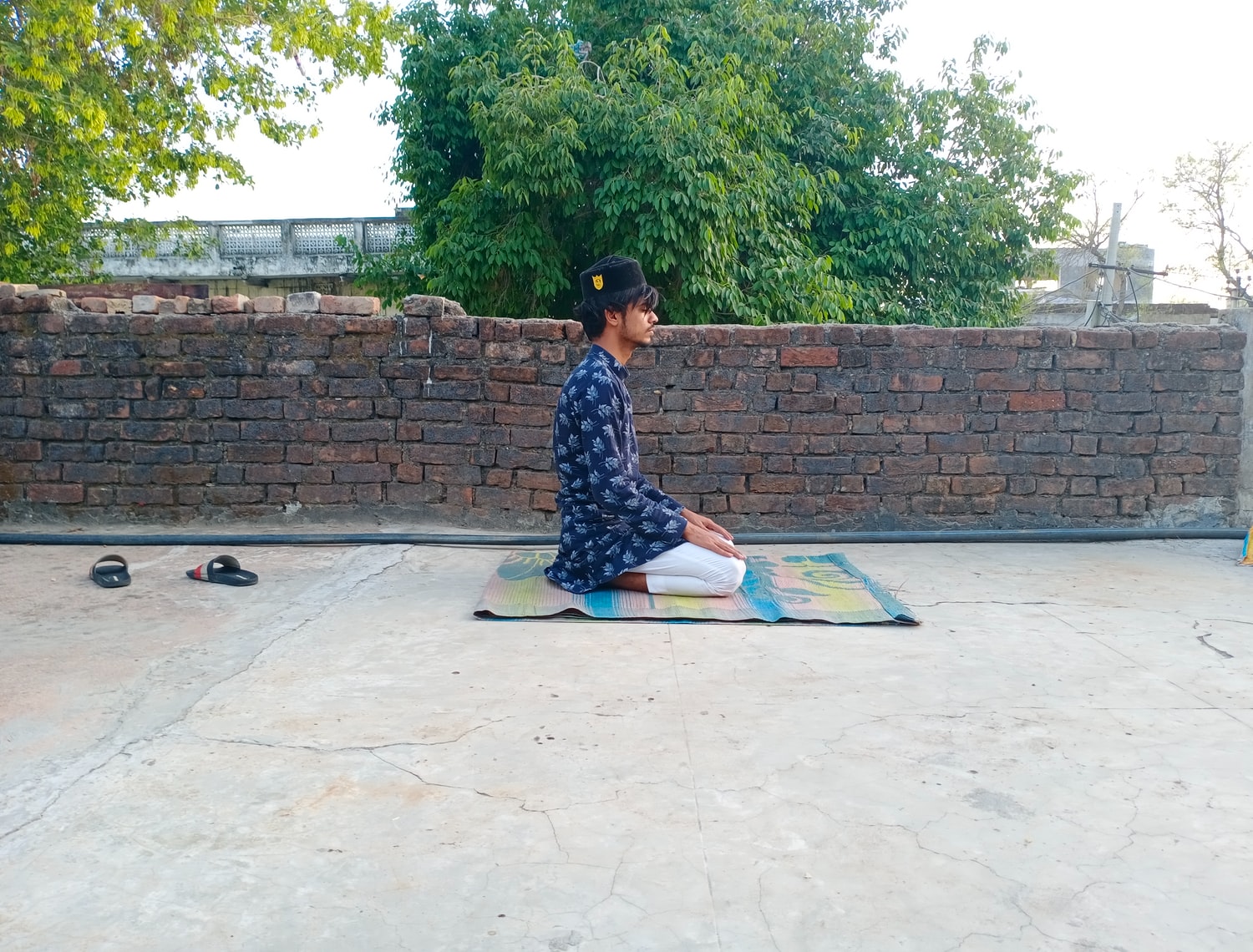
Hadeeth: “Whoever Relieves a Believer of some Worldly Distress…”
It was narrated on the authority of Abu Hurayrah, may Allah be pleased with him, that the Messenger of Allah said: ***“Whoever relieves a believer of some worldly distress, Allah will relieve him of some of the distress of the Day of Resurrection. Whoever alleviates the hardship of an insolvent debtor (i.e. grants him respite or writes off his debt), Allah will alleviate his hardship in the worldly life and the Hereafter. Whoever conceals the faults of a Muslim, Allah will conceal his faults in the worldly life and the Hereafter. Allah continues to help a slave so long as he is helping his fellow brother. Whoever treads a path in quest of knowledge, Allah will direct him to a path leading him easily to Paradise. Whenever a group of people assemble in a House of Allah (mosque) to recite and study the Quran, tranquillity will descend upon them, mercy will engulf them, the angels will surround them, and Allah will make mention of them to those (the angels) in His proximity. He who lags behind in good doing (i.e.*** ***hindered because of his evil deeds), his noble lineage*** ***will be of no avail to him (on the Day of Judgment).”*** [Muslim]
**Explanation**
Islam fosters noble morals, encourages them, holds them in a refined status, and designates great and abundant rewards for adhering to them, as underlined in this Hadeeth cited in *Saheeh Muslim*.
In the beginning of his directive, the Prophet urged us to relieve the distress of the believers. There is no doubt that this is a great good deed in the sight of Allah, The Exalted, and is highly appreciated by people. Life is full of hardships and difficulties, and we are destined to face sundry suffering and sorrows in it. Distress may overwhelm a believer so much that his heart and mind would be clouded with confusion and remain unable to find a way out!
At such harsh times, how great it is for a Muslim to hasten to assist his fellow Muslim brother, extend a helping hand to him, and strive to relieve or mitigate his distress. This gracious expression of sympathy has a deep impact on the heart of the distressed person, and therefore it is appropriate that its reward should be that Allah, The Exalted, would relieve the doer of a graver and harsher distress (on the Day of Judgment); which is the distress of standing before Him for reckoning and being held accountable for one’s deeds, and receiving the due punishment. How great and generous this reward is!
Among the noble morals is forgiving the debts of insolvent debtors. Islam urges creditors to give respite to insolvent debtors in straitened circumstances until their situation improves. Allah, The Exalted, Says (what means): ***{And if someone is in hardship, then [let there be] postponement until [a time of] ease.}*** [Quran 2:280] What is even more rewardable is for a creditor to give up some of his rights and forgive part of the debt he is owed. This is evidenced by what was narrated on the authority of Abu Hurayrah, may Allah be pleased with him, that the Prophet said: ***“A man used to give loans to the people, and he would say to his servant: ‘If the debtor is in hardship, relieve him of the debt so that perhaps Allah may relieve us (i.e. forgive us).’ So when he met Allah (i.e., when he died), Allah relieved him (i.e. forgave him).”*** [Al-Bukhari and Muslim]
The Hadeeth then urges concealing the faults of the Muslims and refraining from finding fault in them and pursuing their mistakes and lapses. This is another example of the refined morals with which our glorious Sharee‘ah is adorned. Verily, the infallible person is the one whom Allah grants infallibility. No matter how pious and righteous a Muslim may be, he is still liable to error. He might commit a sin; however, he dislikes his neglect in fulfilling the rights of Allah and hates that people be aware of his error and negligence. So if a Muslim sees or learns of his fellow Muslim’s faults, he should conceal them rather than expose them, without neglecting the duty of offering him sincere advice and reminding him of Allah.
The virtue of such concealing of faults was reported in the Sunnah. It was narrated on the authority of ‘Abdullah ibn ‘Abbaas, may Allah be pleased with them, that the Prophet said: ***“Whoever conceals the fault of his Muslim brother, Allah will conceal his fault on the Day of Judgment.”*** [Ibn Maajah] Meanwhile, pursuing people’s faults is repulsive to the sound human nature as well as forbidden by the Sharee‘ah. Stern warnings against it were reported in the Sharee‘ah texts. It was narrated on the authority of Ibn ‘Umar, may Allah be pleased with them, that the Messenger of Allah once ascended the pulpit and called out with a raised voice: ***“O you who accepted Islam with his tongue while faith has not reached his heart! Do not harm Muslims, nor disgrace them, nor spy on them to expose their secrets. For indeed whoever pursues his Muslim brother’s faults, Allah will pursue his faults and expose him, even if he were in the depths of his house.”*** [At-Tirmithi]
Given the high position and refined status of knowledge in Islam, the Hadeeth emphasized its virtue and significance. It is the path that leads a person to Paradise. Those who devote themselves to knowledge are the guiding beacons that illuminate the way before the Muslim nation and the heirs of the Prophets and Messengers of Allah. Therefore, Allah, The Exalted, honors them with this refined status and high position. It was narrated on the authority of Abu Ad-Dardaa’, may Allah be pleased with him, that the Prophet said: ***“The angels lower their wings in approval of the seeker of knowledge, and everyone in the heavens and on earth seeks forgiveness for the scholar, even the fish in the sea. The superiority of a scholar over a worshipper is like the superiority of the moon over all other heavenly bodies.”*** [Ahmad] They are the people of Thikr (remembrance of Allah) and piety; how vast the gap between a knowledgeable and an ignorant person is!
The best field of knowledge to which a Muslim should devote his time is learning the Quran and promoting its sciences, as stated in the authentic Hadeeth that reads: ***“The best amongst you are those who learn the Quran and teach it.”*** This superiority is derived from the relatedness of such knowledge to the Speech of Allah, The Exalted; the distinction of a given field of knowledge is commensurate to the distinction of its subject matter.
Now contemplate the rewards that Allah, The Exalted, promised those who assemble in a mosque, reciting the Quran and pondering over its meanings. He promised them four things: tranquillity will descend upon them, the divine mercy will engulf them, the noble angels will surround them, and the fourth and greatest reward of all is that Allah will make mention of them to those (the angels) in His proximity and praise them before His angels. If this was the only reward received for reciting Thikr, it would indeed be enough!
However, such great rewards are only earned through diligence and striving, and they have nothing to do with a person’s (social) status and prestige. None should be tempted by his noble descent and status because the sole criterion of superiority between people in the sight of Allah is righteous deeds . There is no consideration for a person’s social status or prestige if he neglects performing good deeds , and this is why Allah, The Exalted, Says (what means): ***{So when the Horn is blown, no relationship will there be among them that Day, nor will they ask about one another.}*** [Quran 23:101] Even the Messenger of Allah did not avail his uncle Abu Taalib anything before Allah! He underlined this meaning in his comprehensive statement: ***“He who lags behind in good doing (i.e. hindered because of his evil deeds), his noble lineage will be of no avail to him (on the Day of Judgment).”***

Islamreligion
**Islam**, major world religion promulgated by the Prophet Muhammad in Arabia in the 7th century CE. The Arabic term *islām*, literally “surrender,” illuminates the fundamental religious idea of Islam—that the believer (called a Muslim, from the active particle of *islām*) accepts surrender to the will of Allah (in Arabic, Allāh: God). Allah is viewed as the sole God—creator, sustainer, and restorer of the world. The will of Allah, to which human beings must submit, is made known through the sacred scriptures, the Qurʾān (often spelled Koran in English), which Allah revealed to his messenger, Muhammad. In Islam Muhammad is considered the last of a series of prophets (including Adam, Noah, Abraham, Moses, Solomon, and Jesus), and his message simultaneously consummates and completes the “revelations” attributed to earlier prophets. https://www.britannica.com/topic/religion https://www.merriam-webster.com/dictionary/promulgated https://www.britannica.com/biography/Muhammad https://www.merriam-webster.com/dictionary/illuminates https://www.britannica.com/topic/Allah https://www.britannica.com/topic/sacred https://www.britannica.com/topic/Quran https://www.britannica.com/biography/Adam-and-Eve-biblical-literary-figures https://www.britannica.com/topic/Noah https://www.britannica.com/biography/Abraham https://www.britannica.com/biography/Moses-Hebrew-prophet https://www.britannica.com/biography/Solomon https://www.britannica.com/biography/Jesus https://www.merriam-webster.com/dictionary/consummates

History of Pakistan
The region of Pakistan was one of the cradles of civilisation. Stone-age hunter-gatherers lived on the Potohar plateau and in the Soan Valley in northern Punjab 300,000 or more years ago. Excavations on the Balochistan plateau show a more advanced culture which flourished from 4000 to 2000 BCE. At Kot Diji in the Khairpur district, an early bronze age culture developed in this period. These early civilisations reached their peak in the Indus valley cities, of which Harappa is the most notable. These societies had mastered town planning and pictographic writing.
In 327 BCE Alexander the Great invaded with his Macedonian army. Later, Mauryans from India ruled the northern Punjab area, to be replaced by Bactrian Greeks from Afghanistan and central Asian tribes. Different religions prevailed in turn: Buddhism (under the Mauryans), Hinduism and, with Arab conquest in the eighth century, Islam.
Two main principalities emerged under Arab rule, that of al- Mansurah and that of Multan. The Ghaznarid sultans gained ascendancy in Punjab in the 11th century. The subsequent ascendancy of the Moghuls, who originated in Central Asia, lasted from 1536 to 1707; their rule lingered nominally until 1857. They established a sophisticated imperial administration and left a rich legacy of forts and walled cities, gardens and gateways, mosques and tombs.
In the early 17th century European traders arrived on the subcontinent. Through the East India Company, the British became the dominant force. After the unsuccessful uprising against Britain of 1857, the British took direct control. Slowly a national Muslim identity emerged, championed by Sir Syed Ahmed Khan (1817–89). The All India Muslim League was founded in 1907.
As the subcontinent moved towards independence, it became clear that Hindu and Muslim interests could not be reconciled. The campaign to establish an independent Muslim state came to prominence in the 1920s and 30s. It was led by the philosopher and poet Mohammad Iqbal and Mohammad Ali Jinnah.
Pakistan was created, as an Islamic state, out of the partition of the UK’s Indian Empire, at independence in August 1947. It originally consisted of two parts, West Pakistan (now Pakistan) and East Pakistan (now Bangladesh), separated by 1,600 km of Indian territory. Partition was followed by war with India over Kashmir and the mass migration of Muslims, Hindus and Sikhs to resettle within the new borders, an upheaval which led to violence, financial loss and death on a large scale. With the arrival of Indian Muslims and departure of Pakistan’s Hindus and Sikhs, Pakistan became an almost entirely Muslim society. Jinnah, who is honoured as the Quaid-i-Azam, or great leader, died in 1948.
In 1956, Pakistan became a federal republic. It has been under military rule for long periods. Its first Prime Minister, Liaquat Ali Khan, was assassinated in 1951. In 1958, martial law was declared and political parties abolished. General (later Field Marshal) Ayub Khan became President in 1960 and allowed a form of guided ‘basic democracy’. However, failure to win the 1965 war against India and accusations of nepotism and corruption undermined his position. In the east, the Awami League of Sheikh Mujibur Rahman voiced the grievances of the Bengali population. Ayub Khan resigned in 1969 and power was taken over by General Yahya Khan, who in December 1970 held the first national elections in independent Pakistan.
Mujib and the Awami League won an electoral majority in Pakistan’s general election on a platform demanding greater autonomy for East Pakistan. At the same time Zulfikar Ali Bhutto’s Pakistan People’s Party (PPP) gained a majority in the West. Despite Mujib’s victory, he was prevented by the Pakistan authorities from becoming Prime Minister of the combined state and the Awami League then issued their own plans for a new constitution for an independent state in the East. As a result of the military intervention that ensued, civil war broke out in the eastern region in 1971; the Indian army intervened in support of the Bengalis; Pakistan forces withdrew and Bangladesh became an independent state. In 1972 Pakistan withdrew from the Commonwealth but rejoined in 1989.
Under a new constitution introduced in 1973, Bhutto became Prime Minister. He undertook agrarian reform and the nationalisation of large sections of industry and the financial sector. In July 1977 the army, under General Zia ul-Haq, intervened in the urban unrest. Zia declared martial law and arrested Bhutto who was convicted, after a controversial trial, of conspiring to murder a political opponent. Despite international appeals, he was hanged in April 1979. Zia promised elections within 90 days, but ruled without them until his death. He assumed the presidency and embarked on a programme of Islamisation. Martial law and the ban on political parties were lifted in 1985, Bhutto’s daughter Benazir returned from exile to lead the PPP and Zia died in a plane crash in August 1988.
Elections in November 1988 brought the PPP to power in coalition with the Mohajir Qaumi Movement (MQM). However, in October 1989 the MQM left the coalition and in August 1990 Bhutto was dismissed by the President Ghulam Ishaque Khan and charged with corruption. The National Assembly was dissolved and a caretaker leader installed until Islami Jamhoori Ittehad led by Nawaz Sharif won a decisive election victory in October 1990. Sharif pursued economic reforms and privatisation and instituted Sharia (Islamic) law until 1993 when President and Prime Minister resigned under pressure from the military, making way for fresh elections which brought Benazir Bhutto back to power by a small majority.
In November 1996, President Sardar Farooq Khan Leghari, prompted by the army high command and opposition leaders, used the eighth amendment to the constitution, and dissolved the National Assembly, bringing down the Bhutto government and alleging corruption, financial incompetence, and human rights violations. New elections were held in February 1997. The Pakistan Muslim League (Nawaz) – previously the main component of the Islami Jamhoori Ittehad – won 134 seats in the National Assembly and Sharif became Prime Minister. Bhutto’s Pakistan People’s Party retained only 18 seats. In April 1997, Sharif was able to gain the PPP’s support to achieve the two- thirds majority necessary to repeal the eighth amendment, ending the President’s ability to dissolve the National Assembly. He also took over from the President the power to appoint Supreme Court judges and military chiefs-of-staff.
In October 1999, Sharif ordered the dismissal of Army Chief of Staff General Pervez Musharraf, and refused permission to land for the commercial aircraft in which he was returning to Karachi (from an official visit to Sri Lanka). The army countermanded the Prime Minister’s orders and immediately seized power, dismissing the government and arresting Sharif. Musharraf justified his actions as necessary to restore both the economy and the deteriorating political situation. Pending the restoration of democracy the Commonwealth Ministerial Action Group (CMAG) suspended Pakistan from the councils of the Commonwealth.
**Kashmir**
The dispute with India over Kashmir escalated sharply in 1999, when militants with Pakistani military support crossed the Line of Control at Kargil and engaged in major battles with Indian forces. More than 1,000 people were killed in the fighting. In July 1999, Pakistan finally agreed to withdraw from Indian-controlled territory, but the state of tension, which had been heightened by the nuclear testing of 1998 (India had detonated five nuclear devices on 11 and 13 May 1998 and Pakistan responded with six on 28 and 30 May), persisted.
At the invitation of Indian Prime Minister Atal Bihari Vajpayee, in 2001 President General Pervez Musharraf attended a summit in India, focusing on their dispute over Kashmir. Although there was no substantive outcome, this first face-to-face meeting between leaders of the two countries since 1999 was characterised by a new interest on both sides in seeking a resolution to this long- standing problem. However, by May 2002 India had mobilised a vast army along the Line of Control and the two countries were again on the brink of war.
Tension eased considerably in October 2002 when India reduced its number of troops along the Line of Control; diplomatic relations were restored in August 2003 and a ceasefire along the Line of Control was agreed and took effect from 26 November 2003. Peace talks between India and Pakistan began in 2004, marking a historic advance in relations between the two countries. The talks led to the restoration of communication links and a range of confidence-building measures, including co- ordinated relief efforts in the aftermath of the October 2005 earthquake.
Constitutionally, the Prime Minister serves as the chief adviser to President of Pakistan on critical matters and plays an influential role in appointment in each branch of the military leadership as well as ensuring the control of the military through chairman joint chiefs. Powers of the Prime Minister have significantly grown with a delicate system of the check and balance by each branch. The position was absent during years of 1960–73 and 1977–85 due to imposed martial law. In each of these periods, the military junta led by the President had the powers of the Prime Minister.
The incumbent and current holder in this position is Imran Khan, elected in this capacity after the nationwide general elections held in August

Mohenjo-daro
**archaeological site, Pakistan**
**WRITTEN BY**
**The Editors of Encyclopaedia Britannica**Encyclopaedia Britannica's editors oversee subject areas in which they have extensive knowledge, whether from years of experience gained by working on that content or via study for an advanced degree.... https://www.britannica.com/editor/The-Editors-of-Encyclopaedia-Britannica/4419
See Article History https://www.britannica.com/place/Mohenjo-daro#info-article-history
**Alternative Titles:** Moenjodaro, Mohenjodaro
**Mohenjo-daro**, also spelled **Mohenjodaro** or **Moenjodaro**, group of mounds and ruins on the right bank of the Indus River, northern Sindh province, southern Pakistan. It lies on the flat alluvial plain of the Indus, about 50 miles (80 km) southwest of Sukkur. The site contains the remnants of one of two main centres of the ancient Indus civilization (*c.* 2500–1700 BCE), the other one being Harappa, some 400 miles (640 km) to the northwest in Pakistan’s Punjab province. https://www.britannica.com/place/Indus-River https://www.britannica.com/place/Sindh-province-Pakistan https://www.britannica.com/place/Pakistan https://www.britannica.com/science/floodplain https://www.britannica.com/place/Sukkur https://www.britannica.com/topic/Indus-civilization https://www.britannica.com/place/Harappa https://www.britannica.com/place/Punjab-province-Pakistan

Sateen jo Aastan (Seven Sisters), Sukkur
Sateen Jo Aastan is located on the left bank of the Indus River near Rohri, Sindh, Pakistan. The site is home to the folklore of the Seven Sister, but is also the tomb of Mir Ab Al-Qasim Namkeen. Although the place is not too big, the Indus River has made beautiful and peaceful. Visitors can relax and spot blind dolphins in the Indus, while looking at the Lansdowne Bridge in the background.
**Seven Sisters**
Rohri, also known as Sateen Jo Aastan, is the resting place for the Seven Sisters. According to folklore seven beautiful unmarried women resided here and veiled (purdah) themselves from all males, also referred to as sattei. A Raja at that time came to know about their beauty and ordered his people to bring those seven sisters in front of him. When the seven sisters heard they became very scared and they started to pray. Suddenly the earth turned downward and those seven unmarried sisters died or they disappeared in a cave. The folklore has its origins in the Hindu ritual of sati, where widows burnt themselves on their dead husband's pyre.
**Tomb of Mir Abu Al-Qasim Namkeen**
In reality, however, this is the burial place of a ruler from Sukkur, Mir Abu Al-Qasim Namkeen (1553). The tomb complex was ordered to be built by him and constructed in the ochre stone similar to that used in the necroplis of Makli Hill. Inscriptions and Quranic verses in the finest Naskh script adorn the walls and interior of these structures. Rows of hujras (rooms on the ground floor) were constructed for travelers and students. The famous blue tiles of Sindh were used to enhance the aesthetic impact.
A small mosque on the upper level and the western section is profusely embellished with blue, turquoise and white tile-work. Tradition states that when the Mir completed this fine complex, he would retire to it on full moon nights with friends and courtiers and entertain them to music, mangoes, sweets, honey and watermelons. The grand remnant of a bygone era is, unfortunately, in a state of ruin though it is a popular resort for picnickers and tourists.
On one of the smaller hills that arises out of the river bank on the south has a leveled platform on which there are many carved gravestones like those on the Makli Hill at Thatta with chain ornaments and panels of Arabic quotations from the Quran. The entire space between the graves is paved and a flight of stairs leads up to the platform from the southside. Enameled tiled work is freely used on these tombs, most of which are dated between 1609 and 1883 AD. The principal grave is that of Mir Qasim one of the Sabzwari Shahids dated 1018 AD. This was probably the grave that sanctified the place, and the lamp post and lamp that were placed in front of it are still there; and it gives the name of Than Qasim Shah to the hill. However, it is more popularly known as the hill of the seven virgins.
The building on the southern side of the hill is called Satbhain, which consists of a row of shallow rooms connected externally with colored tiles. These cells are said to have been occupied by the seven female-friends. [source] http://www.discover-pakistan.com/seven-sisters.html

important Events in muhrram
**1st Muharram-ul-Haraam Day of passing of Umar Farooq-e-A’zam**
The second caliph, Ameer-ul-Mu’mineen, Sayyiduna Umar Farooq-e-A’zam رَضِىَ الـلّٰـهُ عَـنْهُ was buried on the first of Muharram-ul-Haraam 24 AH. (For further information, see ‘*Monthly Magazine Faizan-e-Madinah* Muharram-ul-Haraam 1439, 1440 and 1441 AH editions).
**10th Muharram-ul-Haraam and Sayyiduna Aadam عَـلَيْـهِ الـسَّـلَام**
Sayyiduna Adam عَـلَيْـهِ الـسَّـلَام was born on the day of ‘Ashura (i.e. 10th Muharram-ul-Haraam). He was given entry into Paradise on this day and his repentance was accepted on this day. *(Mukashafah-tul-Quloob, p. 311, summarised)*
**10th Muharram-ul-Haraam and the incident of Karbala**
The Grandson of the Prophet, the rider of the shoulders of Mustafa, the high ranking Imam, Sayyiduna Imam Husayn رَضِىَ الـلّٰـهُ عَـنْهُ and his companions were martyred in the field of Karbala on 10th Muharram 61 AH. (For further information, see ‘*Monthly Magazine Faizan-e-Madinah*’ Muharram-ul-Haraam 1439, 1440 and 1441 AH editions).
**14th Muharram-ul-Haraam Passing away of Mufti-e-A’zam Hind**
The Prince of A’la Hadrat, Sayyiduna Mufti-e-A’zam Hind, ‘Allamah Maulana Mufti Muhammad Mustafa Raza Khan Noori رَحْمَةُ الـلّٰـهِ عَلَيْه passed away on 14th Muharram-ul-Haraam 1402 AH in Bareilly, India. *(Jahan-e-Mufti-e-A’zam Hind, p. 130)*
**18th Muharram-ul-Haraam Passing away of Mufti-e-Dawat-e-Islami**
The (late) Rukn of Dawat-e-Islami’s Markazi Majlis-e-Shura, the commentator of the Holy Quran, Mufti of Dawat-e-Islami, Hafiz Haji Muhammad Farooq Attari Madani رَحْمَةُ الـلّٰـهِ عَلَيْه passed away on 18th Muharram-ul-Haraam 1427 AH. (For further information, see ‘*Monthly Magazine Faizan-e-Madinah* Muharram-ul-Haraam 1439, 1440 and 1441 AH editions).
**14th or 15th AH Muharram-ul-Haraam Battle of Al-Qaadisiyah**
The Battle of Al-Qaadisiyah took place on the 14th or 15th Muharram-ul-Haraam during the caliphate of Sayyiduna Umar Farooq-e-A’zam رَضِىَ الـلّٰـهُ عَـنْهُ, in which more than 10,000 Muslims fought against around 120,000 Iranian non-believers for four days. Allah Almighty gave the Muslims a great victory and assistance. (For further information, see *‘Faizan-e-Farooq-e-A’zam’*, vol. 2, pp. 668 - 676).
**Muharram-ul-Haraam 63 AH Battle of Al-Harrah**
Two years after the incident of Karbala, in Muharram-ul-Haraam 63 AH, the wretched Yazeed invaded Madinah-tul-Munawwarah to try and establish his rule there and with much brutality, martyred 10,000 common people, including 700 prominent Sahabah رَضِىَ الـلّٰـهُ عَـنْهُم.
(For further information, see ‘*Monthly Magazine Faizan-e-Madinah*, Muharram-ul-Haraam 1440 AH edition).
May Allah Almighty have mercy on all the pious people mentioned above and may we be forgiven without accountability for their sake.
اٰمِیْن بِجَاہِ النَّبِیِّ الْاَمِیْن صلَّی اللہ علیہ واٰلہٖ وسلIm

Breach Of Promise | Moral Story For Kids
‘Little Zayd, look at this! My father has brought me a new watch,’ said little Zayd’s classmate, Saleem, whilst showing him his new watch.
‘Wow, it looks very nice. I will also ask my father for such a watch’, said little Zayd while praising the watch.
Saleem said: ‘My father brought this watch from Dubai. How will your father buy it?’
Little Zayd replied: ‘My father is very nice. He buys very nice things for me. Just give me your watch for one day, I will show it to my father and then you can take it back tomorrow.’
Saleem refused to give the watch and said: ‘No! I can't give it to you, what if you break it’.
‘Hey! What kind of a friend are you that you can't give your watch to your friend even for one day. Go, I am angry with you,’ said little Zayd angrily.
When Saleem saw his best friend angry, he said: ‘Ok, I will give it for one day only. Make sure you bring it back tomorrow.’
Then he gave his watch to little Zayd, who whilst placing the watch in his pocket, said: ‘I firmly promise you that I will return the watch tomorrow.’
At night, little Zayd showed the watch to his father and said: ‘Dad! Get me a watch like this too please.’
His father said: ‘Son! It seems to be from abroad. It is difficult to find such a watch here. I will bring you another watch.’
Little Zayd said: ‘Bring one better than this.’
His father replied: ‘I will try to bring you some sort of good watch.’
Two days later, the phone rang and Grandma picked it up. On the other side was little Zayd’s classmate Saleem. Saleem told Grandma that little Zayd had given the promise of one day and taken his new watch with him and now he is not returning it even after two days have passed. Saleem also had to take a telling off from his mother. Grandma called little Zayd after putting the phone down. When little Zayd came to Grandma, he had the watch tied to his hand.
Grandma [said]: ‘Little Zayd, the watch is very nice, where did it come from?’
Little Zayd said: ‘Grandma! This is my friend Saleem’s. I will return it in two or three days.’
Grandma said: ‘Two or three days? Just now Saleem was on the phone and he was saying that you had given him a day’s promise and had not returned it to him yet. His mother had also told him off. Son! One mistake was that you took the watch from him without the permission of his mother and father, the second mistake was that you promised him one day and did not fulfil it.’
Little Zayd replied: ‘Grandma, that was my intention that I will return it in one day but I liked it so I didn’t return it.’
Grandma said to little Zayd, explaining: ‘Little Zayd, it is very bad to break a promise. When you have made a promise, it should definitely be fulfilled. You know, our beloved religion of Islam also teaches this to us that if you make a promise, you must keep it.
Do you know that at the Battle of Badr, Muslims were very small in number. Each soldier was very much needed. Two Sahabah of our Beloved Prophet صَلَّى الـلّٰـهُ عَلَيْهِ وَاٰلِهٖ وَسَلَّم were coming from somewhere. The disbelievers caught them and said: ‘You are companions of Muhammad صَلَّى الـلّٰـهُ عَلَيْهِ وَاٰلِهٖ وَسَلَّم, so we will keep you in captivity.’ They both replied: ‘We are not going to take part in the war.’ The disbelievers freed them on this condition that they both will not take part in the war. Later, they both came to the Beloved Prophet صَلَّى الـلّٰـهُ عَلَيْهِ وَاٰلِهٖ وَسَلَّم and said: ‘We were compelled to give a promise, we will surely fight against the disbelievers.’ The Beloved Prophet صَلَّى الـلّٰـهُ عَلَيْهِ وَاٰلِهٖ وَسَلَّم said: ‘Not at all, fulfil your promise and leave from the battlefield. We Muslims will fulfil our promise in every situation. We only need the help of Allah Almighty. *(Muslim, p. 763, Hadees 4639)*
Did you see little Zayd! Our Beloved Prophet صَلَّى الـلّٰـهُ عَلَيْهِ وَاٰلِهٖ وَسَلَّم has given the mindset to Muslims to keep their promises in all circumstances. You should call Saleem right now and apologise to him and his mother and tell Aunty that you will definitely return Saleem’s watch to him at school tomorrow.’
After listening to Grandma, little Zayd silently stood up and went to call Saleem.

Saying of Allah Almighty
وَ سَارِعُوْۤا اِلٰى مَغْفِرَةٍ مِّنْ رَّبِّكُمْ وَ جَنَّةٍ عَرْضُهَا السَّمٰوٰتُ وَ الْاَرْضُۙ-اُعِدَّتْ لِلْمُتَّقِیْنَۙ(۱۳۳) الَّذِیْنَ یُنْفِقُوْنَ فِی السَّرَّآءِ وَ الضَّرَّآءِ وَ الْكٰظِمِیْنَ الْغَیْظَ وَ الْعَافِیْنَ عَنِ النَّاسِؕ-وَ اللّٰهُ یُحِبُّ الْمُحْسِنِیْنَۚ(۱۳۴) وَ الَّذِیْنَ اِذَا فَعَلُوْا فَاحِشَةً اَوْ ظَلَمُوْۤا اَنْفُسَهُمْ ذَكَرُوا اللّٰهَ فَاسْتَغْفَرُوْا لِذُنُوْبِهِمْ۫-وَ مَنْ یَّغْفِرُ الذُّنُوْبَ اِلَّا اللّٰهُ ﳑ وَ لَمْ یُصِرُّوْا عَلٰى مَا فَعَلُوْا وَ هُمْ یَعْلَمُوْنَ(۱۳۵) اُولٰٓىٕكَ جَزَآؤُهُمْ مَّغْفِرَةٌ مِّنْ رَّبِّهِمْ وَ جَنّٰتٌ تَجْرِیْ مِنْ تَحْتِهَا الْاَنْهٰرُ خٰلِدِیْنَ فِیْهَاؕ-وَ نِعْمَ اَجْرُ الْعٰمِلِیْنَؕ(۱۳۶)
*And run towards the forgiveness of your Lord, and towards such a Paradise having a width within which the heavens and the earth can be contained; (especially) kept ready for the pious. Those who spend in the Path of Allah in prosperity and adversity, and who restrain anger and forgive people. And the righteous people are the beloveds of Allah. And those who, when they commit an (act of) indecency or wrong themselves, whilst remembering Allah, seek forgiveness of their sins; and who can forgive sins except Allah? And they should not knowingly persist with that (sin which) they have done. The reward of such is forgiveness from their Lord, and are Gardens beneath which rivers flow, abiding in them forever; what an excellent reward for the doers of good deeds.*
*[Kanz-ul-Iman (translation of Quran)] (Part 4, Surah Al-Imraan, Verses 133,134,135,136)*
**Definition of Pious**
The definition of pious is for the common man to leave things that are haram or doubtful, for the religious people to forgo their desires, and for the religious elite to turn away from everyone except Allah. In relation to the third category, the glorious Quran states:
وَ اذْكُرِ اسْمَ رَبِّكَ وَ تَبَتَّلْ اِلَیْهِ تَبْتِیْلًاؕ(۸)
*And remember the Name of your Lord, and separating from everyone else, devote yourself solely to Him.*
*[Kanz-ul-Iman (translation of Quran)] (Part 29, Surah Al-Muzzammil, Verse 8)*
The purport of this verse is that the heart’s connection with all worldly things should be severed; instead, a relationship should be formed with Allah Almighty. This connection should be such that any connections with the affairs of the world are also for the sake of Allah Almighty, or if any relationship of the world stands in the way of the relationship and command of Allah Almighty, it should be subdued as though it never existed. Such mention is found in the Hadees:
مَنْ اَحَبَّ لِلّٰهِ وَاَبْغَضَ لِلّٰهِ وَاَعْطَی لِلّٰهِ وَمَنَعَ لِلّٰهِ فَقَدِ اسْتَكْمَلَ الْاِيمَانَ
‘Whoever loves for the sake of Allah, detests for the sake of Allah, gives for the sake of Allah and keeps for the sake of Allah, has perfected his faith.’ *(Abu Dawood, Hadees 4681)*
**Method of Attaining Piety**
The method of attaining piety warrants that no action of the believer goes against Shari’ah. Moreover, he should submit himself to Allah Almighty in the same way that the deceased is submitted to the one who performs his ritual bathing [after death], i.e. just as the deceased has forsaken his wishes and authority.
In the aforementioned verse, various attributes of the pious have been mentioned:
1. Those who spend in Allah’s way in prosperity and adversity.
2. Those who restrain their anger.
3. Those who pardon people’s mistakes and transgressions.
4. Those who illustrate goodness and kindness before creation.
5. Those who, if they approach or commit a sin, remember Allah Almighty and engage in repenting and seeking forgiveness.
It is stated in a verse:
وَ سَارِعُوْۤا اِلٰى مَغْفِرَةٍ مِّنْ رَّبِّكُمْ وَ جَنَّةٍ
*And run towards the forgiveness of your Lord, and towards such a Paradise*
*[Kanz-ul-Iman (translation of Quran)] (Part 4, Surah Al-Imraan, Verse 133)*
Meaning, hasten towards those actions that lead to Paradise. Essentially, it is being said that O people, hasten towards Paradise by offering prayer, fasting, reciting [the Quran], remembering Allah Almighty, aiding the needy, dealing with people amiably, demonstrating good manners, serving your mother and father, nurturing your children well, fulfilling the rights of your household and wishing well for others. Furthermore, O people, hasten towards paradise by abstaining from unlawful gazing, lying, backbiting, tale telling, breaking promises, hurting people’s feelings and immodesty.
**The Vastness of Paradise**
The vastness of Paradise has been described in a way so that people can understand. The vastest thing that people can see is the heavens and the earth. By observing the vastness there would be in arranging and joining the heavens and the earths together in a single line, one can envisage how vast Paradise is.
The attributes of the pious have been expounded on in the following way:
الَّذِیْنَ یُنْفِقُوْنَ فِی السَّرَّآءِ وَ الضَّرَّآءِ وَ الْكٰظِمِیْنَ الْغَیْظَ وَ الْعَافِیْنَ عَنِ النَّاسِؕ-وَ اللّٰهُ یُحِبُّ الْمُحْسِنِیْنَۚ(۱۳۴)
*Those who spend in the Path of Allah in prosperity and adversity, and who restrain anger and forgive people. And the righteous people are the beloveds of Allah.*
*[Kanz-ul-Iman (translation of Quran)] (Part 4, Surah Al-Imraan, Verse 134)*
Four qualities of the pious have been mentioned in this verse:
1. Spending in the way of Allah Almighty in both times, prosperity and adversity.
2. Restraining one’s anger.
3. Forgiving people.
4. Illustrating goodness.
**The First Quality: Spending in Prosperity [and Adversity]**
It is narrated from Sayyiduna Abdullah Bin Abbas رَضِیَ اللہُ تَعَالٰی عَنْہُما that the Prophet صَلَّى الـلّٰـهُ عَلَيْهِ وَاٰلِهٖ وَسَلَّم encouraged people to give charity in the battle of Tabook. Sayyiduna Abdul Rahman Bin ‘Auf رَضِیَ اللہُ تَعَالٰی عَنْہُ brought four thousand dirhams forward and said: ‘O Messenger of Allah صَلَّى الـلّٰـهُ عَلَيْهِ وَاٰلِهٖ وَسَلَّم, yesterday my wealth was eight thousand dirhams. Here are four thousand dirhams presented in the way of Allah; I have kept the other four thousand for my family.’ The Prophet صَلَّى الـلّٰـهُ عَلَيْهِ وَاٰلِهٖ وَسَلَّم replied, ‘May Allah Almighty bless what you have given and what you have kept.’
**The Pious do not Refrain from Spending in the way of Allah عَزَّوَجَلَّ in Adversity**
Sayyiduna Abu Aqeel Ansari رَضِیَ اللہُ تَعَالٰی عَنْہُ presented himself before the Prophet صَلَّى الـلّٰـهُ عَلَيْهِ وَاٰلِهٖ وَسَلَّم with four kilos of dates and said, ‘Tonight, I carried out manual labour in pulling water and received a wage of two Saa’ (a particular measurement) worth of dates. I have left one Saa’ for my family and one Saa’ is presented in the way of Allah.’ The Prophet صَلَّى الـلّٰـهُ عَلَيْهِ وَاٰلِهٖ وَسَلَّم accepted this charity and appreciated it. *(Khaazin. vol. 2, p. 388)*
**The Second Quality: وَ الْكٰظِمِیْنَ الْغَیْظَ** ***[Restraining One’s Anger]***
Our usual mode of behaviour is such that we become angry over small matters. We express our anger before our wife, children, neighbours and those walking by. To restrain one’s anger on such occasions is a noble way and characteristic of the pious. Being tolerant, having self-control and restraining anger are ways to attain great virtues. The Messenger of Allah صَلَّى الـلّٰـهُ عَلَيْهِ وَاٰلِهٖ وَسَلَّم has said, ‘The strong person is not the wrestler who overpowers another, but the strong person is he who controls himself at the time of anger.’ *(Bukhari, Hadees 6114)* It is stated in another place, ‘Whoever restrains his anger, Allah Almighty will keep His punishment away from him on Judgement Day.’ *(Shu’ab-ul-Iman, Hadees 7958)* Remember, there are benefits in both, this world and the Hereafter, in restraining one’s anger.
**The Third Quality: وَ الْعَافِیْنَ عَنِ النَّاسِ** ***[Pardoning others]***
Pardoning someone’s transgression and mistake is a great act. The Prophet صَلَّى الـلّٰـهُ عَلَيْهِ وَاٰلِهٖ وَسَلَّم has said, ‘Whoever wishes that a palace is made for him (in Paradise) and that his status is elevated should forgive the one who wronged him.’ *(Mustadrak, Hadees 3161)*
**The Fourth Quality: وَ اللّٰهُ یُحِبُّ الْمُحْسِنِیْنَۚ(۱۳۴)** ***[Illustrating Goodness]***
Illustrating goodness is a noble characteristic, a prophetic Sunnah and the way of the righteous. Sayyiduna Anas رَضِیَ اللہُ تَعَالٰی عَنْہُ states: ‘I was walking with the Prophet صَلَّى الـلّٰـهُ عَلَيْهِ وَاٰلِهٖ وَسَلَّم. He صَلَّى الـلّٰـهُ عَلَيْهِ وَاٰلِهٖ وَسَلَّم was wrapped in a Najraani outer garment with a thick hem. Suddenly, a Bedouin held onto his garment and pulled it with great force, causing scratch marks to appear on his blessed neck. The Bedouin then said, ‘Order for me some share in the wealth of Allah Almighty that you have with you.’ The Prophet صَلَّى الـلّٰـهُ عَلَيْهِ وَاٰلِهٖ وَسَلَّم turned towards him, smiled, and then ordered for some wealth to be given to him.’ *(Bukhari, Hadees 3149)*
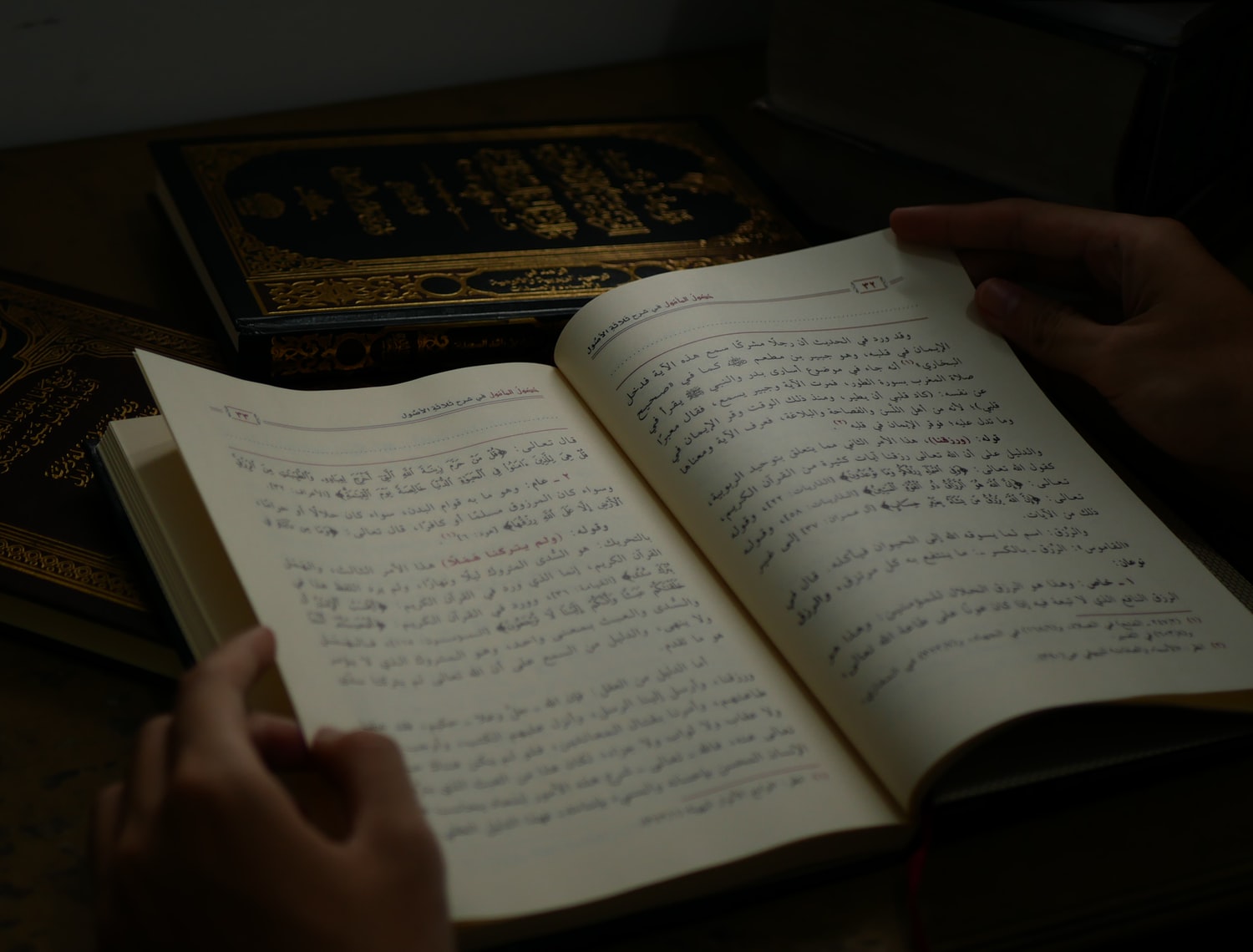
Leaders of the Youth of paradise
The leader of the Prophets, Sayyiduna Muhammad صَلَّى الـلّٰـهُ عَلَيْهِ وَاٰلِهٖ وَسَلَّم said:
اَلْحَسَنُ وَالْحُسَيْنُ سَيِّدَا شَبَابِ اَهْلِ الْجَنَّةِ, meaning, Hasan and Husayn are the leaders of the youth of Paradise. *(Tirmizi, vol. 5, p. 426, Hadees 3793)*
Dear children! You ought to know that nobody will be old in Paradise, rather, all elderly people and children will be 30 years of age in Paradise. *(Tirmizi, vol. 4, p. 254, Hadees 2571)* Sayyiduna Hasan and Husayn رَضِىَ الـلّٰـهُ عَـنْهُما are the leaders of those people of Paradise who died at a young age. Otherwise, everyone will be young in Paradise. *(Mirat-ul-Manajih, vol. 8, p. 475, summarised)*
Dear children! The month of Muharram-ul-Haraam has a close connection with Imam Husayn رَضِىَ الـلّٰـهُ عَـنْهُ, as it was on the 10th of this month that he رَضِىَ الـلّٰـهُ عَـنْهُ, along with his companions, was martyred, after experiencing several days of intense hunger and thirst. This was because he رَضِىَ الـلّٰـهُ عَـنْهُ refused to pledge allegiance to the oppressive and sinful leader, Yazeed.
Dear children! From the martyrdom of Imam Husayn رَضِىَ الـلّٰـهُ عَـنْهُ, we learn that in order to achieve great success we must also give a great sacrifice. We also learn that we must face the problems and difficulties we encounter on the path of success with determination and never waver in our resolve.
May Allah Almighty give us the ability to follow in the footsteps of Imam Hasan and Imam Husayn رَضِىَ الـلّٰـهُ عَـنْهُما.
اٰمِیْن بِجَاہِ النَّبِیِّ الْاَمِیْن صلَّی اللہ علیہ واٰلہٖ وسلَّم

photography
motivet
Nic update
 @duazahidmemon