Why is the world still fascinated by the beautiful Queen Nefertiti and does she look like this?
More than three thousand years after her death, the wife of the Egyptian pharaoh Amenhotep IV strongly inspires archaeologists and writers. What is Nefertiti's secret?
The news of the possible discovery of Nefertiti's tomb quickly spread around the world and "brought" excitement among Egyptologists. British archaeologist Dr. Nicholas Reeves published a study in July in which he stated that Nefertiti was buried in a room hidden behind the tomb of her stepson Tutankhamun, and whose door was sealed, plastered and re-painted.
"She was Cleopatra of her time. Beautiful, rich and powerful. Very powerful," said Michelle Moran, author of the historical-fictional bestseller "Nefertiti," adding that it would be a real revelation if she turned out to be buried behind Tutankhamun's tomb.
Although there were other very powerful women in the history of Egypt, Nefertiti did not stop enchanting.
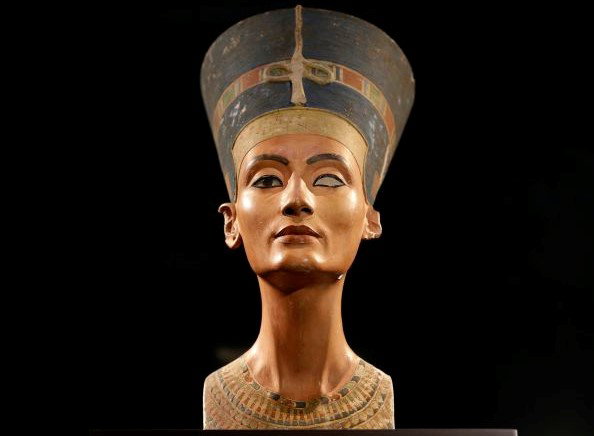
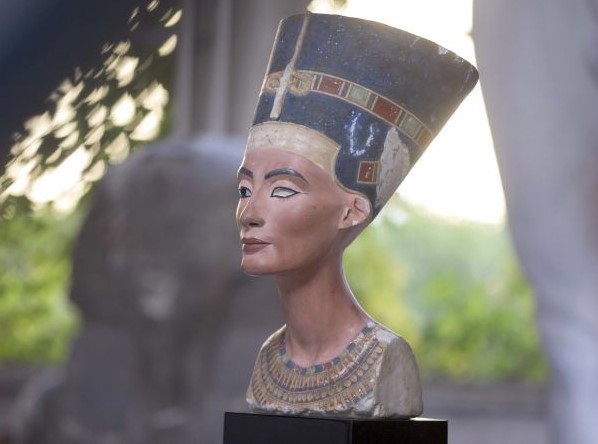
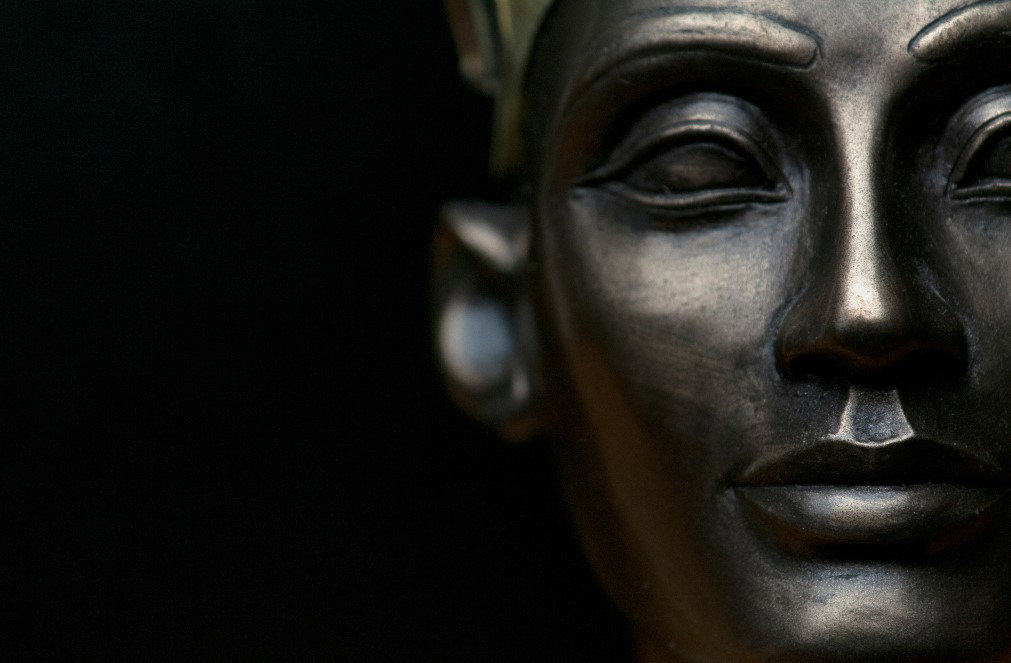
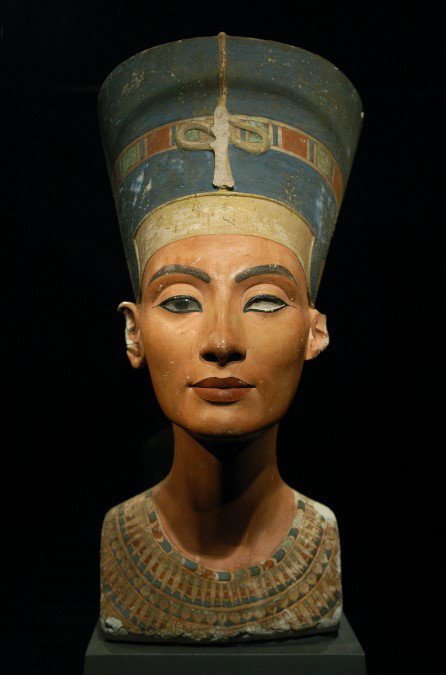
"The answer to that lies in the bust. Just look at the fine line of her neck, her arched eyebrows, and her perfect cheekbones. She could be a supermodel today. The ideal of beauty hasn't changed at all," Moraine comment.
Indeed, when German archaeologist Ludwig Borchardt found the bust in 1912, he wrote in his diary: "Suddenly I was holding a living Egyptian work of art in my hands. Something that cannot be described in words, but must be seen."
Seeing the face of the great queen Nefertiti in the Egyptian Museum in Berlin, Moran got the inspiration to write a bestseller. But it was not only beauty that attracted Moran. She wanted to once again "breathe" the life of this woman. And the more she discovered Nefertiti and ancient Egypt, the more determined she was to "tell" her story. It took her more than two years to do that.
Behind Nefertiti's beauty "lies" the story of one of the greatest Egyptian coups - the story of the reign of Akhenaten, a heretical king who brought a new era to Egypt during his reign (from 1352 to 1336 BC). He abolished polytheism and introduced the worship of a single deity, Aten, whose symbol was the Sun's disk (which was then considered a heresy), and changed the name Amenhotep the Fourth, which he received at birth, to Akhenaten as part of Aten.
In his time, a new style in art appeared - people, animals and objects became more realistic in depictions, with all their curves and imperfections, and the illusion of movement was supported. Such art left deep impressions on writers like Moran, who was especially touched by the scene Nefertiti with children:
"She is portrayed not as a queen but as a mother playing with children and cuddling them on her knees."
And exactly such scenes "fed" Morana's imagination while she was writing the book.
Little is known about Nefertiti's life. By finding her tomb, however, one could better understand and present not only the life of this queen but also a very turbulent period in the history of Egypt, better known as the Amarna period.
"Finding the tomb would be an incredible event. Many questions could be answered, such as when she died, how she died and whether she inherited her husband as his co-regent," Michelle Moran concluded.
**Did the queen look like this?**
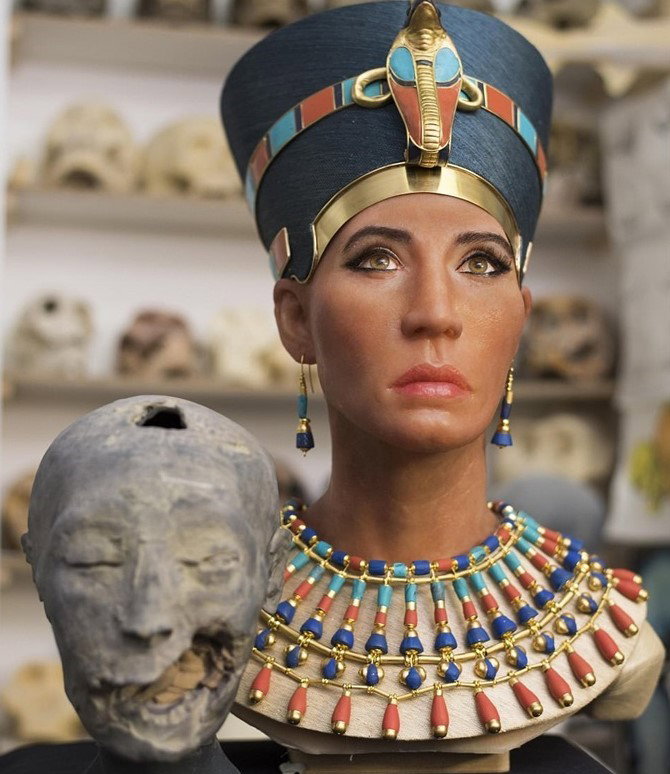
Thanks to 3D technology, the face of the Egyptian queen Nefertiti was reconstructed, scientists from the University of Bristol announced.
The face of Queen Nefertiti, one of the most famous rulers of Ancient Egypt, often called the most beautiful woman of the ancient century, has been reconstructed using the latest three-dimensional technology.
Namely, Egyptologist Dr. Aiden Dodson from the University of Bristol received permission from the Egyptian Ministry and the Egyptian Museum to remove the protective glass that covered the "Young Ladies" mummy in order to study it.
Using the latest 3D imaging technology, the mummy’s face has been digitally mapped to create a replica of a head that is actually identical to the Queen Nefertiti sculpture.
However, the skin color of the 3,400-year-old ruler raised a lot of controversy. Many people on social media claimed that it was probably not that bright in reality.
“This fascinating face is similar to the ancient representations of Queen Nefertiti. With the reconstruction of the face and the collected genetic data, we have enough evidence that the so-called younger lady was exactly Nefertiti ", explains Dodson.
By the way, "younger lady" is the name used for an unidentified mummy from the Valley of the Kings, which, thanks to DNA analysis, is known to be the mother of Pharaoh Tutankhamun. Although she has been identified as Nefertiti several times before, that interpretation was rejected because it is known that she was not the mother of the famous "boy of the king", but his stepmother. As far as is known from the source, Nefertiti had only six daughters.
Jim Morrison -Shaman in rock and roll
Even after almost 50 years since his death, Morrison's sonorous baritone is still one of the best ways to escape reality.
He was born in 1943 as James Douglas Morrison, in Melbourne (USA). After the military call to the Morrisons, their lives became full of relocations, which greatly influenced Jim himself, in addition to his later severance of relations with his parents.
As a child, on one occasion, Jim encountered a car accident while traveling with his parents, where the bodies of Indian workers were scattered. It was then that he began to claim that the spirit of an old Indian shaman had entered him. Many did not believe the story, although he claimed the same thing years later. Exactly that, was reflected in his later behavior, when he wore Indian necklaces and a belt and often performed an Indian ritual dance on stage. On this occasion, Ray Manzarek (a member of the band "The Doors") once said with a smile:
*"When someone tells you such a crazy great story, you certainly won't tell him he's lying. Of course he lies - he is an artist! That's the job of an artist - to make up stories, and Jim was an artist. "*
The fact that Jim was an artist is evidenced by the fact that, in addition to a great and unsurpassed good voice, he was also very skilled in writing poetry.
https://youtu.be/iE5-cGDr-Bc
"Real poetry, in principle, does not say anything. It only shows the possible variants. Poetry opens all doors, and it is up to you to choose through which you will enter the chosen dimension. That is why poetry attracts me, it is so eternal and timeless. Combinations of words, songs and poetry will only survive the Last Judgment. "No one will remember movies, sculptures, paintings, but music and songs will continue to exist through time and space." Jim Morrison
Some of the greatest minds and artists, such as Nietzsche, William Blake, Joseph Campbell and others, influenced his writing. Thus, the inspiration for the name of the band "The Doors" came from Blake's sentence: "If the door of perception was cleared, everything would appear to a person as it really is, endlessly." His songs were full of cults and symbolism, which Jim understood best.
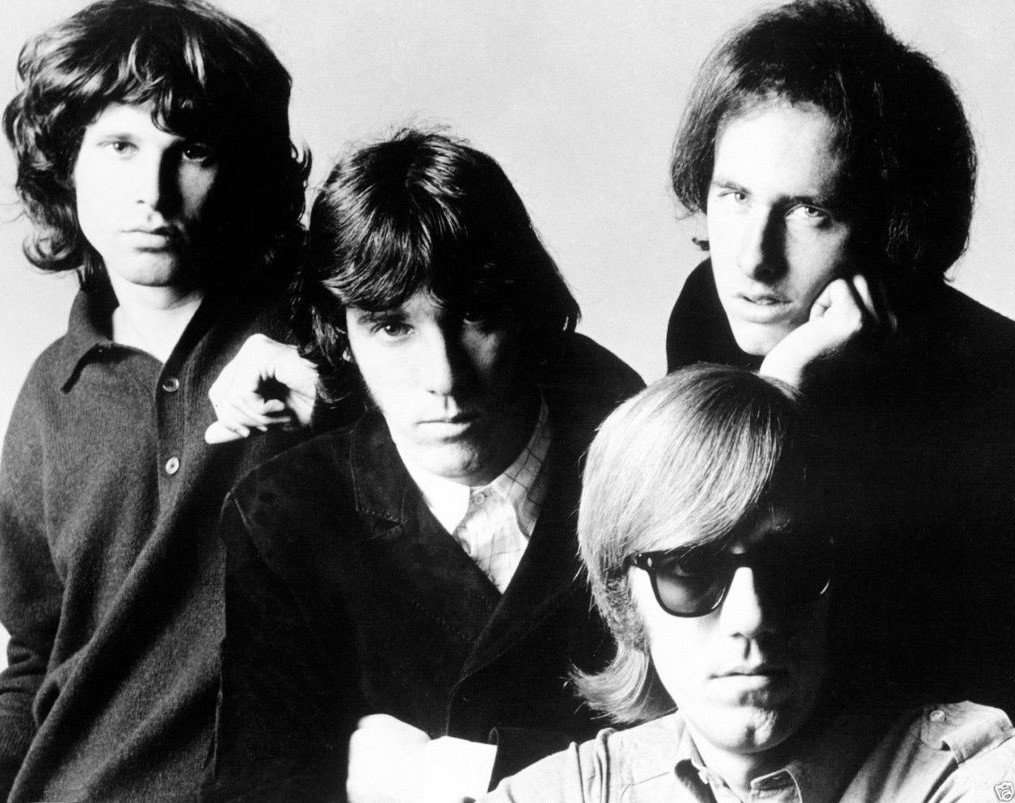
In addition to music and poetry, Jim also showed an interest in cinematography, so he finished his cinematography studies at UCL, where he later met Ray Manzarek , the keyboardist with whom he founded the band.
Jim was very shy, at first he was afraid to hold the microphone, but over time, he transformed into a wild and indomitable guy, with a unique voice and high IQ, which is why he did not suffer authority and always stood out from the crowd, even if he didn't really want that.
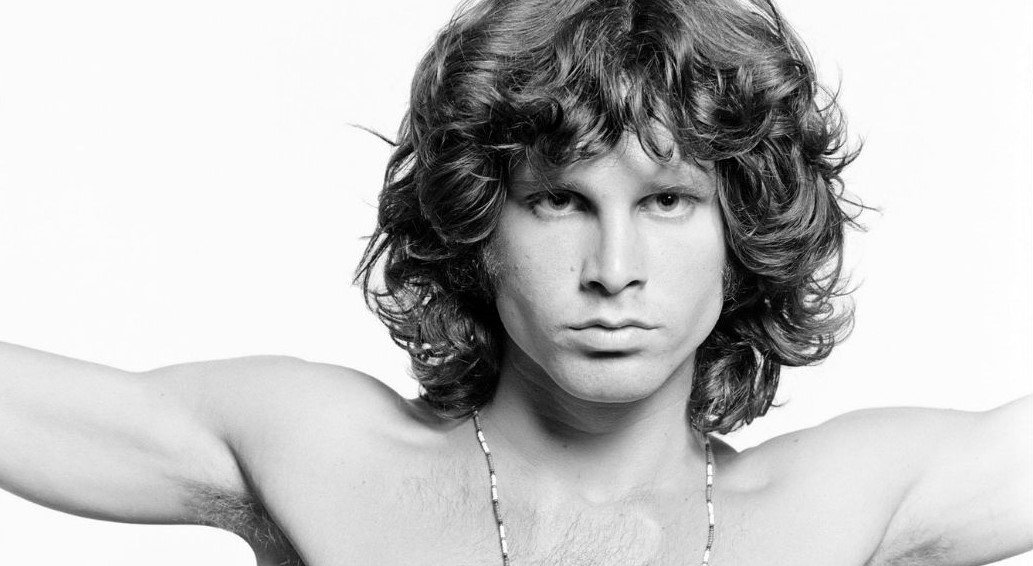
With the rise of the band "The Doors", Jim's life changed direction. He started wandering and enjoying LSD more and more, which is why he became a god of rock from a chubby boy, which was immortalized by Joel Brodsky with a series of black and white photographs. This series of photographs was remembered thanks to the cult pose of the crucified Christ, which was on the cover of the album "Best of the Doors".
Morrison's wandering life took on meaning when he met Pamela Kerson, his longtime companion. Pamela was his inspiration and passion. Their relationship was seemingly ideal, but in essence, full of heated discussions and disagreements. Despite all that, Pamela stayed with Jim for the rest of his life. They moved together to Paris in 1971, where his life ended, according to official data, due to a heart attack. Three years after his death, Pamela died, also at the age of 27, as did Jim, which led him to Club 27, which was made up of stars who died at the age of 27 (Jimi Hendrix, Janice Joplin, Kurt Cobain and others).
Jim Morrison, has remained and will forever be remembered for his eccentricity and non-belonging to this world. He was a great artist and singer, who marked a time when music still meant something. He didn't ask to be remembered, but that's the least we can do for him, while his spirit, like the spirit of a shaman flies through this world and we believe he still sings hits like "Riders on the storm", "The End", "LA Woman "" Touch me "," People are strange "and many others.
The secret of the favorite board game of the ancient Egyptians
The ancient Egyptians were fans of board games, one of which was the senate. However, for them, it was not just an object for fun ...
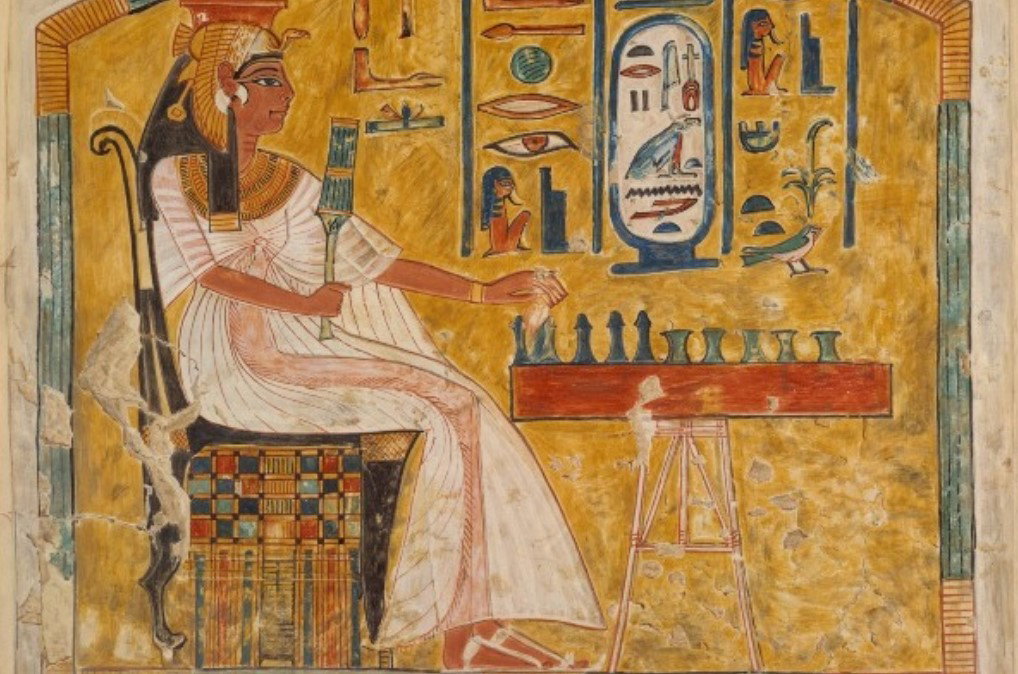
The ancient Egyptians were passionate fans of games, as evidenced by the preserved paintings from the 3300-year-old tomb of Queen Nefertari, which depicts her playing the popular game of senet with an invisible opponent.
The Senate, reminiscent of chess, was initially a favorite game at leisure. But, during almost two millennia, it grew into a game related to the afterlife, that is. life after life, which is played on a board that represents that life. Although it is probably not the first board game in the world, it is one of those that became a complete hit: it is assumed that it was enjoyed by all classes of Egyptian society about 5,000 years ago, and they played it with the same passion 2,500 years later. Today, centuries after the ancient Egyptians, a new look at the senate in a California museum can reveal when this dramatic transformation took place.
Namely, until about 4300 years ago, there was no doubt that the senate was a pastime. And then the ancient Egyptians began to paint the dead on the tombs playing the senate with their living friends or relatives. Texts from that time show that the game was then seen as a form of communication between the two worlds.
During the next millennium, the texts described the senate as a game that follows the movement of the soul through the Egyptian kingdom of the dead or Duat, further towards the afterlife. Over time, the game itself changed, so hieroglyphic birds were added, which symbolized souls for the Egyptians.
The senate board at the Rosicrucian Museum in Egypt, in San Diego, California, can show the earliest stages of this redesign. The board lacks hieroglyphs that symbolize the soul, but the square under number 27 - which bore the letter X on the old board - now bears the hieroglyphic mark for water. Archaeologists believe that this represents a lake or river that the Egyptians believed was on the path of the soul through Dust.
"This may be one of the first times that this aspect of the journey through the afterlife is visually displayed on the board," explains Walter Christ, an archaeologist at the University of Maastricht, who describes the California board in *The Journal of Egyptian Archeology.*
By the way, the age and archeological context of this plaque are insufficiently known - it is possible that the plaque was bought at an antiques fair in the 19th century. Its appearance is interesting: the starting position or start is in the place that is usual for the end or finish. Experts claim that this was common in the period in history known as the Middle Kingdom, from 4000 to 3700 years ago, and that the tablet itself is about 3500 years old.
The story of the North American Indians - part V
"A wise man deeply believes in silence - a sign of perfect balance. Silence is the complete balance of body, mind and spirit. He who manages to remain calm and untouched by the storms of existence - so that his leaf does not flicker on the tree, nor does a small wave move on the surface of the shining lake - has, according to the sages, a perfect way of life. Silence is the foundation of character.
Silence and patience, love for nature and the very way of being - as the supreme wisdom of life that brings inner peace, harmony with yourself, others and the environment, and a unique code of ethics - full of mercy, empathy, call for honesty, sincerity, respect for everything and everyone , miles away from the world of raging greed, selfishness, lies and violence, constituted the essence and beauty of a single people who sought peace, love, balance and reconciliation, following in silence and purity of heart their inner voice of ancestral wisdom. Their customs, myths and legends, the way they treated themselves, their ancestors, the dead, all living beings and everything that exists, tell us about their authenticity, uniqueness, sincerity, honesty and a specific view of life and the world.
"Everything that an Indian does is in a circle, and that is because the power of the world always acts in circles, and everything tries to be round. The sky is round, and I also heard that the Earth is round, and so are all the stars. The wind, when it is strongest, blows. Birds build nests in circles, because their faith is the same as ours. Even the seasons in their shift form a large circle and always return to where they were. Man's life is a circle from childhood to childhood. And so it is in everything in which strength moves. "
When the Indians gave names — whether to people, places, or appearances — they did so with miraculous measure, creation, and subtlety, striking directly at the essence of things. With each name, you received in a few words the essence of the person or phenomenon to which the name referred, a full description of his characteristics and character, in the most concise and perceptive way possible. Time has shown that one of the greatest and most important Indian legacies was precisely their language. The first European colonists adopted many words from over 20 languages of the Algonquin group of peoples: names of various types of food and animals (raccoon, opossum). Other well-known Indian words include: caucus (political gathering), moccasins (shoes), toboggan, totem and tomahawk (ax). The most noticeable are the Indian toponyms - which include the names of 26 of the 50 American states. For example, the name Texas comes from the Kado language and means friend, ally. Tennessee was named after a Cherokee village, and Ohio is the word of the Iroquois for a good river. Massachusetts is the name of a tribe that lived in the vicinity of the bay of the same name, and Wyoming comes from the Algonquian words meaning in the great plain. The name of the city of Chicago in the Algonquin language means the place where onions grow, and Mississippi in the language of the Chipeva tribe means the Great River.
The word tomahawk is probably from powhatan - tamaham, which means he cuts. Tomahawk was a cold weapon, an ax, originally Algonquin. As for some of the authentic Indian customs, it is interesting to mention that they used smoke to purify the spirit. Burning plants for emotional, psychological and spiritual cleansing is a custom in many religions and spiritual groups. The famous Indian "peace pipe" is a kind of ceremony that was practiced after the conflict and the signing of the armistice. Scalping the enemy as a type of trophy is a custom usually attributed to the Indians, however, it is interesting that they took over this custom from white immigrants from Europe. In this regard, the key question is once again: who were the savages in fact?
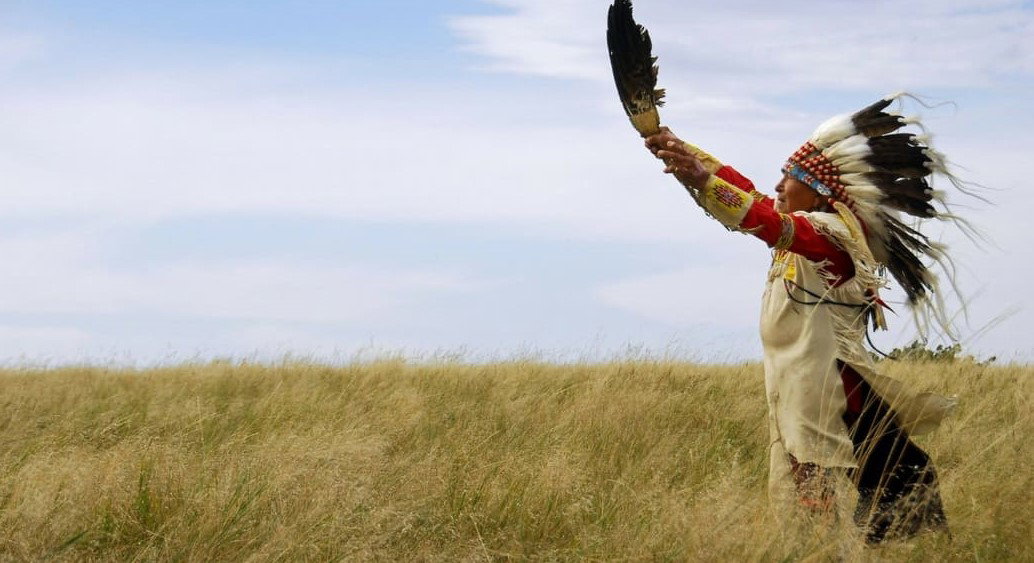
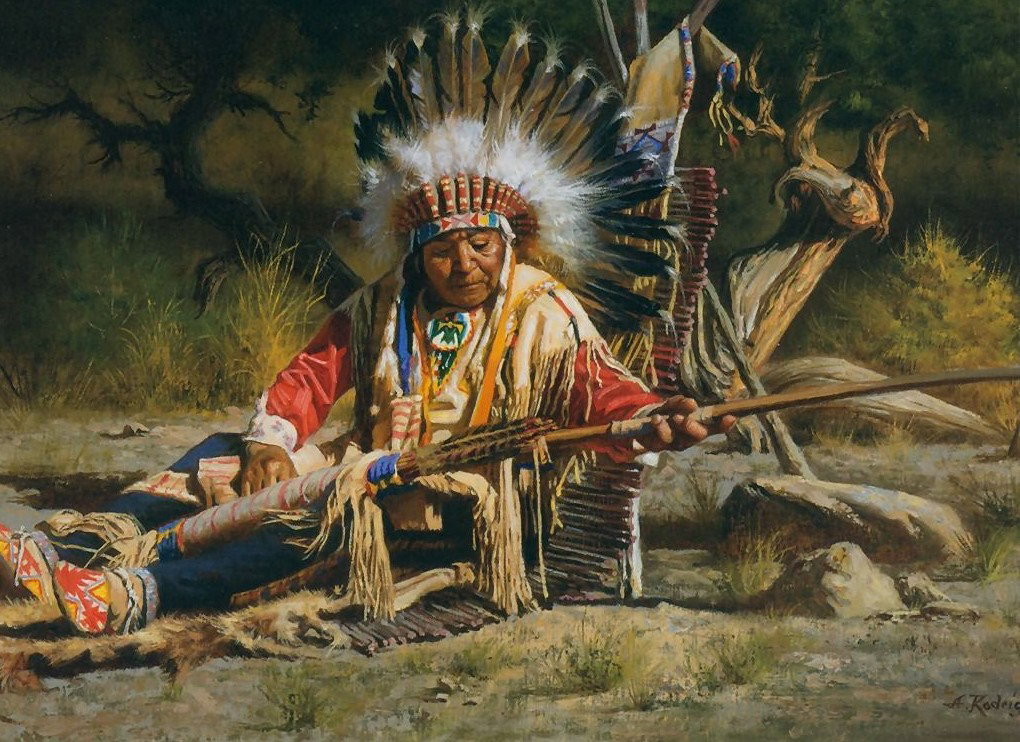
The legend, along with the Indians, included their feathers, bows, arrows and spears, clothes with fringes made of deerskin (one of the symbols of their world of freedom, fearlessness and unrestrainedness of their rebellious spirit), tents - wigwams, canoes, long hair decorated ribbons and feathers, the smoke signals they communicated with, war axes and warrior colors, their sorcerers - shamans, rain dance and the magical tam-tam rhythm of drums, totems, prairies and wilderness, mustangs, wild horses and bison - buffaloes they sent to "Eternal hunting grounds", as well as all their respected ancestors, and in the end, unfortunately, themselves.
The Indians tried to live in harmony with nature, its rules and changes. In the Indian horoscope, the signs were related to animals whose characteristics and way of life are ideal for symbolizing human characteristics. The eternal circle of repetition and return of everything opens the zodiac sign WILD GOOSE (December 22-January 22), followed by: OWL, PUMA, **RED EAGLE**, DABAR, DEER, DETLIĆ, MORUNA, BROWN BEAR, RAW, SNAKE and IRVAS.
As for the seasons, the symbolism and essence of the story is the same as for the horoscope, or in general the view of nature and way of life. The first season began with the Indians on December 22, the month of the deep sleep of the earth. It is followed by the Month of Rest and the Month of the Great Wind, which last until March 20. The common name for the first season is the Age of the Spirit of Vaboosa and it is the time when FATHER SUN begins his journey south, examining the past and predicting the future. The second season began on March 20 with the Month of the Bud, followed by the Month of the Return of the Frogs, and ended on June 21 with the Month of Sowing the Corn. The second age is called the Spirit of Wabons. Then Father Sun reveals his face more and more and all nature flourishes. The third season - the time of the Spirit of Swanodes when the whole Earth flourishes, plants and cereals bear fruit, and the rivers are full of fish, begins on June 21 with the Moon of the strongest sun, continues with the Moon of the full grain, and ends on August 23 with the Month of Harvest. The last season is the time of the Spirit of Mujakevis and those are the months of peace and examination of one's own work. This era begins with the Moon of the Wild Float, continues with the Moon of the First Frost and ends with the Moon of Deep Sleep…
The spiritual life of the Indians is a separate story, a wonderful world that essentially separates them from today's spiritual emptiness and hypocrisy, disguised by technological miracles and false piety…
**"The God of white people engraved his commandments in stone slabs with his iron finger so that people would never forget them. The red man doesn't understand something like that. Our faith is respect for our ancestors. It consists of dreams that the Great Spirit generously gave to the elect in the quiet nights. It is woven from the visions of holy people and is written in the hearts of our people. "**
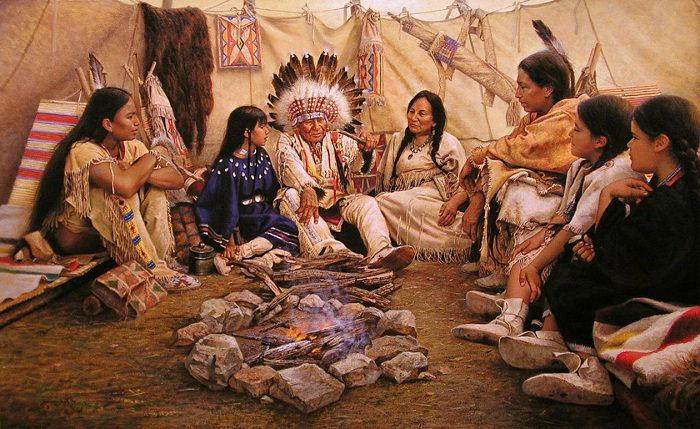
The Indians nurtured the awareness that all living beings are equally important to the Great Spirit, the Creator, and that man must not destroy the flora and fauna in his obsession. The very core of the North American Indian faith is made up of myths and legends from ancient times, which they called "the time before the great change." It was a time when humans, animals and natural forces had the power to talk to each other. Indian legends are the source of the belief that every man has his protector spirit who watches over him and helps him in difficult times. Myths were transmitted orally to young Indian generations, by campfires. The games of fire and shadows under the starry sky of America reinforced the impression of a magical and supernatural world of myths and legends.
**"God Hagaiho created the world out of nothing, he created things and living creatures, but it was not necessary to create a dog, because a dog has always existed. The dog was never considered an ordinary animal, and man gave in to the dog in his stories and legends. There was a legend in the eastern states about the origin of Borzoi: Once King Solomon, receiving an order from God, told all the animals to gather at a meeting, where each morning each animal could express its wishes and needs and get advice from the creator on how to behave. towards each other. All the animals except the hedgehogs gathered. Angry, the creator asked if anyone wanted to go in search of a hedgehog? Only two volunteers were found: a horse and a dog. The horse said: "I will find him and I will drive him out of the pit, but I am not able to take him, because I am tall, and my nose is not protected from his needles." And the dog said, "I'm not afraid of his needles, but my head is too wide and I won't be able to get the hedgehog out of the hole if it hides there." Hearing this, Solomon said, "Yes, you are right, but I will not destroy the appearance of the horse and reduce its height, because that would be a very ugly reward for his obedience and loyalty. It is better to add beauty to a dog as a reward for its obedience. " And after thinking about it, the emperor took the dog's head in both hands and stroked it until it became completely thin and pointed. Then all the animals saw that the dog turned into an elegant and thin Borzoi. So the horse and the dog followed the escaped hedgehog and brought him before the emperor. King Solomon was satisfied, he punished the hedgehog for dragging himself on the ground all his life, and he rewarded the dog and the horse, saying: "From now on, you will be man's companions all your life and the first after him, before God.**
All the tribes of the eastern part of the forest belt believe in the supreme deity of the Great Spirit. It created the world and all life. The Great Spirit is immaterial and invisible, he is outside the sensory world and he is not a specific person to tell stories about. He is sometimes called Manita. The world of most of the tribes there consists of the sky, with four to twelve layers. The Great Spirit exists in the uppermost layer. Mighty deities also live underground, and under the surface of rivers and lakes. It is dark and opposed to the forces of light, multi-layered. The most powerful deities live deepest in it - Underwater panthers or Giant horned snakes. The essence of the whole story of Indian spirituality and faith is honesty and respect for all other living beings, their deep compassion and their fruitful deeds, without a shred of greed, materialism and vicious hypocrisy of those who systematically destroyed them for several hundred years - to extinction.
The Indians expressed their beliefs and views of the world through numerous rituals, addressing their prayers and hopes to the gods, thus establishing a connection with the whole of Nature. Throughout his life, the Indian tried to cultivate a harmonious relationship with everything that surrounds him, and he did not forget that even at the moment of death, the moment of meeting the greatest secret of human existence in this world. He always tried to live honorably, and the rituals in that sense reminded him of those values that one must never forget.
**Live your life so that the fear of death never enters your heart.**
In the spiritual life of the North American Indians, tobacco symbolized the miracle of creation, and its smoking (the famous Indian "holy pipe", "peace pipe" or "calumet") shows people their respect for the Great Spirit, the creator of everything. With the smoke rising from the pipe, human prayers, thoughts and feelings also rise high towards the Great Spirit. If the owner of the pipe lives a good and religious life, he will be rewarded with the honor and strength he will receive.
**The Indian Ghost Dance** was a messianic movement that emerged among Indians (1970s), expressing a desperate desire to return to a better past, to return to a life without hunger, misery, disease, war, and Indian division accompanied by subjugation to whites. It was an attempt by the Indians to accept the Christian teaching of salvation. After all the defeats and sufferings, it was necessary to give meaning and hope to one's suffering on the spiritual plane. Their messiah - called Wovoka was called the Son of God and Christ who descended to earth for the second time in the form of an Indian to convey the message of the Great Spirit.
The movement was started by the sorcerer (shaman) Wovoka. He had a vision of a great flood that would fall to the ground and wipe out all the settlers. Just before the flood, thunder - the birds will descend to the ground and take all the Indians who have remained faithful to the holy path. When the water recedes, the bison and Indians will be returned to earth and everything will be as it used to be. Ghost Dance clothing is made to protect Indians from white bullets. It was decorated with drawings of plants and animal protectors. Preparations for the dance were performed so that the spirit of the ancestors would enter the body of those who dance and make them immortal. The Indians danced in circles singing sacred songs.
During the Battle of the Wounded Knee in 1890, the American army killed many Sioux. Many of them wore clothes decorated with an eagle, bison or morning star, believing that these symbols would protect them from injury. After that tragic event, Wovoka withdrew - the tragedy marked the end of the Dance of Ghosts. About a hundred years later, dancing became a way for surviving Indians to connect with their ancestors. The ghost dance originated in the reserves, where Indians (defeated, deceived and disenfranchised on their own land) died of hunger and hopelessness.
**WINTU WOMAN - 19th century**
"When we Indians kill meat, we eat everything. When we dig roots, we dig small holes. When we build houses, we dig small holes. We shake corn and other fruits from plants, we don't uproot a tree, We only use dead wood. But white people drill the ground, cut down trees, kill everyone. White people don't pay attention to anything. How can the spirit of the earth love the White Man? "Everywhere a white man touches her, it's a pain."
**CHAPTER MAQUINNA, NOOTKA**
"I was in Victoria once and I saw a very big house. They told me that it was a bank and that white people put money in safekeeping there and that they would benefit over time. We Indians do not have such banks: but when we have a lot of money or blankets, we give them to other chiefs and people and over time they benefit them and our hearts feel good. OUR WAY OF GIVING IS OUR BANK ”.
**RED CLOUD - Makhpiya-luta (1870)**
"In 1868, a white man came and brought some papers. We couldn’t read them and they didn’t tell us what was really inside. We thought the agreement was to move the fortress and stop fighting. But when I arrived in Washington, the Great Father explained to me that the translators had deceived me. I am poor and naked, but I am the chief of my people. We do not want wealth, but we want to raise our children properly. Wealth will not bring us good. We can't take him to that world. WE DO NOT WANT WEALTH. WE WANT PEACE AND LOVE ”.
**WILLIAM COMMAND - Mamiwinini, Canada (1991)**
"Indians see the two faces the pale face faces, as the path of technology and the path of spirituality. We feel that the path of technology is leading modern society to a wounded and scorched earth. Could it be that the path of technology represents a rush to destruction, while the path of spirituality represents a slower path, which the Indians traveled and which they are now looking for again? ”
And after the Month of Deep Sleep, Columbus' "discovery" and the arrival of the first pale-faced colonists and conquerors.
From early colonial times, European policy aimed to obtain territories from Indian tribes on the basis of official treaties. About 370 treaties were signed between 1787 and 1871, but most were violated, amended or ignored as the country became increasingly open to white settlement.
The Indians moved deeper and deeper to the west, so that the Decree on the Relocation of Indians, adopted in 1830, enabled the President of the United States to move them to Indian reserves. Immigrants, gold diggers and railways tore apart tribal territories causing war conflicts. And not only that.
The settlement of white man in America leads to the sudden destruction of nature. The warnings and appeals of the Native Americans were in vain. Centuries later, the sin of the past has come to fruition in the form of global climate change and catastrophes in the form of devastating tornadoes, droughts, floods and earthquakes roaring modern America. In 1830, US President Andrew Jefferson signed a law deporting five large Indian tribes to reserves, which were later also (contrary to the treaty) either taken away or reduced. That is how the first "democratic" genocide was carried out, supported by the American Senate. Thus, in a brutally "certified" way, the story that began in 1492 with the "discovery" of America ("India"?) By Europeans, is the story of convoys, "missionaries" and executioners who destroyed and plundered everything in front of them, killing the natives. American Indians (misnamed one of Europe’s delusions and lies) and taking away their homeland. Thus began the crescendo, the bloody end of genocide against one people and race, a perfidious and cynical deception, the history of the "winner" turned into a "democratic" triumph of "civilization and Christianity", "welfare" for the natives, "savages".
Prepared, elaborated and implemented with sarcastic brutality, this law was aimed at the ordinary plunder of the Indian land, the land of the natives who lived there for thousands of years, in harmony with God and Nature. Five great Indian tribes: the Cherokee, the Chikasau, the Koktau, the Crick, and the Seminole were expelled from the area of the most fertile country, which included a territory the size of Western Europe. The Indians, and especially the Cherokee tribe (a people of high culture, who then had their own letter, newspapers and literature) called persecution, i.e. "Relocation" **along the Path of Tears.**
The Indians were expelled by the U.S. military from their centuries-old habitat, brought to concentration camps (sounds familiar!) And then escorted from the camps to the dry and desolate prairies of Central America. During the winter journey of over 2000 km, they were also killed (over 4,000 were killed in Cherokee alone). It turned out over time, it was just a "blessed demonstration exercise" for all disobedient and unsuitable peoples who in the future will dare to resist the benefits of the force of "democracy" (rule of the people, whatever that means or wherever this miracle existed), an example application of "libertarian so-called Christian Cultures ”and an introduction to the story of how those who“ threaten ”American interests across the Universe end up. It was a silent triumph of evil and hypocrisy, a pogrom that almost destroyed one nation. Only their extremely strong spirit (their Great Spirit, Wakan Tanka), culture and rich tradition, orally transmitted from generation to generation, saved them from the evil of complete destruction.
European conquerors and colonizers also brought diseases to which the Indians were not resistant (on this occasion I do not mean mental and mental!). They were primarily smallpox that epidemically slaughtered the natives. Even today, in the reserves, Indians are struggling with diabetes, heart disease and mental disorders.
With the "democratic" relocation, the introduction of genocide, began the easy but sure extinction and disappearance of an entire nation and its civilization, a civilization that primarily cared about Nature, Mother Earth and coexistence with them - over time, bison, wild horses disappeared, forests, other animals and plants, before the onslaught of the "advanced" civilization of modern barbarians, conquistadors and murderers. The era of "life" in the reserves has begun, the predecessors of future concentration camps (probably places for "concentrating" the unsuitable, if by any chance you start thinking with your own heart and head). Fenced, rebuilt and separated from the authorities of a libertarian, wandering nature, flooded with the plagues of "fire water" and the disease of the white man, the Indian began to wither and quietly extinguished, inside.
On the Grand River Territory, which is now located in southern Ontario, about a hundred kilometers west of Toronto, there is a reserve of "Six Nations" in which "live" six Iroquois tribes: Mohawk, Oneida, Onondaga, Cayuga, Seneca and Tuscarora. This country was "rewarded" by the British crown because of the loyalty they showed during the American Civil War, fighting on the side of the English (are there any bigger cynics and villains!). During the year, most of their property was taken away again, so this reserve was reduced to barely 186 hectares, while, say, the zoo in Toronto covers 282 hectares !!!
Such a brutal fact of what the "life" of the Indian libertarian people turned into after the influence of "civilization, democracy and culture" of whites is compounded by even worse facts about the Indians located on the reserves of Canada (or the United States, anyway): they became the people with the highest rate suicides, involved in the benefits of crime, drugs and alcohol, with an average life expectancy of about 40 years. They are mostly unemployed (percentages range up to 90% of the unemployed, competing fiercely with the white "Indians" of Serbia, prone to unusual records) and live on social assistance (which, incidentally, is incomparably higher than the official - consumer basket survival of measured income in the said country without borders, on the verge of extinction). In the end, through a series of subtle methods of genocide, the number of Indians today has been reduced to "tolerable" by about 1% of the US population! Nothing without democracy and illusions…
And when one thinks that nothing worse could have happened to the Indians, the indigenous people of America, whose country was kidnapped by the white scum of "Christian" Europe (and of course I don't mean sincere, true and merciful Christians!), "Democrats, missionaries and peacemakers" who they killed, cheated, burned and raped everything they came across during almost four centuries of pogrom, life denies it and shows that the negative gradation simply has no end. Namely, no one in Canada today will point out the fact that the first case of biological war in history was recorded in the middle of the fatal 19th century in British Columbia (is there anything but "British") and that it was applied to the Indians. Under the guise of humanitarian aid, the church delivered large quantities of blankets to the Iroquois people, which were previously used by those suffering from smallpox. Completely immune to this type of disease, they were cut down by the waves of death. At the beginning of the 20th century, missionaries established (for "humanitarian" reasons, of course) schools and boarding schools, which officially served for the education and faster inclusion of Indian children in the Canadian state. However, they were all just not that. Until the mid-1960s, real dramas took place within their walls, in which the main roles were played by priests in charge of raising Indian children. Mental and physical abuse, and especially sexual abuse (everything sounds familiar, one would think that history is constantly repeated), were an everyday occurrence. There are many who did not survive, and those who managed to get out of there were left to fight the severe traumas that accompanied them to death, related to drugs and alcohol, the only things they could get there in unlimited quantities. What the "red uniforms" and "priests" failed to destroy and kill, the "fire water" succeeded as a beneficial "cure for the soul" of the humiliated Indians. The effect of isolation and internal re-education, the so-called "Civilization", was eventually fatal…
The story of the Indian "Tear Trail", the pogrom or "relocation" of an entire nation is a symbolic story of the modern world and one civilization, all its brutality, evil and hypocrisy, the story of many of us - the peoples of Africa and Asia, above all, who were expelled and plundered, and some of them were taken into slavery, the way to America (although over time the notion of slaves was relativized, because they were on all sides in various forms of modern slavery and fascism), and then "liberated" from "savagery" by cynicism " of high culture and racial superiority ", about the native Aboriginal Australians, about many peoples of the world who were simply removed as unsuitable and superfluous, about the people of Serbia who (among many others around the world) were expelled from part of their historical cradle - Kosovo and Metohija, tried "Democratic" techniques, ie. "Impoverished" bombs of the "merciful angel" and the rule of human "rights" which prevent the effective threat to other people's interests and rights?!? The modern democratic recipe: silence, destroy and remove, and then "reward" as a "humanitarian" (appetite pills for the hungry) proved to be very "subtle" and "God-pleasing" effective, once tried.
The path of Tears is a way of life, "destiny", for all those disenfranchised people who do not fit in and join the general race for profit and a new vision of the world based on lies, injustice, violence and hypocritical "faith" destined only for a minority of "rich" and powerful . Nothing matters anymore except money, power, profit, force and the fact whether you fit (or not) and whether you accept the "offer that is not rejected"! The Indian Path of Tears only paved the main, "visionary" path for the conquistadors of the world, meanwhile disguised and smeared with a new layer of hypocrisy. reserves for the unfit and disobedient, regardless of race, nation, religion or any other characteristic, except of course the amount of money they have…
Years of colonization, American revolutions and expansion to the west brought the destruction of entire villages and mass migrations to many Indian tribes. The tribes were eventually decimated and sated into reserve camps.
For two thousand years, Jesus' original idea of purity of heart, brotherhood and equality of all people has been ridiculed and sought to be portrayed in a completely different light, the very opposite of authentic simplicity, courage, revolutionaryism and beauty. Following the endless Path of Tears, humanity will disappear from the beginning of the story in the infinity of loneliness of spirit…
**"When he cuts down the last tree and dries up the last river, the white man will realize that he cannot eat money."**
**SANTANA - Chief of Kiowa**
**"I hear you intend to move us to reserves near the mountains. I don't want to move. I like to wander the prairie. Then I feel free and happy, and when we settle somewhere permanently, we fade and die. A long time ago, this land belonged to our fathers, but when I went to the river, I saw camps of soldiers on its banks. Those soldiers cut down trees and killed my bison, and when I saw that, my heart felt like it was going to burn. "**
**GREAT COUNCIL OF AMERICAN INDIANS (1927)**
"White people, who are trying to make us in their own image, want us to be, as they call it, 'assimilated', dragging Indians into the mainstream and destroying our way of life and our cultural patterns. They believe that we should be satisfied, like those whose CONCEPT OF HAPPINESS is MATERIALISTIC AND GREEDY, which is very different from our path. We want freedom from the white man rather than being integrated.
WE DON'T WANT POWER, WE DON'T WANT TO BE CONGRESS MEMBERS OR BANKERS, WE WANT TO BE OUR OWN. The white man says there is freedom and justice for all. We were given "freedom and justice" and because of that we were almost exterminated. We will not forget that. "
The land that the United States intended for the life of the Indians - reserves, was established by the Congress in 1786. The law on the resettlement of Indians, from 1830, had the consequence that the peoples of Crick, Semiola, Chickasaw, Chokto and Chiroki moved to the reserves that were located on the so-called Indian territory, in present-day Oklahoma. About 200 reserves were made in more than 40 U.S. states, mostly in poor countries, which only further impoverished the Indians.
Pale plague, stray, deluded and uninvited guests returned the hospitality to the Indian people, "giving" them pieces of their own, violently stolen land in the end… To some magician, that is. morbid way, that's how the famous American dream or rather nightmare came about.
During the 16th and 17th centuries, European powers established a military presence in North America, so that they could advance and defend their RIGHT - the right to discover, colonize or the right to conquer huge parts of the continent inhabited by Indians. In response to persecution, violence, and plunder, many Indian tribes took the path of war in a desire to resist European colonial expansion.
During the 17th century, the Powhatan Confederation threatened the survival of the first British colony of Virginia, attacking it during 1622 and 1644. Rebellions of the Algonquin and Pueblo Indians followed. In a series of bloody conflicts (until the end of the 19th century), many groups of Indians proposed unification - the so-called pan Indian Alliance against the colonizers. Unfortunately, they never came to life, which made the divided and often quarreling tribes even weaker, especially in relation to the much more numerous, more technically equipped and superior army, as well as the pale-faced executioners of all possible types - from the so-called cowboys, outlaws, European convicts and exiles, to all sorts of adventurers in search of gold and getting rich quick. In most of the mentioned conflicts, European immigrants also had Indian allies (bribed with various goods, trinkets and, above all, alcohol, the so-called "fire water", which destroys all moral principles).
An interesting story is about American President Lincoln and the Indian chief of the Seattle tribe, from the middle of the 19th century, which perhaps speaks most eloquently about the essence of the bloody conflict between uninvited guests and natives, about the essence of two worlds, concepts, views, meaning and value system.
Namely, when the President of the USA, Abraham Lincoln (father of the nation), in 1854 offered the state to buy a large part of the Indian land, and the Indian people were offered accommodation in reserves (camp full board), the chief of the Seattle tribe received an answer. Scripture is one of the deepest and most beautiful thoughts ever uttered about the human environment:
"When the great chief from Washington sends his vote that he wants to buy our land, he asks too much of us. How can you buy or sell heaven, the warmth of the earth? That idea is foreign to us. We are not the owners of fresh air and clear water. If we do not have the freshness of the air and the clarity of the water, how can you buy it?
Every part of that country is sacred to my people. Every shining pine needle, every grain of sand on the river bank, every mist in the darkness of the forest, are sacred in the thoughts and experience of my people. The juices that flow through the trees carry memories of the red man. Dead white people forget the land of their birth when they go for a walk among the stars. Our dead never forget this beautiful country because they are the mother of the red man. We are part of that country and it is part of us! The fragrant flowers are our sisters, the Deer, the Horse and the Great Eagle, they are all our brothers. Rocky peaks, lush pastures, the warmth of the body of a pony and a man, they all belong to the same family. So when the great chief from Washington sends his vote that he wants to buy our land, he asks too much of us. The great chief sends word that he will save our place, so that we ourselves will be able to live comfortably. He will be our father and we will be his children.
That great water that flows through rapids and rivers is not only water, but also the blood of our ancestors. If we sell you land, you must remember that it is sacred and you must teach your children that it is sacred, that every reflection in the clear water of the lake tells the events and memories of this people. The murmur of water is my father's voice. Rivers are our brothers, they quench our thirst. Rivers carry our canoes and feed our children. We know that white people do not understand our lives. One part of the country is the same to him as the other, because he is a foreigner who comes at night and takes everything he wants from the country.
The earth is not his brother but his enemy and when he conquers it he moves on. He leaves his father's graves behind and doesn't worry. He takes the land from his children and does not worry. The graves of his fathers and the land that gave birth to his children have been forgotten. They treat Mother Earth and Brother Heaven as things that can be bought, robbed, sold as a herd or shiny jewelry. His appetite will devour the earth and leave only desolation!
Our way is different than yours. The red man's eyes hurt from looking at your cities. And maybe it's because the red man is wild and doesn't understand. There is no peaceful place in the cities of the white man. There is no place to hear the opening of leaves in the spring or the flutter of butterfly wings. Maybe it's because I'm wild and I don't understand. The Indian prefers the gentle sound of the wind when playing with the face of the swamp, as well as the very smell of the wind cleaned by the midday rain or smelled of pine. Air is precious to the red man because all living things share the same breath - animals, wood, man. The white man does not seem to notice the air he breathes. As a man who dies for many days, he is numb to the stench. But if we sell you our land, you must remember that air is precious to us, that air shares its breath with all the life it supports. The wind that gave my grandfather his first breath will also accept his last sigh. And if we sell you our land, you must keep it as a shrine, as well as a place where a white man will be able to come and taste the wind, which is sweetened by the smell of wildflowers. So we will consider your offer to buy our land. If we decide to accept, I will set one condition: a white man must treat the animals of this country as brothers. I'm a savage and I don't understand any other way. I saw thousands of decaying bison on the prairie left by a white man shooting them from a passing train. I'm a savage and I don't understand how a smoking iron horse can be more important than a bison when we kill just to stay alive. What is a man without animals? If all the animals leave, man will die of great loneliness of spirit. Whatever happened to animals will soon happen to humans. Things are connected. You have to teach your children that the ground under their feet is the ashes of their grandfathers, so that they would respect the earth, tell your children that the earth is related to you. Teach your children as we teach ours that the earth is our mother… Whatever befalls her, will befall the sons of the earth. If a man spits on the ground, he spits on himself. We know that. All things are connected as blood that unites the family. Whatever befalls the land will befall the sons of the land. Man does not weave the fabric of life, he is just a thread in it. Whatever he does weaving he does to himself. Even a white man whose God speaks and walks with him as a friend with a friend cannot be exempt from a common destiny. We can be brothers after all, we'll see. The only thing I know that a white man will discover one day: our God is the same God. You can now think that you have it as you want to have our country, but you cannot. He is the God of man and his compassion is the same, for the red man as for the white. That earth is dear to Him and to harm the earth is to despise its Creator. Dirty your bed and one day you will suffocate in your own stench. But in your ruin you will shine brightly, ignited by the power of God who brought you to that earth and for some special purpose gave you power over it as well as over the red man. Fate is a mystery to us because we do not know when all the bison will be slaughtered and the wild horses tamed, the secret corners of the forest heavy because of the smell of many people and the view of the mature hills messed with chattering wire. Where is the eagle? He left. It's the end of life and the beginning of the struggle for survival. "
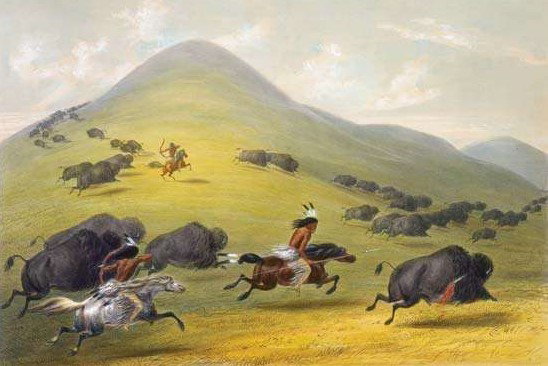
If the Euro-Americans committed genocide anywhere on the continent against the Indians, then it was in California, which was attractive in those years because of the so-called gold rush. Between 1850 and 1860, war, disease, and famine reduced the California Indian population from 150,000 to just 35,000. In 1876, for the purpose of self-defense against destruction and persecution, the Sioux and Cheyenne tribes united under the leadership of legendary chiefs - the Sitting Bull and the Crazy Horse, taking a glorious victory over General Custer at the Battle of Little Big Horn. The last conflict took place in 1890 near Wundin Ni. In 1887, Doss's law granted Native Americans and 41,400 acres of land in reserves to Native Americans who renounced tribal affiliation. In the war against the Prairie Indians (1854-1890), the soldiers aimed to secure settlements and roads, limiting the Indians to reserves. The Indians from the plains faced a large number of immigrants, because the development of the railway under the white man enabled the soldiers to transport efficiently to the disputed territories. In the end, it was as if the massacre and humiliation of the North American Indians was not enough, and another massacre followed - the massacre of the Indian main source of food and life - bison. Namely, before 1830, at least 30 million heads (some authors claim that there were up to 60 million) of bison grazed in the prairie of the USA. Tribes of Indians lived with herds of bison on the plateau. They hunted bison with a bow and arrow and got almost everything they needed from them. Meat for food, leather for clothes, horns for glasses, bones for tools. Ropes, bags, sledges, tents - they got everything from buffalo. The Indians found both the image and spirit of their gods in the bison. Although the Indians exploited the bison so fully, they took only as much as they needed for immediate use. White immigrants did not behave like that. Getting rid of the buffalo was an immediate way to get rid of the undesirable Indian who, without them, would be difficult to sustain. So the buffalo had to be destroyed. The massacre began around 1830. Immigrants did not kill bison for food. They shot bison just to get rid of them. In 1865, a railroad was built across the continent, from east to west, cutting the bison population in two. The "famous" hunter Buffalo Bill killed more than 4,000 bison alone in 18 months. Railway passengers were encouraged to shoot bison from the entertainment train. Since 1870, two and a half million bison have been killed each year. By the end of the 19th century, less than 1,000 (a thousand!) Bison remained throughout North America.
General Sherman, one of the bloodiest murderers of the Indians, said the following in a letter to Buffalo Bill: "As far as I can estimate, in 1862, in the prairie between Missouri and the Rocky Mountains, there were about 9.5 million bison. They all disappeared, killed for their flesh, skin and bones. At the same time, in that same area, there were about 165,000 Pony, Xu, Cheyenne, Kai, and Apache. All of them also disappeared and were replaced by twice or three times the number of white men and women, who turned this country into a garden and who can be listed and taxed and who can be managed in accordance with the laws of nature and civilization. It is about a comprehensive change, which will be implemented to the end. " Until the end, when there is nothing more that could change!
"A nation is not conquered as long as it has the hearts of its women on earth. Then it's over, no matter how brave the warriors are and how powerful their weapons are. "
Today, of the total U.S. population, Indians make up only 1% (just over 2 million), representing a mostly poor, uneducated, sick, disenfranchised, and population with a very short life expectancy (about 44 years).
In 1883, the U.S. government banned the use of Native American languages, the practice of their culture, religion, and customs, slowly removing traces of crime, hands stained with the blood of the only true Americans. According to the US National Institutes of Health, more than 50% of Indians over the age of 45 are diabetic. The municipality of Shannon, where the Pine Ridge Reserve is located, is the poorest municipality in the United States. Only Haiti has a lower standard in the Western Hemisphere. Unemployment in the reserve is 90%, and in addition to a large number of people suffering from diabetes and kidney diseases, the municipality is burdened with other social problems - poverty, alcoholism and drug addiction. The main causes of these plagues are the change of the Indian way of life: from the former nomadic to the present immobile, static, as well as bad food full of sugar. There is often only one food store in the US Indian reserves, where you can only buy processed products, carbonated drinks and alcohol, without fresh fruits and vegetables.
The consequences of all this are the slow, imperceptible, systematically supported and quiet extinction of the Native Americans - Indians, turned into their own parody and caricature, an attraction for tourists and meaningless statistics, for the sake of order. Manitua has been replaced by Virtual Reality, while the Great Spirit has been transformed into Wall street magic of deception and the Great Void that we consume as we die out…
EPILOGUE: An Indian legend about the end of the world
"When the world dies, a new tribe of all colors and all faiths will be born. That tribe will be called the Warriors of the Rainbow and will put their faith into action, not words.
In the last century, an old wise Indian woman called Eyes of Fire had a vision of the future. She prophesied that one day, because of the greed of the white man, the time would come when the earth would be devastated and polluted, forests destroyed, birds falling from the sky, waters darkening, fish poisoned in streams, and trees no more, the humanity we know will cease to exist. There will come a time when the guardians of legends, stories of cultural rituals and myths and all the Ancient Tribal Customs, will be needed to restore us to health, making the country green again. They will be the key to humanity's survival, they are rainbow warriors. The day of awakening will come when all people of all tribes will form the New World of Justice, Peace, Freedom and the recognition of the Great Spirit. Rainbow warriors will teach people the ancient practice of Unity, Love and Understanding. They will teach harmony among all people in all four corners of the world. As ancient tribes, they will teach people how to pray to the Great Spirit with a love that flows like a beautiful mountain stream and flows along the path into the ocean of life. They will be free from miserable envy and will love humanity as their brothers, regardless of color, race and religion. They will feel happiness enter their hearts and become one with the entire human race. Their hearts will be pure and will radiate warmth, understanding and respect for all humanity, Nature and the Great Spirit. They will once again fill their minds, hearts, souls and deeds with the purest thoughts. They will search for the beauty of the Father of Life - the Great Spirit! He will find strength and beauty in prayers and the loneliness of life. The poor, the sick and the needy will be cared for by brothers and sisters from Earth. This need will become part of their daily lives again. The one who will lead the people will be chosen in the old way - not according to the political current, or who speaks the loudest, who brags the most or by blasphemy, but according to whose deeds speak the most. That day will come, it is not far…
What's left after all?
Has anyone found their peace, their God and the path to happiness, remembering the dreams of their ancestors who once set out with curiosity on the path of unexplored India? The story of justice, rights, freedom, prosperity, independence and democracy - isn't it all just a colorful lie for the masses, one of many in a game called "bread and games"? To build happiness on the misfortune of others, justice by violence, law by force, freedom by kidnapping and humiliating others, the power of the people by ruthless manipulation of the enriched and hanged minority - my friend, all that "treasure" was far from them!
To justify the whole story of genocide against one nation by some "progress" - technological and civilizational progress, the spread of a brutal and false faith that exists only as an empty and hypocritical form, a "humane" pogrom of the so-called savages in the name of the higher goal of spreading "democracy and Christianity" is a cynical attempt for lower-grade textbooks with a history of winners…
Chief Tecumseh, Shawnee:
Live your life so that the fear of death never enters your heart. Do not burden anyone because of his faith, respect other people's opinions and ask them to respect yours. Love your life, perfect it and beautify everything around you. Strive to live long and in the service of your people. Prepare a sublime song of death for the day when you will cross to the other side.
Chief Geronimo, Chiracahua Apache:
**I know I have to die someday**
**but if the heavens fall on me**
**I want to do what is right**
**there is only one God who looks down on all of us**
**we are all children of one God**
**God hears me**
**sun, darkness, winds**
**they all hear**
**what we are talking about now**
Chief of Seattle, Sequamish
There is no death. There is only a change of worlds.
I sit on the banks of the Great River and watch its eternal flow that remembers and records everything. Behind me lie the faded remains of the former world of wilderness, the innocence of divine nature and the soul of wandering ancestors, some lone mustangs that testify to the indomitability of former nature - Manitua, a falcon that rises in height and observes the victim with other eyes, the remains of wigwams, canoes, broken arrows and bows, spears, tomahawks, feathers whose remains are scattered by the whirlwind of the devil's time on the outskirts of the megalopolis of concrete, steel, asphalt and glass… I see salmon and trout that are no longer so, crippled souls, all that noise and chaos of those who can't listen, hear, understand, observe and sympathize, all that emptiness full of a bunch of unimportant things and colorful lies, the roar of jackals and wolves in the freedom of prison and the last, decrepit chief and warrior whose gaze it radiates the emptiness and sorrow of the soulless world and the memory that goes back centuries, searching for the lost thread with the spirits of the ancestors, Manitou and the Great Spirit and the world, which and it is no more.
I look back, upset and resigned, listening to the sound of the coming hurricane. The cries of souls, blood-soaked soil and broken bones of ancestors announce the ominousness of the apocalyptic storm, the answer that arrives as an echo of the past, ready to cleanse and purify all accumulated evil and injustice of the world "freedom, democracy, law and justice, the American dream, progress and uninvited guests." ”
My friend, where we have been deceived!
**INDIAN PRAYER - Sioux tribe**
**Sharpen my ear to hear your voice**
**Make me wise to know the doctrine that You mysteriously put in every leaf, in every stone**
**I seek strength, but not to overpower my brothers but to overcome my greatest enemy - myself**
**God, give me the peace to endure things I can't change**
**Give me the wisdom to distinguish one from the other**
**Let me not pray for the relief of my pain, but for a strong heart to overcome it**
**Let me not look for allies in the struggle of life, but to rely on my own strength**
**Let me not beg for salvation from fear, but for the hope of conquering my beauty**
You can be a bad person, have everything and still have nothing; that you are empty inside, that your soul and heart are empty, surrounded by a pile of unnecessary things, someone else's misfortune and false splendor, with which you simply do not know what to do. To one day look back and feel the sheer emptiness, loneliness and evil that eats at you until you completely fade.
You can, on the other hand, be a good man, have nothing, and have everything again; that you are filled from within, that your heart is filled with the joy and happiness of others, that your soul is pure and open in compassion and love, that you do not enslave yourself to nonsense and unnecessary things, to a false glow like a fading deception. To one day look behind you and realize that what you have given and shared with others is all the happiness and wealth of this world, the path to eternity through the memories of some dear people for whom you lived.
**It is our belief that the love of possession is a weakness that needs to be overcome. It attracts the material part, and if we allow it, in time it will disturb a person's spiritual balance. That is why children must learn the beauties of giving early. They need to be taught to give what they love most so that they can feel the joy of giving.**
The story of the North American Indians is the story of a seemingly lost world of true values and ideals worth believing in and fighting for by living honestly and sincerely, a story of true faith that turns all illusions, evil, stupidity and defeat into final victory. It was a story about dreams that were worth believing in, for them to live and go into legend as a man, as someone and something that is, in essence, the most difficult to be and stay, in spite of everything. On the path of truth, faith, peace, honesty and love, you will find a moment where your life may cross paths with the world of myths and legends of former Indians, a moment where God's touch pardons and blesses only those with a pure heart, filled with selfless love. they truly lived, believed and shared their happiness with everyone.
**Hey-a-a-hey! Hey-a-a-a-hey! Hey-a-a-hey! Grandpa, Great Soul, look at me once more on the ground and bend down to hear my weak voice.**
The beauties of Mount Athos are beautiful, the beauty has arrived: Who was Nefertiti?
One of the most mysterious and powerful women in ancient Egypt.
Nefertiti, one of the most mysterious and powerful women in ancient Egypt, was the wife of Pharaoh Amenhotep, later Akhenaten, from 1353 to 1336 BC, who ruled even after the death of her husband. The time of her reign was a time of great religious reform, because Akhenaten reoriented the religious and political structure of Egypt around the worship of the god Aten.
Nefertiti is best known for its sand bust, which was found in 1912 and very quickly became a symbol of beauty and power. Speaking of beauty, we must also mention the meaning of her name: Nefertiti - "beauty has arrived".
**QUEEN NEFERTITI**
Not much is known about her origins. There are various theories, but the most common is that Nefertiti is the daughter of the Egyptian dignitary Aya, who became a pharaoh after Tutankhamun's death in 1323 BC. According to another theory, she is the princess of the kingdom of Mitanni from northern Syria. Later, when Amenhotep IV came to the throne, his favorite wife was with him. In the fifth year of his reign, he changed the worship of the Egyptian supreme god Amon in favor of Aten and moved the capital to the north of Amarna. He closed the temples of Amon, and changed his name to Akhenaten, which means "servant of Aten." Also, Nefertiti added Neferneferuaten - her full name means "The beauties of Mount Athos are beautiful, the beauty has arrived".
Akhenaten's transformation of religion brought radical changes in art as well. Starting from earlier idealized images of pharaohs, Akhenaten is sometimes depicted with female hips and hyperbolically. Earlier, Nefertiti's paintings portrayed her as a stereotypical representation of a woman, but later she was portrayed similarly to Akhenaten's paintings. Her final descriptions depict a royal but realistic figure.
On the walls of tombs and temples built during the reign of Akhenaten, Queen Nefertiti is always depicted next to her husband, which was not the case with any other Egyptian queen. In many cases, she was portrayed in a position of power and authority, leading the worship of the god Aten.
Since Nefertiti could not give a male heir (they had six daughters), her husband began to enter into relationships with other women, including his own sister. Some experts believe that she was the woman with whom he got the future pharaoh Tutankhamun.
**NEFERTITI AS A POSSIBLE RULER**
Nefertiti officially disappears from historical records around the 12th year of Akhenaten's 17-year reign. There are two theories: that Nefertiti died in that period and that she became the official co-ruler of her husband, but under the name Neferneferuaten. Akhenton's successor was Pharaoh Smenkhara, who some historians claim is Nefertiti's second name. That would not be unprecedented. It is known that in the 15th century BC, the female pharaoh Hatshepsut ruled Egypt, dressed as a man, wearing a false beard.
If it is true that Nefertiti retained power during and after the reign of Akhenton in recent years, it is very possible that she began to annul the religious policy of her husband, which reached its peak during the reign of Pharaoh Tutankhamun. At one point, Neferneferuaten hired a scribe to offer a great divine gift to Amun and to beg him to return and remove the darkness from the kingdom.
**BISTA NEFERTITI**
A bust of Queen Nefertiti was found on December 6, 1912, during excavations led by Ludwig Borchardt in Amarna, in the then discovered studio of the Egyptian chief sculptor Thutmose. The painted figure is presented with a long slender neck, a graceful proportionate face and an authentic blue cylindrical head ornament. Borchardt's team had an agreement with the Egyptian government to separate this item from the rest and to have the bust delivered as part of a German shipment. The news of this invention was published in a newspaper with a small photo and then given to the financier of this expedition, James Simon, who kept it on display for the next 11 years in his private residence.
In 1922, British Egyptologist Howard Carter discovered Tutankhamun's tomb. The attention of the world media was focused on this invention, which was accompanied by a picture of Tutankhamun's mask made of pure gold, as a symbol of beauty, wealth and power.
A year later, a bust of Nefertiti was exhibited in a museum in Berlin, in response to the English finding them. During the riots in the 20th century, the bust remained in German hands. Hidden from the Allied bombs in the salt mine, and revered by East Germany during the Cold War, the bust that Adolf Hitler admired today attracts more than half a million visitors a year to the Egyptian Museum in Berlin.
The story of the North American Indians - part IV
**SIOUX**
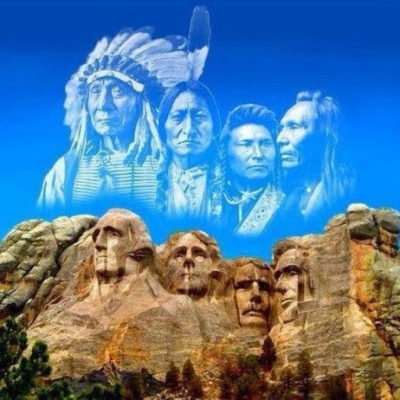
A North American tribe inhabiting the area between the Mississippi and Missouri rivers. The earliest known ancestral home of the Sioux is the marshy area of rice lakes, in present-day Minnesota. This area is known for being inhabited by the very warlike Chippewa tribe (the Chipiva tribe, from which the original name of the legendary Mississippi-Mici Zibi or Great River originates). Chipivas called their eternal enemies the Nadowessi (Little Snakes). The Sioux were a confederation of 7 tribes. The struggle for supremacy over the rice fields between Chipiva and the Sioux led to the persecution of the Sioux from those parts. In 1876, with the help of the Allies, they defeated the American army and General Custer on the Little Big Horn River. It was preceded by a lesser-known battle at Devils Tower. There was a very fierce resistance prepared by less mobile old men who could not keep up with the pace of the tribe. The Sioux massacre by the US military took place in December 1890 near **Wounded Knee Creek**, South Dakota - it was the final end of their courageous resistance to great evil, a force that would try to subdue the rest of the world with its "merciful democratic" principles a century later. Today, the Sioux still "exists" only in the reserves in Minnesota, North and South Dakota, Montana and Nebraska.
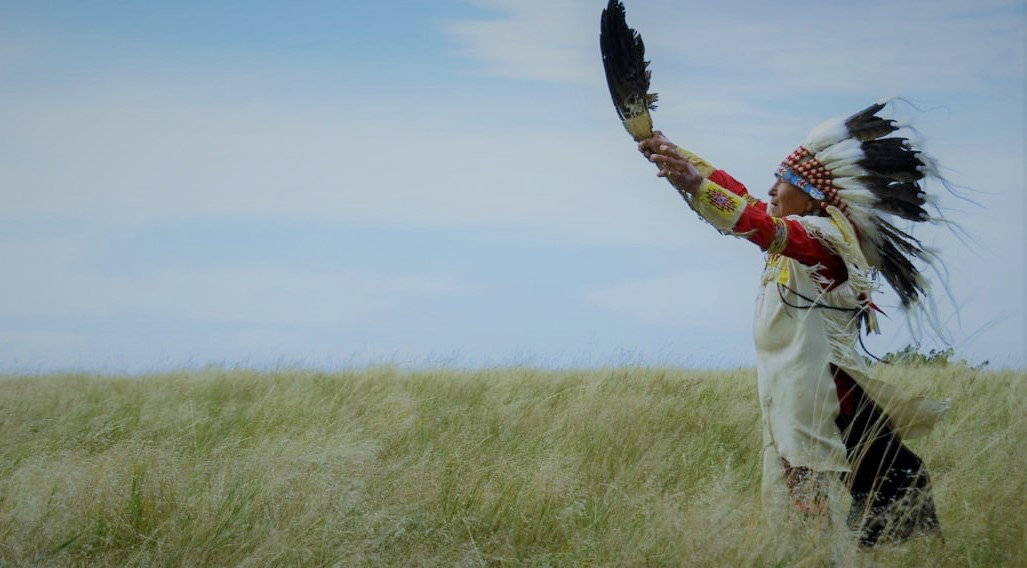
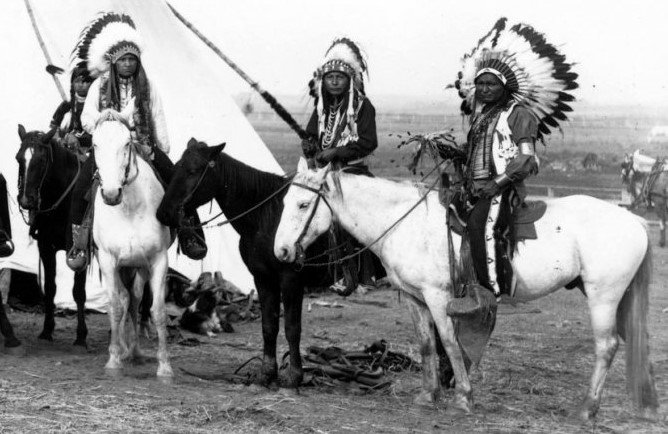
The Sioux are a typical hunting prairie tribe. They lived in leather tents called tepee, which are easy to fold, unfold and carry. Bison were their main source of food and other needs. The horse was also a symbol of their culture and meant wealth and power of the owner. As for religion and ritual, they relied on the power and influence of shamans. Shamans (priests, spiritual leaders and doctors in the tribe) played an important role in defending the tribe from dark forces and evil spirits. With their mystical and ecstatic dance, they plunged into the depths of the soul and brought to light the spiritual strength, truth and answers to many questions and needs of a man thrown into the chaos of transience and existential anguish...
**Famous Sioux chiefs (who bravely said NO)**
**SITTING BULL (1834-1890)**
The legendary chief of the Dakota Sioux tribe, a warrior who opposed the relocation of his people to the reserves, which led to the Battle of Little Big Horn in 1876, in which American General Custer was killed and in which the American army was defeated. He gained warrior fame in the battles with the Crow Indians, and then in the resistance to the penetration of whites into the territory of the Great Plain in the 1960s and 1970s. Although he defeated Custer, he had to flee to Canada, where he remained until 1881, when he was amnestied by the American government. Until the end of his life in 1890, he continued to fight against white immigrants and murderers. The center of his resistance was the Indian faith **"Dance of the Spirits"**, which promised the arrival of an Indian messiah who would return the land to the Indians, which fueled new revolts. He was killed in one of the riots, while resisting arrest.
**CRAZY HORSE (1842-1877)**
The head of the Sioux Indians of the Oglala tribe, who opposed the intrusion of whites (as the Native Americans called them) into the mineral-rich Black Hills, and who also took part in the Indian victory over the American army at Little Big Horn, 1876 . years. The most famous Indian military leader, fear and trembling among the American army. He was a skilled warrior, a guerrilla who often managed with wisdom and cunning to drag American troops into ravines and traps across wild America…
After the first military confrontation between the Sioux and white uninvited guests in 1854, the Crazy Horse opposed plans to place the Indians in reserves and led an alliance that defeated General George Crook at the Rosebad River and, later, George Custer. Together with his followers, he was brought to surrender by starvation in May 1877. He was later captured due to rumors that he was planning a rebellion. He was stabbed to death, allegedly while trying to escape…
**COLORFUL TAIL (1823-1881)**
The head of the Sioux, one of those wise enough Indians to understand in time what future the white man intended for them… He was an orphan raised by his grandparents. He was left without them very early and took care of himself. He developed courage, wisdom and ingenuity, became a good shooter and a skilled hunter, fighting from an early age for his place in Indian society. A superior mind, learning trade and economics by observing whites, over time he remained a skilled merchant… He also soon distinguished himself as a very skilled and brave warrior - in the battle against Utah, a numerically superior enemy, he showed courage and resourcefulness, receiving recognition from the great chief of the Winning Bear.
**Chief LITTLE CROW (1810-1863)**
He was the son of Ketanvakuv ("Falcon Attacking"). Because of the bad translation of his father's name, the whites called him Little Crow. His name was Taojateduta - A member of the Red People. He was an extremely ambitious and fearless man, the leader of the Sioux in a very difficult, crucial time. He was one of the best hunters of his tribe. Although he became a chief as a young man, he had a very rich war experience in the period of dramatic changes for the Indians, in the middle of the 19th century. It was a time of humiliating and false treaties by the United States, a time of Indian land grabbing, expulsions and massacres.
Chief Little Crow was one of those leaders who tried to save their people from the coming evil and disappearance through diplomacy. However, as agreements with whites were often a pure farce, to the detriment of the Indians, he decided to lead his people (during the American Civil War of 1861-1865) into a war against quarreling whites. Unfortunately, the fight turned out to be in vain - Little Crow decides on a desperate act of concluding a truce, a pact with the executioner, and on that occasion he dies from a bullet fired from his own rifle by accident. It was one of the final acts of the end of the dreams of one great man and people of the Great Spirit. Their country has been overrun and scorched by the evil that will rule the whole world for decades to come.
Chief Makhpiya (Red Cloud) is one of the most successful Indian military leaders, a warrior who led more than 2,000 Arabs, Sioux and Cheyenne. After two years of war, he forced the American army to withdraw from the Lakota territory (today's Wyoming and Montana). Authorities begged the Red Cloud for a truce with a promise to withdraw and never return to Indian territories. Of course, it was a pure insidious lie and deception, and the whites skillfully used it to regroup, to return. "When the white man came to my country, he left a bloody trail behind."
**MANDAN (Numakaki):**
The Siouan Indian tribe, originally inhabited along the Hart River, a tributary of the Missouri, and then along the Knife River. An encounter with whites almost killed them in the middle of an epidemic of smallpox, around 1837. Weakened and on the verge of extinction, they joined the Hidatsa tribes in 1845 and went to the Fort Berthold Reserve, where their descendants still live today. The Mandans are rural, but true prairie Indians, bison hunters. They lived in large earthen houses, in settlements protected by palisades. They grew corn and held multi-day ceremonies called Okipa or O-kee-pa, in order to encourage bison fertility and and better yields. It was a summer festival. In winter, they held Snow owl, Red stick and White buffalo cow ceremonies.
**Shoshone**
The Shoshone form a large group of tribes of a language group called Central Numic in an area known as the Great Basin that includes parts of Nevada, Utah, Idaho, Wyoming, California, and West Texas. The main groups of Shoshone are Western, Northern and Wind River, which are further divided into a number of small groups. A large part of the Great Basin is a dry desert, unsuitable for life. Pine forests are only in the mountains, near lakes and streams. The climate is dry and hot in summer, while winters are extremely cold. The whole pool is surrounded by mountains. There are very few food sources. Their homes were windshields made of twigs, during the summer, and conical huts, in the winter.
**PONY (Pawnee)**
Caddoan Indian tribe language group and Plains culture from the Nebraska region. They lived in earthen huts crammed into small settlements. They were intensively engaged in agriculture. Their religion involved dealing with visions and ceremonial rituals. Their myths and folklore are rich in symbolism. During the 19th century, they were mowed down by diseases and attacks by the mortal enemies of the Sioux. Today, there are about 3,000 of them in the Nebraska and Oklahoma reserves.
**ARAPAHO**
An Indian tribe, an Algonquian language group, originally from the Minnesota area and later between the Yellowstone and Rio Grande rivers. They were a nomadic tribe and practiced a religious ceremony known as the "Sun Dance".
**California Cultural Region - Intermountain Area**
A cultural region that included the mountain ranges and valleys of Utah, Nevada and California, rich in pine forests, swamps and green valleys. At the time of the first settlers, it was a suitable area for hunting deer, chamois, birds and collecting wild fruits, as well as fishing. And later, he had good conditions for the survival of numerous tribes in this area, primarily thanks to the Pacific coast and fishing for large marine mammals. The tribes of this region are: Northern Paiute, Tolowa, Karok, Yurok, Shasta, Wiyot, Hupa, Achoviawi, Wiatua, Atsugewi, Bannock, Northern Shoshone, Chimariko, Yana, Washoe, Nomlaki, Yahi, Western Shoshone, Yuki, Maidu, Pomo, Konkow, Gosiute, Ute, Paiute, Wapoo, Miwok, Kawaiisu, Patwin, Mono, Panamint, Costano, Yokut, Chemehuevi, Esselen, Tubatulabal, Salina, Kitanemuk, Serrano, Chumash, Fernandeno, Gabrielino, Juaneno, Cahuilla, Luiseno Diegueno, Kamia, Akwa'ala, Nakipa, Kiliwa, Cochimi, Ignacieno, Waicura and Perica.
**POMO**
Pomo is the collective name of a tribe from California, which uses the languages of the Kulanapan family. They are divided into many tribes inhabited by small reserves of the Pacific coast. They were engaged in collecting fruits, fishing and hunting, using a bow and arrow… They are widely known for their ability to make baskets from shrubs, most often willow. Today, there are just over 2,000 left.
**UTE**
Uto-Aztecan Indian tribe language group. They lived in central and western Colorado, eastern Utah, and northwestern New Mexico. They lived from hunting and wild fruits and roots. They exchanged their handicrafts with the Navajo tribe and the Paiute tribe. They lived in shelters and later in tepee tents. After meeting the "real" Americans, they were moved to the reserves. Today, there are about 7,200 left and they "live" in the reserves of Colorado, New Mexico and Utah.
**The Plateau - cultural region Plateau**
It covers the mountainous region of Idaho, eastern Oregon, Washington and western Montana, covered with coniferous forests and green valleys. The northwestern United States was a convenient area for hunting deer, small game, and harvesting fruits, wild plants, and fruits. Also, it was an area that allowed fishing on the Colorado, Snake and Fraser rivers… The tribes that wandered there and lived freely until the arrival of savages are: Lillooet, Shuswap, Ntlakyapamuk, Nicola, Lake, Okanogan, Methow, Wenatchee, sanpoil, Chelan, Columbia, Kootenay, Colville, Pend d 'Oreille, Coeur d'Alene, Flathead, Nez Perce, Cayuse, Spokane, Palouse, Walla Walla, Umatilla, Klickitat, Yakama, Wishram, Tenino, Molala, Wanapam, Klamath and Modac.
**NEZ PERCE**
They lived in southeastern Washington, northeastern Oregon and central Idaho. Their language group was Sahaptian. The name Nez Perce was given to them by French researchers - "pierced nose" or "pierced nose". They were engaged in fishing (especially salmon) and gathering fruits and roots. They spent winters in their long huts, and summers in the mountains and hills. They processed the buffalo skin and decorated it. Their religious ceremony was part of the "Guardian Spirit". After 1855, they were housed in a reserve in the Wallow Valley in Oregon. Led by the legendary Chief Joseph, in 1877 they rebelled and won a victory over US troops. Today, there are about 4,100 left. They have their "The Nez Perce National Historical Park" in Idaho, Montana, Oregon and Washington.
**Nez Perce chief - CHIEF JOSEPH (1840-1904)**
He was one of the bravest and wisest chiefs of the North American Indians, one of the leaders who offered fierce resistance to U.S. troops. His Nez Perce name was **"In-mut-too-yah-lat-lat"** (**"thunder coming up from water over the land"**). He was a wise and patient leader of the Pierced Noses tribe, he was the spiritual leader of the tribe of peaceful hunters and fishermen living on very fertile soil that the greedy newcomers wanted for themselves at all costs. He did not hate white people because he was a man of great heart, although they, led by General Howard, expelled his people from their centuries-old habitat into the inhuman conditions of the reserve (modern camps for the disobedient and unfit).
**If a white man wants to live in peace with the Indians, let him live ... Treat everyone equally. Give them a law that applies to everyone. Give everyone an equal opportunity to live and grow. All people were created by the same Great Spirit. We are all brothers. The earth is the mother of all people and all who live on it have equal rights. Let me live freely, travel freely, stand where I want, do what I want, trade freely ... choose teachers at will, be free to follow the faith of my fathers, free to think, speak and do as I wish, and I will obey every law and obey every punishment.**
They called him great because he was simple and honorable. Without education and military training, he became the leader of his people at the time of persecution and retreat, and led them in the fight against a far superior enemy when justice was threatened. He died deeply disappointed with the "justice" brought by Christian civilization. His spirit still roams freely in the traces and spaces of the former world of North American Indians.
**The Subartic - Subarctic cultural region**
It covered the area of almost all of today's Canada (from the east coast to the border mountains with the Pacific Ocean and south to the area about 300 km from the border with today's USA). The harsh climate of this region made it impossible to engage in agriculture, but the tribes lived from hunting elk and reindeer (caribou - North American deer) and fishing. They lived nomadically in constant search of food and shelter. In the eastern parts, the Algonquin language was spoken, and in the west, Athapaskan and a mixture of a number of other languages prevailed.
Tribes that resisted harsh climatic conditions and scarcity were: Ingalik, Tanaina, Koyukon, Tanana, Nabesna, Ahtena, Kutchin, Han, Tutchone, Tagish, Kaska, Tahitan, Tsetsaut, Sekani, Carrier, Chilchotin, Hare, Mountain, Saschutkenne , Dogrib, Yellowknife, Slave, Beaver, Chipewyan, Swampy, Cree, Western wood Cree, Saulteaux, Abitibi, Naskapi, Mistassini Cree, Montagnais, Tete de Boule Cree and Beothuk.
**CREE**
A tribe of the Algonquin language group. They were hunters of deer, caribou, beavers, bears and rabbits in the Manitoba forests. Today, about 15,000 remain in Canada's reserves, south of the Churchill River and the provinces, and Manitoba and Saskatchewan. They represented one of the strongest and most significant groups of American Indians from Canada, spread over a large area of southern Canada with the main habitat around Jameson Bay.
**Cultural region of the northwest Pacific coast**
It covers the area from southern Alaska to northern California, a coastal area along the Pacific. It is bordered on the east by a mountainous area. The sea was rich in marine mammals, fish and especially salmon, mountains of chamois, elk and wild fruits of various plants. Organized in small settlements, the Indians of this region lived in log cabins. They practiced ceremonies called "Potlatches", giving gifts to neighboring settlements.
The tribes of the Pacific region were: Eyak, Tlingit, Tongass, Haida, Niska, Tsimshian, Gitskyian, Haisla, Bella Coola, Bella Bella, Heiltsuk, Nootka, Kwakiutl, Comox, Nanaimo, Nooksack, Cowichan, Skagit, Quileute, Quinault Chehalis, Skokomish, Chimakom, Duwamish, Snoqualmie, Puyallup, Coast Salish, Chinook, Cowlitz, Clatsop, Clatskanie, Tillamook, Siletz, Yaquina, Siuslaw, Coos, Umpqua, Tututni, Chastacosta and Makah.
**NOOTKA**
An Indian tribe that inhabited the western coast of Vancouver Island in southern British Columbia. They lived in long houses built of cedar. They also made canoes out of cedar. They used large cedar canoes as whalers. They made clothes from animal skins. They practiced Potlatches gift-giving ceremonies and engaged in fishing.
**CHINOOK**
They lived along the Columbia River on the Pacific coast. At the beginning of the 19th century, there were about 16,000 of them. They lived in villages built of cedar planks covered with bark. They were engaged in hunting and fishing. They believe in good and evil spirits, called Econe and Ecutoch. Their shamans (called Keelalle) are excellent connoisseurs of medicinal herbs, and their tribesmen are healed by sacred songs and dances. Today, there are very few of them left and they live in the reserves of Washington and Oregon.
**Arctic Cultural Region**
It covers the region of Alaska and northern Canada. Limited by the extreme climatic conditions of harsh winters and short days, it is very difficult for them to engage in hunting and fishing. There is almost no vegetation in this area of the Far North and permafrost, but the tribes were engaged in fishing and hunting deer, seals and whales. They protect themselves with thick fur of caught animals and houses from ice and sod of frozen land. The population is small due to extreme living and survival conditions. The tribes of this area are: Greenland Inuit, Labrador Inuit, Central Inuit, Banks Island Inuit, Western Arctic Inuit, Alaskan Inuit, Alaskan Yuit and Siberian Yuit-Aleut.
**INUIT ("Eskimos")**
An Indian people living in inhospitable conditions of eternal ice, darkness and without vegetation gathered inside small enclaves of the coastal area of Greenland, northern Canada and Alaska, and northeastern Siberia. The meaning of the name Inuit is "real people". They belong to the Eskimo-Aleut language group. Their traditional residential building is a needle (snow house), made of pieces of ice. Their means of transport are canoes and sledges, their clothes and shoes are made of thick deer and walrus skin. Their traditional beliefs are related to animism and shamanism. Typical are nomadic tribes in constant search of food and shelter.
It's dark ...
The evening descended, the sleepy streets of Pancevo were left with anxious tires and the soles of imaginary passers-by. The city was closing.
The rain slowly stopped, and the fog, as thick as milk, crept in, revealing the horizon. That evening, in the wee hours, the sky became crystal clear after the fog, and Belgrade was clearly outlined in the darkness, wrapped in silver beams of the moon and shrouded in a million candles ... There it is! The coffee on the table at the bottom of the terrace took on a bitter taste. Once a pleasant corner, it has become a prison. The sky painted her face. So near and yet so far. In my mind, the streets lined up in a hurry. The desire for her look, the touch, drew me. Darkness and silence broke me. I wanted to silence the words with words, but I was alone in her thoughts, far from her touch, and the night, like every other evening, tormented me, a thousand unanswered questions, without help. Will it ever dawn?
I slowly took my last sip of coffee and entered the room. The icy December air continued to spread through his lungs. I went to bed, but the aid didn't. That other world - the almighty, and it, always present, will never overwhelm me. When will it dawn?
The sky slowly took on shades of gray. The chirping of birds broke through the sky, announcing a new day, a new beginning, a new, maybe better tomorrow and a new darkness that extinguishes reality and offers a world of imagination, but often reality does not want to go out, so it torments, strains, does not give me peace. It entangles me in the night in silence, like a toothache, so I bite, and it bothers me. The devil would know me, why I keep biting sore spots!


The oldest languages still spoken
I present to you eight languages that, in a more or less unchanged form, have survived for thousands of years.
The evolution of language is not much different from biological evolution - it happens gradually, from generation to generation, so it cannot be determined exactly when one language became something else, writes Newsweek. That is why it is almost impossible to say exactly which language is the oldest - they are all in a way new and at the same time as old as humanity itself.
However, it is possible to single out some that have survived longer in a more or less unchanged form.
**1. HEBREW**
Hebrew is a very specific example in the world of linguistics. This language practically disappeared around the year 400, remaining preserved only as a liturgical language that Jews around the world used in religious ceremonies. It was not until the 19th and 20th centuries, that is, with the rise of Zionism, that Hebrew revived and became the official language of the state of Israel. Although the language has undergone changes since Old Testament times, Jews whose native Hebrew can easily understand the language of the Bible.
**2. TAMILIAN**
Tamil is a classical language and one of the great Dravidian languages. It is mainly spoken by Tamils in southern India and Sri Lanka, and smaller language communities exist in many other states. It is one of the most ancient languages in use today, practically unchanged for the last 2,500 years.
In 1996, it was estimated that it was spoken by over 74 million people worldwide, making it the 18th most widely spoken world language. The Tamil language has an unbroken literary tradition of over two millennia.
**3. PERSIAN**
Farsi, or Persian, is spoken in today's Iran, Afghanistan and Tajikistan. This language is a direct successor of the Old Persian language spoken in the Persian Empire. Modern Persian developed around the year 800 and has changed relatively little in the last 1,200 years. Today's Iranians read texts from the ninth century more easily than, say, the English of Shakespeare.
**4. ICELANDIC**
Due to its geographical isolation, the Icelandic language has changed very little since the time when the first Nordic settlers brought it to the island. Because of that, modern Icelanders today easily read sagas written in the early Middle Ages.
**5. Basque**
The Basque language is a kind of linguistic mystery. Not only is it not associated with Romance languages, but it has no points of contact with any other language group in the world. The only thing that is clear is that the Basque language existed before the arrival of the Romans who brought Latin, which would later develop into several European languages.
**6. GEORGIAN**
The Caucasus region is one of the most linguistically significant in the world. Georgian is the largest language of the Kartvelian group and has existed in its current form for at least 1,700 years.
**7. GOIDELIC**
Although only a minority of Irish speak Gaelic, this language, which is essentially the mother tongue of all Irish people, existed long before the arrival of German influences.
**8. ARMENIAN**
The Armenian language has a long history, and the oldest text written by it dates from the year 450. Like most ancient languages, Armenian has its own script, completely different from the rest of the world.
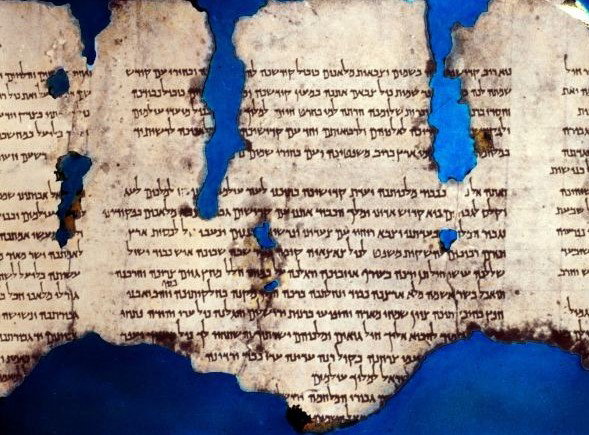
One of the oldest maps and cities in the world
See how, more than two and a half millennia ago, the inhabitants of Babylon saw the world in which they lived.
In 1899, an unusual clay tablet was found in the south of present-day Iraq, on the east bank of the Euphrates River. It didn't take long for the experts to realize that they were facing an important trace of the past: cuneiform and drawings on the board presented a kind of cartographic markings, thanks to which people got to know the world at the time it was created.
The tablet is believed to have originated in the sixth century BC and to represent the world as the inhabitants of Babylon knew it, and today this precious object is kept in the British Museum.
At the center of the map is Babylon because it was the center of the world for thousands of people who lived in it - just as is the case with many later maps, found in, say, Athens and Jerusalem.
This interesting map shows seven cities and as many islands, surrounded by two circles representing waters believed to have been located near Babylon. Among the marked locations are Urartu, the Assyrian Kingdom, Bit Yakin, Haban, Elam, Der, unknown regions, the Euphrates River, the ocean ... It is also interesting that this diagram shows mythological islands on the other side of the ocean that connect the Earth and the sky. .
Although many consider this map, called Imago Mundi, to be the oldest in the world, it is also indicated that it is a copy of an older map. Also, archaeologists have older drawings in caves in the Middle East that are believed to be representations of the world from the perspective of ancient man.
**Do you know which city is the oldest in the world?**
Archaeologists have established that humans lived on this soil even in the 9th century BC.
Jericho, a city on the west coast of Jordan, has been continuously inhabited for thousands of years, archaeologists believe.
As the 2007 census showed, less than 20,000 people live in Jericho today.
That is why it is often called the oldest city in the world - it has been inhabited without interruption since about 8000 BC, and traces have been found that indicate that hunter-gatherers built a sanctuary here around 9700 BC.
On the soil of Jericho, archaeologists have found about twenty settlements, and the city has been demolished and rebuilt several times. Huts, pottery, tombs, furniture, decorative objects were found in it ... All this testifies to interesting ancient cultures that existed on the soil of Jericho, such as the Canaanites and the Amorites.
In addition to being probably the oldest, it is also the "lowest city in the world" - it is located about 258 meters below sea level.
It was ruled by many nations and attracted many conquerors, so it is not surprising that it was surrounded by a rampart with towers. It is mentioned in the Bible as the "City of Palms", and it was named Yeriẖo after the word Yareaẖ, which means "moon".
The story of the North American Indians - part III
**SEMINOLE:**
A tribe of the Muskogean family, originally from the Apalachea area who eventually settled in the Florida area. The origin of the wolf is from the Oconea tribe (near the coast of Georgia). After two war conflicts with US troops (during the first half of the 19th century), in 1858 they were moved to reserves. Culturally, they belonged to the Southeast Farmers, and when they came to Florida, they were engaged in hunting and fishing. They practiced the festival of Green corn dance…
**The Plains - Great Plains Cultural Region:**
The Great Plain region represented a vast, prairie area - from central Canada in the north to Mexico in the south, and the Rocky Mountains of the Midwest. Buffalo hunting was the main source of food, life and culture of this unique region, until the final destruction of bison by white savages and hunters in the late 19th century.
The stereotypes that exist about North American Indians, transmitted as unverified stories and series of prejudices of white immigrants to this day, come from these endless grassy, green areas, stories about their supposed way of life of cruel savages, their appearance and culture - their feathers stuck in their hair. , their colorful ribbons and feathers, long hair, their bows and arrows, spears, tomahawks and other weapons for hunting bison, bears and deer, their tepee tents (folding and very practical leather tents, convenient for use by nomadic and hunting people who constantly moved from various needs and desires), deerskin clothes with famous fringes and ornaments (which fluttered in the wind as symbols of freedom and fearlessness of their indomitable spirit), their beads and decoration with various colors, their pipes and magical, ceremonial dances, moccasins, smoke signals…
There are many tribes that wandered and lived freely in this area until the appearance of white savages, tribes that then went to the eternal hunting grounds and legend, the unfulfilled dream of life: Sarcee, Plains Cree, Blackfoot, Assiniboine, Gras ventre, Hidatsa, Crow (Crows ), Mandan, Yanktonai Sioux, Santee Sioux, Yankton Sioux, Teton Sioux, Arikara, Shoshone, Cheyenne, Ponca, Omaha, Pawnee, Oto, Arapaho, Kansa, Missouri, Kiowa, Osage, Quapaw, Comanchie, Wichita, Kichai, Lipan Apache.
**KAJOVE:**
A warlike nomadic tribe of prairie Indians, which penetrated from the Black Mountains to the south and ruled the prairies. Today there are about 12,000 of them. The name Kiowa in their language means the main people. They called themselves Kwu (leaving), alluding to frequent forced departures before the onslaught of the superior tribes of Chippewa, Sioux, and Cheyenni. They traded with tribes that, as a rural population, grew corn and sold it to nomads. The Kayos are said to have been the most dangerous North American Indians, very well organized as warriors. As a typical prairie tribe, they hunted bison (buffalo). The bow and arrow were their main weapons. They owned a large number of horses and lived in portable leather tents. The Kai were deeply religious. After they took over the "Dance of the Sun" ceremony from the Vrana tribe, it became the center of faith for them. They believed in visions and dreams, and in the rituals they used hallucinogenic opiates obtained from the peyote cactus. Later, they took over the "Dance of the Ghosts" ceremony.
**CHEEN (Cheyenne):**
They represent one of the most important prairie tribes of the Algonquin genus, which wandered around the rivers Platte and Arkansas. They were bison hunters, with a bow, arrow and spear, as their main weapons. They raised horses and lived in tents (wigwams). Before 1700, they lived in what is now Minnesota. There they planted, hunted and collected wild rice. They later moved to the Cheyenne River area of North Dakota, where they caught horses and began hunting bison. At the end of the 18th century, under pressure from the Sioux tribe, they moved further west. The road led them to the river Platte. After the conflict with European immigrants and later, the American army (after the formation of the USA in 1776), at the end of the 19th century, they were placed in the current Tongue River reserve. Today, there are about 11,500 of them left, "carefully" housed inside modern camps for the disobedient and unsuitable „
**BLUND KNIFE (1820-1879)**
He got his name as a young warrior when he managed to kill a grizzly bear with a knife. He was a simple, harmless, determined and brave man, a just hero of his people, uninterested in acquiring material goods. He was the chief of the old smithy — brave, selfless, determined, intelligent. He became known for his heroic deeds, esteemed as an honest and noble leader of the people… Around 1875, whites widely promoted the idea of imprisoning all Indians in reserves, without the right to property they owned and the rights guaranteed to them. Greedy, perfidious, deceitful and evil white newcomers wanted above all the fertile Indian territory and natural resources of America… From the warlike Apaches to the peaceful Pierced Noses, all Indian tribes from the fertile plains were persecuted and killed without mercy. The U.S. government made the decision to disarm the Indians and move them to the reserves. The deportation was carried out by force, without mercy and a shred of humanity…
Chief Tupi Nož's request to return his tribe to the land of his ancestors was flatly rejected - the authorities considered him a dangerous man, so in 1876 he and his exhausted people were forcibly banished to the reserve… A sudden change led to the death of the Cheyenne people. Then the Blunt Knife makes the decision to lead the Cheyenne north to the land of their ancestors. The Cheyenne thus showed their indomitable spirit again. Despite the fact that they managed to reach the ancestral lands, they were eventually surrounded by the US military and taken to the reserves. In the end, determined to die for freedom, they desperately try to escape from the camp (reserve).
In the last life's struggle for dignity and freedom, the brave Cheyennes and their fearless leader perished.
**LITTLE WOLF**
If any nation ever fought for justice and freedom, it was the brave Cheyennes… If mankind ever saw true physical and moral strength, then it was the Cheyenne people, led by Chief Little Wolf. Little Wolf was as dignified and kind as all the natives of North America. Measured and polite in addressing his interlocutors, he was an example of a skilful and brave Indian leader. After the Cheyenne were moved to inhumane reserves from their fertile and bison-rich plains (reserves "enriched" by malaria and scarcity), the Little Wolf led his people north along the path of freedom and salvation from death and humiliation. His brave rebellion is measurable with the great deeds of great chiefs like Joseph and the Blunt Knife.
Before leading the people north, he bravely addressed the manager of the Despair Reserve with the following words: "Listen to me, my friends! I have been friends with white people for a very long time. I don't want blood being shed in this reservation. I'm going north to my homeland. If you want to send soldiers after me, I'd like you to let me get away at least a little bit. And then, if you still want to fight, I will be at your disposal. "
In the end, the Little Wolf took his tribe on a final journey and a decisive battle for freedom and dignity. Blunt Knife, as one of Cheyenne's leaders, headed for the Red Cloud Reserve and surrendered to the white soldiers at Robinson's Fortress, facing his sad fate. Little Wolf spent the winter in Sandy Hills full of game. He then went to Montana, the Pine Wreath area where the Cheyennes lived in peace. They were later transferred to the Lame Deer office in Montana, where Little Wolf spent the rest of his life. Behind the clouds of racial prejudice lies the bright sky of freedom, and on that supreme court, parts of the tribal soul, such as the soul of the Little Wolf, have their place of honor!
**COMANCHES:**
An Indian tribe inhabited during the 19th century in the southern prairies of West Texas, today lives in Oklahoma with the Kiowa and Apache tribes. By language they belong to the Uto Aztecan family. The name Comanche itself is probably from the language of the Hopi Indians, which could be translated as "scalp curl". Their ancestors inhabited the Yellowstone area. They became known as the owners of large herds of horses, in the early 18th century in New Mexico. By invading Texas, they expelled the Apaches and entered into a formal alliance with the Kai and Cheyenne. In the middle of the 19th century, they signed the first treaty with the USA and were placed in a reserve. Former warriors have become very active in the American economy today. Their participation in the First and Second World Wars as part of the American Thunderbird Division should also be pointed out.
The Comanches were a typical prairie tribe that made a living from hunting. In winter, they hunted deer, elk, antelope and small game. With the arrival of spring, they would follow the herds of buffalo. Following them, they moved constantly, placing their village in traditional circular shapes during breaks. They got food, clothes, shoes and tools from the bison - they also used the prey in trade, exchanging it for tobacco, honey and other things. They hunted bison mostly with long spears. The lifestyle of the Comanche was marked by hunting, war and great love for women, who prepared food and took care of the household and children. They were religious - they highly valued the vision. People with a lot of knowledge and strong vision became Indian sorcerers, that is. shamans and engaged in rituals of healing and predicting future events.
**CROWS (Crow):**
The Siouan Prairie Tribe of the Yellowstone River and its tributaries, today in the Crow Reserve in Montana. They are descended from the Hidats or Great Belly of Missouri, from which they separated in the 15th century. Crows, like their Sioux neighbors, are typical prairie bison hunters and skilled riders. Their dwellings are leather tents. Their lives revolved around horses and bison. The buffalo provided them with clothing, footwear, plenty of food, tents, blankets and shields. The meat was dried and canned. They wore clothes made of deer, elk and buffalo skin. Their religion was shamanic. Sun dance and Medicine bundle ceremonies symbolized their prairie culture.
**BLACK FEET:**
The Black Feet are a confederation of Algonquin tribes, living in the 19th century between Northern Saskatchewan in Canada and Missouri in Montana. They got the name blackfoot after their black moccasins. The Blackfoot community consisted of 3 main tribes: the Siksika or northern Blackfoots, Piegan and Kainah or Blood. Everyone speaks languages from the Algonquin family. Their culture is typically prairie. They are hunters of large mammals, first of all bison, then deer and a lot of game. They ate fish only as a last resort. During the summer, they lived in large camps, hunted buffalo and performed the Dance of the Sun ceremony. Each tribe had a supreme chief (leader). Religious life referred to the Medicine bundle, a search for a vision that opposes supernatural forces.
From the glorious past, numerous, fighting warriors and hunters, almost nothing remained until the end of the 19th century - with the extermination of bison by the pale-faced, they began to starve, forced to live in reserves and sedentary life. The world they had been creating for centuries was rapidly disappearing, along with themselves.
How does the oldest instrument and love song sound?
The oldest song in the world is 3,500 years ago, and it is the Hurrian anthem.
The oldest known song in the world was the anthem of a cult in the Middle East, and the tables on which it was written were found in the ancient city of Ugarit on the territory of today's Syria in the early fifties of the last century.
The version of the song that is attached to the video is performed by Michael Levy, a musician and composer who deals with reading and reconstruction of ancient music and playing techniques.
Levy says that his mission is to "present the beautiful lyrics of antiquity to the pale and soulless modern music world."
"Over the last few years, I've recorded several of my 'Hurrian anthem' arrangements," says Levi.
On the 29 tables found, signs were engraved indicating "notes" in the Hurrian language. H6 is the oldest fragment of the melody ever discovered in history.
https://youtu.be/9c-hmFN610g
**The oldest love song in the world:**
"Bridegroom, dear to my heart, your beauty is great, sweet as honey" are the words with which the 4,000-year-old Sumerian song, dedicated to the king by his darling, begins.
Words of love that have been passed down for generations were written in the eighth century BC on a Sumerian clay tablet small enough to be placed on the palm of your hand. It was discovered in 1880 in Nipur, a region that belongs to the territory of present-day Iraq, and has been kept in a museum in Istanbul ever since.
Historians claim that these words were recited by a young priestess in love with the Sumerian king Shu-Sin, the fourth ruler of the Ur dynasty, who ruled between 2037 and 2029 BC. The translation of this song reads:
**“The bridegroom dear to my heart,**
**your beauty is great, sweet as honey,**
**you, the lion that is dear to my heart,**
**great is your beauty, sweet as honey.**
**You have conquered me, made me tremble before you,**
**the bridegroom who will take me to his bed,**
**you have conquered me, you have made me tremble before you,**
**you, lion, who will take me to your bed.**
**Groom, let me caress you,**
**my precious caress is sweeter than honey,**
**in your bed, filled with honey,**
**let me enjoy your great beauty,**
**lava, let me caress you,**
**my precious caress is sweeter than honey.**
**Groom, you got pleasure from me,**
**if you tell my mother, she'll serve you treats,**
**if you tell my father, he will bring you gifts.**
**Your spirit - I know how to cheer him up,**
**groom, sleep in our house until dawn,**
**your heart - I know where to satisfy your heart,**
**lava, sleep in our house until dawn.**
**You, because you love me,**
**give me the prayer of your caresses,**
**my supreme god, my protector,**
**my Shu-Son, who guards Enlil's heart,**
**give me the prayer of your caresses. "**
According to the old Sumerian belief, the king had the sacred duty to marry a priestess every year so that the land and women would be fertile. The ritual of holy marriage implied the union of two deities, usually the goddesses Ishtar and Tammuz, the god of the productive forces of nature. The priestess thus symbolizes Ishtar, the goddess of fertility and sexual love, and the king represents Tammuz.
Because of that, this song is also known as the "hymn of love Ishtar and Tammuz".
Muazez Hilmiy Zig, a respected retired Turkish historian who once worked at the Istanbul Museum, points out that the Sumerian experience of love is fascinating because it completely excludes sexual taboos and is based on the belief that only love and passion can bring people fertility, fame and satisfaction.
**How does the oldest musical instrument in the world sound?**
Listen to the sound of the "Neanderthal flute", a 43,000-year-old musical instrument.
When we study the distant past, long before the appearance of the letter, we are completely unaware of what form of music prehistoric people loved. However, we know that music was a part of their daily lives, as well as us. We have evidence for that in the form of instruments on which they played. In 2008, archaeologists discovered parts of flutes made from the bones of Stone Age animals at a site in southern Germany. These instruments are 42,000-43,000 years old.
The flutes are made with incredible precision, especially the mammoth bone flute, which was especially challenging to make. When they were discovered, scientists considered that the flute "was perhaps the first cultural achievement to give the first European modern humans (Homo sapiens) an advantage over the now extinct Neanderthals (Homo neanderthalis)." Yet with new findings on Neanderthals, which include evidence of mixing with Homo sapiens, these conclusions can be revised.
It is possible that mostly underestimated Neanderthals also had their own flutes. This is indicated by the discovery from 1995, when the femur of a cave bear, from which a flute was made, was discovered in the cave. The instrument was discovered by Ivan Turk at a Neanderthal site near Divja Baba in northwestern Slovenia. It is estimated that the instrument is over 43,000 years old and may be as old as 80,000 years. According to musicologist Bob Fink, the four holes on the flute coincide with the four notes of the diatonic (do, re, mi ...) scale.
"Unless we deny that it's a flute at all, the notes are unquestionably diatonic and sound so that they can match almost perfectly with any standard diatonic scale, modern or antique," says Fink. To demonstrate this, the curator of the National Museum of Slovenia played on a clay replica of the flute. Below you can hear Slovenian musician Ljuben Dimkaroski playing it.
The prehistoric instrument is so good that Dimkaroski can play parts of several compositions from Beethoven, through Verdi, Ravel, Dvorak and others, all the way to free interpretations of "animal voices". Although there is still a debate among archaeologists as to whether the flute is the work of Neanderthals, Turk believes that confirmation of such a thesis would mean that the theory that human relatives "left no evidence of their musicality" does not stand.
https://youtu.be/sHy9FOblt7Y
The story of the North American Indians - part II
**Cultural regions of the North American Indians:**
After early migrations, the arrival on American soil from Asia, and subsequent expansion across the continent, the Indians were geographically grouped into several major areas. They were wholes, that is. regions that connected their common cultural and social characteristics. As for the North American Indians, they were distributed on the soil of today's states - the United States and Canada in nine main, **characteristic cultural regions:**
1.The Southwest
2.Eastern woodlands
3.The Southeast
4.The Plains
5.The California – intermountain area
6.The Plateau region
7.Subarctic
8.Northwest Pacific coast
9.The Arctic
**Southwest cultural region:**
The region included parts of the territory of today's USA - the states of Arizona, New Mexico and Colorado. It was divided into three smaller units: northern (Colorado, northern Arizona, and northern New Mexico), with pleasant green valleys and pine forests, southern (southern Arizona, and southern New Mexico), with cactus-covered deserts, and western (border area of Arizona and California), with deserts intersected by the valley of the lowland part of the mighty Colorado River.
The southwestern valley was inhabited by the following tribes: Havasupai, Huzlapai, Mojave, Halchidhoma, Yuma, Cocopa, Papago, Pima, Seri, Cahita, Yaqui, Tepahue, Varohio, Comanito, Nio, Tepahuan, Guasave, Zacatec, Huicholva, Tepe , Zuni, Pueblo, Yayapai, Maricopa, Aravaipa Apache, Coyotera Apache, Jicarilla Apache, Chiracahua Apache, Lipan Apache, Suma, Opata, Yumano, Tarahumara, Tobaso, Lagunero, Bocalos, Negrito, Guachichna, Guama Tewa, Towa, Keres, Mimbreno, Concho, Karankawa, Coahuiltec, Janambre-Pison and Tamaulipec.
In the early days, a few thousand years ago, after settling, they lived very hard in harsh conditions. They were hunting. Later, under the influence of Mexican culture, and then the Spanish conquerors, their culture progressed and they began to engage in agriculture, partly using the advantages of irrigating the land. They raised a number of typical American crops: corn, beans, pumpkins… Then, under the influence of the Spaniards, they started to raise sheep and horses…
**Apache:**
The Apaches are one of the most important peoples of the great ethno-linguistic family Athapaskan in the area of the American Southwest. In prehistoric times, there were nomads in the central and southern part of the Great Plains (The Plains region), and between the 9th and 15th centuries they gradually moved south to the semi-deserts. Spanish researchers found Apaches permanently inhabiting Arizona, New Mexico, Texas and northern Mexico in the late 16th century.
They are divided into 2 main geographical groups: West and East.
The group of Western Apaches includes tribes:
1.San Carlos Apachi, today settled in a reserve in Arizona.
2.White Mountain
3.Cibecue, located in the Fort Apache Reserve.
4. Tonto Apachi, located in Arizona.
The second, the Eastern Group of Apaches, now housed in reserves in New Mexico and Oklahoma, are made up of the following tribes: Jicarila, Mescarelo, Lipan, Kiowe, and Chiricahua. The closest relatives of the Apaches are the Navajo Indians. The homeland of the Apaches is a large area in the present-day states of New Mexico and Arizona, western Texas, and southeastern Colorado. The Atapas are said to be home to western Canada and Alaska. With the arrival of the Spaniards, their history became full of bloody conflicts, first with the Spaniards, and then (in the middle of the 19th century) with the Americans. Since 1861, the Apaches and the Navajo tribe have jointly opposed the invasions of white settlers and the military, but have finally surrendered after five years of bloody conflict in unequal conditions (as a smaller and technically inferior people). During that time, they gave a number of celebrated chiefs: Cochise, Geronimo, Manges Coloradas and Victorio. The American wars with the Apaches ended in the late 19th century.
The Apaches were nomads, hunters and gatherers. Having received horses from the Spaniards, they became skilled riders and even more dangerous warriors. They lived in shelters made of branches and bushes, and then hut-shaped huts. The clothes they wore were made of deerskin. They hunted bears, deer, wild turkeys, rabbits and other game. They didn't fish or eat…
**"May the Sun bring you new energy every day, may the Moon gently recover you overnight, may the rain wash away your worries, may the breeze bring new strength to your being, walk the world gently and be aware of its beauty every day of your life."**
Today, they are mostly housed in reserves in Arizona and New Mexico, where unemployment is high… There are about 50,000 left. Like many important nations, they have become a waste and a technological surplus of advanced Western civilization. All that remains are memories of the glorious history of the great warriors and great men of the Great Spirit. And some good hearts that can understand them and sympathize with the tragedy of a single world. The world of the deceived and massacred in the name.
**Famous Apache chiefs:**
**GERONIMO (1829-1909)**
The last Indian chief to resist the white man. He led attacks in the southwestern states and Mexico. He was finally captured and exiled (1886) to Florida. He successfully fought against the American and Mexican armies for more than 30 years.
**KOČIZ:**
The famous chief of the Apache tribe Chiricahua, the leader of the Indian resistance in the southwestern United States.
**NAVAHO (Navajo):**
They represent one of the largest Indian peoples north of Mexico. Their name came from the name of the Tewa Indians-Navajo, which referred to a large area of cultivated land. Like the Apaches, they come from the area of western Canada. They are part of a large ethno-linguistic Athapaskan family.
The Navajo are an original nomadic tribe, very related to the Apaches. They spent the winters in hogans (traditional dwellings made of wooden logs and branches, covered with earth and mud) half-buried in the ground. They spent their summers in shelters made of bushes and branches. They hunted elk, antelope and deer. They were engaged in collecting fruits, as well as cultivating the land (corn and beans). In the early 17th century, they became a shepherd tribe, sheep breeders.
They learned the art of metalworking from the Mexicans in the 17th century, and the art of weaving from Puebla from New Mexico. Painting with sand (multicolored grains) is the most famous art of the Navajo Indians. They created the images with ritual singing of songs in various rituals: Holy way ritual of healing, Evil way of exorcism and Life way ritual of repairing various damages. In addition to sheep, the Navajo inherit from the Spaniards the art of processing turquoise (which they considered a sacred stone) and silver. The Navajo tribe had a shamanic religion, believing in various gods, spirits and magic. After 1868, they were placed in a reserve on the border of Arizona and New Mexico.
Today, the Navajo live in a reserve, where they are engaged in sheep breeding, production of jewelry and Navajo blankets that they sell to tourists. The discovery of oil, gas and various minerals increased their annual income. Today their number is about 220,000 people…
**PUEBLO:**
Native Americans who lived in stone houses in the southwest. In the 16th century, the Spaniards entered the interior of the Rio Grande area, which was inhabited by Pueblo Indians. By 1630, about 60,000 Pueblo Indians had been baptized and "converted" to Christianity (whatever that meant). They got their name from the Spanish word "pueblo" - people. After a revolt during the second half of the 17th century, Pueblo was reconquered in 1692.
They were mainly engaged in agriculture, growing corn, beans, pumpkin. While the men worked in the fields, the women prepared food, brought water and took care of the children. They practiced "Snake dance", a ceremony in which they prayed to the gods for a fruitful, rainy and successful year.
**HOPE:**
An Indian tribe from the Uto-Aztecan language family, identical in tradition and social organization to the Pueblo group, located along the Rio Grande River. They called themselves the Hopita (Peaceful). They were engaged in agriculture and grew corn, beans, tobacco, pumpkins and fruits. They held various religious ceremonies, such as "Butterfly dance" or "Snake dance", a kind of "rain dance" to invoke the fertile years. Today there are about 11,000 left.
**If we return to spiritual harmony, we will experience paradise in this world. If we continue on the path we have taken so far, it will inevitably lead us to ruin.**
Albert Einstein and the Hopi Indians, 1922
**ZUNI:**
A tribe from the same group and with many similarities with the Hopi tribe, from the area of present-day New Mexico. Like the Hopi, a very peaceful and religious people. While engaged in agriculture, they perfected the irrigation system, while they were masters in making baskets and pottery, as well as in weaving. Their most important ceremony is the "Shalako Festival". After being subjugated by the bloodthirsty and greedy Spanish villains of the conquistadors (merciful angels in the name of God and the Crown), they were baptized and converted by force to "Christianity" ("seemingly" contradictory - violent Christ and Christianity?!?)
**MOJAVE:**
An Indian tribe of the southwestern cultural area, from the Yuman language group, inhabited along the lowland part of the Colorado River (the border area of today's states of Arizona and California). They were engaged in agriculture, growing primarily corn and beans. They also hunted and fished. They practiced religious ceremonies as well as other peoples of the mentioned area. Today, less than 1,500 people identify as members of the Mohawk tribe, housed in Arizona reserves.
**Eastern Forest Cultural Region:**
A cultural area in the northeastern and eastern part of today's USA and parts of Canada - from Minnesota and Ontario to the Atlantic Ocean and in the south of North Carolina. It was inhabited by hunting tribes (deer hunters) and fruit and seed gatherers (walnuts, hazelnuts). The area rich in abundant forests and large lakes was suitable for hunting and fishing. Villages were built along rivers and fertile plains. The Indians of this region were known for their "long houses", significantly different from the classic Indian tents or earthen or stone pueblo houses. In the area around the Mississippi River, the culture of the same name (Mici Zibi) developed, based on intensive corn cultivation and rich natural resources (large game, fish wealth, rich forests, fertile river plains suitable for agricultural development). Unfortunately, with the arrival of white settlers and their materialist concept of "happiness", this Indian area was first hit by various executioners and savages, as well as various diseases that caused epidemics and mass deaths (of these new diseases) of the irresistible indigenous population. They were soon decimated, and then relocated with even greater sacrifices - "The Path of Tears" to the final "solution of the question of the Indians" and all those who hindered "progress and development."
The eastern forest area was inhabited by tribes: Algonkini, Ojibwa (Chippewa), Menominee, Winnebago, Sac (Sauk), Fox, Peoria, Kaskaskia, Illinois, Potawatomi, Kickapoo, Miami, Wea, Piankashaw, Shawnee, Ottawa, Huron Seneca, Mohawk, Oneida, Onondaga, Iroquois, Delaware, Susquehannock, Powhatan, Tuscarora, Pamlico, Mi'kmag, Malecite, Passamaguoddy, Penobscot, Abnaki, Pennacook, Nimpuc, Pequot, Massachuset, Mohegano, Mahhegano, Mahhegano Meherrin.
**ALGONKINI:**
Native Americans lived in the Ottawa Valley and surrounding areas during the 17th century and in southern Ontario during the 18th century. They fought against the Iroquois for rivalry in the fur trade, especially against the Mohok. In 1570, they made an alliance with the Montagne tribe in the East, and in 1603 with the French. Although their culture was mostly based on hunting and fishing, they also grew corn, beans and pumpkin. They lived in tents (wigwams) with a pointed top, made of birch bark, on poles, and were known for their light canoes made of birch bark and snowshoes, and the shallow sleighs they used to travel during the winter. Today, there are about 2,000 left and they work in modern Canada as guides for hunting and fishing.
**IROQUOIS:**
The Iroquois formed a loose tribal Indian alliance from the northeastern forests, mostly the area of present-day New York. With their expansive policy and fighting spirit, they overcame all the surrounding neighbors. It is estimated that there were about 20,000 of them at that time. They called themselves the people of the long house.
The Iroquois Alliance, formed around 1570 by the St. Lawrence River, consisted of the following tribes: the Cayuga (called the Great Pipe Guardians), the Mohawk (East Gate Guardians), the Oneida (standing stone people), the Onondaga (Fire Guardians), and the Seneca ( west gatekeepers). In 1722, the sixth tribe - Tuscarora - joined the alliance.
Today, most Iroquois live an average American life, in both urban and rural communities. Most of the reserves in which they are located are in Canada, followed by New York, Wisconsin and Oklahoma. Today, the number of Iroquois is estimated to be around 50,000. There are casinos in the reserves that are the main source of income (infection?) For almost all Indians housed within these modern camps. Outside the reserves, they are mainly engaged in construction works.
**HURON:**
A tribal confederation of the Iroquoian language family that lived in the early 17th century between Lake Simcoe and Georgian Bay in Ontario. The alliance then had about 20,000 people. They belonged to the eastern forest cultural area, and lived in settlements surrounded by palisades and grew tobacco. Their history was marked by constant conflicts with the Iroquois. Long before French explorers arrived on the banks of the St. Lawrence River, Huron's warrior groups cruised the forests between Canada and present-day New York, attacking the Iroquois tribal alliance, which, in retaliation, ruthlessly destroyed Huron. European settlers intervened in the later conflicts, helping both of them to self-destruct with firearms. What the light weapons failed to do was the diseases brought to the soul from Europe.
**CHIPPEWA or OJIBWA:**
An Indian tribe of the Algonquin language group, originally from the area between Lake Huron and Mount Turtle in North Dakota. They moved a lot and were a very warlike tribe. They engaged in hunting and fishing, gathering wild Chippewa tribe believed in Kitchie Manito (Great Spirit) or "Great Soul", with whom they communicated visions and dreams. The shaman was their Holy Man - a spiritual leader who, with the help of dancing and falling into a trance, introduced them with his vision to the wonderful world of the Great Soul - Manitou. To date, about 104,000 have survived and "live" on reserves in Michigan, Minnesota, Wisconsin, North Dakota and Montana.
**The famous Chief of Chips:**
**Chief HOLE IN THE DAY (1825-1868)**
At the beginning of the 19th century, the Indian people of the northwestern United States first felt the pressure of civilization. The Indians gradually realized that the white race had a very clear goal - to become the owner and ruler of the whole country, regardless of the rights of the natives. Just at that time, the Indians had a number of brilliant chiefs who tried in every way to prevent the white villains in their intention - above all with the patience and wisdom of the great people of Manitou.
One of the famous Indian leaders was Rupa U Danu (Bag-o-naj-kishing), the chief of the Chipeva tribe. As a great man and warrior, he inherited his name and abilities from his father, who was considered the real Napoleon in the fights against the Sioux. Hole In the Day he was a polite man, of striking appearance. He had a melodic and pleasant voice and was gifted as a speaker. He had to bear the heavy burden of a tribal leader at a time when equality and honesty among the people had to give way to the terrible forces of civilization - selfish and insatiable materialistic greed and hypocrisy. He managed to preserve the territories conquered in the war against the Sioux and to skillfully negotiate with the whites. Like other shrewd Indians, he could predict the extinction of his race. Unfortunately, as a skilled diplomat and a man who made pacts with the US government, he became more and more hated in Indian proud and belligerent circles. After the agreement of 1868, when the fate of the Chipeva tribe was finally sealed, Chief Rupa U Dan realized that his race had broken down and that his compromises and easy life with whites were pure illusion and deception. He was killed by hostile Indians, ending up as Sioux chief Colorful Tail, another of the leaders who peacefully tried to save his own people from extinction. Thus died one of the most brilliant Indian leaders.
**SHAWNEE:**
An Indian tribe of the Algonquian language group from the eastern forest region. Until the beginning of the 18th century, they lived in the area of today's Ohio, and then, first before the raids of the warlike Iroquois, their permanent migrations began - first to the south and east (Texas, Florida, Georgia, South Carolina), and then before the raids of so-called white settlers. The Americans are moving west all the way to Oklahoma. Around 1805, their famous chief Tecumseh (1768-1813) organized resistance, opposing the onslaught of white executioners. They were mainly engaged in hunting. Today there are about 6,000 more.
**WINNEBAGO:**
An American Indian tribe of the Siouan family from the Wisconsin area. It is believed to have originated from the great Winnebago people who lived in the areas north of the Great Lakes. Their villages were permanent, and they lived in dome-shaped wigwams. They grew tobacco, beans and corn. Their main summer ceremony was Medicine Dance, while in winter they practiced Winter Feast.
**MASSACHUSET:**
A tribe from the Algonquian Indian Confederation, in the early 17th century settled around Massachusetts Bay and to the northwest. At that time, there were about 3,000 of them, but after the wars with the coming white immigrants and illness, their number drastically decreased. After baptism, they begin to lose their tribal identity. They were engaged in the cultivation of corn, pumpkins, beans and tobacco, as well as hunting and fishing. Summer villages were located near the coast, composed of long houses, while winter hunting camps consisted of wigwams.
**MENOMINEE:**
The Indian tribe originally settled in the upper Michigan region, the Great Lakes region (Upper, Michigan, Huron), and then moved to Wisconsin and the Mississippi River. They were engaged in hunting, fishing and growing corn, beans and tobacco. Later, they also traded in fur. After 1800, they were moved to a reserve (camp) near the Wolf River in Wisconsin.
**ILLINOIS:**
A tribe from the Algonquin language group and part of a confederation of tribes inhabiting the area of today's Illinois (of course, the state of Illinois was named after them, which is another type of typical humanistic American cynicism), Missouri, Iowa and Wisconsin. In addition to the Illinois tribe, the Cahokia, Kaskaskia, Michigamen, Moingwena, Peoria, and Tamaroa tribes also lived there. There is very little unverified information about their culture and history…
**POWHATAN:**
Formerly a strong Algonquin confederation in the early 17th century in what is now Virginia. Of the former 9,000 members, about 1,500 remain today. The confederation included 30 tribes. Their villages consisted of long houses, surrounded by palisades. They grew corn, beans, pumpkins and sunflowers, hunted fish and deer, turkeys and small game. They used canoes (made of cypress wood, about 15 meters long) to transport food and goods. They were engaged in collecting wild herbs, walnuts and roots. At the beginning of the 17th century, they met the English. There is a famous story about the marriage of the daughter of the chief of the tribe - Princess Pocahontas with the English colonist John Rolf. The life of Pocahontas (1595-1617) served as an inspiration to many legends and romantic works of art.
**POTAWATOMI:**
Another of the many tribes of the Algonquin language group. They came into contact with Europeans during the early 17th century, in the Wisconsin area. Later, they occupied a large area from Wisconsin to Michigan, as well as northern present-day Illinois and Indiana. They fought on the side of the French against the English. By the end of the first half of the 19th century, they were placed in the reserves of southern Kansas by the decision of the American Government. Today, about 17,000 survivors remain.
**Southeast cultural region:**
It covers the region north of the Gulf of Mexico to the Mid-Atlantic-Midwestern region, as well as the area from the Atlantic coast in the east to Texas in the west (southern and southeastern United States). It was a zone rich in pine forests, suitable for deer hunting and fishing. The area around the Mississippi River formed a fertile plain for growing corn and the rise of Southeast Indian culture. Unfortunately, the Europeans brought with them diseases, devastation and finally genocide against the indigenous people. This area was inhabited by tribes: Caddo (Whichite), Hasinai, Bidai, Atakapa, Taensa, Natchez, Houma, Chitimacha / Chawasha, Tunica, Yazzo, Chickasaw, Chakchiuma, Ofo, Choctaw, Biloxi, Tuskegee, Napochi, Tahomela, Mobile P , Chatot, Alabama, Koasati, Yuchi, Cherokee, Saponi, Monacan, Tutelo, Eno, Woccon, Sugeree, Cheraw, Catawba, Wateree, Waccamaw, Pedee, Cusabo, Hitchiti, Chiaha, Tamathli, Yamasee, Guale, Apalache, Timicua, , Seminole, Calusa and Tenesta.
**Whichite:**
A confederation of tribes or gangs of North American Caddoan Indians from the Canadian rivers in Oklahoma, and later in the Red Rivers area of Texas. Since 1867, they have been housed in a reserve in Caddo County, Oklahoma. The name Whichita comes from wits - man. They called themselves raccon-eyed people because of the tattoos around their eyes (tattooing was one of their main features, so they were also called tattooed people). The Wichis are a semi-agricultural people who live by hunting and growing typically Indian crops: corn, beans and tobacco. Their houses are made of straw in the shape of a haystack. At the time of the hunt, they used leather types of tents for mobility. They wore tanned leather clothes.
**Cherokee:**
One of the most important tribes of the Iroquoian group, whose original location was in Tennessee and North Carolina. In the later period, they were also in Arkansas, Kansas, Kentucky, Oklahoma and Texas. They represent the people who were engaged in agriculture and lived in about 200 villages. The houses were circular in shape, whose wooden skeleton was intertwined with branches and bushes and all covered with mud. There was therefore a smoke vent at the top of the shaped roof. Later, under the influence of whites, they built log cabins with one door and a smoke opening. They held Busk ceremonies or so-called Dancing green corn. Along with beans and tobacco, corn was a sacred plant, of exceptional importance for life.
By the 17th century, when they were first encountered by white merchants, the Cherokees were already decimated by smallpox and other "European" diseases. Sometime around 1820, the leader of the Cherokee tribe - Sequoia (1770-1843) developed the script and language of the Cherokee. Many members of this nation learned to read and write in their own language over time, and after 1828, the first Native American newspapers were launched. Cherokee in today's United States still has about 310,000.
**CHOCTAW:**
The Muskogean Indian tribe is a language family located in present-day Georgia, Alabama, southern Mississippi, and Louisiana. They fought traditional enemies - Chickasaw and Creek. They were an agricultural people and grew corn, beans, potatoes, pumpkins and tobacco. They were engaged in hunting and fishing. With the arrival of Europeans, they began to use horses as well. After the passing of the law on the resettlement of Indians (by the US Congress), the tribe was moved to Oklahoma in the so-called Indian Territory (along with the Creek, Cherokee, Chickasaw, and Semiole tribes).
**CREEK:**
The Muskogean tribe of the language group. In the 18th century, they were the dominant tribe with about 30,000 people and occupied the areas of Alabama and Georgia. After Cherokee, they were the most powerful group in the southeastern region. They were struck by the fate of other tribes and moved to a reserve in Oklahoma. They were an agricultural tribe and lived in villages with log cabins. They practiced the "Green corn dance" religious ceremony. Like most tribes in the region, they used body tattoos a lot. They also engaged in hunting and fishing. Today there are about 44,000 left.
Life is a set of surprises
"Life is what happens while you make plans for the future," said a wise man.
If we asked any painter how he experiences life, his answer would be something like this: "Life is a painting that is drawn without an eraser." This metaphor best describes life, because some things just happen and it is impossible to erase them from life.
Probably most people want to know what awaits them in the future. Some go to sorcerers and astrologers because of that, but, as much as they think they know what life brings them, they are mistaken. Life is expensive. We can never be sure what will happen during our lives and whether we have made the right decision.
We all make plans for the future, but we can never be absolutely sure that they will come true. Maybe something will happen that will prevent us from achieving our goals, maybe we will give up on our own, maybe we will decide to change our plans. In these situations, there is always the question of what would happen if it happened. And the irony is that we focus more on making a plan instead of realizing it. While someone is sitting closed in four walls and dealing with some unimportant things, life takes place behind those walls. The streets are full of people, each person has their own life story that is unique. Someone is sad, someone is happy.
Life, for me, is Pandora's box, full of surprises, pleasant and unpleasant. And every time we open the box, we are surprised by its contents, because we get something we least expected. It is this uncertainty that makes life beautiful.

The world I see and want
We have all come to this earthly garden called life. The paths we walk are different, they intertwine and diverge. We flow like time, we suffer, we rejoice, we laugh, we get sick, we love, and, in fact, we live.
Each new dawn reminds me that another day of life has passed. I wonder if I could have done anything else during that time that was gone forever. The head is full of thoughts, they intertwine and mix in the world in which I lived, in which I live and in which I will live.
I experienced and remembered a lot of beautiful and ugly moments. I experience the present sometimes beautifully, sometimes monotonously, and I secretly wish in myself that it passes as soon as possible and I am impatiently walking towards the world I want. And what will he be like? Will it be as I imagine it or will life tailor it to its own measure?
I imagine my future beautiful, healthy and happy. All that beauty and splendor costs a lot, they require a lot of sacrifice and sacrifice. We have only one life, and it brings us various temptations and sets traps for us like an old beast hunter. You have to go through all that, overcome many obstacles, and then move on with your heads held high. If we want a world that will shine on us, we should fight with all our strength, not lose hope at any moment, and first believe in ourselves and our strength. The world I want is the world I want to create on my own, to be a tailor of my happiness and it will shine like the most beautiful ball gown. The world I want to live in will be cut from love, happiness, hope and health. When a person is filled from the inside, the exterior is easily adjusted. However, life writes not only fairy tales, but also plays. The world we live in is not perfect.
Every day and night spent is part of a huge mosaic. Once a surviving moment will never be repeated, and that is why one should live in every moment of this imperfect life.

The Story of the North American Indians
The people of Manitou and the Great Spirit
The waves rolled over each other like little fat pigs, the wind radiated its minor symphony, while a small group of wooden sailboats rolled calmly on the salty surface of the ocean. It was the turning point of the Summer of the Lord 1492, recorded differently in various history books: as the greatest discovery of recent times or the greatest massacre of a civilization, culture and people, caused by a common mistake, an even more ordinary captain, who paradoxically agreed to the wrong coast. An ancient man who has lived there since Neolithic and Paleolithic times, suddenly "discovered", found himself endangered in all spheres of existence at work. However, the conquering hordes of Spaniards, Dutch, French and English had the opportunity to meet the people who, despite their ignorance and technological underdevelopment, possessed incredible spiritual strength and karma towards their conquerors, which led them to the highest points of their existence. Certain Christian orders, men and women, have sometimes reached that creative power. In the United States, there were hundreds of tiny Indian societies that kept themselves and their individuals at that level for hundreds of years, until the last hour.
This is the story of a nation that in some of its segments has been completely wiped off the face of the earth. About the people, who constituted the proto-forms of democracy while "advanced" Europe was ruled by a monarchy and similar hierarchical arrangements. About the people, on whose tribal arrangement the model of the USA was later built. This is the story of the people of the Great Fire.
To know the spirit of the American Indians means to know another world. This means going beyond the Cartesian age, beyond the Christian age, beyond the Aristotle age, beyond all the dichotomies we know, and entering the world of miracles, the age of man's dawn. Here all the dichotomies are gathered: joy requires sorrow, and sorrow joy, man and society and the world are one, imagination and old concrete wisdom of experience participate in rituals and moralizing stories, songs and myths, idealism and ideality are combined with exploratory and constant practicality. The child is associated with man.
At the time of the discovery, the area where the United States is now contained about a million Indians (more precisely, indigenous Americans). The total number for North and South America was about 30 million Indians. Today, that number in the United States has been reduced to around 2 million. At the time of the arrival of the whites, there was not a square mile that was not used or inhabited. Some 600 Indian dialects served an even larger number of tribal societies. These societies lived in perfect ecological balance with the forest, the plain, the waters and the wildlife. The history of the North American Indians, over a number of centuries, highlights three Indian characteristics, accessible to the average person only through the application of deep social art. They were: psychological maturity, versatility and intensity with calmness.
It is believed that the existence of American Indians is Asia and that migrations began 10,000 years before Christ, and that immigrants arrived from East and even Central Asia. They flowed not only from west to east, but also along the mountain ranges of Alaska, along the Pacific coast, all the way to the Tierra del Fuego. Some groups stopped, and some continued to follow the river flows, which have always been important for human settlements. The first American immigrants brought with them scarce experiences: the use of fire, the interference of plant fibers in tendons, and the making of tools from stone. Of the animals, only the dog was domesticated. On the new continent, they learned to grow plants and make metal ornaments, which conditioned the creation of different cultures. Since the settlers came from different parts of Asia, their languages were different. Over time, eight language groups from two hundred smaller language units emerged in the new homeland. The Indian tradition was mostly maintained thanks to some tribes such as the Zuni and Hopi, and the Apache and Navajo tribes, who lived under the lesser influence of the Spaniards, being in distant deserts uninteresting to conquerors, and whose myths have come down to us. In the vicinity of the great lakes, several tribes of the Algonquian language group merged, such as: Ojivabay, Potavatomi, Sauk, Fox and Kikapu, with the tribes of Sante and Vinebago, who spoke the Siyuan language. South of the Ohio River, tribes such as the Kadoan Pony, Siyuanosagi, and Omaha kept their religion because they were far from all influences.
As for the Kayova tribe, Spanish sources state that they inhabited the Yellowstone River area around 1706, while other sources claim that their existence is the Oklahoma area, where they are still located today. They are characteristic of the southern plains, just as the Cheyenne are characteristic of the northern ones. Throughout history, the Kayos have allied themselves with the Kayo Apaches who spoke the Atabaskan language. Despite their joint participation in wars and ceremonies, as well as their identical material culture, both peoples retained their linguistic identity, social, administrative and religious forms. The Zuni tribe, in southwestern New Mexico, is the largest of all the Pueblo Indians and probably the most conservative. Their religion and philosophy is the most complicated. The myth of the origin of corn was recited once a year, and it was recited by 2 priests. During the recitation, Shalako appear - great supernatural beings in the shape of a bird, known as "divine creatures", to bless the people of Zuna. The ceremony lasts all night. While the story is being told, not a single word should be left out, because the whole ceremony will not have an effect. Today, the Modoci tribe lives on the eastern slope of the Cascade Mountains in Oregon, an area intersected by rivers towards lakes. Their lives are closely linked to valleys, rivers and lakes. They used salmon and other fish from the river, drying them for the winter. They ate meat from turtles, while they used armor for bowls and dishes.
The Cherokee Indians, who lived in South Carolina and East Tennessee, represented the largest North American tribe of 20,000 people, living in 60 cities. The Iroquois tribe originated from a union between five tribes from parts of Northeast America. They were: Kajuga, Mohawk, Onieda, Onondaga and Seneca, who spoke mutually intelligible languages. Their organization has become one of the models of constituting the United States.
Instead of the author's conclusion:
**Hey-a-a-hey! Hey-a-a-a-hey! Hey-a-a-hey! Grandpa, Great Soul, look at me once more on the ground and bend down to hear my weak voice. You are the first to live and you are older than every need, you are older than every prayer. All these things belong - two-legged, four-legged, air wings and everything green that lives. You set the power of the four corners of the world to cross. You have crossed a good path and a path of difficulties; and where they intersect, that place is sacred. Day after day, you are the life of everything.**
**Topic: Where we are deceived (Mici Zibi)**
"He lived once, although they claim that there are still some of them, the people are free and natural like a wolf. They were called by the Indians. They understood and understood nature, they called it Manita. The following spoke:
Long ago, when Manitu created the world, he first created plains and mountains. Then rivers and lakes. Then he created the sky, the trees and the grass. After that, he created animals. From every animal the Almighty created his people, he created us. Our people originated from wolves. So children, respect the wolf as your father, your mother. Respect the wolf as your brother. You must not kill him or harm him in any way. He is our totem, our protector. "
**Indian legend: White man, Manitu and wolf**
The story of the North American Indians, the story of the first, indigenous Americans, goes deep into the distant past, far from the dawn of the first civilizations.
In ancient times, some ten, twenty or more thousand years ago, groups of tribes from East and Central Asia set out on a long journey of uncertainty, a journey into the unknown. Guided by their own destiny and following their inner turmoil, they arrived on some new, undiscovered continent, it will turn out later - not a very hospitable area of today's Alaska.
Discovering themselves over time, the inner urges, dreams and spirits of their ancestors moved on, along the Pacific coast and river valleys in search of habitat and food. Merging with nature, its untouched generosity, challenges and logic - understandable only to those who can respect it, follow and reciprocate selflessly with gifts, they have expanded to the extreme points of the American continent, today's Tierra del Fuego. They were Mongoloid-looking peoples, different from each other in language and culture, tribally organized into hunting-gathering and fishing societies, which would learn to engage in agriculture and plant breeding.
They were peoples poor (or modest) in knowledge, but extremely rich in spirit, the Great Spirit of their own ancestors who guided them unmistakably and whom they highly respected. They were nomads and hunters who understood and respected nature, called it Manita, building on its beauty, innocence and generosity its own civilization and a harmonious world of mutual taking, giving and above all respect.
**Wisdom about life:**
"Just as you can't see the leaves of any healthy tree arguing or fighting with each other, there's also no need for people to quarrel or fight with each other over anything but friendly competition. When the Great Spirit is known from within, in communities where truth and honesty are respected, people live in harmony with one another. They experience their own lives and the life of the Creator as one and the same life. They know that our people are leaves, and our tribes are branches of a miraculous tree. They know that the life of two-legged and four-legged and winged, the life of plants, rivers and seas, the life of even the sun, the moon and the stars grow from the same tree. They all come from one tree of Being - eternal life that we know as God. In this way, the Great Spirit lives within all things, in every animal and plant, in every tree, and in every one of us who are present here. ”
Immigrants from Asia, the first, indigenous Americans, were children of nature, living in accordance with its laws. Living nomadic and accompanying game on the roads of the endless untouched nature, they were in constant motion and following the currents of nature with all its changes, challenges and gifts. Everything they had, they carried with them - and their tents (wigwame) and their weapons - bow, arrow, spear, ax (tomahawk), and later horses, which mostly served them in migration, fighting and buffalo hunting ( buffalo) their main sources of food and other modest necessities. Wild horses - mustangs, enjoyed their own freedom and freedom.
Rich Indian mythology tells us how much they respected the land: according to them, it was nobody's property, and we just rented it to live on it. The Great Spirit gave us the earth as well as the plants and our fellow animals. In order to survive, the Indian kills only as much as he needs, praying to the spirit of nature and asking for forgiveness.
By the time of European colonization, the North American population numbered approximately less than a million people, who mostly lived along the coast (engaged in hunting, gathering and fishing), rather than along the barren interior of the continent. Over time, their small rural communities switched to agriculture. While the men went hunting for game, the women were engaged in housekeeping, children and growing crops such as corn (which they called the daughter of life), beans, tobacco and other plants.
The main groups of Asian settlers are usually divided geographically into: northwestern coast (e.g., Nutka and Kuakiuti peoples), plateau and basin (Pajati and Nez Perse), southeastern (Cherokee), northeastern (Algonquins and Iroquois), Great Plain (Apache), southwestern (Navajo, Zuni, Hopi and Pueblo), California (Pomo), Subarctic (Chipavimo) and Arctic (Inuit).
Wisdoms of famous North American chiefs:
**CRAZY HORSE (Chief Oglala Siux) - 1875**
Treat the country properly: it was not given to you by your parents, it was lent to you by your children. We do not inherit the land from our ancestors, we borrow it from our children. The land that people walk on cannot be sold.
**EAGLE CHAPTER - Pawne**
In the beginning of all things, wisdom and knowledge were with the animals, for Tirawa, who is above, did not speak directly to man. He sent certain animals to tell man that he was showing himself through beasts, and that he should learn from them, and from the stars and the sun and the moon. All things in the world are two. In our mind we are two, good and evil. We see two things with our eyes, things that are beautiful and things that are ugly. We have the right hand, which strikes and which is made for evil, and the left, which is full of goodness and close to the heart. One foot can lead us to the path of evil, the other can lead us to good. Therefore, all things are two.
**GREAT THUNDER - Algonqyin**
The Great Spirit is in all things, he is in the air we breathe. The Great Spirit is our father, and the earth is our mother. She feeds us, and everything we put into her she gives back to us.
GEORGE COPWAY - Chief of Ojibwa (1818 - 1863)
There are no written laws among the Indians. Customs passed down from generation to generation are the only law that governs them. Everyone can behave differently from what is considered good if he chooses to do so, but such behavior will bring him the condemnation of the people. Fear of condemnation of the people is a powerful hoop that holds all people in one social body.
**STANDING BEAR - Chief Oglala Siux**
The wise were the old Lakota. They knew that a person's heart becomes hard when he moves away from nature, and that disrespect for living, growing things also leads to disrespect for people.
**TECUMSEH - chief of the Shawnee tribe**
Always greet a friend when you meet him or pass by him, greet even a stranger in a lonely place. Respect all people and do not bow to anyone. When you get up in the morning, give thanks for the food and the joy of life. If you see no reason for all this, the fault is only in you. Do not exploit anyone or anything, because that turns sages into fools and captures the spirit of vision.
**DAN GEORGE - chief of the Salish tribe**
If you talk to animals, they will talk to you too and so you will get to know each other. If you don’t talk to them, you won’t meet them, and what you don’t know, you’re afraid of. What you fear, you destroy.
**CRAZY HORSE - Chief Oglala Siux**
We did not ask you, white people, to come here. The Great Spirit has given us this land as a home. You had your country. We didn't touch you. The Great Spirit has given us a lot of land to live on, He has given us bison, deer, antelope and other game. But you came here; you take our land, you kill our game and it is difficult for us to live. Now you tell us to work for a living, but the Great Spirit did not force us to work, but to live by hunting. You white people can work if you want. We do not interfere in your affairs, and you ask us why we do not become civilized. We don't want your civilization! We want to live like our fathers.
**SITTING BULL (Tatanka Yotanka) - Chief of Hunkpapa Siux**
I'm a red man. If the Great Spirit wanted me to be white, He would make me like that. He put one wish and plan in your heart, another in my heart. Every man is good in his eyes. Eagles don’t have to be crows. We are poor, but free. No white man controls our steps. If we have to die, we will die defending our rights.
**STANDING BEAR - Chief Oglala Siux**
From the Indian approach to life comes great freedom - a deep and all-encompassing love of nature, respect for life, enriching faith in the ultimate power, and the principles of truth, respect, generosity, equality and brotherhood as guides in human relations.
**STANDING BEAR - Chief Oglala Siux**
In the hearts of all of us, there is a hidden road that is rarely traveled, and which leads to an unknown, secret place. The old people really loved the country and they sat on it and rested with the feeling that they were close to their mother's strength. They built their tents on the ground, and their altars out of the earth. The earth calmed, strengthened, purified and healed. That is why the old Indian still sits on the ground, does not get up and does not separate from her life-giving forces. For him, sitting or lying on the ground means being able to think deeper and feel stronger. He can penetrate more clearly into the secrets of life and come into a closer relationship with the life around him.
**JOSEPH (Heinmot Tooyalaket) - Nez Perce**
The earth was created with the help of the sun and should be left as it is. The earth was created without dividing lines and it is not up to man to divide it. I see whites all over the country getting rich and I see their intention to give us worthless land. Earth and I are one mind. The dimensions of the earth and our bodies are the same. Tell us, if you can say that, that you were sent by a creative force to talk to us. You may think that the Creator sent you to destroy us. If I thought that the Creator had sent you, I could also believe that you have the right to dispose of me. Don’t get me wrong, but fully understand my attachment to the country. I never said that I could do with the country whatever I wanted. The only one who has the right to dispose of the earth is the one who created it. I have the right to live on my own land, and so you have the right to live on your own.
This is the story of the people of the Great Spirit and the opposed world of a greedy, hypocritical and cruel white man. This is the story of one of the greatest and most brutal genocides in the history of mankind. This is an essay on beauty, the human soul, miraculous nature, respect, compassion, wisdom, truth and justice, on the one hand - the Indian side, and bestiality, lies, hypocrisy, insidiousness, injustice and unnoticed evil, on the other hand the so-called. a civilized, pious, Euro-Americanized modern man, a wolf in the lambskin of Christianity who wields a sword in the name of "higher" goals and "rights." This is a sad thought, seeing two opposing concepts of life and the world, the story of the brutal disappearance of one, Indian civilization, and the emergence of a "modern, just and Christian" world on a soil soaked in the blood of "red-skinned" brothers. This is one of the possible answers to the eternal question of all of us: WHO ARE WE, WHAT ARE WE LIKE AND WHERE ARE WE GOING ?.
**Crow's Foot Chief:**
What is life? It’s the flicker of a scroll in the night. It is the breath of a buffalo in the winter cold. It is a small shadow that runs across the grass and disappears with the sunset.
**We are singing stars**
**we sing with our splendor**
**we are fiery birds**
**we fly in the sky**
**we look down at the mountains**
**these are the songs of the stars**
**Algonquin's song**
And as centuries of peace, freedom, and harmony with nature and the Great Spirit passed harmoniously across the vast and wild expanses of America, as Native Americans built their new world according to Maniut as the Creator of all things, the spirits of their ancestors, their myths and legends, nomadically wandering and listening only to his own pure heart, on the other side of the "big pond", that is. of the Atlantic Ocean, a completely different world was developing, preparing for its fateful, long journey.
Medieval Europe, the heir and bearer of the so-called advanced and Christian Western civilizations, in their full technological rise and hanging power, after the "merciful" crusades directed to the unconquered East, in the name of "God, faith, justice and the only possible truth", directs its gaze of the righteous and adventurous to the West, throwing an eye on everything that can serve the purpose of achieving the "sublime and sacred goals" of the Chair and the Crown. Becoming the world's leading naval power (primarily thanks to future colonizers of the planet: Spain, Portugal, the Netherlands, France and the inevitable, most bloodthirsty and cynical British Crown, which will cover about 90% of the world's territory in the next 4 centuries), with the Holy Cross in with one hand and a sword and a rifle in the other, Europe embarks on an ocean adventure with its sailboats on the adventure of "discovering, enlightening and missionarily spreading its own merciful faith" to the rest of the world.
Wandering, on the way to India, under the blessing of the Spanish Crown, the navigator Christopher Columbus arrives in ignorance on the shores of an unknown world, in the summer of 1492. Thinking that it is the shores of a distant land of India, Indians. Wrong name, from the wrong people, uninvited guests, in the wrong place. It was the first encounter with a new continent (later christened - America, after another sailor), an unknown civilization and a view of life and the world. It was, time will tell, a fatal encounter of the third kind, an introduction to the pogrom and the disappearance of the so-called pagans and savages, mistakenly called Indians, by the "civilized followers" of Christ. It was one of the moments in the painful history of the world when all true values were either destroyed or turned upside down - the moment in which the so-called The European "Lamb of God" slaughtered Wolf „
At the end of this part of the story, when you translate the course of Indian civilization, all the wisdom and legends, as well as the way of life and behavior of Indians towards Nature, others and themselves in the language of Christianity, benevolent words and deeds of Jesus Christ, and compare them with Euro-American vision Christianity and especially the deeds in that name, you will understand (I hope) who the real Christians really were, who were merciful, and who the fallen angels were! Deeds (fruits) speak.
**INDIAN CODE OF ETHICS:**
**1. Get up with the sun and pray. Pray alone. The Great Spirit will only listen if you speak.**
**2. Be tolerant of those lost along the way. Ignorance, anger, jealousy and greed come out of lost souls. Pray for them to find guidance.**
**3. Seek yourself, through yourself. Don't let others control your path. It is your path and only yours, others can go with you, but no one can go instead of you.**
**4. He treats the guests in the house with a lot of caution. Serve them the best food, give them the best bed, treat them with respect and honesty.**
**5. Don’t take what isn’t yours, be it from some person, community, wilderness or someone’s culture. It is not deserved and given. It's not yours.**
**6. Respect everything that exists on earth, be it people or plants.**
**7. Respect other people's opinions, wishes and words. Never interrupt someone's speech, do not object or rudely imitate what was said with facial expressions. Allow each person the right to personal expression.**
**8. Never speak ill of others. The negative energy that you send into the universe will return to you many times over.**
**9. All people make mistakes. All mistakes can be forgiven.**
**10. Negative thoughts cause disease of the mind, body and spirit. Practice optimism.**
**11. Nature is not ours, it is a part of us. She is part of our secular family.**
**12. Children are the seeds of the future. Plant love in their hearts and fill them with wisdom and teachings of life. As they grow, give them a place to grow.**
**13. Avoid hurting the hearts of others. The poison hurts, it will come back to you.**
**14. Be honest at all times. Honesty is a test of heritage and consistency, within this universe.**
**15. Keep yourself in balance. Your mental self, spiritual self, emotional self and physical self. They all need to be equally strong, clean and healthy. Strengthen the body to strengthen the mind. Grow rich in spirituality to heal emotional wounds.**
**16. He makes conscious decisions, what I will be like and what I will be like, how I will act and deal with my actions. Be responsible for your actions.**
**17. Respect the privacy and privacy of others. Do not touch other people's property, especially do not touch sacred and spiritual relics. That is forbidden.**
**18. Be honest with yourself first and foremost. You cannot be careful and help others if you are not careful with yourself and do not help yourself first.**
**19. Respect other people's religious beliefs. Don't force others to believe in yours.**
**20. Share your good luck. Share and participate in giving alms.**
After the act of "discovery", America and its natives began to be swept away by the deadly waves of European colonizers and conquerors. Spanish conquistadors (murderers and robbers), then the so-called missionaries and merchants, drew with them similar adventurers and executioners from Portugal, the Netherlands, France and, of course, the inevitable centuries of Britain. In the name of God (the Catholic Church and the Holy See), "higher" goals, the "rights" of the higher race and the "justice" of the stronger, greed and greed, cynicism and ruthless hypocrisy, the path of the "promised" land and the New World. someone else's misfortune) started all possible - official and unofficial adventurers, conquerors, missionaries ready to be baptized and brutally brought to the so-called Christianity, the so-called "Natives and savages", murderers, fraudsters, convicts and merchants eager to get rich as quickly and as possible. All in all, all possible and impossible scum (with the blessing of the Crown and the already mentioned Church).
Four centuries of hell and apocalypse for the Indian world followed - four centuries of perfidious lies, cynical fraud, ruthless looting, violent baptism, violations of all possible human rights, humiliation and massacre - GENOCIDE of unimaginable proportions that brought Native Americans to the brink of extinction . Unseen, cynical, cruel and perfidious evil has accumulated over time from the East Coast of today's United States (through the instructive story of the "redemption" of Manhattan, today's elite part of the elite metropolis of New York, the center of the world economy fraud with all Wall Street, when Europeans bought it from the Indians for as much as $ 24, and when the Indians, realizing what they had actually done, christened it by its real name - Where We Have Been Deceived. starting from the 16th century, reaching the West Coast at the end of the 19th century (the final massacre, over the Sioux), as the final "solution" to the Indian question (sounds kind of familiar, doesn't it?). The final "solution" consisted of a pogrom of Indians, the seizure of almost all Indian territory, the deprivation of all human rights and persecution in reserves (a more sophisticated name for camps), as well as paving the way for the biological extinction of one nation, ironically, the only true Americans.
The so-called cynicism. treaties, treaties, ordinances, and laws made in favor of only one party or form only during the said centuries of conflict, finally confirmed by sword and firearm, and signed, permanently valid, in the blood of all those who did not receive the benefits of the newly created United States, Of the United States without nearly a single Native American, a native. Add to all this the story of bringing people from Africa and enslaving them without any rights, by the United States, the most liberal democracy in the universe and beyond, as well as spreading the story of human rights around the world by force, and American military engagement and global enslavement of the rest of the world by perfidious economic means, feelings of bitterness and disgust are difficult to describe and understand…
O Earth, our mother,
O Heaven, our Father,
we are your children, on tired backs
we bring you the gifts you love.
So knit us great clothes,
let its base be the white light of the morning,
let her weft be the red light of the evening,
let her tassels be of rain,
let its edge be a straight rainbow.
Weave us such great clothes,
so we can walk as we should
where the grass is green,
o Earth, our mother, o Heaven, our father.
the Winebago tribe
Before going into a deeper look at the facts already mentioned and the way they were implemented (in the official history of the victors portrayed as "a just struggle for the progress of humanity and the creation of a perfect democratic society"), we will once again dive into the world of the North American people. The following is a concise story of several tribes that made up the Indian world. The review is incomplete and partly inspiring for further research on the unofficial history of the deceived.
The wisdom of the Indians is not only reflected in their love for nature, which they respect, but their wisdom is their being.
One Cherokee Indian told his grandson:
"There is a constant battle going on in the people. There are two wolves constantly fighting. One is Evil, it is fear, anger, envy, malice, remorse, greed, arrogance, self-pity, guilt, resentment, inferiority, lies, false pride, superiority and ego.
The other is Good, it is joy, peace, love, hope, serenity, humility, kindness, benevolence, compassion, generosity, truth, faith and compassion.
Which wolf wins? - asked the grandson.
And old Cherokee replied:
The one you feed.
Never And Forever
Time passes slowly day by day and I like it best when they are like this. Cheerful, sunny and with my family together.
Mina and Dario are playing on the grass with a bunch of toys, and Velibor and Sonja are sitting at a table talking about something with Emma. I stand on the porch leaning on a wooden pole with a beer in my hand and watch them all. What kind of man would he be if he asked for more from life? I would be damned, selfish and crazy. Because now I see that I have everything and even more than I ever wanted.
Dario turned three, Mina goes to school and has fully recovered. Velibor and Sonja are planning a lavish wedding and it will be held in Ema's wedding salon. My wife has progressed in every way and I would never stand in her way on that issue. Everything she wants is hers. And even another child because she has raised that issue several times lately. I just don’t want him to bother like last time, and we have two of them. Isn't that enough?
She turned to me and smiled. I approach them and join the discussion about the wedding and some food that will be on the table, so I put my hand over my wife’s shoulder and kiss her on the hair.
"The two of them are like children. They just kiss and hug. You and I are mature people," he tells her.
"You could cancel this wedding if you keep that attitude. Don't be a jerk," he grabbed her quickly and kissed her passionately so I had to laugh.
"We have a surplus room, if you need it. There are minors and curious people in the yard," I tell them.
"No, we're not going to the room, I'm just wondering who's going to roast that meat. I'm hungry," he says, rubbing his stomach.
"When you answer, you could too. Emma and Sonja will take care of the children, and I will prepare the salad," he laughed.
"Let's fix it then. I need strength for the night to come." Sonja slapped him on the shoulder. "Don't worry honey, and they do. How do you think they got Daria?"
We spent the whole afternoon in the yard having a barbecue with them. The kids played even when everyone was gone. I helped Amy put everything away. While I take a shower she will put the kids to bed and I will read to them while she finishes hers. I try to be as helpful to her as I can.
I found her in the room lying next to Mina and talking about school. They both fell silent when they saw me at the door.
"Do you want to come with us?" Mina asks me and I enter. It's almost half past nine, she never wakes up so late.
“What were you two talking about?” I ask them and kiss Mina in the hair.
"I want to go to dance class, but Emma says I can't give up at school and we need to talk to you. Can Daddy?" I look at Emma who just nods slightly.
"I agree with her. As long as you get to study and be great, you can go."
"You're the best. And now I want to sleep" the two of us look at her but Mina is already turned on her side with the blanket pulled up to her nose.
“Good night” I tell her and I get up, Emma gets up right behind me. I gave her time to get ready for bed and went for another glass of juice.
I found Emma lying in bed, her hair still wet. She is beautiful and completely mine, and I am a happy man that I got a second chance with her.
I take everything off and lie down next to her without turning off the light. I love watching her blush or just smile. I also love when I see myself in her eyes, I love when she looks at me as if I am the only thing she thinks about and when I see in her eyes the depth of love she feels for me.
"Emma ... I'll be forever grateful for what we have ..." she put a finger to my lips to silence me.
"Don't talk ... Just kiss me" I smile.
"I want to tell you something" I lightly touch her lips and continue. "Never for a second and in this life
I will not stop loving. Not just because you are the love of my life and the mother of my child, the woman I love.
But because you are my world, everything that makes me human, you make me whole. I will never give you either
one single reason to doubt us, I will never hurt you, at least not intentionally. But I will forever
to be just yours, because I've always been. Just like you were mine too ”I see her eyes sparkle
I just kiss her.
I would never have survived if I hadn’t gotten it back, and I will forever keep it as an invaluable gift. He would die longing for the love we have, and now I live only to feel and love her for as long as possible. We are so big that our NEVER, has become FOREVER. We won despite obstacles and healed each other, and only the love we have can do that.
Never give up
Winston Churchill struggled for three years to get through the eighth grade of elementary school because learning his native English was very difficult for him. It sounds a bit ironic that the famous Oxford University invited him a few decades later to give a speech at the awarding of diplomas to future diplomats.
Churchill came to this occasion with the usual props: a cigarette, a stick and a top hat. As Churchill approached the podium, the entire hall stood up and greeted him thunderously. With his recognizable body language, he calmed those present and stood confidently in front of them. Taking a cigarette out of his mouth and putting his hat on the podium, Churchill stared at the audience full of anticipation. An authoritative voice broke out of him: "Never give up!"
It was a few seconds before he climbed on his fingertips and repeated, "Never give up!" His words echoed in the ears of those present. There was a grave silence in the hall as, taking his hat and cigar, he supported himself with a stick and left the podium. His speech was over.

In the arms of rage
It does not guide the mind of a man who looks at himself in disbelief, but his legs push him alone… It seems to me that my head hurts from thinking, but I cannot catch any specific thought. I enter our apartment, smell the food, hear Albinoni and look at the festively set table. Everything is somehow too calm and stiff.
He approaches me proudly, he prepared everything himself, he says. Just for the two of us, the kids aren't home. "Why this circus!" - I wonder, but I feel that it's not me, so rude, so insolent.
- Our love does not exist, it is a lie. I want a divorce! I do not love you! - I want to hurt him, although I don't know where he got you from.
- I hate you!!! I hate you for Anna!
- Honey, what are you talking about, you're Ana! - It's funny to him, I see.
- So am I the only Ana in this world ?! - I shout. I throw plates on the floor, the ones made of fine Czech porcelain, which we use only once a year, I pull out a tablecloth, from which flies a crystal vase full of roses, roses that I love. His hand abruptly stops mine.
- Honey, what's wrong with you? Are you OK? - trying to hug me, calm down. I push him away from me.
- Don't come near me! You're a lie, this is all a lie - I went into the bathroom and took a long shower. Then, I see him, napping or pensive, holding a glass of wine in his hand. I get dressed and go out, I plan to take revenge on him.
I woke up late. I open the laptop while I'm still in bed. I would like coffee that way, but he hates me getting up. I call my wife, she doesn't answer. What day is today? He must be on duty. From last night's events, I remember absolutely nothing. I open the face first, but apart from my name, there is nothing, no post, no posts, no pictures… I open her account. Same situation. I don't understand anything. I call her on her cell phone. Unavailable. I review the news as I get up to make coffee. The house is surprisingly quiet. The title catches my attention.
"A crazy woman is wreaking havoc in the city," follows:
"One woman, unidentified, (she did not want to give her name and surname), made chaos in the city last night, caused two traffic accidents, fortunately without victims, broke a couple of shop windows in the city center, was taken to the police station, resisting the authorities. "Anyone who knows anything about the woman is asked to call the nearest police station or phone number." Below the text - a picture. A picture of my wife. "I betrayed," as children would say.
Luckily for me, I got dressed beforehand and found the car keys in my jacket, otherwise I would have gone in my pajamas and slippers.
- Where, where did they say it was my Anna? At the main station! - I overhear myself and as if without a soul I run out of the car, breathing hard, and I see a policeman at the entrance: - That woman from last night is my wife, mine yes ...- while I explained which woman, the senior inspector came, who introduces me to his office - Thank you, I'll wait. I don't want coffee, no. - I'm waiting, it seems to me for hours. They finally bring her.
He looks at me as if we don't know each other. He is silent, and then he speaks quickly: - You know, yesterday I was riding the tram to the house, when a woman ran in front of the car ... There was so much pain on her face, which turned into anger. All her pain and resentment passed over me, I ran out of the ambulance and started smashing the windows, scratching the car. And I remember that woman can only be your Ana, whom you lied to blindly si you lied to me, sleeping with me… Why Igor, why?
- I don't understand you! What kind of ambulance now, when you said you were on the tram? - Ana, who sat down, got up for a moment and whispered something in my ear. I didn't understand her at all.
- Where is that woman? Where? I'll kill her. - I tell her. Ana shrugged, her upper lip rising into a cynical smile. At that moment, the inspector came in, fortunately, so he didn't hear me when I said "I'll kill her". I told him I was sick, that I had to go out for a second and come back.
- Hey, Igor! Cried my wife. I turned around - If you see her, kill her, kill her… - something in her eyes tells me that I better keep quiet. I close the door and hear the inspector.
- You are a doctor, how can you talk like that ?! He shouted. I didn't know that the man had already called security to stop me, bring me back.
However, I somehow missed them. I headed for the river. I feel some anger, it comes and permeates me completely. How I got to Ada without hitting anyone with a car, I have no idea. The heat erupted from me, only it didn't swallow me.
How long has it been?
I run in the rain, in the wind, I throw stones. Since there is no one, I argue with myself.
How long has it been, tell me?
A few hours, days or months. Five years. They told me to leave her because she can't have children. I instinctively knew how much I hurt her, and my heart felt the same degree of pain as her, I couldn't stand it… I shouted, while it was raining on me. The pain was getting stronger, it was scratching my throat, dragging me to the bottom ... My heart was beating so hard ... Suddenly, I felt someone's hand on my shoulder. I turn around. - Ana! I knew it was you, forgive me, forgive me!
- I'm nobody to you anymore. But I'll do you a favor. Come on, I'll put you to sleep. - she sits on a larger wet stone, and I put my head in her lap. I'm sinkingin a dream. Peace at last. I'm going home. I'm happy.
Ana is still standing in the Chinese shop, pensive, holding donated socks in her hands, while the light suddenly illuminates the entire store. The whole script took place in her, while she stood like that in the dark. She wipes away tears, mixed with mascara. The store is full of people. "Goodbye, Igor, goodbye…," he says. She found herself at the glass and jug. He takes the glass in his hand. Admire her beauty. And then the glass bursts. Ana looks at her blood and doesn't react. The Chinese man runs up.
- What's wrong with you, crazy woman? I told you, go!
- Miss is with me. - a man answers - I am a doctor, Nikola. Come let me wrap your arm. - She lets him do what he wants. The doctor pays the Chinese man for a broken glass and a bandage with which he wraps his arm. They're coming out.
- All is well. Do not worry. Let's go to my office, it's close. Don't cry, please! - but Ana doesn't feel her tears, they slide by themselves. It's still raining. The dog that stood at the station is now following them, following them.
And at the other end of town, a man is standing and looking out the window. The prepared dinner is on the table. He is expecting a wife from work. Same name as the woman he loved. When he saw his wife, he saw in her eyes that something had happened, something she wanted to hide. He thought they would like a divorce. Happiness is not happiness based on the misfortune of people who loved you. He smiles kindly as he pours the wine. How long has it been? Sometimes it seems to him that only one day has passed, and sometimes a couple of years. And he feels some rage permeate him, some discomfort flowing through his body.
- You know, you look like that Ana you left behind. Do you remember, Igor? - says the wife. “Do you remember? Do you remember? - and he rushes out of the apartment like a fury and runs aimlessly through the streets, until he is overwhelmed by rage, in whose arms he has lived for years.
How long has it been since then? Just a day, or a couple of weeks, months… a year!

Why is talking to yourself important?
Think about everything you like and don’t like about yourself
When you see all your strengths and weaknesses, you will know what you want to change to become a better version of yourself. Working on yourself will please you and motivate you to be persistent in everything.
Think about the people around you
Ask yourself how much you are actually loved, whether you enjoy spending time with the people you love, and what those relationships really are. Other people's treatment of you can reveal a lot about your personality.
Think about the things you like about other people
The qualities you notice and praise in other people are the ones you possess or wish you possessed. You always see what is best in you in others, which is why it is said that you must first love yourself in order to love others.
It is also important to ask yourself to what extent your personalities differ when you are in company and when you are alone within your four walls. This will show you what influences you are subject to.
You will get to know yourself well through your interests
So invest all your free time in your hobbies and build yourself. Gain new knowledge and enjoy the things you love!
Those days when you start to doubt yourself, because of something someone else told you, because of unfounded criticism or malicious comment, shut yourself in your four walls, make a cup of coffee and sit with yourself, to seriously talk about who you really are .
Self-talk is a characteristic of intelligent people, those who know that they are their best friends, that a glass of conversation with themselves can change their day, but also their lives.
Every time an unfounded comment hurts you, remember how much love, will and effort you put into each day to motivate yourself to live life in the best possible way. Keep that in mind and support yourself, motivate yourself to fall in love, accept and know. You are the only constructive critic and a person who will give himself the most sincere compliment, because you know what is behind every success and failure. So talk to yourself every day, to recognize yourself again.

 @deki
@deki