 @cheche2018
long time read.cash.. welcome back to me..
Joined 12 June 2020 · 213 posts
120 KT
0 KT · 13¢ received · 0 KT given
@cheche2018
long time read.cash.. welcome back to me..
@cheche2018
Thank you so much @TheRandomRewarder so much appreciated..
@cheche2018
ano na mangyayari kay read.cash?
@cheche2018
withdraw all your balance.. baka biglang mag zero nalang.. buti nakapagcheck ako now..
@cheche2018
still paying pa ba si gramfree??
@cheche2018
hahaha..saka dahilanan na wala akong napost ngayun..nang dahil sa walang kuryente buong araw.. 6am to 6pm ang sched ng no power.. tinamad tuloy ako magpost..hehehehe
@cheche2018
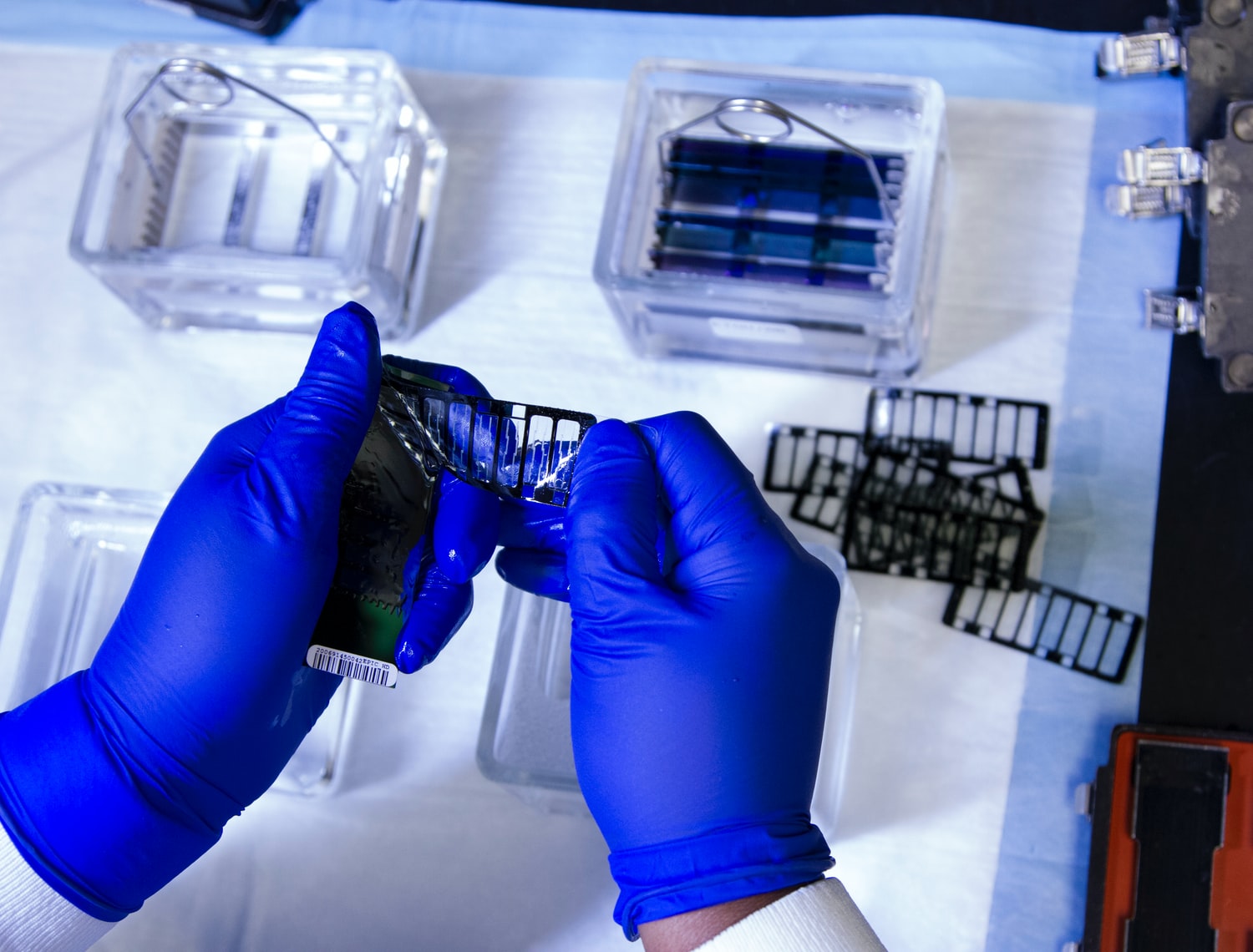
Hemorrhage (Bleeding) In and external hemorrhage, blood escapes to the outside as when tissues are torn by a cut or by crushing injury. A person may bleed to death from internal hemorrhage even though not a drop of blood escapes to the outside. A person may lose 2 to 3 pints of blood and still survive. If a large artery has been severed and bleeding is rapid, does not take long dor this much blood to be lost. Treatment of hemorrhage, must be prompt. ***General Indications of Hemorrhage*** When considerable blood is lost, certain signs and symptom occur: faintness; sudden thirst; dizziness; cold, clammy skin;rapid, shallow breathing; anxiety; rapid, weak, and irregular heartbeat (noticeable when taking the pulse) and enlargement of the pupils of the eyes. Sometimes shock, together with the signs mentioned above, provides the only indication of internal hemorrhage. A. External Hemorrhage An injured person should be examined as soon as possible to determine whether he is losing blood. Clothing must be removed from parts of the body where blood is seen seeping through. WHAT TO DO Apply direct pressure at the point of bleeding. A sterile gauze dressing, clean sanitary napkin, or freshly laundered piece of cloth should be placed over the wound and held here firmly. Only the pressure necessary to stop the bleeding should be used, for excessive pressure may interfere with the blood supply to other parts. If pressure controls the bleeding, a bandage may be needed to hold the dressing in place until the patient reaches the hospital. When pressure over the wound does not control the bleeding, follow instructions as given in the next item. For profuse bleeding coming in spurts from an arm, leg, or the face, apply deep pressure over the main artery that supplies this part. The main artery that served the thigh and leg can be collapsed by applying firm, deep pressure in the groin. That supplying the arm can be shut off by firm pressure high in the arm along a line extending downward from just in front of the armpit. That supplying the face may be compressed by pressing backward and inward in the neck along a line between the larynx and the muscles that turn then head. Bleeding from one side of the forehead may be controlled by pressure in front of the upper part of the ear. B. Internal Hemorrhage Internal Hemorrhage results from damage to or rupture of one of the body's internal organs, such as the liver or spleen; from the rupture of an oviduct (as in a tubal pregnancy) from the severing of a blood vessel (as for gunshot) from disease within a lung or from a stomach ulcer. Even though many internal hemorrhages give no external evidence of their presence, some produce an internal accumulation of blood later expelled through one of the body openings. Hemorrhage in the lungs usually results in coughing up of bright-res, frothy blood. Bleeding into the stomach may be indicated by vomited blood red if the blood is recent, otherwise dark and clotted. Bleeding into the intestine may be evidenced by the passing of jet black stools. WHAT TO DO Emergency treatment of internal hemorrhage consists of giving momentary care until a physician can take over. Often the only adequate treatment for severe internal hemorrhage is surgery. The victim should be kept warm, his feet and legs elevated above the level of his body his condition of shock becomes extreme.
 @cheche2018
ayoko na..zero balance na talaga ako nig read.cash...
@cheche2018
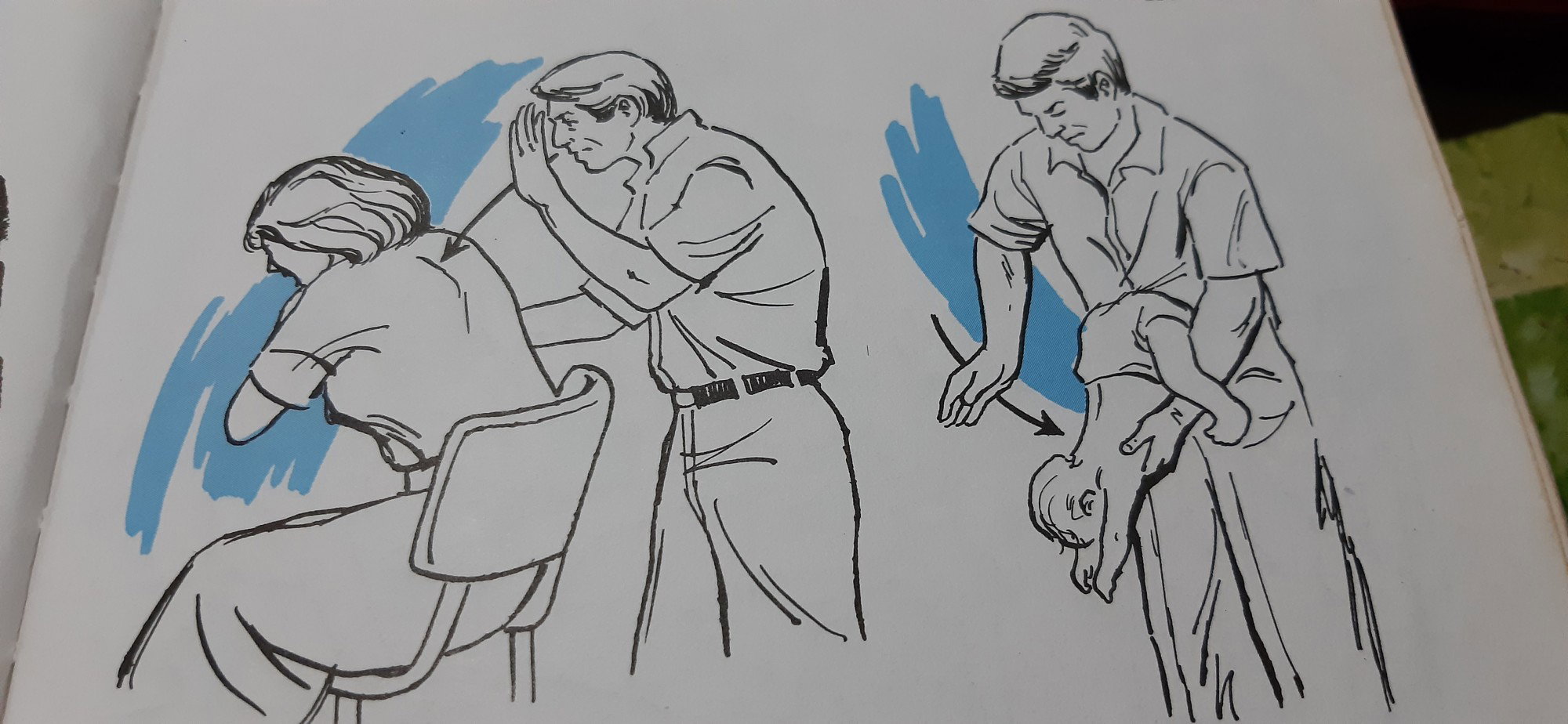
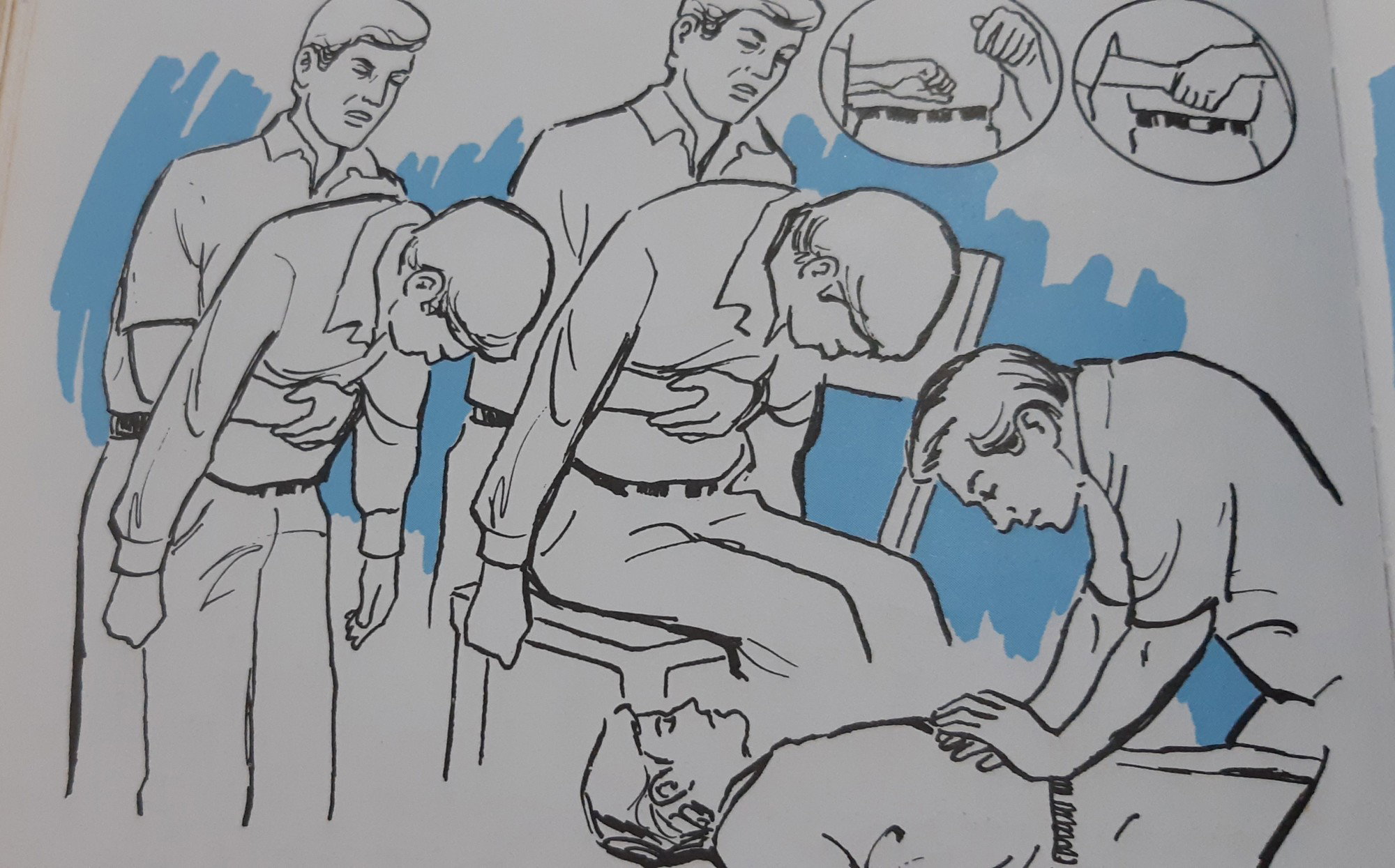
Choking (Strangling) Choking or Strangling occurs when a person accidentally draws food into the air passages leading to the lungs or attempts to swallow a piece of food too large to pass through the esophagus. It may occur when a child at play breathes a small object into his larynx. The person makes a great effort to breathe. He is unable to speak His head is thrown back, his eyes protrude, and his face becomes bluish red. If his air passages are completely closed, he soon collapses and will die within minutes if he does not receive help. Food choking is said to be the sixth most common cause of accidental death. In middle aged and elderly people, death from food choking is easily mistaken for heart attack. WHAT TO DO There are 3 approved maneuvers for rendering first aid to the choking person. These are (1) BACK BLOWS, (2) EPIGASTRIC THRUST, and (3) FINGER PROBE. BACK BLOWS This maneuver requires the operator to.use the heel of his hand to deliver a series of rapid whacks to the victim's spine between shoulder blades. This may be done with the victim standing, sitting, or lying on his side. The blows should be forceful enough to jar the victim's body and thus, hopefully, to dislodge the object that obstructs his air passages. A gentle modification of the maneuver may be used in the case of an infant by supporting the infant, face down, on one's forearm. The infant's head should not be lowered below the level of his body, however, if he is still able to breathe, even partially, when in the upright position. Only when he is unable to breathe at all should his head be held low. Epigastric Thrust (Heimlich Maneuver) There is some air in the lungs even when a person's air passages are closed. The epigastric trust maneuver is designed to force this residual air out of the lungs so quickly that it pushes the material trapped in the throat upward into the mouth. This is done by making swift pressure upward through the soft tissue of the "EPISGASTRIUM" that part of the front portion of the body wall just below the breastbone and between the lower ribs. The pressure forces the diaphragm upward, compressing the lungs, forcing the air upward through the air passages. The maneuver can be performed with the victim's standing, sitting or lying on his back. When the choking person is standing or sitting, the.operator works from behind. He wraps his arms around the victim's waist, placing the thumb side of one fist against the victim's abdomen just above the navel and just below the ribs. He the grasps this fist with his other hand and makes a quick upward thrust. This may be repeated if not unsuccessful the first time. When the victim is lying on his back, this is performed as the operator kneels beside the victim or straddles his hips. He places one hand on top of the other with the hell of the lower located slightly above the victim's navel and just below the ribs. The operator then rocks forward as he makes a quick upward thrust in the midline of the victim's body. Finger Probe This is especially useful when a limp of food or other firm object is lodged in the victim's mouth widely, grasp the tip of his tongue through the fold of handkerchief, and pull the tongue well forward. Pass the forefinger of the other hand over the tongue and along the side (not the middle) of the victim's throat far enough to reach the edge of the obstructing object. (If the finger were pushed into the midline of the victim's throat, it might push the obstructing object further into air passages.) Then with a sweeping motion of the finger into the victim's mouth. Even though the victim appears to breathe normally again, he should be seen by a physician to determine whether there has been any damage to his tissues by the maneuvers used to restore breathing.
+1 more
@cheche2018
join the giveaways of Mr. Mike this is the link https://read.cash/@MikeD/easy-giveaway-for-20-people-2ec78d7f
@cheche2018
Insanity Those who deal with a disturbed person should he deliberately calm and positive while a physician's counsel is being sought. Realizing that the victim is not responsible for his present conduct, those caring for him will not resort to ridicule or harshness, but will deal firmly and kindly with him. Although physical restraint and coercion are to be avoided if possible, extreme cases may demand emergency measures, even the help of a police officer. A. Delirium : This is a form of excitement in which the patient acts out of context to reality and may experience hallucination. There can be a number of different causes of delirium, including the influence of drugs, organic brain disorders, head injury, severe infections with fever, and early stages of recovery from surgery. WHAT TO DO First, give attention to the underlying cause of the delirium and remedy it if possible. Beyond this, give constant supervision to prevent the patient from harming himself. B. Alcohol Intoxication Here's 2 special circumstances deserve mention *Delirium Tremens* : This is a complication of chronic alcoholism in which the patient usually has hallucinations, in which he sees grotesque things such as pink elephants. The patient is nervous and emotionally disturbed, and his muscles tremble excessively. WHAT TO DO Although most patients respond favorably to good nursing care and a diet high vitamins (especially Vit B), still about 15% unfortunately succumb. Delirium tremens cases should be placed in the hospital for appropriate treatment. *Alcoholic* *Hallucinosis* = The patient is in greater danger here because his hallucinations usually take the form of accusations against people around him and treats to his own safety. These may lead him to suicide or homicide. The patient should be placed in a psychiatric hospital. C. Depression : In this ailment, the patient slows down mentally and physically. He has poor appetite and loss of interest in surrounding activities. He is apprehensive and troubled with sleeplessness. The greatest danger here is possible suicidal attempt, any mention of which by the patient should be taken seriously. WHAT TO DO Close nursing supervision, preferably in a hospital, is required. D. Acute Psychosis : Patients having this affliction lose contact with reality, often becoming violently aggressive and attempting assault or homicide. WHAT TO DO The patient should be placed in a psychiatric hospital and kept under constant supervision. All weapons and objects that might be used for harm should be removed from his room. His treats of harm should be taken seriously. As far as feasible, physical restraint should be avoided in favor of firm supervision. Under appropriate treatment by a physician, this acute phase is of short duration. E. Hysteria : In this functional disorder the patient conducts himself in a strange manner, usually with intense emotion, because of some unsolved personality problem. Hysteria may imitate almost any disease, including mental disorder. Immediate care of the patient requires a combination of firmness and kindness.
 @cheche2018
Motion Sickness This term includes seasickness, air sickness, car sickness, and similar problems. Symptoms may include dizziness, nausea, pallor, clammy perspiration, headache, and vomiting. WHAT TO DO Breathe fresh air, if possible, while you ride. When on a plane, a draft of air from the overhead vent, directed against one's face, will usually help. Avoid moving your eyes from side to side as you ride in a car, keeping them fixed on the road ahead. In a plane, fix the eyes on some given spot in the plane. Avoid overindulgence of any kind before traveling. A hearty meal just before departure makes a person more susceptible to motion sickness. A light meal 2 or 3 hours before departure is best. If you are prone to travel sickness, see your doctor and have him prescribe a remedy. Start taking this prescribed several hours before time of departure.
 @cheche2018
Another Payout Update sa payout ko from 10:03 am request payout pumasok ng 12:12pm thank you read.cash


 @cheche2018
another telegram bot that legit just viewing site and solve recaptcha BCH_GiftBot?start=1055190141 BTC_GiftBot?start=1055190141 XRP_V2_GiftBot?start=1055190141
@cheche2018
501 views Thank you visitors grabe nagulat ako sa nabasa.. na may 500 na akong viewers ng article ko.. Salamat sa inyong mga silent reader and viewers..

 @cheche2018
Plant Allergies and Poisonings Poisom ivy, poison oak and poison sumac are the common skin irritants among plants. Some persons are susceptible to poisoning by these plants, while others can handle them with impunity. Strangely persons may develop a sensitivity to the irritating oils produced by these plants even after a previous period of immunity. In highly sensitive persons large areas of skin may become involved, and the individual may be acutely ill, requiring hospitalization. WHAT TO DO Antihistamine preparations are of some help in relieving the itching. May cases respond to the administration of cortisone or hydrocortisone preparation, used under direction of physician. The use of wet dressings on the involved areas is helpful, the dressings being kept moist by boric acid or epsom salts solution. Calamine lotion also helps in some cases..
 @cheche2018
Continuation of Heart Attack CORONARY OBSTRUCTION ACUTE This type of heart attack is caused by the sudden obstruction of one of the branches of the coronary arteries. Depending upon the size of the branch plugged and on the portion of the heart deprived of its blood supply, the patient may recover completely or may die within the next several hours. The victim experiences extreme pain in his chest, which he may describe as being squeezed in a vise. The pain may extend through to the back, up into the neck, or down the left arm where it may even involve the fingers ( commonly the fourth and fifth ) and is not relieved by rest. The victim may become unconscious, and he typically appears very pale. He may go into shock, with profuse perspiration and lowered irregular, and vomiting may occur. WHAT TO DO Place the victim in a half reclining position with head and shoulders elevated until the fire department's rescue squad or an ambulance arrives, or until seen by a doctor. Insest that he remain absolutely at rest, not even moving a finger. Loosen the victim's clothing where it might constrict the neck or waist. If pure oxygen is available, play a stream of the oxygen in front of his face so that he can breathe this along with the air. Otherwise, allow him to breathe fresh air. If nitroglycerin tablets are available, place one of these under the victim's tongue, allowing it to be dissolved there. Even with a favorable turn of events, the victim should be kept at absolute rest under a doctor's care for gradual recovery. HEART FAILURE ACUTE Heart failure occurs as climax to long-standing heart disease. The acute episode is caused by the inability of the heart to circulate a sufficient quantity of blood throughout the body. The blood now begins to stagnate in the lungs and other tissues. The principal symptoms are shortness of breath and coughing. Instead of being pale, the patient's skin appears dusky. The difficulty in breathing is most severe when the patient lies down. He will insist that he should sit up at least part way. WHAT TO DO Keep the victim propped up in bed in a near sitting position. Give oxygen if available. Preferably, the victim should be attended by a physician before he is moved. The physician can administer drug which will improve the heart's action. Otherwise prompt treatment can be secured at the hospital emergency room.
 @cheche2018
Heart Attack hope can help A heart attack may come as a surprise, or the victim may have known he had heart disease or high blood pressure. Symptoms vary, but often include extreme pain and temporary unconsciousness. With good care, many victims of heart attack recover completely. In a few cases death occurs soon after the attack strikes. There are 3 principal causes of heart attack. Angina Pectoris = The attack in this case is brought on by a reduction in blood supply to the muscular wall of the heart, possibly resulting from a narrowing or a spasm of the coronary arteries that supply the heart. Blood still reaches the heart muscle but in reduced quantity. The attack is precipitated by exertion, physical or emotional, or exposure to cold. It often follows the eating of hearty evening meal, particularly if the meal included much fat. The principal symptom is extreme pain in the chest which may extend into the neck and even down the left arm to the wrist. The victim's face appears pale and gray. Usually he does not lose consciousness but clutches his chest, becomes very anxious, and refuses to move. Sometimes the is difficulty in breathing. In most cases the pain gradually disappears after a few minutes of rest or after medication. WHAT TO DO Lay the victim on the floor or on a bed. Elevate his head and shoulders on a pillow or folded blanket. Keep him absolutely quiet and protect him from the gaze of onlookers or from other circumstances that might make him apprehensive. Do not move the victim until the pain has eased. Meanwhile cover him as neccessary to keep him warm. If the person had has previous similar attacks, he may be carryinh nitroglycerin tablets. If so, one of these should be placed under his tongue ( not swallowed). This will usually terminate the attack promptly. Thos medication is best administered with the patient lying down, as it may cause fainting. Arrange for him to see his doctor as soon as possible...
 @cheche2018
1. Download Buzzbreak 2. Register tru Email/Fb 3. Go to Wallet 4. Click Enter Code B00065855 ways of earning Check in per Day Read Article View Videos Spin Invite (optional) you still can payout your balance without invite.. you can win 70thou just by promote the buzzbreak tru youtube channel.. payout tru GCASH verified/unverified
@cheche2018
thank you read.cash again and again..2hours lang pasok na agad..
@cheche2018
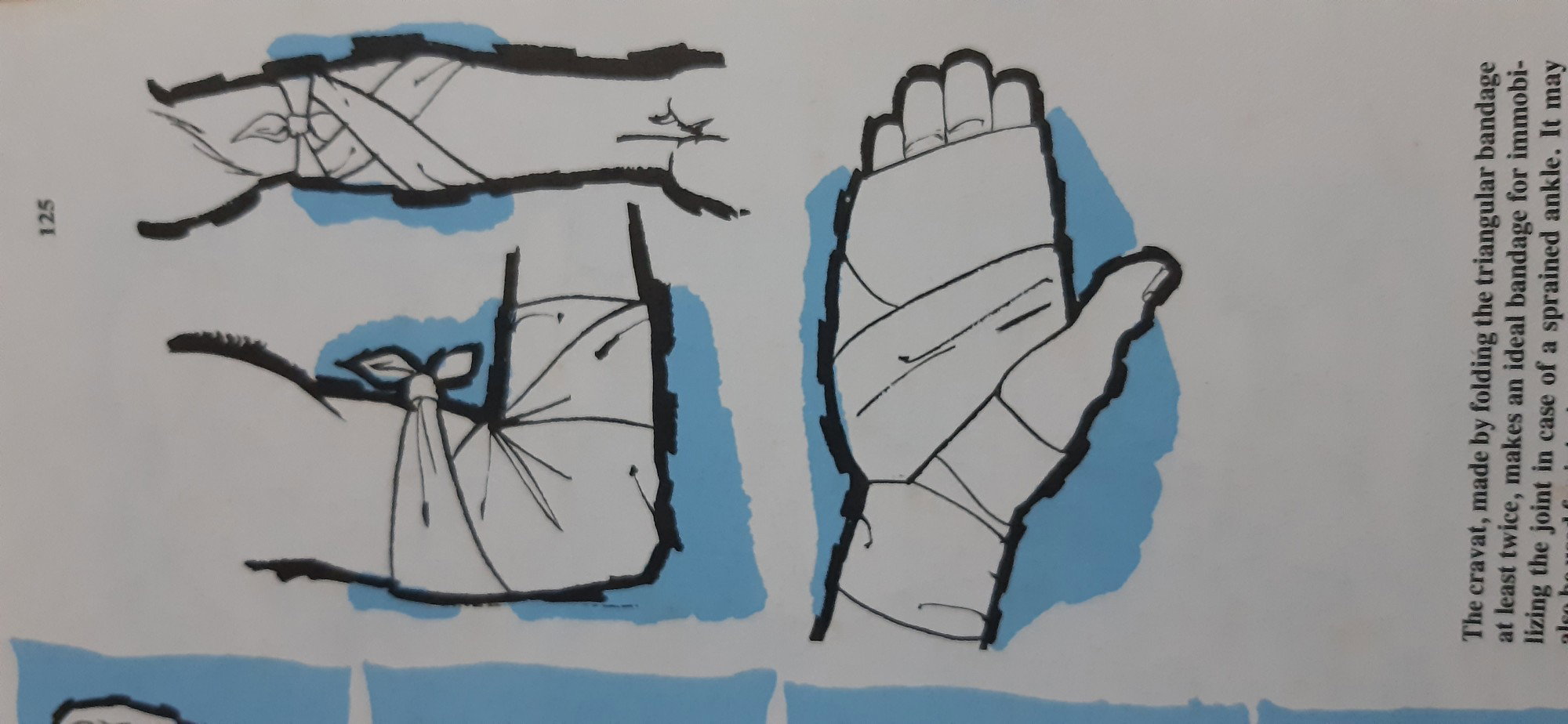
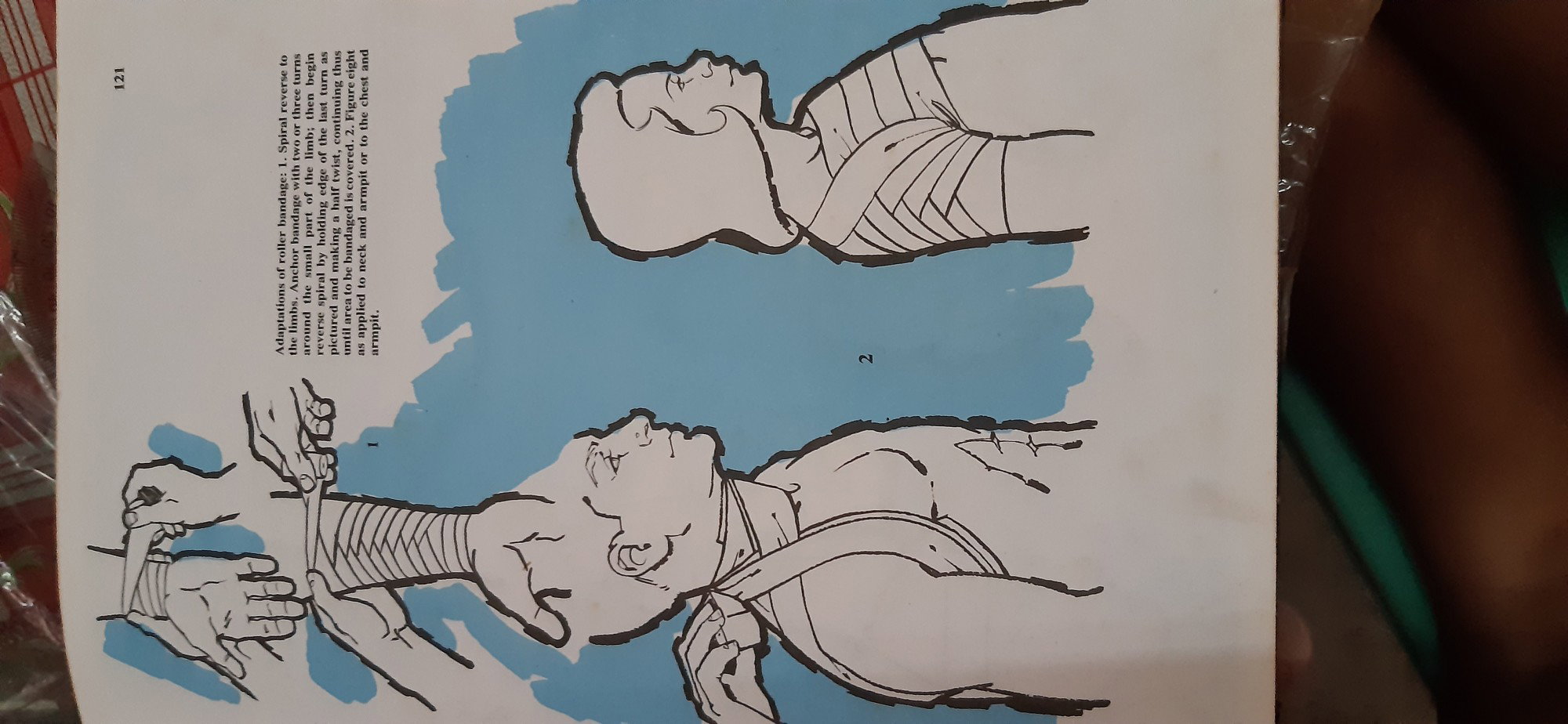
Continuation for Bandaging Methods The Cravat Bandage = The cravat bandage is made from a Triangular piece of cloth such as is used for the triangular bandage. The cravat may be used to bandage the head, the neck, the eye or the ear. It may also be used for injuries to the hand or forearm, the ankle and leg, and for fractured ribs, as well as for application of tourniquet. Gauze Pads or Rolls = Sterile gauze pads can be obtained from the drugstore in packages which can be easily kept in the first aid kit. Usually when a gauze pad or roll is applied to a wound, it is held in place either by adhesive tape are available in various small sizes at the drugstore or in most markets. This type of bandage is used for abrasions, lacerations, and open wounds. In the case of wound of the palm of the hand, it is convenient to place a roll of sterile gauze in the victim's palm with the fingers grasping the roll loosely. The hand is then bandaged in this position using a roller bandage.
 @cheche2018
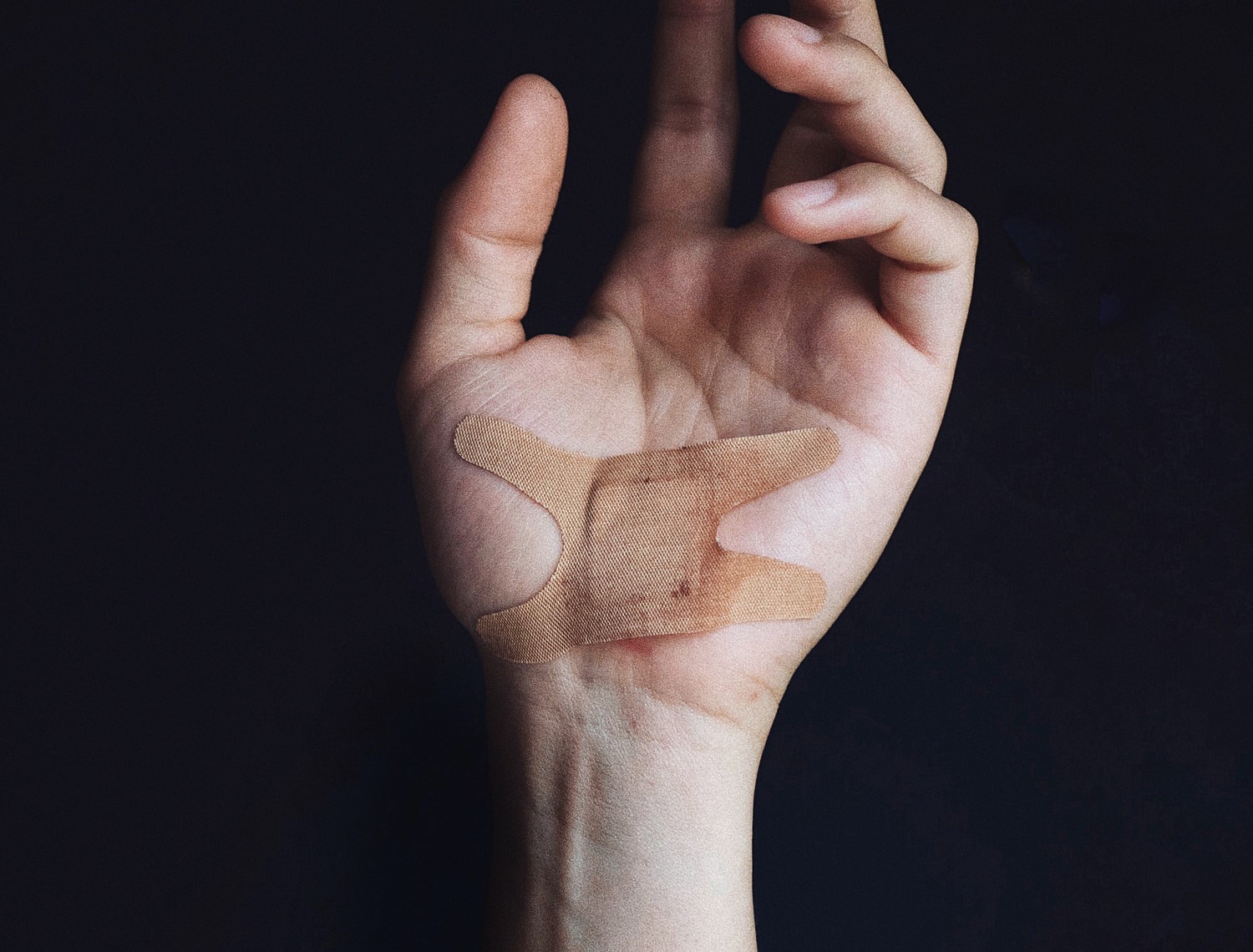
Banding Methods A bandage should be snug but not so tight as to impede blood circulation. The question of how tight is always difficult. One may have remove and replace a bandage a time or two in order to find the happy medium. Even then, the swelling may decline and the bandage become too loose, or the injured tissues may swell and the bandage become too tight. A bandage applied to the leg, the arm, or a finger should be double checked occasionally to make sure the tissues beyond the bandage toward the extremities are warm and of normal color. It may be advisable to place strips of adhesive tape over a bandage to keep it from shifting. These can extend beyond the bandage so as to anchor it to the skin. The loose ened of the bandage can be fastened either by the use of adhesive tape or, in the case of a roller bandage, by tearing or cutting the bandage down the center for few inches, tying the loose ends with a simple knot and then using them as straps, one passing in one direction and one the other, to serve as a final tie. Kinds of Bandages The Roller Bandage = This is made of muslim cloth or of gauze prepared especially for bandages and designed to stretch slightly so that it conforms to the shape of the part being bandaged. Roller bandage material, because usually sterile when packaged, can be applied to a would which has been cleansed. Roller bandage material comes in various widths from about one half inch to four inches, the narrower widths being for fingers and toes. Roller bandages may need to be reinforced by the use of adhesive strips. The Triangular Bandage = This has several uses. It is usually made from a piece of muslin, the size varying with the particular use in each case.
 @cheche2018
Read.cash Payout For the first nakatanggap ako ng 40pesos ni read cash.. hu!!!sarap pala ng feelings..

 @cheche2018
Heatstroke or Sunstroke Heatstroke (Sunstroke) is the most serious of the heat ailments, carrying a mortality rate of almost 50%. It often strikes the elderly and people addicted to alcohol. It may be brought on by physical exertion and is more prone to occur when humidity is high. Direct exposure to the sun is not a neccessary factor. Heatstroke involves a failure of the body's heat-regulating mechanism. Conditions of extreme heat and humidity overwhelm the brain's heat controls. Other symptoms are collapse and a flushed, dry skin which feels hot to the touch. Early in the course of the condition, the flushed, red skin is the most important indication of heatstroke. However, if blood circulation is reduced, the color of the face may become deathly gray. WHAT TO DO Remove the victim's clothing and place him in a tub of very cold water (with ice if possible). If a tub is not available, sprinkle his body with water and fan his skin. An ice-water enema may be helpful. Massage arms and legs to assist circulation of the blood. Massage strokes should be toward the victim's trunk. Check the internal body temperature at frequent intervals (by a thermometer under the tongue) and note the progress made in reducing the temperature. By the time the body temperature lowers to 100° F. (38° C.) the ice water bath or ice water enema may be discontinued. Continue, however to check the victim's temperature, if it rises again, resume the more drastic measures. If hospital facilities are available, salt solution should be administered by vein. Allow for a prolonged period of recovery, under medical care. HOPE CAN HELP.. SHARING OF WHAT I HAVE READ IN MEDICAL BOOK..
 @cheche2018
kakarequest ko lang ng payout ni RC pasok na agad sa wallet.. 30 or 45mins lang yata..pasok na siya
@cheche2018
Wartime Disaster First-aid treatments for injuries that occur in warfare.. 3 phases of injury by nuclear explosion Blast Injury = This is produced by the push pull effect of the shock wave from the explosion, which up roots trees, collapse houses, and destroys by mechanical force. The blast produces all conceivable types of traumatic injury. Heat Injury = The heat produced by a nuclear explosion is almost conceivable at the center of the blast. This heat causes the severe burns so typical among victims of nuclear explosion. The amount of light produced at the same time is so great as to cause blindness if the unprotected eyes view the "ball of fire" Nuclear Radiation = Damage by readioactivity is subtle. Rays can penetrate deeply into the tissues and caise severe damage to various organs.. WHAT TO DO Keep the victim at rest as much as possible. With a radiation detecting instrument, measure the amount of contamination that may be present on the victim's clothing, skin and hair. Discard contaminated clothing at the earliest possible moment. Radiation contamination of the skin may be largely removed by thorough washing with soap and water. In some cases it is advisable to shave off all the victim's hair. Failure to decontaminate the victim prolongs and intensifies the damage. As far as possible, the victim should be cared for in a hospital where frequent laboratory tests can be made to determine the degree of his radiation injury and the progress, if any ,being made. This is especially important if the radiation received has been relatively mild and the injury is chiefly to the blood forming tissues. Hospital care includes keeping patient comfortable with sedatives, restoring his body fluid, and maintaining proper chemical balance in his blood. Later hospital care includes blood transfusion and control of infection. Damage to blood forming tissues makes it impossible for the victim to produce his own antibodies to combat infection. Therefore he must kept in an environment as nearly germ free as possible
 @cheche2018
Toothache Usually toothache is the result of neglect of one's teeth. When toothache occurs, arrange an early appointment with the dentist. Meanwhile, few things can be done to ease the pain....... Hold a hot-water bottle against the cheek on the toothache side. In some cases, holding chipped ice in the mouth seems to be better than heat in relieving the pain. Dip a tiny piece of cotton rolled onto the end of a toothpick into oil of cloves and work this into the cavity. HOPE CAN HELP EVERYONE.. IM NOT A DOCTOR NOR A DENTIST.. Just like to share does from the medical book..
 @cheche2018
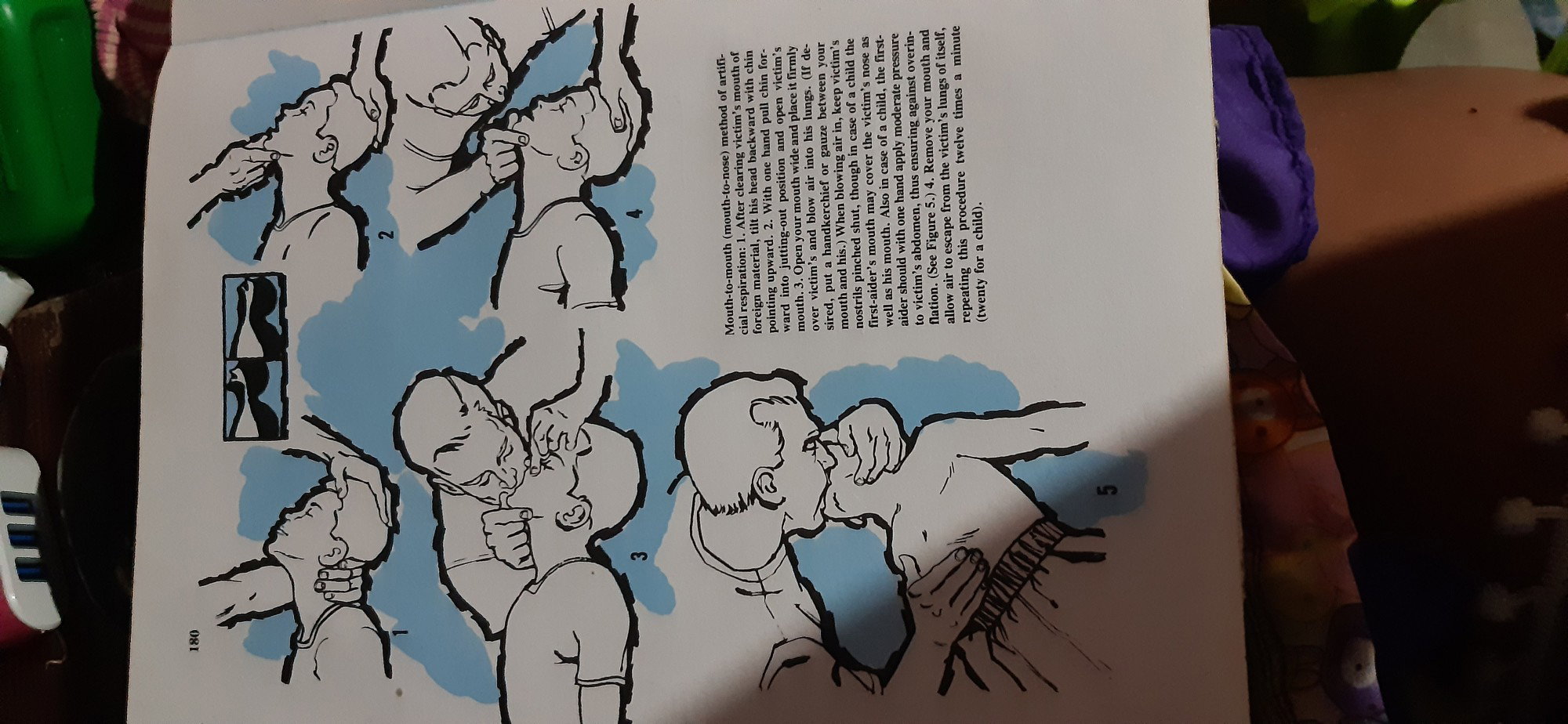
Respiration, Artificial, Breathing Failure When for any reason a person stops breathing, the body cells begin at once to suffer for lack of oxygen. Two of body's organs work together in providing oxygen to the cells: the lungs, which derive oxygen from the air, and the heart , which propels oxygen-laden blood to all parts of the body. In many cases of breathing failure or heart stoppage, breathing or heart action will resume pretty soon if only the victim can be over by artificial respiration and heart resuscitation. The present item deals with keeping the lungs active.. In any severe accident or unconscious, see if the victim's chest moves as he breathes. If not, begin artificial respiration. Act fast. Mouth to mouth breathing for artjficial respiration If the victim is in a room filled with smoke or gas, remove him to fresh air Lay him on his back on the ground, on the floor or on a table Wipe any foreign material out of his mouth, using your fingers or a handkerchief. Do this in 10 secs or less Place 1 hand under his neck and lift, tilting his head as far back as reasonable so that the front of his neck is stretched and his chin points upward. Place your mouth firmly over the victim's mouth and blow hard enough to blow air into his lungs and make his chest rise. Close his nostrils either by pinching them closed or by placing your cheek against his nostrils as you blow into his mouth. If the victim is a small child, you may place your mouth over both his mouth and nose. (Remember that child's lungs do not hold as much air as an adult's. Be careful not to over inflate his lungs.) Remove your mouth from the victim's face and listen for escaping air. The patient should exhale on his own even tough though unconscious. If no air escapes, it must be that you did not succeed in forcing air into his lungs. In this case pull his chin forward (so that his lower teeth are ahead of his upper teeth) and try again. Make sure that the chin points upward. If you still cannot blow air into the victim's lungs, turn him on his side and slap him several times between the shoulder blades in hope of jarring loose whatever foreign material may be obstructing his air passages. In the case of a child, hold him sharply between the shoulders then wipe his mouth clear of any obstructing material. Once you succeed in blowing air into the victim's lungs, repeat this every five seconds (12 times per minute), taking your face away between times so he may exhale. Between breaths, summon help. Send someone for a doctor, ambulance, or rescue team. Have someone find coats or blankets to keep the victim warm. Keep up the mouth to mouth breathin until the victim is able to breathe on his own or for at least two hours or until a physician pronounces the victim dead. The lives of many persons have been saved after more than an hour of artificial respiration. just like the picture below 👇👇👇👇👇👇👇👇👇👇👇👇👇👇
 @cheche2018
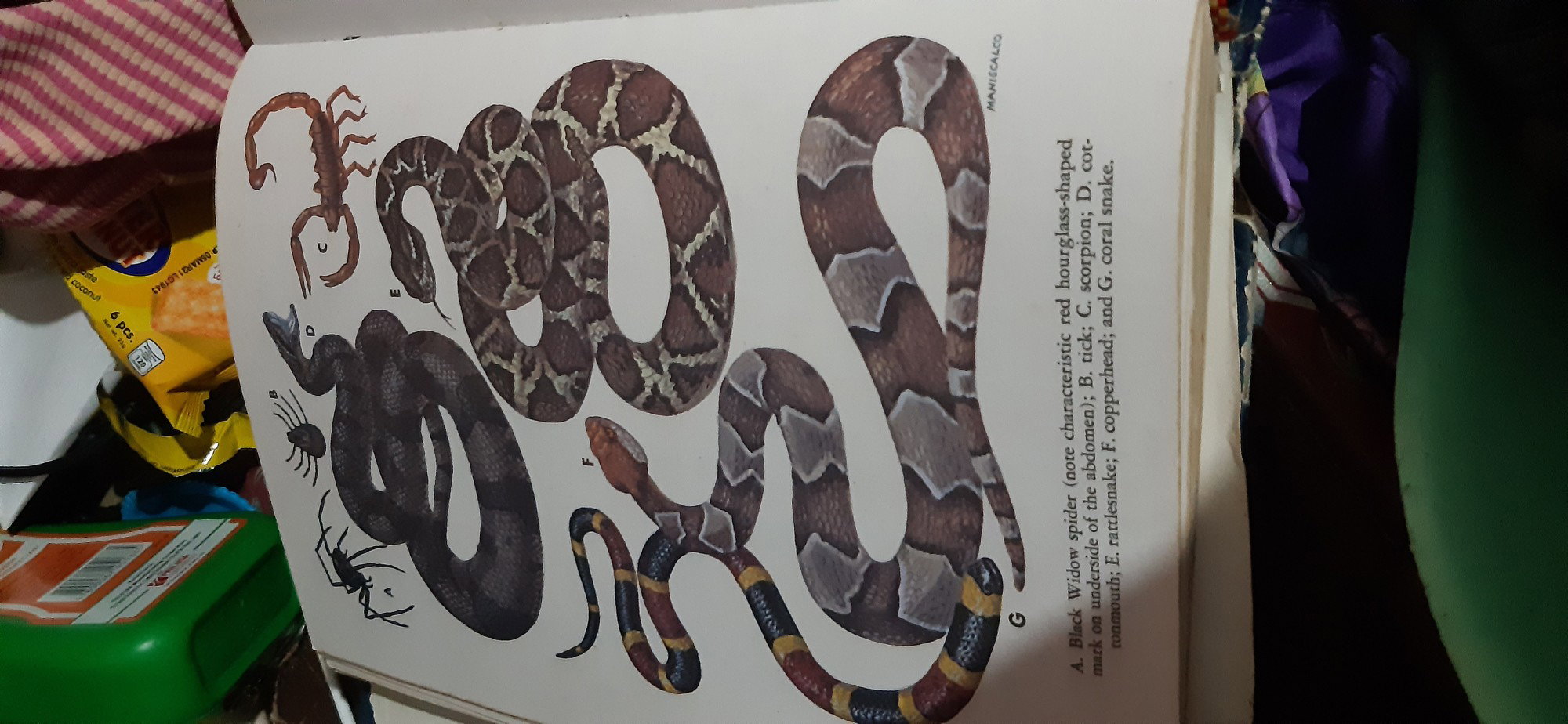
emergencies and first aid if needed
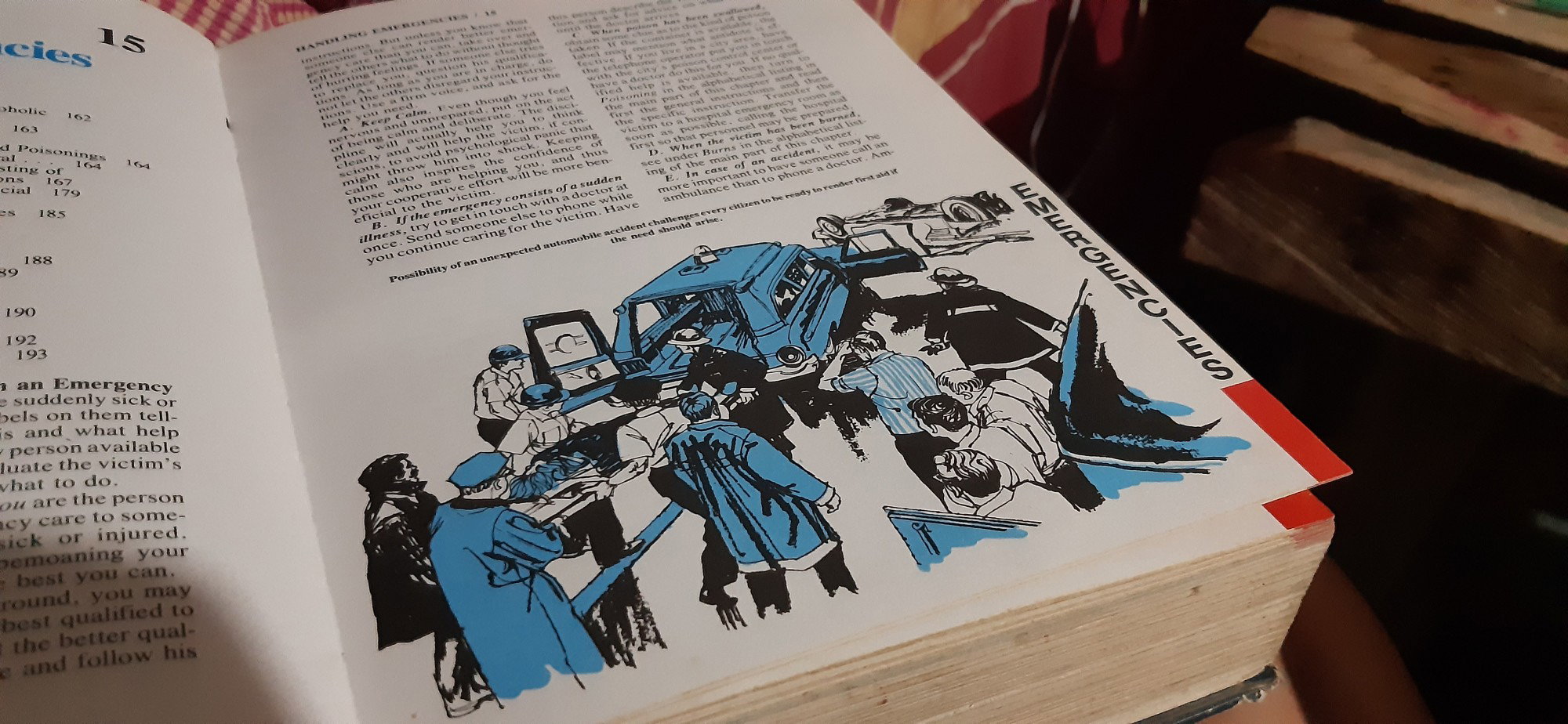
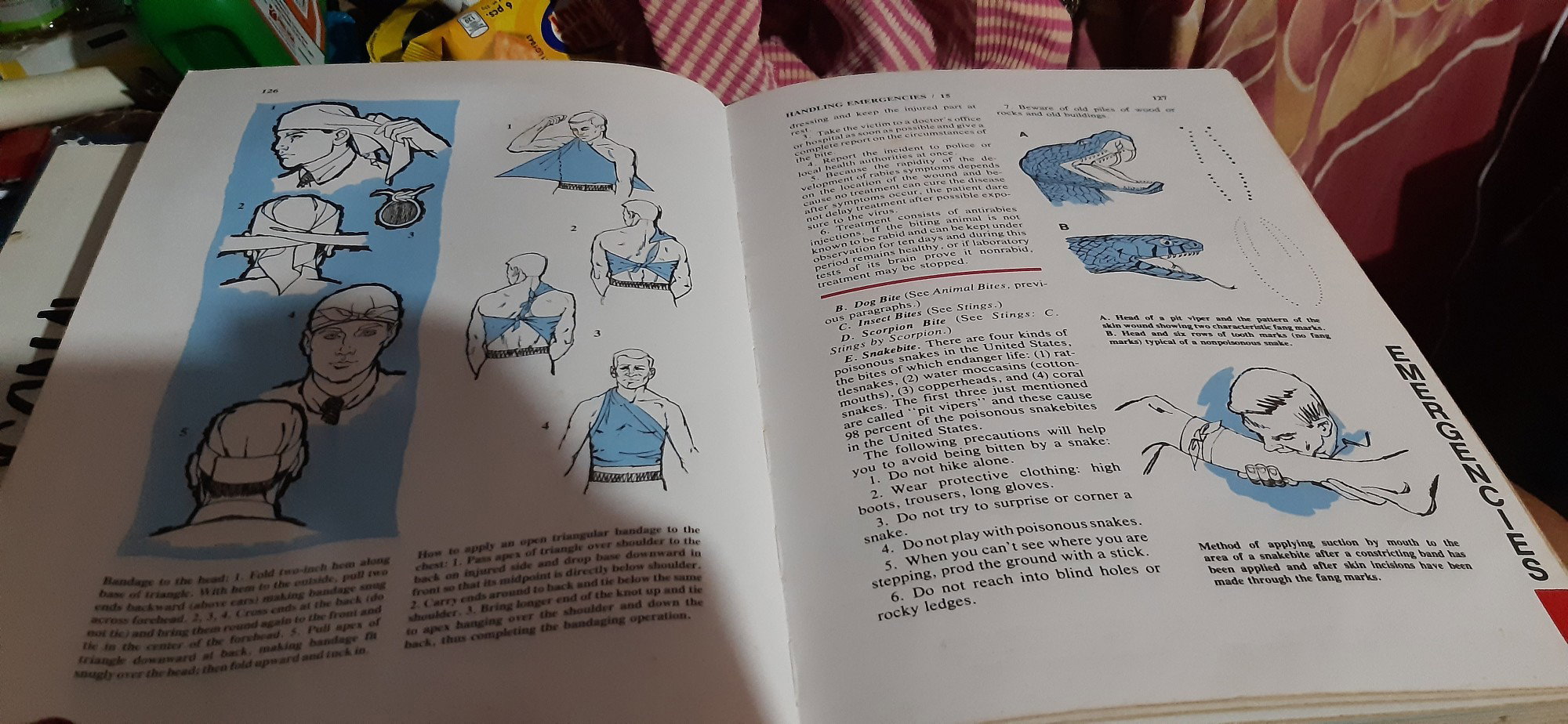 @cheche2018
need talaga natin malaman ang mga emergencies and first aid.. para iwasan na natin magkaroon ng problema..atleast alam natin ang dapat at hindi dapat..