Spare the Cúpulas
What is a Cúpula?
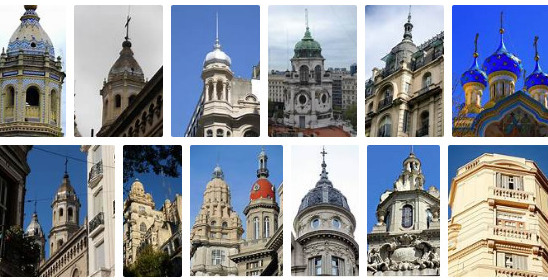
In the late nineteenth century, these things started popping up in Argentina. If you run a search on duckduckgo.com for the word *cupula* with the word *argentina,* you will get something like the above screenshot.
They are literally everywhere. It all started as an idea to mark the corner of the block in a decorative way. As time went on, architects started to compete with a little bit of pride added into the mix. There are some that took on a Russian look, others an Arabic twinge and still others with a Spanish motif.
They became such a hallmark in the country that nobody has the heart to tear one down. I believe it is actually illegal to do so now in the twenty-first century.
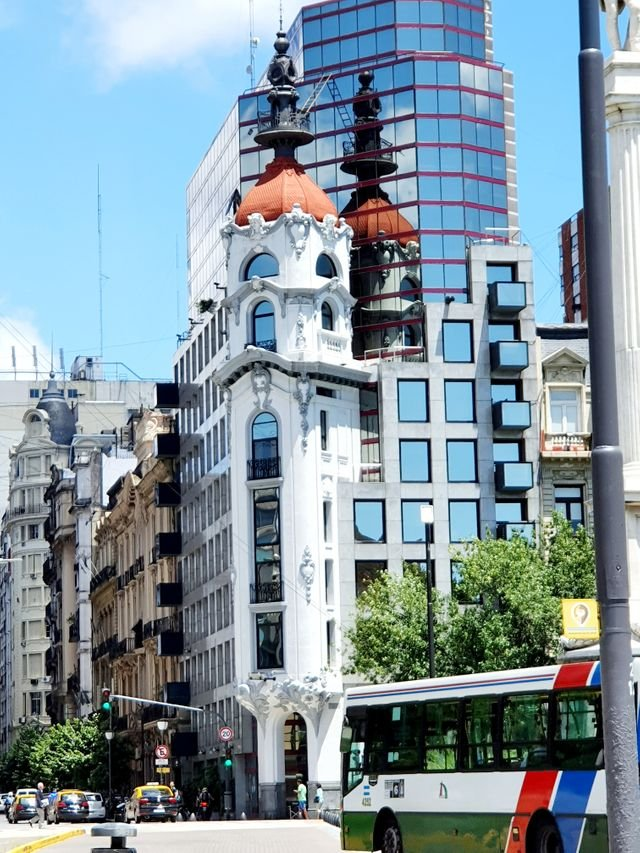
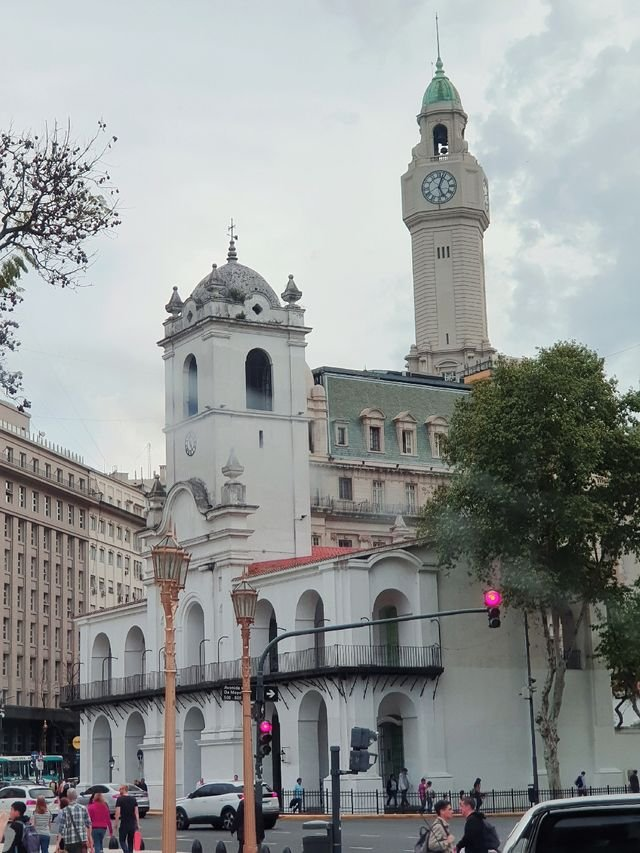
This is a perfect example of it.
These structures are so common that I do not even see them anymore when I traverse the city. Note that there is yet another on the left, just down the street at the corner in the above photo.
The photo shows a time warp as a two hundred year old building seems to have materialized, replacing the front door of a more modern building. The other likely scenario is that the old structure was at the end of its life and they did not have the heart to turn the cúpula into rubble.
This gem is standing in Tribunales next to the supreme court and across from the Colón Theater.
***This article is my own and the photos were taken by me.***
The Skyline of Buenos Aires
Puerto Madero
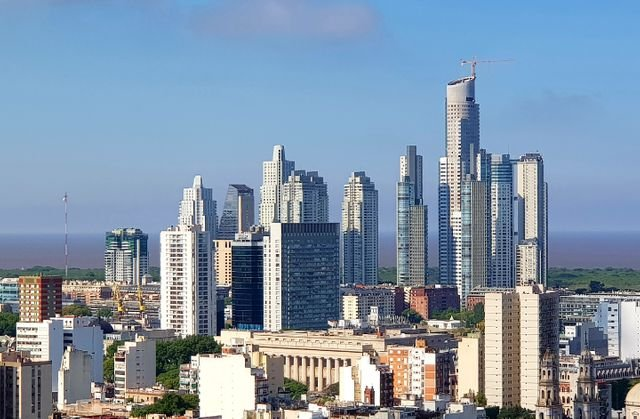
The city in the foreground, the apartments rising high, and the nature reserve at the water's edge.
This was right around the time that they finished the tallest apartment building in Puerto Madero. It almost looks like a hypodermic needle - don't tell any of the conspiracy factalists.
*This article is my own and the photos were taken by me.*
El Cabildo - Buenos Aires
Located directly opposite The Pink House, the Cabildo looks across Plaza de Mayo as if one were at the head of the table and the other on the opposite end.
Built in the colonial days, this landmark is under repairs quite often. I lived close to it for many years. and it seems to only be free of scaffolding and work crews for short periods at a time.
It has stood the test of time, of 271 years to be exact, and was the place where the government was formed by the Spaniards. It was partially demolished as the streets were widened back in the 1800s and what was left of it was remodeled in 1939.
The building went into a cocoon in preparation for the 2010 bicentennial of Argentina's independence from Spain. The celebrations included soldiers with muskets on the balcony and reenactments of the changing of the guards.
This is the only building around the plaza that remains standing since colonial times.
*This article is my own and the photos were taken by me.*
*lead image from 2000* https://tse2.mm.bing.net/th?id=OIP.BAHSYGmgmYt5x-L8IxQZVQHaFi
Eva Perón - Memorialized in Stories
Eva Perón is famous here in Buenos Aires
She met an Army Colonel Juan Perón in the mid-forties. He was taken by her and gave her a position and Communication Secretary in the government.
He was arrested and jailed after appointing her, followed by a complete shutdown of society. The people chanted "Perón! Perón! Perón!" and demonstrated for nine days and the government was forced to release Juan Perón.
Four days later Perón, age fifty, married the twenty six year old Eva Duarte. She quit her radio job and joined her husband's presidential run, which he won in 1946.
Many did not like little Eva, Evita was her preferred nickname, but she was endeared by others, especially the working class and poor because she had overcome her roots of poverty.
A radio star
A performer
The First Lady
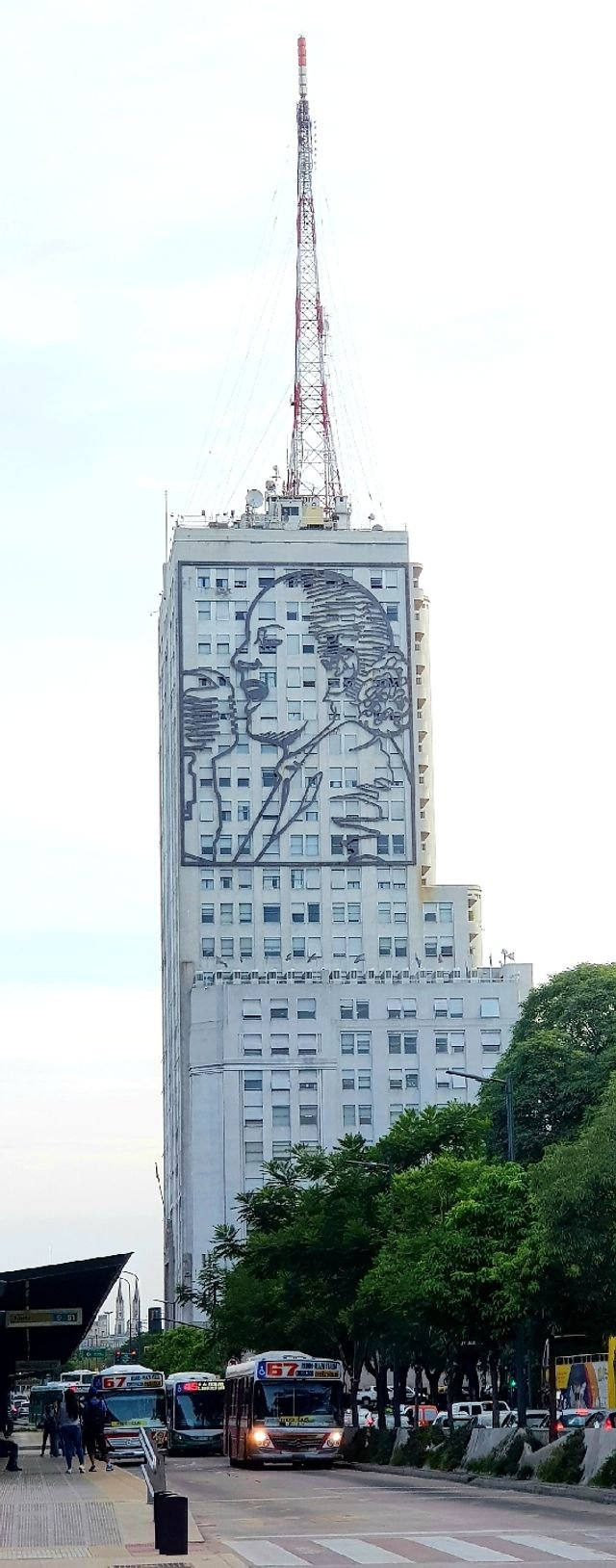
Here she is on the side of a building located on 9 de Julio street in downtown Buenos Aires. The road had to be split as the city grew and this building is an island of its own in the middle of heavy traffic for as long as I have been here.
She is depicted speaking into her radio mic. One of the most endeared women of the mid-twentieth century in Argentina.
*This article is my own and the photos were taken by me.*
 @bsas
@bsas