They Are Still Lovers
Love, be loved.
My parents had acquired an unusual habit during their 49 years of marriage.
Whenever they left the house together, they kissed each other right in front of the door. Usually this would happen with habitual quickness, but of course this kiss had become a necessity for them.
Ever since they were just married, they'd kiss each other at the door, and it was a tradition for them now. Even if they were in the middle of an argument (even their quarrels were always civilized), they would take a little break, kiss each other, and resume their argument as they left the door. When I was a kid, I thought that all parents kissed when leaving the house.
The memories of my father's death still remain very clear in my brain. I do not say the voice of the telephone, the funeral, the condolences of hundreds of people, the arm of my son who has become a teenager, and his mourning prayer Kadiş ...
But most of all, my mother's state of leaving the house to go to the funeral ... When she comes to the door, she pauses for a moment and sighs herself ... Then squeezing my hand tightly and tightening her steps outward ...
I certainly wouldn't dare describe my parents' marriages. For what can a child know about his parents' relationship, even if he is a grown-up child? But there is a long history that I shared with them and occupied a priority in their lives. Many sorrows, troubles, joy, pride and comfort towards the end ...
My parents joked that their marriages were mixed marriages. Perhaps the marriage of my mother, who was the grandson of a German Jew, and my father, the grandson of a Russian Jew, in the 1940s was considered a mixed marriage. Their backgrounds had clashed with each other, their families were very different from each other.
That festive afternoon Sherri, my parents and the children were sitting around the table at the end of a nice meal. Everyone was full and relaxed. Mother, asking her permission, said she had to go upstairs and pack the bags so that she and my father would not go to Baltimore in time and miss the Sabbath evening prayer. A few minutes later she made that expected call from above: "Norman, are you coming up to help me?"
My father was uncomfortable. Not only was he uncomfortable, he started to complain when he found himself in front of an audience who would listen to him that day: "Punctual, always punctual ... Always on time, on time .." He seemed to have fun while saying these. My mother called again, and my father continued to talk deliberately about German Jewish traditions. The children fell silent. Sherri and I were extremely uncomfortable.
For the first time in my life, because I was still their child - I attempted to intervene. The tool I chose was to joke. I took a deep breath, looked at dad with my raised eyebrows and said, "Yes, daddy. It really is giving you so much trouble. Why don't you marry someone else?" I said.
Sherri and the children started laughing wildly. My father smiled and said it wasn't a bad idea, and joined the laughter. When we told my mom, even she thought it was pretty funny she.
In the last years of their marriage, my parents had more tense, impatient and angry moments. I stood aside and wished the same wouldn't happen to Sherri and me. I was wondering if what I saw was unique to my parents or was it seen in every marriage as a result of old age.
The scholars said that according to God, thousands of years can look like a single day. As a human, I also learned that a brief moment can feel for years. A single moment may be more pronounced than all the days and years that surrounded it. Moments in a cold, dim hospital room, for example ...
A few months after that festive dinner, my father was hospitalized for prostate surgery. This surgery was commonplace for men of his age, but this fact did not alleviate the fear of the surgery.
On the morning of the surgery, my mom showed that she still hadn't lost a gentlemanly thing when she kissed her good luck. We tried to spend time like the other people in the hospital, having a little breakfast and until the doctor arrived. The doctor had good news and told us that my father would return to his room in 1 hour.
We waited for him. Finally, a group of nurses brought him to his room on a stretcher and carefully placed him on his bed. When people left, I realized how old my father, Norman Alper, looked. Her hair was dull, her mouth was bent, and a red streak appeared above her nose. He slept well.
Soon he woke up, looked at us and smiled. Then one of the most beautiful events I have ever witnessed in my life happened. Carefully, lovingly, Mom gave my dad the dentures he had never parted before. My father's face brightened when he placed the teeth in his mouth. As if at a ceremony, my mom handed my dad his glasses, then the hearing aid ... He wiped his cheeks, combed his hair. And finally homeHe put his lord ring on my father's finger.
Step by step, my mother brought it back to herself. Step by step my father turned to my mother. This was pure happiness! Pure happiness that goes back and forth between them!
I was standing near them, but it was as if I wasn't there for them. They were alone.
I watched my old parents. They were still lovers ...
www.bobalper.com

The Effects of Obsessions on My Social Life
Many of us can think of thoughts as our reality when we cross our minds. From time to time, obsessions and repetitive thoughts may come to our minds. We can all get lost in these thoughts. Before, you might think "**I'm not sure I locked the door**", "**what if the stove is on?**" such thoughts have come. Sometimes you even thought that "**washing my hand hurt**". Little little attachments actually exist in all of us, due to the thinking nature of human beings.
We talk about two concepts, obsession and compulsion. Obsessions are thoughts that exist in a person's mind and cause anxiety. For example, "If I don't wash my hand, germs will be transmitted", "If I don't lock the door, a thief will enter the house" are examples of these obsessions. Obsessions are reflective and cause discomfort even if there is no truth to the person.
Compulsions, on the other hand, are behaviors that the person exhibits in order to relieve anxiety due to obsessions. The person feels obliged to do something to alleviate this anxiety. For example, a person who suspects forgetting the door open often goes to check the door, or a person who is afraid of contamination often washes their hands.
In order for these obsessions to take place, they must affect our functionality a lot. In this case, the person may have caused too much injury from washing their hands. A person who is afraid of eating out may experience a decrease in his social life due to the eating plan at home every day. If you have attachments, you can infer how severe they affect your life. As you can support yourself by applying the items below about methods of coping with obsession, it is also very important to get psychologist or psychiatrist support. If you have difficulty coping, you can get psychotherapy support.
**Ways to Cope with Obsessions**
If you think you have obsessions, I will talk about some techniques you can apply yourself.
**Face Your Anxiety**
One of the most frequently used methods of Cognitive Behavioral Therapy, the technique of confronting anxiety has a very good effect on obsessions. People with obsessions are often afraid of their anxious obsessive thoughts and compulsions to dispel them. Let the anxiety come. Try to stay with it. Try to stay with the anxiety instead of relieving it. Although anxiety comes after a while, you will have the opportunity to realize that this anxiety is not reality. So when anxiety comes and goes, you will be able to observe that a bad disaster is not happening to you. In this way, it will be easier to get rid of those worries and not try to eliminate them.
**Question Your Thoughts**
Socratic questioning method is frequently used in psychotherapy support received by a psychologist. Ask yourself questions for the worrying thoughts that cross your mind. For example, let's think of someone who is afraid that he will get germs if he does not wash his hands and therefore he constantly washes his hands. The thought that "if I don't wash my hands, germs will be transmitted" in one's mind causes a lot of anxiety. This is so worrying that one wants to escape from this thought. In fact, he is not aware of what he is really running away. Unable to face the thought, he cannot see that there is nothing to be afraid of and continues to run away. At this point, it is important for the person to ask himself the following question. "What can happen to me worst if I don't wash my hands?" This question allows the person to face the next step and recognize the possible scenario. The possible answer to this question would be "I get sick". One step later, "what if I get sick?" The question can be posed. The possible answer to this question is "I will be treated, I will take medicine." may be. Perhaps this is how the person will realize that the nightmare that he has been running for a long time is not so bad. Even in the worst case scenario, he will discover that maybe he can get rid of the problem by taking a short treatment, so he will have the opportunity to discover that the thought itself is not more challenging than the experience of escapism.
**Your Thoughts Are Not You**
Many of us can think of thoughts as our reality when we cross our minds. There may even be some among us who believe that "I think this way, then this can happen, I am such a person". This way of thinking is common during obsessive-compulsive disorder. People often believe that the thoughts that cross their minds are real. However, the human mind constantly produces thought. Before one thought goes, the other comes. So thoughts are perhaps the most variable things in people's lives. As such, thoughts are actually nothing more than words, words and images in our minds. We can call them words and images produced by our brain rather than our external reality. For example; Have you ever had bad thoughts about something that is important to you, that you respect, in your mind?
In fact, this is a common situation. The reason for this is that our mind is almost programmed to produce thoughts. It's not that you are bad or disrespectful. As another of the most common examples; The thought of harming the baby in the mind of a parent who has a new baby and loves his baby does not show that he is such a person. It just shows that our brain often produces thoughts, that intrusive thoughts disturb us. It is very important to realize that our thoughts are not our reality. Understanding their pervasive nature will make it easier for us to shed our disturbing thoughts.
**If you find it very difficult to cope with your obsessions, it is important to get support from a psychologist or psychiatrist.** If you want to be treated using medication, you can choose a psychiatrist, if you want psychotherapy, you can choose psychologist support. In some cases, using the two methods together accelerates the treatment process.
An Examination of Anton Chekhov's Story Writing Technique
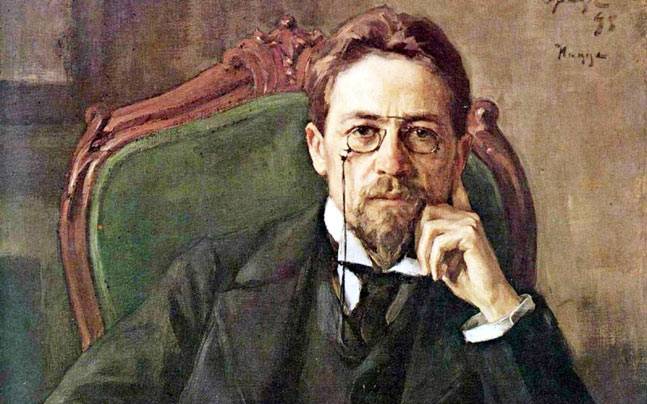
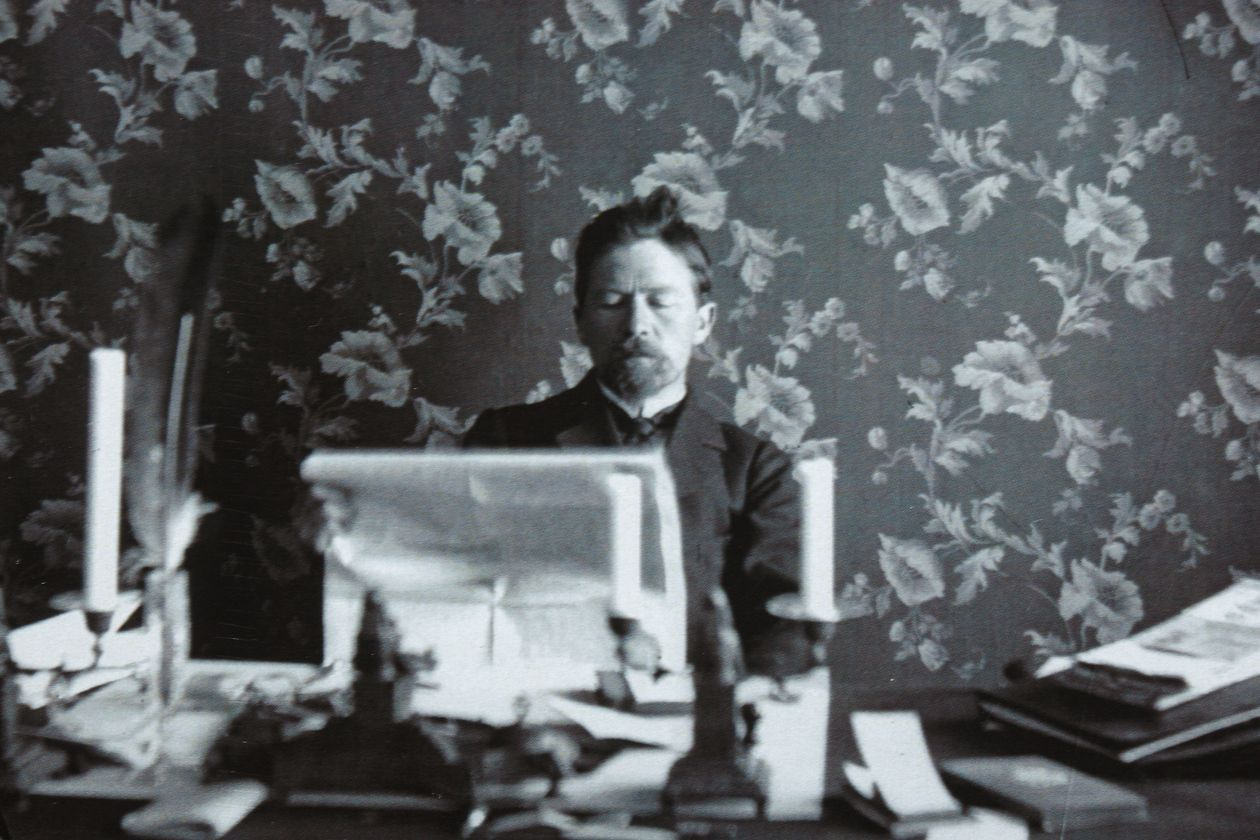
Most of the time, I have placed more emphasis on knowing and understanding the owner of the work than the work itself. So I would like to put aside the story that I have been working on as a review for now, and mention a few general information about **Anton Chekhov**.
Anton Chekhov; he is not one of those writers who have spent such a long life. Therefore, he wrote all of his works, which are still popular today, in a forty-four-year life span. Of course, if we leave the fourteen years of this forty-four-year life as childhood, only thirty years remain.
So what made Anton Chekhov so special that he became one of the masters of the art of writing unique stories?
Chekhov; He was born in 1860 as one of the middle children of a family of four children. I don't know if history reminds you of anything, but Darwin's The Origin of Species was also published in 1859. So you can understand that this is the period of Karl Max, Darwin and Lenin. Chekhov, whose father was a grocer by profession, started his first profession as an apprentice with his father. (**I think it is a good profession for its time, where you can communicate with people**)
He wrote his first stories during his high school years. (Man in sheath, Literature Teacher) From Doctor to Author Chekhov shared many stories and articles in local magazines and newspapers during his university years. After graduating from college, he published his first book, Melbourne's Tales. Another point that attracted my attention was that his main profession was being a doctor. I guess that he conveyed his professional experiences and events as a story, when I saw the stories he wrote at that time such as "Fugitive" and "Lifeless corpse", I realized that I was not mistaken in this prediction.
We can say that Chekhov does not have a political opinion and does not interfere with meat and milk. I also think that the years **1886-1887** are special. Because in both years, Chekhov wrote a book. Therefore, we can say that that period was the most productive and productive period for Chekhov. He is said to be close friends with Lev Tolstoy and Maksim Gorky. I was even surprised to learn that the letters between Maxim Gorky and Anton Chekhov were put into a book under the title "Correspondence".
I can actually understand that. Because musicians know other musicians, painters other painters. That's why it's normal to have good friendships with several different authors. But I believe that this friendship can be seen in the works that have emerged. Because if we think that they are in an exchange of ideas with each other, it is very common for them to influence and be inspired by each other. Now that we know a little about the author, we can move on to our stories.
I will first examine the story of the Ambassador, which we chose from Anton Chekhov's book "**Woman with a Dog**".
Since I am not sure whether you have read the story or not, I would like to tell you in synopsis format, but I found something much better. It is the short film of the story. It's a bit more than a nine-minute amateur, but I liked it overall. Of course, since it is an adaptation, it is also normal that it does not exactly match the words in the book. I invite you to hit the play button, so as not to say that I haven't seen a short film based on Anton Chekhov's story in this mortal world. If you think that I will not waste my precious time with a short film of nine minutes and continue reading from the bottom line, do not tell me, but continue reading where you left off.
One thing in particular caught my attention in this story of Anton Chekhov called The Ambassador. We usually come across a beginning like this in stories: Once upon a time .. This is actually a preliminary stage. But Chekhov, on the contrary, stumbled into the story and made the following entry:
**Shhht… Let's go to the doorman's room, not here...**
Who is the doorman, what is not, who will he go with? Therefore, with an intriguing introduction, it manages to attract the attention of the reader from the very first line. After that, the characters continue to play. However, since the conversations between the characters do not reflect their feelings and thoughts sufficiently, Anton steps in as a narrator and gives us information about the development process of the events. Of course I don't see this as just giving information. This situation also contributes to the fact that the story is based on solid foundations. So, after the characters talk to each other, Anton gets in again every time. I think this detail is critical for story writers. Apart from that, Anton's unique ability to describe stands out in our story.
**For example, the following section in the last paragraph of the third page:**
Dezdemonov combed his hair, straightened his vest, covered his mouth with his hand, coughed, then walked. At that moment, the feeling that the character is a real character is at its peak. Because this action is an action that most of us do in such situations.
 @boydnorris5