Coins and Altcoins: Who Is Who?
The term altcoin is used very differently and everyone seems to have their interpretation. That sparked a lot of discussions. Why is that and how can we easily differentiate between a Coin and an Altcoin?
The Altcoin Definition: A tiny and subtle little difference
The term altcoin is a combination of the two words alternative and coin. Depending on your position and attitude towards the crypto scene, the question: "What is an altcoin?" can be answered very differently. However, there are three possible and popular answers:
1. Bitcoin was the very first cryptocurrency. If you would ask a Bitcoin enthusiast, he would try to emphasize this point in his answer. So, for Bitcoin-lovers every other cryptocurrency other than Bitcoin is an Altcoin. But this answer is very formal and therefore also very unspecific.
2. The second possible answer takes into account the background and history of a cryptocurrency. In this case, every cryptocurrency that derived from Bitcoin or has used the Bitcoin source code for development is an Altcoin. Bitcoin was the first cryptocurrency and is also an open-source project. That means the code is available for everyone and can be used freely. This answer is a little more precise, but it doesn’t include coins that were created completely independently and without the use of Bitcoin's Blockchain.
3. Finally, a third possible answer is: Any cryptocurrency that fulfills the same function as Bitcoin is an Altcoin. Bitcoin was developed primarily as a store of value. As a result, all cryptocurrencies that were developed only for transactions and financial means can be declared as Altcoins. Tokens would be excluded in this case, as they have no intention of being a currency - I will explain more about Tokens in the next part of this article - This explanation is very specific and, in contrast to the second formulation, also takes into account projects that are not based on Bitcoin but pursue the same or very similar goals.
The only commonality that all 3 formulations share is that Bitcoin is not an altcoin. With its pioneering position, Bitcoin is accepted as a point of comparison and differentiated from the Altcoins.
Why do we have Altcoins anyway?
As already mentioned, the term Altcoin stands for Alternative Coin. Altcoins are therefore alternatives to Bitcoin. Bitcoin as the first cryptocurrency was an absolute pioneer and opened a world that did not exist before. As you might imagine, when developing a whole new territory, problems arise that one could not have foreseen in advance. The same thing happened to Bitcoin. The most famous hurdles that Bitcoin was facing include:
Scaling problems. These lead to a slower transaction rate
Inefficient mining, which in the long term becomes a burden on resources and the environment
High transaction fees
This is where the altcoin developers come in. They intend to offer a better solution than Bitcoin.
A less flattering, but not entirely out of hand, justification for Altcoins is the financial aspect. Bitcoin has made millions in profits for its developers and investors. Understandably, others want to imitate this success. Nevertheless, to date, no altcoin has managed to surpass Bitcoin's market capitalization.
Some examples of Altcoins
Depending on which formulation for Altcoins you use, the list of cryptocurrencies that belong here can be very different. In the following, I will ignore the first formulation, because in this case, every conceivable crypto-project would be on this list. I will rather list some Coins that fit for formulation 2 or 3. However, the list is by no means complete and could be expanded as required. I will only mention a few well-known projects as an example:
• Bitcoin Cash
• Ripple
• Litecoin
• NEM
• Dash
• Monero
Why is Ether not an altcoin?
You might be wondering why Ether is not on my list. Ethereum is one of the most successful Crypto-Projects. But its currency Ether is not listed here, and especially not as an Altcoin for a lot of reasons:
1. Ethereum has its own blockchain.
2. Strictly speaking, the currency Ether is not a coin, but a token. So, it is primarily not a currency, but an instrument.
3. Ethereum was not developed as a store of value or a means of payment and is not planned as such. Ether is used to develop other blockchain projects and DApps.
Ether does not meet any of the conditions described above to be classified as an Altcoin. Ethereum is by definition not an alternative to Bitcoin because intentions, functions, and technical architecture are completely different.
Conclusion
The term altcoin leaves a lot of room for interpretation. Nevertheless, altcoins are a great invention and can be an asset to the development of blockchain technology in the future.
Let’s Talk About Money History
Money makes the world go around, right? We don’t want to be dependent on money, but most people around the world can’t live without it. That’s a fact. Before cryptocurrencies occurred, there was only one kind of money that we knew - don’t confuse money with currency. We all had Fiat Money, although we probably didn’t know it was called this. But what is fiat money actually and how does it differ from crypto?
Fiat Money - Definition and history of origin
****Definition******: Fiat money is a legal payment supply regulated by the country's government and central banks. Today, most countries in the world use a fiat currency system. The strength and value of the currency mostly depend on the economic and political strength of the government behind it.**
Before such currency systems existed, people had to engage in barter. That means they had to exchange goods with one another. As you can imagine this was not always practical. For example, a farmer had to swap his harvest for the everyday things he needed. A blacksmith might trade his goods and services for groceries and so on. The more goods there were and the larger the parishes became, the more complicated the barter became. Later people went to mint valuable metals like gold or silver and other limited raw materials. These raw and valuable materials were then used to exchange for the stuff people needed.
**The first paper money has its origin in ancient China**. It was probably around the 11th century, in the province of Szechuan. Here paper was printed and issued as money for the first time. However, this paper money still wasn't real fiat money. Because this paper money could be exchanged for valuable raw materials such as gold, silver, and silk. It was not until the 13th century when the Mongolian ruler Kublai Khan came to power. He was the first ruler to introduce the fiat currency system and stopped trading systems backed by raw materials.
The rest of the world was getting a little late to the party. Europe started experimenting with fiat money in the 17th century. Another 200 years later, in the 19th century finally, also parts of North America began to deal with the concept of fiat money. The first results of the “fiat-money-experiments” differed a little from country to country. This is why not every country immediately switched to the fiat currency system but maintained its gold or silver standards.
It was not until 1972, during the presidency of Nixon, that the USA finally gave up the gold standard and introduced a currency system based exclusively on the fiat currency system. **After the USA had officially introduced its new currency system most other countries in the world also started adopting and developing their fiat currencies.**
How does fiat money work?
It is often wrongly assumed that fiat money is automatically the same as paper money. As shown above, paper money can also be based on the gold standard system or any other commodity. For example, the gold standard would mean, that the government can only spend as much paper money as it owns in gold. However, this is not the case with fiat currencies, there is no physically tangible equivalent for which the money could be exchanged. And here is the point, where we get to the explanation of the term fiat.
**Fiat comes from the Latin language and means something like "it should" or "it should happen"**. This makes sense because **fiat money has no intrinsic value in itself**. Fiat money draws its value solely from the nominal value given by the government to it. **The concept is based on the trust, reputation, and economic strength of the issuing government**. And this is why some currencies are stronger or more valuable than others. Because the country and economy behind this currency are stronger.
Advantages and Disadvantages of Fiat Money
While the concept of fiat money has been used for several centuries, economists still disagree on whether it is the best solution. The following points speak in favor of a fiat currency system:
• **Inexpensive**: Printing paper money is significantly cheaper than minting silver and gold coins.
• **Flexible**: When systems like the gold standard still prevailed, banks and governments were severely restricted in their freedom of action. Because they could only spend as much paper money as their limited raw material reserves allowed. With fiat currencies, central banks now have more opportunities to influence the supply of credit, liquidity, and the flow of money in the country and to dampen negative effects on the economy.
• **International**: Since most of the countries in the world use the fiat currency system and recognize each other's currencies, it makes international trading much easier.
But fiat money has some important disadvantages, which can’t be ignored anymore, such as:
• **No backup**: Since fiat currencies have no intrinsic value, their assigned value is based solely on trust in the government. If the government and central banks fail, paper money automatically loses its value and, in the worst case, is completely worthless. Because there are no real reserves, as mentioned above like gold or other raw material, that would secure them.
• **Less stability**: Compared to cryptocurrencies Fiat money is less volatile. That means its value remains relatively constant. But systems such as the gold standard offer the most value stability. Because gold is a limited raw material and therefore always has a certain value.
• **Inflation**: Since fiat money has no intrinsic value, central banks could print any amount of money. One such case occurred in Zimbabwe in the early 2000s. The country wanted to solve its grave economic problems by printing large amounts of money. This reckless act soon showed its negative consequences. Because only a few years later it came to **hyperinflation, which was between 230 and 500 billion percent**. The Zimbabwe dollar became almost worthless due to the enormous supply, both in its own country and compared to other fiat currencies. The example of Zimbabwe is just one of many and represents the most dramatic case of hyperinflation.
In my next article, I’m planning to go deeper into details and explain more on Fiat money, Digital money, and Cryptos, if you are interested! I hope you enjoyed the article and it was informative.
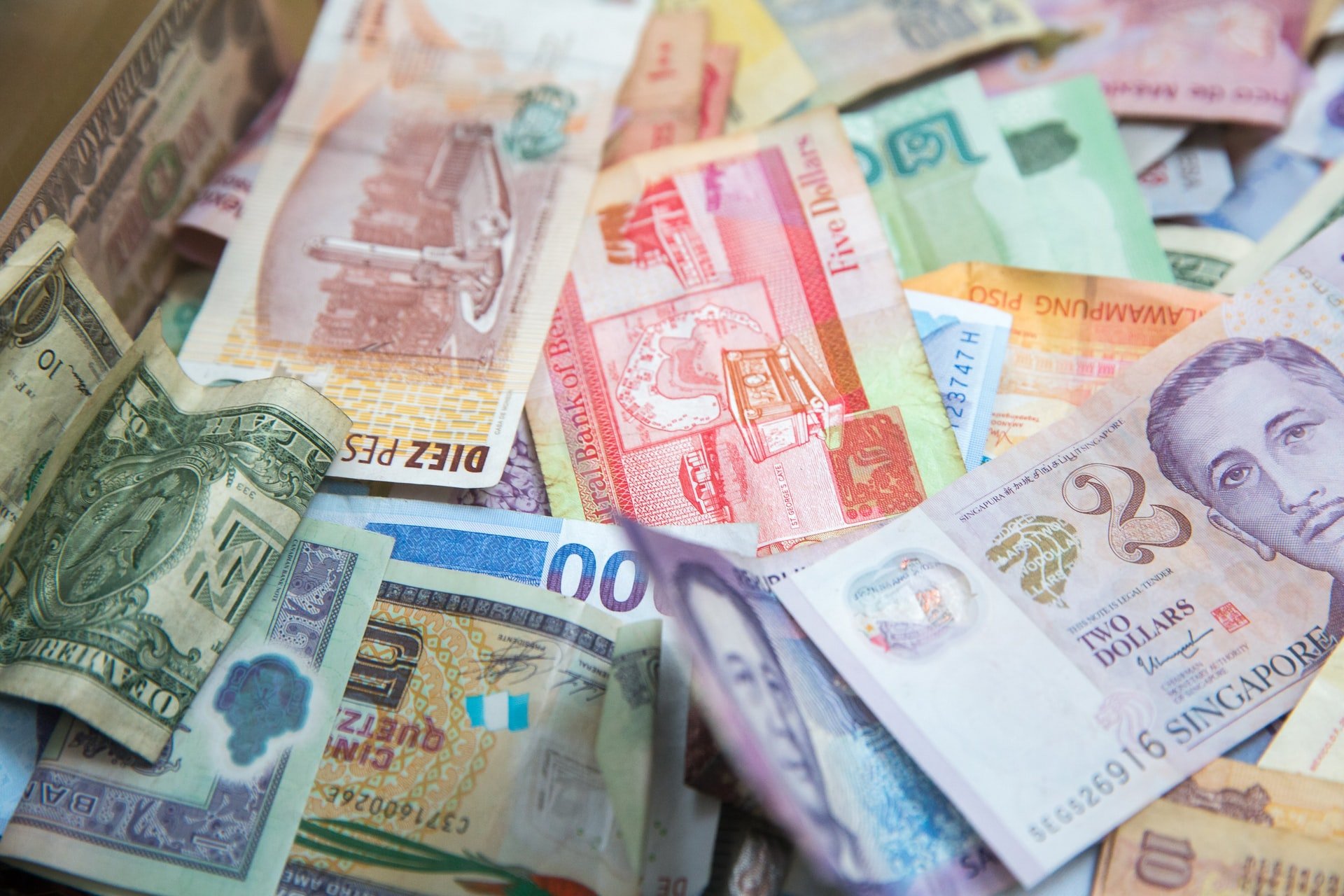
*Lead image by Jason Leung on Unsplash https://unsplash.com/@ninjason?utm_source=unsplash&utm_medium=referral&utm_content=creditCopyText https://unsplash.com/s/photos/currencies?utm_source=unsplash&utm_medium=referral&utm_content=creditCopyText
Hello Read.cash*ers. I wanted to write a new article today, but got busy with other work, unfortunately. Nevertheless it's also a bit hard for me to decide, what to write about. I usually work as an "on-demand" or ghostwriter. So, most of the time I am writing for others.
These days I was thinking about using a random generator, which I can feed with ideas and topics. That would make deciding for a topic way easier for me, to be honest.
What do you think? Would that be a way of choosing a subject to write about for you, or do you prefer a different approach? I will probably give it a try, as soon as I am done with my current project.
Eye flicker causes, symptoms, and possible diseases
Facing sudden visual disturbances can make you feel insecure. A frequently observed phenomenon is eyes flickering. If it comes together with other symptoms, the uncertainty increases. What eye flickering means, what are the typical causes, when do you have to get treatment, and many other important questions on this topic, I will answer in this article.
Eye flickering vs. Visual snow
There is a huge difference between eye flickering and visual snow, or visual static. Because of the names, these two visual disorders are often mistaken. Visual snow is a neurological condition. Affected individuals often see little black or white dots. It can be limited to a certain region or it can affect the entire field of vision. This visual disorder can occur even with your eyes closed. You have a similar perception if, for example, you look into a light source or in the direction of the sun for a short time. Then you can often see the shape of this light source or some highlighted points in your visual sight. This light source has overstimulated the optic nerves and you will see the shape of the light source even with your eyes closed. Usually, the effect wears off again after a maximum of 30 minutes. However, if it lasts longer than 30 to 60 minutes or occurs more frequently, this can be an indication of a serious illness.
Eye flickering, eye twitching, or in a medical term called Blepharospasm on the other hand doesn’t affect your vision necessarily. It makes the muscles of the eyelid tremble uncontrollably. Most often it only affects one eyelid or just the upper part of it.
What are the possible causes of eye flickering?
There can be many causes for eye flicker. Doctors and scientists assume that a temporary circulatory disorder is responsible for this phenomenon. In most cases, the reasons for eye twitching are harmless. The decisive clue is not necessarily the intensity of the eye twitch, but rather the frequency and possible accompanying symptoms. The following factors are possible causes of eye flicker:
Stress, overwork. Especially if you spend too much time in front of electronic devices.
Lack of sleep or a poor sleep hygiene
Malnutrition: A lack of vitamin A, in particular, can cause various visual disturbances, including flickering eyes.
For a person with diabetes, flickering eyes can be a sign of fluctuations in blood sugar levels
Often, eye flicking and blurred vision in the distance occur in people who have developed myopia. So, it can also be a sign, that you need to wear glasses or you don’t have the right glass.
It can be a symptom of various diseases of the eyes, heart, and blood vessels
Migraines or eye migraines
Some medications and drugs can also have this effect
What are typical symptoms of eye flicker?
The eye flicker occurs only in very rare cases. Most often it is accompanied by the following symptoms:
Headache
Nausea
Dizziness
Sensitivity to light
Those affected feel very exhausted during or immediately after it and complain of fatigue
Pain and tension in the neck, back, arms or legs are also possible
When do we talk of ocular migraine?
If the eye flicker occurs more frequently, this could be a sign of an ocular migraine. In most cases, the visual disturbances only last five to ten minutes. In very rare cases, the symptoms can last for half an hour or more. Often the ocular migraine set in suddenly. It can be accompanied by symptoms such as dizziness and headache, but these are not always necessary. The visual disturbances always affect both eyes.
What other diseases can these visual disturbances indicate?
As already mentioned, the fibrillation of the eyes is in itself unpleasant for those affected, but it is not a severe illness. However, if it occurs more frequently or is accompanied by other symptoms, it can be a sign of various diseases, such as:
Eye disorders: inflammation of the choroid, retina, vitreous humor, or the optic nerves. It can also indicate glaucoma, also known as glaucoma.
Heart and vascular diseases: Permanently high blood pressure, arteriosclerosis, heart failure, inflammation of the heart, heart valves, and heart muscles
Migraines
Apoplexy
What treatment options are there?
Since there are different causes of fibrillation, the measures for treating the complaints also differ, of course.
In the event of a nutritional deficiency, for example, it can make sense to adjust the diet or, in acute cases, to take nutritional supplements.
There is no specific treatment for ocular migraines. Those affected have to find out which factors trigger the symptoms and try to avoid them as much as possible.
If it is inflammation of the eye, the doctor must first determine what is causing it and can prescribe appropriate medication such as antibiotics or antimycotics.
If the reason is high blood pressure, antihypertensive medication can help.
If glaucoma is responsible for the symptoms, treatment can be more extensive. First of all, eye drops and medication can help reduce the increased pressure in the eye.
In the case of serious illnesses or severe damage to the eye, such as an impending retinal detachment or acute cases of glaucoma, laser surgery can be useful.
How do you prevent eye flicker?
If the flickering of the eyes is stress-related, a change in everyday life and slowing down can already help to get rid of the symptoms. If you work at the computer screen for a long time, you should plan a break of 15 minutes after about a maximum of two hours of work. During this time, you ideally leave your desk to completely detach yourself from the screen. Relaxation exercises can also be helpful. In addition, many underestimate the importance of sleep in this context. A steady sleep rhythm is not only important for the regeneration of the brain, but also of the eyes. These measures will also help you against other diseases that can cause eye flickers.


The Seven Lazy Brothers
The fairy tale of the Bremen Town Musicians is very well known, but probably only a few know the fairy tale of the seven lazy ones. Today I would like to summarize this story for you in my own words because it has a very special message.
Once upon a time, there was a man in Bremen who owned a lot of lands. But his lands were beyond the city walls and were very sandy and often flooded. Therefore the soil was not very fertile. His hay harvest was only enough for one goat and apart from a little cabbage, he couldn't grow anything. The man and his wife had seven strong sons. But instead of helping out, the sons preferred to spend their time watching other people work and lazing around. So the man's sons were soon known throughout the city as the seven lazy ones.
But at some point, the brothers got bored with doing nothing and the food became less and less. The poor father was also getting older. So the seven brothers decided to ask for work at the neighboring farms. But their bad reputation from the past preceded them. No one wanted to hire and feed a slacker. So the brothers had no choice but to go out into the world and look for work in other cities.
Many years later the brothers returned to their hometown. There was great excitement in town. Because everyone wanted to know what had become of the seven lazy ones. The brothers came back with lots of new equipment and got to work the next day. They dug a drainage ditch and built a dam. The soil quality improved and the hay harvest was better than ever. But the neighbors were suspicious of the brothers' work and said, “The old father was hardworking. He got knee-deep into the water and cut off every meager blade of grass. But his sons are lazy, they take it easy and don't feel like working. "
The yields on the land were so good that just a few months later the sons were able to build a large house next to their father's little house. Again the people said: “Oh, those lazy brothers. They don't want to restrict themselves and are not humble.”. As the brothers gradually got married, every one of them built his own house. Until at some point there were seven houses in a row. They planted orchards and vegetable gardens. And after that, they built a paved road to their houses so that when the weather was bad they would not carry the dirt into their homes. They lined the street with lanterns and trees. Whenever a stranger came into town and admired the street with the beautiful houses, the neighbors would only say: "Oh, this is the street of the seven lazy ones."
Although the brothers only worked half as much as the other people in town, their wealth grew steadily. They didn't have to guard their fields at night to keep the rabbits away from the vegetables, because they had put up a fence around their garden. They planted a lot of trees around their houses, so they wouldn't have to go into the forest to collect firewood. They built a nice well in the middle of their street so that they didn't always have to run to the river to fetch water. And yet they were called the seven lazy ones in town. Because in the opinion of the neighbors, everything the brothers did was just a way of avoiding work.
The moral of this story is, if you work smart, you will have to work less hard in the long term and still be successful. But you could also say: laziness creates innovation!
Hope you enjoyed it!
 @TravelArtist