Earn Bitcoin cashback automatically with Pei! Why wouldn't you!?
Pei – Mobile Application https://getpei.app.link/invite?code=khhuax
An additional way for you to earn some Bitcoin cashback is by linking your existing cards to Pei. https://getpei.app.link/invite?code=khhuax
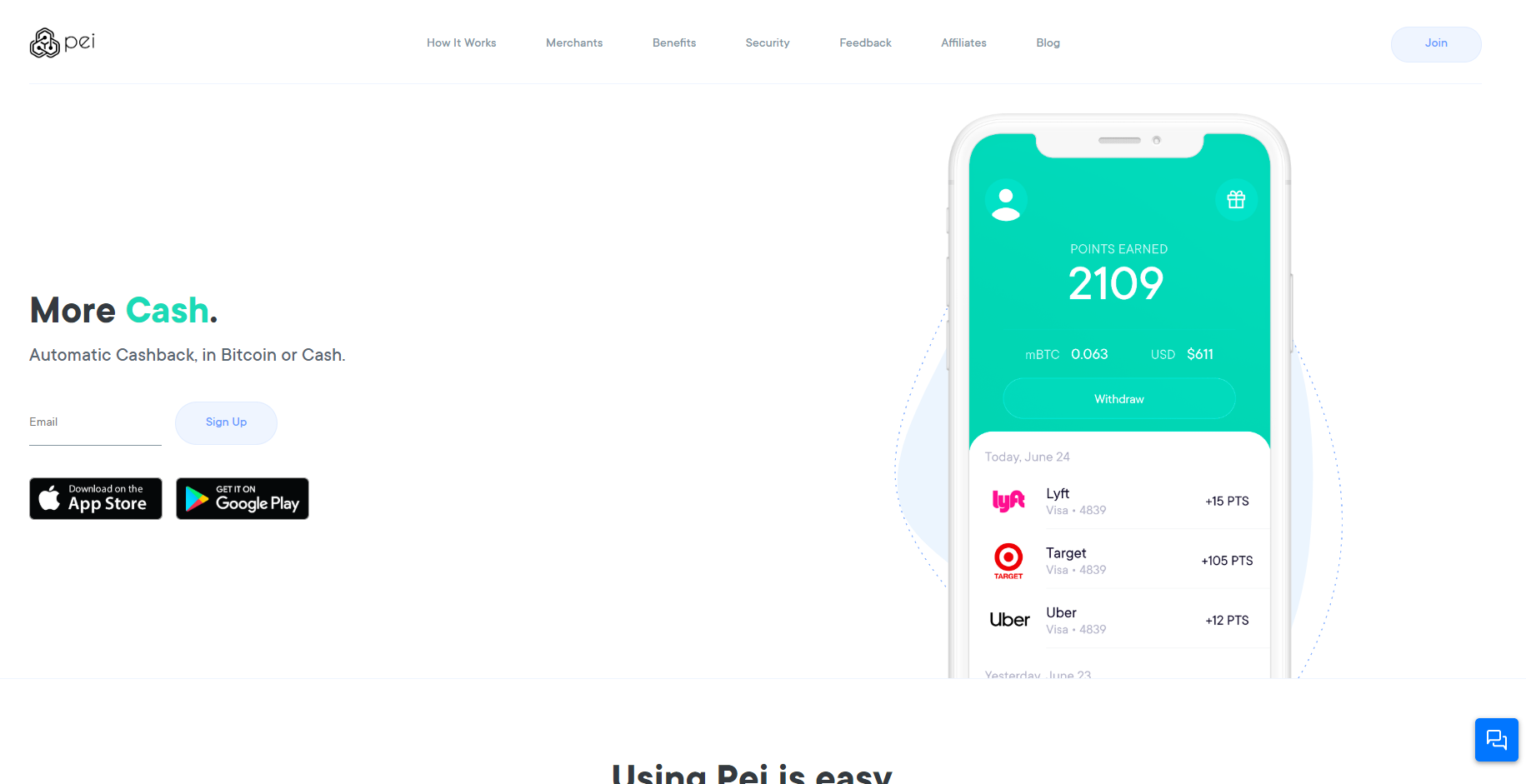
Pei is a mobile application that links to your existing debit and credit cards and returns you automatic cashback for extra savings in Bitcoin or USD (Paypal or gift card). https://getpei.app.link/invite?code=khhuax
Pei launched in 2018 and since then they have gained quite the following. You won’t be hearing many people saying they hate the app. No can hate getting cashback, especially when Pei has made it so easy.
You just simply link your cards to your Pei account and the next time you shop at a partner merchant using that linked card, Pei will automatically return your cashback rewards! https://getpei.app.link/invite?code=khhuax
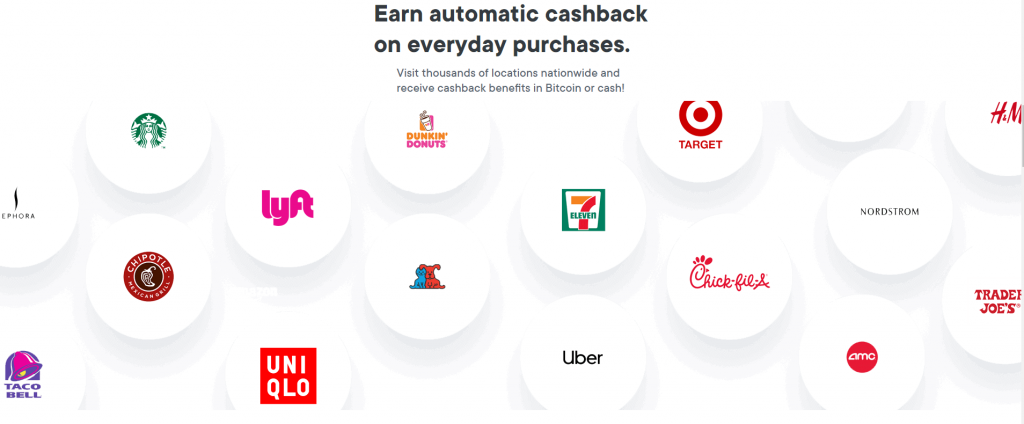
Pei is affiliated with over 60,000 locations nationwide and thousands of retailers, from Target to Trader Joe’s to Sephora, which gives you ample opportunities to earn cash back pretty much all the time, any time you shop. https://getpei.app.link/invite?code=khhuax
By linking your card, you don’t have to worry about loading coupons, in-app purchases, or scanning receipts. You also don’t need to worry about buying a specific item, which can be the case for some cashback apps.
If you pick up some socks at Walmart or a latte at Starbucks you’ll earn cashback.
Pei takes care of everything for you and lets you earn your cash back in an easy and passive way. Pei basically turns your regular debit or credit card into a cashback card. https://getpei.app.link/invite?code=khhuax
If you are concerned about security, keep in mind that Pei uses bank-level 256-bit encryption to keep your information secure. Your privacy is also protected by utilizing 2-factor authentication when linking your debit or credit card. https://getpei.app.link/invite?code=khhuax
So far I’m really liking the Pei app and the cashback opportunities it provides. I’ve found the app easy to use, the earnings available quickly and haven’t had any glitches so far with the interface. https://getpei.app.link/invite?code=khhuax
*Does the* *Pei* *app sound like something you want to try? If so, be sure to* *download it here* *and use our affiliate code “****khhuax****” to* ***receive a $2.50 bonus****!* https://getpei.app.link/invite?code=khhuax
Resources
https://tothemoon.blog/cryptocurrency/how-you-can-get-up-to-27-btc-cashback-online/
How to buy Bitcoin, Ethereum, and Bitcoin Cash anonymously!
Before Bitcoin became famous, people used to believe that Bitcoin was anonymous. But because everything is recorded on a publicly shared ledger (the blockchain), it is actually not anonymous at all! https://tothemoon.blog/tag/bitcoin/ https://tothemoon.blog/tag/blockchain/
If you leave a digital trail (such as buying bitcoins with an ID), then it is only a matter of time and resources to identify transactions on Bitcoin’s blockchain that belong to you.
So, you’re not a criminal, why should this matter to you anyway? Well, I like to think of it in terms of banks. Would you want to give people access to the information contained in your bank account? How much money you have, where you spend it, etcetera? I doubt it.
And that’s why more and more people are finding ways to enhance their anonymity when they interact with the Bitcoin network. Lots of people want to know how they can get Bitcoins without using an ID.
To support such demands, some companies offer anonymous buying/selling of bitcoins. And there also are certain tricks and tips one should follow to stay anonymous.
So to fulfill the needs of such users, today I am going to discuss some of the best ways to buy bitcoins without an ID.
But one needs to keep in mind that nothing is a free lunch, and this extra anonymity comes with a cost. Using these resources will typically increase the cost you pay per Bitcoin 1% to 10%.
So, let’s get in to it.
Paxful https://tothemoon.blog/friends/paxful/
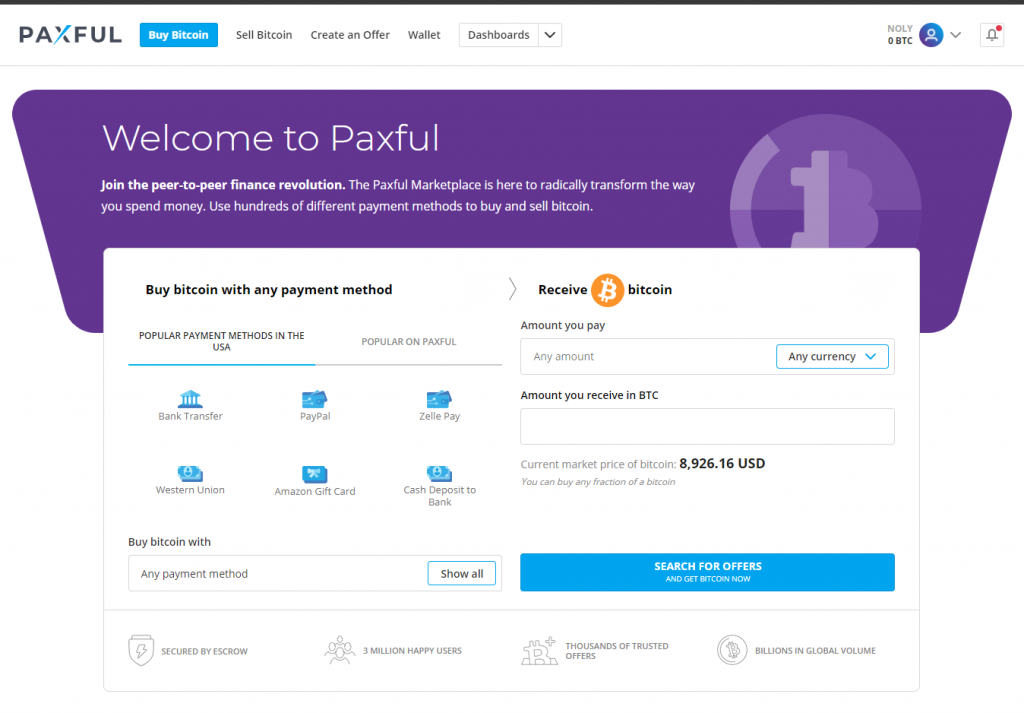
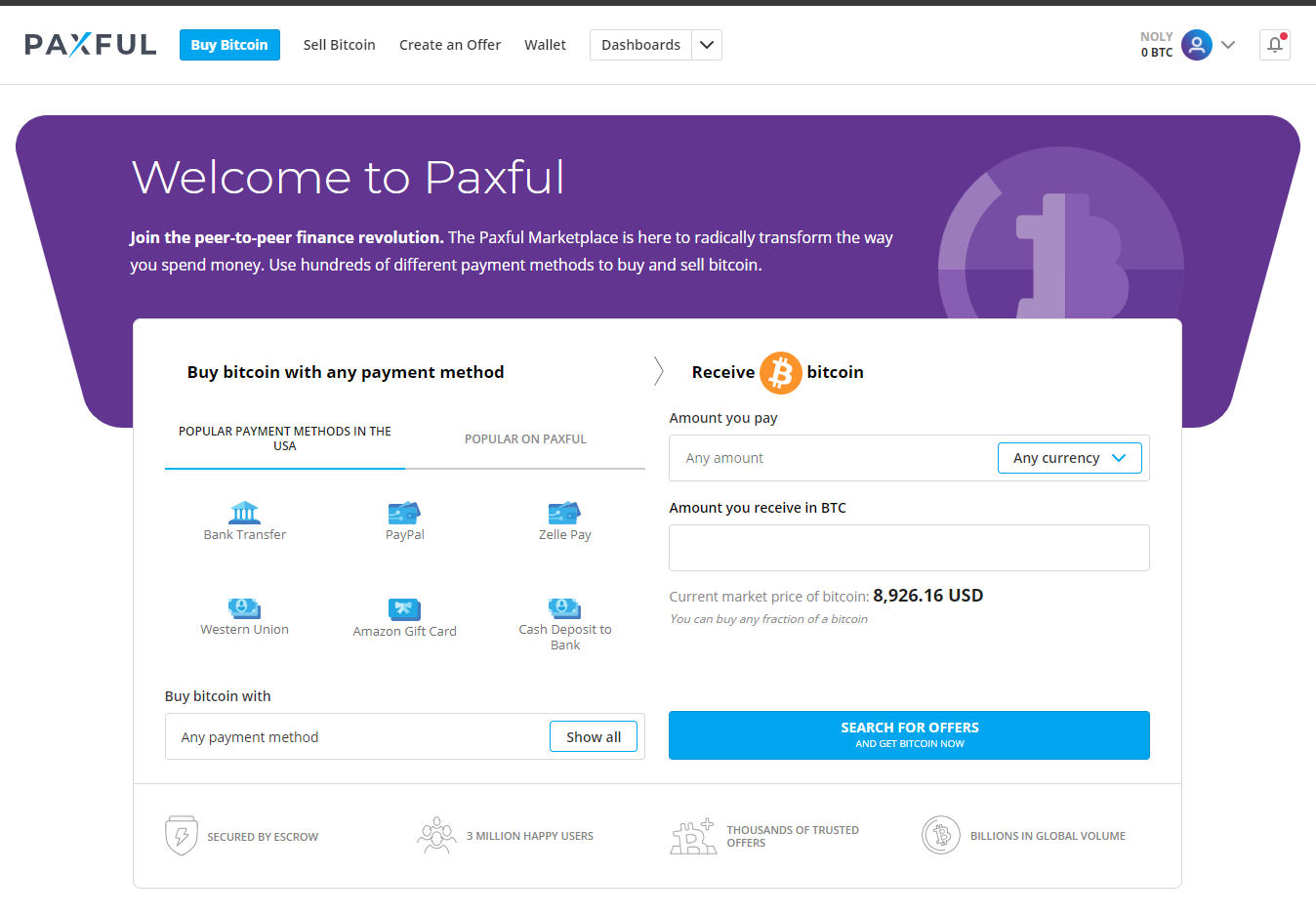
First up on my list is Paxful. Paxful is a peer-to-peer (P2P) marketplace that allows users to buy and sell Bitcoin safely. https://tothemoon.blog/friends/paxful/
Paxful brings users the ability to buy Bitcoins with almost any conceivable payment method from Paypal to iTunes gift cards and more. https://tothemoon.blog/friends/paxful/
Paxful also provides an escrow service for all Bitcoin transactions. Once a buyer finds a seller and the offer is accepted by the seller, the Bitcoin are automatically moved from the vendor’s wallet to escrow. https://tothemoon.blog/friends/paxful/
At this point, the seller can’t cancel the trade. However, the buyer has a limited time frame to deliver the money to the seller and mark the payment as ‘complete. If the buyer fails to do that in the given time frame, the deal will be auto-cancelled and the Bitcoin will be returned to the seller’s wallet.
When both the buyer and the seller have verified that the transaction has been confirmed and all the terms have been met, the money will be released to the buyer’s wallet and the deal will be concluded.
If at any point there will be a disagreement between the two parties, the process will move along to dispute. Paxful moderators will then investigate all the info, consider all the available details and finally make a decision to whom the bitcoins will be awarded. https://tothemoon.blog/friends/paxful/
Having said that, in most cases transactions go through smoothly thanks to Paxful’s intense moderation that clamps down on potential scammers.
Local Bitcoin.com https://tothemoon.blog/friends/local-bch/
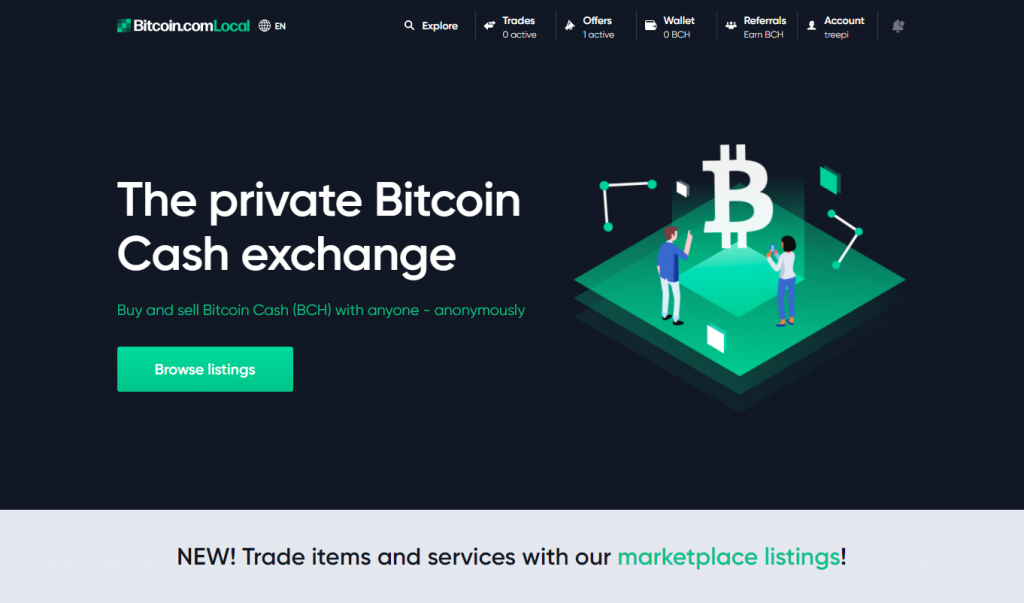
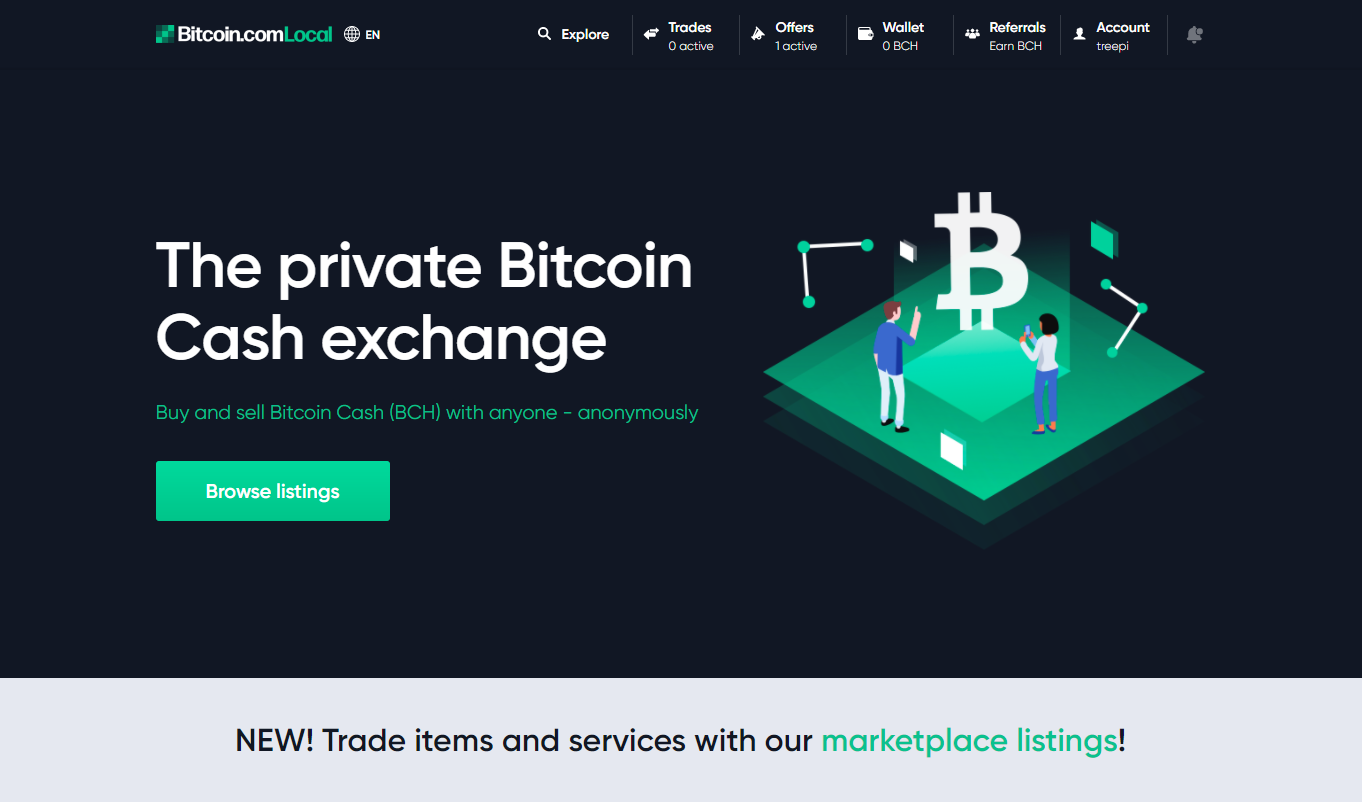
Bitcoin.com features a P2P system nearly identical to that of Paxful. https://tothemoon.blog/friends/local-bch/
However, the main difference here is that instead of a P2P market that allows users to buy and sell Bitcoin (BTC), Bitcoin.com’s market is for the exchange of Bitcoin Cash (BCH).
Bitcoin.com Local allows many types of payment methods. These range from in-person to PayPal to Western Union to gift cards. If it involves money, odds are it’s on there. https://tothemoon.blog/friends/local-bch/
Like Paxful as well, Bitcoin.com Local also features an escrow system to help protect buyers and sellers from potential scams. https://tothemoon.blog/friends/paxful/ https://tothemoon.blog/friends/local-bch/
I personally have no experience with their P2P market, but I’m sure it’s just as good as the rest.
LocalCryptos https://tothemoon.blog/friends/local-cryptos/
And now, the newer member of this list, LocalCryptos! https://tothemoon.blog/friends/local-cryptos/
LocalCryptos is a newer competitor in the P2P crypto exchange scene. Like Paxful and Bitcoin.com Local, LocalCryptos offers various payment options from paypal, to gift cards, to cash in the mail. https://tothemoon.blog/friends/local-cryptos/ https://tothemoon.blog/friends/paxful/ https://tothemoon.blog/friends/local-bch/
LocalCryptos offers the same escrow security feature that helps protect both buyers and sellers. https://tothemoon.blog/friends/local-cryptos/
But, what makes LocalCryptos different is that you can purchase more than just Bitcoin from them. They ***also offer P2P trades for Ethereum*** and are planning to add more coins to this list in the future! This gives them a nice advantage over the other marketplaces mentioned in this article. https://tothemoon.blog/friends/local-cryptos/
Conclusion
If you care about anonymity like I do, these peer-to-peer markets allow the purchasing and selling of Bitcoin (BTC), Bitcoin Cash (BCH), and Ethereum (ETH) in a safe and effective manner.
These markets also allow you to make a little bit of extra money by selling at a premium on the market price.
I have used these services for a few years now and have never been scammed. But, there are definitely scammers out there. Though they are easy to detect, in my opinion.
***NEVER make transactions outside of these systems. If a seller asks you to do this, IT IS A SCAM. Always make sure that the sellers funds are in escrow first before sending any payments.***
Enjoy!
*Original post from my blog:* *https://tothemoon.blog/cryptocurrency/how-to-buy-crypto-anonymously/*
Exclusive 35% Bitcoin Bonus for My Readers on PrimeXBT!
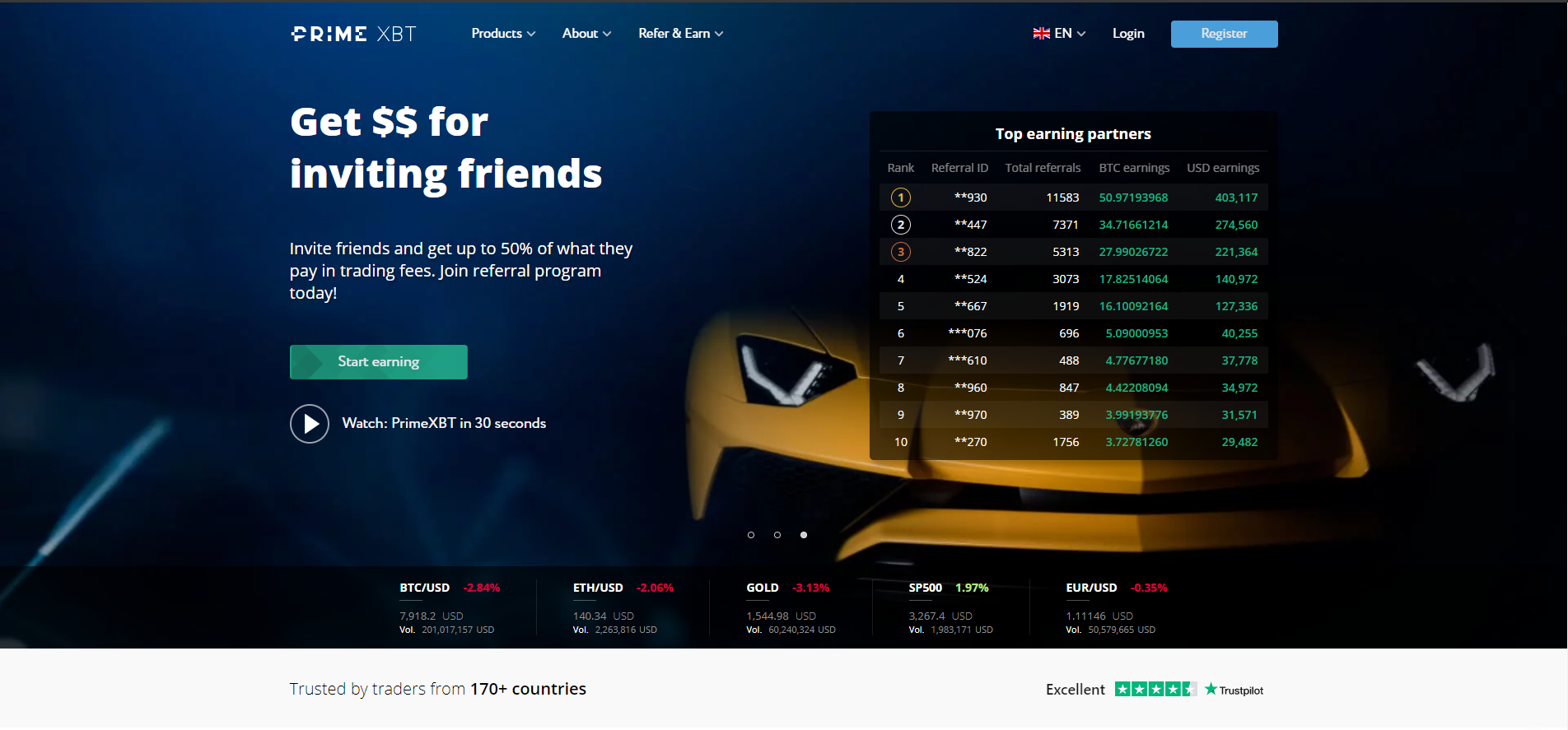
PrimeXBT is a crypto leverage trading platform that allows users to deposit Bitcoin and speculate on the price movements of not just cryptocurrencies, but traditional assets as well.
PrimeXBT offers 100x leverage on its cryptocurrency trading products, which feature Bitcoin, Ethereum, Ripple, Litecoin, EOS, indicies like NASDAQ, S&P500, and more, forex, and commodities like gold and silver.
The platform operates on a crypto in, crypto out basis and traders can set up their account quickly with no KYC verification required. PrimeXBT has an average trading volume of $375 million per day and has users in over 170 countries from all around the world.
Get 35% Bitcoin deposit bonus
PrimeXBT is now running an attractive Bitcoin deposit bonus program for ***TTM readers***. Traders can bolster their account with 35% extra Bitcoin when depositing 0.001 BTC or more. The bonus will help you enter a bigger position and it will also be counted when the platform is calculating liquidation levels.
Step 1
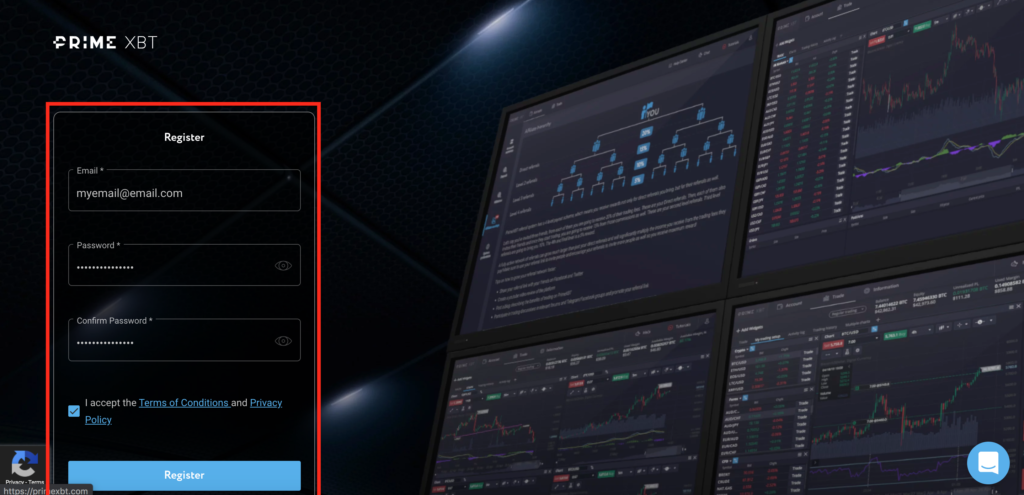
First up, you have to register on Prime XBT by using this referral link: go.primexbt.com/click?pid=643&offer_id=12. There is no KYC required on sign up and it only takes 40 seconds to complete. Once you’ve signed up, you’re ready to move onto the next step to receive the bonus. https://go.primexbt.com/click?pid=643&offer_id=12&l=1570530968
Step 2
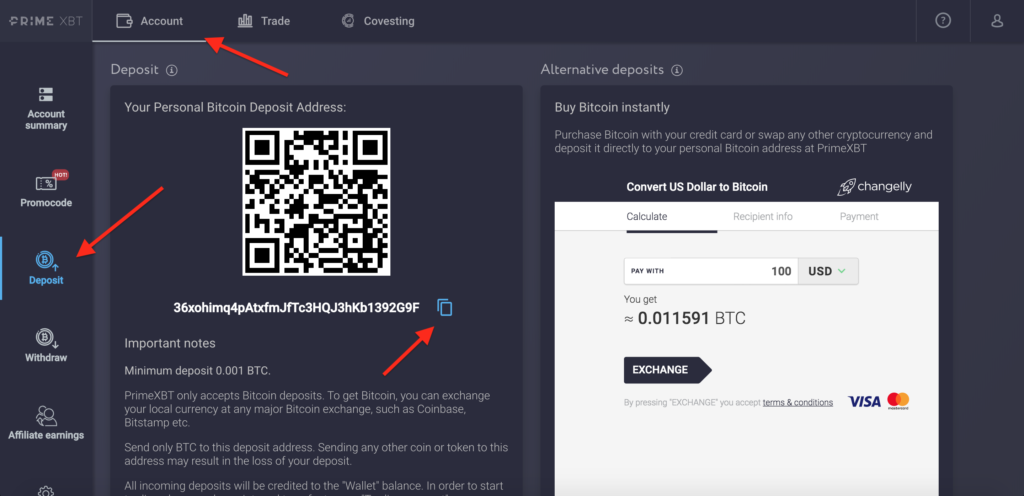
To be eligible for the PrimeXBT bonus, you have to **deposit a minimum of 0.001 BTC** onto the exchange. To deposit on PrimeXBT, login to your account and go to the ‘**Deposit**‘ tab. If you deposit less than 0.001 BTC, you will not be able to claim the 35% bonus.
**Important** **Note:** You can deposit more than 0.01 BTC and there is no maximum amount you can receive from the deposit bonus. *For example; if you deposit 1 BTC, you will get a 0.35 BTC bonus*. ***This applies to all deposits made in the next 30 days!***
Step 3
Once your deposit has confirmed on your account, you can go ahead and activate the bonus. To do this; make sure you are logged into your account, click the ‘**Promocode**‘ button found in the left sidebar of the ‘Account’ tab. You should now see a place to enter promocodes.
Simply type ‘***tothemoon***‘ into the promocode box to receive your bonus!
*Prime XBT Bonus Code:* ***tothemoon***
**Note:** Enter your promocode ***BEFORE*** making a deposit to ensure you get the bonus! *You will also receive a bonus on ALL deposits made for the next 30 days!*
*Be sure to join the official* *To The Moon Telegram Group**,* *subscribe to our mailing list* *for notifications (in the right sidebar), and follow us on* *Twitter**!* https://t.me/tothemoonblog https://tothemoon.blog/subscribe-for-notifications/ https://twitter.com/tomoonwhenlambo
*Original post from my blog:* *https://tothemoon.blog/news-and-announcements/35-deposit-bonus-on-primexbt-ttm-exclusive/*
Bitcoin Cash Proposal Suggests “Miner Tax”
A heavily controversial funding proposal from Jiang Zhuoer (CEO of BTC.TOP, the largest BCH mining pool based in China) has raised concerns of centralization among the community. https://medium.com/@jiangzhuoer/infrastructure-funding-plan-for-bitcoin-cash-131fdcd2412e
Zhuoer has suggested that 12.5% of Bitcoin Cash coinbase block rewards should be redirected into a “development fund.”
The fund is a Hong Kong corporation that has been set up to legally accept and disperse funds which would be used to pay for development contributions to full node implementations as well as other critical infrastructure according to the blog post.
The proposal is to implement this plan into Bitcoin Cash’s protocol upgrade in mid-May. It would receive roughly 112.5 BCH per day which is about 20,588 BCH over six months. https://tothemoon.com/tag/bch/
At today’s prices, the BCH fund would receive slightly less than $7 million in total though the post estimated it at $300 per BCH which is roughly $6 million or so.
Until this BTC.top proposal, BCH block rewards were owned by the miner who discovered them, but this plan would send 12.5% of the rewards to a Hong Kong based corporation that would disperse the funds.
A failure to pay will lead to block orphaning — which would mean they’re off the main chain. In other words, miners that refuse to pay this tax will have their miner blocks
In a new twist, an anonymous group of BCH miners released a statement in which they threatened to create their own chain if BTC.TOP did not reconsider its tax proposal by May 15, 2020. https://read.cash/@shadow-kwh/bch-dev-fund-a-response-from-an-opposing-mining-group-see-update-inside-4397e64b
Bitcoin.com stepped in stating that it would not support any new plans until a broader consensus was reached, which helped calm the situation a bit. The anonymous group agreed to refrain from starting its own competing pool for now. https://read.cash/@Bitcoin.com/update-on-developer-funding-83695ebc
What should happen?
The current situation of forcing a tax upon miners is definitely not an ideal one. I’ve heard people refer to this funding proposal as a “donation” to a development fund. However, the word donation implies voluntary action. This is not a voluntary donation or tax.
One possible solution is to follow the recent suggestion Charlie Lee has made to Litecoin. The idea Lee has suggested is a 1% voluntary donation. https://ihodl.com/topnews/2020-01-27/litecoin-creator-proposes-miners-donate-1-ecosystem-development/ https://tothemoon.com/tag/litecoin/
The 1% voluntary donation removes the act of force and allows those that support the proposal to donate. It also allows those that are not in favor of such tax to opt-out. A win-win for both sides.
Another solution I’ve had in mind is to use a funding proposal system similar to the Steem Proposal System (SPS). In the Steem system, ideas are written out and voted on. If an idea passes the voting threshold, it is then funded using the accumulated funds saved.
The problem with this is acquiring the funds to fund these proposal. But, if there are a large group in favor of taxing, then they must be willing to donate to something like this as well right? Plus, any users of the BCH ecosystem that are interested in funding the development of the project could donate too. https://tothemoon.com/tag/bch/
The SPS could be implemented with a smart-contract. It would operate very similarly to a DAO so no single party is responsible for handling and distributing the funds.
Conclusion
Though the proposal has been highly controversial, there are some merits to it.
Funding development of BCH is essential. However, forcefully taxing miners is not the ideal solution in my opinion.
I’ve laid out my two possible solutions. I’d be interested in hearing what others have to say and how they think this should be handled. It will be interesting to see how this all unfolds in the future. Hopefully the right decision gets made that can compromise with both groups.
*Be sure to follow me, join the official* *To The Moon Telegram Group**, subscribe to our mailing list for notifications (in the right sidebar), and follow/sub us on* *Twitter* *&* *YouTube**!* https://t.me/tothemoonblog https://twitter.com/tomoonwhenlambo https://www.youtube.com/channel/UCiSQLua-nWlfOV0JDVIaG9A
*Original post from my blog:* *https://tothemoon.blog/cryptocurrency/bitcoin-cash-proposal-suggests-miner-tax/*
Seven Trading Platforms Hold More Than $25 Billion in BTC and ETH
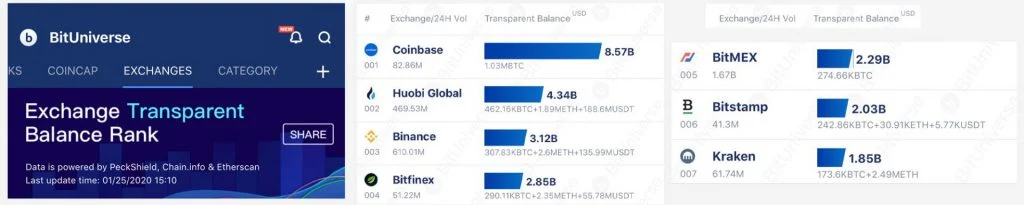
About a month before the “Proof-of-Keys” day, news.Bitcoin.com reported on the vast number of coins centralized exchanges held in reserve. The list was provided by Bituniverse using the firm’s Exchange Transparent Balance Rank (ETBR). https://www.bituniverse.org/
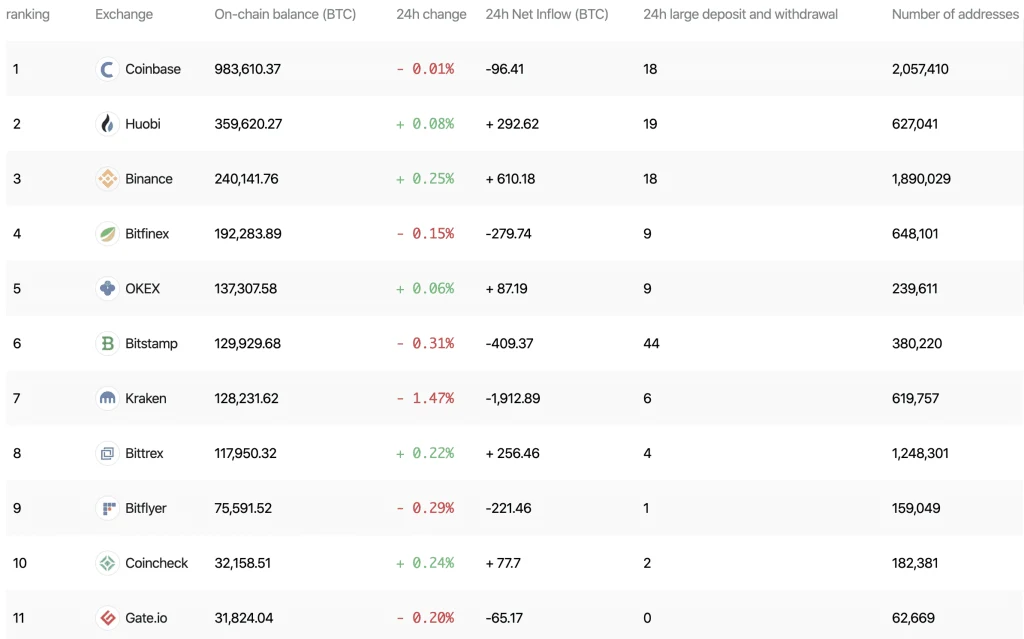
The ETBR list had shown that Coinbase held roughly 966,000 BTC during the first week of December 2019. The ETBR report from Bituniverse shows the San Francisco-based exchange now has 1.03 million BTC ($8.5 billion) held in reserves. The data from Bituniverse stems from on-chain exchange balances recorded by Etherscan and Peckshield. https://tothemoon.blog/friends/coinbase/ https://etherscan.io/ https://blog.peckshield.com/research.html
Exchange data from the Bituniverse app.
We can also take a look at Chain.info‘s exchange data. Below we can see similar data to that of Bituniverse. Chain.info shows Coinbase holding roughly 980,000 BTC at the time of writing. In second we have Huobi with 359,000 BTC, followed by Binance with 240,000 BTC. https://chain.info/exchanges https://tothemoon.blog/friends/coinbase/ https://tothemoon.blog/friends/binance/
As a broker and an exchange, and one that can claim it has never been hacked in addition to being perhaps the oldest one in the above list with a focus on the US market, that Coinbase is the biggest custodian of bitcoin is perhaps not surprising.
One of the more shocking details about this data is the amount Coinbase holds in comparison to the others. Huobi, who comes in at #2, holds only 1/3rd of the amount of Coinbase.
The amounts held by these exchanges is staggering. The top 7 exchanges hold the equivalent of over $25 billion USD. Though most of the top exchanges hold a large amount of these assets in cold storage, it is still highly irresponsible of the users to leave their assets stored on these exchanges.
Your odds of losing your funds to hack are much higher if they are sitting in an exchange wallet vs. a personal wallet. ***Only keep what you need on there and put it in your wallet as soon as it’s no longer needed.***
Exchange data from Chain.info. https://chain.info/exchanges
In combination the top five exchanges have about 10% of the total supply at about 2 million Bitcoin, and the top 10 have 2.5m BTC in their possession.
That aligns with other stats that suggest just 10% of the supply sets the price, but as this is only a limited number of exchanges that does not include things like Bithumb, we’d estimate probably around 30% of the total supply is on exchanges, and maybe circa 50% is under third party custodians.
Exchange hacks in 2019 are a record high.
Despite not having a hack on the magnitude of 2018’s Coincheck hack ($534 million), hacks of exchanges have increased according to a Chainalysis report. https://blog.chainalysis.com/reports/cryptocurrency-exchange-hacks-2019
The Chainalysis report also highlighted that malicious hackers are becoming smarter.
2019 saw more cryptocurrency hacks than any other year. But of the 11 attacks that occurred this year, none of them came close to matching the scale of major heists such as 2018’s $534 million Coincheck hack.
Chainalysis – https://blog.chainalysis.com/reports/cryptocurrency-exchange-hacks-2019
Last year digital currency exchanges lost approximately “$283 million worth of cryptocurrency” due to breaches and malicious hackers.
The fact that less money has been stolen overall is a good sign. It indicates that exchanges may be becoming more sophisticated in how they store their assets. However, I **ALWAYS** recommend that you never leave your assets on an exchange. ***Only keep what you need on there and put it in your wallet as soon as it’s no longer needed.***
*Be sure to follow me, join the official* *To The Moon Telegram Group**, subscribe to our mailing list for notifications (in the right sidebar), and follow/sub us on* *Twitter* *&* *YouTube**!* https://t.me/tothemoonblog https://twitter.com/tomoonwhenlambo https://www.youtube.com/channel/UCiSQLua-nWlfOV0JDVIaG9A
*Original post from my blog:* *https://tothemoon.blog/cryptocurrency/seven-trading-platforms-hold-more-than-25-billion-in-btc-and-eth/*
PornHub utilizes crypto to bypass Paypal ban
Pornhub models can now accept the US dollar stablecoin Tether (USDT) as payment. In a recent statement, Pornhub said that adding the cryptocurrency was a direct response to PayPal’s decision to cut off payments to models in November 2019. https://tothemoon.blog/tag/tether
According to Tron CEO Justin Sun, it will use the TRON variant of USDT, building on Pornhub’s existing partnership with TRON.
“This is a brilliant way to support the victims of centralized payment platforms like PayPal,” tweeted Sun. https://twitter.com/justinsuntron/status/1220120275884396544
Models on pornographic video site Pornhub can now accept the US dollar stablecoin Tether (USDT) as payment. In a statement, Pornhub said that adding the cryptocurrency was in direct response to PayPal’s decision to cut off payments to models in November 2019.
According to Tron CEO Justin Sun, it will use the TRON variant of USDT, building on Pornhub’s existing partnership with TRON.
“This is a brilliant way to support the victims of centralized payment platforms like PayPal,” tweeted Sun. https://twitter.com/justinsuntron/status/1220120275884396544
In addition to the USDT announcement, Pornhub mentioned that it now supports Cosmo Payment, a digital (fiat) payments network that supports the adult industry. It has also added support for direct deposits for Australia and Puerto Rico.
It’s not just models who can use crypto; It’s also possible to buy Pornhub membership in three cryptocurrencies: Horizen (ZEN), TRON (TRX), and Verge (XVG). https://tothemoon.blog/tag/zen https://tothemoon.blog/tag/trx https://tothemoon.blog/tag/xvg
When PayPal made its decision to cut off PornHub models, Verge spiked in volume and value. Within 24 hours of the announcement, it increased in value by around 31%. Volume rose from around $1-2 million prior to the announcement, to over $20 million. Alas, within ten days the price had fallen lower than it was before the news broke.
Though the porn industry may not be the most glamorous, they have been early adopters of technology. It’s also a multi-billion dollar industry which gives huge exposure to these projects. Especially now that Paypal has banned Pornhub.
It happened for the VHS, if you’re old enough to remember those. And it happened again for DVD, and the porn industry even was the deciding factor in the recent Blu-ray versus HD-DVD format wars a decade ago.
Overall, Pornhub saw a whopping 78.9 billion video views through 2014, which considerably surpasses last year’s 63.2 billion. Specifically, this breaks down to 18.35 individual visits to the site over the course of the year, translating to about 5800 visits per second. However you look at it, that’s a lot of people getting busy on Pornhub!
Pornhub Insights
PornHub also offers models a short tutorial on how to use the new technology to set up a wallet, and generate a mnemonic phrase.
The porn industry could help bring cryptocurrencies to the forefront by slowly educating the masses on its existence and use. Though the porn industry isn’t a hot topic in conversation, it’s no secret that it is *extremely* popular.
The fact the adult industry itself is often shrouded in secrecy makes it a perfect place for cryptocurrency adoption to occur silently.
Even Bitcoin itself saw much of its early adoption take place via the Silk Road dark web marketplace, where drugs, weapons, and more could be purchased illegally using the cryptocurrency. https://tothemoon.blog/tag/bitcoin
But unlike Silk Road that lived in darkness, PornHub is among the top 50 largest websites in the world, ranked globally. The platform receives visits from millions upon millions of users from around the globe. https://en.wikipedia.org/wiki/List_of_most_popular_websites
If major sites like PornHub and others regularly bring visibility to crypto assets like Tron, Tether, and others, it could be a major boon for the space.
In the past, other porn brands have also allowed users to pay for content via cryptocurrencies, and many crypto assets themselves are designed for use across the porn industry.
*Be sure to follow me, join the official* *To The Moon Telegram Group**, subscribe to our mailing list for notifications (in the right sidebar), and follow/sub us on* *Twitter* *&* *YouTube**!* https://t.me/tothemoonblog https://twitter.com/tomoonwhenlambo https://www.youtube.com/channel/UCiSQLua-nWlfOV0JDVIaG9A
*Original post from my blog:* *https://tothemoon.blog/cryptocurrency/pornhub-utilizes-crypto-to-bypass-paypal-ban/*
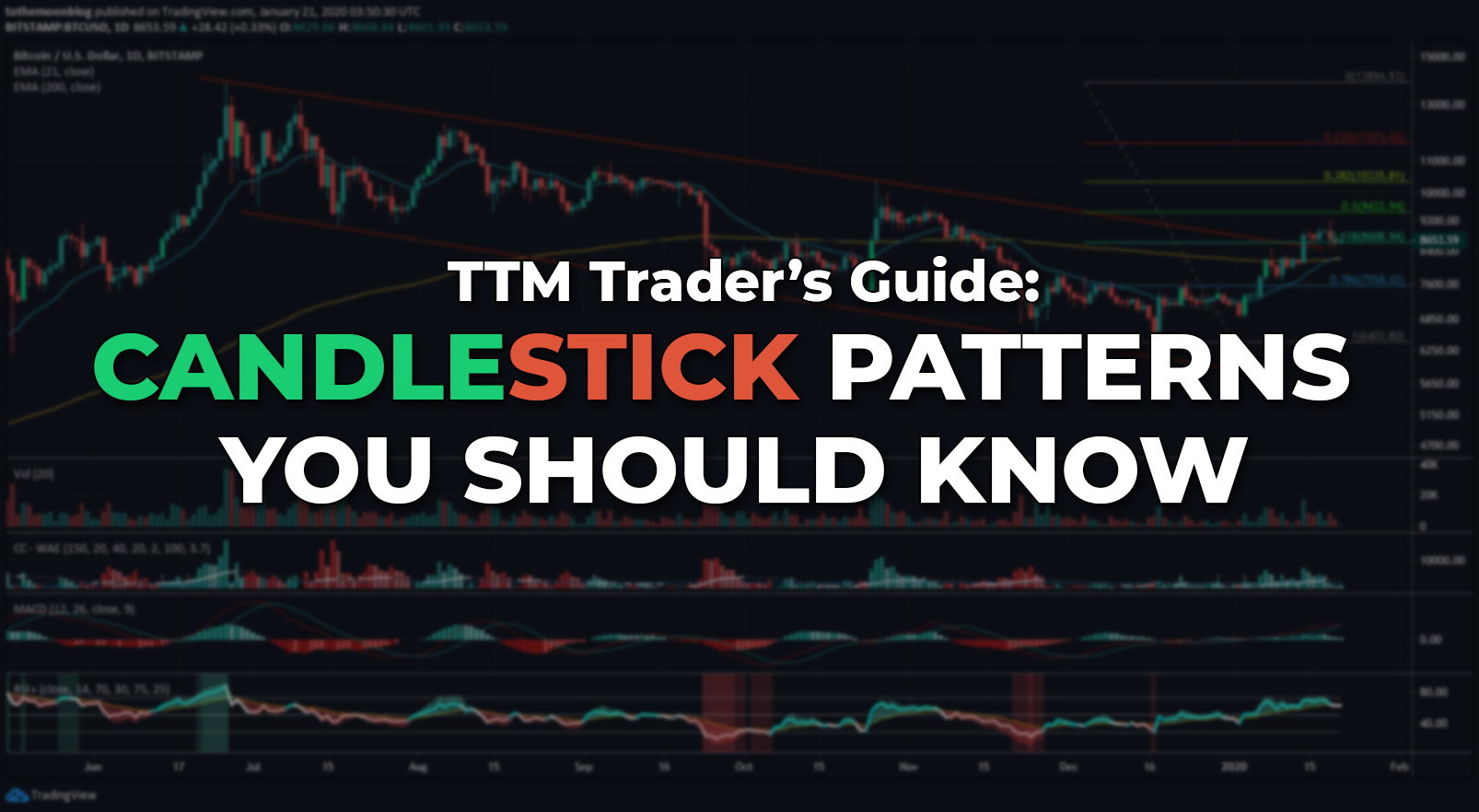
TTM Trader’s Guide: Candlestick patterns YOU should know
Candlestick patterns are used to predict the future direction of price movement. Here we have 16 of the most common types of candlestick patterns. Discover what they mean and how you can use them to identify new trading opportunities and trends.
What are candlesticks?
The Japanese began using technical analysis to trade rice in the 17th century. While this early version of technical analysis was different from the US version initiated by Charles Dow around 1900, many of the guiding principles were very similar: https://school.stockcharts.com/doku.php?id=market_analysis:dow_theory
The “what” (price action) is more important than the “why” (news, earnings, and so on).
All known information is reflected in the price.
Buyers and sellers move markets based on expectations and emotions (fear and greed).
Markets fluctuate.
The actual price may not reflect the underlying value.
According to Steve Nison, candlestick charting first appeared sometime after 1850. Much of the credit for candlestick development and charting goes to a legendary rice trader named Homma from the town of Sakata. It is likely that his original ideas were modified and refined over many years of trading, eventually resulting in the system of candlestick charting that we use today.
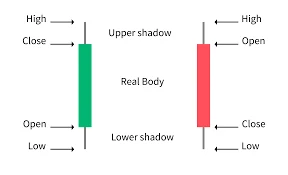
A candlestick is a way of displaying information about an asset’s price movement. Candlestick charts are one of the most popular components of technical analysis, enabling traders to interpret price information quickly and from just a few price bars.
Candlesticks on a chart have three basic features:
**The body,** which represents the open-to-close range. This is the thick part of the candle.
**The wick**, or shadow, that indicates the intra-day high and low. Shows as a thin line above and below the candle body.
**The color**, which reveals the direction of market movement; a green (or white) body indicates a price increase, while a red (or black) body shows a price decrease.
Over time, individual candlesticks form patterns and trends that traders can use to recognize major support and resistance levels. There are many candlestick patterns that indicate an opportunity within a market – some provide insight into the balance between buying and selling pressures, while others identify continuation patterns or market indecision.
Before you start trading, it’s important to familiarize yourself with the basics of candlestick patterns and how they can inform your decisions.
*It is also important to note that these patterns should not be used alone. Always use them in conjunction with other forms of* *technical analysis**!* https://tothemoon.blog/tag/technical-analysis/
Bullish candlestick patterns
Bullish patterns may potentially form after a market downtrend, and signal a reversal of price movement. They are an indicator for traders to consider opening a long position to profit from any upward trajectory.
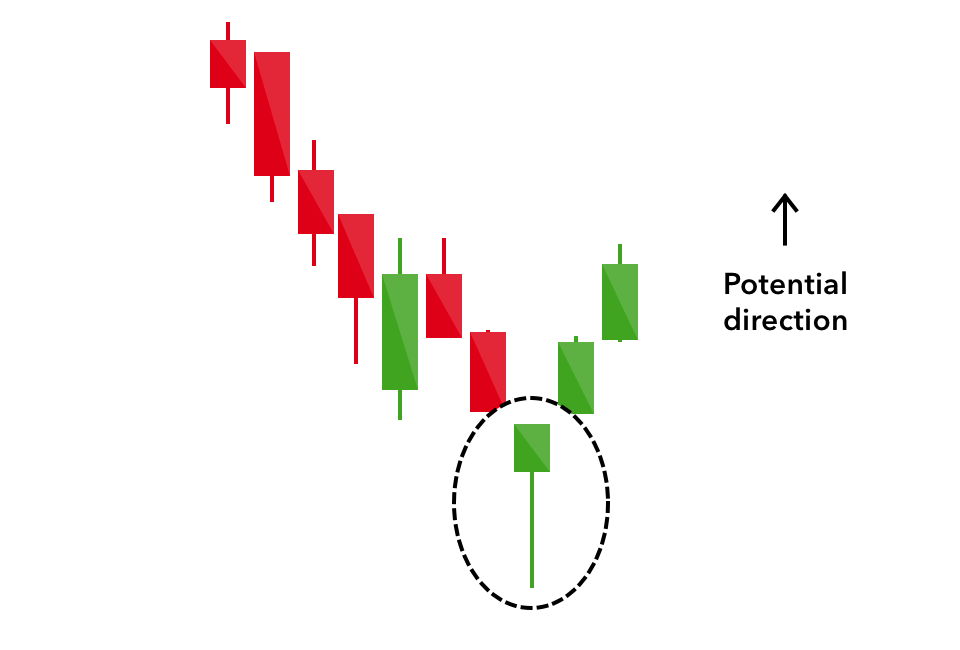
Hammer/Hanging Man
The hammer candlestick pattern is formed of a short body with a long lower wick, and is found at the bottom of a downward trend.
A hammer shows that although there were selling pressures during the day, ultimately a strong buying pressure drove the price back up. The colour of the body can vary, but green hammers indicate a stronger bull market than red hammers.
Inverse hammer/hanging man
A similarly bullish pattern is the inverted hammer. The only difference being that the upper wick is long, while the lower wick is short.
It indicates a buying pressure, followed by a selling pressure that was not strong enough to drive the market price down. The inverse hammer suggests that buyers will soon have control of the market.
Bullish engulfing
The bullish engulfing pattern is formed of two candlesticks. The first candle is a short red body that is completely engulfed by a larger green candle.
Though the second day opens lower than the first, the bullish market pushes the price up, culminating in an obvious win for buyers.
Piercing line
The piercing line is also a two-stick pattern, made up of a long red candle, followed by a long green candle.
There is usually a significant gap down between the first candlestick’s closing price, and the green candlestick’s opening. It indicates a strong buying pressure, as the price is pushed up to or above the mid-price of the previous day.
Morning star
The morning star candlestick pattern is considered a sign of hope in a bleak market downtrend. It is a three-stick pattern: one short-bodied candle between a long red and a long green. Traditionally, the ‘star’ will have no overlap with the longer bodies, as the market gaps both on open and close.
It signals that the selling pressure of the first day is subsiding, and a bull market is on the horizon.
Three white soldiers
The three white soldiers pattern occurs over three days. It consists of consecutive long green (or white) candles with small wicks, which open and close progressively higher than the previous day.
It is a very strong bullish signal that occurs after a downtrend, and shows a steady advance of buying pressure.
Bearish candlestick patterns
Bearish candlestick patterns usually form after an uptrend, and signal a point of resistance. Heavy pessimism about the market price often causes traders to close their long positions, and open a short position to take advantage of the falling price.
Hanging man
The hanging man is the bearish equivalent of a hammer; it has the same shape but forms at the end of an uptrend.
It indicates that there was a significant sell-off during the day, but that buyers were able to push the price up again. The large sell-off is often seen as an indication that the bulls are losing control of the market.
Shooting star
The shooting star is the same shape as the inverted hammer, but is formed in an uptrend: it has a small lower body, and a long upper wick.
Usually, the market will gap slightly higher on opening and rally to an intra-day high before closing at a price just above the open – like a star falling to the ground.
Bearish engulfing
A bearish engulfing pattern occurs at the end of an uptrend. The first candle has a small green body that is engulfed by a subsequent long red candle.
It signifies a peak or slowdown of price movement, and is a sign of an impending market downturn. The lower the second candle goes, the more significant the trend is likely to be.
Evening star
The evening star is a three-candlestick pattern that is the equivalent of the bullish morning star. It is formed of a short candle sandwiched between a long green candle and a large red candlestick.
It indicates the reversal of an uptrend, and is particularly strong when the third candlestick erases the gains of the first candle.
Three black crows
The three black crows candlestick pattern comprises of three consecutive long red candles with short or non-existent wicks. Each session opens at a similar price to the previous day, but selling pressures push the price lower and lower with each close.
Traders interpret this pattern as the start of a bearish downtrend, as the sellers have overtaken the buyers during three successive trading days.
Dark cloud cover
The dark cloud cover candlestick pattern indicates a bearish reversal – a black cloud over the previous day’s optimism. It comprises two candlesticks: a red candlestick which opens above the previous green body, and closes below its midpoint.
It signals that the bears have taken over the session, pushing the price sharply lower. If the wicks of the candles are short it suggests that the downtrend was extremely decisive.
Continuation candlestick patterns
If a candlestick pattern doesn’t indicate a change in market direction, it is what is known as a continuation pattern. These can help traders to identify a period of rest in the market, when there is market indecision or neutral price movement.
Doji
When a market’s open and close are almost at the same price point, the candlestick resembles a cross or plus sign – traders should look out for a short to non-existent body, with wicks of varying length.
This doji’s pattern conveys a struggle between buyers and sellers that results in no net gain for either side. Alone a doji is neutral signal, but it can be found in reversal patterns such as the bullish morning star and bearish evening star (if a doji appears after a long red or green candle, this could indicate the movement is losing pressure and ready to reverse).
Spinning top
The spinning top candlestick pattern has a short body centred between wicks of equal length. The pattern indicates indecision in the market, resulting in no meaningful change in price: the bulls sent the price higher, while the bears pushed it low again. Spinning tops are often interpreted as a period of consolidation, or rest, following a significant uptrend or downtrend.
On its own the spinning top is a relatively benign signal, but they can be interpreted as a sign of things to come as it signifies that the current market pressure is losing control.
Falling three methods
Three-method formation patterns are used to predict the continuation of a current trend, be it bearish or bullish.
The bearish pattern is called the ‘falling three methods’. It is formed of a long red body, followed by three small green bodies, and another red body – the green candles are all contained within the range of the bearish bodies. It shows traders that the bulls do not have enough strength to reverse the trend.
Rising three methods
The opposite is true for the bullish pattern, called the ‘rising three methods’ candlestick pattern. It comprises of three short reds sandwiched within the range of two long greens. The pattern shows traders that, despite some selling pressure, buyers are retaining control of the market.
Practice reading candlestick patterns
The best way to learn to read candlestick patterns is to practice entering and exiting trades from the signals they give. This can only be earned through real world experience.
Many exchanges offer *simulated trading* accounts which give you simulated money to practice trading with in real markets! Open an account on Bybit to take advantage of their simulated trading platform. I **always** recommend that new traders do this before risking any real money. https://tothemoon.blog/friends/bybit/
When using any candlestick pattern, it is important to remember that although they are great for quickly predicting trends, they **should not** be used alone. It’s always best to use them alongside other forms of technical analysis to confirm an overall trend.
*Be sure to join the official* *To The Moon Telegram Group**,* *subscribe to our mailing list* *for notifications (in the right sidebar), and follow us on* *Twitter**!* https://t.me/tothemoonblog https://tothemoon.blog/subscribe-for-notifications/ https://twitter.com/tomoonwhenlambo
*Original post from my blog:* *https://tothemoon.blog/trading/ttm-traders-guide-candlestick-patterns-you-should-know/*
TTM now has push notifications!
I have been working extra hard behind the scenes to optimize this blog.
I have now added a plugin that will prompt new readers to subscribe and receive our push notifications. This was done to help increase content delivery by prompting users who choose to receive notifications whenever we make a new post.
There may still be some kinks. If you do not see the prompt, double check your settings and make sure notifications are allowed. However, I have not noticed any problems with it yet myself. But, if you do find one, please let me know ASAP so I can get it fixed!
There is also a red bell located in the bottom right corner which also allows you to opt-in.
So, go ahead and **hit that subscribe button** to stay up to date on crypto news and trading!
Enjoy!
*Also, be sure to join the official* *To The Moon Telegram Group**,* *subscribe to our mailing list* *for notifications (in the right sidebar), and follow us on* *Twitter**!* https://t.me/tothemoonblog https://tothemoon.blog/subscribe-for-notifications/ https://twitter.com/tomoonwhenlambo
*Original post from my blog:* *https://tothemoon.blog/news-and-announcements/ttm-now-has-push-notifications/*
How to buy crypto anonymously
Before Bitcoin became famous, people used to believe that Bitcoin was anonymous. But because everything is recorded on a publicly shared ledger (the blockchain), it is actually not anonymous at all! https://tothemoon.blog/tag/bitcoin/ https://tothemoon.blog/tag/blockchain/
If you leave a digital trail (such as buying bitcoins with an ID), then it is only a matter of time and resources to identify transactions on Bitcoin’s blockchain that belong to you.
So, you’re not a criminal, why should this matter to you anyway? Well, I like to think of it in terms of banks. Would you want to give people access to the information contained in your bank account? How much money you have, where you spend it, etcetera? I doubt it.
And that’s why more and more people are finding ways to enhance their anonymity when they interact with the Bitcoin network. Lots of people want to know how they can get Bitcoins without using an ID.
To support such demands, some companies offer anonymous buying/selling of bitcoins. And there also are certain tricks and tips one should follow to stay anonymous.
So to fulfill the needs of such users, today I am going to discuss some of the best ways to buy bitcoins without an ID.
But one needs to keep in mind that nothing is a free lunch, and this extra anonymity comes with a cost. Using these resources will typically increase the cost you pay per Bitcoin 1% to 10%.
So, let’s get in to it.
Paxful https://tothemoon.blog/friends/paxful/
First up on my list is Paxful. Paxful is a peer-to-peer (P2P) marketplace that allows users to buy and sell Bitcoin safely. https://tothemoon.blog/friends/paxful/
Paxful brings users the ability to buy Bitcoins with almost any conceivable payment method from Paypal to iTunes gift cards and more. https://tothemoon.blog/friends/paxful/
Paxful also provides an escrow service for all Bitcoin transactions. Once a buyer finds a seller and the offer is accepted by the seller, the Bitcoin are automatically moved from the vendor’s wallet to escrow. https://tothemoon.blog/friends/paxful/
At this point, the seller can’t cancel the trade. However, the buyer has a limited time frame to deliver the money to the seller and mark the payment as ‘complete. If the buyer fails to do that in the given time frame, the deal will be auto-cancelled and the Bitcoin will be returned to the seller’s wallet.
When both the buyer and the seller have verified that the transaction has been confirmed and all the terms have been met, the money will be released to the buyer’s wallet and the deal will be concluded.
If at any point there will be a disagreement between the two parties, the process will move along to dispute. Paxful moderators will then investigate all the info, consider all the available details and finally make a decision to whom the bitcoins will be awarded.
https://tothemoon.blog/friends/paxful/
Having said that, in most cases transactions go through smoothly thanks to Paxful’s intense moderation that clamps down on potential scammers.
Local Bitcoin.com https://tothemoon.blog/friends/local-bch/
Bitcoin.com features a P2P system nearly identical to that of Paxful. https://tothemoon.blog/friends/local-bch/
However, the main difference here is that instead of a P2P market that allows users to buy and sell Bitcoin (BTC), Bitcoin.com’s market is for the exchange of Bitcoin Cash (BCH).
Bitcoin.com Local allows many types of payment methods. These range from in-person to PayPal to Western Union to gift cards. If it involves money, odds are it’s on there. https://tothemoon.blog/friends/local-bch/
Like Paxful as well, Bitcoin.com Local also features an escrow system to help protect buyers and sellers from potential scams. https://tothemoon.blog/friends/paxful/ https://tothemoon.blog/friends/local-bch/
I personally have no experience with their P2P market, but I’m sure it’s just as good as the rest.
LocalBitcoins https://tothemoon.blog/friends/localbitcoins/
And now, the senior member of this list, LocalBitcoins! https://tothemoon.blog/friends/localbitcoins/
LocalBitcoins is the oldest and longest running of these P2P markets.
Like Paxful and Bitcoin.com Local, LocalBitcoins offers various payment options. However, they do offer the least amount of options as compared to the other 2 markets. https://tothemoon.blog/friends/paxful/ https://tothemoon.blog/friends/local-bch/ https://tothemoon.blog/friends/localbitcoins/
LocalBitcoins offers the same escrow security feature that helps protect both buyers and sellers. https://tothemoon.blog/friends/localbitcoins/
I have recently moved away from LocalBitcoins as they have begun to require KYC in some instances. Many sellers will require ID when using a service like PayPal for example. This pretty much defeats the purpose of the market. But, it is still a good option to consider. https://tothemoon.blog/friends/localbitcoins/
Conclusion
If you care about anonymity like I do, these peer-to-peer markets allow the purchasing and selling of Bitcoin (BTC) and Bitcoin Cash (BCH) in a safe and effective manner.
These markets also allow you to make a little bit of extra money by selling at a premium on the market price.
I have used these services for a few years now and have never been scammed. But, there are definitely scammers out there. Though they are easy to detect, in my opinion.
***NEVER make transactions outside of these systems. If a seller asks you to do this, IT IS A SCAM. Always make sure that the sellers funds are in escrow first before sending any payments.***
Enjoy!
*Be sure to follow me, join the official* *To The Moon Telegram Group**, subscribe to our mailing list for notifications (in the right sidebar), and follow/sub us on* *Twitter* *&* *YouTube**!* https://t.me/tothemoonblog https://twitter.com/tomoonwhenlambo https://www.youtube.com/channel/UCiSQLua-nWlfOV0JDVIaG9A
*Original post from our blog:* https://tothemoon.blog/cryptocurrency/how-to-buy-crypto-anonymously/
TTM Trader's Guide: Fibonacci arcs/Fibonacci circles
Welcome to the first article of the To The Moon Traders Guide series! In this series, we will be covering various aspects of technical analysis. This series will also feature video content which will be released in the coming weeks! So, be sure to subscribe to our e-mail notifications and YouTube channel and stay tuned! https://tothemoon.blog/subscribe-for-notifications/ https://www.youtube.com/channel/UCiSQLua-nWlfOV0JDVIaG9A
Since I have been into Fibonacci Arcs lately, they will be the first indicator to be covered in our series.
Fibonacci Arcs
What is a Fibonacci Arc? Fibonacci arcs are half circles that extend outward from a line connecting a high and low, called the base line. These arcs intersect the base line at the 23.6%, 38.2%, 50%, 61.8%, and 78.6%.
https://tothemoon.blog/friends/primexbt/
Fibonacci arcs represent areas of potential support and resistance. The arcs are based on both price and time as the arcs will get wider the longer the base line is, or narrower the shorter it is.
Fibonacci arcs are typically used to connect two significant price points, such as a swing high and a swing low. A base line is drawn between these two points and then the arcs show where the price could pull back to, and potentially bounce off of.
Fibonacci arcs are created by drawing a base line between two points. I typically use the high and low of a trend.
Arcs can be used on any time frame. I prefer them on the 5 minute, 15 minute, 1 hour, 4 hour and 1 day though.
Fibonacci arcs generate dynamic support and resistance levels that change over time as the arc rises or falls. The support and resistance level indicated by the arc changes slightly with each passing period.
The wideness of an arc is a function of both the distance and time a base line covers. The longer the base line the wider the arcs.
The base line is typically drawn between a significant high and low point, but could also be drawn between significant closing prices to see areas between those two points which could be important in the future. https://www.investopedia.com/terms/c/closingprice.asp
Fibonacci arcs are based on Fibonacci numbers, which are found throughout nature and some believe help forecast financial markets. https://www.investopedia.com/articles/technical/04/033104.asp
The Sequence and Ratios
This article is not designed to delve too deep into the mathematical properties behind the Fibonacci sequence and Golden Ratio. There are plenty of other sources for that detail. A few basics, however, will provide the necessary background for the most popular numbers. Leonardo Pisano Bogollo (1170-1250), an Italian mathematician from Pisa, is credited with introducing the Fibonacci sequence to the West. It is as follows:
0, 1, 1, 2, 3, 5, 8, 13, 21, 34, 55, 89, 144, 233, 377, 610……
The sequence extends to infinity and contains many unique mathematical properties:
After 0 and 1, each number is the sum of the two prior numbers (1+2=3, 2+3=5, 5+8=13 8+13=21 etc…).
A number divided by the previous number approximates 1.618 (21/13=1.6153, 34/21=1.6190, 55/34=1.6176, 89/55=1.6181). The approximation nears 1.6180 as the numbers increase.
A number divided by the next highest number approximates .6180 (13/21=.6190, 21/34=.6176, 34/55=.6181, 55/89=.6179 etc….). The approximation nears .6180 as the numbers increase. This is the basis for the 61.8% retracement.
A number divided by another two places higher approximates .3820 (13/34=.382, 21/55=.3818, 34/89=.3820, 55/=144=3819 etc….). The approximation nears .3820 as the numbers increase. This is the basis for the 38.2% retracement. Also, note that 1 – .618 = .382
1.618 refers to the Golden Ratio or Golden Mean, also called Phi. The inverse of 1.618 is .618. These ratios can be found throughout nature, architecture, art, and biology.
*….the proportion of .618034 to 1 is the mathematical basis for the shape of playing cards and the Parthenon, sunflowers and snail shells, Greek vases and the spiral galaxies of outer space. The Greeks based much of their art and architecture upon this proportion. They called it the golden mean.*
William Hoffer from the December 1975 issue of Smithsonian Magazine:
How to Calculate Fibonacci Arcs
There is nothing needed to calculate a Fibonacci arc, although, here are steps and examples to help understand how they are drawn. Charting software will draw Fibonacci arcs for you.
In an uptrend, connect the most recent swing high (A) with a significant prior swing low (B). This is the base line.
If the base line goes from $10 to $20, the base line is $10 long, for example. The arc will intersect at 23.6%, 50% and 61.8% of that, plus any other levels mentioned above. For example, 23.6% of $10 is $2.36, so the arc will intersect at $20 – $2.36 = $17.64 on the chart. The 50% level will be at $15.
Once the level is found that intersects the arc, draw a perfect circle using point A as the anchor. For example, visualize using a drawing compass. The pencil starts at the 23.6% level, and the anchor would go at point A. Spin the compass to draw a full or half circle. If drawing a half circle, they only need to go up to point A. Do the same thing for the other percentage levels.
The process is the same for a downtrend. Connect a swing low (A) to a swing high (B) to form the baseline. This time, calculate the intersection point by taking the percentages of the base line in dollars and then adding them to A. Draw arcs that intersect at the percentages (23.6%, 50%, and so on) of the baseline, and use A as the anchor for drawing the circles.
Below is a very basic example of how the Fib arcs are plotted.
**Base Line:** A line from point A to point B
**First Arc:** 0.236 of Base Line.
**Second Arc:** Radius = .382 of Base Line
**Third Arc:** Radius = .500 of Base Line
**Fourth Arc:** Radius = .618 of Base Line
**Fifth Arc:** Radius = .768 of Base Line
**Six Arc:** Radius = 1 of Base Line
**Seventh Arc:** Radius = 1.618 of Base Line
And so on… My chart below goes all the way to 4.618 of the base line.
The first step is to pick the peak and trough for the Base Line. Draw the line from trough to peak for an advance or from peak to trough for a decline.
The example above shows Bitcoin (BTC) with a Base Line from trough to peak. The radius for the first Fibonacci Arc measures 23.6% of the Base Line. The radius for the second Fibonacci Arc is in the middle of the Base Line (38.2%). The radius for the third Fibonacci Arc measures 50% of the Base Line.
The arcs on Trading View extend out all the way to 4.618. Below is a zoomed out view of the full chart.
https://tothemoon.blog/friends/primexbt/
What Does the Fibonacci Arc Tell You?
Fibonacci arcs account for both time and price when showing potential support and resistance areas.
The arcs are derived from the base line that connects a high and a low. The half circle arcs show where the price may find support or resistance in the future. Following a price rise, the arcs show where the price could pull back to before starting to rise again. Following a price decline, the arcs show where the price could rally to before starting to fall again.
Arcs are considered dynamic support and resistance levels because the arc will be at a slightly different price as it curves through each passing period of time.
Since arcs provide potential support and resistance at different levels over time, the indicator infers that pullbacks that occur very quickly could be more severe (in dollar terms) than pullbacks that take a longer time to occur. For example, following an upward move, the arcs will rise over time, meaning the respective support levels for the ensuing pullback also rise over time.
Fibonacci Arcs vs. Fibonacci Retracements
Fibonacci Retracements align with Fibonacci Arcs at the baseline intersection points. If you draw Fibonacci Arcs and a Fibonacci Retracements with the same baseline, the Retracement level will align with where the Arc intersects the base line.
For example, both 23.6% levels should be at the same price on the chart. Fibonacci retracements are horizontal levels, meaning they stay fixed over time. Arcs are only at the intersection point once.
For every other period, they will be moving based on the radius of the arc. Retracement levels are static, while Arc levels are dynamic.
Limitations of Using Fibonacci Arcs
Fibonacci arcs are meant to highlight areas of possible support and resistance, but there are no assurances the price will stop or reverse at these levels. Also, since there are multiple arcs, it is not evident in advance which arc will provide support/resistance, if any.
Fibonacci arcs are often combined with other forms of technical analysis, such as chart patterns and technical indicators.
Traders might use Fibonacci arcs to identify potential areas of support and resistance, but wait until the price pauses and then begins to reverse off the level (starts moving back in the trending direction) before making a trade in the trending direction.
*Be sure to follow me, join the official* *To The Moon Telegram Group**, subscribe to our mailing list for notifications (in the right sidebar), and follow/sub us on* *Twitter* *&* *YouTube**!* https://t.me/tothemoonblog https://twitter.com/tomoonwhenlambo https://www.youtube.com/channel/UCiSQLua-nWlfOV0JDVIaG9A
*Original post at:* *https://tothemoon.blog/trading/ttm-traders-guide-fibonacci-arcs-fibonacci-circles/*
New updates to the TTM blog design!
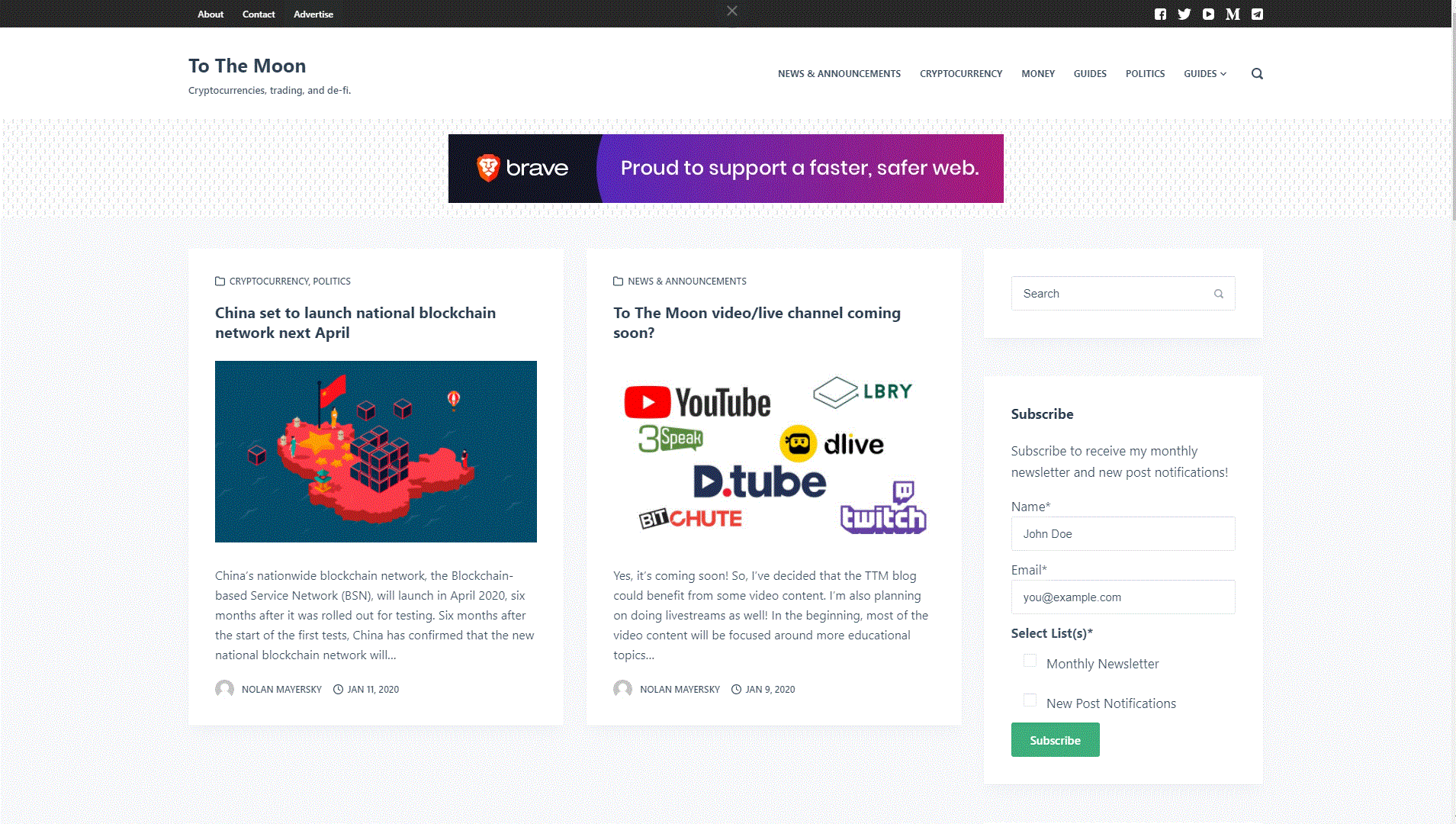
You may have noticed that I made some small changes to the design of the website. There has also been a new page added as well.
There has been an additional layer added to the top of the header section. This area hosts our static pages as well as links to our social media. You may also notice that a YouTube social media icon has been added. 😉 ***Go subscribe!*** Videos and livestreams are coming soon!
The “Advertise with us” link that appeared under our header advertisement has been removed. This was ugly and cluttered. Instead we have included a link to the advertisement request form in the new header navigation and in the footer navigation. This makes it far less of an obstruction. https://tothemoon.blog/advertisement-request/
Changes have also been made to the way posts are now displayed. The sidebar has been removed. This was done to remove clutter and put more focus on the content being presented.
Links in the footer have also been altered. Social icons are now square and colorful. The website menu in the footer has also been updated with more links.
Other less significant changes have also been made to increase the readability and overall feel of the website. If you notice any of them, let me know below! I’ll give one of them away, blockquotes have been updated. Font size and font weight were reduced to make them more readable and to make them flow better with the content.
We will continue to make progress and update our website.
*Be sure to follow me, join the official* *To The Moon Telegram Group**, subscribe to our mailing list for notifications (in the right sidebar), and follow/sub us on* *Twitter* *&* *YouTube**!* https://t.me/tothemoonblog https://twitter.com/tomoonwhenlambo https://www.youtube.com/channel/UCiSQLua-nWlfOV0JDVIaG9A
*Original post at:* *https://tothemoon.blog/news-and-announcements/new-updates-on-ttm-design/*
To The Moon video and livestreaming channel coming soon?
Yes, it’s coming soon!
So, I’ve decided that the TTM blog could benefit from some video content. I’m also planning on doing livestreams as well!
In the beginning, most of the video content will be focused around more educational topics relating to cryptocurrencies, stocks, trading, etc. I plan to build up a little library of educational content while the channel grows. Once a decent sized audience is established, I plan to reach out to influencers, developers, traders, and other figures in the related industry to create interview and podcast style content.
Hopefully this is something people will enjoy.
https://tothemoon.blog/friends/primexbt/
I’m still in the early stages of planning this all out. So, if you have any suggestions I would be more than happy to hear them. They may get used, too!
I will be working on some videos in the coming weeks. I am planning on launching the channel sometime in mid February.
Until then, I will be continuing to write posts here and in all of the other places I typically post.
Please let me know if there is any particular content you would like to see! Things you’d like to learn more about, people you’d like to see interviewed or in a discussion, anything! Also, if you have any video skills and are interested in helping, please get in touch with me using the ‘Contact’ page on the TTM blog. I will get back to you ASAP!
Thank you!
Nolan – TTM
*Be sure to follow me, join the official* ***To The Moon Telegram Group****, subscribe to our mailing list for notifications (in the right sidebar), and follow us on* ***Twitter****!* https://t.me/tothemoonblog https://twitter.com/tomoonwhenlambo
*Original post from my blog:* *https://tothemoon.blog/news-and-announcements/to-the-moon-video-live-channel-coming-soon/*

PrimeXBT Review – Earn Bitcoin trading crypto, gold, forex, and over 30+ assets!
What is PrimeXBT?
PrimeXBT is a relatively new trading platform for trading cryptocurrencies and other assets such as stocks and commodities. This review will cover my experience with the exchange and what you need to be aware about before using it. PrimeXBT is a trading platform providing cryptocurrency, Forex and commodity markets combined with leverage options. The features and fees provided by the exchange are extremely competitive and promising. The exchange is unregulated and works with cryptocurrencies only. https://tothemoon.blog/friends/primexbt/
While the exchange opens up great opportunities for profit, using excessive leverage combined with an unregulated platform can lead to large losses, so trade responsibly.
The company was launched in 2018 from Seychelles, operating a global dynamic trading platform aimed at cryptocurrency traders. It’s hard to pin down a lot of company information but it has grown exponentially after almost a year in business. A customer-centric expanding platform, large market selection and high leverage options appear to add competition to industry leaders in margin trading like Bitmex and Bybit. https://tothemoon.blog/friends/bitmex/ https://tothemoon.blog/friends/bybit/
As a completely Bitcoin-based exchange, Prime XBT operates in an almost borderless global manner with minimal compliance to regulation.
https://primexbt.com/?signup=138346
Diving in to PrimeXBT
The exchange hosts a simple and easy sign-up process. Traders can begin using the platform the same moment they signed up and the PrimeXBT registration process takes less than a minute. There is also ***no KYC (know-your-customer)*** aspect to the sign-up so traders do not need to give personal information like passport, tax, or identification numbers. All accounts are free to open as well. https://tothemoon.blog/friends/primexbt/
PrimeXBT prides itself on its technology, enabling easy trading for users. In a heavily saturated crypto exchange market, PrimeXBT features an easy on-ramp and easy access for traders to see charts, trading histories, and current order books on its trading pairs. https://tothemoon.blog/friends/primexbt/
PrimeXBT offers several other advantages: https://tothemoon.blog/friends/primexbt/
PrimeXBT offers a free account and a registration process that takes under just one minute.
**No KYC** is required, keeping your personal details private.
Minimum deposit is only 0.001 BTC, deposits can be made with BTC, credit card or 100+ coins.
**Up to 1:100 margin.**
The **ability to short-sell assets**, taking advantage of falling prices as well as climbing prices.
Unrivaled aggregated liquidity from 12 difference top-notch suppliers.
Around the clock, 24-hour support is always on call when you need it.
Cutting-edge security features including address whilelisting, two-factor authentication, and much more.
Multi-monitor support for the most serious traders in the market.
Trading pairs across 5 most liquid crypto assets.
***Trading forex and commodity pairs with BTC as the collateral asset.***
Customizeable trading interface.
PrimeXBT Tradeable Assets
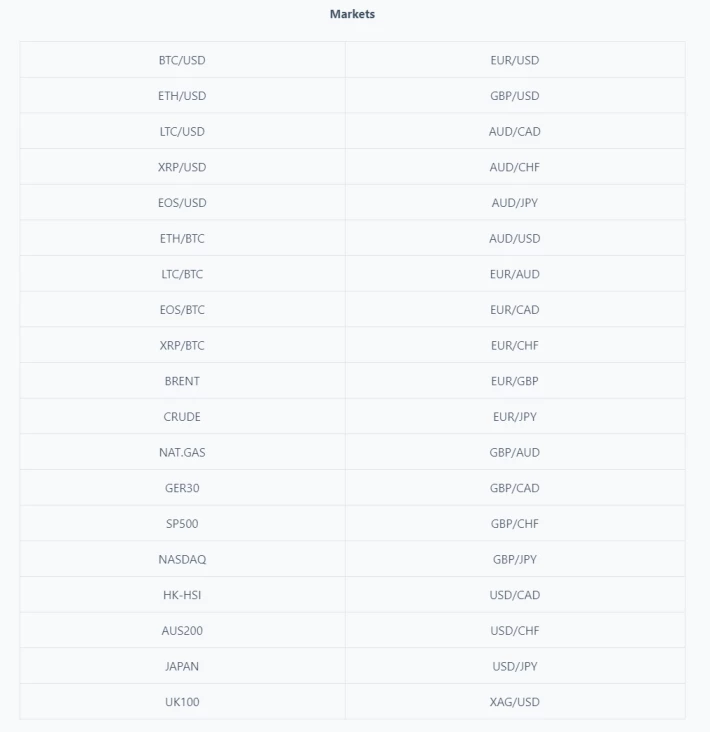
Below is a table with all of the asset pairs available to trade on PrimeXBT. All of these trading pairs are collateralized with Bitcoin (BTC) which makes this exchange pretty unique in the crypto space, giving you access to traditional markets as well. https://tothemoon.blog/friends/primexbt/
PrimeXBT Order Types
PrimeXBT offers several different kinds of order types. Advanced order types are listed below with short descriptions. More information on all of these order types can be found here. https://www.cryptocointrade.com/reviews/primexbt-review/
**Market Orders** — order set to execute at the first time available (can be immediately in some cases)
**Limit Orders** — sets a “limit” on prices that a trader would buy or sell at
**Stop Orders** — an order to buy or sell an asset once it reaches a specific (“stop” price)
**Protection Orders** — an option to limit losses or protect profits on any trade or order
Here’s a view at PrimeXBT’s easy-to-use and appealing main trading screen. From here, you can monitor the trading pairs available and your leveraged trades. https://tothemoon.blog/friends/primexbt/
Leveraged And Margin Trading And Short-Selling
Leveraged trading is a key feature of PrimeXBT. It’s a tool that allows traders to take profitable advantage of smaller price movements, because it can multiply gains or losses in either direction. https://tothemoon.blog/friends/primexbt/
Here’s an example: let’s say the current price of BTC is $4,300 and you have $4,300 to buy one Bitcoin. You decide to use 100x leverage. That means you can buy 100 BTC for $4,300. If Bitcoin increases just by $100 to $4,400 you earn $10,000, because you multiplied the increase by your 100x leverage.
https://primexbt.com/?signup=138346
As PrimeXBT’s resources explain:
Leverage works by using a deposit, known as “margin”, to provide you with increased exposure. Essentially, you’re putting down a fraction of the full value of your trade – and PrimeXBT is providing you the rest. Our products allow traders to gain exposure to major cryptocurrencies, such as Bitcoin and Ethereum and others, without tying up lots of capital.
Short-selling is another option available on PrimeXBT. A trader might “short” a coin or asset when they want to bet on that asset declining in price and value. If you think Bitcoin is oversold and will drop in price, you can earn capital by “short-selling” it. This opportunity gives traders the ability to bet on the price of Bitcoin going up or down, where regular investing (buying an asset) typically means an investor thinks the value will increase.
These trading techniques are complicated. Traders should do their own research before entering into any leveraged trading scenario.
What Are The Fees On PrimeXBT?
PrimeXBT trading fees are both simple and low. This should help facilitate easy and low-cost trading for users of the platform. https://tothemoon.blog/friends/primexbt/
A competitor of PrimeXBT, Bitmex, for instance, uses a much more complicated fee structure for its trading. Here you can see Bitmex’s fee structures:
This is much more complicated than the simple fee system that’s used on PrimeXBT. Here is PrimeXBT’s fee structure: https://tothemoon.blog/friends/primexbt/
Full information on fees and limits can be found on their website. As its site and mission states, PrimeXBT *“follows clear principles – prices should be competitive and transparent, and never burdened with false incentives.”* https://tothemoon.blog/friends/primexbt/
PrimeXBT Deposits And Withdrawals
Making a deposit on PrimeXBT is simple and easy. A new user can click on ‘Deposit’ on their Account dashboard. A secure Bitcoin address will immediately be generated to use for a BTC transfer. http://primexbt.com/
Withdrawals are also simple, though they require an extra step. Before withdrawing, users must make an internal transfer from their trading account to the set-up personal wallet in the Account section.
Once this is done, a trader will whitelist a preferred BTC address for withdrawal. One security feature of PrimeXBT is withdrawals only to whitelisted accounts—keeping your funds secured from going to unwanted or accidental addresses. https://tothemoon.blog/friends/primexbt/
Once this is all set—the internal transfer and addition of whitelisted BTC address—a trader can enter the desired withdrawal amount and click submit to initiate.
Is PrimeXBT Safe?
Yes, the exchange offers services similar to other exchanges and security and technology that help traders.
There is always risk in any kind of asset trading, particularly in one as volatile as cryptocurrencies. This is compounded by leveraged trading which adds risks. You can read more about these risks on the PrimeXBT site on the Risk Disclosure page. It transparently talks about market and trading risks. https://tothemoon.blog/friends/primexbt/
Traders should also review PrimeXBT’s Terms of Service and Privacy Policy. These will help you be informed about any other risks associated with trading.
Beyond these, however, PrimeXBT is a safe and secure way to do your crypto trading. https://tothemoon.blog/friends/primexbt/
*Also, be sure to join the official* ***To The Moon Telegram Group****, subscribe to our mailing list for notifications (in the right sidebar), and follow us on* ***Twitter****!* https://t.me/tothemoonblog https://twitter.com/tomoonwhenlambo
*Original post from my blog:* *https://tothemoon.blog/trading/primexbt-review-earn-bitcoin-trading-crypto-gold-forex-and-over-30-assets/*
To The Moon is looking for sponsors!
Hello read.cash family! My blog To The Moon is looking for some potential sponsors!
I have been running this blog for about 2 months now and I try to write a post every day. I recently discovered read.cash and will now be cross-posting all of my content here as well!
I figured I'd try to give this sponsorship system a try, with some unique added bonuses. Let's see how this goes.
Bonus for Sponsors
Since I run my own blog that is hosted on it's own server and cross-post articles on several sites, sponsoring me could go a lot further than just a promotion on the read.cash website!
In addition to read.cash, all of my articles are posted on the following platforms (more are coming in the future).
Steem (every article is auto-posted to Steem from my blog by plugin.)
Publish0x
Read.cash
Facebook (Posted in more than 10 groups, 1 fanpage, and my personal page)
LinkedIn
Twitter (2 accounts)
Minds.com
Gab.com
More coming soon!
In this day and age, having one location for your content just isn't enough anymore unless you are running a large operation. Even then, it's still not smart to only have it posted in one location.
So, I am thinking, depending on the level of sponsorship, I can offer advertisement placement on my blog https://tothemoon.blog/ in the banner advertisement sections. There are also in-content ads which I would require a higher price for (but, these will be included in ALL of my cross-posts!).
I could also write articles that promote a certain coin, product, service, etc. Of course, it would have to be one I find ethical and of value. I will not promote anything that could harm my readers.
I do not have any concrete prices in mind. So, depending on what you're advertising the prices could vary until I establish a more formal cost structure. If I like what you're promoting, this would be a lot cheaper.
If you are interested in this, please do not hesitate to e-mail me at ***nolan@moonship.cc*** and we can discuss things in greater detail.
Also, I'm receiving roughly 1,500+ unique visitors from around the world on my self-hosted blog per month. That is not a lot right now. But, I have only been at this for 2 months. It will continue to grow.
These sponsorships will be paid through the read.cash system as it is the easiest way to manage them at this current moment. So, if interested please shoot me an e-mail or comment below with your e-mail address and I will get in touch!
Hope to hear from you!
Nolan - TTM
CoinEx - A new cryptocurrency exchange to add to your list!
What is CoinEx?
CoinEx is one of the newer cryptocurrency exchanges on the block, having been in operation since December 2017, but it’s already been making big news; first with its heavy emphasis on Bitcoin Cash, and more recently with its addition of Trade-driven mining (which has since ended). https://tothemoon.blog/friends/coinex/
Launched in Hong Kong and registered in the United Kingdom, CoinEx has been up and running since December 2017. An exchange review reveals that the company behind this exchange is ViaBTC, a Chinese mining pool that was shut down in late 2017, though this information is not explicitly stated by CoinEx. CoinEx raises suspicions due to its links to ViaBTC, as it is seen as a way for ViaBTC to continue operating after it was shut down due to Chinese regulations on cryptocurrency. CoinEx prides itself on the exchange’s high speed, low cost, user-friendly interface, and high security. https://tothemoon.blog/friends/coinex/
The Basics
Moving to a new exchange can be beneficial in the form of new altcoins to trade and lower fees. There are also risks associated with trading on untested exchanges, so it’s good to take your time and learn all you can about a new exchange before jumping ship to take advantage of lower fees and different cons, and in the case of CoinEx Trade-driven mining. https://tothemoon.blog/friends/coinex/
The exchange had a bit of a roller coaster ride in 2018 as it saw its trading volume spike from $5 million in June to $1.5 billion in early July after announcing its controversial Trade-driven mining. That surge took it past Binance to the #1 spot in exchange volume, but only briefly. By late July it had dropped to #25 in exchange volume with $62.5 million in trade volume and as of August 2018 it has fallen even below its June numbers. It is currently the #126 exchange with just $830k in trade volume.
Because CoinEx is owned by ViaBTC some wonder if it’s truly a reputable exchange, or just another honeypot scheme. ViaBTC launched the site in less than two months after the infamous Chinese crackdown on cryptocurrency exchanges that wiped the slate clean in China. They had to close their China based exchange, but quickly pivoted to resume operations in the U.K. and Hong Kong. While some question the trustworthiness of CoinEx, it seems as if ViaBTC was just following good business practices in pivoting to a new exchange in a new jurisdiction.
CoinEx Features
CoinEx was built to be a suitable trading platform for both beginners and advanced users. Though it is still fairly new, the exchange has some distinct advantages: https://tothemoon.blog/friends/coinex/
**KYC is NOT Required**
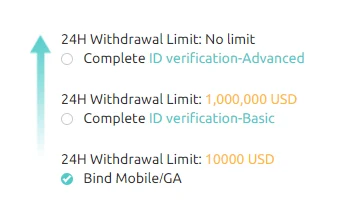
If you read my blog, you know I’m not a fan of ‘Know-Your-Customer (KYC)’ laws and practices. Fortunately, CoinEx allows up to $10,000 USD to be withdrawn every day with the most basic account. This even applies to United States citizens such as myself (nice doxx Treepi). You can see a snippet of the KYC verification levels and their limits to the left. <—
**It’s Global**
CoinEx ***accepts users from all around the globe!*** Their website offers multiple interface languages, as well as a mobile app for those who prefer to trade on the go. This renders CoinEx quite user-friendly, as the team behind it had aimed it to be. The website is designed in an appealing and simple manner, enough for the average user to be able to navigate it with ease. https://tothemoon.blog/friends/coinex/
**Trading Opportunities**
In addition to standard trades, CoinEx now offers leveraged/margin, options, perpetual and futures trading . Charts are powered by TradingView, giving users the ability to use dozens of indicators to get an in-depth view of market conditions at any time.
**CoinEx Lending**
CoinEx Lending is a product that increases the value of coins, and 70% of the interest income from borrowed coins of margin trading on CoinEx will be allocated to the users against the ratio of the holdings in the their lending accounts. After transferring idle assets to the lending accounts, the users will receive revenues yielded by their lending account that features daily compound interest and no limit on the minimum deposit.
Currently, only USDT is supported. In the future, adjustments will be made to the supported coins in CoinEx Lending based on the market environment and the risk level.
**Fast Transactions**
CoinEx was designed around a multi-process matching engine capable of processing thousands of transactions in a second. The weakness in many blockchains is a lack of speed, and CoinEx knew that one thing an exchange certainly needs is speed. CoinEx transactions are speedy, efficient and inexpensive. https://tothemoon.blog/friends/coinex/
**Safety of Funds**
CoinEx guarantees client funds 100% and claims to keep client and operational funds segregated. This means client funds are always fully available for withdrawal, and they cannot be used for any other purpose, such as funding company operations. https://tothemoon.blog/friends/coinex/
**World-class Security**
CoinEx is able to provide world-class client protections by implementing numerous security protocols (including advanced SSL protocols). The user’s safety is also enhanced by the usage of cold multisig wallets and enabling 2FA. While all exchanges tenaciously make an emphasis on security issues, it is important to remember that hacking attacks are still quite mundane, so extreme safety should be a top priority while choosing an exchange. https://tothemoon.blog/friends/coinex/
***Remember:*** *If you don’t have the private keys, you don’t have the coins! Always remove your funds from the exchange wallets* ***ASAP****! I cannot stress this enough!*
**Low Fees**
The trading fees for makers and takers are 0.1%, which is below the global average. It is also possible to have your fees reduced 50% by opting to pay those fees with the CoinEx native token, CET. It is important to note that most competitive exchange platforms charge trading fees between 0.15% and 0.10%. This puts CoinEx up there with the most competitive exchange platforms.
There is a withdrawal fee of 0.0015 BTC, which is around the global industry average. I did not analyze the fees of other assets because they do vary. Bitcoin gives us the best measurement to compare against other exchanges.
Mobile Trading App
CoinEx provides mobile applications for both Android and iOS. The application is aesthetically pleasing, just like the website. It utilizes the same color scheme and layout. The navigation and overall feel of the application is very similar to that of Binance and KuCoin, which is not a bad thing at all. I use these mobile apps nearly every day. https://tothemoon.blog/friends/coinex/ https://tothemoon.blog/friends/binance/ https://tothemoon.blog/friends/kucoin/
The app allows you to make trades in all markets. This includes margin, futures, perpetual, etc. I have yet to notice any feature that it is missing compared to the standard website. So, good job CoinEx team! https://tothemoon.blog/friends/coinex/
CoinEx Coin and Currency Support
CoinEx shares one feature with many cryptocurrency exchanges, and that’s its lack of support for fiat currencies. Deposits, withdrawals and trades are only in cryptocurrencies. https://tothemoon.blog/friends/coinex/
With that said, CoinEx supports tons of altcoins, with the largest number of pairs coming from Bitcoin (BTC). Bitcoin Cash (BCH) is close behind, and Ethereum is a distant third, with about half as many pairs to trade. USDT also has trading pairs available, with the number being close to that of BTC and BCH respectively. https://tothemoon.blog/friends/coinex/
You can find most of the top crypto pairings on this exchange, like on most major exchanges. However, you will find some smaller offerings that you will not see on some of the bigger exchanges like Binance. These smaller altcoins are nice to have around as they could net you a nice payday. All of the big projects had to start somewhere. https://tothemoon.blog/friends/binance/
In addition to the other coins offered CoinEx has also issued its own ERC-20 token called the CoinEx Token (CET). Holders of CET tokens can take advantage of certain privileges such as voting rights and discounts on trading fees (currently 50%). Currently the value of one CET is $0.0144 with a total supply of nearly 10 billion tokens. https://tothemoon.blog/friends/coinex/
How to Use CoinEx
Currently users from all across the globe are able to register for a CoinEx account and use the exchange service. For absolute beginners here’s a quick guide on how to register and use the exchange. https://tothemoon.blog/friends/coinex/
**Step 1:** Click on the “Sign-up” link in the upper right corner of the site. Fill out the simple registration form as seen below:
Enter our referral code: tkcnm
**Step 2:** Check your e-mail and click the link to verify your address.
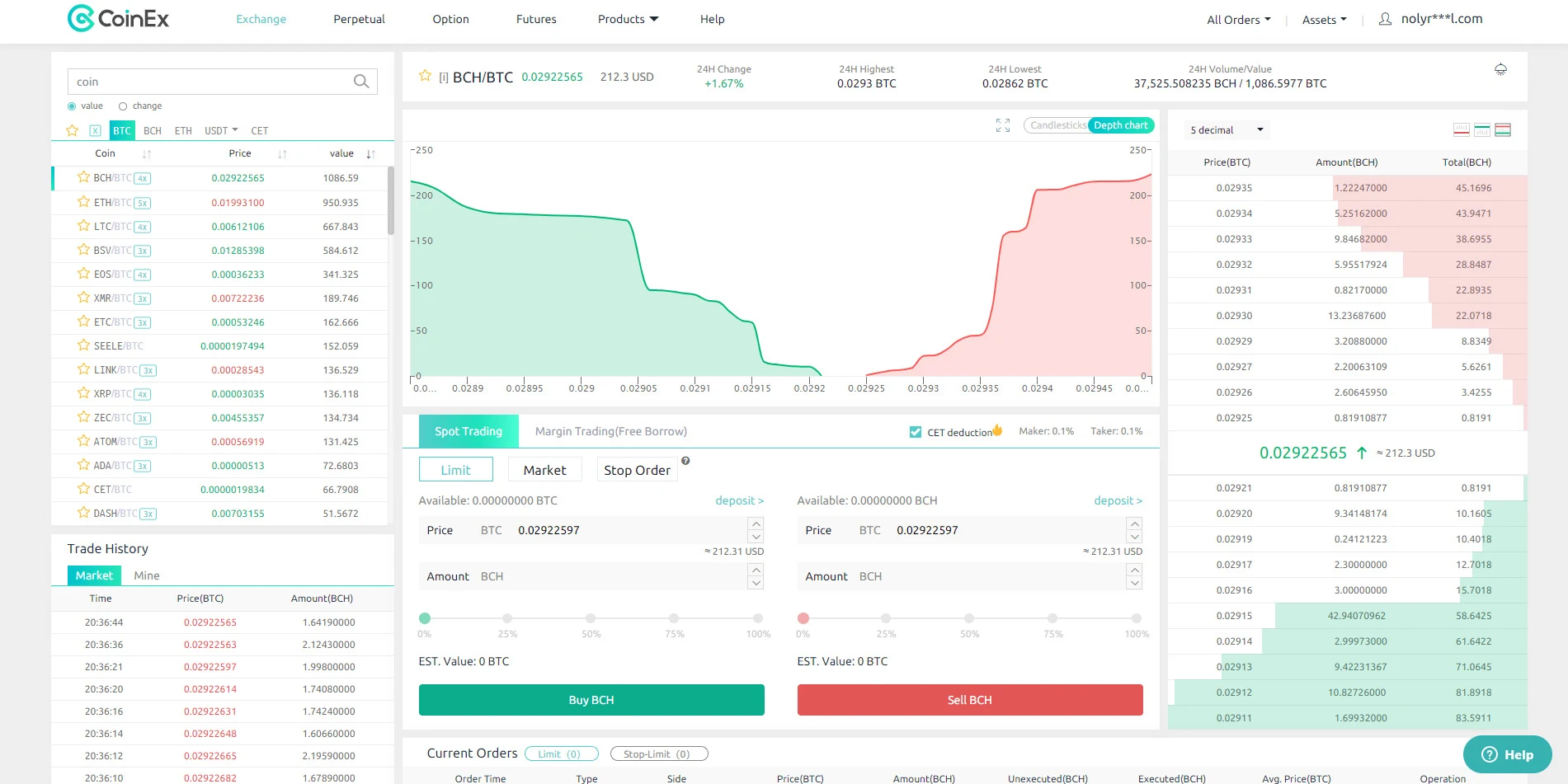
**Step 3:** Once your registration is complete and your account is verified, you can log into your account and go to the “Exchange” section where you’re able to see all of the assets available to trade. Note the list on the left that shows all the trading pairs and can be sorted by BTC pairs, or BCH, ETH and USDT pairs!
**Step 4:** Start trading and make some money!
In Conclusion
CoinEx was launched as a replacement of a Chinese exchange after the crackdown on cryptocurrencies in China. That doesn’t make the project any less ambitious as it seeks to develop a decentralized exchange and its own token ecosystem. The dividend is a good feature for now and can provide a small daily income. The extremely low fees are also a big advantage to trading with CoinEx. The interface is also very appealing. The exchange as a whole competes and beats most other major exchanges in nearly every category except one. Volume. But, I assume more volume and liquidity will come in time as it gains more popularity. https://tothemoon.blog/friends/coinex/
The lack of support for fiat currencies makes this an exchange primarily for the more experienced cryptocurrency users and investors.
Some say that the ViaBTC ownership is a bad thing, but in actuality I think it’s a positive since the owning entity has too much to lose to scam clients, and also has deep enough pockets to continue making improvements to the platform. Overall a good, if small, exchange, and one that could grow significantly in coming months and years.
If you are like me and are always open to finding new places to buy and sell crypto, give CoinEx a chance! I’ve been using it for a little less than a month at the time of writing. Though it isn’t my primary exchange, it is competing with KuCoin for my #2 spot. Like KuCoin, CoinEx offers quite a few trading pairs and altcoins that you cannot find on many other major exchanges. This is a huge benefit. One in particular that I’m currently keen on is the BTC/HYDRO pairing. ???? Keep an eye out for that one. You heard it here first. https://tothemoon.blog/friends/coinex/ https://tothemoon.blog/friends/kucoin/
Head on over to CoinEx and sign up. Give it a try! I have provided my affiliate link below for those of you who are kind and would like to let them know this article brought you there.
https://www.coinex.com/register?refer_code=tkcnm
*Be sure to join the official* *To The Moon Telegram Group**, subscribe to our mailing list (in the right sidebar), and follow us on* *Twitter**!* https://t.me/tothemoonblog https://twitter.com/tomoonwhenlambo
*Original post from my blog:* *https://tothemoon.blog/cryptocurrency/what-is-coinex-a-new-cryptocurrency-exchange-to-add-to-your-list/*
An in-depth look at Bitcoin Cash (BCH)
Bitcoin Cash (BCH) is often seen as the most successful fork of the original Bitcoin (BTC). Though there are many other cryptocurrencies that adopt the name of “Bitcoin” as well (for example BitcoinSV, Bitcoin Gold, Bitcoin Diamond, etc.) but undoubtedly, Bitcoin Cash is the most dominant of these Bitcoin forks. Many will even argue that BCH is the ‘true’ Bitcoin. https://tothemoon.blog/tag/bch/ https://tothemoon.blog/tag/btc/
In this article we will explore why BCH matters and if BCH is worth your money for long-term investment. Let’s get it started, folks!
Summary
The most popular name in cryptocurrency has always been Bitcoin. The original project of Bitcoin was founded by an anonymous person or person’s known as Satoshi Nakamoto in 2009. After the 2008 global financial crisis, Satoshi Nakamoto felt money should be decentralized and controlled by the people. Not by a centralized entity that had breached people’s trust time and time again. https://tothemoon.blog/tag/btc/
The idea of Bitcoin successfully caught the attention of many cryptographic developers. This group was known as Cypherpunks. Many of those who are now hardcore Bitcoin Cash supporters originally were part of the group who actively followed Satoshi’s vision. Bitcoin was intended to be a decentralized peer-to-peer electronic cash. It was meant to replace the outdated banking system, especially when it comes to cross-border transactions. The original supporters of Bitcoin back in its earliest days often “bragged” about the speed and transaction costs of sending Bitcoin from different countries.
However, things changed quite rapidly in 2017, along with the rising popularity of Bitcoin itself. Two years ago was the year that changed everything. Bitcoin quickly shot up in its price against the USD and other fiat currencies. However, the blockchain got clogged up quite easily due to all the newcomers who started buying up Bitcoin.
During the 2017 bull run, Bitcoin’s transaction costs became quite expensive and unmanageable. Transaction speed became very slow, and it could take hours just to complete one single transaction. Due to all these problems, many of Bitcoin’s original supporters became disillusioned with the Bitcoin network. They started questioning whether Bitcoin would be able to manage all the newcomers’ transactions. And to “fulfill” Bitcoin’s original vision as decentralized peer-to-peer electronic cash, some well-known supporters proposed a block size limit increase. Roger Ver, the CEO of Bitcoin.com, was one of the main figures of the proposal. The pro-changes believers thought it was a good idea to increase Bitcoin’s block size upper limit from 1 MB to 8 MB. With the block size limit increase, Bitcoin would be able to process many more transactions and it would also lower the transaction costs that were complained by many users. https://en.wikipedia.org/wiki/Roger_Ver http://bitcoin.com/
However, this proposal was challenged by many of Bitcoin’s other supporters. The ones who took the “contra” side believed that the idea to increase the block size limit would make life harder for miners due to the cheaper transaction fees. They felt afraid that the whole Bitcoin mining business would be unprofitable in this case. They also stated that Bitcoin had already been seen as “digital gold” and its main purpose had already shifted to “store of value”. That’s why they believed that increasing block size upper limit was not supposed to be the main priority anymore.
Both camps could not find a solution that was considered acceptable by both parties. Due to this reason, eventually, the pro-changes community forked the original Bitcoin on August 1, 2017. Specifically at block 478557. The “new” Bitcoin that came after the fork was then named Bitcoin Cash. They used the name Bitcoin Cash because they believed the original purpose of Bitcoin was to be used as cash. The name “Cash” behind “Bitcoin” is meant to honor the original vision and purpose of Bitcoin itself.
After the fork incident from the original Bitcoin, Bitcoin Cash has experienced another block size limit upgrade on May 15, 2018. At the present time, Bitcoin Cash’s block size limit is up to 32 MB.
For comparison, Bitcoin is only able to handle around 4.4 transactions per second (TPS), while Bitcoin Cash can manage up to 116 transactions per second. This is possible due to a much larger block size of Bitcoin Cash.
Apart from the differences in speed and transaction costs, there’s not much technical difference between Bitcoin and Bitcoin Cash. Considering BCH is a simple fork of BTC, they offer many similarities. The script, the blockchain explorer, and even the legacy address of BCH, they are quite similar (or even the same) with Bitcoin. For your information, many BCH supporters often refer to BTC as “Bitcoin Core,” and they call BCH as the “real Bitcoin”. Of course, the terms have been debated countless times by other crypto enthusiasts.
The Bitcoin Cash Team
There’s no “official co-founders” of Bitcoin Cash, as it’s a forked version of the original Bitcoin itself. Many of Bitcoin developers from many years ago started to develop for Bitcoin Cash since its existence. One of the more famous developers who shifted support from BTC to BCH is Gavin Andresen. Gavin hasn’t contributed to Bitcoin’s development since February 2016. https://en.wikipedia.org/wiki/Gavin_Andresen
Another famous supporter of BCH is Bitcoin.com’s CEO Roger Ver. Roger is probably the most prominent face of BCH supporters due to his consistent appearance in many crypto conferences promoting BCH. And don’t forget Bitmain’s co-founder Jihan Wu. Bitmain is mostly known for its ASIC chips that have been used to mine BTC. And Jihan Wu, who got rich from his mining business, is also a big supporter and holder of BCH. https://www.bitmain.com/ https://en.wikipedia.org/wiki/Jihan_Wu
Previously, Craig Wright (the guy who became famous for claiming he is Satoshi) also supported BCH. But due to the split between BCH and BSV (Bitcoin Satoshi Vision) in late 2018, Craig Wright is no longer a BCH supporter. Another famous ex-BCH supporter, Calvin Ayre, also decided to shift his support to BSV. We won’t get into too many details here about what happened between BCH and BSV, but basically, there was a split between the two camps. The main arguments were about the changes to the script and the block size limit upgrade. https://en.wikipedia.org/wiki/Craig_Steven_Wright
The ones who decided to stick with the original script went to support BSV while the camp that supported BCH introduced two new opcodes into the script (OP_CHECKDATASIG and OP_CHECKDATASIGVERIFY).
For your information, BCH was originally known as BCHABC during the earliest days of the split, while BSV was known as BCHSV. But along with time, BCHABC came out as the more popular coin compared to BCHSV. That’s why BCHABC became BCH in most crypto exchanges while BCHSV became BSV.
Bitcoin Cash Future And Potential Roadblocks
The thing about Bitcoin Cash is that it’s mostly known for being a “faster” and “cheaper” Bitcoin. Its future is probably dependent on how big the original Bitcoin will be in the future. Many people have accused Roger Ver of misleading Bitcoin.com’s users to think that Bitcoin Cash is the “real” Bitcoin. That’s why the future of Bitcoin Cash most likely will be dependent on Bitcoin’s big-name itself in the eyes of crypto traders as well as in the eyes of the casual users outside crypto enthusiasts.
Bitcoin Cash mostly can be found on crypto exchanges that also accept Bitcoin. Due to its background as a fork of Bitcoin, it was quite easy for crypto exchanges and wallet services to start adopting Bitcoin Cash, as the code base was already the same.
To talk about the future of Bitcoin Cash is a bit complicated. At one point, Bitcoin Cash’s future depends on the big name of Bitcoin itself. At another point, Bitcoin Cash supporters have to convince the world that Bitcoin Cash works like Bitcoin but faster and cheaper. And to be honest, it’s not that easy to convince people outside the BCH community. In many general crypto communities such as the cryptocurrency subreddit, many people actually criticize BCH for always comparing itself to the original Bitcoin.
That being said, BCH’s future can be really bright if BTC itself can consistently go up in terms of price against fiat currencies, especially because it’s really easy for a platform or wallet service or exchange to adopt BCH if they have already accepted BTC.
Bitcoin Cash Adoption
Before you can decide whether Bitcoin Cash is a good long-term investment or not, it’s wise to learn where the coin has been adopted. In terms of cryptocurrency exchanges and wallet services, BCH is actually one of the most adopted altcoins. Many wallet services that support Bitcoin typically also accept Bitcoin Cash. And about crypto exchanges, you can easily get BCH on Binance, Coinbase Pro, Bithumb, and many other well-known exchanges.
Outside the crypto market, BCH has been adopted in many local restaurants and hotels all over the world. Countries like India and Venezuela have started to adopt BCH. Travala.com, a popular hotel booking website, recently also adopted BCH as one of the available crypto payments.
Correlation Between BTC And BCH Price
Let’s talk about an external factor that might affect BCH price in the long-term. Well, without a doubt, altcoin prices almost always follow Bitcoin price. When Bitcoin reached its peak price point in December 2017, almost all altcoin prices also went up quite significantly. When Bitcoin fell in 2018, almost all altcoins also fell.
The correlation between BTC and BCH price is even stronger compared to the correlation between BTC and other altcoins. There’s no hard evidence to explain why, but most veteran crypto traders already know about the correlation between BTC and BCH price.
Whenever BTC rises up significantly, sometimes altcoins might lag a little bit behind. However, BCH often goes up significantly without a problem following BTC. The price correlation between the two (historically) is really strong though, of course, it is not always the case.
So, if you decide to invest in BCH, you need to pay close attention to BTC price action. As we have mentioned several times, the BTC price will be one of the deciding factors of BCH’s future.
Conclusion
Bitcoin Cash has all the right recipes to be successful. It has a much larger block transaction limit size than the original Bitcoin, and it is able to process many more transactions per second as well. Many people say Bitcoin Cash has served the original Bitcoin purpose as a decentralized peer-to-peer electronic cash.
That being said, its future remains complicated. Bitcoin Cash’s main selling point is to be “seen” as the real Bitcoin. And outside the Bitcoin Cash supporting camp, many people see Bitcoin Cash only as one of the Bitcoin “alternatives.”
Whether Bitcoin Cash can eventually surpass the original Bitcoin or not in terms of popularity and market cap, it remains to be seen. Investing in BCH in the long-term is still a good option, though, because typically, BCH price follows BTC price.
*Be sure to join the official* *To The Moon Telegram Group**, subscribe to our mailing list (in the right sidebar), and follow us on* *Twitter**!* https://t.me/tothemoonblog https://twitter.com/tomoonwhenlambo
*Original post from my blog:* *https://tothemoon.blog/cryptocurrency/an-in-depth-look-at-bitcoin-cash-bch/*
The simplest way to buy stocks. Webull vs. Robinhood!
Welcome, to modern investing!
Are you someone who is interested in investing in the stock market and aren’t exactly sure where you should start? Fortunately for us, technology has given us many great tools that makes this process a breeze. Buying stocks is now as easy as tapping your phone or pointing and clicking on a computer. What’s even better is that there are now applications that allow us to do this completely FREE! Over the last decade, the commission costs for trading stocks have decreased enormously. Now, we are at a point where commission-free trading is available on many different platforms. For the average retail investor, there has never been a better time to invest with these free cutting-edge platforms.
Advances in technology and systems have allowed platforms such as Webull and Robinhood to thrive. These are two of the most popular free investing platforms out there today. In this article, we will compare the Webull and Robinhood platforms. We will be identifying what each platform does well and where each platform could improve. https://tothemoon.blog/friends/webull/ https://tothemoon.blog/friends/robinhood/
Quick Facts
Both Webull and Robinhood offer $0 commission trading with $0 minimum. https://tothemoon.blog/friends/webull/ https://tothemoon.blog/friends/robinhood/
Robinhood is designed for complete beginners, so intermediate and advanced traders will find the platform to be watered down and lacking in research tools. https://tothemoon.blog/friends/robinhood/
Webull offers research tools above and beyond Robinhood, making it a better option for informed, research-oriented traders and investors. https://tothemoon.blog/friends/webull/ https://tothemoon.blog/friends/robinhood/
Webull offers a trading simulator and Robinhood does not. We feel this is a handy feature, especially for beginners. https://tothemoon.blog/friends/webull/ https://tothemoon.blog/friends/robinhood/
Robinhood offers a few cryptocurrency investment options while Webull does not. https://tothemoon.blog/friends/robinhood/ https://tothemoon.blog/friends/webull/
Both platforms fall short when it comes to customer service, which is something most people expect among free trading apps.
Both platforms provide a **FREE** stock when signing up with one of my links.
What is Webull?
Webull is an all-in-one self-directed investment platform. Originally, the company was a research platform (which reflects the type of investment platform they created) whose brokerage services are provided by Webull Financial LLC. Webull released its mobile app in 2018 and has seen increasing growth since its launch. https://tothemoon.blog/friends/webull/
Webull was designed for the active trader who is looking for a more dynamic user interface than most free platforms are offering. This platform has features specifically for traders such as technical indicators, research agency ratings, financial calendars, and more. You will find a lot more tools and technical information here compared to Robinhood which offers a very simple and basic experience. This is a major reason why I personally prefer Webull. https://tothemoon.blog/friends/webull/ https://tothemoon.blog/friends/robinhood/
By providing easy access to margin, research tools, and live data, Webull has built an ideal platform for active traders. Since Webull is putting so much in front of you at your fingertips, it can be overwhelming if you are a complete beginner. Robinhood has created a true beginner-friendly platform, but most intermediate to advanced traders agree that it lacks in many areas. Even though there is a ton of information and data packed into this app, it still maintains an excellent and clean user interface. The app itself has a great design, and it is easy to navigate. https://tothemoon.blog/friends/webull/ https://tothemoon.blog/friends/robinhood/
Webull Promotion
Are you interested in getting a completely free stock? Webull is offering readers who open an account and fund it with $100 a FREE stock. The value of this stock is up to $1,000. It is based on a lottery system. Also, for the holiday season, you are given an additional free stock valued from $5 to $100 for making a deposit of ANY size! 2 FREE stocks! https://tothemoon.blog/friends/webull/
https://tothemoon.blog/friends/webull/
**Note:** Remember to use one of my links to receive your free stock. If you do not use one of these links, you will not receive the stock!
How Does Webull Make Money?
A lot of people are wondering how Webull makes money, and for a good reason! There are many free trading apps out there these days. I am here to tell you that they are not, in fact, operating a charity. Webull makes money in several different ways outside of charging customers fees or collecting commissions. https://tothemoon.blog/friends/webull/
They offer paid subscriptions if you are looking for real-time global market data.
Webull offers margin accounts, allowing them to earn margin interest. https://tothemoon.blog/friends/webull/
They can earn interest on all the idle cash held within brokerage accounts.
By directing order flow, they earn fractions of a cent on every trade placed.
**Just to be clear, they do not charge any fees or commissions to customers!**
Webull desktop trading application.
Webull Features
**Real-Time Market Data**
Webull is most well-known for it’s data. They were initially just an app for investment research before they added the trading feature. On Webull you will find real-time market data for all US markets. https://tothemoon.blog/friends/webull/
Unlike many trading platforms that have delayed quotation, Webull is sharing this data with traders through the app in real-time. For those looking for real-time data for global markets, Webull offers this for a monthly subscription. Remember, however, that you do not need to pay for any subscriptions to access real-time data on US markets. https://tothemoon.blog/friends/webull/
You do not need to pay for any subscriptions to get access to real-time US market data. Real-time data is essential when you are using it to make trading decisions. As a trader, you are often looking to capitalize on micro-trends that can happen at the blink of an eye. Delayed reporting of price data could be very costly for an active trader.
**“Paper Trading” Trading Simulator**
Webull users have access to a free trading simulator. A trading simulator allows people to “practice” trading. You can test out trading strategies to see likely results. This can take out some of the risks of trading. Webull refers to it’s simulator as ‘*Paper Trading*‘. Each month, you are given $100,000 of fake money to practice your investing with real market data! This is also a competition with social media like features enabled. If you finish with a profit you can earn a few cents or even a few dollars if you place in the top 10! https://tothemoon.blog/friends/webull/
This is a very, very, helpful tool. Especially for new traders. It will give you some experience trading with real market data and market conditions. I even continue to use it myself!
**Commission Free Short Selling**
Most free brokerage accounts do not offer short selling. This is an advanced trading strategy where you bet against a particular stock. Not only does Webull offer short selling, but it is also available commission-free. Short selling must take place in a margin account. In order to open a margin account, your account balance needs to be $2,000 or more. https://tothemoon.blog/friends/webull/
**Analyst & Community Ratings**
One of my favorite features was the analyst ratings. Webull offers a variety of research tools for both the technical trader and fundamental investor. This includes press releases, earnings reports, earnings dates, dividend dates, key financial documents, analyst ratings, and more. https://tothemoon.blog/friends/webull/
Analysts make buy, sell, and hold recommendations about stocks. This can be very helpful to you when you look at making buying or selling decisions. They present this in a very organized fashion, and it is possible to get a good overview of a particular company in a matter of seconds through the app.
There are also some similar community features. You can predict whether a stock will go up (bullish) or down (bearish). There is a bar displayed on a stock’s page showing how Webull users feel about a particular stock. Also, if you make the correct prediction, you will be awarded points that can be used for other things on the Webull platform! https://tothemoon.blog/friends/webull/
**Extended Trading Hours**
Most free trading platforms do not offer extended hours trading. Instead, you can only place trades during market hours which are 9:30 a.m. to 4:00 p.m. EST from Monday to Friday. Those that do offer extended trading hours frequently charge a fee for this service.
Webull offers free extended hours trading to all users. You can place trades during pre-market (4:00 am to 9:30 am EST) or after-market (4:00 pm to 8:00 pm EST) by placing a limit order. https://tothemoon.blog/friends/webull/
**Financial Calendars**
Another useful feature is the financial calendar. The financial calendar allows you to view upcoming dates for a company, including dividend payments and earnings reports. There are also calendars that show what companies are reporting earnings each week as well as what are the up and coming IPO’s or initial public offerings.
What is Robinhood?
Robinhood is a commission-free investment platform. Formed in 2013, Robinhood successfully launched its app to the general public in 2015 and has worked hard to remove many of the barriers that keep people from investing. https://tothemoon.blog/friends/robinhood/
Robinhood, which bills itself as a disruptive force in the online brokerage industry, formed in 2013 and launched to the public in 2014 as a mobile application for Apple smartphones and tablets. It has since expanded to Android as well as the desktop PC. Robinhood‘s innovation was to allow customers to buy and sell stocks and exchange-traded funds (ETFs) without paying a commission. https://tothemoon.blog/friends/robinhood/
When Robinhood first opened to the public, there was a lot of noise about free trades and how $0 commissions “democratized” trading was a terrible business plan. Many thought the business model would fail. Most online brokers charge a fee that ranges from $1 to about $7 per transaction, and they offer an abundance of research, news, charting, and educational resources alongside the trading engine. Robinhood made a big play for millennials and a younger target audience, implying that brokerage commissions are ripping investors off, and all that research offered by other brokers is overrated. Several million people were intrigued enough to open accounts and place trades. https://tothemoon.blog/friends/robinhood/
So how does Robinhood make money?
According to the site, **they generate revenue from** **Robinhood** **Gold**, its margin trading service, which starts at $5 a month; interest from customer cash and stocks, much like a bank collects interest on cash deposits; and rebates from market makers and trading venues. https://tothemoon.blog/friends/robinhood/
Robinhood also offers margin trading and a money lending service that gives trades more capital to trade with. This is another source of income for them as well as they earn money off of the interest of these services. https://tothemoon.blog/friends/robinhood/
Robinhood FREE Stock Promotion!
Use my link to receive a **FREE** stock from Robinhood when you signup and your account is approved! Simply click the image below to get started and claim your **FREE** stock! https://tothemoon.blog/friends/robinhood/
https://tothemoon.blog/friends/robinhood/
**Note:** Using any of the links on this website will qualify you for the free stock promotion!
Robinhood Features
**Zero Commissions**
Robinhood allows users to trade stocks, ETFs, options, and cryptocurrency completely free. There are no strings attached or hidden fees of any kind. https://tothemoon.blog/friends/robinhood/
**Instant Verification**
Once you’re ready to go, you won’t be bogged down by account verification’s. Robinhood uses instant verification with many major banks. Bank transfers of up to $1,000 are available immediately for investing, and the same goes for profits of up to $1,000 from selling stocks. Deposits more substantial than $1,000 will take around five business days to process. Want to invest in a schedule? You can set up automatic deposits out of your bank account weekly, biweekly, monthly or quarterly. https://tothemoon.blog/friends/robinhood/
**Simple App Design**
They have the most straightforward user interface of any investing app we have tested. This is a pro for some and a con for others. We can 100 percent say that Robinhood is a beginner-friendly app. https://tothemoon.blog/friends/robinhood/
**Robinhood Gold**
Robinhood Gold allows you to take advantage of several different features. It gives investors who can tolerate more risk the ability to trade on margin, which is also known as borrowed money. https://tothemoon.blog/friends/robinhood/
You can increase your buying power by trading on margin. Robinhood extends you a loan to purchase stocks relative to your account value. You need to have at least $2,000 in your account to open a margin account. It also allows you to have instant deposits from your bank and professional research reports from Morningstar. https://tothemoon.blog/friends/robinhood/
You must opt into the service, which has a flat monthly fee based on margin (referred to as “buying power”) as well as your account size.
Margin trading is dangerous, and I would highly advise beginners to avoid using it. If you’re new to investing and wary of risk, I say skip this option for now until you’re familiar with all the ins-and-outs trading so you don’t end up losing all of your money.
**Minimum’s & Fees**
Just like with Webull, this is a 100 percent free trading platform. They do not charge any hidden fees, and there are no strings attached. Don’t have the cash to open a sizeable account? No worries. Robinhood doesn’t have a purchase minimum, which means people can get started investing right away. Of course, to invest, you’ll need enough to purchase the investment you have your eye on. But you can start small, then gain momentum as you go along and become more confident and acquire more know-how. https://www.investingsimple.com/webull-review/ https://tothemoon.blog/friends/robinhood/
Even though there is no minimum balance to open an account, however, you will need to have a balance of $2,000 to open a margin trading account.
Final Thoughts
When comparing Webull vs. Robinhood, there’s really isn’t a clear winner and a lot of the decision will come down to your own personal choices. https://www.investingsimple.com/webull-review/ https://tothemoon.blog/friends/robinhood/
While both platforms offer free stock trading without commission fees or account minimums, they target different markets.
Robinhood is excellent for **total beginners** and casual investors who want convenience. https://tothemoon.blog/friends/robinhood/
Webull is best for **intermediate level active investors** who want more **in-depth research and tools**. https://www.investingsimple.com/webull-review/
When choosing which app you want to use, it really just depends on your investment preference. Since they’re both free, it’s worth giving them both a try to see which you personally enjoy more.
**P.s.** ***Don’t*** ***FORGET*** which ever company you choose, make sure to use a promo link to get your free stocks!
Sources
https://thedollarbuild.com/webull-vs-robinhood/
https://www.benzinga.com/money/webull-vs-robinhood/
https://www.wallstreetsurvivor.com/webull-vs-robinhood/
https://wallethacks.com/robinhood-vs-webull/
*Be sure to join the official* ***To The Moon Telegram Group****, subscribe to our mailing list (in the right sidebar), and follow us on* ***Twitter****!* https://t.me/tothemoonblog https://twitter.com/tomoonwhenlambo
*Original post from my blog:* *https://tothemoon.blog/guides/the-simplest-way-to-buy-stocks-webull-and-robinhood/*
Steem-Engine is releasing Non-Fungible Tokens (NFTs) on Monday!
What are Non-Fungible Tokens?
For months it was talked about and the day will soon be here. Non-Fungible Tokens (NFTs) are finally going live on Monday. This is something that could be enormous.
NFTs are an aspect of the digital asset market that does not get a lot of attention. In fact, the potential is really untapped since there are so few projects experimenting with them. That said, they truly have the potential to change a great deal of how we handle assets.
To start, we might want to define NFTs. A non-fungible token is a digital asset that is unique. Contrast this with a fungible token like STEEM and we can see the difference. I send someone 1 STEEM, the person does not care which STEEM token it is. The reason for this is they are all the same. It is similar to a $5 bill. One is equal to another.
A NFT is different in that the token is unique. No two are alike. Thus, when one has a NFT in his or her wallet, it is the only one that exists which can greatly affect the value.
Most of the discussion about NFTs are pertaining to speculation and asset values. This is natural since it is the stage of that the industry is at right now. I will cover this aspect in a bit.
The utility of NFTs.
First, I want to delve into what can make this a game changer for Steem-Engine. NFTs are not so much about the tokens that are created. Instead, the real power is the applications that are tied to it using this technology.
If we look at blockchain at its base essence, it is a ledger. This means it is a recording of information. The transparent and immutable aspect of blockchain provides enormous value in this regard.
NFTs have the potential to transform record keeping. Instead of using a centralized data based or worse, paper, all unique information can be stored on the blockchain using NFTs. Ultimately, apps can be created where this data is all on the blockchain.
What kinds of records could be placed on here. One obvious one are land deeds. Many parts of the world see people having their land taken at gunpoint since there is no evidence of ownership. A blockchain NFT removes this. We could also put all other types of property registration such as cars, boats, and planes.
The art world is transformed and fakes removed by having a NFT tied to a particular work on a blockchain. We could see the same for rare jewels, gold bars, and rare coins.
Have you ever spent a large sum of money on an expensive name brand item such as a purse? How do you know it was original? Counterfeiting is an enormous business around the world. NFTs could enable each purse produced to have its own token, meaning provide of authenticity is proven.
As we can see, the utility of NFTs very powerful. Of course, it takes on an even larger value.
I write how blockchain is a piece in the foundation of the development of Web 3.0. That is the merging of our physical, digital, and, ultimately, our biological worlds. NFTs provide a main piece.
How do you blend the physical with the digital? The answer is sensors.
Imagine you have a piece of art. Where is it located? A NFT coded into the sensor on the item could reveal it. Suppose an institution wanted to know how much gold it was holding. A quick scan of the vault would verify exactly what is there. In fact, an ongoing inventory could be employed where all interested parties could see. This would be ideal if one of holding assets for clients.
The exciting part about this is that Steem, as of Monday, will have this capability. Ethereum started this process with the ERC-721 protocol followed by the ERC-1155. The later allows one to create both fungible and non-fungible tokens in the same smart contract.
How would something like this evolve?
Take the idea of a robo-taxi as laid out by Elon Musk. Here is a situation where a vehicle is owned by a single individual but runs autonomous providing rides throughout the day. Each vehicle could be identified using a NFT. If, however, the owner, wanted to sell tokens in the cars, then fungible tokens could be created to put out representing a piece of the robotaxi business.
This would apply to any business that wanted to tokenize. What a piece of a plumbing company? That is great except which one do you have? This is where a NFT coupled with the other tokens solves the problem.
As you can see, having the ability to offer NFTs can expand the scope of development. This could attract an entirely new class of entrepreneurs.
The key with NFTs is providing ownership. One of the most talked about areas for potential NFT adoption is in the gaming industry. For years, games had built-in features that were purchased to aid in the playing of the game. However, all this money was lost as soon as the game was turned off. While some of the bigger games had secondary markets open up, it is a rather costly process.
NFTs have the ability to make this friction-less. It also allows assets to truly be owned. Thus, an in-game purchase has a NFT tied to it enabling all to see clear ownership. Once again, the NFT also serves to validate the asset.
This could be a massive explosion for the gaming industry. It is shown what happens to the value of markets when friction is removes and asset transfer gets easier and less expensive. Non-liquid assets are harder to sell, thus tend to get depressed in value, between 5%-15%. Assets that are traded on liquid markets tend to appreciate in value while also seeing an expansion in the total market.
In other words, most people enter the market as the barriers are removed.
NFTs are going to provide the opportunity for people to speculate on unique digital assets. While fungible tokens can have great value, a NFT, depending upon the asset, could be worth a fortune. When it comes to gaming, this allows developers to build in rather rare, and unique characteristics. Ultimately, we could see a few assets from some extremely popular games getting into the millions.
At the end of the day, there is no limit to what can be created using NFTs. The addition to the Steem-Engine platform allows that team to cater to a vastly different class of developers.
As our world starts to become more “virtual”, NFTs are going to play a bigger part in the ownership process. They will allow for the worry free buying of digital assets, knowing the ownership chain is clear.
I hope this shows how NFTs are part of a much larger process.
Link to the announcement: https://steempeak.com/steem-engine/@aggroed/nfts-going-live
*Be sure to join the official* *To The Moon Telegram Group**, subscribe to our mailing list (in the right sidebar), and follow us on* *Twitter**!* https://t.me/tothemoonblog https://twitter.com/tomoonwhenlambo
*Original post from my blog:* *https://tothemoon.blog/cryptocurrency/steem-engine-is-release-non-fungible-tokens-nfts-on-monday/*
A review of Bybit. It's nice!
Introduction
Bybit is a relatively new cryptocurrency derivatives (up to 100x leverage) exchange founded in March of 2018. Bybit is legally structured in the British Virgin Islands, with their headquarters based in Singapore, a well known fintech friendly capital. That said, most new exchanges suffer from liquidity issues but Bybit has been making leaps and bounds in user signups since they launched in April 2019. They’ve been really on a roll. https://tothemoon.blog/friends/bybit/
Trading on Bybit allows you to leverage trade (margin trade) cryptocurrency derivatives, just like BitMEX and PrimeXBT. On Bybit, you can trade Bitcoin (BTC), Ethereum (ETH), Ripple (XRP), and EOS against the US Dollar (USD). https://www.bitmex.com/register/2u3ZJ3
*Join* *Bybit* *today and receive up to $90 of free credit!* https://tothemoon.blog/friends/bybit/
On Bybit you can trade 1x (no leverage) or as high as 100x (100 times your trade value). Leverage is complex and dangerous, as you can get liquidated of all your currency if your leverage is too high. Always keep an eye on your Liquidation Price when using leverage! Leverage is powerful, it allows you to bet with a much larger crypto stack than you actually have. Used properly is can be very rewarding. Of course, in order to use leverage you must incur fees. https://tothemoon.blog/friends/bybit/
Traders on Bybit can take both short and long positions to make money whichever way the market moves. Taking a long position means buying the asset and essentially making a bet that it goes up. Similarly taking a short position means selling the asset and essentially making a bet that it goes down in value. https://tothemoon.blog/friends/bybit/
*Inexperienced traders should be very cautious and start with small positions or simulated trading (also known as paper trading). Never risk more than you can afford to lose. If you are interested in learning more about trading, join us on the* *To The Moon Telegram Group**. We look forward to seeing you there!* https://t.me/tothemoonblog
User Interface and Experience (UI/UX)
Bybit’s user interface looks gorgeous and is very easy to use. I personally really love using the dark mode and I think the overall user experience is far superior to BitMEX. https://www.bitmex.com/register/2u3ZJ3
What I love most about using Bybit is the fact that they show your Unrealized P&L (Profit & loss) and margin in both USD and Bitcoin— no need for sketchy tools like GreaseMonkey extensions anymore that people use with Bitmex. https://tothemoon.blog/friends/bybit/
Bybit also has a neat feature that allows you to set a stop loss, a take profit, and/or a trailing stop on your position. This can be done very easily by clicking the small pencil icon located underneath the ‘TP/SL (Trailing Stop)’ column of your open positions tab.
Clicking said pencil icon will present you the following menu. There you can set your take profit price, stop loss price, and a trailing stop amount. You will be shown your potential profits and losses once a value is entered as well! Very, very nice!
Another awesome feature that Bybit has enabled is currency swaps. By heading to the ‘Assets’ tab, you can find an ‘Asset Exchange’ button. This button allows you to easily swap between any of the assets offered on the platform. You can also swap to USDT as well! The only downside to this is that they charge a flat fee of 0.0005 BTC to make this exchange. At the time of writing, that is roughly $3.50 which can be a bit expensive if you’re swapping small amounts. If they could implement a more dynamic fee structure for smaller amounts, this would be a killer feature. https://tothemoon.blog/friends/bybit/
Fees
The fees are identical to Bitmex. If you always limit in and limit out, you can get paid to trade here. See below:
**Takers** (market order) pay ***0.075%*** on each trade, **Makers** (limit order) ***receive 0.025%*** on each trade. For funding Bybit works the same as BitMEX. Funding occurs every 8 hours at 16:00 UTC, 00:00 UTC and 08:00 UTC. You will only pay / receive funding if you hold a position at one of these times. https://tothemoon.blog/friends/bybit/ https://www.bitmex.com/register/2u3ZJ3
**Dual-price Mechanism.**
The crypto-space has been constantly facing accusations of price manipulation, where exchanges have often resulted in intentionally deflating or inflating prices for malicious gains. To counter this, ByBit uses the dual-price mechanism to protect investors from manipulation and uses mark prace AND last traded price. For instance, if the price of ETH plummets from $180 to $40 as a result of attempted manipulation, the Mark Price will remain at $180, effectively protecting the traders from liquidation since the mark price is the sole trigger for liquidation.
**Contract Loss Mechanism**
With their contract loss mechanism, ByBit is able to determine who bears what cost when positions cannot be liquidated at bankruptcy. Unlike socialized loss systems where all profitable traders share the loss, ByBit uses the deleveraging system. Users are ranked according to profit ratio and effective leverage and the more profitable and higher leveraged traders(risky traders) are de-leveraged first.
The Competition: Bybit vs Bitmex
Below are some comparisons between Bybit and arguably the most popular and well known derivatives exchange, BitMEX. Personally, I have moved most of my funds to Bybit. Disclaimer, I still do a small amount of trading on BitMEX, though the majority is now done on Bybit. The information below just serves as a quick comparison of the two exchanges. https://tothemoon.blog/friends/bybit/ https://www.bitmex.com/register/2u3ZJ3
**Available Trading Pairs**
**Bybit:** BTC/USD, ETH/USD, EOS/USD, XRP/USD
**Bitmex:** BTC/USD, ETH/USD and futures ADA/BTC, BCH/BTC, EOS/BTC, ETH/BTC, LTC/BTC, TRX/BTC, XRP/BTC
While BitMEX uses inverse and quanto contracts to allow trading other pairs (such as ETHUSD and LTCBTC) using Bitcoin as margin, Bybit requires you to deposit and use the underlying currency for margin (Ethereum for ETH/USD pair, XRP for XRP/USD pair, etc.). That means you cannot use your Bitcoin to trade ETH/USD pair on Bybit. https://www.bitmex.com/register/2u3ZJ3 https://tothemoon.blog/friends/bybit/
**Maximum Leverage and Risk Limit**
**Bybit:** 100x leverage, risk limit 550 BTC
**Bitmex:** 200x, risk limit 1,100 BTC
**24h Volume (estimated average)**
**Bybit:** 2.5 Billion USD
**Bitmex**: 7.5 Billion USD
Despite the fact that Bybit is relatively new exchange, it has a significant amount of volume (even compared to BitMEX). The amount of liquidity on Bybit should be enough for users that trade with position size less than 5,000,000 USD. https://tothemoon.blog/friends/bybit/ https://www.bitmex.com/register/2u3ZJ3
**Customer Support**
Bybit has a live chat that operates 24/7 and is able to speak multiple languages. So far my experience with Bybit’s customer support has been excellent — they have always solved my problems / question about the platform quickly and professionally.
**Trustworthiness**
As trustworthiness is rather subjective, I will include their approximate Alexa rank and their security features. I’d also like to note that neither of them have ever been hacked.
**Bybit:** Alexa rank 16,000; 2-FA (Google Authenticator, SMS)
**Bitmex:** Alexa rank 14,00; 2-FA (Google Authenticator), 24-hour max login time
**Trading engine**
**Bybit:** 100,000 transactions per second
**Bitmex:** 500 transactions per second
The trading engine is the main reason I moved from Bitmex to Bybit. **It truly is amazing!** I have never had any problems with overloads, or stop losses not working, or getting a slippage on my market orders. On BitMEX this happened nearly every single time there was a significant move and I have lost a lot of money due to this. I can’t count how many times the order feature has been temporarily disabled. https://tothemoon.blog/friends/bybit/ https://www.bitmex.com/register/2u3ZJ3
Under load and in times of absolute volatility, Bybit didn’t skip a beat. Smooth as butter. And the reason is they actually spent a great deal of time and money on building a very powerful matching engine. According to Bybit they’ve tested up to 100,000 tps (transactions per second). This is quite remarkable and far superior their competition.
Pros
**Trading Bonuses?!** Bybit is running a promotion that gives you up to $90 in FREE margin as a trading bonus, simply by depositing and completing other menial tasks. https://tothemoon.blog/friends/bybit/
Beautiful UI with an adjustable trading GUI. It’s Bitmex, without the system overload issues.
You can margin trade: BTC, ETH, XRP, and EOS in their respective coin.
A simple asset exchange to swap between various coins.
System encourages stop loss / take profit measures at the time of order.
Lightning fast trades — With their advanced matching engine they claim capabilities for 100k tps (transactions per second).
No overload issues or errors even under load.
Less flash crashes like you often see on Bitmex.
Same fees structure: Takers (market order) pay 0.075% on each trade, Makers (limit order) receive 0.025% on each trade.
Configurable GUI. Sections can be drag-and-dropped wherever you prefer them.
Bybit has a robust trading API. https://tothemoon.blog/friends/bybit/
Website works great on mobile.
Very limited KYC (and you know I love that!).
Cons
Needs more order book depth, I like to scroll out and see the orders accumulating far away from price.
Restricted for United States of America, Québec (Canada), and Singapore (psst… you should just buy a VPN).
Conclusion
Overall, I have to say I am really impressed with Bybit. Despite it’s extremely young age, it has already amassed a substantial amount of trading volume. Enough to make it serious competition for other exchanges. With fees comparable and even lower than that of some of it’s competitors and an absolutely stunning user interface, Bybit has set itself up for success. It has drawn me to it’s side. https://tothemoon.blog/friends/bybit/
If you’re into derivative trading or are interested in getting started, ***I very highly recommend*** giving Bybit a chance. You will not be disappointed, that I promise you. Also, sign up for our *To The Moon Telegram Group* for discussions about cryptocurrencies, stocks, trading, and making money in general! https://tothemoon.blog/friends/bybit/ https://t.me/tothemoonblog
***DONT FORGET!*** *Use our link to register at* *Bybit* *and receive up to $150 in BTC bonuses!* https://tothemoon.blog/friends/bybit/
*Be sure to join the official* *To The Moon Telegram Group**, subscribe to our mailing list (in the right sidebar), and follow us on* *Twitter**!* https://t.me/tothemoonblog https://twitter.com/tomoonwhenlambo
*Original post from my blog:* *https://tothemoon.blog/trading/bybit-review-my-new-preferred-cryptocurrency-derivatives-exchange/*
QCash Airdrop – $35 of QC for a simple sign up!
Quick Cash, What is it?
QCash (QC) is a a stable coin that is pegged to the Chinese Yuan. QC is a digital currency. Like other digital currencies, QC can be used anywhere in the world, at any time. Unlike other digital currencies, QC is stable. It is issued through a mix of digital asset pledge guarantees or direct redemption. QC maintains a 1:1 anchor with the CNY. https://tothemoon.blog/friends/qcash/
QCash is a blockchain project initiated by QuickCash Network Pte. Ltd and headquartered in Singapore, QuickCash Network Pte.Ltd. QCash also has branches in Hong Kong. The project members consist of talents from all over the world, including blockchain, finance, internet, and big data. In the future, with the launch of the QCash main chain, governance will be fully transferred to the community-autonomous approach, forming an open, decentralised stable currency project ecosystem. https://tothemoon.blog/friends/qcash/
QCash also runs a CDP similar to Maker. The QuickCash Collateralized Debt Position (CDP) is a smart contract which runs on the Ethereum blockchain. It is a core component of the QC Stablecoin System whose purpose is to create QC in exchange for collateral which it then holds in escrow until the borrowed QC is returned. CDPs alter the total supply of outstanding QC, creating QC when new assets are leveraged and destroying existing QC when it is repaid to the position. This cycle of controlled minting and burning allows the contract to account for the total supply of the stablecoin, thus proving that the portfolio of backing collateral can always guarantee the value of circulating QC. https://tothemoon.blog/friends/qcash/
How do I claim the airdrop?
All you need to claim this airdrop is an Ethereum address!
Complete the following tasks and you will receive 250 QC (≈ $36) and an extra 100 QC (≈ $14) for each friend you refer!
Start the QCash Telegram bot here. https://tothemoon.blog/friends/qcash/
Follow the directions. They will ask for you ETH public key and your e-mail address.
That’s it! You can also refer friends to earn an additional 100 QC!
The airdrop will be distributed on February 5th, 2020! Enjoy!
*Be sure to join the official* *To The Moon Telegram Group**, subscribe to our mailing list (in the right sidebar), and follow us on* *Twitter**!* https://t.me/tothemoonblog https://twitter.com/tomoonwhenlambo
*Original post from my blog:* *https://tothemoon.blog/cryptocurrency/qcash-airdrop-35-of-qc-for-a-simple-sign-up/*
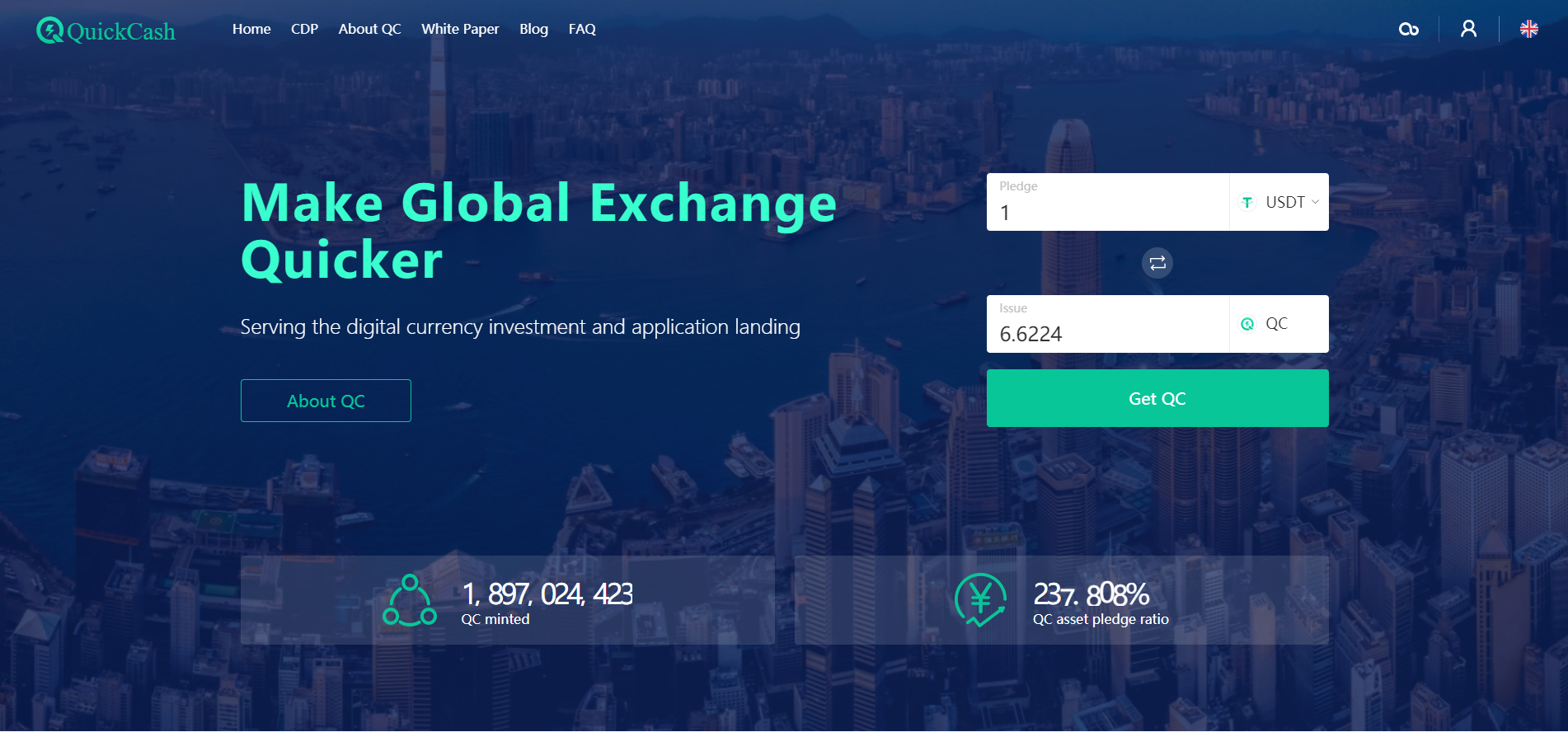
Bitcoin briefly breaks $8,000! Will the bulls continue to run?
Bitcoin (BTC) Breaks $8,000
Yesterday, we saw the price of Bitcoin just barely surpass $8,000. Following that break, we very quickly saw a retracement down to the $7,800 region. We now have the price hovering around in the $7,840-$7,880 region at the time of writing.
So, what exactly does this mean for the market? Are we out of the bear market yet? What’s coming next?
Let’s take a peak at the charts!
Bitcoin Daily Chart
Looking at this daily chart, we can see that during this pump we managed to surpass the 0.786 Fibonacci retracement level with the next daily candle beginning to form above it. We can also see that the 100 MA and EMA (Light Blue and Orange) have acted as a resistance level during the run up. I will be looking for the 55 EMA (Green) and the 0.786 Fib level as regions for potential support.
Looking further into our indicators, we can see some potential issues. The first one you may notice is the utter lack of volume. Volumes continue to be on the decrease since the start of this down trend.
You can also note that we are showing oversold on our Stoch RSI. I did not include a standard RSI, but it was around 65 and approaching oversold territory as well. We are showing heavy overselling on the 3-day as well (I did not include this chart because I didn’t find it necessary).
You can also see that we are still within our overall bearish trend that we have been in since the fall from $14k. Until this breaks, I have to remain bearish. Especially given the low volumes and overselling on the daily and 3-day.
Today, I’m only going over the daily chart. I haven’t found anything too important in other time frames. Like I said, I’m still bearish on this. Even a bit more so now. I am not currently in a position myself, I am waiting for something that looks more appealing. However, I am expecting a big move to be coming sometime very soon.
What are your opinions on the current market? Are we going to finally break out of this down trend? Or will the bears step back in? It’s anyone’s guess at this point. I need more volume before I can make a more confident call myself.
If you are interested in trading Bitcoin futures, give Bybit a go! I recently migrated there from Bitmex and have been loving it. https://tothemoon.blog/friends/bybit/
*Also, be sure to join the official* ***To The Moon Telegram Group****, subscribe to our mailing list for notifications (in the right sidebar), and follow us on* ***Twitter****!* https://t.me/tothemoonblog https://twitter.com/tomoonwhenlambo
*Original post from my blog:* *https://tothemoon.blog/cryptocurrency/bitcoin-briefly-breaks-8000-will-the-bulls-continue-to-run/*
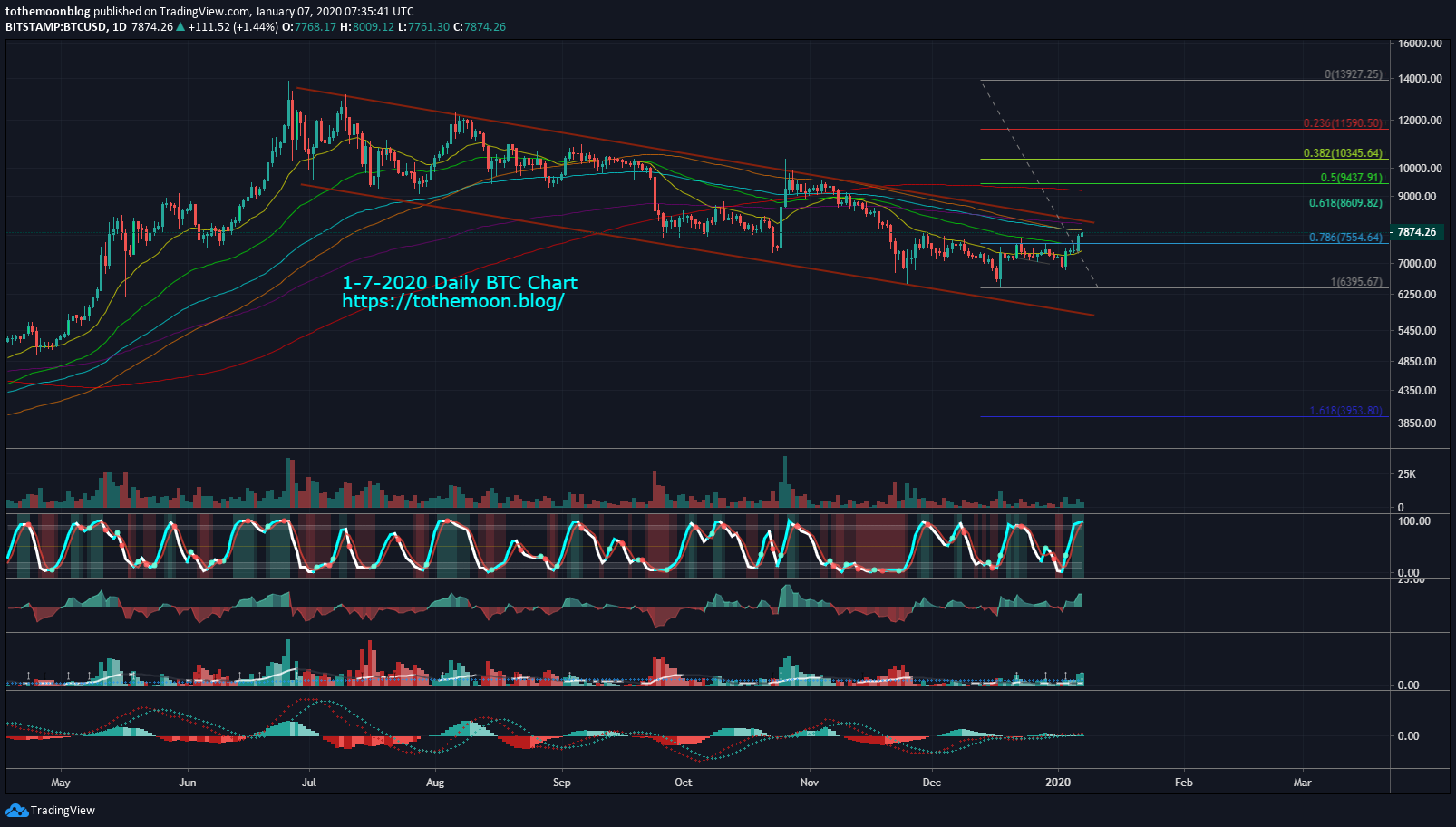
Claim your $12 of Orchid (OXT) from Coinbase today!
https://coinbase.com/earn/oxt/invite/5mv07xbk
Orchid (OXT) Giveaway
Coinbase is giving away $12 of Orchid (OXT)! Orchid is a new ERC token that is focused on providing an anonymous VPN service. Personally, I do not find this idea very useful and I don’t think the project provides any additional benefits over traditional VPN services + TOR. But, hey! I won’t complain about free money!
So, if you’re interested in claiming this little bonus, head on over to Coinbase Earn to claim yours now! https://coinbase.com/earn/oxt/invite/5mv07xbk
https://coinbase.com/earn/oxt/invite/5mv07xbk
*Be sure to join the official* ***To The Moon Telegram Group****, subscribe to our mailing list (in the right sidebar), and follow us on* ***Twitter****!* https://t.me/tothemoonblog https://twitter.com/tomoonwhenlambo
*Original post from my blog:* *https://tothemoon.blog/cryptocurrency/claim-your-12-of-orchid-oxt-from-coinbase-today/*
[sponsors]
Popular terms and phrases used in the cryptocurrency space
Due diligence is important when looking into any asset class. However, doing one’s homework may be even more important when it comes to digital currency, as this asset class has been around for far less time than more traditional assets (like stocks and bonds) and comes with substantial uncertainty.
Doing proper research on cryptocurrencies may require a would-be investor to explore many areas. One area in particular that could prove helpful is simply learning the basic industry terminology. Certain terms are highly unique to digital currency, making it unlikely that traders would have picked it up when studying other asset classes like stocks, bonds and commodities. https://tothemoon.blog/category/cryptocurrency/
In this article we will explore popular terms and phrases relevant to cryptocurrencies, providing a strong foundation for those interested in exploring this innovative asset class.
Terminology Definitions Index
**51% Attack**
If more than half the computer power on a network is run by a single person or a single group of people, then a 51% attack is in operation. This means this entity has full control of the network and can negatively affect a cryptocurrency by halting mining, stopping or changing transactions, and reusing coins.
**Addresses**
Every cryptocurrency coin has a unique address that identifies where it sits on the blockchain. It’s this address, this location, at which the coin’s ownership data is stored and where any changes are registered when it is traded. These addresses differ in appearance between cryptocurrencies but are usually a string of more than 30 characters.
**Airdrop** https://tothemoon.blog/tag/airdrop/
This is a marketing campaign that refers to the expedited distribution of a cryptocurrency through a population of people. It usually occurs when the creator of a cryptocurrency provides its coin to low-ranked traders or existing community members in order to build their use and popularity. They are usually given away for free or in exchange for simple tasks like sharing news of the coin with friends.
**Algorithm**
Mathematic instructions coded into and implemented by computer software in order to produce a desired outcome.
**All Time High (ATH)**
The highest price ever achieved by a cryptocurrency.
**All Time Low (ATL)**
The lowest price ever achieved by a cryptocurrency.
**Altcoins**
Bitcoin was the first and is the most successful of all the cryptocurrencies. All the other coins are grouped together under the category of altcoins. Ethereum, for example, is an altcoin, as is Ripple.
**AML**
Acronym for “Anti-Money Laundering”
**Anti-Money Laundering**
These are a set of international laws that hope to prevent criminal organizations or individuals from laundering money through cryptocurrencies into real-world cash.
**Application Specific Integrated Circuit**
A piece of computer hardware – similar to a graphics card or a CPU – that has been designed specifically to mine cryptocurrency. They are built specifically to solve hashing problems efficiently.
**Arbitrage**
There are multiple exchanges at any given time trading in the same cryptocurrency, and they can do so at different rates. Arbitrage is the act of buying from one exchange and then selling it to the next exchange if there is a margin between the two that is profitable.
**ASIC**
Acronym for “Application Specific Integrated Circuit”
**ATH**
Acronym for “All Time High”
**ATL**
Acronym for “All Time Low”
**Atomic Swap**
A way of letting people directly and cost-effectively exchange one type of cryptocurrency for another, at current rates, without needing to buy or sell.
**Bag**
If you have a large quantity of units in a certain cryptocurrency, you’d have a bag of them.
**Bear/Bearish**
If the price of a cryptocurrency has a negative price movement.
**Bear Trap**
This is a trick played by a group of traders aimed at manipulating the price of a cryptocurrency. The bear trap is set by this group all selling their cryptocurrency at the same time, which bluffs the market into thinking there is a drop incoming. As a result, other traders sell their assets, further driving the price down. Those who set the trap then release it, buying back their assets, which are now at a lower price. The overall price then rebounds, allowing them to make a profit.
**Bitcoin** https://tothemoon.blog/tag/bitcoin/
The very first cryptocurrency. It was created in 2008 by an individual or group of individuals operating under the name Satoshi Nakamoto. It was intended to be a peer-to-peer, decentralized electronic cash system.
**Block**
The blockchain is made up of blocks. Each block holds a historical database of all cryptocurrency transactions made until the block is full. It’s a permanent record, like a bag of data that can be opened and viewed at any time.
**Block Explorer**
An online tool for exploring the blockchain of a cryptocurrency, where you can watch and follow, live, all the transactions happening on the blockchain. Block explorers can serve as blockchain analysis and provide information such as total network hash rate, coin supply, transaction growth, etc.
**Block Height**
Refers to the number of blocks connected in the blockchain. For example, Height 0 would be the very first block, which is also called the genesis block.
**Block Reward**
A form of incentive for the miner who successfully calculates the hash (verification) in a block. Verification of transactions on the blockchain generates new coins in the process, and the miner is rewarded with a portion of these.
**Blockchain** https://tothemoon.blog/tag/blockchain/
The blockchain is a digital ledger of all the transactions ever made in a particular cryptocurrency. It’s comprised of individual blocks (see definition above) that are chained to each other through a cryptographic signature. Each time a block’s capacity is reached, a new block is added to the chain. The blockchain is repeatedly copied and saved onto thousands of computers all around the world, and it must always match each copy. As there is no master copy stored in one location, it’s considered decentralized.
**BTFD**
Acronym for “Buy The F$%king Dip”
**Bull/Bullish**
If the price of a cryptocurrency has a positive price movement.
**Burned**
If a coin in any particular cryptocurrency has been made unspendable, it is said to be burned.
**Buy the Dip**
A less-than-savory phrase used when you’re (enthusiastically) telling someone a currency has dipped to a low value and should be bought.
**Buy Wall**
When a large limit order has been placed to buy when a cryptocurrency reaches a certain value, then that is a buy wall. This can prevent a cryptocurrency from falling below that value, as demand will likely outstrip supply when the order is executed.
**CAP**
Shorthand for market capitalization (see definition below)
**Central Ledger**
When a single entity has control of all financial records, it is considered to be a central ledger. This is how banks operate.
**Chain Linking**
Each cryptocurrency has its own blockchain – the digital ledger that stores all transaction records. Chain linking is the process that occurs if you transfer one cryptocurrency to another. This requires the transaction to be lodged in two separate blockchains, so they must link together to achieve the goal.
**Cipher**
The name given to the algorithm that encrypts and decrypts information.
**Circulating Supply**
The total number of coins in a cryptocurrency that are in the publicly tradable space is considered the circulating supply. Some coins can be locked, reserved or burned, therefore unavailable to public trading.
**Cold Storage**
Another term used for a paper wallet (see below).
**Confirmed**
When a transaction has been confirmed, it means it has been approved by the network and permanently appended to the blockchain.
**Consensus**
When a transaction is made, all nodes on the network verify that it is valid on the blockchain, and if so, they have a consensus.
**Consensus Process**
Refers to those nodes that are responsible for maintaining the blockchain ledger so that a consensus can be reached when a transaction is made.
**Consortium blockchain**
A privately owned and operated, yet publicly transparent, blockchain.
**Cryptocurrency** https://tothemoon.blog/category/cryptocurrency/
A form of money that exists as encrypted, digital information. Operating independently of any banks, a cryptocurrency uses sophisticated mathematics to regulate the creation and transfer of funds between entities.
**Cryptographic Hash Function**
This process happens on a node and involves converting an input – such as a transaction – into a fixed, encrypted alphanumeric string that registers its place in the blockchain. This conversion is controlled by a hashing algorithm, which is different for each cryptocurrency.
**Cryptography**
The process of encrypting and decrypting information.
**DAO**
Acronym for “decentralized autonomous organization”
**dApp**
Shorthand for “decentralized application”
**Decentralized Application**
A computer program that utilizes a blockchain for data storage, runs autonomously, is not controlled or operated from a single entity, is open source and has its use incentivized by the reward of fees or tokens.
**Decentralized Autonomous Organization**
Refers to organizations that are run by an application (computer program) rather than direct human input. Control of this application is granted to everyone rather than a single central entity.
**Decryption**
Turning encrypted cipher text back into plain text.
**Deflation**
When the demand for a particular cryptocurrency decreases, bringing down the price of its economy.
**Depth Chart**
This graph plots the requests to buy (known as bids) and the requests to sell (known as asks) on a chart. Because you can put a limit order on your buy or sell transaction, the depth chart shows the crossover point at which the market is most likely to accept a transaction in a timely fashion. It also shows if there are any significant buy walls or sell walls in play.
**Deterministic Wallet**
This type of wallet is created by producing multiple keys from a seed. If you lose this wallet, your wallet key can be recovered from the seed. Plus, when you make transactions, instead of producing new keys each time, you use variations from the seed, which makes it more transferable and easier to store.
**Difficulty**
When someone refers to difficulty in the cryptocurrency space, they are referring to the cost of mining in that moment in time. The more transactions that are trying to be confirmed at any single moment in time, divided by the total power of the nodes on the network at that time, defines the difficulty. The higher the difficulty, the greater the transaction fee – this is a fluid measurement that moves over time.
**Digital Commodity**
An intangible, hard-to-get asset that is transferred electronically and has a certain value.
**Digital Currency**
Another term for digital commodity
**Digital Signature**
Used to confirm that a document being transmitted electronically is authentic. They generally appear as a code generated by a public key encryption.
**Distributed Ledger**
A ledger that is stored in multiple locations so that any entries can be accessed and checked by multiple parties. In cryptocurrency, this refers to the blockchain being held on multiple nodes on the network, all of which are checked simultaneously.
**Double Spend**
This occurs when someone tries to send a cryptocurrency to two different wallets or locations at the same time.
**Dump**
The term used to describe selling all (or a lot) of your cryptocurrency.
**Dumping**
When a lot of people dump at once, causing a sharp downward movement in a cryptocurrency’s price.
**Dust Transaction**
Sometimes people will look to slow the network by deliberately flooding it with minor transactions that are incredibly small. These minuscule amounts are referred to as a dust transaction.
**DYOR**
Acronym for “do your own research”.
**Encryption**
Converting plain text into unintelligible text with the use of a cipher.
**ERC**
Stands for “Ethereum request for comments” and is a summation of proposed improvements to the Ethereum system.
**ERC-20**
The standard to which each Ethereum token complies. It defines the way that each token behaves so that transactions are predictable. Other cryptocurrencies also use the ERC-20 standard, piggybacking on the Ethereum network in the process.
**Escrow**
When an intermediary is used to hold funds during a transaction, those funds are being held in escrow. This is usually a third party between the entity sending and the one receiving.
**Ethereum** https://tothemoon.blog/tag/ethereum/
One of the top three cryptocurrencies in the world based on its market capitalization. Despite being open source and based on blockchain technology, it differs from bitcoin in two key ways: it allows developers to create dApps and also write smart contracts.
**Ethereum Virtual Machine**
A virtual machine, effectively sitting in the cloud, that is Turing complete and is used by all nodes on the network during blockchain confirmations. It allows those on the node to execute random EVM Byte Code, which is part of the Ethereum Protocol.
**EVM**
Stands for Ethereum Virtual Machine.
**Exchange** https://tothemoon.blog/tag/exchange/
The platform through which cryptocurrencies are exchanged with each other, with fiat currencies and between entities. Exchanges can vary widely in the currency conversions they enable and their fee structures.
**FA**
Acronym for “fundamental analysis”.
**Faucet**
If you find a website that offers to give you free cryptocurrency for connecting with them, it is termed a faucet. The majority of these are scams.
**Fiat**
Refers to money recognized as legal tender by governments, such as the US dollar, British pound, Euro and Australian dollar.
**FOMO**
An acronym for “fear of missing out”.
**Fork**
When a new version of a blockchain is created, resulting in two versions of the blockchain running side-by-side, it is termed a fork. As a single blockchain forks into two, they will both run on the same network. Forks are categorized into two categories: soft or hard.
**Frictionless**
If there is no transaction cost and no restraints on trading, then the system is considered frictionless.
**FUD**
Acronym for “fear, uncertainty and doubt”.
**Full Node**
Some nodes download a blockchain’s entire history in order to enforce its rules completely. As they fully enforce the rules, they are considered a full node.
**Fundamental Analysis**
A method through which you can attach value to a coin by looking at similar economic and financial factors and researching the underlying motives of the creators and market opinion.
**Futures Contract**
This is a pre-approved contract between two entities to fulfill a transaction when the value of cryptocurrency hits a certain price. It’s different than a limit order in that the buyer and seller are already nominated and bound. A future contract becomes relevant when a buyer wants to go short and a seller wants to go long on the asset.
**Gas**
Gas a is measurement given to an operation in the Ethereum network that relates to the computational power required to complete it. That measurement relates to the fee offered to miners who process that transaction. Other operations have a small cost of 3 to 10 gas, but a full transaction costs 21,000 gas.
**Gas Limit**
When users make a transaction on the Ethereum network, they set their gas limit, which is the most they are willing to pay as a fee for that transaction. If the transaction is going to cost more gas than what is offered, the transaction will not go through. If it costs less, the difference will be refunded.
**Gas Price**
The amount you are willing to pay for a transaction on the Ethereum network. If you want miners to process your transaction fast, then you should offer a higher price. Gas prices are usually denominated in Gwei.
**Genesis Block**
The first or first few blocks of a blockchain.
**Group Mining**
Another term used to describe a mining pool (see below).
**Gwei**
The denomination used in defining the cost of gas. Set a gas price of 20,000 Gwei, for example.
**Halving**
Every time miners approve transactions on the bitcoin blockchain, they earn bitcoin. As each block on the blockchain fills up with transactions, a certain amount of bitcoin enter the marketplace. However, the number of bitcoin that will ever be created is finite, locked at 21 million. In order to ensure this cap is kept, the amount of bitcoin earned by miners for filling one block is halved at the completion of that block. This is called halving. For the record, by the year 2140, all 21 million bitcoin will be in circulation.
**Hard Cap**
During an ICO, the creator can set a hard cap. This is the maximum amount it planned to raise, and it will therefore stop offering coins at this figure.
**Hard Fork**
A fork in the blockchain that converts transactions previously labeled invalid to valid, and vice versa. For this fork to work, all nodes on the network must upgrade to the newest protocol.
**Hardware Wallet**
A physical device, similar to a USB stick, that stores cryptocurrency in its encrypted form. It’s considered the most secure way to hold cryptocurrency.
**Hash**
The shorthand for cryptographic hash function (see description above).
**Hash Rate**
Measurement of performance that reveals how many hashes per second your computer is capable of producing. Each hash is an attempt to find a block by creating a unique block candidate and testing it against the network.
**Hashing Power**
The hash rate of a computer, measured in kH/s, MH/s, GH/s, TH/s, PH/s or EH/s depending on the hashes per second being produced. 1,000 kH/s = 1 MH/s, 1,000 MH/s = 1 GH/s and so forth.
**HODL**
Acronym for “hold on for dear life”.
**ICO**
Acronym for “initial coin offering”.
**Initial Coin Offering**
In order to raise funds, the creator of a cryptocurrency will put an initial batch of its coins up for purchase. This is an initial coin offering.
**JOMO**
Acronym for “joy of missing out”.
**KYC**
Acronym for “know your customer”, which refers to a financial institution’s obligation to verify the identity of a customer in line with AML laws.
**LAMBO**
Shorthand for Lamborghini, which is how someone might refer to themselves if they are getting rich quickly. The idea being there is so much money coming in that they are going to go buy an exotic car.
**Ledger**
A record of financial transactions. A ledger cannot be changed, it can only be appended with new transactions.
**Leverage**
A loan of sorts offered by a broker on an exchange during margin trading (see below).
**Lightning Network**
A peer-to-peer system for cryptocurrency micropayments that is focused on low latency, instant payments. They’re typically low cost, scalable and can work across chains, and transactions can be public or private.
**Limit Order/Limit Buy/Limit Sell**
If you set a rule whereby a cryptocurrency is sold or bought when at a certain price, you are setting a limit order. When traders place an order for a buy or sell, the system looks for these limit orders.
**Liquidity**
The liquidity of a cryptocurrency is defined by how easily it can be bought and sold without impacting the overall market price.
**Locktime**
If a transaction request comes with a rule delaying when it can be processed to a certain time or certain block on the blockchain, that is referred to as the locktime.
**Long**
When you intend to take a large amount of cryptocurrency and stockpile it with the anticipation that it will grow in value, you are going long (or taking a long position).
**MACD**
Acronym for “Moving Average Convergence Divergence”.
**Margin Bear Position**
This is the position you are taking if you are going “short”.
**Margin Bull Position**
This is the position you are taking if you are going “long”.
**Market Capitalization**
This is defined as the total number of coins in supply multiplied by the price. Cap = supply x price.
**Margin Trading**
A risky strategy used by experienced traders where they risk their existing coins to magnify the intensity of their trades. This allows them to buy more than they can afford using leverage provided by an exchange.
**Market Order**
As opposed to a limit order, a market order does not wait until a certain price to buy or sell; it trades wherever the price is at the time the transaction order is made.
**MCAP**
Acronym for “market capitalization”.
**Mining** https://tothemoon.blog/tag/mining/
The term, somewhat confusingly, given to the process of verifying transactions on a blockchain. In the process of solving the encryption challenges, the person donating the computer power is granted new fractions of the cryptocurrency.
**Mining Contract**
An investment in mining hardware whereby you rent out the hashing power of mining hardware for a certain amount of time. The renter does not pay for the hardware or the maintenance and electricity required to run it.
**Mining Pool**
If a number of miners combine their computing power together to try and help complete the transactions required to start a new block in the blockchain, they are in a mining pool. The rewards are spread proportionately between those in the mining pool based on the amount of power they contributed. The idea is that being in a mining pool allows for better chances of successful hashing and therefore getting enough cryptocurrency reward to produce an income.
**Money Services Business**
A legal term used to represent an entity that transfers or converts money.
**Moon**
A term used to describe a major price movement upwards. For example, Ripple is mooning.
**Moving Average Convergence Divergence**
A part of the technical analysis of a cryptocurrency’s value, this tracks the momentum of price change to try and forecast into the future.
**MSB**
Acronym for “money services business”.
**Multipool Mining**
If a miner moves from one cryptocurrency blockchain to another depending on the profitability provided by the network at that moment in time, they are engaging in multipool mining.
**Multi-Signature (Multi-Sig) Wallets**
If, in order for a transaction to go through, more than one user needs to provide their unique code, then it is multi-signature. This system is set up at the creation of the account and is considered less susceptible to theft.
**Network**
A network refers to all the nodes committed to helping the operation of a blockchain at any given moment in time.
**Node**
Any computer that is connected to a blockchain’s network is referred to as a node.
**Nonce**
When a miner hashes a transaction, a random number is generated, called a nonce. The parameters from which that number is chosen change based on the difficulty of the transaction.
**OCO**
Acronym for “one cancels the other order”.
**One Cancels the Other Order**
When two orders for cryptocurrency are placed simultaneously with a rule in place whereby if one is accepted, the other is cancelled.
**Oracles**
The smart contracts stored on a blockchain are stuck within the network. They can only be reached by the external world through a program called an oracle. The oracle sends the data to and from the smart contract and the outside world as required. Oracles are most commonly found on the Ethereum network.
**Overbought**
If a large number of purchases have been made on a cryptocurrency, its price will increase for an extended period of time. At this juncture, it is considered overbought and a period of selling is expected.
**Oversold**
If a cryptocurrency has spent significant time being sold without an upward movement, it is considered oversold. In this condition, there would be concerns about whether it will bounce back.
**Paper Wallet**
Storing your wallet code (your private key) on a physical document makes it a paper wallet. It’s also sometimes referred to as cold storage.
**P2P**
Acronym for “peer to peer”.
**Peer to Peer**
In a peer-to-peer connection, two or more computers network with each other without a centralized third party being used as an intermediary.
**PND**
Acronym for “pump and dump”.
**Pre-Sale**
A period before an ICO goes public when private investors or community members are able to buy the cryptocurrency.
**Private Key**
A string of numbers and letters that are used to access your wallet. While your wallet is represented by a public key, the private key is the password you should protect (with your life). You need your private key when selling or withdrawing cryptocurrencies, as it acts as your digital signature.
**Proof of Authority (PoA)**
A private key that gives the holder the right to create the blocks in a private blockchain. It can be held by a single entity or a set number of entities. This is an alternative to the proof-of-work model, as instead of getting multiple random nodes to approve a transaction, a group of specific nodes are given the authority to approve. This is a far faster method.
**Proof of Stake (PoS)** https://tothemoon.blog/tag/proof-of-stake/
Another alternative to proof of work, this caps the reward given to miners for providing their computational power to the network at that miner’s investment in the cryptocurrency. So if a miner holds three coins, they can only earn three coins. The system encourages miners to stick with a certain blockchain rather than converting their rewards to an alternate cryptocurrency.
**Proof of Work (PoW)**
In order to receive a reward for mining a cryptocurrency, miners must show that their computers contributed effort to approve a transaction. A variable is added to the process of hashing a transaction that demands that effort before a block can be successfully hashed. Having a hashed block proves the miner did work and deserves a reward – hence proof of work.
**Protocols**
The set of rules that defines how data is exchanged across a network.
**Public blockchain**
A blockchain that can be accessed by anyone through a full node on their computer.
**Public Key**
This is your unique wallet address, which appears as a long string of numbers and letters. It is used to receive cryptocurrencies.
**Pump**
This is a term used to refer to an upward price movement, usually driven by whales investing large sums of money in a cryptocurrency.
**Pump and Dump**
The frowned-upon practice of buying a lot of one cryptocurrency to drive up its price and encourage others to invest, then selling the lot when there is a suitable margin.
**REKT**
Shorthand slang for “wrecked” and a term used to describe a bad loss in a trade.
**Relative Strength Index**
A type of technical analysis whereby you determine the momentum of price change over time. It looks at recent changes in price exponentially, with the most recent changes given more weight than older ones. This produces an overall trend of movement for a cryptocurrency that can determine if the market is overbought (a reading higher than 70) or oversold (a reading lower than 30).
**Ring Signature**
A ring signature is a type of encryption process that retains anonymity for the user. The concept gives the network of nodes the power to approve a transaction on a blockchain without identifying which of the nodes requested the transaction. As a result, it cannot be traced.
**RSI**
Acronym for “Relative Strength Index”.
**Satoshi Nakamoto**
The individual, or group of individuals – it has never been confirmed – who created bitcoin.
**SATS**
This is the smallest unit of bitcoin, which is 0.00000001 BTC. The name SATS is shorthand for Satoshi Nakamoto, which is the fake name used by the creator of bitcoin.
**Scrypt**
An algorithm that encrypts a key in such a fashion that it takes a serious amount of RAM to hash it. The system makes it challenging to attack for hackers. Despite its spelling, Scrypt is pronounced “ess-crypt”.
**Seed**
The origin point from which you created your wallet ID. Usually, a seed is a phrase or a series of words that can be used to regenerate your wallet ID if you lose it. Something to keep very secret.
**Segregated Witness**
The processes of separating digital signature data from transaction data. This lets more transactions fit onto one block in the blockchain, improving transaction speeds.
**SEGWIT**
Acronym for “segregated witness”.
**Selfish Mining**
If a miner finds or creates a new block in the blockchain and then doesn’t share that information with the network, he or she is partaking in selfish mining. This is because other miners are now burning their computational power on an old block, allowing the selfish miner to get a head start on the new block.
**Sell Wall**
When a large limit order has been placed to sell when a cryptocurrency reaches a certain value, that is a sell wall. This can prevent a cryptocurrency from rising above that value, as supply will likely outstrip demand when the order is executed.
**SHA-256**
The name of the cryptographic hash function (the hashing algorithm) used by bitcoin. It’s been subsequently used by a number of altcoins too.
**Sharding**
Sharding is a way of splitting up the full blockchain history so each full node doesn’t need the whole copy of it. It’s considered a scaling solution for blockchains because as they grow larger, it begins to slow the network performance if every node is required to carry the full blockchain.
**Shit Coin**
No points for guessing this one. It’s a term used to describe a cryptocurrency not expected to have a positive future.
**Short**
Also known as short selling, this is a concept whereby traders sell an asset they don’t have. The hope is that they can then buy the asset at a lower price than which they sold it to complete the deal. Thereby they earn a margin in the interim.
**Smart Contracts**
When a contract is written in computer code, as opposed to traditional legal language, it is deemed a smart contract. This programmed contract is set up to execute and carry itself out automatically under specified conditions. When a smart contract is on the blockchain, both parties can check its programming before agreeing to it, and then let it do its thing, confident that it cannot be tampered with or changed. It lets two parties agree to complex terms without needing to trust each other and without needing to involve any third parties. This functionality is the defining feature of the Ethereum blockchain.
**Soft Fork**
A fork in a blockchain protocol where previously valid transactions become invalid. A soft fork is backwards-compatible, as the old nodes running the old protocol will still consider new transactions valid, rather than disregarding them. For a soft fork to work, a majority of the miners powering the network will need to upgrade to the new protocol.
**Software Wallet**
A common form of wallet where the private key for an individual is stored within software files on a computer. This is the system you are likely to use if you sign up for a wallet online that is not associated with an exchange.
**Solidity**
A programming language similar to JavaScript but focused on developing smart contracts. It’s exported as bytecode, which is used by the Ethereum Virtual Machine that runs the Ethereum network.
**TA**
Acronym for “technical analysis”.
**Technical Analysis** https://tothemoon.blog/tag/technical-analysis/
Using a trading tool to look at historical data on a cryptocurrency in the hope of forecasting its future.
**Test Net**
When a cryptocurrency creator is testing out a new version of a blockchain, it does so on a test net. This runs like a second version of the blockchain but doesn’t impact the value associated with the primary, active blockchain.
**Timestamp**
The moment in time when a transaction was encrypted and regarded as proof that the data compiled in that transaction existed.
**Token**
The “coin” of a cryptocurrency is a token. Effectively, it’s the digital code defining each fraction, which can be owned, bought and sold.
**Tokenless Ledger**
When a distributed ledger exists but doesn’t need a currency in which to operate. With these blockchains, the miners upholding the network typically don’t get a reward/payment.
**TOR**
Acronym for “terms of reference”.
**Transaction**
The value of cryptocurrency moved from one entity to another on a blockchain network.
**Transaction Fee**
Usually very small fees given to the miners involved in successfully approving a transaction on the blockchain. This fee can vary depending on the difficulty involved in a transaction and overall network capabilities at that moment in time. If an exchange is involved in facilitating that transaction, it could also take a cut of the overall transaction fee.
**Turing Completeness**
If a machine is capable of performing all conceivable programmable calculations, then it is Turing complete. This machine can process any computable function and includes most modern computers.
**Unconfirmed**
When a transaction is proposed, it is unconfirmed until the network has examined the blockchain to ensure that there are no other transactions pending involving that same coin. In the unconfirmed state, the transaction has not been appended to the blockchain.
**Unspent Transaction Output**
This refers to the amount of cryptocurrency sent to an entity but not sent on elsewhere. These amounts are considered unspent and are the data stored in the blockchain.
**UTXO**
Acronym for “unspent transaction output”.
**Volatility**
The fluctuation in an asset’s price is measured by its volatility. Cryptocurrency prices are notoriously volatile compared to other assets, as dramatic price shifts can happen quickly.
**Wallet**
A wallet is defined by a unique code that represents its “address” on the blockchain. The wallet address is public, but within it is a number of private keys determining ownership of the balance and the balance itself. It can exist in software, hardware, paper or other forms.
**Whale**
A term used to describe extremely wealthy investors or traders who have enough funds to manipulate the market.
**Whitelist**
Prior to an ICO, interested parties can sign up/register their involvement and intent to purchase or even purchase under pre-sale conditions. The list of these parties is referred to as the whitelist.
**White Paper**
A detailed explanation of a cryptocurrency, designed to offer satisfactory technical information, explain the purpose of the coin and set out a roadmap for how it plans to succeed. It’s designed to convince investors that it’s a good choice ahead of an ICO.
**Zero Confirmation Transaction**
Alternative phrasing for an unconfirmed transaction.
*Be sure to join the official* ***To The Moon Telegram Group****, subscribe to our mailing list (in the right sidebar), and follow us on* ***Twitter****!* https://t.me/tothemoonblog https://twitter.com/tomoonwhenlambo
*Original post from my blog:* *https://tothemoon.blog/guides/popular-terms-used-in-the-crypto-space/*
[sponsors]
How Monero’s privacy features actually keep your information private.
**Monero** uses an obfuscated public ledger, meaning anybody can broadcast or send transactions, but no outside observer can tell the source, amount or destination. Monero uses a Proof of Work mechanism to issue new coins and incentivize miners to secure the network and validate transactions.
Monero is a secure, private and untraceable currency system.
How does Monero work?
Monero is a secure, private and untraceable cryptocurrency. It achieves this through a number of innovative features, like stealth addressing and Ring Signatures, Ring Confidential Transactions, Kovri, etc.
As a user, you’ll first need a Monero wallet address. This is a 95 character string and comprises two sets of private and public cryptographic keys. In order to understand what role these keys play, let’s go through a typical Monero transaction.
When Alice sends outputs (ie. funds) to Bob for example, Alice will use Bob’s public view key and public spend key, as well as some random data to generate a unique, one-time public key. This key is visible on the Monero blockchain, but only Alice and Bob know who was involved in the transaction and how much XMR was sent.
Next, Bob’s wallet scans the blockchain with his private view key, until the right output is found. Once the right output is found, Bob’s wallet can calculate a one-time private key which corresponds with the one-time public key generated earlier. Joe can now spend the outputs using his private spend key. https://getmonero.org/resources/moneropedia/spendkey.html
Now that we understand a basic Monero transaction, let’s take a closer look at the set of private keys included in each wallet. First, we have the private spend key which is a 256-bit integer and is used to sign Monero transactions. It also is one of only two private keys usually associated with a Monero wallet, the second being the private view key. https://getmonero.org/resources/moneropedia/viewkey.html
The private view key gives you the permission to view the contents of a Monero wallet address. This is why the Monero blockchain is considered private, because balances are not visible without the private view key.
Now that the basics are covered, we should now turn our attention to receiving funds using Monero’s stealth addresses.
What is a stealth address?
Stealth addresses are an integral part of Monero’s strong focus on privacy. A stealth address is a unique, one-time address which is created by the sender on behalf of the recipient for every transaction.
In every transaction a stealth address (also known as a one-time public key) is automatically generated and recorded as part of a transaction. This indicates who has permission to spend an output in a future transaction.
An outside observer cannot tell who is involved in the transaction, or what the transaction amount is by just looking at the blockchain. They can only see that a transaction did occur. This is a huge advantage for merchants for example, because outside parties cannot tell how many customers a merchant might have, or what the merchants revenue may be. There is no publicly available data at all, in part due to Ring Signatures. https://getmonero.org/resources/moneropedia/ringsignatures.html
Stealth addresses are an important part of Monero’s inherent privacy. They allow and require the sender to create random one-time addresses for every transaction on behalf of the recipient.
By using stealth addresses, only the sender and receiver can determine where a payment was sent.
When you create a Monero account you’ll have a private view key, a private spend key, and a Public Address. You use he spend key to send payments, the view key to display incoming transactions, and the Public Address to receive payments. Both the spend key and view key contribute to building your Monero address. You can have a “watch only” wallet that only uses the view key.
What is a ring signature?
The main tech behind Monero is a balance of allowing you to control your keys and operate privately with proven security mechanisms while also allowing malleability and development in the network. (E.g. variable block size, integration of Kovri)
This is what a typical transaction on a public blockchain looks like.
The default set-up for Bitcoin transactions is completely transparent and pseudonymous if steps are not taken to obscure one’s identity and transactions (e.g. a VPN and coin mixing services). This means your IP address can be connected to your device (i.e. personal identity) with enough resources dedicated to connecting the two.
Ring Signatures are digital signatures where several signers sign a transaction. **Think:** signing with a joint account but with no one knowing the true signer
The sender generates a one-time spend key and the recipient is the only party that can detect and spend the money based on that key.
Key images, cryptographic keys, are derived from each output being spent and prevent double spending. This is because there’s one key image per output (expenditure) on the Blockchain.
A ring signature uses your account keys and selected public keys from the blockchain to form a “ring” of possible signers. The main security property of a ring signature is that it makes it impossible to see which group members’ keys produced the signature.
No outside observer can match signers in the ring ensuring that transaction outputs are untraceable. In addition, fungibility remains as the network does not know spent amounts (despite being able to validate a real transaction took place).
Ring signatures ensure that transaction outputs are untraceable. They achieve this by mixing the spender’s output with past outputs pulled from the blockchain. https://getmonero.org/resources/moneropedia/ringsignatures.html
So if Alice initiates a transaction, her output is given a one-time spend key which corresponds with an output being sent from the Alice’s wallet. At this point, Alice’s output is mixed with random past outputs pulled from the Monero blockchain, which act as decoys. To a third party, these outputs are indistinguishable from each other, and Alice can send XMR to Bob without fear of the transaction being tracked.
Additionally, the Monero Labs Core Team introduced Ring Confidential Transactions (Ring CT) in January 2017. This technology was invented by Bitcoin Core developer Gregory Maxwell, and manages to hide transaction amounts from third parties. https://lab.getmonero.org/pubs/MRL-0005.pdf
You might be wondering how Monero avoids the double-spend problem while effectively having untraceable transactions between anonymous parties. The double-spend problem is solved through the innovative use of ‘key images’ associated with each ring signature. These ensure that although transactions remain private, it can be easily detected if the sender attempts to anonymously send their funds twice. https://monero.stackexchange.com/questions/2883/what-is-a-key-image
Now we know how Monero hides the sender and recipient accounts, while also obfuscating the transaction amount. But how does Monero prevent third parties from tracking transactions across nodes? The answer is Kovri. https://www.youtube.com/watch?v=cxgbLI6IZGs
RingCT (Confidential Transactions) hide the amount sent
The sender can reveal just enough information for the miners to confirm the transaction without disclosing publicly the total amount spent. (Known as a “commit”) This allows the transaction to prove its authenticity without losing privacy as a user.
The network encrypts the amount of each output and includes it in the transaction. The amount encrypted by the sender uses a shared secret built into the transaction computed by combining the recipient’s private view key with the transaction public view key (which is built in the transaction).
Third parties will not be able to view the amount based on this construct of Ring Confidential Transactions (RingCT). Only the sender and receiver can view these amounts since they hold the private-view keys. These RingCT outputs became a requirement within Monero back in September 2017.
What is Kovri?
Kovri is the final piece of Monero’s privacy puzzle. Kovri is a free, decentralized, anonymous network layer developed by Monero that’s based on I2P’s core specifications. I2P’s core architecture operates similarly to TOR (which uses onion) except with Kovri it uses garlic encryption and routing to create private, protected network access.
Kovri tunnels traffic through the I2P network, utilizing Garlic encryption and Garlic Routing. This allows information to travel within a private overlay network, and is additionally encrypted each time it is passed on. Peers are not able to read the information which is being relayed. https://en.wikipedia.org/wiki/I2P https://getmonero.org/resources/moneropedia/garlic-encryption.html https://en.wikipedia.org/wiki/Garlic_routing
This creates an anonymous network of Monero users protected from censorship and surveillance.
Monero Team
Per the team section on the Monero website, the core team includes: https://www.getmonero.org/community/team/
Riccardo Spagni aka “Fluffy pony” https://twitter.com/fluffypony
Francisco “ArticMine” Cabanas https://www.reddit.com/user/ArticMine
smooth https://www.reddit.com/user/smooth_xmr
othe https://www.reddit.com/user/othexmr
NoodleDoodle https://www.reddit.com/user/NoodleDoodle_xmr
luigi1111 https://www.reddit.com/user/cloud10again
binaryFate https://www.reddit.com/user/binaryFate
In addition, there have been over 30 developers and 420 contributors over the life of the project. As Monero is focused on privacy, it’s no surprise that many team members choose to stay anonymous https://www.openhub.net/p/monero/contributors
Weaknesses and concerns with Monero
Although it appears Monero has many accolades, what are some of its weaknesses? As discussed in this subreddit there are a few: https://www.reddit.com/r/Monero/comments/611jtu/lets_talk_about_moneros_disadvantages/
**Privacy** – There’s been the ability to track the IP address of the node that originated a transaction. This logging of IP addresses could cause the de-anonymization of users. That being said, the Monero development is constantly improving privacy functionality and has added certain Tor capabilities to mitigate this risk.
**Mining Centralization** – The majority of Monero mining used to be dominated by four pools who each had no more than 20%. This centralization is no longer that case, but it is still a potential threat.
**Darkweb PR** – Although this is not a direct cause of the Monero team, it’s worth noting as the branding and public perception is always something to keep in mind and could slow adoption as people fear its use for illicit purposes.
**Transaction Size** – Monero transactions are much larger than Bitcoin’s, requiring more data and causing a larger blockchain that grows daily. Fortunately, Monero forked and implemented bulletproofs in October 2018. With the implementation of bulletproofs, transaction sizes fell by up to 97 percent in some cases. https://coincentral.com/moneros-october-forking-bulletproofs/
**Development Difficulty** – The ability to incorporate with multi-coin wallets and other integrations that would make use more widespread have been slow.
**Limited Merchant Tools** – The tools for merchants to integrate payments is difficult and hard to integrate at this time. However, there are more and more third-party services popping up to help remedy this.
Roadmap
As of the writing of this post, they currently have 2 tasks in-progress and 5 upcoming tasks listed for 2019. There is also 3 more tasks listed under the year ‘Future’. The Monero roadmap can be viewed on their website here. https://web.getmonero.org/resources/roadmap/
How to Buy and Mine XMR
You can purchase Monero (XMR) on Binance with either BTC, ETH, BNB, or USDT. You can also purchase XMR with BTC on KuCoin. Both of these exchanges are great options if you want to avoid KYC and remain anonymous (recommended). https://tothemoon.blog/friends/binance/ https://tothemoon.blog/friends/kucoin/
If you’re looking to buy XMR directly with fiat, Bitfinex and Kraken are two additional options. https://bitfinex.com/ https://kraken.com/
Monero previously suffered from mining pool centralization. However, a semi-recent fork away from ASIC miners caused the Monero original pools hashrate to drop by more than 50%. The threat of secret ASIC mining prompted this fork. As a result, Monero still remains as a GPU mineable coin on What To Mine. Additionally, you can find a list of mining pools here. http://whattomine.com/coins/101-xmr-cryptonightv7 https://getmonero.org/get-started/mining/
Conclusion
Looking at the innovative features discussed above, it’s not hard to see why Monero has established itself as the leading privacy-focused cryptocurrency around today.
Kovri, Stealth Addresses, Ring Signatures, and Ring CT protect the individual’s privacy, while receiving, storing, or spending XMR. Crypto users should make privacy a prime concern when using cryptocurrencies. Non-private tokens are NOT fungible like cash money. Would you want someone to see your bank balances along with every transaction you’ve ever made? I’ll go ahead and assume the answer is no.
Not only does Monero provide us with financial sovereignty, but it also allows a level of privacy in tune with the vision Justice Brandheis first articulated all those years ago.
*Be sure to join the official* ***To The Moon Telegram Group****, subscribe to our mailing list (in the right sidebar of our website), and follow us on* ***Twitter****!* https://t.me/tothemoonblog https://twitter.com/tomoonwhenlambo
Original post from my blog: https://tothemoon.blog/cryptocurrency/how-moneros-privacy-features-actually-keep-your-information-private/
[sponsors]
What is a Satoshi? Where did this term come from?
What is a Satoshi?
Maybe you’ve heard of the phrase “stacking sats!” and wanted to know what is a Satoshi? Where did this phrase come from? How is it used today?
The satoshi represents one hundred millionths of a Bitcoin. Small denominations make Bitcoin transactions easier to conduct and makes extremely fine transactions readable. The general unit structure of Bitcoins has 1 Bitcoin (BTC) equivalent to 1,000 *millibitcoins* (mBTC), 1,000,000 *microbitcoins* (μBTC), or 100,000,000 *satoshis (sats)*.
Unlike the physical versions of global currencies, such as the British pound or U.S. dollar, cryptocurrencies predominately exist in the digital world. Despite this difference, a cryptocurrency can be divided into smaller units, just as the pound is broken into pence and the dollar into cents. In the case of Bitcoins, the smallest unit available is called the satoshi.
A Satoshi is the smallest amount of measurable Bitcoin. This means one Satoshi is equal to **0.00000001 BTC**. At the time of writing it is just a small fraction of a cent. Often times you will notice faucets will advertise how many Satoshi they are giving away. Or you might have someone ask to pay you a certain amount of Satoshi. For example, let’s say someone says they will give you 5 Satoshi. This would mean they are offering to give you 0.00000005 BTC because each Satoshi is a one hundred millionth of a bitcoin.
Where does the term come from?
Now that you know a Satoshi is 0.00000001 BTC, you may be wondering who invented this and why is called a Satoshi. Rumor has it a Bitcoin user who goes by the name of “ribuck” proposed the idea of calling this unit a Satoshi.
But what does Satoshi mean? Satoshi Nakamoto is the psuedonym of the creator or creators of Bitcoin. Satoshi Nakamoto created the Bitcoin whitepaper and mined the first block of Bitcoin! So the general idea is the name Satoshi honors the creator/creators of Bitcoin. Unfortunately, no one really knows who Satoshi Nakamoto’s real identity is.
Does anyone use this terminology today?
Of course! Plenty of people, especially Bitcoiners, use the term Satoshi all the time. The word Satoshi was searched 27 times last week alone according to Google Trends (At the time of publishing.) You can also see this terminology all over social media as well. Maybe one day as Bitcoin gains traction this will become the standard for all Bitcoin users.
However, please note the term Satoshi is generally only used when referring to Bitcoin. Ethereum, for example, has different names for it’s coin fractions. You wouldn’t call a unit of a hundred millionth of a different cryptocurrency a Satoshi. Satoshi only refers to the smallest unit of the Bitcoin cryptocurrency.
Some Examples
Below, we will include some examples of different Bitcoin measurements to help you better understand these smaller units.
1 BTC = 1,000 *millibitcoins* (mBTC)
1 BTC = 1,000,000 *microbitcoins* (μBTC)
1 BTC = 100,000,000 *satoshis (Sats)*
Here is another example if you still aren’t understanding the conversions.
0.4 BTC = 400 *millibitcoins* (mBTC)
0.4 BTC = 400,000 *microbitcoins* (μBTC)
0.4 BTC = 40,000,000 *satoshis (Sats)*
So, the term Sat or Satoshi is a unit of measurement referring to 0.00000001 BTC or a one hundred millionth of a Bitcoin. Users should get familiar with these terms and continue to use the term to establish its validity and meaning. Now you can brag to your friends about your knowledge of Bitcoin!
*Be sure to join the official* ***To The Moon Telegram Group****, subscribe to our mailing list (in the right sidebar), and follow us on* ***Twitter****!* https://t.me/tothemoonblog https://twitter.com/tomoonwhenlambo
Original post from my blog: https://tothemoon.blog/cryptocurrency/what-is-a-satoshi/
[sponsors]
 @ToTheMoonBlog