If you use 2FA for your wallets, SMS verification is NOT safe! If you use 2FA on any wallet service such as Coinbase or CryptoCurrency exchanges, SMS is not a bulletproof solution and can leave you open to having your funds drained. Why is SMS Not Safe? If a hacker obtains your phone number and account password, they can sometimes try and hack into your account by calling up your mobile phone operator pretending to be you. If they succeed, they often port your number to SIM they control. Within minutes while you are busy trying to call your provider and figure out what has gone on, they will be logging into your account and draining it of funds! This has happened to other users. It happens more often than you think and is a serious security flaw. https://www.reddit.com/r/CoinBase/comments/ffnzfq/my_coinbase_account_was_hacked_by_sim_swap_my/ What Can I Do About It? A Low-Security Solution There are some simple solutions. If your provider ONLY supports SMS 2FA, you should call up your network provider and ask them to set up an account password/PIN that only you know that is not used elsewhere. Say that a note needs to be on the account that unless that password/PIN is provided, they will not allow access without in-person ID at a store. Lower security, but better than nothing. Google Authenticator - A Medium Security Solution Most online services support google authenticator. Electrum also supports this option in 2FA wallets. You simply install the Authenticator app, set up Google Authenticator on the service you are using, scan the QR code and you are done. It is worth writing down the 2FA key or printing it on a known secure printer as a backup, and/or set up more than one device with the QR Code. Saves you the hassle of trying to restore access if you lose the app. The above has saved my skin a couple of times. The above MUST be set up on a clean installed machine / live CD to ensure no viruses can pick it up while setting it up. This is very secure, but if you are taken to a phishing site that looks like the real one, it may swipe your 2FA token when you key it in, so ensure you are on the legitimate site, first. U2F / YubiKey Style Hardware Token - A High-Security Solution This is a USB hardware token that can be used with some services, including Coinbase. You can have one or more than one. This will act as a 2FA key that will not allow access unless it is plugged in. They can also be used with many phone OTG USB adapters. The advantage of these over Google Authenticator is that if you are taken to a phishing site such as a fake Coinbase site that looks like the real one, it will not gain access to your real account because the phishing will not have the keys to verify they are Coinbase, thus they will not be granted access by the token. If you lose the key, you have to go through whatever process (if available) to reset your access such as proving ID. It is a good idea to use more than one. Conclusion Use SMS for 2FA if you have no other choice, but call your network to tighten your mobile numbers account security. Use Authenticator today. If you are securing large sums of money or are paranoid, use a U2F / Yubi Key, though when storing large sums of CryptoCurrency, you should consider a hardware wallet such as Ledger. https://shop.ledger.com/pages/valentines-day-special-offers?r=e656
@SpiritWalker
Joined 13 February 2021 · 6 posts
Spiritual. Autistic, love to dig into the deeper meanings of life. Love science, spirituality, movies, reading, creative writing, learning new cultures. Happi…
120 KT
0 KT · 10¢ received · 0 KT given
Posts
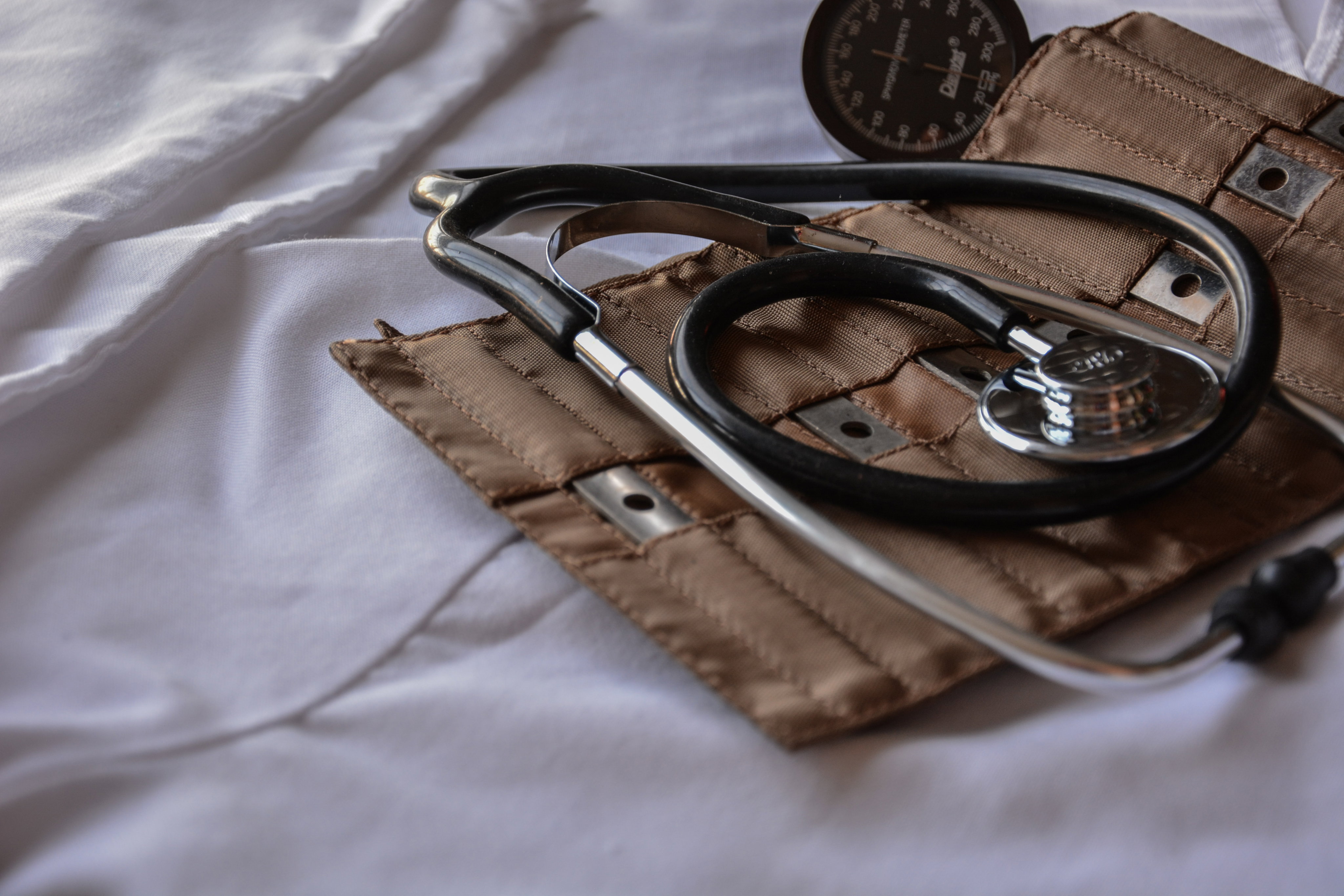
Why you Should Have your Blood Pressure Checked I am age 26 and decided to check my BP on an auto-cuff on a gut feeling last year. Was around 155/110, genetic hypertension. Some diet changes, especially reducing my caffeine intake from 15 cups of day to 3 - 5 a day, dropped to around 145/100 avg. I require medicines to bring it to a normal range, taken daily. Why should you check your blood pressure? High blood pressure affects up to 45% of people in the United States and often produces no symptoms. This is fine and dandy until you suffer long-term damage to organs such as kidneys and your eyes, or end up having a stoke. High blood pressure is often easy to control and to check for it is non-invasive. My mother went for a random check and found hers were high enough to cause severe damage, around 200/120+. She got it under control at 42, but she would pass away from a ruptured aneurysm at 49. What do Blood Pressure Readings Mean? A blood pressure reading is comprised of two numbers. The top number is the systolic. This is when the heart is compressed/at systole. The diastolic or bottom number is the pressure on the vessel walls when the heart is at rest/diastole. Normal BP is systolic of 120 and a diastolic of 70 or thereabouts, with some leeway on either side. Elevated BP is a systolic 125 - 129 or thereabouts; a diastolic will still be below 80. Stage 1 Hypertension is between 130 - 139 with a diastolic o between 80 - 89. Stage 2 Hypertension is systolic over 140, with a diastolic over 90. A Hypertensive Crisis is a systolic pressure of over 180 and a diastolic of over 120. This is a medical emergency if the reading is not a fluke, and you should seek medical advice at once. My Blood Pressure is High. What now? It did not take me long to check mine and then receive appropriate treatment, so you should book a consultation with your GP if yours is high. Most high blood pressure is easily controlled with medicines. Beetroot and other diet changes can reduce blood pressure if it is not too high. If caught early enough, no long term damage will be done; the medicines are usually well-tolerated. Both of my grandparents have been on BP medicines for 30+ years with no side-effects. Should I get my BP checked? Getting your BP checked takes almost no time at all, is non-invasive and painless. The damage done by high BP can be avoided, from eye and kidney damage to strokes that can cripple you if you treat it early. A family member had an over 50 wellness check year before last at work. It was dangerously high that required emergency medicines to bring it down. He had no symptoms, either. My sisters were both normal, one of the few in our family to escape it. Get it checked, get it treated. There are only upsides and no downsides. Stay healthy folks!
Introduction to me - SpiritWalker Where to begin, explaining everything about yourself is trying to explain both spoken and unspoken concepts. I am 26, consider myself a spiritualist, but not religious. I love digging into the mysteries of life, science, reading, writing, travel where health permits, meditation, spiritual work, electronics etc. I also love gaming, especially chess, though I could do with getting my Lichess rating above 1350. I am Autistic, so sensory perception is amplified many fold. I can often feel what others do, and find the world sometimes akin to having a TV up very loud. Thus I practice meditation. I love nature and quiet. I would say I am a cross between introvert and extroverted. At the age of 14, I started exploring spirituality after an out-of-body experience told me it was not my time to leave yet and to return and live life. I have had many experiences that science cannot fully explain, even down to specific predictions in dreams too vivid and detailed with specifics to pass off as random 'chance'. All of these experiences, which I will likely write about over time, have taught me that we are here because we are all part of one infinite universe, that seeks to know itself. Love/Compassion is something you can refine to add to your spiritual potential; there is no right/wrong life path. All paths lead back to oneness, in the end. I love science, taking things to bits, seeing nature, seeing different cultures outside of tourist areas. In 2016 I made some Nepali friends who in 2017, I packed my bags and stayed with them for a month. It was difficult due to health issues; I have CFS/ME. Fatigue is a big part of my life that comes and goes. My partner and I work in social care, looking after the Elderly. We continued this throughout the pandemic, though from September - January, I was mostly bedridden due to a flare-up of CFS/ME symptoms. Most of our work consisted of looking after those with dementia/challenging behaviour. I could write an entire post on this, how empathy can make a night/day difference to their lives. As you may guess from this post's timing, I do night shifts now, and I am burning the midnight oils. I have fooled around with electronics, too. At the age of 8, I made a small AM transmitter. I have a hobby of retro items, even now I often use kerosene oil lamps, they are beautiful. I love a good car boot sale, as does my husband, so that works out well. Got into crypto years ago, though had to sell for a profit in 2016 due to health problems and income issues at the time, those small profits taken years ago did get me through a barren time and kept the lights on! I look forward to writing content for you all.

There is a spiritual solution to every problem - Wayne W. Dyer. One of the best books I ever read, and I consider it reference material for spirituality based on love/compassion.
As a british guy married to a Filipino guy who moved to the UK to be with me, we do look forward to when this pandemic ends so we can see our Filipino friends once more. Me and my partner sold everything we owned to get his initial visa. Both of us had a wedding at the British Embassy on a shoestring. Filipino friends chipped in to surprise us with transport, and bought us a KFC at a highway services on the way back to Mabalacat City from Manila. Happily married, marriage has gotten stronger by the day being stuck with each other in the house and for a while at the same work place. Our 2nd anniversary is next month, the time really does fly. Love you all from the UK <3
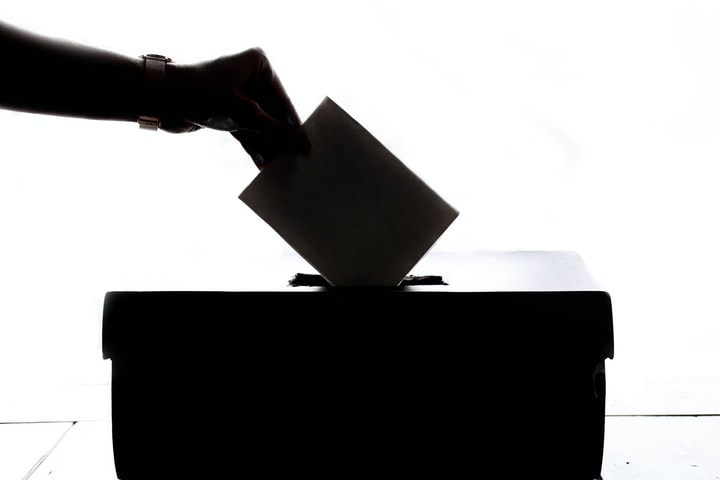
Can Blockchain be the Future of Democratic Voting? Introduction The invention of the distributed database, otherwise known as the ‘blockchain’ was a revolution in the technical sphere. Satoshi Nakamoto, the unknown inventor of Bitcoin, realised you could solve the double-spend problem of digital currency by having a distributed database. But these distributed databases have far more potential than just recording transaction histories. What if you could use it to decide election results? Election fraud could become a thing of the past. A recent online debate I participated in has seen some local elections in the UK possibly delayed due to public health risk from the Coronavirus pandemic. But what if voters could vote without leaving the comfort of their home? How could a blockchain help solve problems that prevent elections from being voted for at home? Tamper-Proof Data How a blockchain works, in essence, is a **shared distributed ledger** or database. Computers worldwide hold a copy of this database and solve complex mathematical problems based on the data to be recorded that take time to solve but are quick to verify. Once a solution is found, the database is updated per a set of consensus rules. There are other methods of updating the database, but this is the method Bitcoin uses. https://www.computerworld.com/article/3191077/what-is-blockchain-the-complete-guide.html Updates to the database may only be done as per the software rules, harmonised by all computers on the network. If someone (such as a government, individual or a small collective) tries to tamper with their copy of the database, the rest of the network rejects the change. These can be decentralised, from copies hosted inside private homes to large data centres. When a Bitcoin is spent, for example, a Public/Private key pair is used. The public key can be given to everyone, to move funds to that address. The Private key acts like a cheque signature to transfer funds from its matching public key/address and must be kept private. Use of the Blockchain in Elections The Blockchain can revolutionise the election space, and it can be implemented in a way that enables in-person and online voting in a tamper-proof way. Barely an election goes by where someone does not cry foul. In extreme cases, accusations of election fraud can result in attempted coups (such as on the **US Capitol in January 2021**), protests, and violence. Some elections like those held in the UK use e**rasable pencil** on ballot papers. https://edition.cnn.com/2021/01/06/politics/us-capitol-lockdown/index.html https://www.thesun.co.uk/news/6201881/why-pencils-general-election-pens/ The Blockchain can solve all of these problems so that no individual country could tamper with the results of their own elections. Existing blockchains, such as Ethereum and Tezos, which allow digital contracts, could be used for this purpose. This is important, as the Ethereum Blockchain has computers worldwide, each with identical copies of the database. https://ethereum.org/ https://tezos.com/ No individual country or bad actor could make software changes to change the rules to its liking as the rest of the network would reject it. Even a bloc of nations would have great difficulty in this, and even then, it requires the individual validation nodes agree to update their software. Even then, all previous database entries can be mathematically verified and linked to one another, so cannot be tampered with if done on a blockchain with high security once time has elapsed. A vote can be cast with a valid digital proof of the voter (Using encryption keys such as public/private keypairs as in Bitcoin). The signed vote is then broadcast to the network. Once validated, it is forever on the Blockchain with no change possible if it is a widespread secure blockchain. Possible Implementations A system could be set up where a voter can submit proof of their right to vote. One solution would be securely generated and printed polling cards. A public-private key pair is generated on an air-gapped isolated from the internet machine, a public key tied to a voter. The private keys are not seen by anyone but printed on tamper-proof sealed paper that becomes the voter polling card. A cover must be scratched off to reveal the private key. When the cards are printed, the private key is promptly wiped from system memory (this software and hardware being subjected to public audits to verify this happens). The polling card could also have a scratch-off QR code to allow easy use of a government voting app. A voter receives their polling card and wishes to cast their vote online via a browser, app or in person. The public key is in a database of registered voters. The users’ public key identifies them and is already linked to an individual voter. However, the voters’ name need not be stored on the Blockchain, only a pointer to an electoral register entry that is kept private but accessible to impartial security audits. No voter could get more than one key or vote twice. At each election, that private electoral register database not on the Blockchain can be recorded to certified WORM (write once, read many) media before voting begins, rendering that impossible to tamper with. The reason voter names are kept off-chain is to prevent identification of which member of the public voted who from other members of the public, as public blockchains can be read by the public. The public can see how many public keys (which are only given to each person once) voted for a particular candidate in real-time. How would a vote be cast? A voter’s polling card arrives in the mail. The voter scratches off the seal that hides the private key and/or QR code and scans it with the application or types it into the app/software. If voting in person, the QR code on their polling card could be scanned like some transport tickets are today. The private key verifies the voter who the public key was assigned to casts the vote. This can be validated in any audits as registered voters for that election has a public key tied to them on any electoral register which is kept private as stated above, but accessible for audits. They can be audited by machine or manually. The signed/validated vote (validated by the private key on the polling card, which does not have to be sent over the internet) is transmitted to the network. If valid, all those tens of thousands or more computers record the result on the Blockchain, where it cannot be tampered with. The public/private key pair can only be used to cast a vote ONCE, preventing multiple votes from the same public key. Counting Votes After the election is over, which can start and end at a specified time/date, the public keys that voted for a particular candidate can instantly be counted by machine. The results are made visible to the public in real-time. No counting votes in rooms that the public cannot see. Every member of the public can view the Blockchain and validate the machine counted results if they wish. Members of the public can compare the public key on their polling card with the result on-chain as well at any time. Votes cannot be changed or altered once on-chain unless you could somehow hijack more than half of the computers on a blockchain all over the world within a short time, which on a secure blockchain is impossible. And the more time that passes, the longer you would have to hijack those computers to do so. The decentralised database is immutable. If there is a dispute about the number of public keys issued and if they are all tied to registered voters, they could be independently audited to electoral register data stored on multiple instances on WORM media at local government offices. Write once media cannot be edited, and thus, it is easy for an independent audit to prove that each and every public key on-chain was only issued once to a real voter. Advantages of Online Blockchain Voting There are many advantages to Blockchain Voting systems: • Ease of access to the disabled. A disabled person who is housebound can cast a vote online. • Enables easier voting around work schedules. No more needing to get down to a polling station if it inconveniences the voter. • Faster, easier counting. No counting behind closed doors. Counting can be done by computer, minimising errors. Can be manually counted if desired. • Easier to audit. Less paper usage. Secure. • In-Person voting for those who do not understand the technology is still possible; their polling card can be scanned at a voting booth enabling a vote to be cast. Voting booths can have their software security audited. • During times of Public Health risk, such as the Coronavirus Pandemic of 2020, voting can be done during a lockdown, minimising the need to leave home. • Any member of the public can verify the results. • This is an opinion, but I feel that it would increase voter turnout, as many who would not leave their house would vote, as less effort is involved. • Election fraud is much harder to achieve, and accusations can easily be disproven. Disadvantages of Online Blockchain Voting There are some disadvantages, some of which can be mitigated. • If an individual’s computer is compromised, the private key could be leaked by a virus. Mitigation against this can be mandating the use of up-to-date anti-virus software before the application can be used on a computer. Only phones running manufacturer-approved operating systems should be allowed to use the application. • The software must be audited. This is to rule out poor implementations of the public-private key system and ensure security holes are patched. The software should be open source. • There should be audits of the system used to generate the keypairs, to ensure private keys are not leaked. • Mail interception of private keys is possible, as it is with polling cards. If a polling card is lost in the mail, there needs to be a way to void public keys and generate a new one for the voter. • Electoral register data that ties a voter’s public key to their name cannot be put on the Blockchain but can be kept on write-once media at different locations and accessed by independent security auditors if required. • Any implementation should have the option for in-person voting as described above. This enables access by the elderly or those who do not understand technology. Conclusion Blockchain is potentially the next breakthrough in democratic elections. Most disadvantages of a blockchain voting system can be mitigated. It can enable ease of access for disabled people who cannot get to a polling booth, removing the trust required for many proxy votes. Citizens can vote wherever they like. Convenience could increase the amount of participation in elections. In-person voting is still possible for those who wish to do so. There are other implementations possible outside of what I have described above. Existing blockchains such as Ethereum can be used to record results, as they are already decentralised and secure. No one individual or company owns a blockchain. Any member of the public can participate in validating entries, which further increases the networks’ security. Voter’s personal data need not be publicly linked to a public key on the Blockchain. Still, they can be independently verified and audited quickly and cheaply in the event of a dispute. In my view, Blockchain could be the next big thing for elections. It can add more legitimacy to elections. A public ledger shows how many voted for what candidate. Blockchain can make elections more convenient, more accessible and make election fraud a thing of the past. Footnote I have previously published this article on vocal.media; this article has some slight corrections. Original Link: Can Blockchain be the Future of Democratic Voting? (vocal.media) To verify the above is not plagiarised, I have signed a message from the BCH address that is on my profile bio on vocal.media: Jacob (vocal.media) https://vocal.media/theSwamp/can-blockchain-be-the-future-of-democratic-voting https://vocal.media/authors/jacob-gmt5dx078t Address(same as on vocal.media profile): bitcoincash:qrkclp2czsat0wgxtn9n3sv809lz4hpvnv6kxykgl5 Message: I am the original author of this article as published on vocal.media Signature: II4hx/RyP8EOJsAjQhZk6AE4mrz6rOpF1blgoiA+IeCXSHwTGAaslG4h0lVbPG+kzV8EF8dBpVPv2DHcYnZ9hcQ=